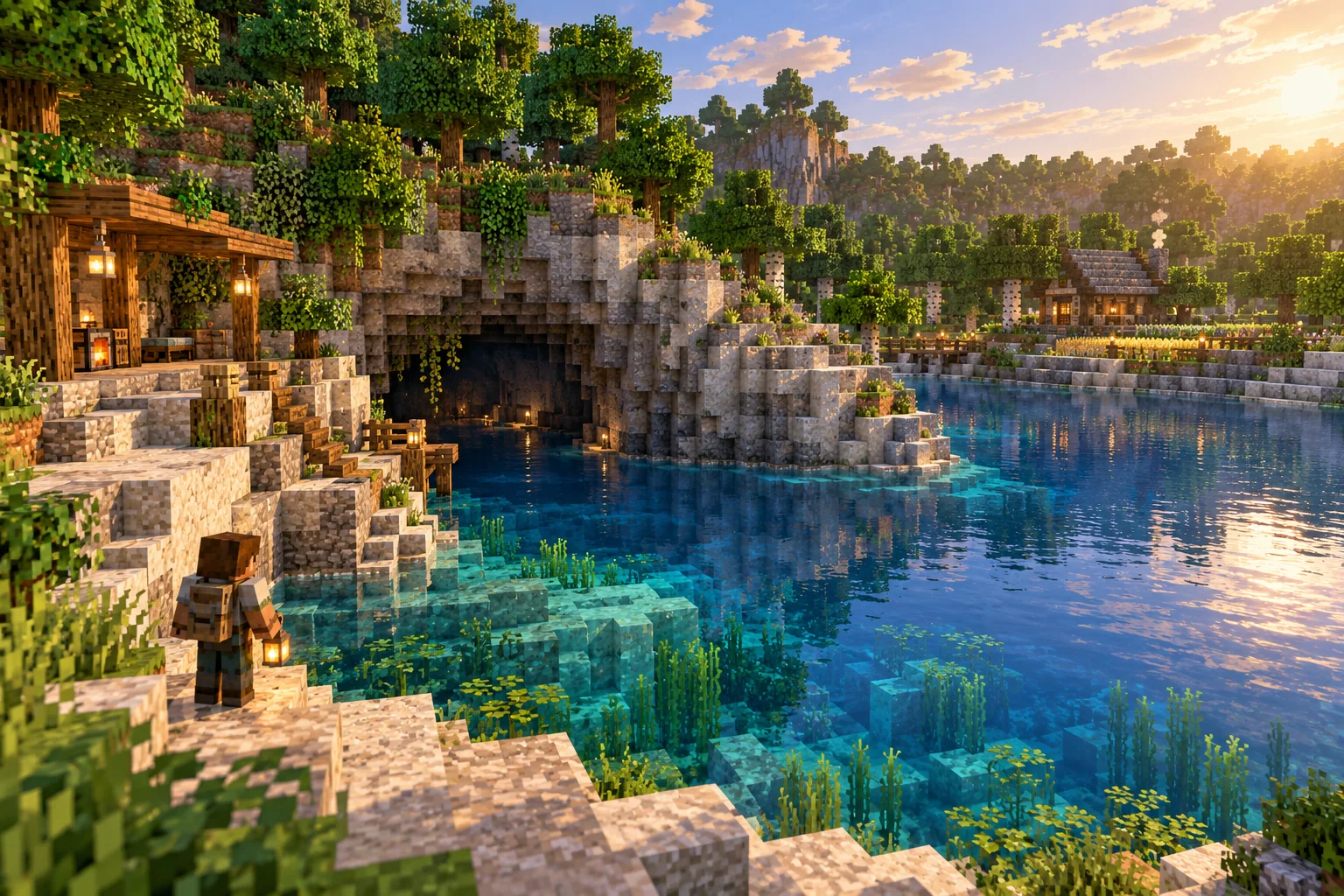
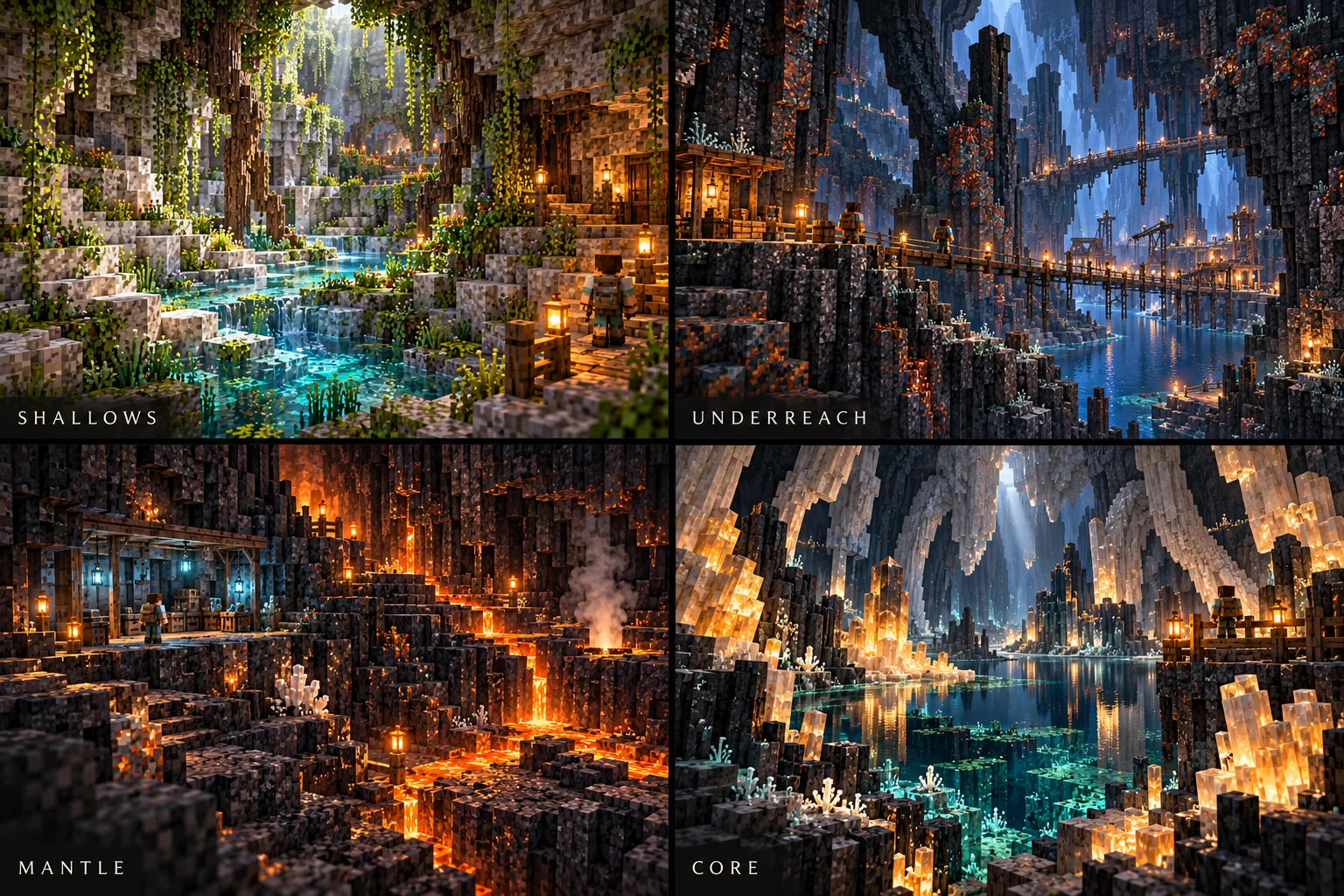
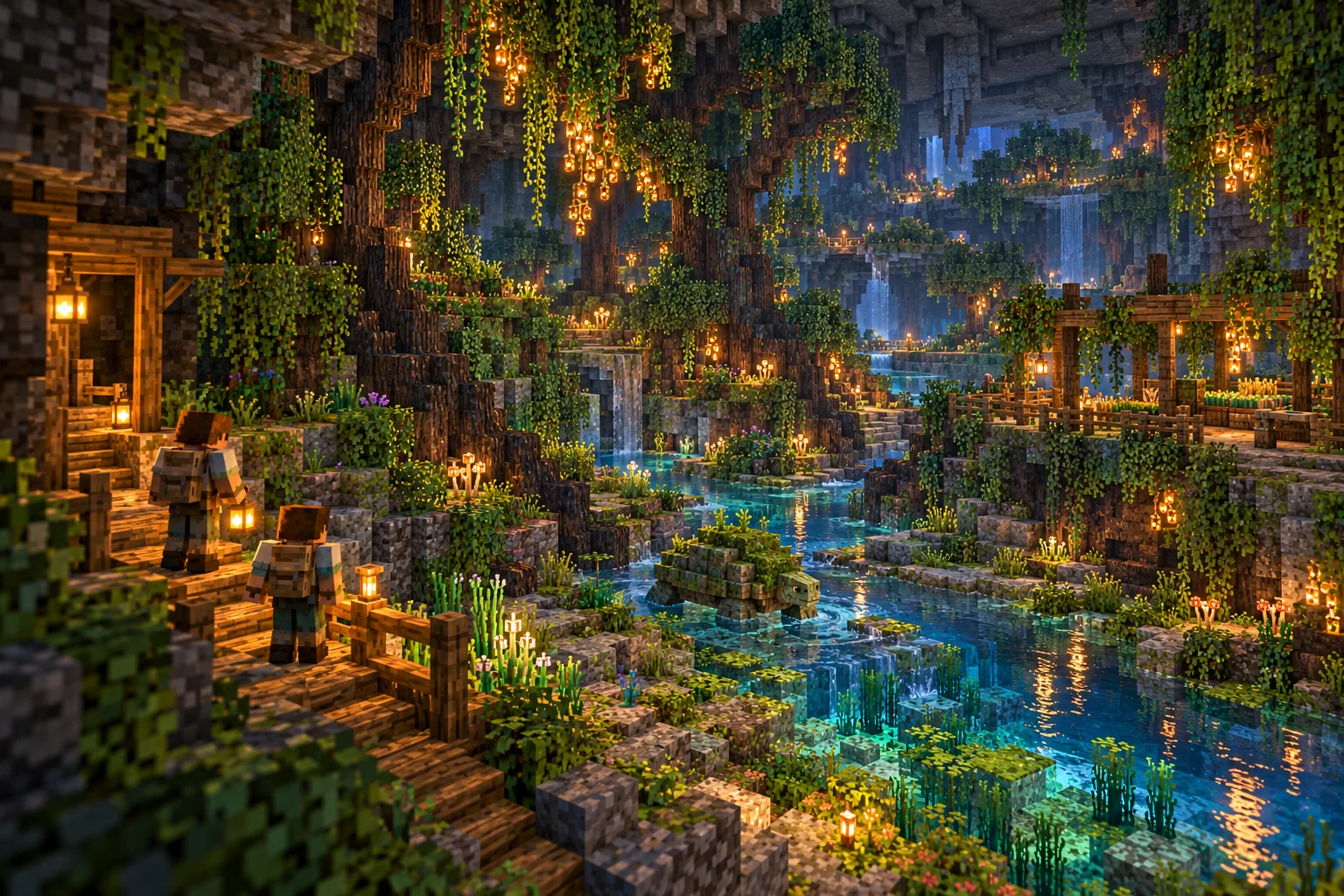
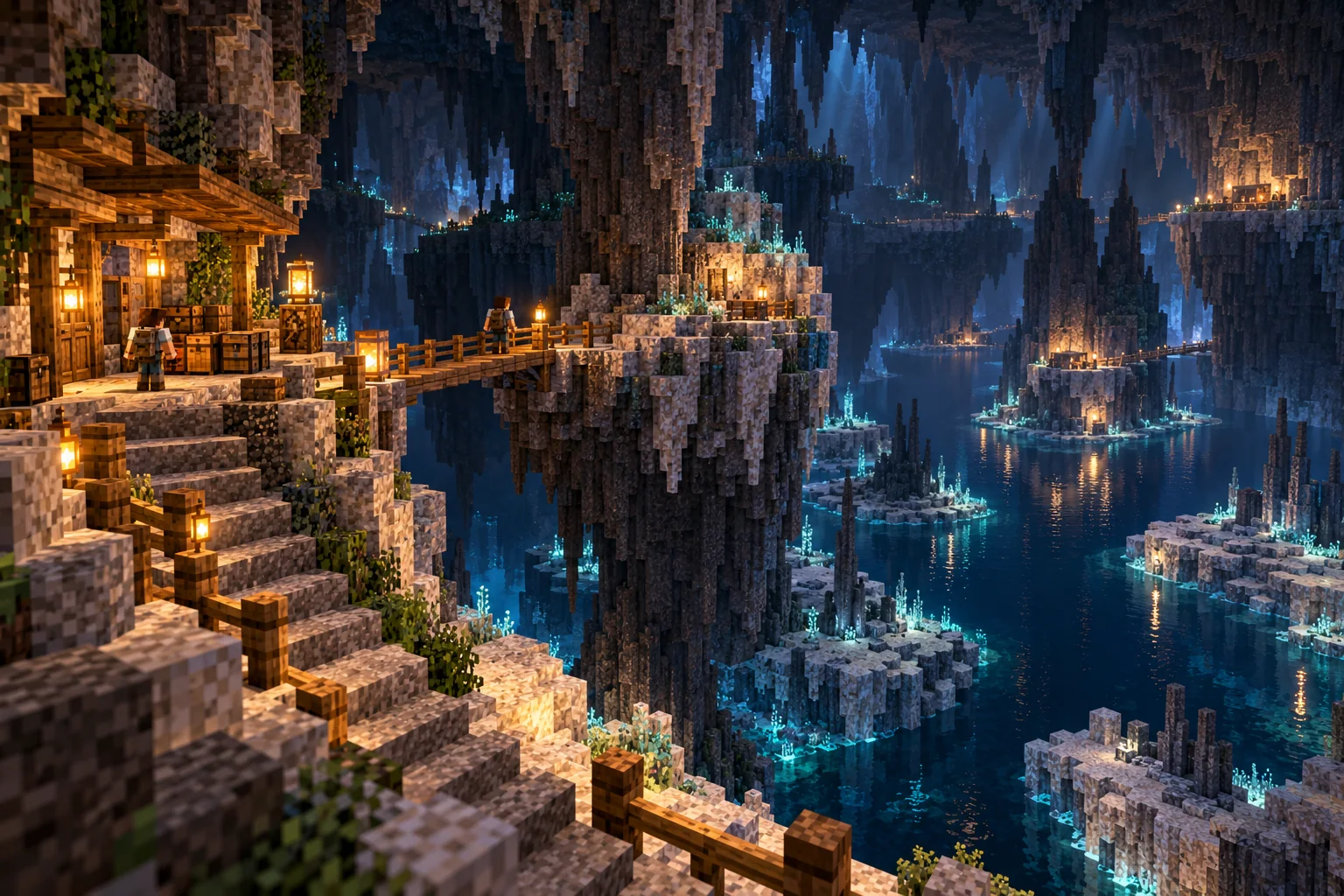
The Core is the fictional Heart deep in Earth’s crust. It is not the planet’s physical centre, and completing it is not required for the first lunar expedition. The game’s working column is 672 levels; the historical 512-level creative wording is not the current implementation.
02 / Leave prepared. Return with purpose.
Your first other worlds.
A shelter, a marked route, a small discovery. The first journeys should be complete experiences before they become large operations.
01 / LunarFuture direction
Moon
The first view home.
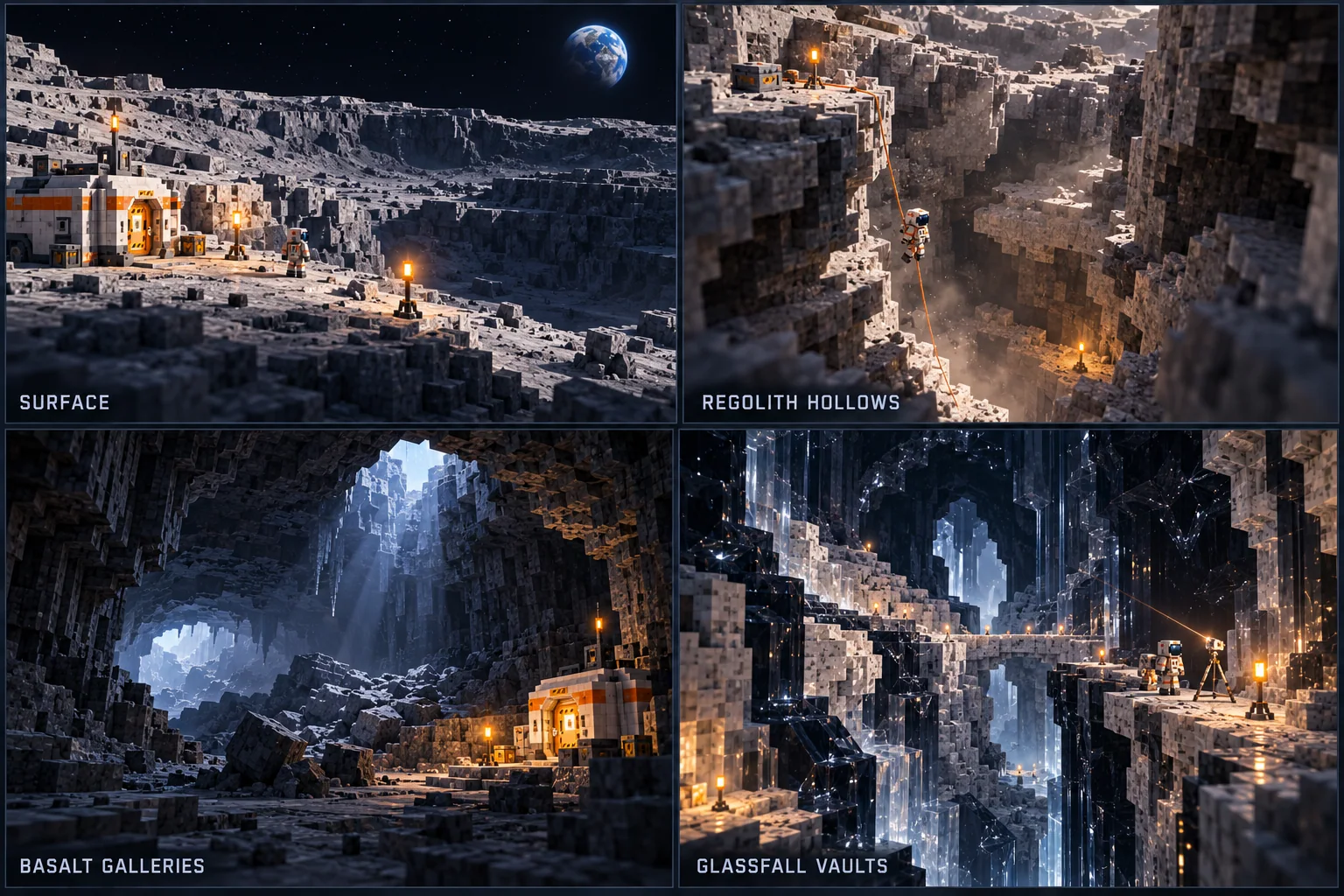
Concept artwork · OV-MOON · Scene extract: the surface. The complete board also illustrates Regolith Hollows, Basalt Galleries and Glassfall Vaults; it does not depict every region.
A lifeless world of exposed rims, fine dust and vast basalt spaces. The silence outside makes the shelter, suit and distant Earth feel close.
MO-S1 Earthrise Rim
MO-S2 Shadow Basin
MO-L1 Regolith Hollows
MO-L2 Basalt Galleries
MO-L3 Glassfall Vaults
Plan the expedition +
Prepare before leaving
Arrive with an Earth-made suit, an airlocked cabin, a starter refuge, lights, anchors, insulation, dust-service tools and protected breathing and fuel reserves. The first safe expedition must be possible before any lunar factory exists.
What you do
Land at Earthrise Rim, make a short inspection and return, then commission an independent refuge. Follow marked Regolith Hollows to an accessible Basalt Galleries overlook, collect a modest sample and see Earth through the broken roof. A short dark branch is optional.
What you discover
Regolith Ceramic (PM01) suggests thermal and habitat panels; Lunar Glass Filament (PM02) suggests light guides and survey instruments. Shadow Basin, Glassfall Vaults and the reflector project are later reasons to return.
What comes home
Fit one useful improvement to a familiar light, instrument or sheltered room. The return has a visible purpose at home before the next expedition grows.
A project to return for
A Light Across the Basin · a later reflector route, supported by a Lunar Shelter and Rim Observatory.
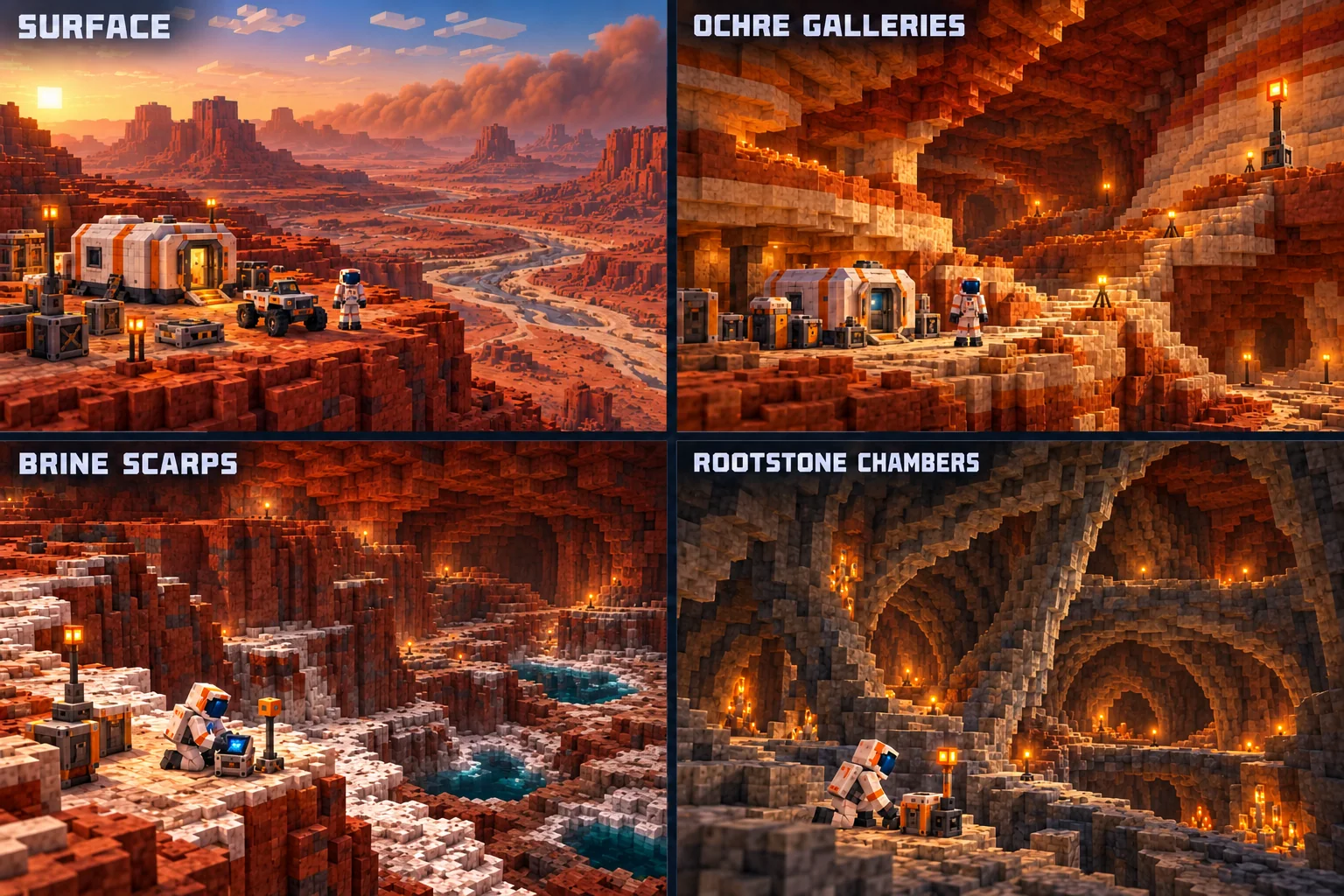
Concept artwork · OV-MARS · Scene extract: the surface. The complete board also depicts Ochre Galleries, Brine Scarps and Rootstone Chambers; regional coverage is selective.
Red tablelands, buried drainage and mineral chambers make this a world of routes, distance and weather. Rootstone formations are chiefly geological; possible brine-mat life remains a conditional proposal.
MA-S1 Windcut Tablelands
MA-S2 Buried Delta
MA-L1 Ochre Galleries
MA-L2 Brine Scarps
MA-L3 Rootstone Chambers
Plan the expedition +
Prepare before leaving
Bring proven Earth and Moon protection, dust filters, insulation, repair supplies and a weather reader. A rover extends the journey, while a nearby walking expedition remains valid if its arrival is delayed. Protect tools before sampling brines.
What you do
Survey a route from a Frontier Yard through the Windcut Tablelands and Buried Delta. Use visible weather warnings, physical markers and sheltered stops. Follow the trace of the missing river into Rootstone Chambers.
What you discover
Ferric Lattice (PM03) supports repairable frames; Brine Catalyst (PM04) suggests compact processing and habitat loops. Survey interference invites physical navigation, not a forced loss of the route.
What comes home
Bring better field logistics, repairable structures and workshop options back to Earth. Existing industry keeps its value.
A project to return for
The River That Isn’t There · a buried-drainage survey. Grow the Frontier Yard from a service pad and shelter into rover, weather and supply facilities.
The main creative route continues through Europa, Titan and Pluto. Ceres and Io offer optional specialist journeys. Progress comes from useful capability, preparation and knowledge.
Optional / InterplanetaryFuture direction
Ceres
Make a hold in a broken world.
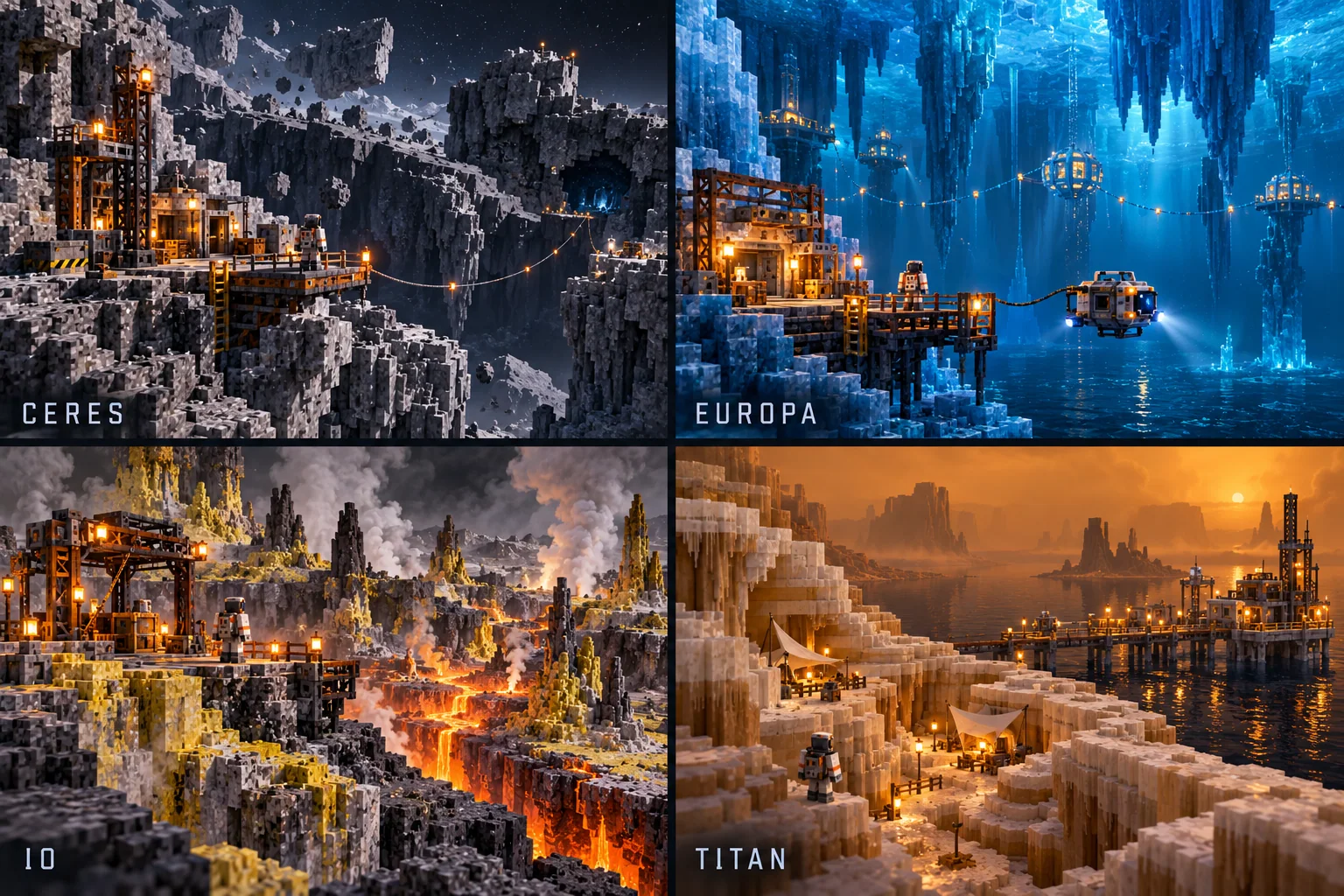
Concept artwork · OV-OUTER · Ceres scene from the outer-world board.
A lifeless, fractured landscape of rubble, buried ice and competent rock, with low gravity making every load a practical question.
CE-S1 Broken Crown
CE-L1 Rubble Mazes
CE-L2 Ice Pockets
CE-L3 Anchorstone Spine
Plan the expedition +
Prepare before leaving
Bring vacuum and temperature protection, anchors, bracing and tethered cargo equipment. Local ice is an optional feedstock, not fuel required to get home.
What you do
Trace safe rock through the Rubble Mazes, establish a tethered route and move a chosen load between anchors.
Concept artwork · OV-OUTER · Europa scene from the outer-world board.
Blue pressure halls open toward an under-ice ocean. Fictional drifters, grazers and filter colonies gather around warmer vent habitats.
EU-S1 Fracture Plains
EU-L1 Blue Pressure Halls
EU-L2 Lantern Ocean
EU-L3 Vent Gardens
Plan the expedition +
Prepare before leaving
Arrive with a pressure- and temperature-protected refuge and a rated descent system. The first samples belong within the equipment’s safe upper-ocean range.
What you do
Read currents, observe life without destructive collection and use tethers or a submersible to connect an underwater route.
What you discover
Cryoseal Gel (PM07) suggests cold seals. Resonant Silica (PM08) supports acoustic instruments and is distinct from Earth’s resonant quartz.
What comes home
Return with better aquatic refuges, cold protection and sensory tools.
A project to return for
Where the Ceiling Glows · a non-destructive observatory supported by an Ice Descent Controller.
Concept artwork · OV-OUTER · Titan scene from the outer-world board.
Haze, dark shorelines and waxstone canyons lead toward fictional mats, membranes and fan-like growth in the Slow Gardens.
TI-S1 Amber Littoral
TI-L1 Waxstone Canyons
TI-L2 Hollow Weather
TI-L3 Slow Gardens
Plan the expedition +
Prepare before leaving
Bring cold and chemical protection, reliable seals, sensing equipment and an independent shelter. Walking comes first; local flight is a later, bounded capability.
What you do
Build a sequence of observation stations, learn shore weather and make a readable route through the haze.
The proposed Afterlight continuation contains two late-story worlds. Their names, environments and possible outcomes are hidden here until you choose to read them.
Reveal the late frontiersStory spoilers +
Afterlight is a working name for a proposed continuation. Both destinations remain future creative direction.
Afterlight / InterstellarFuture direction
Cairn
Read what remains in the gaps.
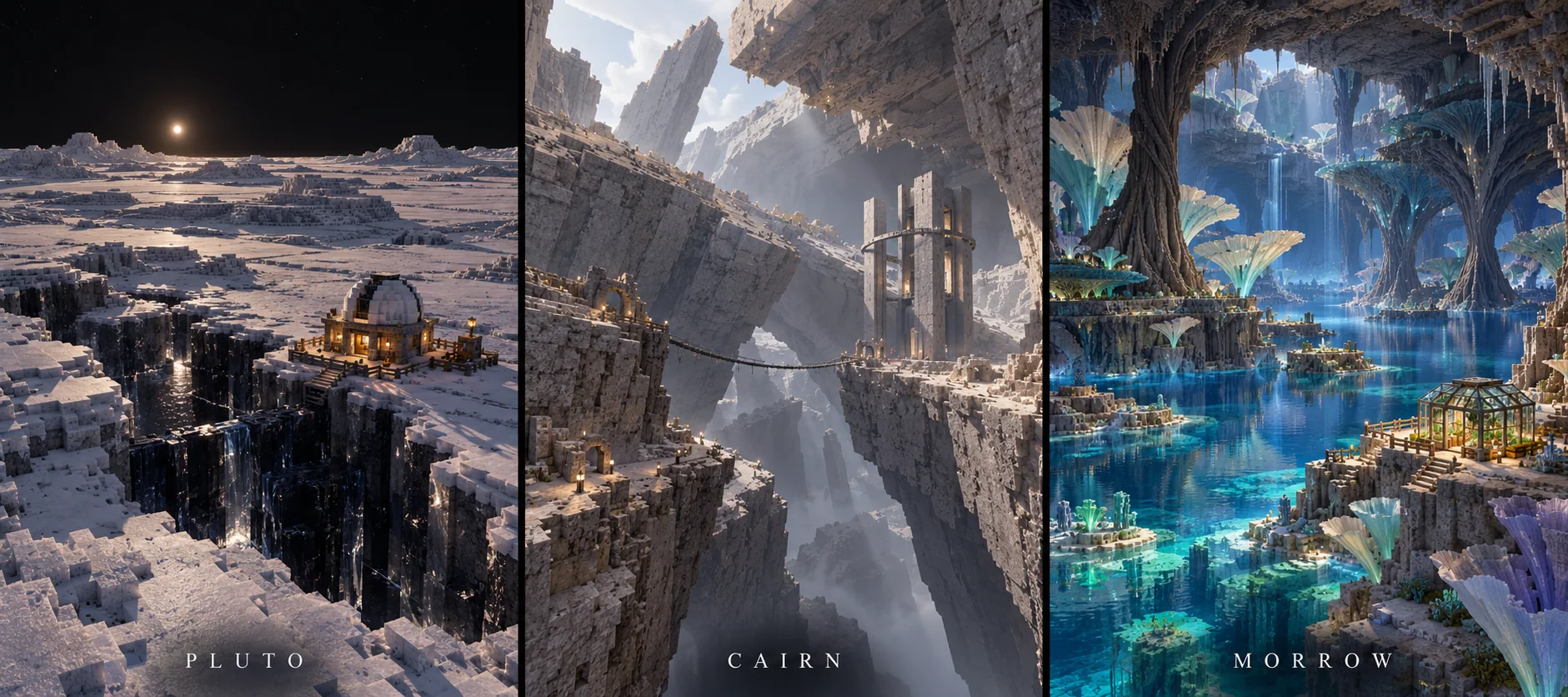
Concept artwork · OV-FRONTIERS · Cairn scene from the frontier board.
Mostly lifeless monumental spaces, inverted terraces and negative geometry suggest one consistent family of anomalies. Gravity remains legible.
CA-S1 Shard March
CA-L1 Inverted Terraces
CA-L2 Palimpsest Halls
CA-L3 Witness Engine
Plan the expedition +
Prepare before leaving
Reach this proposed frontier using prior Earth-to-Pluto capability. Keep an ordinary, independent shelter and return route; local materials cannot be prerequisites for first arrival.
What you do
Interpret bounded evidence, compare the Palimpsest Halls and follow a route toward the Witness Engine.
What you discover
Palimpsest Plate (PM15) and Phase Tine (PM16) improve later capability. Reading what is absent can suggest a route onward.
What comes home
Return with knowledge and adaptable instruments rather than another mandatory ore ladder.
A project to return for
What Remains in the Gaps · a careful interpretation route supported by Witness Camp.