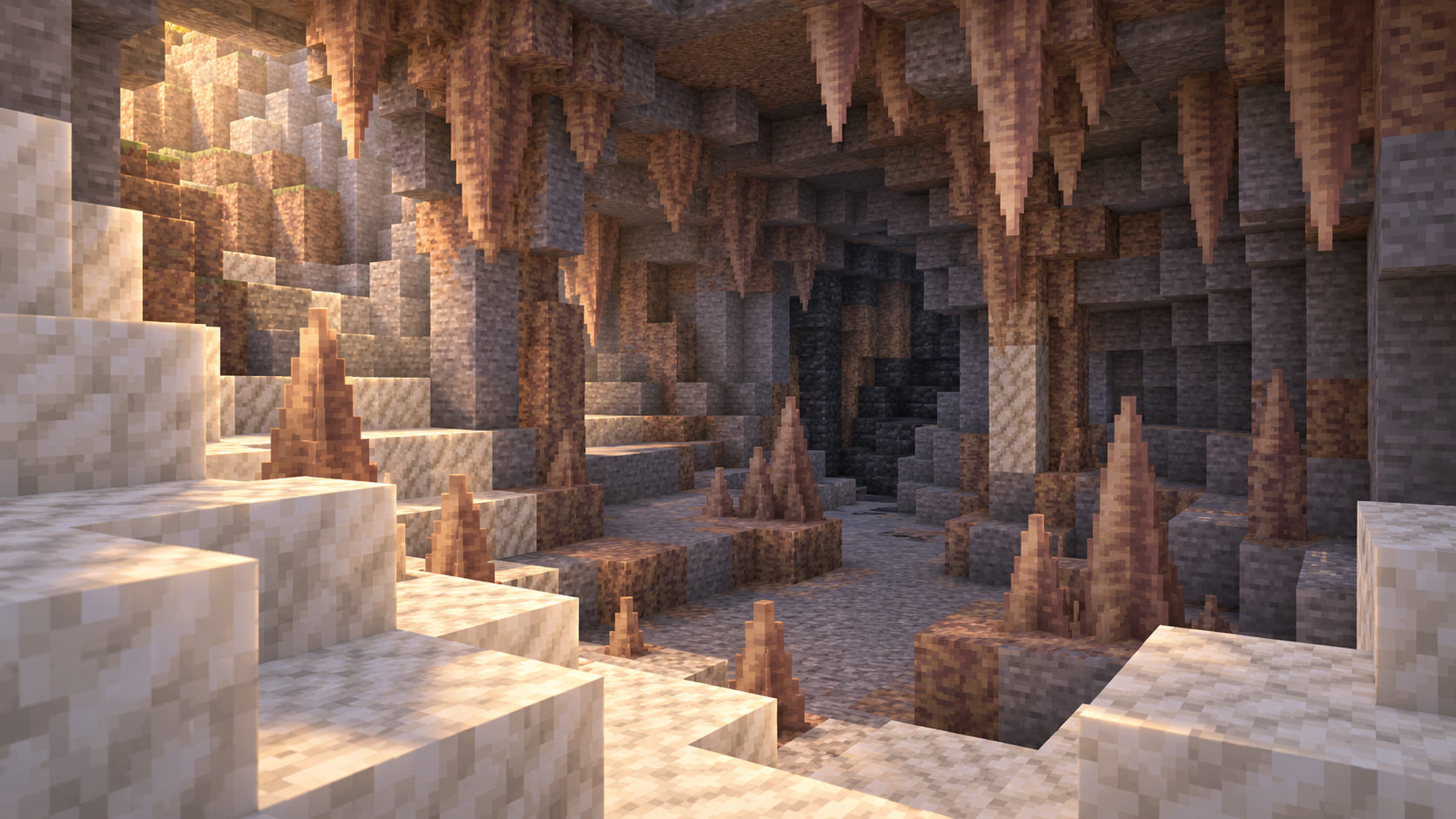
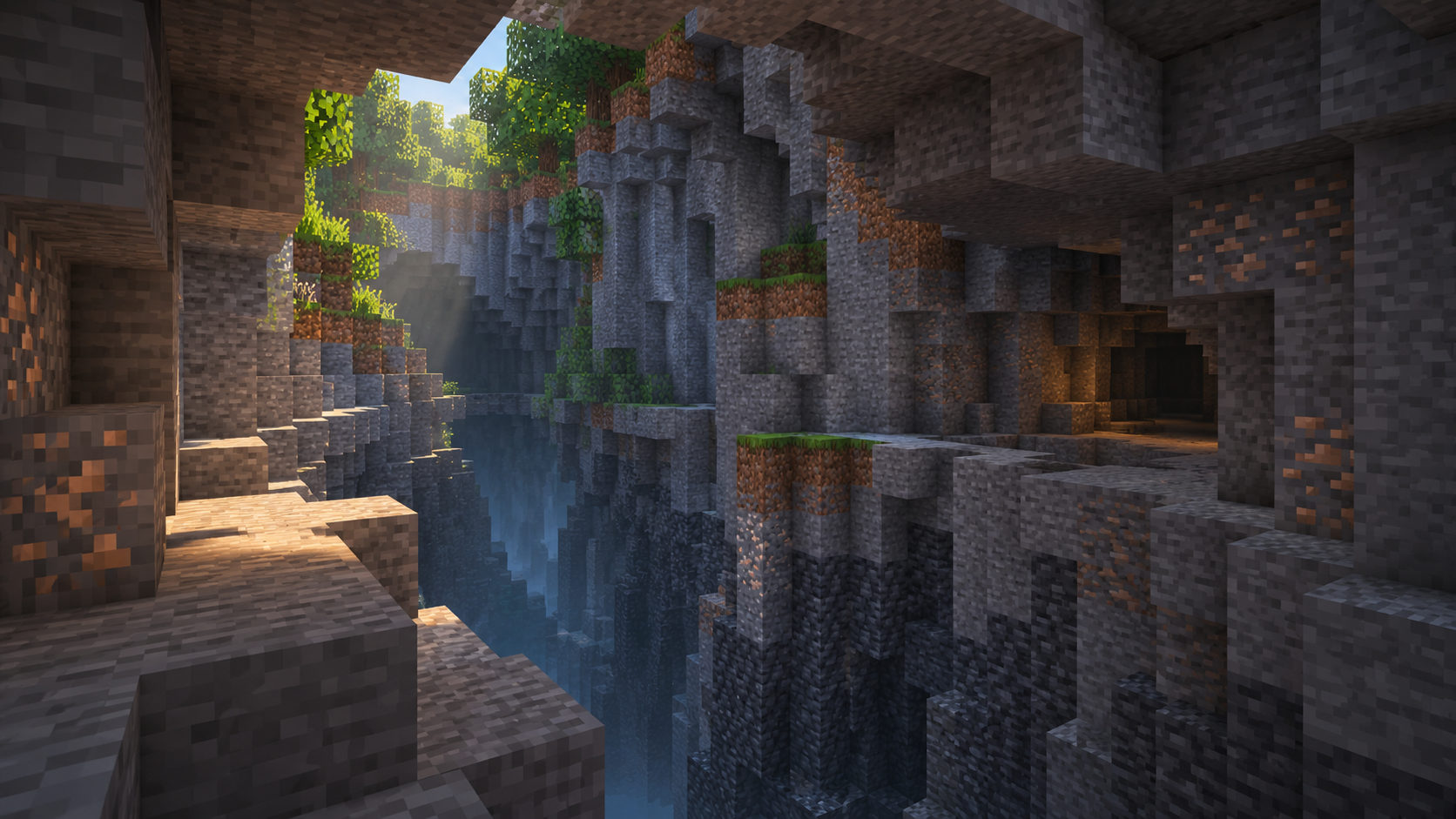
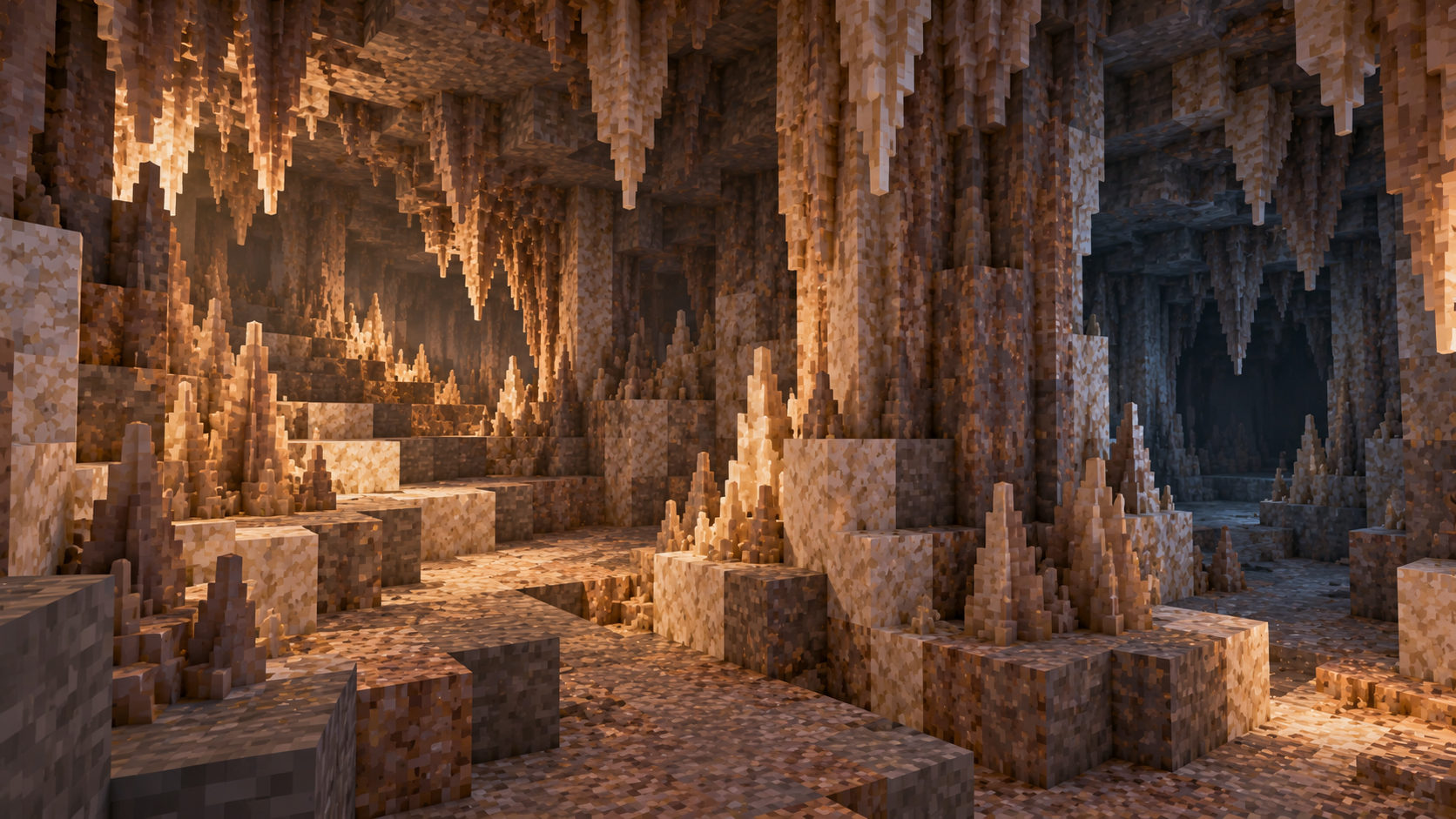
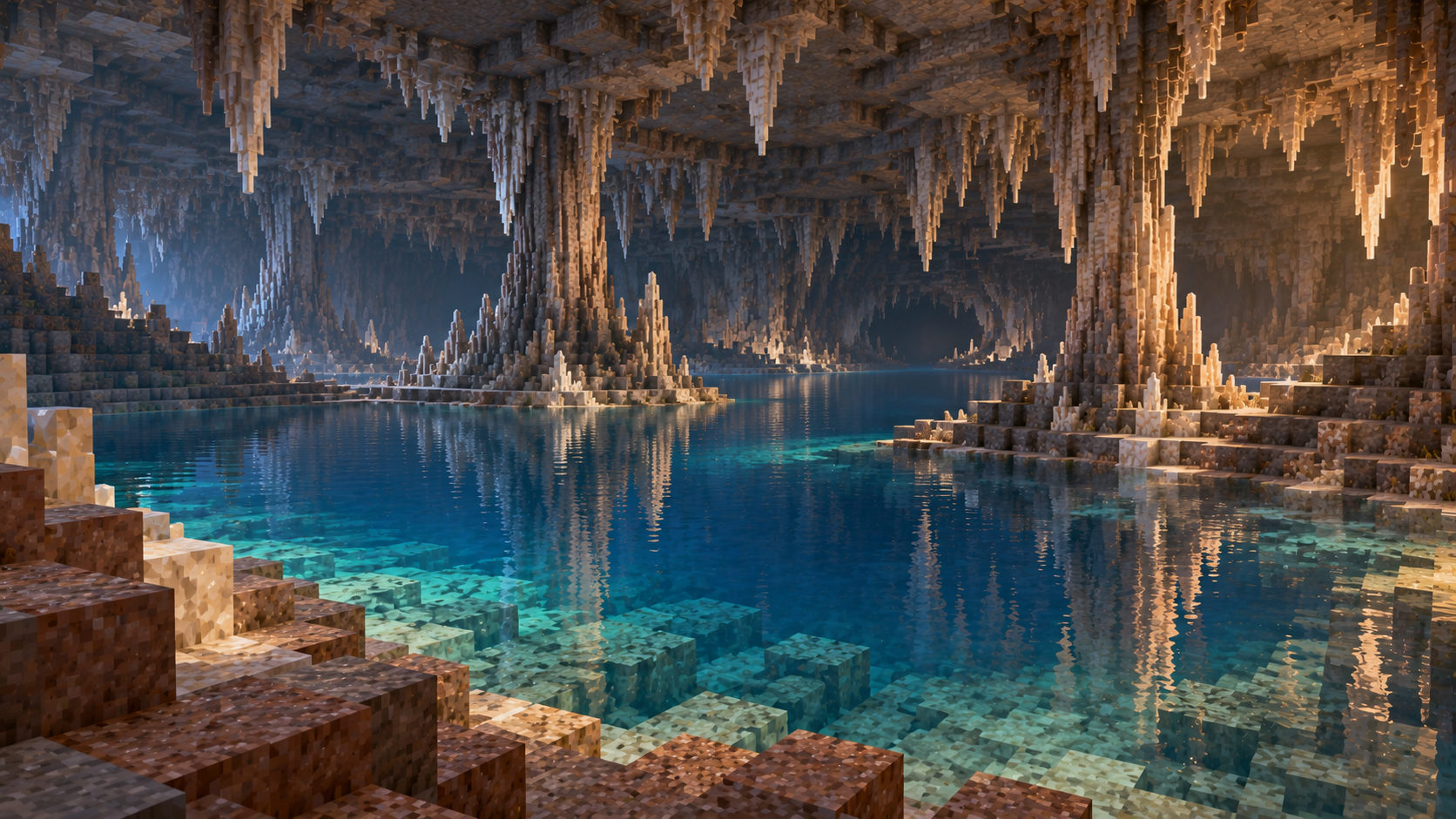
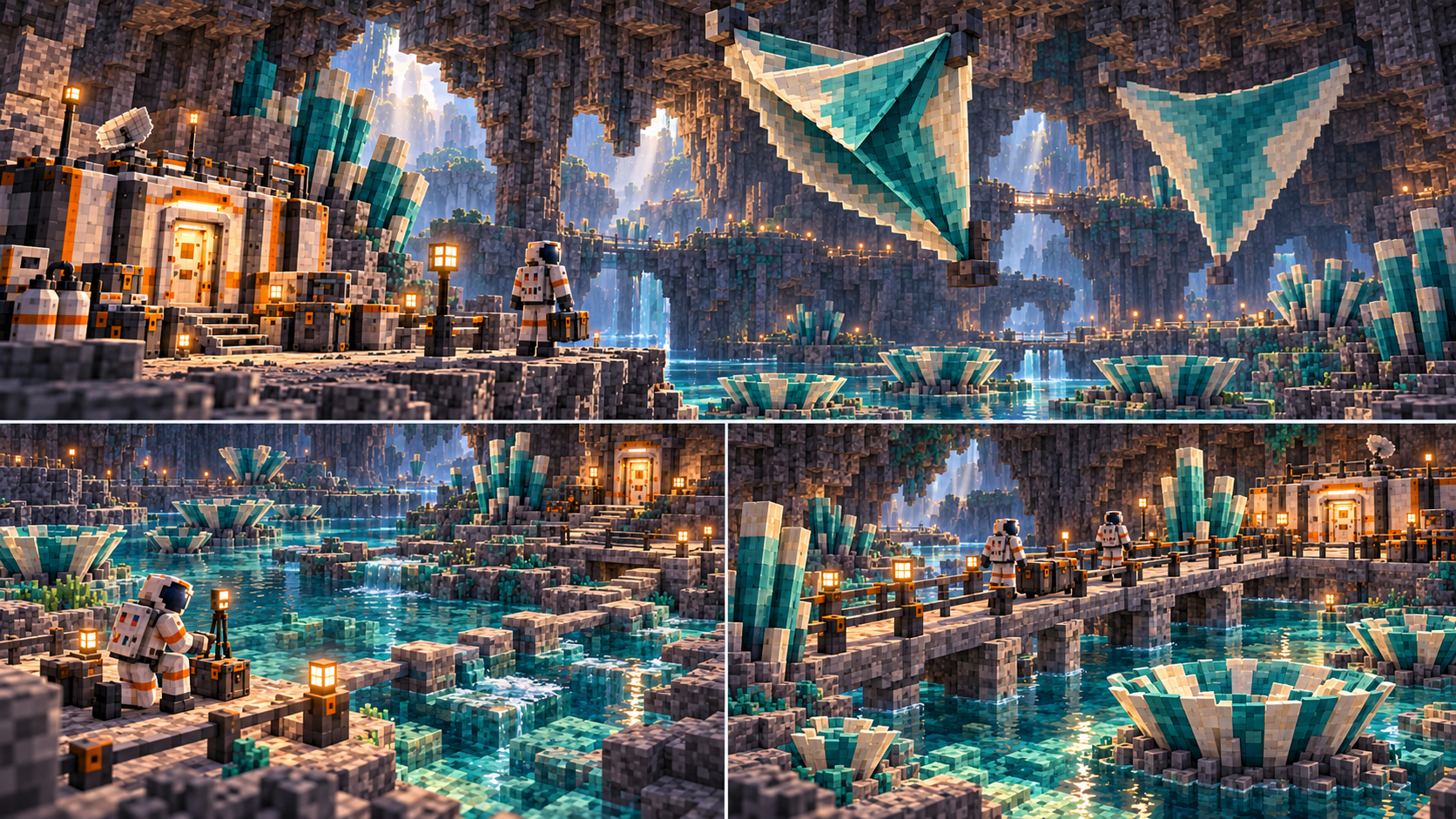
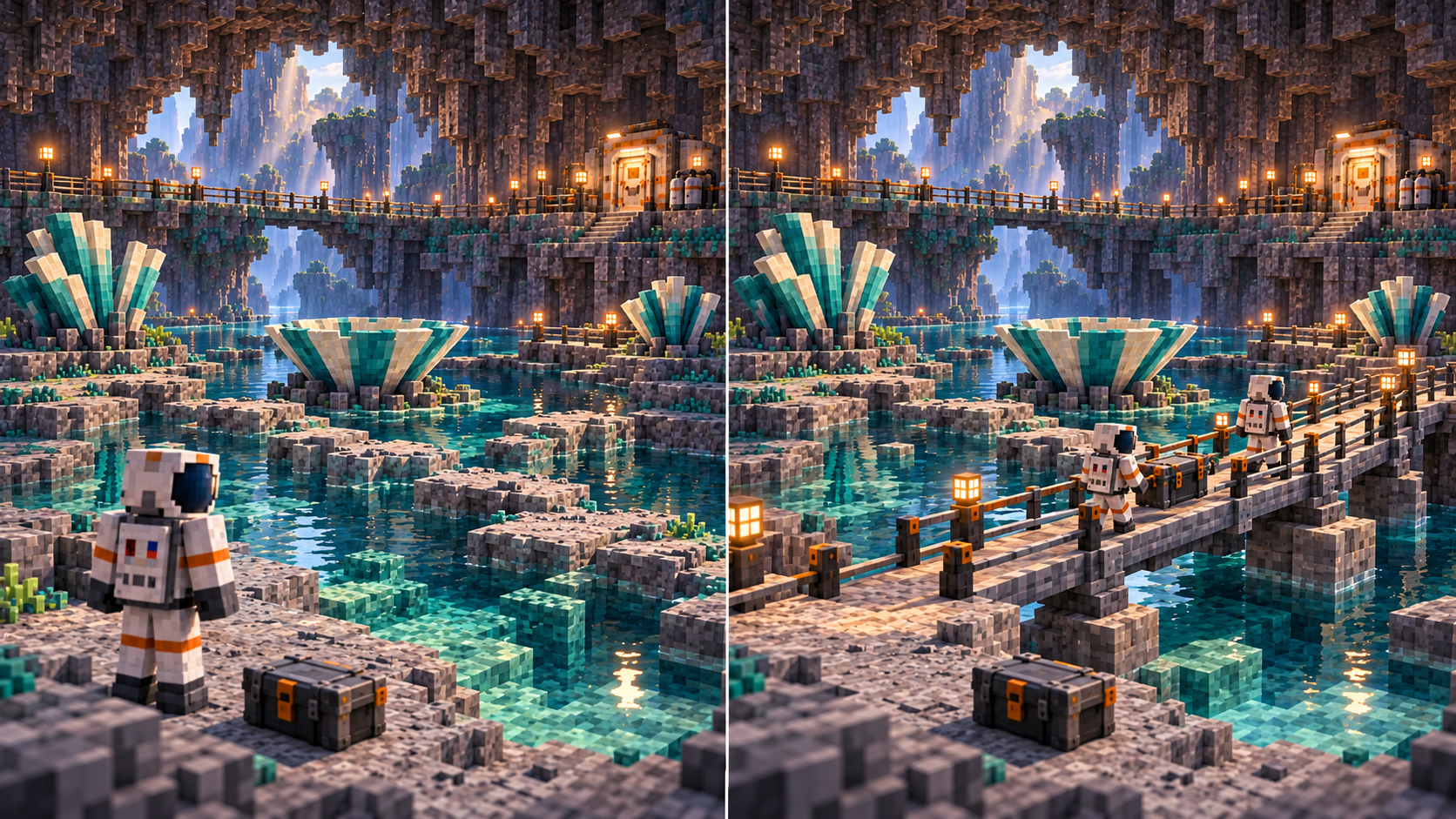
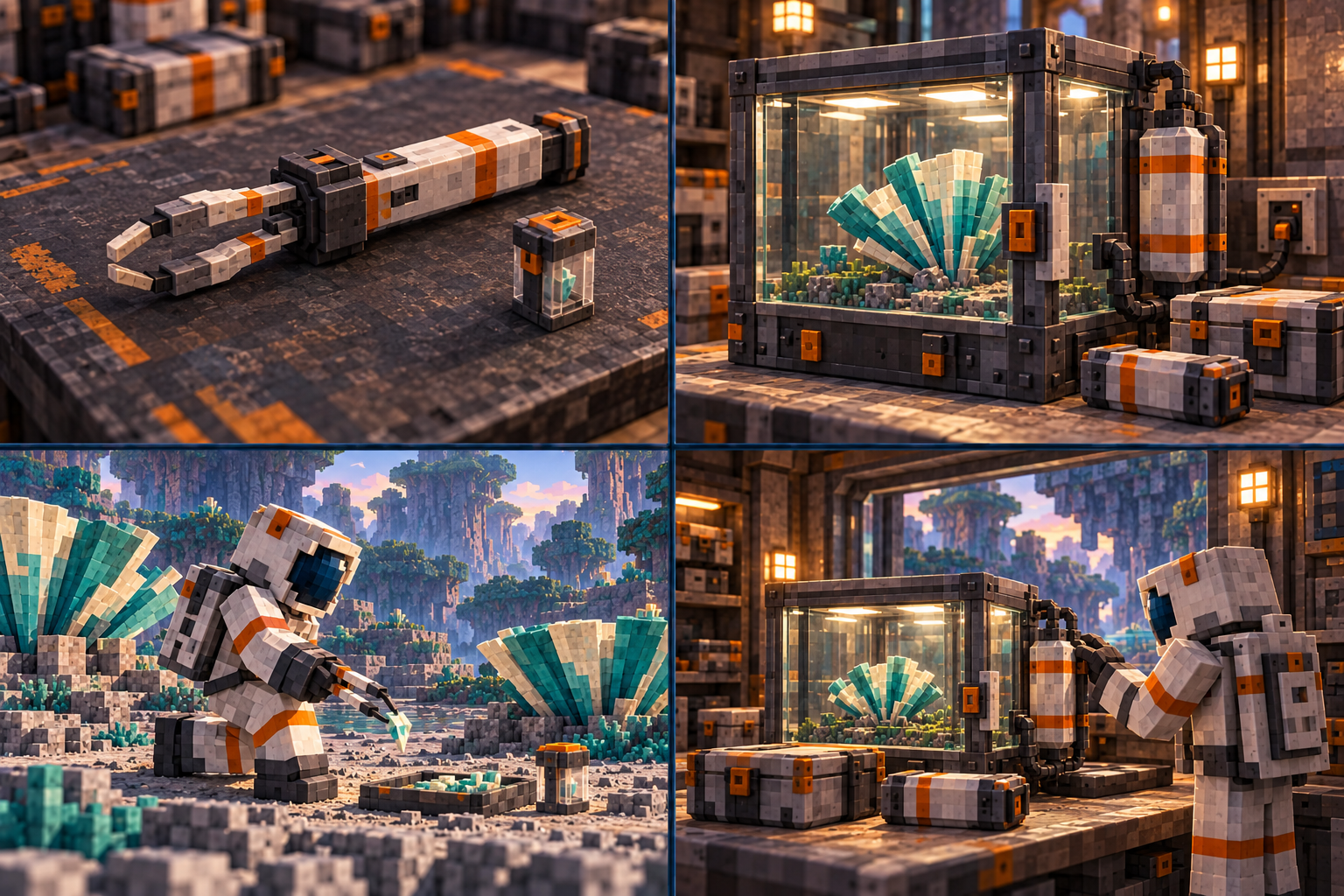
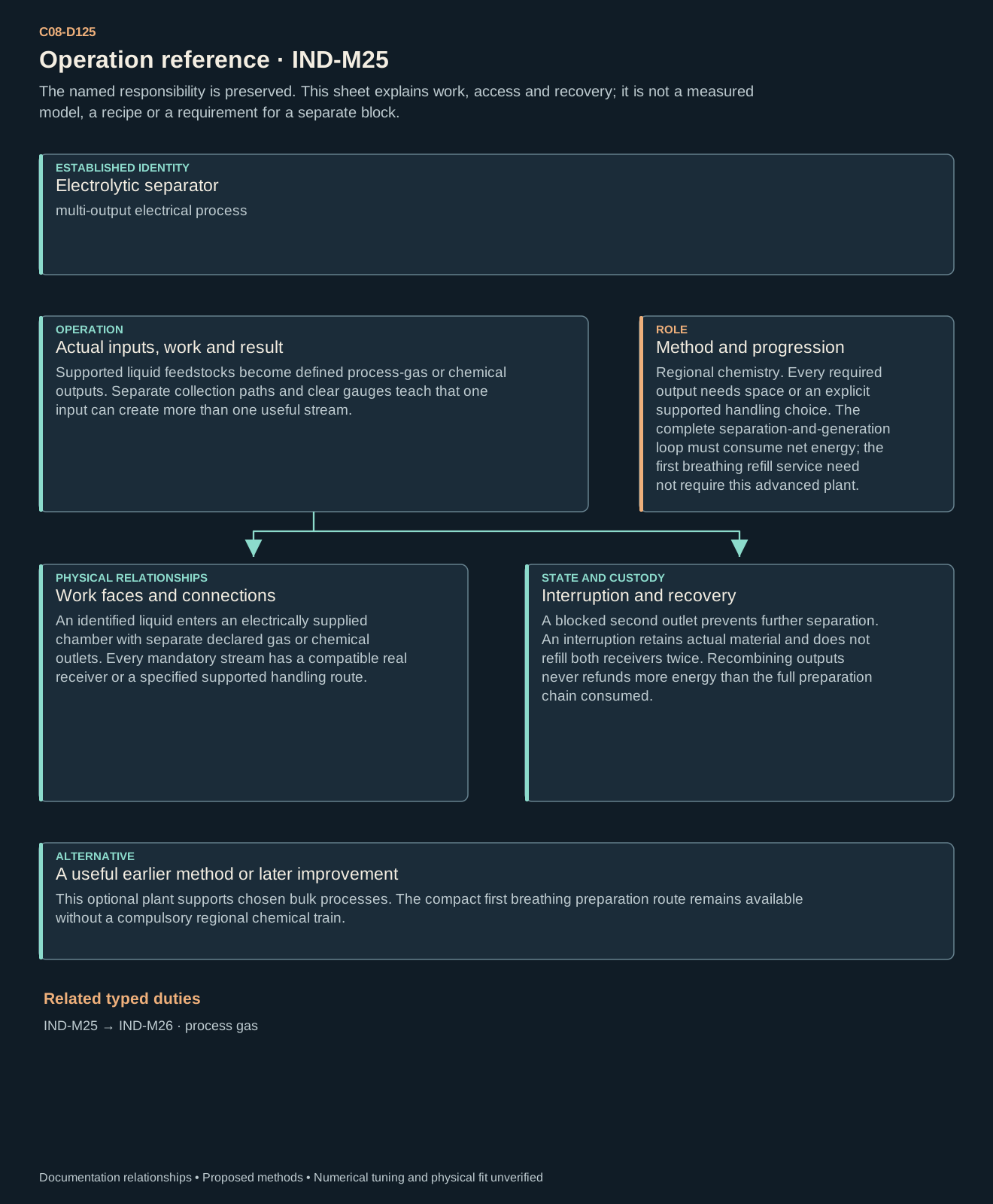
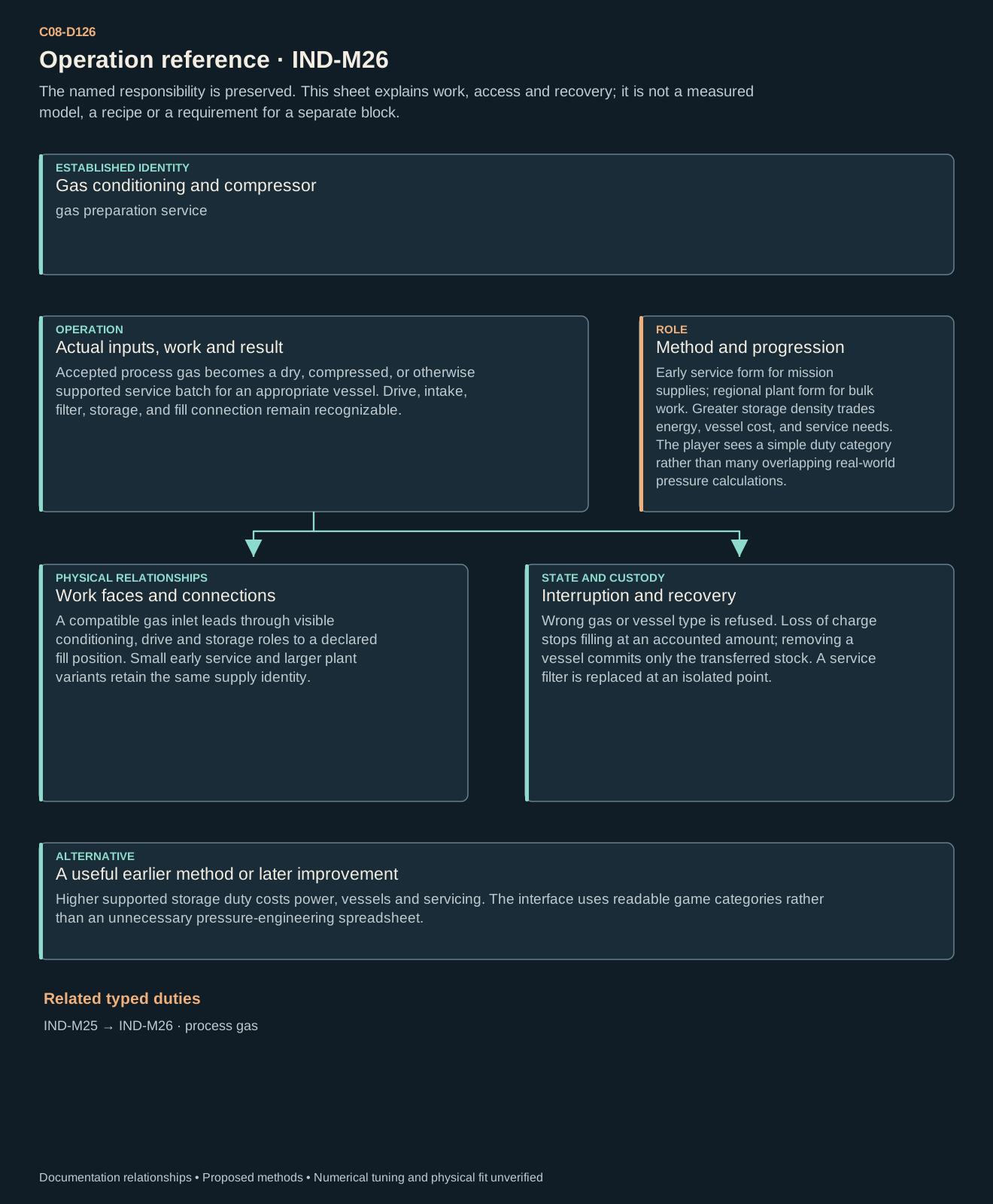
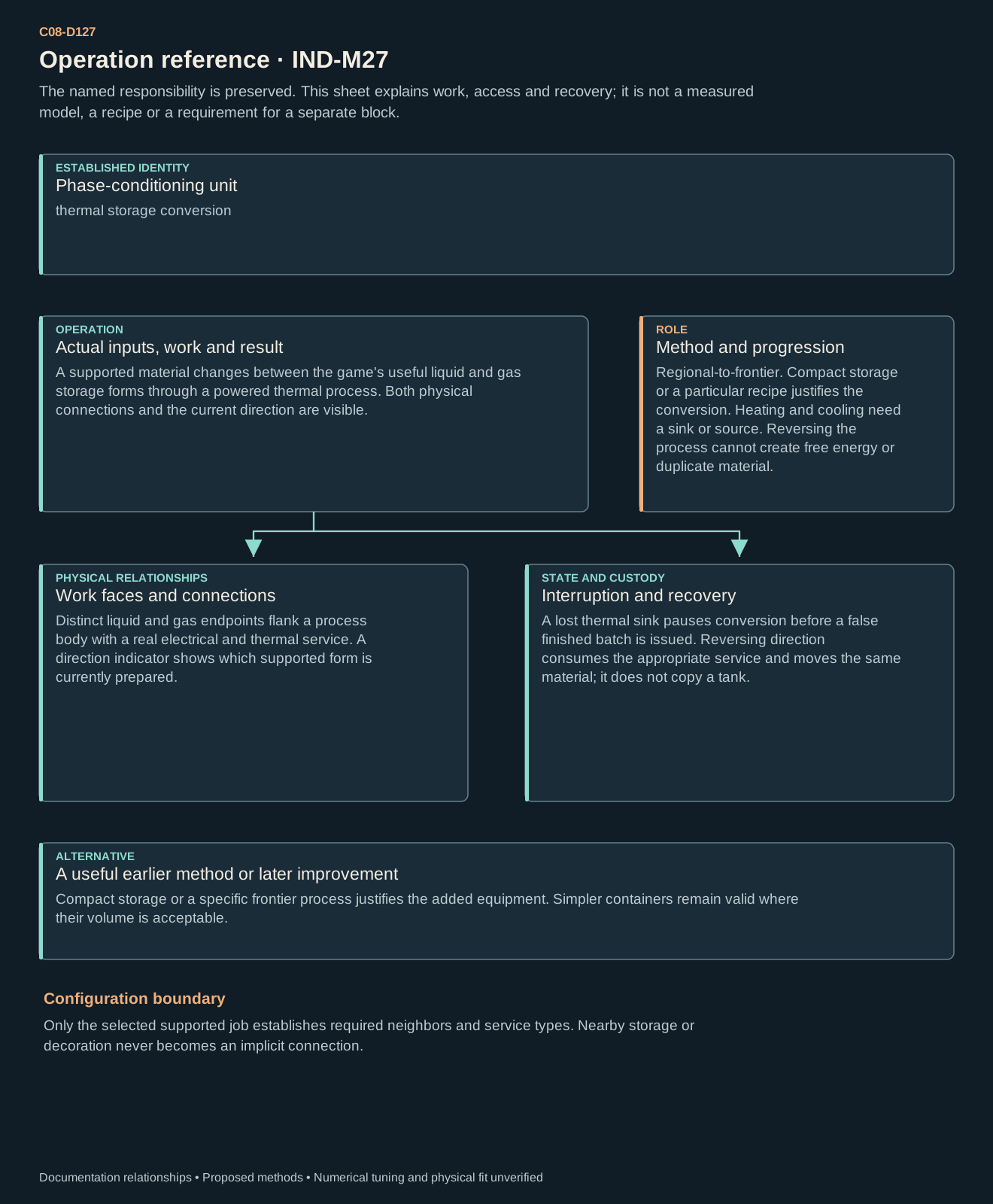
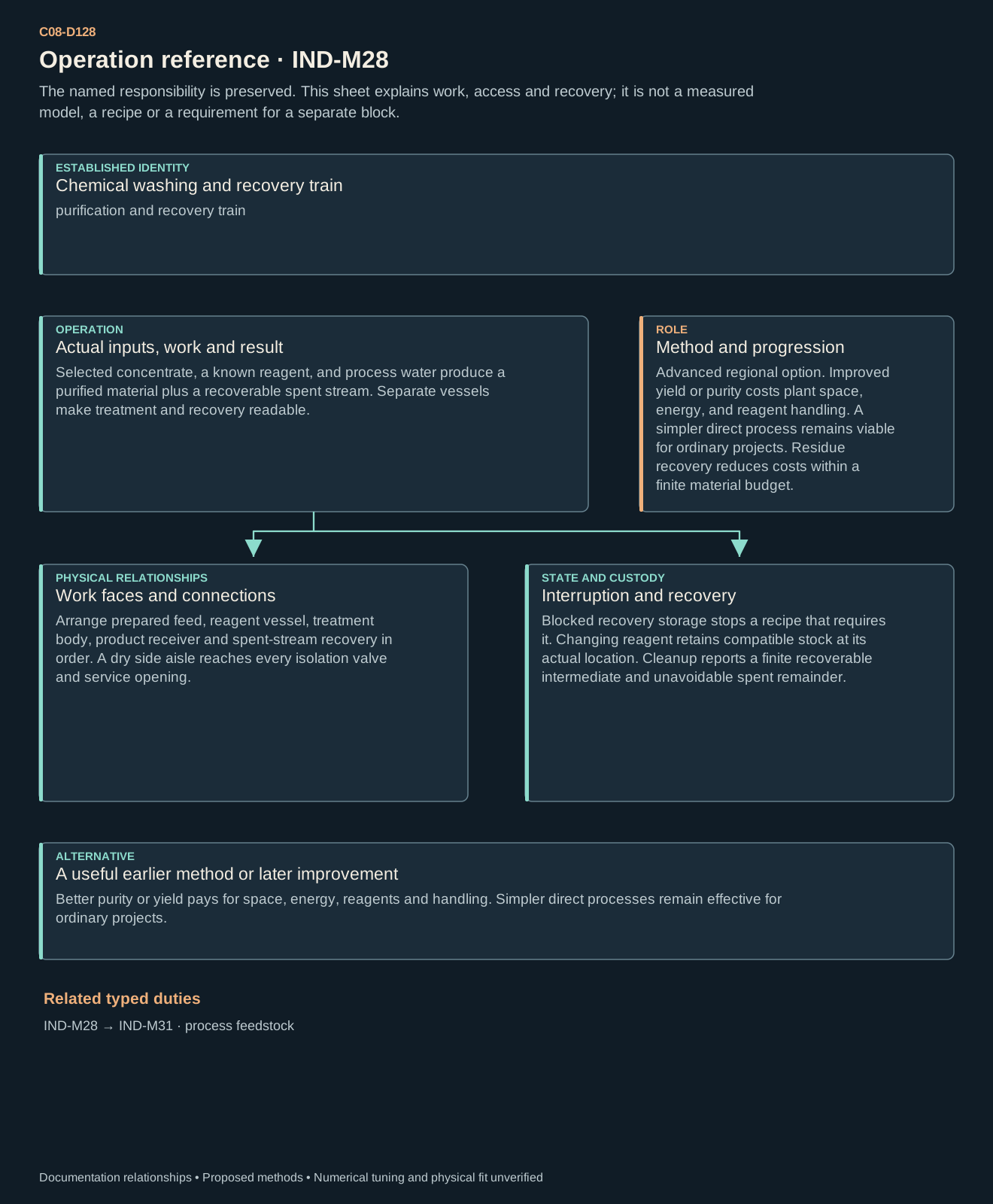
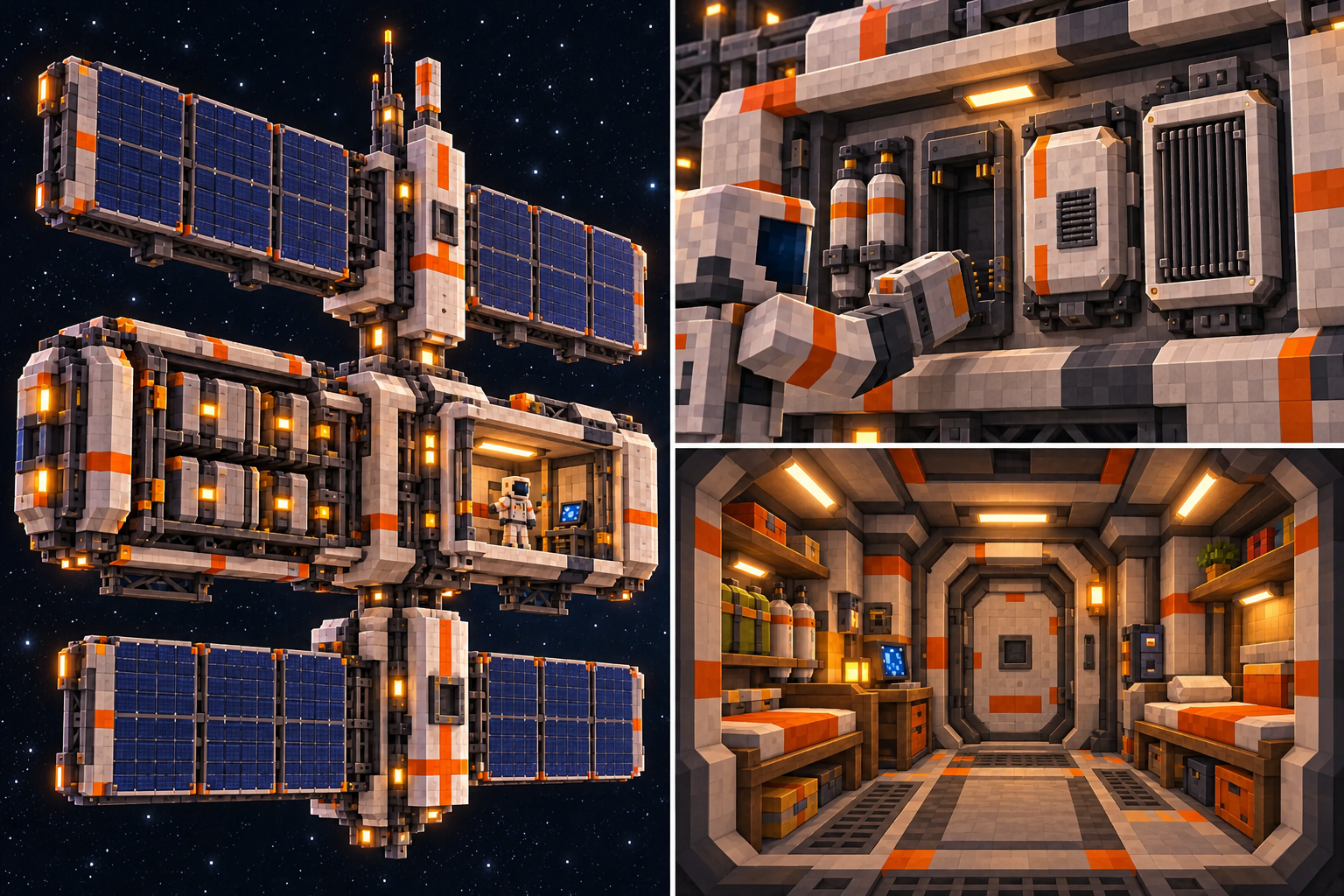
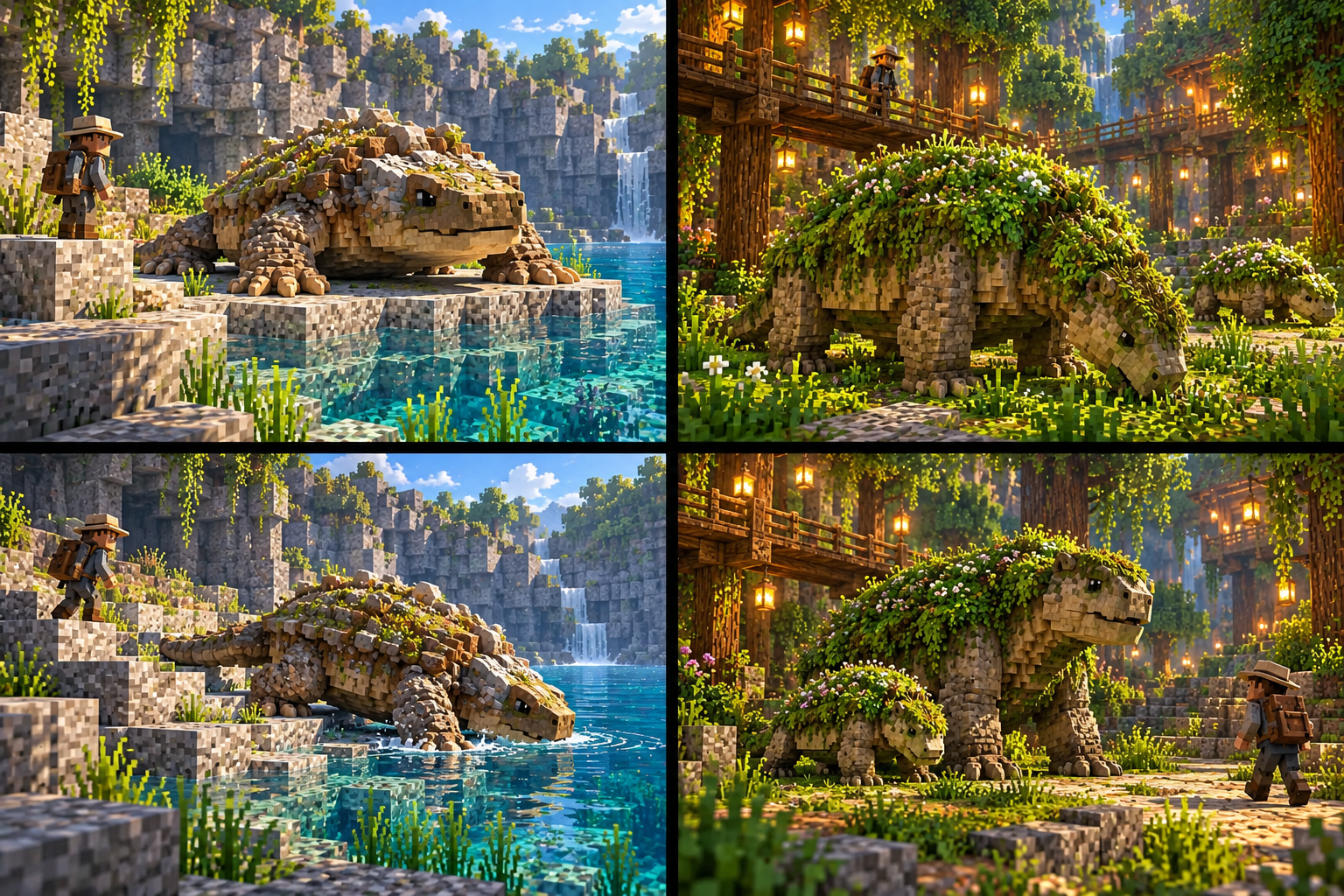
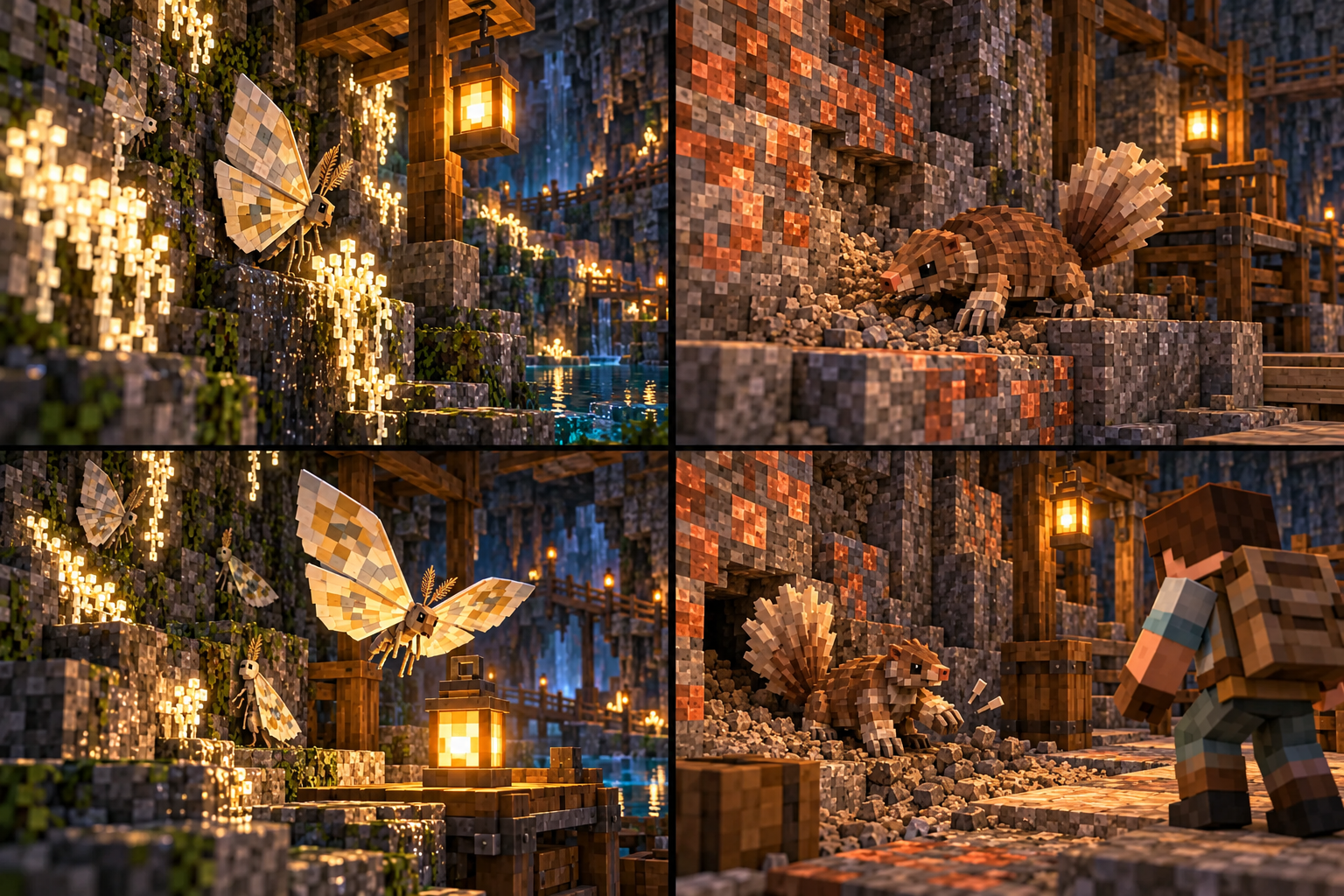
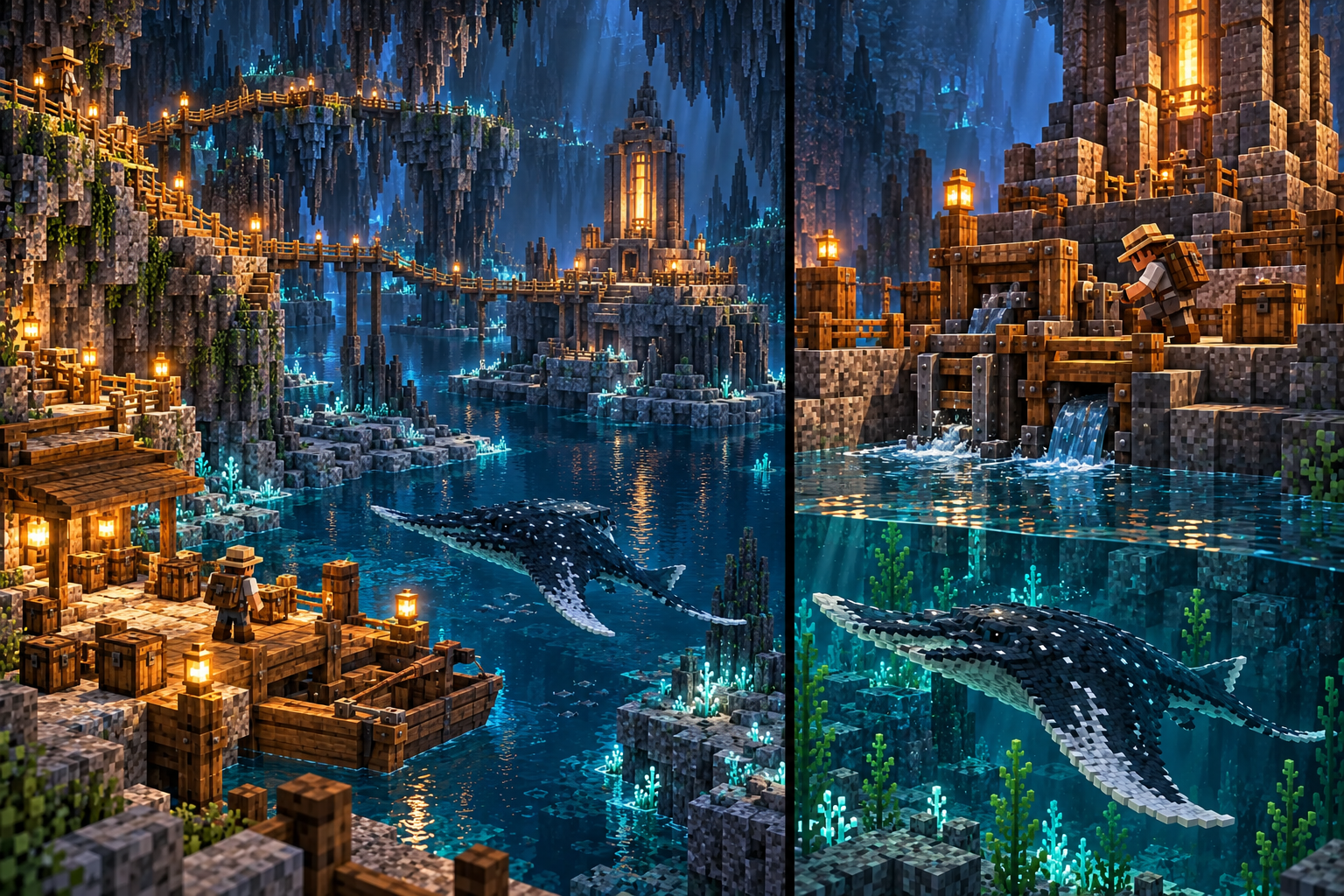
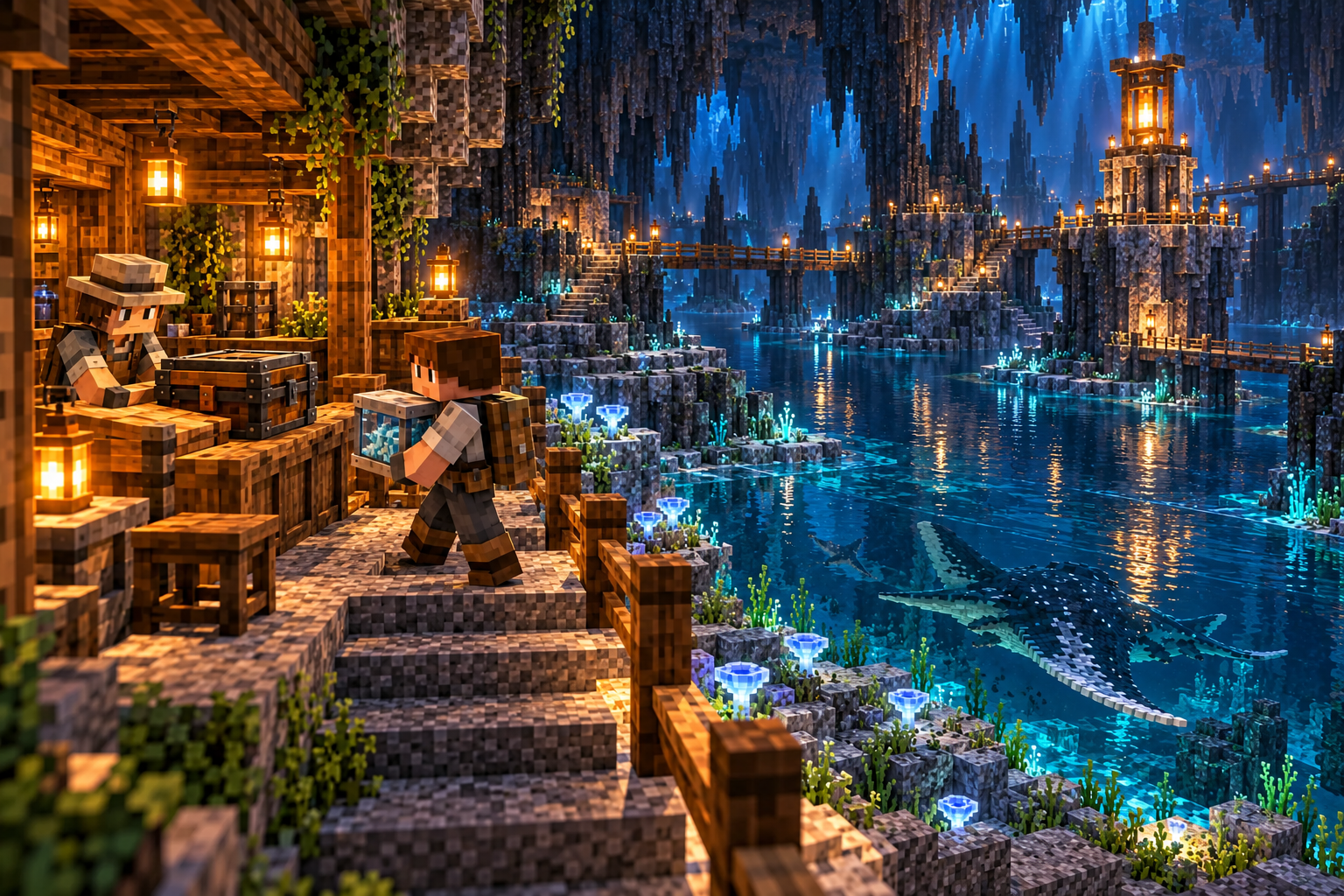
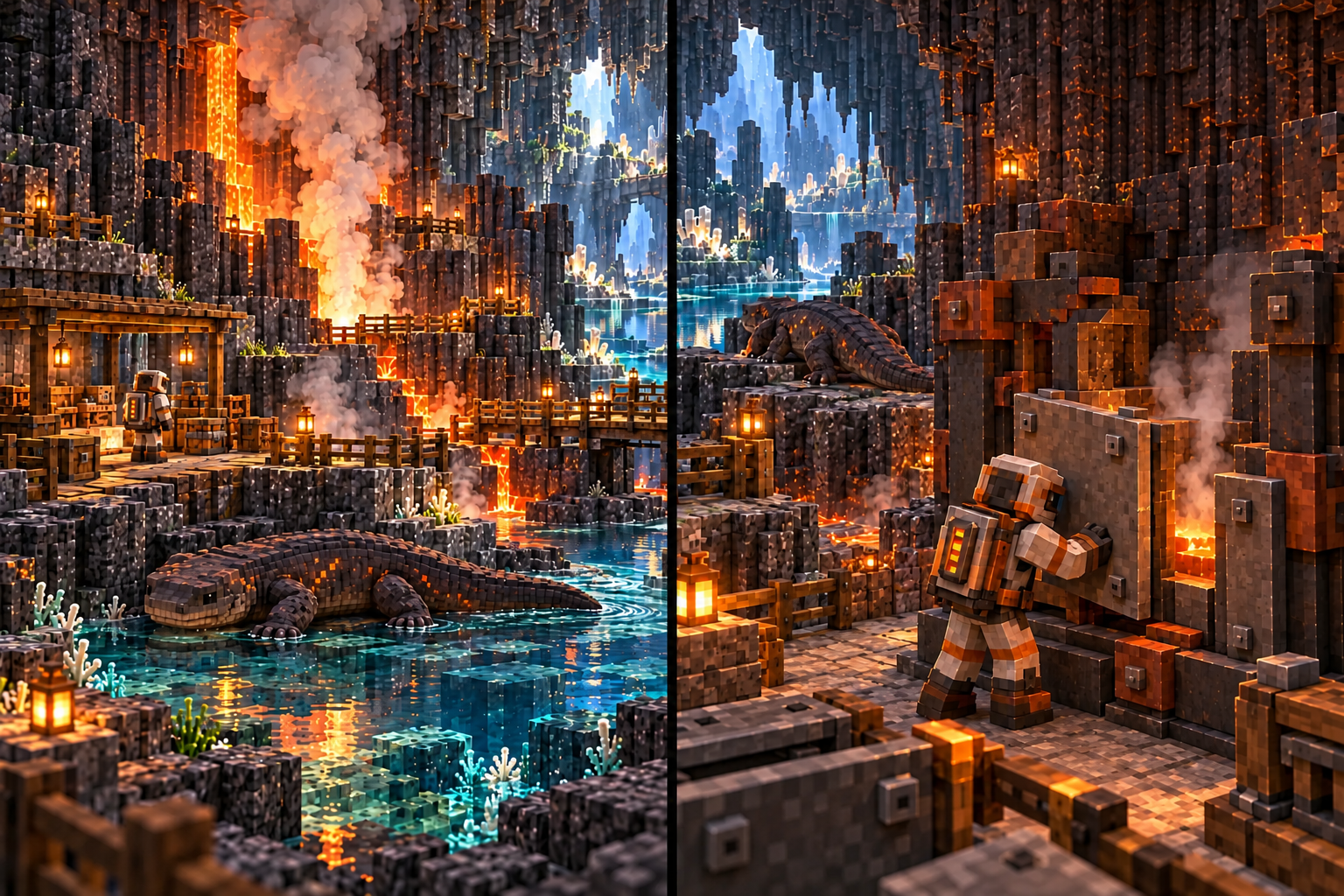
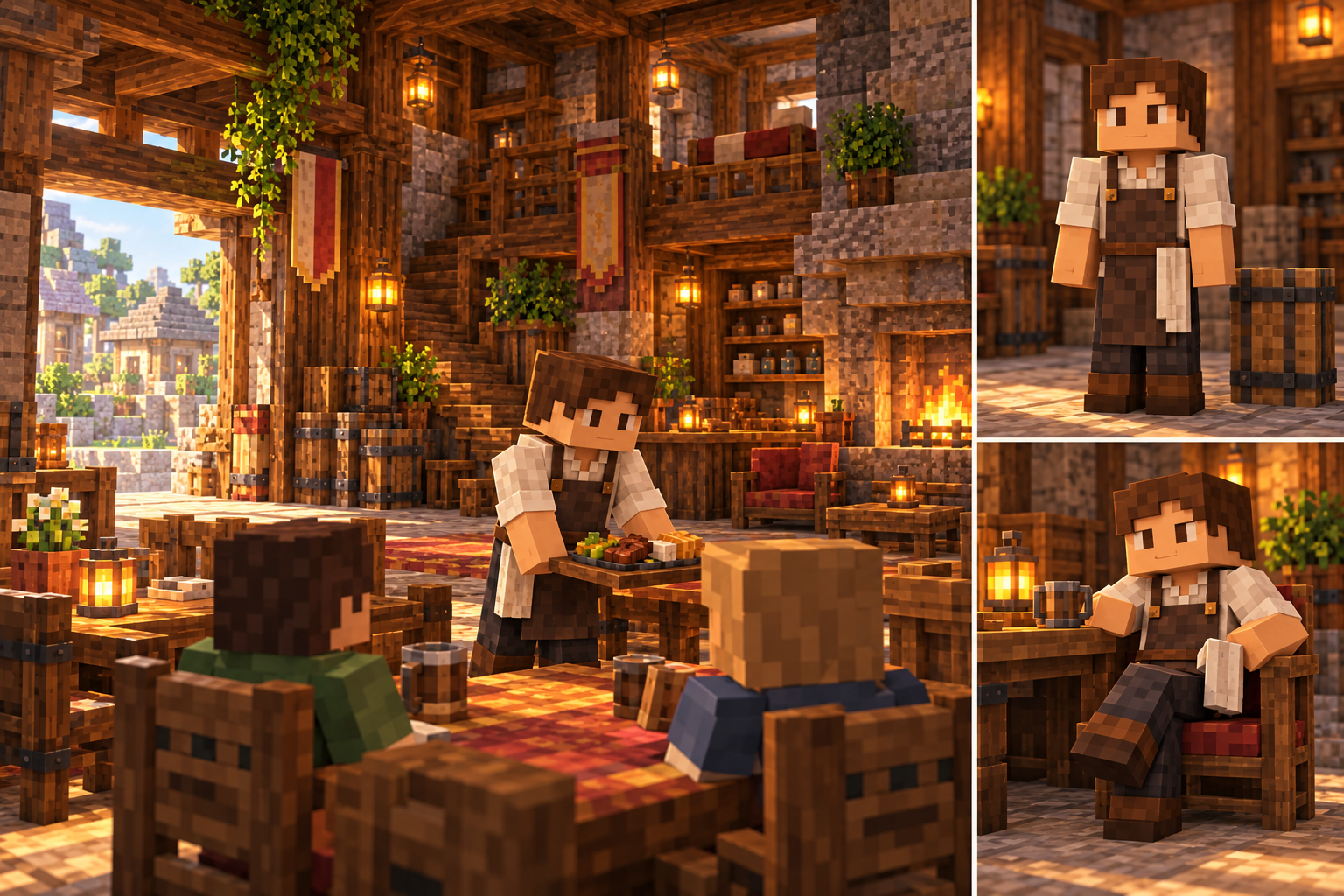
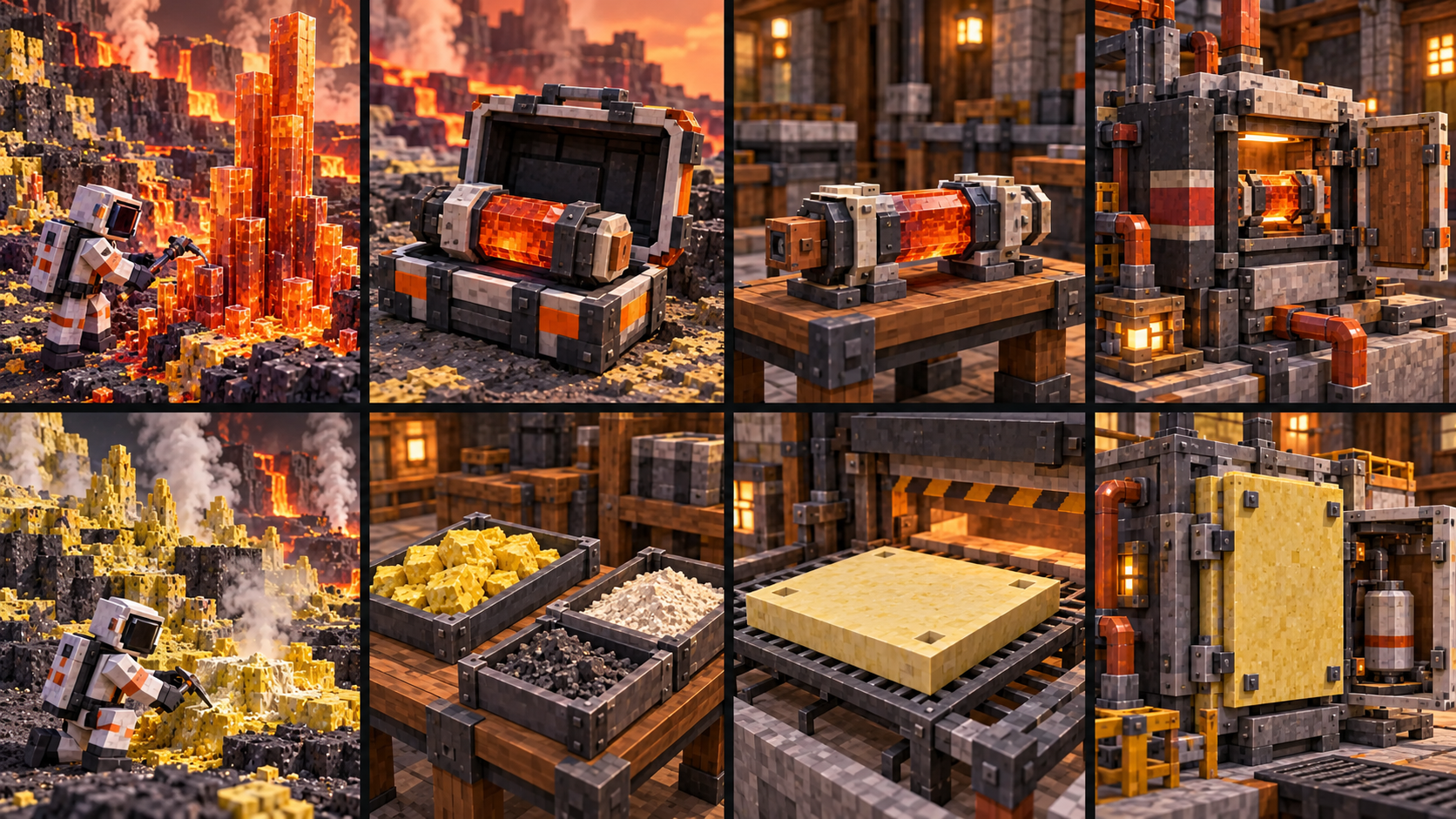
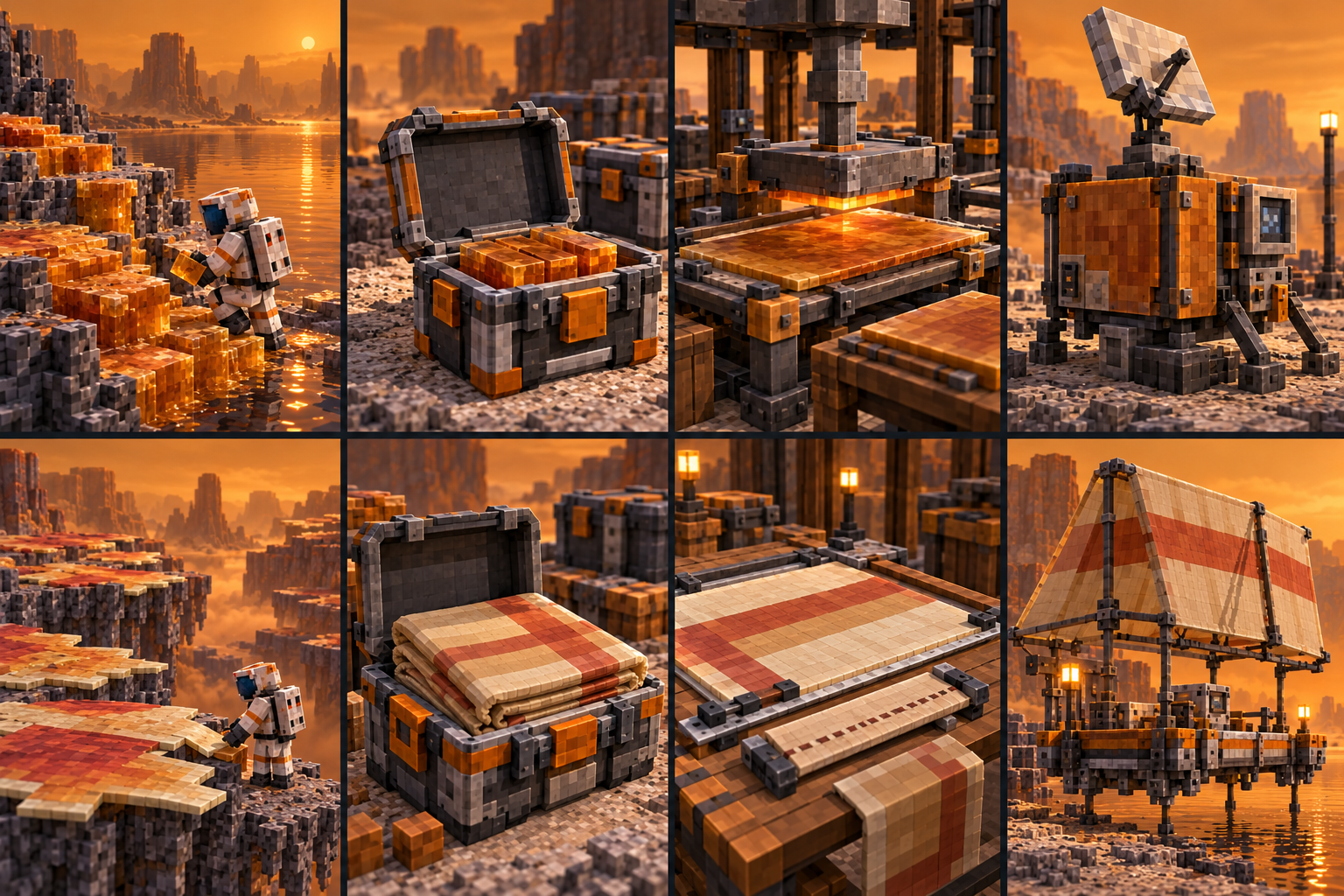
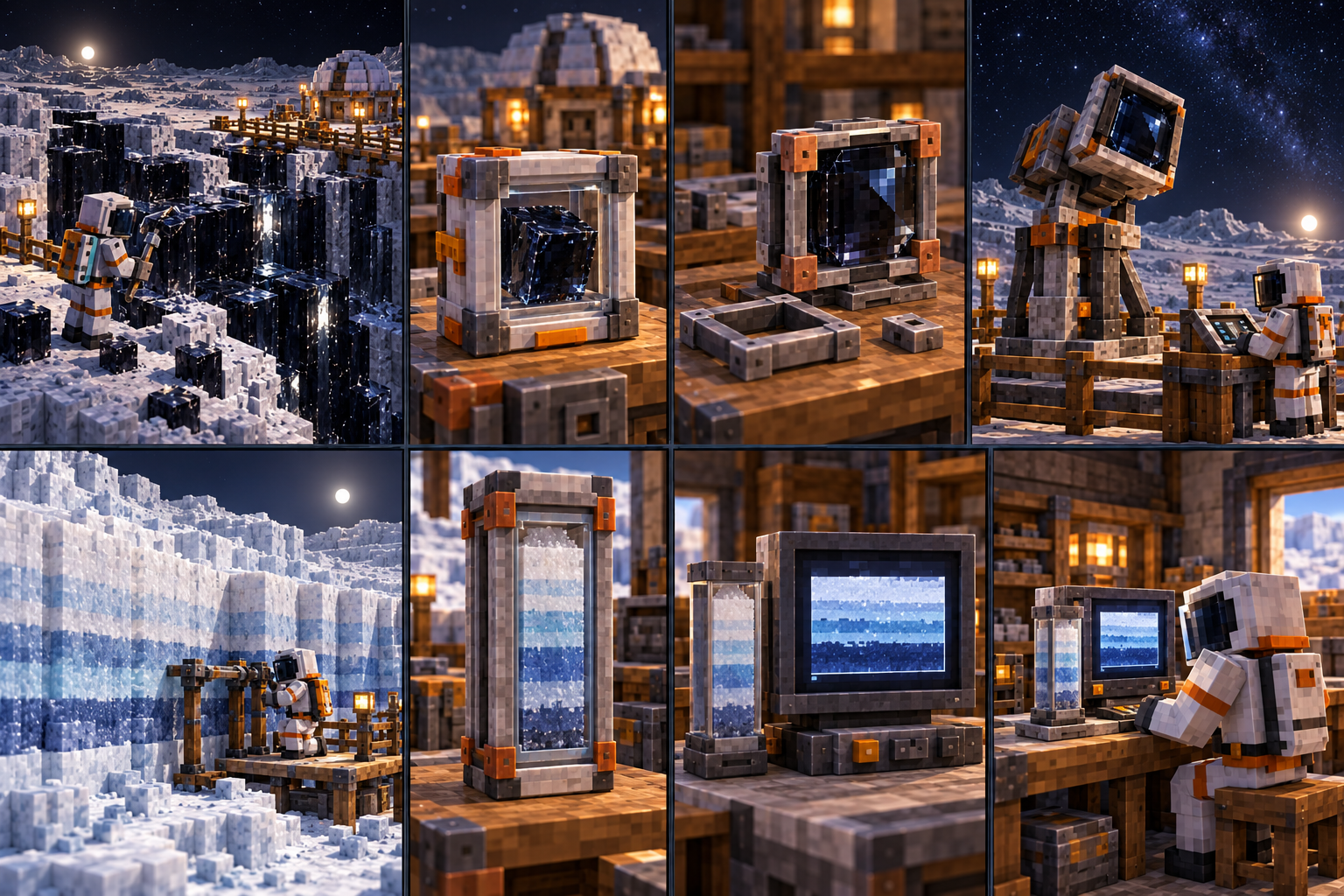
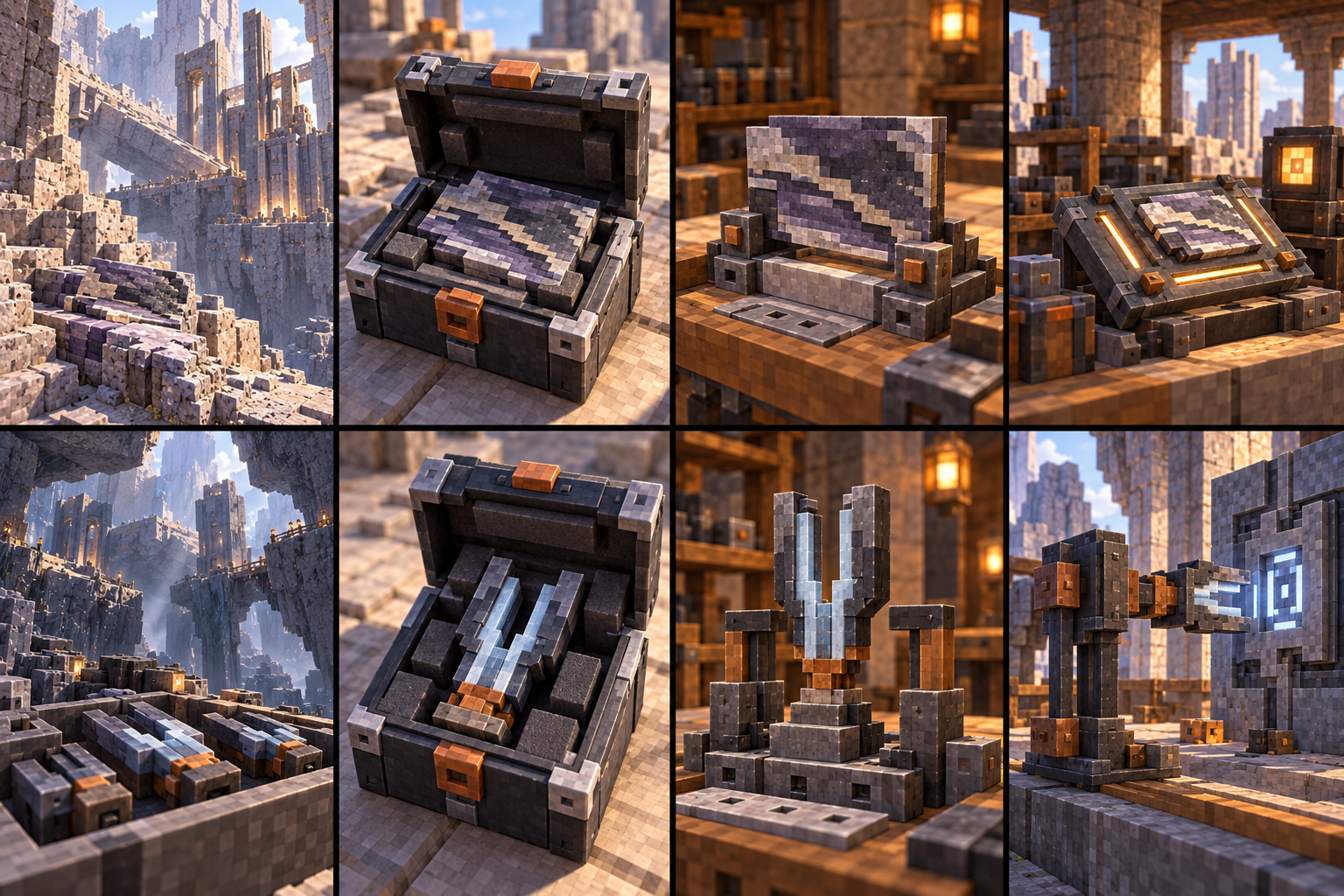
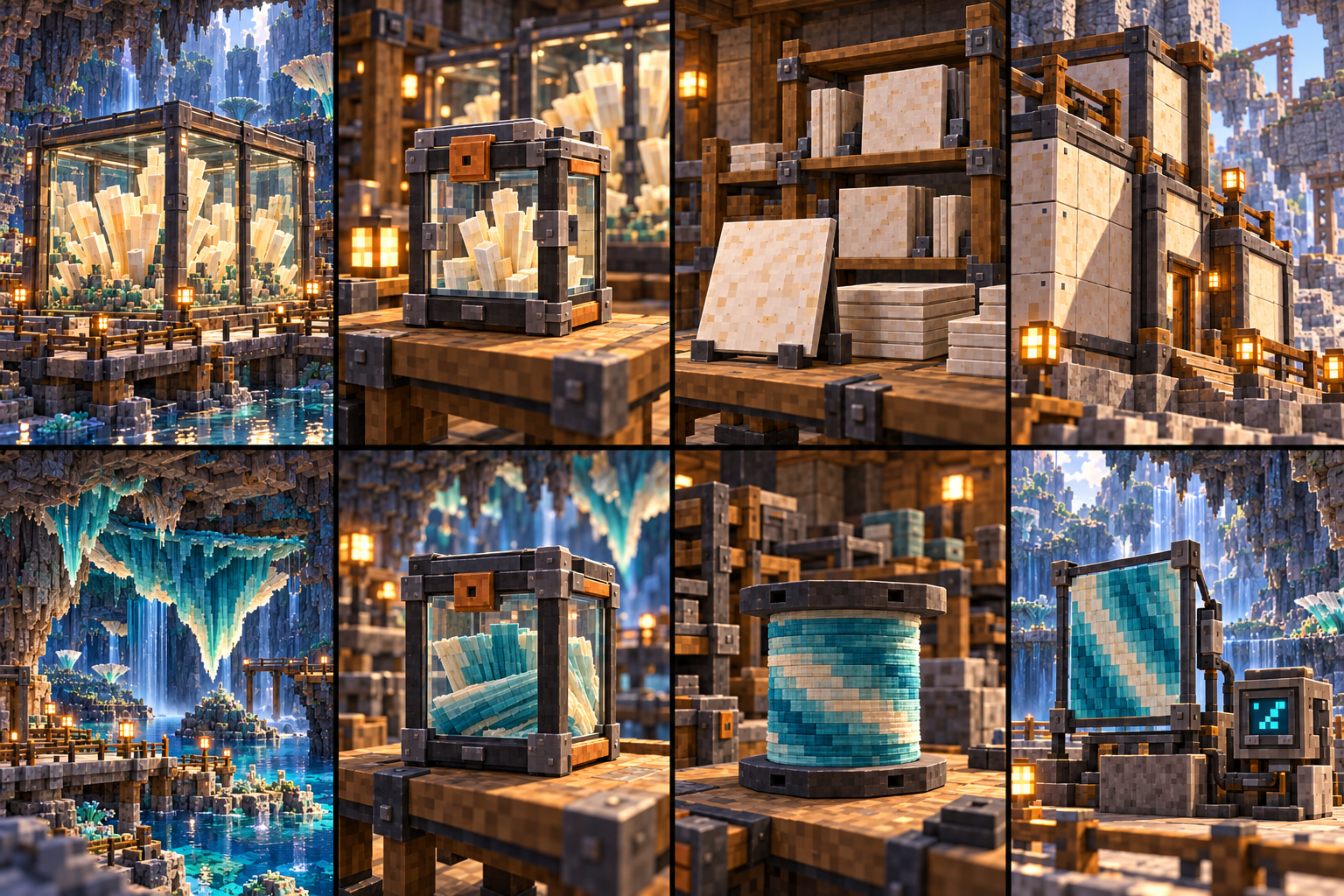
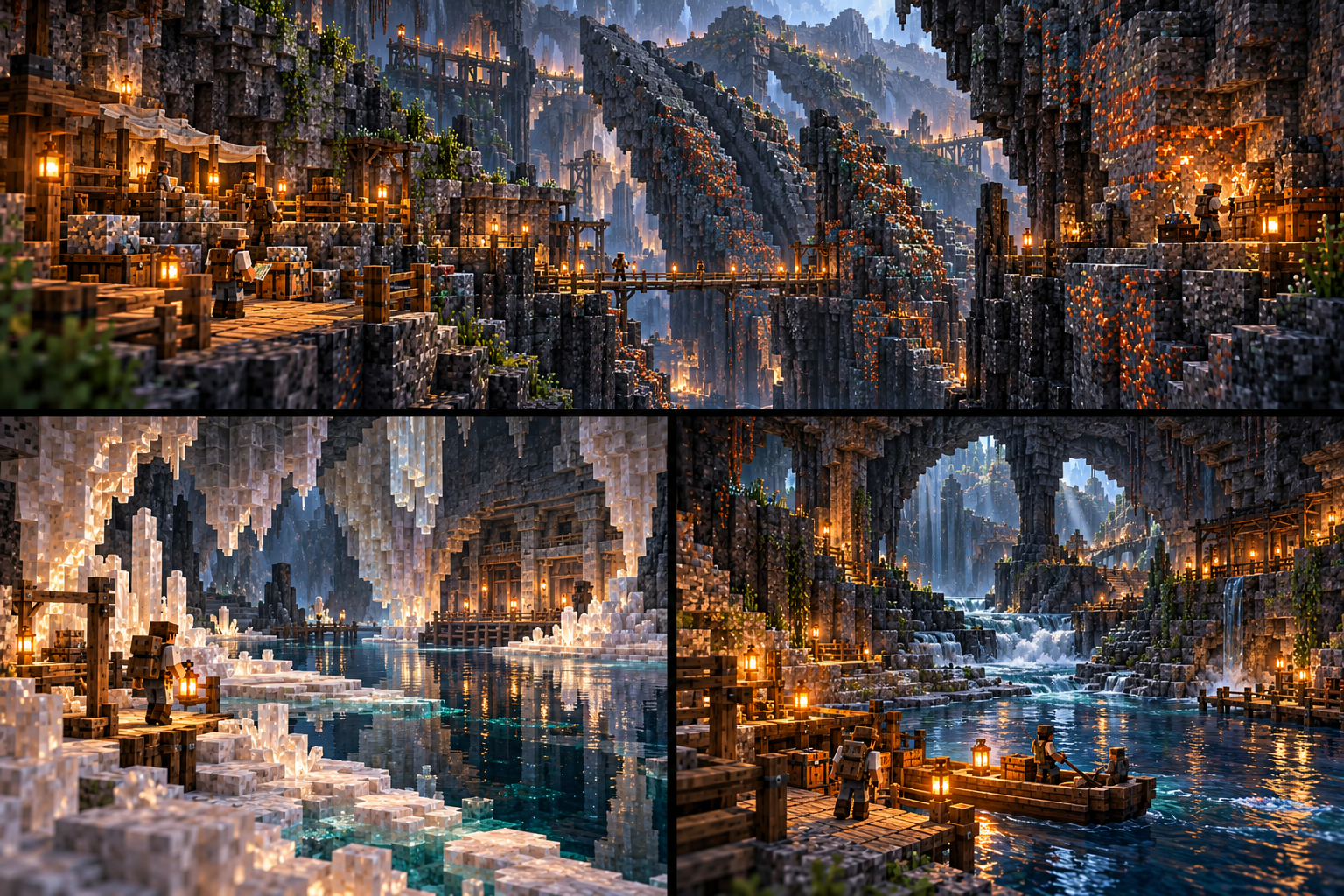
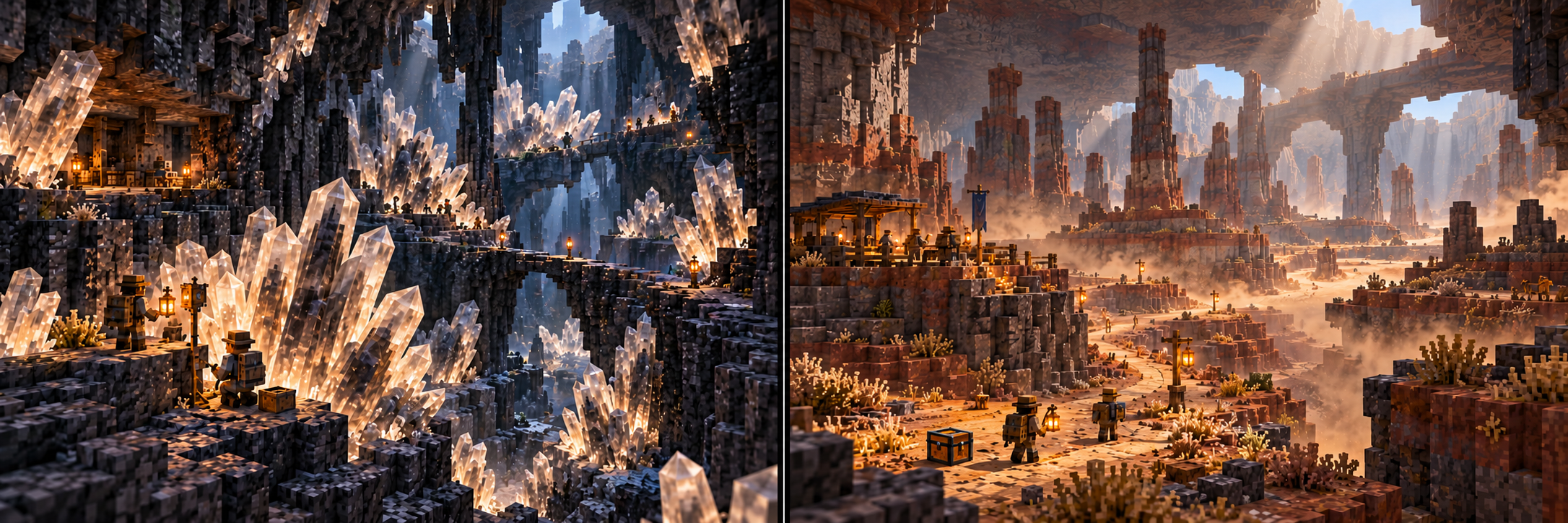
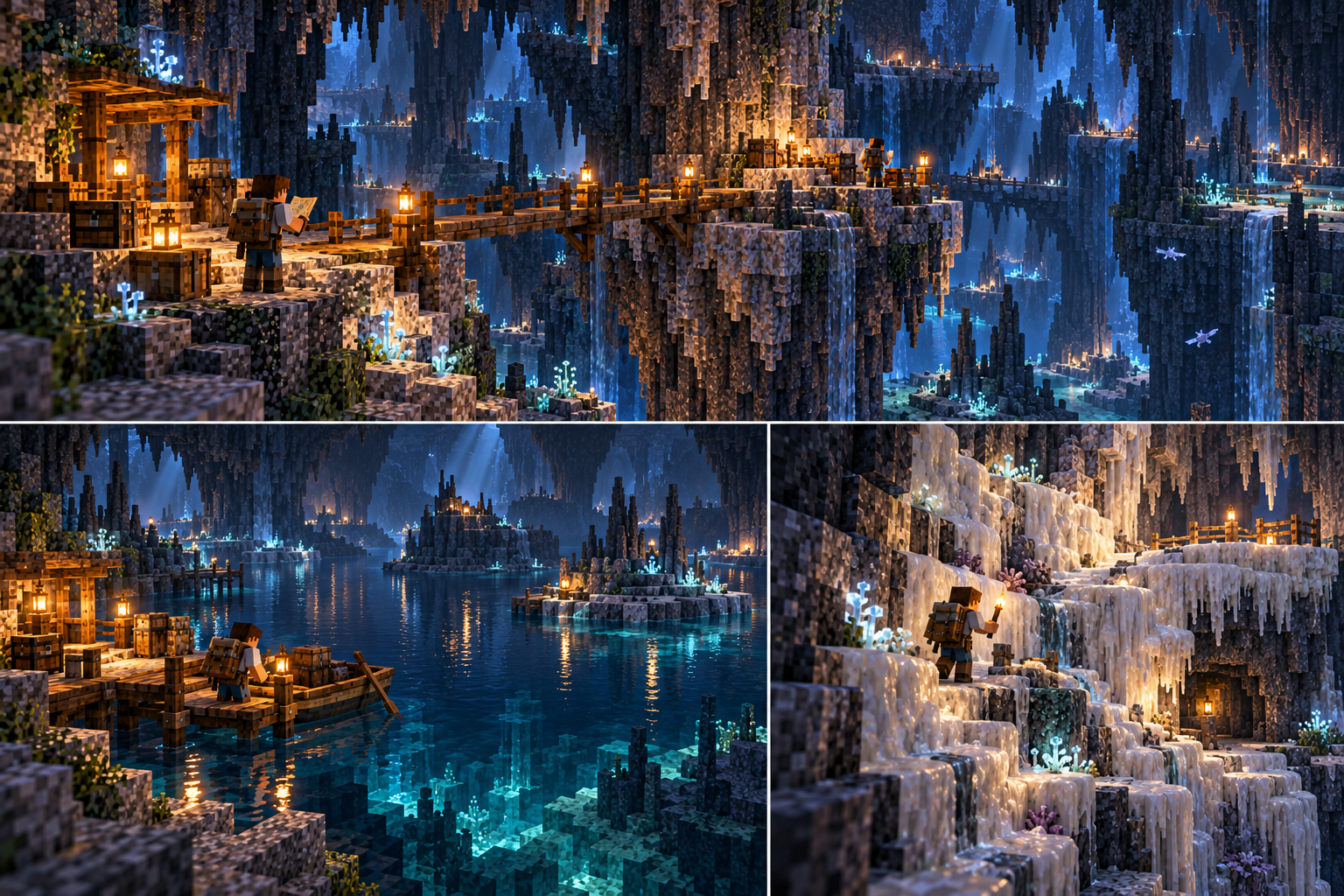
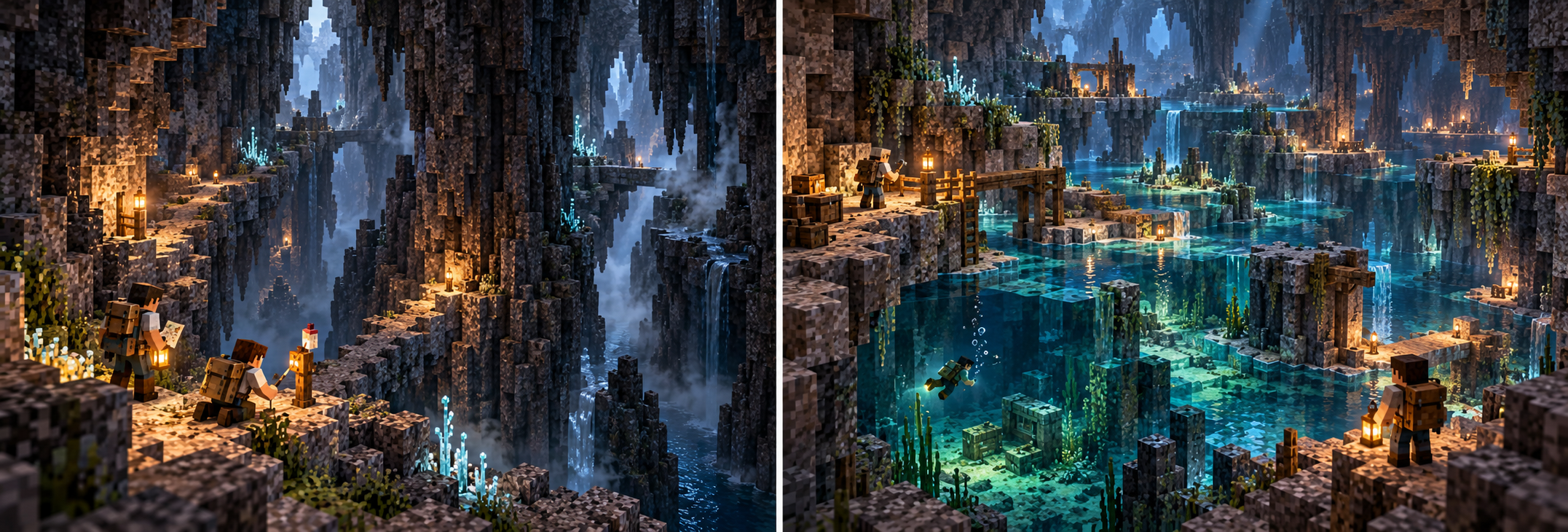
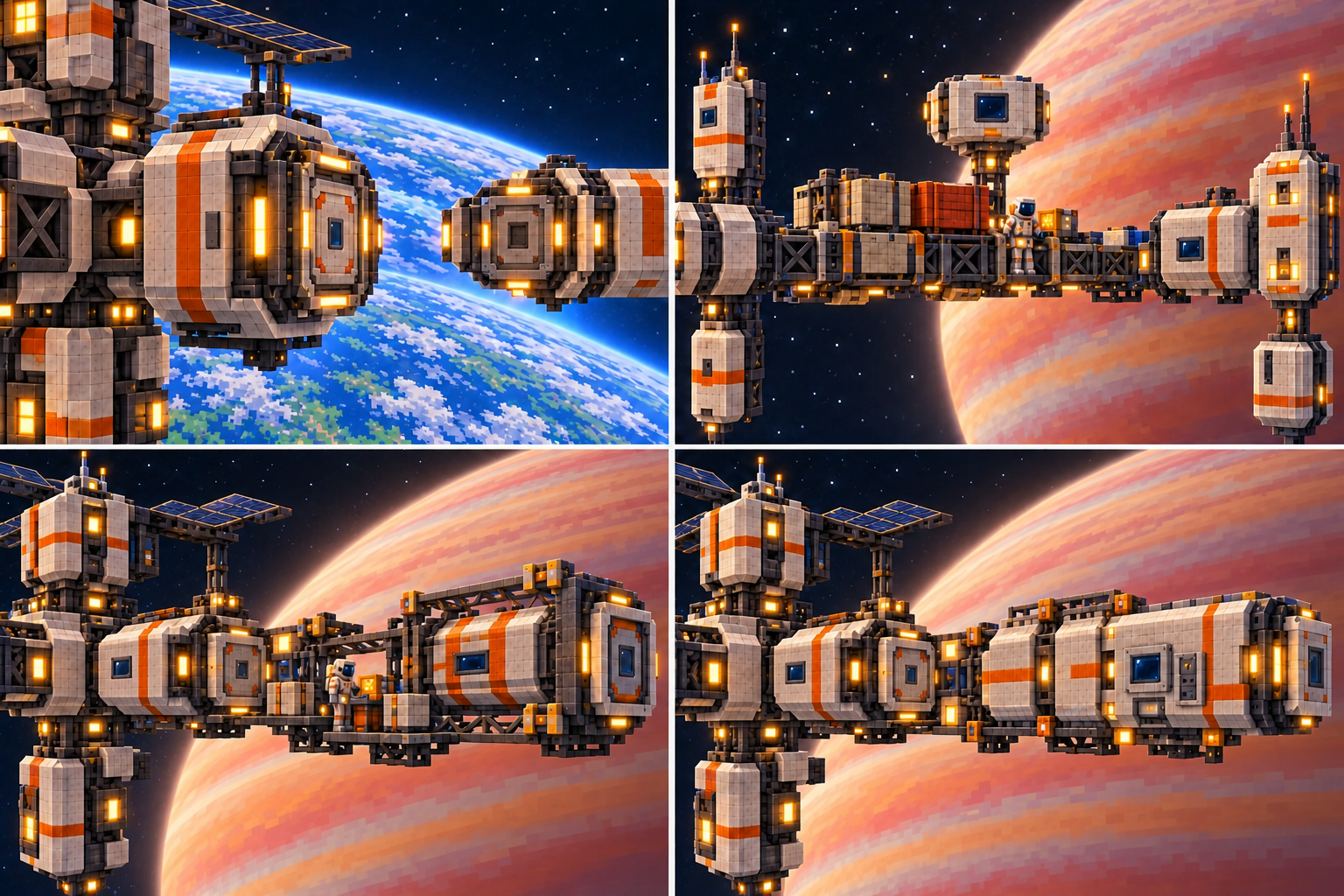
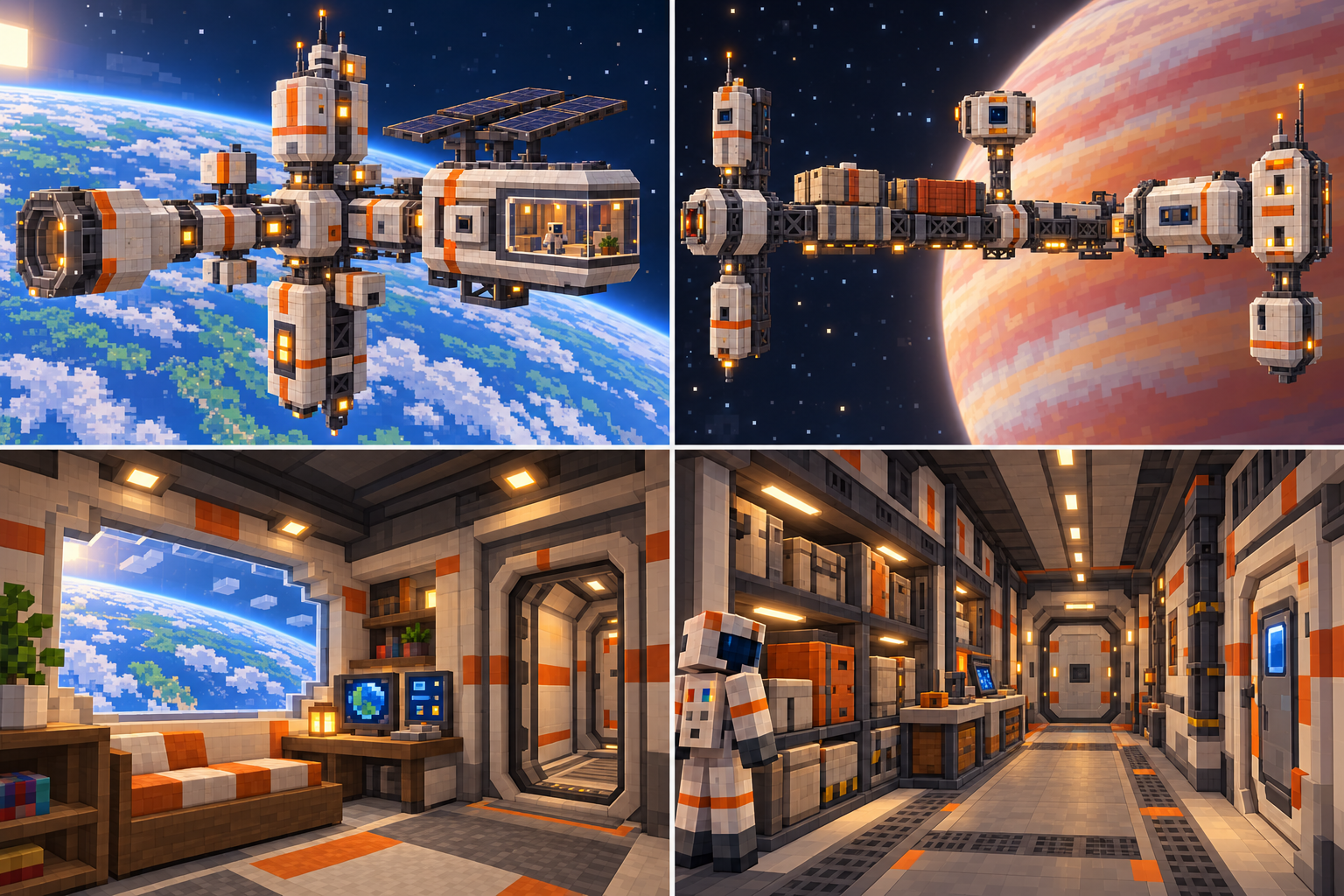
The whole journey
Follow preparation, discovery, homecoming and capability from Old Valley to the proposed ending.
The complete reference connects the places, work, discoveries and journeys that make SUBSTELLAR. Read by subject, follow the relationships, or review the preserved source in full.
This edition adds connected completion across the established vision. All earlier text, images and stable links remain preserved. Earlier edition introductions and pending labels retain their historical meaning; use the current coverage and decision records for the present status.
Coverage and remaining responsibilities · Consequential open choices · Source, evidence and rebuild
Each entrance connects the latest explanation to the full established detail.
Follow preparation, discovery, homecoming and capability from Old Valley to the proposed ending.
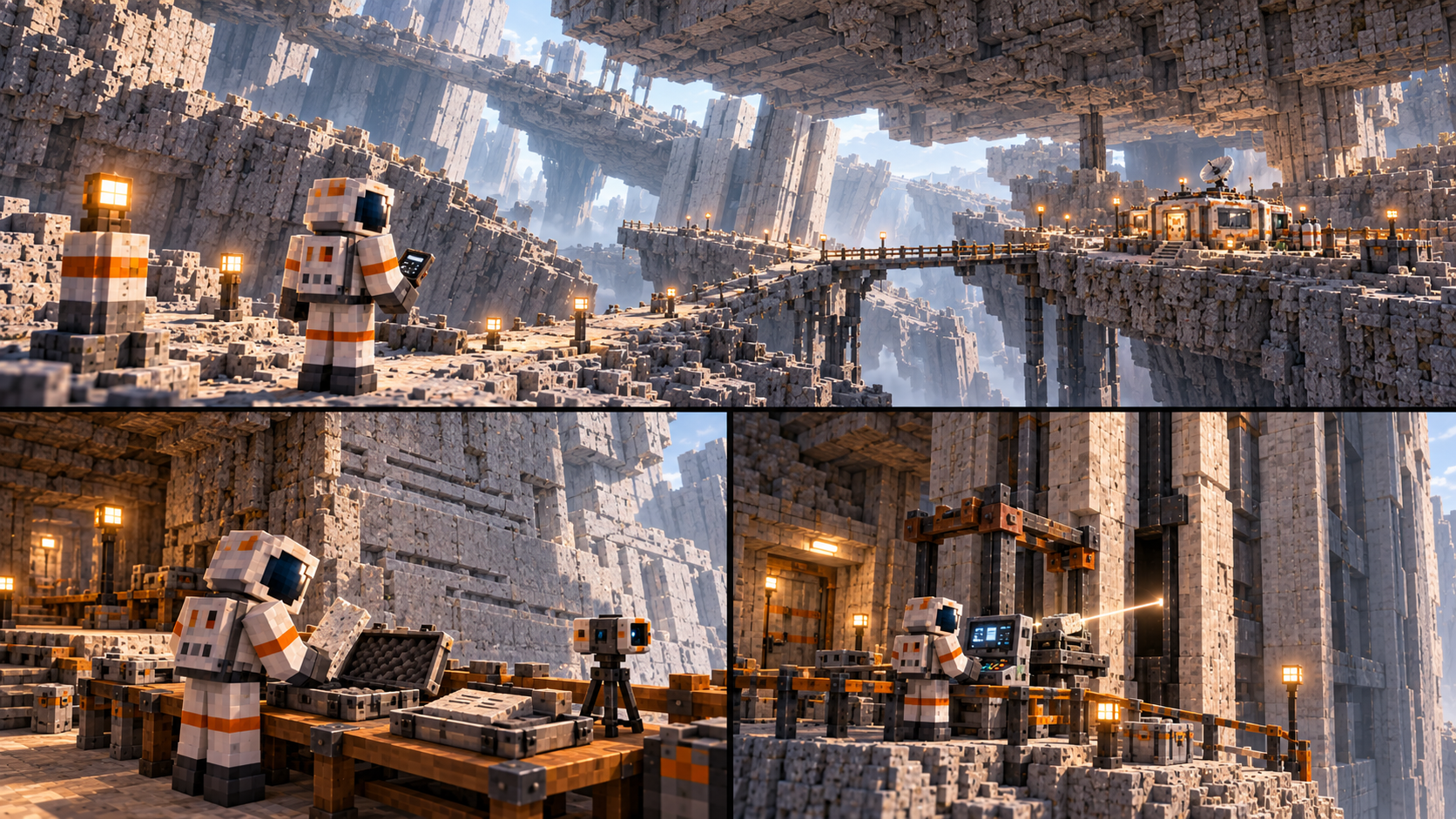
This preserved source describes Afterlight, Cairn or Morrow. It is proposed creative direction, not implemented game content.
Read Earth, Moon and Mars alongside the seven complete farther campaigns.
Connect the 66 responsibilities, useful configurations, actual stock and material applications.
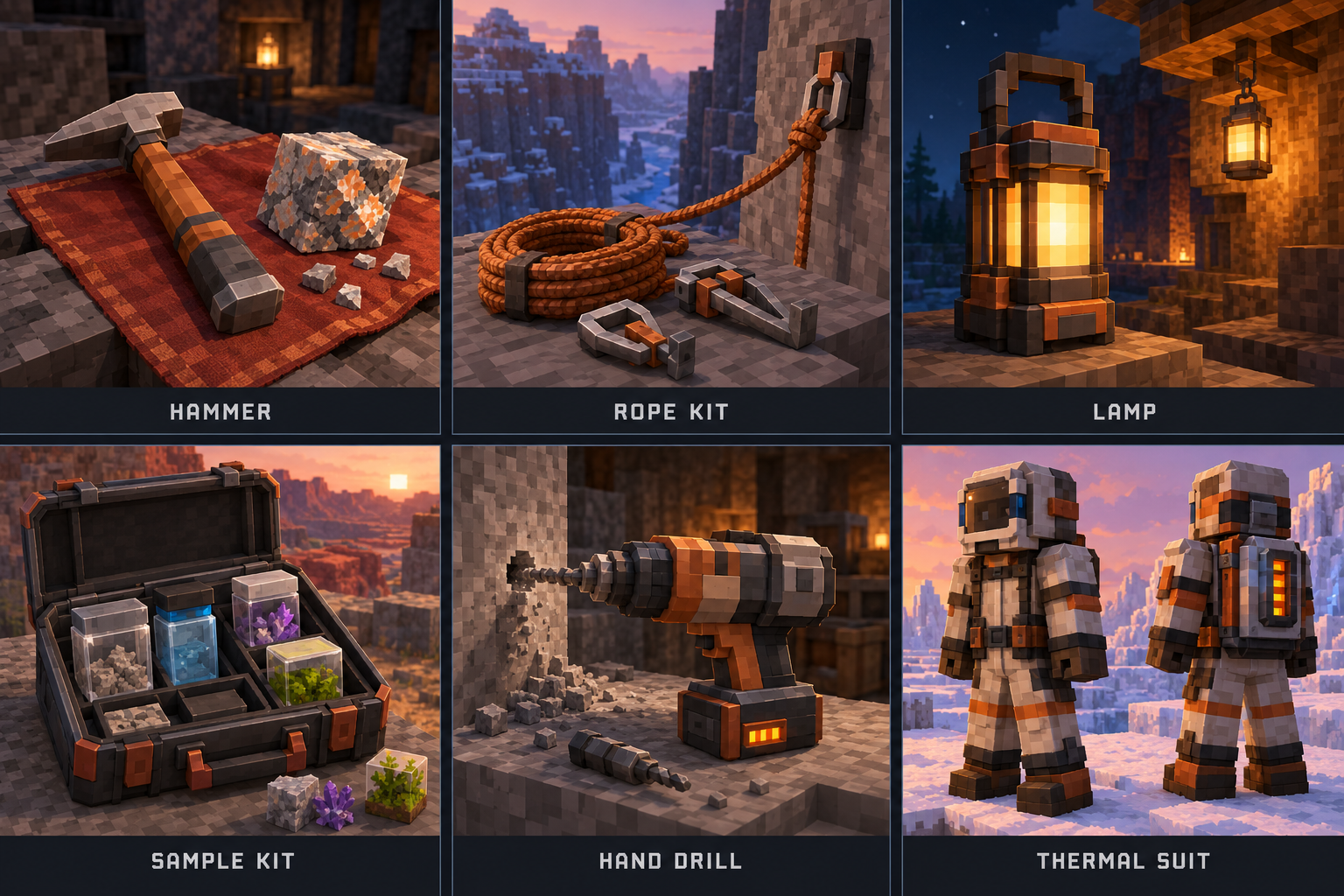
Choose and care for all 32 equipment families through actual field duties.
This preserved source describes Afterlight, Cairn or Morrow. It is proposed creative direction, not implemented game content.
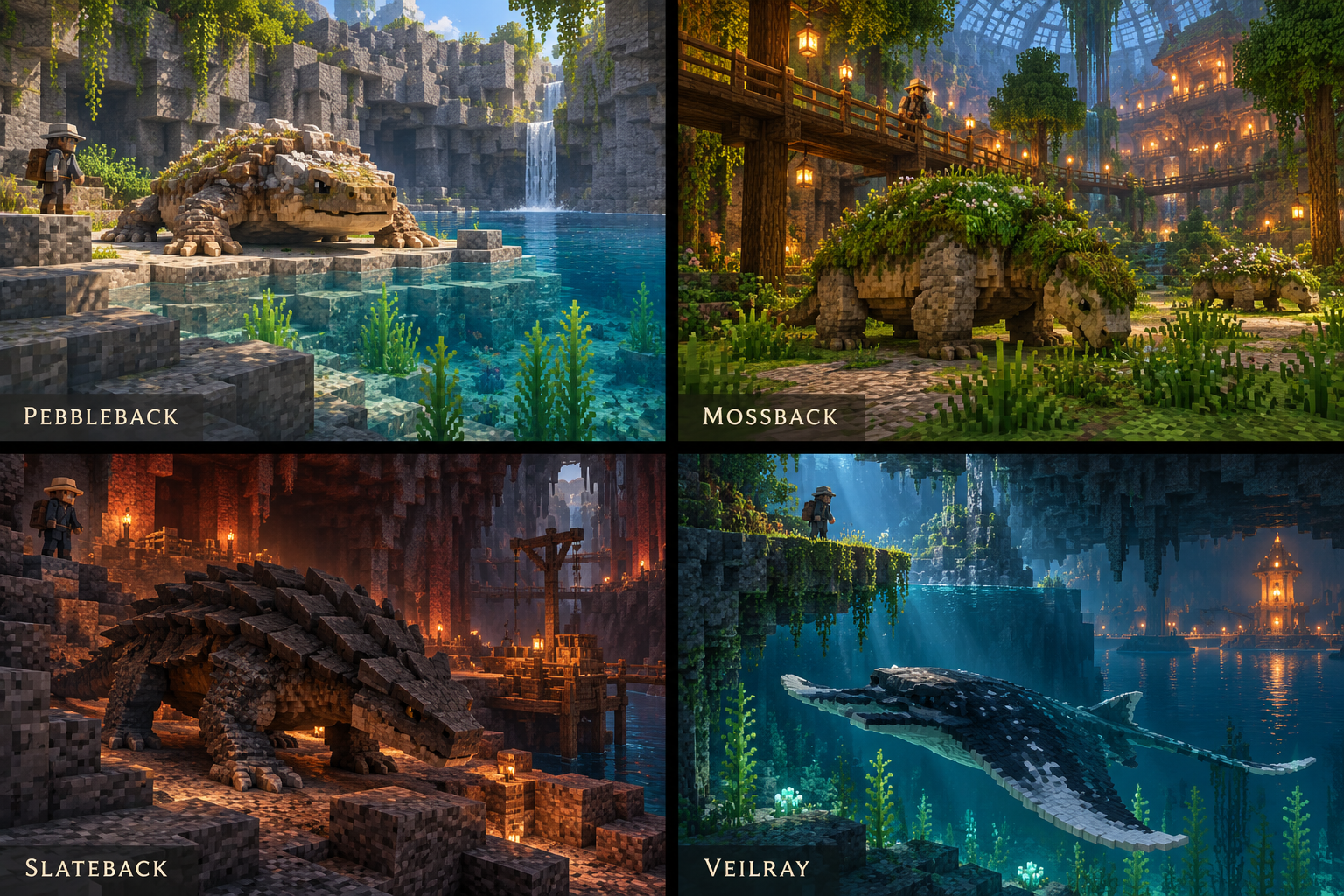
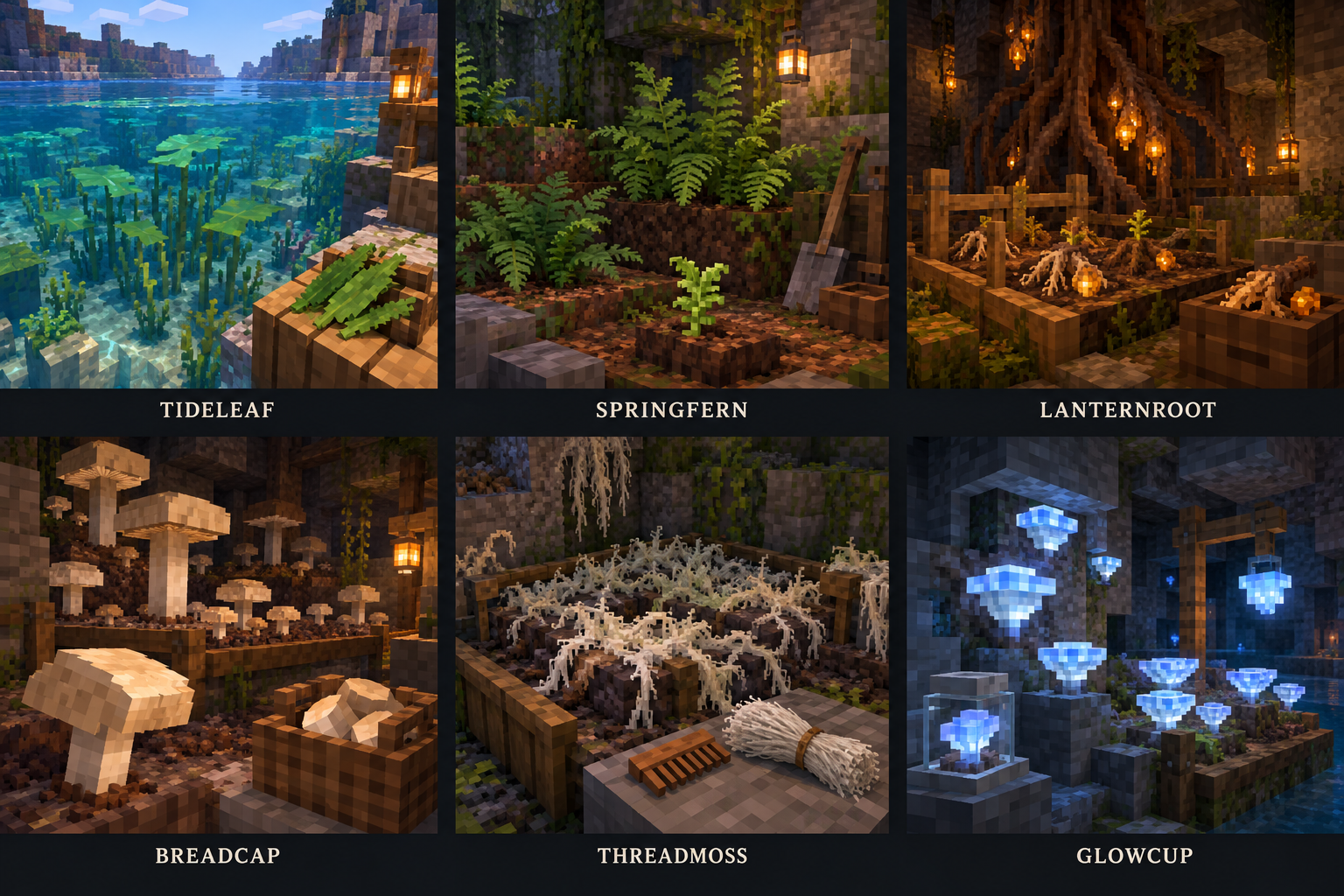
Ecology, food, cultivation, encounters, residents and places worth returning to.
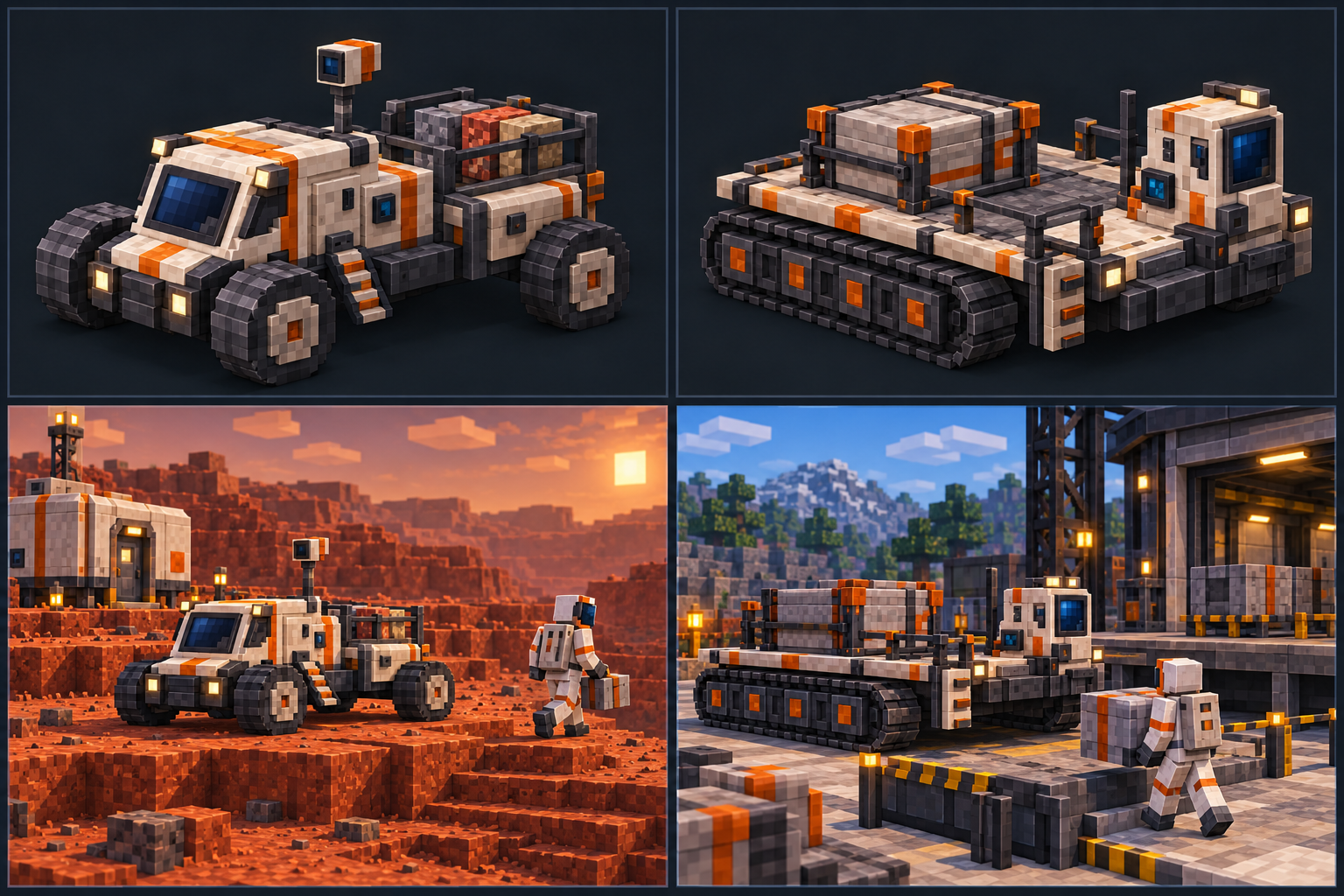
Preserve Tier 1 and develop the supplied later tiers, six hull families and connected service roles.
Concrete information, interaction, narrative, audio and accessibility direction.
Plan bounded player outcomes, dependencies and the evidence needed for implementation.
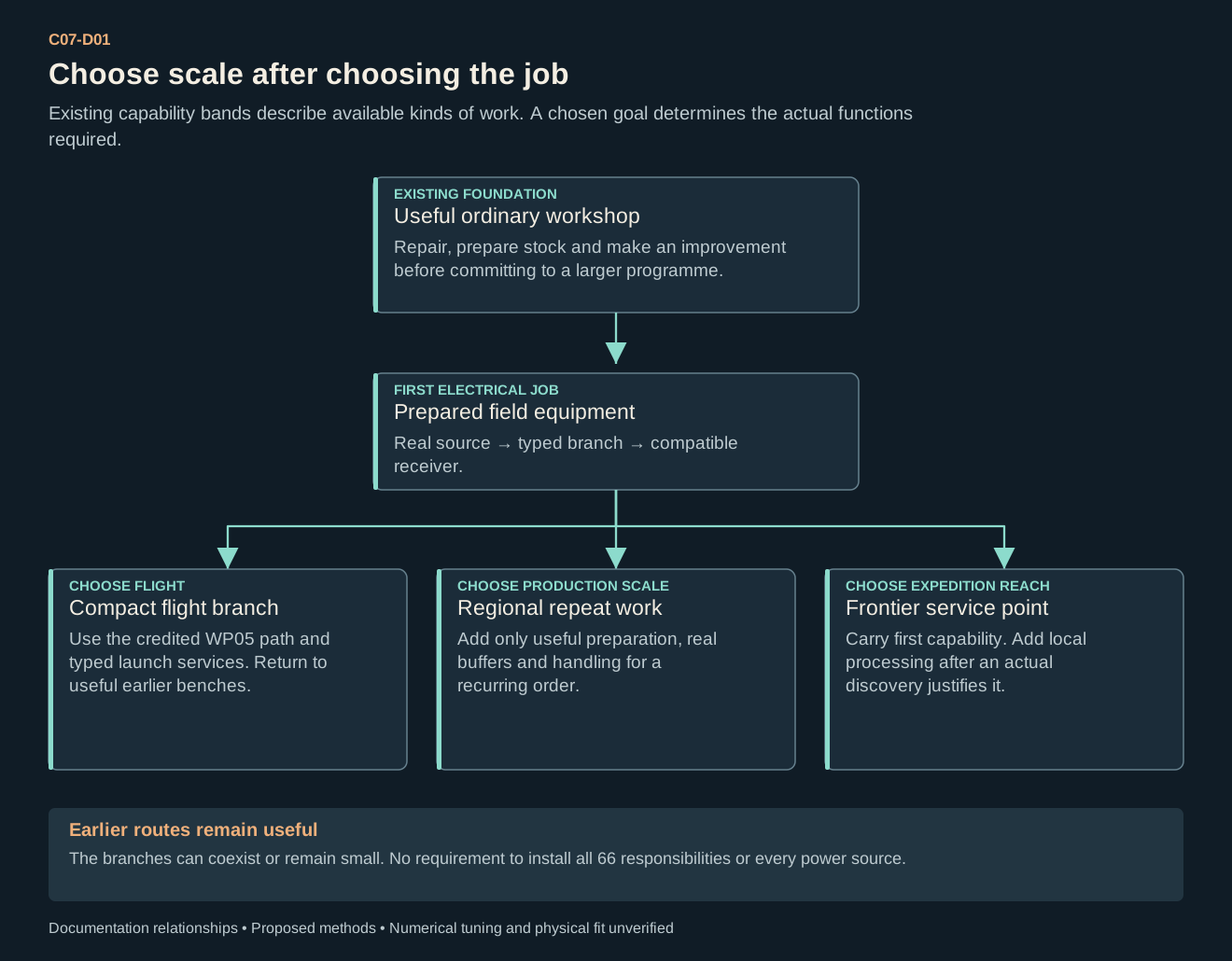
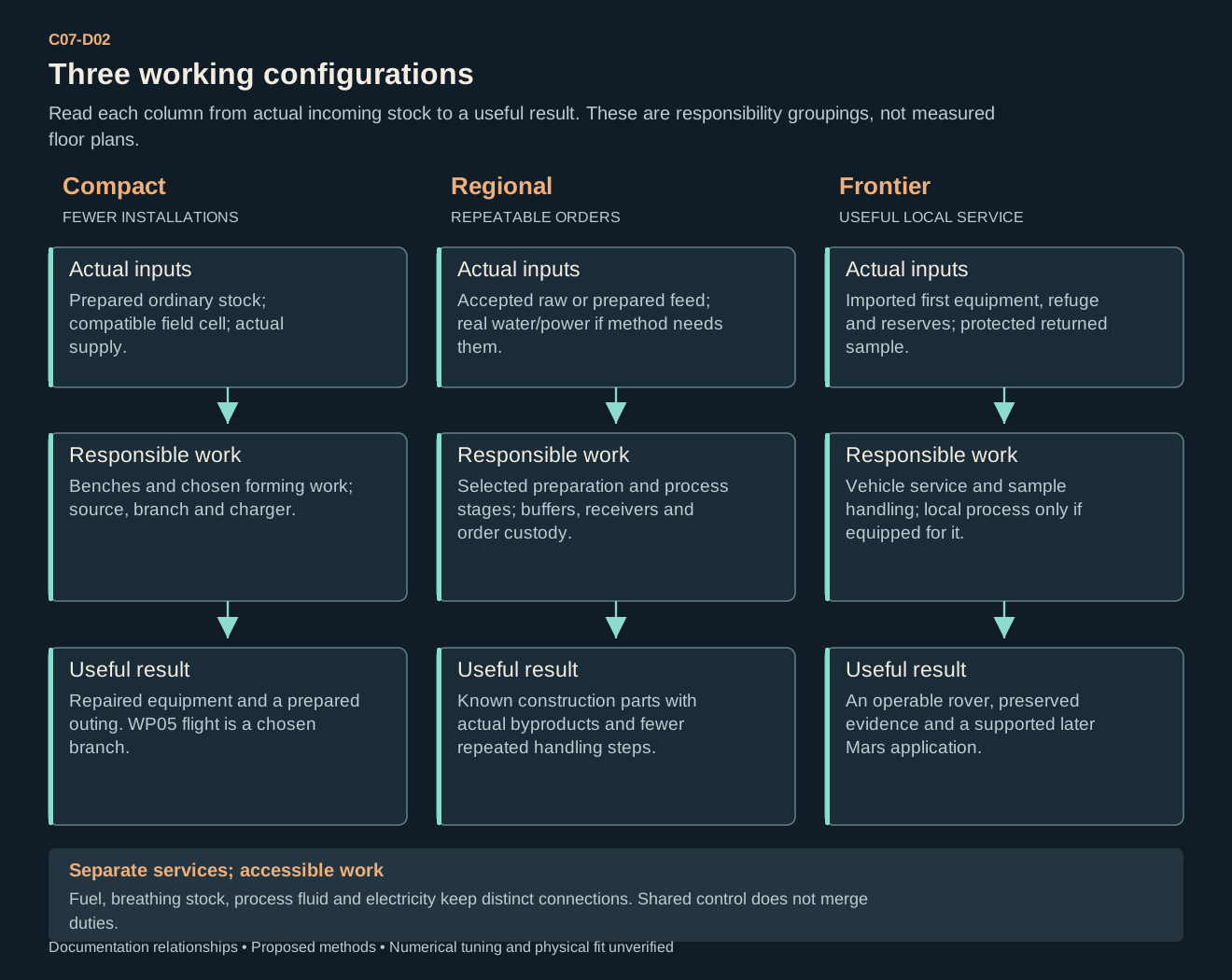
Choose the amount and location of work that earns its space.
| Choice | Useful outcome | Real obligations | Supported alternative |
|---|---|---|---|
| Compact | Maintain ordinary tools, make selected parts and prepare a chosen expedition. | Actual stock, selected work positions, eligible service and a real returned-item/output position. | Manual or shared-host methods remain worthwhile for modest jobs. |
| Regional | Repeat known orders with justified preparation, handling and storage. | Receiving and byproduct space, typed connections, isolation, protected walkways and accountable queues. | Prepared feed and a shorter selected process can avoid unnecessary installations. |
| Frontier | Keep field equipment operable, preserve evidence and improve a stated local duty. | Imported first support, protected return stock, reachable service faces and destination-specific equipment. | A small supplied refuge and limited service bay can remain the chosen scale. |
C08-IND-05–C08-IND-10 and the configuration register explain the exact responsibilities. Larger scale is a choice, not a mandatory all-66-machine gate.
Separate destination value from compulsory progression.
| Route | What it contributes | What must remain possible |
|---|---|---|
| Earth → Moon → Mars → Europa → Titan → Pluto | The principal creative Solar journey: home, vacuum, regional expedition, living ice-ocean, weather and distant observation. | A complete supplied preparation route without mandatory Ceres/Io material tolls. |
| Ceres | Anchoring, cargo route work and specific handling/material improvements. | Skip the campaign and retain a supported principal-route preparation chain. |
| Io | Observed thermal work, receiver-first commissioning and bounded withdrawal. | Use a viable earlier thermal or material method where the main route requires it. |
| Cairn → Morrow, proposed | A bounded Afterlight continuation after a satisfying Solar conclusion. | Conclude at Pluto; prepare first survival and independent return before either new local discovery. |
Capability families and confirmed concept tier numbers are separate classifications. No row proves a craft's range or transport fit.
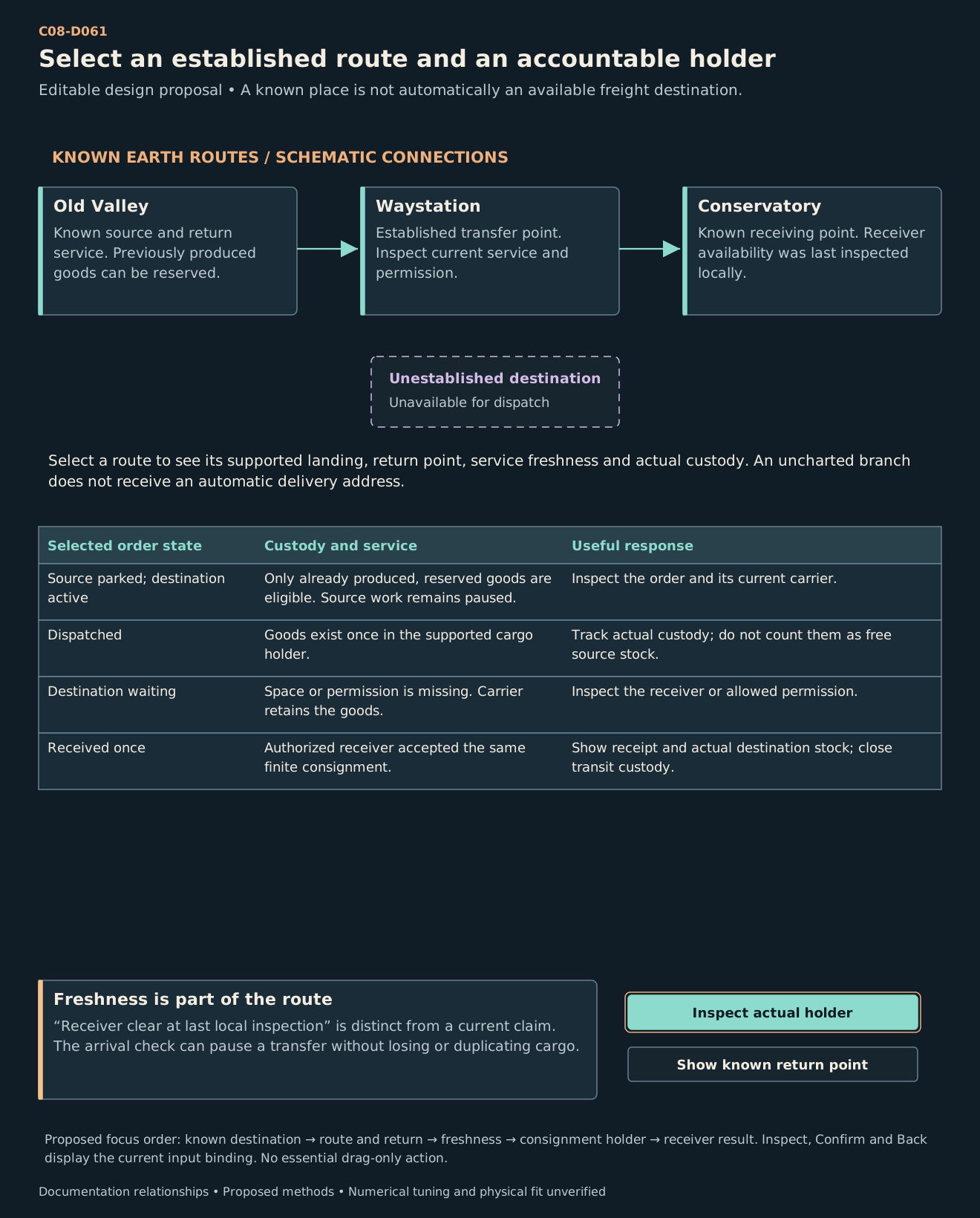
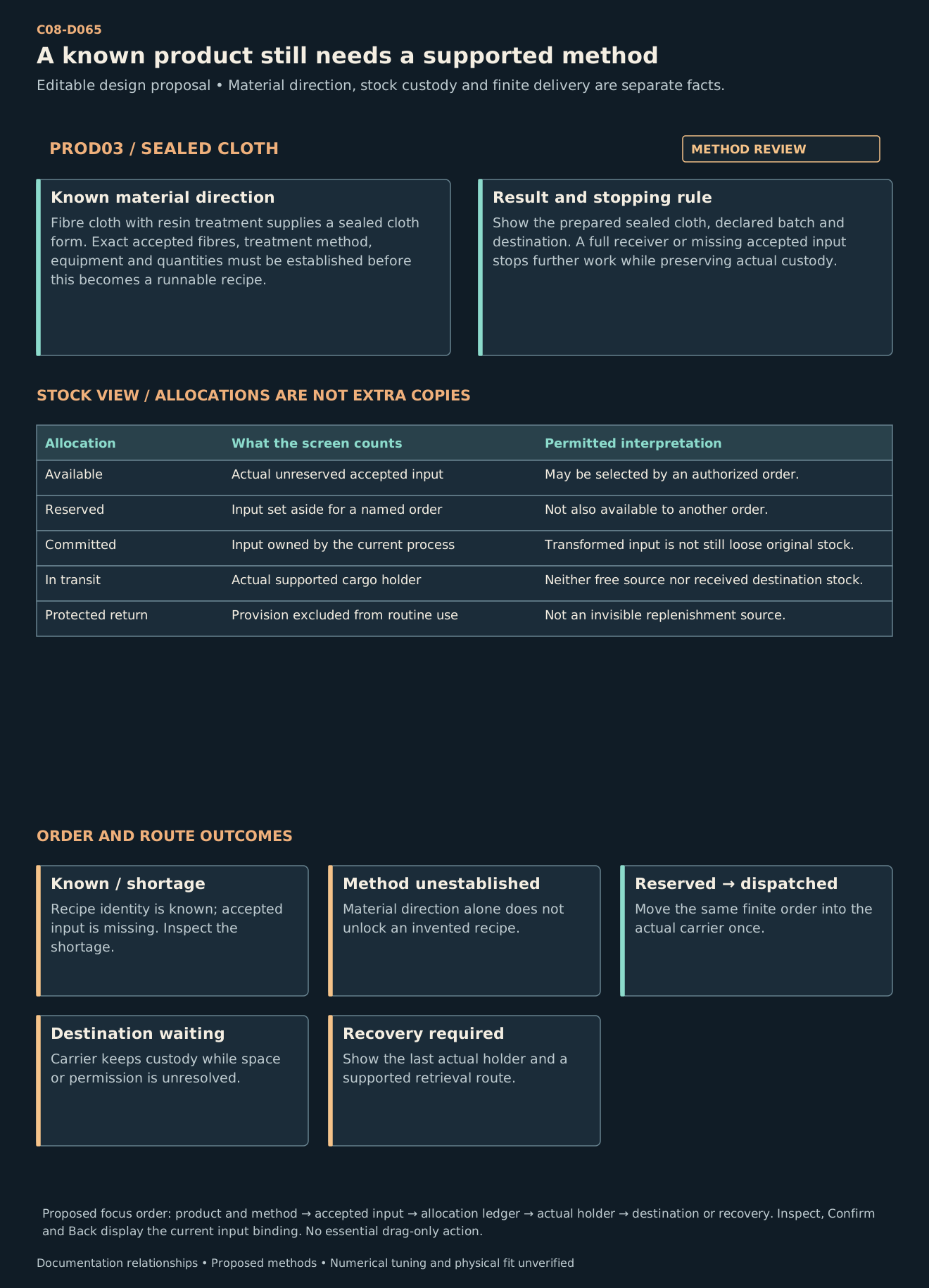
Make custody and compatibility visible before a workshop or expedition transfer begins.
| Service | Actual source and receiver | A misleading shortcut to reject | Useful blocked reason |
|---|---|---|---|
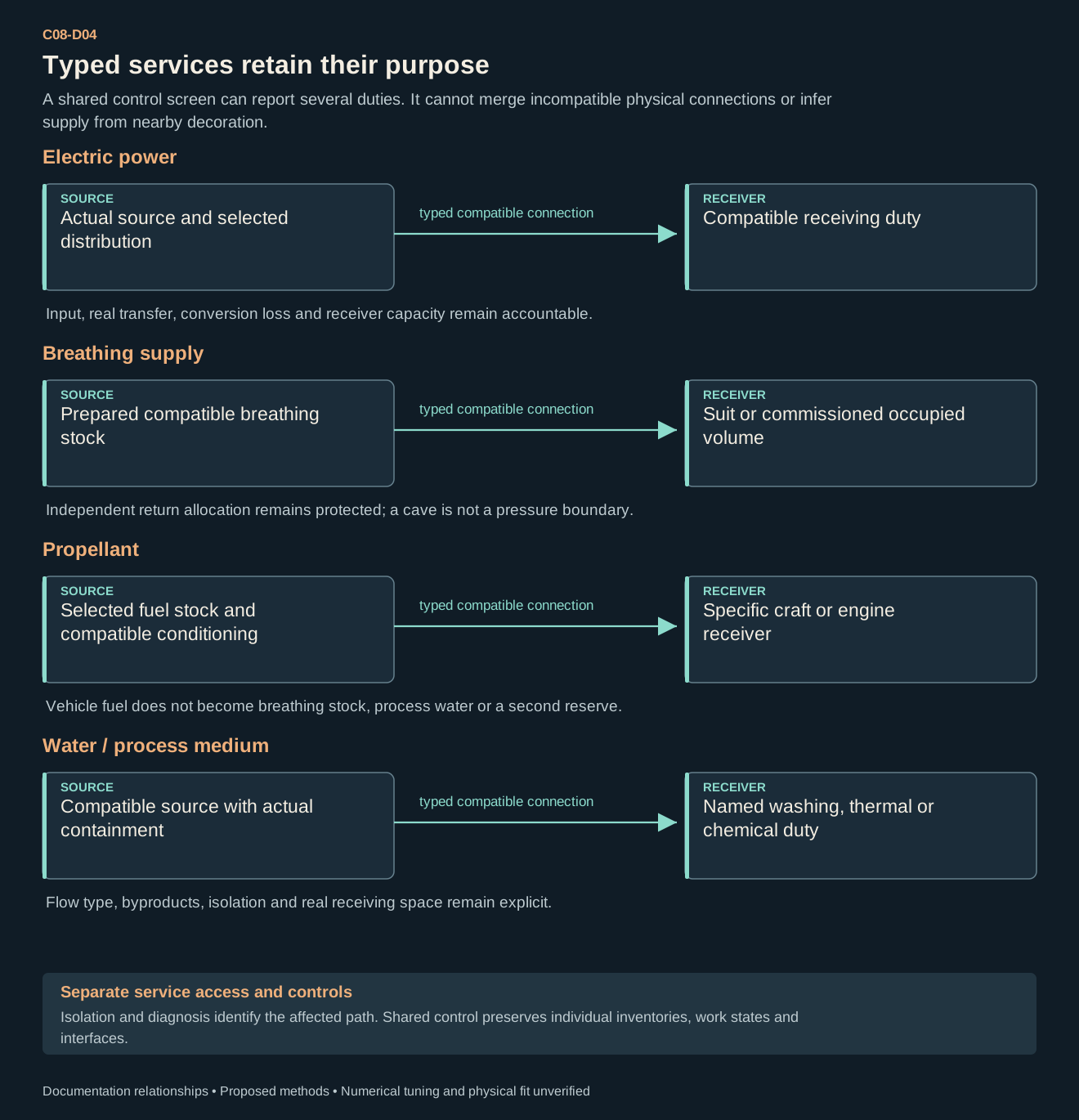
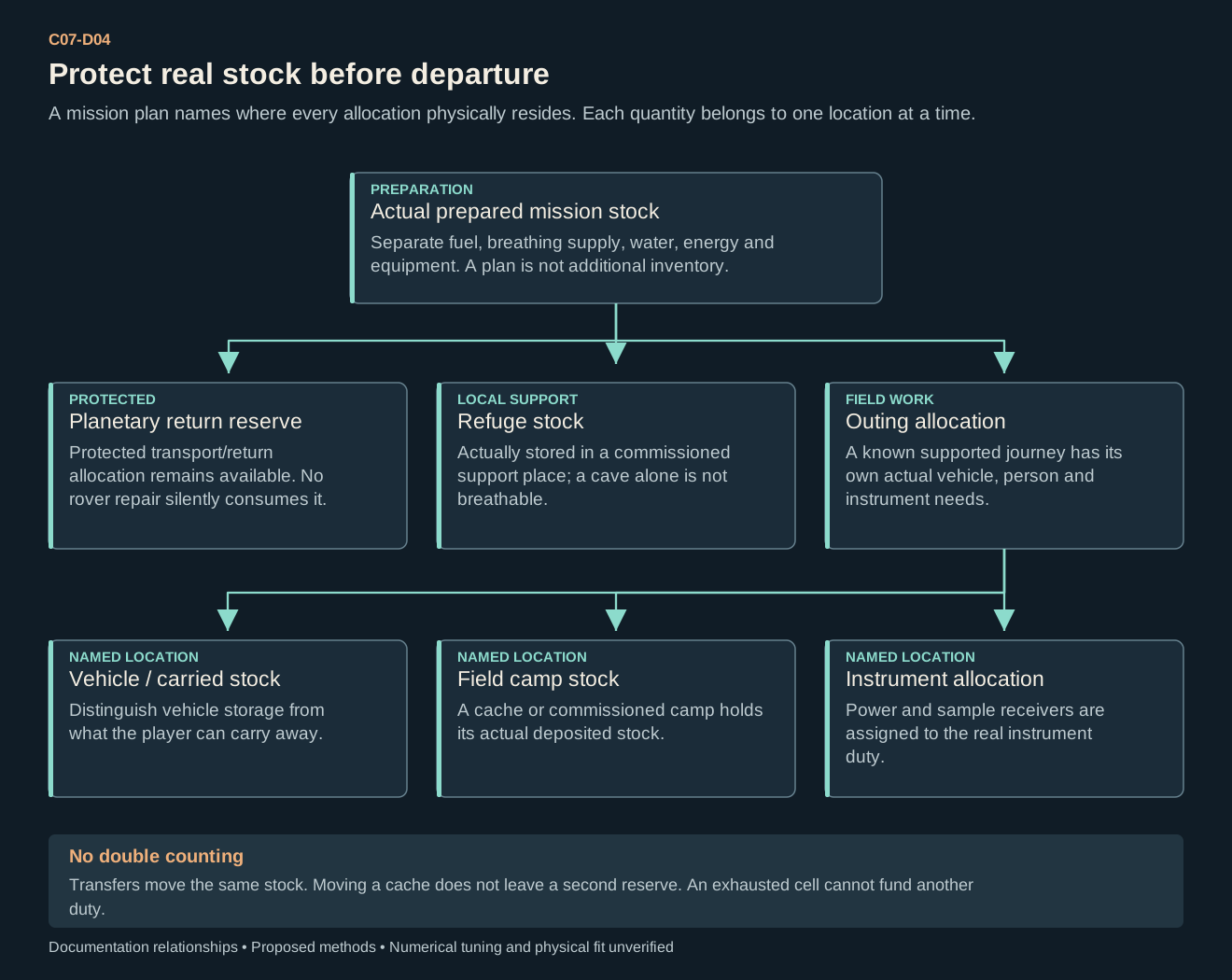
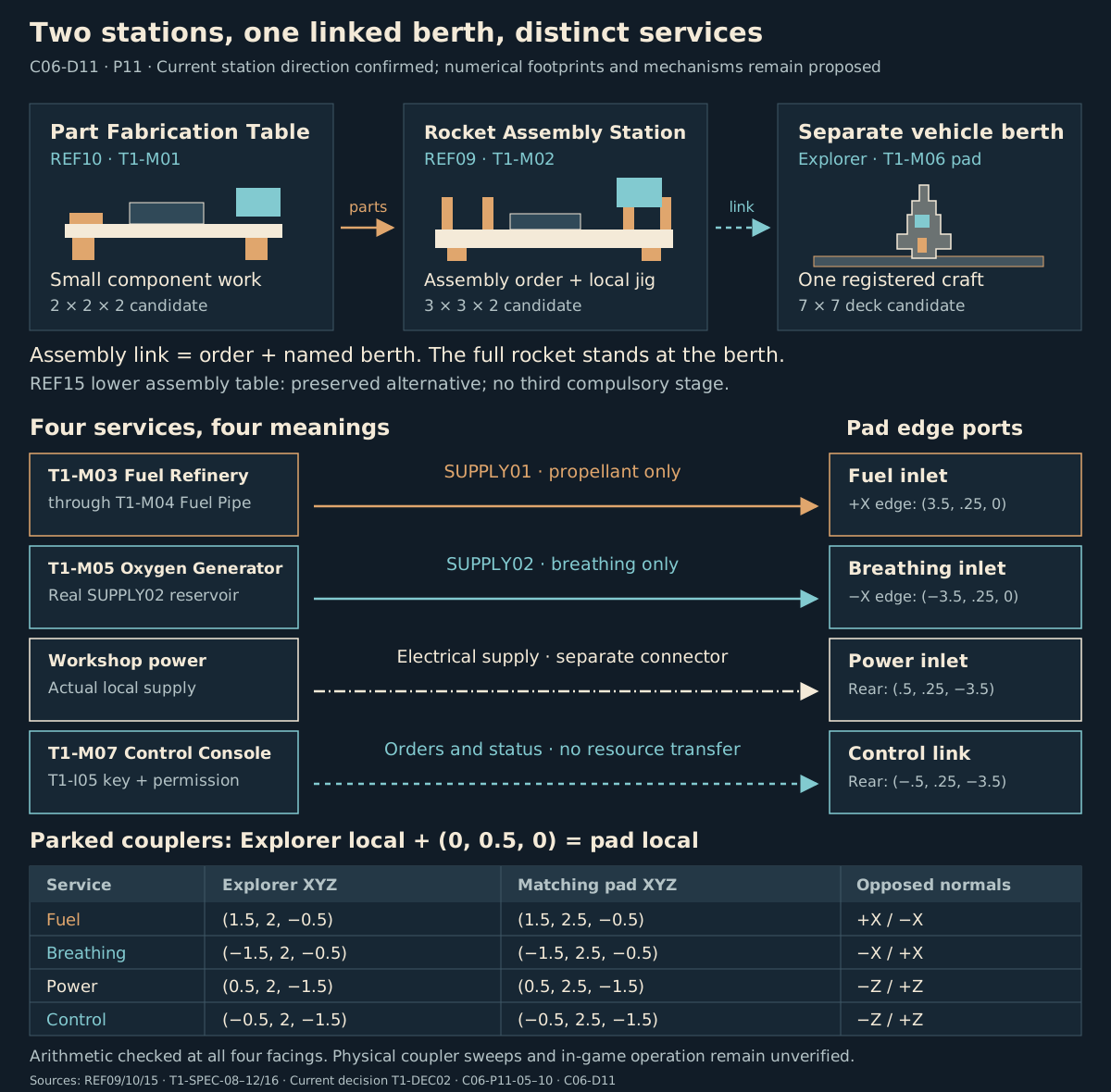
| Propellant or transit supply | Supported prepared stock assigned to the actual vehicle/route duty. | Treating an oxygen cylinder or a power bank as universal travel fuel. | Wrong service type; return allocation protected; receiver full. |
| Breathing supply | Compatible prepared breathing stock in its real tank, suit or refuge allocation. | Counting nearby water, power or a decorative plant as supplied breathing support. | Breathing connection unavailable; incompatible receiver; protected reserve unavailable to this order. |
| Electrical energy | A supported source or charged store feeding a compatible work receiver. | A control cable creating power, or an exhausted bank serving a second task. | Source absent; remaining charge insufficient; destination capacity full. |
| Water and process fluid | A declared liquid and method-specific receiver, with separate outputs where needed. | Every blue pipe being interchangeable or a byproduct disappearing because no tank was provided. | Required output has no receiver; wrong liquid; isolated circuit. |
These are documentation contracts. Recipes, capacities, rates, efficiency and final connection geometry remain unverified.
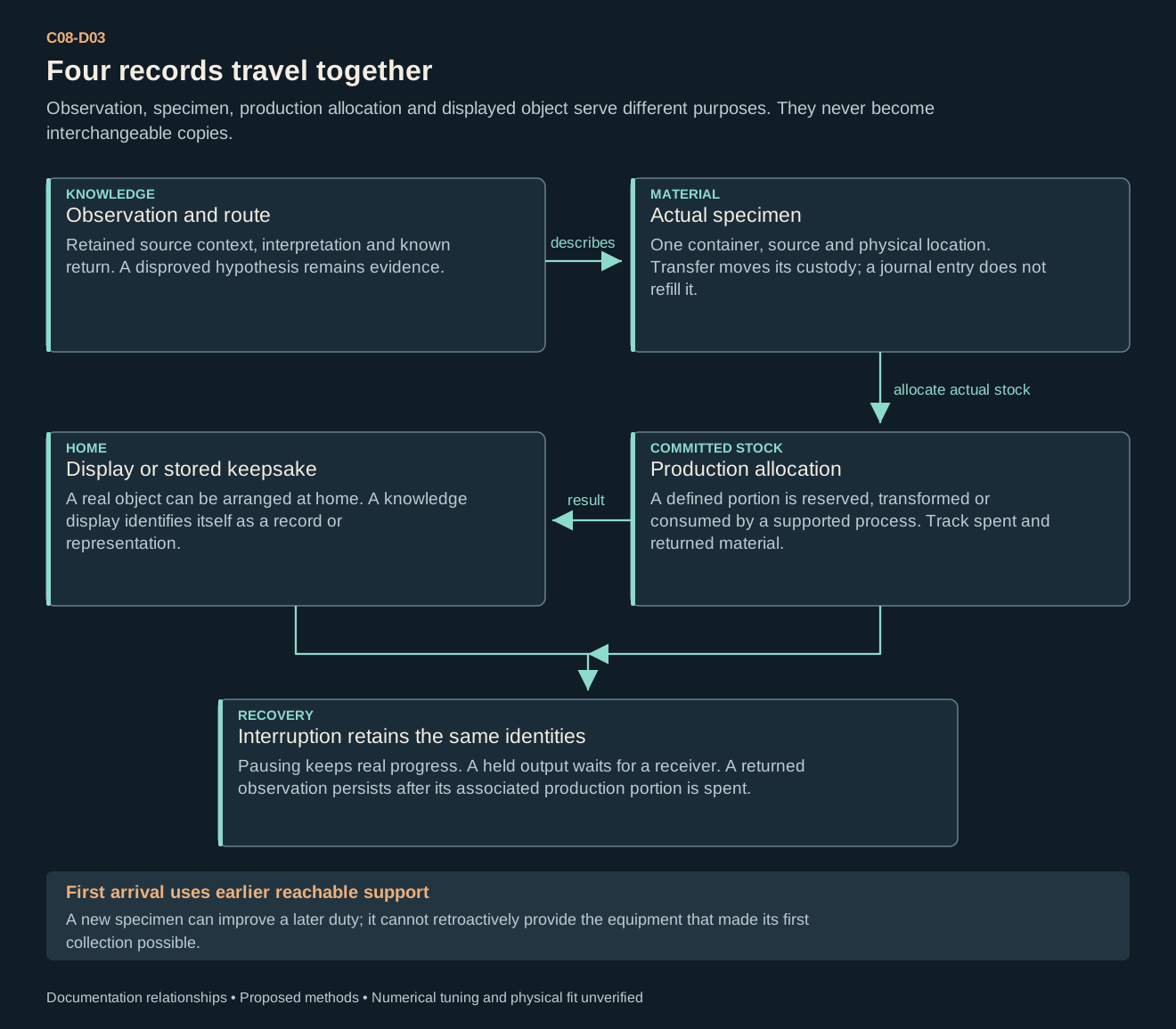
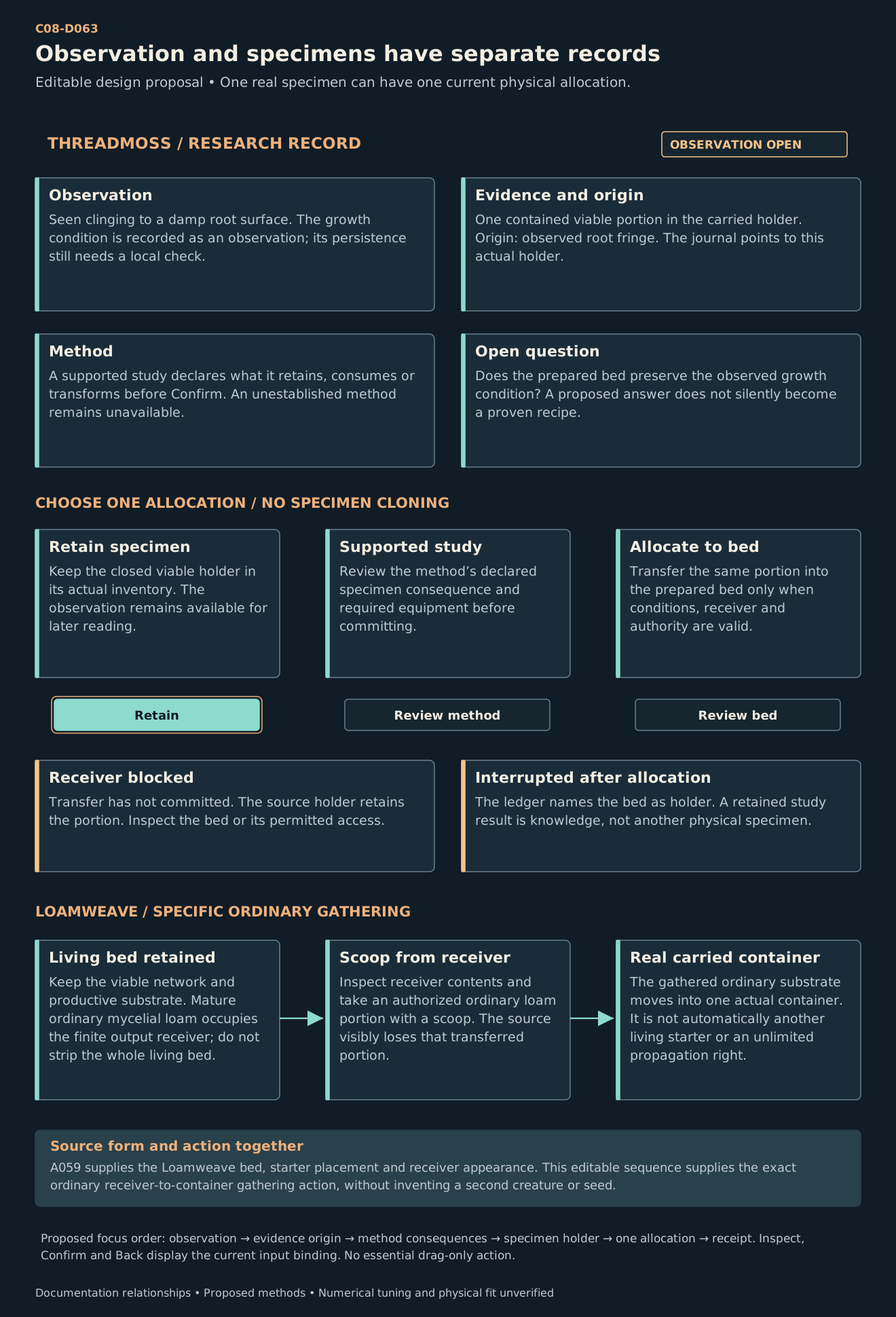
Preserve discoveries without creating duplicate materials.
| Thing | What persists | What a later action does |
|---|---|---|
| Observation or surveyed route | The recorded information, origin and qualification. | Adds or revises knowledge; consuming a physical sample does not erase the observation. |
| Retained specimen | The actual specimen in one identified holder. | Moves it to another holder or deliberately allocates a portion; knowledge does not refill it. |
| Production portion | The finite stock reserved or committed to a selected process. | Consumes the declared material and produces the stated result once. |
| Display or collection | The same physical object where display uses an actual item, or an explicitly documented record where it is only information. | Moving a displayed item does not leave another usable copy behind. |
C08-ATLAS-03, C08-IND-04 and the living sample contracts preserve the difference through interruption and managed absence.
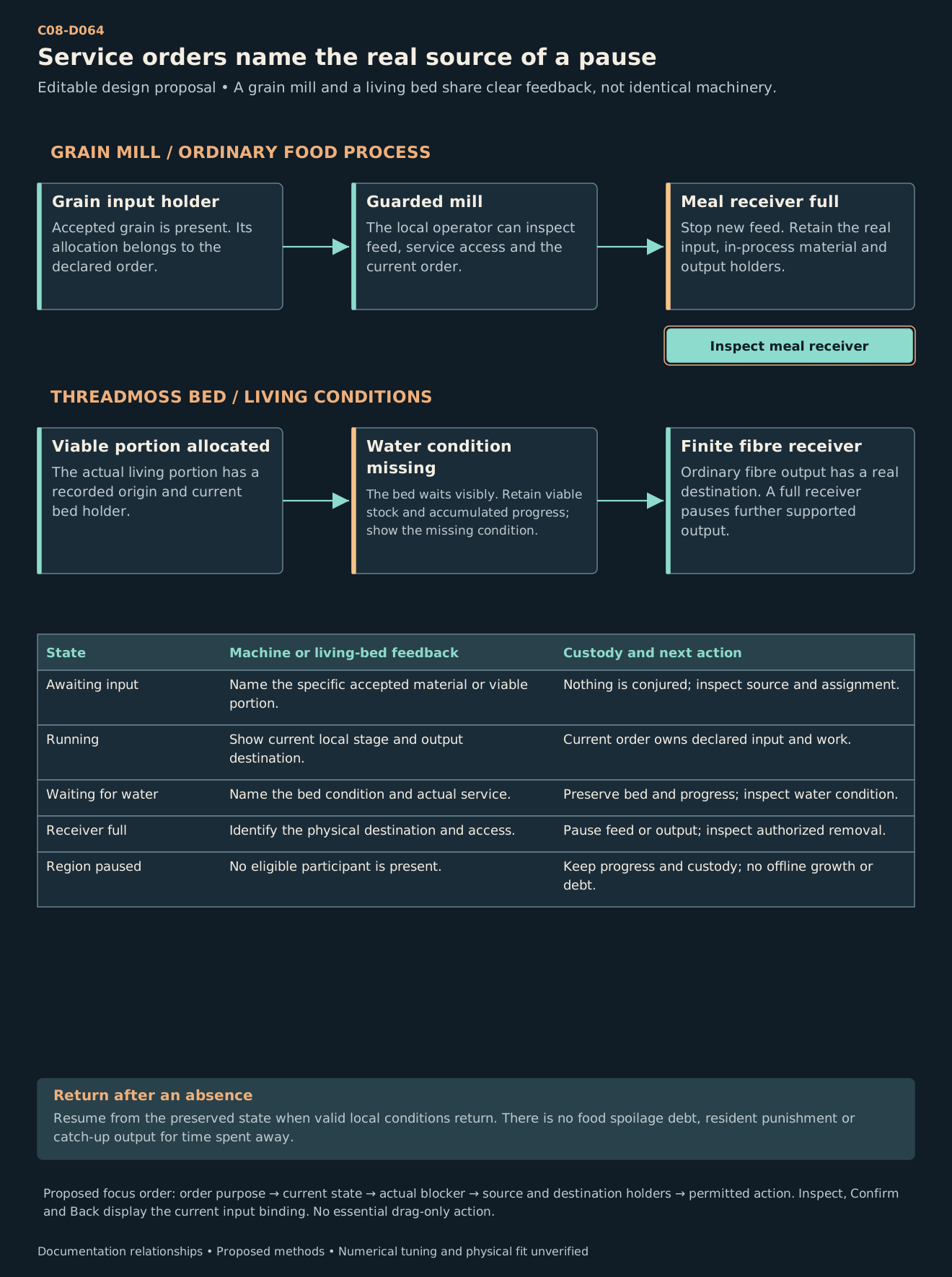
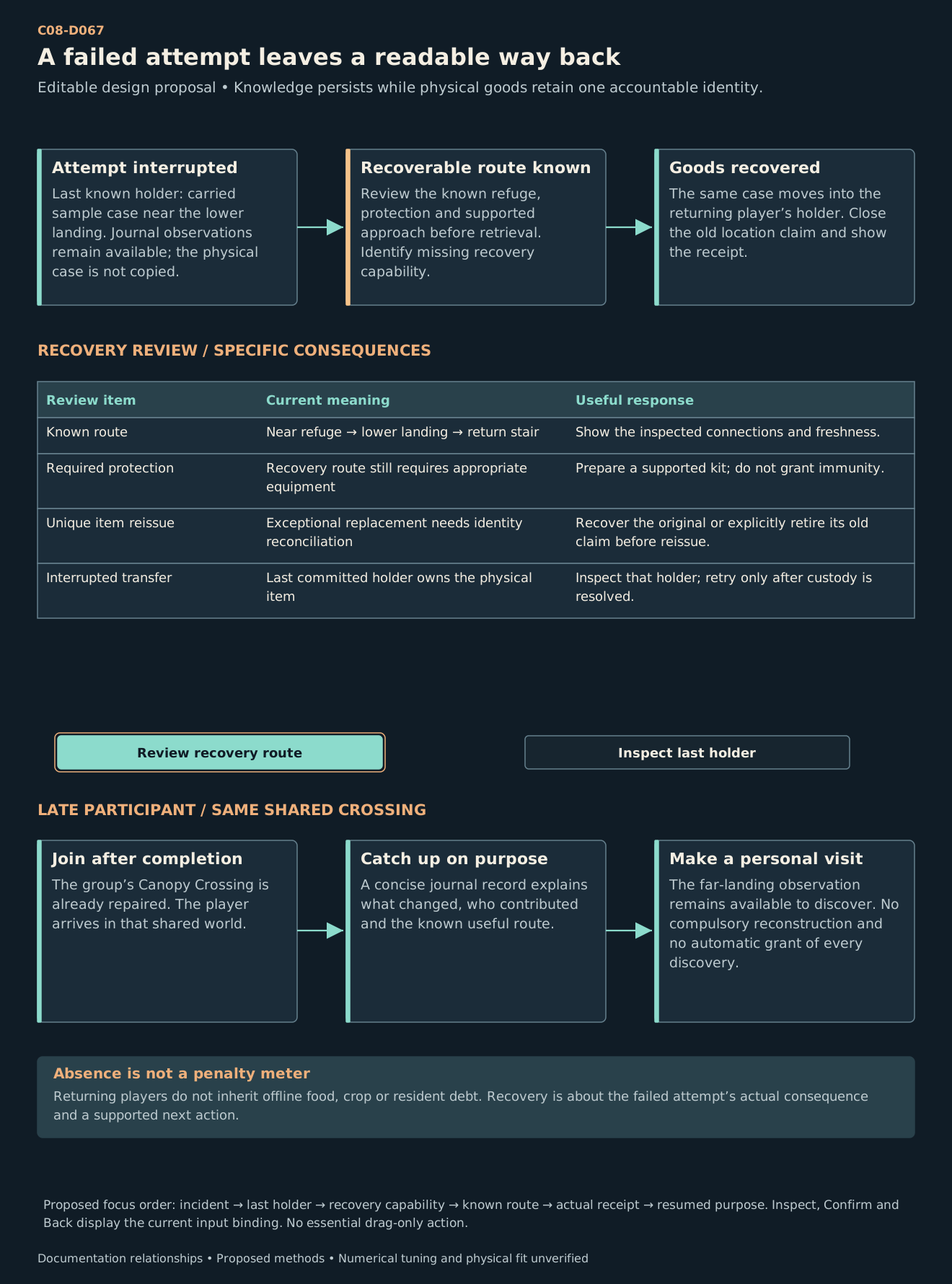
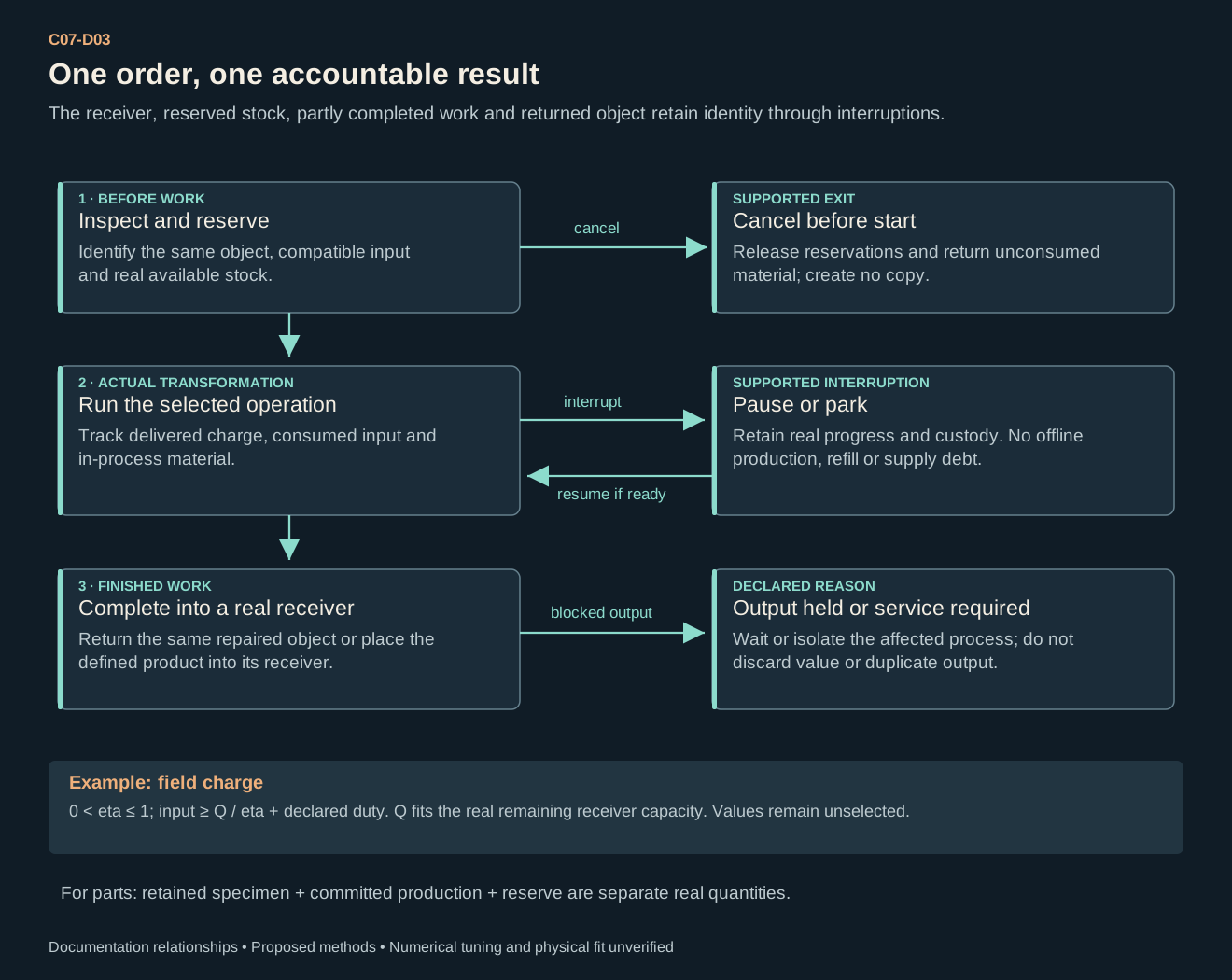
Give different interruptions different, understandable recovery actions.
| State | Material and object state | Supported next action |
|---|---|---|
| Cancelled before commitment | Unconsumed reserved stock and the same object remain available. | Release the reservation and return the original holder/object state. |
| Paused after partial work | Track actual consumed input and in-process material; keep current identity. | Restore the eligible service or use a specifically supported recovery method. |
| Output held | The defined result remains in its actual process/holding location. | Provide or clear the compatible receiver, then transfer once. |
| Service required | The affected duty is isolated; unrelated real reserves remain protected. | Diagnose and service the named part from its accessible face. |
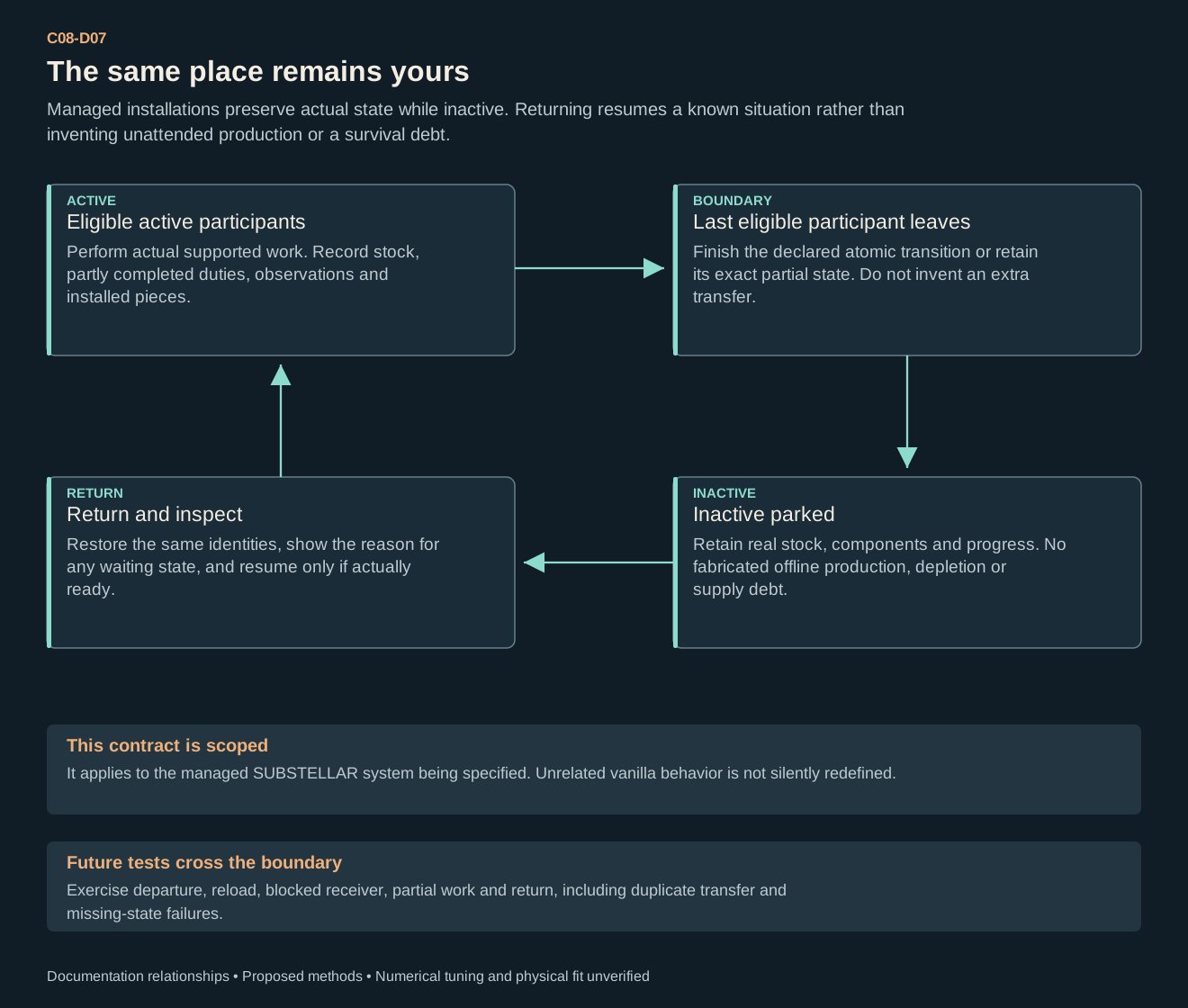
| Inactive parked | Managed stock, work and local state remain coherent. | Resume supported activity when eligible participants return; no catch-up production or absence debt. |
These states require future transaction, save/reload and ownership tests in the actual game representation.
Keep the first useful build boundary small while preserving the whole settlement vision.
| Scope | Included outcome | Later connected work |
|---|---|---|
| Narrow opening proposal | Essential guesthouse, old crossing, quarry, one Copperwash Channel strip and a limited workshop service. | A real cargo and ordinary material-to-improvement loop proves the opening. |
| Wider five-stage Old Valley | A working settlement, full mill/workshop relationships and the first market. | Residents, finite goods, ordinary food/cultivation and useful construction extend everyday life. |
| Broader Earth and space direction | 35 creative Earth experiences, later workshops and the first supplied expedition. | Add distinct complete journeys after the needed foundations; they are not prerequisites for finishing the narrow opening. |
Smelt remains unbuilt at the recorded game authority. This creative comparison does not rewrite the game's accepted sequence.
Avoid deriving engineering promises from a rocket label or attractive view.
| Record | What it establishes | What remains a separate question |
|---|---|---|
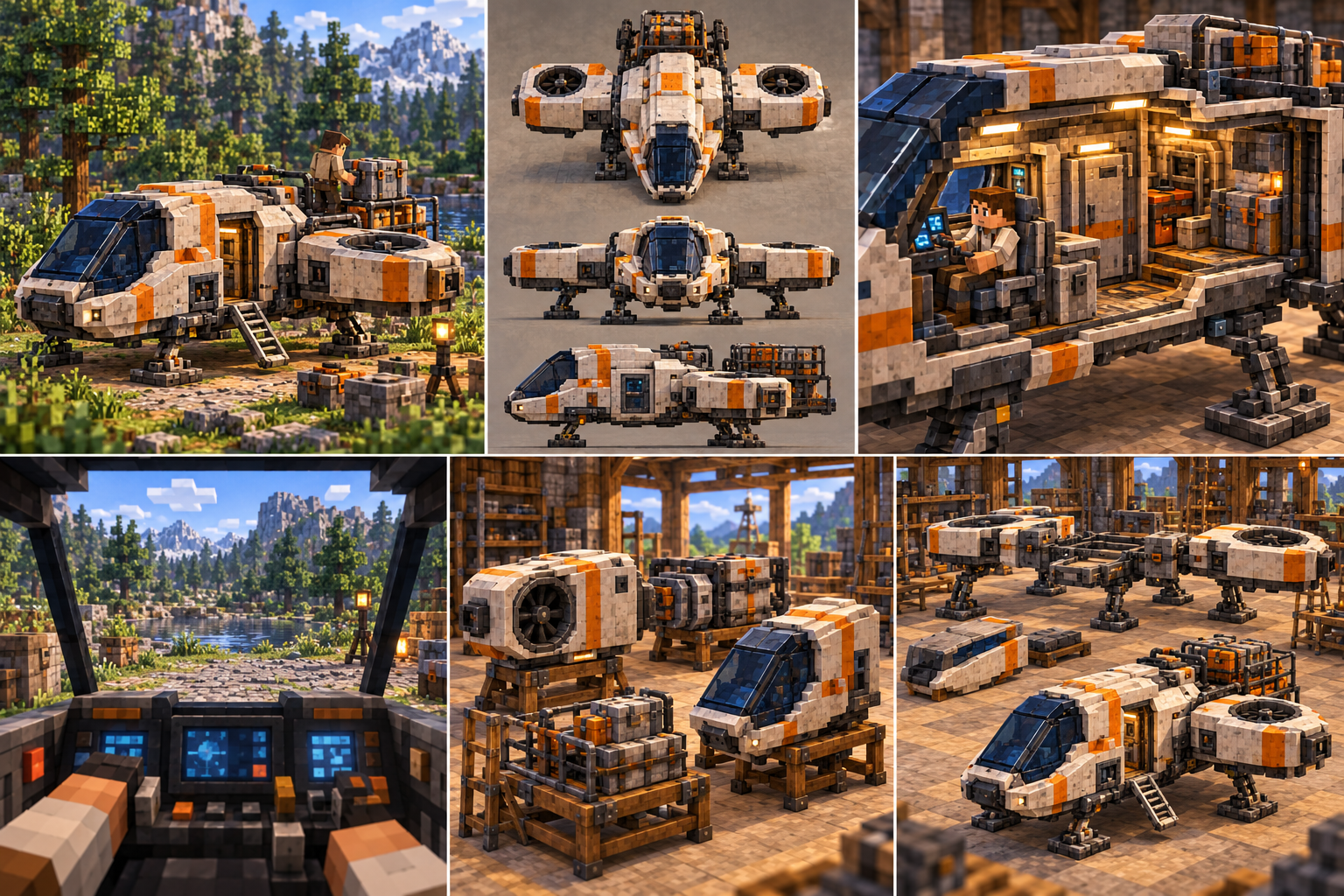
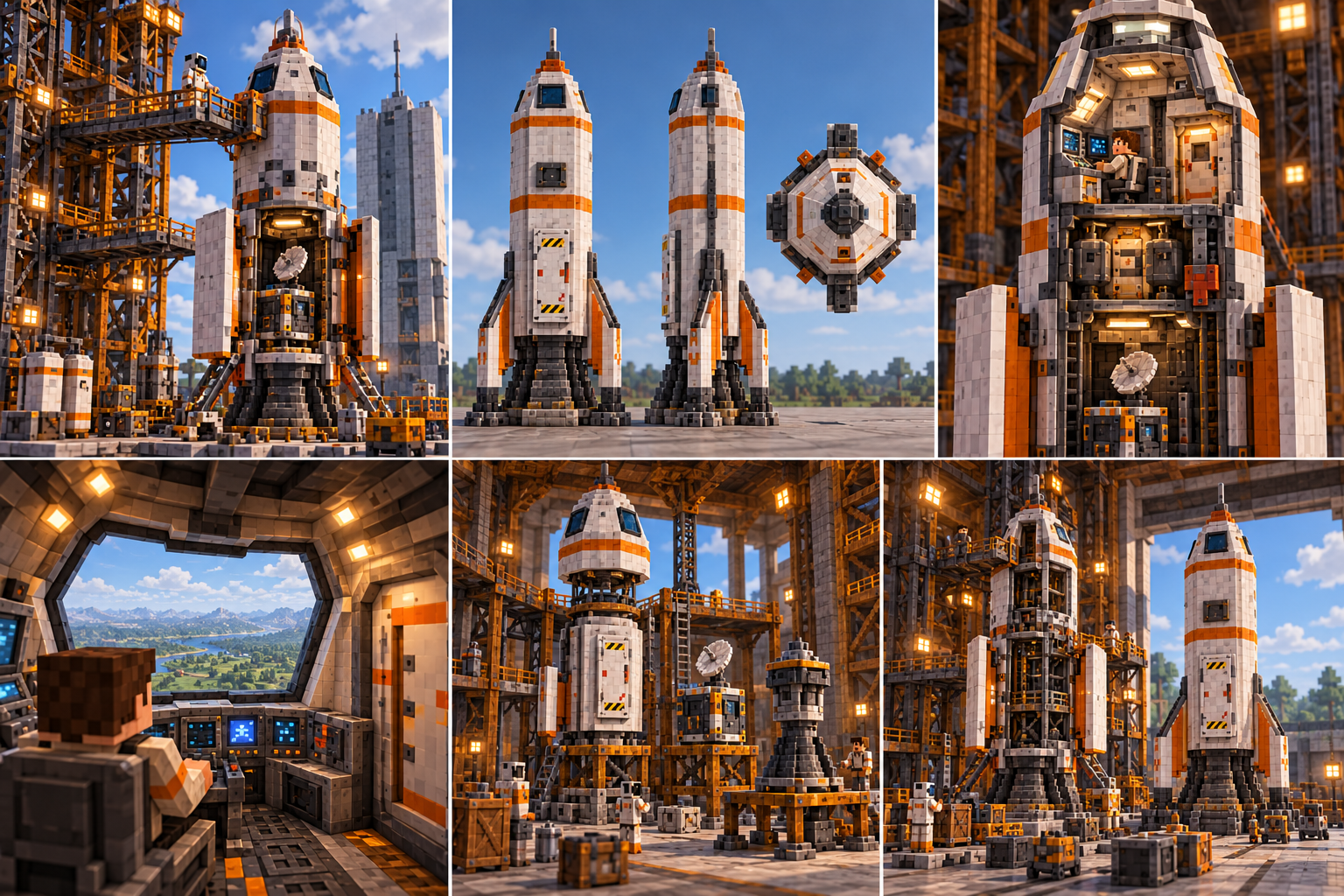
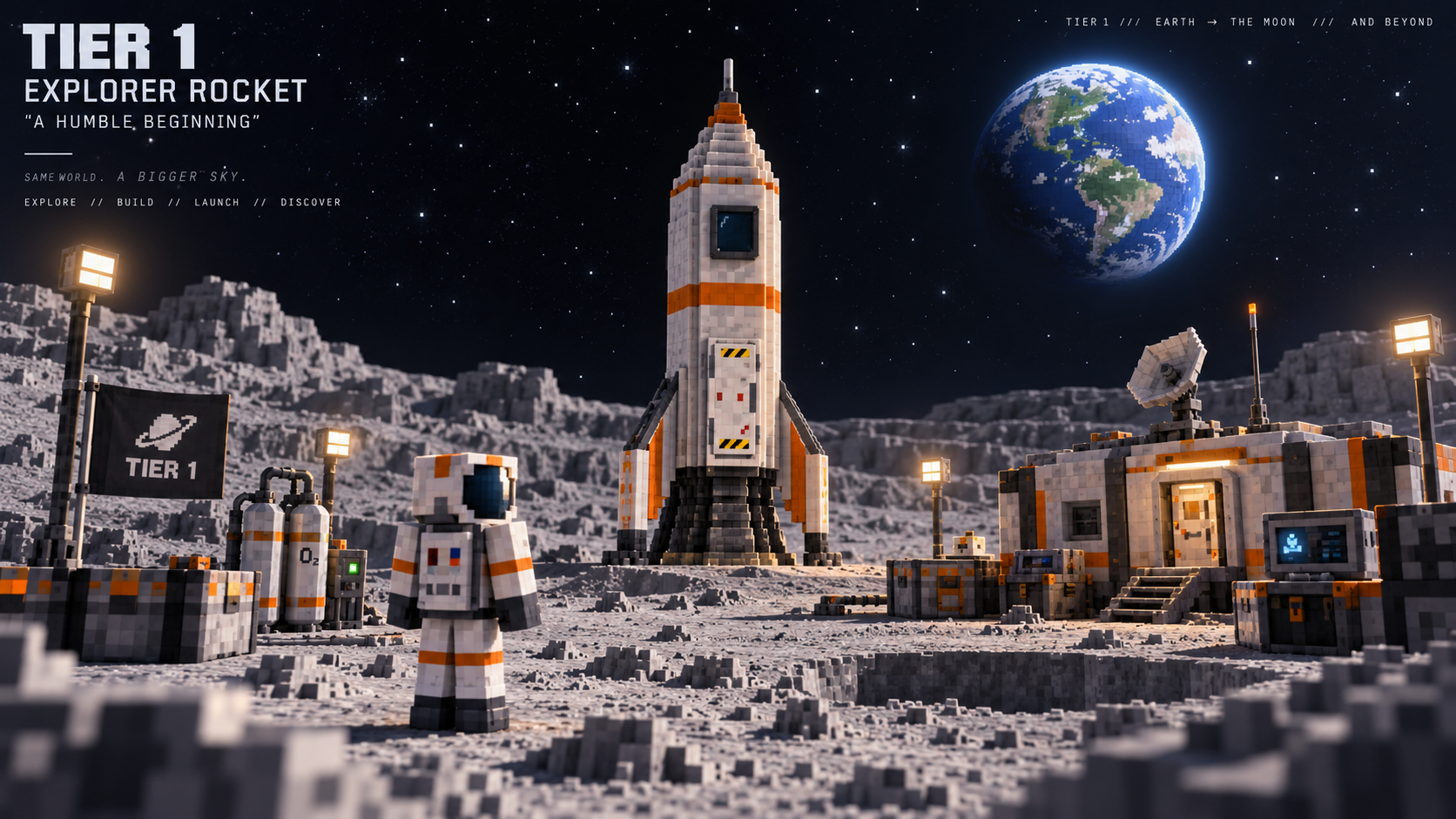
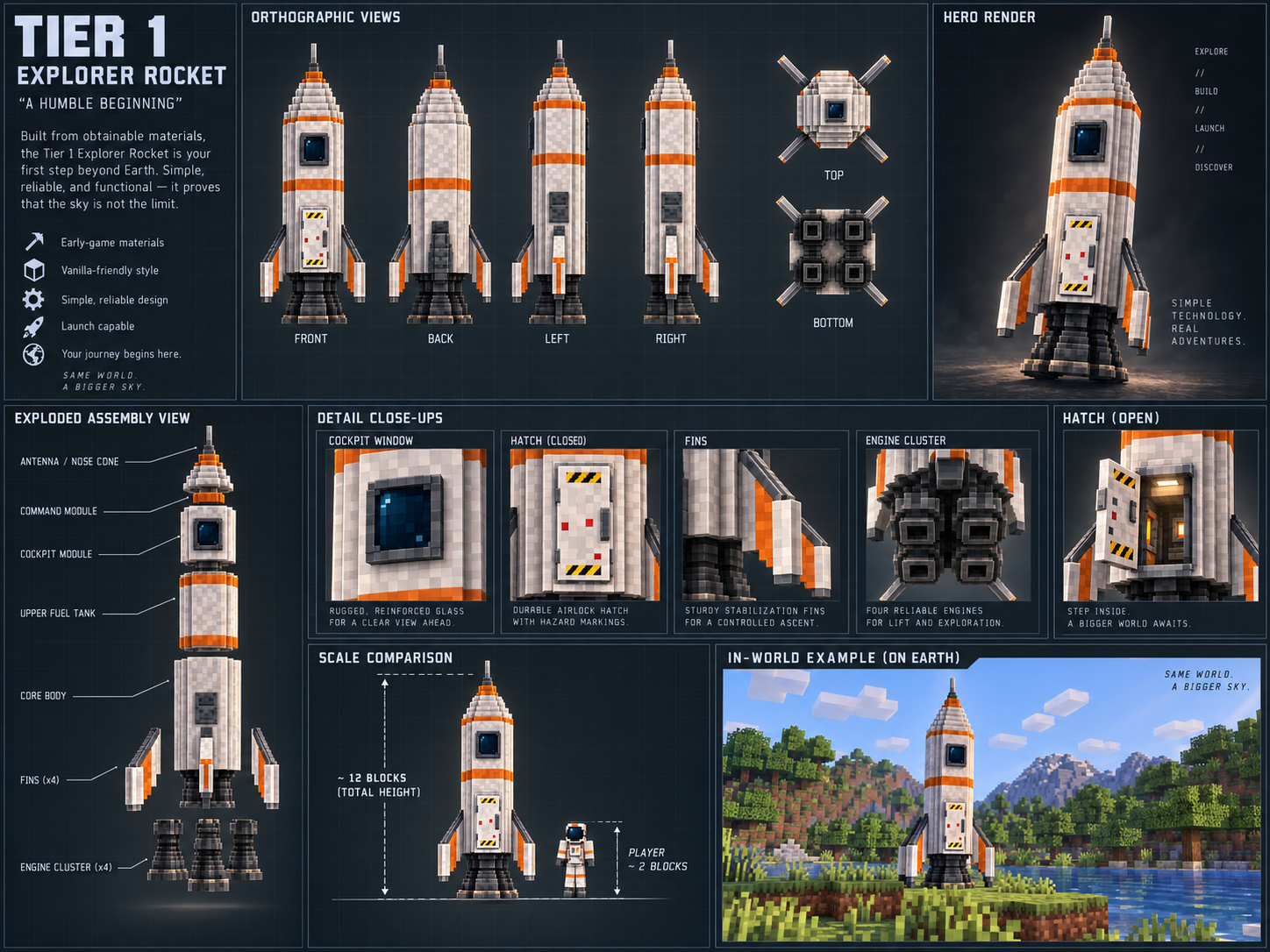
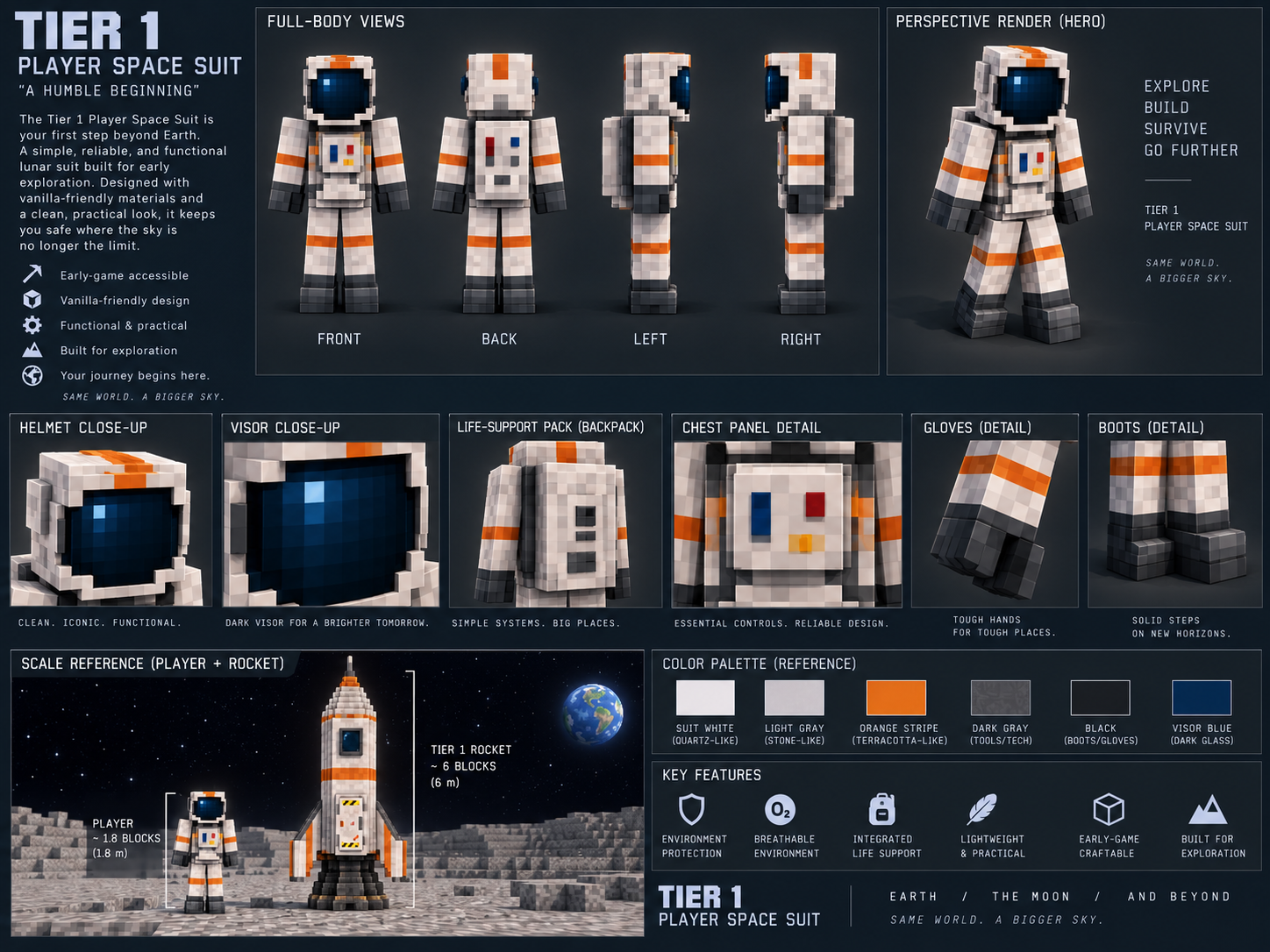
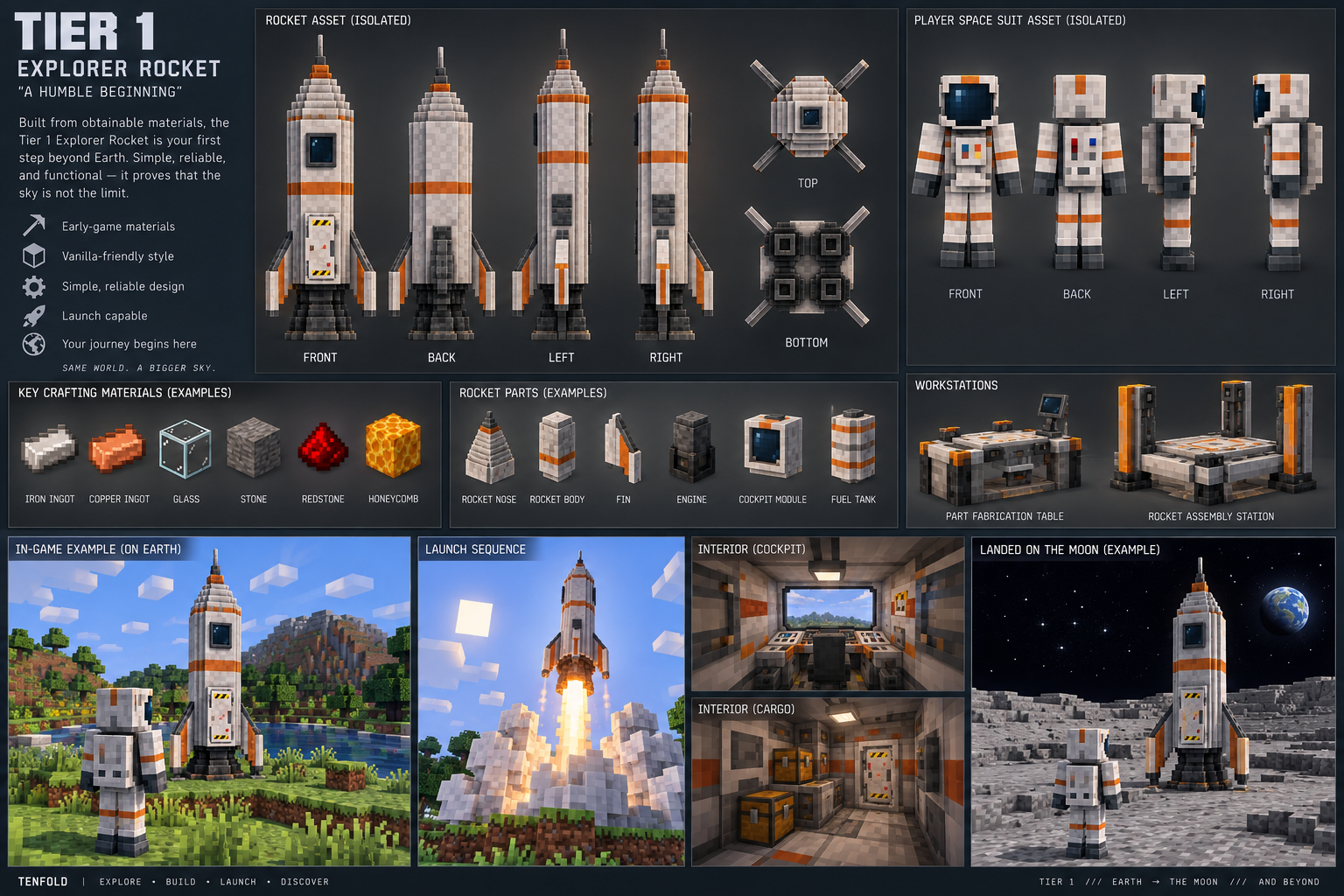
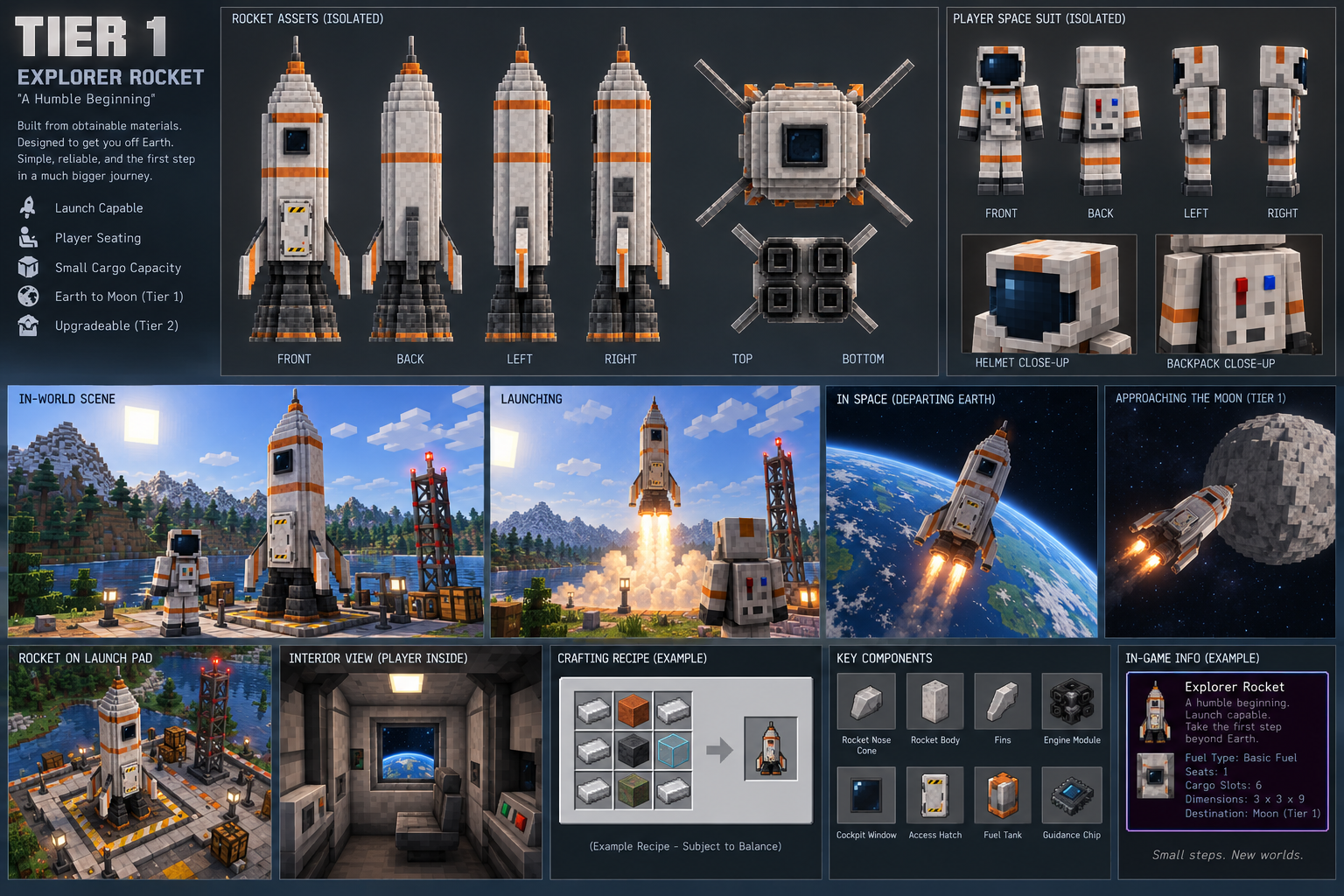
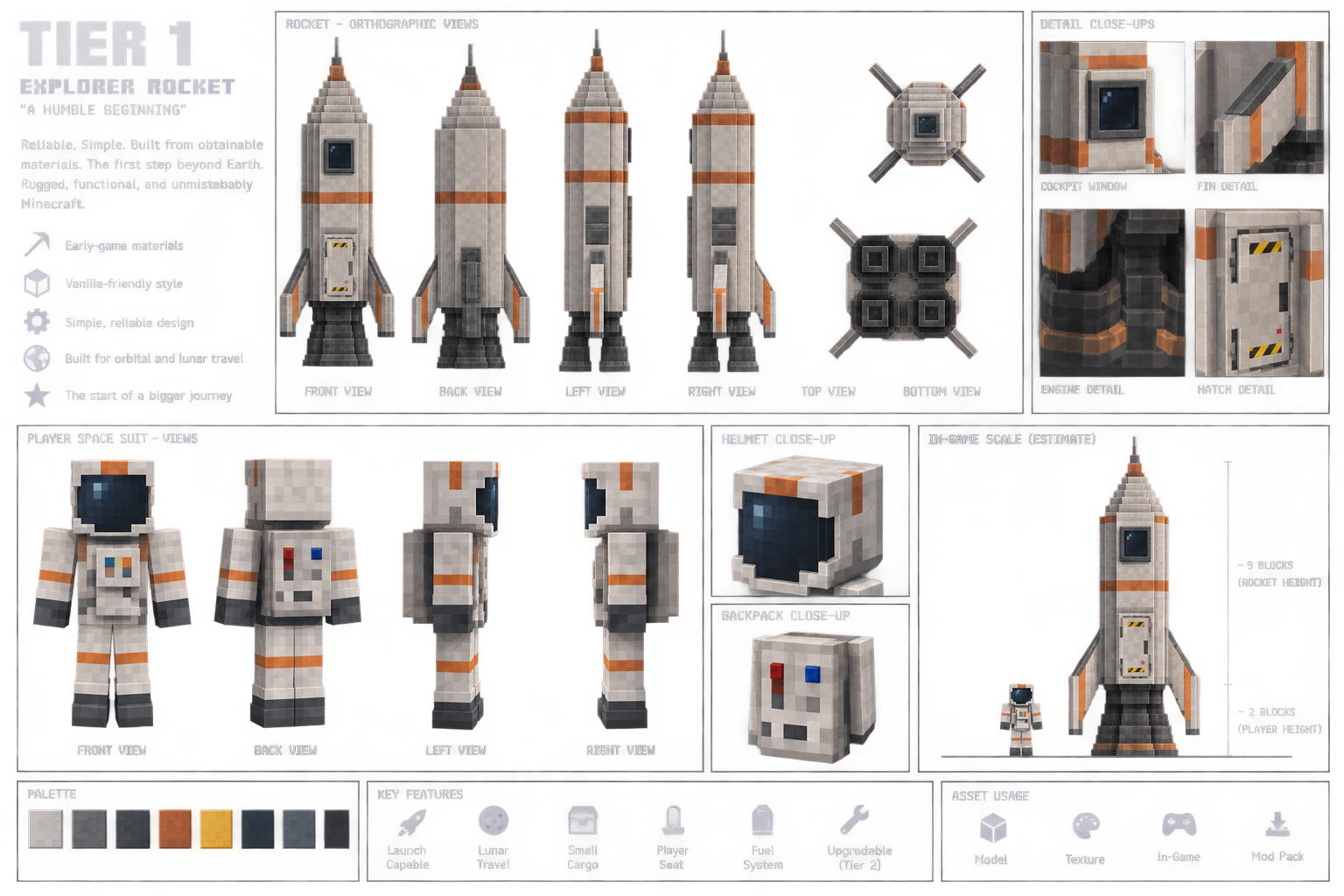
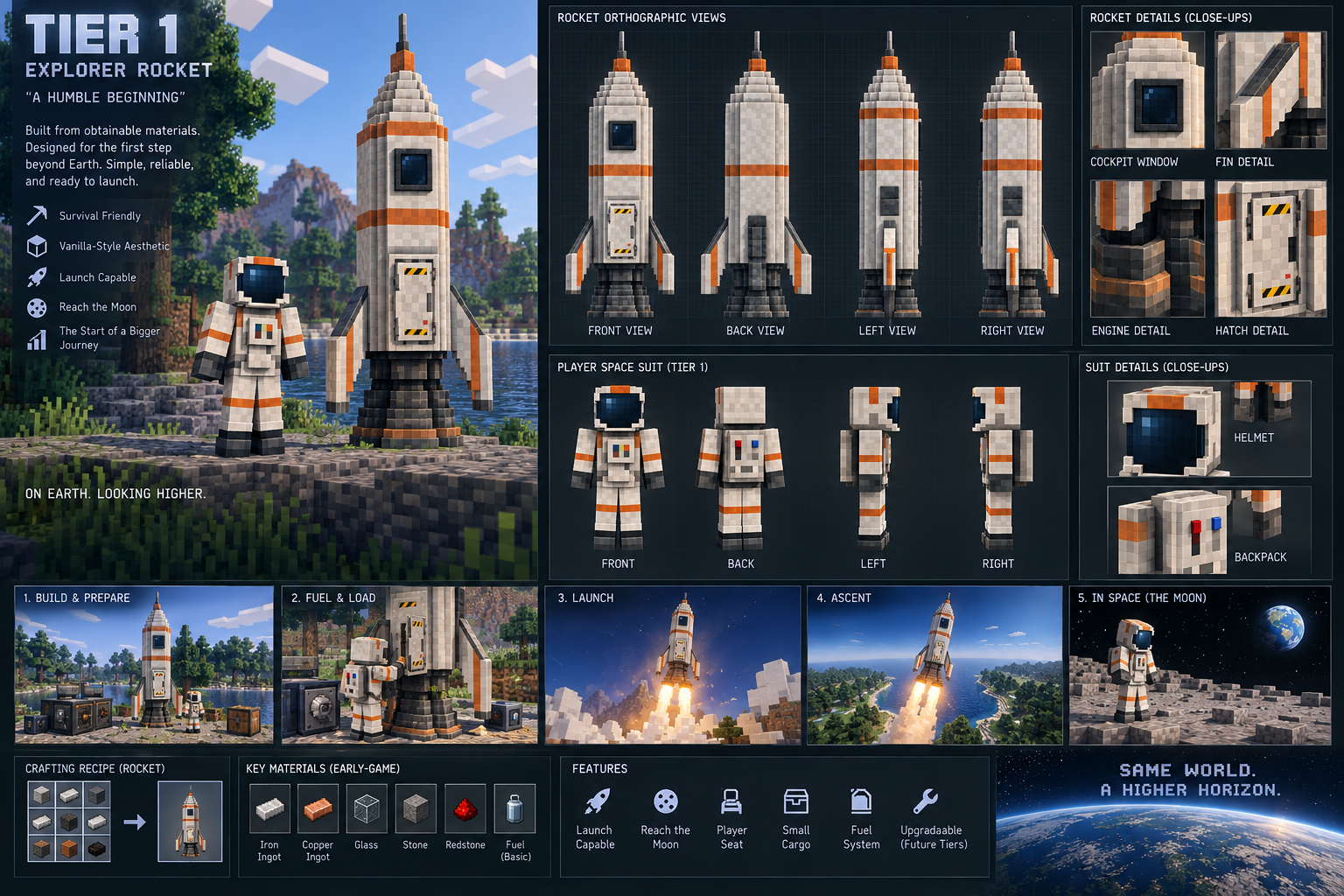
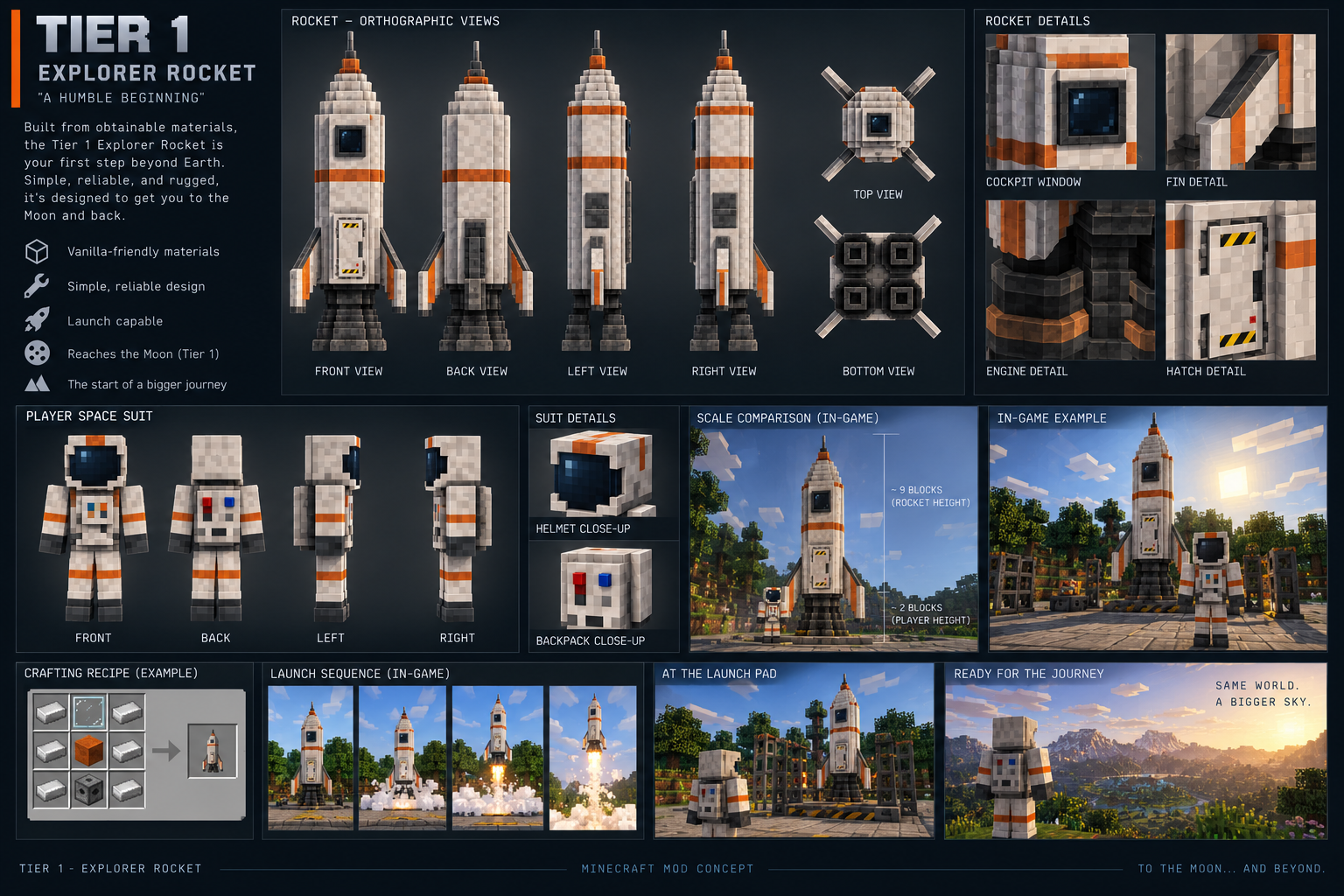
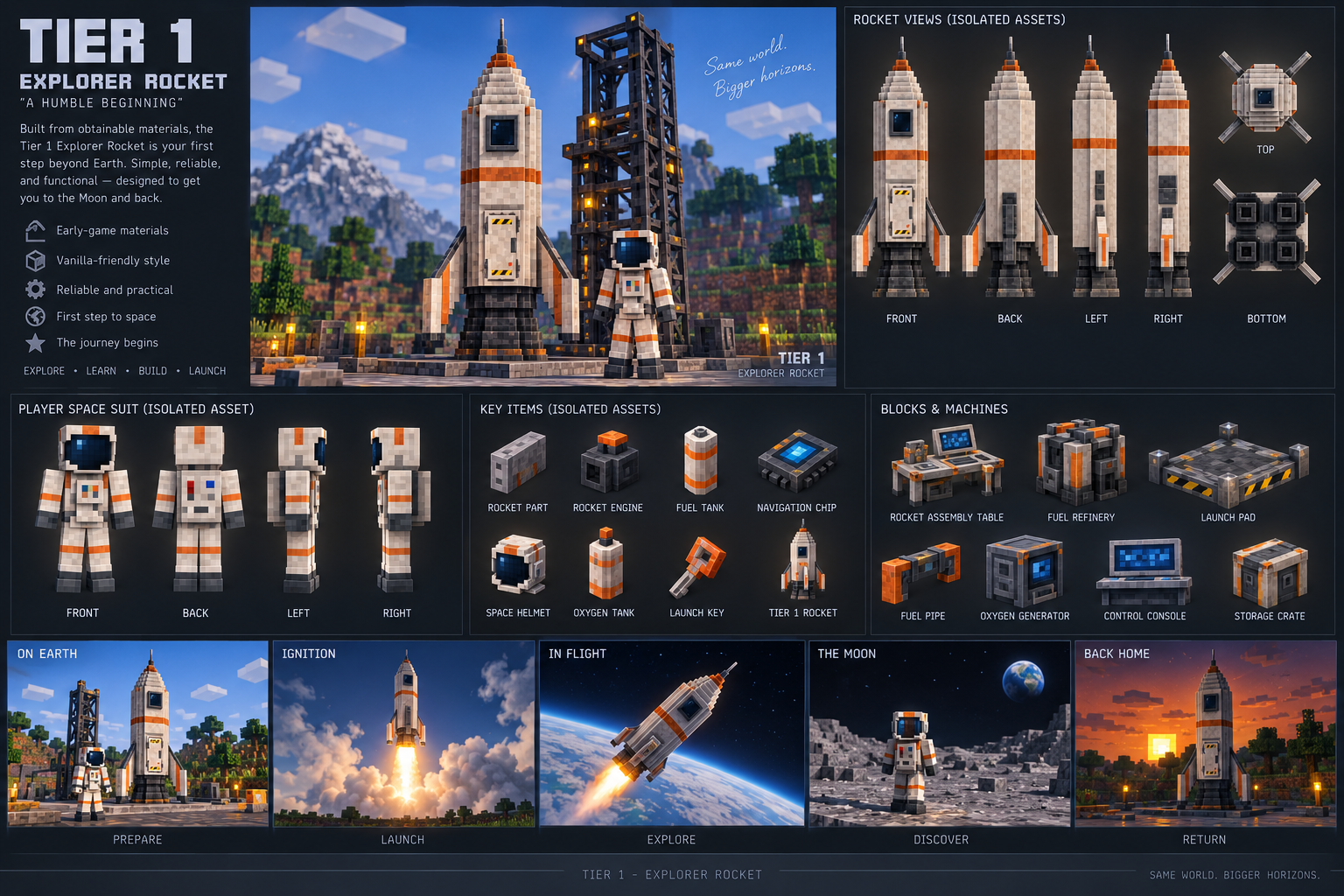
Tier 1 Explorer and REF03 | The recognized early white/orange family and its complete intended first expedition. | Compact cabin/suit/camera/cargo fit, final dimensions and actual transport representation. |
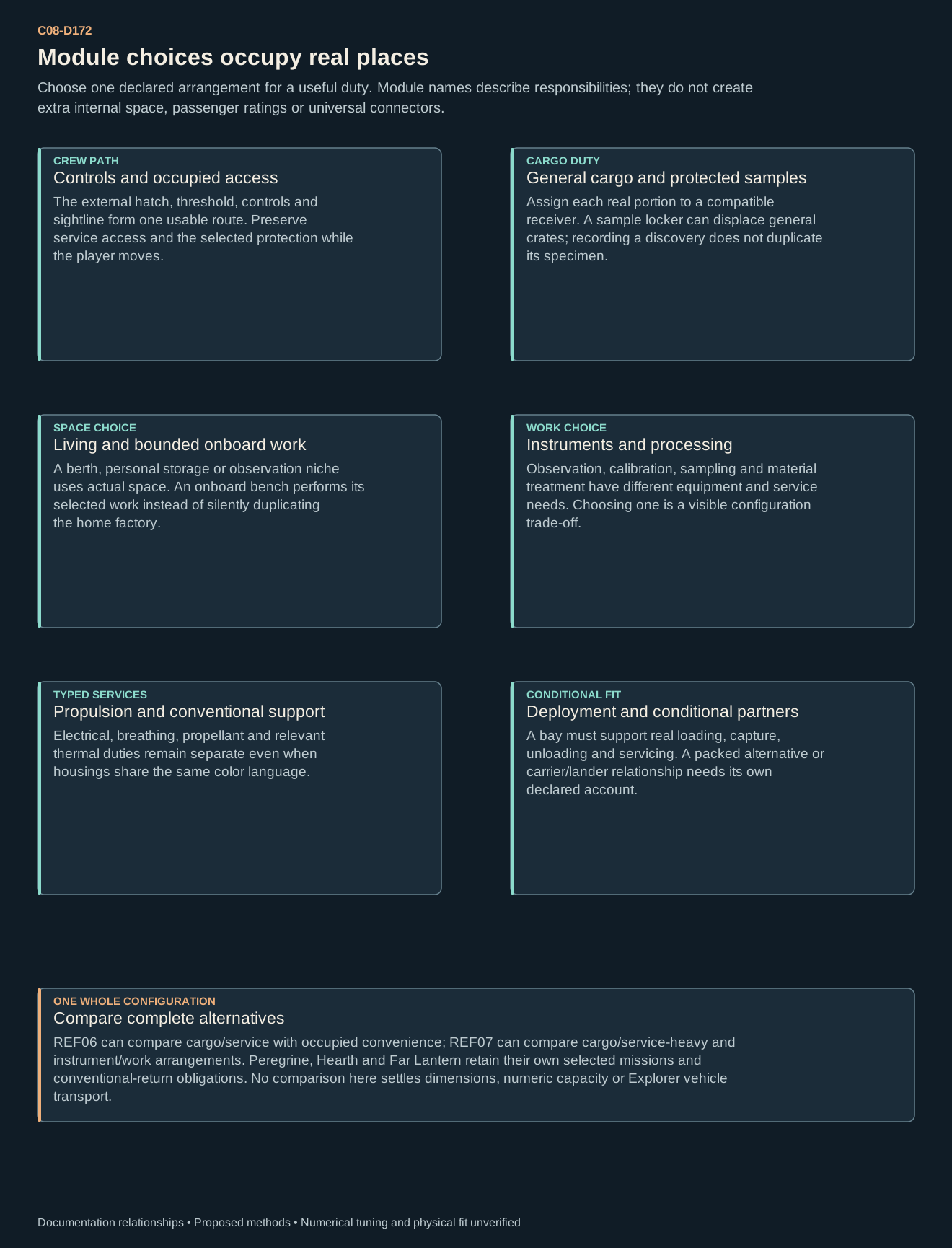
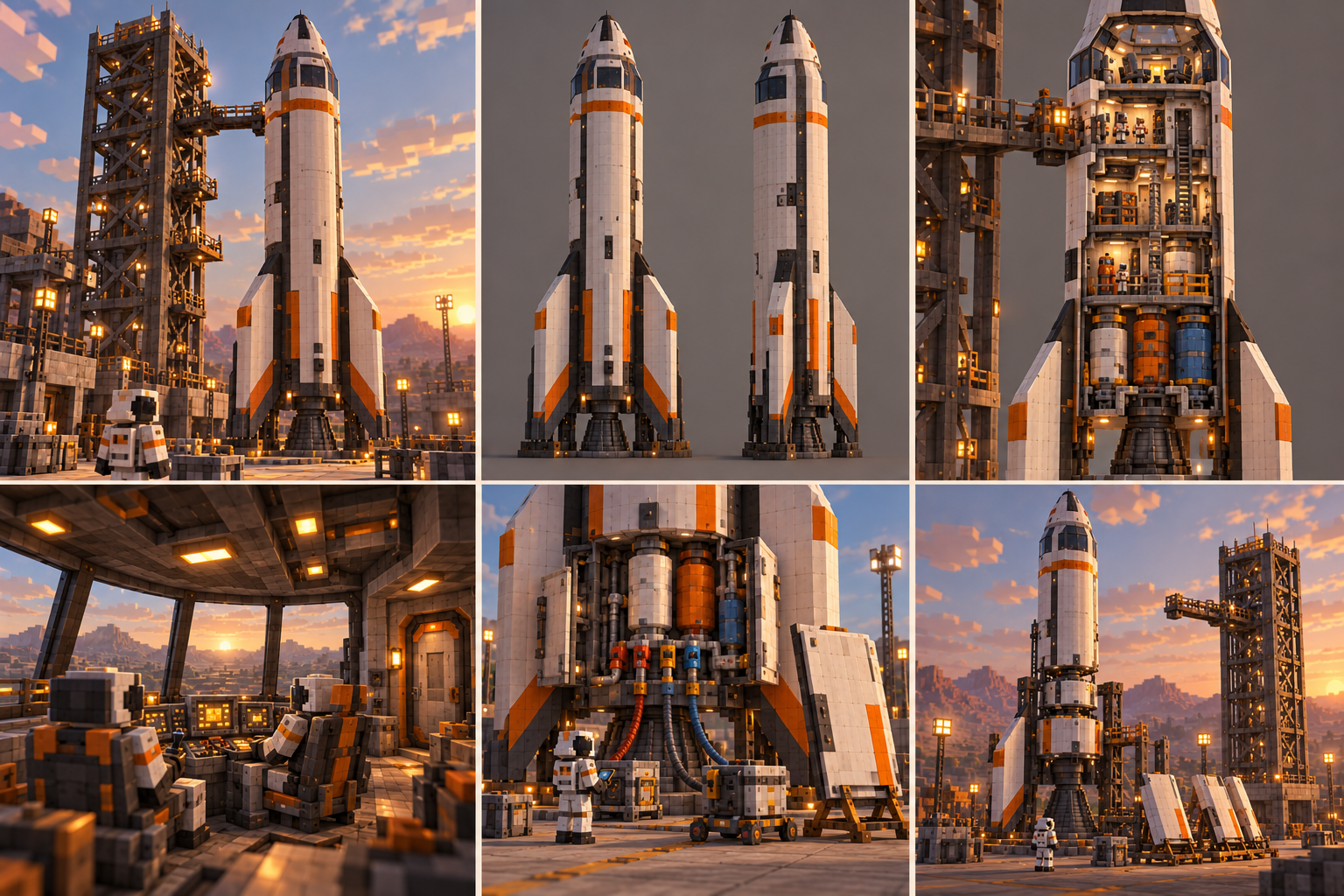
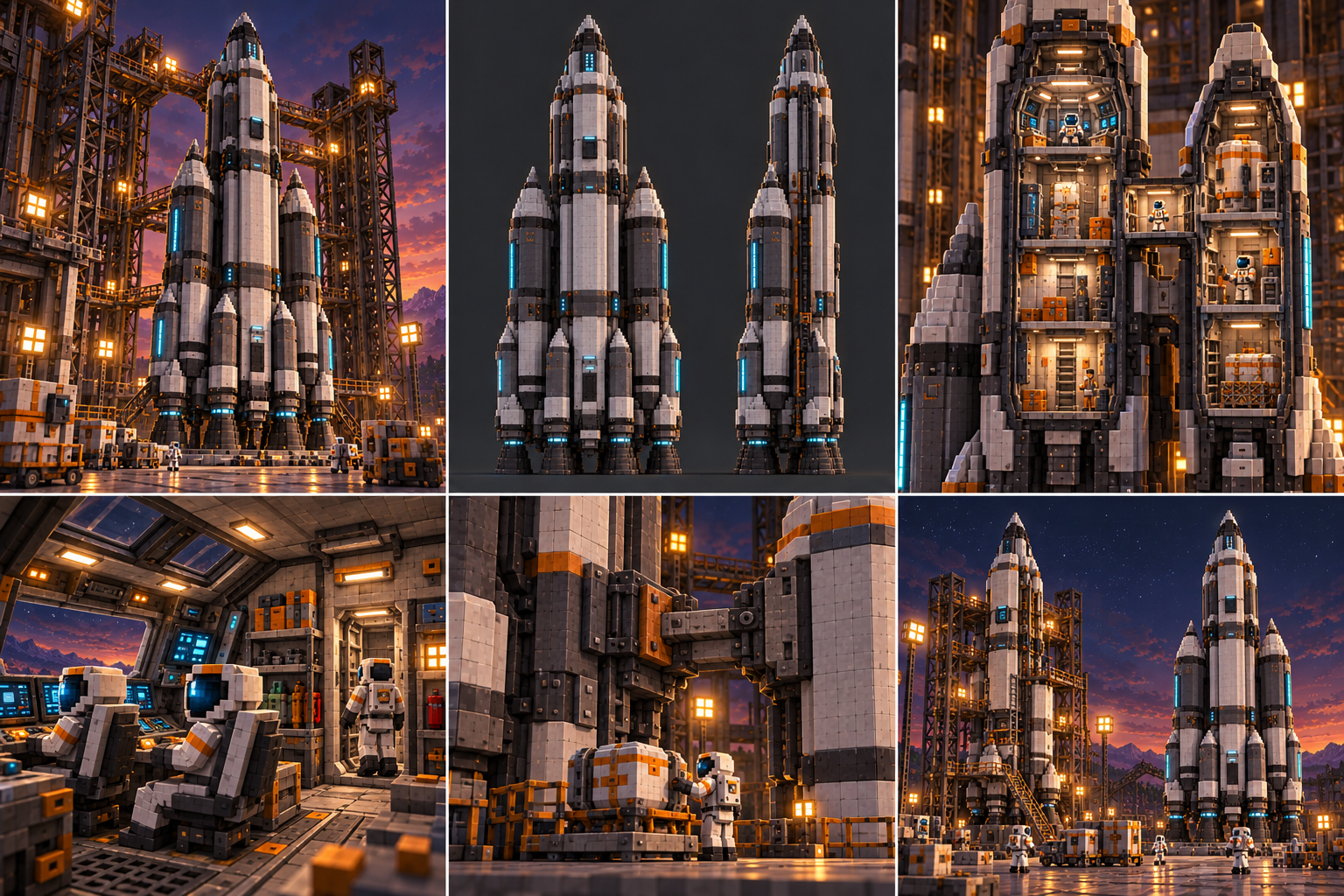
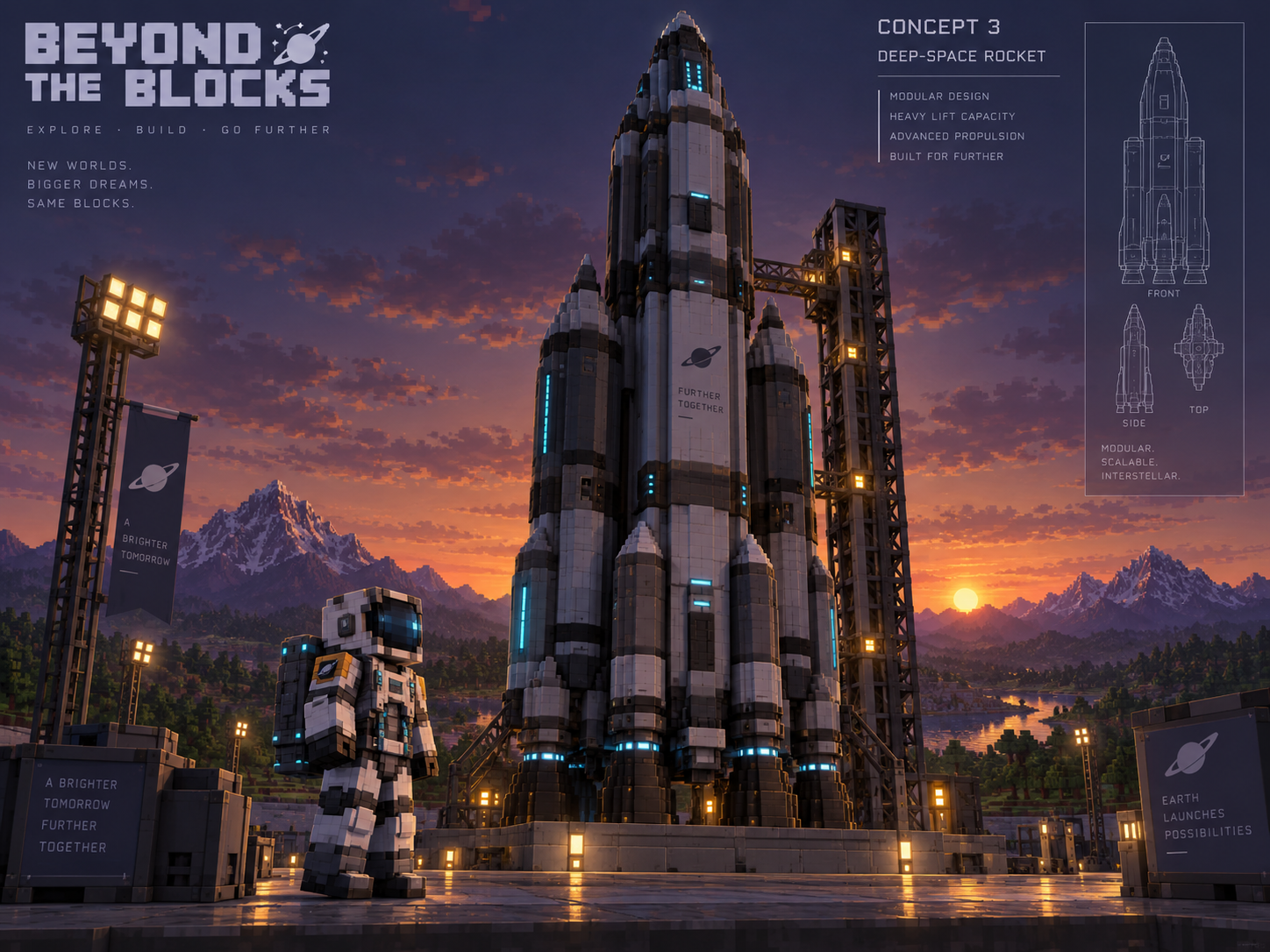
REF06 and REF07 | The supplied later Tier 2 and Tier 3 appearance associations and confirmed silhouettes/palettes. | Exact destination capability, measured interior layout, seating, carrier or separation behavior. |
| HUL01–HUL06 | Six broader creative mission/capability families with their own components and operational duties. | A numeric one-to-one tier mapping or automatic acceptance of every configuration. |
| Future tested configuration | The exact representation, service package, payload and route demonstrated by its evidence. | Other loads, cabins, routes, platforms or later revisions that were not exercised. |
C08-CRAFT-01 onward and C08-BUILD-06 preserve these distinctions. Concept artwork is not a measured fit test.
Keep three legitimate source descriptions from becoming a false implementation claim.
| Source description | Meaning | How to use it |
|---|---|---|
| Seven realms / 35 named experiences | The creative Earth atlas and its full intended environmental relationships. | Use for design, illustration, regional generation rules and future build planning. |
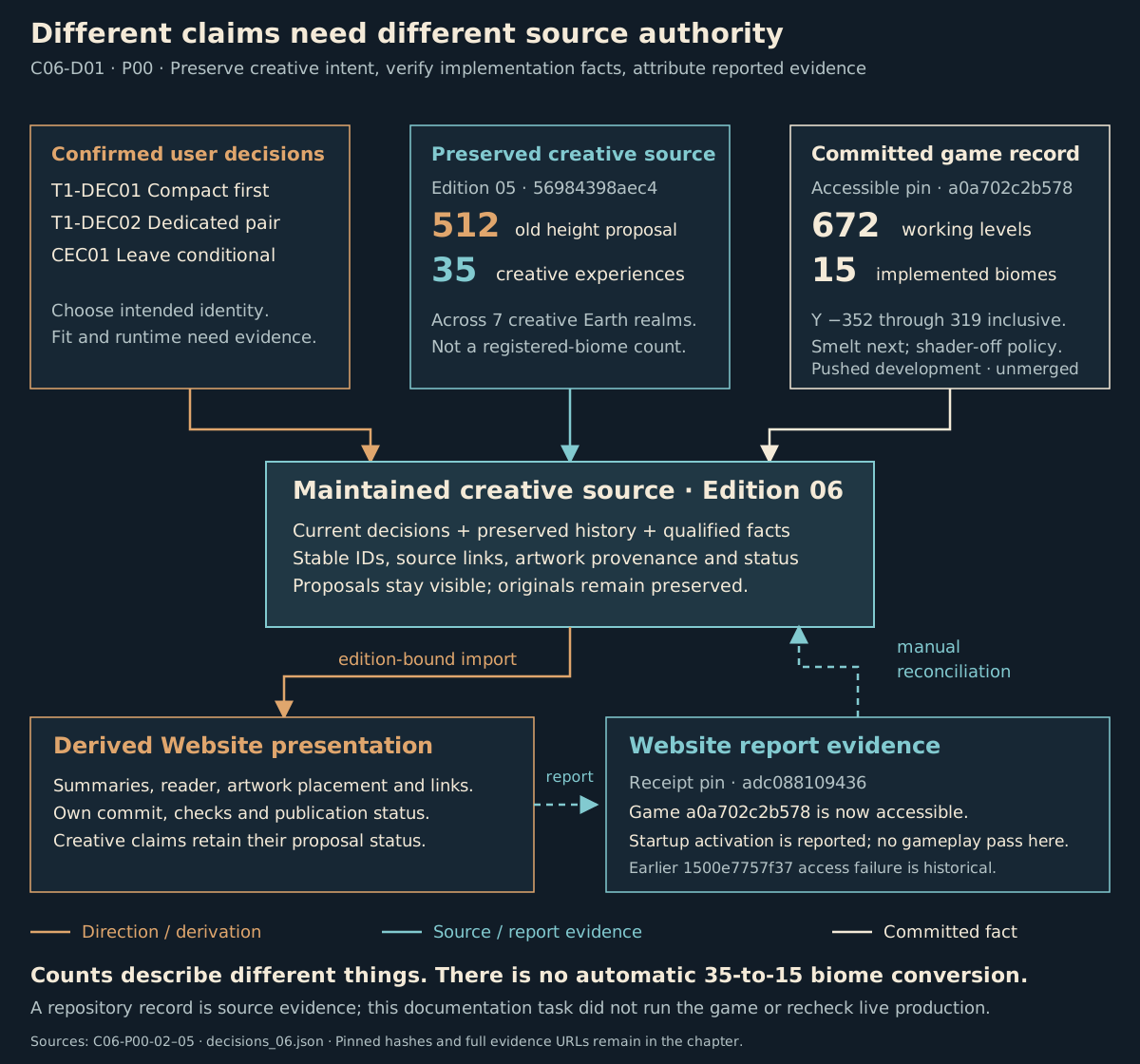
| 672 levels / 15 implemented depth biomes | The current guide relationship at game authority a0a702c2b5788d099645ab55ad23d8a5bf45c137. | Use only with that implementation/evidence qualification; inspect accepted later game changes before advancing it. |
| Historical 512-level column | An earlier preserved design statement. | Retain as history and trace its reconciliation; do not present it as the current working column. |
An environment image can be a style authority without proving that a creative experience is a registered, generated biome.
Show how local discoveries add value without circular survival gates.
| Application | Specific later improvement | Earlier supported mode | Unverified claim to avoid |
|---|---|---|---|
PM03 Ferric Lattice | A replaceable external Survey Rover rack member. | The supplied earlier frame remains usable for the first expedition. | Free cargo capacity, universal chassis replacement or proven carrier fit. |
PM04 Brine Catalyst | Finite active charge in a reusable compatible processing housing. | An ordinary supplied method remains valid before local production. | Cleaning regenerates consumed contents, or an empty housing is a new charge. |
| Frontier Yard growth | Chosen refuge, vehicle service, weather, materials, greenhouse or depot duties. | A small supplied refuge/service arrangement can remain the preferred scale. | Every stage is mandatory before useful exploration. |
CEC01 option | A separately documented possible ecological addition. | The full geological campaign, Rootstone evidence and conclusion work without it. | Existing canon or a required clue, resource or survival system. |
The existing Mars campaign remains the detailed source; this comparison preserves its qualifications.
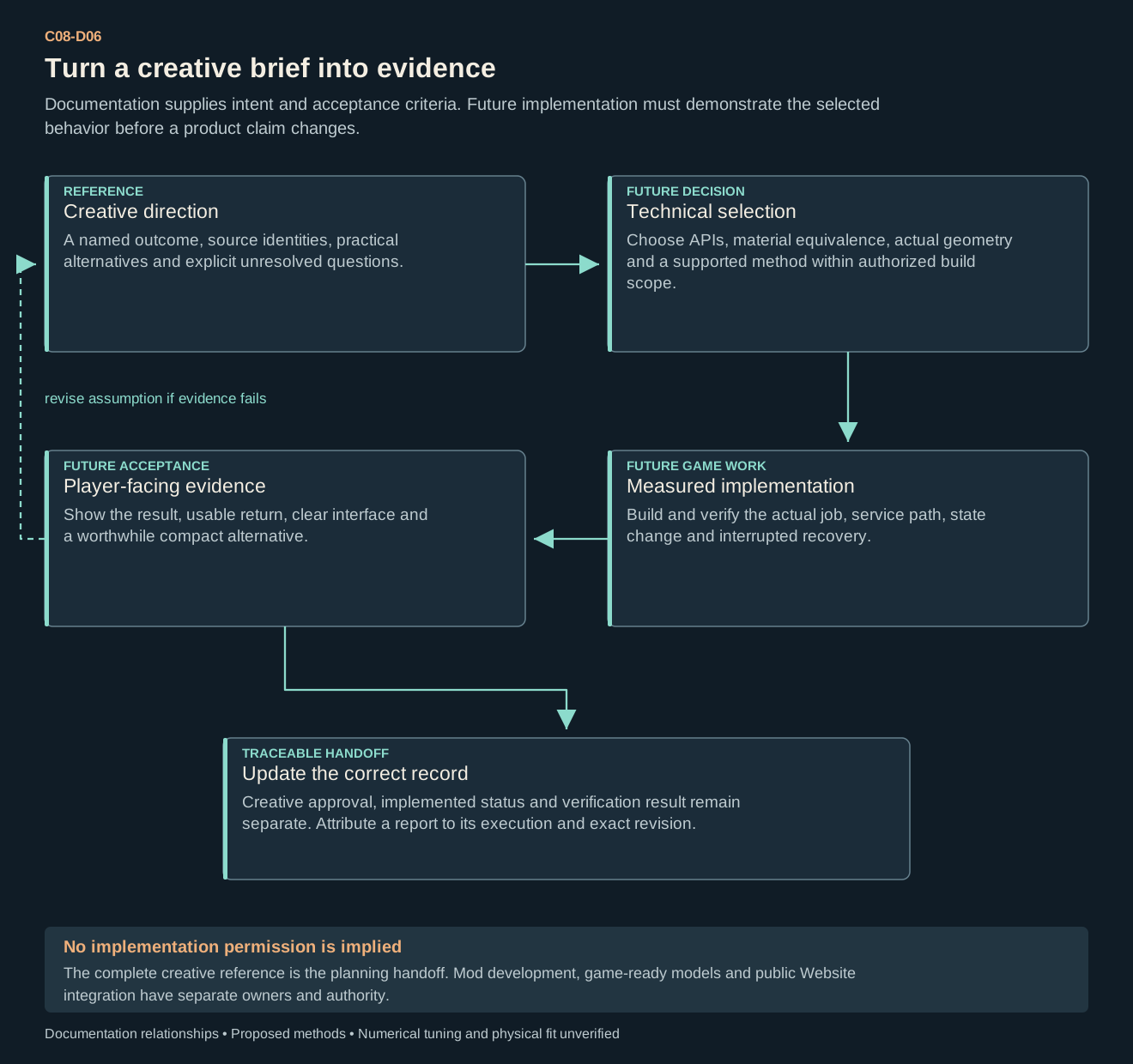
Distinguish complete documentation from implementation and public incorporation.
| Responsibility | Deliverable | Acceptance evidence |
|---|---|---|
| Creative-reference maintainer | Complete canonical text, reviewed concepts, editable explanations, reader, structured records and history. | Preservation, source/asset/link checks, substantive review and fresh reader verification at the named revision. |
| Future game BUILD | A selected bounded playable outcome in the actual mod. | Code/asset inspection, native tests and complete player-task evidence. |
| Game-ready asset production | Measured models, meshes, collision, UVs, texture atlases, animation and native media. | Actual asset fit, performance and in-game presentation checks. |
| Technical validation | Resolved recipes, rates, fit, generation and platform questions. | Recorded measurements and play/seed/custody tests for the exact configuration. |
| Website agent | Manual incorporation of the pinned source into public Reference, Worlds, Systems and truthful roadmap explanations. | Its own tested, deployed and report revisions, preserving failures and execution limits. |
The current programme authorizes the first responsibility and its repository handoff. It does not authorize the other production work by implication.
76 bounded units connect player outcomes to dependencies, completion criteria and the evidence needed to select implementation details. These are future planning records. Smelt remains the next unbuilt gameplay work at the accepted source pin; this reference does not authorize game development or prescribe release dates.
Read the brief standard and consequential open choices before selecting work. Search can find every unit by its stable ID.
C08-BASE-01 Reconcile the next authorized game unitFuture game build brief; not implemented or authorized by reference production.
Full reference: C08-BUILD-01
C08-BASE-02 One material becomes a useful improvementFuture game build brief; not implemented or authorized by reference production.
C08-BASE-01Full reference: C08-JOURNEY-03
C08-BASE-03 A bounded Old Valley openingFuture game build brief; not implemented or authorized by reference production.
C08-BASE-02Full reference: C08-JOURNEY-05
C08-BASE-04 One reliable managed activity boundaryFuture game build brief; not implemented or authorized by reference production.
Full reference: C08-ATLAS-03
C08-BASE-05 A generated local route with a meaningful fallbackFuture game build brief; not implemented or authorized by reference production.
Full reference: C08-BUILD-07
C08-BASE-06 Explorer simultaneous occupied fitFuture game build brief; not implemented or authorized by reference production.
Full reference: C08-BUILD-06
C08-BASE-07 The first complete supplied lunar loopFuture game build brief; not implemented or authorized by reference production.
C08-BASE-06REF10 fabrication and REF09/full-berth assembly retain distinct duties.Full reference: C08-JOURNEY-08
C08-BASE-08 A coherent Mars geological campaignFuture game build brief; not implemented or authorized by reference production.
PM03/PM04 remain specific later improvements; CEC01 is unnecessary and unselected.Full reference: C08-JOURNEY-09
C08-BASE-09 Whole-chain balance and optional-route proofFuture game build brief; not implemented or authorized by reference production.
Full reference: C08-BUILD-05
C08-BASE-10 A coherent Solar conclusion and selected continuation boundaryFuture game build brief; not implemented or authorized by reference production.
Full reference: C08-JOURNEY-12
C08-BLD-IND-01 Typed service and finite custody contractFuture development brief; game BUILD and runtime acceptance are separate.
Full reference: C08-IND-03 · C08-IND-04 · C08-IND-13
C08-BLD-IND-02 Useful compact electrical orderFuture development brief; game BUILD and runtime acceptance are separate.
Full reference: C08-IND-06 · C08-IND-12 · C08-EQ-23
C08-BLD-IND-03 Mechanical repair and protection hostFuture development brief; game BUILD and runtime acceptance are separate.
Full reference: C08-IND-05 · C08-IND-09 · C08-EQ-03
C08-BLD-IND-04 Selected regional material chainFuture development brief; game BUILD and runtime acceptance are separate.
Full reference: C08-IND-07 · C08-IND-08 · C08-IND-17
C08-BLD-IND-05 Orders, construction and receiving freightFuture development brief; game BUILD and runtime acceptance are separate.
Full reference: C08-IND-14 · C08-IND-15 · C08-IND-16
C08-BLD-IND-06 Complete equipment interactionsFuture development brief; game BUILD and runtime acceptance are separate.
Full reference: C08-EQ-05 · C08-EQ-08 · C08-EQ-10 · C08-EQ-13 · C08-EQ-20 · C08-EQ-31
C08-BLD-IND-07 Explorer compact-first fit and starter manifestFuture development brief; game BUILD and runtime acceptance are separate.
REF10 component fabrication distinct from REF09 and the full assembly berth, and report any measured conflict before selecting a revision of the candidate.REF10 fabrication separate from REF09 and the full berth.Full reference: C08-CRAFT-07 · C08-CRAFT-04 · C08-CRAFT-06
C08-BLD-IND-08 First supplied lunar service and recoveryFuture development brief; game BUILD and runtime acceptance are separate.
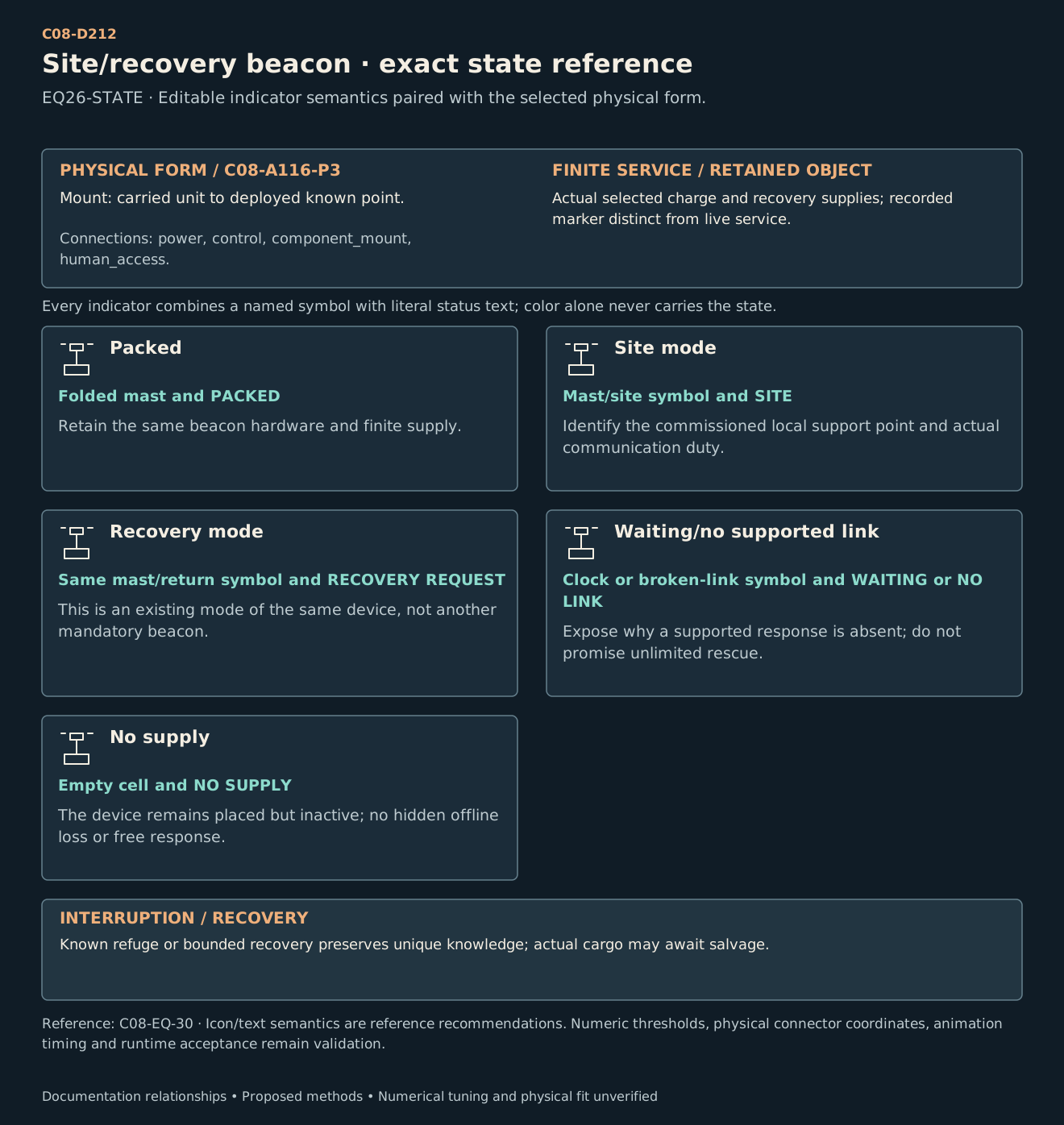
Full reference: C08-EQ-27 · C08-EQ-28 · C08-EQ-29 · C08-EQ-30 · C08-CRAFT-21
C08-BLD-IND-09 Mars carrier and rover deployment fitFuture development brief; game BUILD and runtime acceptance are separate.
SUP01 with independent refuge and return.SUP01 deployment, with earlier frame and spares, actual handling equipment, independent refuge and return; do not derive carrier capability from REF06/REF07 appearance.PM03/PM04 and does not assume Explorer Mars reach or rover carriage.PM03/PM04.REF06/07 tier appearance.Full reference: C08-CRAFT-06 · C08-CRAFT-15 · C08-CRAFT-16 · C08-EQ-38
C08-BLD-IND-10 Post-arrival material improvementFuture development brief; game BUILD and runtime acceptance are separate.
PM03 or PM04 application that improves an existing vehicle or service duty after first access, while preserving its supported conventional earlier service.PM03 geometry and replace the actual member once, or separate PM04 spent stock from its reusable housing; include full or spent receivers and interruption.PM03 geometry is manufactured, not harvested as natural truss.PM04 spent state and reusable housing remain separate.Full reference: C08-IND-10 · C08-EQ-20 · C08-CRAFT-16
C08-BLD-IND-11 Later supplied rocket reference decisionsFuture development brief; game BUILD and runtime acceptance are separate.
REF06/REF07 each gain a selected coherent component, interior and state candidate while preserving their supplied identity.REF06/REF07 family while preserving its dominant silhouette and palette.Full reference: C08-CRAFT-08 · C08-CRAFT-09 · C08-CRAFT-10 · C08-CRAFT-11
C08-BLD-IND-12 Capability-class hull fit and complete useFuture development brief; game BUILD and runtime acceptance are separate.
Full reference: C08-CRAFT-12 · C08-CRAFT-13 · C08-CRAFT-14 · C08-CRAFT-15 · C08-CRAFT-17 · C08-CRAFT-19
C08-BLD-IND-13 Finite optional advanced plantFuture development brief; game BUILD and runtime acceptance are separate.
Full reference: C08-IND-18
C08-BLD-IND-14 Pre-Afterlight transit and independent returnFuture development brief; game BUILD and runtime acceptance are separate.
C06-AR05/06 preparation and transit to their selected role and supplies available before Cairn or Morrow, including an independent return without destination-derived propellant or material.PM15–18 refits remain subsequent optional work.PM15–18 refits remain subsequent optional work.C06-AR05/06 material/service recipes without Cairn or Morrow input.Full reference: C08-IND-18 · C08-CRAFT-19 · C08-CRAFT-22
C08-LIV-B01 Observation, finite sample transfer and one useful bedFuture development brief; game BUILD and runtime acceptance are separate.
Full reference: C08-LIFE-02 · C08-LIFE-26 · C08-LIFE-27 · C08-UX-05
C08-LIV-B02 Quarry Coast shoreline lifeFuture development brief; game BUILD and runtime acceptance are separate.
C08-LIV-B01Full reference: C08-LIFE-04 · C08-LIFE-16
C08-LIV-B03 Root roosts and finite mining-edge wildlifeFuture development brief; game BUILD and runtime acceptance are separate.
C08-LIV-B01Full reference: C08-LIFE-05 · C08-LIFE-06
C08-LIV-B04 A practical Deepwilds cultivation serviceFuture development brief; game BUILD and runtime acceptance are separate.
C08-LIV-B01Full reference: C08-LIFE-18 · C08-LIFE-19 · C08-LIFE-20 · C08-LIFE-22 · C08-LIFE-23 · C08-UX-07
C08-LIV-B05 Conservatory crossing and canopy neighboursFuture development brief; game BUILD and runtime acceptance are separate.
C08-LIV-B01Full reference: C08-LIFE-07 · C08-LIFE-08 · C08-LIFE-21 · C08-LIFE-31
C08-LIV-B06 Bluefen sharing and a bounded fisheryFuture development brief; game BUILD and runtime acceptance are separate.
C08-LIV-B01Full reference: C08-LIFE-09 · C08-LIFE-11 · C08-LIFE-29
C08-LIV-B07 Slateback landing with equal completion routesFuture development brief; game BUILD and runtime acceptance are separate.
Full reference: C08-LIFE-10 · C08-LIFE-32
C08-LIV-B08 Far Beacon navigation and local water workFuture development brief; game BUILD and runtime acceptance are separate.
Full reference: C08-LIFE-12 · C08-LIFE-13 · C08-LIFE-33
C08-LIV-B09 Thermal garden and relay phasesFuture development brief; game BUILD and runtime acceptance are separate.
Full reference: C08-LIFE-14 · C08-LIFE-24 · C08-LIFE-34
C08-LIV-B10 Core peaceful observation and a home displayFuture development brief; game BUILD and runtime acceptance are separate.
C08-LIV-B01Full reference: C08-LIFE-15 · C08-LIFE-25 · C08-LIFE-38
C08-LIV-B11 Grain, cooking and useful provisionsFuture development brief; game BUILD and runtime acceptance are separate.
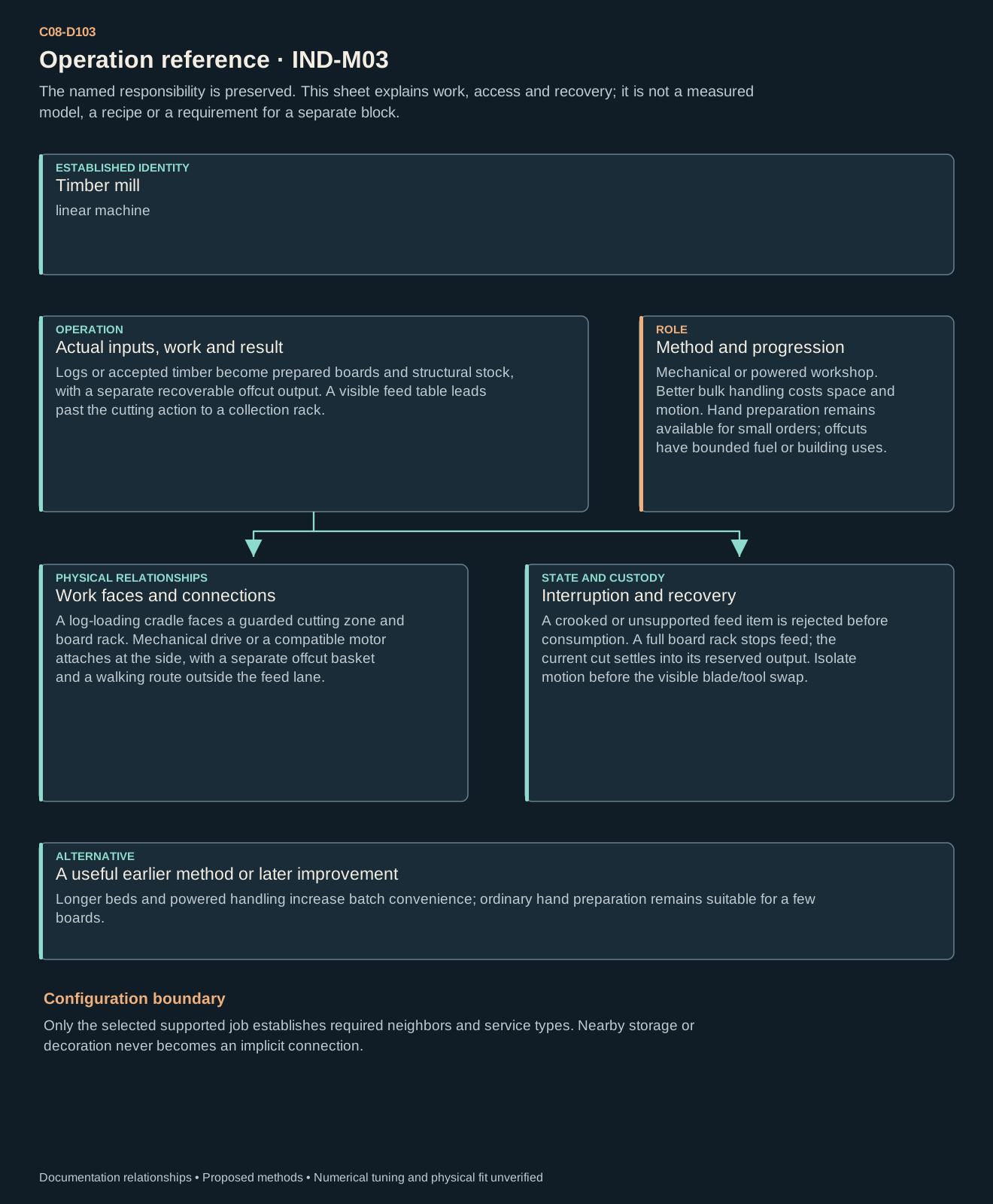
IND-M03 timber millFull reference: C08-LIFE-28 · C08-LIFE-29 · C08-UX-11
C08-LIV-B12 Resident routines and a complete first marketFuture development brief; game BUILD and runtime acceptance are separate.
Full reference: C08-LIFE-35 · C08-LIFE-36 · C08-NAR-02 · C08-NAR-06
C08-LIV-B13 Journal, maps and practical researchFuture development brief; game BUILD and runtime acceptance are separate.
Full reference: C08-UX-03 · C08-UX-04 · C08-UX-05 · C08-NAR-05
C08-LIV-B14 Project, machine and logistics information in one workshopFuture development brief; game BUILD and runtime acceptance are separate.
Full reference: C08-UX-07 · C08-UX-08 · C08-UX-11 · C08-UX-12
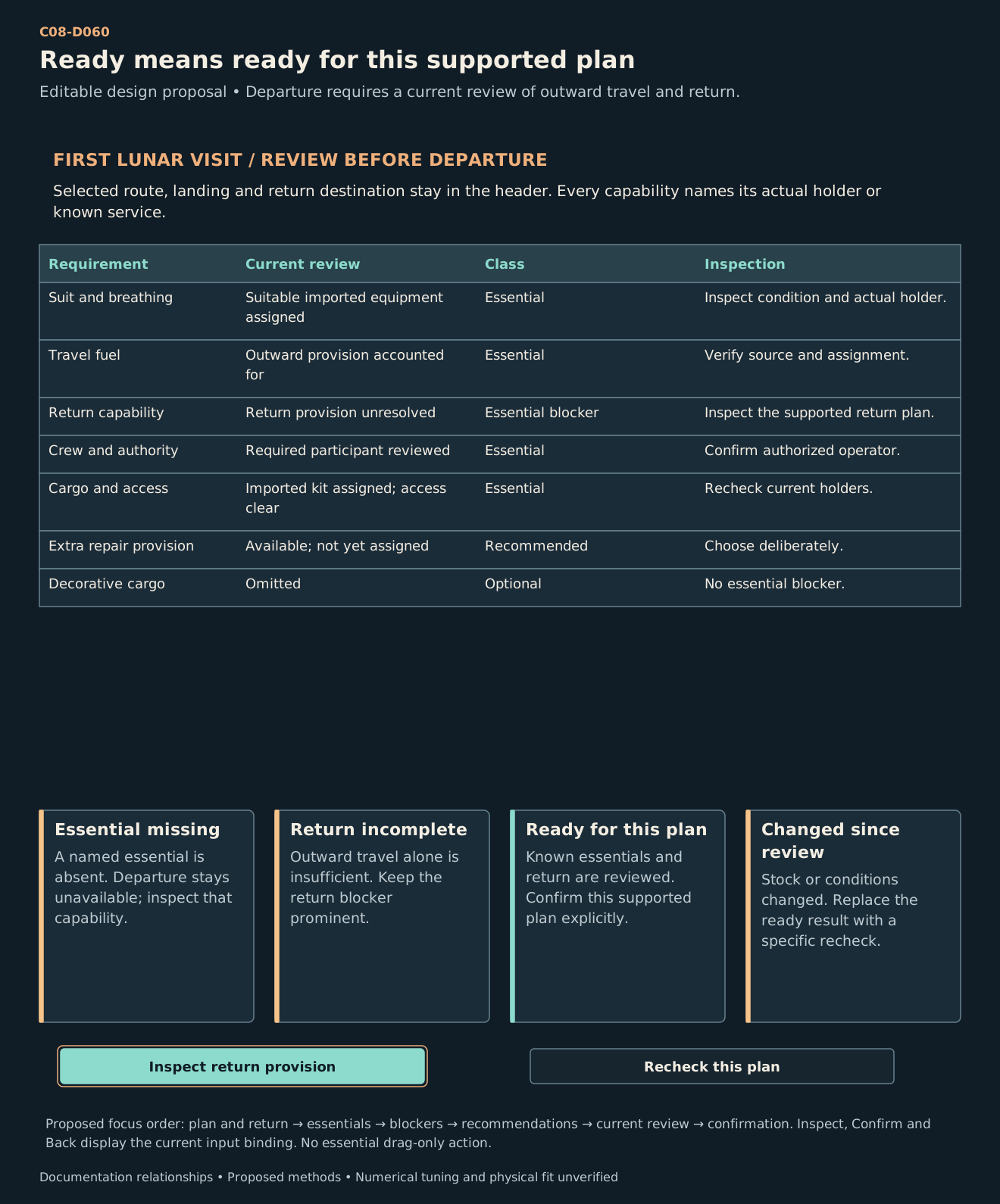
C08-LIV-B15 Equipment, readiness and recoverable departureFuture development brief; game BUILD and runtime acceptance are separate.
C08-LIV-B16 Audio identity and equivalent warning informationFuture development brief; game BUILD and runtime acceptance are separate.
Full reference: C08-AUD-01 · C08-AUD-02 · C08-AUD-03 · C08-AUD-04 · C08-AUD-05
C08-LIV-B17 Accessible interaction and persistent preferencesFuture development brief; game BUILD and runtime acceptance are separate.
Full reference: C08-ACC-01 · C08-ACC-02 · C08-ACC-03 · C08-ACC-04 · C08-ACC-05 · C08-ACC-06
C08-LIV-B18 Bounded local habitat restorationFuture development brief; game BUILD and runtime acceptance are separate.
Full reference: C08-LIFE-30 · C08-LIFE-37
C08-LIV-B19 Narrative continuity, environmental records and homecomingFuture development brief; game BUILD and runtime acceptance are separate.
CEC01 remains conditional/unselected and the long route remains creative scope, not shipped content.Full reference: C08-NAR-01 · C08-NAR-03 · C08-NAR-04 · C08-NAR-06 · C08-NAR-07
FAR-BUILD-CAI-BASE Build and inhabit Witness Camp ControllerFuture development brief; game BUILD and runtime acceptance are separate.
FAR-BUILD-CAI-WORLDFull reference: C08-CAI-02 · C08-CAI-05 · C08-CAI-09
FAR-BUILD-CAI-CAMPAIGN Complete the three outings and What Remains in the GapsFuture development brief; game BUILD and runtime acceptance are separate.
FAR-BUILD-CAI-WORLDFAR-BUILD-CAI-BASEFull reference: C08-CAI-06 · C08-CAI-07 · C08-CAI-08 · C08-CAI-10 · C08-CAI-12
FAR-BUILD-CAI-MATERIAL Connect the preserved material pair to a useful finite home applicationFuture development brief; game BUILD and runtime acceptance are separate.
PM15 Palimpsest Plate and PM16 Phase Tine have accessible sources, preserved specimens, declared preparation and a real useful returned application.PM15 Palimpsest PlatePM16 Phase TineFull reference: C08-CAI-04 · C08-CAI-06 · C08-CAI-07 · C08-CAI-10
FAR-BUILD-CAI-WORLD Generate a complete traversable campaign regionFuture development brief; game BUILD and runtime acceptance are separate.
Full reference: C08-CAI-02 · C08-CAI-03 · C08-CAI-09
FAR-BUILD-CER-BASE Build and inhabit Tetherworks ControllerFuture development brief; game BUILD and runtime acceptance are separate.
FAR-BUILD-CER-WORLDFull reference: C08-CER-02 · C08-CER-05 · C08-CER-09
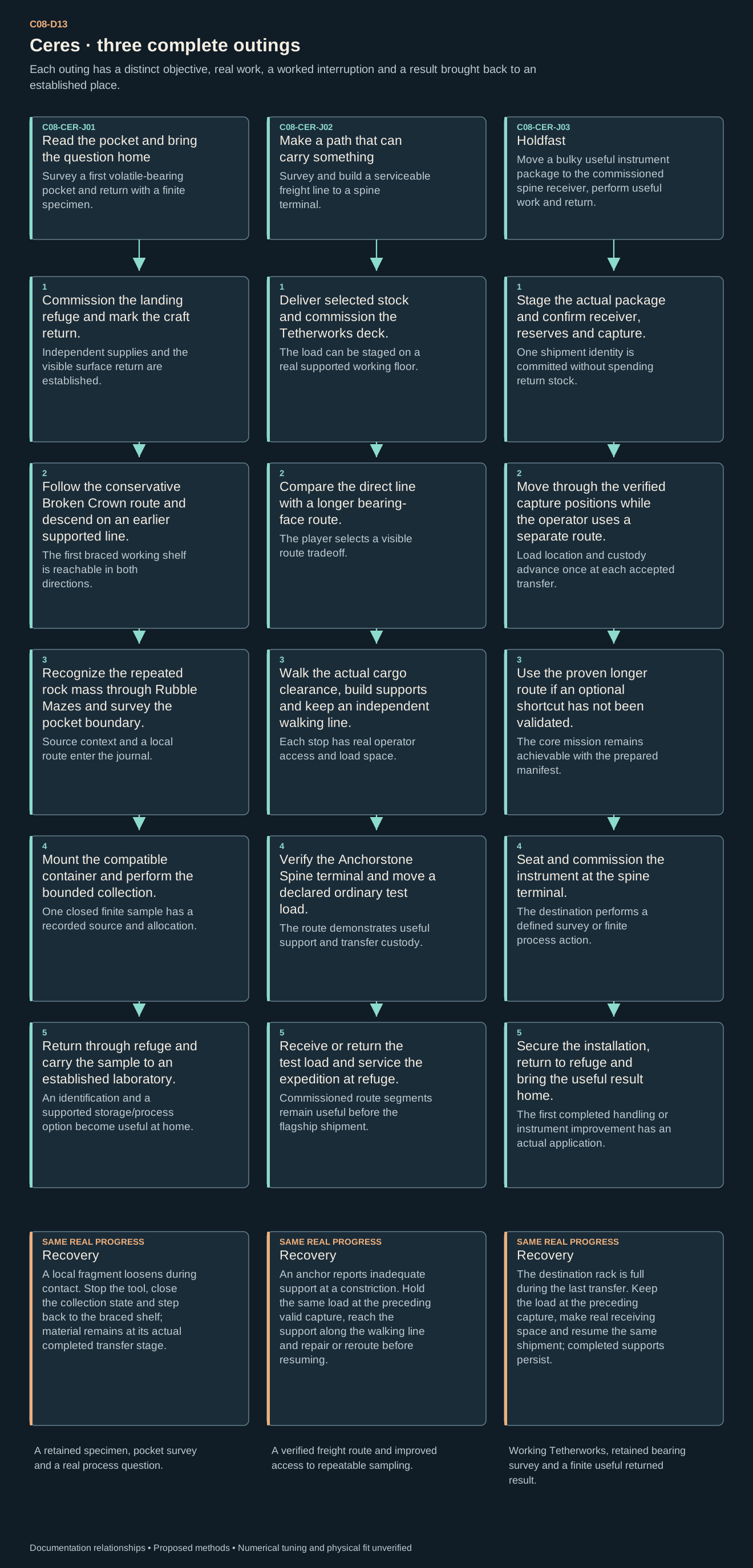
FAR-BUILD-CER-CAMPAIGN Complete the three outings and HoldfastFuture development brief; game BUILD and runtime acceptance are separate.
FAR-BUILD-CER-WORLDFAR-BUILD-CER-BASEFull reference: C08-CER-06 · C08-CER-07 · C08-CER-08 · C08-CER-10 · C08-CER-12
FAR-BUILD-CER-MATERIAL Connect the preserved material pair to a useful finite home applicationFuture development brief; game BUILD and runtime acceptance are separate.
PM05 Dark-Ice Concentrate and PM06 Porous Nickel Matrix have accessible sources, preserved specimens, declared preparation and a real useful returned application.PM05 Dark-Ice ConcentratePM06 Porous Nickel MatrixFull reference: C08-CER-04 · C08-CER-06 · C08-CER-07 · C08-CER-10
FAR-BUILD-CER-WORLD Generate a complete traversable campaign regionFuture development brief; game BUILD and runtime acceptance are separate.
Full reference: C08-CER-02 · C08-CER-03 · C08-CER-09
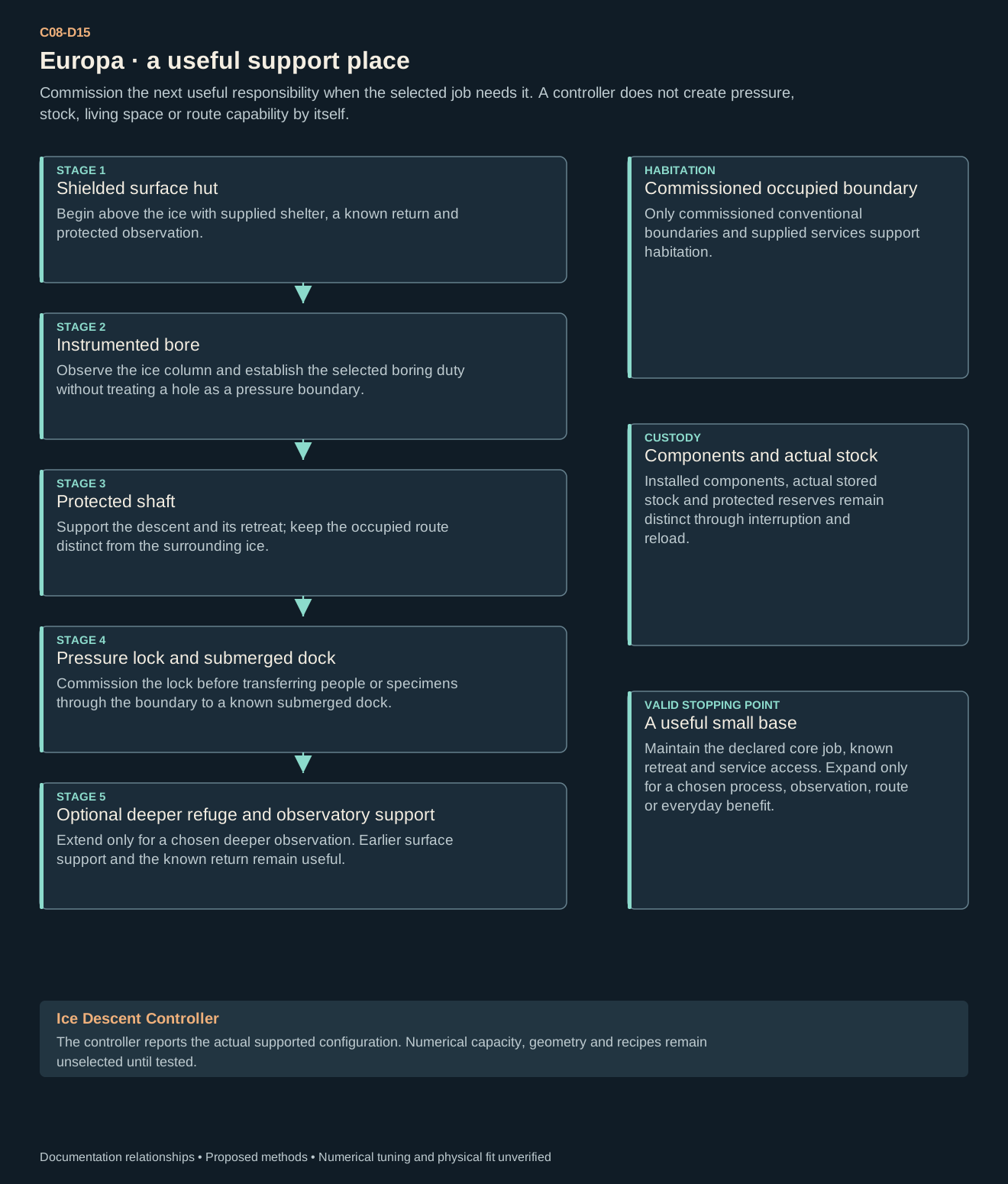
FAR-BUILD-EUR-BASE Build and inhabit Ice Descent ControllerFuture development brief; game BUILD and runtime acceptance are separate.
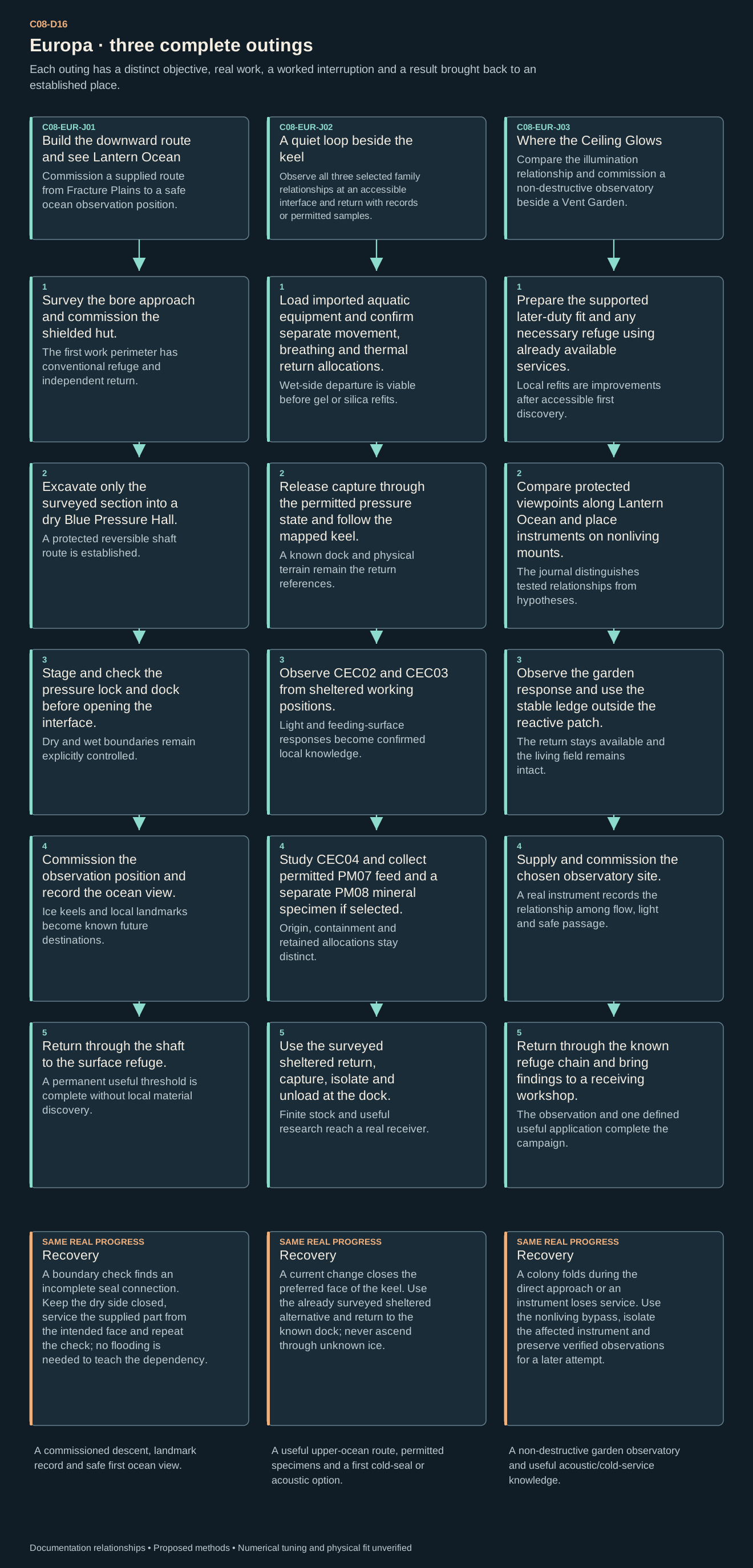
FAR-BUILD-EUR-WORLDSUP03 fit, boarding, capture and recoveryCEC02–04 warning and sample custodyFull reference: C08-EUR-02 · C08-EUR-05 · C08-EUR-09
FAR-BUILD-EUR-CAMPAIGN Complete the three outings and Where the Ceiling GlowsFuture development brief; game BUILD and runtime acceptance are separate.
FAR-BUILD-EUR-WORLDFAR-BUILD-EUR-BASESUP03 fit, boarding, capture and recoveryCEC02–04 warning and sample custodyFull reference: C08-EUR-06 · C08-EUR-07 · C08-EUR-08 · C08-EUR-10 · C08-EUR-12
FAR-BUILD-EUR-ECOLOGY Integrate the preserved Europa ecology with its full campaignFuture development brief; game BUILD and runtime acceptance are separate.
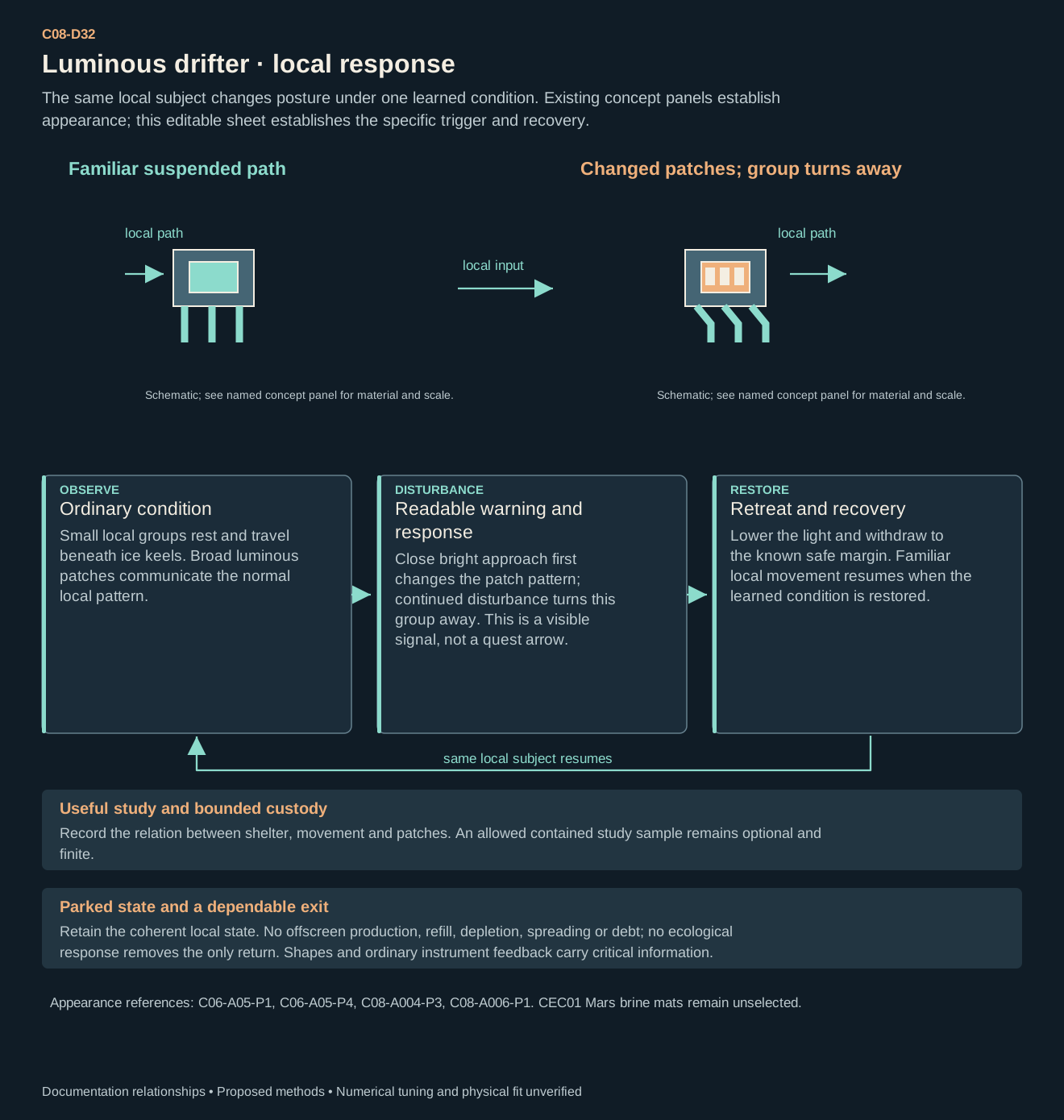
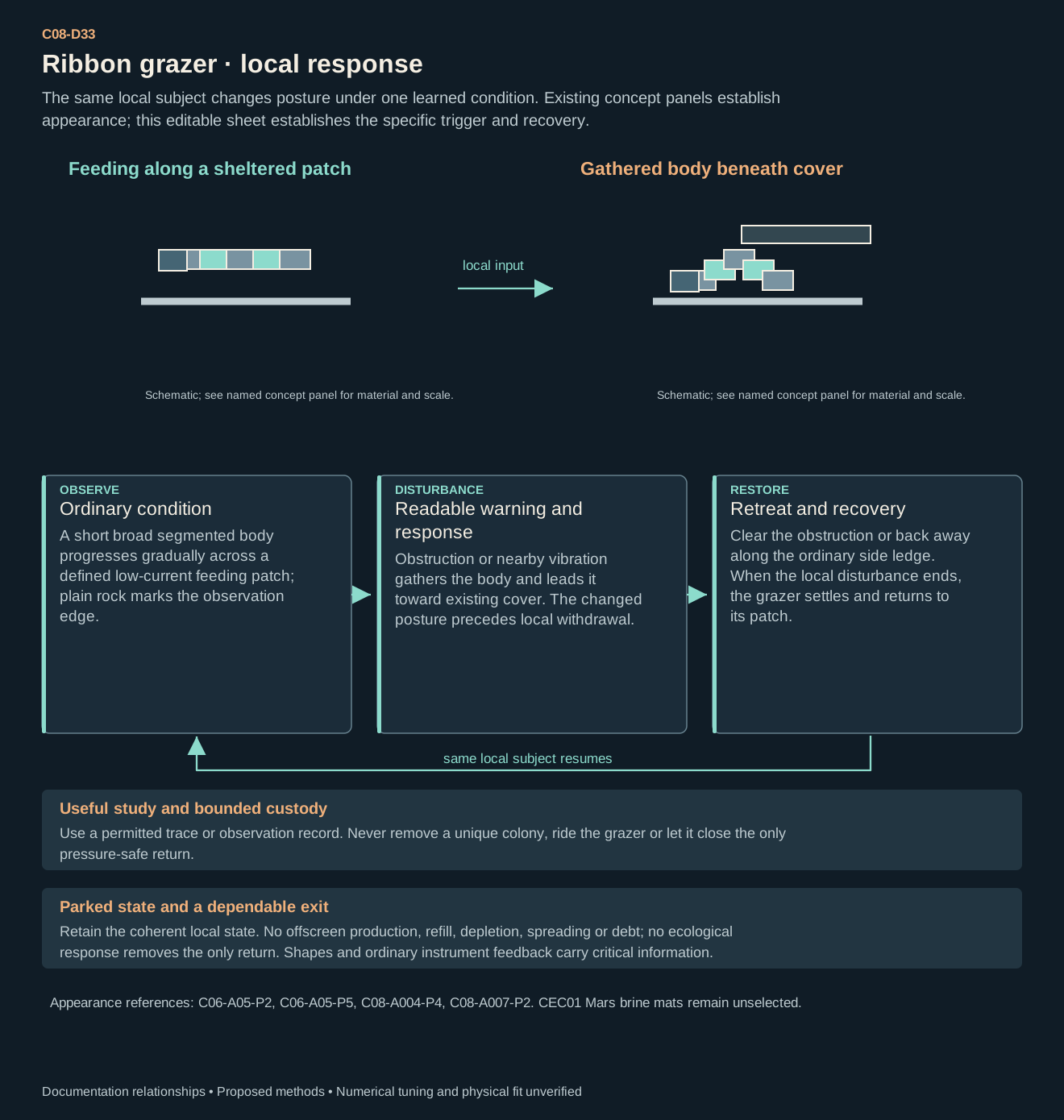
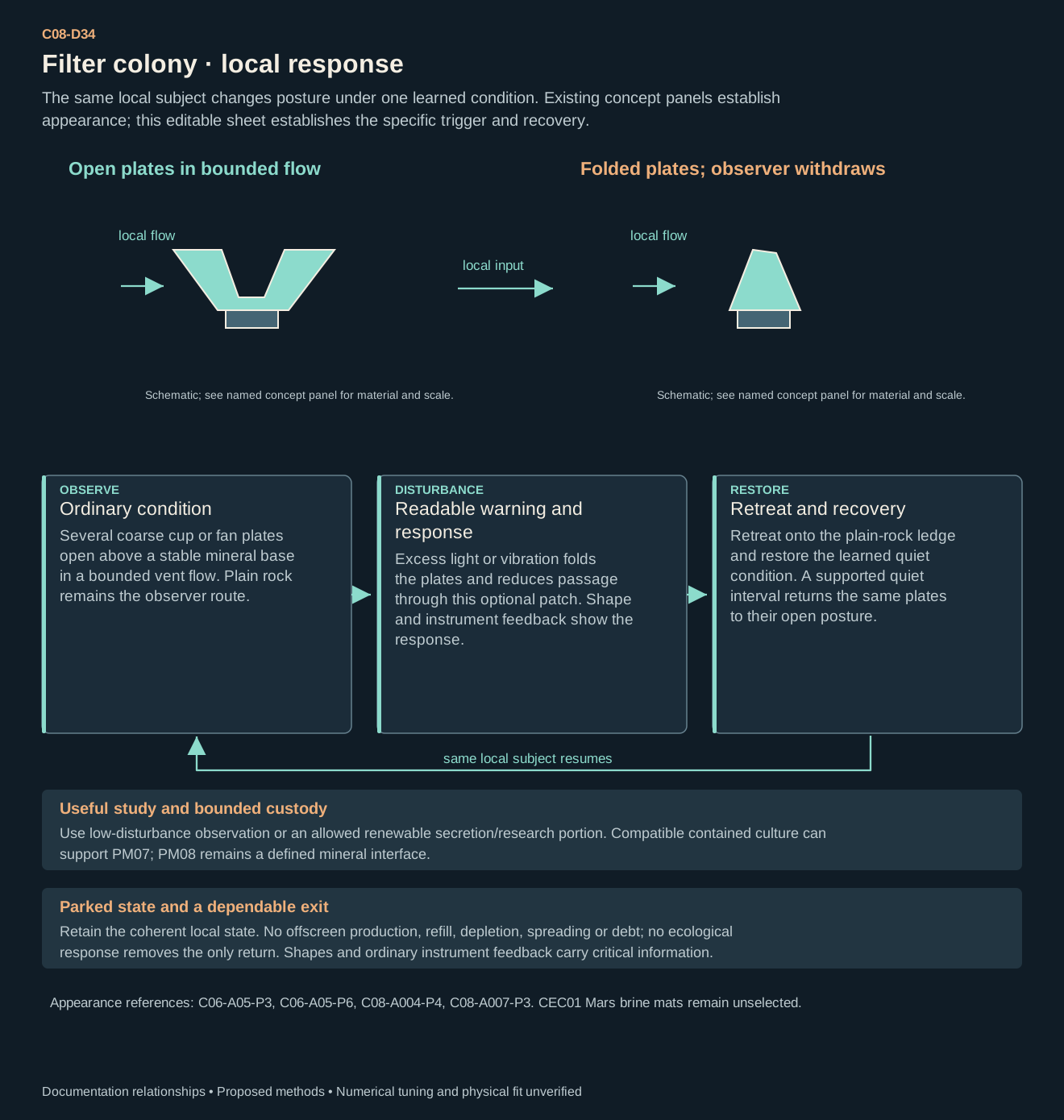
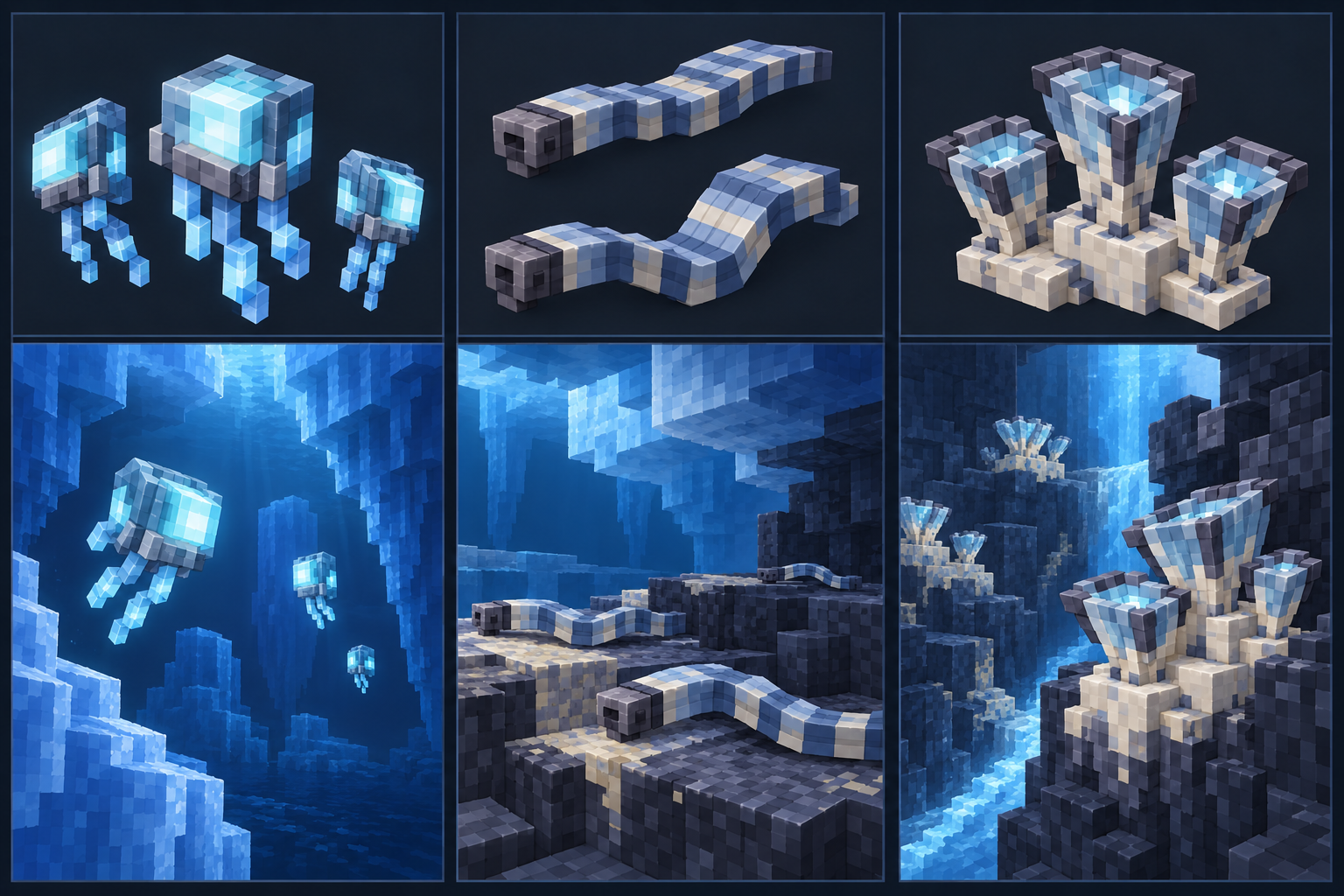
FAR-BUILD-EUR-WORLDCEC02 Luminous drifterCEC03 Ribbon grazerCEC04 Filter colonyFull reference: C08-EUR-03 · C08-EUR-04 · C08-EUR-06 · C08-EUR-07 · C08-EUR-08 · C08-EUR-09
FAR-BUILD-EUR-MATERIAL Connect the preserved material pair to a useful finite home applicationFuture development brief; game BUILD and runtime acceptance are separate.
PM07 Cryoseal Gel and PM08 Resonant Silica have accessible sources, preserved specimens, declared preparation and a real useful returned application.PM07 Cryoseal GelPM08 Resonant SilicaSUP03 fit, boarding, capture and recoveryCEC02–04 warning and sample custodyFull reference: C08-EUR-04 · C08-EUR-06 · C08-EUR-07 · C08-EUR-10
FAR-BUILD-EUR-SUPPORT Complete SUP03 Ice Submersible deployment, local outing and serviceFuture development brief; game BUILD and runtime acceptance are separate.
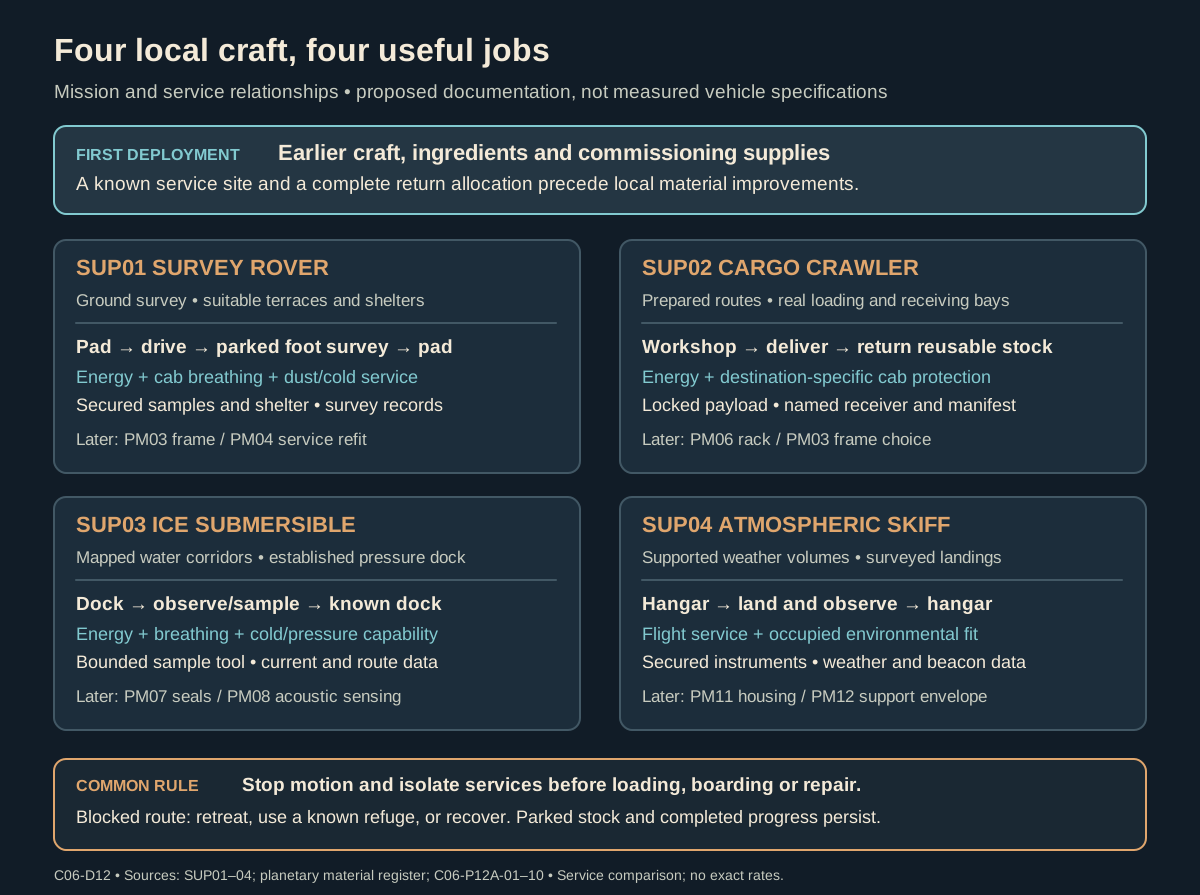
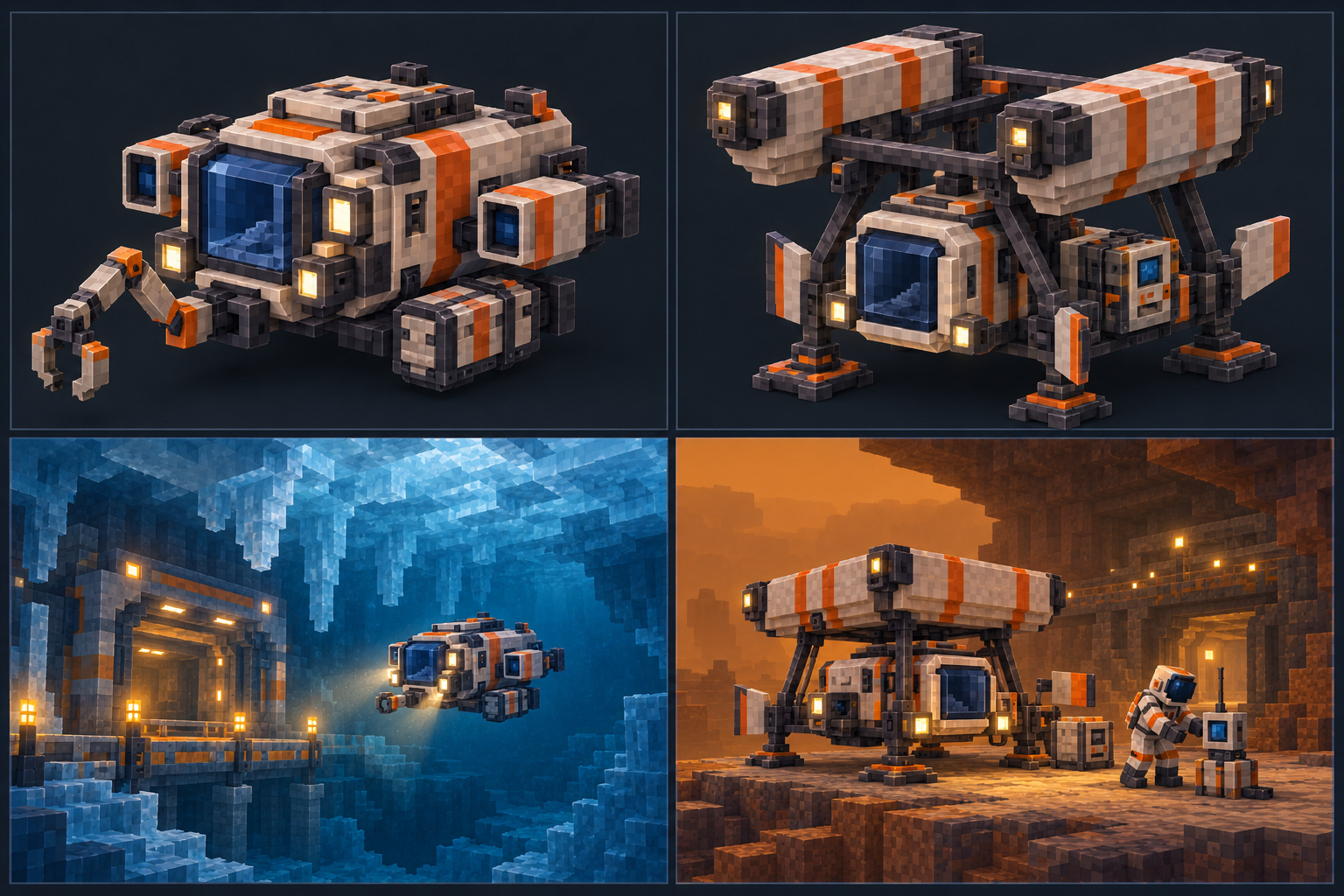
SUP03 Ice Submersible is a single persistent supplied support craft with actual boarding, operating envelope, cargo custody, services and a complete known-refuge return.FAR-BUILD-EUR-BASEFull reference: C08-EUR-02 · C08-EUR-05 · C08-EUR-07 · C08-EUR-08 · C08-EUR-09
FAR-BUILD-EUR-WORLD Generate a complete traversable campaign regionFuture development brief; game BUILD and runtime acceptance are separate.
SUP03 fit, boarding, capture and recoveryCEC02–04 warning and sample custodyFull reference: C08-EUR-02 · C08-EUR-03 · C08-EUR-09
FAR-BUILD-IO-BASE Build and inhabit Heatworks ControllerFuture development brief; game BUILD and runtime acceptance are separate.
FAR-BUILD-IO-WORLDFAR-BUILD-IO-CAMPAIGN Complete the three outings and Borrowed FireFuture development brief; game BUILD and runtime acceptance are separate.
FAR-BUILD-IO-WORLDFAR-BUILD-IO-BASEFull reference: C08-IO-06 · C08-IO-07 · C08-IO-08 · C08-IO-10 · C08-IO-12
FAR-BUILD-IO-MATERIAL Connect the preserved material pair to a useful finite home applicationFuture development brief; game BUILD and runtime acceptance are separate.
PM09 Thermal Spine Crystal and PM10 Sulfur Ceramic have accessible sources, preserved specimens, declared preparation and a real useful returned application.PM09 Thermal Spine CrystalPM10 Sulfur CeramicFull reference: C08-IO-04 · C08-IO-06 · C08-IO-07 · C08-IO-10
FAR-BUILD-IO-WORLD Generate a complete traversable campaign regionFuture development brief; game BUILD and runtime acceptance are separate.
FAR-BUILD-MOR-BASE Build and inhabit Hearthsea Conservatory ControllerFuture development brief; game BUILD and runtime acceptance are separate.
FAR-BUILD-MOR-WORLDFull reference: C08-MOR-02 · C08-MOR-05 · C08-MOR-09
FAR-BUILD-MOR-CAMPAIGN Complete the three outings and A Place for TomorrowFuture development brief; game BUILD and runtime acceptance are separate.
FAR-BUILD-MOR-WORLDFAR-BUILD-MOR-BASEFull reference: C08-MOR-06 · C08-MOR-07 · C08-MOR-08 · C08-MOR-10 · C08-MOR-12
FAR-BUILD-MOR-ECOLOGY Integrate the preserved Morrow ecology with its full campaignFuture development brief; game BUILD and runtime acceptance are separate.
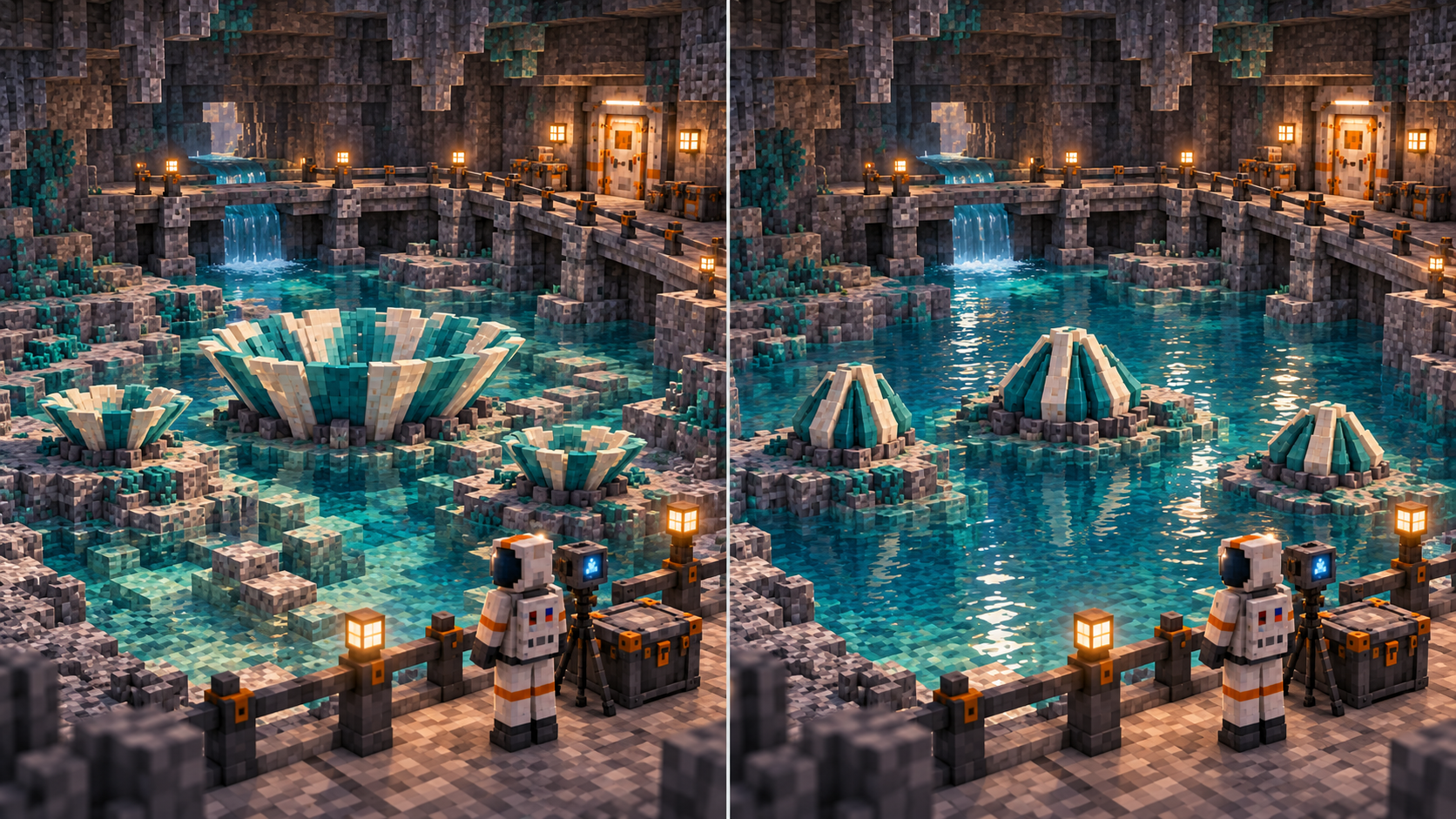
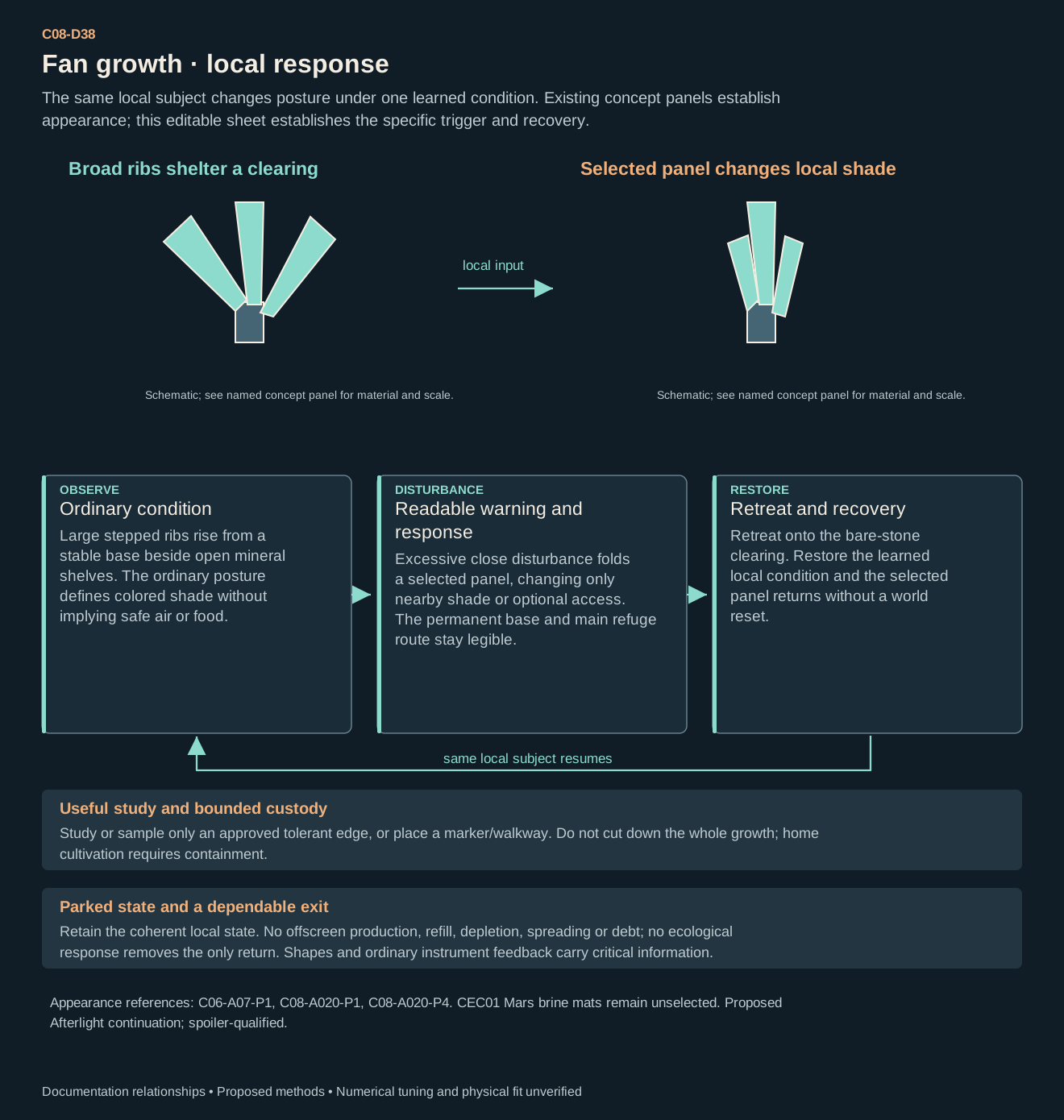
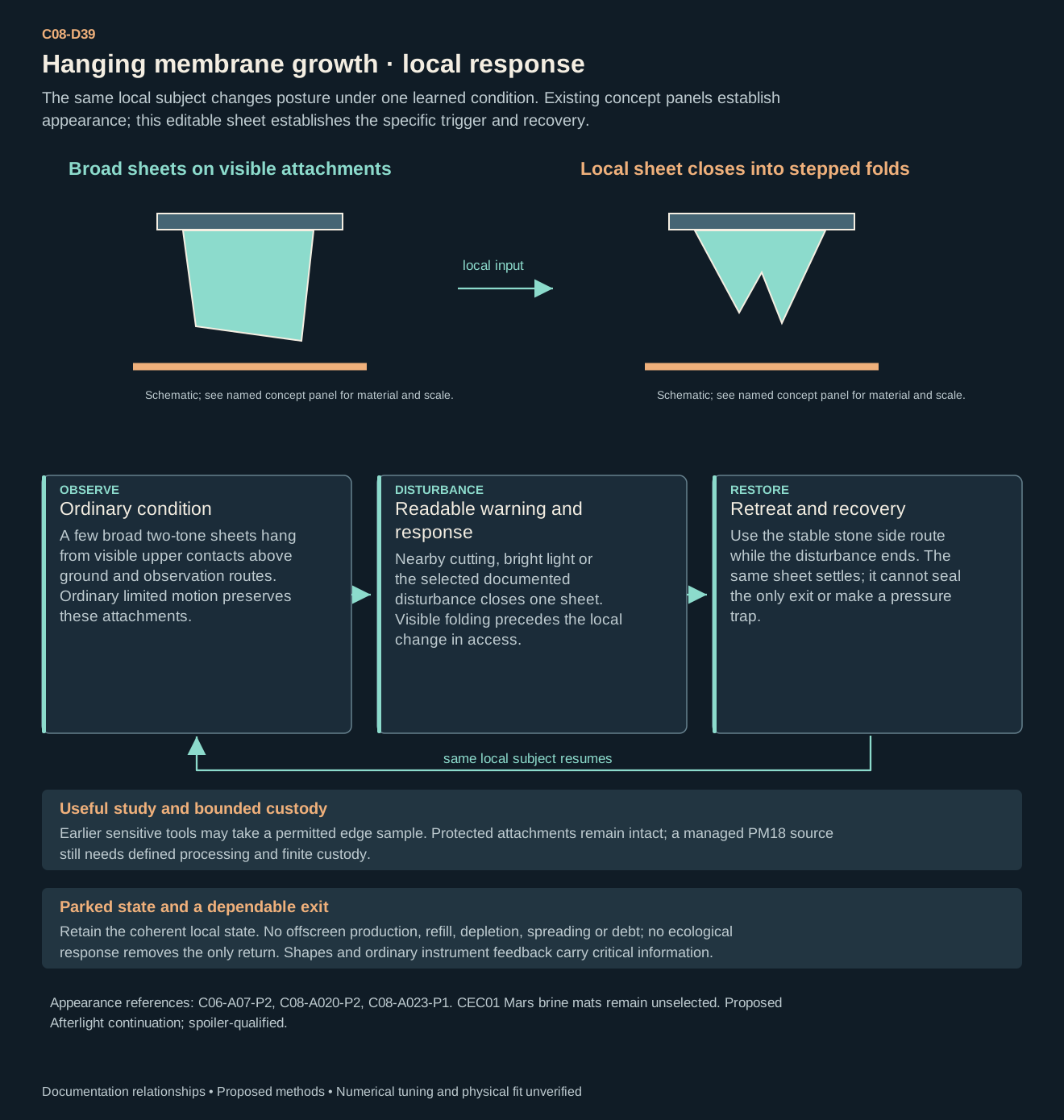
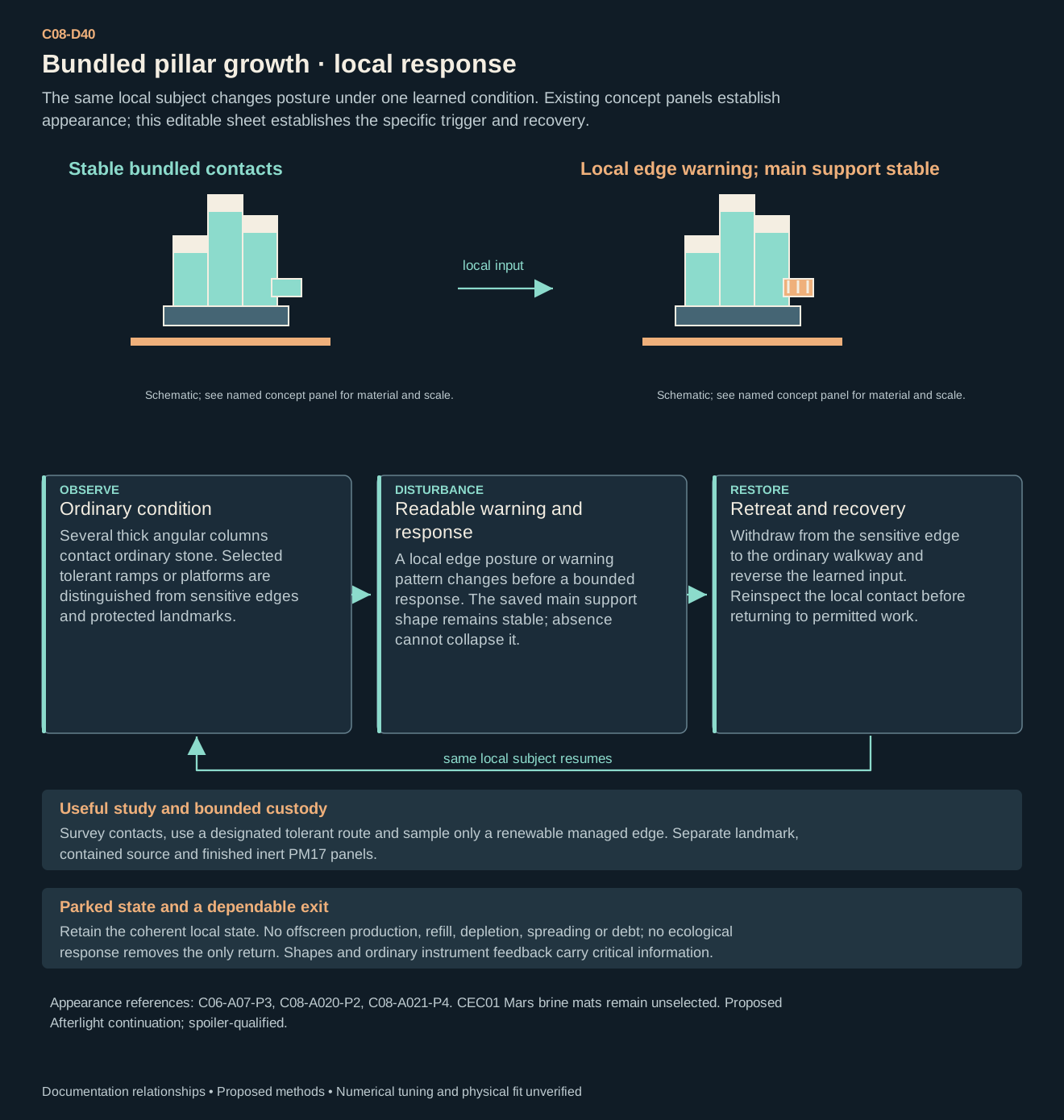
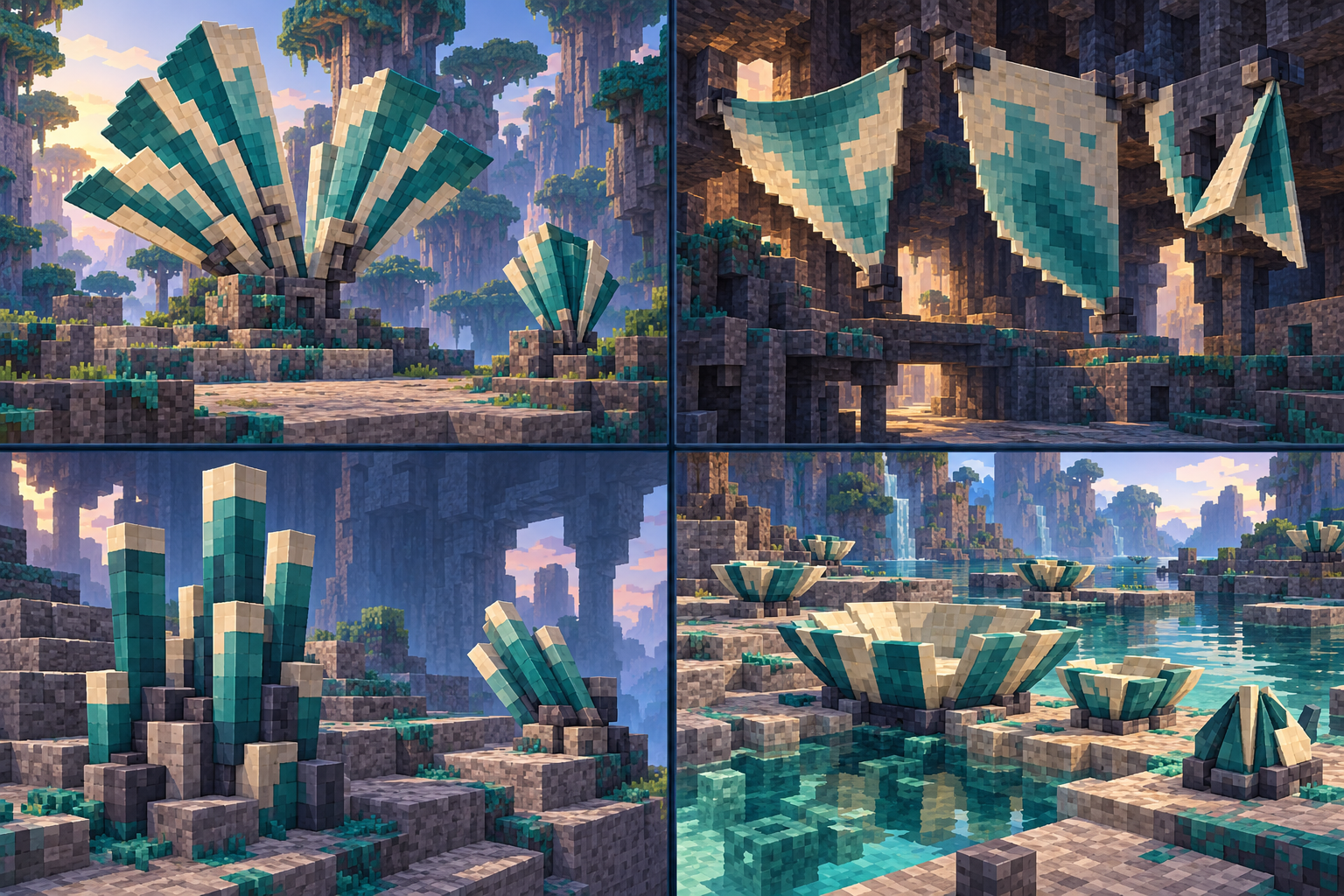
FAR-BUILD-MOR-WORLDCEC08 Fan growthCEC09 Hanging membrane growthCEC10 Bundled pillar growthCEC11 Basin colonyFull reference: C08-MOR-03 · C08-MOR-04 · C08-MOR-06 · C08-MOR-07 · C08-MOR-08 · C08-MOR-09
FAR-BUILD-MOR-MATERIAL Connect the preserved material pair to a useful finite home applicationFuture development brief; game BUILD and runtime acceptance are separate.
PM17 Living Ceramic and PM18 Tidelace Fiber have accessible sources, preserved specimens, declared preparation and a real useful returned application.PM17 Living CeramicPM18 Tidelace FiberFull reference: C08-MOR-04 · C08-MOR-06 · C08-MOR-07 · C08-MOR-10
FAR-BUILD-MOR-WORLD Generate a complete traversable campaign regionFuture development brief; game BUILD and runtime acceptance are separate.
Full reference: C08-MOR-02 · C08-MOR-03 · C08-MOR-09
FAR-BUILD-PLU-BASE Build and inhabit Far Observatory ControllerFuture development brief; game BUILD and runtime acceptance are separate.
FAR-BUILD-PLU-WORLDFull reference: C08-PLU-02 · C08-PLU-05 · C08-PLU-09
FAR-BUILD-PLU-CAMPAIGN Complete the three outings and The Last Familiar SkyFuture development brief; game BUILD and runtime acceptance are separate.
FAR-BUILD-PLU-WORLDFAR-BUILD-PLU-BASEFull reference: C08-PLU-06 · C08-PLU-07 · C08-PLU-08 · C08-PLU-10 · C08-PLU-12
FAR-BUILD-PLU-MATERIAL Connect the preserved material pair to a useful finite home applicationFuture development brief; game BUILD and runtime acceptance are separate.
PM13 Nightglass and PM14 Memory Frost have accessible sources, preserved specimens, declared preparation and a real useful returned application.PM13 NightglassPM14 Memory FrostFull reference: C08-PLU-04 · C08-PLU-06 · C08-PLU-07 · C08-PLU-10
FAR-BUILD-PLU-WORLD Generate a complete traversable campaign regionFuture development brief; game BUILD and runtime acceptance are separate.
Full reference: C08-PLU-02 · C08-PLU-03 · C08-PLU-09
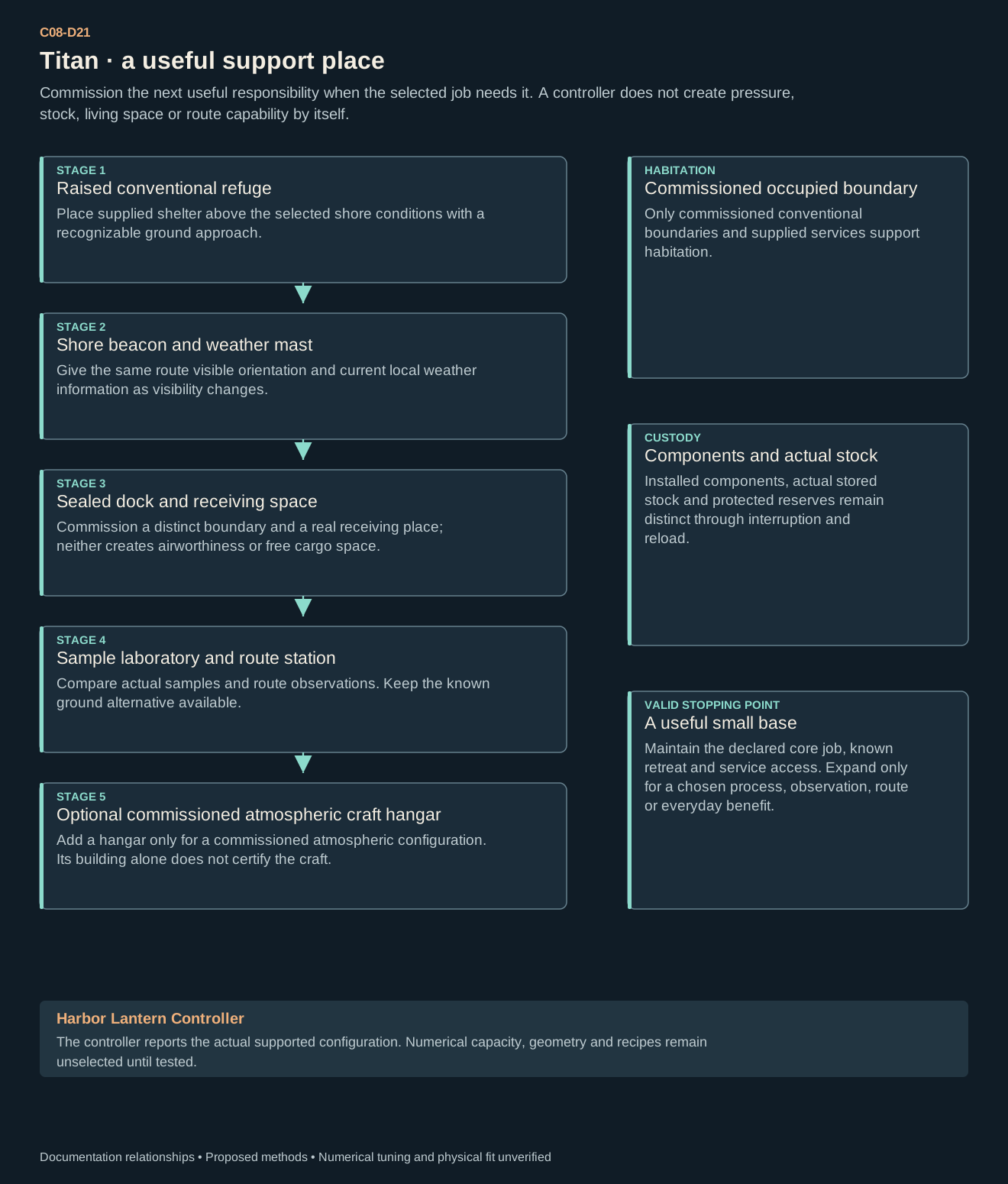
FAR-BUILD-TIT-BASE Build and inhabit Harbor Lantern ControllerFuture development brief; game BUILD and runtime acceptance are separate.
FAR-BUILD-TIT-WORLDSUP04 carrier/hangar fit and controlled landingCEC05–07 bounded response and containmentFull reference: C08-TIT-02 · C08-TIT-05 · C08-TIT-09
FAR-BUILD-TIT-CAMPAIGN Complete the three outings and A Route Through the HazeFuture development brief; game BUILD and runtime acceptance are separate.
FAR-BUILD-TIT-WORLDFAR-BUILD-TIT-BASESUP04 carrier/hangar fit and controlled landingCEC05–07 bounded response and containmentFull reference: C08-TIT-06 · C08-TIT-07 · C08-TIT-08 · C08-TIT-10 · C08-TIT-12
FAR-BUILD-TIT-ECOLOGY Integrate the preserved Titan ecology with its full campaignFuture development brief; game BUILD and runtime acceptance are separate.
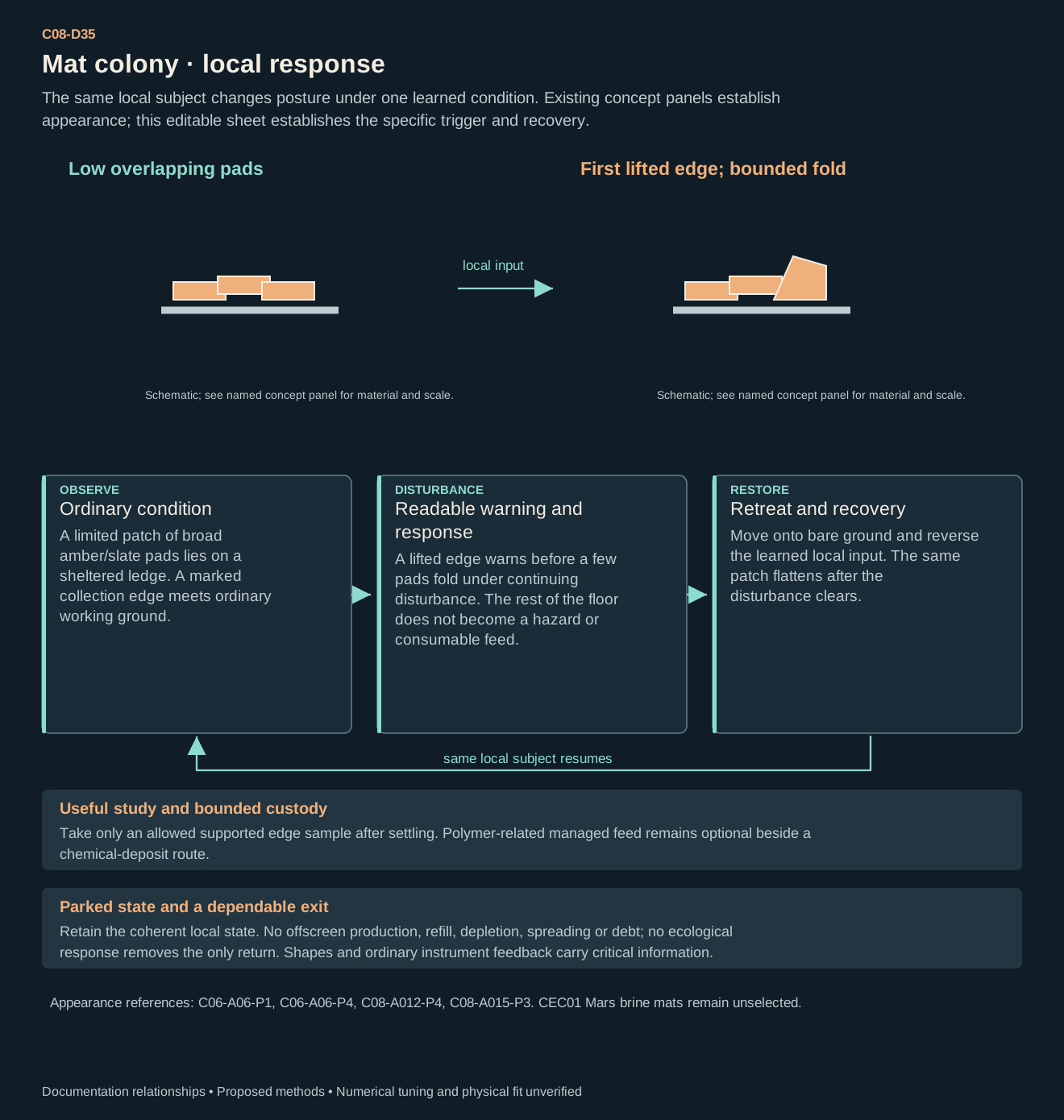
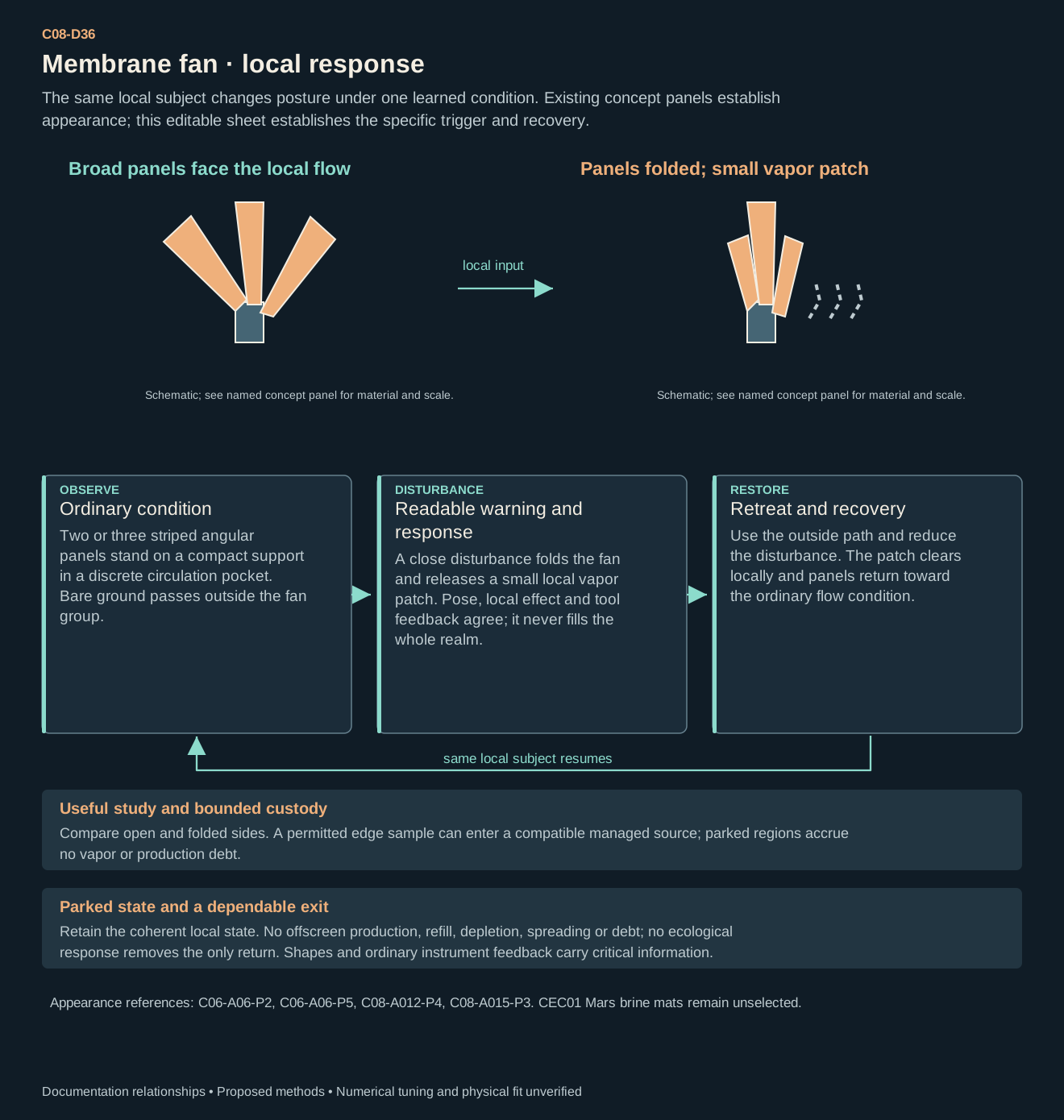
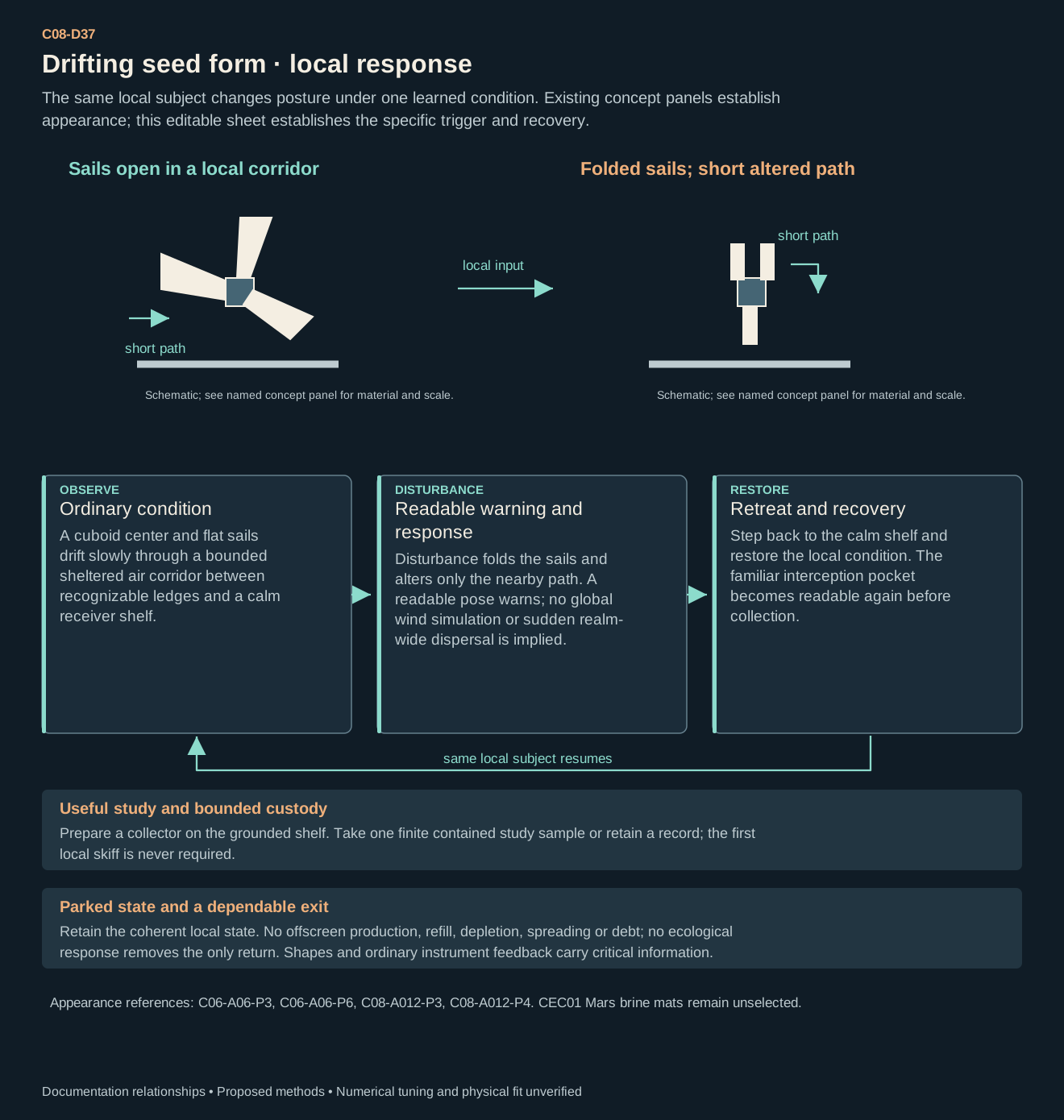
FAR-BUILD-TIT-WORLDCEC05 Mat colonyCEC06 Membrane fanCEC07 Drifting seed formFull reference: C08-TIT-03 · C08-TIT-04 · C08-TIT-06 · C08-TIT-07 · C08-TIT-08 · C08-TIT-09
FAR-BUILD-TIT-MATERIAL Connect the preserved material pair to a useful finite home applicationFuture development brief; game BUILD and runtime acceptance are separate.
PM11 Amber Polymer and PM12 Liftweave Membrane have accessible sources, preserved specimens, declared preparation and a real useful returned application.PM11 Amber PolymerPM12 Liftweave MembraneSUP04 carrier/hangar fit and controlled landingCEC05–07 bounded response and containmentFull reference: C08-TIT-04 · C08-TIT-06 · C08-TIT-07 · C08-TIT-10
FAR-BUILD-TIT-SUPPORT Complete SUP04 Atmospheric Survey Skiff deployment, local outing and serviceFuture development brief; game BUILD and runtime acceptance are separate.
SUP04 Atmospheric Survey Skiff is a single persistent supplied support craft with actual boarding, operating envelope, cargo custody, services and a complete known-refuge return.FAR-BUILD-TIT-BASEFull reference: C08-TIT-02 · C08-TIT-05 · C08-TIT-07 · C08-TIT-08 · C08-TIT-09
FAR-BUILD-TIT-WORLD Generate a complete traversable campaign regionFuture development brief; game BUILD and runtime acceptance are separate.
SUP04 carrier/hangar fit and controlled landingCEC05–07 bounded response and containmentFull reference: C08-TIT-02 · C08-TIT-03 · C08-TIT-09
The finite reference programme is complete. Remaining responsibilities concern future implementation and production, technical validation, seven unselected conditions, Website integration/publication, final user review of selected new candidates, optional wider QA and revision only if genuinely new direction is selected. Execution evidence is recorded separately in the current source and reader gate files.
| ID | Responsibility | Subject | Concrete next action |
|---|---|---|---|
| C08-FUTURE-BUILD | Future implementation | Implement a separately selected bounded game outcome | Select a bounded future build brief against then-current game authority, implement its stated outcome and record its native acceptance evidence. The 76 briefs are complete planning records. |
| C08-PRODUCTION | Game-ready production | Create the production assets required by selected game work | Produce measured models, textures, rigs, animation, collision, audio and UI assets for the selected implementation duty. Reference images and diagrams remain the reviewed design evidence. |
| C08-TECHNICAL | Technical validation | Resolve measured fit, quantities and runtime contracts | Test simultaneous Explorer fit, generated reachability, service and stock custody, actual material mappings, recipes, rates, yields, capacities and whole-chain balance using the later implemented systems. |
| C08-DOC-GATE | Technical validation | Keep source and reader verification attached to the delivered revision | Record source and reader executions at their exact fingerprints in verification_08.json and browser_verification_08.json after the final rebuild. Use those current files for execution outcomes and preserve earlier runs and their limits. |
| C08-CONDITIONAL | Conditional content | Retain seven genuinely unselected conditional views | Keep HUL02-SEP, HUL05-SEP, HUL06-SEP, CEC01-FORM, CEC01-HAB, CEC01-ACT and FAM01-X unselected. Reopen a view only when its stated configuration or content condition is deliberately selected; CEC01 inclusion requires separate user selection. |
| C08-WEBSITE | Website integration/publication | Incorporate and publish through the Website workflow | Use the exact repository source handoff for manual Website incorporation when authorized. Preserve the distinct source, tested Website, deployed product and report revisions, retained failures, unavailable GitHub Actions and reported NOT RUN checks. Root has performed no public deployment. |
| C08-DOC-ART | Final user review of selected new candidates | Review the selected new reference candidates | Review the selected new candidates with their recorded evidence and qualifications. The finite illustration programme and per-view reference review are complete; any requested revision can name a concrete candidate and change. |
| C08-WIDER-QA | Optional cross-browser/performance/independent wider QA | Extend validation beyond the recorded current matrix if useful | Optionally add wider independent desktop/mobile UI review, Firefox/WebKit, performance or broader game/native checks. Attribute each actual execution to its revision and environment; preserve existing NOT RUN entries as history. |
| C08-LATER-REVISION | Ongoing later revision if genuinely new direction | Revise the completed reference when genuinely new direction is selected | Reopen only the affected scope if genuinely new direction is selected, preserve the completed edition and record the concrete change. No additional documentation slice or required unwritten reference section is pending. |
Detailed coverage and reviewed visual relationships · Current backlog · How to use these categories
The complete text, images, editable diagrams and structured relationships live together in this repository edition. Delivery uses the repository; no ZIP is required.
Exact Edition 07 reader · Its exact manifest · Byte-preservation inventory
Earlier source and browser records retain their original execution. Later Website checks are separately attributed. Fresh source checks do not repeat the historical missing-browser reason.
SUBSTELLAR begins with a useful place and opens outward through work, curiosity and return. The player repairs a crossing, learns a quarry, equips a workshop, descends through unfamiliar Earth environments and eventually builds the means to travel beyond the planet. Each expansion changes what the player can do and what home can become. A destination should be remembered for a particular activity, relationship or discovery, rather than only for the next stronger material.
The complete reference is a connected creative specification for that established vision. Its accumulated chapters preserve the original direction and its subsequent refinements; this edition provides current entrances, completes the farther campaigns and the broad systems reference, and connects them to future development units. It is suitable for deciding what to build and for evaluating whether a proposed implementation serves the intended experience. It does not turn a described machine into an implemented one, or an illustration into a tested asset.
The current editorial rule is additive. Earlier wording, identifiers and original artwork remain available. A later explanation may narrow an earlier broad promise or supersede a historical production backlog entry, but it states the relationship. Readers looking for the present answer should begin with this edition's subject entrances and follow its source links; readers reconstructing a previous decision can use the preserved readers, manifests and dated records.
The player's ability to stop at a satisfying scale matters throughout. A compact Earth workshop, an observatory on the Moon, a small useful Mars refuge and a completed Solar expedition can each be worthwhile destinations in their own right. Later machinery and travel extend choices. They should not erase the value of the player's earlier home or convert every existing system into a maintenance obligation.
This preserved source describes Afterlight, Cairn or Morrow. It is proposed creative direction, not implemented game content.
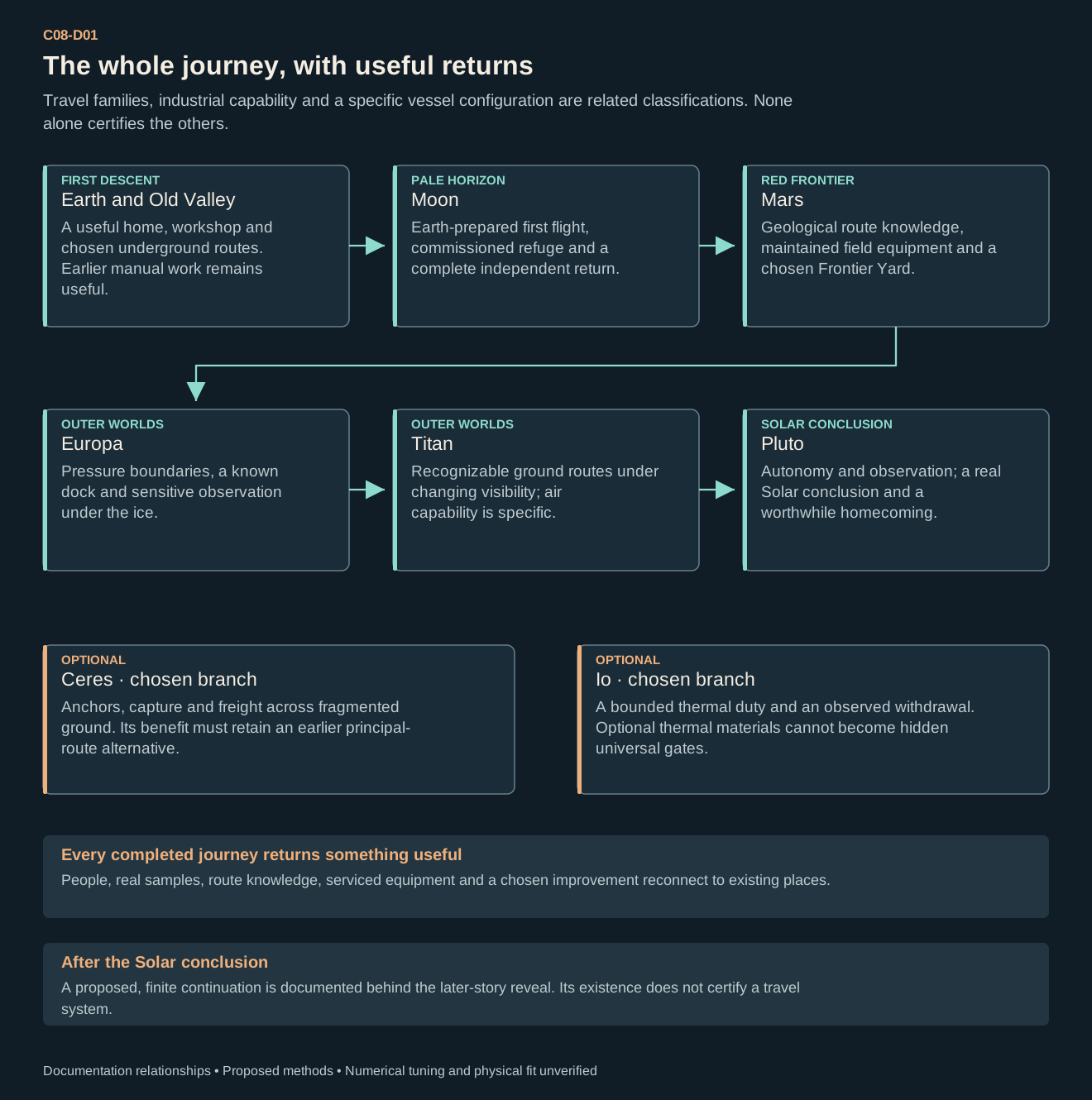
The main creative route remains Earth, Moon, Mars, Europa, Titan and Pluto. Ceres and Io are substantial optional branches. The proposed Afterlight continuation contains Cairn and Morrow, with a real Solar conclusion before it. These destinations have different kinds of preparation and activity. Travel capability, industrial capability, personal equipment and campaign knowledge are related progress measures, not one interchangeable tier number.
This preserved source describes Afterlight, Cairn or Morrow. It is proposed creative direction, not implemented game content.
| Journey family | A concrete player outcome | What becomes newly possible | What remains valuable |
|---|---|---|---|
| First Descent | A working home, a repaired practical route and a reliable return from unfamiliar Earth ground | Prepared field equipment, useful mechanical work and a wider choice of underground journeys | Ordinary materials, manual work, the guesthouse, personal routes and compact workshops |
| Pale Horizon | A complete independently supported Moon expedition | Vacuum construction, refuge commissioning, a first distant observation and lunar material applications | Earth preparation, protected return stock and the same serviceable Explorer |
| Red Frontier | A supported regional Mars journey with an understood route and maintained field equipment | Mobile field work, weather interpretation, the Frontier Yard and geological investigation | Imported first equipment, small refuges and the useful route created by the first expedition |
| Outer Worlds | Distinct ice, weather and distant-observation campaigns | Pressure interfaces, sensitive ecology, atmospheric route knowledge and long-range autonomy | Earlier seals, instruments, power, samples, service duties and ordinary return routes |
| Beyond Sol, proposed | A charted continuation through Cairn to a living Morrow project | Bounded anomaly interpretation and chosen local stewardship | Conventional survival, accountable materials and the freedom to conclude at Pluto |
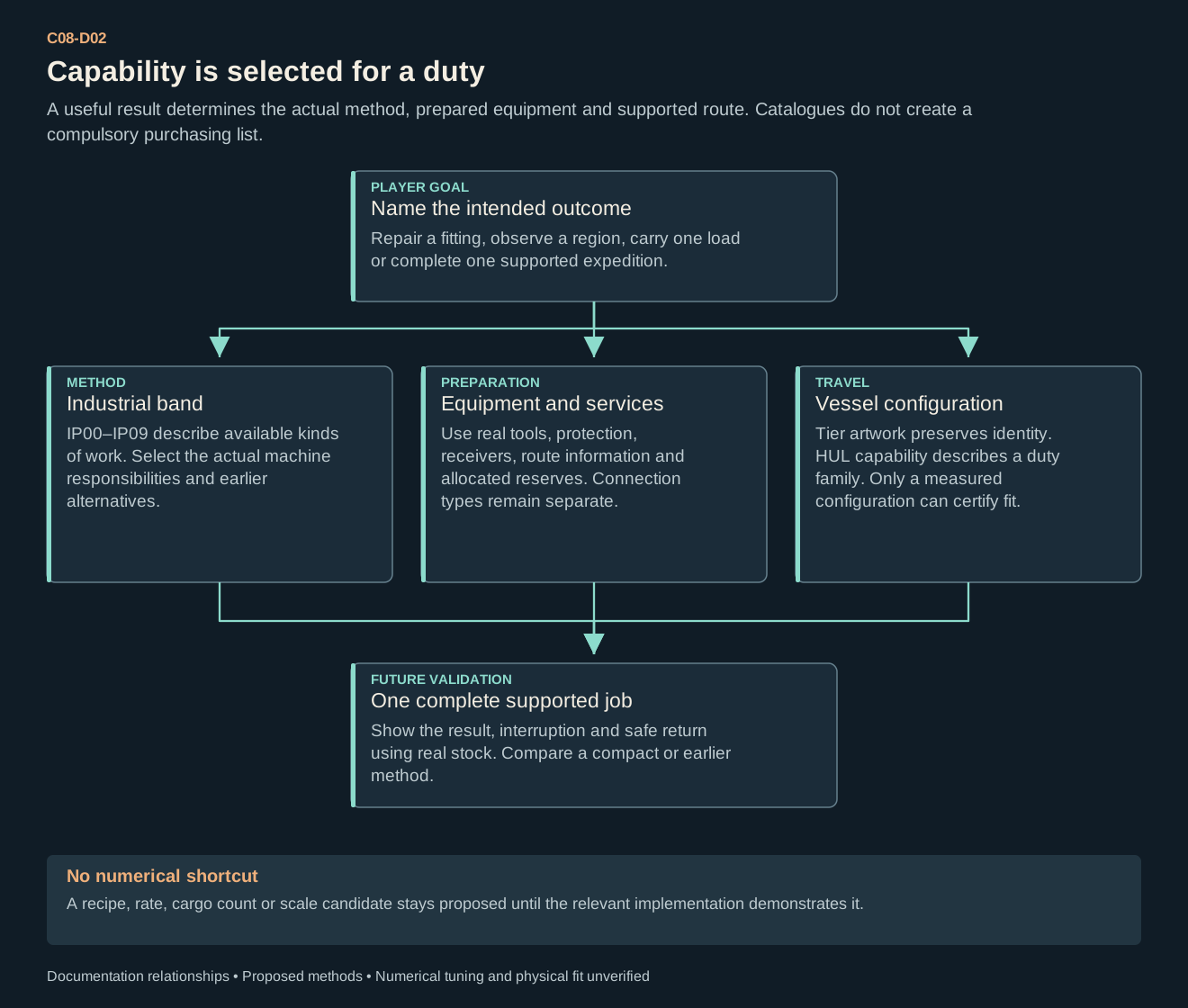
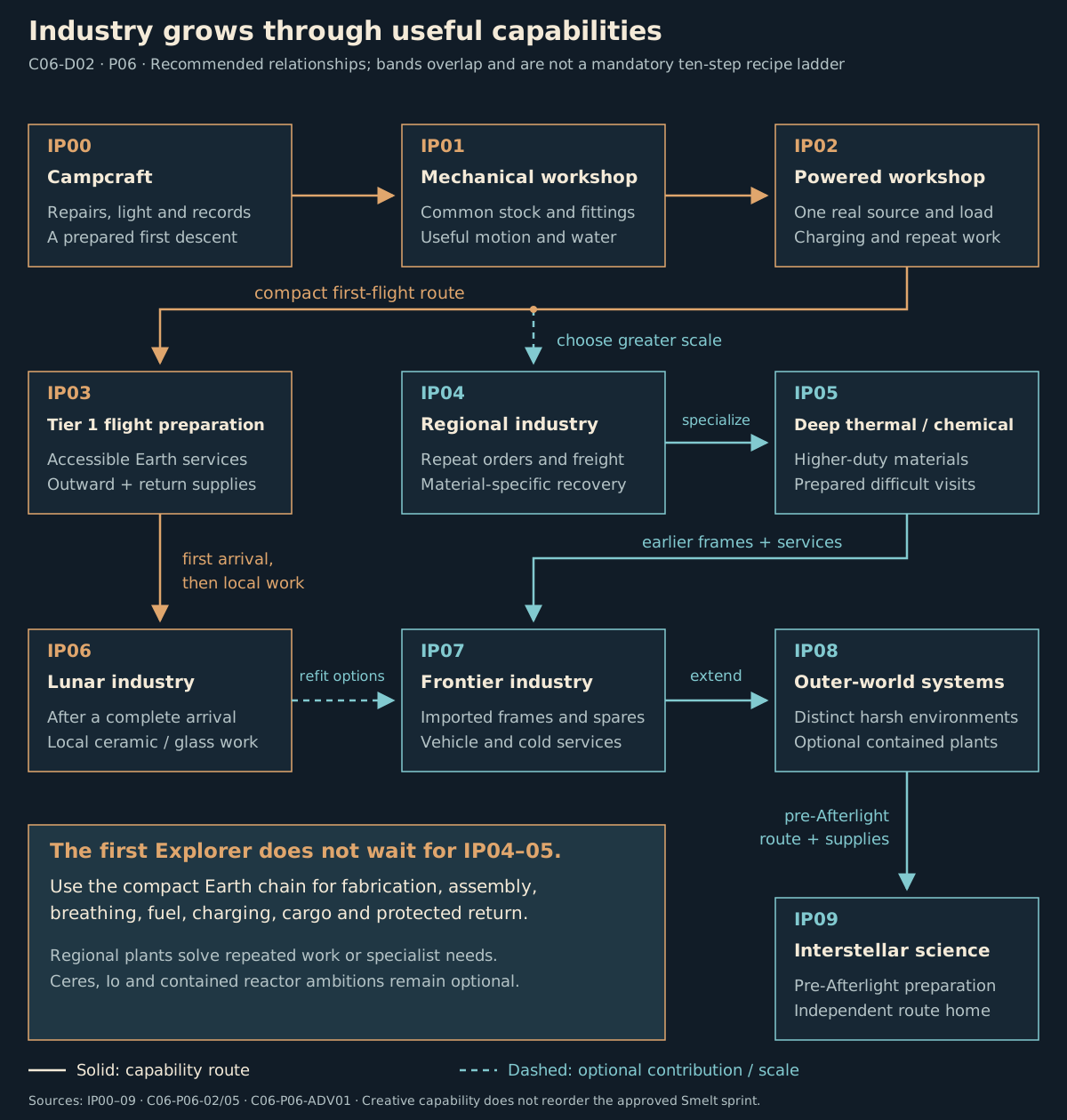
Industrial bands IP00–IP09 explain increasingly useful combinations of operations. They are not a demand to own every installation before moving on. The confirmed Tier 1, Tier 2 and Tier 3 concept identities describe particular visual families. HUL01–HUL06 describe broader craft capability families. The reference does not silently equate these three classification systems. A future implementation must state which specific craft configuration, service package and route it supports.
The main creative route connects Earth, Moon, Mars, Europa, Titan and Pluto. Ceres and Io retain full optional campaigns. The diagram distinguishes a complete Solar conclusion from the separately proposed continuation.
Status: Maintainer-authored explanatory reference; creative recommendation, not runtime or engineering proof.
Final coordinates, clearances or block counts; Selected recipes, rates, capacity or balance; Implemented behavior or completed game tests
Related identities: DST01 · DST02 · DST03 · DST04 · DST05 · DST06 · DST07 · IP00 · IP09
Writing: C08-JOURNEY-02 · C08-JOURNEY-10 · C08-JOURNEY-11
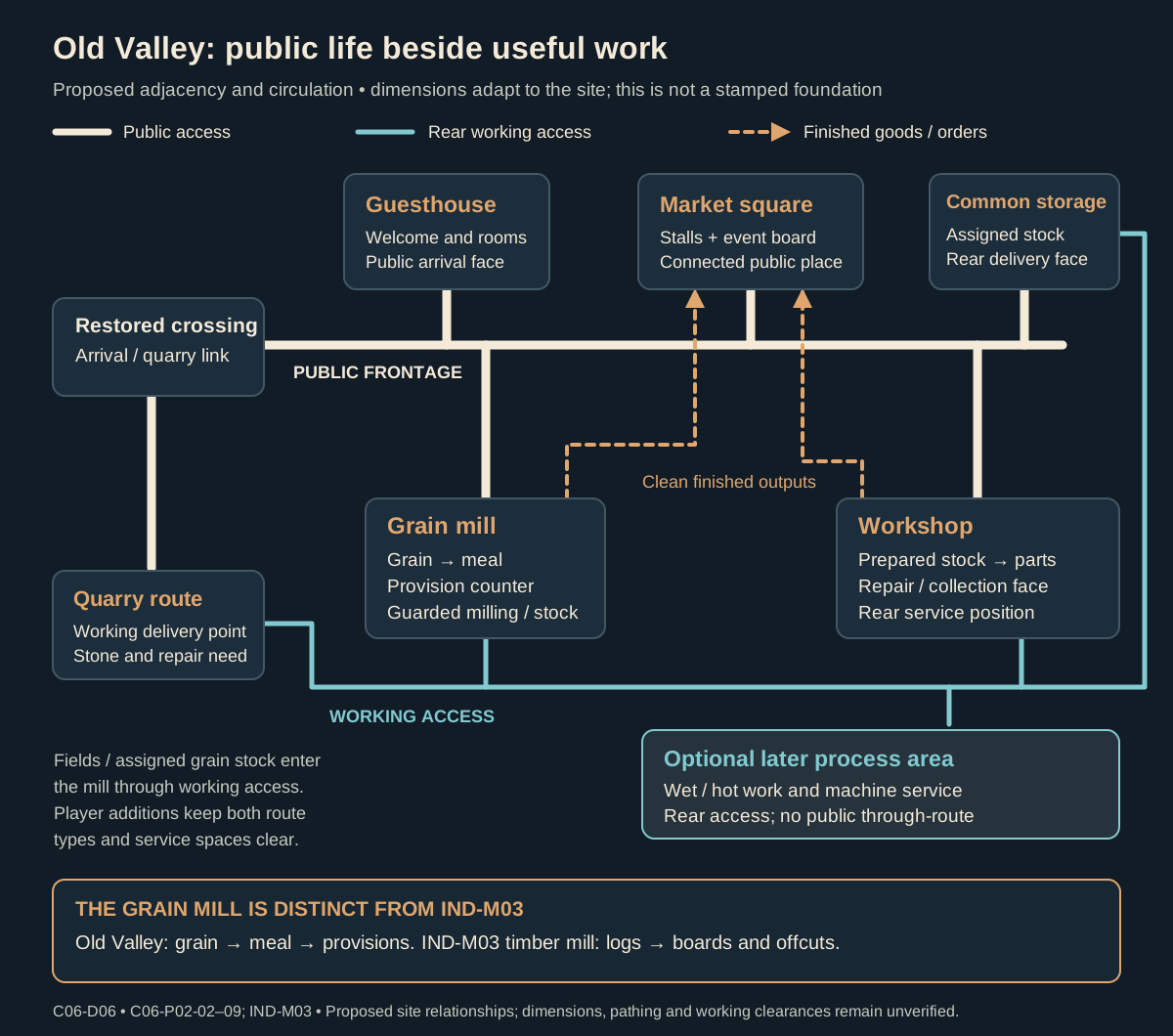
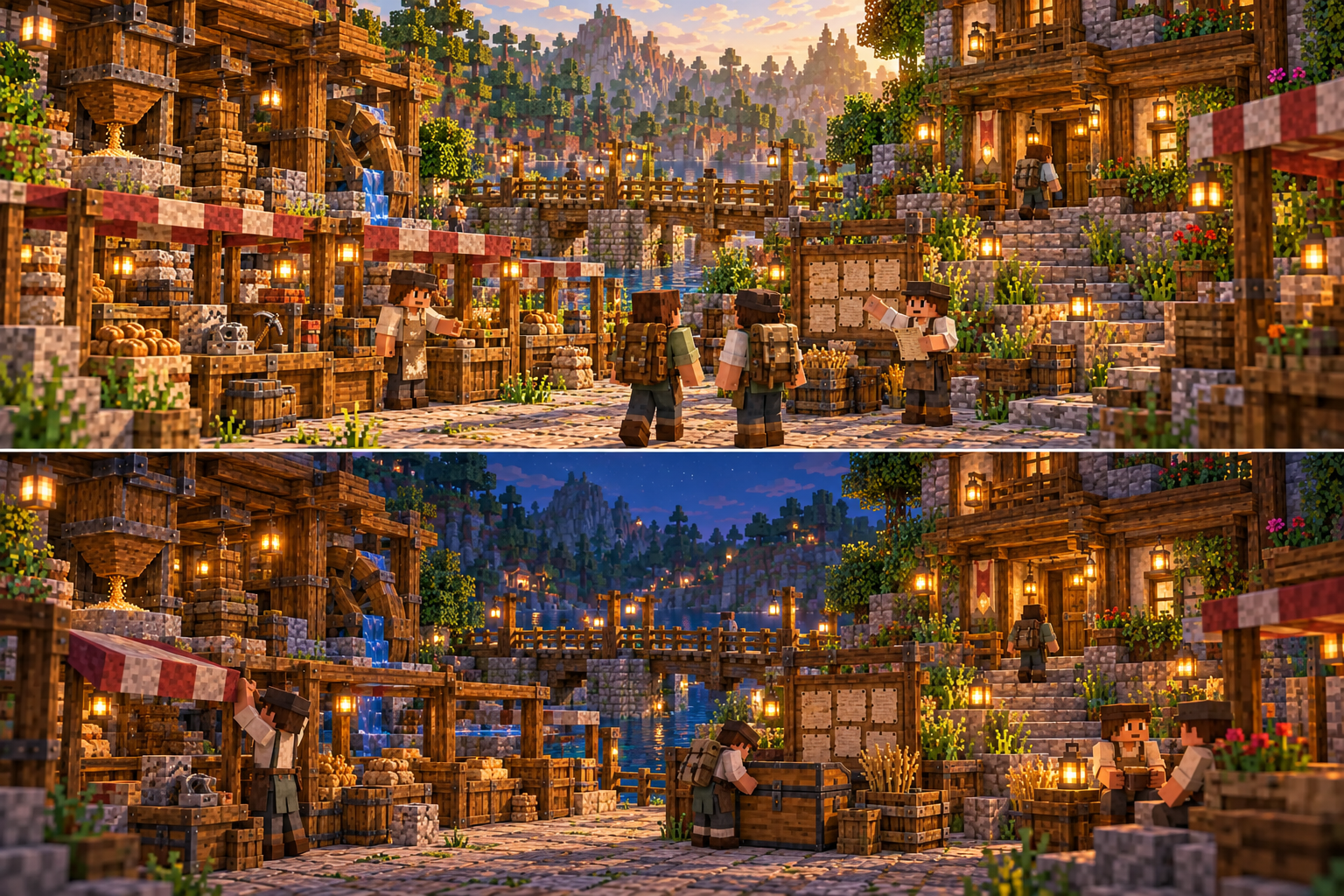
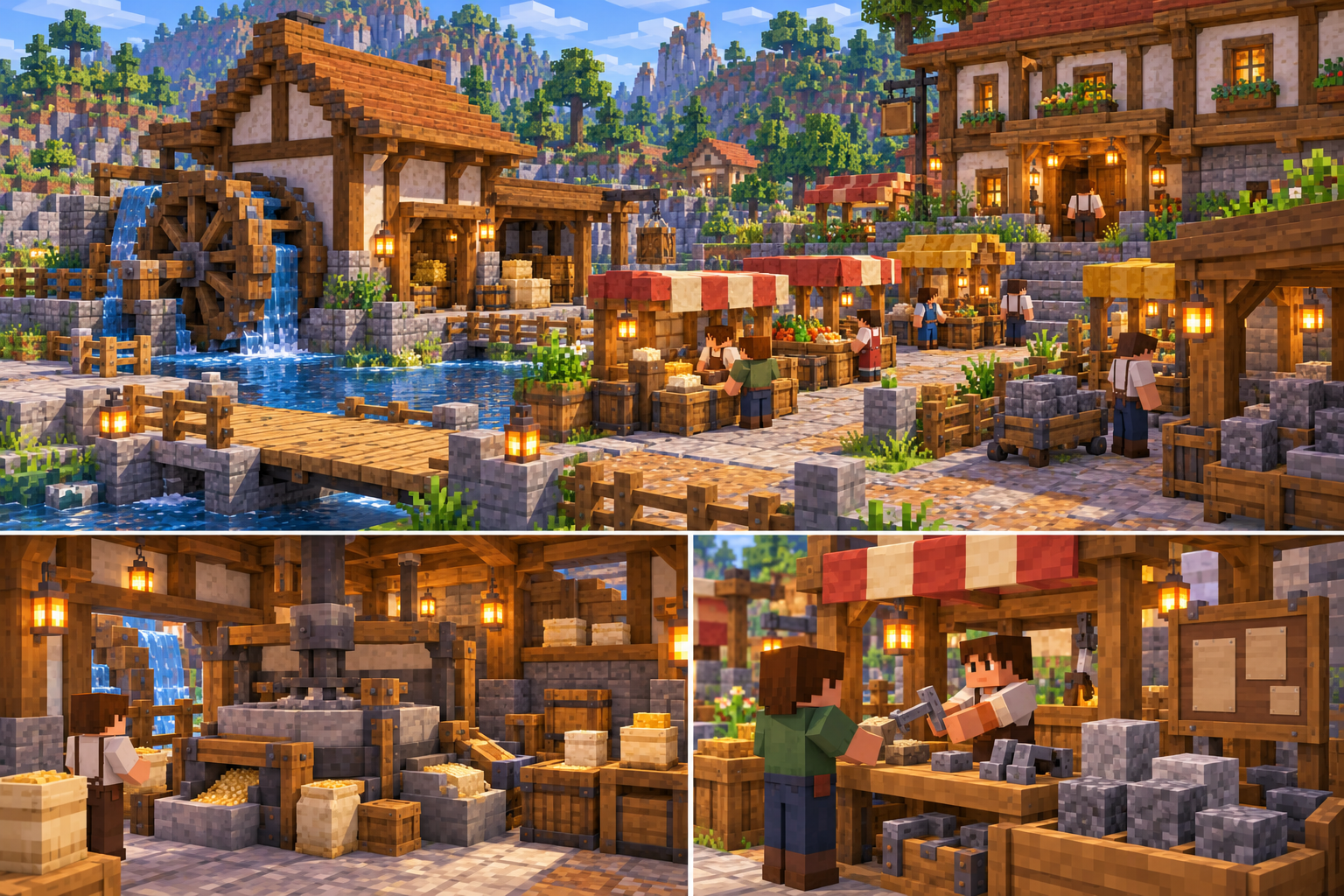
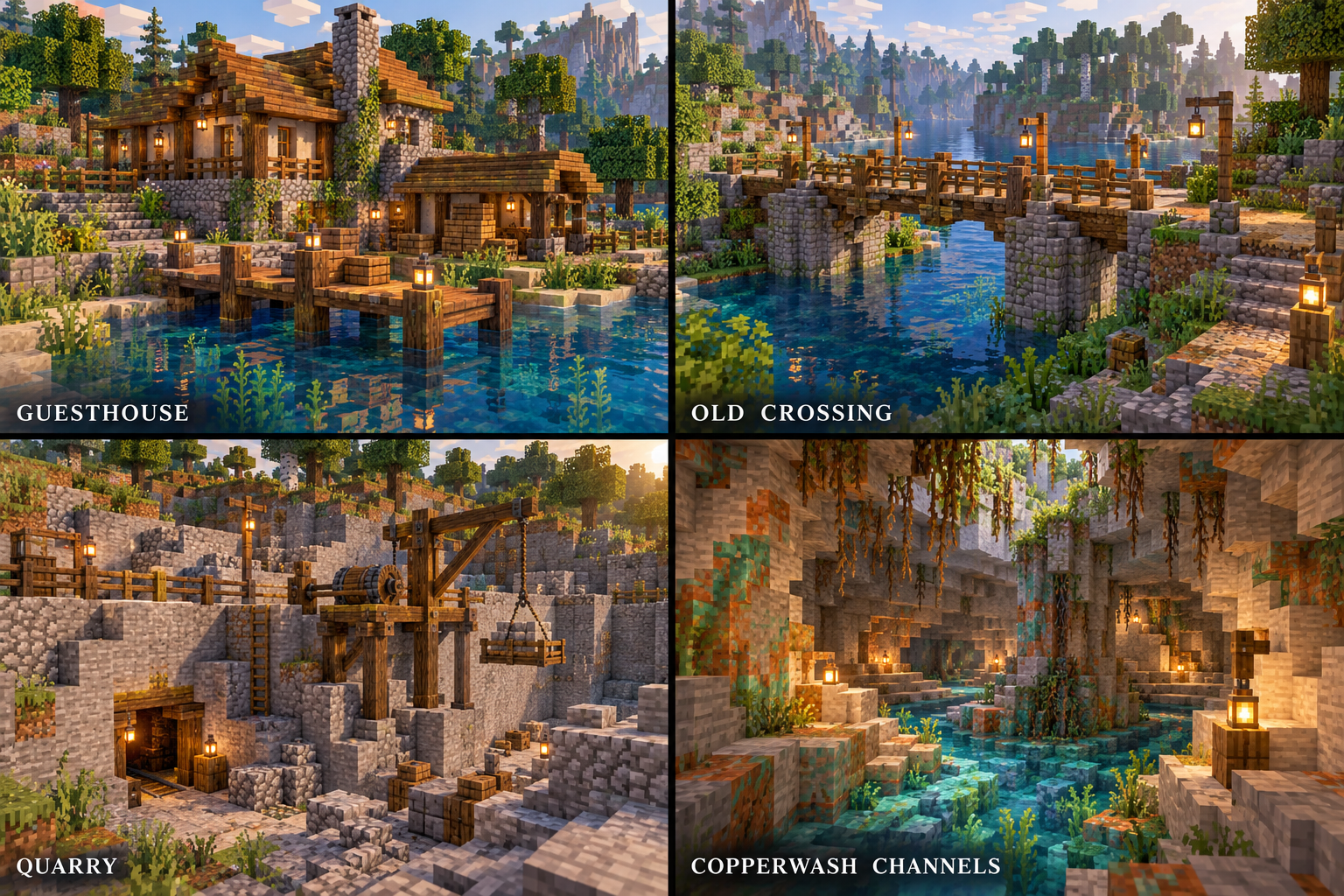
Old Valley's larger direction spans a place to stay, the old crossing, the quarry, a working settlement and the first market. The narrower opening proposal uses the essential first three stages, one Copperwash Channel strip and a limited workshop service. It does not require the entire settlement economy, all Earth biomes or space travel to be implemented together.
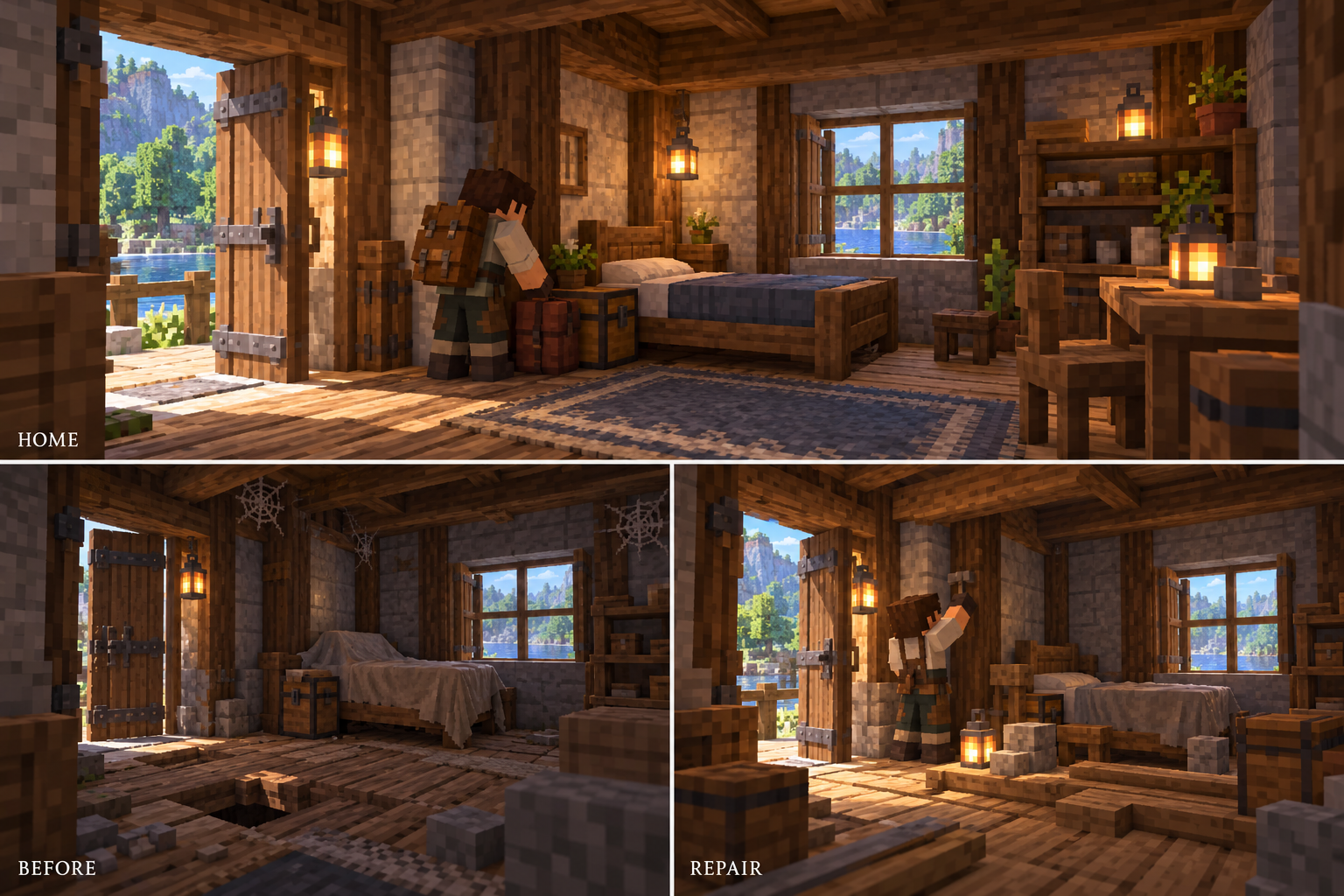
The guesthouse gives the player an identifiable entrance, a place to sleep, actual storage and a common area. It should establish familiarity through useful repeated movement: arrive with a load, put something away, prepare the next trip and leave by a recognizable route. This is not yet the whole personal-house system. A small completed room with a view and a practical arrangement serves the opening better than a large empty building whose usefulness depends on later features.
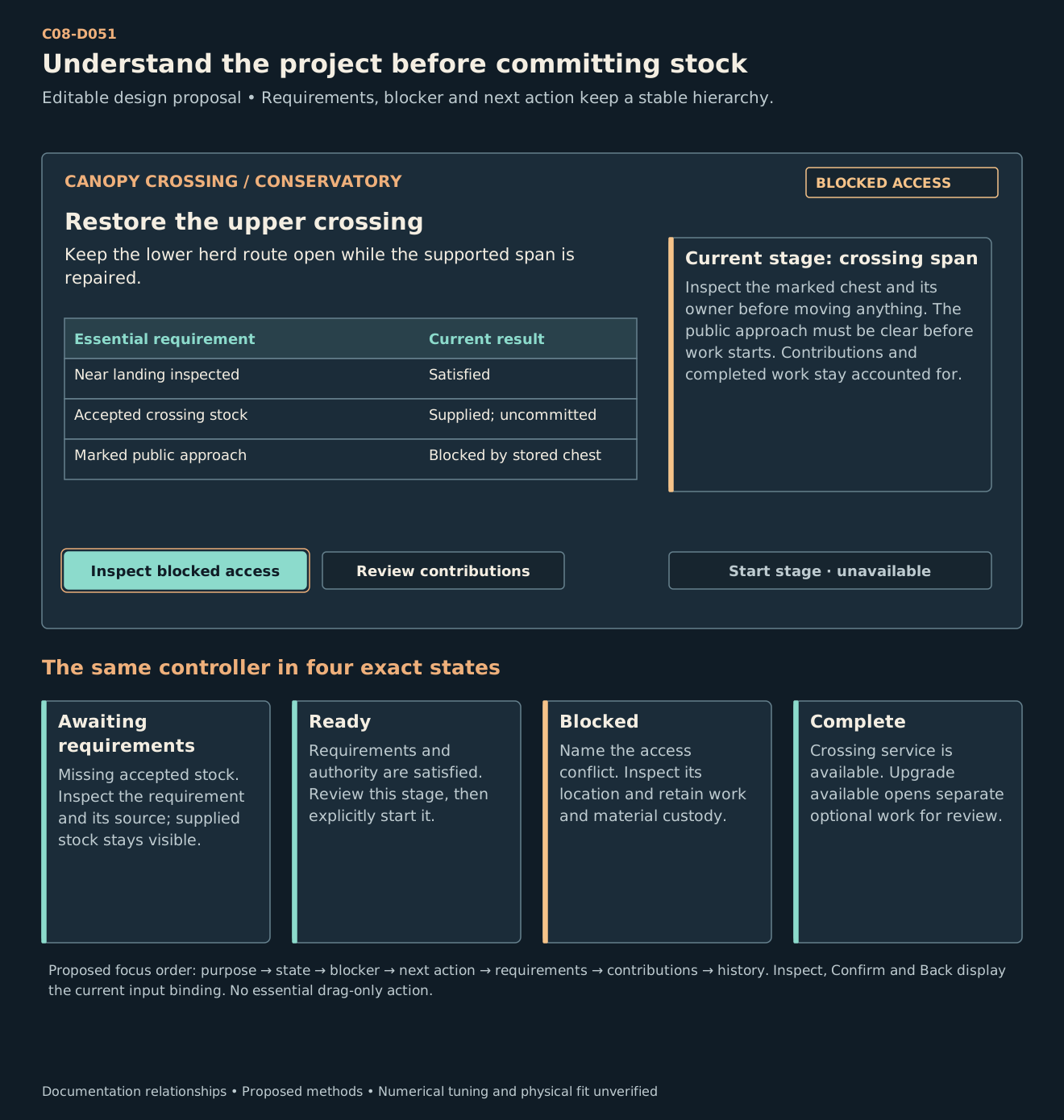
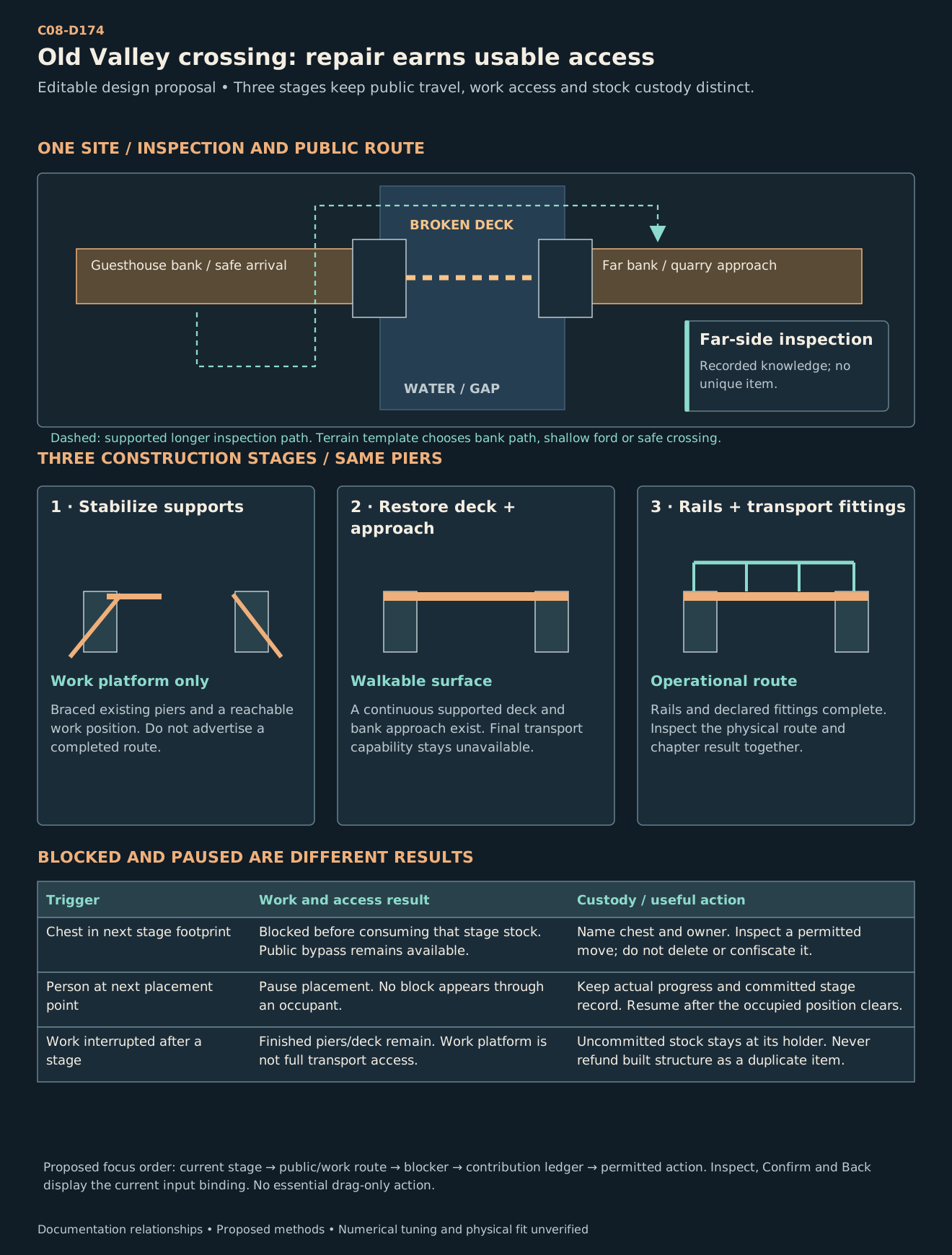
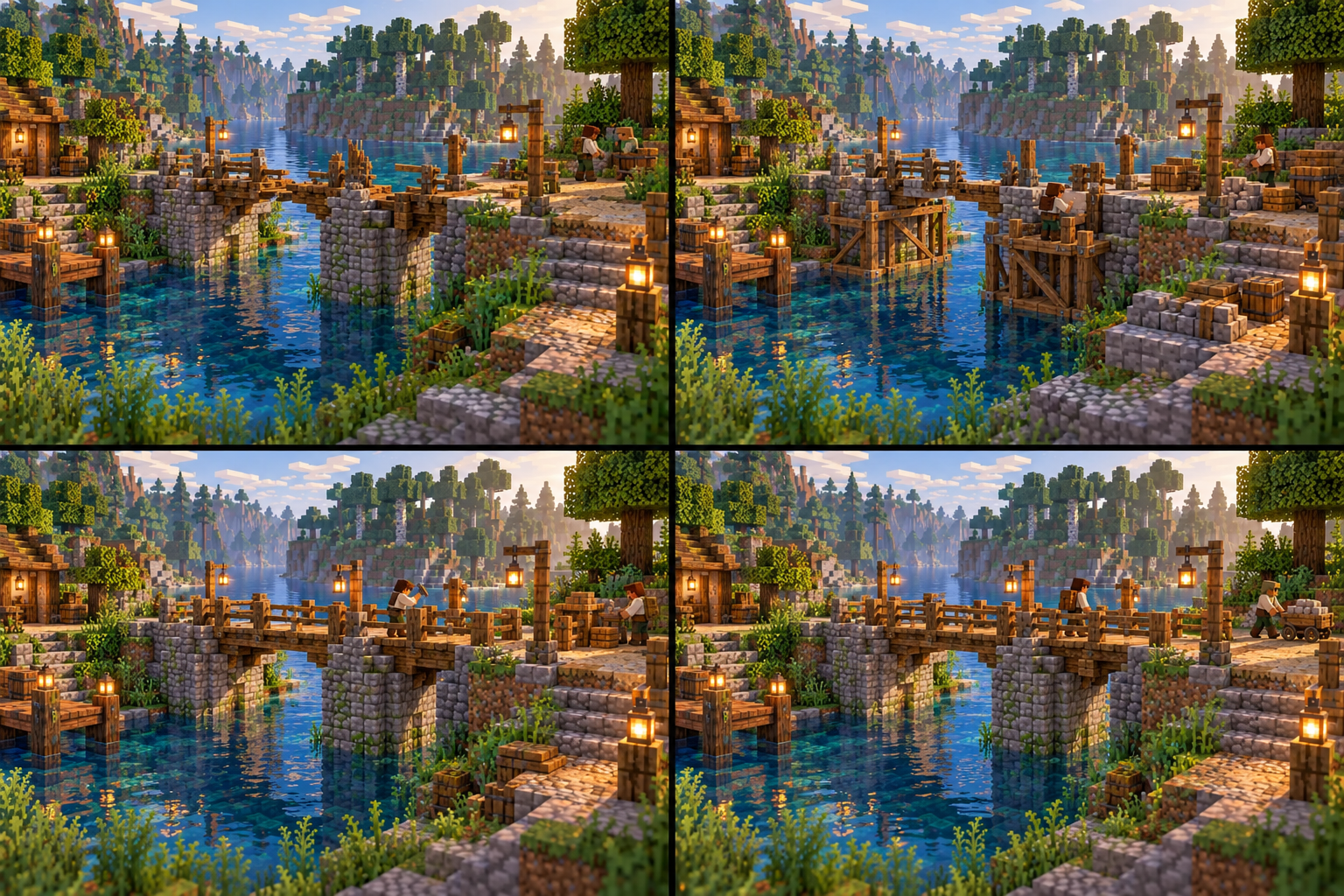
The crossing changes a real route. The player can see the inconvenience before repair and use the improvement afterwards. A self-built alternative is valid play, but it does not pretend that the authored crossing received the specified fittings. The quest or project interface should distinguish the player's useful access from the state of the shared repair. Both can be acknowledged without making the authored sequence a trap.
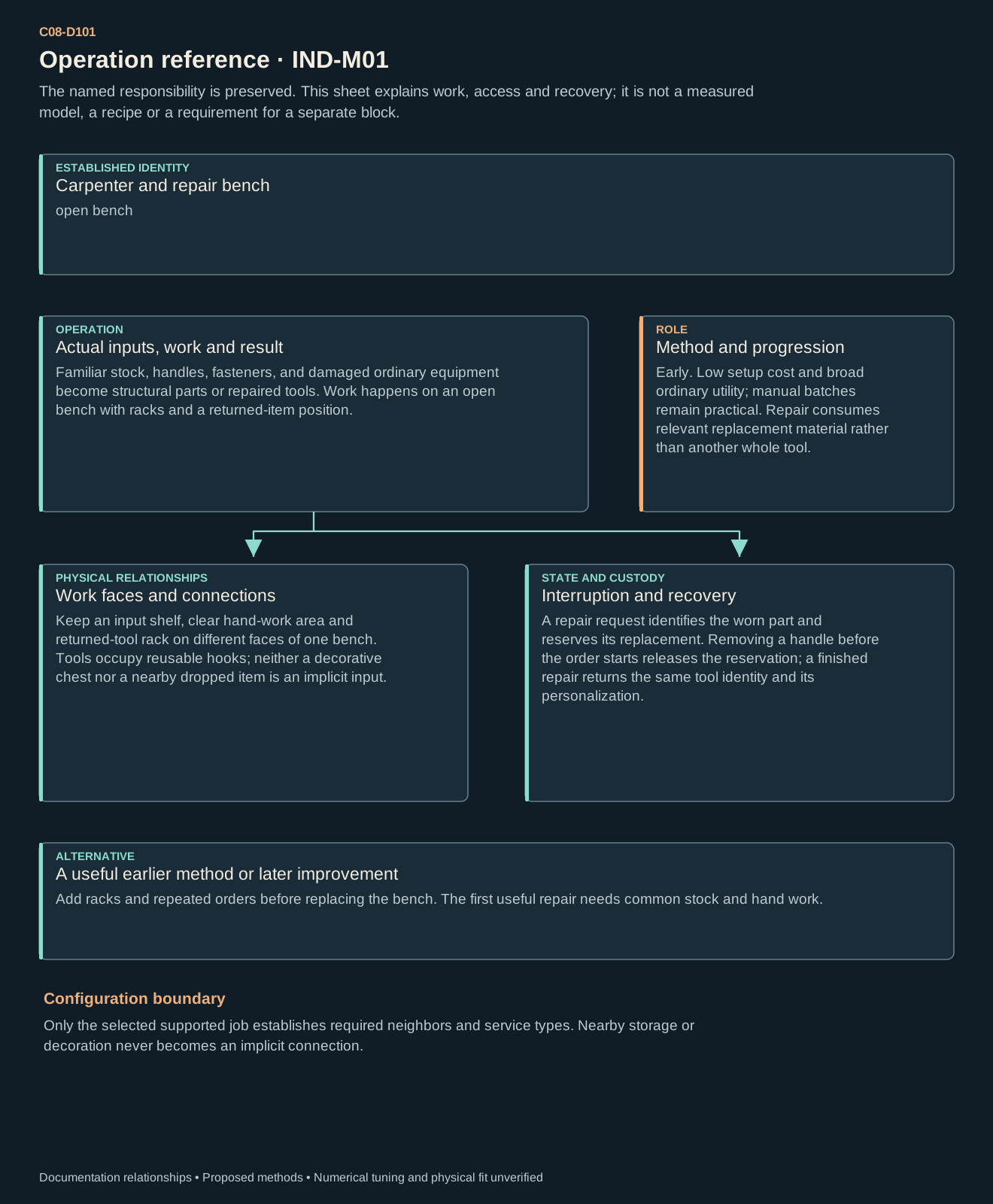
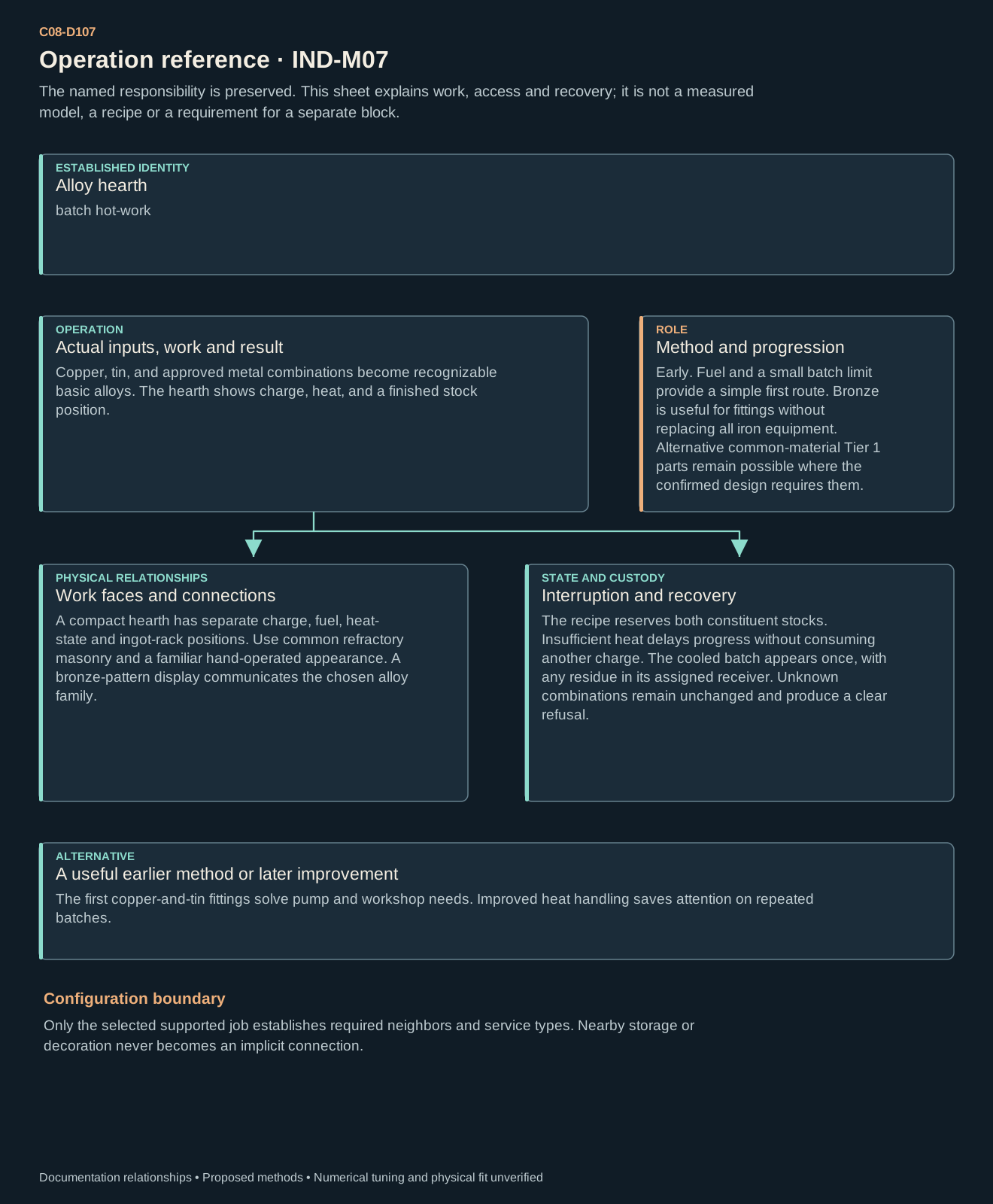
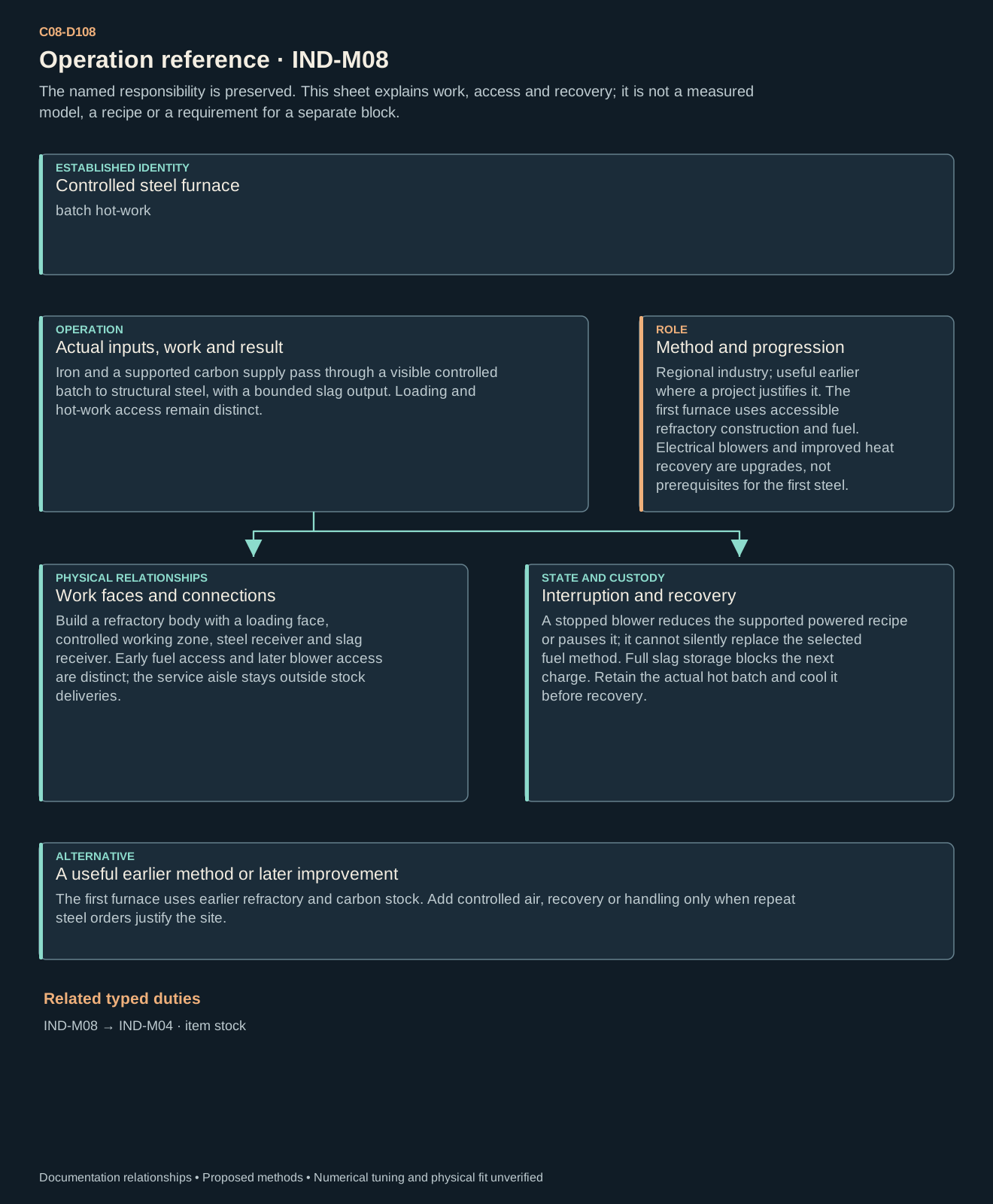
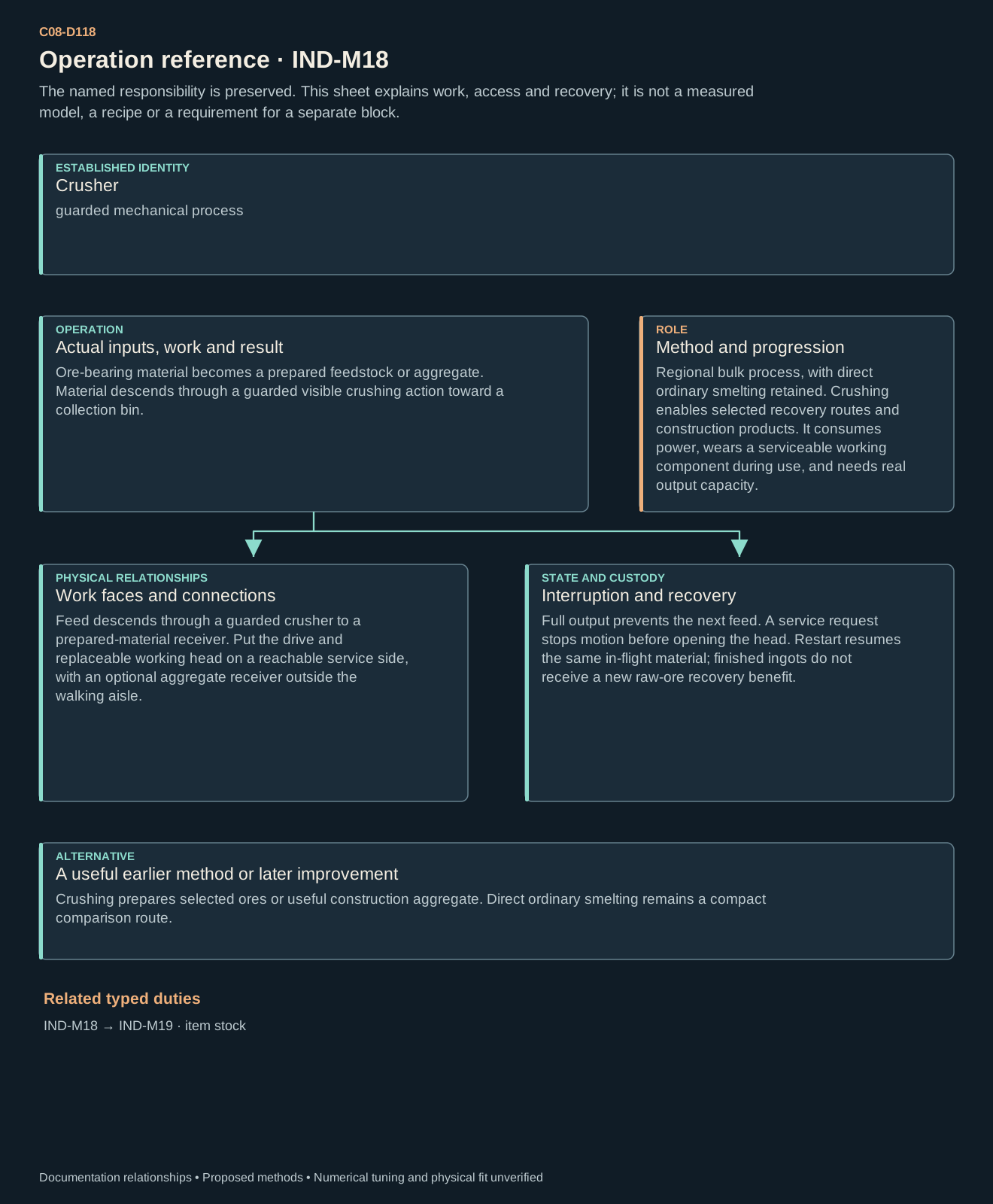
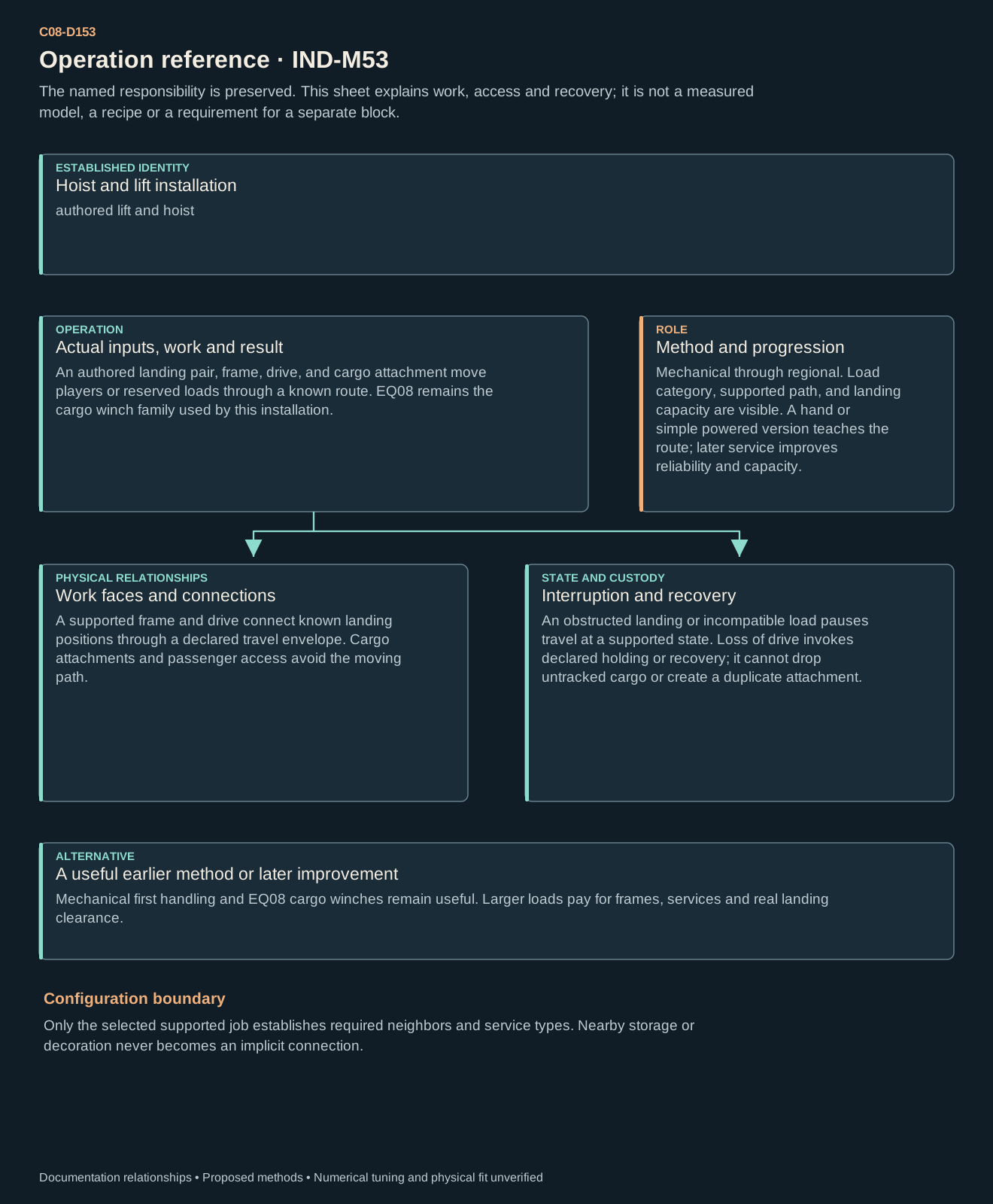
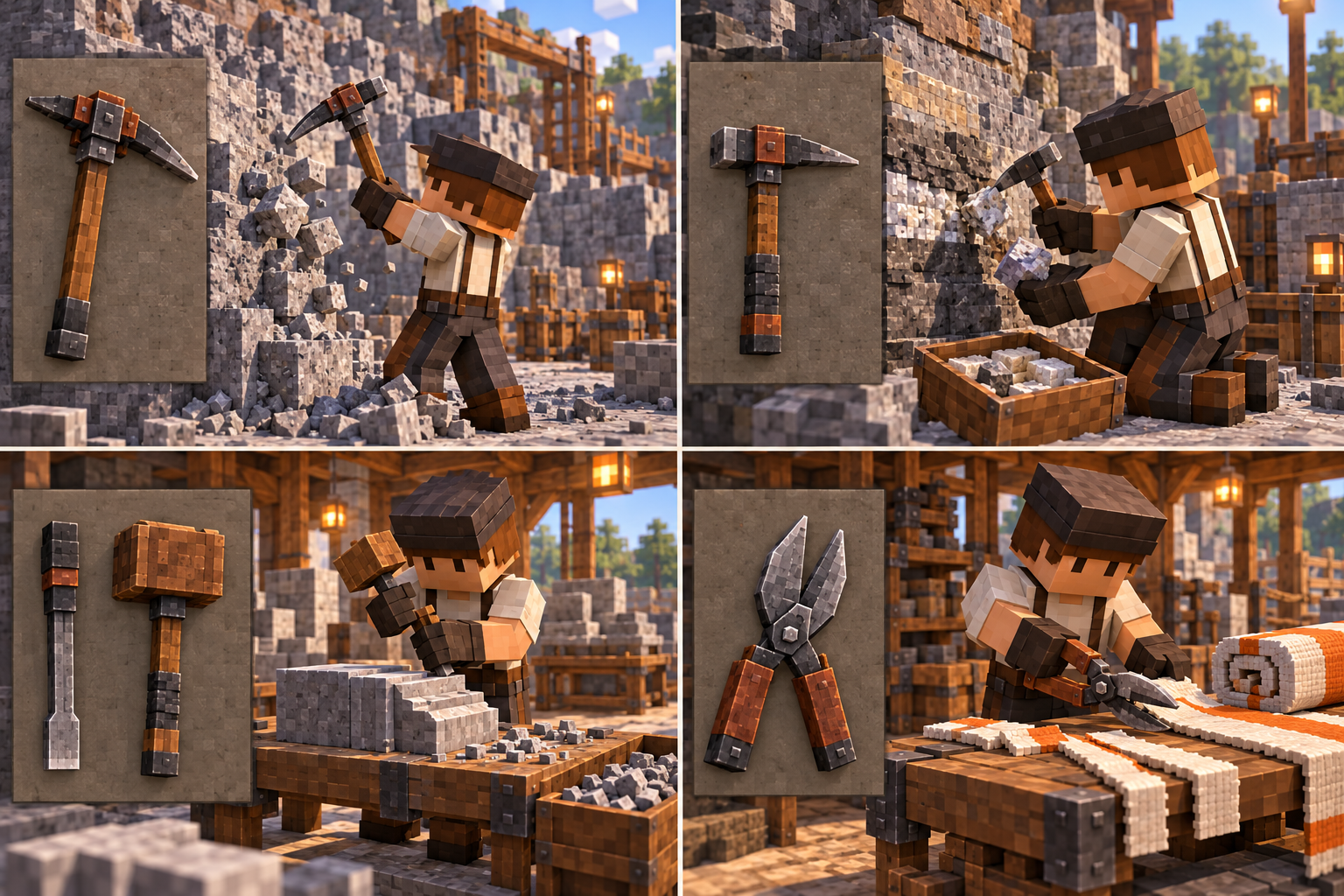
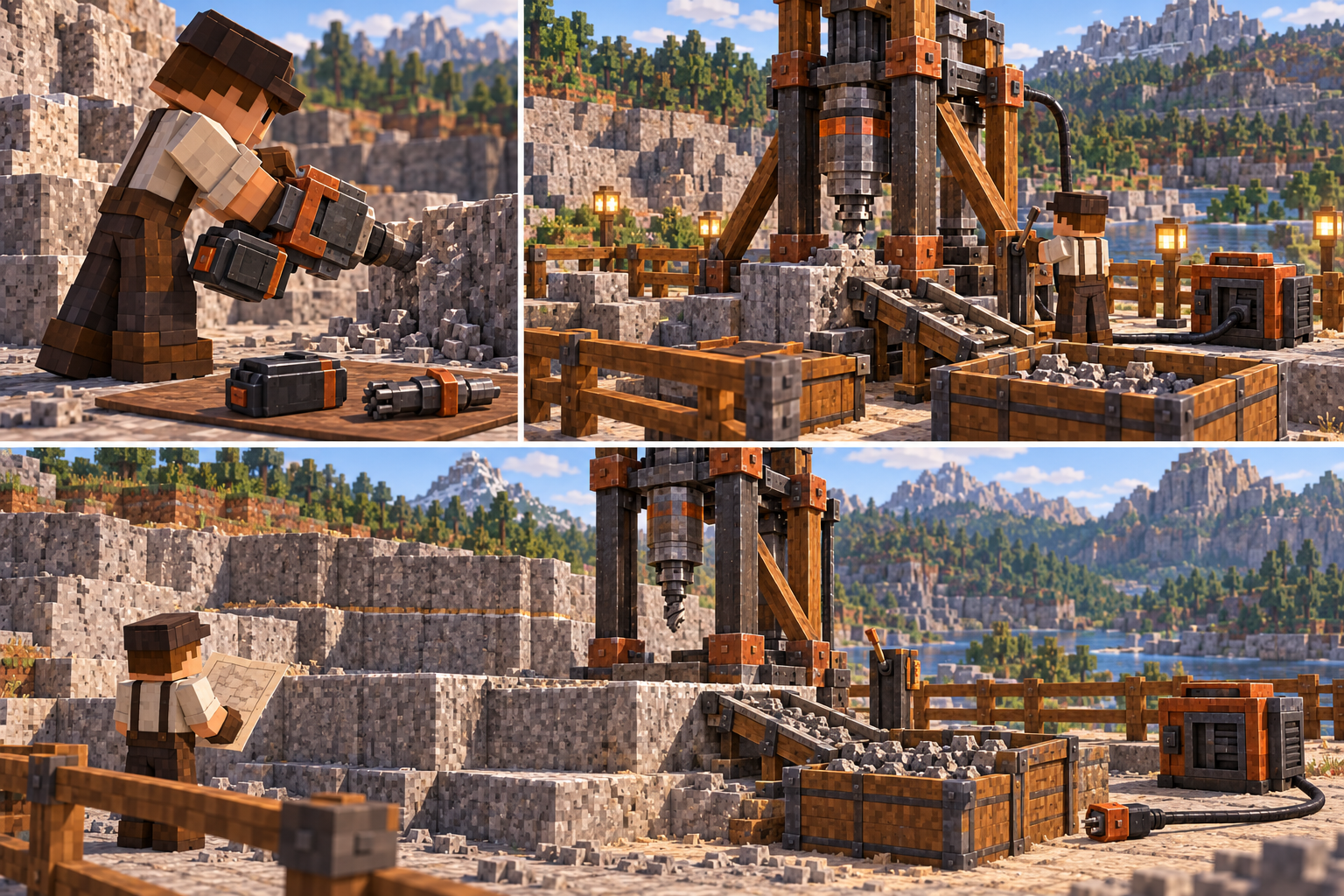
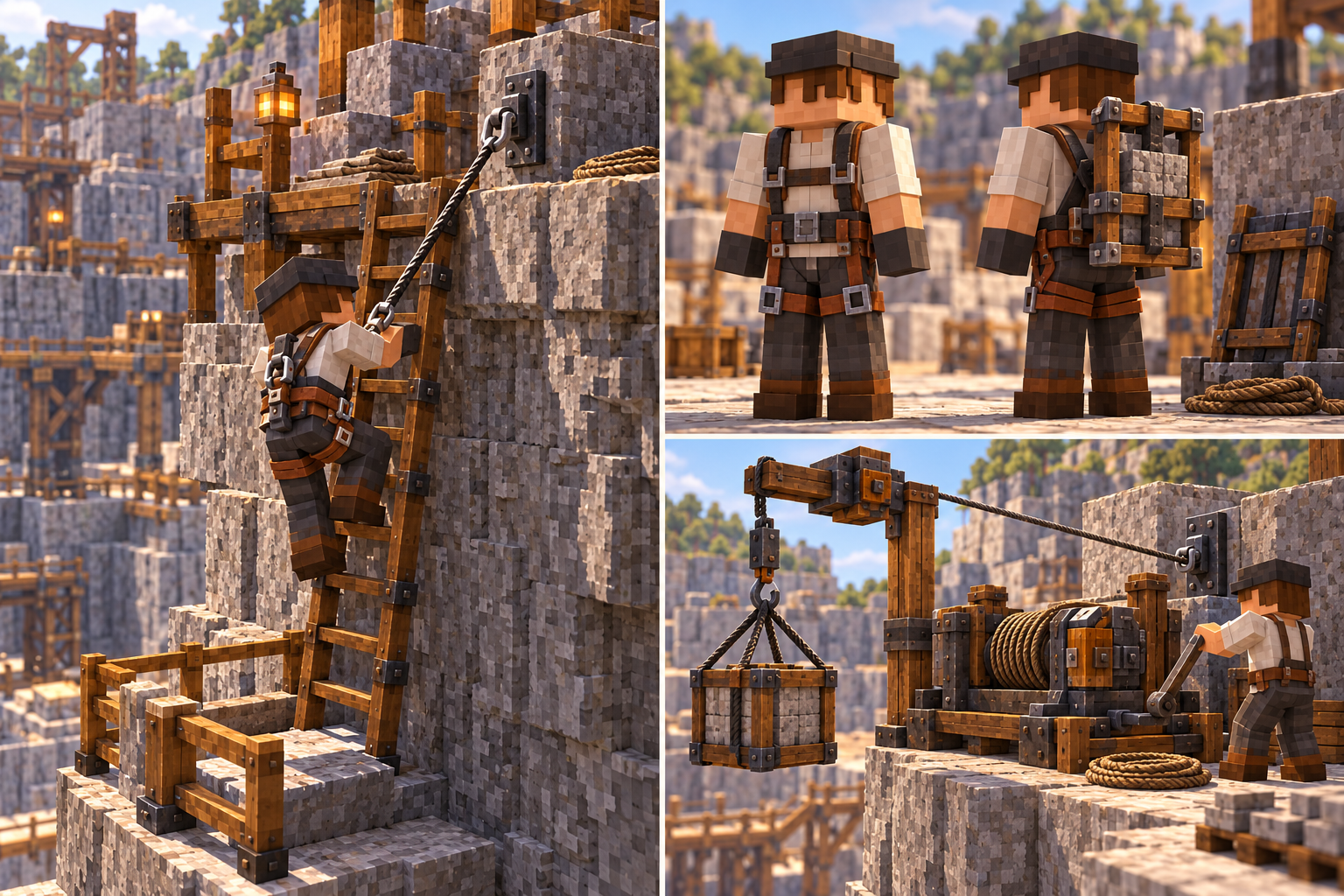
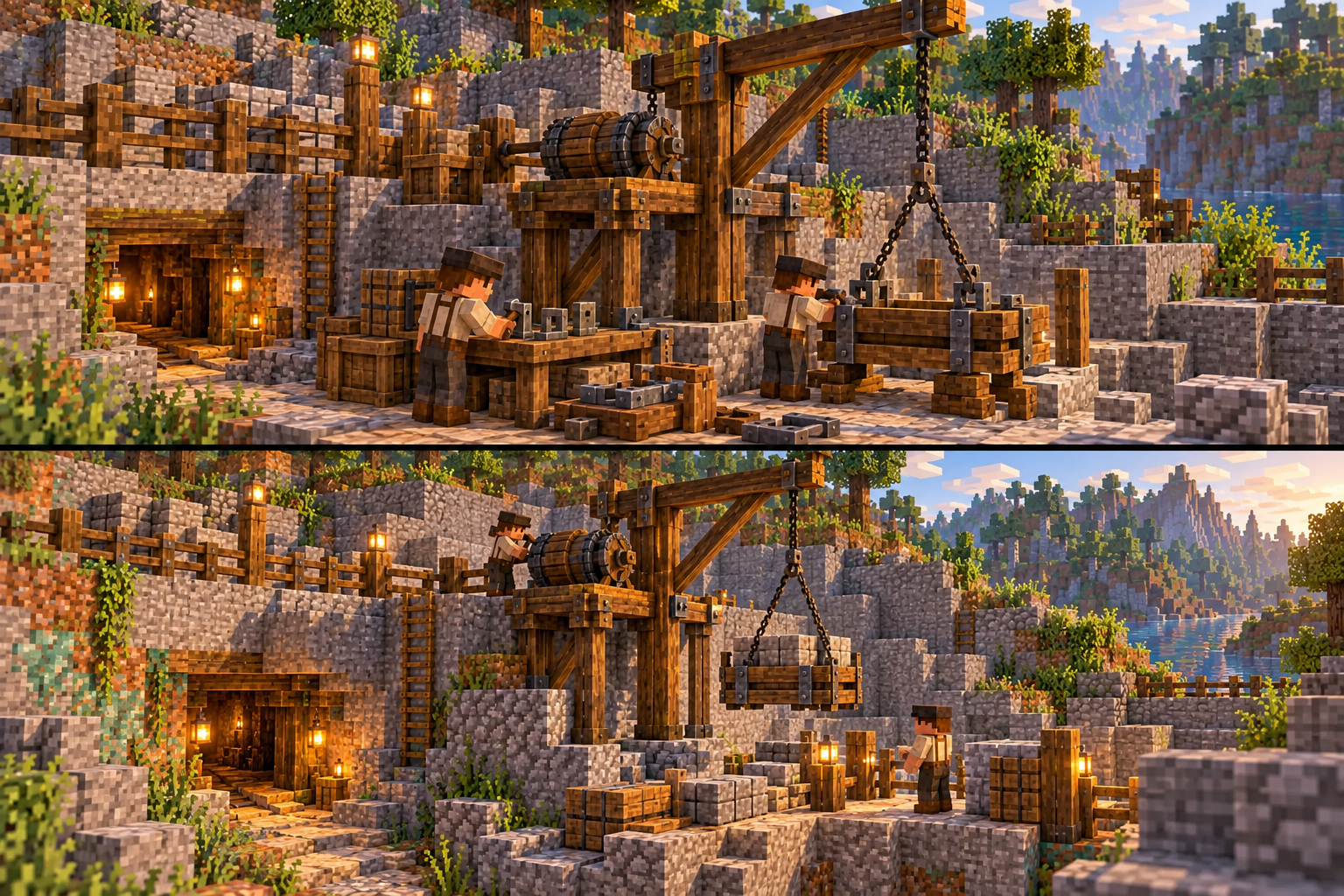
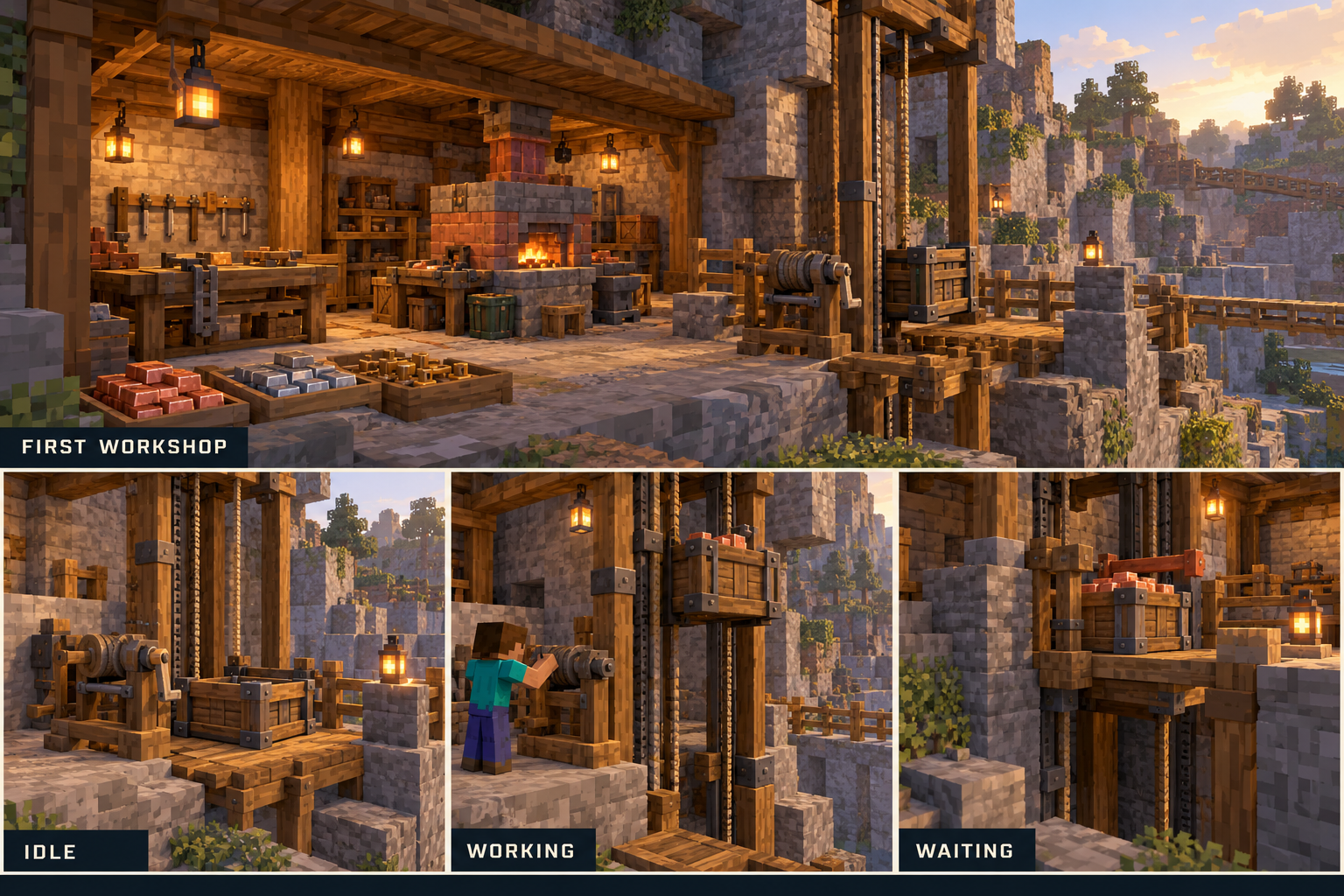
The quarry combines finite ordinary stone service, a cargo-only hand hoist with fixed landings and the Carpenter and repair bench IND-M01. The hand configuration of IND-M53 makes the first transport improvement legible. This opening stone service is not the later powered IND-M18 Crusher and is not a grain mill. The later alloy-hearth example uses IND-M07. Its proposed copper, tin, fuel, fitting and plank quantities remain starting examples for validation; the earlier iron-and-plank alternative remains a design option. Neither example establishes native material equivalence or a balanced recipe.
The first complete experience should end with the player recognizing an improvement they can use immediately: a load moved, an approach repaired, a tool made serviceable, or a cradle that can carry the next planned delivery. A roadmap unit should prove that loop before expanding the number of materials, buildings or machines around it. Smelt remains the next unbuilt game slice at the recorded game authority; the creative opening does not replace the game's accepted implementation sequence.
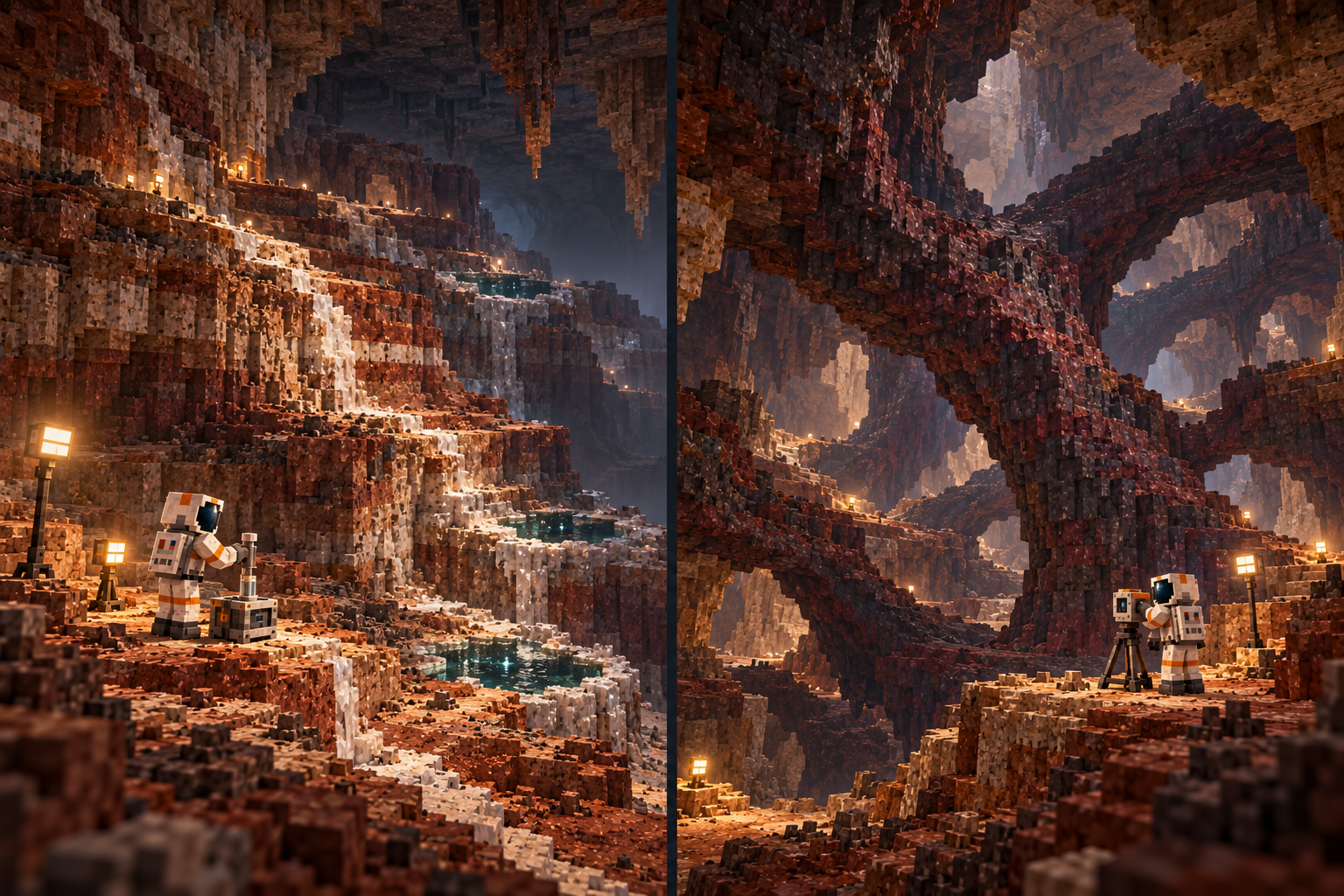
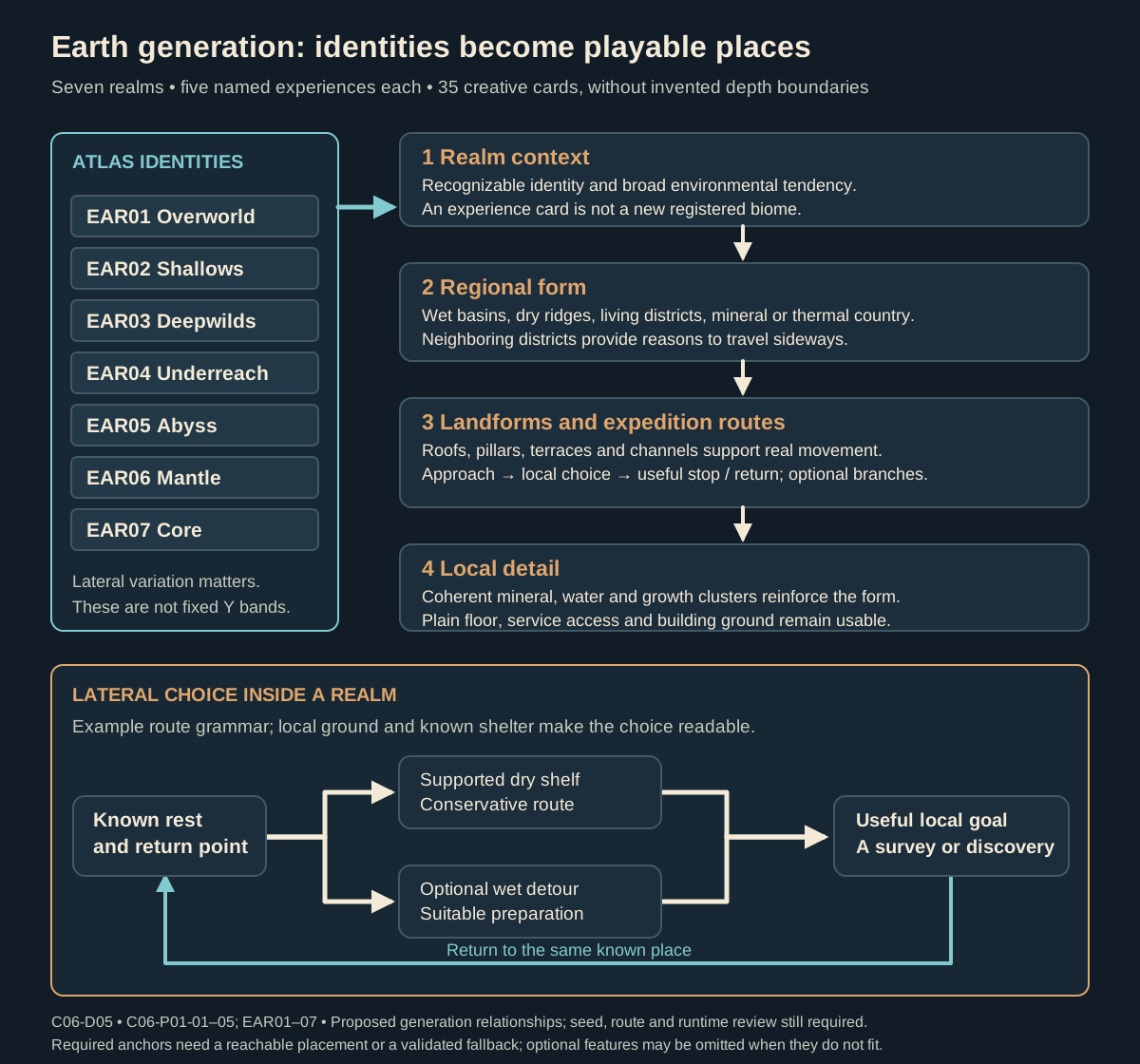
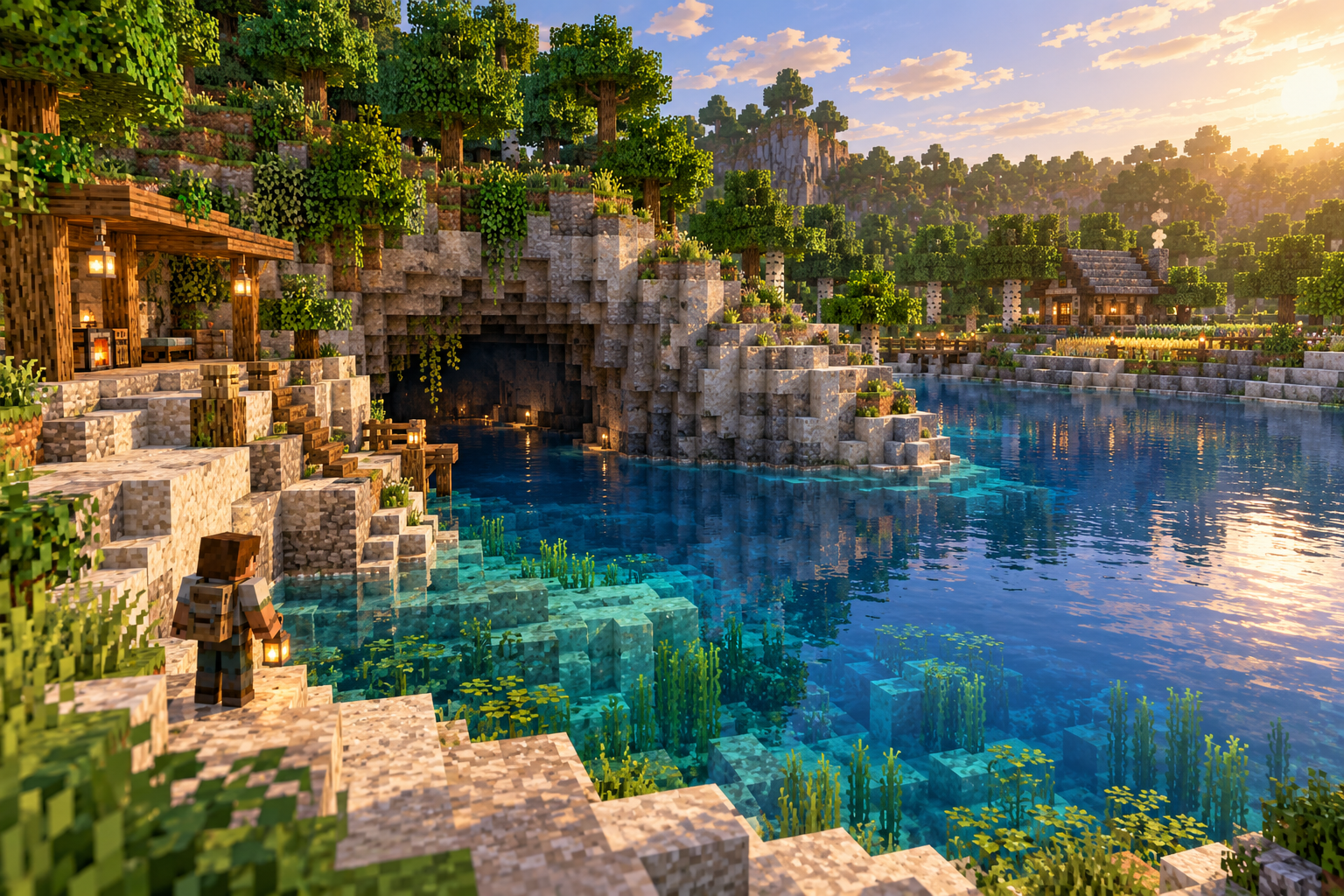
The seven creative Earth realms contain 35 named experiences. Their depth relationships give the world a sense of descent, but the player's route can branch sideways and return upward with a new use for an earlier place. A journey into a wet gallery, an exposed ridge, a dark river passage or a thermally active margin should ask for different preparation and observation. It should not be reduced to a linear ladder of pickaxe hardness.
At world-generation level, each experience needs a recognizable spatial grammar, traversable local relationships, meaningful material placement and a supported route out. A broad pool reads differently from a narrow channel; a grove needs plant and light relationships, rather than a scattering of identical decorations; a gallery's alternate return must have an actual connection. Variation should change the route or useful decision while preserving the region's identity.
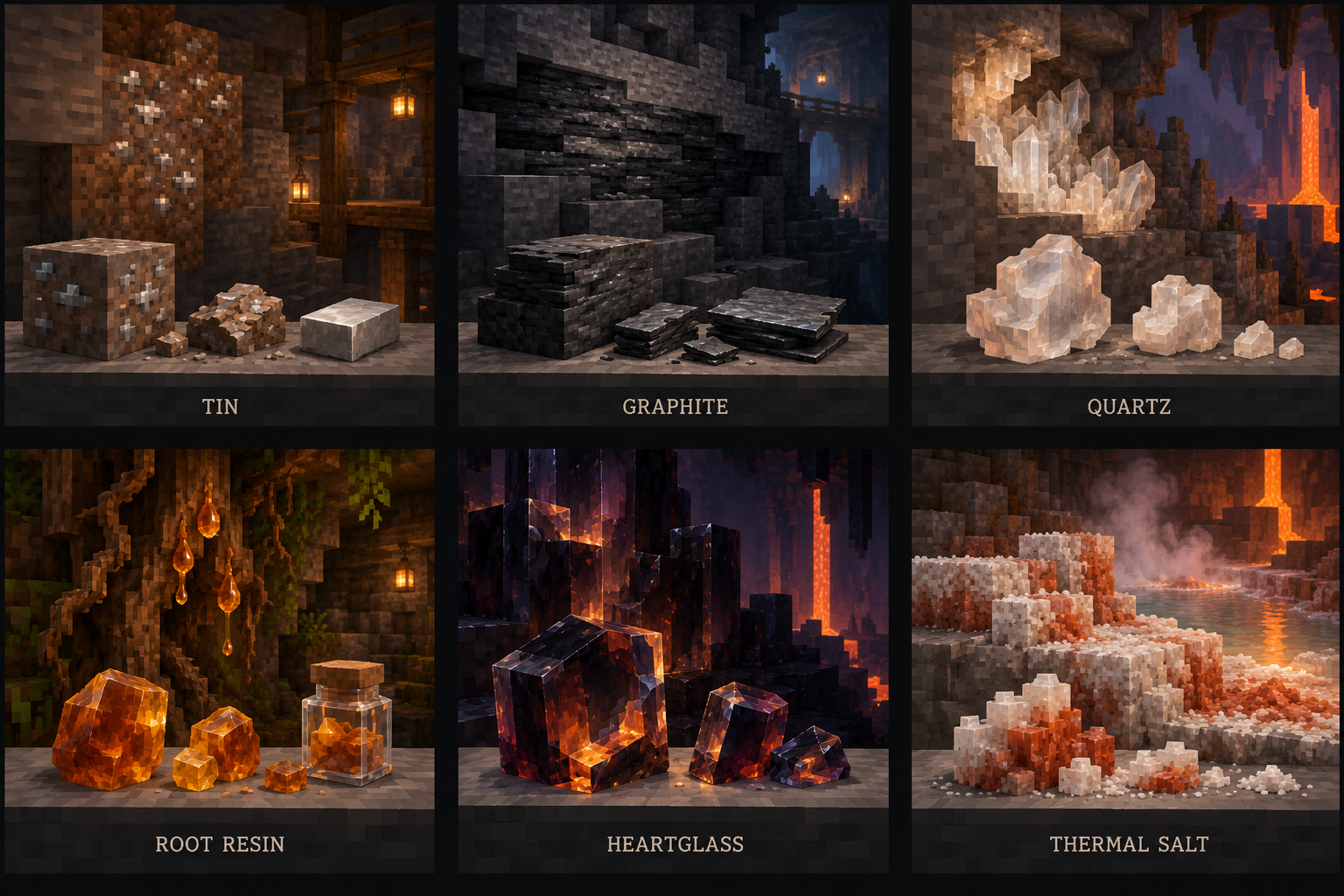
The material trail should be learnable. Visible host rock, water, exposure, growth and structure can suggest where a useful sample might be found. The player records the discovery and can later recognize an analogous setting. A rare visual variant can reward exploration, but the first functional chain must not depend on a statistically obscure decoration. The early industrial and Tier 1 paths use accessible Earth stock and known supported preparation.
The currently implemented guide's 672-level column and 15 depth biomes are game facts at their cited authority. The seven realms and 35 experiences are a broader creative atlas. Historical 512-level writing remains preserved as an earlier source. This reference does not equate every creative experience with a currently generated biome or imply that all 35 are playable. Future generator work must provide an explicit mapping, migration policy and seed evidence before an implementation count changes.
An illustrative first Copperwash outing begins at the workshop with a narrow goal: inspect a channel exposure, recover a known ordinary sample and return with enough context to use it. The player chooses a light, a workable tool, a container and a path marker. They can see what the trip is for without being told every terrain detail. An early dry route and the wet margin offer different amounts of exposure, visibility and carrying inconvenience.
At the channel, a recognizable host band gives the player a reason to stop. The sample and its context are recorded separately. A tool warning or a poor view can make returning early the sensible choice. The route remains usable, and the discovery is not erased because the player's first collection was small. Back at the workshop, the prepared sample becomes a compatible ordinary product through an available process. That product helps repair a carrying fitting or the next useful structure.
The improved object then changes the next trip. A better load arrangement reduces handling; a reliable light changes how much of a side passage can be read; a crossing changes the approach. These are different outcomes and should have visibly different causes. The journal can show the chain from observed place to material, operation and improvement without presenting it as a rigid quest script.
A later visit introduces a wider region or a different activity using the same landmark. New capability should reveal an alternate shelf, a safer sampling position or a useful water-management project. It should not simply replace every earlier resource with a superior coloured version. The player's knowledge and construction remain part of the world they revisit.
A home supports rest, storage, preparation, display, making and social life. These functions can share a compact building or spread into a settlement. Their value comes from the player's activities and arrangement. A bench beside material storage, a drying area beside a garden, a visible field-kit shelf and a window toward the old route make the place intelligible. Decorative choices are worthwhile even when they do not grant a numerical bonus.
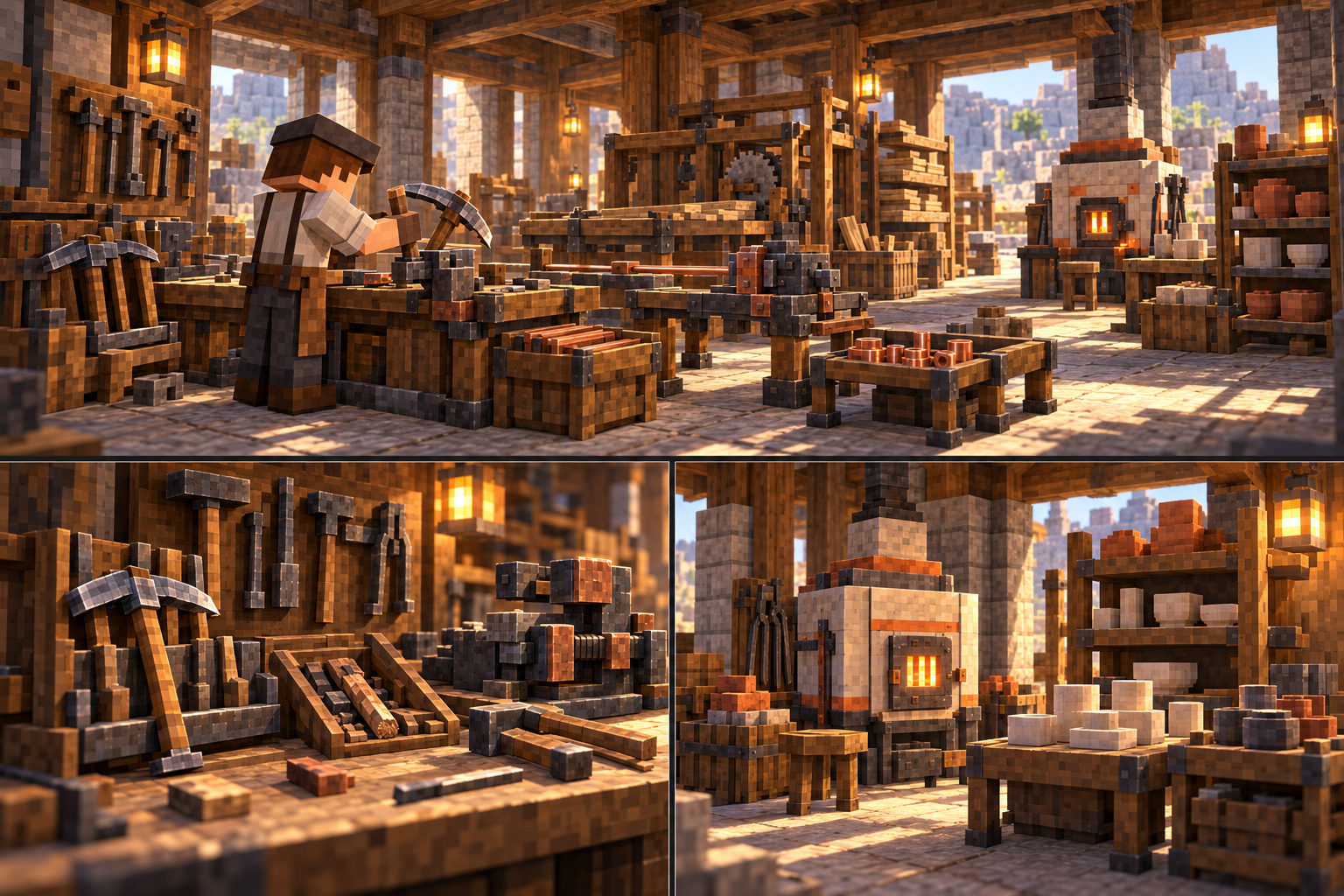
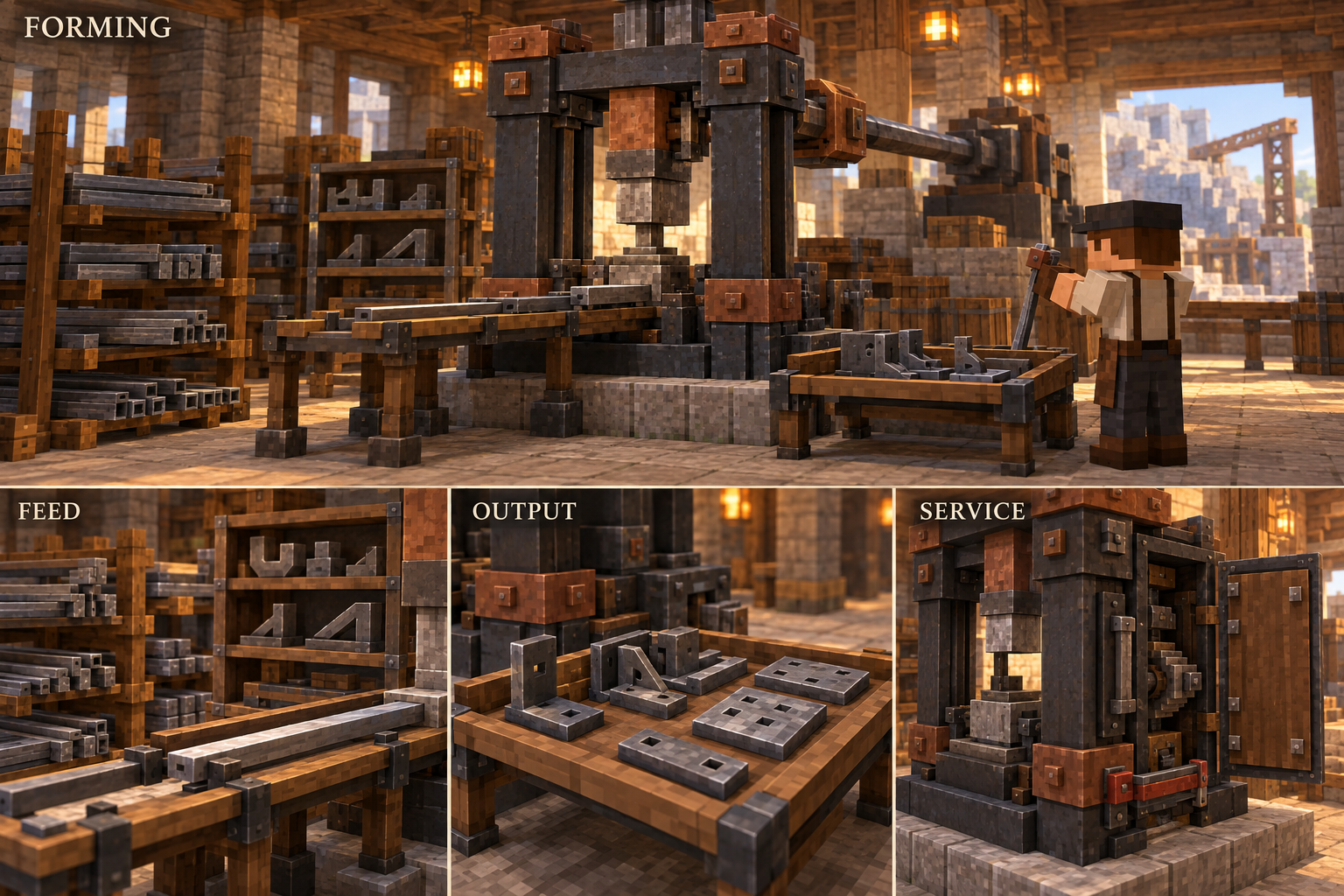
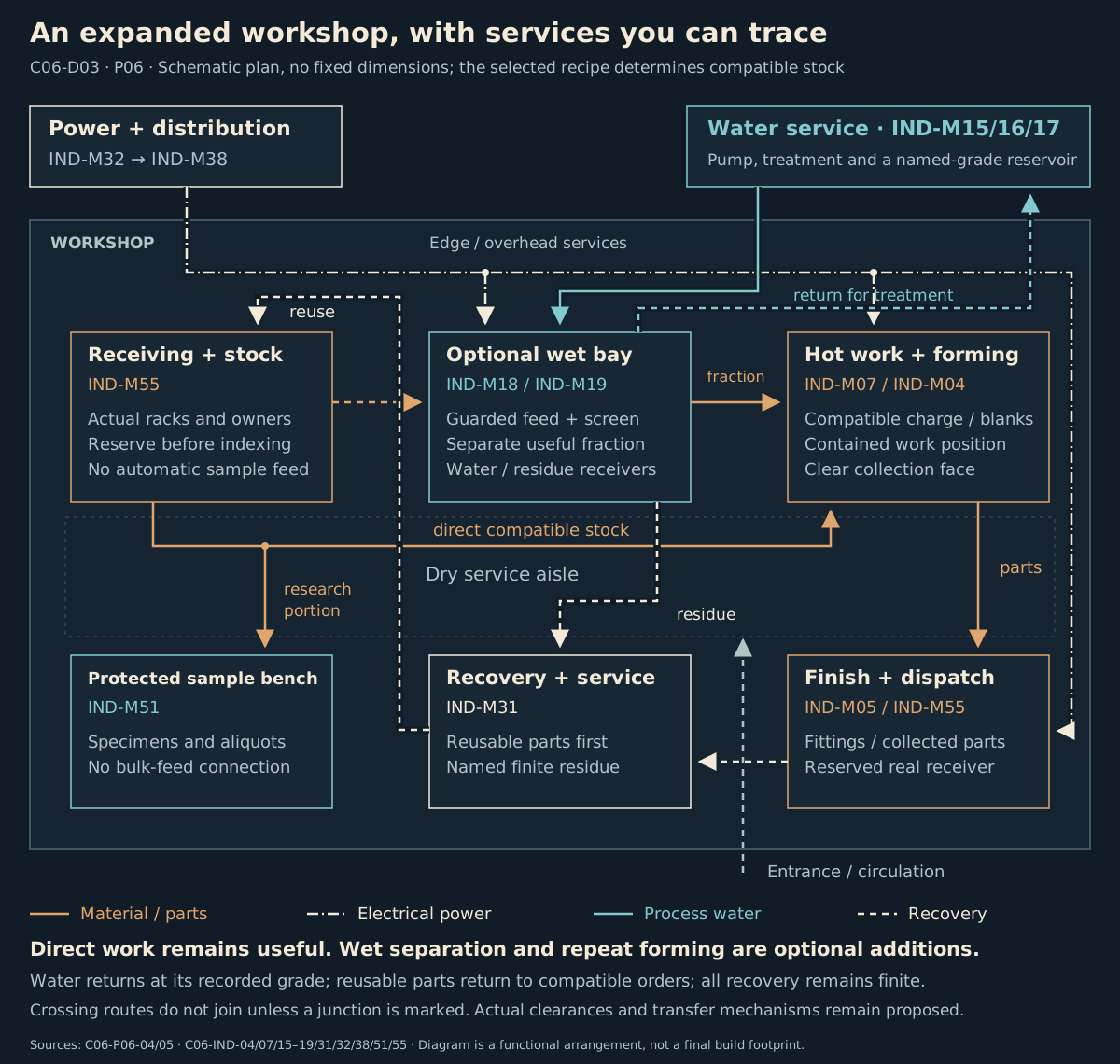
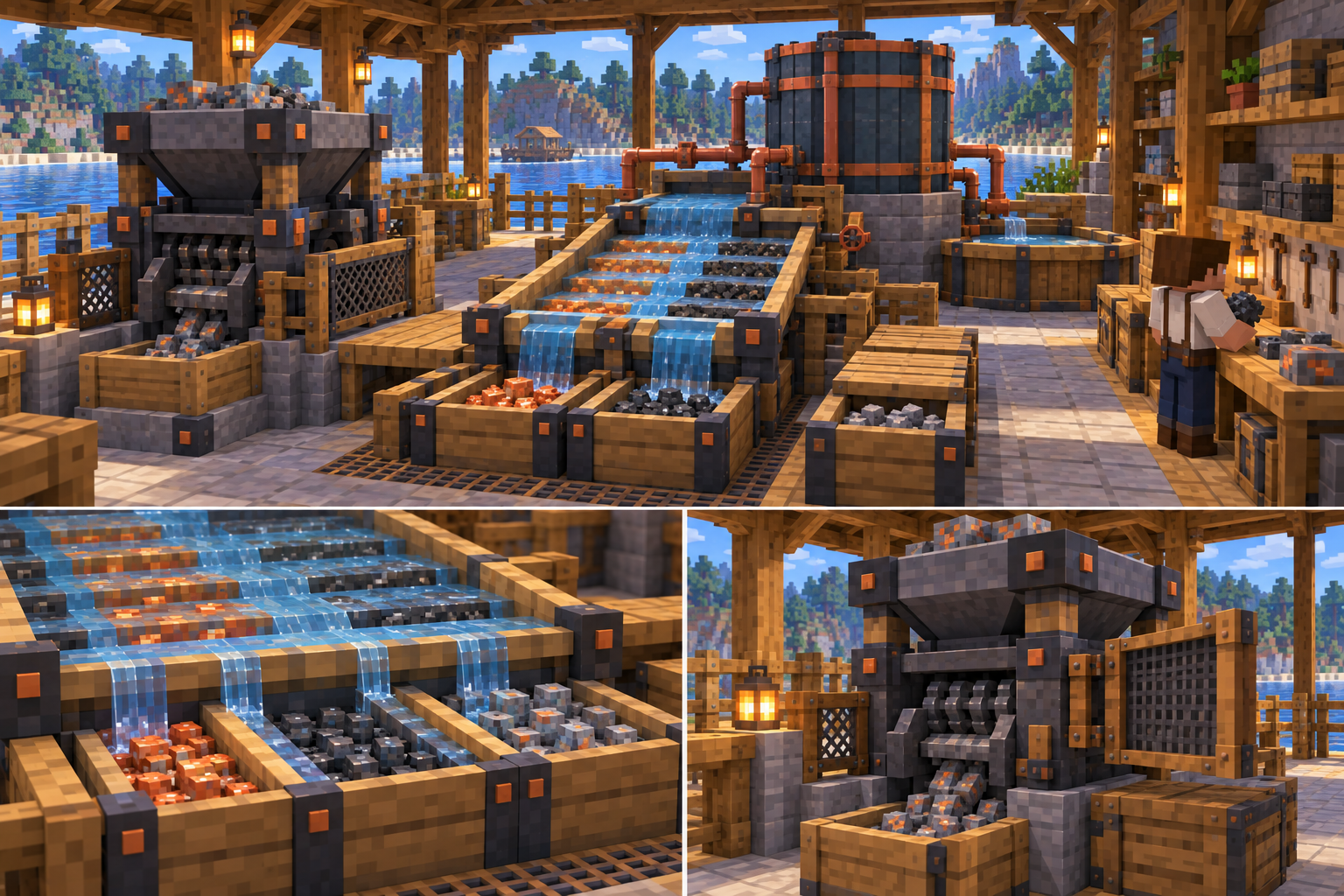
Workshops should have receiving space, occupied work faces, service access, actual output storage and a reasonable path for the person moving between them. A regional factory adds throughput or method choices when repeated orders justify it. A frontier workshop begins with imported support and a limited duty, then grows toward local service. The same architectural language can express different scales without making the larger arrangement mandatory.
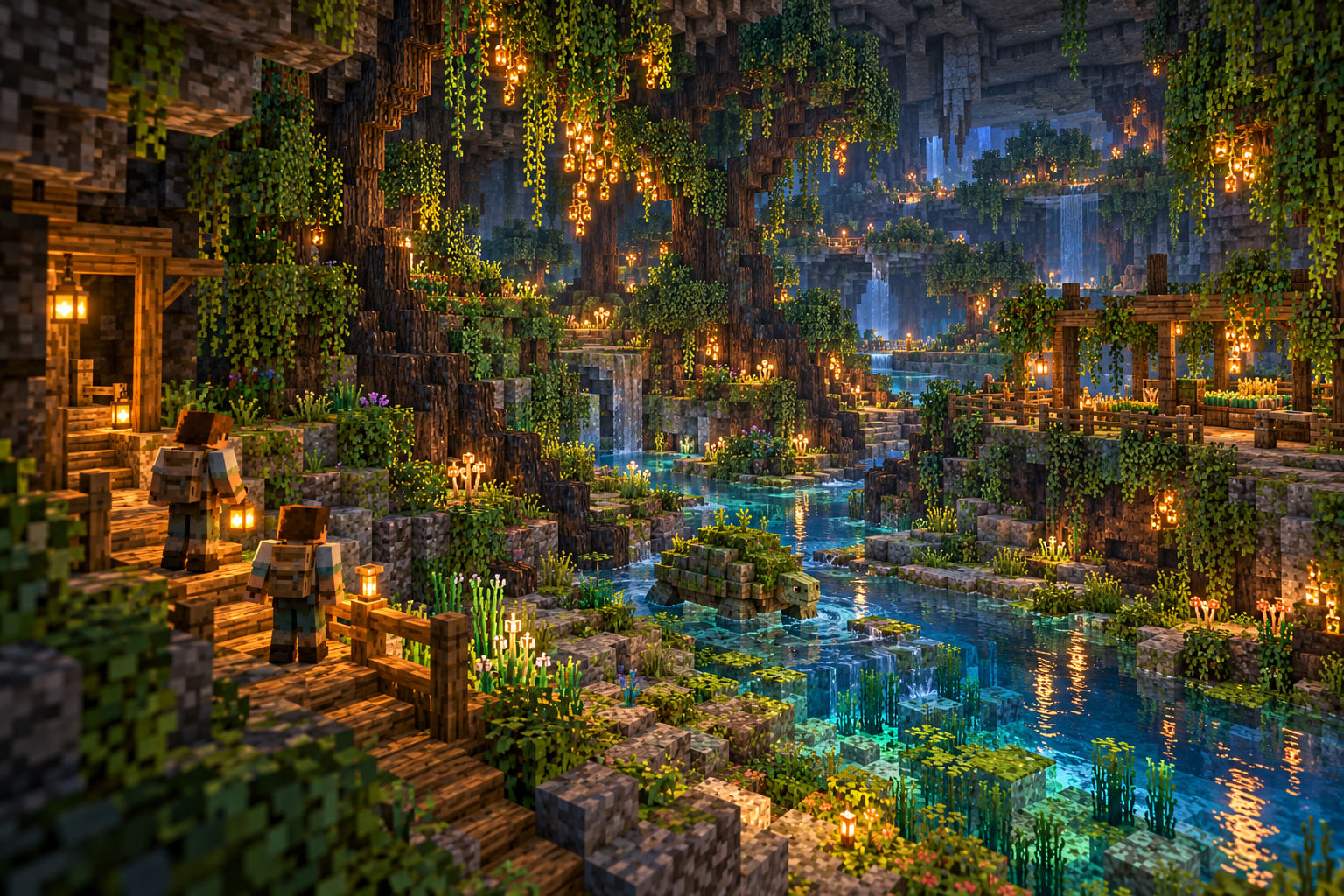
The living systems connect to this growth. Food preparation, cultivation, fishing, observation, habitat care and modest settlement projects provide reasons to return besides unloading ore. Named NPC roles support readable services and authored encounters; they do not establish a universal autonomous economy or mandatory population simulation. Ordinary Minecraft construction remains meaningful alongside managed installations.
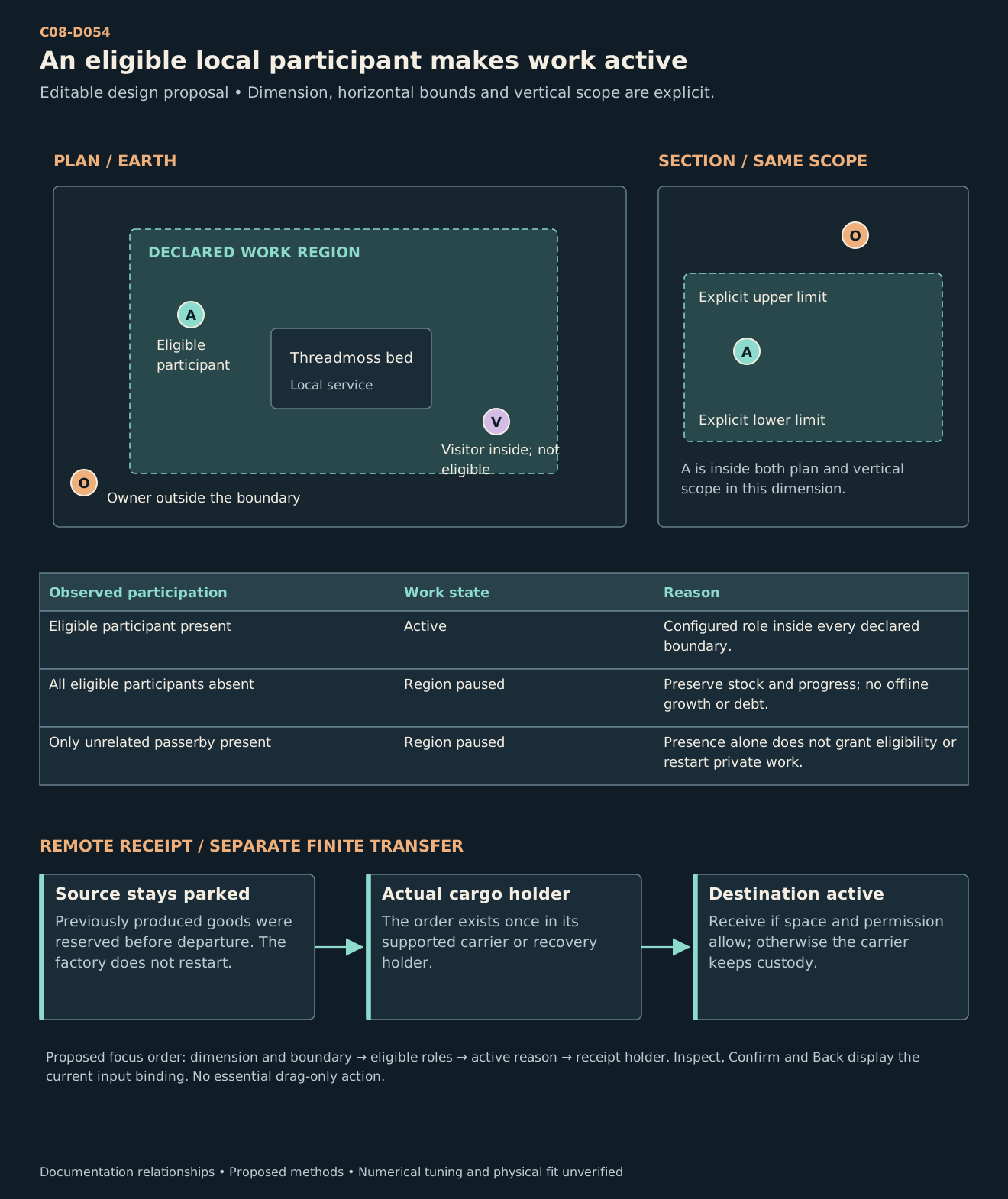
Managed systems use stable parked behavior when their eligible participants are absent. They retain actual stock and state, then resume coherently. This protects an expanding network of homes from unattended depletion or fabricated offline production. It does not redefine unrelated vanilla processes. A future implementation must document that boundary at the system level and test transitions, rather than using the phrase 'offline safe' as a substitute for a state model.
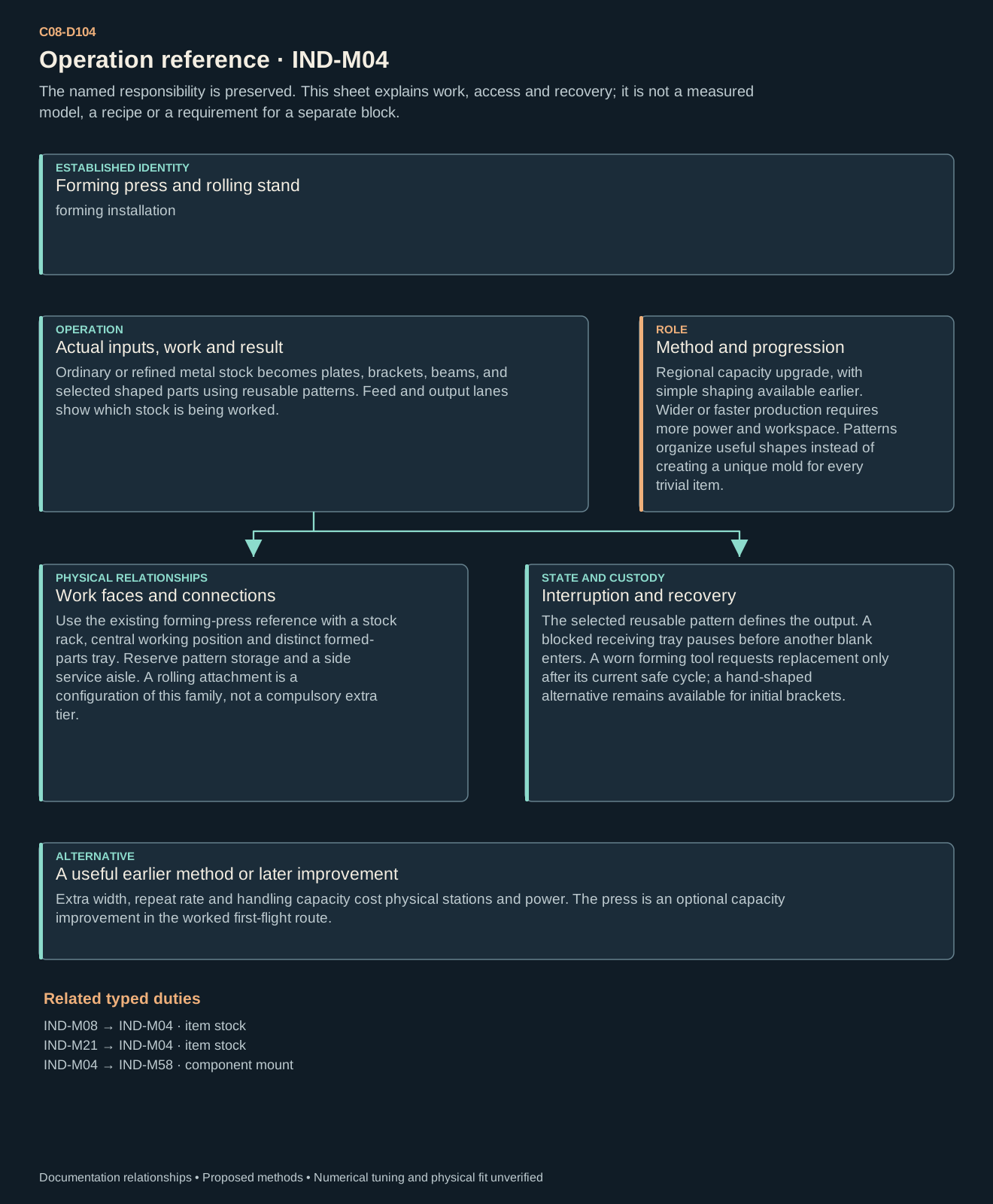
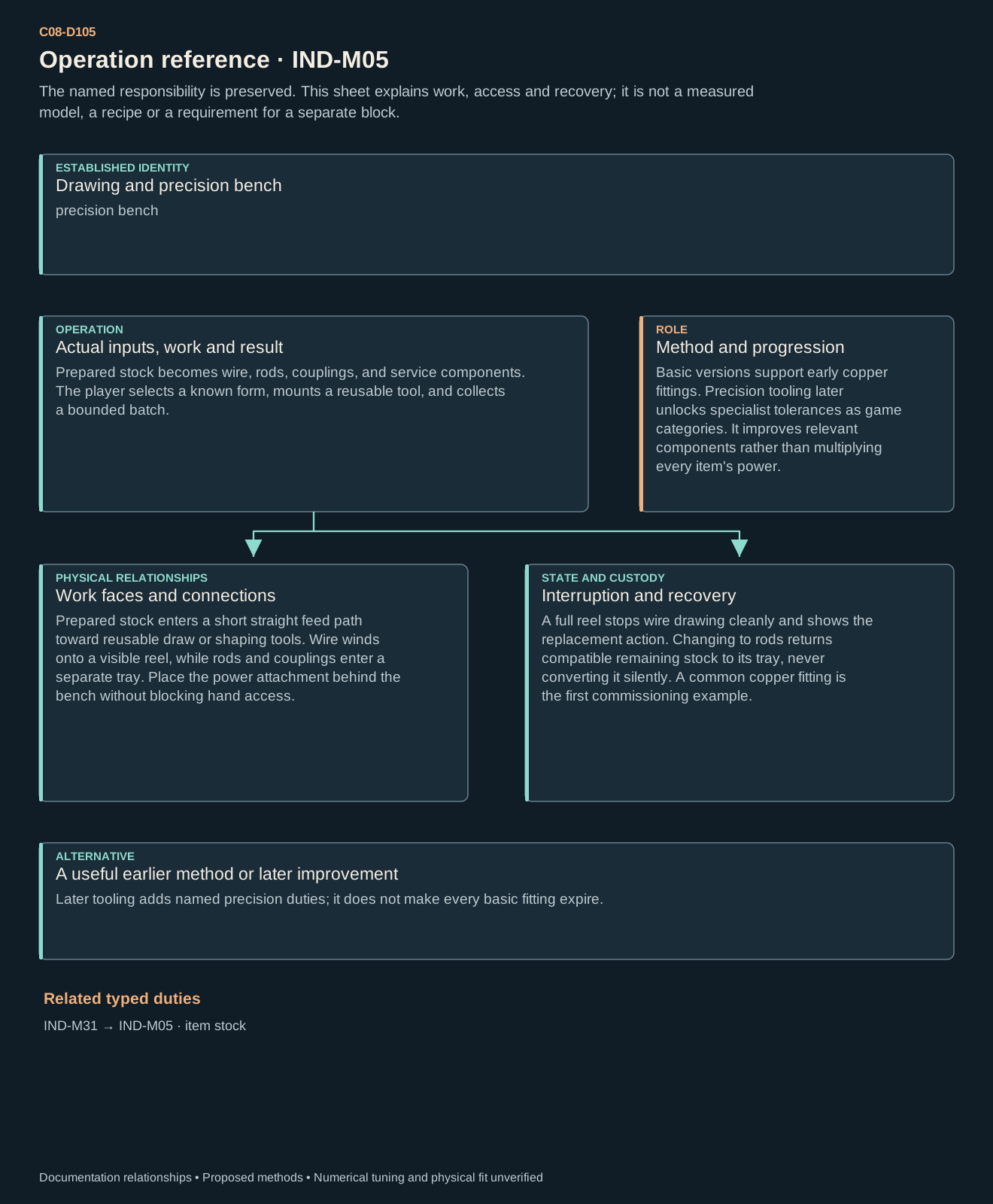
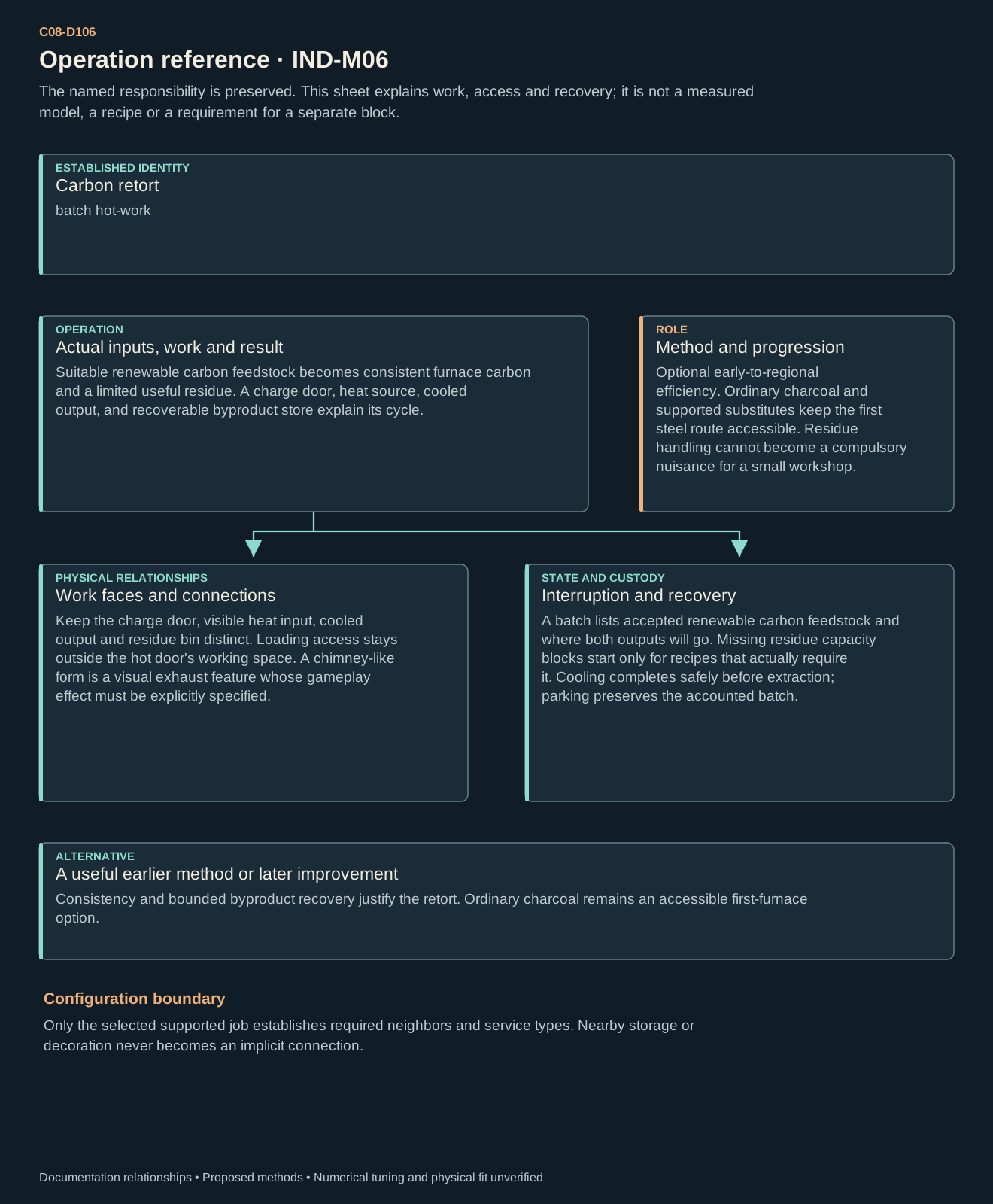
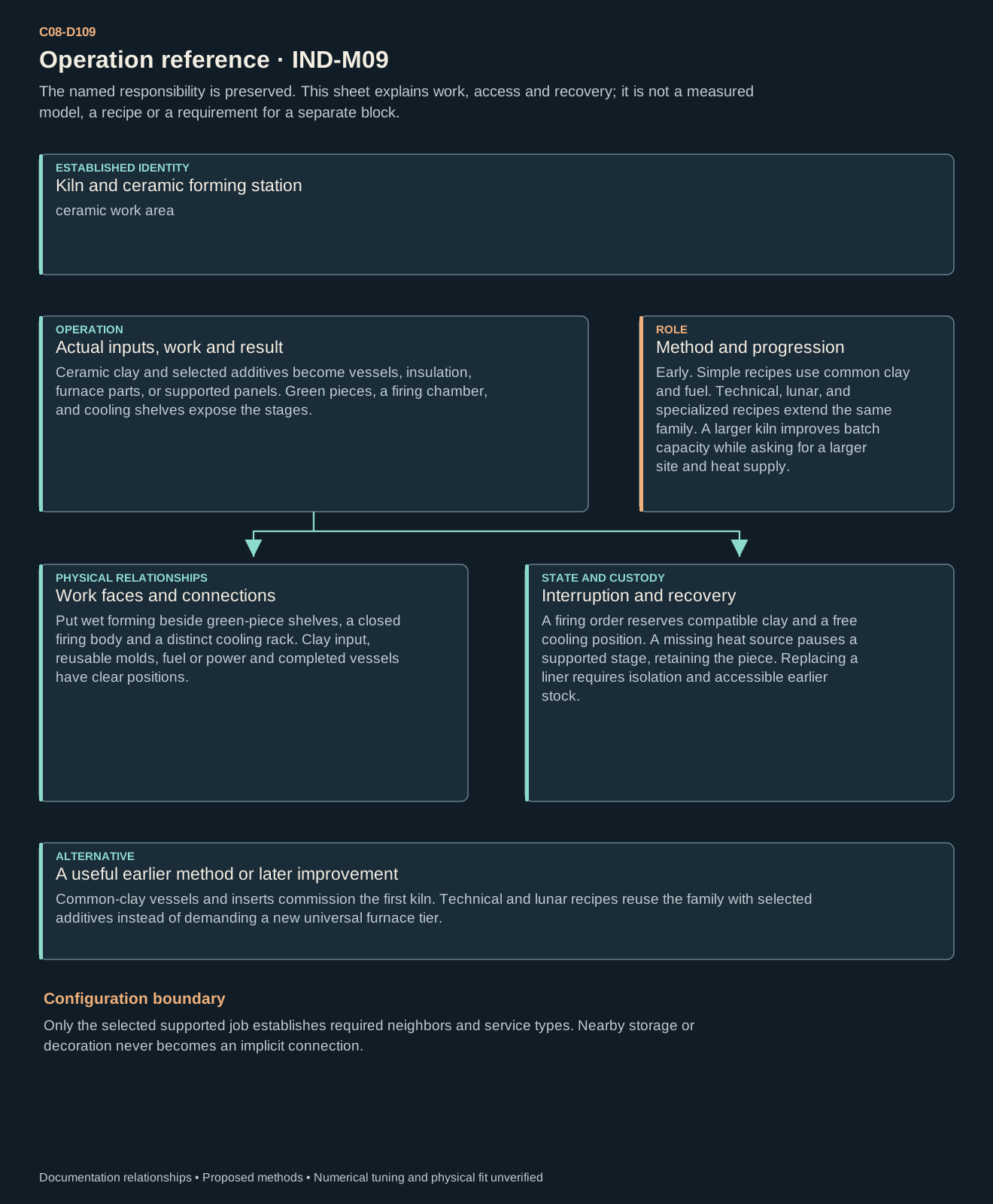
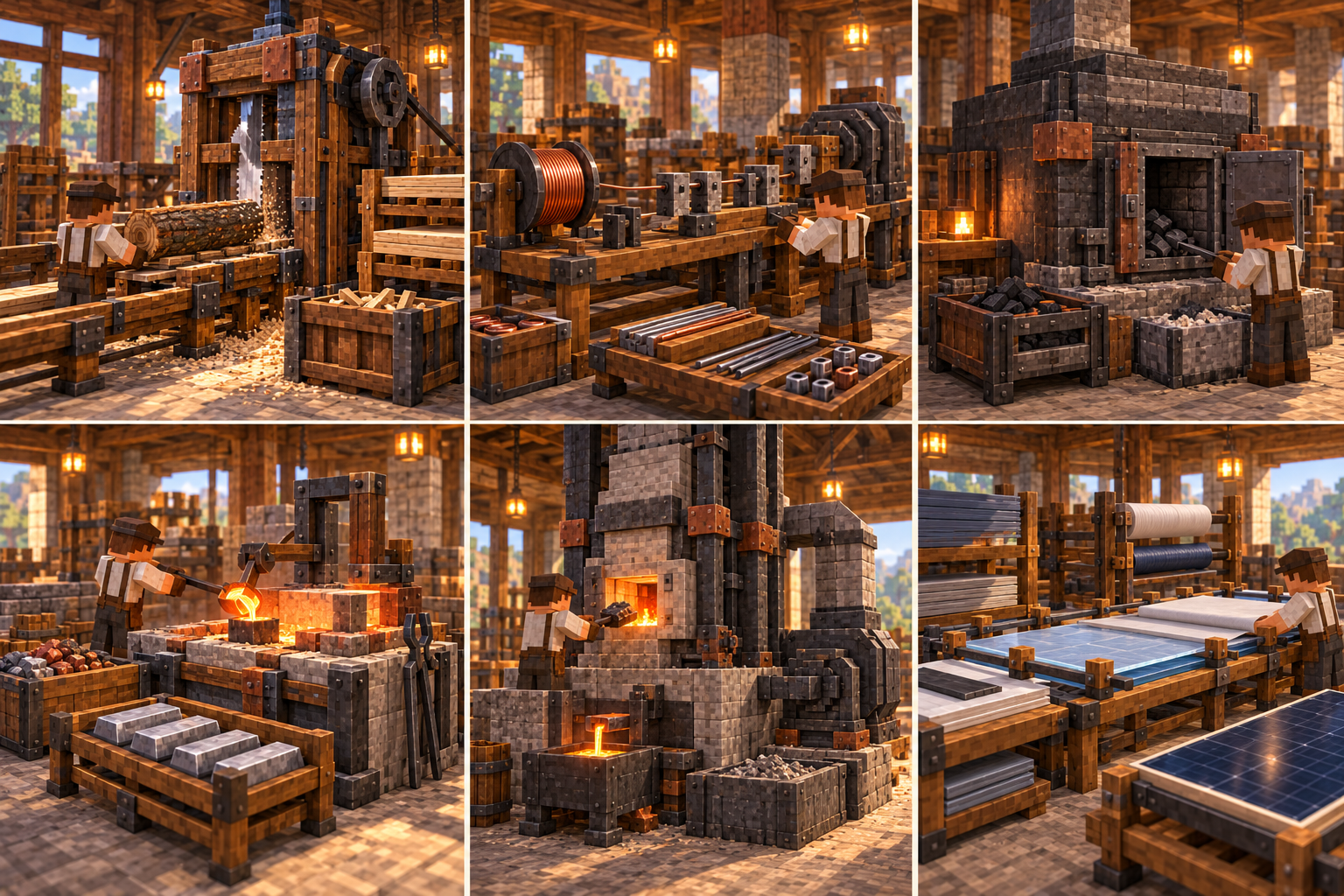
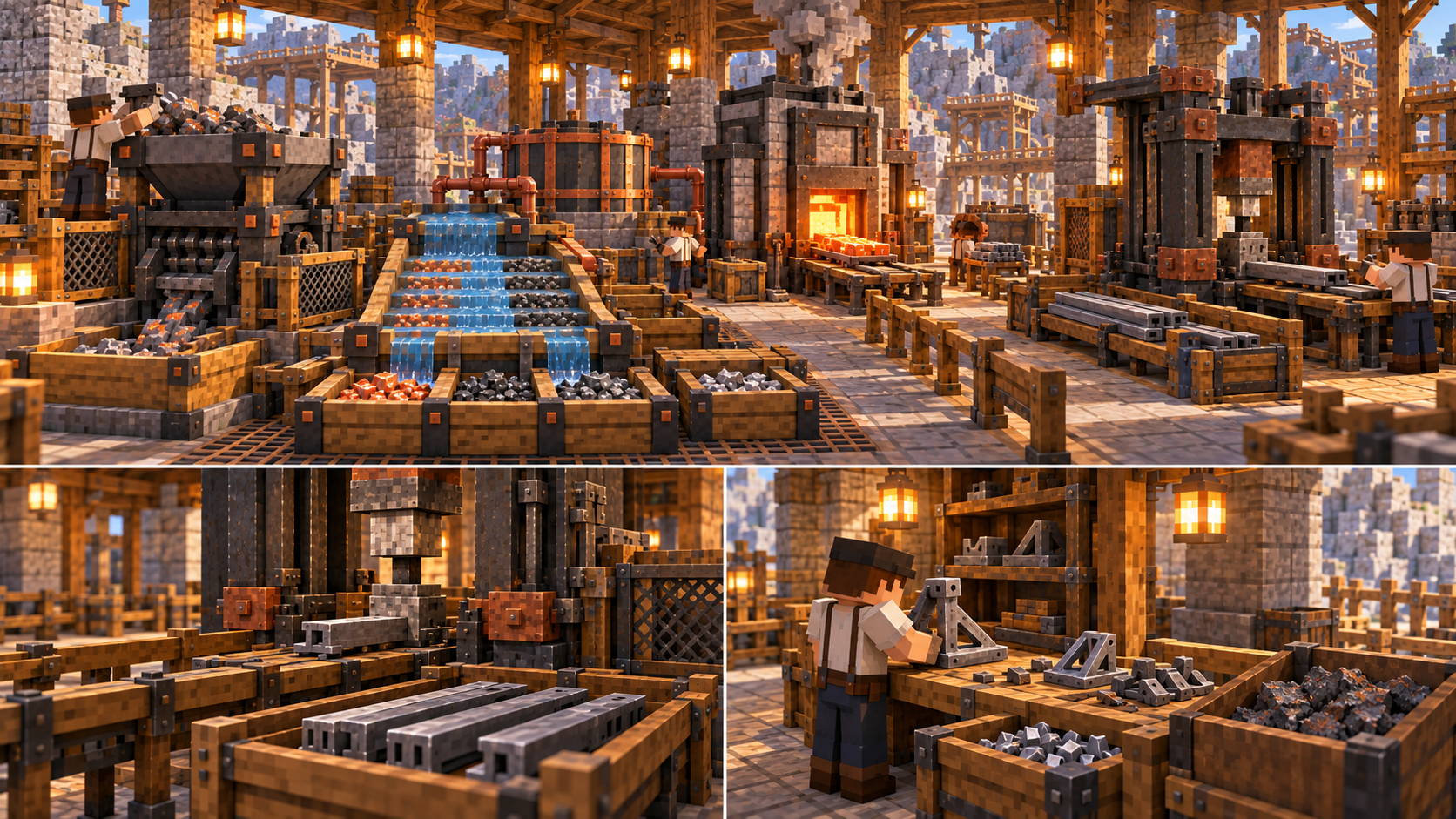
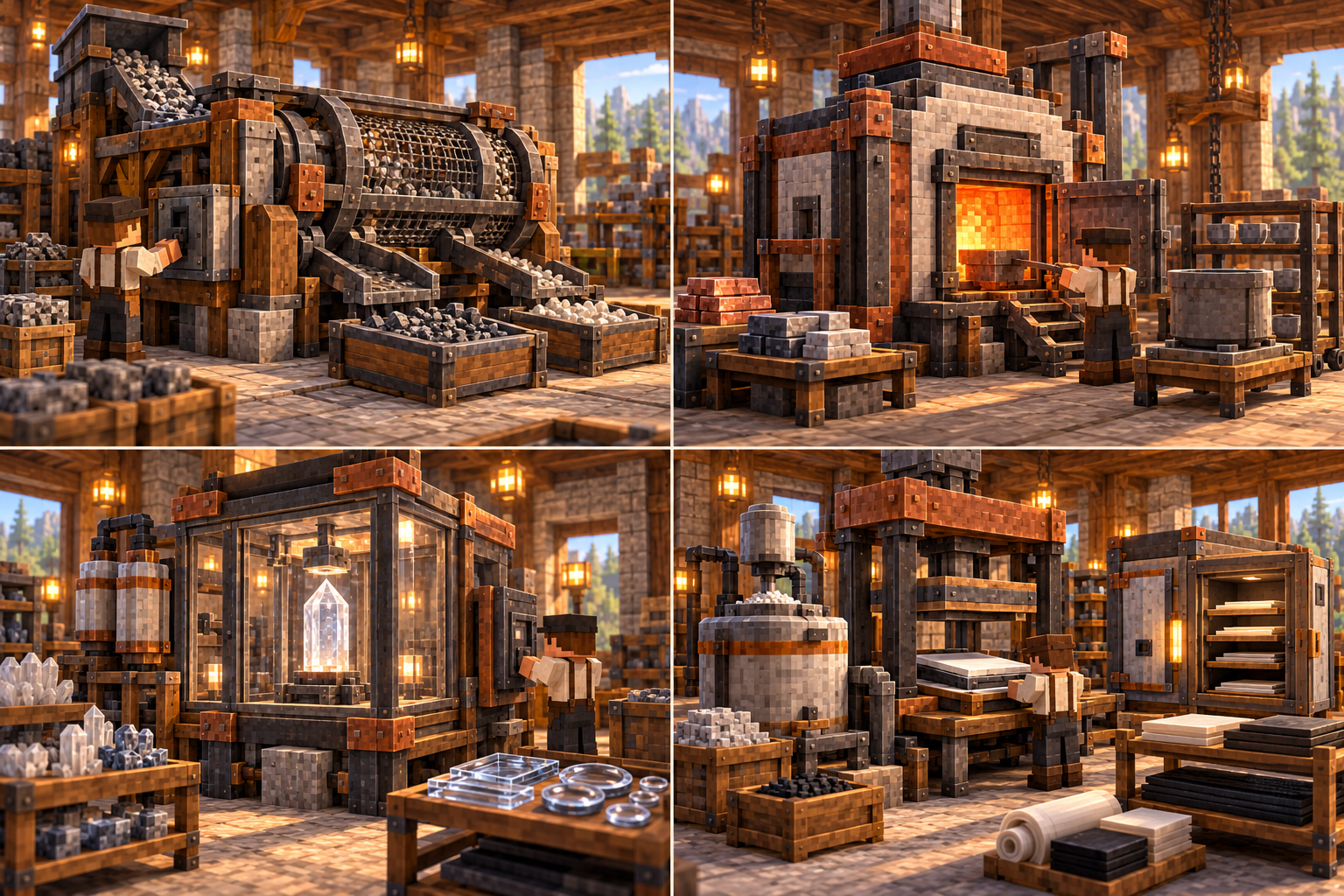
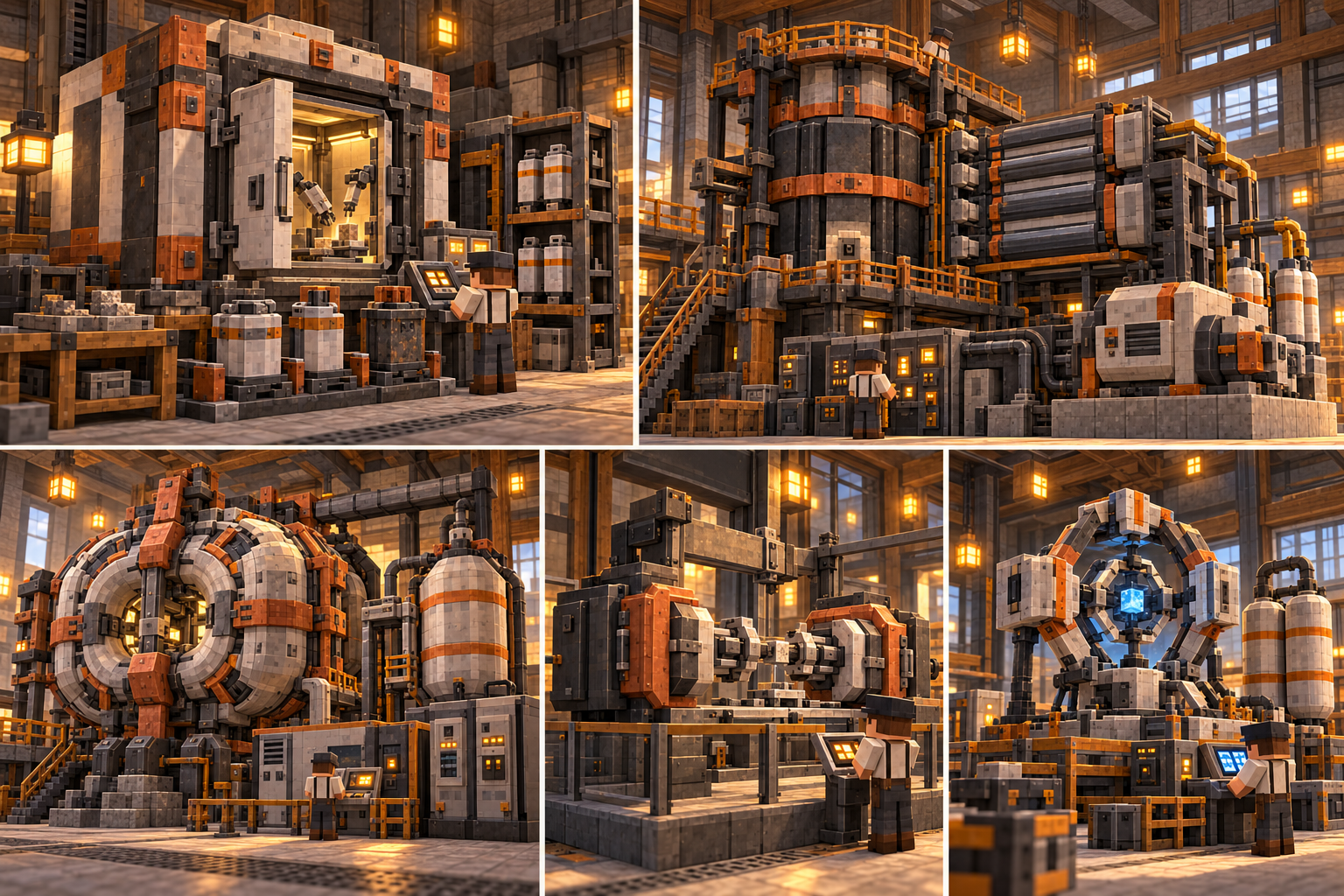
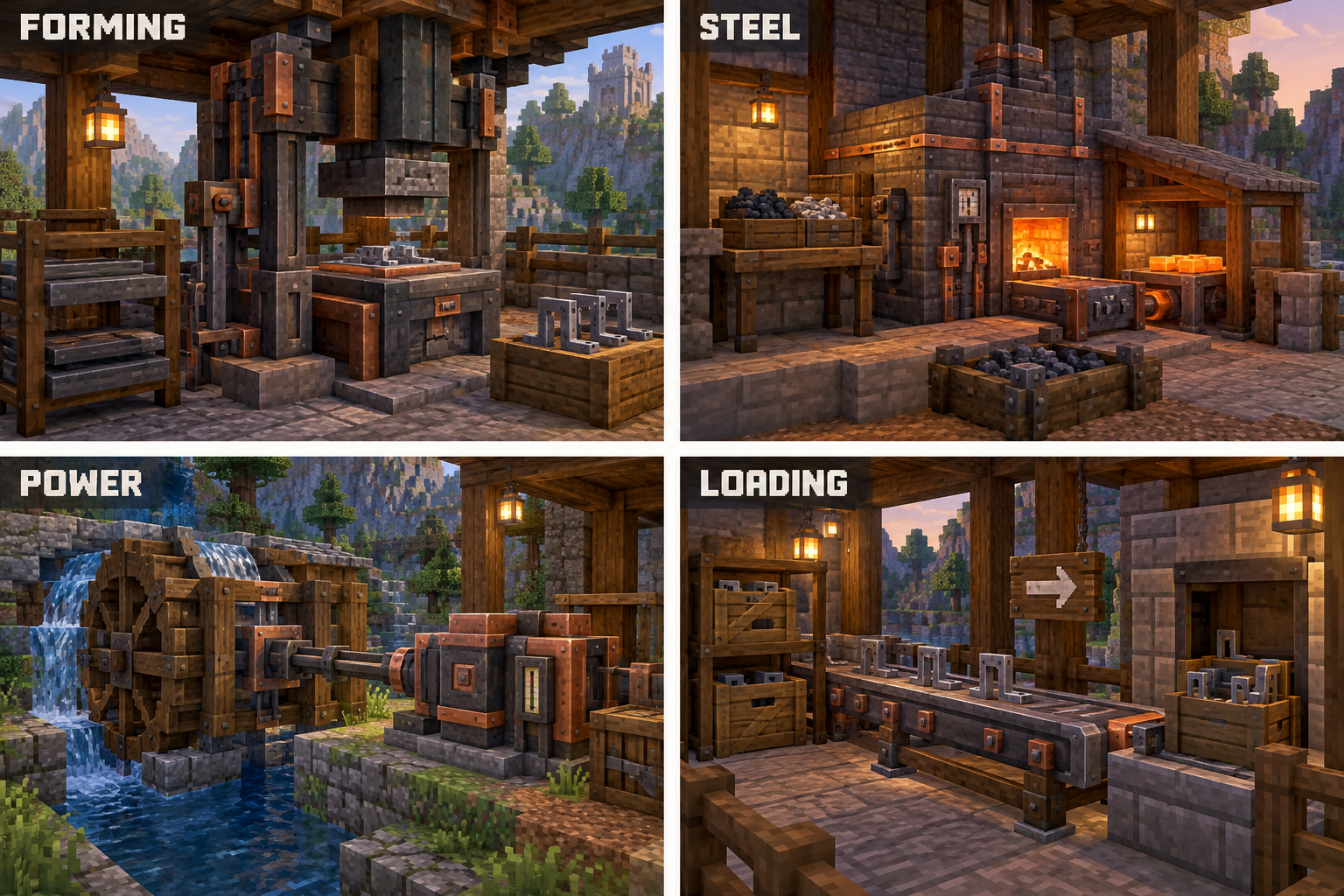
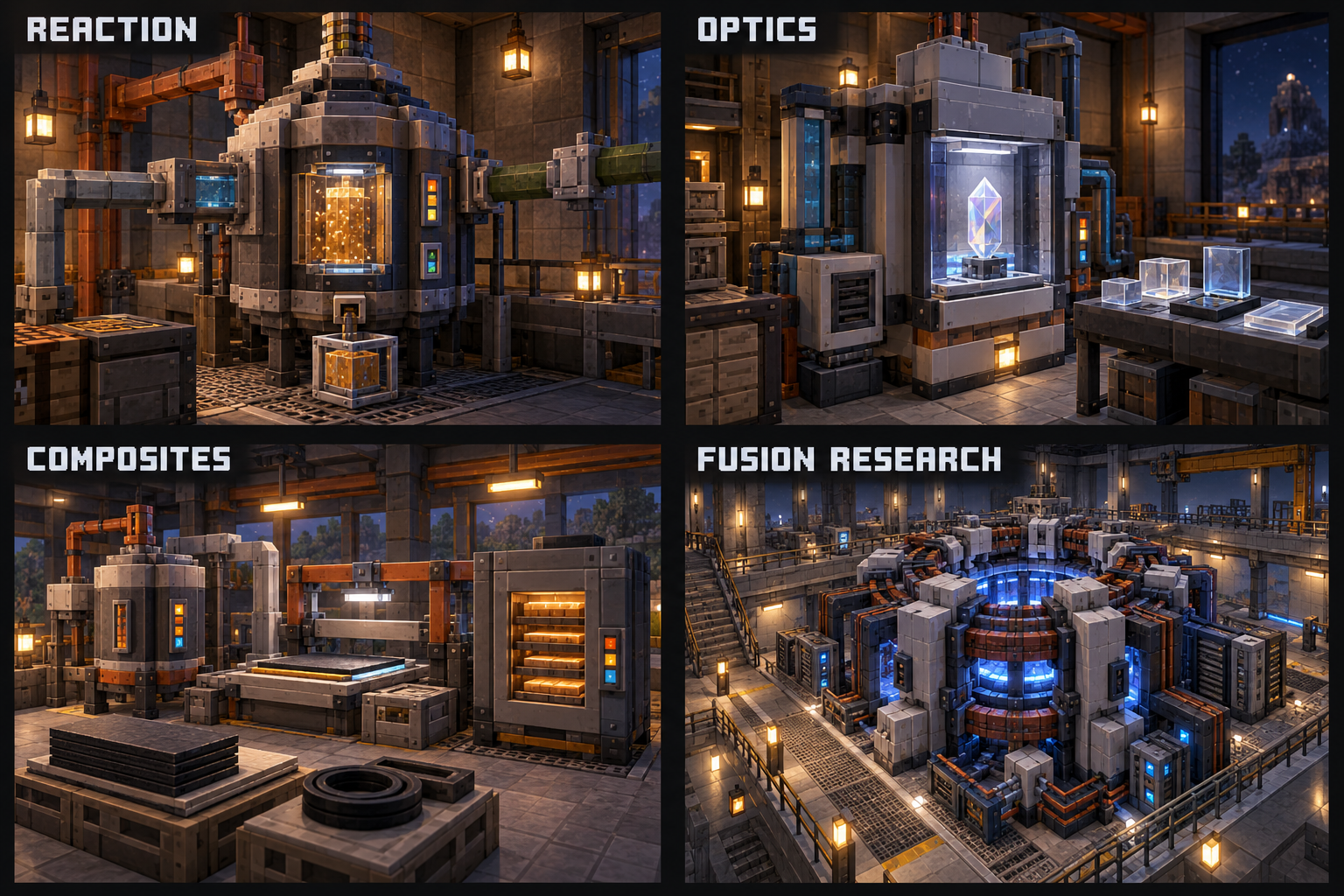
The broad machinery direction combines tangible physical work with useful capability across preparation, forming, fabrication, power, liquids, gases, storage and controls. The full reference preserves 66 machine responsibilities. A responsibility can be supported by a particular installation, a configuration of shared equipment or an earlier manual method where the design permits it. The catalogue is not a compulsory list of 66 purchases.
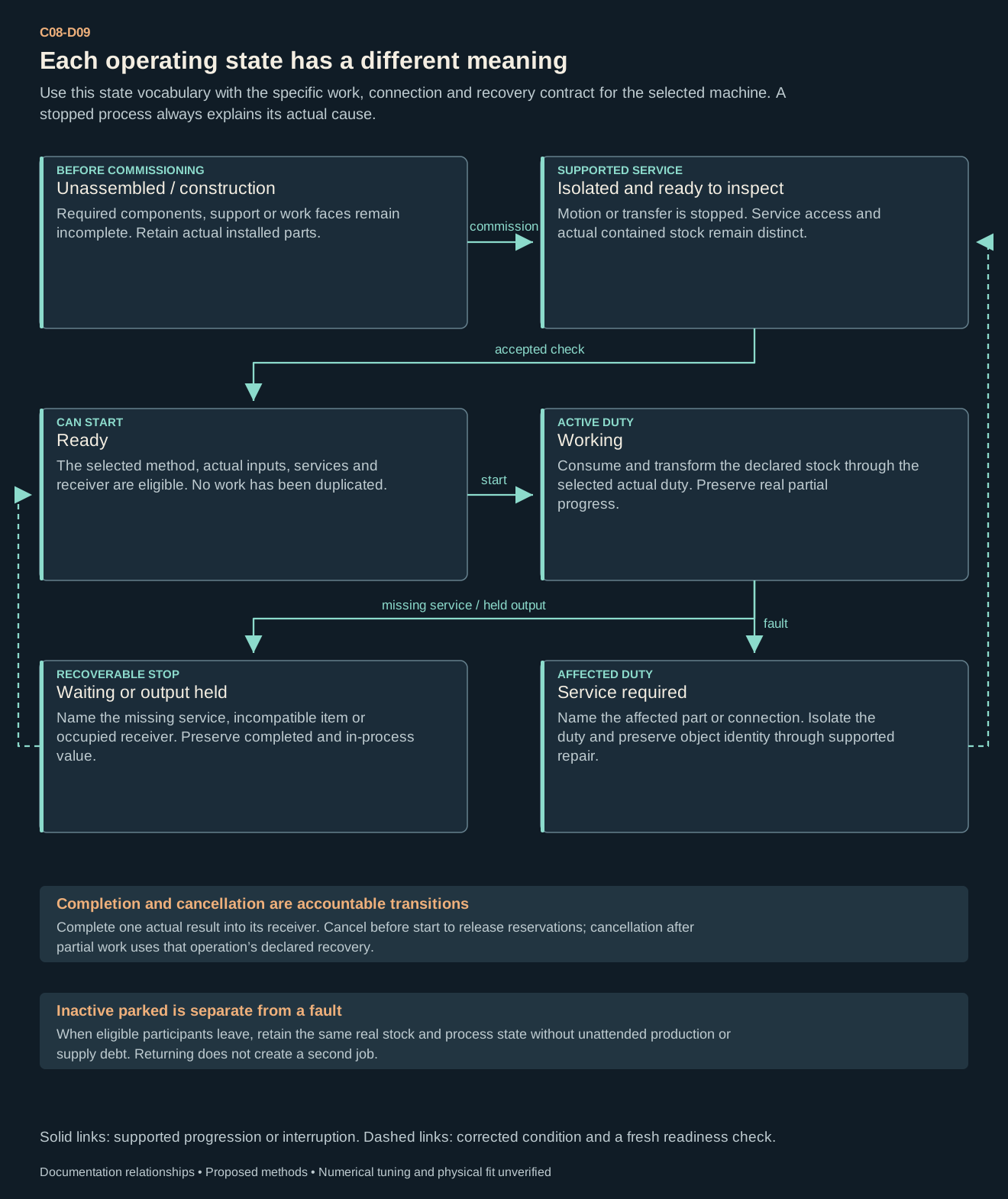
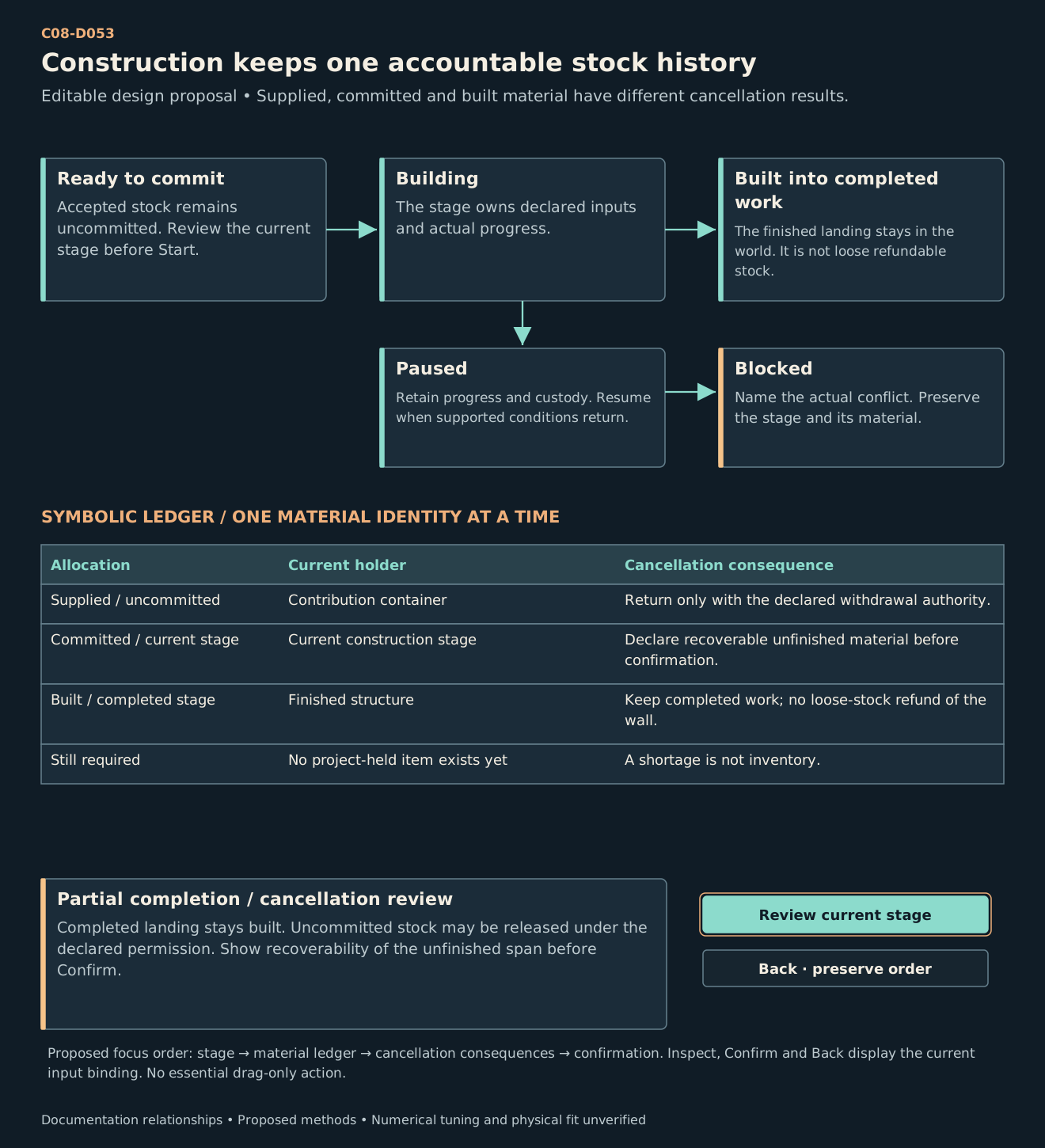
An order begins with an intended result and actual available material. The operator selects an eligible method, reserves what it needs, provides an actual receiver and starts the work. The system tracks real consumed input, in-process material and the resulting object. Cancellation before start, a pause after partial work and a blocked output are different states. They should give different, understandable choices without duplicating stock or erasing value.
Power, breathing supply, propellant, process fluids and water remain typed services. A common control surface can show several services; it does not merge their physical connections. Isolation, access and diagnosis make machinery readable. Where a service path crosses another path, the document and eventual model must show the junction or crossing explicitly. An attractive pipe arrangement is not proof of a correct process.
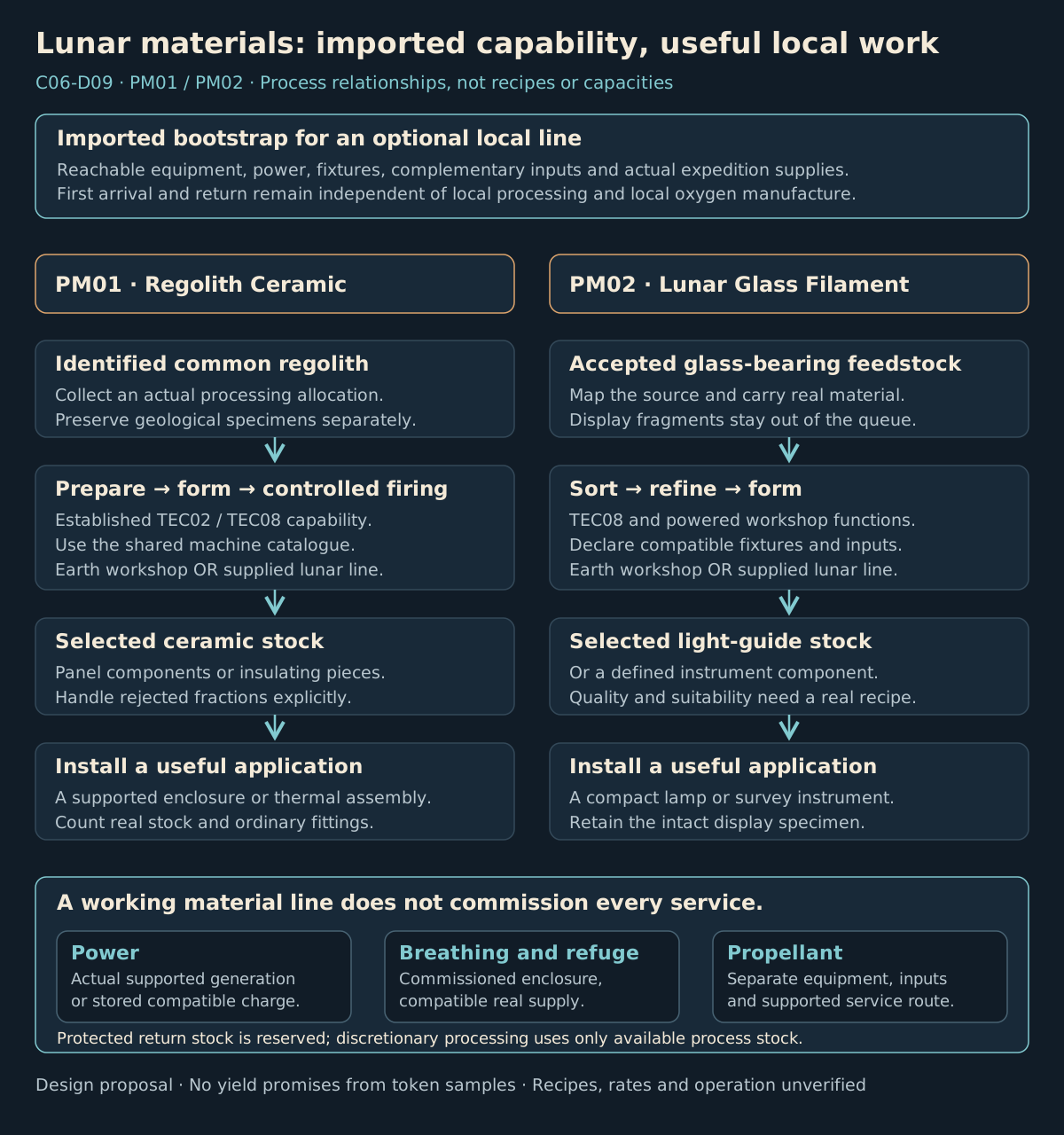
The balance target is a worthwhile choice between methods. Compact work should remain efficient enough for modest needs. Larger arrangements should earn their space, service and input obligations through a distinct capability or repeated use. A late material can improve a stated duty while preserving earlier alternatives. Final rates, losses, yields, recipes and storage capacities require game tests with actual travel, interaction and construction costs.
A selected outcome is evaluated across industrial method, personal preparation and an actual vessel configuration. Their shared validation is a whole completed duty.
Status: Maintainer-authored explanatory reference; creative recommendation, not runtime or engineering proof.
Final coordinates, clearances or block counts; Selected recipes, rates, capacity or balance; Implemented behavior or completed game tests
Related identities: IP00 · IP09 · HUL01 · HUL06 · T1-V01
Writing: C08-JOURNEY-07 · C08-CRAFT-02 · C08-BUILD-05
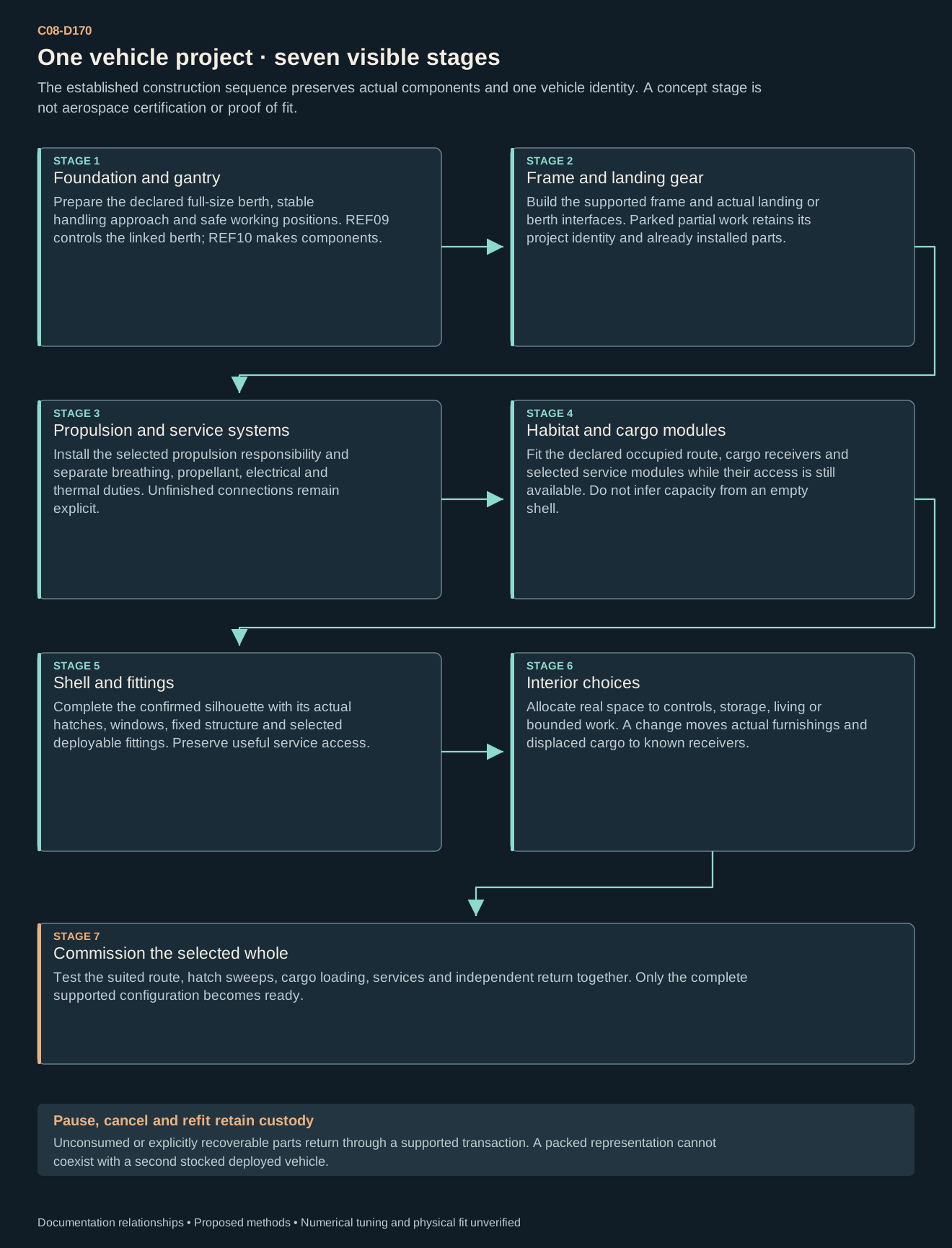
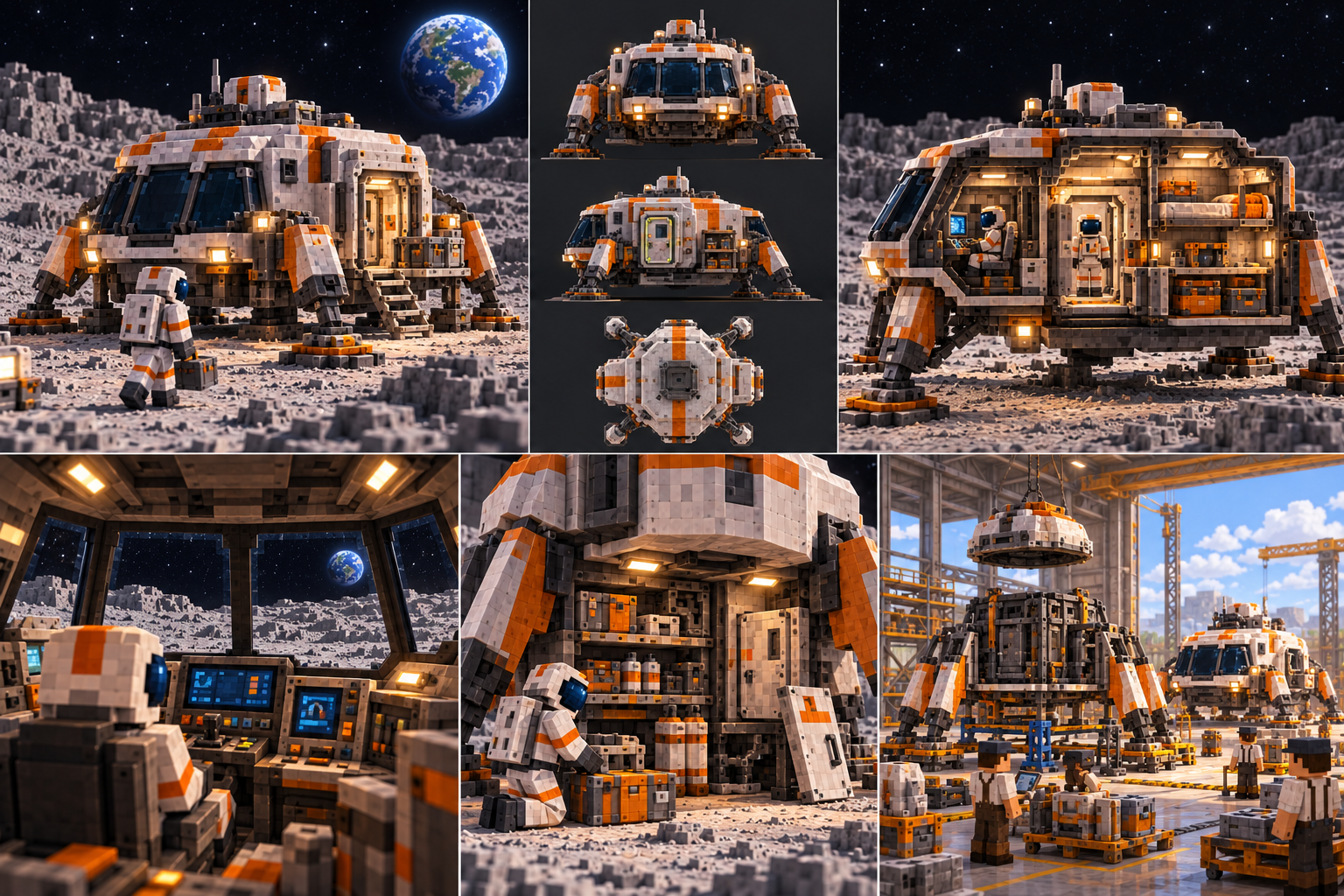
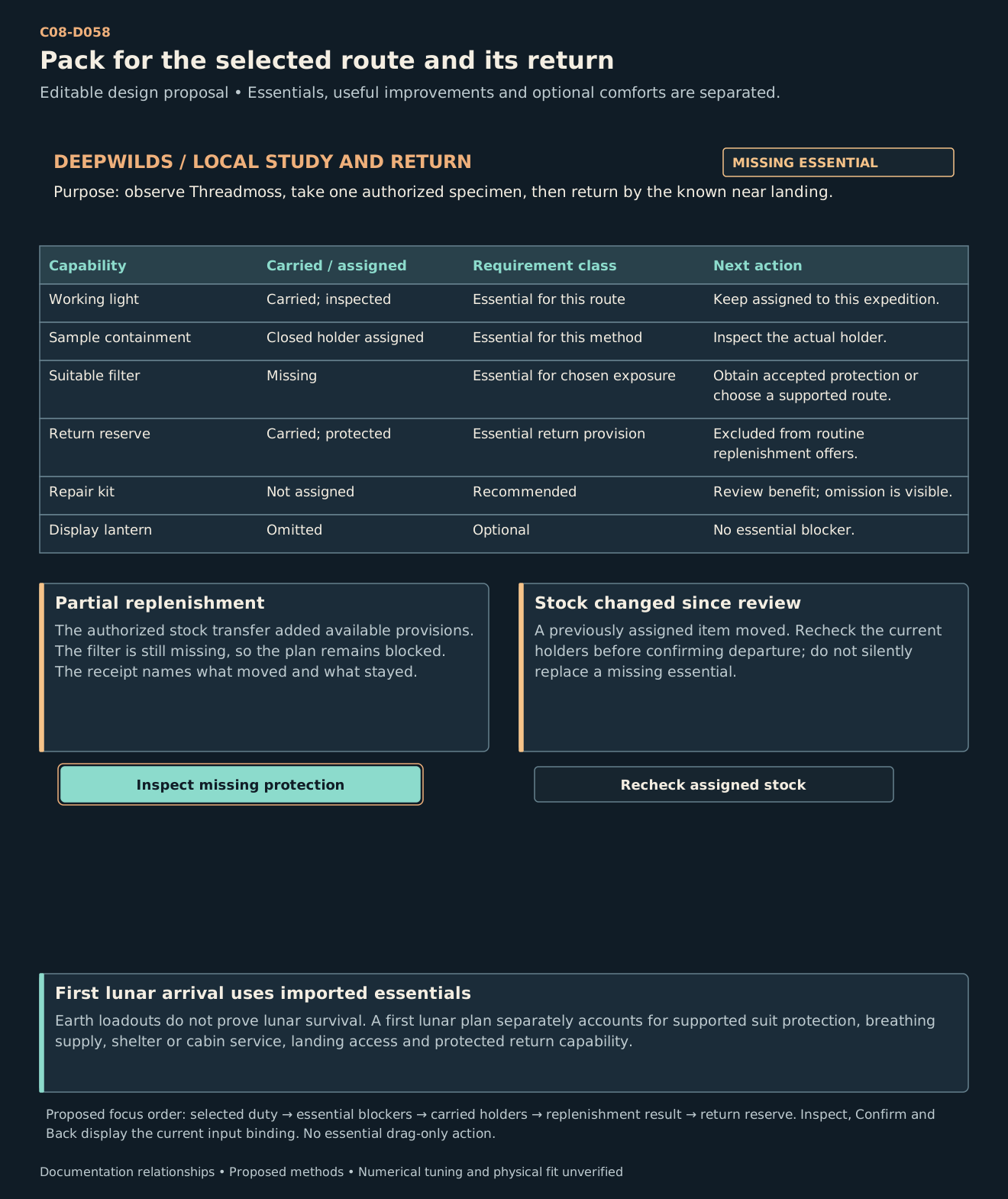
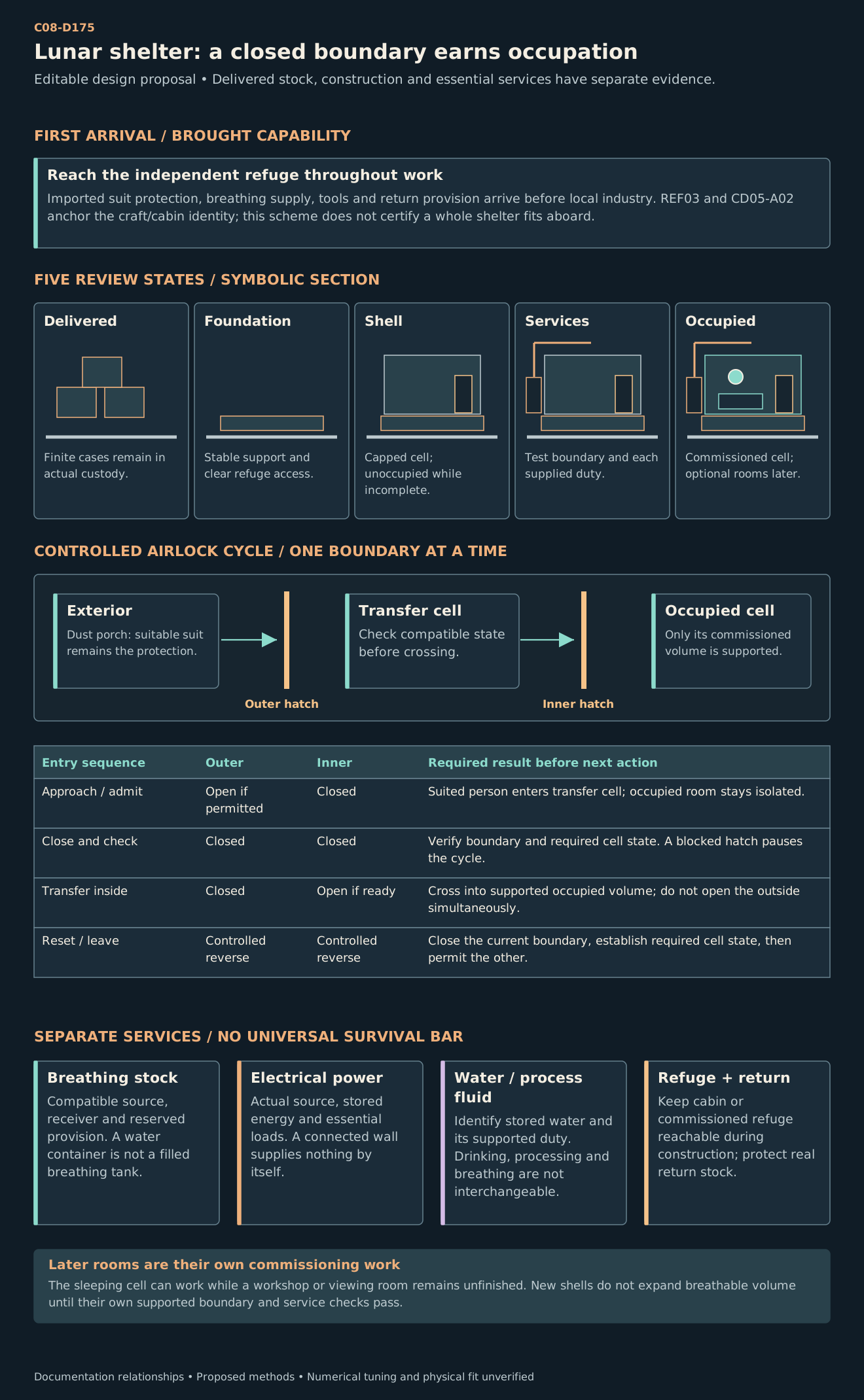
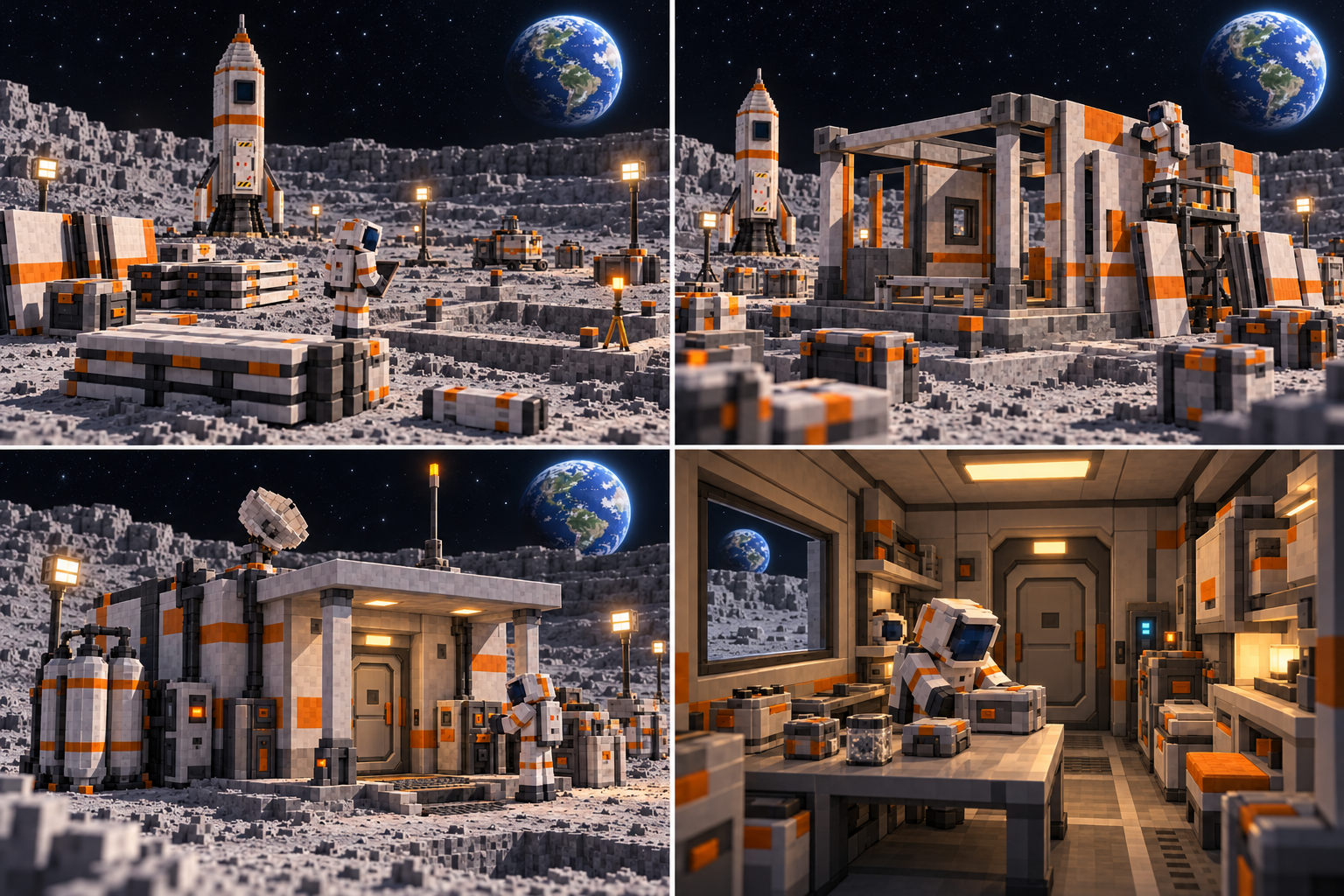
The Moon programme begins on Earth. The player prepares recognized parts, one serviceable Explorer, personal equipment, refuge hardware, propellant and breathing stock through already reachable capabilities. Protected return supplies are allocated before leaving. No lunar resource, deep-Core specimen, nuclear installation or rare creature drop is allowed to become a circular prerequisite for the first safe arrival.
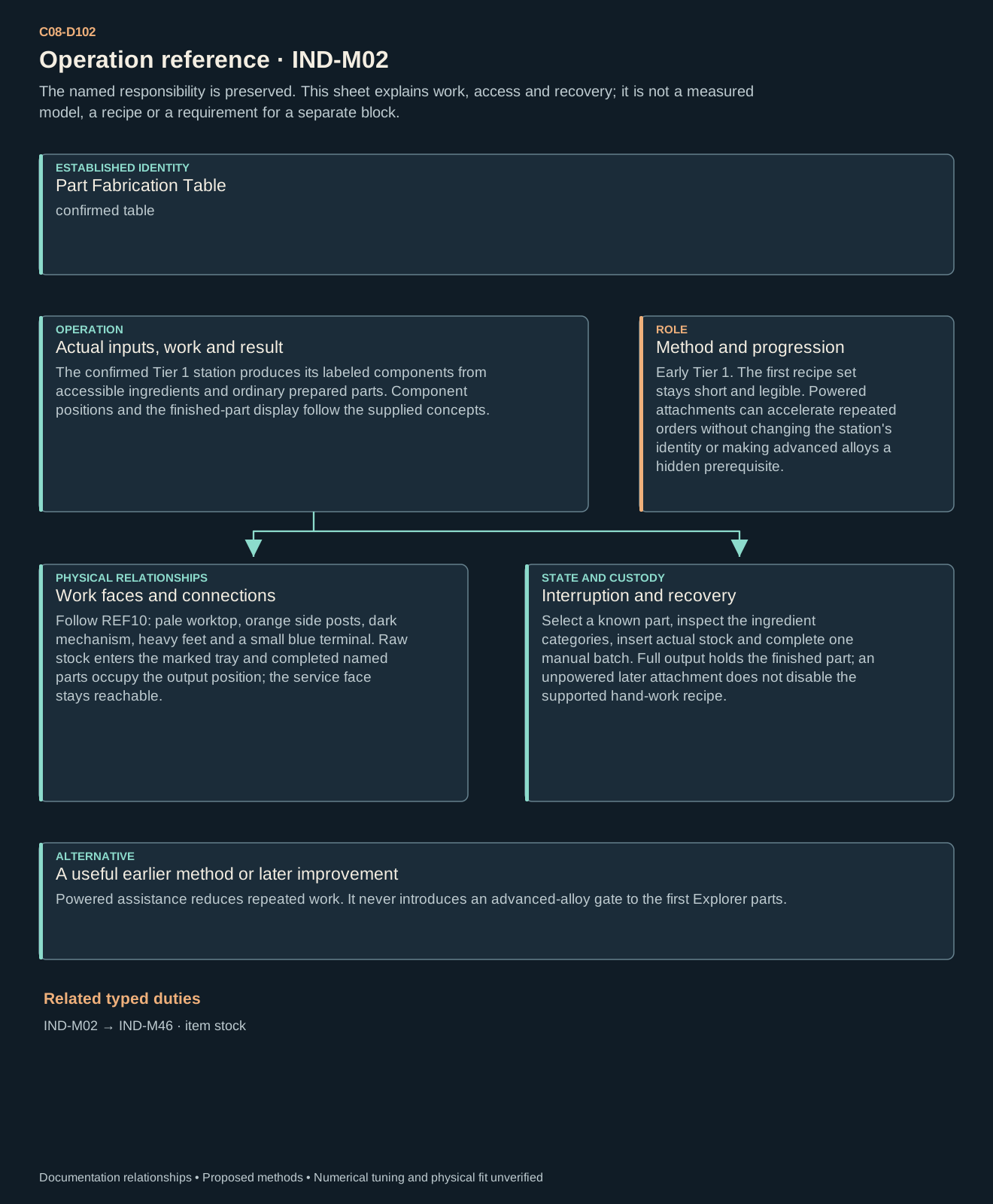
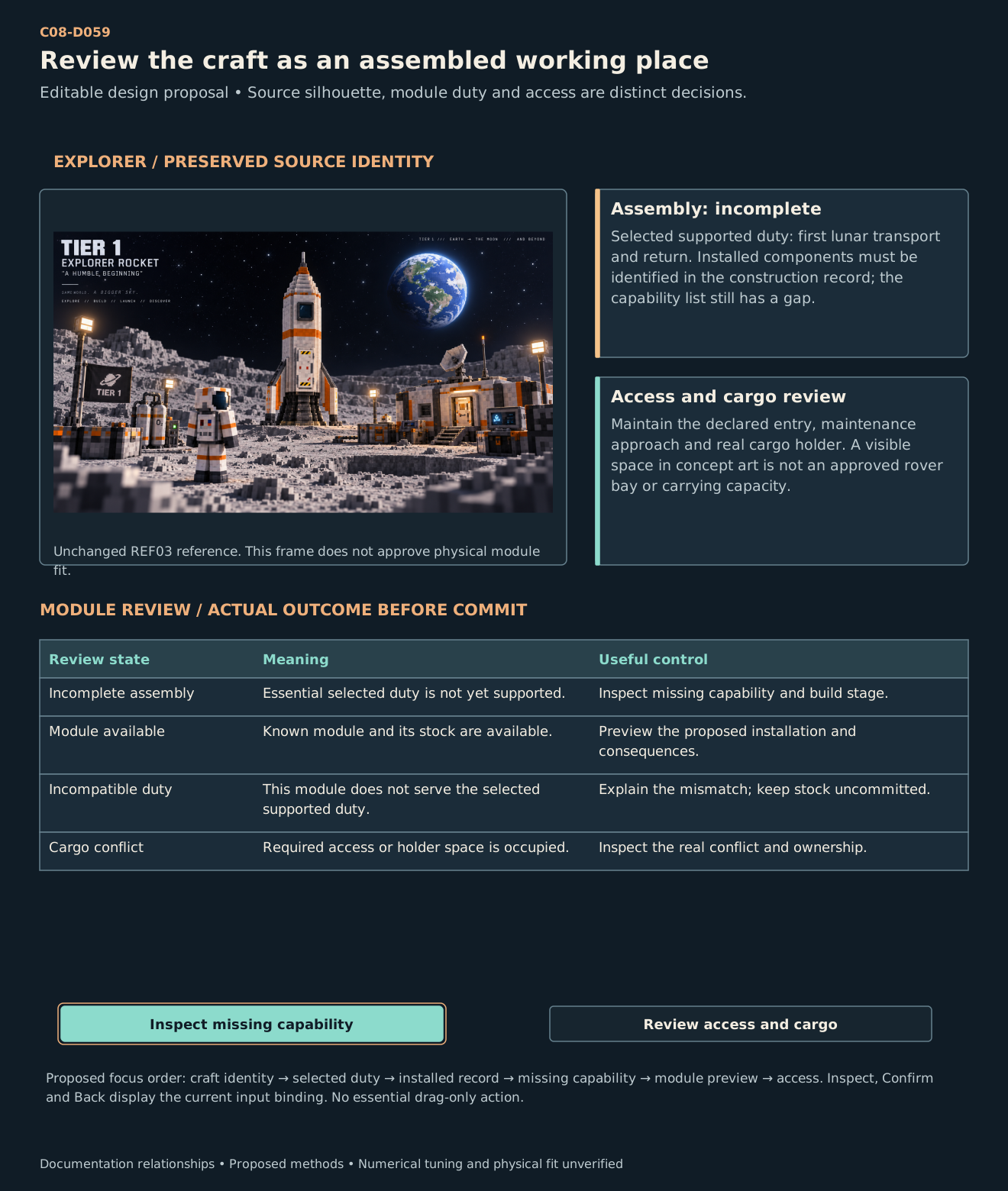
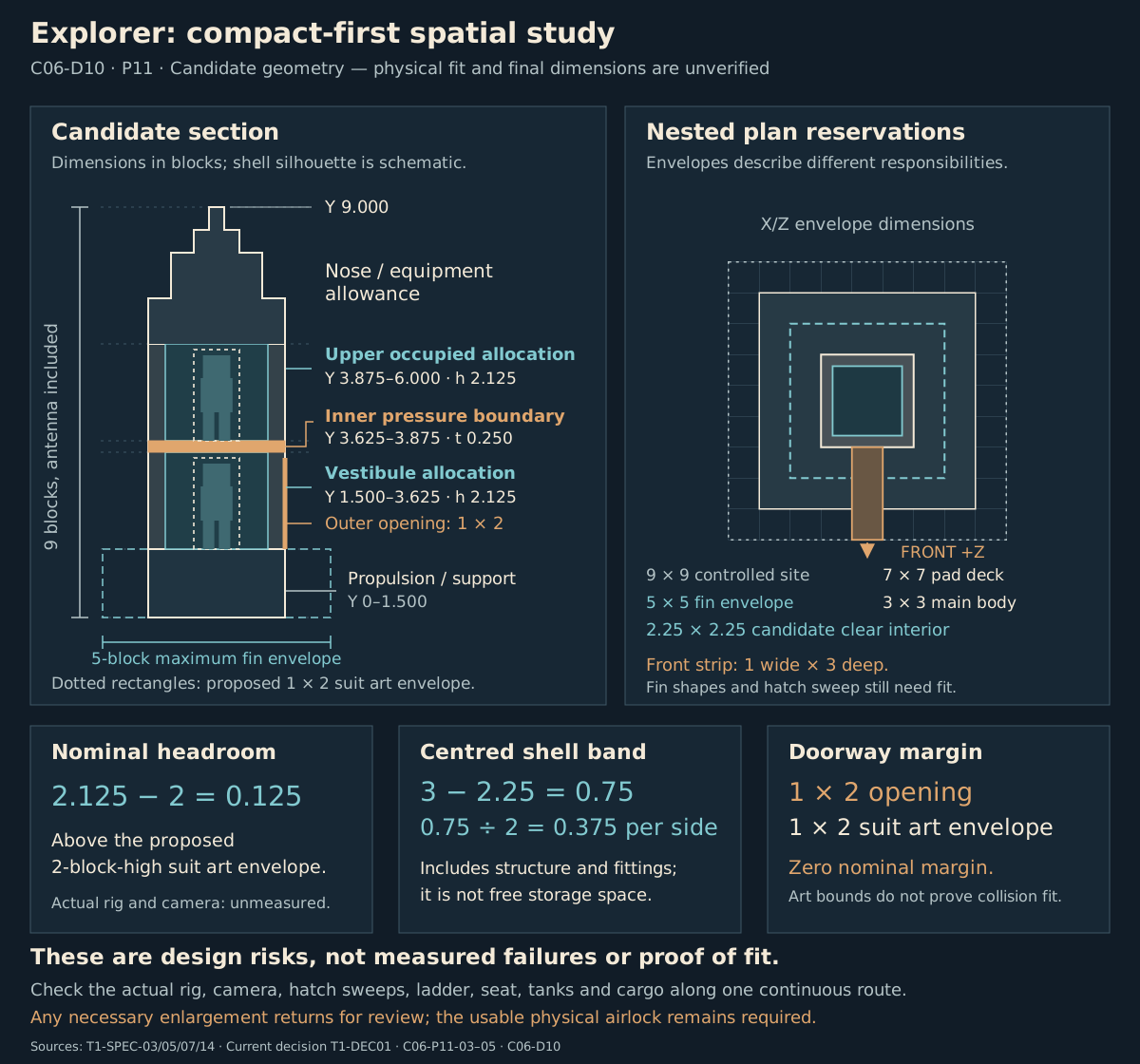
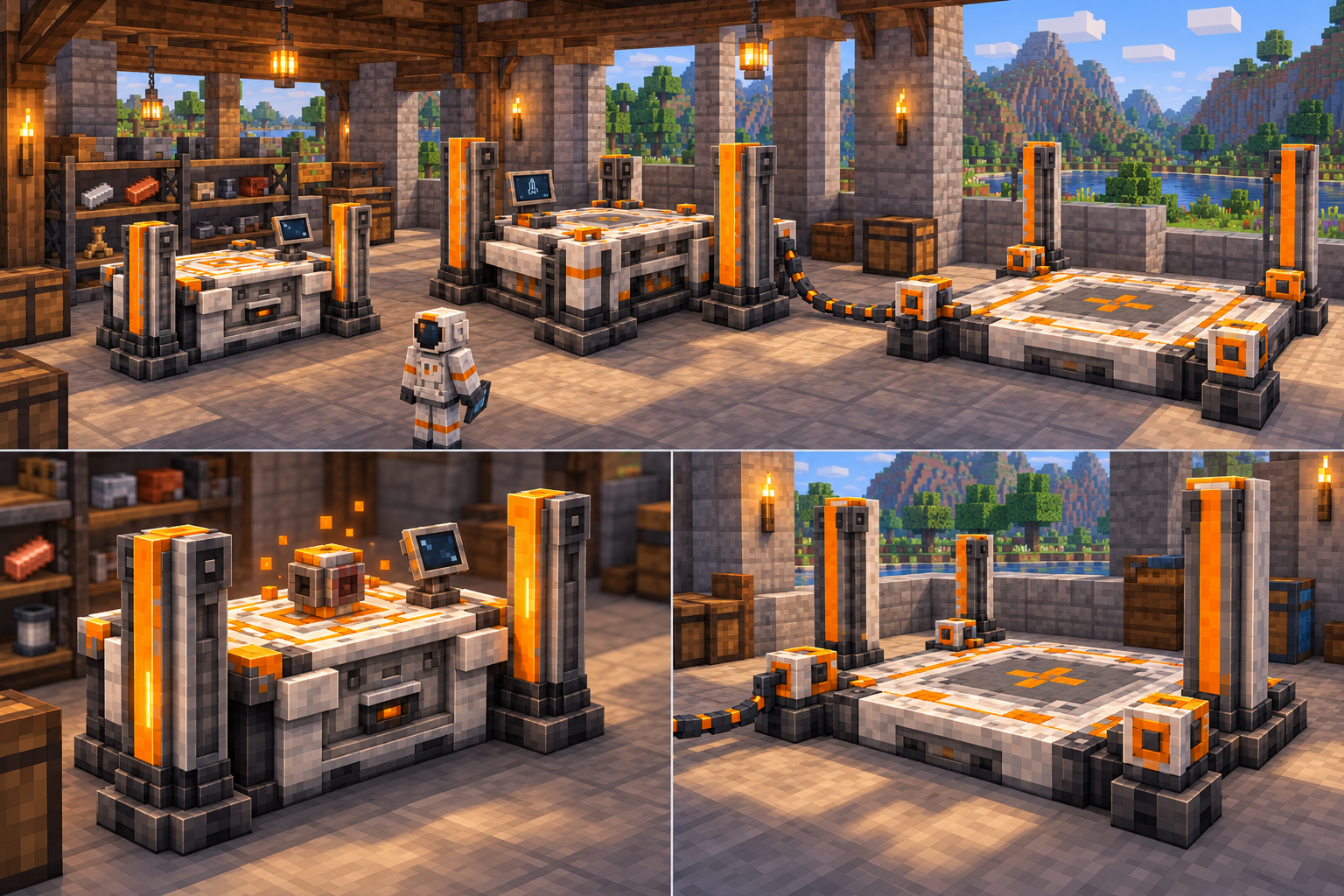
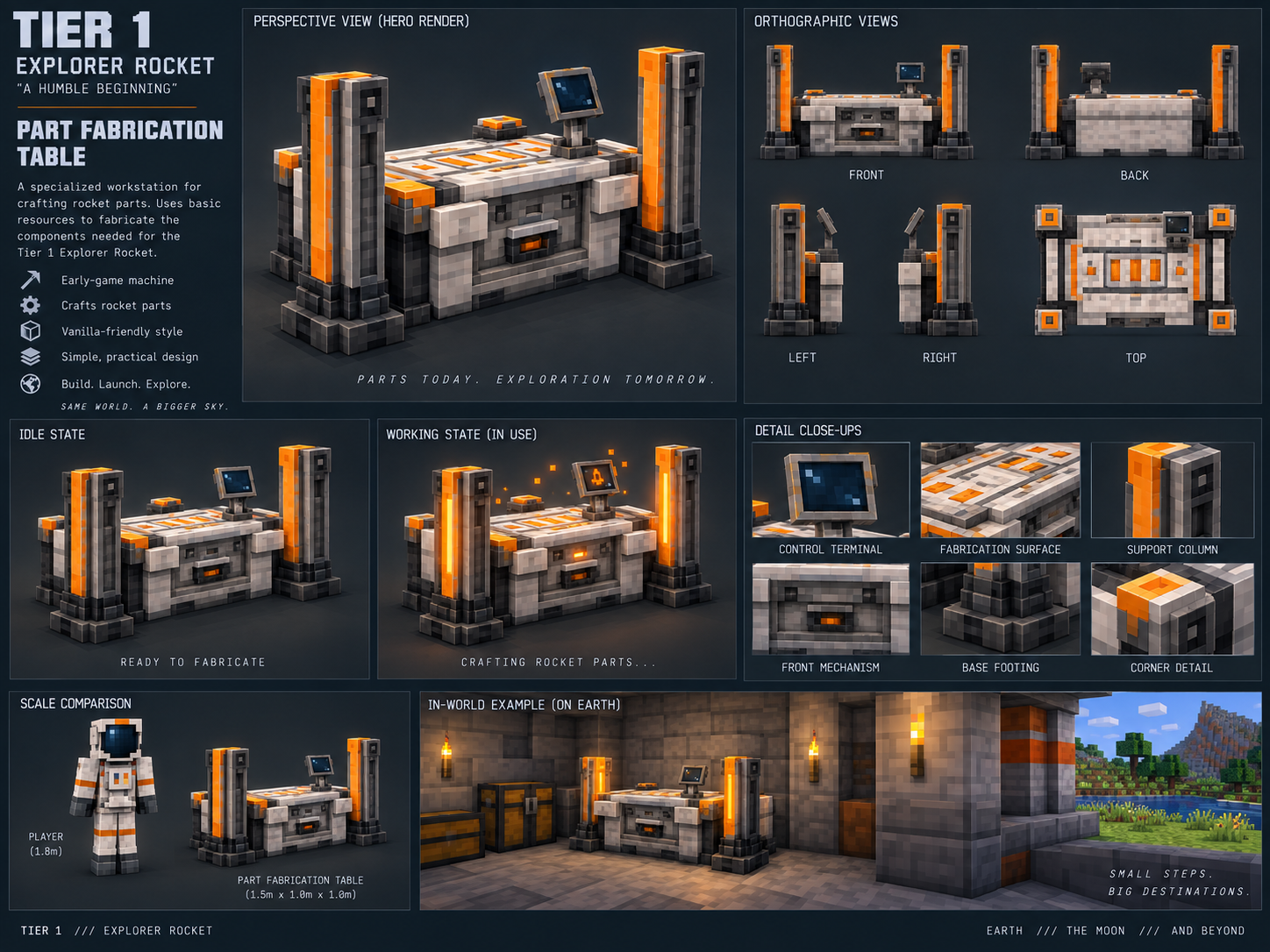
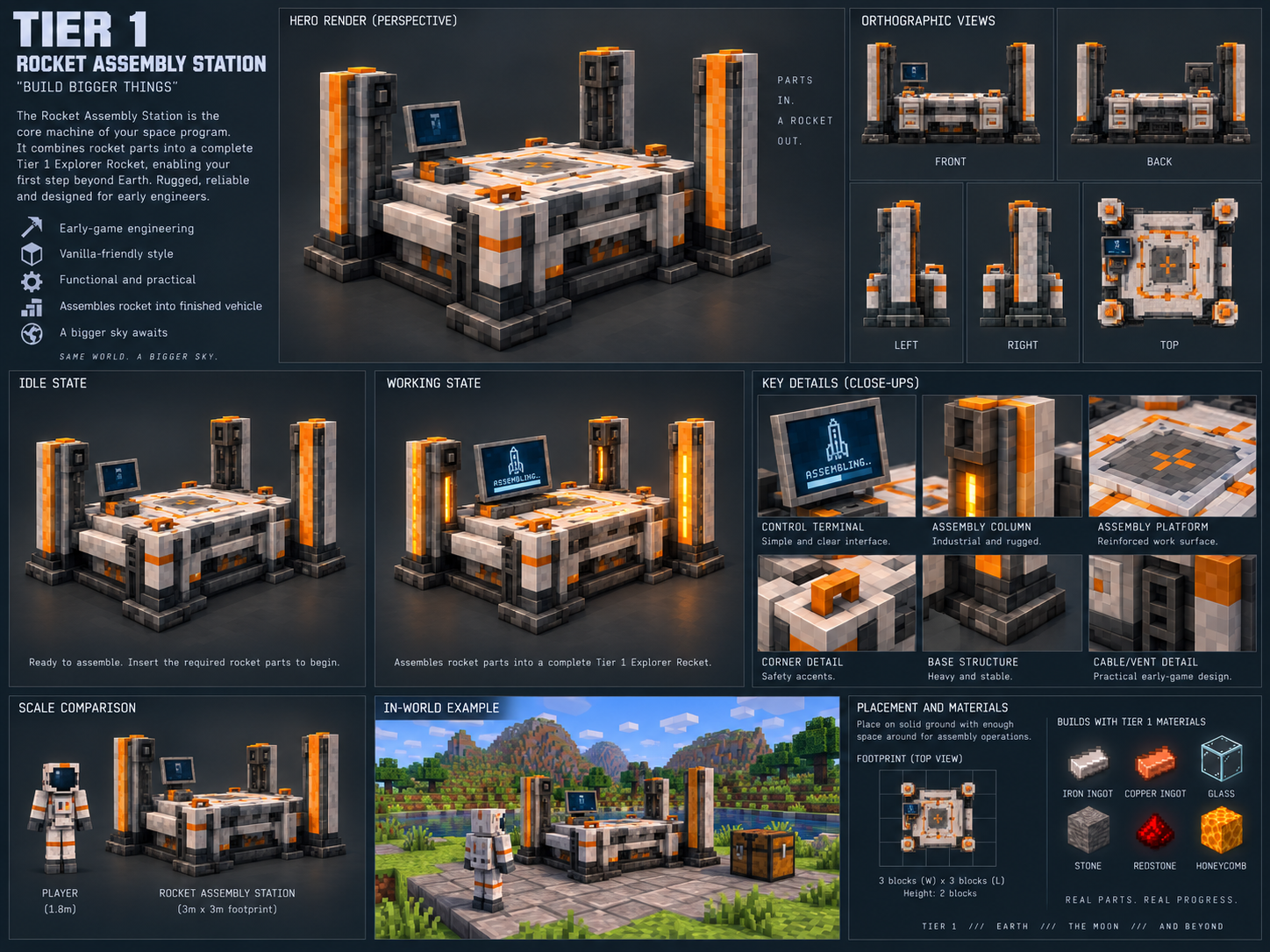
REF10 remains the fabrication reference and REF09 the assembly reference, with the separate full vehicle berth accounted for. The compact-first Explorer scale is a candidate envelope, not a proven cabin. The future fit study must include the actual player and suit, the camera, entry, service access, cargo and animation states. Tier 1 artwork fixes identity and visual direction while those questions remain open.
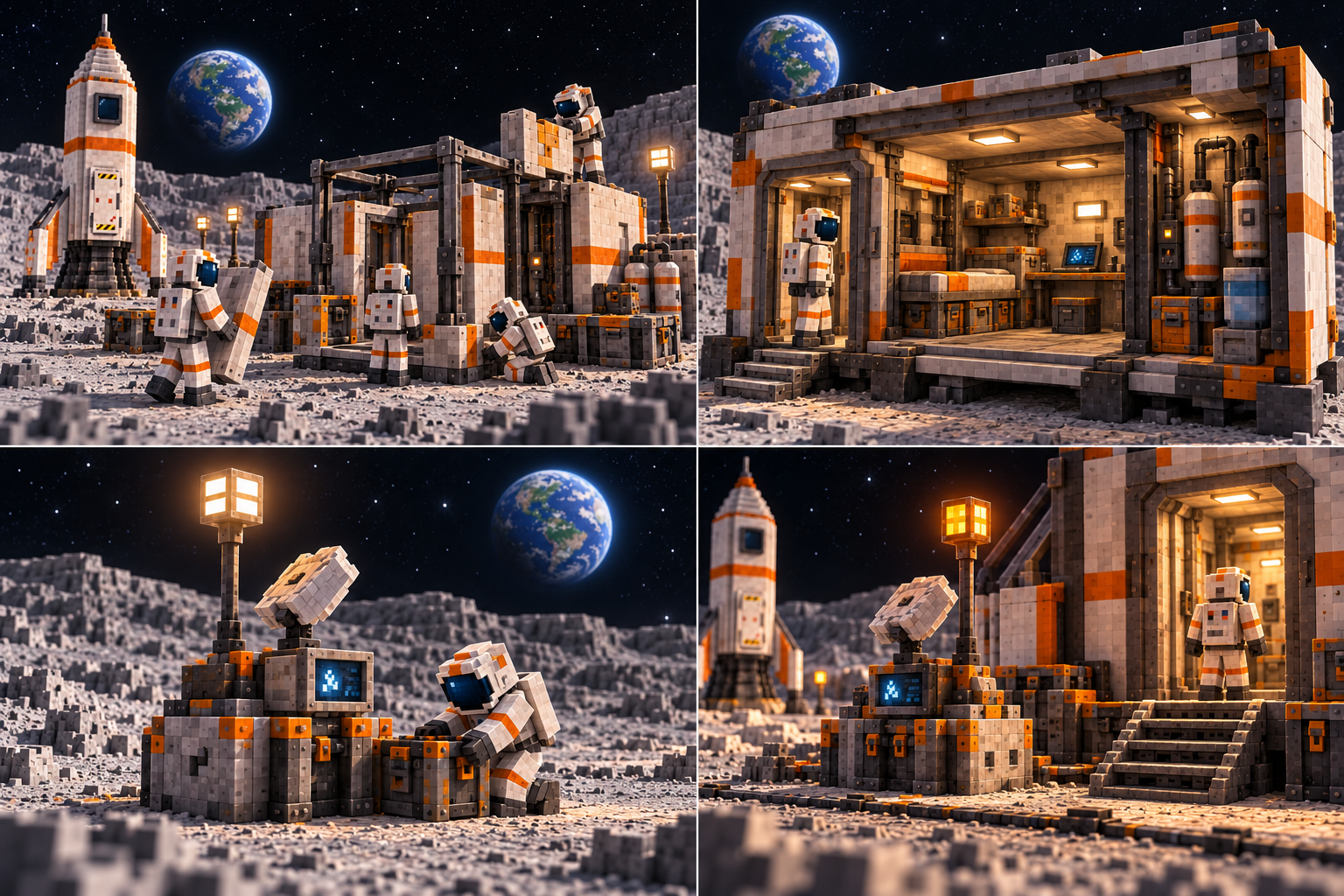
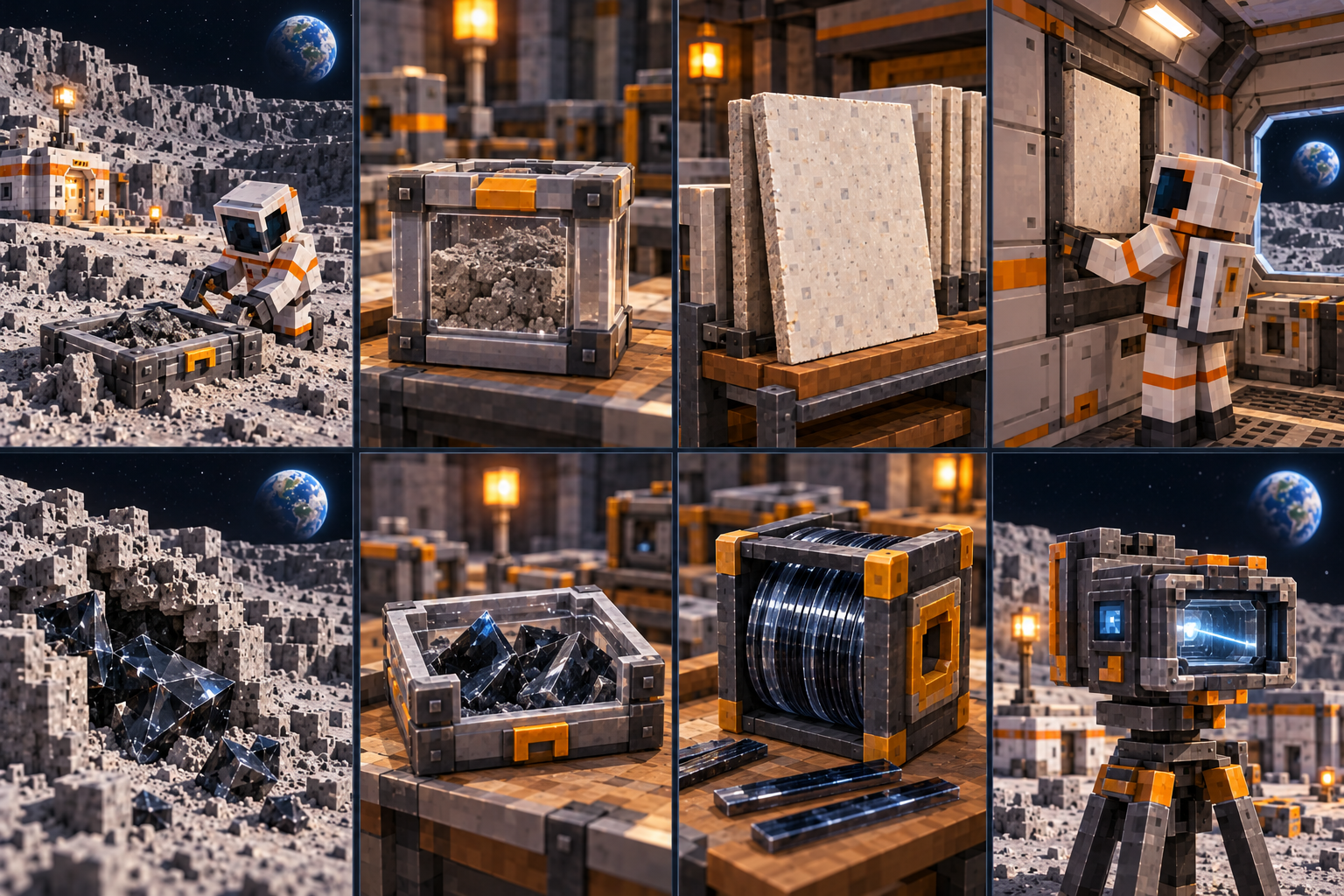
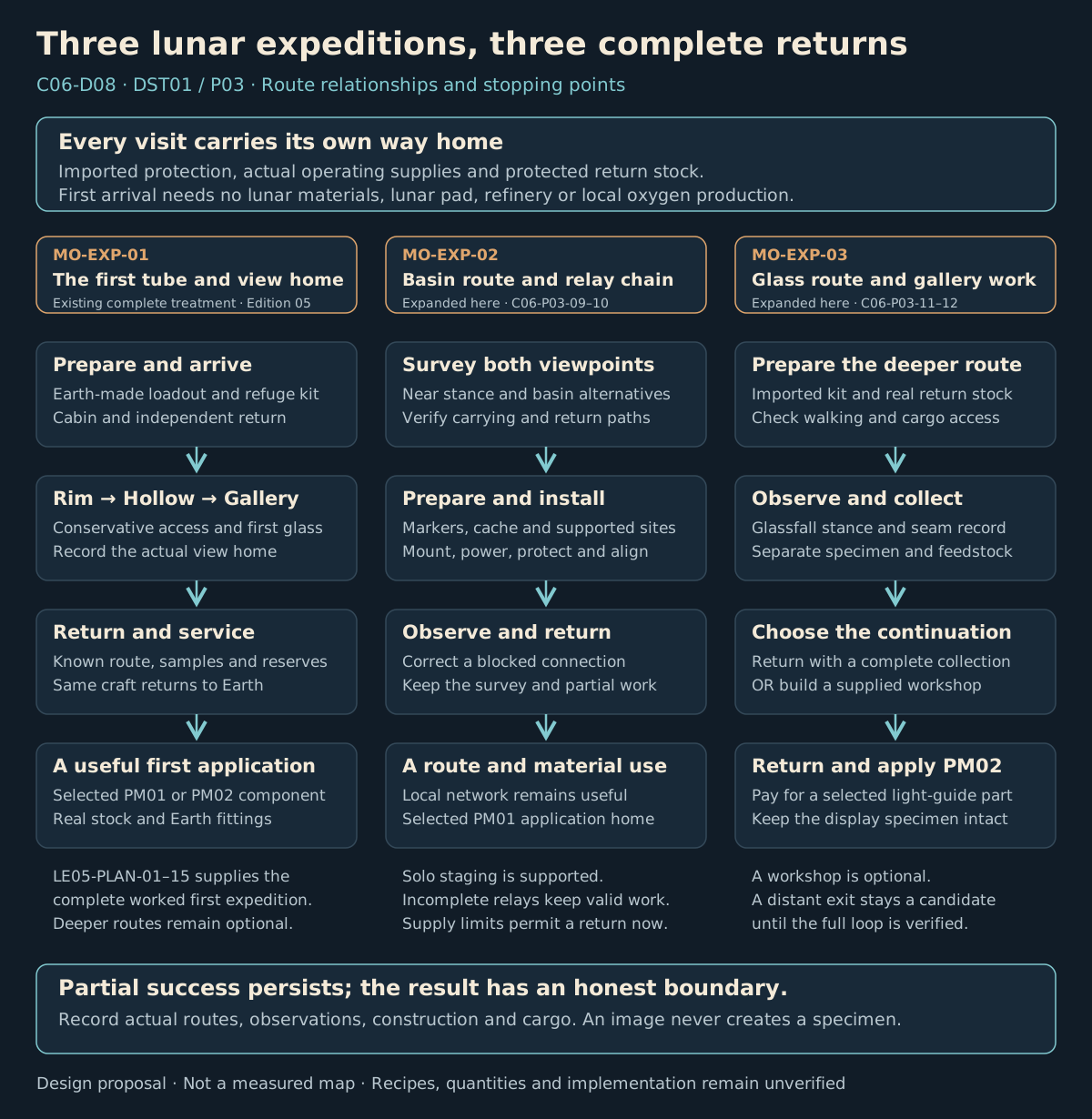
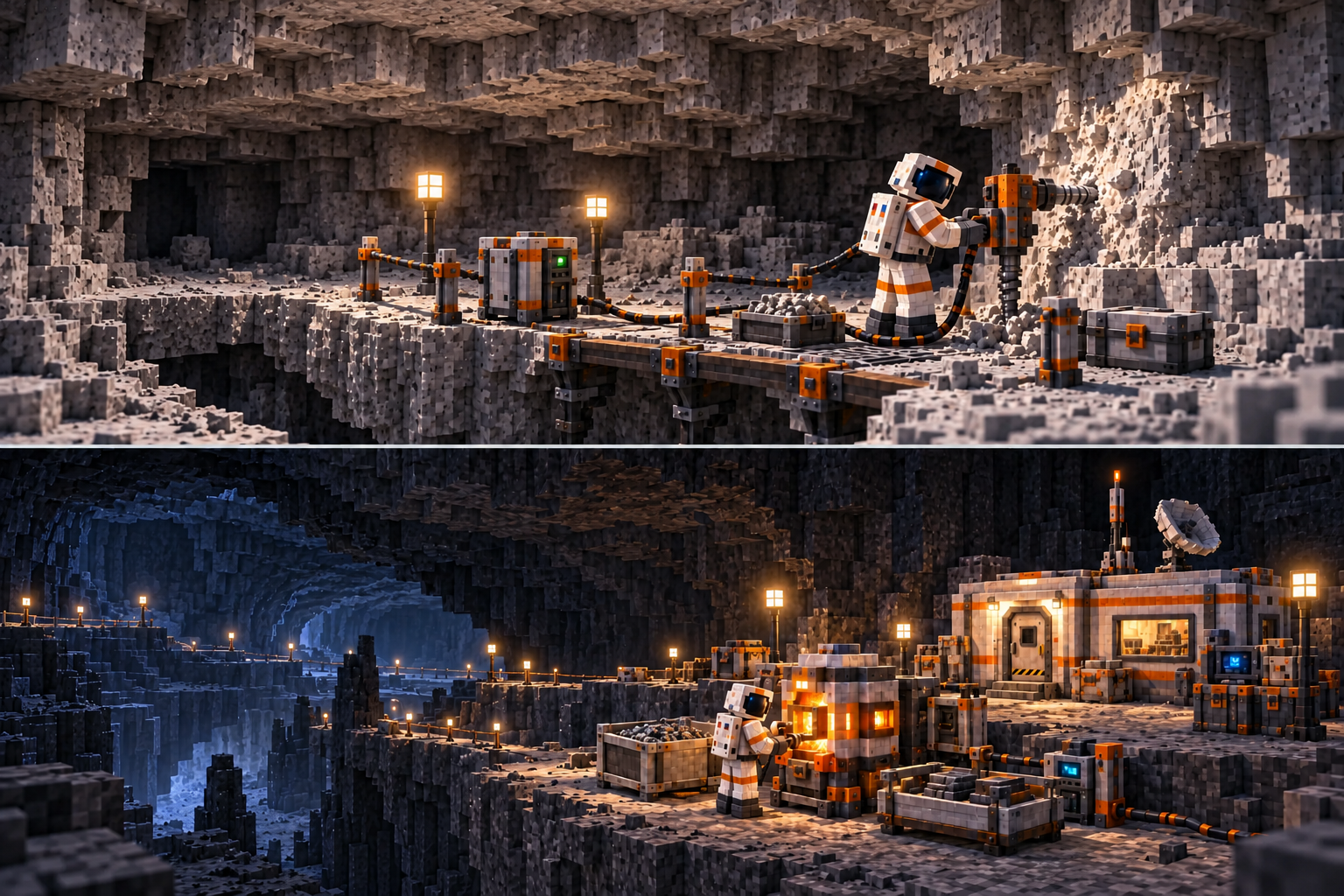
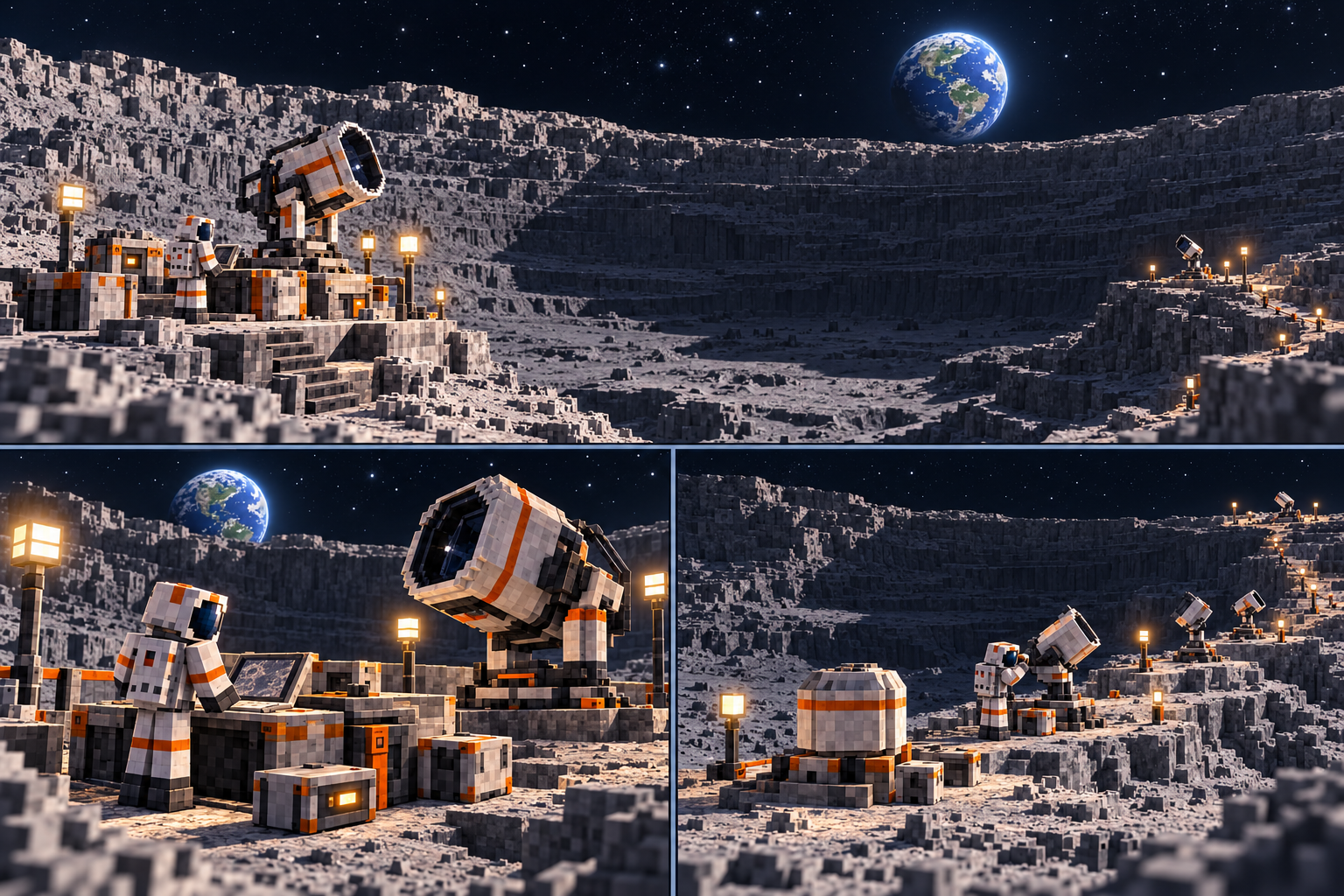
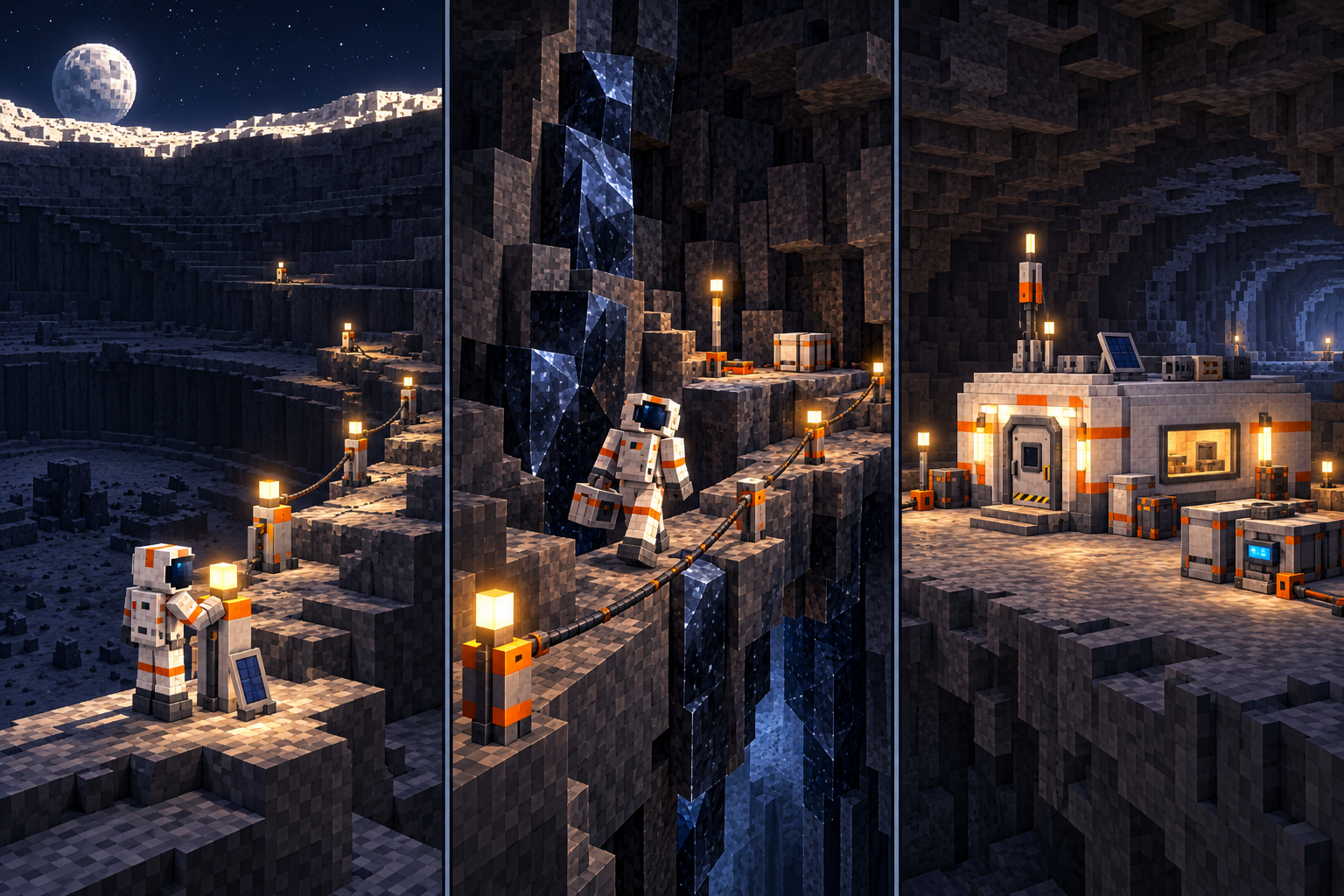
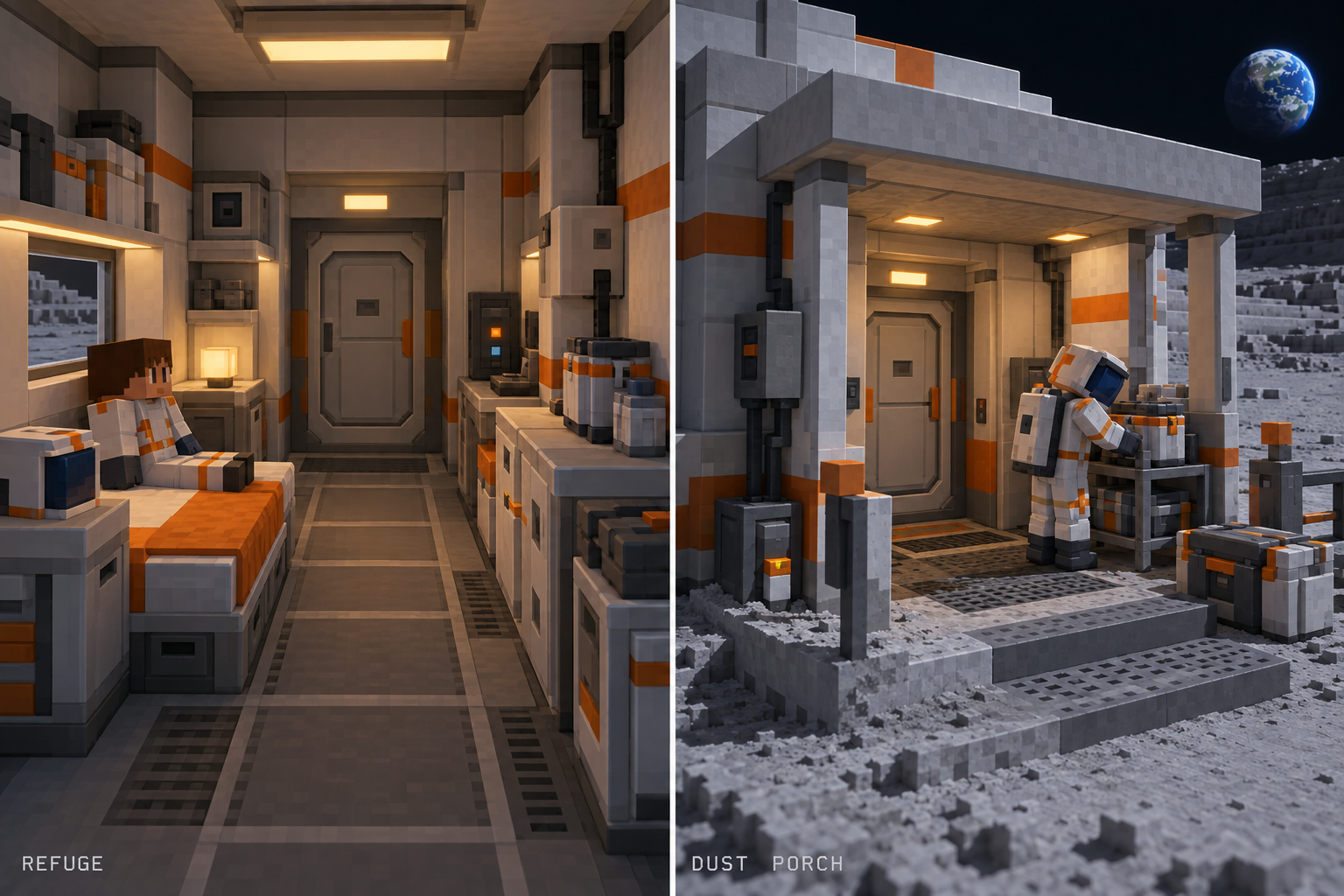
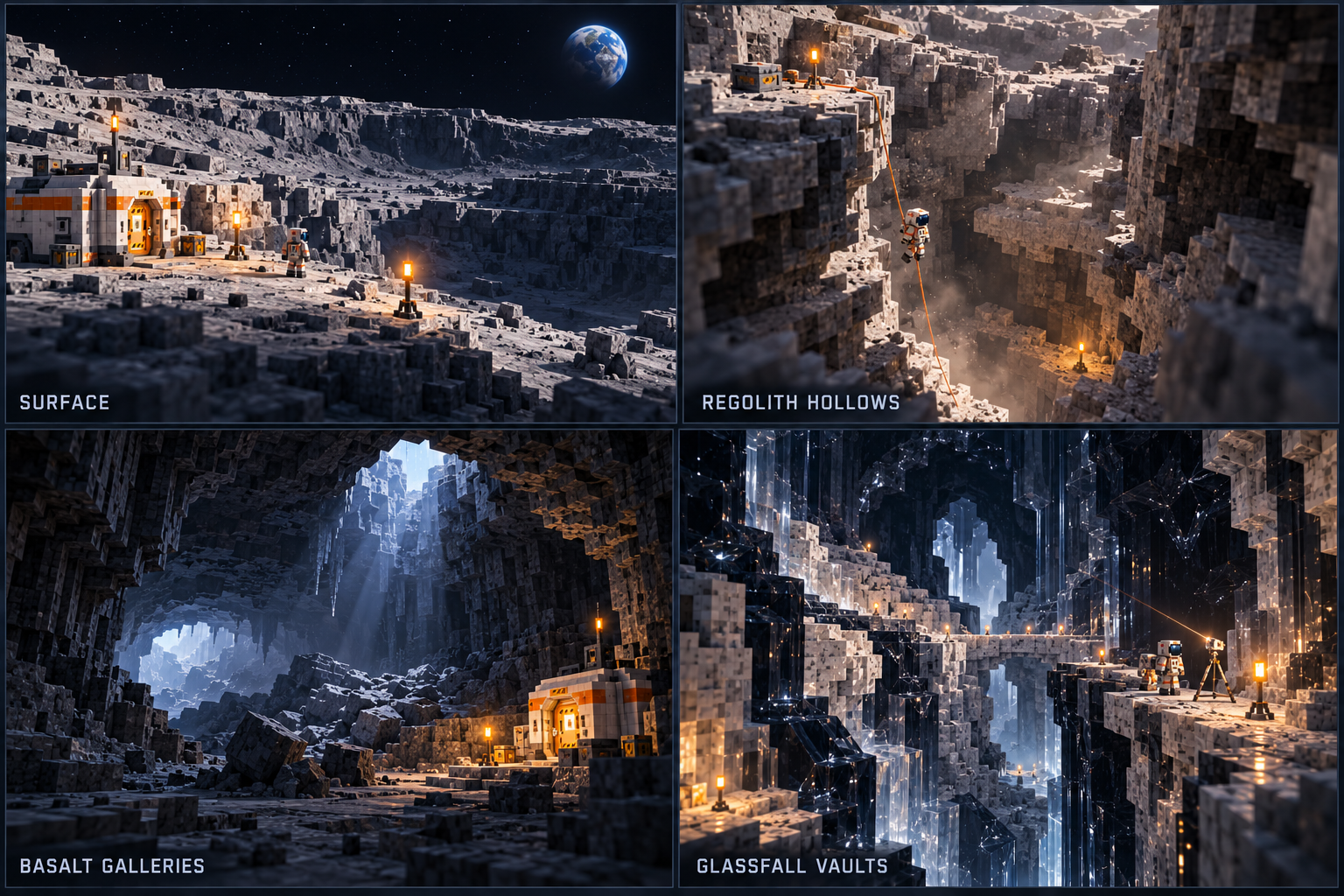
On the Moon, the first refuge is commissioned from brought supplies. A cave gives sheltering geometry, not breathable atmosphere. The player establishes a local route, reaches a meaningful tube or observation position, returns with a supported sample and brings the same expedition home. The lunar programme then makes one stated material application useful. The first successful expedition does not require a complete lunar industrial colony.
The strongest homecoming shows the same objects in new roles: a returned container on the lab bench, the Explorer being serviced at its berth, an observation available in the journal, and a prepared component improving an everyday duty. A new unlock list alone cannot communicate that continuity. The full WP05 and lunar ledgers remain the detailed authority for the sequence and its custody rules.
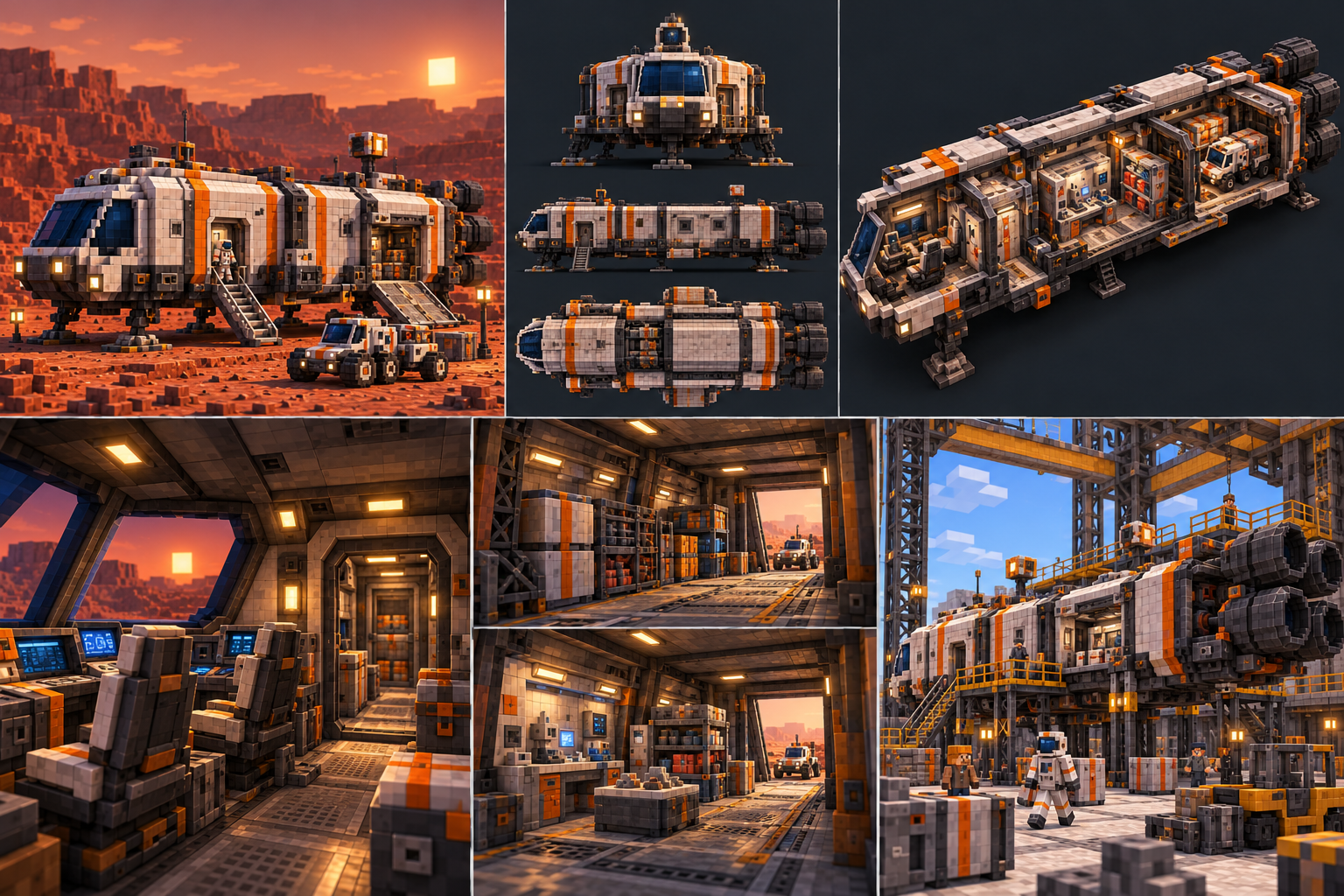
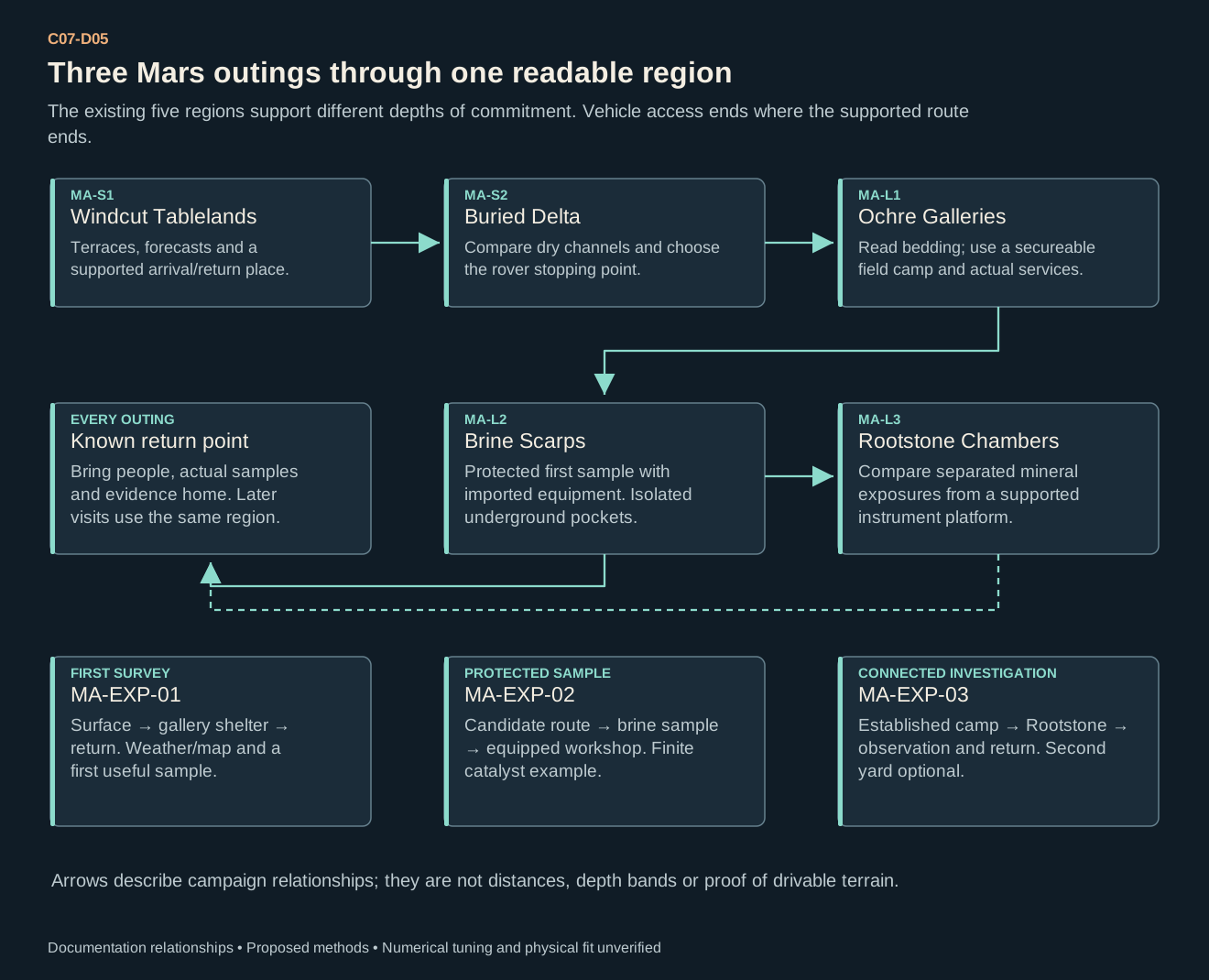
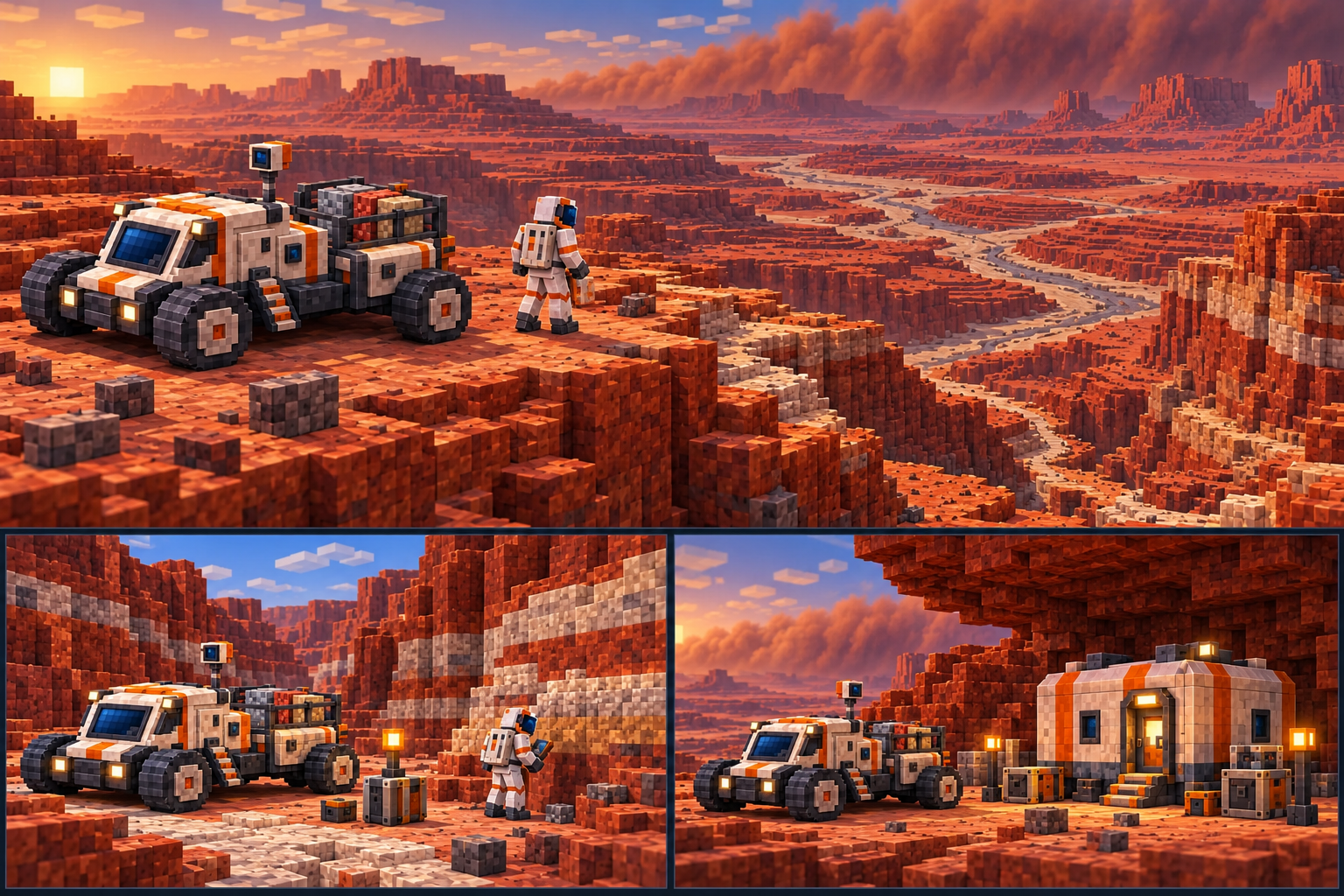
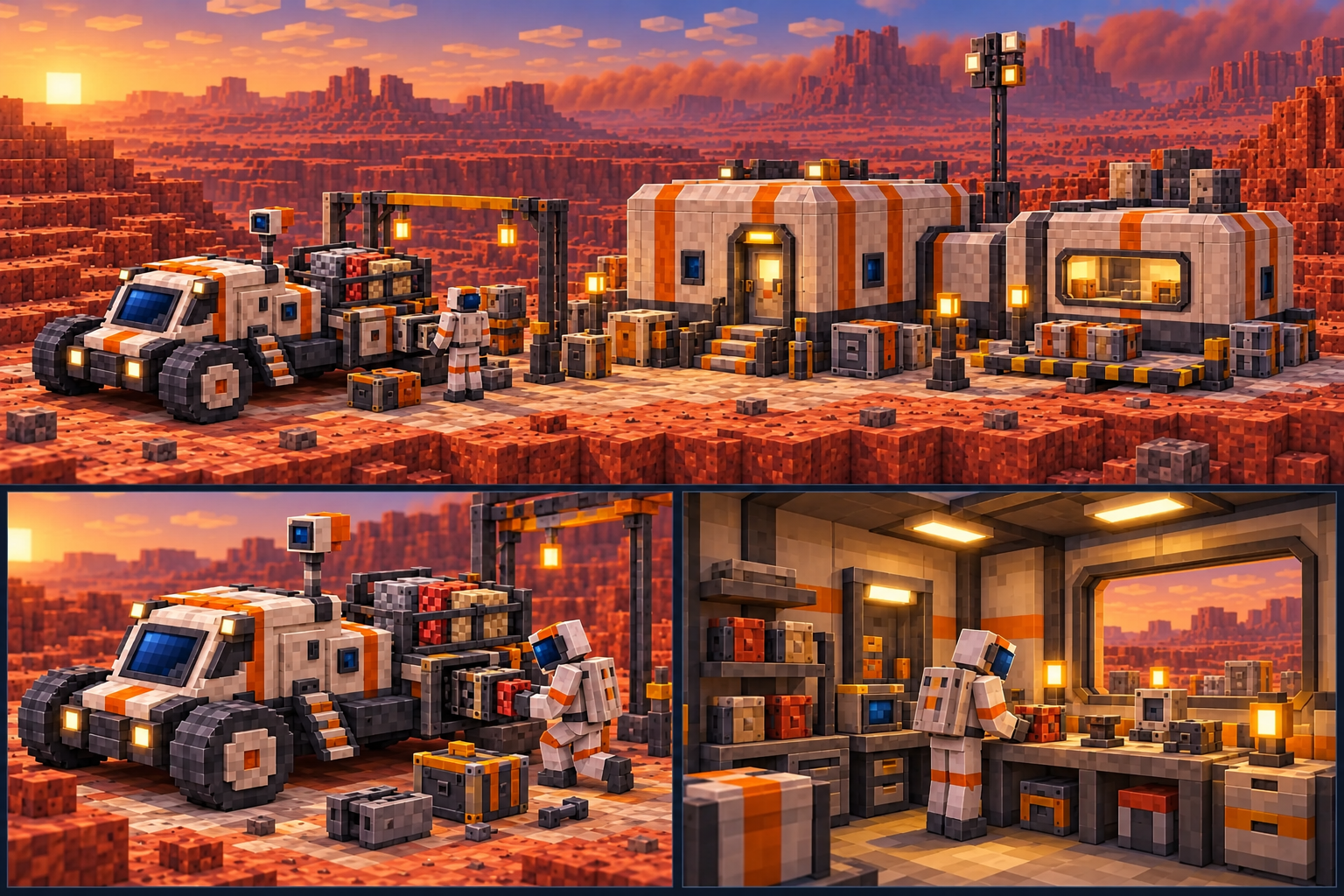
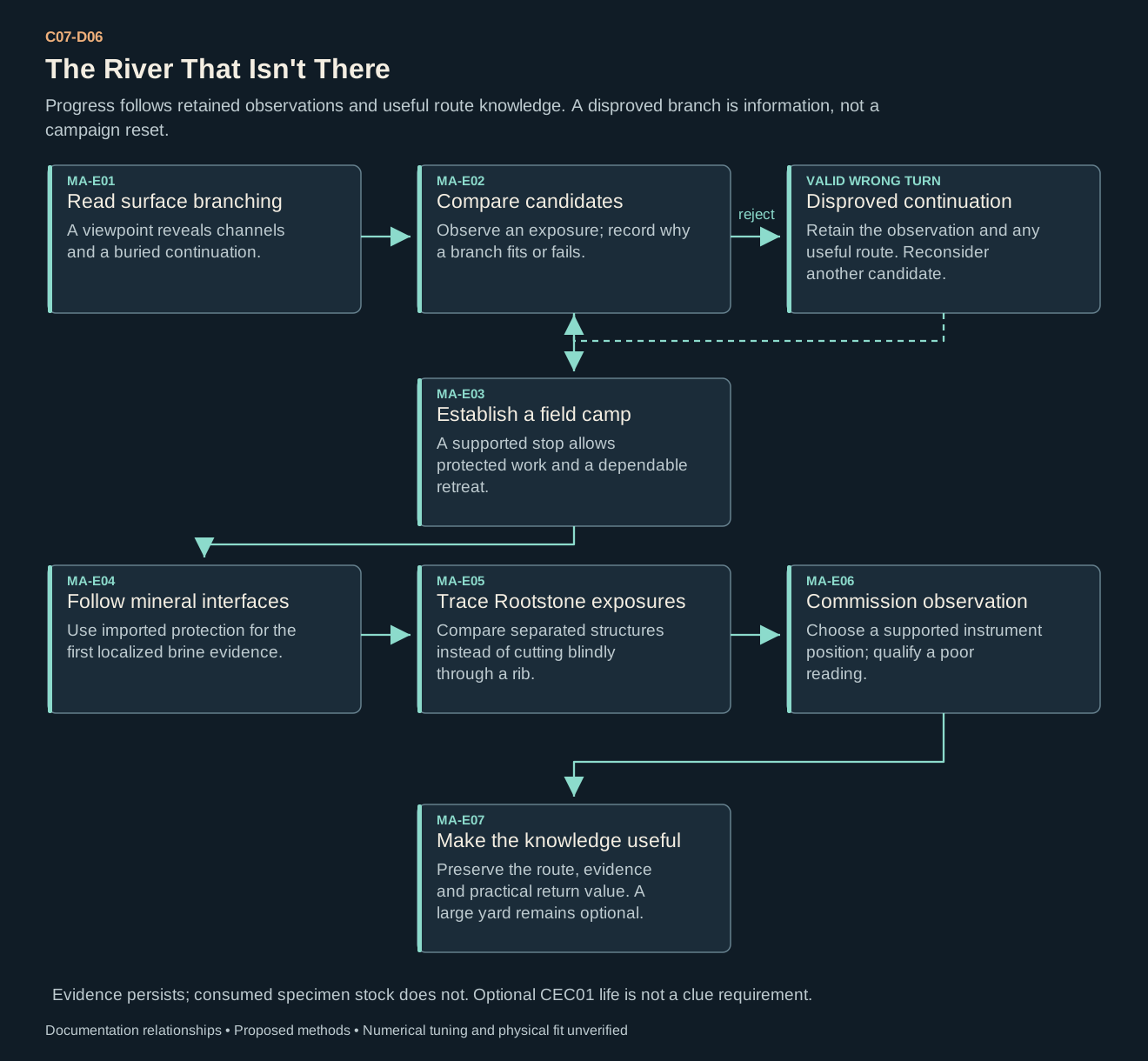
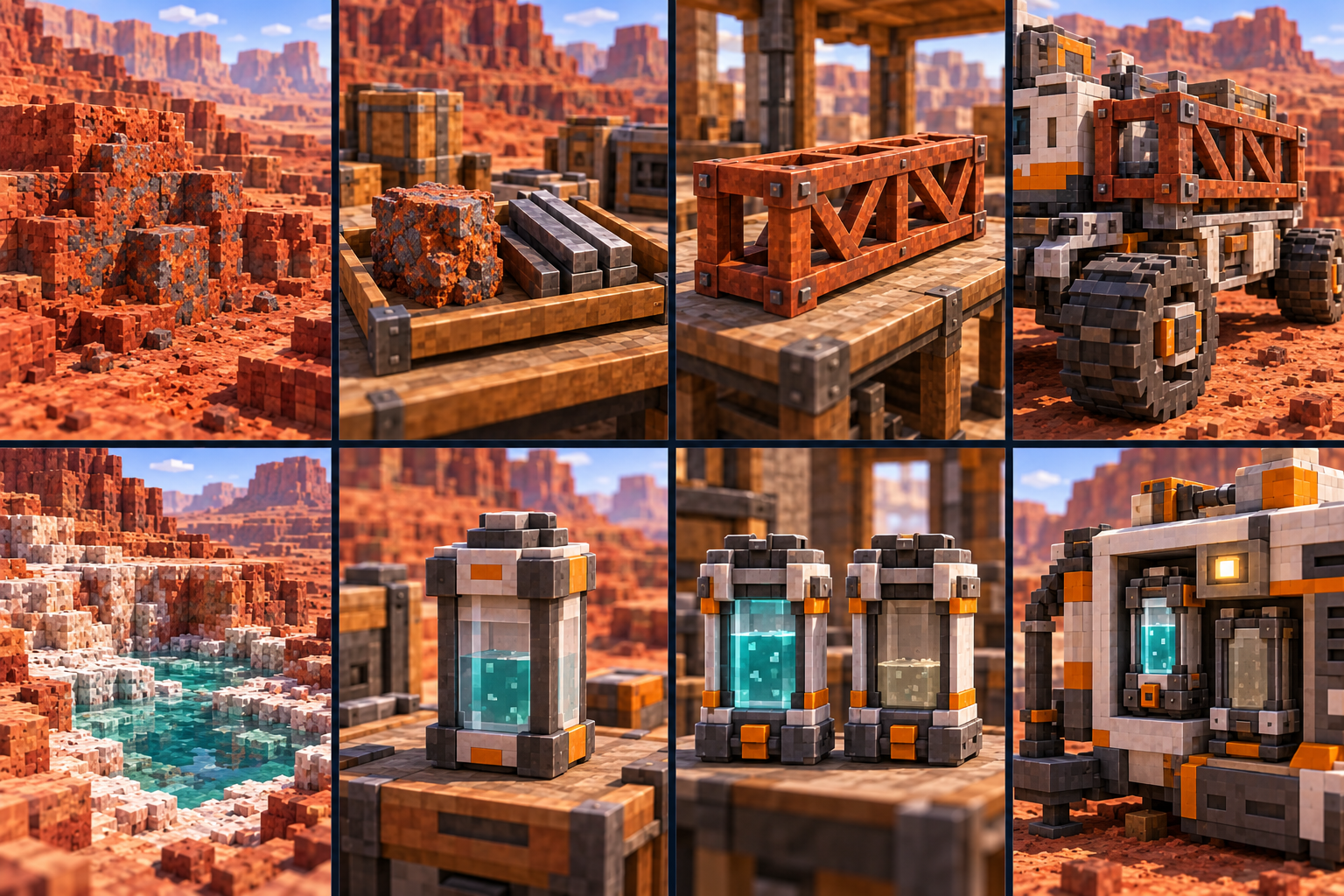
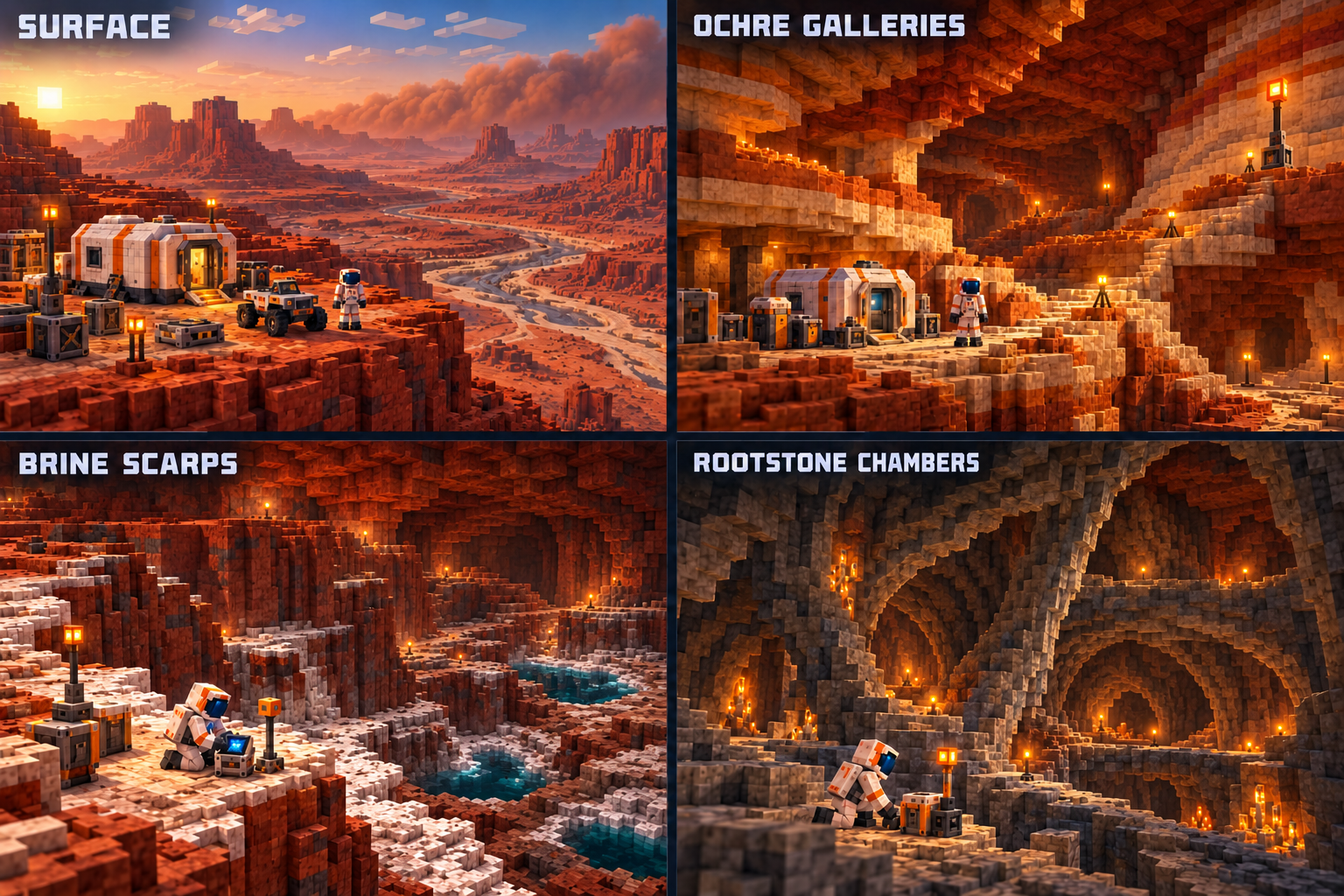
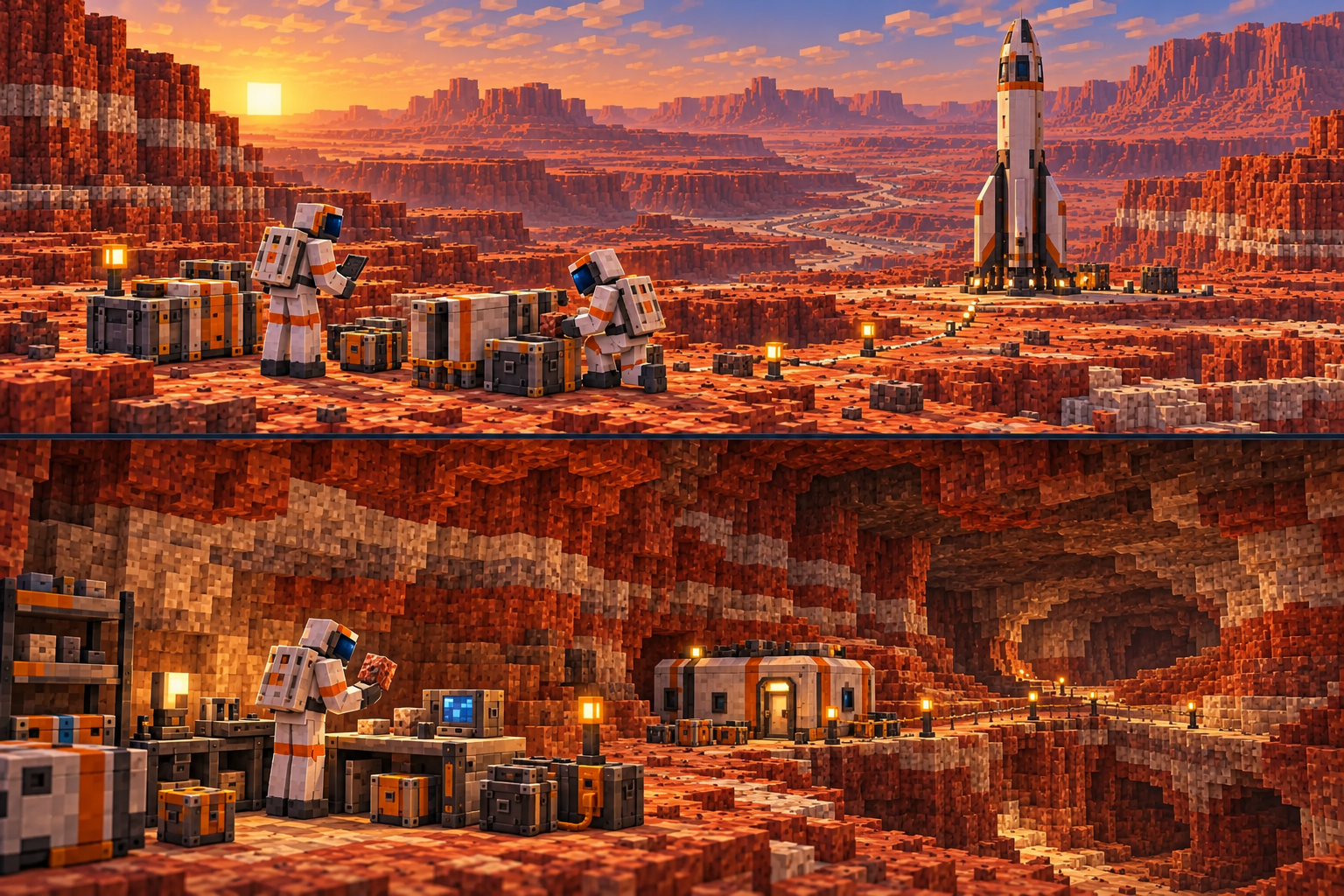
Mars is a sustained geological campaign built around Windcut Tablelands, the Buried Delta, Ochre Galleries, Brine Scarps and Rootstone Chambers. Its distinguishing experiences are reading an apparent river that is no longer present, carrying a field operation beyond the immediate lander, maintaining a rover and building a useful chain of supported places. Rootstone is a geological structure; its name does not imply ruins or living roots.
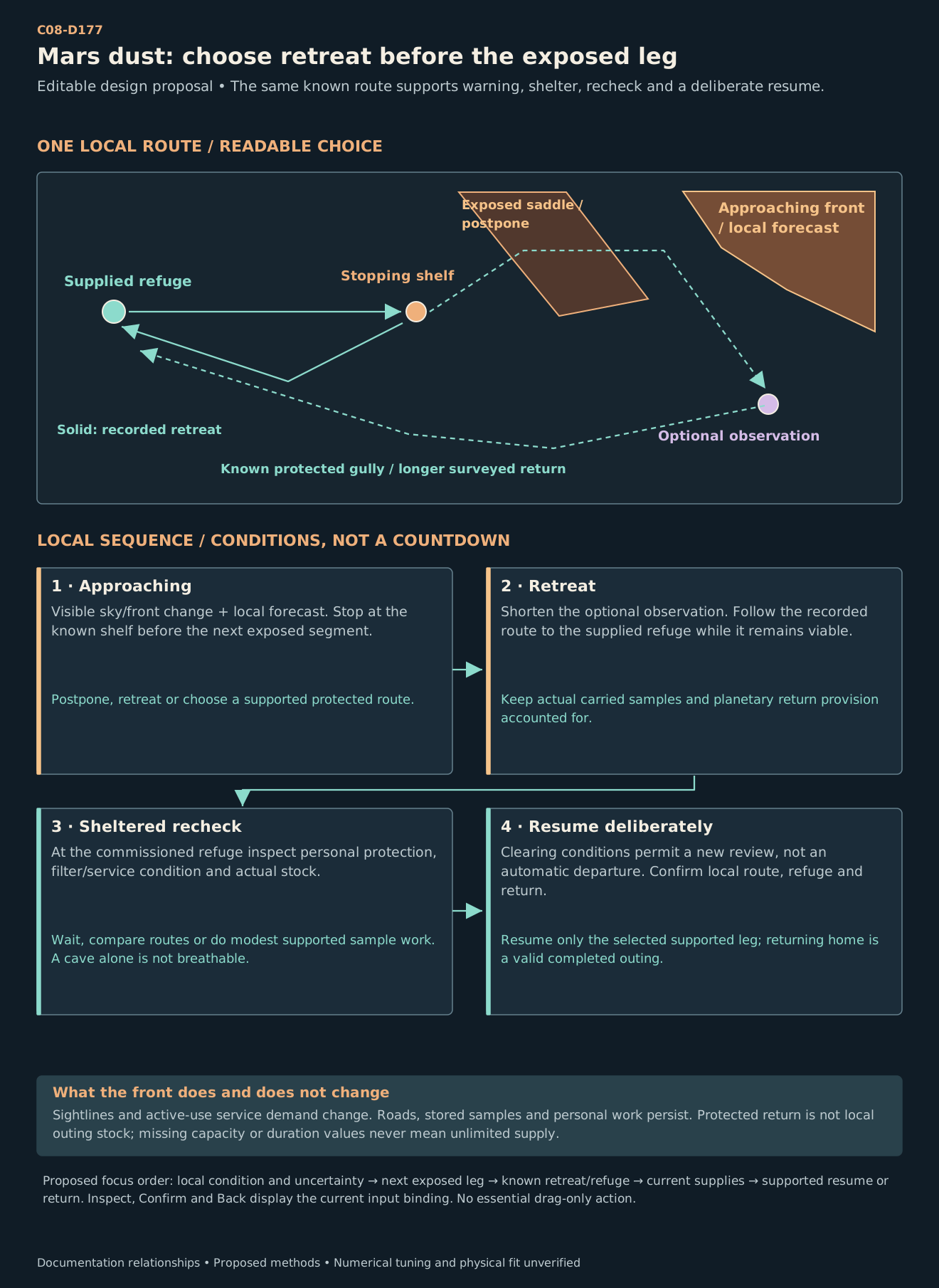
The first outing establishes weather and channel knowledge. The second follows a buried route to protected sample work. The third connects Rootstone observations and can justify a later yard. These journeys share landmarks and leave useful infrastructure. A rejected geological interpretation remains evidence. It should not reset the campaign or destroy the route that made the observation possible.
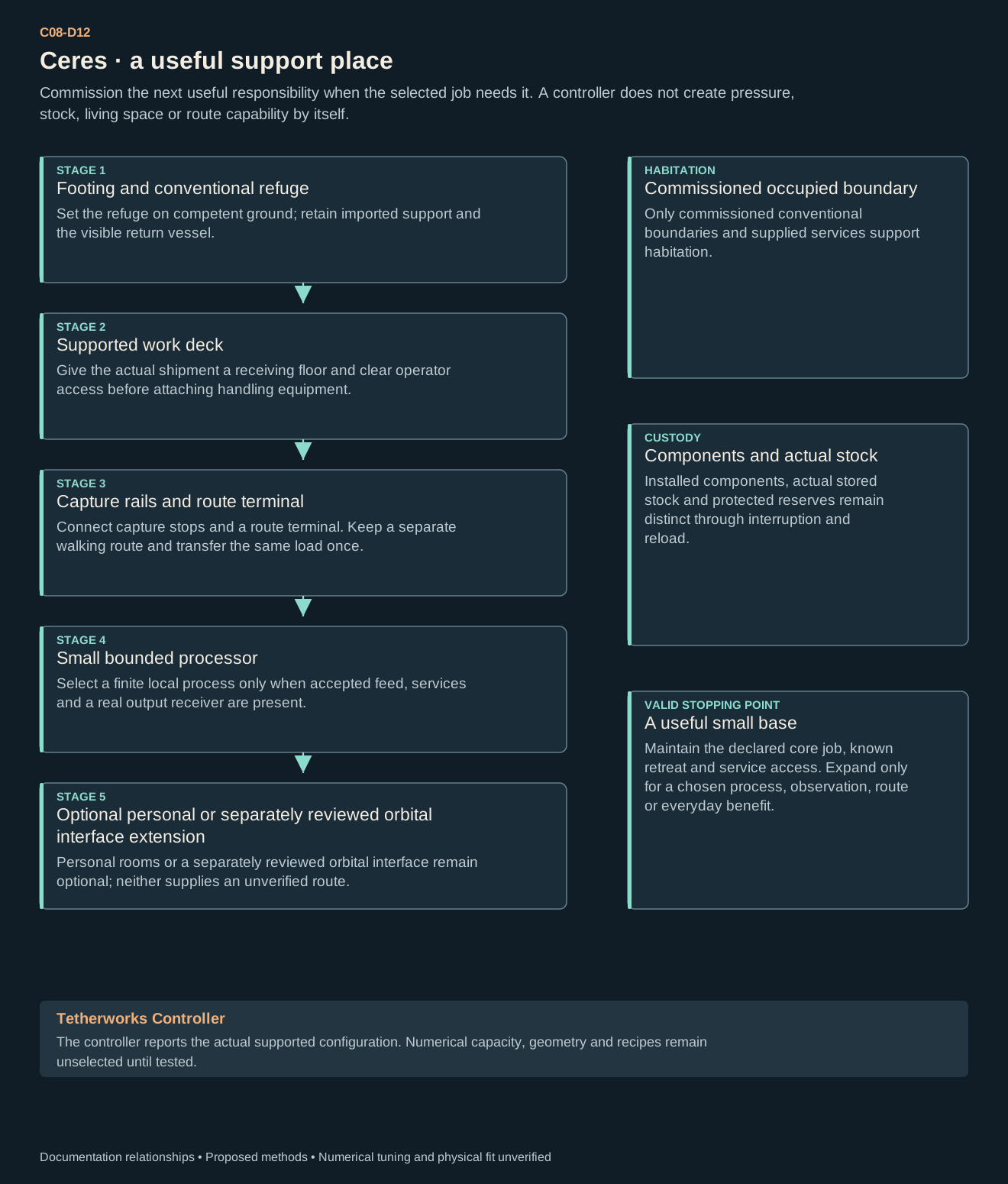
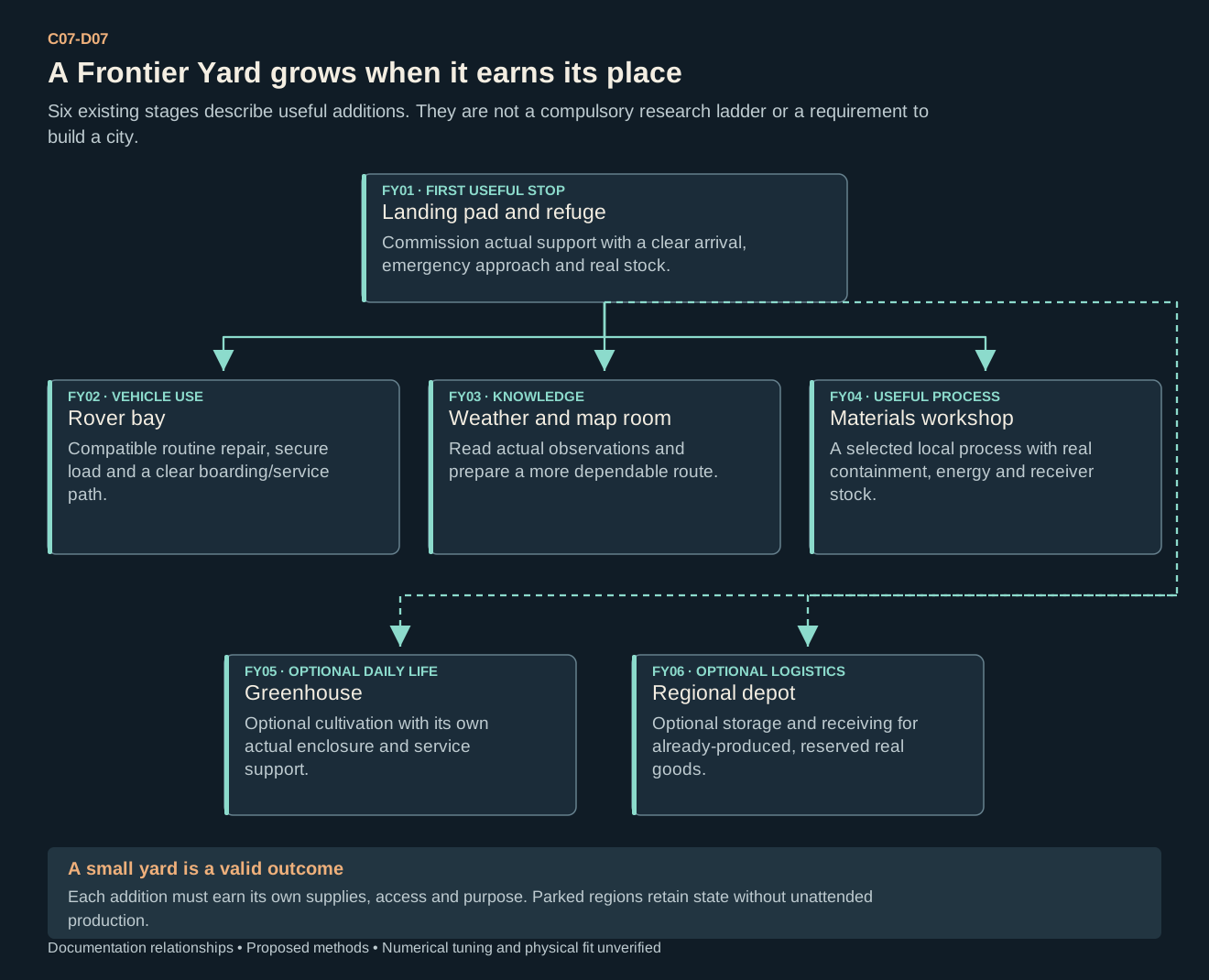
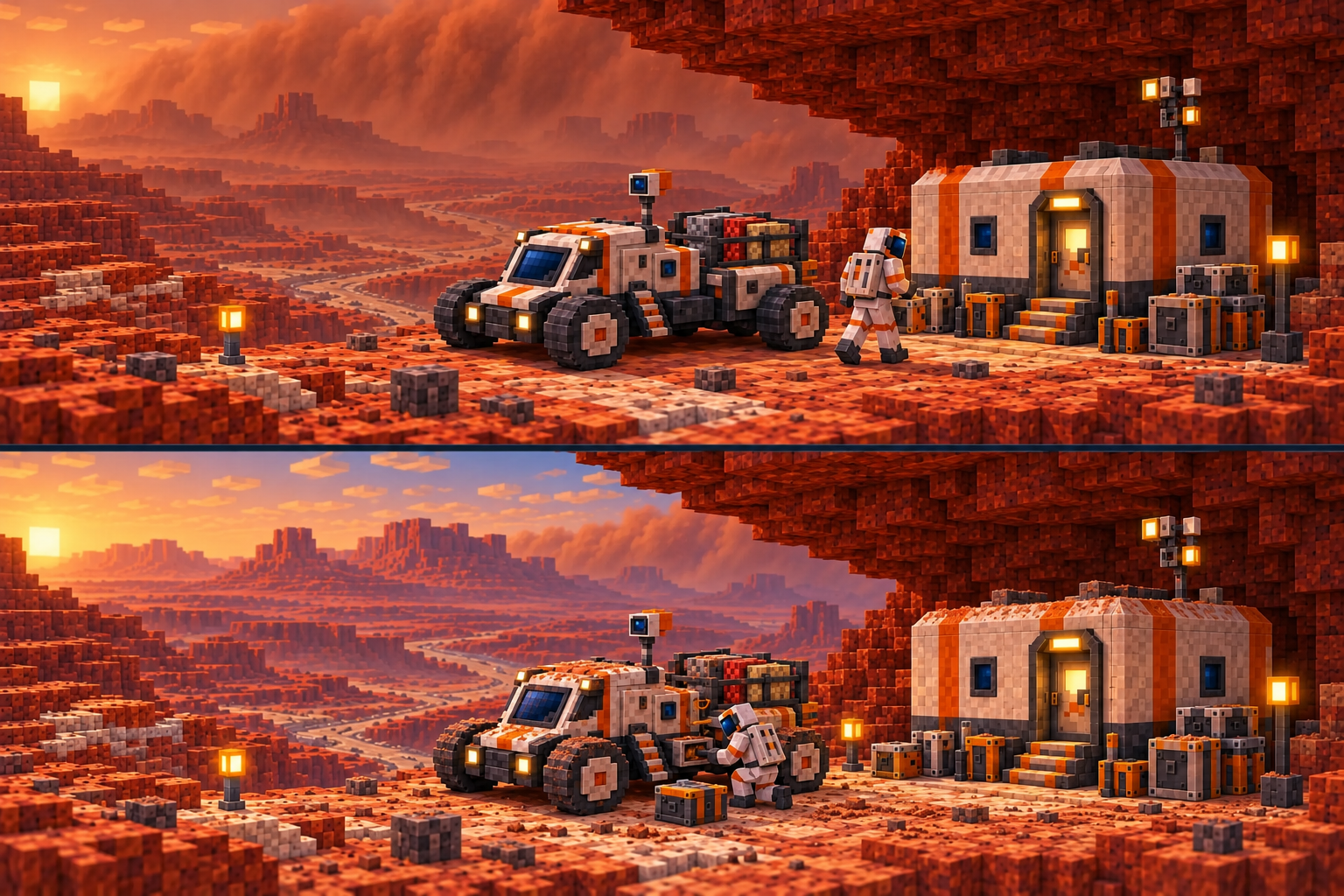
The Frontier Yard can grow from arrival refuge to rover service, weather mapping, materials work, a greenhouse and a depot. These are useful stages and branches, not six mandatory buildings before exploration becomes legitimate. A player may stop with a small refuge and service bay if that supports the journeys they want. The first equipment and survival supplies are imported; later local applications improve a supported duty.
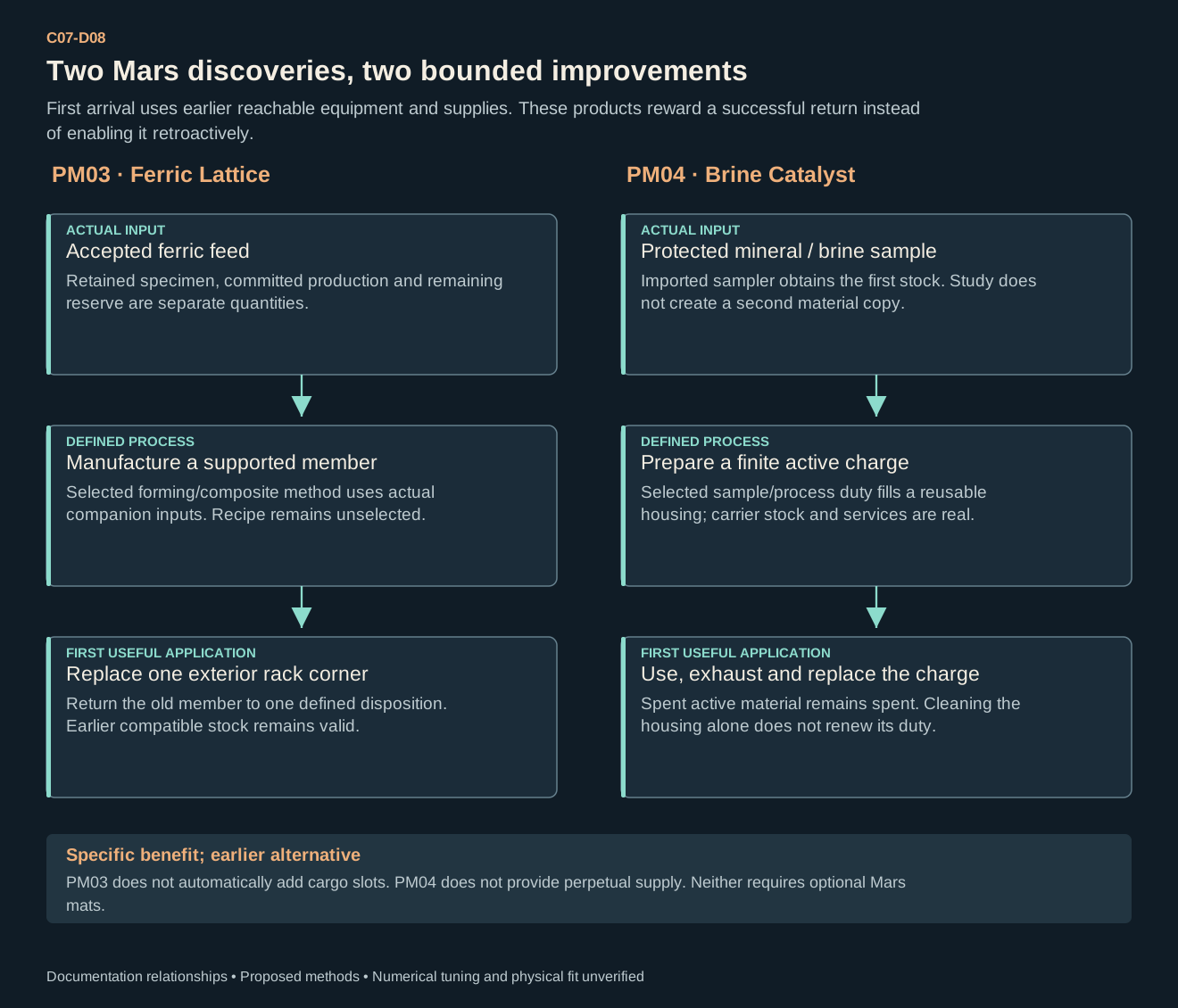
PM03's qualified example replaces an external Survey Rover rack member. It does not establish free capacity, a universal chassis upgrade or the invalidity of the earlier frame. PM04 uses finite active material in a reusable housing. Cleaning the housing does not regenerate the consumed charge. The supplied earlier mode remains viable. CEC01 ecology is still conditional and unselected: the entire geological route, evidence chain and conclusion work without it.
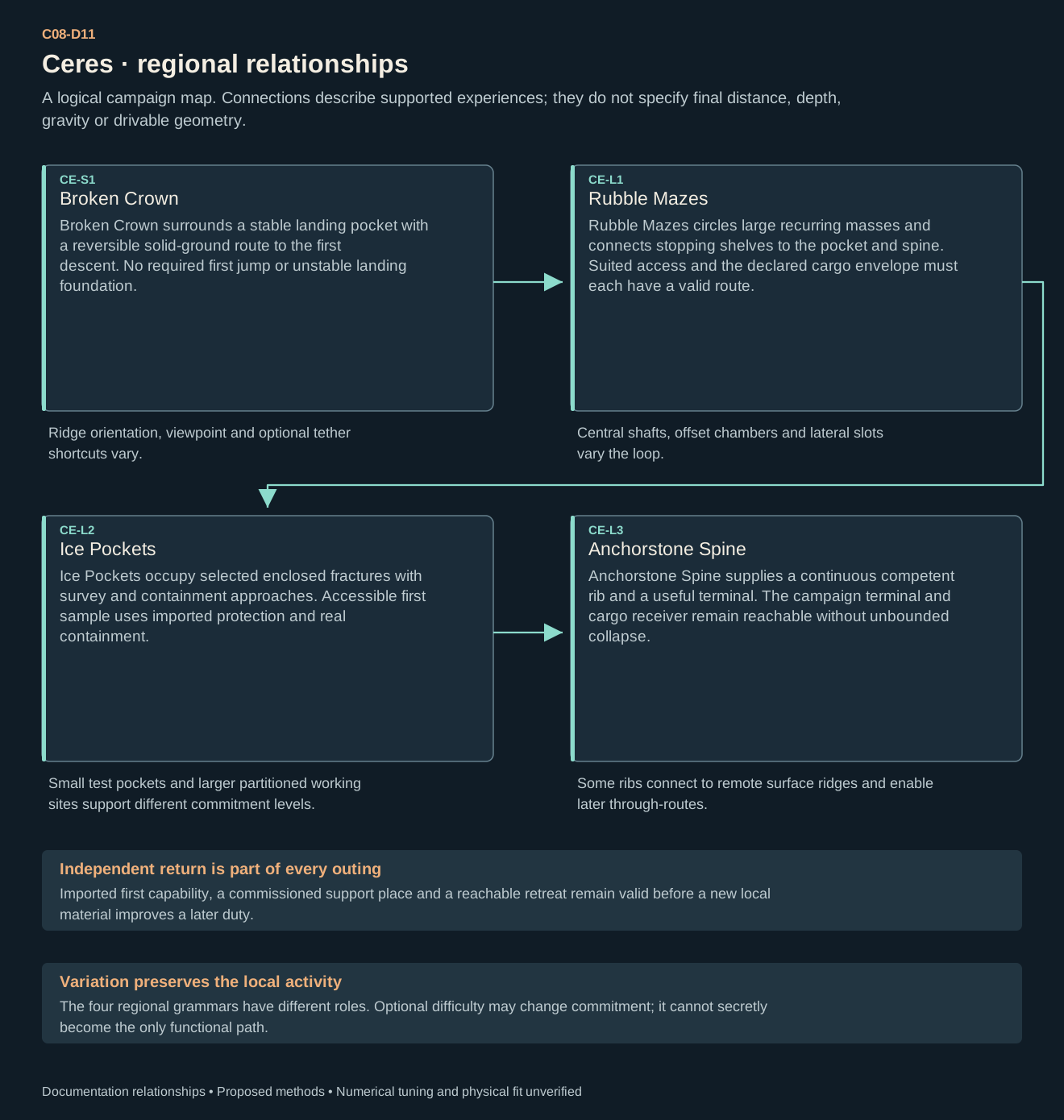
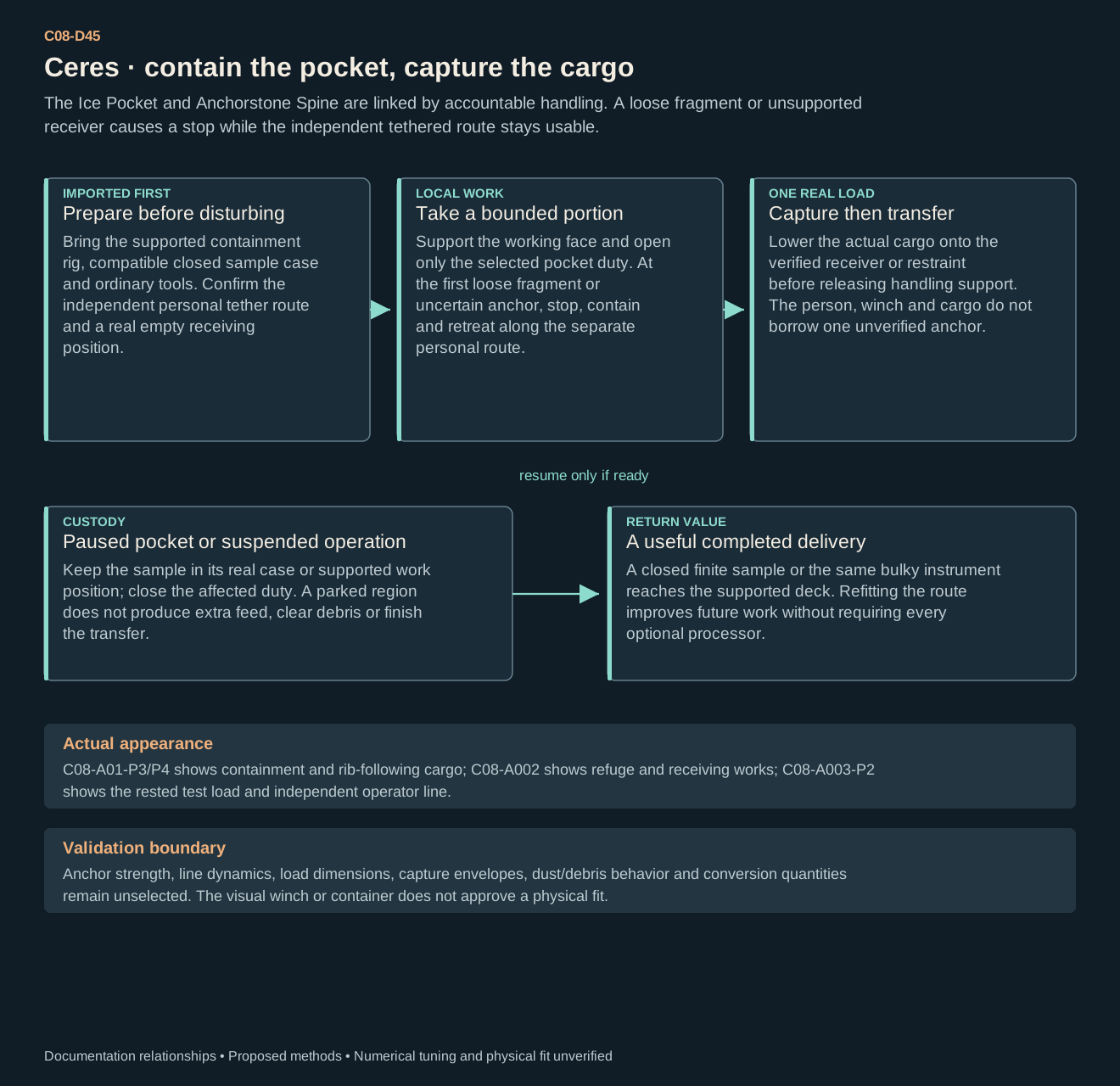
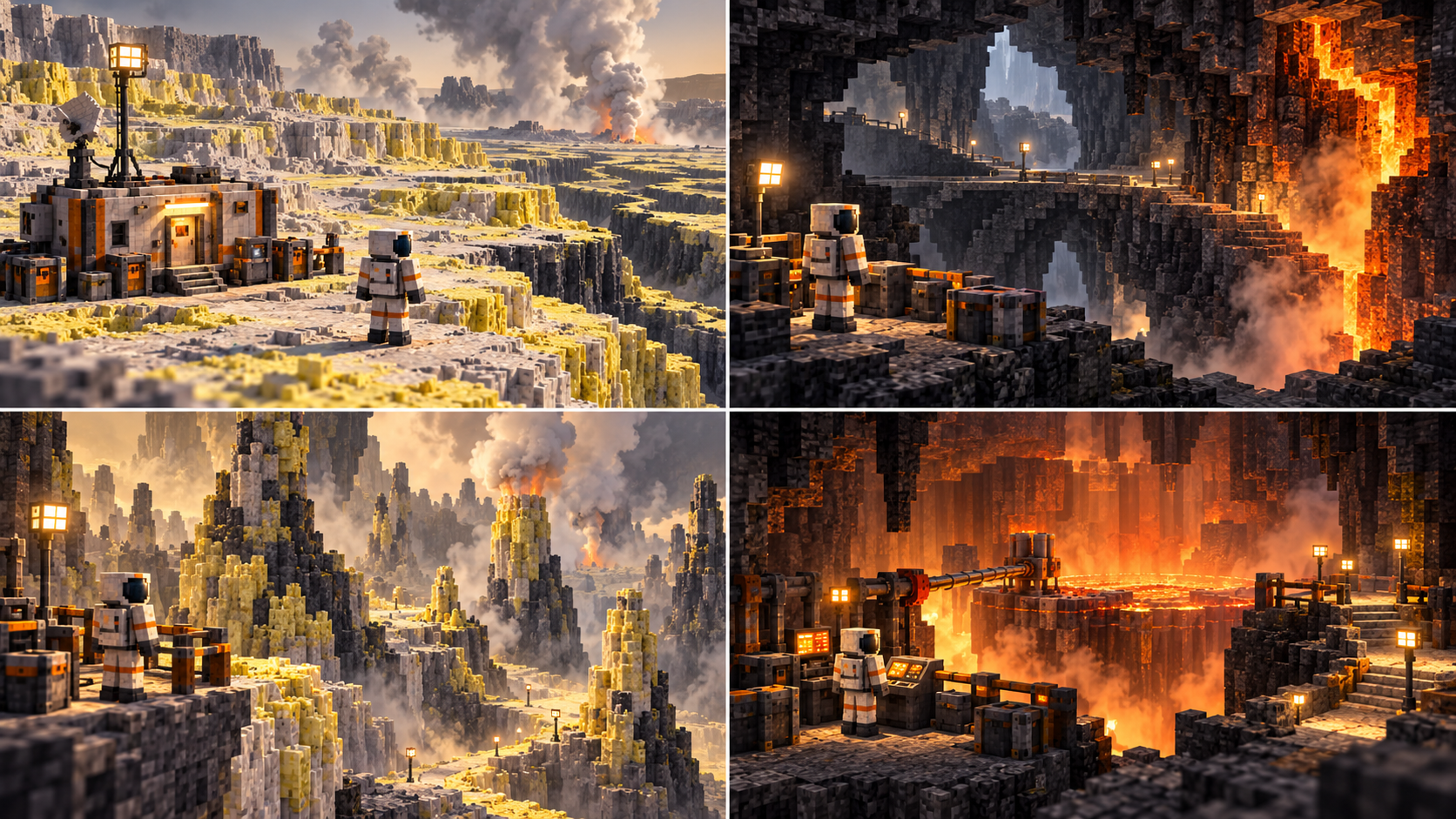
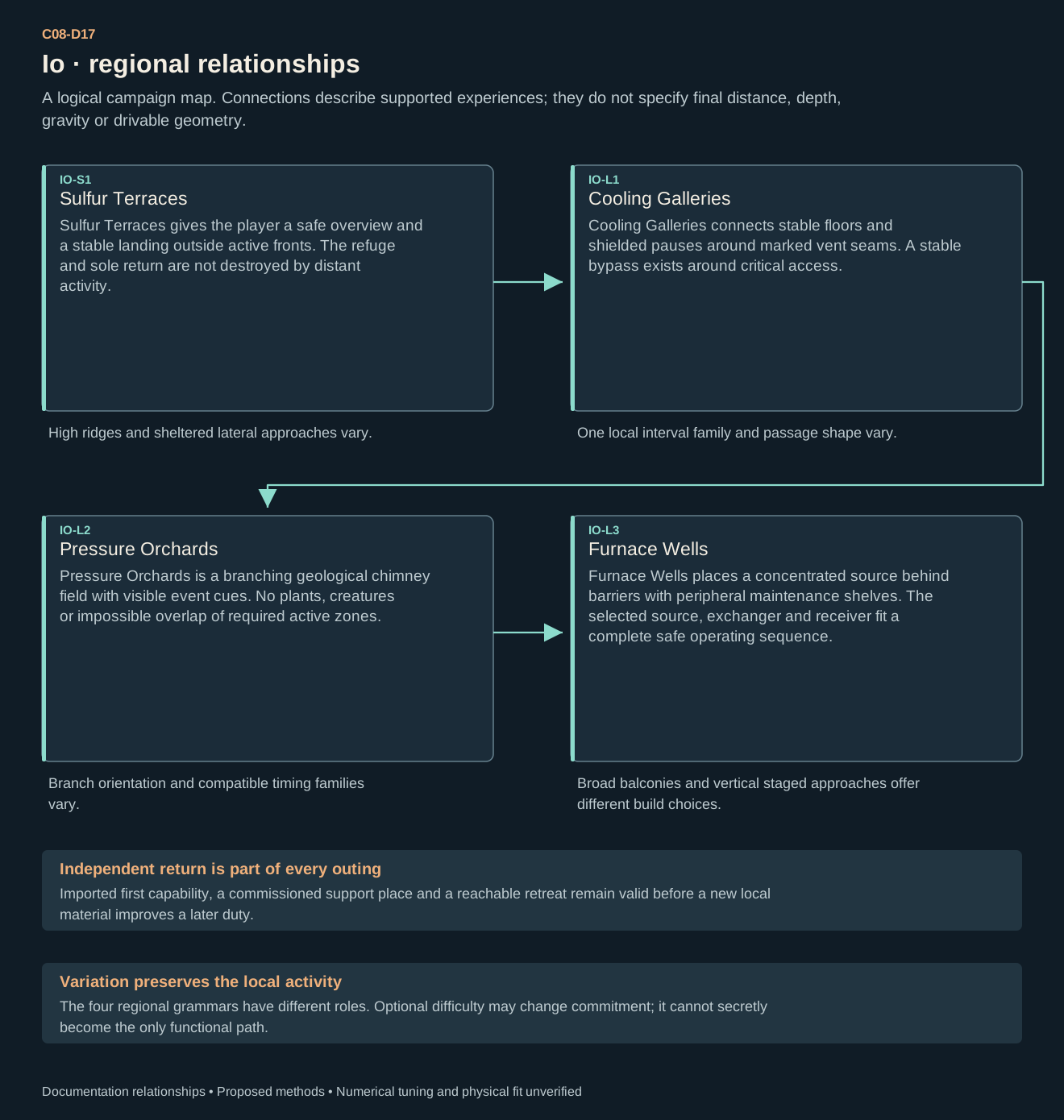
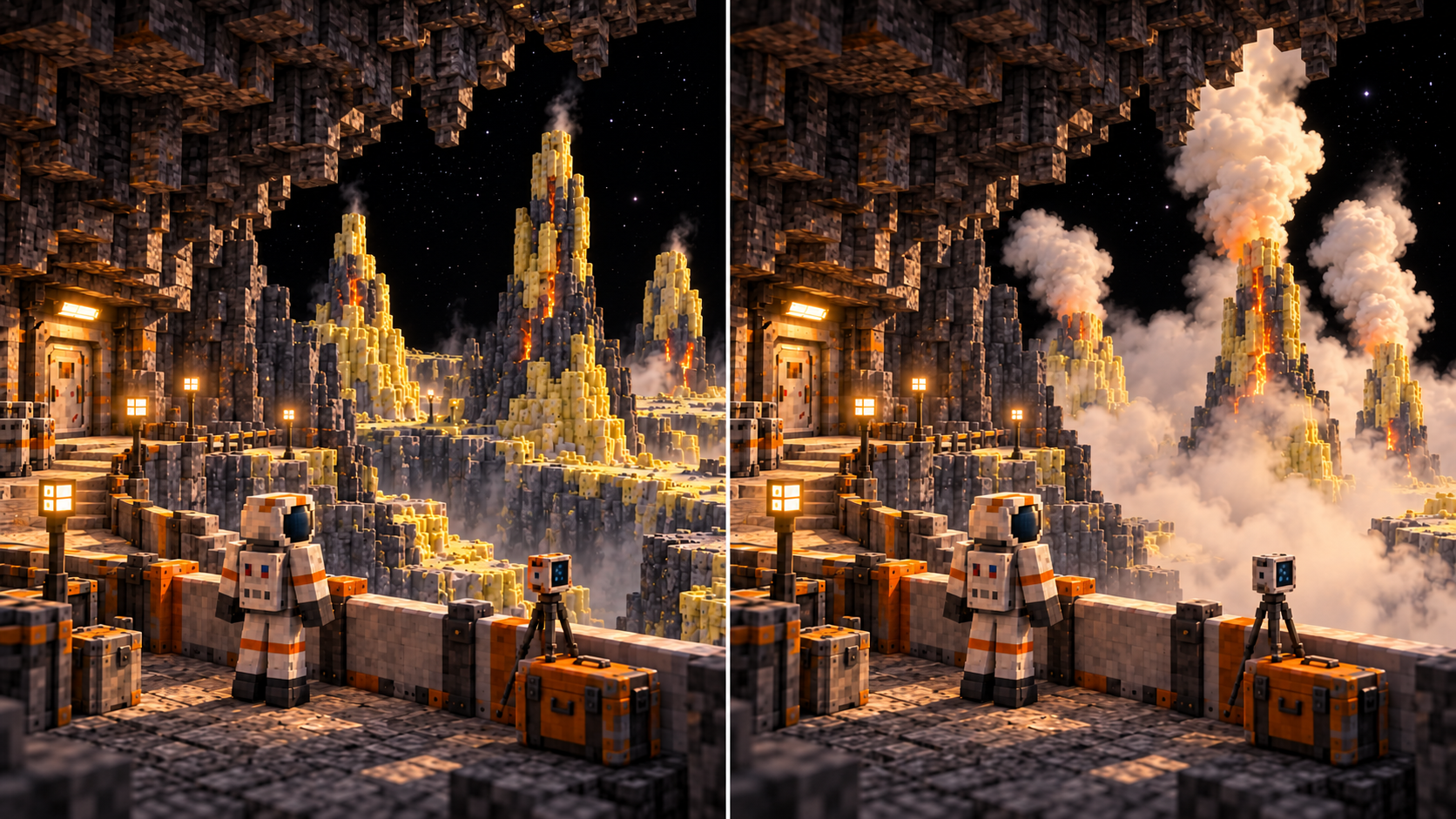
Ceres offers cargo handling, anchoring and work across fragmented ground. Io offers bounded thermal work and withdrawal through an observed interval. Both are full campaigns with their own places, construction and return value. Their discoveries can improve selected later duties. They should not quietly become required steps through a supposedly optional material used in every viable Europa or Titan recipe.
The development backlog therefore needs an explicit optionality check. For each destination preparation package, list at least one supported path using only the principal route's previously accessible capabilities. Then show which branch material improves a specific result and what additional work it requires. The comparison must include the whole preparation chain, rather than only the last recipe.
The same rule applies within a destination. A large outpost, a later observation annex, a second field yard or an unusual specimen collection can be valuable without being compulsory. The player should understand why they might choose it. An optional label is insufficient if every retreat route or useful outcome depends on the option.
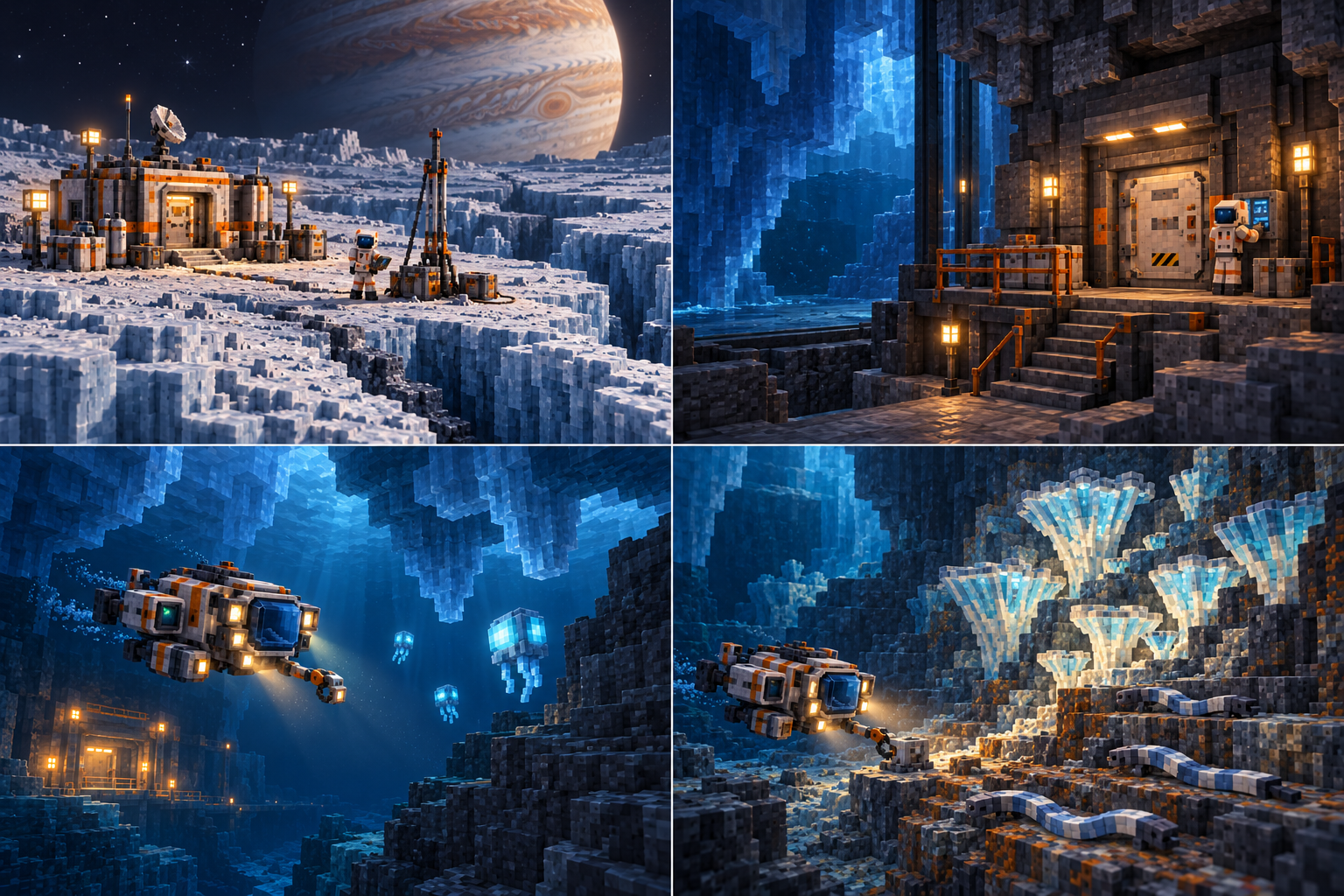
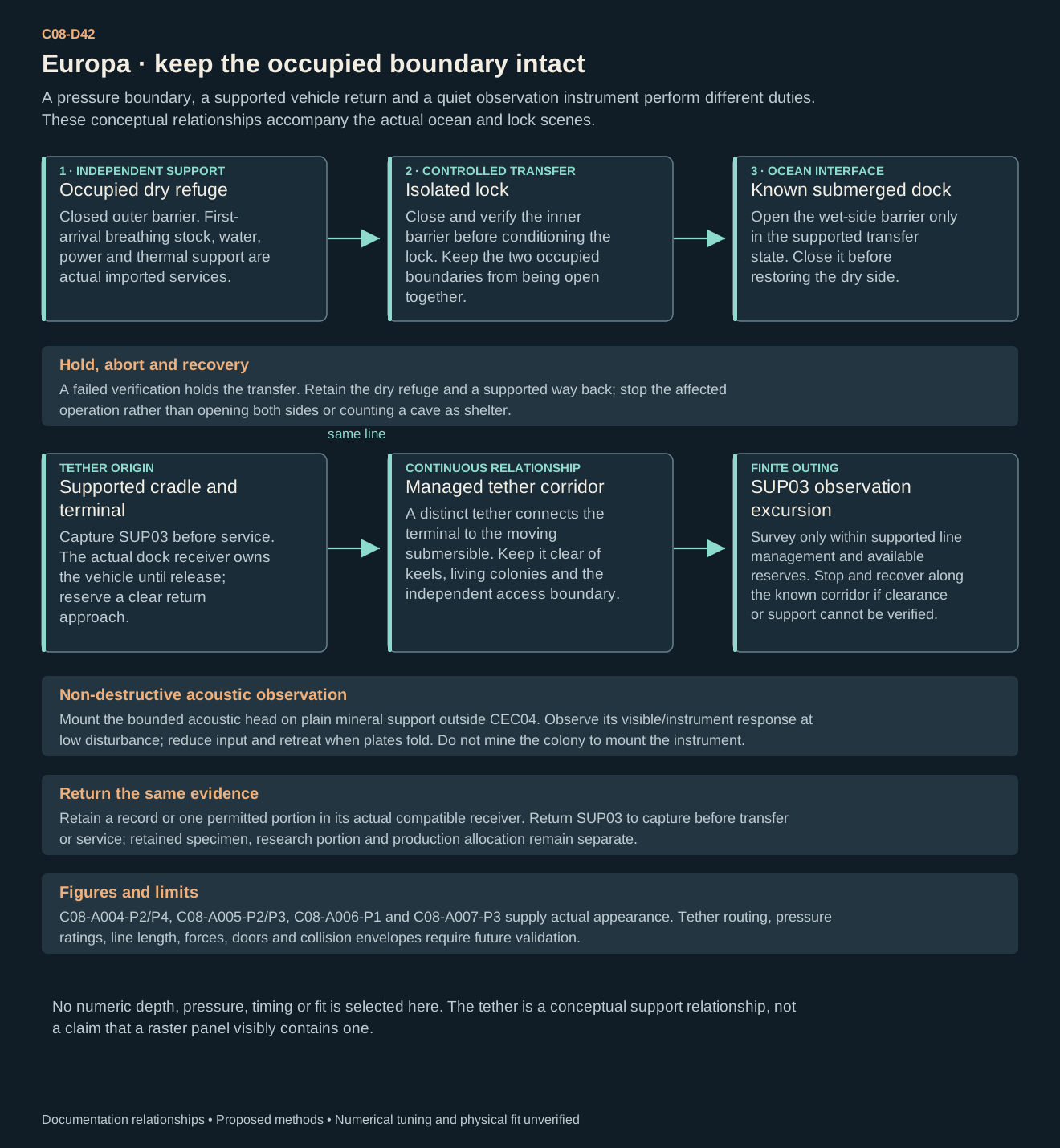
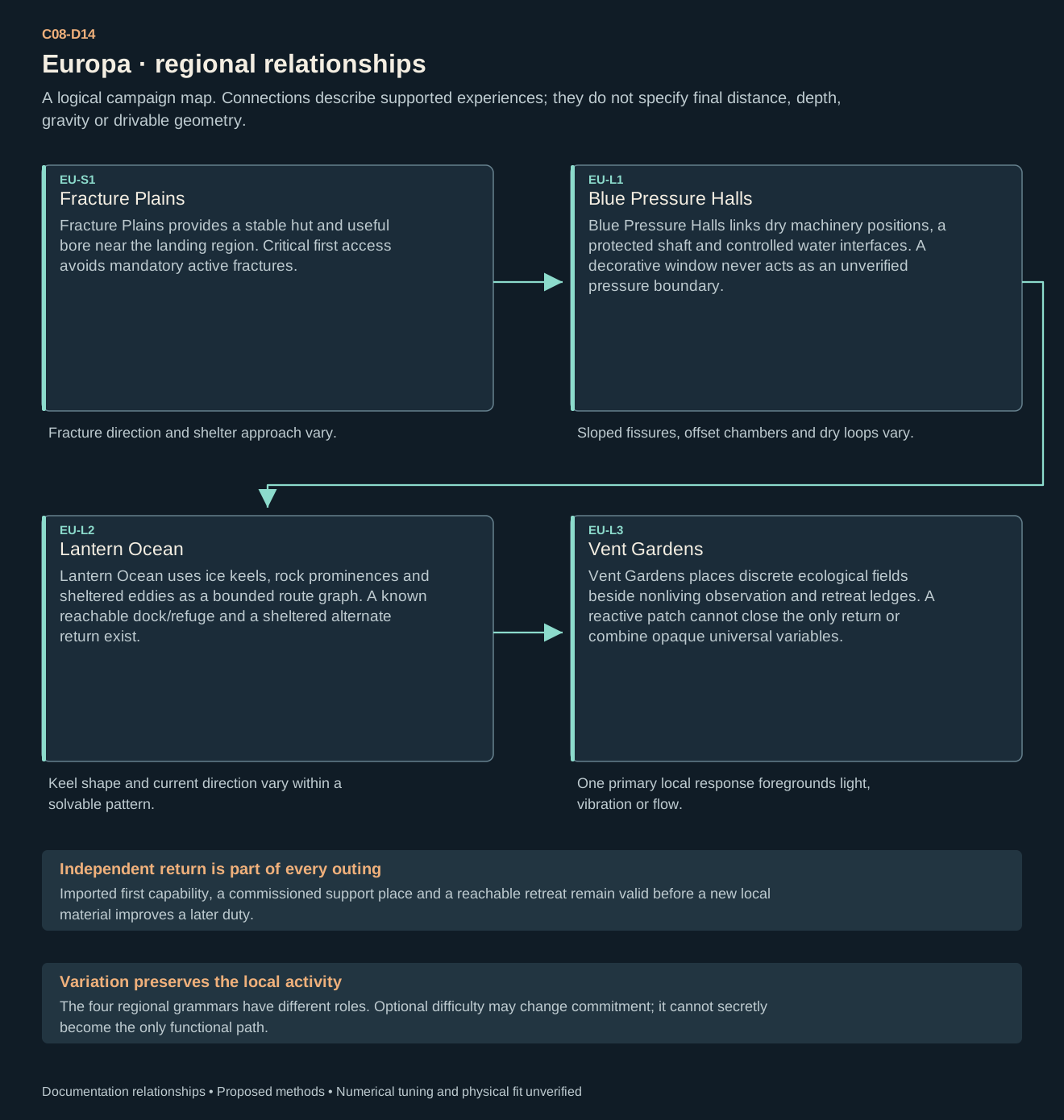
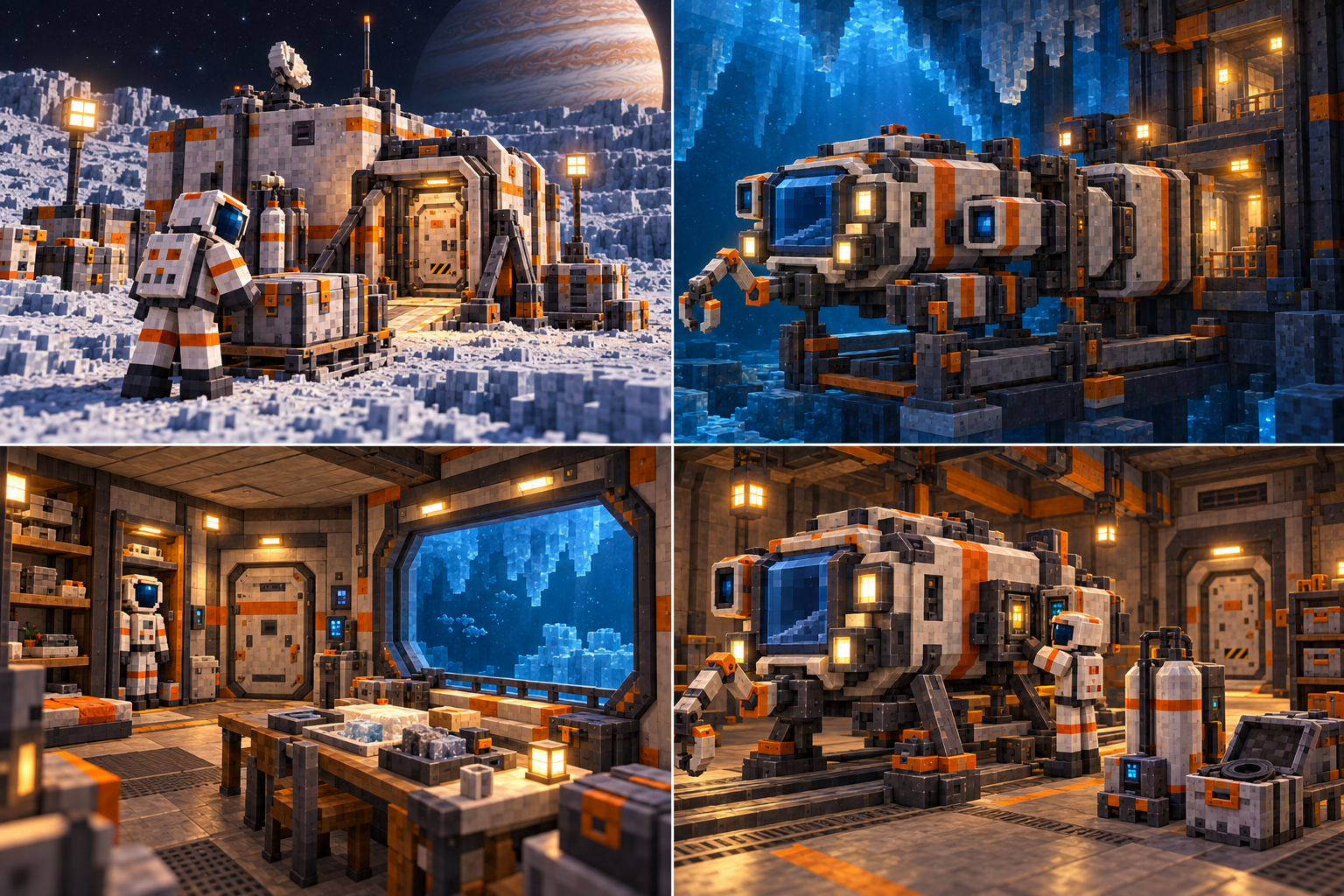
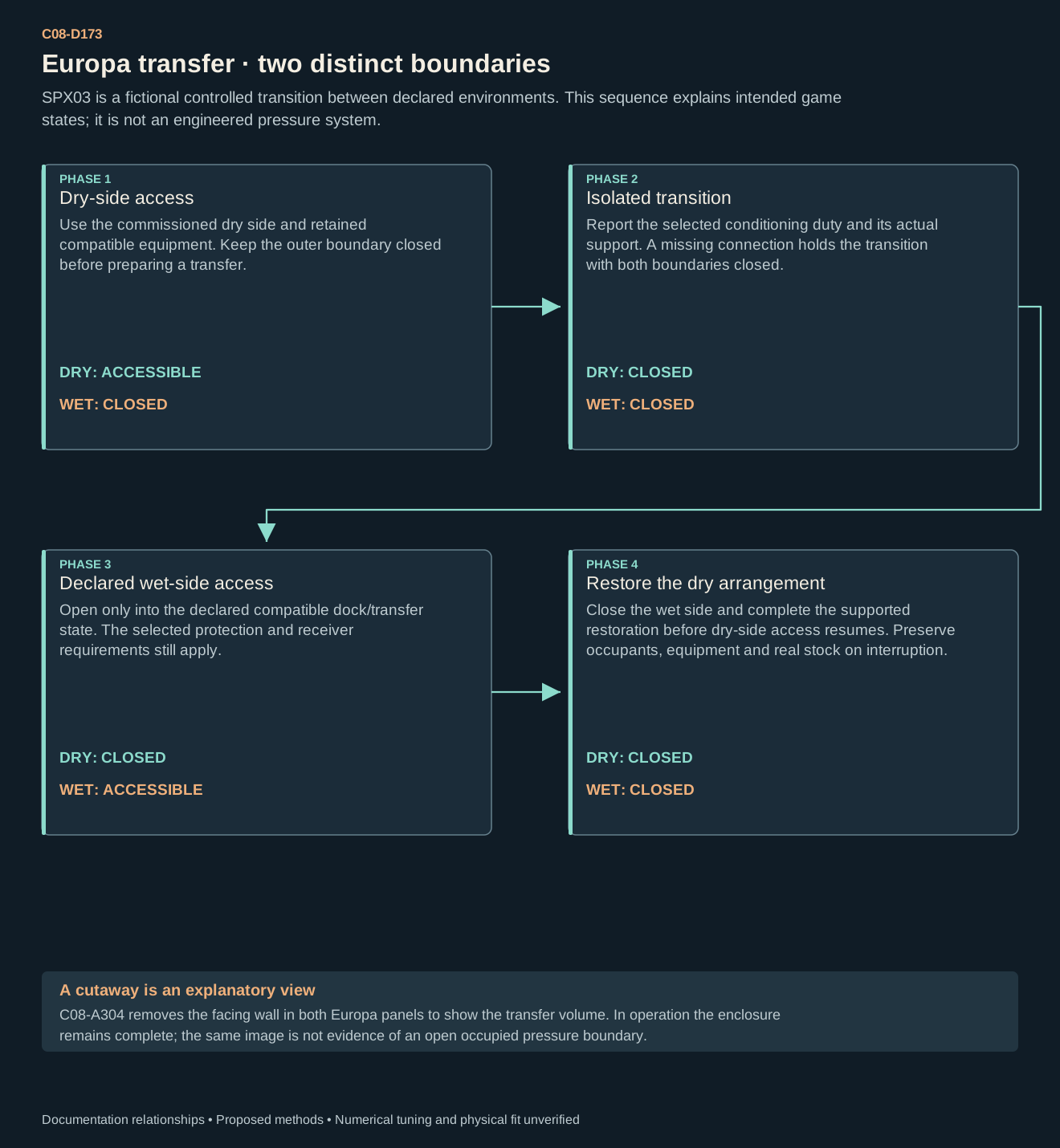
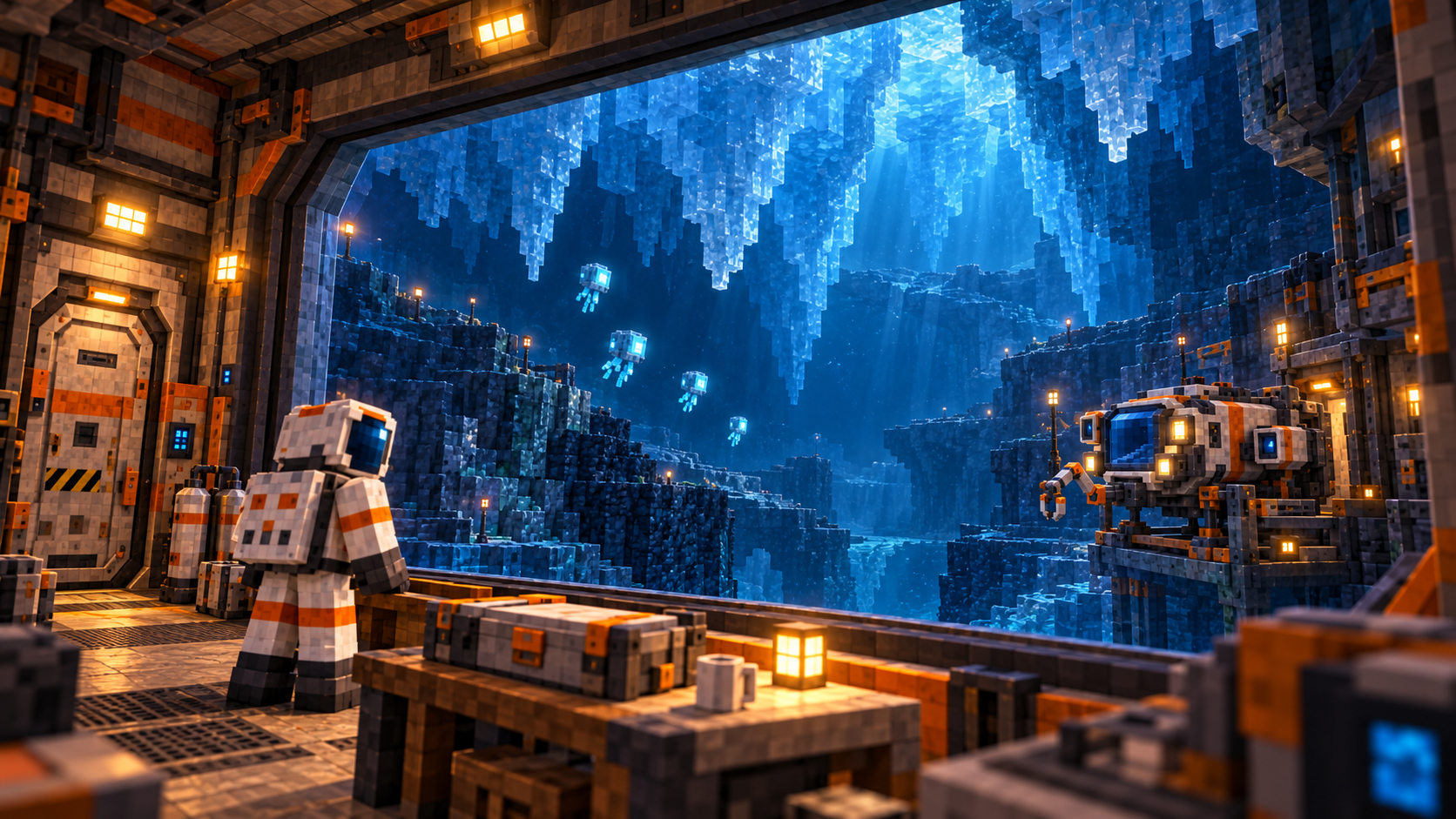
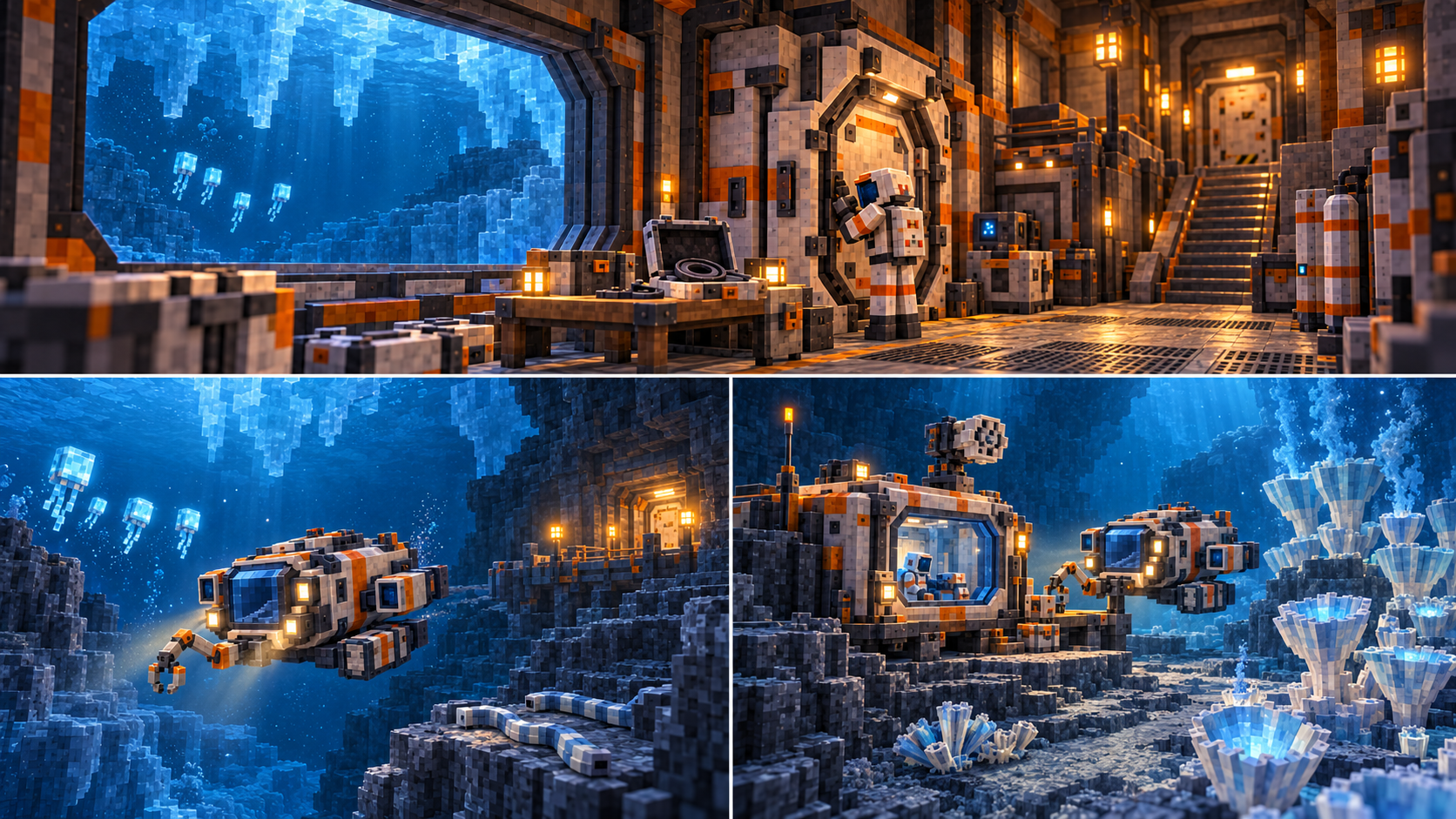
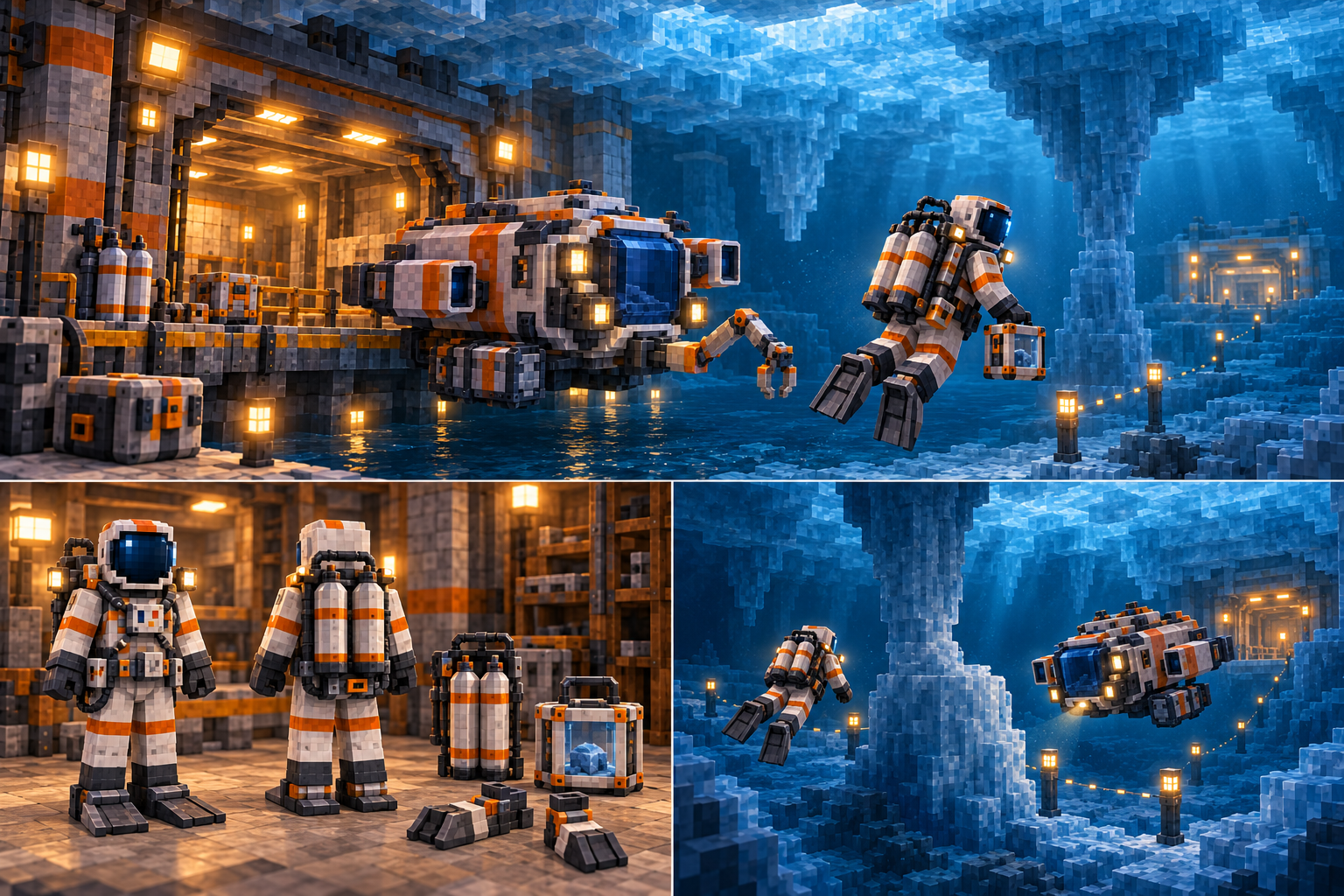
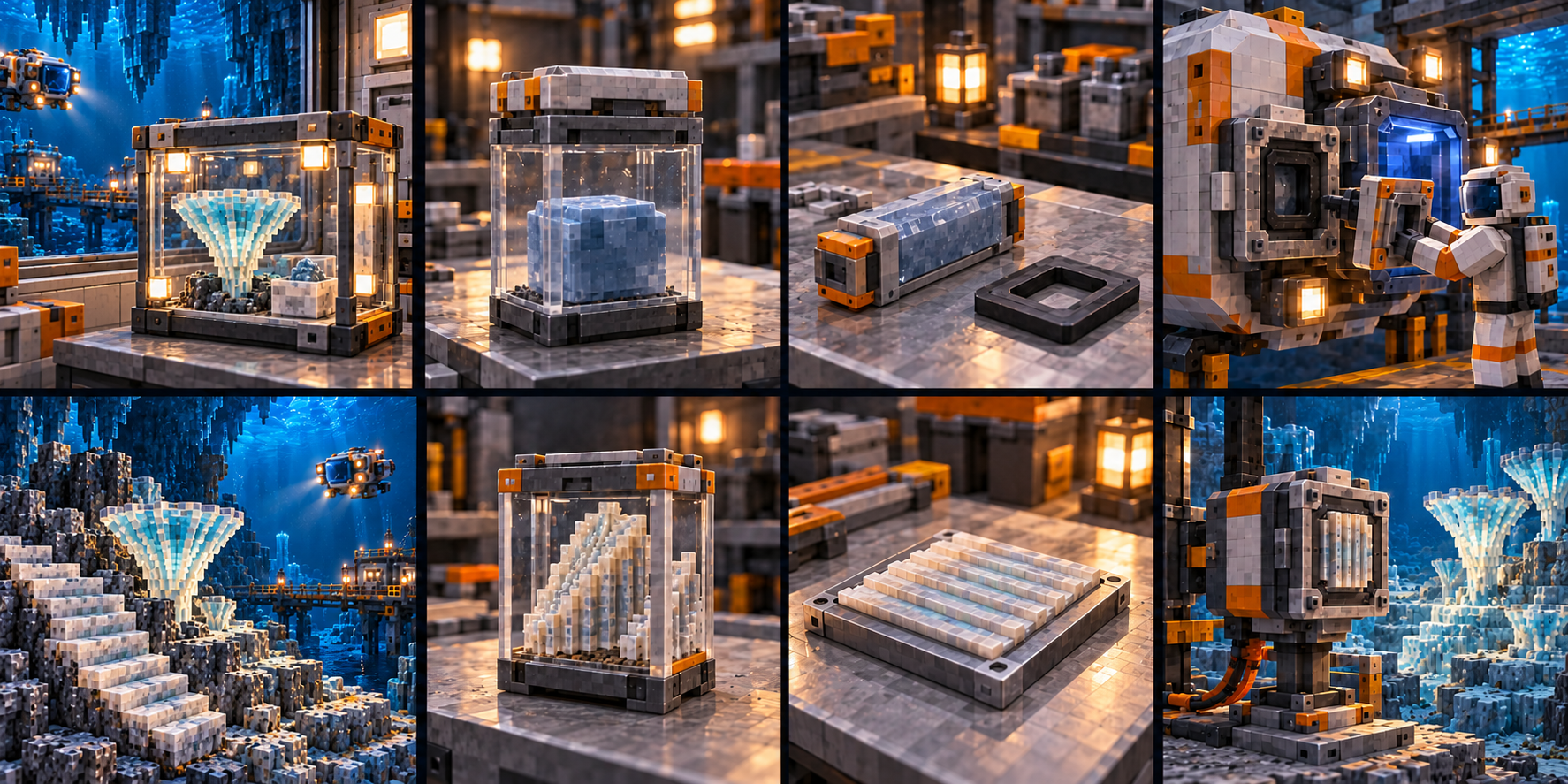
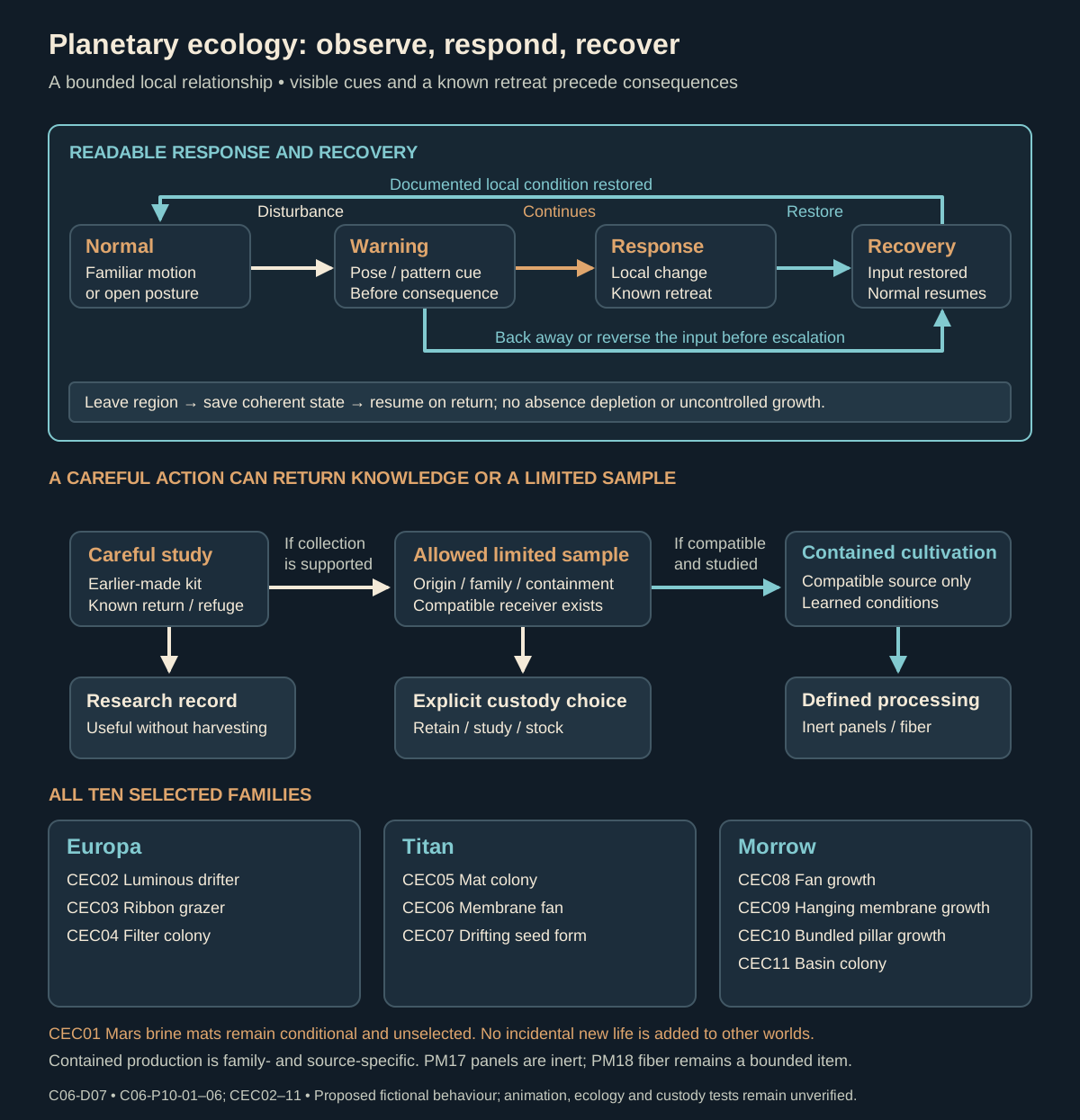
Europa develops pressure boundaries, water-side movement, sensitive sampling and an inhabited threshold beneath the ice. Its campaigns keep a known dock or refuge reachable; the dramatic water beyond the route is not an excuse for an unbounded empty search. Its organisms and materials have specific identities, responses and duties. A light response is observable information, not a universal quest pointer.
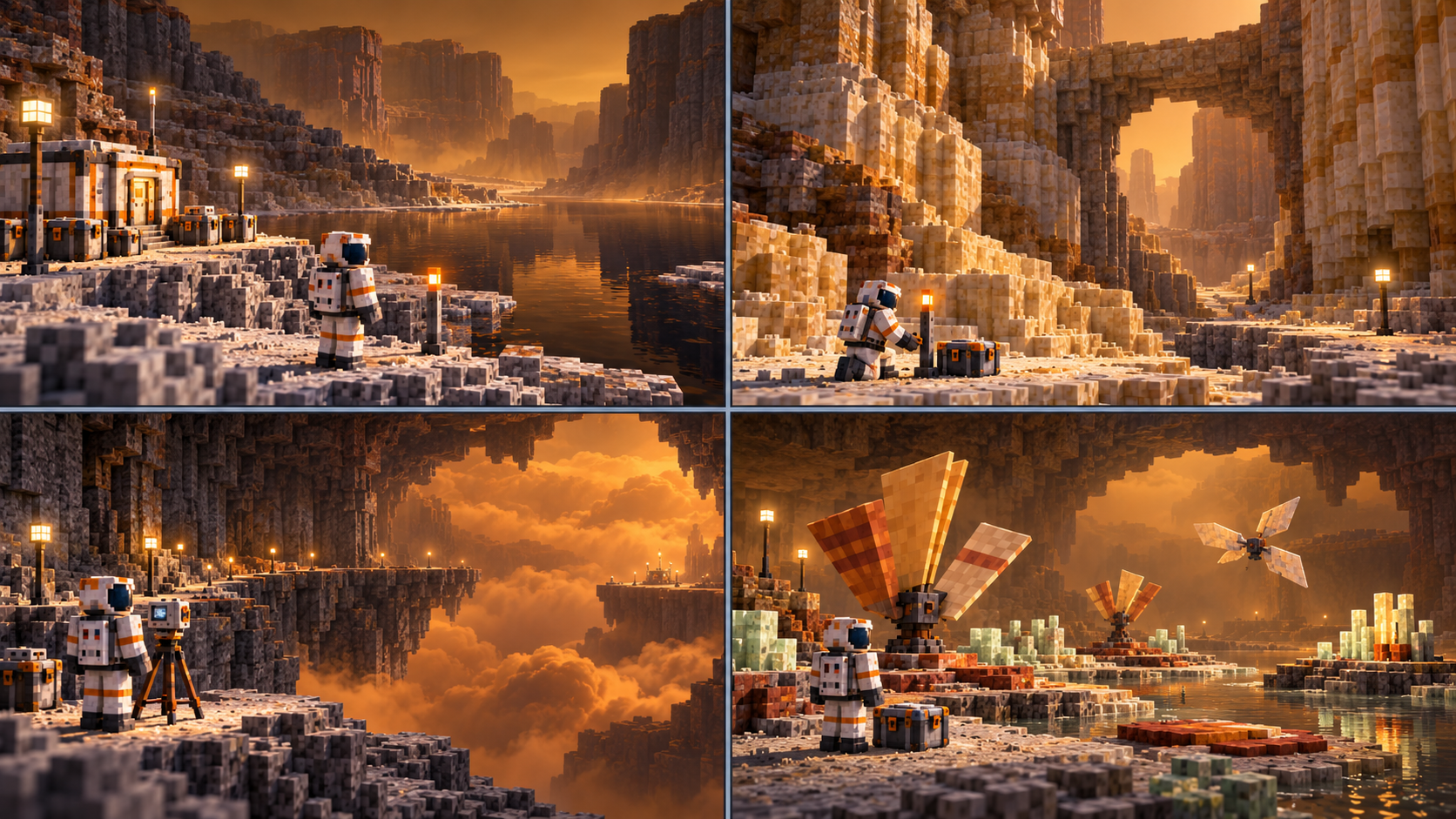
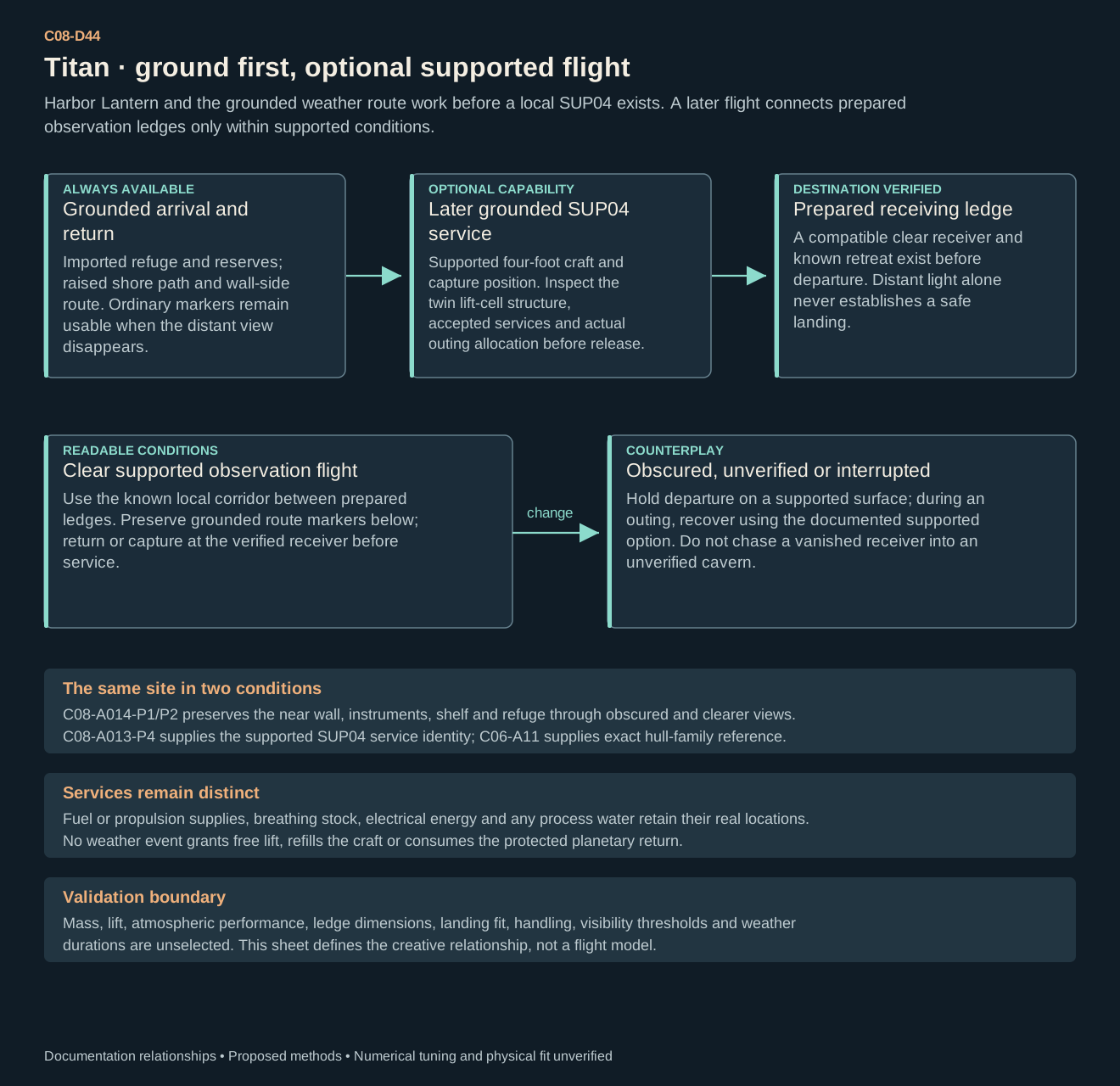
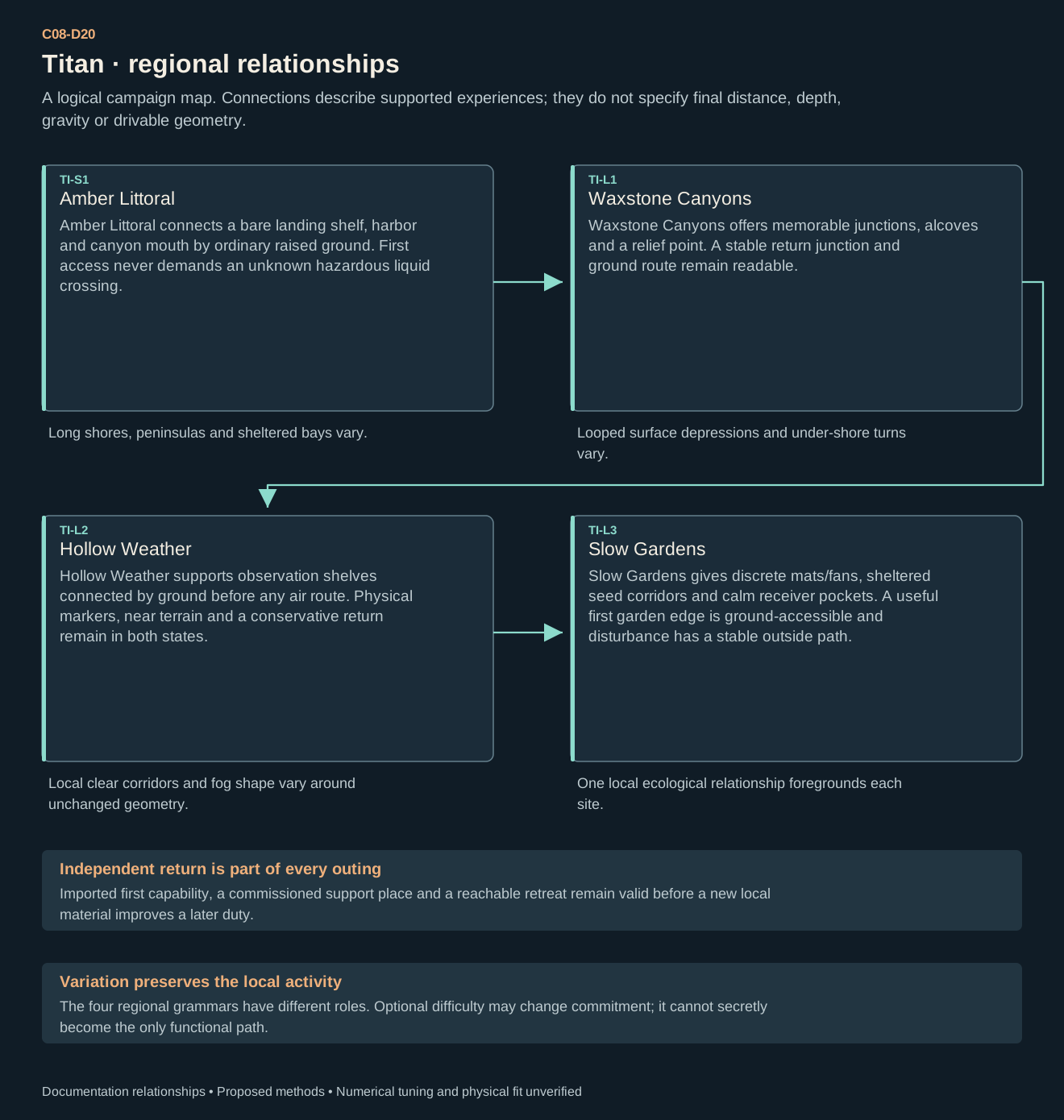
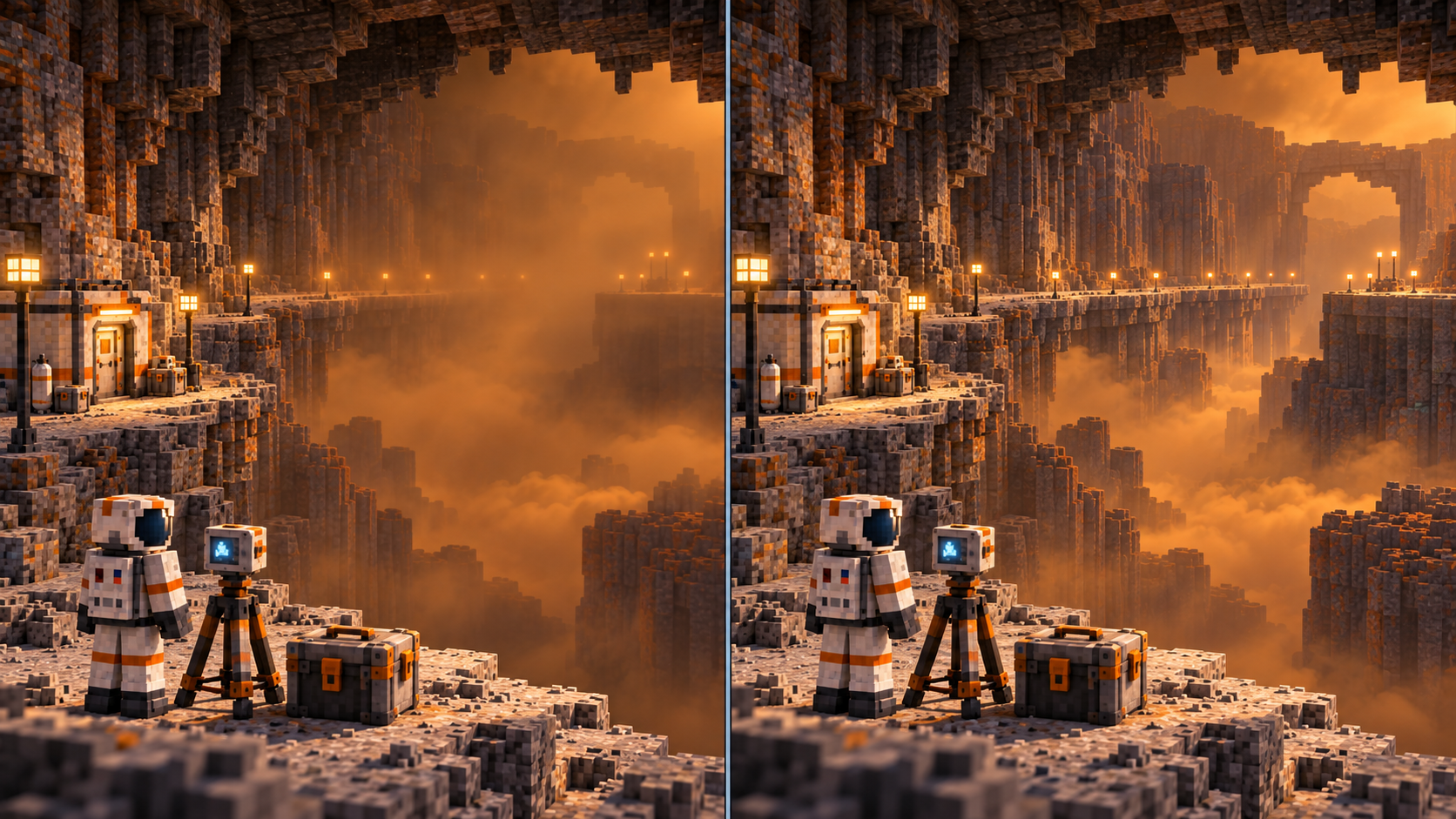
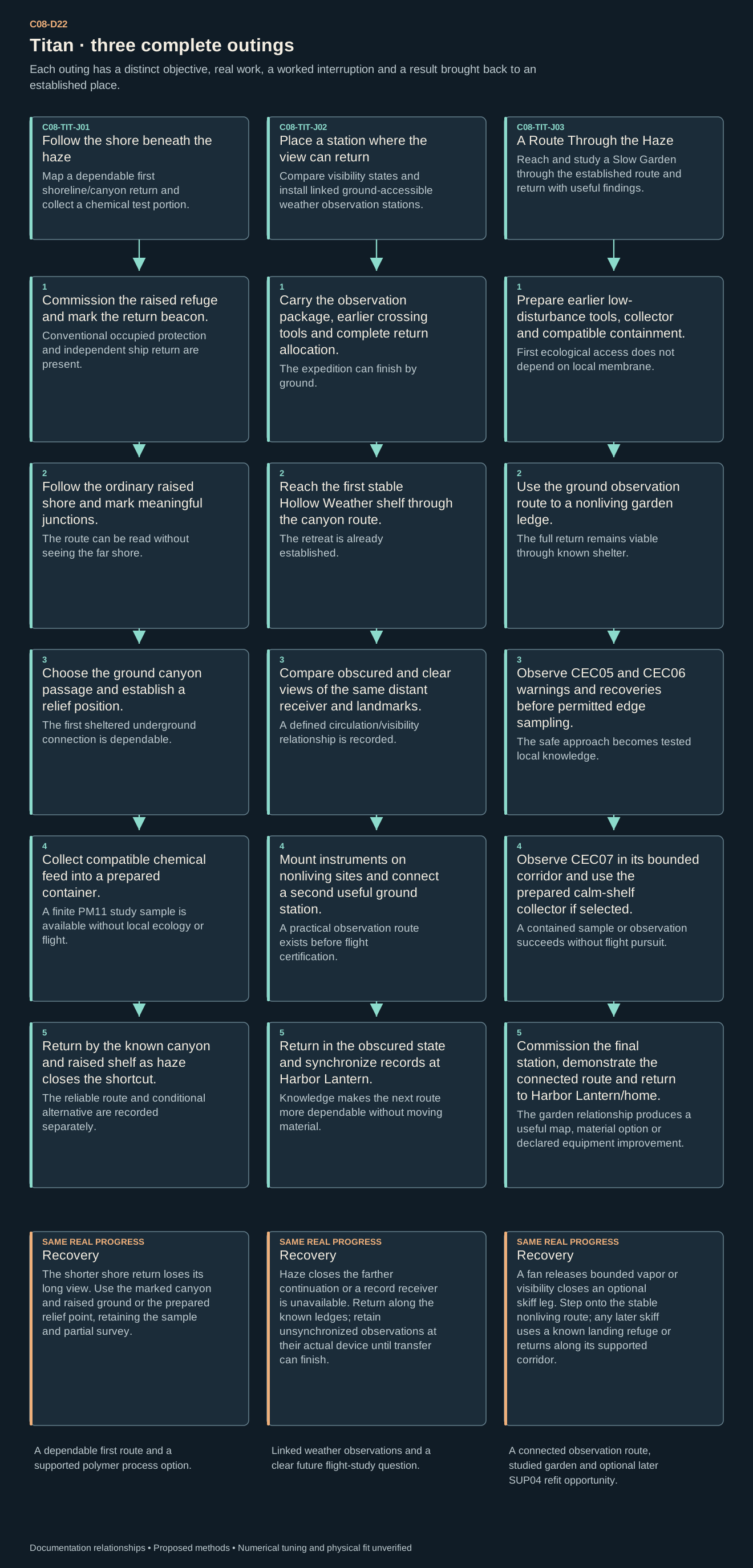
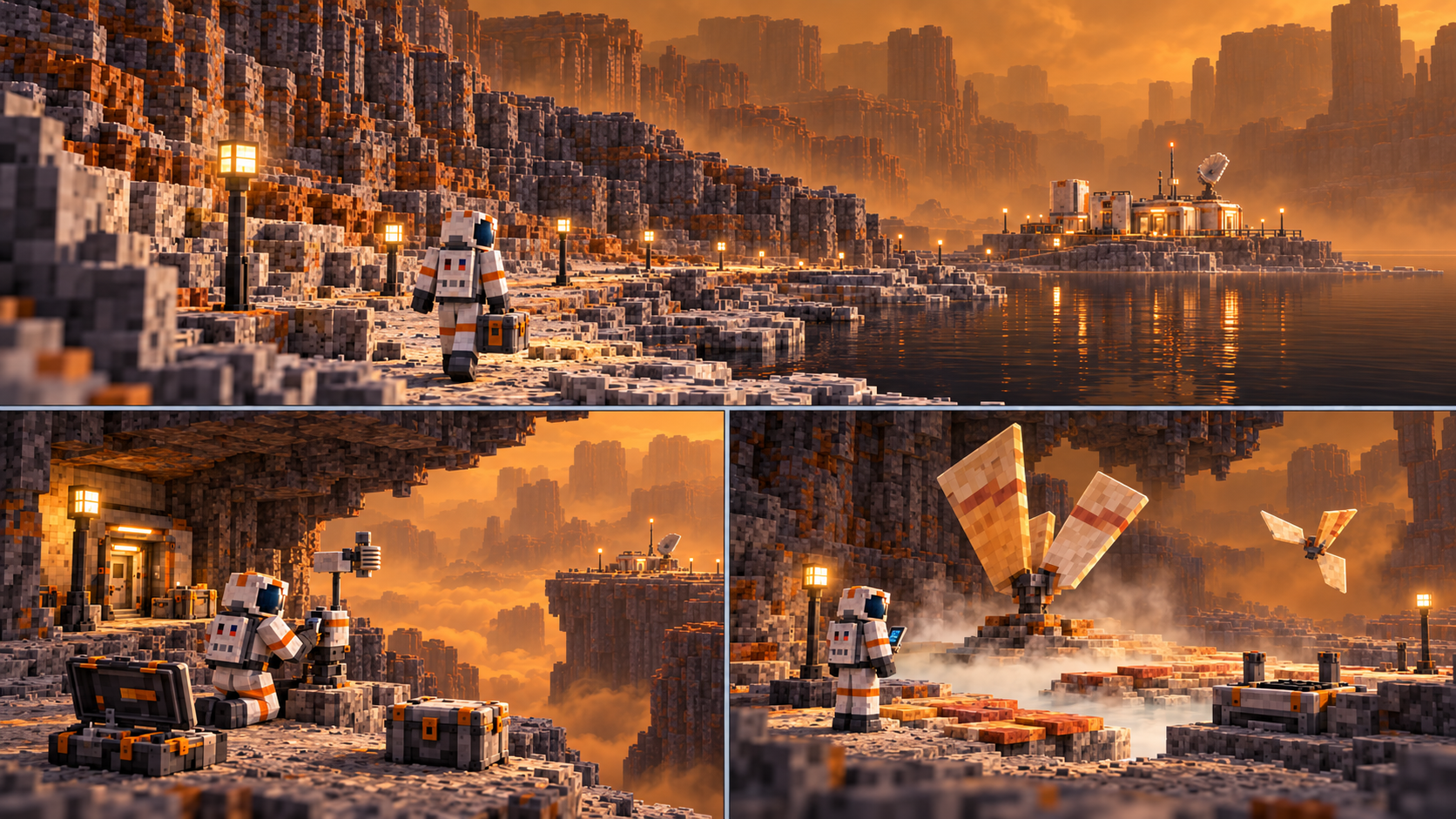
Titan develops route knowledge under changing visibility. Weather can change what the player sees and which supported method they choose while the underlying landmark relationship remains intelligible. A ground or stair return is valuable even where a supported atmospheric craft becomes useful. The same place should be recognizable when the haze opens and when it closes.
This preserved source describes Afterlight, Cairn or Morrow. It is proposed creative direction, not implemented game content.
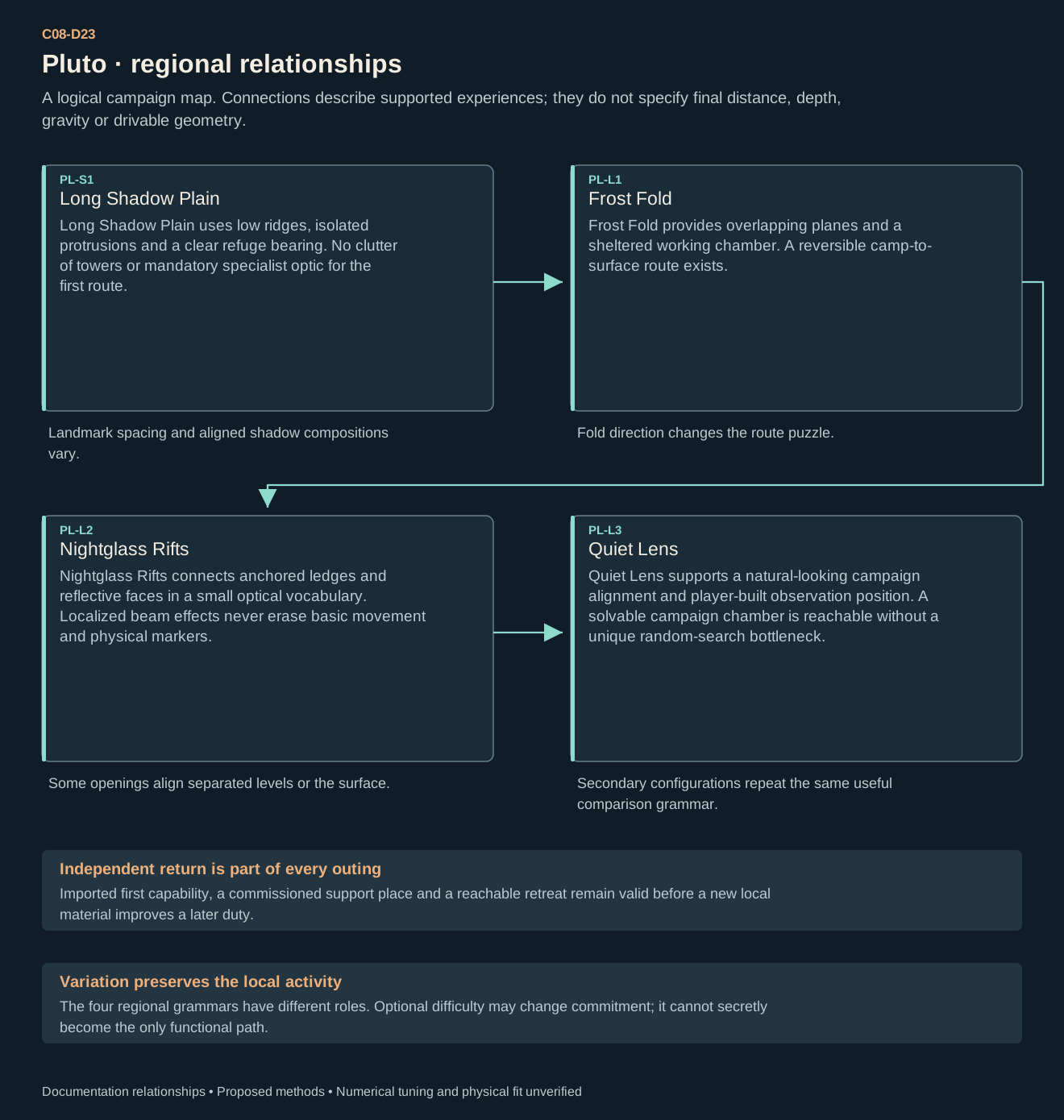
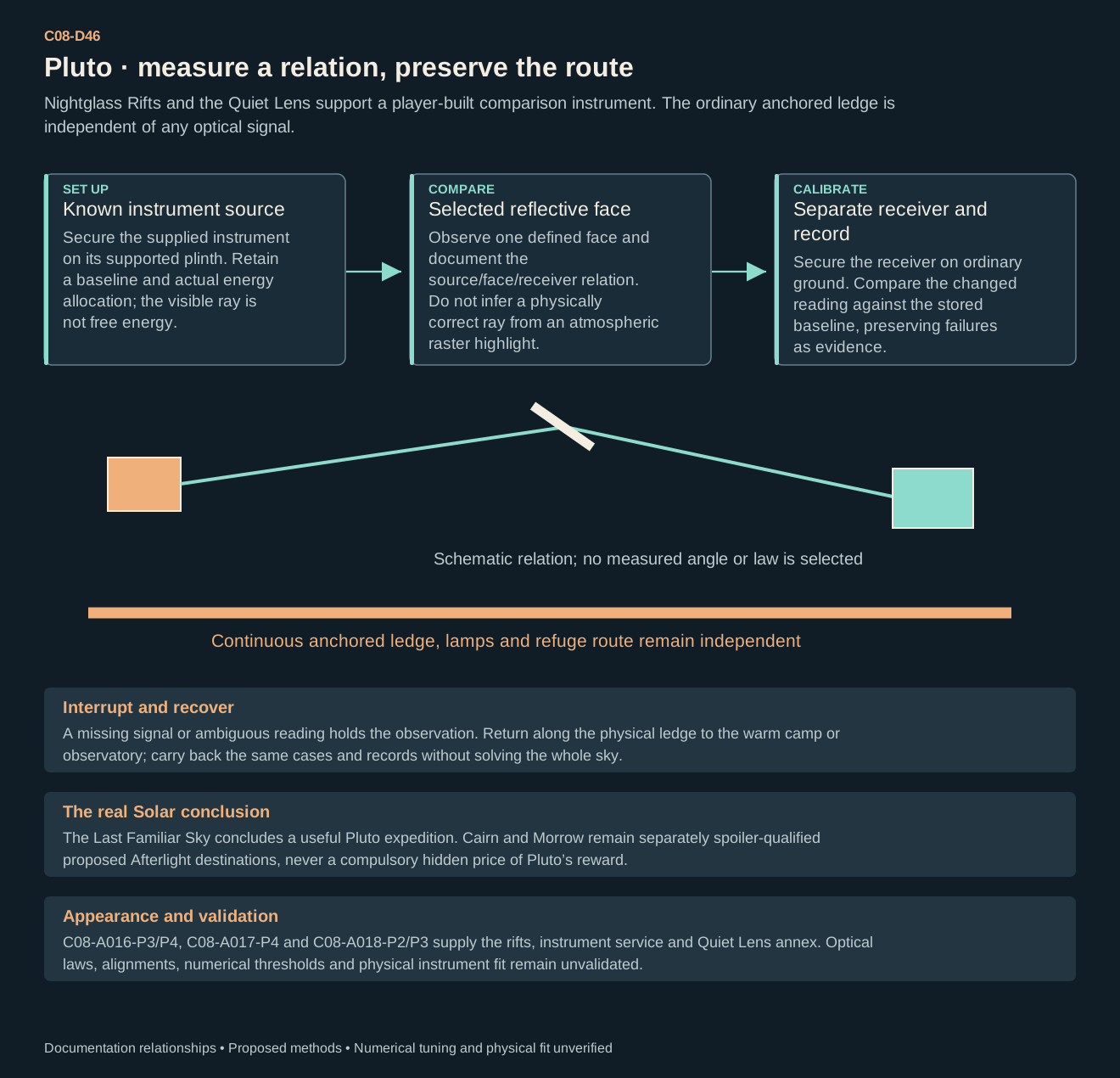
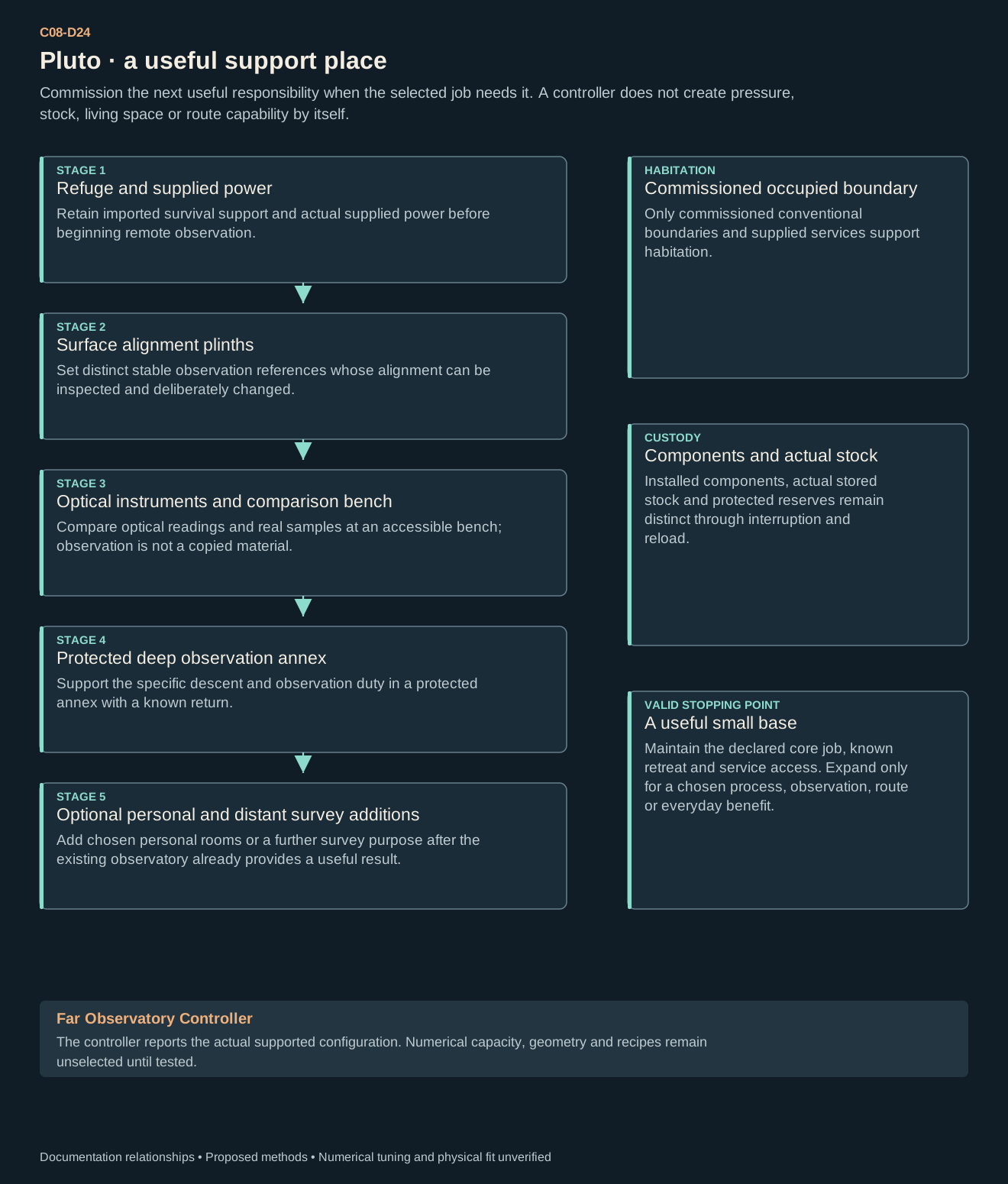
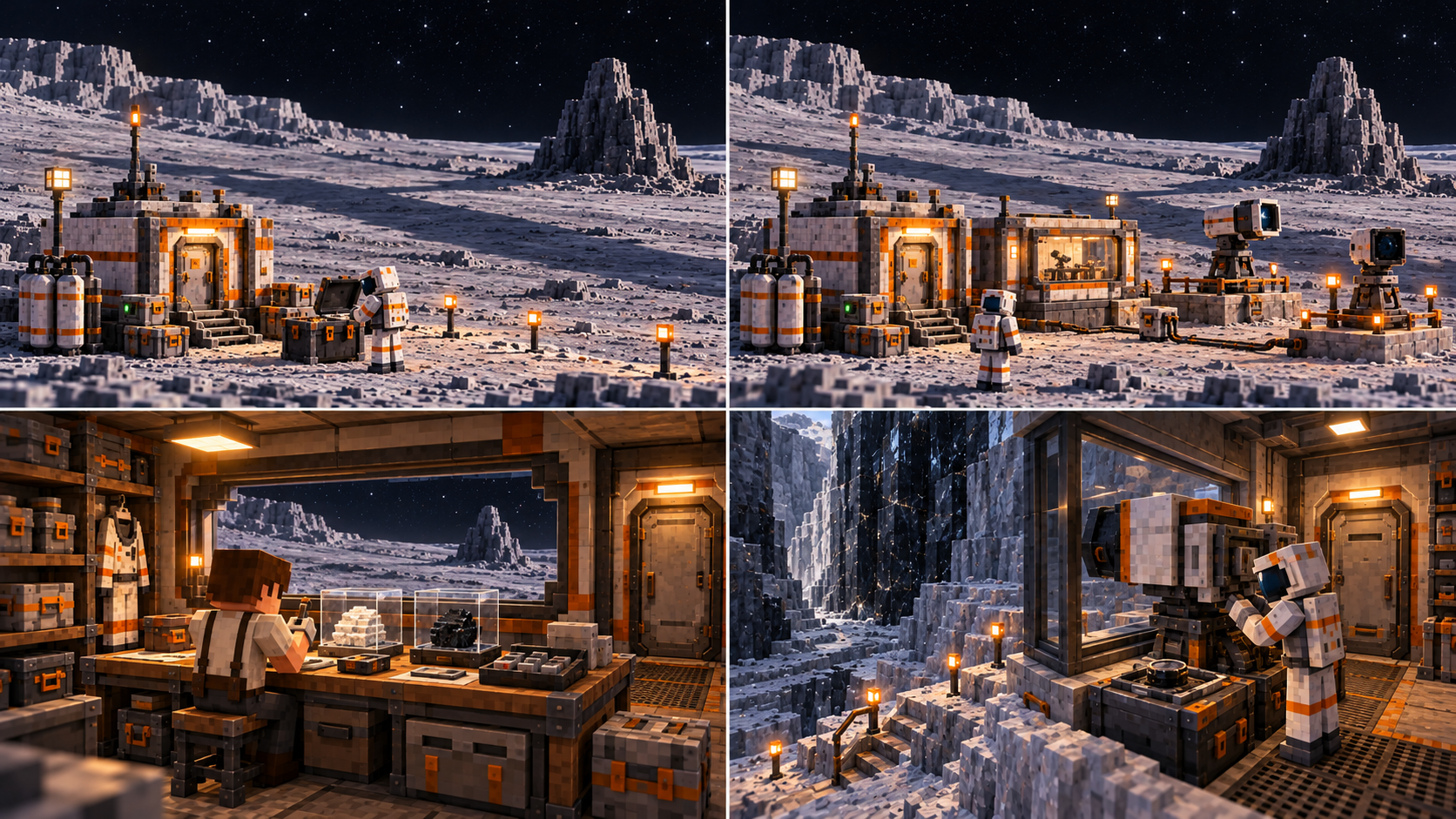
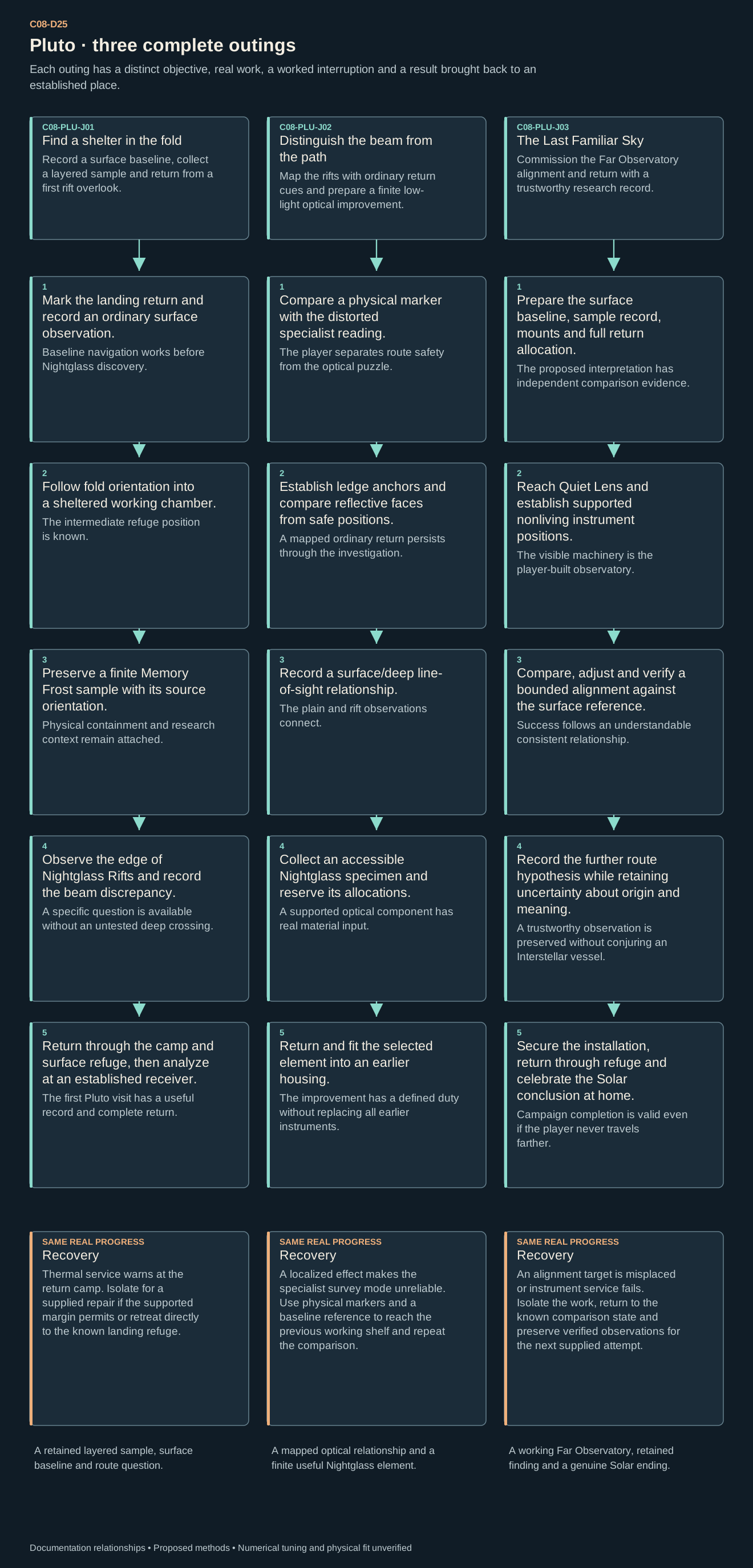
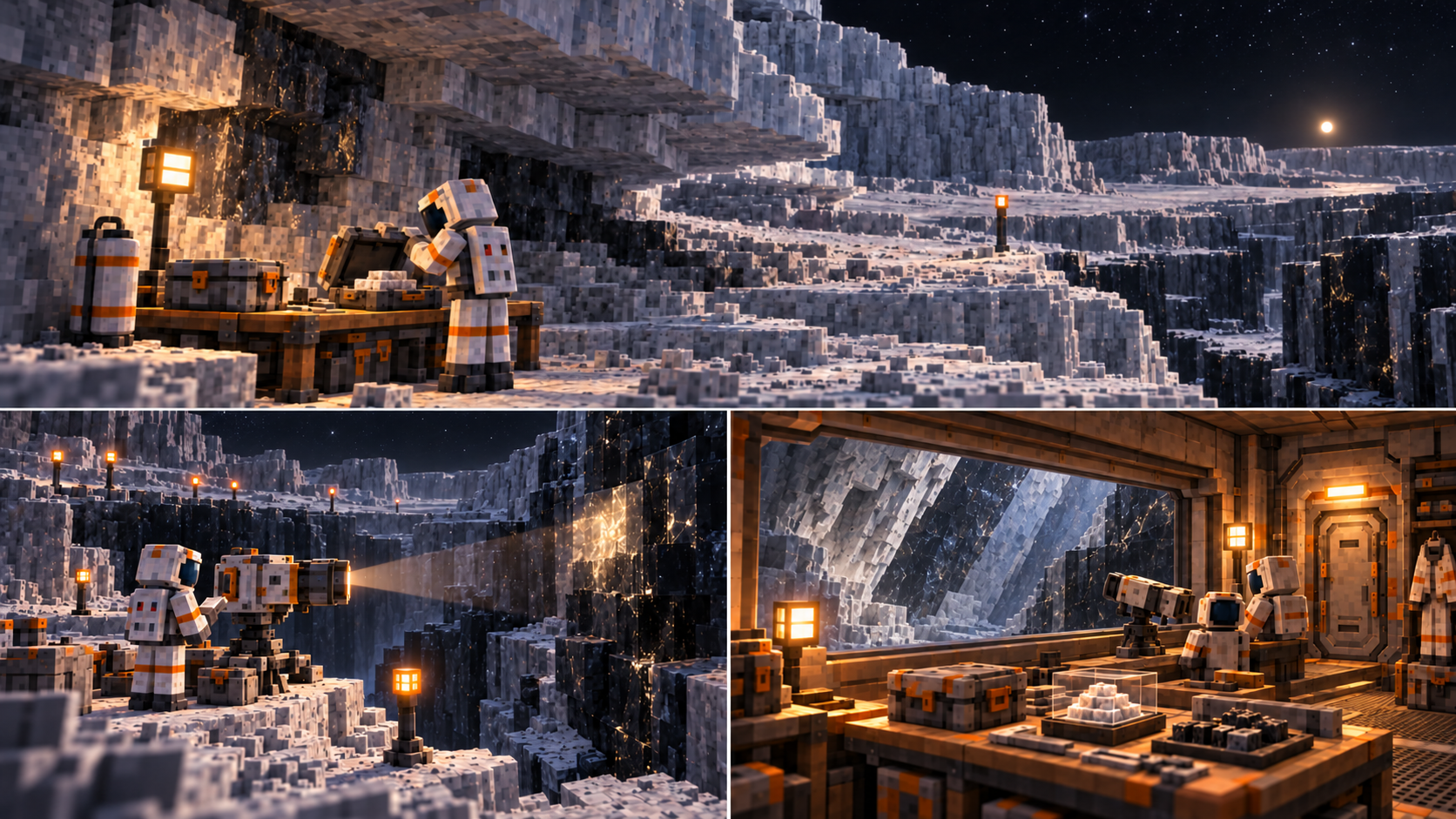
Pluto develops silence, autonomy and careful observation. Long travel is expressed through preparation, composition and routine rather than hours of forced passive waiting. The Far Observatory and Quiet Lens can complete the Solar arc with a return home. The resulting route hypothesis toward Afterlight is an invitation to a further project, not an instant Interstellar vessel or a withheld ending.
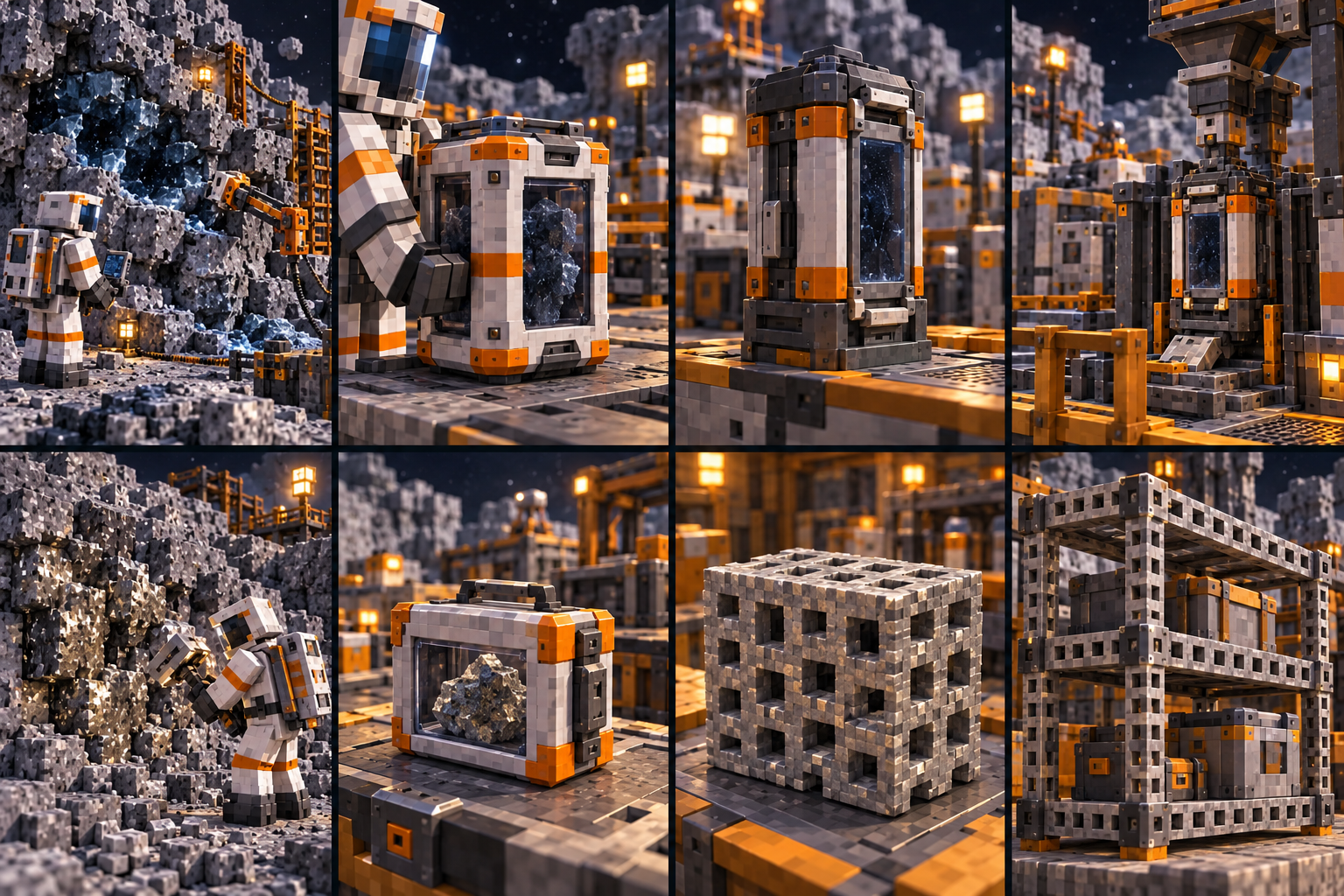
The new full destination chapters specify preparation, generation relationships, regional activities, construction stages, three substantive outings, signature projects, recovery and homecoming for each farther campaign. Their diagrams explain relationships and their artwork conveys place. Future game validation must still prove generated reachability, operating states, interfaces and the actual cost of the supported alternatives.
This preserved source describes Afterlight, Cairn or Morrow. It is proposed creative direction, not implemented game content.
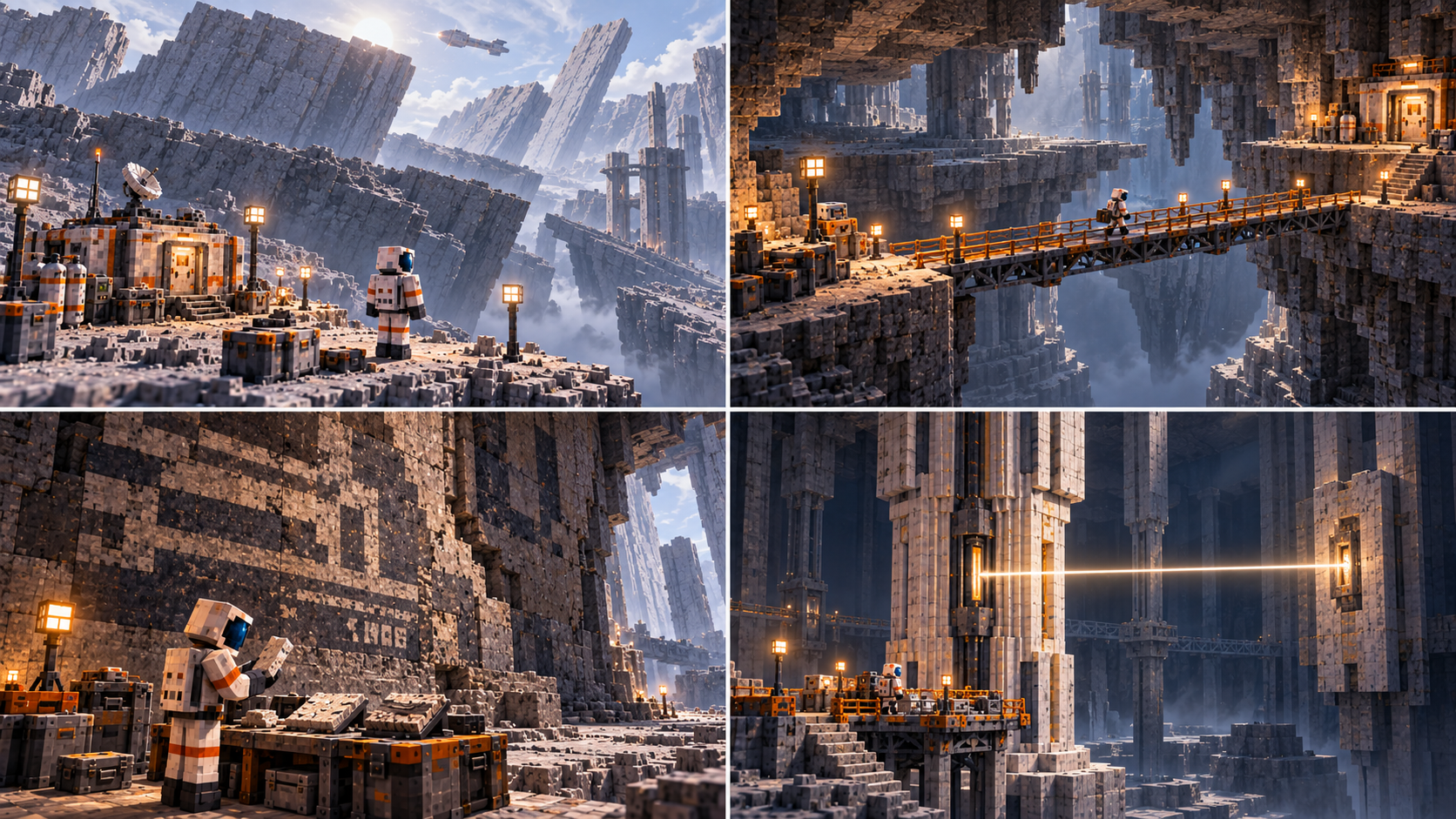
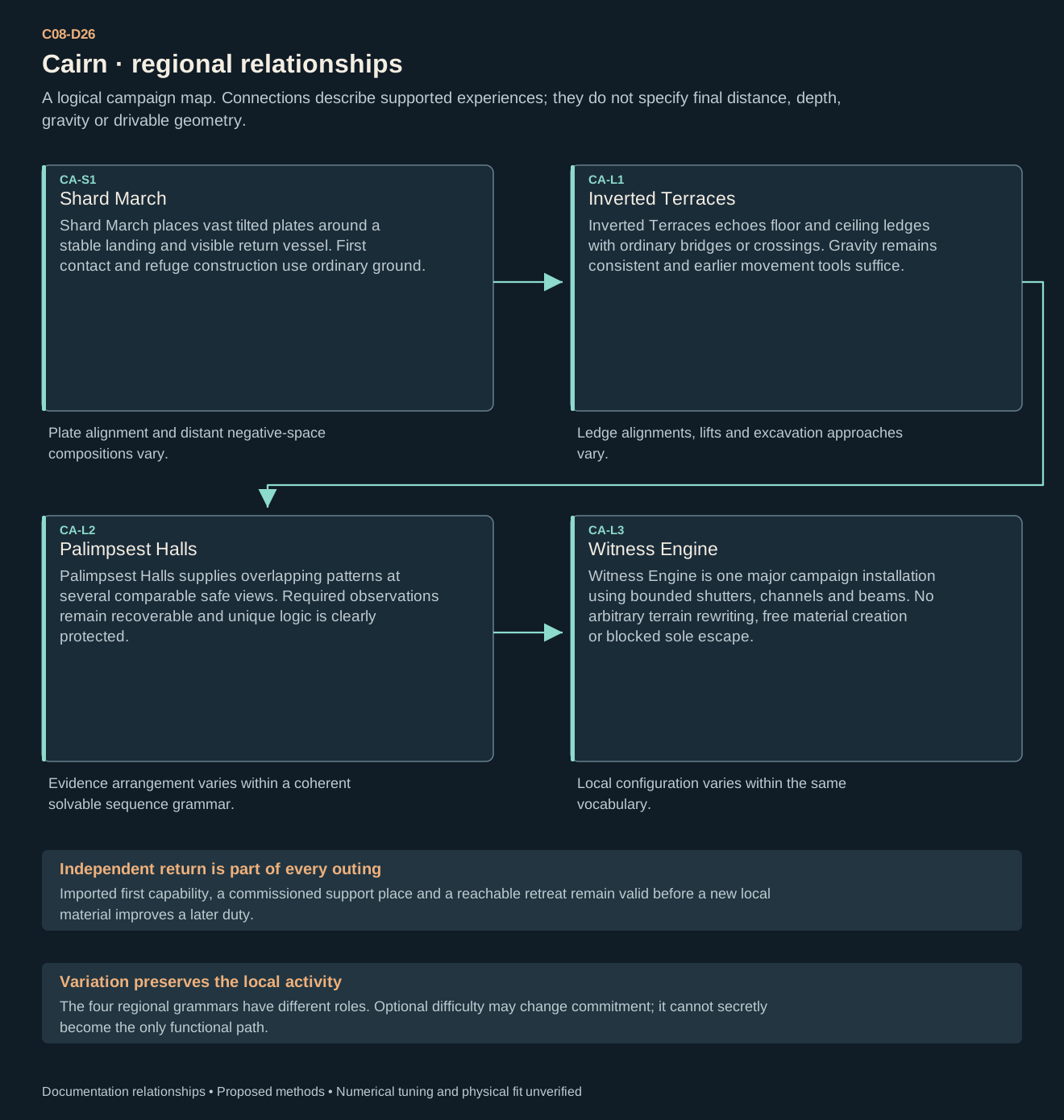
Cairn and Morrow remain the established proposed Beyond Sol continuation. Cairn uses bounded anomalous relationships that can be observed, interpreted and tested. It preserves ordinary survival, conventional movement and an independent return. A mysterious setting should not license arbitrary rules that make every previous tool or construction principle irrelevant.
This preserved source describes Afterlight, Cairn or Morrow. It is proposed creative direction, not implemented game content.
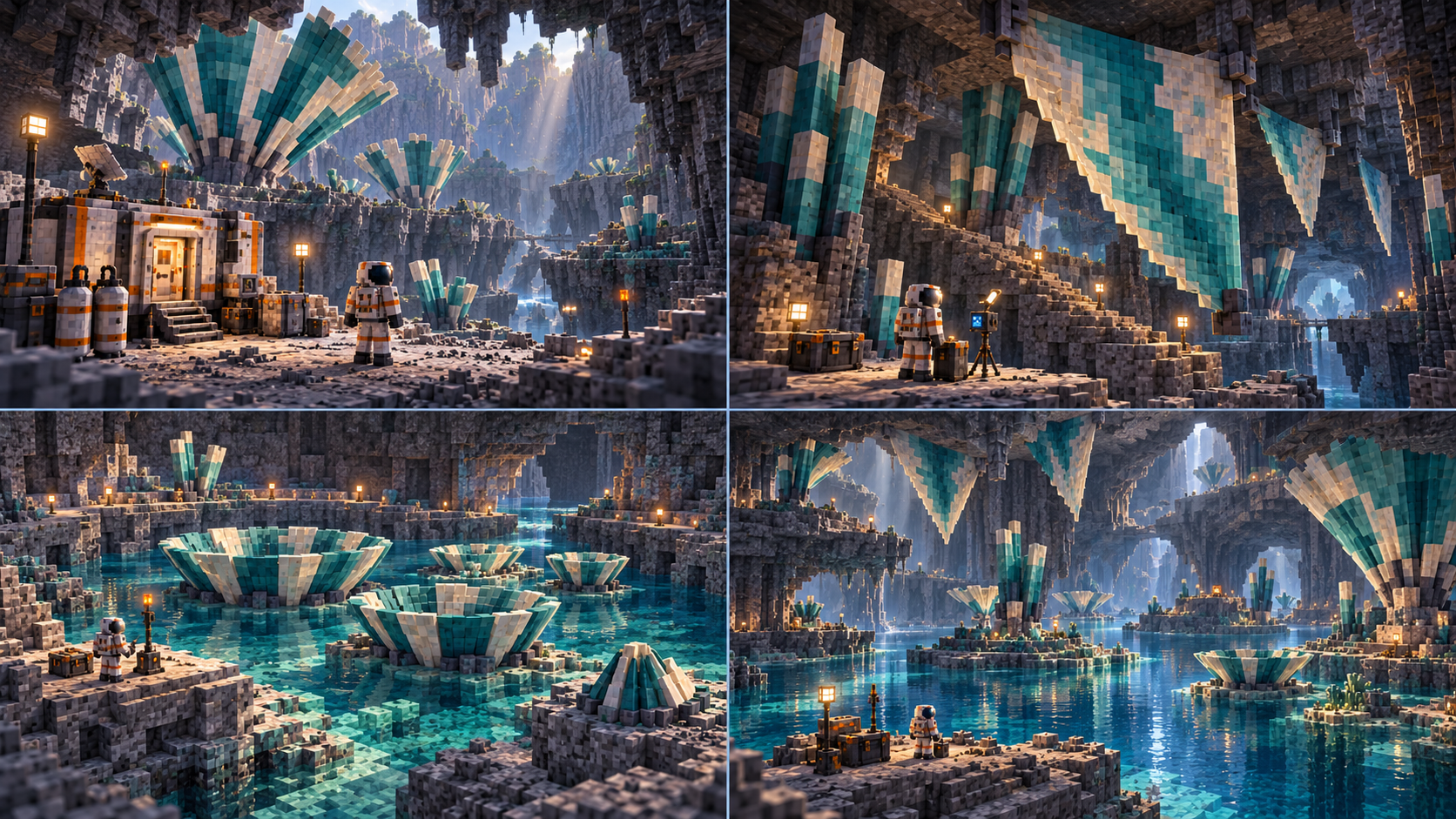
Morrow turns accumulated knowledge toward a chosen living project. Observation, careful access and bounded local restoration give the player agency without granting universal terraforming. The outcome can be a place that functions and feels cared for: a supported route, a conserved living interface, a useful work space and an explicit charter for what the player chooses to change. A deliberately modest project is a valid conclusion.
The endgame also includes everyday returns. A completed collection can be displayed at home; a distant observatory can remain a destination to visit; a compact workshop can receive an improved tool. The player is not required to abandon familiar places for a final anonymous machine. The world's scale should become visible through the relationships between those places.
This preserved source describes Afterlight, Cairn or Morrow. It is proposed creative direction, not implemented game content.
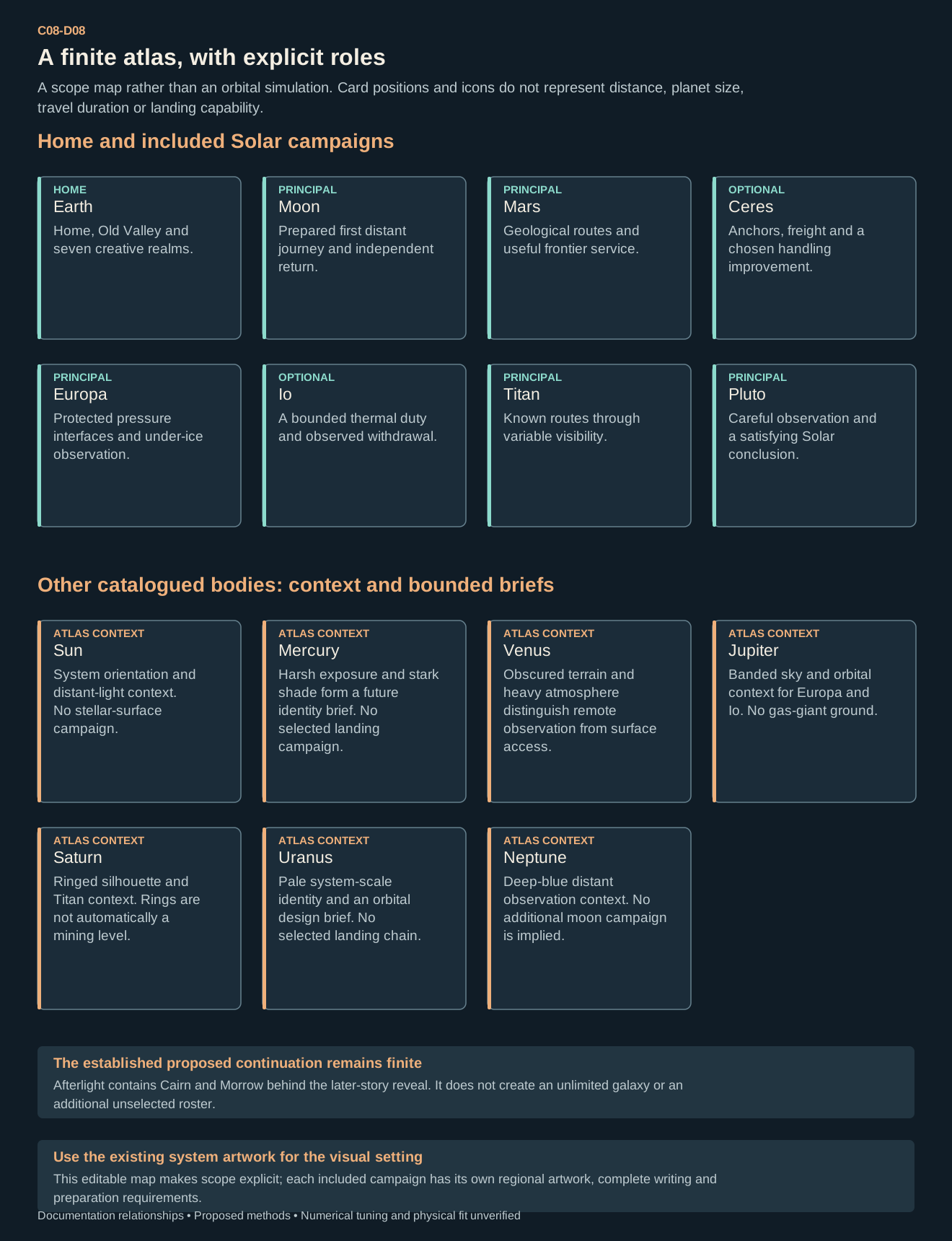
The atlas locates the established destinations and gives other already-catalogued bodies a clear role. It is deliberately finite. Bodies shown in a sky, system chart or orbital view are not automatically landable, procedural campaigns or implied future promises. The nine named destination campaigns remain the working set, with Earth as the home world and Afterlight explicitly proposed.
This preserved source describes Afterlight, Cairn or Morrow. It is proposed creative direction, not implemented game content.
| Catalogued body or context | Reference role | Included creative treatment | Boundary |
|---|---|---|---|
| Sun | Solar orientation, distant-light context and the contrast of long journeys | A system-level visual anchor and readable lighting context | No Sun landing or stellar-surface campaign |
| Mercury | Atlas body and recorded future design possibility | A concise visual identity brief based on harsh exposure, stark shade and restrained installation scale | No selected landable campaign, material gate or implied build commitment |
| Venus | Atlas body and recorded future design possibility | A concise visual identity brief of obscured terrain, heavy atmosphere and the separation of remote observation from surface access | No selected surface campaign or mandatory Venus technology |
| Jupiter | Europa/Io sky identity and orbital observation | Recognizable broad banded body, scale and position composed for the authored view | No landable gas-giant ground or new moon roster |
| Saturn | Titan context, ring-system and orbital observation | A distinctive ringed silhouette and distant observing view | Rings are not automatically a mineable or continuously simulated level |
| Uranus | Atlas and orbital overview, possible later design brief | A quiet pale system-scale identity distinct from Saturn and Neptune | No selected landing campaign or new destination chain |
| Neptune | Atlas and orbital overview, possible later design brief | A deep-blue distant identity and observational context | No selected landing campaign or new moon content |
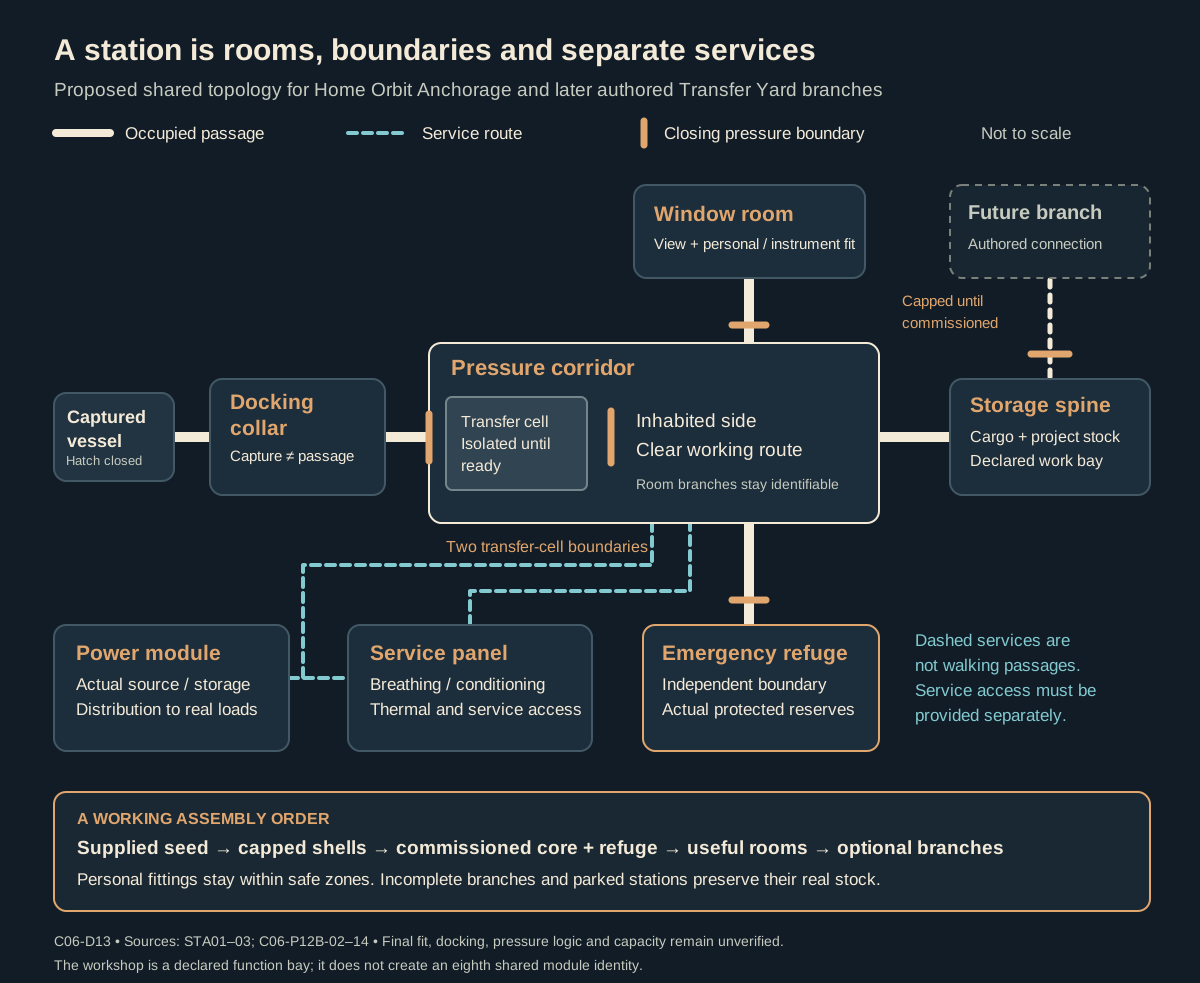
| Home Orbit Anchorage and Transfer Yard | Existing station directions supporting docking, transfer and observation | Separate occupied modules, capture, transfer and service responsibilities | No universal seamless orbital mechanics, station economy or arbitrary moving base |
| Afterlight | Proposed bounded continuation containing Cairn and Morrow | Route discovery, independent expedition and two specific destination campaigns | No unlimited galaxy, coordinate field or additional campaign roster |
These brief roles complete the documentation of the existing atlas entries. They supersede any interpretation that an old 'future design brief' backlog label promised full new campaigns in this programme. Their artwork should show context or a clearly qualified concept, not a fabricated screenshot of implemented terrain.
This preserved source describes Afterlight, Cairn or Morrow. It is proposed creative direction, not implemented game content.
The map separates the included Solar campaigns from existing atlas-context bodies and preserves the finite proposed continuation. Positions are for reading, not orbital scale.
Status: Maintainer-authored explanatory reference; creative recommendation, not runtime or engineering proof.
Final coordinates, clearances or block counts; Selected recipes, rates, capacity or balance; Implemented behavior or completed game tests
Related identities: SYS01 · DST01 · DST02 · DST03 · DST04 · DST05 · DST06 · DST07
Writing: C08-ATLAS-01
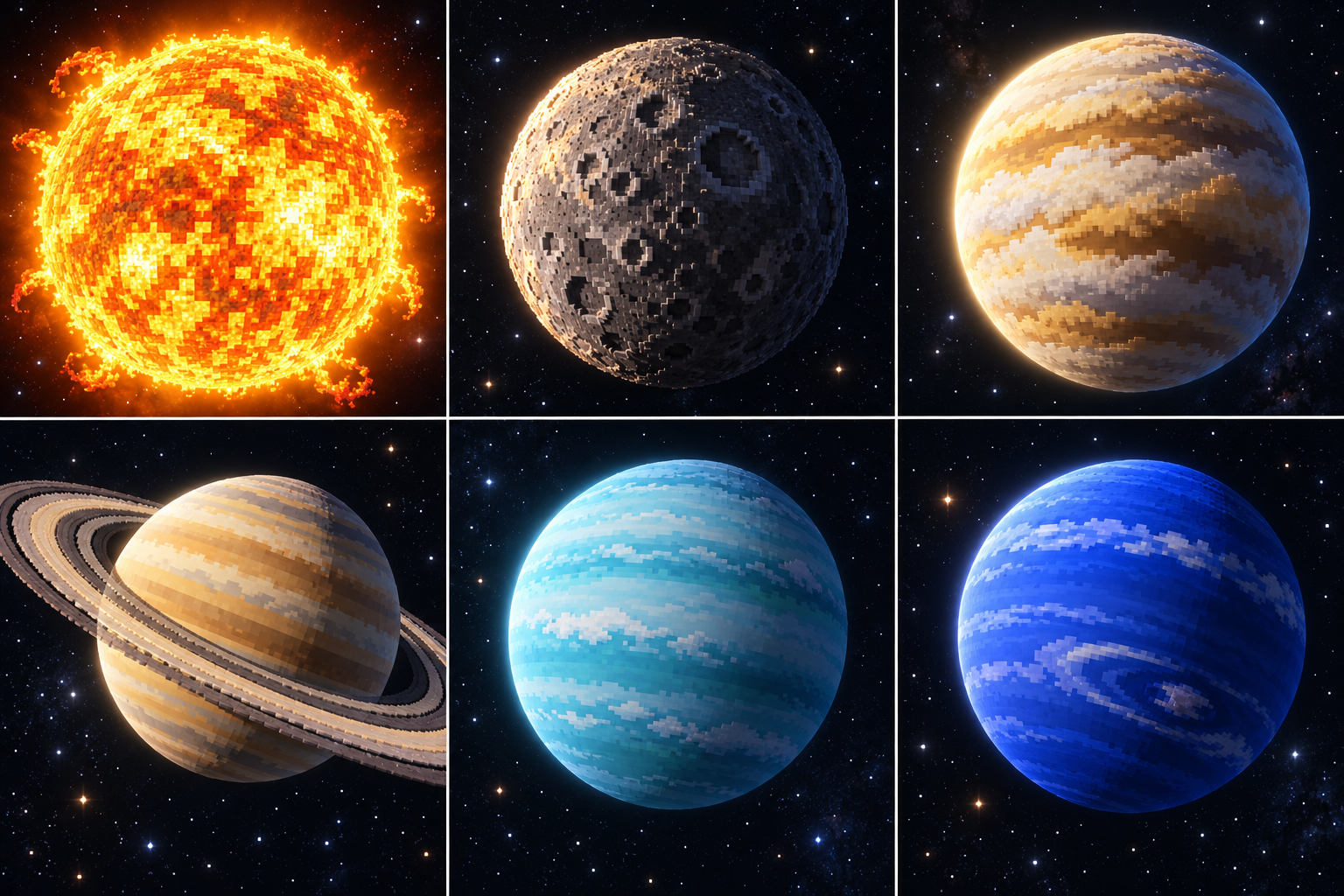
Six context portraits complement the campaign atlas: the Sun, Mercury, Venus, Saturn and its rings, Uranus and Neptune. Panel size, placement and lighting do not represent physical scale, orbital distances or playable surfaces.
Status: Maintainer-selected concept candidate; final user approval not implied.
Mercury, Venus, Uranus and Neptune receive scope briefs only; their campaigns remain unselected. Saturn and the ice giants have no solid landable surface in this direction.; Solar brightness, terrain and cloud appearance are illustrative; this is not astronomical observation or simulation evidence.; Concept views do not prove measured fit, numerical capacity, pressure behavior or runtime implementation. Final user approval is not implied by maintainer selection.
Related identities: SYS-SUN-OV · SYS-MERCURY-OV · SYS-VENUS-OV · SYS-SATURN-OV · SYS-URANUS-OV · SYS-NEPTUNE-OV
Writing: C08-ATLAS-01
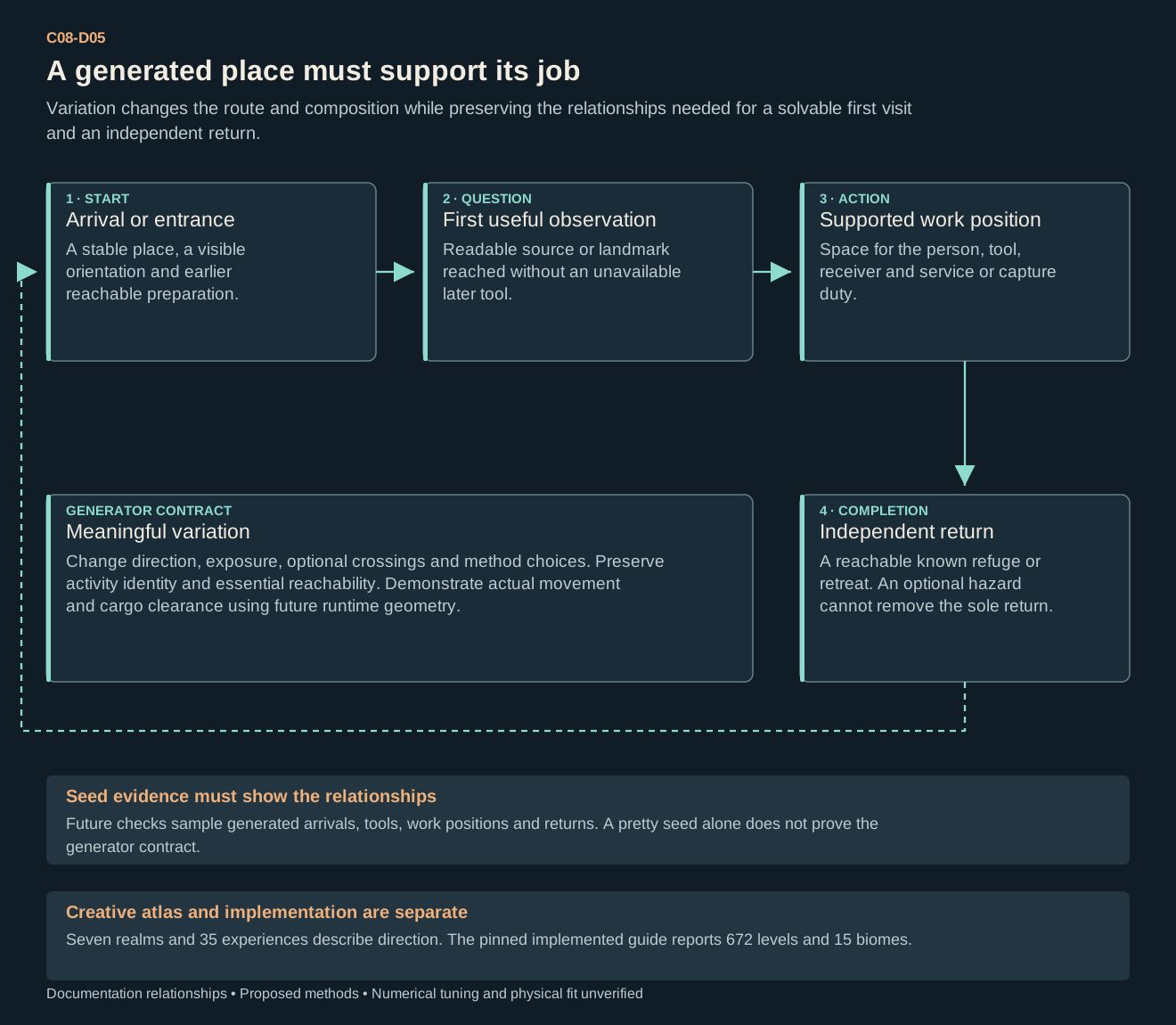
Every authored campaign needs a solvable local start: a viable arrival or entrance, an independently supported refuge or return position, reachable initial observations and enough accessible earlier-compatible stock to perform its intended first work. The generator may vary their arrangement. It must preserve the relationships that allow the campaign to begin without an exceptional seed or an unavailable late resource.
Critical routes should connect meaningful positions. A refuge, survey shelf, sample interface and return point each need space appropriate to their actual duty. A route diagram represents these relationships; it does not assign final coordinates or prove a rover can turn. The eventual generator must demonstrate path clearance using the actual traversal model and should provide diagnosis when a required connection cannot be satisfied.
Optional spaces can be strange, remote or difficult. Their rewards and hazards should not silently govern a mandatory route. A blocked optional approach can make an expedition change its plan while the supported return remains valid. Variation should avoid combining every adverse condition at the one compulsory interaction. The player needs enough readable evidence to choose retreat before an irreversible loss.
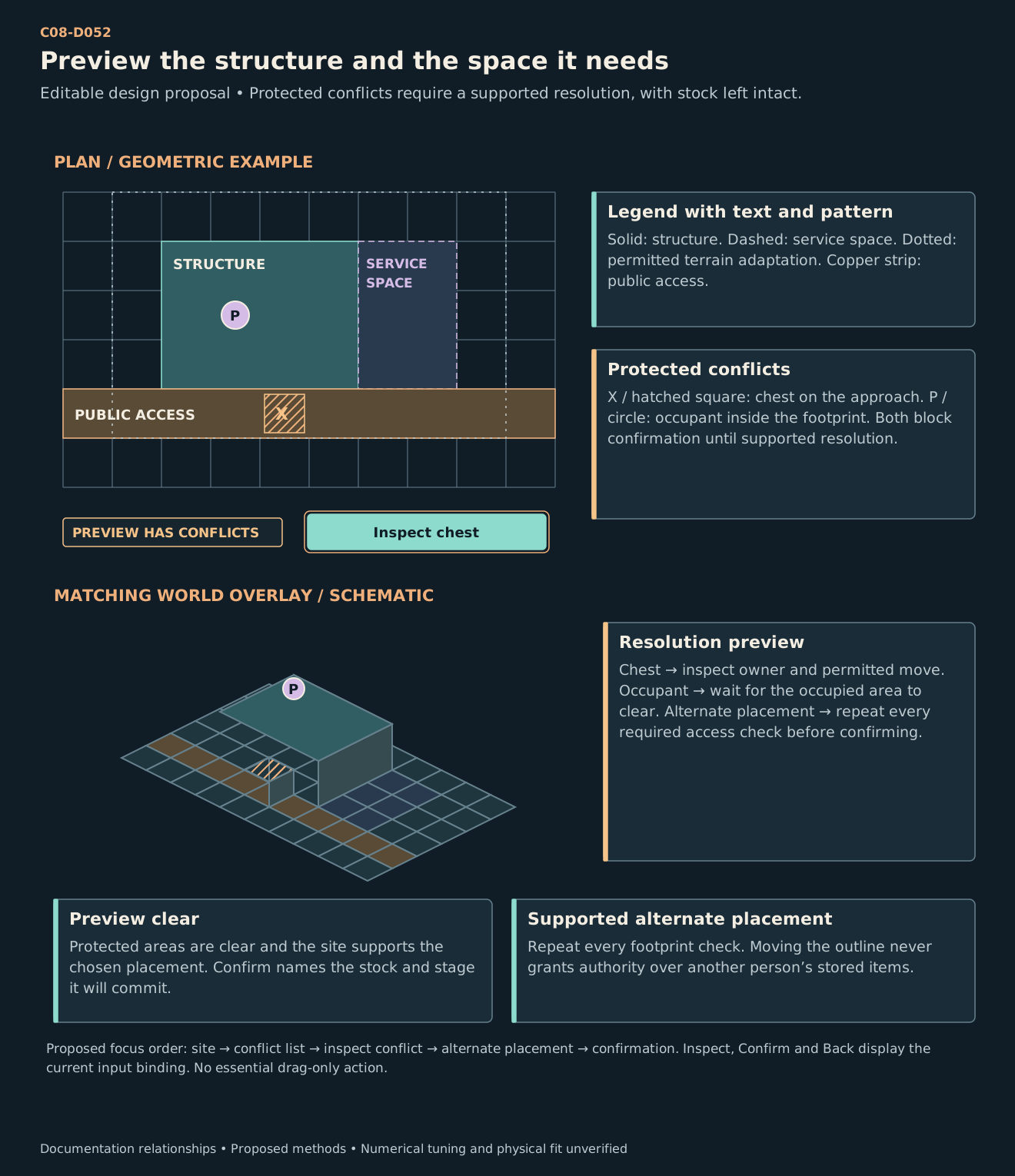
Construction must respect the generated site's operating needs. A controller validates the declared footprint, connection faces, occupied areas, service access and forbidden obstructions. It should identify the failing relationship directly. It cannot infer that a decorative wall creates a pressure boundary, or that a stack of cargo leaves a usable boarding path. Final dimensions and collision envelopes belong to the implementation's measured evidence.
Arrival, observation, work and return form the critical local contract. Meaningful variation changes the player choice while retaining the complete supported loop.
Status: Maintainer-authored explanatory reference; creative recommendation, not runtime or engineering proof.
Final coordinates, clearances or block counts; Selected recipes, rates, capacity or balance; Implemented behavior or completed game tests
Related identities: EAR01 · EAR07
Writing: C08-ATLAS-02 · C08-JOURNEY-04 · C08-BUILD-06
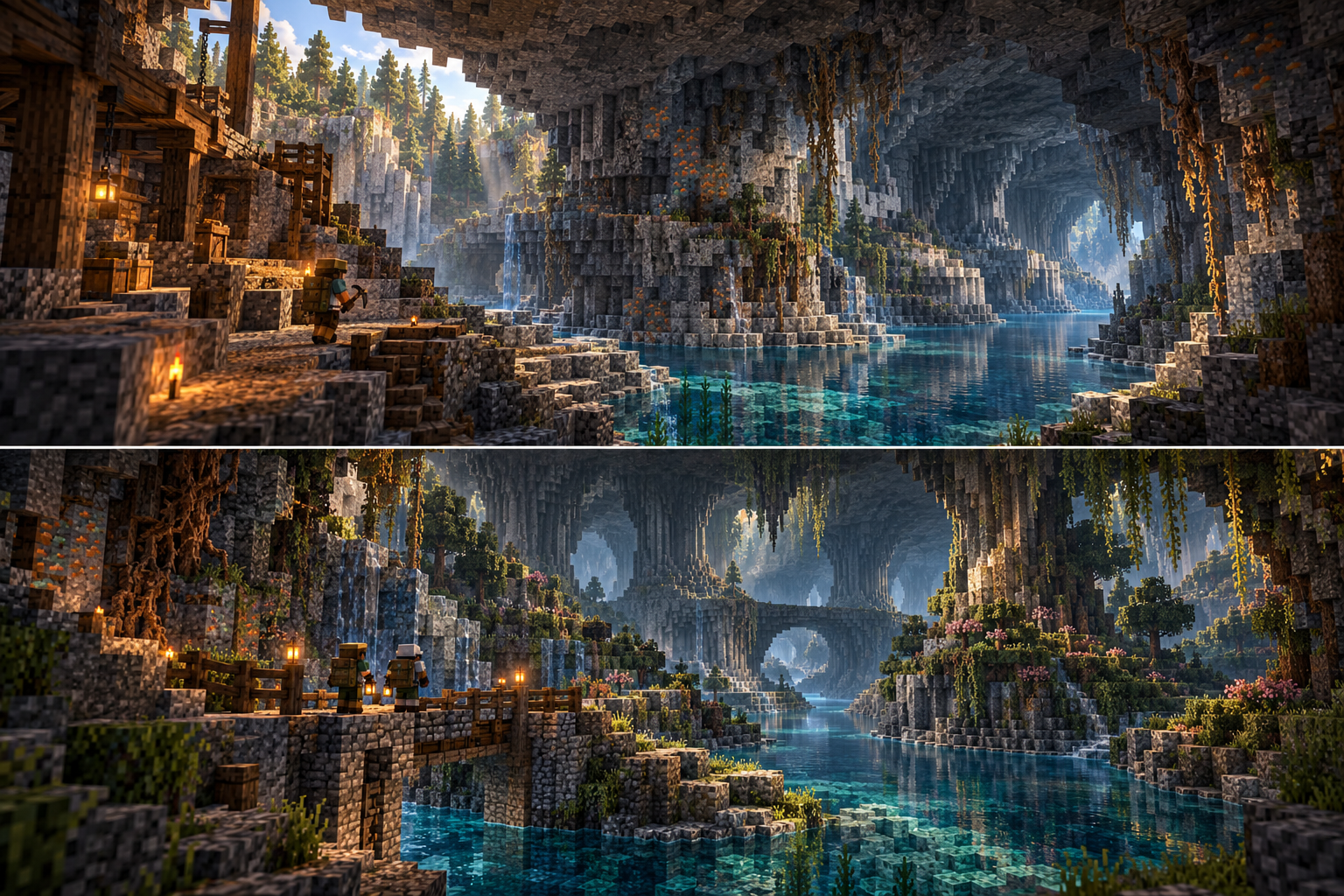
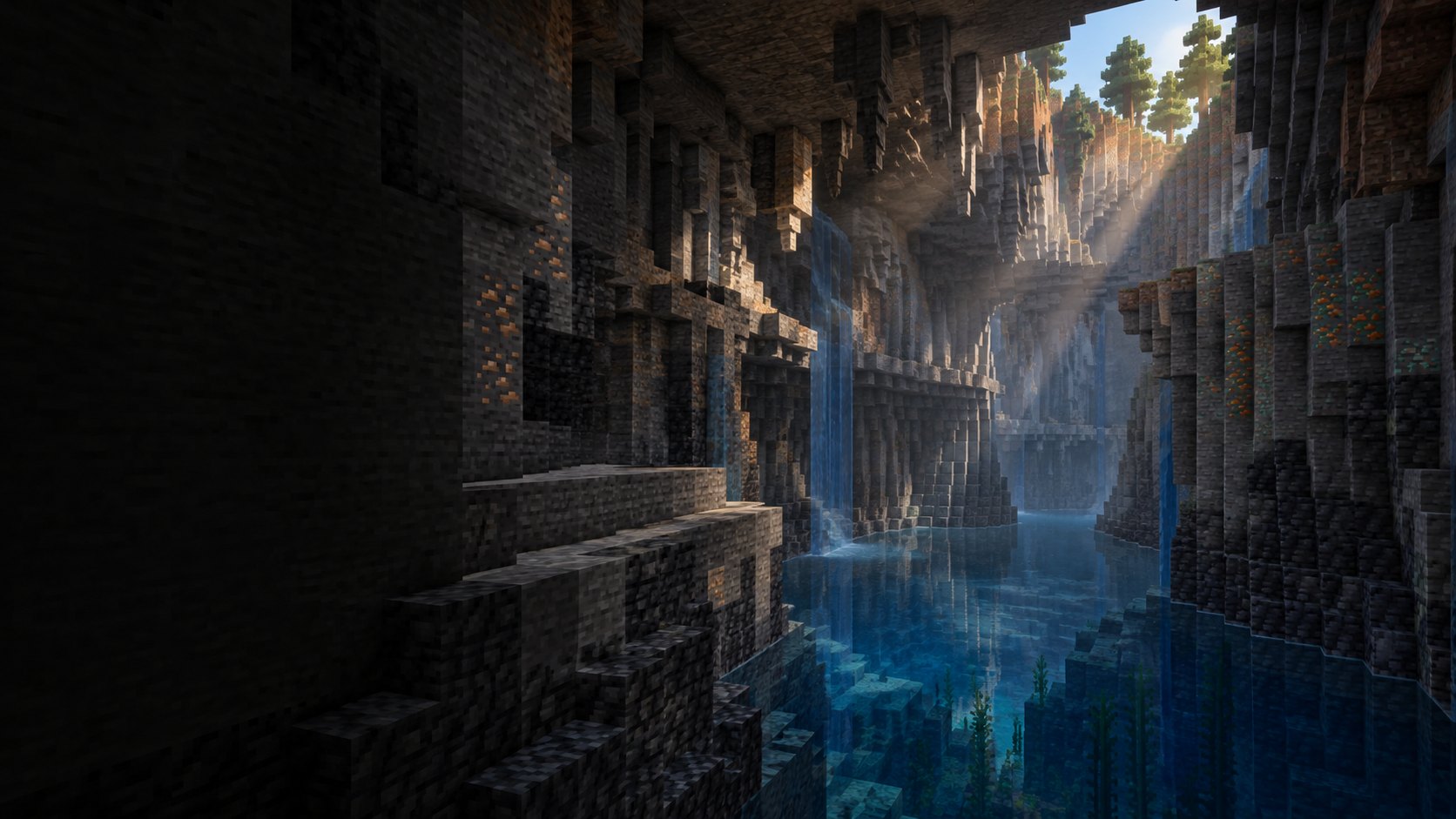
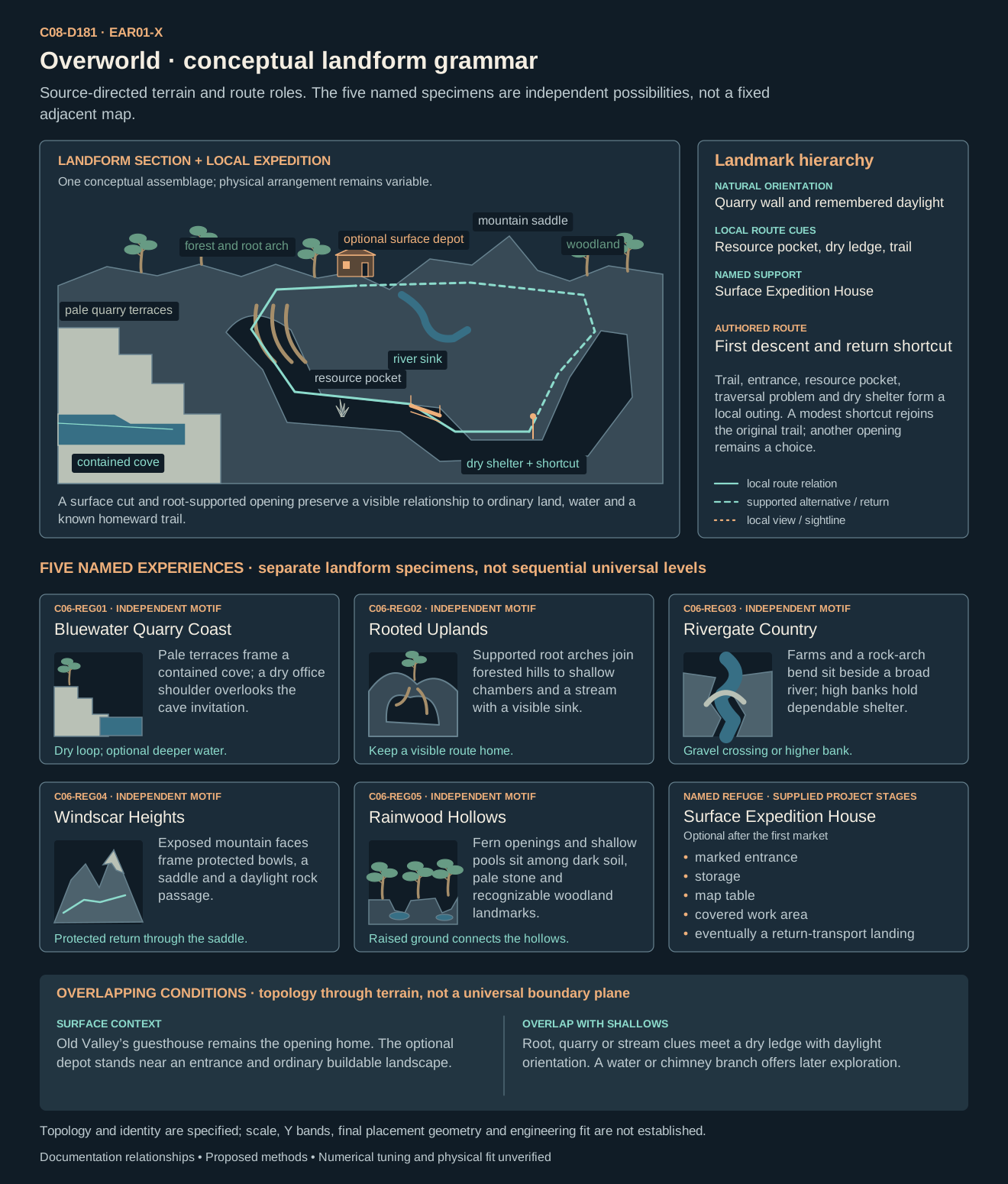
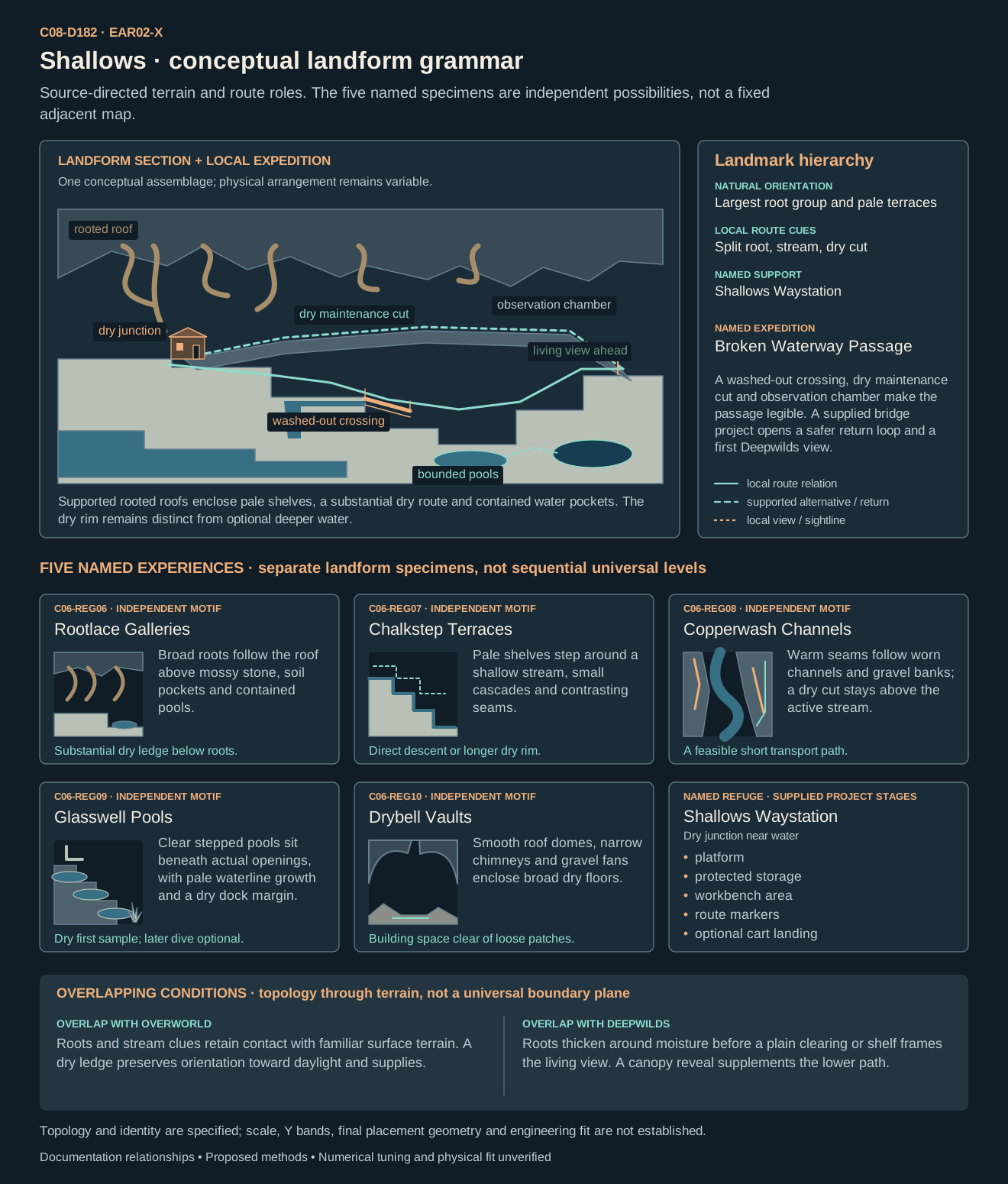
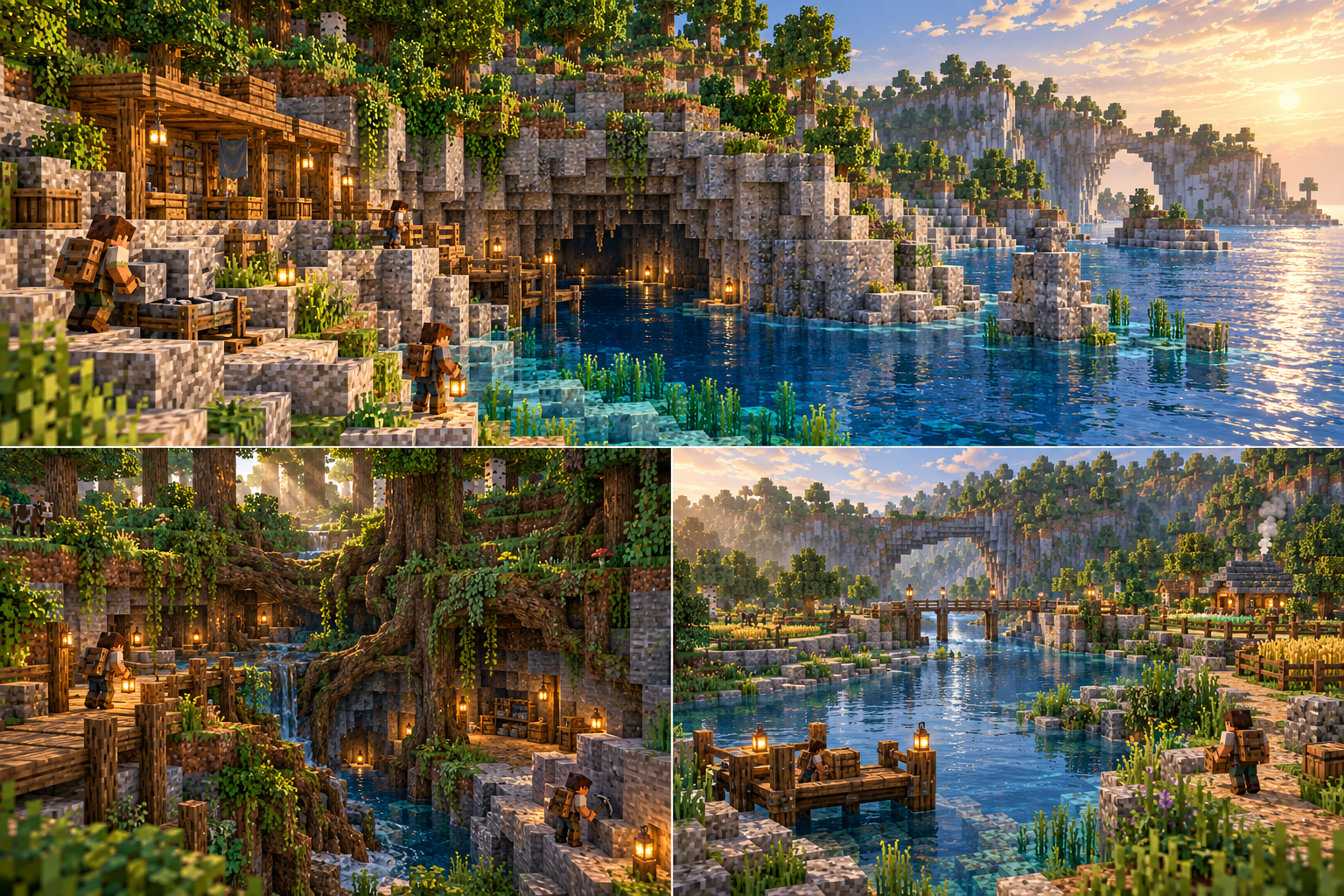
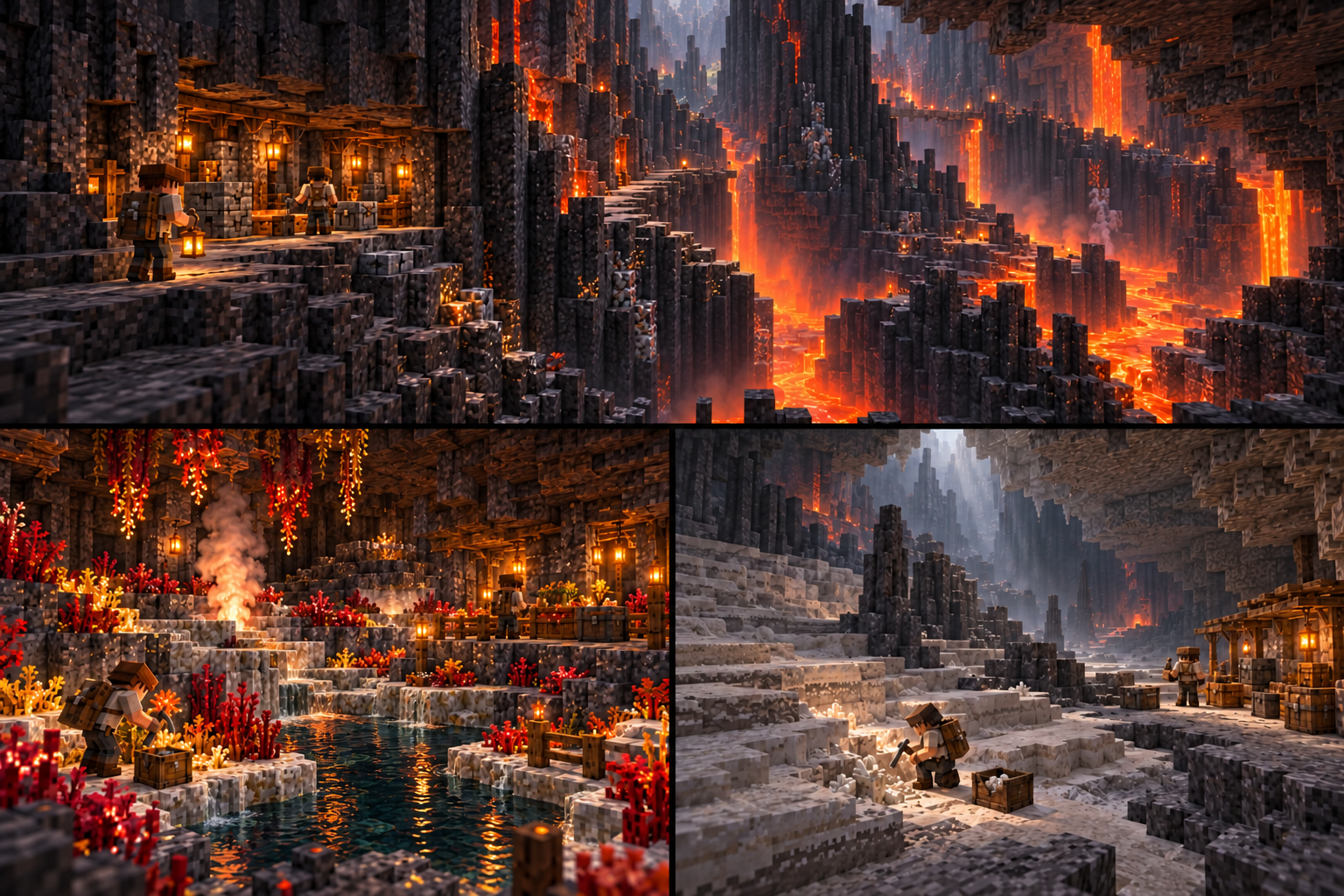
Natural overlap keeps a recognizable approach and a reason to continue. Local quarry work and a repaired crossing connect familiar preparation with deeper discovery.
Status: Maintainer-selected concept candidate; final user approval not implied.
A concept does not prove collision, traversal, dimensions, numerical balance or implemented generation.; Overlapping terrain and a pictured route express a generation intention; complete route connectivity still requires future seed and traversal tests.; Source lighting and shader treatment are visual direction. Shader-off implementation remains a separate requirement.
Related identities: EAR01 · EAR02 · EAR03
Writing: C08-ATLAS-02 · C08-JOURNEY-04
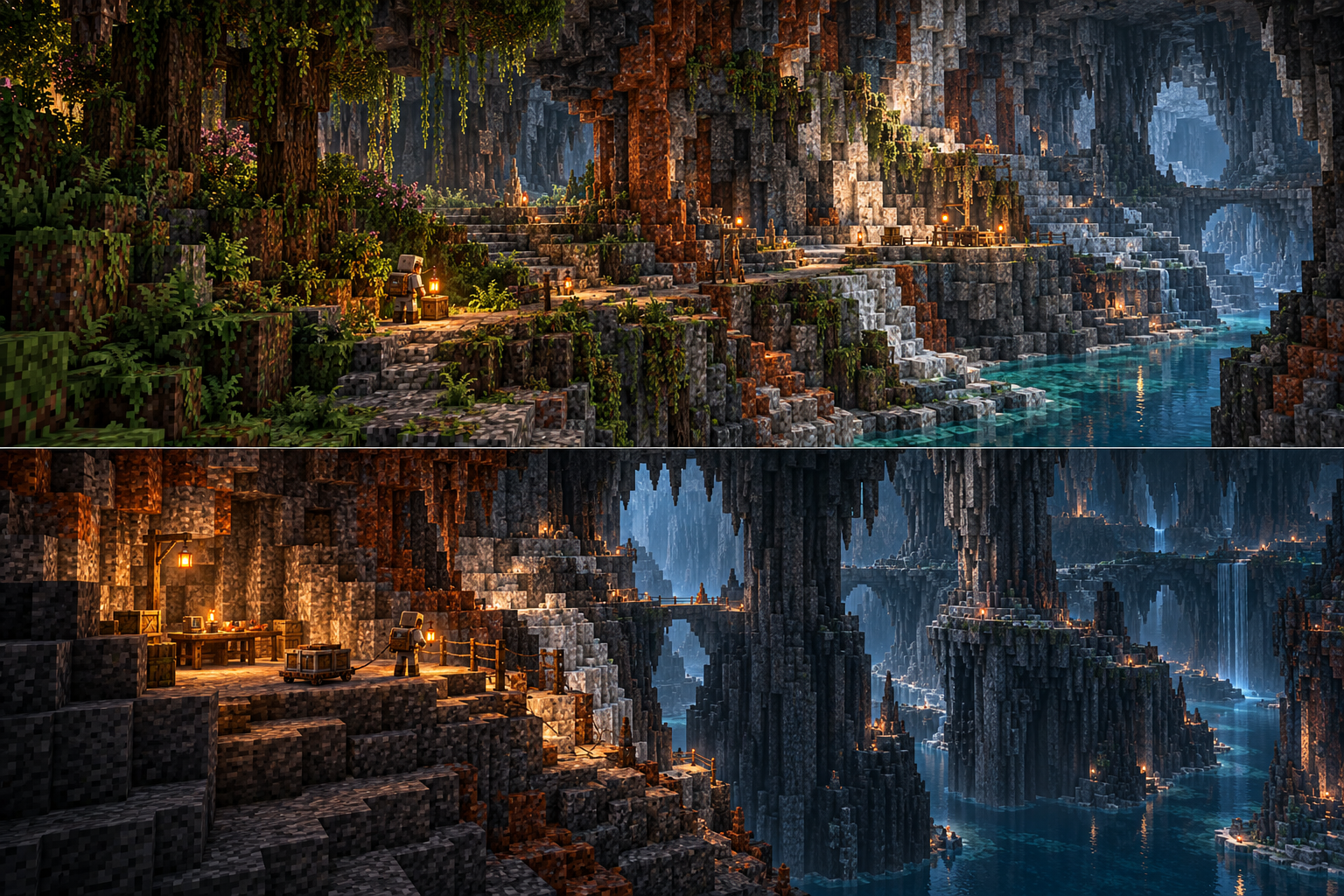
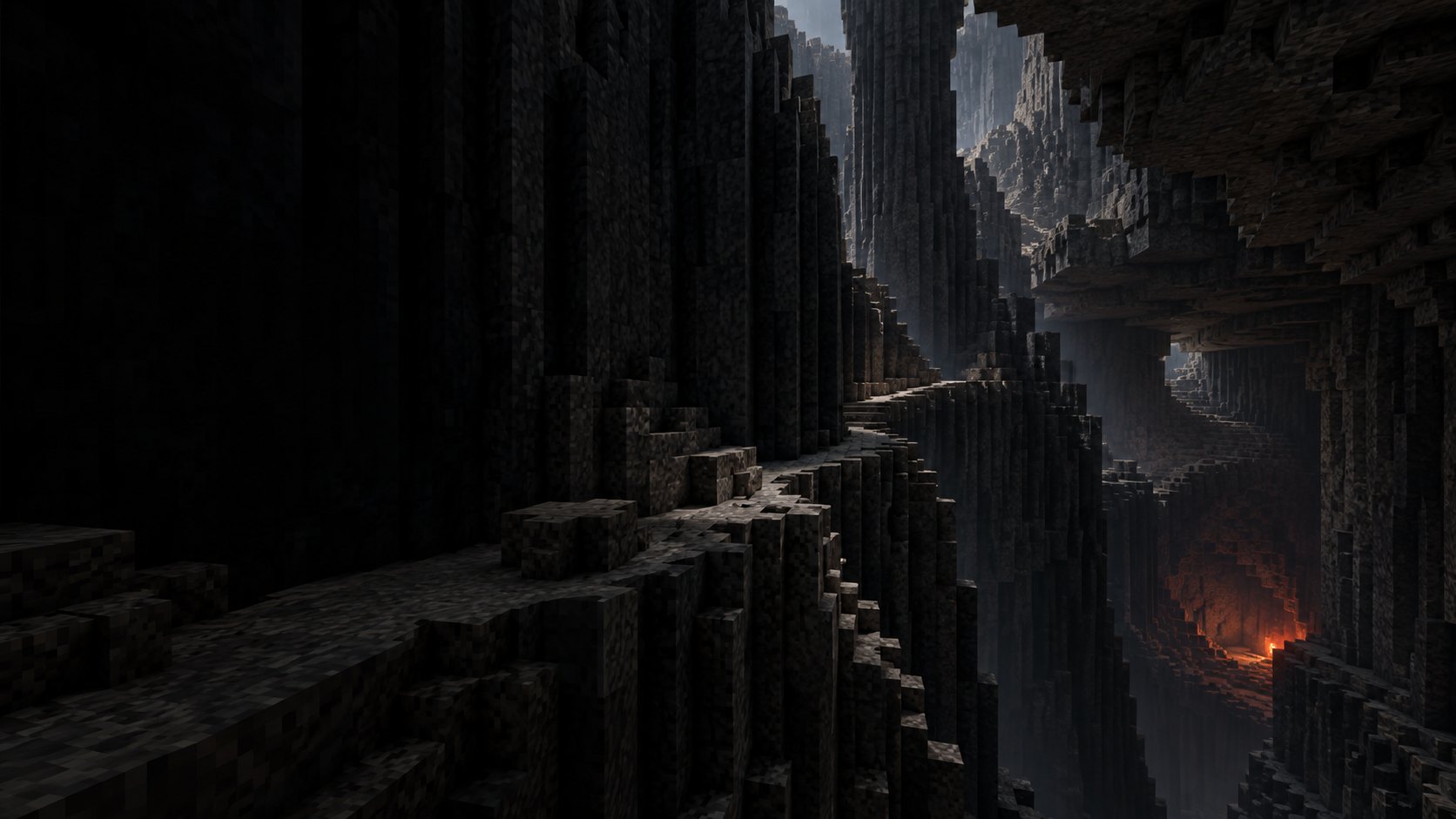
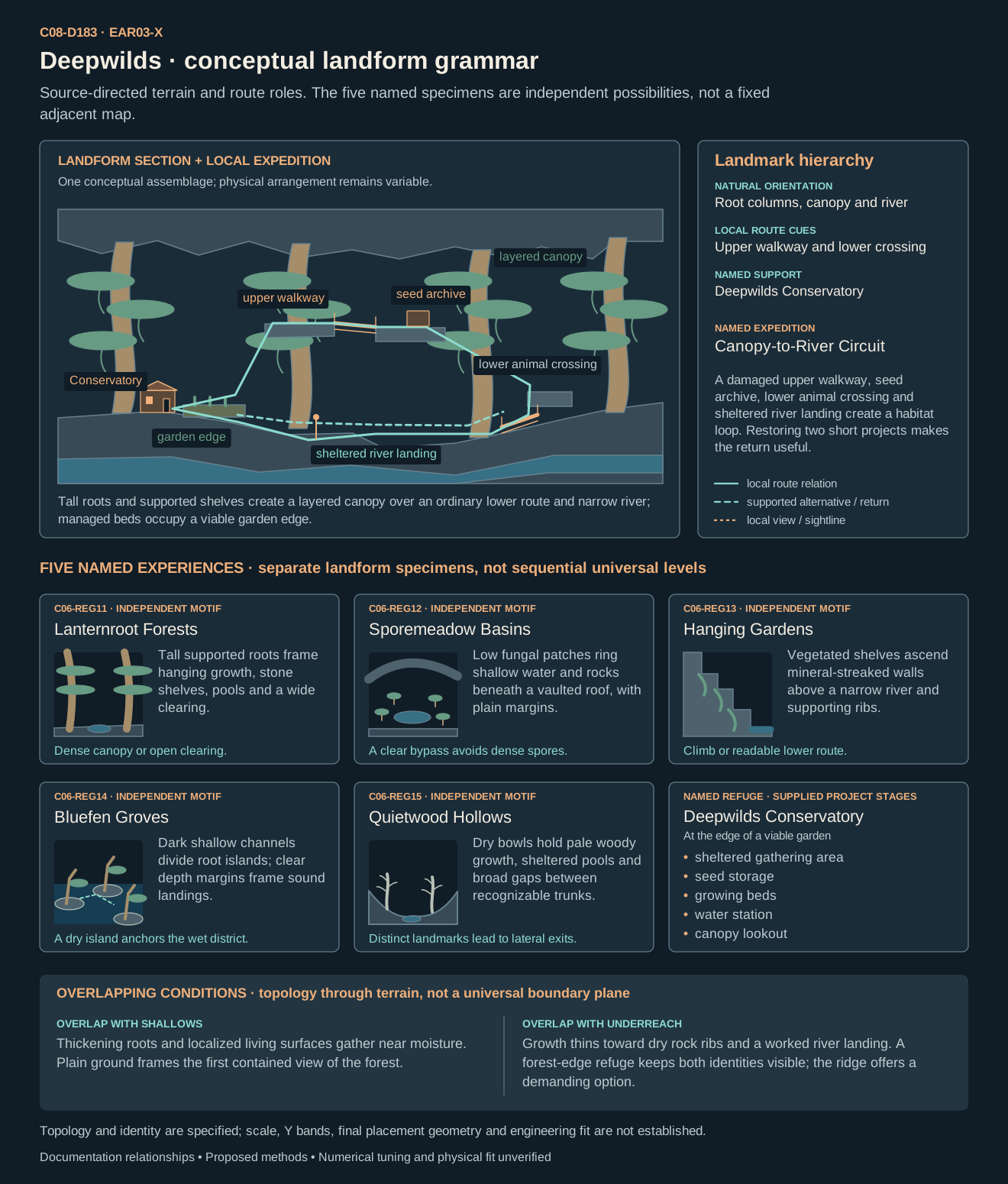
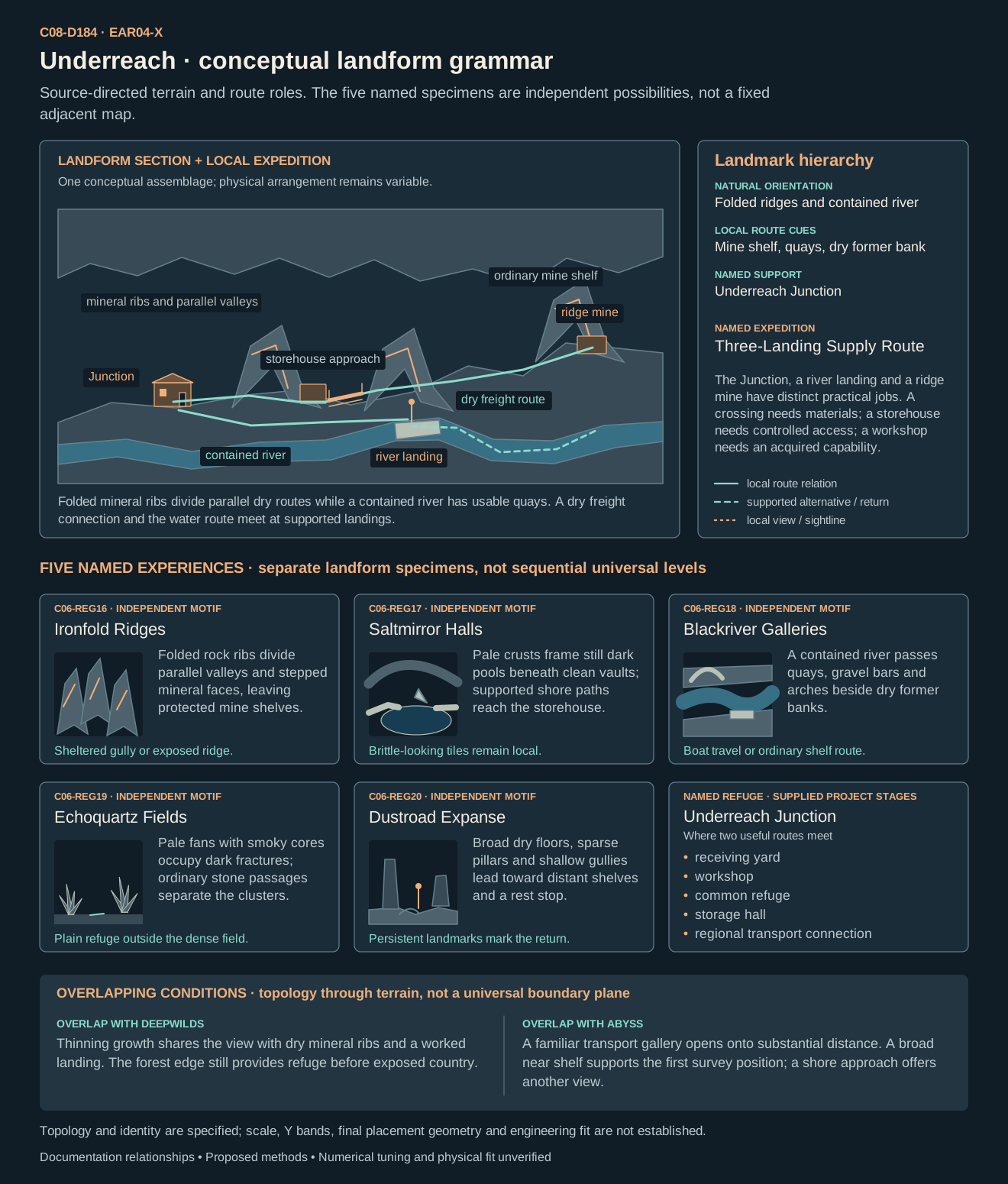
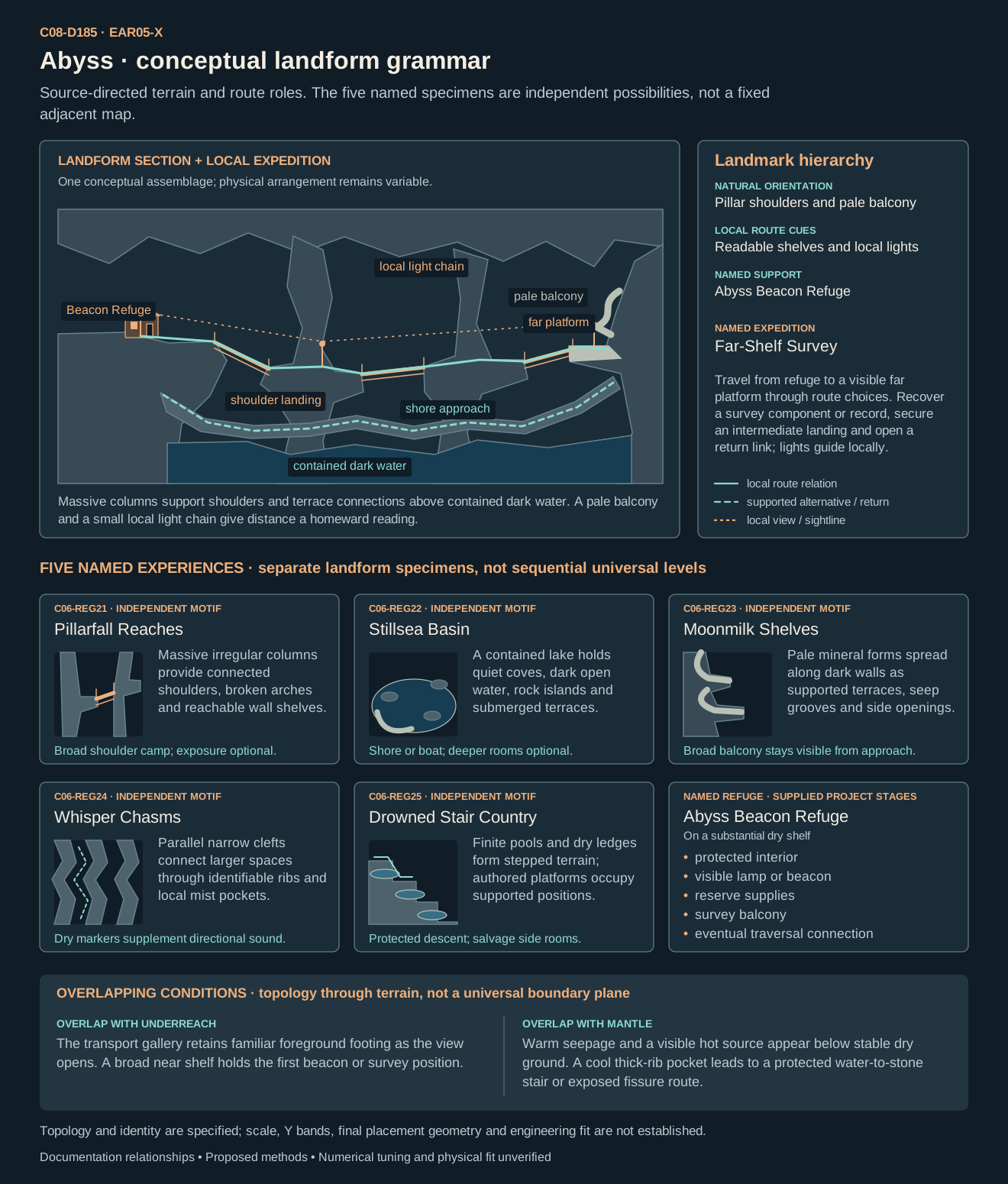
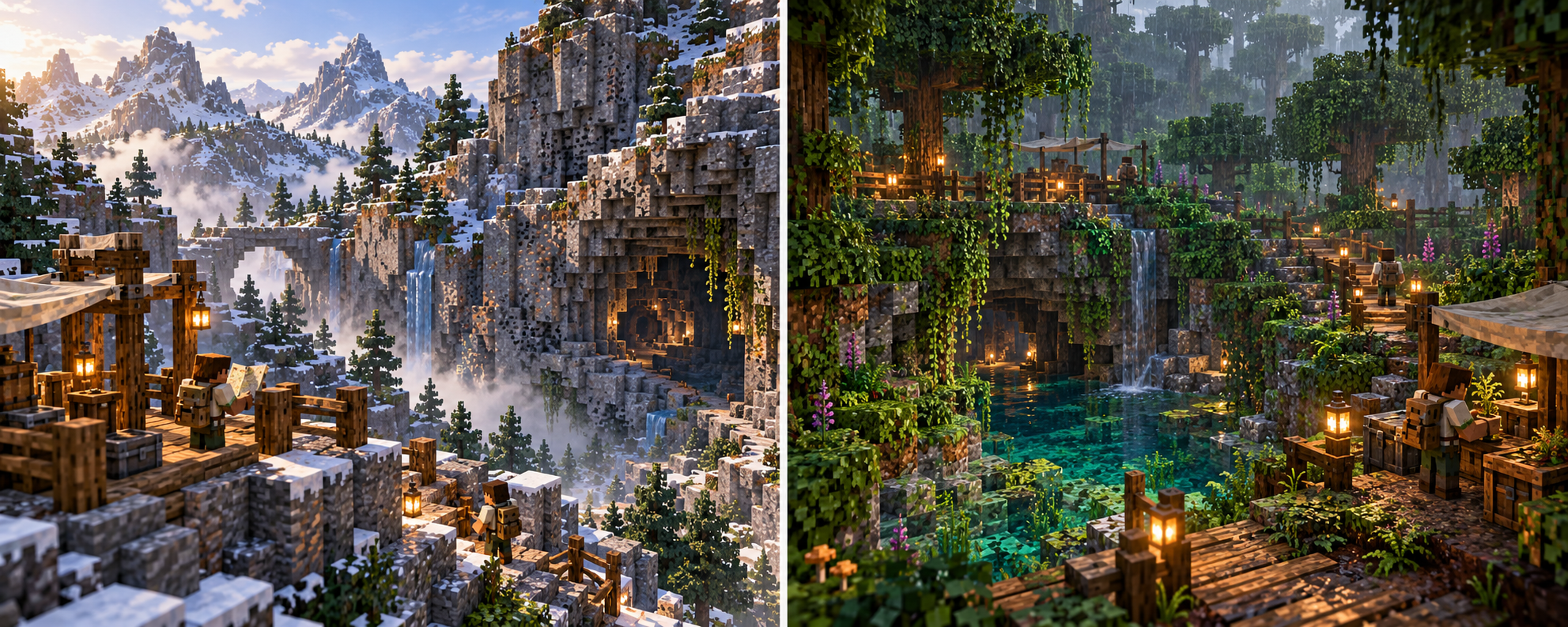
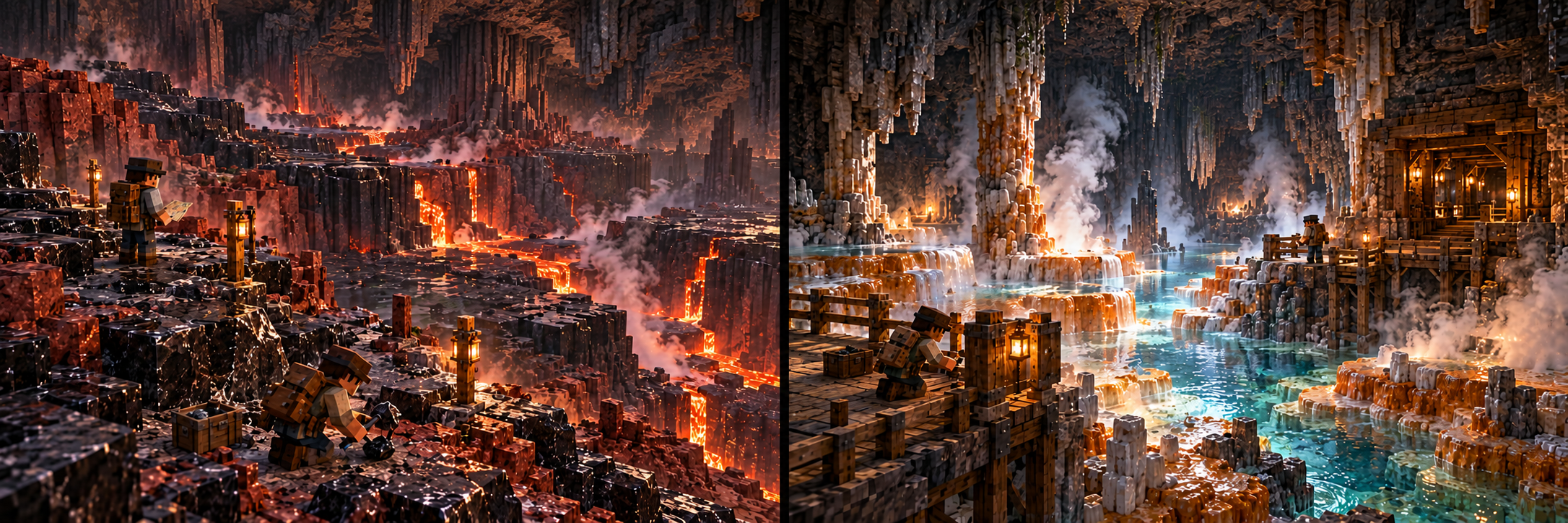
Vegetation thins through a mixed mineral region before the worked route reaches the scale of the Abyss. These are connected environmental experiences, without fixed depth bands.
Status: Maintainer-selected concept candidate; final user approval not implied.
A concept does not prove collision, traversal, dimensions, numerical balance or implemented generation.; Overlapping terrain and a pictured route express a generation intention; complete route connectivity still requires future seed and traversal tests.; Source lighting and shader treatment are visual direction. Shader-off implementation remains a separate requirement.
Related identities: EAR03 · EAR04 · EAR05
Writing: C08-ATLAS-02 · C08-JOURNEY-04
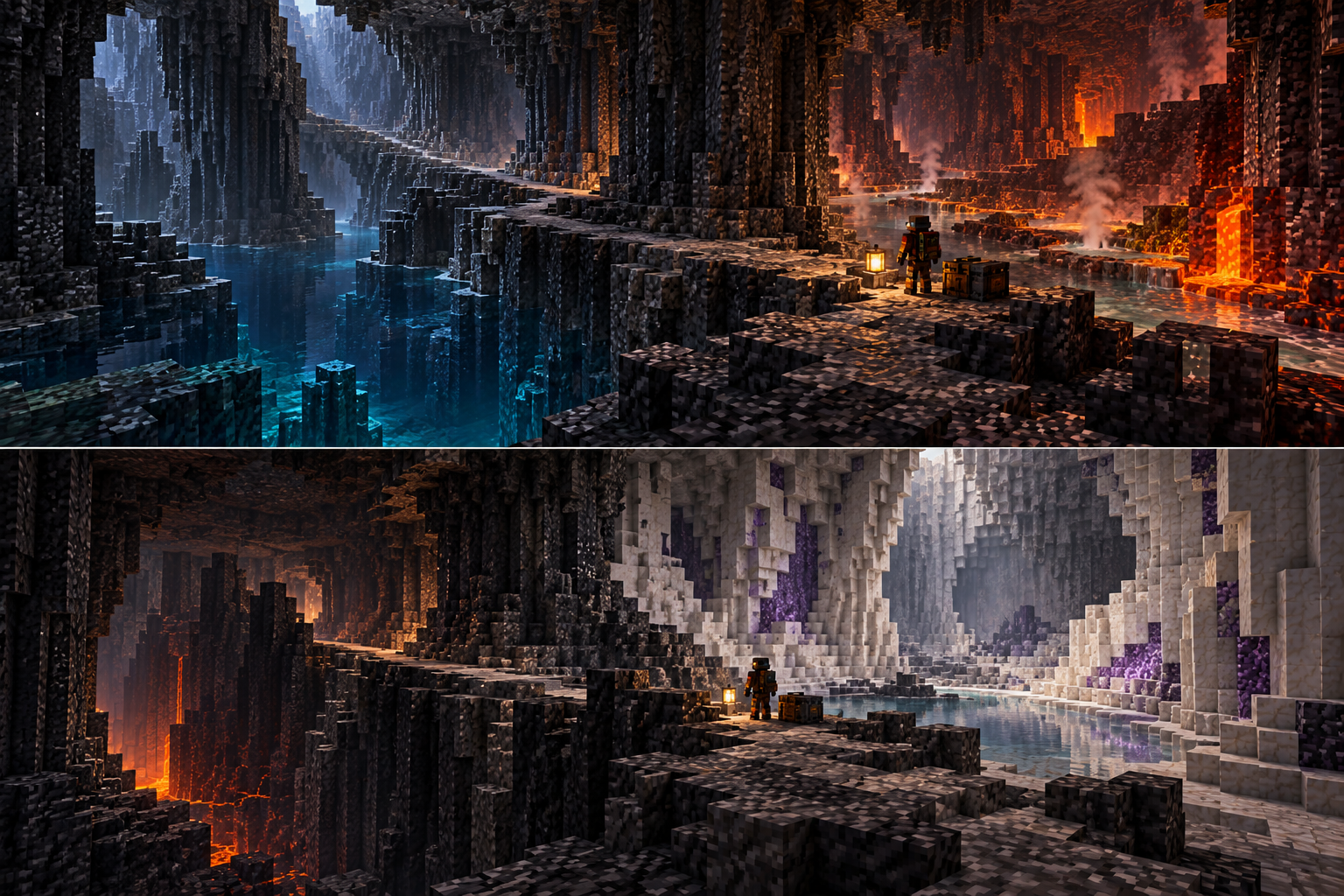
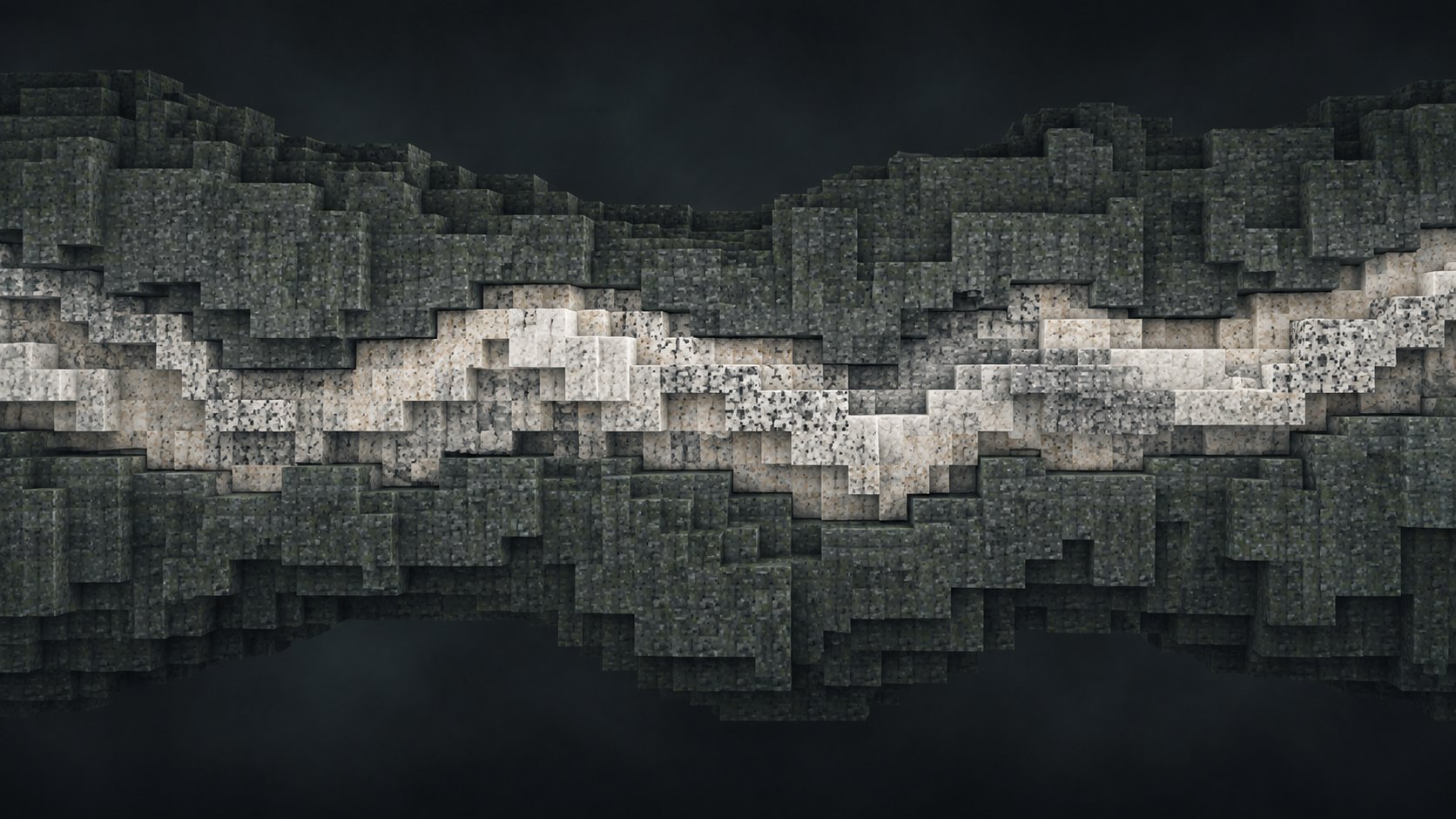
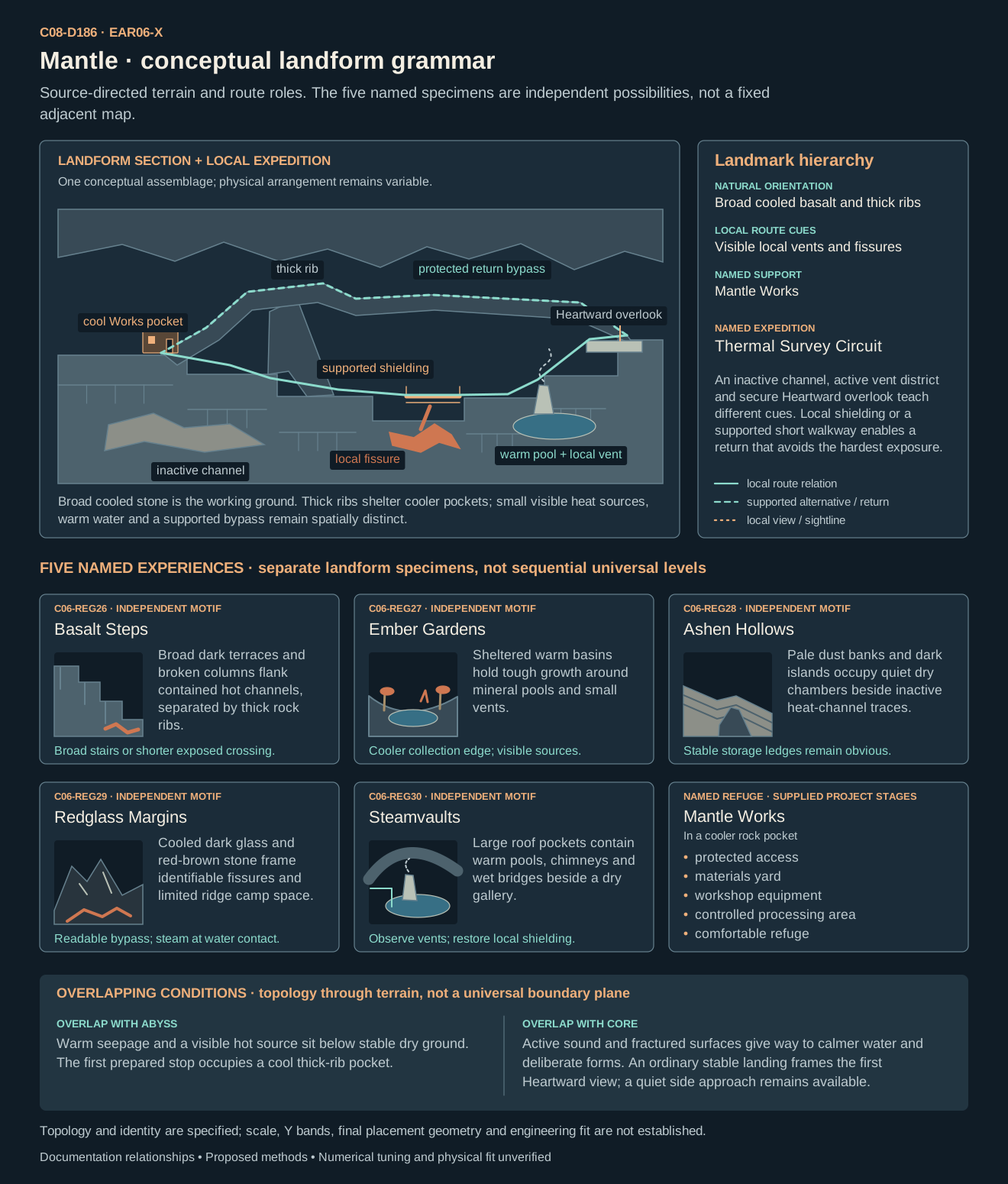
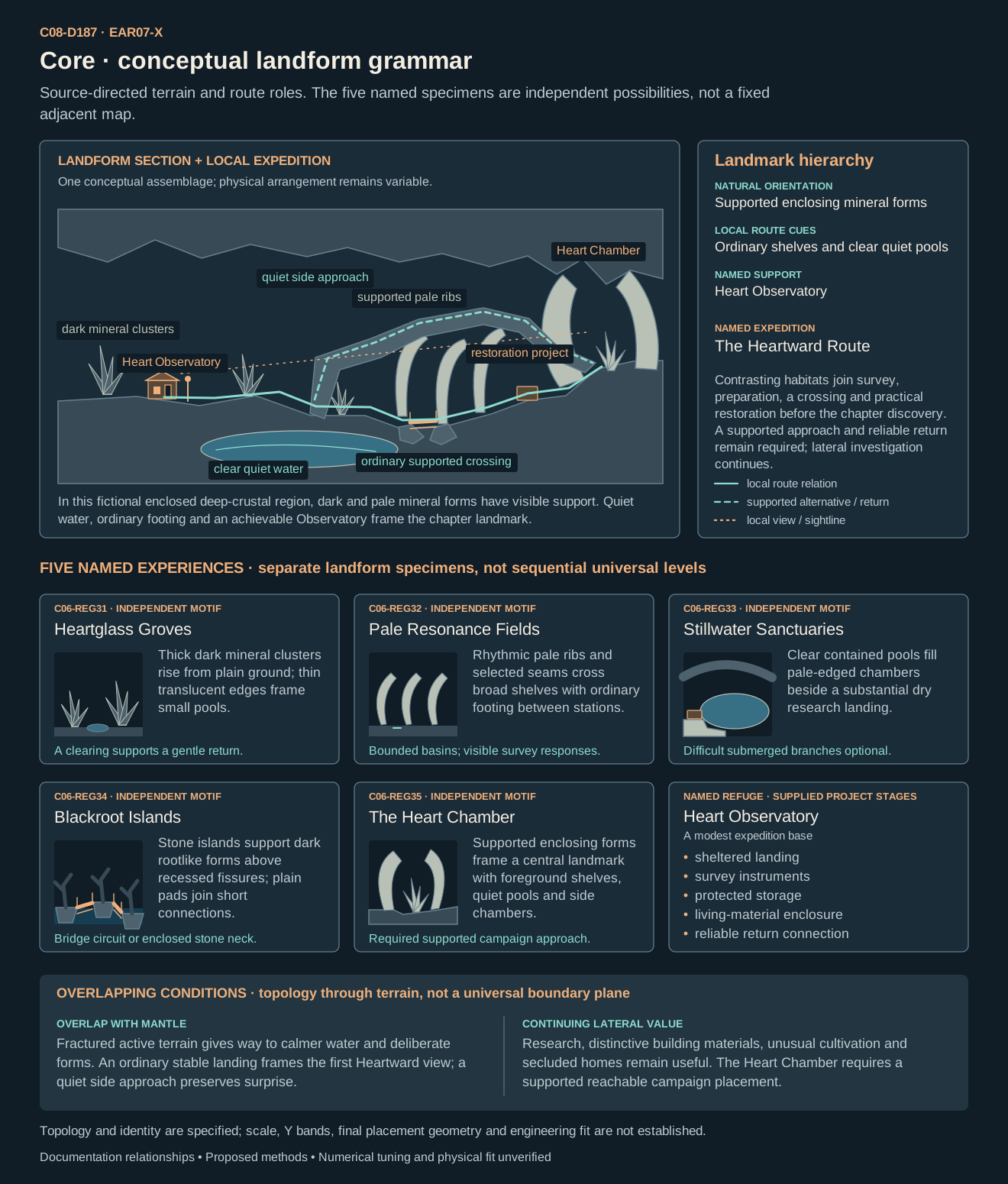
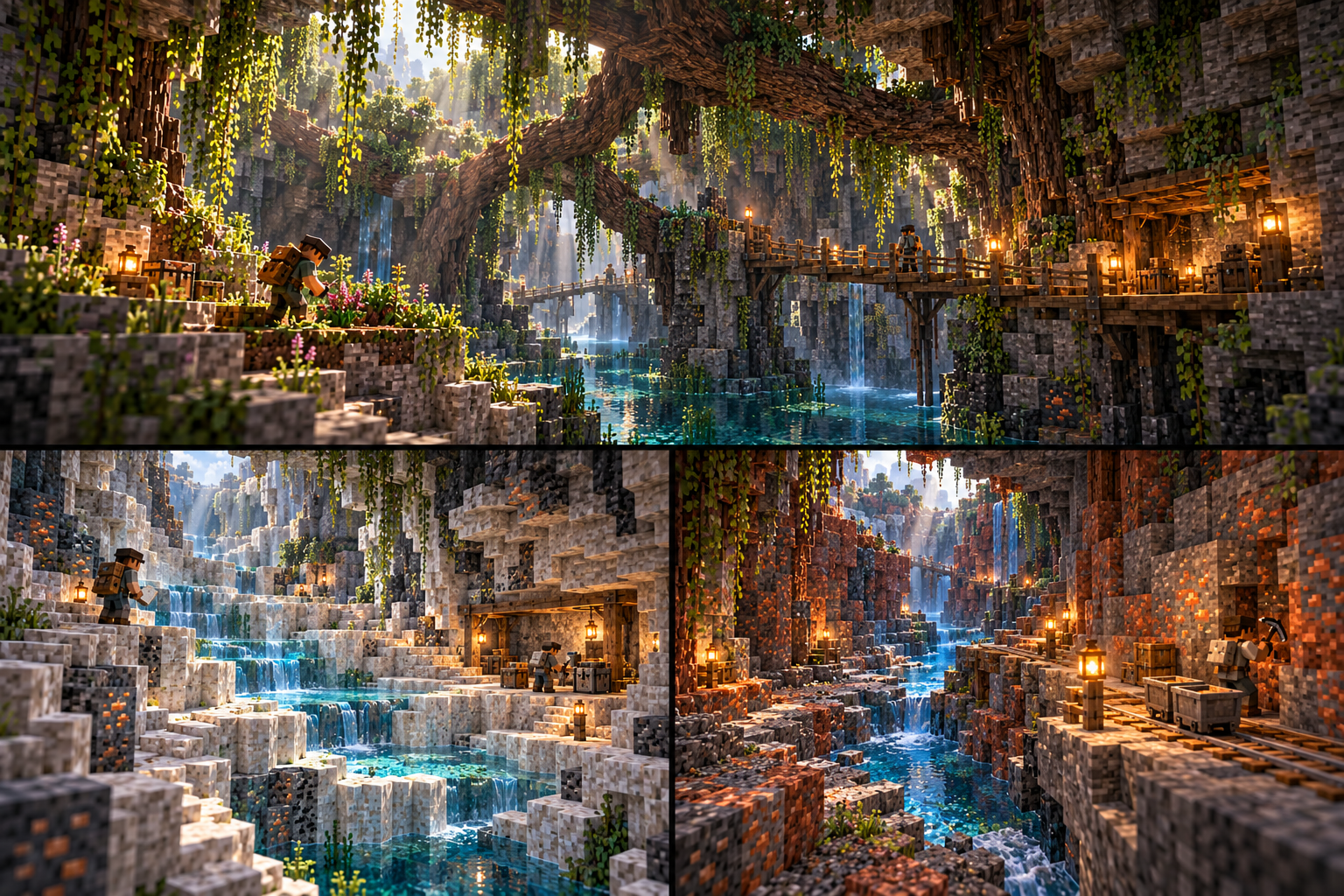
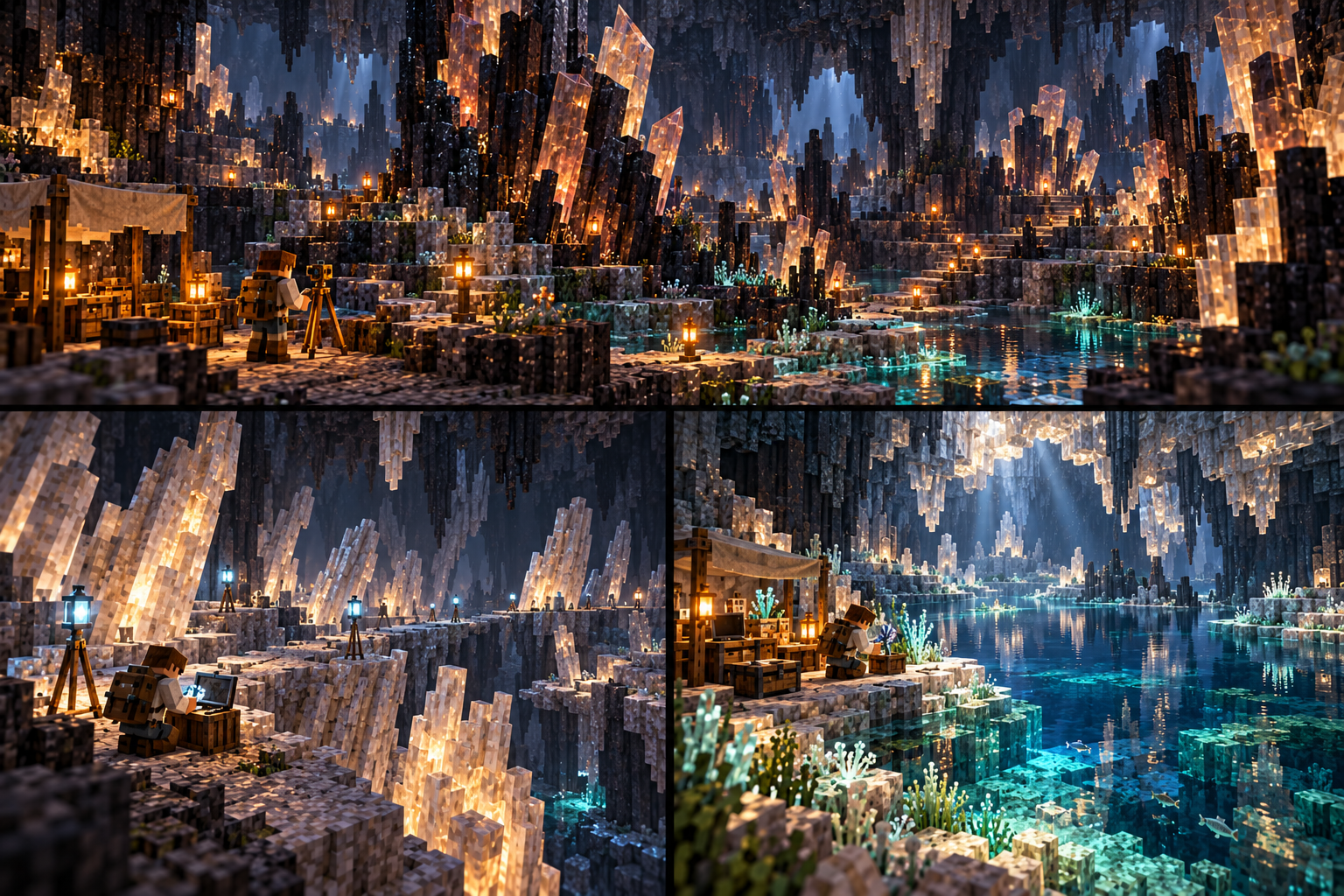
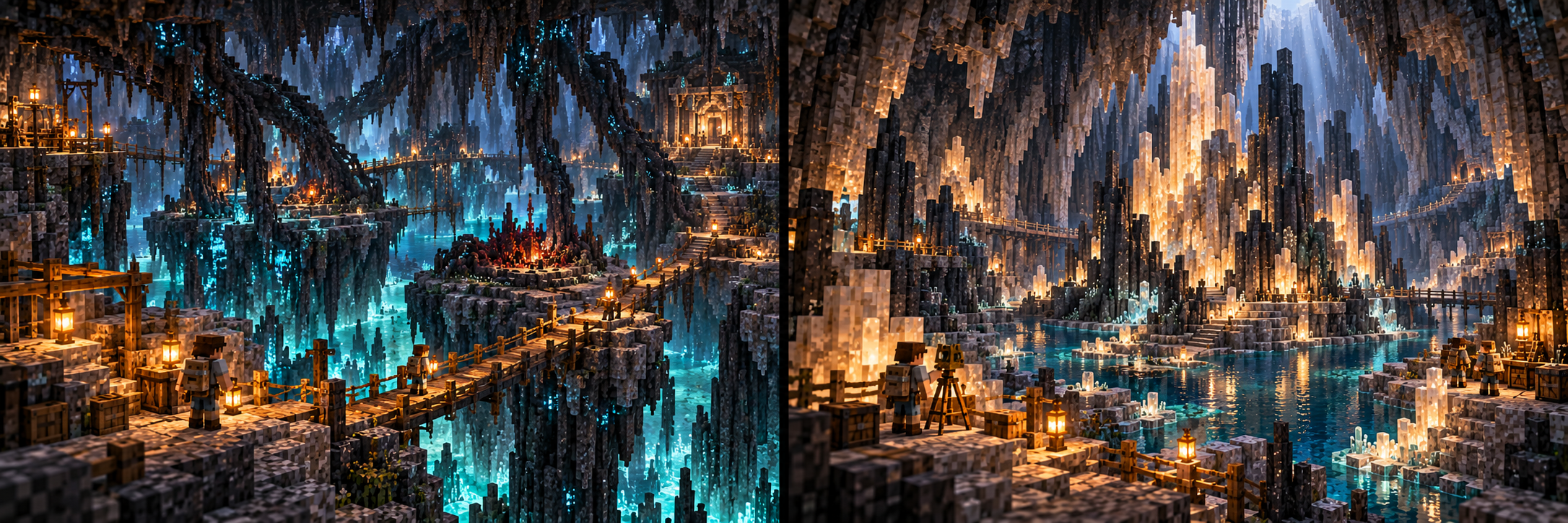
Prepared dry routes connect water, heat and a quieter pale environment. This is the established fictional accessible deep-crust journey, not Earth’s literal planetary center.
Status: Maintainer-selected concept candidate; final user approval not implied.
A concept does not prove collision, traversal, dimensions, numerical balance or implemented generation.; Overlapping terrain and a pictured route express a generation intention; complete route connectivity still requires future seed and traversal tests.; Source lighting and shader treatment are visual direction. Shader-off implementation remains a separate requirement.
Related identities: EAR05 · EAR06 · EAR07
Writing: C08-ATLAS-02 · C08-JOURNEY-04
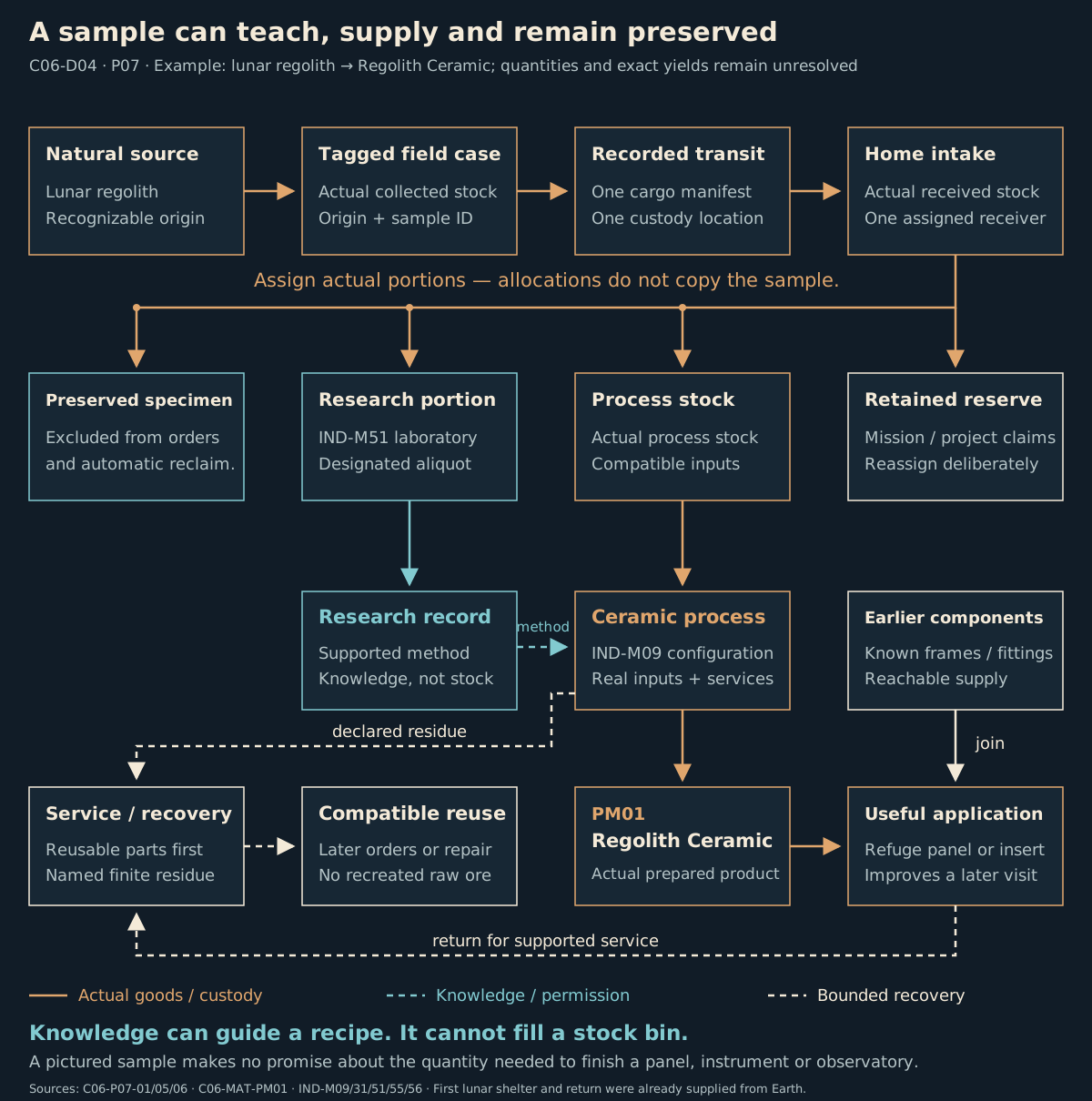
A discovered observation, a surveyed route and an actual sample are different things. Knowledge persists when the player retains or records the observation. Physical material occupies a real container and can be moved, processed or consumed. A route marker identifies a place; it does not manufacture the equipment or stock required to use that place safely.
The journal should express this distinction in plain language. 'Observed at Brine Scarps', 'specimen stored in the field box' and 'production portion allocated to the cartridge' are separately meaningful statements. A later recipe can consume the production portion without deleting the geological evidence. Conversely, a completed journal entry cannot be redeemed repeatedly as free physical stock.
Known places retain local identity through return visits and supported world-state transitions. A controlled process pauses coherently when parked; an active expedition resumes under its declared rules. A future implementation needs explicit save, unload, reload and ownership behavior for each system. The creative reference does not solve those engineering questions by assuming continuous real-time simulation.
The same discovery has a persistent informational record and finite physical material. Production and display each retain actual custody rather than duplicating the sample.
Status: Maintainer-authored explanatory reference; creative recommendation, not runtime or engineering proof.
Final coordinates, clearances or block counts; Selected recipes, rates, capacity or balance; Implemented behavior or completed game tests
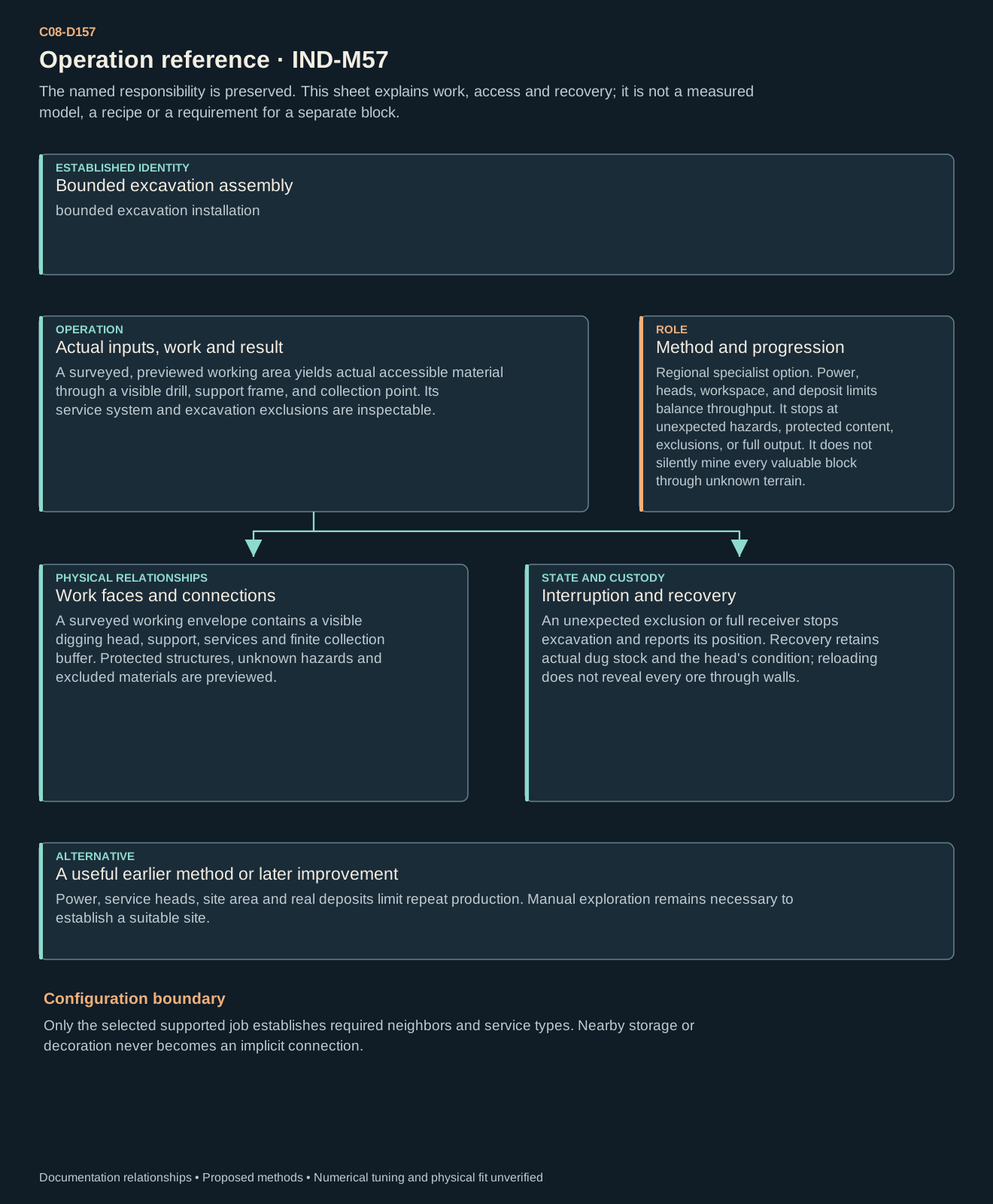
Related identities: PM03 · PM04 · IND-M51 · IND-M55
Writing: C08-ATLAS-03 · C08-JOURNEY-05 · C08-JOURNEY-09
Construction begins with the intended function. The plan names what will receive a load, what the player will operate, what needs isolation and which approach must remain clear. A preview can show these requirements without exposing internal engine detail. Commissioning should check the actual relationship and report a usable correction such as 'clear the receiving face' or 'connect the breathing supply at this service point'.
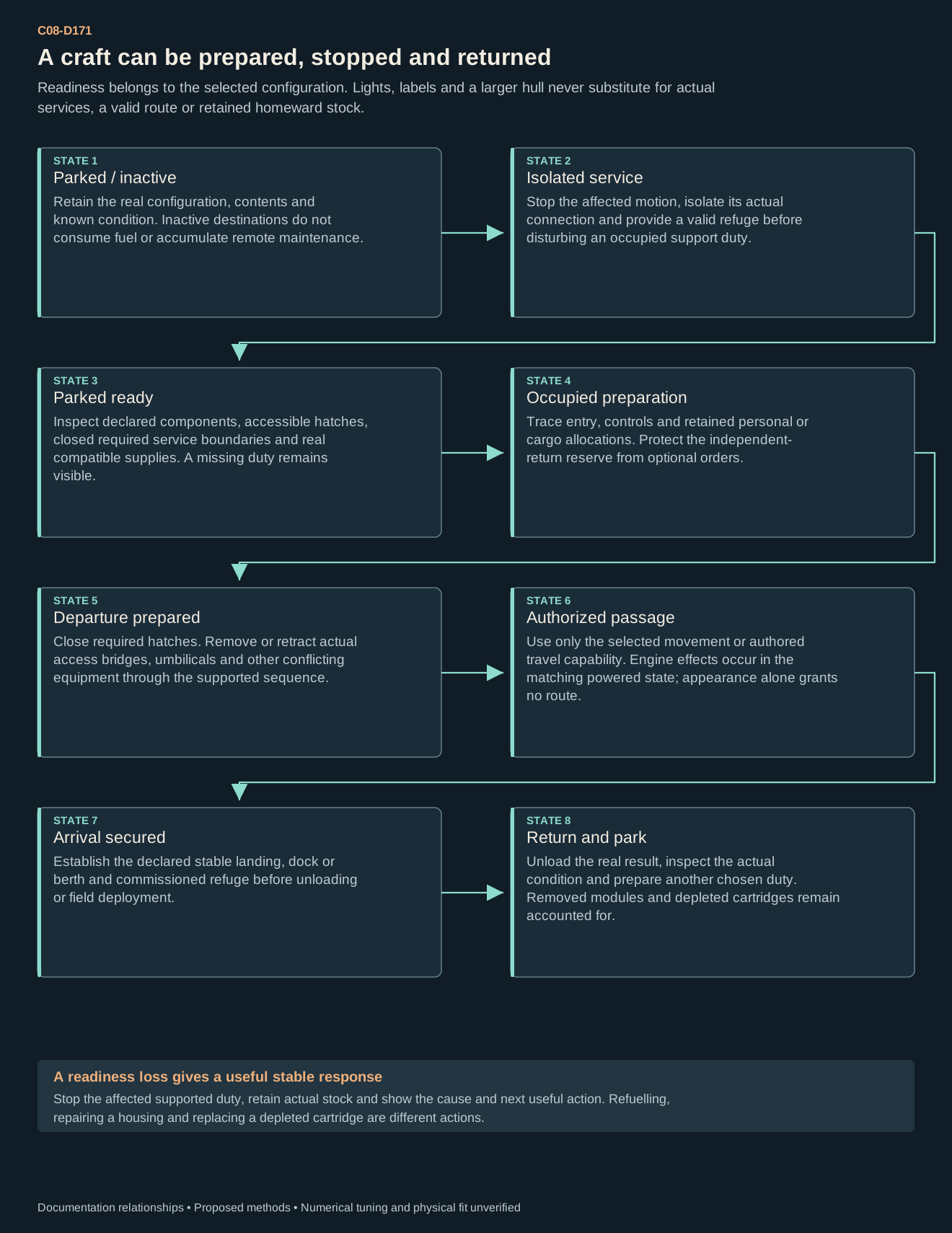
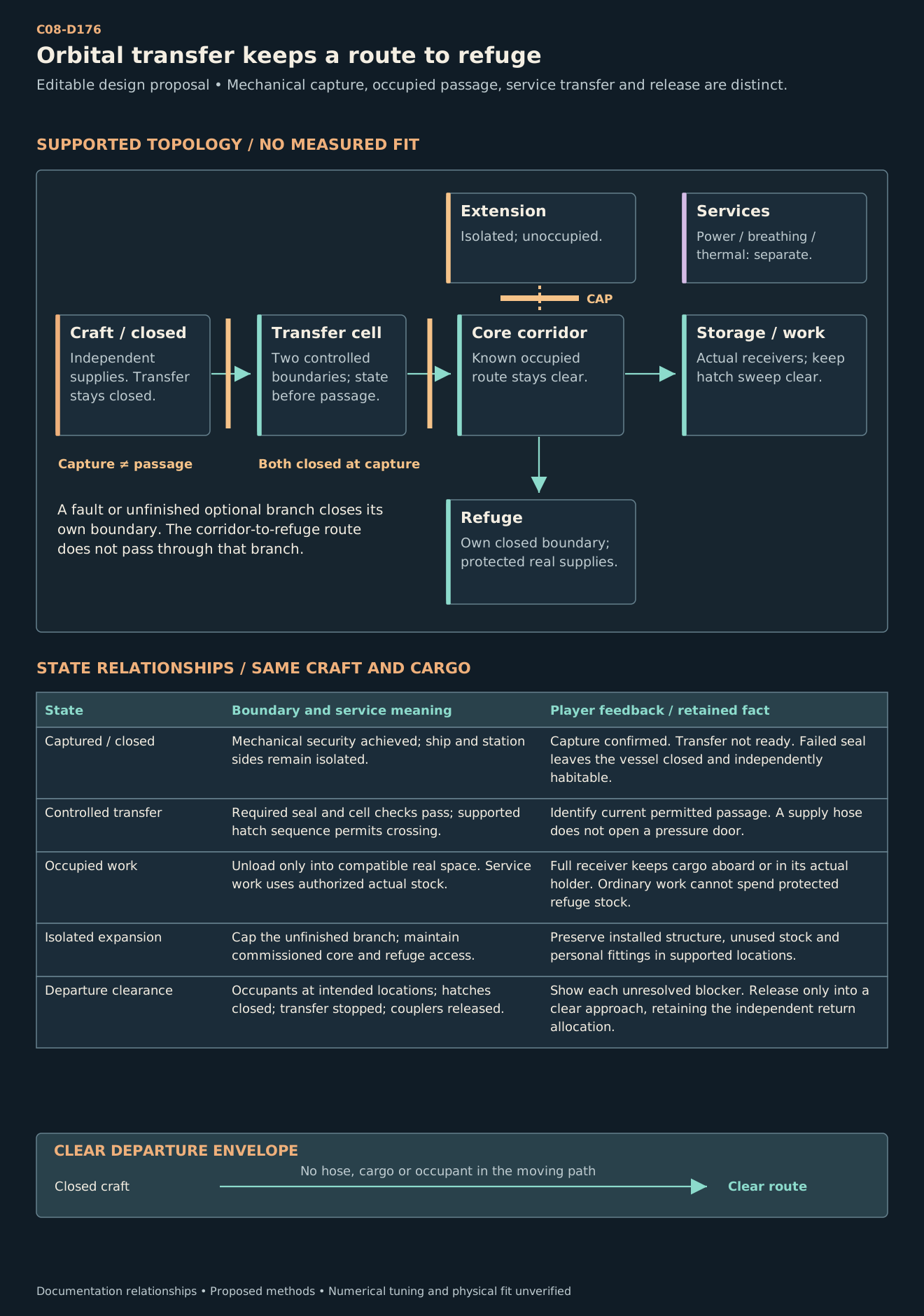
Travel likewise names a supported origin, destination, vehicle configuration and prepared service package. Boarding, securing, departure, passage, arrival, unloading and parking are separate states with understandable responsibilities. A short authored passage or an established-route shortcut can preserve the journey's significance without demanding continuous flight simulation. The reference leaves the transport implementation qualified until the actual game evidence selects it.
The same rules make emergency behavior fair. The interface identifies which system is affected and which reachable option remains. A machine can stop with its work retained; a journey can turn back; a sample can stay sealed aboard a craft because the receiver is full. Failure is part of the operating model, rather than an excuse to erase progress without warning.
Managed activity preserves actual stock and partial work across departure and return. This is a specific future state contract, not a claim that all vanilla processes pause.
Status: Maintainer-authored explanatory reference; creative recommendation, not runtime or engineering proof.
Final coordinates, clearances or block counts; Selected recipes, rates, capacity or balance; Implemented behavior or completed game tests
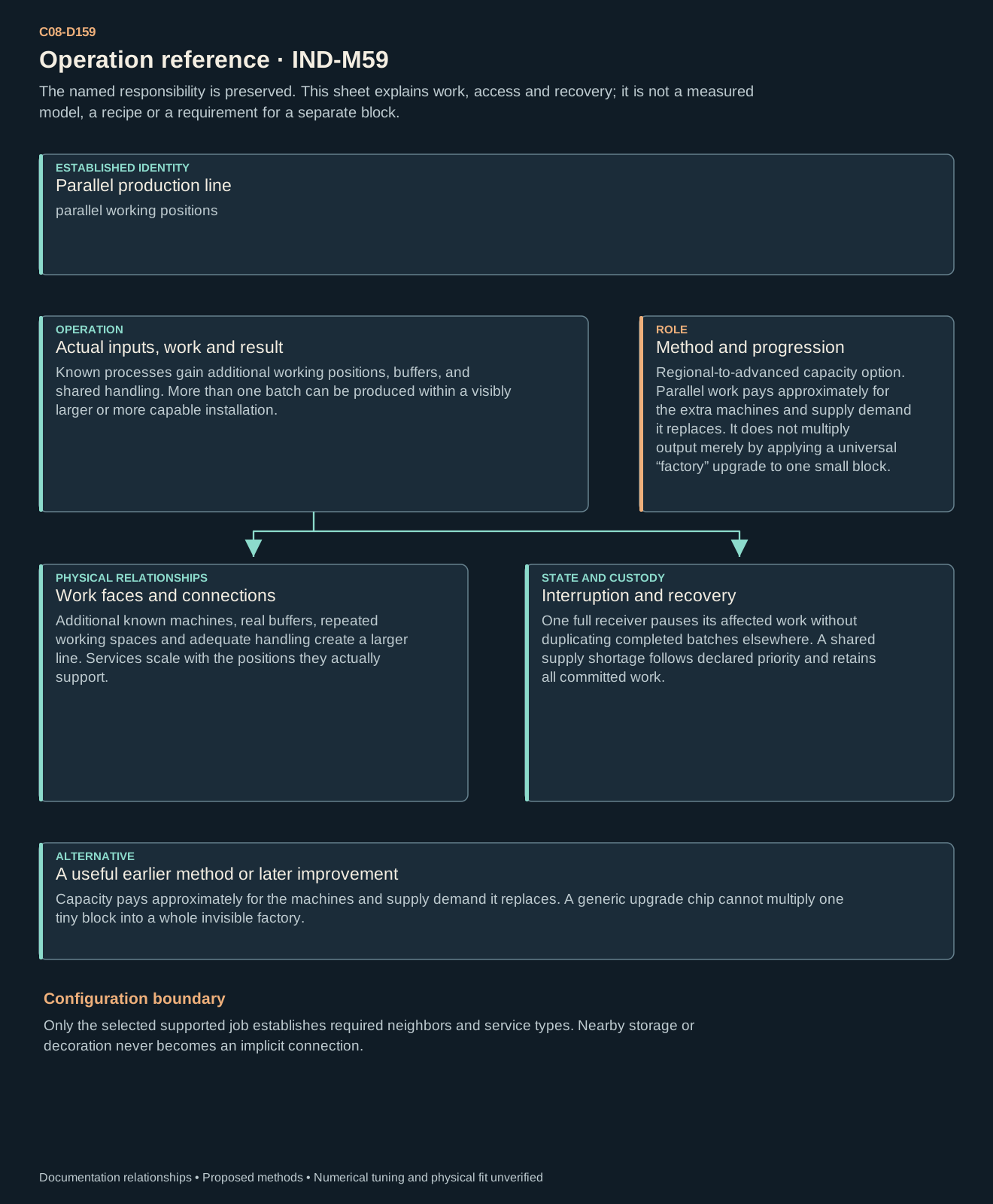
Related identities: IND-M59
Writing: C08-ATLAS-04 · C08-IND-15 · C08-JOURNEY-06
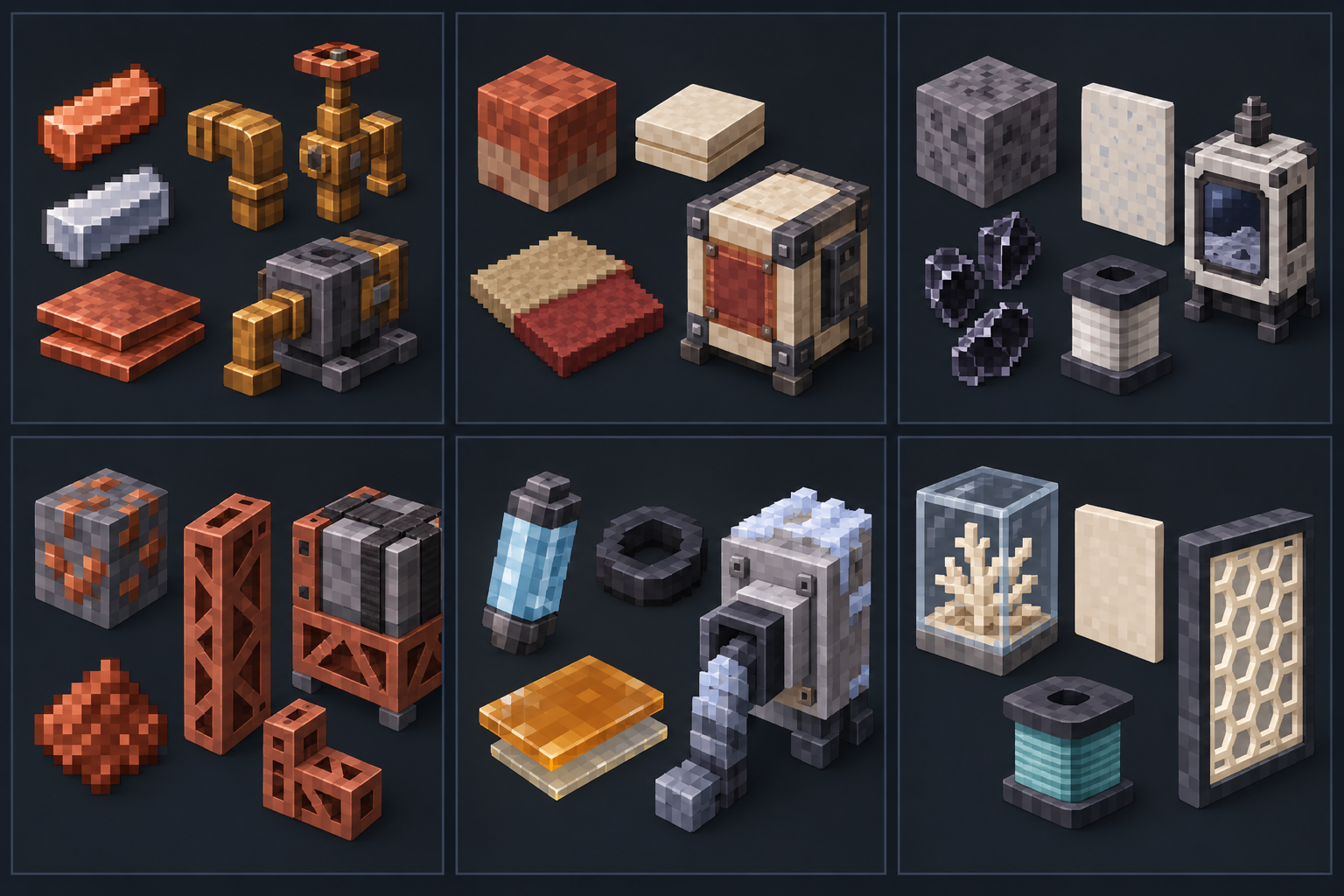
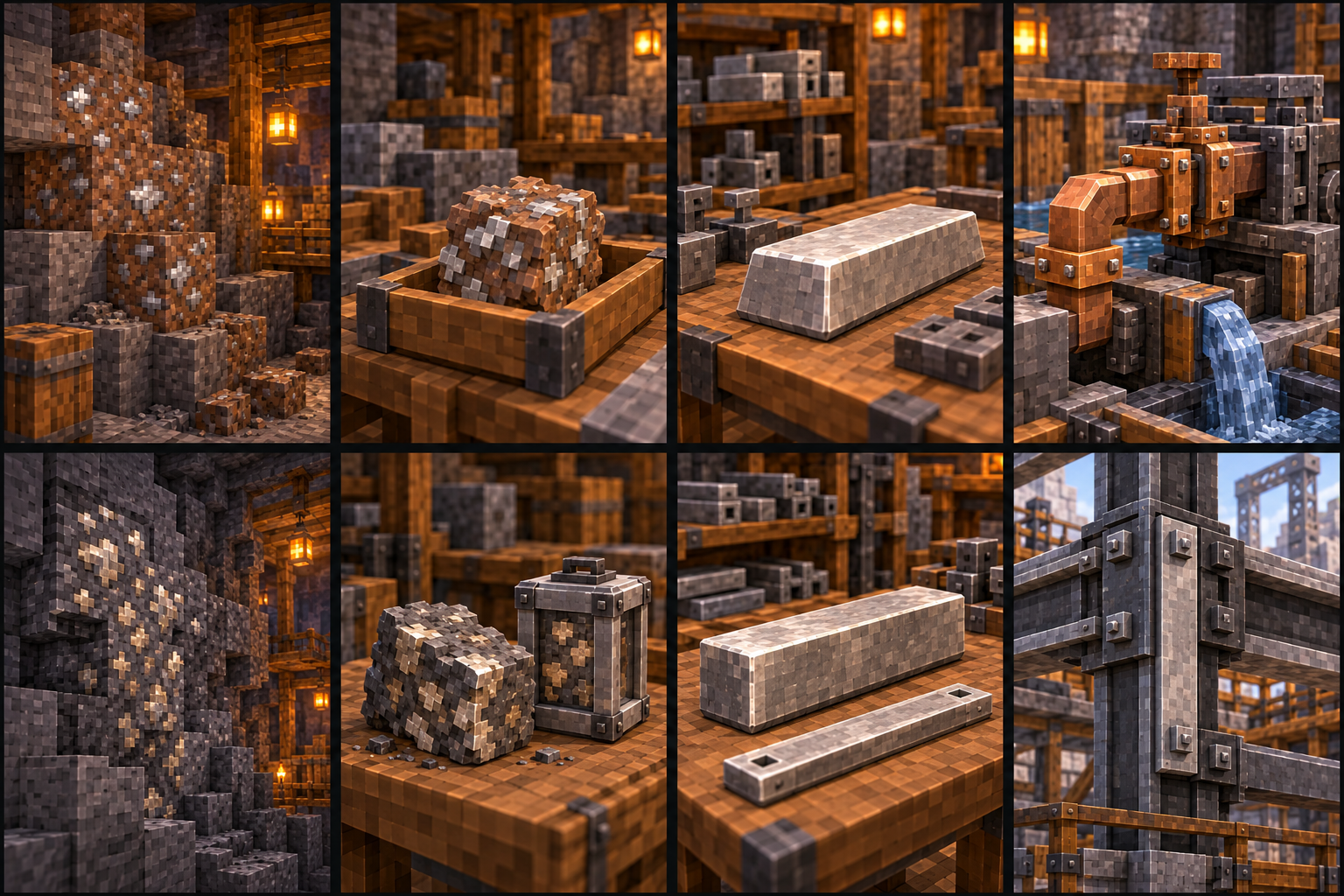
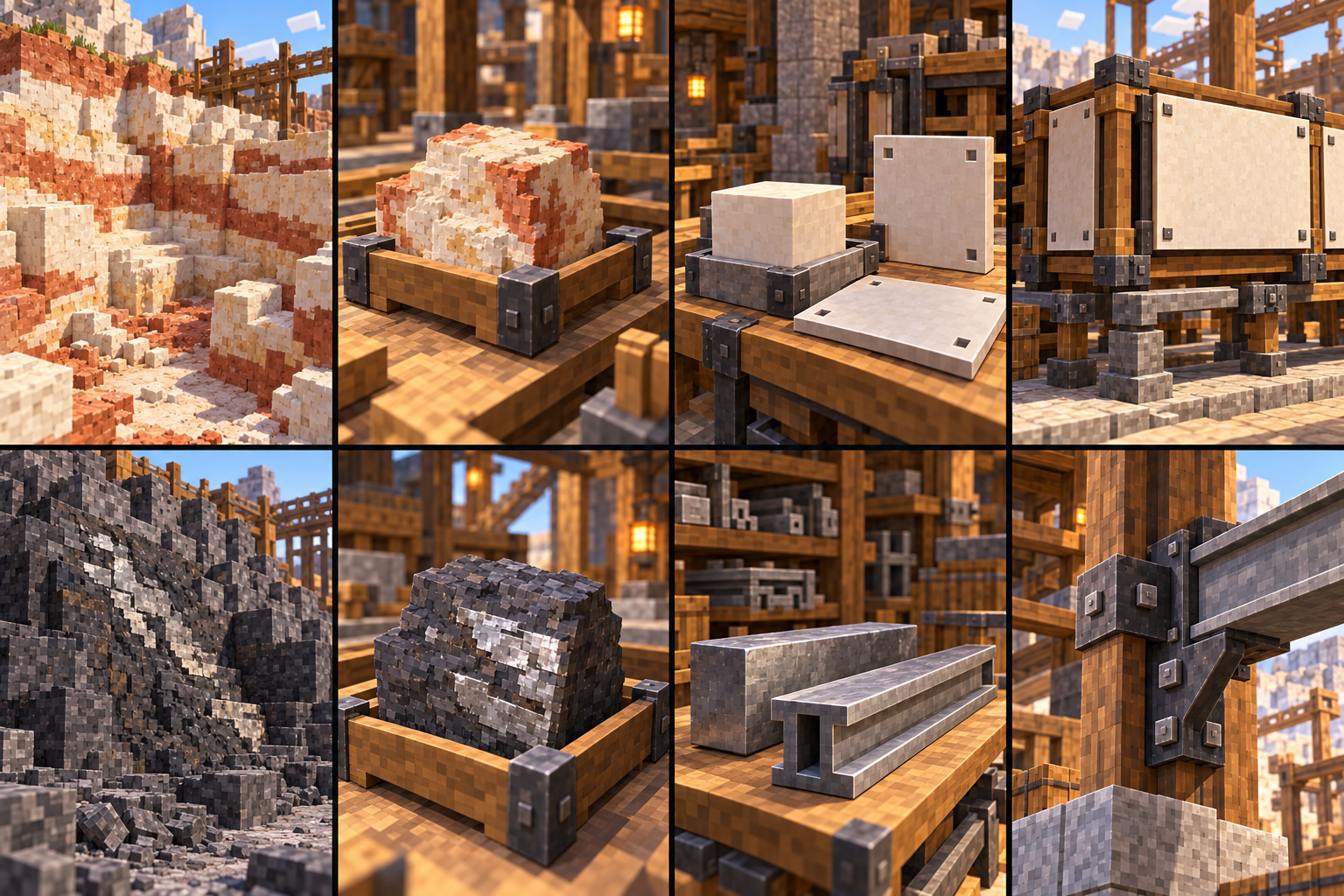
An environment illustration should establish a specific place, a useful activity or a meaningful variation. A machine concept should make its identity and working relationships readable. A material-family sheet should distinguish source, collected form, prepared form and application without adding microscopic real-world detail. A shared sheet is appropriate when the comparison is the point and each subject remains identifiable.
Editable diagrams carry exact labels, process order, state transitions, service types and qualifications. They are the authority for an explanatory relationship where a generated illustration is suggestive. A four-panel regional board does not establish a measured traversal corridor; a service drawing does not establish tested collision or animation. These distinctions belong in the caption and visual register rather than being left for the reader to infer.
Reference completion includes the illustrated and diagrammed design intent needed to review the established vision. Future production still includes measured block models, collision, meshes, UVs, texture atlases, rigged animation, audio implementation and native UI assets. These are separate deliverables requiring authorization. A historical visual requirement may be completed by an explicit reference view or superseded with a stated reason; it must not be closed just because an unrelated file exists.
This programme authorizes creative documentation, reference presentation, diagrams, concept artwork and development-planning records. It does not authorize mod implementation or game-ready asset production. The future backlog below explains useful units and their evidence requirements so that an explicit game BUILD can start from a concrete proposal. It does not schedule releases, change the accepted game sequence or claim that the documented systems already exist.
The recorded game authority remains a0a702c2b5788d099645ab55ad23d8a5bf45c137; the launcher authority remains e2a7137a53a1737166158d8dee59ca2137d2d64c. At that game baseline, Smelt is unbuilt. Any future implementation assignment should first inspect the relevant current game branch and accepted later handoffs. A creative-source commit and a public Website commit do not establish a new game state.
The useful unit of development is a player outcome with bounded dependencies. 'All machines' is too broad to verify. 'One ordinary material becomes a fitting, improves a real cargo route and survives a saved interruption without duplication' is concrete. The broad catalogue can then grow through units that reuse a proven foundation while adding a distinct capability.
Creative direction becomes a future implementation brief, measured behavior and user-facing acceptance evidence. Failed evidence changes the explicit assumption rather than rewriting history.
Status: Maintainer-authored explanatory reference; creative recommendation, not runtime or engineering proof.
Final coordinates, clearances or block counts; Selected recipes, rates, capacity or balance; Implemented behavior or completed game tests
Related identities:
Writing: C08-BUILD-01 · C08-BUILD-02 · C08-BUILD-04 · C08-REF-02
| Evidence level | What it can establish | What it cannot establish alone |
|---|---|---|
| Creative source and recorded user decision | Intended experience, identities, boundaries and selected direction | Runtime availability, numerical balance or model fit |
| Reviewed illustration or editable diagram | Visual identity, composition and explicitly shown functional relationships | Collision, pressure integrity, inventory capacity or animation correctness |
| Source checks and reproducible reader build | Preservation, parseable records, correct links, assets and repeatable documentation output | Native gameplay or successful public deployment |
| Local browser interaction and accessibility checks | Behavior and presentation exercised in the named browser, viewport and revision | Other browsers, independent usability judgment or game behavior |
| Native implementation and focused automated tests | The tested rules, data accounting and failure handling in the pinned game build | A satisfying complete experience or broad balance without play evidence |
| Play sessions, seed corpus and measured asset studies | The actual travel, interaction, fit, accessibility and cost questions exercised | Unobserved seeds, future versions or automatic universal balance |
| Production Website checks | The exact published resources and interactions verified at a deployed revision | Game implementation or later record-only revisions without their own evidence |
A report must name its execution, environment and revision. Historical successful Website checks remain useful evidence of that incorporation; they do not become fresh maintainer checks. The historical maintainer browser/download failure remains recorded separately. A source verifier that does not exercise a browser reports that browser interaction is outside the verifier and NOT RUN, rather than replaying an old environmental explanation.
The implementation graph starts with the currently approved game work, then proves a small material-to-use loop, a dependable world route and the first workshop duty. Shared contracts for actual inventory, interruption, typed services, readable state and persistent local identity support later systems. They should be introduced when a concrete player unit needs them, with the smallest coherent scope that can be tested.
Earth expansion, living systems and industrial branches can then grow from those foundations. A first complete space loop requires the chosen vehicle representation, separate service duties, a supported arrival/refuge and an independent return. It does not require every Earth experience, all 66 machines or the entire settlement simulation. Moon, Mars and each farther campaign receive their own end-to-end unit before optional regional depth multiplies.
This preserved source describes Afterlight, Cairn or Morrow. It is proposed creative direction, not implemented game content.
| Build family | Prerequisite relationship | First useful boundary | Expansion after evidence |
|---|---|---|---|
| Existing game work | Inspect and preserve the accepted game sequence | Complete the already-approved next unit, including Smelt when authorized | Reconcile actual results into a later reference receipt |
| Opening material and route loop | Compatible stock, one work method and actual receiving storage | A repaired fitting or cargo duty used on a real route | Additional recipes and distinct route improvements |
| Workshop order and service foundation | One eligible process and its actual inventory states | Start, pause, resume, complete and safely block one accountable order | More machine families, services and configurations |
| Earth journey and living place | Reachable generation, field preparation and persistent storage | One complete outing plus a useful homecoming | Distinct regions, ecology and settlement projects |
| First space expedition | Selected transport representation, separate services and a tested refuge | Earth preparation to Moon activity and return with the same craft | Lunar depth, further applications and repeat visits |
| Mars campaign | Interplanetary configuration, route knowledge and field service | One supported regional expedition with imported first supplies | Brine/Rootstone investigation and chosen yard growth |
| Outer campaigns | Their stated earlier-route preparation and service foundation | One distinct destination's three-outing loop and signature project | Optional mastery, variants and local production |
| Proposed Beyond Sol | A satisfying Solar conclusion and explicitly selected continuation | Bounded Cairn navigation and independent return | Morrow's chosen local living project |
No line in this table requires a new monolithic engine framework before useful play. A technical abstraction earns its place by serving a demonstrated repeated need. Conversely, a shortcut that cannot preserve actual stock or supported recovery should not become the foundation for dozens of later machines.
Each structured build record names the player outcome, source identities, dependencies, included behavior, exclusions, acceptance criteria, risks and validation evidence. An implementation agent should use the referenced creative text to understand the purpose, then inspect the current game authority and propose the concrete code and asset boundary. It must not silently treat every recommendation in a concept chapter as a confirmed engineering choice.
Acceptance criteria should observe the outcome. For example: the hoist carries the actual cargo between declared fixed landings; an occupied landing prevents the next movement with a readable reason; unloading transfers the same items once; save and reload preserve the stated load and position; the player can use the resulting route improvement. 'Hoist class exists' is an implementation detail, not a complete player criterion.
Risks should name the uncertainty and the evidence that resolves it. If a rover route might not fit generated turns, require a measured turning envelope and seed routes tested with the actual vehicle. If a recipe may make an optional destination compulsory, require a full preparation-path comparison. If a screen may overload the player, require a task-based review at the supported scale and input modes.
The structured briefs in the campaign, industry/equipment and living-experience registers extend this standard to their full scopes. This chapter supplies the shared contracts and integration order. Together they form a planning handoff, not pre-created promises of a particular release date or staffing plan.
Material equivalence is an explicit unresolved integration question. A familiar name in the creative document does not prove that the current mod has the matching item, tag, recipe or physical behavior. The first implementation of a chain should identify the actual source item, accepted substitutes, preparation method, intermediate form, receiving container and final use. A mapping table belongs with the code or implementation record before the reference starts making implemented claims.
Balance requires observing the whole duty. Gathering, carrying, fuel preparation, machine access, service, waiting, byproduct storage and the value of the result all contribute. A recipe that looks inexpensive in isolation can be burdensome through travel; an apparently costly component can be trivial if a process creates it while doing unrelated work. Proposed starting values are useful test inputs, not evidence that the system is balanced.
The validation plan should compare at least a compact earlier method and the proposed improved method under the same intended outcome. Record what changes: preparation effort, active interactions, space, service needs, accessible resources, risk and repeatability. Explain why the player would choose each. Late material applications should improve a named duty and preserve a supported earlier option where the campaign promises optionality.
The Explorer fit question remains consequential. A complete study uses the actual player and suit, camera modes, entry interaction, occupied cabin, cargo representation, service approach and animation envelope. The compact-first dimensions remain a candidate until those views and interactions work together. If the representation cannot fit, the decision record should compare the smallest coherent remedies without silently altering the confirmed external identity.
The same discipline applies to Tier 2/3 and HUL01–HUL06, support vehicles and carrier arrangements. A visible bay or seam does not prove transport, separation or seating. Each selected configuration needs an explicit statement of what moves together, what remains fixed, where the player is during travel and how custody transfers at a handoff. Concept studies can make the intended relationships reviewable while leaving implementation choice qualified.
An initial native prototype should prove one supported travel loop before broadening configurations. Boarding and disembarking, interruption, save/reload, destination arrival, docking where included, service connections and the actual return must be tested. Seamless flight, arbitrary moving player-built structures, orbital physics and multiplayer seating are not default promises in this reference.
Seed checks should verify more than block counts. They should observe whether the player can reach the first work site, recognize the intended landmark, occupy the interaction position, carry the expected equipment and retreat using the supported route. A generator can satisfy a nominal region placement while leaving its only useful face buried or its vehicle turn impossible.
The seed corpus should include ordinary cases, boundary cases and deliberately adverse combinations relevant to the unit under development. Keep the exact seed, version, configuration and observed route with the result. Where a validator repairs or rejects a placement, record the reason. Do not claim universal validity from a small attractive screenshot selection.
A campaign's critical invariant is the relationship among arrival, support, observation, activity and return. Optional branches can vary more widely. Later world-generation changes need a save/migration decision: preserve existing sites, identify newly generated areas and avoid silently invalidating a player's commissioned refuge or stored route. The full migration design belongs to the authorized implementation, but the need is part of this handoff.
The interface direction defines common information hierarchy: identify the object or place, show the current state, explain the blocked reason, make the next useful action available and distinguish actual stock from planned allocation. A machinery screen should help the player complete a duty without forcing them to memorize the entire industrial catalogue. An expedition screen should show where essential stock physically resides.
Test complete tasks such as preparing a field kit, diagnosing a blocked receiver, preserving a specimen while allocating process stock, retreating from a changed route and returning to the same workshop. Observe whether the player can understand the result through text, shape, position and optional sound, without relying solely on colour. Accessibility settings should improve that same task rather than existing as disconnected menu entries.
The reference reader's own browser and accessibility checks are a separate documentation gate. They verify navigation, source links, search, notes, image viewing, spoilers, comparison controls, print and responsive presentation in the named environment. They do not establish that the future game interface is usable or implemented.
Most editorial and concept choices can be completed within the accepted direction. The remaining consequential issues are questions that require actual implementation evidence or an explicit change to canon. They should have a recommended next action and a bounded decision point, rather than appearing as vague permanent placeholders.
This preserved source describes Afterlight, Cairn or Morrow. It is proposed creative direction, not implemented game content.
| Open issue | Working direction | Evidence or decision required | What remains possible now |
|---|---|---|---|
| Explorer cabin, entry and occupied fit | Preserve the compact-first identity while testing the complete player/suit/camera duty | Measured native fit study, then choose the smallest coherent remedy if necessary | Complete reference components, service logic, concepts and future tests |
| Vehicle transport and carrier arrangements | Support only explicitly selected configurations; retain independent return | Native representation and custody prototype for each included arrangement | Operational state and connection documentation with honest qualifications |
| Recipes, rates, capacities and material equivalence | Use stated starting proposals only as test inputs; preserve viable earlier alternatives | Actual item/tag mapping, chain comparisons and observed play duties | Complete intended operations, process relationships and balance rationale |
| Numerical environment and hazard behavior | Preserve readable local warning, counterplay and return relationships | Seed corpus and controlled play tests using the implemented traversal and equipment | Full campaign and generation contracts without invented tuned values |
CEC01 Mars ecology | Remain conditional and unselected | User selection before including it as canon or implementation scope | Complete geological Mars and its existing non-ecological outcomes |
| Proposed Afterlight continuation | Preserve Cairn/Morrow as the finite proposed continuation with a Solar stopping point | Explicit future build selection after the earlier game earns it | Complete creative reference, spoiler-controlled reading and concept direction |
This table does not ask the user to reconfirm the whole programme. It protects a few real decision boundaries. A later discovery that would materially alter an approved asset identity, roster or product direction should be presented with concrete options and evidence at that point.
The completed reference is the creative and planning source. Its remaining categories are future game implementation, game-ready asset production, technical validation, genuinely conditional content and the Website agent's manual incorporation. These categories are different from unwritten required chapters or unexplained illustration placeholders.
Future implementation turns the described loops into playable behavior under an explicit BUILD. Production assets translate the reviewed concepts into measured models, textures, animations, audio and native UI. Technical validation resolves fit, balance, generation, performance and platform questions with actual evidence. Conditional content remains available as a documented option without being presented as selected. Website incorporation adapts this exact source edition into its public Reference, Worlds, Systems and roadmap explanations while preserving truthful maturity labels.
The handoff identifies exact commits and paths. A source snapshot, a delivery record, a tested Website revision, a deployed product revision and a later report-only commit each have their own role. The source maintainer records the returned Website incorporation additively. No automatic synchronization, release promise or deployment claim is inferred from the presence of files.
The reader provides current subject entrances for the journey, worlds, workshop, equipment, living places, spacecraft, player experience and future build planning. Each entrance leads to the new connected explanation and the relevant preserved detailed sources. Search includes prose and stable identifiers so that a question about PM04, IND-M53 or a named region can reach its actual context.
Persistent navigation shows the current chapter and section and keeps useful movement controls available while scrolling. A mobile contents control, keyboard access, direct fragments and the existing review notes support the same document. A comparison should help the reader judge a real choice, such as a compact versus regional workshop or an optional versus principal route; it should not require the reader to reconstruct the comparison from unrelated pages.
The visual catalogue opens the complete source context and unchanged original or editable graphic. A caption identifies the image's job, source identities, review status and limits. Later-story material uses explicit reveal controls. Search or a direct link into that material should retain a clear spoiler boundary while allowing the user to choose to continue.
The edition keeps the canonical narrative files, structured registers, exact earlier reader, images, diagrams, configuration and build instructions together. The builder assembles the current reader from those sources while checking preserved source blocks and identifiers. Repeated counts, inventories and handoff fields are generated from the same records, reducing disagreement between the document and its receipt.
Editorial judgment remains human-readable and explicit. A manifest can prove that a file is present and unchanged; it cannot decide that a scene adequately covers a region or that a machine drawing communicates its operating state. The visual register therefore records substantive review alongside file integrity. The coverage register distinguishes the purpose actually served from technical work that remains unverified.
Future agents can propose corrections or extensions through isolated reports and structured data in the repository. The maintainer reconciles those reports, preserves the accepted baseline and builds an additive edition. An available branch is not automatically accepted or deployed. Manual synchronization remains the working model.
The changelog records meaningful additions, corrections, supersessions and open questions. Earlier records retain their original date and result. A later successful Website check is appended with its own evidence rather than replacing a maintainer's failed historical attempt. The SRC07-F01 correction remains a metadata correction to how fresh source-verifier records describe their own scope; it does not invalidate the 21 historical source checks or reopen creative content.
The user's endorsement of existing published homepage, Worlds and Systems visuals is recorded as an additive aesthetic approval against the captured source revision. REF03 and CD05-A03 remain central art authorities. Earlier functional-study and selected-candidate labels remain part of their history, while the new endorsement is visible separately. None of these aesthetic approvals resolves physical fit, numerical specification or implementation maturity.
New generated selections receive a maintainer review and a candid candidate status. Rejected or superseded attempts keep their provenance and reason. The absence of a fixed generation cap allows adequate coverage; it does not make every generated result automatically suitable or approved. The reference should improve through deliberate selection rather than by accumulating indistinguishable pictures.
Unchanged artwork captured from the user-endorsed Website revision. This is a visual standard and a published environment example; it is not automatically a one-to-one identity mapping to a creative Earth experience.
Status: Existing published aesthetic endorsed by the user; original bytes preserved.
New implementation status; A direct mapping to all 35 creative experiences; Additional engineering or gameplay approval
Related identities:
Writing: C08-REF-03
Unchanged artwork captured from the user-endorsed Website revision. This is a visual standard and a published environment example; it is not automatically a one-to-one identity mapping to a creative Earth experience.
Status: Existing published aesthetic endorsed by the user; original bytes preserved.
New implementation status; A direct mapping to all 35 creative experiences; Additional engineering or gameplay approval
Related identities:
Writing: C08-REF-03
Unchanged artwork captured from the user-endorsed Website revision. This is a visual standard and a published environment example; it is not automatically a one-to-one identity mapping to a creative Earth experience.
Status: Existing published aesthetic endorsed by the user; original bytes preserved.
New implementation status; A direct mapping to all 35 creative experiences; Additional engineering or gameplay approval
Related identities:
Writing: C08-REF-03
Unchanged artwork captured from the user-endorsed Website revision. This is a visual standard and a published environment example; it is not automatically a one-to-one identity mapping to a creative Earth experience.
Status: Existing published aesthetic endorsed by the user; original bytes preserved.
New implementation status; A direct mapping to all 35 creative experiences; Additional engineering or gameplay approval
Related identities:
Writing: C08-REF-03
Unchanged artwork captured from the user-endorsed Website revision. This is a visual standard and a published environment example; it is not automatically a one-to-one identity mapping to a creative Earth experience.
Status: Existing published aesthetic endorsed by the user; original bytes preserved.
New implementation status; A direct mapping to all 35 creative experiences; Additional engineering or gameplay approval
Related identities:
Writing: C08-REF-03
Unchanged artwork captured from the user-endorsed Website revision. This is a visual standard and a published environment example; it is not automatically a one-to-one identity mapping to a creative Earth experience.
Status: Existing published aesthetic endorsed by the user; original bytes preserved.
New implementation status; A direct mapping to all 35 creative experiences; Additional engineering or gameplay approval
Related identities:
Writing: C08-REF-03
Unchanged artwork captured from the user-endorsed Website revision. This is a visual standard and a published environment example; it is not automatically a one-to-one identity mapping to a creative Earth experience.
Status: Existing published aesthetic endorsed by the user; original bytes preserved.
New implementation status; A direct mapping to all 35 creative experiences; Additional engineering or gameplay approval
Related identities:
Writing: C08-REF-03
Unchanged artwork captured from the user-endorsed Website revision. This is a visual standard and a published environment example; it is not automatically a one-to-one identity mapping to a creative Earth experience.
Status: Existing published aesthetic endorsed by the user; original bytes preserved.
New implementation status; A direct mapping to all 35 creative experiences; Additional engineering or gameplay approval
Related identities:
Writing: C08-REF-03
Unchanged artwork captured from the user-endorsed Website revision. This is a visual standard and a published environment example; it is not automatically a one-to-one identity mapping to a creative Earth experience.
Status: Existing published aesthetic endorsed by the user; original bytes preserved.
New implementation status; A direct mapping to all 35 creative experiences; Additional engineering or gameplay approval
Related identities:
Writing: C08-REF-03
Unchanged artwork captured from the user-endorsed Website revision. This is a visual standard and a published environment example; it is not automatically a one-to-one identity mapping to a creative Earth experience.
Status: Existing published aesthetic endorsed by the user; original bytes preserved.
New implementation status; A direct mapping to all 35 creative experiences; Additional engineering or gameplay approval
Related identities:
Writing: C08-REF-03
Unchanged artwork captured from the user-endorsed Website revision. This is a visual standard and a published environment example; it is not automatically a one-to-one identity mapping to a creative Earth experience.
Status: Existing published aesthetic endorsed by the user; original bytes preserved.
New implementation status; A direct mapping to all 35 creative experiences; Additional engineering or gameplay approval
Related identities:
Writing: C08-REF-03
Unchanged artwork captured from the user-endorsed Website revision. This is a visual standard and a published environment example; it is not automatically a one-to-one identity mapping to a creative Earth experience.
Status: Existing published aesthetic endorsed by the user; original bytes preserved.
New implementation status; A direct mapping to all 35 creative experiences; Additional engineering or gameplay approval
Related identities:
Writing: C08-REF-03
Unchanged artwork captured from the user-endorsed Website revision. This is a visual standard and a published environment example; it is not automatically a one-to-one identity mapping to a creative Earth experience.
Status: Existing published aesthetic endorsed by the user; original bytes preserved.
New implementation status; A direct mapping to all 35 creative experiences; Additional engineering or gameplay approval
Related identities:
Writing: C08-REF-03
Unchanged artwork captured from the user-endorsed Website revision. This is a visual standard and a published environment example; it is not automatically a one-to-one identity mapping to a creative Earth experience.
Status: Existing published aesthetic endorsed by the user; original bytes preserved.
New implementation status; A direct mapping to all 35 creative experiences; Additional engineering or gameplay approval
Related identities:
Writing: C08-REF-03
Unchanged artwork captured from the user-endorsed Website revision. This is a visual standard and a published environment example; it is not automatically a one-to-one identity mapping to a creative Earth experience.
Status: Existing published aesthetic endorsed by the user; original bytes preserved.
New implementation status; A direct mapping to all 35 creative experiences; Additional engineering or gameplay approval
Related identities:
Writing: C08-REF-03
Unchanged artwork captured from the user-endorsed Website revision. This is a visual standard and a published environment example; it is not automatically a one-to-one identity mapping to a creative Earth experience.
Status: Existing published aesthetic endorsed by the user; original bytes preserved.
New implementation status; A direct mapping to all 35 creative experiences; Additional engineering or gameplay approval
Related identities:
Writing: C08-REF-03
Unchanged artwork captured from the user-endorsed Website revision. This is a visual standard and a published environment example; it is not automatically a one-to-one identity mapping to a creative Earth experience.
Status: Existing published aesthetic endorsed by the user; original bytes preserved.
New implementation status; A direct mapping to all 35 creative experiences; Additional engineering or gameplay approval
Related identities:
Writing: C08-REF-03
Unchanged artwork captured from the user-endorsed Website revision. This is a visual standard and a published environment example; it is not automatically a one-to-one identity mapping to a creative Earth experience.
Status: Existing published aesthetic endorsed by the user; original bytes preserved.
New implementation status; A direct mapping to all 35 creative experiences; Additional engineering or gameplay approval
Related identities:
Writing: C08-REF-03
Unchanged artwork captured from the user-endorsed Website revision. This is a visual standard and a published environment example; it is not automatically a one-to-one identity mapping to a creative Earth experience.
Status: Existing published aesthetic endorsed by the user; original bytes preserved.
New implementation status; A direct mapping to all 35 creative experiences; Additional engineering or gameplay approval
Related identities:
Writing: C08-REF-03
Unchanged artwork captured from the user-endorsed Website revision. This is a visual standard and a published environment example; it is not automatically a one-to-one identity mapping to a creative Earth experience.
Status: Existing published aesthetic endorsed by the user; original bytes preserved.
New implementation status; A direct mapping to all 35 creative experiences; Additional engineering or gameplay approval
Related identities:
Writing: C08-REF-03
Unchanged artwork captured from the user-endorsed Website revision. This is a visual standard and a published environment example; it is not automatically a one-to-one identity mapping to a creative Earth experience.
Status: Existing published aesthetic endorsed by the user; original bytes preserved.
New implementation status; A direct mapping to all 35 creative experiences; Additional engineering or gameplay approval
Related identities:
Writing: C08-REF-03
Unchanged artwork captured from the user-endorsed Website revision. This is a visual standard and a published environment example; it is not automatically a one-to-one identity mapping to a creative Earth experience.
Status: Existing published aesthetic endorsed by the user; original bytes preserved.
New implementation status; A direct mapping to all 35 creative experiences; Additional engineering or gameplay approval
Related identities:
Writing: C08-REF-03
Unchanged artwork captured from the user-endorsed Website revision. This is a visual standard and a published environment example; it is not automatically a one-to-one identity mapping to a creative Earth experience.
Status: Existing published aesthetic endorsed by the user; original bytes preserved.
New implementation status; A direct mapping to all 35 creative experiences; Additional engineering or gameplay approval
Related identities:
Writing: C08-REF-03
Unchanged artwork captured from the user-endorsed Website revision. This is a visual standard and a published environment example; it is not automatically a one-to-one identity mapping to a creative Earth experience.
Status: Existing published aesthetic endorsed by the user; original bytes preserved.
New implementation status; A direct mapping to all 35 creative experiences; Additional engineering or gameplay approval
Related identities:
Writing: C08-REF-03
Unchanged artwork captured from the user-endorsed Website revision. This is a visual standard and a published environment example; it is not automatically a one-to-one identity mapping to a creative Earth experience.
Status: Existing published aesthetic endorsed by the user; original bytes preserved.
New implementation status; A direct mapping to all 35 creative experiences; Additional engineering or gameplay approval
Related identities:
Writing: C08-REF-03
Unchanged artwork captured from the user-endorsed Website revision. This is a visual standard and a published environment example; it is not automatically a one-to-one identity mapping to a creative Earth experience.
Status: Existing published aesthetic endorsed by the user; original bytes preserved.
New implementation status; A direct mapping to all 35 creative experiences; Additional engineering or gameplay approval
Related identities:
Writing: C08-REF-03
Unchanged artwork captured from the user-endorsed Website revision. This is a visual standard and a published environment example; it is not automatically a one-to-one identity mapping to a creative Earth experience.
Status: Existing published aesthetic endorsed by the user; original bytes preserved.
New implementation status; A direct mapping to all 35 creative experiences; Additional engineering or gameplay approval
Related identities:
Writing: C08-REF-03
Unchanged artwork captured from the user-endorsed Website revision. This is a visual standard and a published environment example; it is not automatically a one-to-one identity mapping to a creative Earth experience.
Status: Existing published aesthetic endorsed by the user; original bytes preserved.
New implementation status; A direct mapping to all 35 creative experiences; Additional engineering or gameplay approval
Related identities:
Writing: C08-REF-03
Unchanged artwork captured from the user-endorsed Website revision. This is a visual standard and a published environment example; it is not automatically a one-to-one identity mapping to a creative Earth experience.
Status: Existing published aesthetic endorsed by the user; original bytes preserved.
New implementation status; A direct mapping to all 35 creative experiences; Additional engineering or gameplay approval
Related identities:
Writing: C08-REF-03
Unchanged artwork captured from the user-endorsed Website revision. This is a visual standard and a published environment example; it is not automatically a one-to-one identity mapping to a creative Earth experience.
Status: Existing published aesthetic endorsed by the user; original bytes preserved.
New implementation status; A direct mapping to all 35 creative experiences; Additional engineering or gameplay approval
Related identities:
Writing: C08-REF-03
Unchanged artwork captured from the user-endorsed Website revision. This is a visual standard and a published environment example; it is not automatically a one-to-one identity mapping to a creative Earth experience.
Status: Existing published aesthetic endorsed by the user; original bytes preserved.
New implementation status; A direct mapping to all 35 creative experiences; Additional engineering or gameplay approval
Related identities:
Writing: C08-REF-03
Ceres gives the expedition a problem that more powerful propulsion cannot solve: how to move a useful object through a place that offers very little dependable ground. Broken Crown promises a compact world of close, angular horizons. Below it, Rubble Mazes separates apparently adjacent ledges with open space; Ice Pockets rewards containment and restraint; Anchorstone Spine finally offers a continuous structure the player can trust. The campaign makes that transition from scattered footholds to one intelligible route its central achievement. The finished Tetherworks is a visible account of the player's decisions, with supports following surveyed stone and cargo moving along a line that was once only a possibility.
This remains DST03, an optional Interplanetary branch. The principal Earth, Moon, Mars, Europa, Titan and Pluto journey works without Ceres, and a visit creates no obligation to operate a distant mine. HUL04 Peregrine remains the representative Interplanetary hull proposal; the campaign requires its capability and a reviewed expedition payload, rather than assuming that a pictured hull can carry a particular machine. The current Explorer retains its earlier orbital and lunar role. A compact first expedition can return after surveying a pocket. Completing Holdfast is a further, satisfying construction commitment.
The authored direction below completes the campaign's creative explanation. It proposes route relationships, expedition actions and completion evidence; it does not establish implemented terrain, physics or production values. Ceres has no newly introduced indigenous creature population. Its incidents arise from contact, loose material, traction and deliberately bounded working machinery. The player's quiet competence supplies the movement in an otherwise spare landscape.
The departure manifest separates the visiting craft, an initial refuge allocation, survey cargo and the optional Tetherworks delivery. The first visit brings sealed protection, thermal service, breathing stock, a prepared return propulsion supply, food and carried water, field power, repair stock, a geological hammer, survey instrument, route markers, anchors, harness, a limited crossing kit and closed sample containers. A volatile sample container is already compatible with its stated collection duty. Finding dark ice is the purpose of an experiment, never the only way to obtain drinking water or launch again.
| Prepared allocation | First useful work | Boundary retained throughout the campaign |
|---|---|---|
| Flight and protected return propulsion supply | Reach a surveyed candidate landing pocket and leave it independently | A local processor cannot consume or replenish this allocation by implication |
| Sealed refuge and occupied breathing stock | Provide a dependable place to enter, rest, inspect equipment and prepare a walk | Oxygen is an actual breathing supply; it is not charge, water or general fuel |
| Field battery and thermal equipment | Run lights, instruments, containment and a defined conditioning duty | Energy use and conditioned material remain separate records |
| Anchors, braces, crossing kit and repair stock | Establish a conservative first route using familiar components | Every installed component leaves its source container once and belongs to the route |
| Survey and sample kit | Identify a pocket and bring a finite test portion home | A retained specimen is allocated separately from later process feed |
Landing-site choice compares an easy approach with less convenient working access against a more enclosed shelf nearer the first void. Both approved first-arrival candidates have a stable refuge footprint and a reversible walking connection to the first survey point. Cargo fit, landing clearance and extraction-package handling need future measured review. Multiple deliveries are a legitimate planning option where the full workshop cannot travel at once. The craft can remain the first refuge until the carried shelter commissions; the controller must not call a bare frame an occupied room.
Tetherworks reads as a supplied conventional refuge beside a later supported cargo deck. The occupied room and receiver service view make it usable; cargo suspended on the winch is an operating illustration, not a safe stopped-state claim.
Status: Maintainer-selected concept candidate; final user approval not implied.
Concept reference only; exact routes, performance, recipes, dimensions and runtime state remain proposed.
Related identities: DST03 · Tetherworks Controller · CE-S1
Writing: C08-CER-02 · C08-CER-05 · C08-CER-09
The four named regions are connected landform relationships, not a uniform stack of caves with different blocks. Broken Crown exposes the broken ends of masses that continue into Rubble Mazes. Those voids lead laterally around sealed Ice Pockets while selected competent ribs continue into Anchorstone Spine. A distant ridge may be the surfaced end of the same rib seen below. Recognizing it lets an experienced surveyor make a shorter return without making every first route obvious.
| Preserved region | Topology and useful activity | Variation that keeps the region recognizable |
|---|---|---|
| CE-S1 Broken Crown | A broken ridge circuit surrounds a stable landing pocket, with exposed faces, bounded gaps and at least one ordinary walking connection to the first descent | Ridge openings, viewpoint direction and optional tether shortcuts vary; the landing footprint and conservative route remain usable |
| CE-L1 Rubble Mazes | Interlocking voids circle large rock masses; near and far faces recur in different views, with stopping shelves for bracing and transfers | A central shaft, offset linked chambers or a lateral slot can lead the composition; a checked route still connects refuge, pocket and spine |
| CE-L2 Ice Pockets | Enclosed deposit chambers occupy selected fractures rather than every void; approach shelves allow a survey before opening containment | Small isolated pockets favor sampling, while larger partitioned pockets justify a processing visit; both expose readable source boundaries |
| CE-L3 Anchorstone Spine | Long structural ribs provide bearing faces, platforms and occasional connections back to surface ridges | Rib orientation and access cost vary; the campaign guarantees a viable terminal and a route that can move its declared cargo |
Generation establishes a campaign graph before decorative rubble. Its critical connection is a route from the landing refuge to an anchor terminal on the spine, passing a useful sampling pocket and returning to refuge. The route can require a supported crossing or staged brace, but required parts must be carried or recoverable from earlier sources. A walking route and a freight route need different clearance descriptions. A shaft that a suited player can descend is not automatically a route for Holdfast's cargo.
Optional branches offer a cleaner bearing line, a better pocket, a memorable suspended base position or an exposed geological section. They do not all contain upgrades. Empty rooms give the large blocks scale and make a discovered seam matter. Local loosening can move a small declared set of debris near active work, with visible cracks, contact sound and a previewed working boundary. Critical refuge foundations, unique route records and the sole exit cannot be lost to an unobserved whole-world collapse. Exact depth bands, gap widths, support thresholds and event frequencies remain future generation and traversal tests.
Broken Crown, Rubble Mazes, Ice Pockets and Anchorstone Spine are distinct connected working environments. A secured approach, local sampling position and supported cargo route give the regions practical purposes.
Status: Maintainer-selected concept candidate; final user approval not implied.
Sealed containment from the pictured hood; Measured cargo rail spans or structural fit; Final craft/cargo capacity; Implemented generation or traversal
Related identities: DST03 · CE-S1 · CE-L1 · CE-L2 · CE-L3
Writing: C08-CER-03
Four distinct region contracts show their relationships, allowed variation and protected invariants. The full prose defines alternative routes and specific hazards.
Status: Maintainer-authored explanatory reference; creative recommendation, not runtime or engineering proof.
Final coordinates, clearances or block counts; Selected recipes, rates, capacity or balance; Implemented behavior or completed game tests
Related identities: DST03 · CE-S1 · CE-L1 · CE-L2 · CE-L3
Writing: C08-CER-03 · C08-CER-04
Dark-Ice Concentrate and Porous Nickel Matrix reward different kinds of work. The first begins with a volatile-bearing pocket that must be surveyed and contained; the second begins with familiar metal-bearing fragments and a controlled manufacturing process. Neither is a finished machine part conveniently growing in rock. The campaign places modest accessible samples before either material's improvement is needed, then offers repeatable sources large enough for deliberate production after the player has a useful route.
| Material | Source and first accessible collection | Preparation and useful result | Retained tradeoff |
|---|---|---|---|
PM05 Dark-Ice Concentrate | A surveyed pocket edge reachable from the first braced shelf | Compatible separation and conditioning use earlier containment, thermal support and power to prepare a finite storage or industrial feedstock | A compact storage option still needs a compatible receiver and service; any later fuel route must specify preparation and consumption |
PM06 Porous Nickel Matrix | Identified metal-bearing fragments on Broken Crown and selected Rubble Maze faces | Familiar stock passes through a supported alloy and porous-structure process, then becomes a declared rack member or isolated instrument mount | Less structural burden or better isolation does not imply unlimited load capacity or universal strength |
At IND-M51 Sample laboratory, the player reserves a specimen, identifies compatible process feed and names the part they want to improve. A portable first analysis is enough to make the return useful; full production can occur at an established Earth or Mars workshop. The processing rig at Tetherworks is optional and bounded. It accepts only the selected source and leaves a clear product, residual material and reusable container state. An unavailable receiver stops the process with the batch retained. Proposed recipes, yields and concentration ratios remain unresolved; the campaign's progression does not rely on an invented quantity.
Imported containment and a real receiver precede extraction. A loose-fragment cue stops work; independent personal tethering preserves retreat. Cargo becomes the receiver’s actual load only after supported capture, never by duplication.
Status: Editable creative reference; proposed_not_implemented
Schematic posture and relationship only; not model geometry or an animation asset.; Numerical thresholds, timing, physical fit and runtime behavior remain unvalidated.
Related identities: DST03 · CE-L2 · CE-L3 · PM05 · PM06
Writing: C08-CER-04 · C08-CER-06 · C08-CER-08
Tetherworks Controller starts with a dependable floor and a view of the first gap. Its occupied room should feel compact and worked in: a warm lamp over a sample shelf, a route drawing beside the suit station, a window or protected viewing position looking toward the next verified anchor. Exterior platforms are visually distinct from sealed occupied space. Handrails, capture stops and service access show why the player built here.
| Stage | Visible construction and useful work | Completion and interruption state |
|---|---|---|
| Footing and refuge | Surveyed bearing attachments, a supplied enclosed refuge and separate reserve store | The refuge commissions on imported services; unfinished exterior work remains accessible from a safe position |
| Supported work deck | A braced floor, anchor test position, storage and a controlled cargo landing area | The player can inspect and stage a real load without occupying its movement path |
| Capture rails and route terminal | A verified winch connection and bounded transfer positions | One load can move between named receivers; stopping retains it at a mechanically supported position |
| Small processor | Containment equipment, compatible conditioning services and an actual output store | A selected finite batch can complete while its participating expedition is active |
| Optional extension | An additional work face, personal room or separately reviewed orbital transfer interface | Extension adds a stated capability; it does not create an orbital service simply by raising a mast |
The base's first purpose is to support surveying and retreat. The more ambitious industrial layout can remain unfinished across several trips. Delivered components occupy real storage or an installed stage, and partial completion survives departure. A decorated deck does not add pressure protection, and a shelf full of containers does not grant infinite storage. SUP02 Cargo Crawler can later serve an actually prepared stable route; it is not assumed to drive suspended tethers. Where a crawler cannot turn, EQ08 Cargo winch and suitable captured loads retain their distinct job.
The established support stages are shown with conventional occupancy, material custody and optional growth. Stage order describes useful commissioning relationships rather than an all-buildings gate.
Status: Maintainer-authored explanatory reference; creative recommendation, not runtime or engineering proof.
Final coordinates, clearances or block counts; Selected recipes, rates, capacity or balance; Implemented behavior or completed game tests
Related identities: DST03
Writing: C08-CER-05 · C08-CER-10
The first outing begins on Broken Crown while the arriving ship is still visible. The player establishes the return marker, confirms the refuge's essential services and walks the longer solid route to a split mass. Across its narrow opening, a reflective face hints at an Ice Pocket. A dramatic jump is possible scenery; the authored conservative action is to inspect the edge, place a supported anchor and descend to a shelf whose return line remains in view.
The survey follows the same rock mass through a short Rubble Maze loop. Recognizing its broad diagonal break gives the player an orientation independent of the instrument. At the pocket entrance, the instrument distinguishes a sealed deposit boundary from an ordinary dark surface. The player braces the working face, sets the brought container on its mount and opens only the supported sampling area. A controlled collection transfers a finite test portion into the closed container. The untouched pocket remains visible behind the work, making the smallness of this first intervention clear.
A proposed interruption loosens a nearby noncritical fragment during tool contact. The warning is a short crack and visible movement within the marked working area. The player stops the tool, closes the collection state and steps back to the braced shelf. If the container was already closed it remains collected; if the transfer had not completed, the stock remains at the source or inside the isolated apparatus according to its recorded state. Nothing becomes a free second sample.
Return follows the marked solid path and the installed line. At refuge, the sample receives a named storage position and the survey joins the journal. The player can then leave Ceres with the untouched homeward allocation. The home laboratory produces a specific identification and a proposal for a storage insert; it does not promise that one sample supplies a whole plant. This outing completes a small Ceres visit by itself, while the recorded bearing face invites the Tetherworks return.
Three complete outing columns retain their distinct objectives and ordered source actions. Each interruption preserves real stock or known progress and each outing has a specific homecoming result.
Status: Maintainer-authored explanatory reference; creative recommendation, not runtime or engineering proof.
Final coordinates, clearances or block counts; Selected recipes, rates, capacity or balance; Implemented behavior or completed game tests
Related identities: DST03 · C08-CER-J01 · C08-CER-J02 · C08-CER-J03
Writing: C08-CER-06 · C08-CER-07 · C08-CER-08
The outings distinguish contained pocket work, correction of a supported cargo line from an independent walking position, and a delivered useful instrument at the terminal.
Status: Maintainer-selected concept candidate; final user approval not implied.
Concept reference only; exact routes, performance, recipes, dimensions and runtime state remain proposed.
Related identities: DST03 · Holdfast · PM05 · PM06 · Tetherworks Controller · CE-L1 · CE-L2 · CE-L3
Writing: C08-CER-06 · C08-CER-07 · C08-CER-08 · C08-CER-09
The second outing brings construction stock selected from the first survey. The player chooses between a direct sequence across several voids and a longer line that follows a continuous rock face. The former offers a beautiful suspended crossing and fewer stops, but requires more demanding attachments; the latter is easier to inspect and gives each transfer a broad standing shelf. This is a route design decision with a visible result, not a hidden efficiency score.
Tetherworks gains its work deck before the expedition takes equipment farther underground. In Rubble Mazes, the player walks the proposed freight path with the cargo outline or equivalent clearance aid enabled. Each working stop has room for the actual load, an approach for the operator and a way to step out of its motion envelope. At a constriction, the player can revise the line, perform a bounded excavation using EQ04 or choose a smaller supported load package. The game must not silently shrink a crate to complete the mission.
The route reaches Anchorstone Spine at an exposed rib. Repeated survey views confirm its continuity, and the terminal attaches to a designated bearing surface. The player tests the route with a declared ordinary load whose material remains real cargo. An anchor reports inadequate support at the earlier constriction in the interruption example. The winch stops at the preceding capture position; the operator returns along the independent walking line, resets the support or selects the longer bypass, then resumes the same shipment.
The test ends with the load received at the spine terminal and brought back or allocated to a real continuing project. Refuge service replaces consumed stock and records the completed route segments. Even if the player postpones Holdfast, the new path makes future sampling safer and makes the base worth returning to. The accomplishment is a place made legible through construction, rather than an arbitrary checklist of anchors.
Holdfast now asks the completed line to perform a purpose. The selected cargo is a bulky survey or processing instrument package assembled from earlier parts. Its actual configuration is a future fit decision; the authored mission requires that the object be useful at its destination and too awkward for ordinary hand carrying along the chosen route. The destination installation accepts the package through a declared receiver, so success cannot be claimed merely by moving a decorative box between markers.
The player begins by staging the package at Tetherworks, checking its identity and destination and leaving breathing and homeward reserves protected. The cargo capture closes before the winch releases movement. A clear signal tells the operator which receiving stop is ready. The load progresses through the route while the player follows a separate accessible path, inspecting supports and pausing at the established shelves. Each transfer teaches a legible relationship between support, direction and custody. A load that has arrived at a stop is not still present in the previous receiver.
At the last bend, an optional shortcut offers a more elegant transfer but a narrower service approach. The flagship mission can finish along the proven longer line. Mastery consists of choosing to redesign the shortcut later, with the same clearance and recovery requirements; it is not a surprise mandatory obstacle after the departure manifest has been committed. A full destination rack pauses the load at the preceding capture, giving the player a useful reason to organize storage rather than forcing deletion or teleportation.
On Anchorstone Spine the instrument is seated, serviced from its actual brought allocation and commissioned for a bounded observation or processing action. A completed reading shows that the rib observed in separated chambers is one usable bearing structure. The installed machine then processes or records its first supported result. Tetherworks' map displays the continuous working line, while the player can stand beside the terminal and see a real section of it crossing the void.
Homeward travel carries the result, worn replaceable fittings and any allocated sample stock. The route and instrument remain parked in a stable state. Holdfast completes when the receiving installation has performed useful work, the returning expedition reaches its independent refuge and home service site, and one returned handling or instrument improvement has a defined application. A failure halfway leaves a recoverable cargo position and completed anchors, not an erased mission.
Ceres's recovery language is support first, movement second. A loose load stops at its capture point; an isolated processor keeps its contents; a damaged line closes its unavailable segment while the mapped walking route remains readable. The player turns back when the remaining allocation supports a known refuge, not after discovering that the final tank was also feeding production. EQ26 Communications beacon identifies a supported recovery location and preserves unique progression records. Nonessential cargo can remain for an explicit salvage visit if the recovery mode requires it.
| Interrupted situation | Immediate stable response | Work retained for the next visit |
|---|---|---|
| A brace or anchor fails its verification | Keep the cargo on the last valid support and close the next movement action | Installed valid supports, cargo identity and surveyed alternative |
| A containment process loses service | Close the declared boundary and retain the batch in its supported state | Remaining source, captured material and actual consumed supplies |
| A player leaves during a prepared transfer | Settle at the declared stopped state before inactive parking | One load location, destination allocation and completed route record |
| An excursion uses supported recovery | Return occupants through EQ26's defined mode and mark any salvage duty | Unique discovery records and all already commissioned construction |
No eligible participant means no extraction, fuel drain, unseen structure failure or later maintenance debt. On return, the player sees what was deliberately left unfinished and can resume it. The world does not punish choosing Europa next.
Ceres should change the player's old workshop in a modest, visible way. A PM06 rack member makes an existing cargo installation lighter in its declared game duty, or an isolated mount steadies a selected optical instrument. PM05 offers a compatible storage or industrial feed route with a real preparation cost. The same workshop floor, earlier forming equipment and familiar containers remain useful. A returned fragment beside a route drawing gives the achievement a personal presence even for a player who does not commission local industry.
This preserved source describes Afterlight, Cairn or Morrow. It is proposed creative direction, not implemented game content.
A compact research visit, a complete Holdfast installation and an expanded Tetherworks are distinct satisfying endpoints. None is required for Europa, Titan, Pluto or the first Afterlight vessel. A player who skips the branch uses previously available frames, storage and process alternatives. Optional Transfer Yard service can later support an already established Ceres route, but it neither owns the only return supply nor becomes an automatic step in every flight.
Mastery comes from comparing two generated bearing lines, preserving more of the pocket, designing a smaller freight envelope, arranging a second receiver or building a suspended room that remains accessible for service. New pockets differ in shape and containment approach, not merely in yield. Mature routes can shorten familiar travel presentation while preserving actual cargo and occupied states. The player's engineering history remains visible in older anchors, corrected bends and the first sheltered work deck.
Ceres's landmark is the continuous route itself. From a selected viewing shelf, a succession of restrained lamps crosses dark gaps and disappears around a massive block before reappearing on the spine. The player understands that the route holds because they surveyed and built it. There is no ancient tether machine waiting to be switched on, and no new mysterious civilization is implied by competent rock.
Art uses rich cinematic Minecraft composition: broad stepped masses, coarse pixel materials, a few warm working lights, dark containers and visible angular attachment hardware. REF03's Tier 1 Moon work and CD05-A03's forming workshop establish inhabited scale and purposeful equipment. Approved homepage, Worlds and Systems art remains a visual constraint. Ceres needs a different silhouette from lunar crater bowls; its negative spaces feel close and complicated, its occasional long rib unexpectedly calm. Native surface detail must stay economical. Fine metallic pores or photoreal ice do not explain PM05 or PM06 better than a clear source, container and installed part.
Sound is carried through tool contact, tether fittings and the occupied enclosure. A support warning has a visible counterpart. The return to the warm workbench should feel like a small release after following an exposed line, with no music or subtle sound required to read the route.
The completed creative campaign contains first arrival, all four regional relationships, accessible source samples, staged Tetherworks, three connected outings, Holdfast's useful receiver, retreat, independent homecoming and optional mastery. Its implementation status is proposed_not_implemented. Source identities are DST03, CE-S1, CE-L1, CE-L2, CE-L3, PM05, PM06, Tetherworks Controller, Holdfast, CD05-T09, CD05-E07, HUL04, SUP02 and the relevant EQ and industry families. No source identity is replaced by the new section IDs.
Future implementation must demonstrate a generated campaign route with actual suited-player and declared freight clearance; a first sample and return made entirely with earlier supplies; one complete capture-to-receiver transfer; stopped recovery after a bad support or full receiver; correct custody across save and reload; and stable inactive parking. Measured capacity, cargo mass, line behavior, support rules, extraction rates, recipe quantities, travel time and exact regional depths remain unresolved. Evidence should include an ordinary success, the documented interruption, a skipped-Ceres principal route and an occupied Tetherworks visit with usable access. Beautiful concepts establish intention; only those later demonstrations can establish playable completion.
Europa begins with an apparently empty exterior and earns its reversal. Fracture Plains is exposed, spare and readable at a distance. Blue Pressure Halls compresses that distance into ice walls, dim work lights and controlled thresholds. At the submerged dock, the player finally looks out into Lantern Ocean and understands that the ground they landed on is the ceiling of an immense inhabited place. Vent Gardens makes the discovery more than a reveal: the expedition learns how light, flow and living responses combine into routes that can be understood without being conquered.
DST04 remains a principal Deep-Space destination after Mars. HUL05 Hearth is the representative capability proposal, carrying a protected expedition and an independently viable return. This campaign does not assign final Deep-Space capability to REF06 or REF07 merely from their illustrated size. Ceres and Io are useful optional branches, and neither supplies an essential first Europa seal, pressure body or return fuel. PM07 Cryoseal Gel and PM08 Resonant Silica improve later equipment after imported tools have reached meaningful samples.
The campaign's three outings build a dry foothold, learn an upper-ocean relationship and commission Where the Ceiling Glows beside a Vent Garden. A player can complete an observation route without harvesting its living centerpiece. CEC02 Luminous drifter, CEC03 Ribbon grazer and CEC04 Filter colony remain the complete selected Europa ecology families. Their coherence matters more than crowd density. Each has places where it belongs, a readable ordinary state and a supported careful interaction.
Europa's four places separate supplied surface arrival, a controlled dry pressure interface, the vast ocean under hanging keels and a distinct attached garden. The familiar SUP03 and selected ecology silhouettes are visible, without new fauna.
SUP03 moves beneath hanging ice keels near a known warm dock. Sparse luminous cuboid drifters have short angular trailing parts.SUP03 attends a nonliving instrument mount.Status: Maintainer-selected concept candidate; final user approval not implied.
Concept reference only; exact routes, performance, recipes, dimensions and runtime state remain proposed.
Related identities: CEC02 · CEC03 · CEC04 · DST04 · Ice Descent Controller · PM08 · SUP03 · EU-L1 · EU-L2 · EU-L3 · EU-S1
Writing: C08-EUR-01 · C08-EUR-02 · C08-EUR-03 · C08-EUR-04
The expedition arrives with shielding for the stated surface exposure, thermal reserves, a conventional refuge, ice survey instruments, a protected excavation package, an initial pressure-rated descent system and the services needed to return. The first useful wet-side route fits that imported system's future certified game envelope. A larger local project may require another delivery; that delivery uses an already supported return, rather than leaving the first crew in an unfinished shaft waiting for an invented offscreen supply run.
| Prepared system | Duty at first arrival | What remains separate |
|---|---|---|
| Flight vehicle and protected propulsion stock | Approach, landing or supported transfer, and an independent departure | Local gel, water and recovered energy cannot silently become return propellant |
| Shielded surface refuge | Occupied protection, suit preparation, communications and emergency assembly point | Breathing oxygen, carried water, food and electrical reserve have distinct stores |
| Ice survey and controlled excavation package | Identify a supported bore and open only its declared section | A drill does not promise unrestricted automatic tunneling into unknown pressure spaces |
| Pressure lock and initial dock package | Create a controllable dry-to-wet interface before any open-water outing | Mechanical attachment, pressure state, hatch permission and service transfer are distinct |
| Imported aquatic equipment and recovery kit | Complete the first mapped upper-ocean loop, collect a sample and return | Local materials extend selected duties after discovery; they cannot certify the first craft retrospectively |
The first landing choices compare a relatively direct bore approach with a more sheltered surface route. Both keep the initial hut and exit outside the active fracture boundary. Jupiter can dominate a selected vista without implying a landable Jupiter campaign. The ship remains a valid fallback until the surface refuge has been commissioned. Its return reserve is protected even if the player decides to finish only a surface survey on the first visit.
SUP03 Ice Submersible is a local support family deployed through a reviewed carrier, bay and handling route. The campaign does not infer that the complete craft passes through an Explorer hatch or a narrow bore. Delivery may use a prepared assembly package, but its parts, work space, pressure checks and first service supply must all be accounted for. Exact hull rating, bore diameter, occupied capacity and service duration remain proposed.
Three distinct responsibilities preserve the occupied pressure boundary, manage a physical support relationship to SUP03 and observe CEC04 from a nonliving mounting position. Failure holds or retreats along the known route.
Status: Editable creative reference; proposed_not_implemented
Schematic posture and relationship only; not model geometry or an animation asset.; Numerical thresholds, timing, physical fit and runtime behavior remain unvalidated.
Related identities: DST04 · SUP03 · EU-L1 · EU-L2 · EU-L3 · CEC04
Writing: C08-EUR-02 · C08-EUR-04 · C08-EUR-06 · C08-EUR-08
Europa's generated campaign is a sequence of connected protected positions. A safe bore near the landing region reaches a dry machinery chamber in Blue Pressure Halls. Surveyed interfaces then lead to the submerged dock and a bounded upper-ocean corridor. That corridor loops around a recognizable ice keel to an accessible mineral-and-colony interface. A later route continues along terrain toward a distinct Vent Garden. The player can see greater water volumes beyond these local routes, but open emptiness is an atmospheric boundary rather than the normal path home.
| Preserved region | Spatial grammar and route purpose | Variation and required fallback |
|---|---|---|
| EU-S1 Fracture Plains | Pale fields are divided by long dark seams and displaced ridges; candidate bore sites sit beside stable work approaches | Fracture orientation and landing view vary; the refuge and return approach avoid mandatory active crossings |
| EU-L1 Blue Pressure Halls | Compressed galleries alternate dry cavities, survey walls and controlled water interfaces | Sloped fissures, offset machinery rooms or a gallery loop can change access; an isolated dry return remains available |
| EU-L2 Lantern Ocean | Hanging keels, rock prominences and sheltered eddies create identifiable vertical water corridors | Keel shape and current direction vary within a solvable local pattern; every expedition leg has a known reachable dock or refuge |
| EU-L3 Vent Gardens | Discrete colony fields occupy bounded flows beside nonliving ledges and protected instrument sites | A garden may emphasize flow, light or vibration response; it cannot combine all disturbances into an unreadable trap |
A generator must distinguish a window onto water from an opening into it. Decorative ice transparency is not a pressure boundary. The survey previews a controlled breach, and the controller provides a usable isolated state before that breach opens. A shaft can fork into optional ice galleries without making every visible water surface another required descent. A deeper refuge occupies an ordinary nonliving site reached by the already supported route; its construction cannot require the crew to abandon their known return.
Current topology uses sheltered paths around terrain, with a visible local transition and an instrument counterpart. The critical return corridor cannot become impassable simultaneously with its alternative. Garden reaction may close a short optional approach, but stable terrain outside the patch remains usable. Inactive regions retain a coherent local state without accumulating unseen current travel, pressure losses or ecological damage. Numerical depth, pressure, current strength and timing families belong to future validation; this section fixes their relationships and counterplay.
Four distinct region contracts show their relationships, allowed variation and protected invariants. The full prose defines alternative routes and specific hazards.
Status: Maintainer-authored explanatory reference; creative recommendation, not runtime or engineering proof.
Final coordinates, clearances or block counts; Selected recipes, rates, capacity or balance; Implemented behavior or completed game tests
Related identities: DST04 · EU-S1 · EU-L1 · EU-L2 · EU-L3
Writing: C08-EUR-03 · C08-EUR-04
The initial upper-ocean interface supports a small meaningful sample from the first imported equipment. It can include a permitted renewable secretion source at a CEC04 margin and a separately identified mineral surface for PM08. The living colony is not automatically the source of every pale substance. A sample kit distinguishes a retained living or fluid study portion, a mineral specimen and process stock; the player chooses their allocation rather than losing the only specimen to a default recipe.
| Preserved material | Accessible source and careful action | Defined improvement | Limits that remain visible |
|---|---|---|---|
PM07 Cryoseal Gel | Limited permitted colony secretion or later contained cultivated feedstock, collected after observing the supported quiet condition | A finite replaceable cold-service seal or repair stock prepared through the sample laboratory and compatible seal process | The gel does not make any hull pressure-safe, repair every fault or supply breathing oxygen |
PM08 Resonant Silica | Mapped porous ribbed laminae at a mineral-and-colony interface, collected without removing the ecological structure | A housed acoustic sensing element prepared through IND-M50/51 and a compatible optical or instrument process | It remains distinct from Earth's resonant quartz and does not reveal every cave or read the same unusual trace family |
Earth's earlier ceramics, seals, glass, housings and power construct the first instruments. A PM07 refit can extend a stated cold-service duty; a PM08 fit can resolve a defined current or colony observation more quietly. A larger conventional instrument or heavier earlier-service configuration should remain a viable alternative where the supported deeper route permits it. Final recipes must prove those alternatives rather than adding an unreviewed mandatory industrial dependency.
Managed culture and approved mineral-substrate work make routine later demand practical, but each occupies a compatible enclosure and consumes its stated stock while actively tended or operated. A parked display does not manufacture gel in the owner's absence. Collected material and research knowledge are separate: an established observation remains in the journal after a later production portion is consumed, while that knowledge cannot be copied into free cartridges.
Small local groups rest and travel beneath ice keels. Broad luminous patches communicate the normal local pattern. Close bright approach first changes the patch pattern; continued disturbance turns this group away. This is a visible signal, not a quest arrow. Lower the light and withdraw to the known safe margin. Familiar local movement resumes when the learned condition is restored.
Status: Editable creative reference; proposed_not_implemented
Schematic posture and relationship only; not model geometry or an animation asset.; Numerical thresholds, timing, physical fit and runtime behavior remain unvalidated.
Related identities: DST04 · CEC02 · EU-L2
Writing: C08-EUR-04 · C08-EUR-06 · C06-P10-02
A short broad segmented body progresses gradually across a defined low-current feeding patch; plain rock marks the observation edge. Obstruction or nearby vibration gathers the body and leads it toward existing cover. The changed posture precedes local withdrawal. Clear the obstruction or back away along the ordinary side ledge. When the local disturbance ends, the grazer settles and returns to its patch.
Status: Editable creative reference; proposed_not_implemented
Schematic posture and relationship only; not model geometry or an animation asset.; Numerical thresholds, timing, physical fit and runtime behavior remain unvalidated.
Related identities: DST04 · CEC03 · EU-L3
Writing: C08-EUR-04 · C08-EUR-06 · C06-P10-02
Several coarse cup or fan plates open above a stable mineral base in a bounded vent flow. Plain rock remains the observer route. Excess light or vibration folds the plates and reduces passage through this optional patch. Shape and instrument feedback show the response. Retreat onto the plain-rock ledge and restore the learned quiet condition. A supported quiet interval returns the same plates to their open posture.
Status: Editable creative reference; proposed_not_implemented
Schematic posture and relationship only; not model geometry or an animation asset.; Numerical thresholds, timing, physical fit and runtime behavior remain unvalidated.
Related identities: DST04 · CEC04 · EU-L3
Writing: C08-EUR-04 · C08-EUR-06 · C06-P10-02
Ice Descent Controller grows downward in visible stages. At the surface, the hut is a warm practical marker on an exposed plain. In the ice, a machinery recess gives the player room to service the bore without standing in its path. Below, a dry approach leads to a pressure lock and the submerged dock. The most memorable occupied space is a small observation position where the player can look into water while safely sorting the next load. The dock's capture fittings, sample receivers and pressure connection remain distinct objects with reachable working faces.
| Stage | Useful result | Condition before the next action |
|---|---|---|
| Shielded surface hut | Conventional refuge, reserve store and survey position | Imported essential services and independent ship return are confirmed |
| Instrumented bore | A surveyed bounded excavation with visible spoil handling | The next section and its boundary are understood before opening |
| Protected shaft | A supported return connection, rest position and dry machinery access | Pressure transitions remain isolated from the occupied approach |
| Pressure lock and submerged dock | A commissioned interface for the initial wet-side route | Safe boundary state, capture and service checks precede departure |
| Optional deeper refuge and observatory support | A second known refuge and a useful research position | Materials, services and construction route arrive through already supported access |
An unfinished dock is still useful as a visible destination under construction, but it cannot accept an occupied submersible until the relevant interface commissions. Stages commit components once. If a full sample store blocks unloading, the sample remains in its actual container on the craft. IND-M58 Frontier vehicle service bay supplies the submersible's applicable charge, seals, pressure connection, repair and instrument fit through a destination-specific configuration, not an unexplained universal hose.
Personal fittings belong on the dry side: a small table, expedition drawing, lamp, returned containers and a view of the first mapped keel. The player's collection never blocks a pressure indicator or hatch. Optional living displays stay inside compatible enclosures. Their existence does not turn the refuge atmosphere into a breathable garden through decoration.
The established support stages are shown with conventional occupancy, material custody and optional growth. Stage order describes useful commissioning relationships rather than an all-buildings gate.
Status: Maintainer-authored explanatory reference; creative recommendation, not runtime or engineering proof.
Final coordinates, clearances or block counts; Selected recipes, rates, capacity or balance; Implemented behavior or completed game tests
Related identities: DST04
Writing: C08-EUR-05 · C08-EUR-10
The Ice Descent study links supplied surface entrance, captured underwater craft, a dry occupied room and an isolated dry service bay. Separate real stock and practical access are visible without certifying pressure or fit.
SUP03 rests in a supported underwater cradle beside a short sealed connection to the base.Status: Maintainer-selected concept candidate; final user approval not implied.
Concept reference only; exact routes, performance, recipes, dimensions and runtime state remain proposed.
Related identities: DST04 · Ice Descent Controller · SUP03 · EU-L1 · EU-L2 · EU-S1
Writing: C08-EUR-05 · C08-EUR-09
After landing, the first outing surveys a seam from Fracture Plains to a candidate bore. The player compares an apparently short approach that crosses displaced ice with a longer ridge corridor carrying a clearer return view. The selected site receives a route marker and a working perimeter. The hut commissions before excavation. This early choice gives the player a practical relationship with the plain before the campaign moves below it.
The controlled excavation reaches a dry Blue Pressure Hall where a thick blue wall hints at the water beyond. Instead of opening it immediately, the player uses the survey instrument to identify the proposed transition and stages the lock components from the brought package. The shaft becomes a walkable service route with an actual rest position. A partial delivery or interrupted drill leaves a capped, recorded work face; the crew can return to the hut without losing the completed section.
At the lower installation, the controller commissions the pressure boundary, dock and observation position in their supported order. A boundary check deliberately fails in the worked interruption: the indicated seal connection is incomplete, so the dry side remains closed. The player returns to the service face, fits or resets the supplied part and repeats the check. No emergency flood is necessary to teach that the seal matters.
The completed viewing position reveals the underside of an immense ice keel, a sheltered rock prominence and sparse CEC02 Luminous drifter groups in the distance. These are recognizable destinations for later movement, not decorative particles filling all water. The player records the first ocean view and returns up the shaft to the surface refuge. The first outing succeeds without a deep sample, a killed organism or a local gel recipe. It leaves a substantial permanent threshold and a known way to look outward safely.
Three complete outing columns retain their distinct objectives and ordered source actions. Each interruption preserves real stock or known progress and each outing has a specific homecoming result.
Status: Maintainer-authored explanatory reference; creative recommendation, not runtime or engineering proof.
Final coordinates, clearances or block counts; Selected recipes, rates, capacity or balance; Implemented behavior or completed game tests
Related identities: DST04 · C08-EUR-J01 · C08-EUR-J02 · C08-EUR-J03
Writing: C08-EUR-06 · C08-EUR-07 · C08-EUR-08
Distinct access and isolated states make the intended pressure-lock relationship explicit beside the component and installation cutaways. Exact enclosure geometry, transitions, timing and validation remain future implementation requirements.
Status: Maintainer-authored explanatory reference; creative recommendation, not runtime or engineering proof.
Final coordinates, clearances or block counts; Selected recipes, rates, capacity or balance; Implemented behavior or completed game tests
Related identities: SPX03 · DST04 · SUP03
Writing: C08-EUR-06 · C08-EQ-32 · C08-EQ-38
A spacious full view makes the first ocean emotionally and practically legible from a dry warm conventional room. Thick glazing, a closed hatch, retained case and known captured SUP03 preserve refuge and return while sparse established drifters give the immense keels scale.
SUP03 captured at the right-hand dock.Status: Maintainer-selected concept candidate; final user approval not implied.
Concept reference only; exact routes, performance, recipes, dimensions and runtime state remain proposed.
Related identities: CEC02 · DST04 · Ice Descent Controller · SUP03 · EU-L1 · EU-L2
Writing: C08-EUR-06 · C08-EUR-09
The three scenes show commissioning work at a closed boundary, an ocean terrain-return outing, and a protected garden observation position. They supplement the dedicated first-ocean reveal without inventing a new craft or ecology.
SUP03 approaches a known warm dock beneath hanging keels, with luminous drifters and a short broad segmented ribbon grazer occupying the surrounding terrain.SUP03 floats nearby.Status: Maintainer-selected concept candidate; final user approval not implied.
Concept reference only; exact routes, performance, recipes, dimensions and runtime state remain proposed.
Related identities: CEC02 · CEC03 · CEC04 · DST04 · Ice Descent Controller · SUP03 · EU-L1 · EU-L2 · EU-L3
Writing: C08-EUR-06 · C08-EUR-07 · C08-EUR-08 · C08-EUR-09
The second outing is the first complete wet-side journey. At the dock, the player loads the imported aquatic kit or commissioned SUP03 configuration, closed sample containers and the exact observation instrument selected for the route. Movement energy, breathing supply and thermal support each cover the known loop and recovery allowance. Capture releases only after the pressure connection is in its permitted departure state. The departing craft records the dock as an actual reachable refuge, not an abstract upward arrow.
The route follows the near face of the ice keel into a sheltered eddy. From a stopped working position, the player observes CEC02 Luminous drifter movement under the ordinary light setting. A brighter close approach changes the broad patch cue and turns the group away; reducing disturbance restores the ordinary local pattern. The observation tells the player something about shelter and route conditions without turning the organism into a guaranteed quest pointer.
A low-current ledge supports CEC03 Ribbon grazer. The player keeps off its feeding surface and follows an adjacent nonliving path to the accessible interface. CEC04 Filter colony opens along its bounded flow. The player compares ordinary and folded posture, identifies the quiet method and takes only the allowed secretion portion. A separate mineral tool action recovers a PM08 specimen from the identified laminae. The two containers receive distinct origin and allocation records.
On return, a forecast current change closes the preferred face of the keel. The route's previously surveyed sheltered alternative remains usable. The player follows physical markers and terrain while comparing current and visibility readings. A service warning can shorten the optional observation stop; it cannot demand ascent through solid ice. The craft reaches the dock, stops, captures and completes the pressure sequence before a hatch opens. Samples enter their actual receiving storage, and the same submersible remains parked for inspection.
The laboratory identifies the cold-seal and acoustic possibilities. The player chooses a small fit improvement, preserves a specimen and prepares the next expedition. The reward is an understood interface and a successful round trip, even if the player chooses observation alone and brings back records instead of biological production stock.
The signature outing begins with a comparison, not a pursuit. Records from the keel loop show that a visible illumination pattern relates to local flow and shelter. The journal marks what is observed and what remains a hypothesis. The next objective is to compare separated viewpoints toward a Vent Garden, then place instruments where that relationship can be recorded without continually disturbing its source.
The player prepares the chosen later-duty equipment from earlier capable components and any studied optional local refits. A deeper refuge can be staged before the final approach when the route requires one. Along Lantern Ocean, the expedition places markers on surveyed nonliving mounts and records the pattern from protected working stops. Changing lamp use or sensing pulses has an explicit limited effect on the selected family. The player learns a useful method through repeated comparable views, not by guessing an invisible combination of many variables.
At the Vent Garden margin, the most direct approach crosses a reactive colony patch. An ordinary ledge provides a longer route outside it. The player observes the patch fold under the documented disturbance and follows the ledge while it returns to its familiar state. This moment establishes the campaign's central skill: a slower route can protect both the expedition and the observation. A map and an instrument remain useful when the light pattern changes; the player's return never depends exclusively on an animal's position.
The observatory project offers a sheltered ledge with easier service access or an isolated nonliving prominence with a broader view and a more demanding supported approach. Both can complete the mission. The player supplies mounts, a housed sensing instrument, ordinary power and protected recording equipment. Construction leaves the garden intact. Commissioning compares its readings with the earlier route records and demonstrates one supported relationship between current, colony response and a safe passage.
The success scene is quiet: the installation rests beside the living field, the light pattern resumes, and the recorded route becomes more intelligible. A disturbance or interrupted service leaves the instruments isolated and the verified observations retained. The player returns through the known refuge chain and carries the findings home. Where the Ceiling Glows completes when the non-destructive observatory works, the relationship is recorded once, a viable return has occurred and a useful sensing or cold-service application can be identified. It does not require stripping every garden or fully simulating an ocean ecosystem.
Europa replaces the vague instruction to get to safety with a named dock, dry refuge or supported recovery mode. Pressure, cold, current and visibility have separate readings because their remedies differ. A pressure connection fault keeps a boundary closed. A cold-service warning calls for a nearer stop or component service. A current change selects the surveyed sheltered corridor. Poor visibility reduces unnecessary movement and makes markers and instruments more valuable. These distinctions should remain readable without a stack of obscure screens.
| Problem | Supported immediate action | Preserved result |
|---|---|---|
| Dock cannot complete pressure checks | Keep craft and dry refuge isolated and independently supported | Occupants, samples and return allocations stay in their actual spaces |
| A colony closes the direct approach | Stop outside its disturbance zone and take the stable nonliving bypass | The observation record and normal recovery condition remain available |
| A route service margin becomes inadequate | Return to the known reachable refuge or use the declared EQ26 contingency | Unique findings persist; nonessential cargo follows disclosed salvage rules |
| A participant leaves during activity | Enter the documented stable stopped state and park the region coherently | No remote fuel drain, culture production, tidal movement debt or sample duplication |
No recovery description promises an emergency ascent through unknown ice. A craft fault must be evaluated against the actual local volume and a reachable refuge. A future implementation may support assistance along an already surveyed corridor; assistance cannot invent an opening or erase an obstruction. Serious failure remains a recoverable expedition event with explicit consequences, not an arbitrary loss of the campaign archive.
Europa's homecoming connects a striking discovery to familiar work. A cold-service connector can receive PM07 stock; a cave or aquatic survey instrument can accept a PM08 acoustic element; an Earth workshop can display the preserved record beside its earlier quartz instrument and make their different purposes clear. Earlier machines, housings and reserve practices remain useful. A contained living display is an optional research furnishing, with its own enclosure, rather than a free source of power or breathable air.
The campaign can mature as an observatory route, a small managed source, an aquatic exploration base or a more comfortable home beneath the ice. None requires continuous offworld attendance. Additional generated gardens vary one primary response and the surrounding traversal geometry. An experienced player recognizes the family, then studies the local configuration. Revisit mastery might place fewer intrusive instruments, choose a quieter route, improve service access or compare a second garden's behavior while preserving the first observation.
Ceres handling parts and Io heat-transfer parts can make selected equipment convenient, but skipping those worlds leaves the documented principal path valid. Europa discoveries may improve Titan or Pluto service choices after their own first arrivals are already possible. A Transfer Yard can handle actual samples on an established route without becoming a required transfer or fuel source. Returning to Earth remains a supported independent choice at every campaign milestone.
The campaign's landmark is a human-scale warm threshold looking into a vast cold volume. Wide art should preserve the dry observation floor, controlled wet-side boundary, stopped support craft, immense ice keels and a few meaningful ecological groups. A second garden view earns its density through larger attached forms and readable flow, rather than adding realistic fish or thousands of glowing particles. The ocean ceiling must remain understandable in Minecraft forms.
CEC02 uses suspended cuboids and a broad luminous patch; CEC03 uses a short segmented ribbon and a restrained block-shaped head; CEC04 uses attached cups or fans with visibly different open and folded plates. Fine tentacles, translucent skin pores and photoreal underwater microdetail are outside the direction. REF03 and CD05-A03 establish purposeful occupied equipment, while approved Worlds art anchors the destination palette. New concepts should show a safe route and the task that makes the scene inhabited, without claiming finalized pressure engineering or craft fit.
Sound can shift from tool contact in ice to transmitted craft machinery and broad ecological cues. Every necessary cue also appears in posture, particles, a gauge, words or a map. The signature illumination can remain beautiful with basic rendering; mandatory route information cannot disappear when cinematic lighting is unavailable.
The proposed campaign covers the four preserved regions, all three selected Europa families, first supplied descent, staged Ice Descent, a complete upper-ocean sample loop, the non-destructive flagship, a useful return and repeatable later observation. Preserved references are DST04, EU-S1, EU-L1, EU-L2, EU-L3, PM07, PM08, CEC02, CEC03, CEC04, SUP03, HUL05, SPX03, Ice Descent Controller, Where the Ceiling Glows, CD05-T09 and CD05-E08. C06-P10 and C06-P12A remain the source of the established family and support-craft responsibilities. Implementation status is proposed_not_implemented.
Future game evidence must show that imported equipment reaches the first useful interface and returns; that pressure boundaries survive ordinary operation, failed checks and reload; that a generated current change leaves the declared alternative; and that one colony warning, careful interaction, recovery and contained sample transfer work without duplicate stock. The garden observatory needs an actual usable position, a retained finding and a full homecoming. Craft fit, excavation dimensions, pressure and current values, ecological response timing, recipe quantities and managed-source yields remain unresolved. Acceptance also includes observation without harvesting, the no-Ceres/no-Io route, separate oxygen/fuel/energy/water accounting and an inactive return with no absence debt.
Io gives the player a place where preparation is visible in the order of actions. A crossing succeeds because the expedition read the field, established shielded pauses and carried enough reserve to withdraw. A workshop succeeds because the heat path opens toward a prepared receiver and can close again. The climax is a short useful commissioning run followed by an orderly retreat, leaving an installation that can be safely revisited. The player is borrowing a local source under defined conditions, which gives Borrowed Fire its meaning.
DST05 remains an optional Deep-Space engineering branch. Europa, Titan, Pluto and the principal onward journey do not require its materials or an operating remote plant. HUL05 Hearth remains a representative later expedition hull, with a separately reviewed hardened arrival configuration and payload. The first expedition uses protection, seals, thermal equipment and replaceable tool parts from earlier reachable sources. PM09 Thermal Spine Crystal and PM10 Sulfur Ceramic improve later duties after the player can already collect their source safely.
Io is predominantly lifeless in this direction. Pressure Orchards describes branching mineral chimneys; its name never authorizes plants, fruit, seeds or a new creature family. Awe comes from broad plumes seen at safe distances, dark barriers around a concentrated glow and small inhabited places that visibly respect their surroundings. The ordinary route must remain useful even when the player chooses to observe the active terrain without extracting anything.
Io remains a lifeless mineral and heat landscape. The four panels distinguish supplied sulfur terraces, shielded cooling pauses, mineral chimney orchards and protected furnace operations. A separate matched pair is required for the quiet/active orchard relationship.
Status: Maintainer-selected concept candidate; final user approval not implied.
The approach brings a hardened landing configuration, sealed environmental protection, shielding for the stated exposure, replaceable exterior parts, thermal and chemical service, a forecast instrument, route markers, a refuge kit and a defined recovery plan. The player also brings the energy required to operate instruments, controls and the first heat-management equipment. Accessing a natural heat source does not automatically power the apparatus needed to control it.
| Manifest allocation | Purpose on the first expedition | Restriction that preserves the return |
|---|---|---|
| Flight propulsion and independent return stock | Arrive, remain within the supported landing operation and depart | No extraction or furnace order may draw from the protected flight allocation |
| Breathing oxygen, water and food | Support the crew in suit and refuge | Local sulfur-bearing feed and thermal output are not breathable or drinkable supplies |
| Thermal and chemical protection | Support the declared exposure and replace a known worn part | A shield extends a bounded duty; it does not grant indefinite operation beside any source |
| Stored electrical energy and control equipment | Run surveys, actuators, pumps and safe closure | Recovered heat remains a separate source path until a compatible receiver accepts it |
| Survey, crossing and repair package | Read an interval, establish pauses and recover from one defined fault | A local material is unnecessary for the first useful survey and return |
The first landing shelf is outside the declared active-front boundary. Alternative landing candidates trade a longer walking approach for a clearer view of the field, rather than offering a knowingly lethal first touchdown. The ship remains a supplied fallback while the refuge commissions. Later Heatworks delivery can use multiple actual shipments if the reviewed cargo envelope requires it. A concept showing a large exchanger beside the ship is not evidence that it fits in the cargo bay.
The prepared plan names a conservative route, its shielded pauses, the next attainable refuge and a turn-back condition stated in plain language. Weather or event durations are not fixed here. A useful forecast describes the supported local phase and whether the next work action can begin with a valid retreat, avoiding exact real-time appointments that would turn expedition play into waiting for a clock.
Io's terrain should let the player inspect an active system before committing to it. Sulfur Terraces provides broad shelves and viewpoints around fissure fields. Cooling Galleries carries the route through passages whose seams announce local venting. Pressure Orchards gathers the vertical rhythm into mineral chimneys. Furnace Wells reveals a concentrated source behind thick barriers, with maintenance shelves around its perimeter. The critical route connects stable positions; activity occupies readable patches between or beside them.
| Preserved region | Topology and player task | Controlled variation |
|---|---|---|
| IO-S1 Sulfur Terraces | Wide shelves, hardened ridges and channels create an approach with distant views of active fronts | The field can favor a high ridge route or a sheltered lateral approach; the landing and sole exit stay outside destructive activity |
| IO-L1 Cooling Galleries | Hollow flow passages alternate stable floors, brittle-looking crust and marked vent seams | Branches vary in shape and one local interval pattern, with a stable bypass around critical access |
| IO-L2 Pressure Orchards | Mineral chimneys organize plumes around clear bases, protected shelves and proposed insulated gantry positions | Chimney orientation and timing families vary only in combinations with a readable observation position and retreat |
| IO-L3 Furnace Wells | Vertical heat chambers place a concentrated source behind visible barriers and serviceable perimeter shelves | Wells can favor a broad work balcony or a more vertical staged approach; every campaign well supports the declared exchanger task |
Generation chooses a solvable phase relationship before composing plume effects. An observation point shows the relevant chimney or seam and the next stable position. A critical sequence cannot require the player to cross two incompatible active zones with nowhere to pause. Optional routes can demand more confidence, more carried shielding or a later protected structure, but the first campaign approach still works with earlier equipment. An occasional natural return chimney can connect a well to a distant surface ridge; it is a surveyed route, not an automatic emergency exit in every seed.
The environment may show major distant motion without simulating terrain destruction across the planet. Near active work, changes affect a documented bounded patch and announce themselves through shape, movement, instruments and sound. The refuge foundation, stored cargo and only return route do not vanish while the player is away. Exact depths, heat rates, phase durations and physical plume behavior remain proposed validation topics. Their creative purpose is clear scheduling and visible counterplay, not a maximum number of environmental penalties.
Four distinct region contracts show their relationships, allowed variation and protected invariants. The full prose defines alternative routes and specific hazards.
Status: Maintainer-authored explanatory reference; creative recommendation, not runtime or engineering proof.
The selected corrected pair preserves matching shelter, observer, lamps, case, instrument and three mineral chimneys. Stronger local plumes obscure exposed ground in the right panel while the protected return remains visible. Vacuum sky corrects the rejected Earthlike sky.
Status: Maintainer-selected concept candidate; final user approval not implied.
A useful source can be reached without entering the Furnace Well's active center. Thermal Spine Crystal first appears in an identified cooled formation on a supported approach, and sulfur-bearing feed can be sampled from a safe surveyed terrace or gallery exposure. Richer or awkward sources offer later reasons to build a local plant. Ordinary host material and empty surfaces preserve the impression of terrain rather than a wall-to-wall resource display.
| Material | Collection and preparation | Useful destination for the returned part | Limits |
|---|---|---|---|
PM09 Thermal Spine Crystal | Earlier thermal kit reaches an identified formation; a protected finite sample is prepared for a compatible IND-M44 or IND-M36 element | A replaceable exchanger insert or thermal-service component for an already functioning installation | The insert does not create energy, certify every heat source or power its own control loop indefinitely |
PM10 Sulfur Ceramic | Compatible sulfur-bearing feed joins familiar binders through a resolved IND-M09 or composite firing route | A specified chemical or thermal enclosure panel, service cover or decorative industrial surface | It is manufactured stock with receiver and process costs, not a finished armor plate mined from a seam |
IND-M36 Thermal recovery module accepts heat from an already supplied process or a declared environmental installation and sends a bounded useful contribution to a receiver. The source, exchanger, receiving loop and controls stay visible. IND-M44 Thermal service unit maintains its specified duty with actual power and support stock. A player can inspect which service is gaining useful heat and which equipment is still consuming charge. No diagram may close the loop into unlimited self-power.
The first analysis at IND-M51 can happen in an imported protected laboratory or at home. One specimen remains separate from the batch allocated to a component. Routine later supply comes from repeatable ordinary formations or staged feedstock extraction, preserving the unique landmark and the route. Numeric material yields, firing conditions and efficiency comparisons remain unapproved assumptions until a future process definition supplies them.
Heatworks Controller first establishes a view and a refuge, then a workshop, source-side foundation, protected arm and actual receiving storage. Its layout should explain that people service the source from a safer place. The occupied room looks toward the installation through a controlled viewing position; a walkable service route leads to isolated components, while exposed machinery stays outside. Warm interior lights differ from the concentrated orange source glow, so shelter is legible without a label on every wall.
| Stage | Practical result | What must be commissioned |
|---|---|---|
| Survey mast and refuge | Read local activity, prepare a route and withdraw into conventional protection | Imported essential services, independent return and a safe work approach |
| Shielded workshop | Inspect tools, replace a declared exterior part and stage source equipment | Actual work access, isolated service positions and compatible stored spares |
| Exchanger foundation | A supported source-side attachment and a protected maintenance route | Surveyed geometry, bounded movement clearance and shutoff access |
| Protected extraction arm | A controlled connection between source and the selected working assembly | Correct attachment, control supply, closure state and a safe stopped position |
| Receiving and storage modules | A real destination for useful heat and the chosen product batch | Available process input, compatible receiver, output capacity and protected reserve exclusions |
SPX04 Protected heat-exchanger arm supplies the established object subject. Its working envelope and service position must remain readable; decorative pipes do not imply active connections. A shutdown leaves the source isolated and the receiver in its declared supported state. A completed frame can wait between visits, and allocated components cannot simultaneously remain available in the arriving ship's hold.
SUP02 Cargo Crawler can support a prepared surface or workshop route after a suitable protected configuration and actual clearance are reviewed. It does not automatically operate in active Furnace Wells because it has tracks. A smaller expedition can carry staged modules with familiar handling tools. The choice trades setup effort against repeat use, while keeping the first mission feasible without building a large permanent industrial town.
The established support stages are shown with conventional occupancy, material custody and optional growth. Stage order describes useful commissioning relationships rather than an all-buildings gate.
Status: Maintainer-authored explanatory reference; creative recommendation, not runtime or engineering proof.
Heatworks grows from a supplied sealed refuge into a shielded working receiver with finite enclosure-panel stock. A warm occupied room and a capped service face make maintenance tangible without turning the natural well into free unlimited energy.
Status: Maintainer-selected concept candidate; final user approval not implied.
The first sortie starts from Sulfur Terraces after the refuge commissions. From a high stable shelf, the player watches the field and matches the forecast's named local phase to visible seams and plumes. The plan marks a conservative approach into Cooling Galleries and two suitable shielded pause positions. These are chosen as useful places, not a fixed quest demand for a particular number of shelter blocks.
The first gallery announces a venting seam through a material break and a readable instrument cue. The player can wait on stable ground, choose the longer bypass or place a brought shield where the supported project allows it. Crossing inside the known interval teaches timing through an action with a visible destination. At the next pause, a tool-service reading explains the state of an exposed replaceable part before it fails. The player records it rather than continuing until every bar becomes red.
Pressure Orchards appears from a protected overlook. Branching mineral chimneys resonate and show a broad visible cue before their local event. The player records a repeated pattern from outside the danger patch. The observation identifies a possible future gantry route and a separate ordinary retreat. There is no harvest during this outing; the useful result is an approach the player understands and a photograph-like view whose scale is earned by the route.
The worked interruption is an interval that closes before the player starts the next crossing. The next action becomes unavailable or clearly inadvisable while the current pause remains safe. The player compares the bypass with the option to return and chooses the prepared retreat. Partial survey records and installed markers remain. Back at the refuge, the team replaces the actual worn component, replenishes consumed supplies and keeps the homeward allocation intact. A first Io visit can end here with new route knowledge and a complete return.
Three complete outing columns retain their distinct objectives and ordered source actions. Each interruption preserves real stock or known progress and each outing has a specific homecoming result.
Status: Maintainer-authored explanatory reference; creative recommendation, not runtime or engineering proof.
The board shows protected observation, bounded sample/fitting work and a secured case returned from a quiet receiving installation. The preparation rack already contains panels, so it is not evidence of an empty first-run receiver.
Status: Maintainer-selected concept candidate; final user approval not implied.
The second sortie carries a geological kit, protected containers and the selected Heatworks stage components. Its first goal is a cooled formation beside the previously surveyed route. The player checks the instrument and surface cues, mounts the collection container and takes a supported PM09 specimen from the accessible edge. A separate compatible sulfur-bearing sample is collected for PM10 analysis. Neither operation requires inserting the player into an active plume or using a material that has not yet been discovered.
The expedition then reaches the Furnace Well's viewing perimeter. The first look shows the concentrated source behind a barrier, a possible exchanger foundation and a service shelf connected to the known return. Survey lines establish where machinery can approach and where the operator should stand. The player marks a source attachment and a receiver site before delivering the arm. This avoids the familiar problem of building a dramatic machine with nowhere for its output to go.
At Heatworks, the workshop commissions with imported parts. The player stages the receiving process, its actual feed, empty output space and control power. A dry or isolated rehearsal tests the sequence without opening the source: actuator moves within its permitted boundary, closure returns to its safe state, and the receiver reports readiness. An intentionally obstructed service position stops the rehearsal before motion; clearing the obstruction or changing the proposed arrangement becomes an ordinary construction correction.
The samples return to the protected laboratory or home workshop. The player can prepare a PM09 service insert or PM10 enclosure component for the next outing, retaining an earlier-material configuration where the final process allows it. The campaign does not require this improvement to make the original approach survivable. The second sortie ends with an identified material, a surveyed source and a receiver that is genuinely ready to accept useful work.
Borrowed Fire joins the route, workshop and source into one finite operation. Before leaving refuge, the player selects the commissioning batch, confirms its input and receiving space and checks that source activity offers a valid operating interval. The controller shows the next action and the available closure path. Breathing, water, movement energy and protected flight stock remain separately allocated. A process that would consume the contingency needed to withdraw cannot begin as an ordinary automatic order.
The expedition follows the learned approach and finishes the exchanger foundation and protected arm in supported stages. Each stage can stop in a stable state if the interval changes. This lets a cautious player complete the project over more than one outing. The arm then connects only to the surveyed source interface; its presence cannot make every glowing wall a limitless input. The operator returns to the designated protected position, checks the receiving loop and confirms the closure mechanism.
Opening the controlled heat path produces a visible change in the receiving assembly. The selected supported process works a real finite batch, such as a declared enclosure component, using its prepared feed and any additional power or material the resolved recipe requires. A readable service view distinguishes the contribution from the source, stored electrical energy and output readiness. Product reaches actual storage. The first successful batch belongs to this one process, not to a cinematic reward that duplicates it afterward.
The interruption example is a receiving service fault during commissioning. The source path closes or enters its specifically supported isolated condition; the process retains partial material in its declared state. The operator does not have to cross the active center to find a tiny emergency switch. Repair takes place from the protected service position if the refuge margin permits it. Otherwise the expedition withdraws and resumes on a later visit with progress preserved.
For the completed run, the player closes the source, confirms the arm's parked position, secures the output and returns along the known route before attempting any optional extra collection. The signature moment is looking back at a darkened, orderly installation beside a still-active natural field. Homecoming brings the real first batch, observations and a service application for an existing workshop. Borrowed Fire completes after the installation has performed useful work and the expedition has withdrawn safely; remaining on Io indefinitely is not part of the achievement.
Io's recovery rules favor predictable isolation. A crossing can be abandoned before entry. A partly installed arm can remain mechanically secured. A process can stop when its receiver is unavailable. A worn exposed part can be replaced from an isolated service face using carried stock. Each response has visible evidence, so the player can distinguish a machine that is safe to approach from one that is merely not animating.
| Fault or interruption | Immediate behavior | Next useful choice |
|---|---|---|
| Local activity closes the next crossing | Retain the player at a stable pause and mark the direct route unavailable | Take the surveyed bypass or return to refuge |
| The receiver is full or loses service | Isolate the source path and retain material at its actual stage | Make storage available or restore service during a valid later interval |
| An exposed component reports damage | Name the part and its supported remaining duty | Isolate for repair or withdraw using the known refuge chain |
| Participation ends | Complete the defined safe stop and park the operation | Resume the same finite batch and construction state on return |
EQ26 recovery preserves the player and unique progress according to its established mode; nonessential equipment can become a disclosed salvage objective. It does not refill every tank, conjure a replacement arm or move cargo from the well directly into a distant home inventory. When no eligible player participates, there is no extraction, remote overheating, resident harm or accumulated maintenance debt. Forecasts resume from a coherent local state rather than charging the player for events they could not observe.
A returned PM09 insert improves a specific heat-transfer or thermal-service duty in a familiar foundry or habitat. A PM10 panel makes a selected enclosure suitable for a documented chemical or thermal use. The player can see the part at its service face and understand why Io helped. The older workshop still uses its earlier power source, real receivers and ordinary input materials; the new branch refines a job rather than replacing the whole industrial economy.
A completed Heatworks can remain a compact expedition base with an observation room and one useful process. Expansion may add a second serviced work face, more convenient handling, improved closure access or a more comfortable personal room. Each adds actual space and active operating demand. Later assistance can reduce repetitive supervision while the region is actively participating, but cannot create offscreen industrial income. A player who prefers exploration may return for unusual well geometry or clearer plume observations without restarting production.
Mastery offers a safer route through a different phase family, a receiver layout with better service access, a smaller protected operating footprint or a choice to leave more of the terrain undisturbed. Higher difficulty should come from legible tradeoffs, not faster untelegraphed damage. The branch stays optional when the player leaves for Titan or Pluto, and the first Interstellar build remains possible without claiming a hidden Io requirement. Earlier heat-management materials and processes keep their documented roles.
Sulfur Terraces uses charcoal, restrained yellow, ash-white and local orange glow. Cooling Galleries compresses those colors around dark seams and safe pauses. Pressure Orchards is recognizable through angular chimney silhouettes, with paired quiet and active views preserving the same geometry and route. Furnace Wells gives the player a dramatic centered source while keeping people and working machinery visibly around its protected edge.
The visual reference is rich cinematic Minecraft, with broad blocks and coarse pixels under atmospheric light. Exchanger arms should have clear joints, a service cover and a comprehensible movement envelope; microscopic aerospace hardware makes the action harder to read. CD05-A03's forming workshop is especially relevant to a useful receiving process. REF03 and approved world artwork keep suits, tools and occupied shelter at a consistent game scale. The source glow does not justify uniformly luminous walls or photoreal molten simulation.
Sound can make a waiting pause tense through distant pressure and nearby equipment, but the phase cue must also be visible in a seam, posture-like plume change or instrument. Silence after closure communicates success only when the stopped machinery and status agree. The campaign's narrative is the player's constructed order, with no invented enemy civilization or unexplained engine at the center of every well.
The creative campaign supplies all four regions, independent first arrival, observation without extraction, accessible material study, staged Heatworks, a complete Borrowed Fire cycle, interruption, return and optional mastery. Preserved identities are DST05, IO-S1, IO-L1, IO-L2, IO-L3, PM09, PM10, HUL05, SPX04, Heatworks Controller, Borrowed Fire, CD05-T09 and CD05-E09. Pressure Orchards remains geological. Implementation status is proposed_not_implemented.
Future validation needs a generated route whose intervals are solvable with earlier gear, an observable warning before entry, a stable bypass, a useful finite source-to-receiver cycle, source isolation on receiver failure, correct batch custody and a successful independent return. Evidence must show separate control energy, heat contribution, oxygen, water and propulsion allocations; a parked facility with no absence debt; and a principal outward route that never visits Io. Exact event duration, thermal values, equipment capacity, protected movement envelope, recipes, energy conversion and physical carrier fit remain unresolved. The future build should be accepted because a player can understand and complete the whole operation, not because a plume animation or a glowing machine exists.
Titan changes distance by changing what the player can see. Amber Littoral offers a shore that appears to end in haze; Waxstone Canyons reveals a protected continuation beneath it; Hollow Weather turns a vast enclosed void into a pattern of clear and obscured passages; Slow Gardens connects those conditions to unfamiliar living forms. The campaign's lasting achievement is a route that remains dependable after the distant scenery disappears. Harbor Lantern becomes the place where observations are compared, equipment dries or is serviced within its declared game duty, and the next expedition departs with a clearer question.
DST06 remains a principal Deep-Space destination. The first arrival carries environmental protection, suitable seals, limited-visibility instruments, a conventional refuge and an independent return. HUL05 Hearth provides the representative expedition role without settling its physical payload or landing configuration. The first useful ground route does not require PM11 Amber Polymer, PM12 Liftweave Membrane or a locally fabricated aircraft. SUP04 Atmospheric Survey Skiff is a later bounded convenience within supported local volumes. It neither reaches orbit nor erases shoreline and cave exploration.
CEC05 Mat colony, CEC06 Membrane fan and CEC07 Drifting seed form are the selected Titan families. Their life is low, folded, anchored or slowly carried through sheltered air. The campaign should not make an ordinary Earth jungle under an orange filter. Local liquids and chemical landscapes are fictional gameplay interpretations with explicit interaction rules, not implied drinking water, universal fuel or proof of real chemistry.
The shore, layered canyon, roofed weather hollow and sparse garden patches are independently legible. The region board alone does not close the matched weather-pair requirement or a complete ecology state set.
Status: Maintainer-selected concept candidate; final user approval not implied.
Concept reference only; numerical recipes, measured fit, environmental ratings and runtime behavior remain proposed.
Related identities: CEC05 · CEC06 · CEC07 · DST06 · PM11 · TI-L1 · TI-L2 · TI-L3 · TI-S1
Writing: C08-TIT-01 · C08-TIT-02 · C08-TIT-03 · C08-TIT-04
The departure manifest distinguishes the protected arriving vessel, the first Harbor Lantern stage, ground survey supplies, sample containment and the eventual skiff package. A player can carry only the first useful stages and return for a planned later delivery. The first refuge must handle the stated atmosphere using known equipment, with no requirement to harvest a membrane to seal the only door.
| Prepared allocation | First use | Boundary |
|---|---|---|
| Independent flight and return propulsion stock | Arrival and a complete return through the supported route | A dark lake or collected polymer feed does not replenish propellant by appearance |
| Conventional enclosed refuge and suit services | Provide breathable occupied space, cold/chemical protection and a dependable preparation point | Oxygen, water, electrical energy and flight fuel remain separately stored and allocated |
| Weather reader, survey instrument and physical markers | Establish the shoreline and canyon route when distant landmarks are obscured | Instrument assistance supplements terrain; no single color or subtle sound carries essential navigation |
| Ground traversal and shelter stock | Reach a protected canyon entrance, set a relief point and return | Local atmospheric flight is unnecessary for first access |
| Compatible sample and collector tools | Recover a chemical test portion and later an allowed ecological sample | Source identity, containment and retained specimens stay distinct from production stock |
Landing candidates occupy raised nonliving shelves with clear service approaches. One can favor a shorter shore walk; another can offer better shelter and a longer canyon approach. Neither requires crossing an unidentified liquid before the refuge is usable. The first harbor can be a modest raised room with a beacon and real storage, supplied by the arriving craft. A sealed dock is a controlled service and handling place appropriate to its chosen configuration; its name does not invent a new boat family or certify every lake for navigation.
Cold and chemical duty, local weather limits, landing clearance and supply duration require later measured or gameplay validation. The preparation interface should express relevant omissions and supported activities in plain language. It must not present a precise forecast interval or fabricated lift calculation as a settled fact simply because an image shows a skiff above the shore.
An optional SUP04 journey links a serviced supported origin and prepared receiving ledge only after the grounded route and imported refuge work. Clear and obscured conditions change the flight decision without removing the ground return.
Status: Editable creative reference; proposed_not_implemented
Schematic posture and relationship only; not model geometry or an animation asset.; Numerical thresholds, timing, physical fit and runtime behavior remain unvalidated.
Related identities: DST06 · TI-L2 · SUP04
Writing: C08-TIT-02 · C08-TIT-04 · C08-TIT-06 · C08-TIT-08
Titan's campaign graph follows a shoreline to a sheltered canyon mouth, then uses connected ledges within Waxstone Canyons to reach an observation shelf in Hollow Weather. A stable ground continuation leads from that shelf toward Slow Gardens. Air corridors can shorten later work, but they are a second movement graph layered onto the established ground route. Their landing shelves, clearances and refuges must be explicitly supported rather than inferred from a large empty cavern.
| Preserved region | Route and visual identity | Variation rules |
|---|---|---|
| TI-S1 Amber Littoral | Dark lakes, branching shorelines and raised ridges create natural harbors and peninsulas | Shore geometry can favor a long continuous route or several sheltered bays; first access never requires an unknown liquid crossing |
| TI-L1 Waxstone Canyons | Sculpted passages, layered deposits, alcoves and narrow slots create memorable junctions and relief camps | Canyons can loop to a surface depression or turn beneath a shore; a recognizable return junction and stable floor remain |
| TI-L2 Hollow Weather | Huge enclosed voids hold bounded fog and circulation, with connected observation shelves | Clear and obscured states change sightlines around the same landmarks; a conservative ground return remains available in both |
| TI-L3 Slow Gardens | Discrete mats, fans and drifting seed forms occupy sheltered mineral interfaces and calm receiver pockets | A site emphasizes one readable local relationship, with nonliving working space and a recoverable response |
The generator treats weather as spatial information. A clear corridor can reveal a distant landing shelf while the near wall remains a dependable walking reference. An obscured state removes the long view but preserves physical markers, known ground geometry and instrument guidance. It cannot erase every cue at once. Optional low shore routes may close under a stated local condition, while the raised campaign route survives. Weather should create an understandable shelter or detour decision, not constantly damage the base.
Slow Gardens needs gaps and plain surfaces around its organisms. A fan group does not fill every ledge, and a mat is not a hidden adhesive property on the entire floor. Sheltered air corridors terminate at identifiable calm pockets, letting CEC07 be observed without an endless chase. The ground approach reaches a useful initial garden edge before a skiff or local membrane exists. Exact heights, route distances, weather duration, flight volumes and liquid rules remain future validation, with this topology defining what those values must support.
Four distinct region contracts show their relationships, allowed variation and protected invariants. The full prose defines alternative routes and specific hazards.
Status: Maintainer-authored explanatory reference; creative recommendation, not runtime or engineering proof.
Final coordinates, clearances or block counts; Selected recipes, rates, capacity or balance; Implemented behavior or completed game tests
Related identities: DST06 · TI-S1 · TI-L1 · TI-L2 · TI-L3
Writing: C08-TIT-03 · C08-TIT-04
The matched views retain observer, instrument, case, shelter, roof, far arch and beacons. Local haze changes visibility while grounded near refuge and wall route stay legible. The receiver's complete perimeter connection remains outside this view.
Status: Maintainer-selected concept candidate; final user approval not implied.
Concept reference only; numerical recipes, measured fit, environmental ratings and runtime behavior remain proposed.
Related identities: DST06 · TI-L2
Writing: C08-TIT-03 · C08-TIT-04 · C08-TIT-07 · C08-TIT-09
Amber Polymer can begin with a surveyed chemical deposit near the first canyon route. A studied renewable CEC05 source may later offer a compatible alternative where the process definition permits it. The alternative matters: careful ecological observation can be useful without becoming the only way to obtain every building panel. Liftweave Membrane follows a selected permitted source and a fabricated supported structure; raw-looking membrane surfaces are not already a complete aircraft envelope.
| Material | Source, collection and processing | First useful application | Limits |
|---|---|---|---|
PM11 Amber Polymer | An identified chemical deposit or approved renewable sample passes through preparation and IND-M30 forming or curing | A specified cold-service housing, seal or lightweight field component | It is not a universal plastic requirement, local fuel supply or blanket protection against every chemical |
PM12 Liftweave Membrane | A permitted Titan source supports a finite preparation, textile or composite process using earlier tools and enclosure | A replacement support-envelope configuration for an already viable SUP04 route, or a selected habitat skin | Finished sheet alone grants neither flight nor unlimited lift; frame, controls, services and validated clearance still matter |
IND-M51 identifies the source and retains its containment duty. IND-M30 Polymer and composite works then accepts compatible prepared feed, declared services and a real output receiver. A home workshop may make the first useful PM11 housing before the player commits to a local plant. Managed cultivation supports later routine demand only after its limited conditions are understood. Finished sheets and dropped sample items do not release uncontrolled local life into another world.
The journal distinguishes the observations used to study the source from the finite stock used to make a part. An expedition might return with a chemical process option, a garden behavior record and one retained living specimen; these are three different results. A failed preparation or full receiver retains material at its actual stage. Exact curing sequences, yields, lift behavior and recipe proportions remain proposed and must be resolved without circular first-access requirements.
A limited patch of broad amber/slate pads lies on a sheltered ledge. A marked collection edge meets ordinary working ground. A lifted edge warns before a few pads fold under continuing disturbance. The rest of the floor does not become a hazard or consumable feed. Move onto bare ground and reverse the learned local input. The same patch flattens after the disturbance clears.
Status: Editable creative reference; proposed_not_implemented
Schematic posture and relationship only; not model geometry or an animation asset.; Numerical thresholds, timing, physical fit and runtime behavior remain unvalidated.
Related identities: DST06 · CEC05 · TI-L3
Writing: C08-TIT-04 · C08-TIT-06 · C06-P10-02
Two or three striped angular panels stand on a compact support in a discrete circulation pocket. Bare ground passes outside the fan group. A close disturbance folds the fan and releases a small local vapor patch. Pose, local effect and tool feedback agree; it never fills the whole realm. Use the outside path and reduce the disturbance. The patch clears locally and panels return toward the ordinary flow condition.
Status: Editable creative reference; proposed_not_implemented
Schematic posture and relationship only; not model geometry or an animation asset.; Numerical thresholds, timing, physical fit and runtime behavior remain unvalidated.
Related identities: DST06 · CEC06 · TI-L3
Writing: C08-TIT-04 · C08-TIT-06 · C06-P10-02
A cuboid center and flat sails drift slowly through a bounded sheltered air corridor between recognizable ledges and a calm receiver shelf. Disturbance folds the sails and alters only the nearby path. A readable pose warns; no global wind simulation or sudden realm-wide dispersal is implied. Step back to the calm shelf and restore the local condition. The familiar interception pocket becomes readable again before collection.
Status: Editable creative reference; proposed_not_implemented
Schematic posture and relationship only; not model geometry or an animation asset.; Numerical thresholds, timing, physical fit and runtime behavior remain unvalidated.
Related identities: DST06 · CEC07 · TI-L2
Writing: C08-TIT-04 · C08-TIT-06 · C06-P10-02
Harbor Lantern Controller builds an elevated place that looks toward the shore without depending on clear weather. Its first warm beacon marks the end of the returning ground route. Raised walkways connect a sealed entrance, sample reception and a weather observation position. A mature harbor adds a lab, a protected communal room and a hangar with an actual launch and service approach. The ordinary entry should remain usable when cargo is staged or a skiff is parked.
| Stage | Useful occupied or working result | Dependency and saved state |
|---|---|---|
| Raised refuge | A supplied enclosed room and clear ground approach | Commission earlier services before assuming local atmosphere is safe |
| Shore beacon and weather mast | Compare visible local conditions with the route record | Instruments use real energy and known sightlines; saved observations survive obscured weather |
| Sealed dock and receiving space | Handle compatible cargo and samples at a protected service point | A full receiver leaves cargo at its actual sender; boundary and supply states remain separate |
| Sample laboratory and route station | Identify feedstock, retain specimens and prepare a supported next outing | Process and cultivation stock are allocated explicitly |
| Optional atmospheric craft hangar | Service, secure and deploy the chosen SUP04 configuration into a supported local volume | Earlier-material craft and imported operating supplies precede PM12 refits |
The interior can carry a dense but readable identity: amber outdoor light through a stepped window, warm lamps over maps, broad pale panels, dark service housings, a bench for changing equipment and a shelf of returning containers. Personal objects belong outside hatch, sample handling and vehicle movement spaces. A controlled living display can show the mat or fan response after study, but it does not alter the refuge's environmental rating.
The skiff hangar is a meaningful expansion because it saves repeated travel along a known difficult route. An instrument-focused configuration improves observations; a freight configuration uses its declared load space differently; a larger support structure needs a larger reviewed hangar and operating envelope. SUP04 retains one persistent craft identity across service and refit. Lark remains a separate representative Atmospheric hull proposal, not an automatic replacement name for the local support family.
The established support stages are shown with conventional occupancy, material custody and optional growth. Stage order describes useful commissioning relationships rather than an all-buildings gate.
Status: Maintainer-authored explanatory reference; creative recommendation, not runtime or engineering proof.
Final coordinates, clearances or block counts; Selected recipes, rates, capacity or balance; Implemented behavior or completed game tests
Related identities: DST06
Writing: C08-TIT-05 · C08-TIT-10
Harbor Lantern's first and expanded stages share the original hut, shore and arch. The added lab and separate hangar retain ordinary access. The occupied room and service view preserve the established SUP04 twin-cell family and real finite module work.
SUP04 rests inside the later open-front bay.Status: Maintainer-selected concept candidate; final user approval not implied.
Concept reference only; numerical recipes, measured fit, environmental ratings and runtime behavior remain proposed.
Related identities: DST06 · Harbor Lantern Controller · SUP04 · TI-S1
Writing: C08-TIT-05 · C08-TIT-09
The first outing leaves a commissioned raised refuge and keeps the Harbor Lantern beacon behind the player. A dark lake occupies the near field, while the far shore disappears into amber distance. The route follows an ordinary raised shelf with repeated stone silhouettes. At each meaningful junction, the player places a physical marker and records the return direction. The task teaches that a route can be learned without seeing its final destination.
At a sheltered canyon mouth, the survey distinguishes a usable ground passage from a narrow liquid channel. Inside Waxstone Canyons, broad layering and an alcove make a recognizable relief point. The player stages the brought shelter allocation or a supported protected pause as appropriate to the final route duty. A nearby chemical exposure receives a small controlled test collection into a compatible container. The first polymer investigation is available without discovering a garden or inventing a flying machine.
Haze thickens near a secondary surface opening in the worked interruption. The attractive shorter shore return loses its long view. The player follows the marked canyon route back to the known junction, then uses the raised shelf toward the beacon. Instruments confirm the route while visible ground and markers remain primary references. If the current margin calls for shelter, the player uses the prepared relief point and retains partial survey progress. No essential action requires waiting for a real-world clock appointment.
At Harbor Lantern the sample enters its named receiver and the route record distinguishes the reliable raised path from the conditional shore shortcut. The crew services the actually consumed stock and keeps the ship return independent. Home analysis can produce a PM11 process option and a small housing improvement. This first outing is a satisfying Titan landing even if the expedition goes home before building the full harbor.
Three complete outing columns retain their distinct objectives and ordered source actions. Each interruption preserves real stock or known progress and each outing has a specific homecoming result.
Status: Maintainer-authored explanatory reference; creative recommendation, not runtime or engineering proof.
Final coordinates, clearances or block counts; Selected recipes, rates, capacity or balance; Implemented behavior or completed game tests
Related identities: DST06 · C08-TIT-J01 · C08-TIT-J02 · C08-TIT-J03
Writing: C08-TIT-06 · C08-TIT-07 · C08-TIT-08
Titan's three tasks remain grounded: a single case returns along shore markers, an instrument is mounted with finite tools at a rock plinth, and a garden is studied from outside local vapor while a bounded drifting seed approaches a prepared receiver.
Status: Maintainer-selected concept candidate; final user approval not implied.
Concept reference only; numerical recipes, measured fit, environmental ratings and runtime behavior remain proposed.
Related identities: CEC05 · CEC06 · CEC07 · DST06 · TI-L1 · TI-L2 · TI-L3 · TI-S1
Writing: C08-TIT-06 · C08-TIT-07 · C08-TIT-08 · C08-TIT-09
The second outing extends the ground route into Hollow Weather. The player brings a weather observation package, anchors or crossings for the surveyed ledges, reserve shelter stock and ordinary instrument power. At the canyon relief point, the route map identifies a stable observation shelf and a possible continuation visible only under a particular local clear condition. The expedition reaches that first shelf by ground, with a complete retreat already established.
From the shelf, the player compares an obscured view with a clear interval. The near wall, beacon mounts and distant angular receiver shelf stay in the same positions; only visibility changes. The observation instrument records a defined relationship between the local circulation cue and the usable long view. The player places it on a nonliving mount outside the foot path. Its result adds a supported route forecast rather than exposing the whole region automatically.
A temporary crossing or a longer ledge route reaches a second useful station site. The player decides whether to build for an easier future cargo approach or a clearer observation angle. Both choices can complete the ground mission, and neither claims to certify a flight corridor. The intervening terrain and installed markers are surveyed before the expedition tries to use the obscured state as a return exercise.
When haze closes the farther continuation, the player uses the known ledge path to the first station and the canyon relief point. A full instrument store or interrupted data transfer preserves the local record for later synchronization; records transfer information, not sample material. Back at Harbor Lantern, the linked observations make the first section of A Route Through the Haze concrete. The player now knows where a later skiff might be useful and where it must be able to land, while the campaign still works entirely on ground.
The third outing uses the established station route to reach a Slow Garden by its ground approach. The journal carries a supported visibility relationship and a specific ecological question: how do the selected forms respond to the local flow and disturbance? The player brings a low-disturbance sample kit, a prepared collector, compatible containment and enough ordinary supplies for the full return. A later skiff can carry an instrument package to an already surveyed landing shelf, but this is an optional operational variant after viable ground access exists.
At the garden edge, CEC05 Mat colony occupies a limited surface with a clear collection margin. The player watches a lifted edge warning and moves off the patch before attempting a supported sample. Nearby CEC06 Membrane fan opens its broad panels toward the local condition. A close disturbance folds the fan and releases a bounded visible vapor cue. The working ledge outside that patch remains accessible. The observation is useful because it identifies a safe approach and a recoverable response, not because it adds another combat target.
CEC07 Drifting seed form follows a sheltered short air corridor toward a calm receiver shelf. The player places the earlier-made collector and observes the normal movement before retaining an allowed contained sample. There is no demand to chase it across the planet or fly to the first viable specimen. A missed collection leaves the research question and recorded location intact; the group remains a repeatable study opportunity.
The final observation station links the garden's local condition to the earlier Hollow Weather records. The player can choose a sheltered stone mount with easy service access or a more exposed but still supported viewpoint reached by a prepared crossing. Commissioning records the connected route and demonstrates that a later expedition can follow it through an obscured phase while respecting its conditional shortcuts. Harbor Lantern displays the route as a practical chain of places and observations.
In the optional SUP04 variant, the skiff departs from the commissioned hangar using a pre-existing suitable flight fit and imported services, follows a surveyed local corridor, lands and secures before instrument work, then returns or lands at the known refuge when haze closes the farther leg. PM12 can later refit that viable craft. The example does not promise safe landing anywhere or unrestricted atmospheric travel.
A Route Through the Haze completes when the connected observation route reaches a studied Slow Garden, partial progress survives a visibility interruption, the expedition returns through known shelter and the findings produce a useful map, process option or defined equipment improvement. Harvesting all three forms is unnecessary. The achievement is a region made traversable and intelligible, with the garden still a living place at the end.
Titan's hazards should make the player choose a place and an action. Low visibility suggests a marked ground route, a known receiver or a sheltered pause. A local vapor response suggests stepping outside a defined patch. A chemical-service warning names an exposed component or container duty. Cold reserve belongs to the appropriate equipment. The interface groups the next relevant action without pretending these are all one generic danger meter.
| Situation | Immediate response | What persists |
|---|---|---|
| Haze obscures an optional continuation | Return along the surveyed ground route or land at a known supported shelf | Instrument records, markers and the unopened route hypothesis |
| A membrane fan releases its local cue | Step onto the nonliving side route and let the documented condition recover | The observation and a repeatable careful interaction |
| A collector or sample receiver is unavailable | Leave the source undisturbed or keep the closed sample at its actual location | Containment duty and one sample identity |
| A skiff cannot continue its supported route | Use the known controlled-landing/refuge response or declared EQ26 recovery | Craft location, unique records and explicit salvage state |
Departure for another world parks Harbor Lantern, weather projects and contained cultivation in a coherent state. There is no hidden material production, seed dispersal, fuel consumption or accumulation of storms that damaged the town while no eligible player participated. The next visit resumes the saved operation with current choices visible. Exact response duration and flight handling remain future design values; a well-written forecast is not implementation evidence.
Titan returns a practical palette of lightweight housings, flexible sheets, route-weather instruments and controlled display forms. PM11 can improve an existing cold-service casing; PM12 can change a validated local support configuration; a saved route record can make later expeditions easier to prepare. The first familiar workshop remains the place where the player can inspect and fit those parts. Routine earlier materials stay useful for frames, tools, enclosure structure, power and spares.
A ground-only campaign is fully legitimate. A skiff adds a new rhythm to an established route, with service and landing decisions in exchange for more convenient movement. A chemically supplied polymer workshop can coexist with a garden reserved for observation. A harbor built for samples can remain small; a builder can extend raised decks, enclosed passages and protected gathering rooms around the same essential route. None of these choices creates a permanent offworld attendance requirement.
Revisit mastery comes from a different shoreline network, a clearer station arrangement, a supported flight loop, a more compact weather mast installation or a garden study completed with less disturbance. An expert recognizes common family silhouettes and local phase cues while still having new geometry to interpret. Optional Ceres cargo parts, Europa cold seals and Io enclosures may improve particular duties, but the initial Titan visit and its return remain possible without the optional branches. Pluto's first expedition brings its own established survival services; Titan discoveries do not become a surprise mandatory source of all distant shelter.
Titan's landmark is a restrained warm beacon appearing through haze before the full harbor resolves. At close range, raised feet, usable walkways, sealed entrances and practical storage explain the settlement. From an observation shelf, Hollow Weather should feel enormous while a persistent wall route makes its scale usable. Paired obscured and clear concept views need identical terrain, station mounts and refuge positions so the image teaches a real change in visibility.
The palette is amber haze, dark liquid, pale frost and sparse unfamiliar life. Mat colony stays low and layered. Membrane fan has a small number of broad angular panels. Drifting seed form uses an economical central cuboid and a few flat sail-like surfaces. Coarse pixels, simple stepped edges and clear silhouettes follow REF03, CD05-A03 and approved world artwork. Photoreal fibers, resin droplets, leaf microdetail and ornate airship fittings are unnecessary. A skiff image must show a protected occupied position, supported local landing and secured load rather than an exposed pilot floating over arbitrary terrain.
Weather sound can suggest the direction and scale of the hollow, but markers and the instrument remain sufficient when audio is unavailable. The story comes from learning a route and choosing how to inhabit it. A mysterious voice in every fog bank would make the world less distinctive, not more.
The creative campaign contains all four regions, an independent ground-first arrival, staged Harbor Lantern, three complete outings, all three selected ecology families, a full A Route Through the Haze mission, optional later SUP04 use, recovery and homecoming. Preserved identities are DST06, TI-S1, TI-L1, TI-L2, TI-L3, PM11, PM12, CEC05, CEC06, CEC07, SUP04, HUL05, SPX05, Harbor Lantern Controller, A Route Through the Haze, CD05-T09 and CD05-E10. Implementation status is proposed_not_implemented.
Future evidence must demonstrate a generated first ground route without local flight or membrane, identical landmark topology across weather states, clear warnings and a usable fallback, a complete sample or observation return, finite cultivation custody and stable absence. Optional skiff acceptance needs measured carrier and hangar fit, actual boarding and occupied protection, a supported corridor, known landing refuge, controlled interruption and one persistent craft across refit. Exact liquid behavior, weather duration, flight support, route dimensions, material recipes and supply capacities remain unresolved. A principal-route proof must preserve the option to skip Ceres and Io while keeping fuel, oxygen, energy and water distinct.
Pluto asks the expedition to notice small differences after worlds of dramatic terrain and movement. A low ridge, a continuous shadow and a dark face aligned with a distant opening can become as important as a vast cavern. Long Shadow Plain gives those details room. Frost Fold draws them into overlapping sheltered passages. Nightglass Rifts complicates the player's instruments while leaving ordinary movement legible. Quiet Lens gathers the observations into a bounded question the player can investigate through the observatory they build.
DST07 remains the Solar System campaign's satisfying conclusion. Its first arrival has Deep-Space capability, long-duration services, redundant essentials, insulation, a portable refuge and complete independent return. The expedition does not survive by finding PM13 Nightglass or PM14 Memory Frost. HUL05 Hearth is the representative earlier-supported vessel proposal; no later mysterious mechanism is required for the first landing. Ceres and Io remain optional, and a player can finish the familiar outward route without building their industrial projects.
This preserved source describes Afterlight, Cairn or Morrow. It is proposed creative direction, not implemented game content.
The Last Familiar Sky ends with a working Far Observatory, a retained body of observations and a return worth celebrating. It may support a further route hypothesis, with Afterlight preserved as a proposed working name. The player is allowed to stop here with a completed story arc. A hypothesis is not a ship, and a quiet concluding observation should not immediately turn into a compulsory demand for an enormous new construction project.
Pluto progresses from intentionally spare long-shadow plain through sheltered folds and reflective rifts into a naturally aligned deep chamber. Small warm player-built equipment gives the route purpose without indigenous life or alien machinery.
Status: Maintainer-selected concept candidate; final user approval not implied.
Concept reference only; numerical recipes, measured fit, environmental ratings and runtime behavior remain proposed.
Related identities: DST07 · PM13 · PM14 · PL-L1 · PL-L2 · PL-L3 · PL-S1
Writing: C08-PLU-01 · C08-PLU-02 · C08-PLU-03 · C08-PLU-04
Preparation emphasizes redundancy and understandable allocation. The expedition brings a known power configuration and stored reserve suitable for the proposed route, conventional insulation and thermal services, breathing oxygen, carried water and food, replacement parts, survey and optical equipment, anchors, physical markers and compatible containers for a layered sample. The visual impression of a distant Sun does not establish a numeric generation rate. The actual source and storage configuration must be declared by the future game system.
| Prepared system | Campaign duty | Kept independent |
|---|---|---|
| Deep-Space flight and return allocation | Arrive and return through the already supported familiar route | No sample analysis or observation project spends the protected propulsion stock |
| Redundant conventional essentials | Support an occupied refuge and a safe response to a specified fault | Oxygen, water, energy and thermal support retain distinct functions and receivers |
| Portable refuge and repair stock | Create an intermediate sheltered position and recover from a bounded service issue | The first shelter does not require a locally obtained mystery material |
| Ordinary survey and optical equipment | Read ridges, folds, baseline sky observations and the first reflective seam | Nightglass improves a later instrument; physical markers and basic navigation already work |
| Layered-sample containment | Preserve a particular Memory Frost specimen and its origin | A sample is finite material, while an established finding becomes retained knowledge |
The landing choice can favor a broad plain with a long easy approach or a low ridge with a shorter descent and more careful local movement. Both approved first candidates provide a stable refuge position and a route back to the craft. The initial Far Observatory stage can be compact; deeper instruments and personal rooms can arrive over planned later deliveries. Carried stock remains on the actual ship or in commissioned storage, and an absent delivery never appears because the expedition has advanced its story.
Long-duration autonomy is a game capability expressed through declared active-use demand, reserves and recovery, not a requirement to spend hours watching a transit scene. Familiar travel can offer a shorter presentation after the route is established. Inactive parking produces no hidden consumption or debt. The design must preserve both the feeling of distance and the user's ability to put the expedition down.
The campaign graph starts at a low ridge visible from the landing refuge, enters a sheltered Frost Fold and reaches a first Nightglass Rifts exposure. A later connected ledge route continues toward a campaign Quiet Lens. Surface and underground viewpoints share a small number of alignments so the player can compare their records. A route can turn beneath an apparently empty plain and emerge at a modest dark protrusion whose importance becomes clear only on return.
| Preserved region | Spatial grammar | Variation and guaranteed legibility |
|---|---|---|
| PL-S1 Long Shadow Plain | Broad quiet expanses, low ridges, restrained frozen texture and isolated dark protrusions | Landmark spacing and shadow composition vary, while the first route offers recognizable silhouettes and a clear refuge bearing |
| PL-L1 Frost Fold | Overlapping planes tighten into passages and reopen around preserved voids | Fold orientation changes the route puzzle; a sheltered working chamber and a reversible return are retained |
| PL-L2 Nightglass Rifts | Dark reflective fractures, anchored ledges and occasional long sightlines connect separated levels | Reflective faces vary within a readable optical vocabulary; basic markers and movement remain reliable during survey distortion |
| PL-L3 Quiet Lens | Natural-looking aligned faces and preserved deposits frame a place for player-built instruments | A campaign chamber supports a solvable alignment with safe service access; secondary configurations offer later comparisons rather than endless unique revelations |
The generator should resist filling every empty view with towers, ruins or resource glows. A common broad plane makes a rare unusual face memorable. Quiet Lens can be discovered through repeatable geological and optical cues, with campaign guidance ensuring that the required configuration is reachable. The player does not need to tunnel randomly until a single rare room happens to appear. Optional distant rifts can reward builders, specimen collectors and patient surveyors without each containing another major story secret.
Optical effects have a bounded local cause and an ordinary fallback. A survey beam may split at a known face, but a physical marker remains at its placed position. A line of sight may suggest an adjacent fold, but it does not teleport the player through rock. Protected authored logic, if required for a campaign alignment, must have distinct material treatment and a justified small boundary. Ordinary geological space retains familiar building and mining possibilities. Exact depths, distances, optical values and navigation tolerances remain future validation topics.
Four distinct region contracts show their relationships, allowed variation and protected invariants. The full prose defines alternative routes and specific hazards.
Status: Maintainer-authored explanatory reference; creative recommendation, not runtime or engineering proof.
Final coordinates, clearances or block counts; Selected recipes, rates, capacity or balance; Implemented behavior or completed game tests
Related identities: DST07 · PL-S1 · PL-L1 · PL-L2 · PL-L3
Writing: C08-PLU-03 · C08-PLU-04
The first useful samples belong to accessible route margins, with imported tools and containment sufficient for the entire collection. Nightglass comes from an identified reflective seam. Memory Frost comes from a particular layered exposure whose structure is preserved during collection. Neither name turns every dark or pale block into an advanced resource. The player records the source's orientation and context because that information gives the sample meaning.
| Preserved material | Collection and preparation | Useful result | Limits |
|---|---|---|---|
PM13 Nightglass | Recover a finite specimen from a mapped seam and prepare a housed optical element through IND-M50/29 | Better low-light observation or a bounded navigation/calibration assembly | It does not replace every earlier optic or expose all routes automatically |
PM14 Memory Frost | Preserve a supported layered sample in earlier containment and study it through IND-M51 | A retained pattern record that can be compared with site observations | It is not an infinite data crystal, a copied universal archive or a source of arbitrary reconstructed objects |
At the laboratory, the player allocates a retained specimen, a research portion and any declared production feed separately. Research writes an established finding into the expedition archive once. Losing a later physical sample does not erase the completed campaign, and reproducing the observation does not duplicate material. Repeatable secondary exposures allow another study where a specimen was mishandled, so essential progression never depends on one destructible object.
This preserved source describes Afterlight, Cairn or Morrow. It is proposed creative direction, not implemented game content.
Nightglass's first useful application is deliberately small: a returned optical element fitted into a familiar instrument housing. A larger observatory array needs real additional stock and construction. The source proposal for Far Lantern includes established frames, Heartglass assemblies, Nightglass optics and a calibrated transit system built from Earth and Pluto observations. That remains a further project, with exact recipes and geometry unresolved; it cannot require Cairn components before the first voyage reaches Cairn.
This preserved source describes Afterlight, Cairn or Morrow. It is proposed creative direction, not implemented game content.
A supported source, selected reflective face and separate receiver establish a bounded comparison with retained baseline evidence. A continuous anchored walkway provides return regardless of optical success; the diagram deliberately makes no measured ray-angle claim.
Status: Editable creative reference; proposed_not_implemented
Schematic posture and relationship only; not model geometry or an animation asset.; Numerical thresholds, timing, physical fit and runtime behavior remain unvalidated.
Related identities: DST07 · PL-L2 · PL-L3 · PM13 · PM14
Writing: C08-PLU-04 · C08-PLU-06 · C08-PLU-08
Far Observatory Controller starts with a refuge and a dependable power module, then grows into surface alignment plinths, optical instruments and a deep observation annex. Its value is partly practical and partly personal: a room where the expedition can compare its records and look out at a quiet landscape. The equipment is the visible machinery at Quiet Lens. The natural chamber should not be overwhelmed by a convenient pre-existing alien laboratory.
| Stage | Visible and useful result | Completion condition |
|---|---|---|
| Refuge and supplied power | A conventional warm working room, reserve store and suit service | Essential occupied services and an independent ship return are available |
| Surface alignment plinths | Stable mounts tied to surveyed plain and ridge landmarks | Clear sightlines, ordinary access and actual instrument attachments |
| Optical instruments and comparison bench | A supported way to record, compare and refine observations | Compatible optics, real power and a retained baseline record |
| Deep observation annex | A protected room and serviceable instrument positions beside Quiet Lens | The route, enclosure and supplied services commission before habitation |
| Optional personal and survey additions | A wider observation program, display room or additional distant station | Each adds a defined purpose without making the core mission incomplete |
The occupied layout keeps a practical route from entrance to service position to comparison bench. Sample containment has an actual receiver; personal shelves and seating stay outside door and maintenance clearance. A selected window can frame the low horizon without making the whole room an implausible glass dome. Warm lamps, quiet machinery and a well-used work surface connect the far observatory to Old Valley and the player's first home.
The annex can remain isolated and unoccupied during construction. A stopped delivery preserves completed plinths, fitted components and unused cargo without finishing the room offscreen. Redundant essentials provide a stated fault response rather than a promise of infinite endurance. Optional Transfer Yard support can simplify a known route, but the observatory and craft retain the direct return option that made the first expedition possible.
The established support stages are shown with conventional occupancy, material custody and optional growth. Stage order describes useful commissioning relationships rather than an all-buildings gate.
Status: Maintainer-authored explanatory reference; creative recommendation, not runtime or engineering proof.
Final coordinates, clearances or block counts; Selected recipes, rates, capacity or balance; Implemented behavior or completed game tests
Related identities: DST07
Writing: C08-PLU-05 · C08-PLU-10
The observatory's supplied and expanded stages share the same hut, ridge and dark protrusion. Real instrument plinths and an occupied comparison room make the work tangible; the deep annex has accessible optical service.
Status: Maintainer-selected concept candidate; final user approval not implied.
Concept reference only; numerical recipes, measured fit, environmental ratings and runtime behavior remain proposed.
Related identities: DST07 · Far Observatory Controller · PM13 · PM14 · PL-L3 · PL-S1
Writing: C08-PLU-05 · C08-PLU-09
The first walk leaves the landing refuge along a low ridge whose shape can be recognized in poor light. The player places a physical return marker and records a baseline surface observation with an earlier-made instrument. The scene should feel deliberate rather than empty: a faint reflective face on the ridge, an unusually continuous shadow and a sheltered depression provide specific things to compare. The distant objective remains modest enough to read against the broad plain.
At the Frost Fold entrance, overlapping planes reveal a protected chamber. The player follows the visible fold direction instead of digging a straight staircase. A temporary refuge or supported camp stage occupies an ordinary stable floor, giving the route a usable intermediate point. The survey identifies a layered Memory Frost exposure beside the working area. A careful collection preserves its context and places a finite specimen into the brought container.
The route continues to an overlook at the edge of Nightglass Rifts. An ordinary survey beam behaves differently at a dark face, while the physical marker beside the entrance remains obvious. The player records the discrepancy and turns back with a question for the laboratory. The first outing does not require entering the deepest rift with untested assumptions about the beam.
The interruption example is a thermal-service warning at the return camp. The player identifies the component, isolates it for a carried replacement if the supported margin permits, or retreats directly to the landing refuge. The sample stays in its declared containment. No local frost is silently converted into breathing supply or drinking water. Returning to the surface closes the route, transfers the sample once and produces an interpretable baseline for the next trip. A first Pluto visit can then return to Earth with a meaningful record and the beginning of a lasting observatory.
Three complete outing columns retain their distinct objectives and ordered source actions. Each interruption preserves real stock or known progress and each outing has a specific homecoming result.
Status: Maintainer-authored explanatory reference; creative recommendation, not runtime or engineering proof.
Final coordinates, clearances or block counts; Selected recipes, rates, capacity or balance; Implemented behavior or completed game tests
Related identities: DST07 · C08-PLU-J01 · C08-PLU-J02 · C08-PLU-J03
Writing: C08-PLU-06 · C08-PLU-07 · C08-PLU-08
The corrected board shows finite Frost Fold work, independent physical navigation beside an instrument-lit Nightglass face, and the concluding Quiet Lens observation with retained records inside its protected annex.
Status: Maintainer-selected concept candidate; final user approval not implied.
Concept reference only; numerical recipes, measured fit, environmental ratings and runtime behavior remain proposed.; Rejected first candidate's surface-window vista is retained as C08-A018-REJECTED-01; the selected edit restores the deep chamber.
Related identities: DST07 · Far Observatory Controller · PM13 · PM14 · PL-L1 · PL-L2 · PL-L3
Writing: C08-PLU-06 · C08-PLU-07 · C08-PLU-08 · C08-PLU-09
The second outing brings a prepared optical kit, anchors, a known sample receiver and the observations from the first fold. At the rift overlook, the player compares an ordinary illuminated marker with the distorted survey reading. A beam split points toward a reflective surface, not an instruction to leap into darkness. The player establishes a physical ledge route and maintains visible return anchors before using the instrument to investigate farther.
Inside Nightglass Rifts, separated faces can be compared from protected working positions. The player rotates or repositions a permitted instrument and records which face changes the reading. One broad opening aligns toward the earlier surface exposure, giving the patient observer a satisfying connection between the plain and the underground. The route uses ordinary ledges, anchors and a bounded crossing where necessary. Advanced optics improve the observation rather than replacing the act of reaching a place.
A mapped seam yields a finite PM13 specimen. The player preserves its orientation record and chooses the portion intended for a first optical element. An optional distant exposure offers a cleaner sample but a less convenient return. The conservative campaign can finish with the accessible seam; a collection challenge should not retroactively require a larger departure allocation.
A localized distortion makes the preferred survey mode unreliable in the worked interruption. The player switches to physical markers and an ordinary direction reference, returns to the previous working shelf and repeats the comparison from a valid position. Unique progress is not lost because one instrument family is temporarily unsuitable. Back at the surface workshop or home bench, a supported Nightglass element joins an earlier housing. The player compares its stated low-light duty with the baseline tool and prepares the Quiet Lens investigation with real additional stock.
The flagship outing begins by choosing the observation set. The player has a surface baseline, a preserved layered sample record and a mapped rift relationship. The journal separates the confirmed comparisons from the larger interpretation. Far Observatory's surface instruments are commissioned before the deep alignment is treated as complete. The expedition packs the chosen mounts, calibration targets, power and protected recording equipment and verifies the return through the refuge chain.
At Quiet Lens, the chamber presents natural-looking reflective faces and preserved deposits rather than rows of narrative terminals. The player surveys ordinary service shelves and selects a protected observation position. Mounts attach to supported nonliving locations. A small number of repeated operations carries the puzzle: compare a recorded view, adjust a player-built instrument, read the resulting alignment and check it against the independent surface reference. The player should be able to explain why a result is consistent, rather than succeed by cycling every setting until a door opens.
The alignment sequence has a reversible working state. If a target is misplaced or an instrument loses service, the equipment can be isolated and returned to a known comparison position. Already verified observations remain in the archive. The chamber does not destroy the route because an interpretation was wrong. The deep annex provides a protected place to review partial results and decide whether to continue with the remaining allocation or return for another prepared attempt.
Successful commissioning produces a coherent observation record and a trustworthy further route hypothesis. The language remains appropriately qualified: the data supports an approach or navigation model; it does not establish the origin of Quiet Lens or answer every earlier mystery. The wider narrative retains those decisions. Earth's earlier unusual observations remain the beginning of the thread, without redefining Earth's deepest documented realm as the literal planetary core.
The completion scene gives the player time inside the observatory. A familiar tool sits beside a new optical assembly; the preserved frost record and the surface view now agree in a useful way. The expedition deliberately secures the instruments, leaves the annex in its supported parked state and returns through the known route. At home, the findings become a durable campaign achievement, a display and a future choice. The Last Familiar Sky is complete even if the player never starts the Interstellar project.
Pluto's tension comes from range, precision and the next known warm room. The player should always be able to identify which refuge is reachable under the current supported allocation. A service fault changes the plan, while a localized optical effect changes the appropriate instrument. Neither should erase ordinary navigation or consume a protected return reserve in an unrelated process.
| Situation | Supported response | Preserved value |
|---|---|---|
| Low-light or optical distortion affects a specialist reading | Return to a physical marker, use a baseline reference and reposition the instrument | Ordinary route knowledge and previous confirmed observations |
| A sample's containment needs service | Use its declared repair or refuge receiver; abandon optional collection if necessary | Already established research knowledge and finite remaining material state |
| A deep instrument loses power during alignment | Isolate the work, retain the last valid comparison and retreat to annex or surface refuge | Construction stages and verified data without a duplicated reward |
| A session ends between visits | Park the observatory, craft and samples in coherent supported states | No hidden power drain, spoiled discoveries or absence maintenance debt |
EQ26 offers the established recovery mode where its documented conditions apply. It preserves unique progression records and identifies any nonessential salvage duty. It does not restore spent material, fabricate propellant or turn a recorded Memory Frost pattern into replacement inventory. A later repeat study can recover an essential observation without requiring the original physical sample to remain indestructible forever.
Pluto's immediate home value is precise and visible. A Nightglass optical element improves a defined low-light instrument. The preserved record adds a new comparison to the archive. The Far Observatory remains a personal landmark that the player can return to inhabit, extend or simply visit. Its distance gives an old home a different emotional scale: familiar lamps, cultivated rooms and busy workshops now sit at the other end of a route the player has completed.
The optional next project is substantial. The first Far Lantern proposal combines earlier frames, Heartglass assemblies, Nightglass optics, independent conventional survival, calibrated navigation and a bounded fictional transit assembly. It requires a commissioned vessel, a reviewed route and an abort or return plan before departure. A route record alone cannot spawn it. Materials from worlds reached only after that voyage cannot be prerequisites for reaching them. Detailed transit costs, fitting and exact recipes remain future design and implementation decisions.
Revisit mastery can compare a second lens configuration, extend a distant surface survey, build a more comfortable annex or refine an instrument arrangement while preserving the original landscape. A builder might create a restrained line of warm refuge lights across a quiet plain; a researcher might keep only the compact observatory. Additional sites reuse the established comparison vocabulary rather than delivering a different cosmic secret in every cave. The campaign keeps reasons to remain within the familiar system after its story conclusion.
Pluto benefits from visual restraint. Wide views use low ridges, a large dark sky, subtle reflective breaks and a small warm refuge. Frost Fold lets lamps reveal broad pale planes around an occupied camp. Nightglass Rifts uses a few clear reflective faces rather than a maze of photoreal mirrors. Quiet Lens is large enough to feel significant but composed around understandable player-built mounts and a protected observation room.
REF03 and CD05-A03 establish block-built occupied scale and equipment with a purpose. Approved Worlds imagery constrains the distant palette. Broad cuboids, coarse pixels, simple warm fixtures and dark housings should remain readable without microscopic frost or ray-traced mirror spectacle. An instrument close view shows the source, housed optical element and observed relationship; it does not assert a real optical engineering design. The first Far Observatory interior should feel like a room the player has made, with a bench, sample case, useful storage and one carefully chosen view.
The soundscape emphasizes the refuge, suit and tool, with music allowed to leave long quiet spaces. Necessary navigation and alignment feedback remains visible and readable without hearing a faint signal. The narrative can end on a human action: the player closes the sample case, records the completed observation and chooses to go home.
The creative campaign contains the four preserved regions, independent supplied arrival, a sheltered first sample route, an optical comparison expedition, staged Far Observatory, the complete signature alignment, recoverable interpretation, an actual return and optional further travel. Preserved identities are DST07, PL-S1, PL-L1, PL-L2, PL-L3, PM13, PM14, HUL05, HUL06, SPX06, Far Observatory Controller, The Last Familiar Sky, CD05-T09 and CD05-E11. Implementation status is proposed_not_implemented.
Future validation must show a generated route from the plain through Quiet Lens with ordinary return navigation; successful first sampling on earlier equipment; a localized optical failure with a usable manual alternative; a complete surface/deep comparison; preserved findings after sample loss and reload; a finite returned optical component; and a satisfying completion state that does not require further travel. Long-duration capacities, geometry, depth, optical rules, calibration tolerance, recipes and Interstellar transit values remain unresolved. Evidence must also show protected return supply, separate oxygen/energy/water/fuel custody, stable inactive parking and a principal Solar route that skips both optional industrial worlds.
Later-story material: the proposed Afterlight continuation. Reveal its places, discoveries and outcomes when you want to read them.
This preserved source describes Afterlight, Cairn or Morrow. It is proposed creative direction, not implemented game content.
This chapter contains late-story creative proposals for the Beyond Sol continuation. Afterlight remains a proposed working system name. Cairn and Morrow remain its two documented playable worlds; this campaign adds no further unnamed destination. Pluto already provides a complete Solar System ending. Cairn is a deliberate further commitment, reached only after the first Interstellar vessel, route calibration, conventional survival systems and independent abort or return plan have been commissioned from previously reachable knowledge and material.
This preserved source describes Afterlight, Cairn or Morrow. It is proposed creative direction, not implemented game content.
Cairn concerns interpretation. Shard March presents vast tilted plates and improbable alignments; Inverted Terraces lets the player turn visual confusion into ordinary paths; Palimpsest Halls makes incomplete records worth comparing; Witness Engine concentrates the campaign around one coherent anomalous installation. Its name remains an explorer's interpretation, not a confirmed account of its origin or purpose. The campaign can reveal a usable local route toward Morrow while keeping the wider story's explanation open for its established narrative authority.
DST08 has Interstellar access, with HUL06 Far Lantern the preserved representative vessel proposal. Its first voyage uses established frames, Heartglass assemblies, Nightglass optics, calibrated Earth and Pluto observations and one bounded fictional transit assembly. PM15 Palimpsest Plate and PM16 Phase Tine are obtained after arrival and can improve local or later instruments. They cannot be required to reach their own source or to build the only emergency system capable of bringing the first crew home.
This preserved source describes Afterlight, Cairn or Morrow. It is proposed creative direction, not implemented game content.
Cairn is mostly lifeless, with no new indigenous creature population. Monumental negative space, natural strata and a single extraordinary structural vocabulary give it identity. The landscape should not become a succession of unrelated alien puzzle machines or generic glowing purple ruins.
This preserved source describes Afterlight, Cairn or Morrow. It is proposed creative direction, not implemented game content.
Four substantial Cairn views preserve lifeless monumental pale geometry and conventional supplied work. The arrival refuge, supported ordinary bridge, incomplete-record comparison and one bounded Witness Engine interface are distinct and readable. Corrected Far Lantern family appears only as a tiny distant context; neither a landing nor an atmosphere capability is established.
Status: Maintainer-selected concept candidate; final user approval not implied.
Proposed Afterlight continuation; spoiler-qualified. No new life, extra destination or definitive origin story.; Concept proportions and distances remain unmeasured; supported craft/bridge/interface fit, forces and game behavior require validation.; The active interface does not by itself establish the reversible ordered shutter sequence; the precise companion diagram C08-D43 does.
Related identities: DST08 · HUL06 · PM15 · PM16 · CA-L1 · CA-L2 · CA-L3 · CA-S1
Writing: C08-CAI-01 · C08-CAI-02 · C08-CAI-03 · C08-CAI-04 · C08-CAI-06 · C08-CAI-08
Before departure from the familiar system, the expedition confirms both the outward calibration and the supported route back. The manifest carries conventional shelter, redundant essential services, food and water, breathing oxygen, ordinary movement and field energy, repair stock, controlled sample storage, anchors, crossings, survey tools and the instruments already used to compare Earth and Pluto observations. The player can arrive, establish Witness Camp, make a first ordinary survey and return without recovering any local component.
| Prepared allocation | First useful role | Preserved boundary |
|---|---|---|
| Commissioned Interstellar transit and return configuration | Reach the charted approach, establish the arrival position and retain a supported return or abort | A local puzzle cannot consume the only calibrated route home or replace absent propulsion stock |
| Conventional independent survival | Support vessel, first camp and a bounded excursion | Oxygen, water, energy and transit/propulsion supplies remain separate, finite services |
| Earlier survey and comparison instruments | Read ordinary geometry and the first patterned observations | An anomaly may affect a defined instrument mode, while ordinary lights, markers and movement remain reliable |
| Familiar traversal and construction stock | Build a refuge, bridge a supported gap and return through Inverted Terraces | Impossible-looking composition does not imply changing gravity or arbitrary movement powers |
| Protected sample and archive receivers | Retain fragments and observations in their proper forms | Data synchronization does not create a material copy of a recovered plate |
The first landing sits on a broad stable pocket in Shard March, with the vessel visible from the camp approach. Safe alternatives can favor a more direct terrace entry or a clearer view of the larger plate geometry. Neither requires landing on an active anomalous component. Far Lantern's supported mobile representation, boarding, cargo and transfer arrangement need their own physical fit review. This chapter does not resolve them by drawing a smaller vessel beside a very large plate.
A return record remains separate from the local investigation. The player can postpone every unfamiliar interaction while conventional systems remain usable. Planned cargo stays in actual storage, reserve stock remains protected and an uncompleted camp is not silently inhabited. First contact becomes manageable because the expedition has brought a home that already works.
This preserved source describes Afterlight, Cairn or Morrow. It is proposed creative direction, not implemented game content.
Cairn's generation connects a stable surface pocket to a chain of Inverted Terraces, then to several comparable Palimpsest Hall views and the campaign Witness Engine. Natural strata occupy most of the volume. Extraordinary surfaces appear as one related family with broad repeated forms and consistent material distinctions. Their rarity and continuity make them interpretable. A strange plate at the surface should sometimes connect to a familiar-looking underside below, giving the player evidence that the landscape is one place rather than a sequence of disconnected stages.
| Preserved region | Geometry and activity | Variation and bounds |
|---|---|---|
| CA-S1 Shard March | Tilted plates and long broken corridors surround stable walking pockets and tether routes | Plate alignment and distant silhouette vary; the first landing and visible return vessel remain conventionally accessible |
| CA-L1 Inverted Terraces | Stepped overhangs echo ordinary floors, with ledges that line up across separated rooms | Bridge, lift or careful excavation routes vary while gravity remains consistent and the declared movement tools remain sufficient |
| CA-L2 Palimpsest Halls | Layered markings and built-looking surfaces overlap in rooms that support comparison from safe positions | The placement of evidence and optional secondary fragments can change within one solvable sequence grammar |
| CA-L3 Witness Engine | One major campaign installation responds through bounded shutters, channels, beams or revealed patterns | Configuration can vary within the same local mechanism vocabulary; no generated variant gains arbitrary terrain rewriting |
The campaign graph needs ordinary return edges independent of active mechanisms. A shutter can reveal an observation channel without becoming the only door between the player and breathable shelter. A beam can change an instrument reading while physical route markers stay where they were placed. Protected puzzle components receive a recognizable surface and boundary; ordinary surrounding terrain remains usable under familiar construction rules. Their protection is limited to preserving authored logic, not a blanket ban on building throughout a late world.
Secondary sites supply repeatable fragments and smaller comparison opportunities. They cannot be identical copies of the central story installation with endlessly duplicated unique rewards. A generated pattern can omit, overlap or rotate a known motif, but essential evidence must remain recoverable and mutually consistent. The generator validates a coherent hypothesis path before decoration. Exact depth, plate scale, collision, anomalous values and puzzle tolerances remain future implementation decisions.
This preserved source describes Afterlight, Cairn or Morrow. It is proposed creative direction, not implemented game content.
Four distinct region contracts show their relationships, allowed variation and protected invariants. The full prose defines alternative routes and specific hazards.
Status: Maintainer-authored explanatory reference; creative recommendation, not runtime or engineering proof.
Final coordinates, clearances or block counts; Selected recipes, rates, capacity or balance; Implemented behavior or completed game tests
Related identities: DST08 · CA-S1 · CA-L1 · CA-L2 · CA-L3
Writing: C08-CAI-03 · C08-CAI-04
This preserved source describes Afterlight, Cairn or Morrow. It is proposed creative direction, not implemented game content.
The player should be able to study Cairn without dismantling the thing they came to understand. Palimpsest Plate is recovered from designated fragments and repeatable secondary sources outside protected puzzle cores. Phase Tine comes from actual compatible stock at repeatable secondary sites and is prepared into a narrowly specified instrument component. Both retain ordinary finite custody even when their appearance is unfamiliar.
| Material | Source and careful recovery | Application | Explicit limit |
|---|---|---|---|
PM15 Palimpsest Plate | A designated recoverable fragment with broad layered surfaces, identified by earlier tools and stored in a protected receiver | A selected archival interface or precision assembly after arrival | Removing indispensable campaign architecture is not the resource route; a plate does not reproduce its entire source chamber |
PM16 Phase Tine | A compatible resonant component from a repeatable secondary site, calibrated and housed through a bounded recipe | One local anomaly-sensing or alignment duty | It does not grant teleportation, unlimited energy, universal lock access or immunity to ordinary exposure |
The first observation and useful sample are reachable with imported protection and instruments. Local refits can make a later comparison clearer, reduce a declared interference problem or offer a different supported method. Earlier calibrated equipment remains a valid baseline for the central discovery where its selected configuration supports the task. Any final requirement for a local component must arise after accessible collection, preserve an independent return and offer a repeatable source; it cannot be silently inferred from a concept image.
At Witness Camp, the comparison lab holds a retained specimen beside a working record. A plate committed to an archival panel is no longer loose stock. A Phase Tine placed in an instrument remains in that instrument through storage, refit and transfer until deliberately removed. A copied record creates information access, not another physical component. Exact recipes, tolerances, preparation energy and durability remain proposed, with clear rejection of unlimited or universal effects.
This preserved source describes Afterlight, Cairn or Morrow. It is proposed creative direction, not implemented game content.
The same supported local instrument, selected shutter, beam receiver and conventional escape ledge remain identifiable before, during and after the one bounded action. Both observations and the actual finite sample retain custody.
Status: Editable creative reference; proposed_not_implemented
Schematic posture and relationship only; not model geometry or an animation asset.; Numerical thresholds, timing, physical fit and runtime behavior remain unvalidated.
Related identities: DST08 · CA-L3 · CA-L2 · PM15 · PM16
Writing: C08-CAI-04 · C08-CAI-06 · C08-CAI-08
Witness Camp Controller gives the player an ordinary place from which to face an extraordinary landscape. The first room uses known construction and service practices. A warm lamp illuminates familiar containers; the route map is beside the entrance; a window or protected deck frames a tilted plate. The contrast makes the camp convincing. The anomalous interface comes later as a separate working addition, with a clear route back into conventional shelter.
| Stage | Useful result | What remains accountable |
|---|---|---|
| Conventional refuge | Independent occupied protection and a return assembly point | Brought essential stock, actual boundary and direct access to the vessel route |
| Comparison laboratory | Side-by-side records from Earth, Pluto and local observations | Provenance and uncertainty of each record; observations do not consume a unique source by default |
| Secure sample store | Separate retained specimens, process allocation and fitted components | One physical location and containment duty for every item |
| Observation deck | A repeatable view of plate relationships and safe work approaches | Ordinary footing, movement and equipment supply |
| Interface gantry | A bounded instrument position at the Witness Engine | Supported connection, reversible operation and independent escape from the active mechanism |
The gantry should read as expedition equipment. It does not appropriate the entire ancient-looking installation as an owned machine or turn every decorative surface into a control socket. Ordinary power and service lines remain separate from the anomalous instrument relationship. A visual response at the Engine does not mean the camp now receives free energy.
A larger archive, a personal observation room or a second survey platform can extend the camp after completion. Earlier furnishings remain useful, and installed objects survive compatible expansion. The route to the refuge cannot be blocked by a display wall or unfinished branch. Parked operation preserves the exact stage and allocations: no offscreen decoding, fragment creation, depletion or mysterious absence damage.
This preserved source describes Afterlight, Cairn or Morrow. It is proposed creative direction, not implemented game content.
The established support stages are shown with conventional occupancy, material custody and optional growth. Stage order describes useful commissioning relationships rather than an all-buildings gate.
Status: Maintainer-authored explanatory reference; creative recommendation, not runtime or engineering proof.
Final coordinates, clearances or block counts; Selected recipes, rates, capacity or balance; Implemented behavior or completed game tests
Related identities: DST08
Writing: C08-CAI-05 · C08-CAI-10
This preserved source describes Afterlight, Cairn or Morrow. It is proposed creative direction, not implemented game content.
Witness Camp remains conventional and useful amid monumental tilted pale plates. The shared refuge, later comparison lab/deck, occupied archive work and separate local gantry preserve the difference between dependable expedition services and an uncertain bounded anomaly. This is spoiler-qualified proposed Afterlight reference.
Status: Maintainer-selected concept candidate; final user approval not implied.
Concept reference only; numerical recipes, measured fit, environmental ratings and runtime behavior remain proposed.; Lateworld spoiler qualification and Afterlight's proposed status apply to all panels.
Related identities: DST08 · PM13 · PM15 · PM16 · Witness Camp Controller · CA-L3 · CA-S1
Writing: C08-CAI-05 · C08-CAI-09
The first sortie starts in Shard March with Far Lantern or its supported arrival configuration visible behind the camp. The player records the landing orientation, establishes a physical route marker and surveys a plate edge. From a distance the plates seem disconnected. Moving along the edge reveals an ordinary ramp into Inverted Terraces. The first satisfying discovery is that the world's extraordinary composition still yields a understandable route.
Inside, the ceiling repeats the stepped outline of the floor. The player compares ledges seen through separated openings, marks a dependable return side and chooses a supported crossing. A bridge or crossing kit joins a bounded gap; a longer ordinary route remains available where the campaign's initial equipment needs it. Gravity stays consistent. The scene can be disorienting without reversing controls, moving the player's inventory or making every familiar tool unreliable.
A first built-looking surface appears beyond the crossing. An earlier comparison instrument detects the documented unusual trace family or a specific discrepancy relevant to the prior records, while ordinary light and the physical marker behave normally. The player records the view from a known position and resists the invitation to treat every pattern as a message. This observation becomes a question for the camp lab rather than a full wall of exposition.
The worked interruption affects that one specialist mode near the surface. The instrument names its unreliable reading; the route remains visible. The player returns to the previous marker, repeats an ordinary spatial survey and withdraws along the established crossing. At Witness Camp, the observation is stored with its position and uncertainty. The first outing ends with a conventional route, an interpretable discrepancy and a complete return, without harvesting an artifact or operating the central installation.
This preserved source describes Afterlight, Cairn or Morrow. It is proposed creative direction, not implemented game content.
Three complete outing columns retain their distinct objectives and ordered source actions. Each interruption preserves real stock or known progress and each outing has a specific homecoming result.
Status: Maintainer-authored explanatory reference; creative recommendation, not runtime or engineering proof.
Final coordinates, clearances or block counts; Selected recipes, rates, capacity or balance; Implemented behavior or completed game tests
Related identities: DST08 · C08-CAI-J01 · C08-CAI-J02 · C08-CAI-J03
Writing: C08-CAI-06 · C08-CAI-07 · C08-CAI-08
This preserved source describes Afterlight, Cairn or Morrow. It is proposed creative direction, not implemented game content.
The Cairn outings distinguish a dependable ordinary return under extraordinary strata, finite interpretation and fragment custody, and one bounded shutter/channel relationship addressed from a small conventional gantry. Familiar lamps and refuge remain useful; the uncertain apparatus does not become a portal, universal power source or confirmed-origin exposition.
Status: Maintainer-selected concept candidate; final user approval not implied.
Spoiler-qualified proposed Afterlight continuation.; All Cairn movement and refuge services remain conventional; no indigenous fauna or planet-wide anomalous failure.; Technical operating values, dimensions and game behavior remain unvalidated.
Related identities: DST08 · PM15 · PM16 · Witness Camp Controller · CA-L1 · CA-L2 · CA-L3
Writing: C08-CAI-06 · C08-CAI-07 · C08-CAI-08 · C08-CAI-09
The second outing enters Palimpsest Halls using the route from Inverted Terraces. The prepared kit includes records from Earth and Pluto, ordinary reference targets, sample containers and supplies for the full return. The player visits comparable viewpoints in separate rooms, where broad layered markings overlap and omit parts of a familiar motif. No room alone contains a complete answer. The task is to identify which differences arise from viewpoint, which are repeated absences and which remain uncertain.
The journal can place the selected observations side by side with clear source labels. A player chooses a proposed sequence, then checks it against an independent local view. The working recommendation is a small repeated grammar of comparison, alignment and exposure. It avoids unrelated puzzles requiring a new arbitrary rule in each room. A mistaken sequence remains a hypothesis that can be revised; it does not destroy the evidence or summon an unexplained penalty.
A designated secondary fragment lies outside the protected surfaces. The player surveys its recoverable boundary, collects a finite PM15 specimen and records its origin. A nearby secondary instrument source can establish a PM16 preparation option after the relevant comparison is understood. These collections use earlier equipment and do not remove a column, door or unique panel that another player needs to complete the campaign.
The interruption is an incomplete comparison caused by an unavailable viewpoint or isolated instrument. The player preserves the two verified observations, returns to camp and prepares the missing measurement. The already recovered fragment remains in its actual receiver. On the completed visit, the comparison yields a supported approach to the Witness Engine's interface and a clearer local model. The camp can then fit an optional archival or sensing component without pretending that the component has explained the installation's origin.
The final outing begins at the comparison lab. The player has a locally tested sequence, an accessible interface site and the independent route home. The gantry package uses known structure, power, controls and the selected calibrated instruments. If a local component is chosen for a specific sensing role, its finite source and preparation are already established. The expedition checks its reserve allocation and leaves a clear record of the proposed operation before entering the central chamber.
Witness Engine is large enough to justify the journey, but its useful actions remain few and understandable. A player-built instrument aligns with a supported face; a shutter exposes a channel; a redirected beam or revealed pattern can then be compared with the earlier records. The expedition can observe which physical part moved and which instrument reading changed. The word engine does not establish a power source, and the mechanism never gains permission to rewrite arbitrary terrain or create supplies.
The initial alignment is tested from the protected gantry. The player checks the ordinary reference, performs the supported action and compares the result with the sequence assembled in Palimpsest Halls. If the comparison fails, the interface returns to its reversible rest state and the journal identifies the unresolved relationship. At most one specified instrument family is affected by the bounded anomaly at a time. Ordinary markers, lights, conventional refuge services and the return path remain dependable.
This preserved source describes Afterlight, Cairn or Morrow. It is proposed creative direction, not implemented game content.
The completed sequence reveals a navigation pattern that can be interpreted into a safe local approach toward Morrow. This is a destination-navigation discovery within the proposed Afterlight continuation. It does not manufacture a second vessel, provide emergency life support from Morrow or replace the calibrated independent Solar return. The observation joins the archive with its limits: a practical route has been charted; the wider origin and historical meaning of the installation remain subject to the established story.
This preserved source describes Afterlight, Cairn or Morrow. It is proposed creative direction, not implemented game content.
The player can leave the chamber substantially undisturbed. The interface gantry is isolated, the conventional route remains open and any recovered material comes from its designated secondary source. Existing story characters may contribute through already established messages or companions when the wider narrative defines them; this chapter does not invent a replacement cast. The expedition returns to Witness Camp and can either prepare a supplied Morrow visit or depart toward the familiar system. What Remains in the Gaps completes with the useful local chart, retained interpretation, reversible mechanism state and an independently viable return.
This preserved source describes Afterlight, Cairn or Morrow. It is proposed creative direction, not implemented game content.
Cairn must preserve the player's ability to reason. A wrong comparison should produce a readable mismatch. An instrument fault should identify the affected method. An active shutter should have a stable rest state and an ordinary way to stand clear. The unsettling atmosphere cannot justify deleting records, changing all controls or replacing the entire environment with an unpredictable simulation.
| Situation | Immediate response | Permanent progress retained |
|---|---|---|
| One anomalous instrument mode becomes unreliable | Use ordinary references and return to a known observation position | Route markers, conventional survival and verified prior observations |
| A sequence fails its comparison | Restore the bounded rest state and review the mismatched record | Collected evidence and completed construction |
| A gantry or service connection loses supply | Isolate the instrument and withdraw along the independent ordinary path | Fitted parts, finite stock and the last valid local mechanism state |
| The expedition leaves the region | Park camp, interface and vessel in their supported states | No hidden decoding, energy production, reserve drain or mystery debt |
EQ26 recovery applies only through its declared supported conditions and the expedition's actual conventional rescue or return arrangement. It does not imply an instant rescue from Earth or a universal anomalous transport power. Unique discoveries persist, while nonessential cargo follows an explicit salvage record. A player who returns after another campaign sees the same unfinished comparison, the same fitted instrument and the same deliberate limits.
A returned PM15 panel gives the familiar archive a new precision or display role; a PM16 element gives one instrument a bounded sensing capability. Their unfamiliar material palette can enrich a home without replacing ordinary construction or creating uncontrolled effects. A meaningful homecoming can consist chiefly of a corrected interpretation and a local route record. The story has changed because the player knows how earlier observations relate, while its larger explanations remain available for deliberate narrative work.
This preserved source describes Afterlight, Cairn or Morrow. It is proposed creative direction, not implemented game content.
The Morrow approach is optional once charted. Before using it, the player prepares conventional independent supplies and verifies the supported return to Cairn and the familiar system. Nothing on Morrow must be consumed to keep its first visitors alive. A player may instead return home from Cairn, preserve its central site and later revisit with a different comparison instrument or construction goal.
Mastery means solving a new configuration of the same vocabulary, distinguishing a true repeated absence from a viewpoint effect, using a smaller interface footprint or establishing a clearer ordinary route through Inverted Terraces. Additional secondary sites can supply repeatable PM15/PM16 stock without duplicating unique story knowledge into material rewards. A builder can make an extraordinary home in a conventional sheltered pocket; a researcher can keep Witness Camp sparse. Neither requires an expanding catalogue of unrelated alien technology.
This preserved source describes Afterlight, Cairn or Morrow. It is proposed creative direction, not implemented game content.
Cairn's wide identity uses pale spare ground, tilted stepped plates and long open gaps. Inverted Terraces echoes the floor in the ceiling while leaving gravity cues readable. Palimpsest Halls uses broad overlapping surface layers rather than microscopic inscriptions. Witness Engine combines the same limited forms at a larger scale, with the expedition's compact gantry establishing human scale and the location of the supported action.
Late-world concept images must carry spoiler metadata and remain behind the appropriate late-story presentation boundary. Their visual standard remains rich cinematic Minecraft: large cuboids, economical structural details, coarse materials and deliberate light. REF03, CD05-A03 and approved world artwork constrain the ordinary equipment even when the scenery becomes stranger. Unmotivated purple glow, realistic alien metallurgy and decorative complexity that hides the shutter or service position weaken the intended clarity.
Sound may make a local mechanism unsettling through a restrained repeated motif, but its movement and instruments explain the action without relying on audio. The camp remains warm and conventional. That familiar room is part of the story: the player has brought a way to observe carefully, and the world does not take it away merely to make itself mysterious.
This preserved source describes Afterlight, Cairn or Morrow. It is proposed creative direction, not implemented game content.
The proposed creative campaign supplies all four regions, a first conventional survey, comparative interpretation, repeatable material sources outside protected cores, staged Witness Camp, the full signature operation, a charted local Morrow approach and an independent return. Preserved identities are DST08, CA-S1, CA-L1, CA-L2, CA-L3, PM15, PM16, HUL06, Witness Camp Controller, What Remains in the Gaps, Witness Engine, CD05-T09 and CD05-E12. Afterlight remains a proposed working name and this chapter remains late-story material. Implementation status is proposed_not_implemented.
Future evidence must demonstrate first arrival and return without local components; ordinary traversal under consistent gravity; one solvable comparison sequence across generated rooms; reversible operation with only a defined instrument mode affected; a useful local navigation record; repeatable fragment recovery without destruction of protected logic; and correct custody across save, refit and transfer. Fit, transit values, exact navigation tolerances, depths, puzzle interactions, recipes and physical material behavior remain unresolved. Acceptance includes leaving the central site substantially intact, conventional recovery, separate finite survival/transit allocations and inactive parking without hidden progress or debt.
Later-story material: the proposed Afterlight continuation. Reveal its places, discoveries and outcomes when you want to read them.
This preserved source describes Afterlight, Cairn or Morrow. It is proposed creative direction, not implemented game content.
This chapter contains late-story creative proposals for Morrow, the second documented world in the proposed Afterlight System. Cairn charts its safe local approach after the first Interstellar voyage has already been made independently. Morrow is the living answer to Cairn's preserved memory: a place where observation becomes a decision about what to build and what to leave alone. Its capstone should leave a useful inhabited world, not reduce the finale to collecting a final stronger material.
This preserved source describes Afterlight, Cairn or Morrow. It is proposed creative direction, not implemented game content.
DST09 retains Interstellar access and HUL06 Far Lantern's representative expedition role. Arrival uses known conventional survival, independently prepared return capability and a safe landing choice informed by Cairn. Local life is not assumed edible, breathable, tameable or harmless. A sealed refuge and earlier sensitive tools make careful first contact possible. PM17 Living Ceramic and PM18 Tidelace Fiber improve later construction and instruments after their sources have been studied; neither keeps the first visitors alive by surprise.
Dawn Canopy alternates sheltering growth with bare ridges. Rooted Vaults reveals how growth and stone can form routes together. Tide Orchards makes a local cycle intelligible through changing passages and stable raised ground. Hearthsea brings those lessons into a vast region where the player chooses an observation or restoration charter and builds a place worth returning to. CEC08 Fan growth, CEC09 Hanging membrane growth, CEC10 Bundled pillar growth and CEC11 Basin colony remain the selected family roster. This chapter introduces no additional indigenous species or replacement cast.
This preserved source describes Afterlight, Cairn or Morrow. It is proposed creative direction, not implemented game content.
Morrow's four regional identities are distinct and preserve the exact coarse teal/cream families from C06-A07. Bare-ground first refuge, an ordinary Rooted Vaults side route, raised Tide Orchard observation and a spacious Hearthsea reveal show conventional access beside selected life. The single basin image is deliberately not counted as the required matched phase comparison.
Status: Maintainer-selected concept candidate; final user approval not implied.
Spoiler-qualified proposed Afterlight continuation; no new fauna or life families.; Individual normal silhouettes and the shown basin forms are actual coverage; full warning/response/recovery/containment families remain separate.; No local life replaces imported survival services, and no timing, depth, recipe or physical fit is approved.
Related identities: CEC08 · CEC09 · CEC10 · CEC11 · DST09 · MR-L1 · MR-L2 · MR-L3 · MR-S1
Writing: C08-MOR-01 · C08-MOR-02 · C08-MOR-03 · C08-MOR-04
This preserved source describes Afterlight, Cairn or Morrow. It is proposed creative direction, not implemented game content.
The arrival manifest combines Cairn's supported local approach record with a vessel and refuge that already function conventionally. It carries sealed and thermal protection as required by the proposed local duty, breathing oxygen, water, food, real field energy, repair stock, anchors, crossings, markers, controlled collection tools, compatible sample containment and ordinary construction components. The expedition has a viable route back to Cairn and the familiar system before leaving the landing shelf.
This preserved source describes Afterlight, Cairn or Morrow. It is proposed creative direction, not implemented game content.
| Prepared allocation | First useful action | Boundary |
|---|---|---|
| Charted local approach and independent return stock | Reach a safe bare shelf and leave without harvesting Morrow | Local route knowledge does not replace actual transit or propulsion supplies |
| Conventional refuge and personal protection | Enter, rest, prepare tools and study nearby life from a protected base | Outdoor beauty does not certify breathable air, drinking water or food |
| Earlier sensitive survey and sample tools | Observe posture, identify tolerant contacts and collect a permitted edge sample | Local ceramic or fiber is unnecessary for the first careful interaction |
| Ordinary crossing and marker package | Establish a route on nonliving ground or a documented tolerant contact | A beautiful membrane is not automatically climbable or load-bearing |
| Containment and initial research stock | Keep retained specimens and preparation portions in compatible receivers | A dropped item cannot spread a colony through the home or generate indefinite material |
Safe landing sites occupy bare stone shelves, with enough visible approach and ordinary ground for the first refuge. Their variation can favor a nearby Rooted Vault entrance, a broad Dawn Canopy view or easier later cargo movement. None places the vessel on a unique structural organism or requires an unapproved hover ability. The view from the shelter should immediately show the choice between a tolerant route and a living surface that invites observation before contact.
The first expedition can stop after a useful survey and return. A complete Hearthsea Conservatory is a later supplied project, not an obligation imposed the moment the world appears. Transport fit, landing arrangement, occupied capacity, environmental values and expedition duration remain future validation. The source proposes a coherent campaign with complete first-arrival dependencies, rather than claiming that an attractive landscape has already solved them.
This preserved source describes Afterlight, Cairn or Morrow. It is proposed creative direction, not implemented game content.
Morrow's campaign graph connects a bare landing shelf to a Dawn Canopy clearing, an accessible Rooted Vault margin, a raised Tide Orchard observation position and several viable Hearthsea outpost sites. Growth shapes influence optional shortcuts and observation opportunities, while ordinary stone and approved crossings support a dependable return. No reactive organism can be the only barrier between the player and breathable shelter. The landscape is living, but its critical campaign route remains understandable.
| Preserved region | Topology and characteristic action | Variation and fallback |
|---|---|---|
| MR-S1 Dawn Canopy | Broad fan shelter, hanging planes, bundled forms and stone ridges alternate shade and open sky | Safe bare landing shelves and natural clearings vary in view and access; conventional refuge construction remains possible |
| MR-L1 Rooted Vaults | Structural growth threads through stone, forming documented tolerant ramps or platforms beside sensitive edges | A route can favor ordinary ledges or a learned tolerant contact, with a stable side path when a membrane folds |
| MR-L2 Tide Orchards | Enclosed basins carry bounded periodic flows and colonies that open or fold through readable local phases | Basin shape and crossing choices vary; raised ordinary ground offers a route in every required campaign phase |
| MR-L3 Hearthsea | Luminous waters, mineral islands and expansive colonies create several useful refuge and conservatory sites | Sites offer different views, service approaches and charter opportunities without one universally correct location |
Ecological variation should be comprehensible before it is extensive. A garden can foreground the shade response of CEC08, the fold of CEC09, a tolerant CEC10 route or the phase response of CEC11. A site need not activate every variable simultaneously. Disturbance boundaries remain local and visibly connected to the source. A warning changes posture, movement or a broad pattern before the supported consequence. Normal recovery restores a familiar state without resetting the whole region.
Tide Orchard flows are bounded local game systems. They do not simulate an entire planet's hydrology or continue moving water through remote homes in the player's absence. Restoration sites are selected authored opportunities with visible before conditions and a limited change envelope. Generated ordinary deposits and managed growth edges supply useful material without requiring the player to cut the only pillar supporting a memorable chamber. Depths, heights, exact phase periods and ecological thresholds remain proposed future values.
This preserved source describes Afterlight, Cairn or Morrow. It is proposed creative direction, not implemented game content.
Four distinct region contracts show their relationships, allowed variation and protected invariants. The full prose defines alternative routes and specific hazards.
Status: Maintainer-authored explanatory reference; creative recommendation, not runtime or engineering proof.
Final coordinates, clearances or block counts; Selected recipes, rates, capacity or balance; Implemented behavior or completed game tests
Related identities: DST09 · MR-S1 · MR-L1 · MR-L2 · MR-L3
Writing: C08-MOR-03 · C08-MOR-04
This preserved source describes Afterlight, Cairn or Morrow. It is proposed creative direction, not implemented game content.
The matched Tide Orchards pair clearly keeps the same basin, three colony basal locations, refuge, raised crossing, observer, instrument and case while local flow and CEC11 posture change. The lower stepping shortcut is visible in the open/low-flow view and covered in the fuller-flow/folded view; the raised ordinary return stays dry and usable.
CEC11 forms open as bowls on their fixed basal feet. Shallow local water reveals an optional low stepping route while the observer records from the raised foreground and the conventional shelter remains reached by a dry supported ledge.CEC11 forms fold into squat closed profiles on the same basal locations. Local water covers low stepping stones, but the same raised crossing, lamps, shelter, observer footing and case remain dry and unchanged.Status: Maintainer-selected concept candidate; final user approval not implied.
Spoiler-qualified proposed Afterlight continuation.; This is bounded local basin behavior only; no planet-wide hydrology, remote home change, invisible absence debt or new fauna.; Only the actual CEC11 open/folded forms and associated local-flow comparison count toward ecology coverage, not the whole family state commission.
Related identities: CEC11 · DST09 · MR-L2
Writing: C08-MOR-03 · C08-MOR-04 · C08-MOR-07 · C08-MOR-09
This preserved source describes Afterlight, Cairn or Morrow. It is proposed creative direction, not implemented game content.
Morrow's materials should make a home feel different without behaving like uncontrolled life. Living Ceramic begins as a studied growth in a declared managed enclosure, then passes through a supported process that makes the finished panel inert. Tidelace Fiber comes from a permitted renewable edge and becomes a finite prepared component or spool. Natural landmark, retained living specimen, managed source and finished product remain distinct identities throughout.
| Material | Source and preparation | Useful application | Retained limit |
|---|---|---|---|
PM17 Living Ceramic | Study a renewable CEC10-related edge, establish compatible contained cultivation and process a finite mature portion into inert panels | A selected construction panel, interior surface or ecological building component fitted with earlier supports | A finished wall cannot propagate a colony; the unique structural pillar is not ordinary recipe feed |
PM18 Tidelace Fiber | Collect an allowed CEC09-related managed edge or other explicitly supported source, preserve a specimen and perform compatible textile or optical preparation | A responsive habitat screen, ecological sensor or lightweight tool component | A spool is an ordinary bounded item, not infinite growth or a universal solution to every instrument |
The recommended managed-source study uses one or two clear conditions selected for the specific source, such as a prepared compatible substrate and a documented local light setting. Those conditions are new proposed implementation choices, with their exact thresholds and process recipes still unresolved. The interface should name the actual unmet condition and a recovery action. It should not hide cultivation behind an invisible ecosystem score or imply that arbitrary decorative vegetation supplies industrial stock.
IND-M51 records the supported cultivation method and sample origin. Existing preparation, forming and textile or optical families then accept actual feed and services through a defined process. The first managed bed and the first processing apparatus use earlier construction and power. A retained specimen can remain in the isolated laboratory while a separately allocated production portion is used. Full receivers and lost services pause the operation at a declared material state. Inactive regions create neither free harvest nor neglected-crop debt.
This preserved source describes Afterlight, Cairn or Morrow. It is proposed creative direction, not implemented game content.
The Conservatory preserves a coherent mineral-island site through supplied and expanded stages. The shared room has actual people, records and access. Its detailed service view clearly separates a contained managed bundled source, retained hanging-sheet specimen and finite finished panels/spool, while remaining conventional expedition architecture.
Status: Maintainer-selected concept candidate; final user approval not implied.
Spoiler-qualified proposed Afterlight continuation.; No new species, uncontrolled growth, offscreen yield, absence debt or numerical validation.; Generic planted context inside the enclosures is not counted as additional exact ecology families or complete state coverage.
Related identities: CEC09 · CEC10 · CEC11 · DST09 · Hearthsea Conservatory Controller · PM17 · PM18 · MR-L3
Writing: C08-MOR-04 · C08-MOR-05 · C08-MOR-09
This preserved source describes Afterlight, Cairn or Morrow. It is proposed creative direction, not implemented game content.
Large stepped ribs rise from a stable base beside open mineral shelves. The ordinary posture defines colored shade without implying safe air or food. Excessive close disturbance folds a selected panel, changing only nearby shade or optional access. The permanent base and main refuge route stay legible. Retreat onto the bare-stone clearing. Restore the learned local condition and the selected panel returns without a world reset.
Status: Editable creative reference; proposed_not_implemented
Schematic posture and relationship only; not model geometry or an animation asset.; Numerical thresholds, timing, physical fit and runtime behavior remain unvalidated.
Related identities: DST09 · CEC08 · MR-S1
Writing: C08-MOR-04 · C08-MOR-06 · C06-P10-02
This preserved source describes Afterlight, Cairn or Morrow. It is proposed creative direction, not implemented game content.
A few broad two-tone sheets hang from visible upper contacts above ground and observation routes. Ordinary limited motion preserves these attachments. Nearby cutting, bright light or the selected documented disturbance closes one sheet. Visible folding precedes the local change in access. Use the stable stone side route while the disturbance ends. The same sheet settles; it cannot seal the only exit or make a pressure trap.
Status: Editable creative reference; proposed_not_implemented
Schematic posture and relationship only; not model geometry or an animation asset.; Numerical thresholds, timing, physical fit and runtime behavior remain unvalidated.
Related identities: DST09 · CEC09 · MR-L1
Writing: C08-MOR-04 · C08-MOR-06 · C06-P10-02
This preserved source describes Afterlight, Cairn or Morrow. It is proposed creative direction, not implemented game content.
Several thick angular columns contact ordinary stone. Selected tolerant ramps or platforms are distinguished from sensitive edges and protected landmarks. A local edge posture or warning pattern changes before a bounded response. The saved main support shape remains stable; absence cannot collapse it. Withdraw from the sensitive edge to the ordinary walkway and reverse the learned input. Reinspect the local contact before returning to permitted work.
Status: Editable creative reference; proposed_not_implemented
Schematic posture and relationship only; not model geometry or an animation asset.; Numerical thresholds, timing, physical fit and runtime behavior remain unvalidated.
Related identities: DST09 · CEC10 · MR-L1
Writing: C08-MOR-04 · C08-MOR-06 · C06-P10-02
This preserved source describes Afterlight, Cairn or Morrow. It is proposed creative direction, not implemented game content.
Broad cups or fan plates open along a bounded basin. Permanent markers and a raised fallback reveal the same site through the whole local cycle. Flow change or direct disturbance folds part of the colony and closes only an optional low route. The changed plate posture and local water level both read clearly. Use the raised fallback. The next supported phase or reversible local adjustment restores access; retain a coherent state while the region is parked.
Status: Editable creative reference; proposed_not_implemented
Schematic posture and relationship only; not model geometry or an animation asset.; Numerical thresholds, timing, physical fit and runtime behavior remain unvalidated.
Related identities: DST09 · CEC11 · MR-L2
Writing: C08-MOR-04 · C08-MOR-06 · C06-P10-02
This preserved source describes Afterlight, Cairn or Morrow. It is proposed creative direction, not implemented game content.
A stable ordinary stone approach climbs to a separately surveyed tolerant platform. Protected bundled contacts remain intact while a permitted secondary edge portion enters one compatible case; a warning stops work and returns the observer along stone.
Status: Editable creative reference; proposed_not_implemented
Schematic posture and relationship only; not model geometry or an animation asset.; Numerical thresholds, timing, physical fit and runtime behavior remain unvalidated.
Related identities: DST09 · MR-L1 · CEC09 · CEC10 · PM17 · PM18
Writing: C08-MOR-04 · C08-MOR-06 · C08-MOR-08
Hearthsea Conservatory Controller begins with the same dependable promise as the first camp: an ordinary sealed place that can be entered, supplied and left. Its later beauty comes from its relationship to the site. Raised walkways follow nonliving islands or approved tolerant supports; observation niches face meaningful local responses; cultivation beds occupy bounded enclosures; shared rooms give expedition participants a place to compare findings and prepare the next outing. The Conservatory does not become safe because it is surrounded by luminous water.
| Stage | Useful result | Required accountability |
|---|---|---|
| Conventional shelter | Independent refuge and clear landing or ground approach | Earlier essential services and actual return supplies |
| Isolated sample laboratory | Retained specimens, study positions and compatible storage | Clear boundaries between living samples, production stock and ordinary inventory |
| Raised walkways and observation niches | A useful route across the selected site without disturbing its critical living forms | Supported foundations, reachable service access and a stable fallback |
| Managed cultivation beds | A finite studied source for optional later material work | Actual inputs, selected conditions, real receivers and stable parked state |
| Optional community rooms and charter construction | Shared preparation, rest, display and the visible outcome of the chosen local plan | Existing supported occupants or expedition participants, supplied services and preserved personal building |
The first site choice should offer real differences. A sheltered mineral island gives easy service and a modest view. A raised edge overlooks a Tide Orchard connection and makes route work convenient. A more distant ordinary shelf offers a broad Hearthsea panorama but asks for more approach construction. Each is a legitimate completed home. No choice hides the only required resource or condemns the surrounding ecology through an invisible score.
Free building belongs alongside the authored controller. Players can personalize safe areas, select materials and arrange a room for observation, craft or shared use. Service paths and refuge access remain visible. Community use can be performed by participating players and any already established story residents supported by the wider narrative; this chapter does not create a new mandatory cast. Inactive absence harms neither inhabitants nor ecology and produces no remote stock.
This preserved source describes Afterlight, Cairn or Morrow. It is proposed creative direction, not implemented game content.
The established support stages are shown with conventional occupancy, material custody and optional growth. Stage order describes useful commissioning relationships rather than an all-buildings gate.
Status: Maintainer-authored explanatory reference; creative recommendation, not runtime or engineering proof.
Final coordinates, clearances or block counts; Selected recipes, rates, capacity or balance; Implemented behavior or completed game tests
Related identities: DST09
Writing: C08-MOR-05 · C08-MOR-10
The first sortie begins on bare stone beside the conventional arrival refuge. CEC08 Fan growth casts broad colored shade over a nearby clearing. The player observes ordinary posture from the ridge, then sees a selected panel fold after the documented close disturbance. Moving back to the stone path restores its familiar form. The lesson is local and visible: the clearing has a relationship worth learning, while the player's shelter and return route remain unaffected.
At the Rooted Vault margin, CEC10 Bundled pillar growth shows broad supporting contacts and a few documented tolerant surfaces. The survey distinguishes a usable ramp from a sensitive edge. The player may follow that learned contact or take the longer ordinary ledge route. Either route reaches a working shelf near CEC09 Hanging membrane growth. Its broad sheets have visible attachments and enough surrounding space to read a fold without confusing it with a collapsing cave.
This preserved source describes Afterlight, Cairn or Morrow. It is proposed creative direction, not implemented game content.
The player records the membrane's ordinary movement, makes a careful supported approach and takes an allowed small edge sample with earlier tools. The sample enters compatible containment, with a retained research portion reserved before any process allocation. A separate observation of a renewable pillar edge can establish a future Living Ceramic study question. Nothing requires cutting a structural support or using a Morrow-made tool to reach the first source.
This preserved source describes Afterlight, Cairn or Morrow. It is proposed creative direction, not implemented game content.
The worked interruption folds the selected membrane after excessive nearby light or cutting disturbance, according to the chosen documented trigger. The player steps onto the ordinary side route, stops the disturbance and watches the familiar opening recover. The membrane cannot seal the only exit or trap the player in an unbreathable pocket. Returning to the refuge produces a useful contact map, a contained sample and an identified next question. A first Morrow visit can finish here with a complete independent homeward route and no obligation to alter the landscape further.
This preserved source describes Afterlight, Cairn or Morrow. It is proposed creative direction, not implemented game content.
Three complete outing columns retain their distinct objectives and ordered source actions. Each interruption preserves real stock or known progress and each outing has a specific homecoming result.
Status: Maintainer-authored explanatory reference; creative recommendation, not runtime or engineering proof.
Final coordinates, clearances or block counts; Selected recipes, rates, capacity or balance; Implemented behavior or completed game tests
Related identities: DST09 · C08-MOR-J01 · C08-MOR-J02 · C08-MOR-J03
Writing: C08-MOR-06 · C08-MOR-07 · C08-MOR-08
This preserved source describes Afterlight, Cairn or Morrow. It is proposed creative direction, not implemented game content.
Morrow's outings show three distinct practical actions: stopping on an ordinary refuge-side ledge beside a folded hanging membrane, recording a local crossing from raised ground, and using a modest completed raised-access charter with people and finite cargo. The phase-specific folded basin relationship remains in C08-A022 because the second outing panel here renders open colonies.
Status: Maintainer-selected concept candidate; final user approval not implied.
Spoiler-qualified proposed Afterlight continuation.; No introduced new species, uncontrolled growth, ship reward or universal ecology health claim.; Panel crop fractions are approximate visual bounds; the original full raster is authoritative.
Related identities: CEC09 · CEC10 · CEC11 · DST09 · Hearthsea Conservatory Controller · MR-L1 · MR-L2 · MR-L3
Writing: C08-MOR-06 · C08-MOR-07 · C08-MOR-08 · C08-MOR-09
The second outing carries harmless markers, a survey instrument, a bounded crossing package and supplies for the known return. The route reaches raised ground beside a Tide Orchard basin. CEC11 Basin colony follows a visible local phase, opening and folding broad cups or plates as the contained flow changes. From the stable observation position, the player records a complete supported cycle without needing an exact real-time appointment. The observation can pause coherently with the participating expedition.
The player marks the water-edge changes on nonliving ground and compares two possible routes: a low passage that is useful during one known phase and a raised crossing that remains dependable. The low route can offer a closer view or shorter walking distance, but it is never the only way home. The expedition places a temporary platform or completes a small supported raised crossing, then verifies its approach and return during the other local phase. This makes the observed relationship into a practical improvement.
A changed flow or direct disturbance folds part of the colony in the interruption example. The expedition remains on raised ordinary ground while the documented recovery condition returns. A proposed small local adjustment can be examined as a future charter option, but the player does not need to alter the basin just to escape. Partial cycle records and installed markers remain, with no reset that forces every observation to be repeated.
At the return camp, the player chooses how much of the next plan to pursue. They can prepare an observation route into Hearthsea, bring materials for a raised connection or study a selected bounded side-flow restoration. A managed sample may establish a future source, but the useful second-outing result is the cycle map and a dependable crossing. The route is now intelligible in more than one state, giving the eventual capstone a foundation in observed behavior rather than a moral instruction delivered by an arbitrary quest marker.
The third outing reveals Hearthsea from a prepared observation position. Luminous water, mineral islands and expansive colonies give the scene the scale of an earned finale. The player surveys several viable conventional refuge sites, compares their approach and service needs and chooses the home they want to build. A Place for Tomorrow then offers a finite set of authored charter outcomes tied to a specific local opportunity. Observation and restoration are both legitimate completions.
| Charter choice | Work and supplied dependencies | Visible completion and retained limits |
|---|---|---|
| Observation charter | Build a conventional refuge, raised access, harmless markers and a serviced observation niche using earlier components | A dependable route and recorded local cycle remain available, with the selected living system substantially unchanged |
| Raised-access restoration | Survey a blocked or damaging low route, supply ordinary supports and install a raised connection outside the sensitive patch | People and cargo use a stable crossing while the colony's normal posture can return; no regional flow is silently redirected |
| Bounded side-flow restoration | Study an authored disrupted local channel, compare its supported response and supply a controlled adjustment through approved fittings or a small project | A selected basin edge regains its documented pattern and an optional passage improves; the effect stays within the declared site boundary |
The third plan is a deliberately proposed local restoration mechanism, not permission to simulate or rewrite all hydrology. Its exact fittings, fluid rules and quantities need later implementation definition. Before commitment, the player sees the work boundary, required real materials, which structures are recoverable and the expected visible change. The plan must not promise universal colony health or reward unrelated destruction elsewhere. A player can choose observation because the site already functions beautifully, not because they failed to engage with the finale.
Construction follows the staged Conservatory: refuge first, isolated lab, useful access and then the selected charter work. A full receiver pauses delivery with stock retained at its actual location. A living response near the work prompts a visible adjustment or retreat to ordinary ground. The player can move a walkway, reduce the documented disturbance or return for another supplied attempt. Earlier observations and completed components persist. No unique organism is consumed as the final recipe ingredient.
Commissioning compares the site before and after the selected project. The observation charter demonstrates a route and a useful record; the raised connection demonstrates accessible movement while the sensitive patch resumes ordinary behavior; the bounded flow plan demonstrates the defined local recovery without affecting remote homes. Shared rooms then support actual preparation, rest, sample comparison or a communal return gathering. The capstone is a useful place with visible life and work around it.
This preserved source describes Afterlight, Cairn or Morrow. It is proposed creative direction, not implemented game content.
The story can conclude with a return home, a supplied continuing community on Morrow or a maintained connection between both. Those outcomes are equal creative endpoints rather than escalating reward grades. A Place for Tomorrow completes when the selected charter's concrete result works, a conventional refuge remains supplied, the expedition can return independently and the record describes what the player changed or deliberately preserved. The world remains available for new local projects and ordinary building after the conclusion.
This preserved source describes Afterlight, Cairn or Morrow. It is proposed creative direction, not implemented game content.
A concrete same-site raised-access charter comparison: the inlet, rock arch, water level, existing high refuge approach, foreground case and selected colony positions are preserved while a modest supported crossing is added and used by two participants with one finite cargo case. The central colony stays open in both, so the evidence is useful access with ordinary life preserved, not a depicted fold/recovery event.
Status: Maintainer-selected concept candidate; final user approval not implied.
Spoiler-qualified proposed Afterlight continuation.; No new campaign, fauna, regional hydrology change, automatic resource production or inherited-build destruction.; Concept correspondence is visually matched rather than exact registered terrain geometry.
Related identities: CEC11 · DST09 · Hearthsea Conservatory Controller · MR-L3
Writing: C08-MOR-08 · C08-MOR-09
This preserved source describes Afterlight, Cairn or Morrow. It is proposed creative direction, not implemented game content.
A Morrow warning must lead to an action the player can understand. A fan folds; the player steps out of the close disturbance zone. A membrane closes an optional route; ordinary stone remains available. A basin changes phase; the raised crossing remains dependable. A cultivation bed lacks its learned condition; the interface names that condition and a recovery action. These are relationships within selected patches, not an invisible planet-wide approval score.
| Interrupted activity | Immediate response | Preserved progress |
|---|---|---|
| A growth responds during traversal | Step onto the stable alternative and stop the documented disturbance | Known tolerant contacts, route markers and prior observations |
| A sample receiver cannot accept the collection | Keep the source intact or retain the closed sample at its actual location | One sample identity and its containment duty |
| Charter construction loses supplies or valid conditions | Stop at its stable stage and keep its local change boundary visible | Installed components, unused stock and the selected plan |
| A managed bed or inhabited outpost becomes inactive | Preserve its coherent parked state | No free production, uncontrolled spread, neglect penalty or resident harm |
This preserved source describes Afterlight, Cairn or Morrow. It is proposed creative direction, not implemented game content.
EQ26 recovery follows its supported mode and the expedition's actual return arrangement, preserving unique records while identifying any nonessential salvage. An exported living sample remains in a compatible enclosure; finished PM17 panels and PM18 items keep ordinary bounded behavior. A restoration interruption cannot silently move water through another player's base or erase an unrelated settlement. The player can leave Morrow for a long time and return to a choice, rather than a debt.
This preserved source describes Afterlight, Cairn or Morrow. It is proposed creative direction, not implemented game content.
Sensitive handling and a bounded local cultivation enclosure preserve ordinary material custody and compatible services. The pictured fan specimen is a reference candidate, not proof of a propagation cycle.
Status: Maintainer-selected concept candidate; final user approval not implied.
A concept does not prove collision, traversal, dimensions, numerical balance or implemented generation.; The retained enclosure specimen appears as an open fan form. The image does not establish a folded-sheet identity, a full growth cycle or atmospheric transformation.
Related identities: SPX07 · SPX08 · DST09
Writing: C08-MOR-09 · C08-EQ-38
This preserved source describes Afterlight, Cairn or Morrow. It is proposed creative direction, not implemented game content.
Morrow's returned material should have a clear scale and purpose. A finite PM17 panel can finish a selected room or construction component; a PM18 sensor or responsive screen can communicate a defined ecological observation. Earlier frames, energy, tools, enclosures and preparation machines still make those objects possible. A player may value a contained display, route record or inert architectural surface without building a vast cultivation industry.
This preserved source describes Afterlight, Cairn or Morrow. It is proposed creative direction, not implemented game content.
The capstone can return its most important benefit as confidence in how to build. At Earth, a familiar workshop gains a carefully bounded material and a record of the chosen charter. At Cairn, the archive gains a living-world comparison that does not rewrite its unresolved history. On Morrow, the Conservatory remains a place for future excursions and shared use. The destination is not a perfect paradise that makes every earlier home obsolete.
Revisit mastery includes comparing another Tide Orchard phase pattern, choosing a different valid Conservatory site, completing a second charter with less intervention, learning a new arrangement of the same four family silhouettes or improving a managed source's service access. A player can establish additional personal homes through ordinary building without introducing an endless roster of new campaign worlds. The story's completion leaves room for meaningful local stories, supplied community activity and beautiful construction within the existing finite setting.
Dawn Canopy uses broad fans, stepped ribs, bare ridges and colored shade, with enough open sky to make first arrival readable. Rooted Vaults composes large structural growth against ordinary stone and visible routes. Tide Orchards needs paired views of the same basin showing open and folded states, with the raised fallback in both. Hearthsea's wide reveal should be expansive but inhabited at a human scale through a small refuge, useful walkways and a selected observation position.
The four families remain distinct before color. CEC08 Fan growth uses a few large planes and economical ribs. CEC09 Hanging membrane growth uses a small number of broad suspended sheets and visible attachments. CEC10 Bundled pillar growth uses thick angular stems with clear supporting contacts. CEC11 Basin colony uses low broad cups and plates along a bounded flow. Photoreal skin, leaf veins, fine threads and endless particles are outside the visual direction. REF03, CD05-A03 and approved homepage, Worlds and Systems artwork establish rich cinematic Minecraft form, practical occupied scale and coarse material treatment.
Late-world images retain spoiler metadata. A before-and-after charter board must preserve the site, viewpoint and unaffected structures so the chosen local change can be assessed. It must not show the whole planet transformed by one project. The final inhabited scene can be warm and hopeful while keeping sealed shelter, conventional services and careful working routes visible. Hope comes from an understood place and useful action, not from removing every hazard.
This preserved source describes Afterlight, Cairn or Morrow. It is proposed creative direction, not implemented game content.
The proposed campaign contains all four regions, independently supplied first contact, every selected Morrow family, an accessible source study, a complete Tide Orchard observation, staged Hearthsea Conservatory, three concrete charter choices, the full capstone, recovery, finite cultivation, homecoming and continued play. Preserved identities are DST09, MR-S1, MR-L1, MR-L2, MR-L3, PM17, PM18, CEC08, CEC09, CEC10, CEC11, HUL06, Hearthsea Conservatory Controller, A Place for Tomorrow, CD05-T09 and CD05-E13. Afterlight remains a proposed working name, and the chapter remains late-story material. Implementation status is proposed_not_implemented.
Future evidence must demonstrate a bare first landing and return with earlier supplies; all four ordinary/warning/response/recovery relationships; a generated phase route with stable raised fallback; a finite contained source becoming an inert product; each charter's distinct useful completion; a bounded restoration that leaves remote terrain unchanged; and a lived-in refuge with correct access and services. Exact ecology thresholds, local phase duration, cultivation conditions, recipes, depth, physical fit and capacities remain unresolved. Acceptance includes observation-only completion, preserved unique structural growth, correct sample and output custody, no uncontrolled export behavior, and no offscreen production or absence debt. The finale is playable only when the player can complete, leave and meaningfully return to the place they chose to make.
Edition 08 completes relationships around the existing industrial catalogue. IND-M01 through IND-M66 retain their exact names, catalogue links and responsibilities. The individual handbook in industry_completion_06.txt remains useful; this supplement supplies the missing composed installations, transfer contracts and comparisons that turn those responsibilities into a workshop someone can walk through. The accepted baseline is workshop-mars-07 at source commit f46b08d724def14e3e189915757324acc2c05ce3. New layouts, processes and configurations are recommendations for creative review. Their documentation is complete enough to guide later work, while recipes, capacities, rates, wear intervals and runtime behavior remain unverified.
The intended physical presence follows the established Immersive Engineering-like direction: substantial frames, useful motion, suspended or supported cables, working surfaces, vessels, stock racks and service platforms. Capability breadth follows the established Mekanism-like ambition across materials, chemistry, power, transport and specialist work. Those inspirations are expressed through SUBSTELLAR's own choices. One machine does not become a universal solution, and sixty-six responsibilities do not become sixty-six compulsory blocks. A compact installation can finish an entire useful job, and a larger one can justify itself through repeated demand, a special material property or a better relationship to a particular place.
This supplement distinguishes three kinds of completion. A described installation has a coherent purpose, inputs, outputs, connections, assembly and recovery. A selected production specification additionally resolves recipes, dimensions and supported interfaces. A working game system additionally demonstrates those rules under actual use and persistence. Only the first is supplied here. Source-bound claims about current game generation or implementation are unchanged; the creative source does not move an ore, establish an alias, activate a spacecraft capability or authorize a game BUILD.
Source basis: industry_progression_expansion.txt; industry_completion_06.txt; industry_operations_06.json; machine_relationships_07.json; workshop_refinement_07.txt; materials_register_06.json; advanced_industry_routes_06.txt.
A complete industrial job begins with a real demand. A broken pump needs a fitting, a recurring bridge programme needs structural stock, a lunar return brings a useful optical sample, and a Mars expedition needs its original rover serviced before the next outing. Each job identifies the object or receiver that will benefit. Its plan then names the accepted incoming form, transformations that form requires, actual services, mandatory receivers and the smallest useful completed batch. The controller describes this plan; it does not provide the material or substitute for an absent process.
The receiving face should explain what the player brought. Logs occupy a cradle, raw mineral stock a hopper, prepared metal a rack, a sealed sample a protected tray and a worn module a service fixture. Those shapes make neighboring jobs legible. The working face explains the transformation through visible movement or staged handling. The output face makes the result inspectable before it disappears into storage. A fourth relationship, the service face, lets the player isolate motion and reach the replaceable part. A small bench may combine several faces around one surface, but its active work position still has one accounted contents state.
For a repair order, the object itself is part of the input relationship. Its identity, installed modules and personal finish survive the job. For manufacturing, inputs become a new object or material batch once. For construction, completed parts become installed project components. The same generic progress animation must not obscure these differences. A player cancelling an unstarted repair gets their unchanged tool and unconsumed replacement; cancelling a partly assembled room receives only the recoverable parts described by that stage.
Complete configurations should be compared at their finished result. A regional line that makes feedstock efficiently but leaves it unusable until an unrelated unbuilt plant exists has not fulfilled the selected job. Conversely, a hand workshop that makes a usable fitting slowly has succeeded. Installation growth is worthwhile when it changes a named cost or capability that the player actually experiences: fewer loading trips, a useful secondary fraction, a repairable structure, a safer service route, or a specific component the earlier process cannot make.
Connections describe what crosses a boundary. Their labels remain stable across a workshop, spacecraft, refuge and service yard. Color reinforces shape and text; it does not carry the distinction alone. Existing Tier 1 interface identities remain unchanged. Additional descriptive types below extend the recommendation record without pretending to be implemented port identifiers.
| Connection | Physical expression | What crosses | Required refusal or limit |
|---|---|---|---|
| item_stock | Tray, rack, belt, chute or named container handoff | Actual compatible goods, with quantity and owner | No neighboring-inventory reach without a declared link; no output without room. |
| component_mount | Bracket, cradle, keyed fixture or structural joint | One installed component and its identity | Wrong fitting or occupied mount refuses installation. |
| mechanical_drive | Visible supported shaft, coupling or direct hand-drive position | The selected actual motion input and supported duty | A disconnected or incompatible drive cannot power a neighboring mechanism. |
| power | Protected cable connector and electrical symbol | Accounted electrical supply within a supported delivery duty | Stored charge does not imply sufficient delivery, and a signal does not supply energy. |
| field_cell | Compatible cell cradle or equipment socket | The existing reusable EQ19/SUPPLY03 container and its actual charge | Removing a partly charged cell preserves its actual state. |
| fuel_supply | Keyed collar and propellant symbol | SUPPLY01 Standard spacecraft propellant where supported | Breathing stock, water and ordinary unapproved engine fuel are refused. |
| breathing_supply | Distinct capped breathing fitting and label | SUPPLY02 into a compatible vessel or occupied service | A connected empty cylinder provides no reserve. |
| process_feedstock | Recipe-labeled solid, liquid or gas inlet | Only the selected process's declared incoming material | The environment and material form must actually support the method. |
| process_water | Water-marked intake, treatment output and receiver | A named water quality or working-water allocation | Process water is not automatically habitat water or breathing supply. |
| process_gas | Sealed fitting marked with the actual gas category | A supported process stream | A shared manifold never silently mixes unlike gases. |
| thermal_service | Exchanger, lined service connection or supported contact | A declared thermal duty between separate systems | Exchanger contact does not merge the contents of its two loops. |
| control | Signal terminal and named logical association | Orders, status and permitted commands | It transfers no cargo, fuel, breathing stock or electrical work by itself. |
| human_access | Handle, hatch, approach or working position | Player interaction and movement | It cannot also be treated as a hidden stock port. |
A placement preview should show source and destination together. If the player rotates a machine, its sockets, service approach and motion envelope rotate with it. An adapter is a visible member of the appropriate connection family. It changes mating geometry only where supported; it cannot turn a fuel pipe into a breathing line. A multi-service umbilical may bundle several distinct paths inside one large housing, but inspection still names each path, current transfer and isolation state separately.
Four explicit service paths compare the supplying source, intended receiver and custody boundary. No line establishes a universal connector or final rate.
Status: Maintainer-authored explanatory reference; creative recommendation, not runtime or engineering proof.
Final coordinates, clearances or block counts; Selected recipes, rates, capacity or balance; Implemented behavior or completed game tests
Related identities: IND-M38 · IND-M39 · IND-M40 · IND-M45 · T1-V01
Writing: C08-IND-03 · C08-CRAFT-03 · C08-JOURNEY-08
Every composed job needs one account of where its matter and usable supply are. Before work commits, the order reserves actual authorized inputs. During work, committed stock belongs to the named process and stage. After work, the output occupies its receiver or a declared held-output position. A stockroom index can display all three, but it cannot count all three as freely available stock. An unfinished plate inside a press is neither a spare ingot nor a completed bracket until its supported stage says so.
Reservations separate purposes without making a second inventory. General stock, project allocations, preserved specimens and protected expedition or refuge reserves may share a physical rack if their ownership and positions remain clear. An automatic order uses only stock authorized for that purpose. The player can deliberately revise an allocation with its consequence visible, but a repeat order cannot consume the homeward supply because it has the same material name as workshop stock.
Before a consumptive stage starts, all mandatory outputs need a supported destination. A process with usable product and a required residue cannot run forever into a decorative empty corner. Where the chosen recipe permits a held intermediate, the machine may reach that checkpoint and stop. Where it cannot safely continue, it stops before taking the next input. The documentation must name these alternatives for the selected recipe instead of promising a universal refund after irreversible work.
The stopping rule travels across machine boundaries. A full finished-parts rack stops the finishing operation; its prepared-stock buffer can fill; the preparation stage then stops feeding. Earlier completed stock stays where it actually is. Removing a belt segment or hose requires its in-transit contents to remain at an endpoint or a declared recovery container. Saving, unloading and reloading an area preserve that same account. They do not finish work, refill containers, delete wear or create absence debt.
A shared state vocabulary distinguishes commissioning, readiness, actual work, held output and service. Individual machine contracts define their specific causes and recovery.
Status: Maintainer-authored explanatory reference; creative recommendation, not runtime or engineering proof.
Final coordinates, clearances or block counts; Selected recipes, rates, capacity or balance; Implemented behavior or completed game tests
Related identities: IND-M59
Writing: C08-IND-04 · C08-IND-15
The mechanical repair court completes ordinary construction and service with approachable stock. IND-M01 Carpenter and repair bench, an appropriate IND-M05 Drawing and precision bench position, ordinary smelting, and a selected IND-M09 ceramic function can support a pump fitting, hand-tool repair or simple hoist component. IND-M03 Timber mill and IND-M06 Carbon retort become useful additions when timber and controlled carbon are recurring demands. IND-M07 Alloy hearth is conditional on an accepted alloy job. The first useful repair does not require every one of these operations.
A recommended court places sheltered hand work along one side of an open receiving space. Long timber approaches its mill straight; short metal stock and returned equipment approach the benches from the walking side. Hot pieces leave the hearth or kiln toward a cooling position that is not the main entrance. Reusable tools hang near their actual working positions. A repair rack separates waiting personal equipment from anonymous manufacturing stock. Water movement, where needed, uses an actual container or IND-M15 connection rather than an implied all-purpose utility under the floor.
The assembly sequence begins with the work surface and supported frame, then fits the chosen working tool, input and finished-item positions, followed by any actual drive or heat source. The first commissioning job is modest and complete: a returned worn tool receives a named replacement, or prepared common stock becomes a fitting that is installed in an existing pump. Motion begins only when a real input enters the working position. The player can identify an empty source, an unsuitable blank, a full rack and a service request separately.
If a powered attachment is unavailable, a specifically supported hand-work recipe remains possible. It uses its own action and cost; it does not pretend to run the unpowered powered method. If a specialist part requires a particular tool, the fallback is to retain the broken object, use another already-supported tool or obtain the part from another workshop. The distinction keeps the compact court useful without making every difficult component hand-craftable. Later expansion adds more working positions or easier loading, while the original court remains a good place for a quick repair during a larger line's interruption.
Carpenter and repair bench has a specific work responsibility, physical connection relationship, interruption contract and progression alternative. The sheet preserves their exact structured wording and identifies related typed duties.
Status: Maintainer-authored explanatory reference; creative recommendation, not runtime or engineering proof.
Final coordinates, clearances or block counts; Selected recipes, rates, capacity or balance; Implemented behavior or completed game tests
Related identities: IND-M01 · TEC01
Writing: C08-IND-05 · C06-IND-01
Part Fabrication Table has a specific work responsibility, physical connection relationship, interruption contract and progression alternative. The sheet preserves their exact structured wording and identifies related typed duties.
Status: Maintainer-authored explanatory reference; creative recommendation, not runtime or engineering proof.
Final coordinates, clearances or block counts; Selected recipes, rates, capacity or balance; Implemented behavior or completed game tests
Related identities: IND-M02 · TEC01 · TEC13
Writing: C08-IND-05 · C06-IND-02
Timber mill has a specific work responsibility, physical connection relationship, interruption contract and progression alternative. The sheet preserves their exact structured wording and identifies related typed duties.
Status: Maintainer-authored explanatory reference; creative recommendation, not runtime or engineering proof.
Final coordinates, clearances or block counts; Selected recipes, rates, capacity or balance; Implemented behavior or completed game tests
Related identities: IND-M03 · TEC01
Writing: C08-IND-05 · C06-IND-03
Forming press and rolling stand has a specific work responsibility, physical connection relationship, interruption contract and progression alternative. The sheet preserves their exact structured wording and identifies related typed duties.
Status: Maintainer-authored explanatory reference; creative recommendation, not runtime or engineering proof.
Final coordinates, clearances or block counts; Selected recipes, rates, capacity or balance; Implemented behavior or completed game tests
Related identities: IND-M04 · TEC03
Writing: C08-IND-05 · C08-IND-07 · C06-IND-04
Drawing and precision bench has a specific work responsibility, physical connection relationship, interruption contract and progression alternative. The sheet preserves their exact structured wording and identifies related typed duties.
Status: Maintainer-authored explanatory reference; creative recommendation, not runtime or engineering proof.
Final coordinates, clearances or block counts; Selected recipes, rates, capacity or balance; Implemented behavior or completed game tests
Related identities: IND-M05 · TEC03
Writing: C08-IND-05 · C06-IND-05
Carbon retort has a specific work responsibility, physical connection relationship, interruption contract and progression alternative. The sheet preserves their exact structured wording and identifies related typed duties.
Status: Maintainer-authored explanatory reference; creative recommendation, not runtime or engineering proof.
Final coordinates, clearances or block counts; Selected recipes, rates, capacity or balance; Implemented behavior or completed game tests
Related identities: IND-M06 · TEC03
Writing: C08-IND-05 · C08-IND-07 · C06-IND-06
Alloy hearth has a specific work responsibility, physical connection relationship, interruption contract and progression alternative. The sheet preserves their exact structured wording and identifies related typed duties.
Status: Maintainer-authored explanatory reference; creative recommendation, not runtime or engineering proof.
Final coordinates, clearances or block counts; Selected recipes, rates, capacity or balance; Implemented behavior or completed game tests
Related identities: IND-M07 · TEC03
Writing: C08-IND-05 · C08-IND-07 · C06-IND-07
Controlled steel furnace has a specific work responsibility, physical connection relationship, interruption contract and progression alternative. The sheet preserves their exact structured wording and identifies related typed duties.
Status: Maintainer-authored explanatory reference; creative recommendation, not runtime or engineering proof.
Final coordinates, clearances or block counts; Selected recipes, rates, capacity or balance; Implemented behavior or completed game tests
Related identities: IND-M08 · TEC03
Writing: C08-IND-05 · C08-IND-07 · C06-IND-08
Kiln and ceramic forming station has a specific work responsibility, physical connection relationship, interruption contract and progression alternative. The sheet preserves their exact structured wording and identifies related typed duties.
Status: Maintainer-authored explanatory reference; creative recommendation, not runtime or engineering proof.
Final coordinates, clearances or block counts; Selected recipes, rates, capacity or balance; Implemented behavior or completed game tests
Related identities: IND-M09 · TEC02
Writing: C08-IND-05 · C06-IND-09
Ordinary tool repair and stock handling share a practical workshop while kiln work retains separate cooled output and service.
Status: Maintainer-selected concept candidate; not final user approval, measured fit or gameplay proof.
Recovered exact original bytes; the full original prompt and complete reference list were not retained after the workspace reset.; Mill and precision-work context do not close individual detailed views.; No recipe, rate, dimensions or manufacturing acceptance is established.
Related identities: IND-M01 · IND-M03 · IND-M05 · IND-M09
Writing: C08-IND-05
Ordinary preparation and forming use distinct mills, benches, retorts, hearths and layered work surfaces.
Status: Maintainer-selected concept candidate; not final user approval, geometry proof or game implementation.
A panel sample resembling a cell-covered sheet is an illustrative laminate product, not an approved photovoltaic recipe or material equivalence.; Concept appearance only; no approved block count, connection coordinates, recipe, rate, balance, production mesh or final user approval.
Related identities: IND-M03 · IND-M05 · IND-M06 · IND-M07 · IND-M08 · IND-M10
Writing: C08-IND-05 · C08-IND-07 · C08-IND-09
The compact powered workshop first proves one electrical relationship. An actual IND-M32 Workshop dynamo and source assemblies configuration serves a compatible load through a traceable connection. IND-M37 Stationary power bank is included when buffering is useful; IND-M38 Switchboard and distribution station exposes the selected branches; IND-M39 Field-cell charging rack prepares the same carried cell the player brought. The first result can be a functioning lamp, survey instrument or portable pump. This result stands on its own before the player chooses a spacecraft project.
The flight branch adds the confirmed pair: IND-M02 Part Fabrication Table follows REF10, and IND-M46 Rocket Assembly Station follows REF09 while controlling a separate full-size vehicle berth. These retain T1-M01 and T1-M02 respectively. The smaller fabrication surface produces recognized parts. The broader assembly station records those actual parts in one persistent Explorer project. REF15's Rocket Assembly Table remains its recorded alternative wording/form; it does not introduce a third mandatory station. The full berth includes the craft, boarding path, assembly handling and later service clearance. Its dimensions are not inferred from the assembly station's own footprint.
Fuel Refinery T1-M03/IND-M45 prepares SUPPLY01 by a selected early Earth method. Oxygen Generator T1-M05/IND-M40 prepares SUPPLY02 through its independently resolved early input. Refill, equipment service and inspection can share a practical service room when their working positions remain distinct. They do not require a complete regional gas plant. Exact propellant chemistry and the Oxygen Generator's atmosphere-versus-water choice remain unapproved; a supplied design review must resolve those inputs before calling the configuration ready to implement.
Construction and expedition preparation advance alongside each other. The vehicle can be fully assembled while its manifest still lacks a valid service allocation. The default first lunar trip retains a real airlocked cabin, Earth-made EQ25 starter refuge, usable protection, navigation, repair stock and independently carried return supplies. Those obligations constrain later fit work. Example art seats, slots and dimensions cannot justify dropping essential equipment. The compact-first Explorer candidate remains nine blocks tall with a three-by-three body and five-by-five fin envelope, pending a genuine simultaneous fit study. Neither this workshop nor a larger fuel tank establishes Explorer travel to Mars.
Fuel Refinery — propellant preparation (T1-M03) has a specific work responsibility, physical connection relationship, interruption contract and progression alternative. The sheet preserves their exact structured wording and identifies related typed duties.
Status: Maintainer-authored explanatory reference; creative recommendation, not runtime or engineering proof.
Final coordinates, clearances or block counts; Selected recipes, rates, capacity or balance; Implemented behavior or completed game tests
Related identities: IND-M45 · TEC08 · TEC14
Writing: C08-IND-06 · C08-IND-14 · C06-IND-45
Rocket Assembly Station has a specific work responsibility, physical connection relationship, interruption contract and progression alternative. The sheet preserves their exact structured wording and identifies related typed duties.
Status: Maintainer-authored explanatory reference; creative recommendation, not runtime or engineering proof.
Final coordinates, clearances or block counts; Selected recipes, rates, capacity or balance; Implemented behavior or completed game tests
Related identities: IND-M46 · TEC13
Writing: C08-IND-06 · C08-IND-14 · C06-IND-46
Component service and test stand has a specific work responsibility, physical connection relationship, interruption contract and progression alternative. The sheet preserves their exact structured wording and identifies related typed duties.
Status: Maintainer-authored explanatory reference; creative recommendation, not runtime or engineering proof.
Final coordinates, clearances or block counts; Selected recipes, rates, capacity or balance; Implemented behavior or completed game tests
Related identities: IND-M47 · TEC13
Writing: C08-IND-06 · C08-IND-14 · C06-IND-47
Launch service and recovery connections has a specific work responsibility, physical connection relationship, interruption contract and progression alternative. The sheet preserves their exact structured wording and identifies related typed duties.
Status: Maintainer-authored explanatory reference; creative recommendation, not runtime or engineering proof.
Final coordinates, clearances or block counts; Selected recipes, rates, capacity or balance; Implemented behavior or completed game tests
Related identities: IND-M48 · TEC14
Writing: C08-IND-06 · C08-IND-14 · C06-IND-48
Components, craft services, observations, controls and actual stock have individually inspectable work positions.
Status: Maintainer-selected concept candidate; not final user approval, geometry proof or game implementation.
Raster service collars and colored marks do not establish measured ports or fuel/air/power interchangeability; each exact C08-D147/148/150/151/152/155 contract supplies the meanings.; The lab enclosure is a contained-work concept, not tested pressure, biosafety or sampling throughput.; Maintainer-selected concept candidate; not final user approval or production geometry.
Related identities: IND-M47 · IND-M48 · IND-M50 · IND-M51 · IND-M52 · IND-M55
Writing: C08-IND-06 · C08-IND-14 · C08-IND-10 · C08-IND-15 · C08-IND-16
A regional metalworks earns its larger site through repeated accepted metal orders or a feedstock that benefits from preparation. The chosen route starts with actual material form. Suitable ordinary stock may go directly through ordinary smelting and a supported forming method. A mineral-bearing feed may instead use IND-M18 Crusher, IND-M19 Washing and classification table or IND-M20 Concentration separator before the selected furnace. These are conditional operations. Finished ingots cannot repeatedly acquire a raw-deposit recovery benefit by being crushed and remelted.
The recommended layout makes a dry material spine readable from the entrance. Incoming feed stands beside its preparation stage, concentrate waits in a labeled buffer, and hot work occupies a distinct bay. IND-M08 Controlled steel furnace receives iron and a supported carbon route, then sends structural steel toward IND-M04 Forming press and rolling stand or an appropriate earlier forming alternative. Reusable patterns stay near the press. Finished beams and brackets leave toward IND-M55 Stockroom and order desk or a named project receiver. The slag and washing residues have real separate destinations.
Water and service access shape the wet side. The washing table's process water comes through an actual IND-M15/16/17 arrangement or a supported supplied container. Its recovered stream returns only through a declared treatment and quality relationship. A shallow channel in artwork does not prove a closed loop. The dry pedestrian aisle reaches screens, shutoffs, drive housings and furnace service without passing through the loading lane. IND-M54 Conveyor and loading bay can reduce repeated carrying after the basic batch is understood; it is not necessary for a manually supplied small order.
Assembly should commission each transformation with a small known batch before joining the repeat line. Establish receivers and isolation first, prove the source and preparation, then hot work, cooling and final forming. A blocked secondary receiver should stop its responsible stage with a local explanation. The line's inspection view identifies the resulting bottleneck rather than marking every machine broken. A supported direct-smelting or hand-forming route remains available for ordinary emergency work. It does not produce a specialist purified or treated result when that result depends on a stopped process.
The comparison must count the entire selected order. Larger batch convenience costs actual frames, working positions, services and receiving space. Better yield is credited only for the particular supported feed and process. Better purity, faster throughput and lower consumption are separate proposed advantages; one line does not automatically receive all of them. IND-M59 Parallel production line adds real duplicated work positions with adequate supply. A tiny upgrade component cannot stand in for an invisible second metalworks.
Crusher has a specific work responsibility, physical connection relationship, interruption contract and progression alternative. The sheet preserves their exact structured wording and identifies related typed duties.
Status: Maintainer-authored explanatory reference; creative recommendation, not runtime or engineering proof.
Final coordinates, clearances or block counts; Selected recipes, rates, capacity or balance; Implemented behavior or completed game tests
Related identities: IND-M18 · TEC08
Writing: C08-IND-07 · C06-IND-18
Washing and classification table has a specific work responsibility, physical connection relationship, interruption contract and progression alternative. The sheet preserves their exact structured wording and identifies related typed duties.
Status: Maintainer-authored explanatory reference; creative recommendation, not runtime or engineering proof.
Final coordinates, clearances or block counts; Selected recipes, rates, capacity or balance; Implemented behavior or completed game tests
Related identities: IND-M19 · TEC08
Writing: C08-IND-07 · C06-IND-19
Concentration separator has a specific work responsibility, physical connection relationship, interruption contract and progression alternative. The sheet preserves their exact structured wording and identifies related typed duties.
Status: Maintainer-authored explanatory reference; creative recommendation, not runtime or engineering proof.
Final coordinates, clearances or block counts; Selected recipes, rates, capacity or balance; Implemented behavior or completed game tests
Related identities: IND-M20 · TEC08
Writing: C08-IND-07 · C06-IND-20
Bounded excavation assembly has a specific work responsibility, physical connection relationship, interruption contract and progression alternative. The sheet preserves their exact structured wording and identifies related typed duties.
Status: Maintainer-authored explanatory reference; creative recommendation, not runtime or engineering proof.
Final coordinates, clearances or block counts; Selected recipes, rates, capacity or balance; Implemented behavior or completed game tests
Related identities: IND-M57 · EQ05 · TEC08
Writing: C08-IND-07 · C08-IND-20 · C06-IND-57
Parallel production line has a specific work responsibility, physical connection relationship, interruption contract and progression alternative. The sheet preserves their exact structured wording and identifies related typed duties.
Status: Maintainer-authored explanatory reference; creative recommendation, not runtime or engineering proof.
Final coordinates, clearances or block counts; Selected recipes, rates, capacity or balance; Implemented behavior or completed game tests
Related identities: IND-M59 · TEC01 · TEC03 · TEC08
Writing: C08-IND-07 · C08-IND-15 · C06-IND-59
A regional metal order keeps wet fractions, forming stock and inspected reclaimed parts in real receiving places.
Status: Maintainer-selected concept candidate; not final user approval, measured fit or gameplay proof.
Receiver fraction appearance does not approve material equivalence, yields or chemistry.; The wide scene gives freight and furnace context, not every separate state or port.; Maintainer-selected replacement candidate; not the lost historical original, final user approval, measured fit or game implementation evidence.
Related identities: IND-M18 · IND-M19 · IND-M08 · IND-M04 · IND-M54 · IND-M31
Writing: C08-IND-07 · C08-IND-16 · C08-IND-17
Selected separators, high-duty heat, optical growth and composites retain different working apparatus.
Status: Maintainer-selected concept candidate; not final user approval, geometry proof or game implementation.
The illuminated crystal is an inspected contained sample, not a free energy source. No growth chemistry, material equivalence, curing time, temperature or yield is approved.; Concept appearance only; no approved block count, connection coordinates, recipe, rate, balance, production mesh or final user approval.
Related identities: IND-M20 · IND-M22 · IND-M29 · IND-M30
Writing: C08-IND-07 · C08-IND-08 · C08-IND-10
The lightweight-stock branch begins with a resolved precursor, not a naming shortcut. MAT03 Alumina clay is a creative source family; current-chart bauxite is related in role but is not an approved alias. IND-M51 Sample laboratory can identify the actual selected material, while a separately accepted preparation route supplies IND-M21 Electrical materials cell. The cell uses earlier common structural stock, ceramics, conductors and power for its first construction. PR06-05 Lightweight plates can improve later tanks or frames without becoming the material needed to build the first cell or first Explorer.
The cell's installation distinguishes feed, working consumables, electrical input, process body and finished stock. Its service face reaches the replaceable working element without unloading the entire stockroom. A loss of supply leaves the declared intermediate in one accounted position. The interface says whether the current stage can be resumed, drained or removed as an intermediate. It does not award the completed lightweight product simply because a partial progress bar existed. Actual process rates, consumption and working-element life remain recipe validation fields.
A selected chemical line should similarly begin with a useful outcome: a seal precursor, a high-duty treatment or a bounded recovery stream. IND-M23 Reaction vessel, IND-M24 Evaporation and crystallization works, IND-M25 Electrolytic separator, IND-M26 Gas conditioning and compressor, IND-M27 Phase-conditioning unit and IND-M28 Chemical washing and recovery train are available responsibilities. Only the chosen material method determines which belong in the line. The first breathing supply and first propellant do not inherit this whole train as a hidden prerequisite.
Open concentration and enclosed powered concentration are meaningful alternatives where both are supported. The open method trades area and site suitability for less supplied energy; the enclosed method trades power and construction for a controlled working condition. Gas separation requires a real receiver or supported handling path for every mandatory stream. Phase conversion moves the same material between defined forms and costs its declared service. Recovery returns a stated fraction and leaves a real spent remainder. These relationships can make a satisfying complex installation without importing unapproved chemistry or numerical assumptions.
Electrical materials cell has a specific work responsibility, physical connection relationship, interruption contract and progression alternative. The sheet preserves their exact structured wording and identifies related typed duties.
Status: Maintainer-authored explanatory reference; creative recommendation, not runtime or engineering proof.
Final coordinates, clearances or block counts; Selected recipes, rates, capacity or balance; Implemented behavior or completed game tests
Related identities: IND-M21 · TEC08
Writing: C08-IND-08 · C06-IND-21
High-duty alloy and treatment furnace has a specific work responsibility, physical connection relationship, interruption contract and progression alternative. The sheet preserves their exact structured wording and identifies related typed duties.
Status: Maintainer-authored explanatory reference; creative recommendation, not runtime or engineering proof.
Final coordinates, clearances or block counts; Selected recipes, rates, capacity or balance; Implemented behavior or completed game tests
Related identities: IND-M22 · TEC03 · TEC08
Writing: C08-IND-08 · C06-IND-22
Reaction vessel has a specific work responsibility, physical connection relationship, interruption contract and progression alternative. The sheet preserves their exact structured wording and identifies related typed duties.
Status: Maintainer-authored explanatory reference; creative recommendation, not runtime or engineering proof.
Final coordinates, clearances or block counts; Selected recipes, rates, capacity or balance; Implemented behavior or completed game tests
Related identities: IND-M23 · TEC08
Writing: C08-IND-08 · C08-IND-10 · C06-IND-23
Evaporation and crystallization works has a specific work responsibility, physical connection relationship, interruption contract and progression alternative. The sheet preserves their exact structured wording and identifies related typed duties.
Status: Maintainer-authored explanatory reference; creative recommendation, not runtime or engineering proof.
Final coordinates, clearances or block counts; Selected recipes, rates, capacity or balance; Implemented behavior or completed game tests
Related identities: IND-M24 · TEC08
Writing: C08-IND-08 · C06-IND-24
Electrolytic separator has a specific work responsibility, physical connection relationship, interruption contract and progression alternative. The sheet preserves their exact structured wording and identifies related typed duties.
Status: Maintainer-authored explanatory reference; creative recommendation, not runtime or engineering proof.
Final coordinates, clearances or block counts; Selected recipes, rates, capacity or balance; Implemented behavior or completed game tests
Related identities: IND-M25 · TEC08
Writing: C08-IND-08 · C06-IND-25
Gas conditioning and compressor has a specific work responsibility, physical connection relationship, interruption contract and progression alternative. The sheet preserves their exact structured wording and identifies related typed duties.
Status: Maintainer-authored explanatory reference; creative recommendation, not runtime or engineering proof.
Final coordinates, clearances or block counts; Selected recipes, rates, capacity or balance; Implemented behavior or completed game tests
Related identities: IND-M26 · TEC08 · TEC12
Writing: C08-IND-08 · C06-IND-26
Phase-conditioning unit has a specific work responsibility, physical connection relationship, interruption contract and progression alternative. The sheet preserves their exact structured wording and identifies related typed duties.
Status: Maintainer-authored explanatory reference; creative recommendation, not runtime or engineering proof.
Final coordinates, clearances or block counts; Selected recipes, rates, capacity or balance; Implemented behavior or completed game tests
Related identities: IND-M27 · TEC08
Writing: C08-IND-08 · C06-IND-27
Chemical washing and recovery train has a specific work responsibility, physical connection relationship, interruption contract and progression alternative. The sheet preserves their exact structured wording and identifies related typed duties.
Status: Maintainer-authored explanatory reference; creative recommendation, not runtime or engineering proof.
Final coordinates, clearances or block counts; Selected recipes, rates, capacity or balance; Implemented behavior or completed game tests
Related identities: IND-M28 · TEC08
Writing: C08-IND-08 · C06-IND-28
Crystal and optical growth chamber has a specific work responsibility, physical connection relationship, interruption contract and progression alternative. The sheet preserves their exact structured wording and identifies related typed duties.
Status: Maintainer-authored explanatory reference; creative recommendation, not runtime or engineering proof.
Final coordinates, clearances or block counts; Selected recipes, rates, capacity or balance; Implemented behavior or completed game tests
Related identities: IND-M29 · TEC08 · TEC09
Writing: C08-IND-08 · C08-IND-10 · C06-IND-29
Polymer and composite works has a specific work responsibility, physical connection relationship, interruption contract and progression alternative. The sheet preserves their exact structured wording and identifies related typed duties.
Status: Maintainer-authored explanatory reference; creative recommendation, not runtime or engineering proof.
Final coordinates, clearances or block counts; Selected recipes, rates, capacity or balance; Implemented behavior or completed game tests
Related identities: IND-M30 · TEC08
Writing: C08-IND-08 · C06-IND-30
The electrical materials cell, two concentration approaches and phase conditioner retain separate material forms and service access.
Status: Maintainer-selected concept candidate; not final user approval, measured fit or gameplay proof.
Conceptual isolation appearance is not engineering safe-isolation certification.; No bauxite/alumina alias, chemistry, yield or breathing-gas compatibility is established.; Maintainer-selected replacement candidate; not the lost historical original, final user approval, measured fit or game implementation evidence.
Related identities: IND-M21 · IND-M24 · IND-M27 · MAT03
Writing: C08-IND-08
Selected chemical work provides separate vessels, receivers and a dry service route; recovered and spent stock remain separate.
Status: Maintainer-selected concept candidate; not final user approval, measured fit or gameplay proof.
Raster liquids and vessel colors do not assign actual fuel, breathing or chemical compatibility.; Blocked-receiver logic and compressor stop behavior are supplied by the typed state contract; they are not measured from this image.; Maintainer-selected replacement candidate; not the lost historical original, final user approval, measured fit or game implementation evidence.
Related identities: IND-M23 · IND-M25 · IND-M26 · IND-M28
Writing: C08-IND-08 · C08-IND-13
IND-M10 Panel and laminate table, IND-M11 Loom and textile station and IND-M12 Seal and filter bench form a related protection workshop with distinct work. Cloth rolls, prepared sheets and reusable housings share nearby storage. Cutting, weaving, layering and fitting remain identifiable actions. A shared bench can host compatible tools at different times; the order occupies that tool and surface while in progress. Switching the visible attachment cannot let several recipes finish simultaneously in one hidden slot.
The first common protective layer uses reachable ordinary cloth, fittings and a resolved early seal vocabulary. Root resin, spore fiber, ironbark fiber and later polymer stock improve particular uses after their sources are available. A panel that is easier to patch, a filter insert that lasts through a supported activity, and a membrane suited to a defined environment are distinct results. Material skins alone need not multiply inventory identities. Pattern families and compatible replacement classes keep earlier garments and housings serviceable.
Where renewable biological supply is chosen, IND-M13 Managed cultivation beds and IND-M14 Biological extractor and fermenter sit upstream of the workshop. Their whole route includes the initial permitted sample, propagation reserve, substrate, declared conditions, active tending, harvesting and transport. A living source remains separate from the finished roll or industrial extract. MAT17 Mycelial loam and MAT19 Biolume culture retain their living identities; they are not interchangeable raw powders. A lamp product contains an actual housing and prepared material, while a managed culture retains its own plot state.
The installation places living beds away from hot work and uncontrolled material dumping. Harvested stock enters an identified receiver, and a selected biological process uses compatible containment rather than an ornamental jar. Missing conditions pause the supported growth or vessel state with an explanation. Ordinary essential inputs have earlier alternatives, so the first filtering or collection kit does not depend on harvesting the hazard it is supposed to make approachable. No rare creature kill becomes a default clothing ingredient. Parking preserves the managed plot and active process without decay or unattended surplus.
Panel and laminate table has a specific work responsibility, physical connection relationship, interruption contract and progression alternative. The sheet preserves their exact structured wording and identifies related typed duties.
Status: Maintainer-authored explanatory reference; creative recommendation, not runtime or engineering proof.
Final coordinates, clearances or block counts; Selected recipes, rates, capacity or balance; Implemented behavior or completed game tests
Related identities: IND-M10 · TEC02 · TEC04
Writing: C08-IND-09 · C06-IND-10
Loom and textile station has a specific work responsibility, physical connection relationship, interruption contract and progression alternative. The sheet preserves their exact structured wording and identifies related typed duties.
Status: Maintainer-authored explanatory reference; creative recommendation, not runtime or engineering proof.
Final coordinates, clearances or block counts; Selected recipes, rates, capacity or balance; Implemented behavior or completed game tests
Related identities: IND-M11 · TEC04
Writing: C08-IND-09 · C06-IND-11
Seal and filter bench has a specific work responsibility, physical connection relationship, interruption contract and progression alternative. The sheet preserves their exact structured wording and identifies related typed duties.
Status: Maintainer-authored explanatory reference; creative recommendation, not runtime or engineering proof.
Final coordinates, clearances or block counts; Selected recipes, rates, capacity or balance; Implemented behavior or completed game tests
Related identities: IND-M12 · TEC04 · TEC12
Writing: C08-IND-09 · C06-IND-12
Managed cultivation beds has a specific work responsibility, physical connection relationship, interruption contract and progression alternative. The sheet preserves their exact structured wording and identifies related typed duties.
Status: Maintainer-authored explanatory reference; creative recommendation, not runtime or engineering proof.
Final coordinates, clearances or block counts; Selected recipes, rates, capacity or balance; Implemented behavior or completed game tests
Related identities: IND-M13 · TEC05
Writing: C08-IND-09 · C06-IND-13
Biological extractor and fermenter has a specific work responsibility, physical connection relationship, interruption contract and progression alternative. The sheet preserves their exact structured wording and identifies related typed duties.
Status: Maintainer-authored explanatory reference; creative recommendation, not runtime or engineering proof.
Final coordinates, clearances or block counts; Selected recipes, rates, capacity or balance; Implemented behavior or completed game tests
Related identities: IND-M14 · TEC05 · TEC08
Writing: C08-IND-09 · C06-IND-14
Textile, seal, biological and water duties have different work surfaces, vessels and service faces.
Status: Maintainer-selected concept candidate; not final user approval, geometry proof or game implementation.
Manifold art establishes physical vessel and access forms. Colored contents and connecting pipe appearance do not approve mixing or interchangeable fluids; D117 supplies the exact selected compatible routing. Treatment clarity is illustrative, not drinking-safety proof.; Concept appearance only; no approved block count, connection coordinates, recipe, rate, balance, production mesh or final user approval.
Related identities: IND-M11 · IND-M12 · IND-M14 · IND-M16 · IND-M17
Writing: C08-IND-09 · C08-IND-13
The sample-led workshop is complete when it can receive a protected find, preserve its record, perform a selected useful study or process, and deliver an actual improvement. It can be an Earth room, an imported lunar work position or a frontier enclosure. Local manufacture is an option earned by repeated visits. Sending the first compatible sample to an already equipped home workshop is a complete supported path, especially when local processing would otherwise demand an unnecessary new plant.
IND-M50 Survey and optical bench and IND-M51 Sample laboratory connect observations to material. Collection location and method become a retained record. A preserved specimen, research allocation and production allocation are distinct actual quantities. Studying a sample may retain or consume its declared allocation, but the knowledge record persists. A useful basic identification should not depend on destroying the only irreplaceable mission object. Repeated observations and permitted repeatable sources support recovery if an ordinary specimen is lost.
PM01 Regolith Ceramic uses an imported or existing kiln capability for a selected panel or thermal part. PM02 Lunar Glass Filament connects a studied glass-related sample to a light-guide or optical assembly. The first apparatus, protection and return stock precede those discoveries. A protected lunar work position can group a small kiln, cooling shelf and sample surface without replicating an entire Earth metalworks. A larger local line becomes worthwhile only when its actual accepted feed, power and product demand justify it.
Mars keeps the established two improvement paths. PM03 Ferric Lattice contributes to a manufactured repairable member, such as the external SUP01 rack corner described in C07-ORDER-03. The geological source is not a naturally growing prefabricated truss. Earlier structural stock supports the first rover, and replacing the member does not automatically add cargo capacity. PM04 Brine Catalyst moves from a compatible contained sample through selected IND-M51/23 preparation into a finite active cartridge. Its reusable housing, active charge, spent state and supported recipient remain separate.
The frontier arrangement has a dry personal-service area, rover stopping and turning space, a contained sample position and real incoming storage. IND-M58 Frontier vehicle service bay performs only the services actually fitted. Cleaning dust from a connector does not refill a tank; a covered table does not create breathable conditions. If a process needs an enclosed environment, that environment must be commissioned before the work begins. A cartridge exhaustion or local plant interruption leaves the conventional imported service mode available where supported. PM03 and PM04 improve a functioning first arrival; they never become supplies needed to survive its commissioning.
Survey and optical bench has a specific work responsibility, physical connection relationship, interruption contract and progression alternative. The sheet preserves their exact structured wording and identifies related typed duties.
Status: Maintainer-authored explanatory reference; creative recommendation, not runtime or engineering proof.
Final coordinates, clearances or block counts; Selected recipes, rates, capacity or balance; Implemented behavior or completed game tests
Related identities: IND-M50 · TEC09
Writing: C08-IND-10 · C06-IND-50
Sample laboratory has a specific work responsibility, physical connection relationship, interruption contract and progression alternative. The sheet preserves their exact structured wording and identifies related typed duties.
Status: Maintainer-authored explanatory reference; creative recommendation, not runtime or engineering proof.
Final coordinates, clearances or block counts; Selected recipes, rates, capacity or balance; Implemented behavior or completed game tests
Related identities: IND-M51 · TEC08 · TEC09
Writing: C08-IND-10 · C06-IND-51
Frontier vehicle service bay has a specific work responsibility, physical connection relationship, interruption contract and progression alternative. The sheet preserves their exact structured wording and identifies related typed duties.
Status: Maintainer-authored explanatory reference; creative recommendation, not runtime or engineering proof.
Final coordinates, clearances or block counts; Selected recipes, rates, capacity or balance; Implemented behavior or completed game tests
Related identities: IND-M58 · TEC13
Writing: C08-IND-10 · C08-IND-16 · C06-IND-58
The construction preview distinguishes body, motion, material handling, service and human approach. A crane sweep is different from its column footprint. A pipe socket needs room for its fitting and the action that disconnects it. A press needs stock feed and a place for its working tool to move. A hatch needs a real opening path. These volumes are design obligations even when their final dimensions remain unresolved. No concept rectangle should be promoted into a collision or clearance result without the geometry that proves it.
A reliable assembly order starts with support and a reachable working position. Receivers, containment and isolation are established before a consumptive process can be commissioned. The main apparatus then receives its supported working parts; actual services connect; controls associate with the intended endpoints; and a bounded first job demonstrates the whole relationship. Cosmetic covers and personal finishes follow without hiding the components that explain operation. A stage remains visible and useful as progress even when the installation cannot yet run.
Service requires the relevant mechanism to be isolated and the supported temperature or pressure state to be suitable. The player should see which condition is preventing access and where to obtain the replacement. A separate inspection light may remain on from an explicitly independent supply. A decorative glowing screen is not evidence that the working system has power or is safe to open. Removing a loaded tank, hot receiver or occupied module requires a declared transfer or relocation; ordinary disassembly does not void its contents.
The art reference should show a worker's route from the input to the controls, service face and finished result. Block-scale hinges, bolts, vents, guarded motion and pipe supports can make that route convincing without photographic microsurfaces. The first model study should exercise the awkward cases: a full receiving tray, open service cover, carried crate and suited player using the same aisle. Those simultaneous fits matter more than a beautiful isolated machine that cannot be approached once it is connected.
Power decisions compare the whole supply chain. IND-M32 can use a supported water, wind or fueled drive, each with its declared site or consumable need. The small fueled option gives a practical first source when geography does not suit a renewable arrangement. IND-M35 Solar array and controller is useful only under the world's supported light conditions. It does not provide hidden generation in an underground room or while its managed region is parked. Each configuration shows present generation separately from actual stored charge.
IND-M33 Boiler, engine, and condenser plant gives sustained thermal generation a visible sequence: supplied heat, working-water service, conversion mechanism, condenser and output. Recovered working water is the same retained supply. It is not an extra product that can be sold while the loop still claims to contain it. IND-M34 Liquid or gas fuel engine counts extraction or cultivation, preparation, delivery, active use and supported thermal or exhaust handling. A fuel that looks convenient at the engine can still have an expensive upstream process, and the comparison should show that whole cost.
IND-M36 Thermal recovery module takes only the useful duty supported by an already supplied hot process or an explicitly selected environmental site. Its exchanger separates source contents from recipient contents. The recovered contribution cannot exceed the accounted source or run that source forever. A thermal store can buffer a process, but its charged state comes from actual supplied energy. Optional Io heat work remains a destination-specific project with its own earlier protection and first-deployment supplies.
IND-M37 stores a finite amount and supports a separate delivery duty. IND-M38 assigns real branches and protected allocations. A bank can hold enough total energy for an order yet be unable to deliver the requested peak. The response is intelligible: sequence the work, use a supported slower method, improve the branch or source, or add genuinely suitable storage. Essential occupied services retain their protected allocation while discretionary manufacturing pauses. The player can inspect the limiting branch without calculating an unnecessary voltage simulation.
Later balance compares delivered useful work after all preparation, conversion, startup, servicing and recovery. No numerical net-output or efficiency promise is supplied here. Losses remain unresolved positive-accounting obligations where the chosen game model requires them. The complete dependency graph must include any apparent feedback path so separation, recombination, waste-heat recovery or recycled cartridges cannot accidentally create a self-feeding source.
Workshop dynamo and source assemblies has a specific work responsibility, physical connection relationship, interruption contract and progression alternative. The sheet preserves their exact structured wording and identifies related typed duties.
Status: Maintainer-authored explanatory reference; creative recommendation, not runtime or engineering proof.
Final coordinates, clearances or block counts; Selected recipes, rates, capacity or balance; Implemented behavior or completed game tests
Related identities: IND-M32 · TEC07
Writing: C08-IND-12 · C08-IND-06 · C06-IND-32
Boiler, engine, and condenser plant has a specific work responsibility, physical connection relationship, interruption contract and progression alternative. The sheet preserves their exact structured wording and identifies related typed duties.
Status: Maintainer-authored explanatory reference; creative recommendation, not runtime or engineering proof.
Final coordinates, clearances or block counts; Selected recipes, rates, capacity or balance; Implemented behavior or completed game tests
Related identities: IND-M33 · TEC07
Writing: C08-IND-12 · C08-IND-06 · C06-IND-33
Liquid or gas fuel engine has a specific work responsibility, physical connection relationship, interruption contract and progression alternative. The sheet preserves their exact structured wording and identifies related typed duties.
Status: Maintainer-authored explanatory reference; creative recommendation, not runtime or engineering proof.
Final coordinates, clearances or block counts; Selected recipes, rates, capacity or balance; Implemented behavior or completed game tests
Related identities: IND-M34 · TEC07
Writing: C08-IND-12 · C08-IND-06 · C06-IND-34
Solar array and controller has a specific work responsibility, physical connection relationship, interruption contract and progression alternative. The sheet preserves their exact structured wording and identifies related typed duties.
Status: Maintainer-authored explanatory reference; creative recommendation, not runtime or engineering proof.
Final coordinates, clearances or block counts; Selected recipes, rates, capacity or balance; Implemented behavior or completed game tests
Related identities: IND-M35 · TEC07
Writing: C08-IND-12 · C08-IND-06 · C06-IND-35
Thermal recovery module has a specific work responsibility, physical connection relationship, interruption contract and progression alternative. The sheet preserves their exact structured wording and identifies related typed duties.
Status: Maintainer-authored explanatory reference; creative recommendation, not runtime or engineering proof.
Final coordinates, clearances or block counts; Selected recipes, rates, capacity or balance; Implemented behavior or completed game tests
Related identities: IND-M36 · TEC07 · TEC08
Writing: C08-IND-12 · C08-IND-06 · C06-IND-36
Stationary power bank has a specific work responsibility, physical connection relationship, interruption contract and progression alternative. The sheet preserves their exact structured wording and identifies related typed duties.
Status: Maintainer-authored explanatory reference; creative recommendation, not runtime or engineering proof.
Final coordinates, clearances or block counts; Selected recipes, rates, capacity or balance; Implemented behavior or completed game tests
Related identities: IND-M37 · TEC07
Writing: C08-IND-12 · C08-IND-06 · C06-IND-37
Switchboard and distribution station has a specific work responsibility, physical connection relationship, interruption contract and progression alternative. The sheet preserves their exact structured wording and identifies related typed duties.
Status: Maintainer-authored explanatory reference; creative recommendation, not runtime or engineering proof.
Final coordinates, clearances or block counts; Selected recipes, rates, capacity or balance; Implemented behavior or completed game tests
Related identities: IND-M38 · TEC07
Writing: C08-IND-12 · C08-IND-06 · C06-IND-38
Field-cell charging rack has a specific work responsibility, physical connection relationship, interruption contract and progression alternative. The sheet preserves their exact structured wording and identifies related typed duties.
Status: Maintainer-authored explanatory reference; creative recommendation, not runtime or engineering proof.
Final coordinates, clearances or block counts; Selected recipes, rates, capacity or balance; Implemented behavior or completed game tests
Related identities: IND-M39 · TEC07
Writing: C08-IND-12 · C08-IND-06 · C06-IND-39
A finite heat source drives conversion while working water, recovered heat and stationary electrical storage remain separate.
Status: Maintainer-selected concept candidate; not final user approval, measured fit or gameplay proof.
The exchanger cutaway is a conceptual relationship, not an engineering section.; No fuel identity, conversion efficiency, bank charge, perpetual heat or numerical duty is approved.; Maintainer-selected replacement candidate; not the lost historical original, final user approval, measured fit or game implementation evidence.
Related identities: IND-M33 · IND-M34 · IND-M36 · IND-M37
Writing: C08-IND-12
Sources and distribution remain traceable: a driven dynamo, prepared-fuel engine, site-dependent solar array and branch switchboard.
Status: Maintainer-selected concept candidate; not final user approval, geometry proof or game implementation.
The depicted solar scene establishes only a supported Earth-daylight concept. Lamp colors on the switchboard require exact redundant labels in D138; they do not establish current duty, priority or safety by color alone.; Concept appearance only; no approved block count, connection coordinates, recipe, rate, balance, production mesh or final user approval.
Related identities: IND-M32 · IND-M34 · IND-M35 · IND-M38
Writing: C08-IND-12 · C08-IND-06
IND-M15 Pump installation transfers a bounded accessible liquid source to an authorized receiver. EQ18 remains its portable equipment family. IND-M16 Water treatment station changes an accepted input into the particular process-water or habitat-water category selected by its recipe. IND-M17 Reservoir and manifold stores that actual material and distributes it through selected compatible branches. A treatment result is not universal permission to fill every tank. The interface names input quality, required medium, intended output and spent medium where applicable.
Fuel Refinery IND-M45/T1-M03 prepares SUPPLY01 from its accepted Earth-accessible inputs and supplied power. Ground fuel storage, transport containers and craft fuel tanks all retain that supply identity. A general industrial engine may accept it only if a specific supported recipe says so; the shared word fuel does not establish equivalence. A spacecraft's protected return allocation stays inaccessible to ordinary production orders. A larger regional preparation train may reduce repeated handling or support bulk demand, while the compact first route remains valid.
Oxygen Generator IND-M40/T1-M05 prepares SUPPLY02 through its selected environmental or water-based game method. IND-M26 can condition an accepted gas where the particular process needs that responsibility. IND-M41 Breathing-supply refill rack transfers prepared stock into EQ24 vessels. Neither electricity nor a connected hose creates breathing material. An Earth atmosphere method cannot run on airless terrain by appearance alone. Imported stock supports the first lunar or later frontier arrival until a genuinely compatible local method is selected and commissioned.
IND-M42 Seal and enclosure test cabinet returns the same suit part, vessel or module with a usable or repair-needed result. IND-M43 Habitat utility module serves an actual commissioned occupied configuration; IND-M44 Thermal service unit supplies a named thermal duty. A combined service cabinet can expose all of these functions through separate connections and sub-states. It is convenient organization, not a merged fuel/air/water currency. A failed optional charger should not make a full breathing vessel falsely empty, and a good seal should not mark an unfilled vessel ready for a long excursion.
Pump installation has a specific work responsibility, physical connection relationship, interruption contract and progression alternative. The sheet preserves their exact structured wording and identifies related typed duties.
Status: Maintainer-authored explanatory reference; creative recommendation, not runtime or engineering proof.
Final coordinates, clearances or block counts; Selected recipes, rates, capacity or balance; Implemented behavior or completed game tests
Related identities: IND-M15 · TEC06
Writing: C08-IND-13 · C06-IND-15
Water treatment station has a specific work responsibility, physical connection relationship, interruption contract and progression alternative. The sheet preserves their exact structured wording and identifies related typed duties.
Status: Maintainer-authored explanatory reference; creative recommendation, not runtime or engineering proof.
Final coordinates, clearances or block counts; Selected recipes, rates, capacity or balance; Implemented behavior or completed game tests
Related identities: IND-M16 · TEC06
Writing: C08-IND-13 · C06-IND-16
Reservoir and manifold has a specific work responsibility, physical connection relationship, interruption contract and progression alternative. The sheet preserves their exact structured wording and identifies related typed duties.
Status: Maintainer-authored explanatory reference; creative recommendation, not runtime or engineering proof.
Final coordinates, clearances or block counts; Selected recipes, rates, capacity or balance; Implemented behavior or completed game tests
Related identities: IND-M17 · TEC06
Writing: C08-IND-13 · C06-IND-17
Oxygen Generator — compact air-supply preparation (T1-M05) has a specific work responsibility, physical connection relationship, interruption contract and progression alternative. The sheet preserves their exact structured wording and identifies related typed duties.
Status: Maintainer-authored explanatory reference; creative recommendation, not runtime or engineering proof.
Final coordinates, clearances or block counts; Selected recipes, rates, capacity or balance; Implemented behavior or completed game tests
Related identities: IND-M40 · TEC12
Writing: C08-IND-13 · C06-IND-40
Breathing-supply refill rack has a specific work responsibility, physical connection relationship, interruption contract and progression alternative. The sheet preserves their exact structured wording and identifies related typed duties.
Status: Maintainer-authored explanatory reference; creative recommendation, not runtime or engineering proof.
Final coordinates, clearances or block counts; Selected recipes, rates, capacity or balance; Implemented behavior or completed game tests
Related identities: IND-M41 · TEC12
Writing: C08-IND-13 · C06-IND-41
Seal and enclosure test cabinet has a specific work responsibility, physical connection relationship, interruption contract and progression alternative. The sheet preserves their exact structured wording and identifies related typed duties.
Status: Maintainer-authored explanatory reference; creative recommendation, not runtime or engineering proof.
Final coordinates, clearances or block counts; Selected recipes, rates, capacity or balance; Implemented behavior or completed game tests
Related identities: IND-M42 · TEC12
Writing: C08-IND-13 · C06-IND-42
Habitat utility module has a specific work responsibility, physical connection relationship, interruption contract and progression alternative. The sheet preserves their exact structured wording and identifies related typed duties.
Status: Maintainer-authored explanatory reference; creative recommendation, not runtime or engineering proof.
Final coordinates, clearances or block counts; Selected recipes, rates, capacity or balance; Implemented behavior or completed game tests
Related identities: IND-M43 · TEC12
Writing: C08-IND-13 · C06-IND-43
Thermal service unit has a specific work responsibility, physical connection relationship, interruption contract and progression alternative. The sheet preserves their exact structured wording and identifies related typed duties.
Status: Maintainer-authored explanatory reference; creative recommendation, not runtime or engineering proof.
Final coordinates, clearances or block counts; Selected recipes, rates, capacity or balance; Implemented behavior or completed game tests
Related identities: IND-M44 · TEC12
Writing: C08-IND-13 · C06-IND-44
Suit and equipment service dock has a specific work responsibility, physical connection relationship, interruption contract and progression alternative. The sheet preserves their exact structured wording and identifies related typed duties.
Status: Maintainer-authored explanatory reference; creative recommendation, not runtime or engineering proof.
Final coordinates, clearances or block counts; Selected recipes, rates, capacity or balance; Implemented behavior or completed game tests
Related identities: IND-M49 · TEC12 · TEC13
Writing: C08-IND-13 · C08-IND-14 · C06-IND-49
Modular powered equipment dock has a specific work responsibility, physical connection relationship, interruption contract and progression alternative. The sheet preserves their exact structured wording and identifies related typed duties.
Status: Maintainer-authored explanatory reference; creative recommendation, not runtime or engineering proof.
Final coordinates, clearances or block counts; Selected recipes, rates, capacity or balance; Implemented behavior or completed game tests
Related identities: IND-M66 · TEC12 · TEC13
Writing: C08-IND-13 · C08-IND-19 · C06-IND-66
Breathing refill, test, habitat utility, thermal service, suit maintenance and modular equipment use visibly different work positions.
Status: Maintainer-selected concept candidate; not final user approval, geometry proof or game implementation.
No numeric pressure, reserve, rate, exposure limit, interface coordinate or engineering fit is established.; A visible green or red cabinet lamp is qualitative concept art; exact equipment indicators are separately authored in the editable diagrams.; No production mesh, implementation proof or final user approval.
Related identities: IND-M41 · IND-M42 · IND-M43 · IND-M44 · IND-M49 · IND-M66
Writing: C08-IND-13 · C08-IND-14 · C08-IND-19
Manufacturing ends in recognizable parts. Construction begins when those real parts enter an identified project stage. A structural component can be prepared at the correct bench, inspected where necessary, moved to a staging position and installed into a supported frame. The controller coordinates that handoff and explains what remains. It does not transform every unprocessed ore in nearby storage into a complete house or spacecraft. Ordinary free-built architecture remains meaningful beside authored construction.
For a settlement or workshop extension, the preview shows the new footprint, work route, stage materials and any existing access that must remain usable. Initial supports and a safe working floor precede powered motion or occupied service. A partly supplied frame remains a persistent frame with its committed material. Pausing construction retains progress without advancing during absence. A change of plan identifies which pieces remain installed, which can be removed and where occupants or personal objects must move before any destructive stage.
For spacecraft, REF10 fabrication and REF09 assembly remain different scales and purposes. IND-M47 Component service and test stand supports a named propulsion, structural, electrical or control module; it is not a compulsory real aerospace testing complex. IND-M46 records assembly in the linked full berth. IND-M48 Launch service and recovery connections handles separate craft power, propellant, breathing, cargo and access paths. Launch and recovery do not consume the assembly station as fuel or duplicate a completed craft as both an item and a placed vehicle.
A construction supply order can share IND-M55 indexing and IND-M54 handling with other work, but it receives its own reservation. Supplying a project does not automatically authorize consuming someone else's private storage. The visible benefit is a completed usable stage: a repaired crossing, a powered workshop bay, an independently supplied refuge or a recognized vehicle configuration. Decorative completion is not enough for an occupied stage whose boundary and service inputs remain missing.
A real order passes from the supplied fabrication and assembly stations to a separate full spacecraft berth.
Status: Maintainer-selected concept candidate; not final user approval, measured fit or gameplay proof.
Maintainer-selected concept candidate, not final user approval or game implementation evidence.; No approved recipe, performance, dimension, quantity or material equivalence.; Pair each responsibility with its exact C08-D101–D166 operation/service/state contract.
Related identities: IND-M46 · IND-M52 · IND-M55 · IND-M56 · REF09 · REF10
Writing: C08-IND-14 · C08-IND-15 · C08-IND-16
IND-M52 Sensor and control cabinet connects simple conditions to actual known endpoints. Useful first rules include stopping at a reserve target, selecting a compatible output, pausing when a receiver is full and keeping an occupied service allocation protected. IND-M55 can expose these as a named repeated order. The interface names the desired result, permitted stock, responsible host, real receiver and stop condition. It should be possible to understand the job by inspecting those objects in the world.
An order does not need its own new block for every recipe. Closely related services may share a controller or screen while retaining separate working positions and supplies. Two simultaneous orders cannot reserve the same blank, tool slot or exclusive fixture. If one order waits for a unique fixture, it identifies that occupancy rather than showing an arbitrary technology lock. A player can pause the queued order and perform a permitted ordinary repair without destroying another job's committed work.
Signals cannot bypass regional pause. A remote request can record intent or reserve already produced authorized stock where supported; it cannot keep an absent factory producing. A disconnected sensor or unknown receiver suspends the affected rule. Resetting a tripped branch or control fault retries only after the condition is resolved; it does not refill a source, recreate a consumed insert or clear ownership restrictions. Manual override selects a supported state within those same rules.
Feedback should remain local and specific. A warning at the reaction vessel identifies the full spent receiver; a warning at the charger identifies the incompatible cell; a construction warning points to the blocked berth. The overview can summarize a composed order, but the path to correction should return the player to the relevant face. Motion and sound support the state rather than becoming the only evidence. Text, icons, visible material position and an optional detailed view preserve usability with reduced particles, reduced motion or quiet audio.
Sensor and control cabinet has a specific work responsibility, physical connection relationship, interruption contract and progression alternative. The sheet preserves their exact structured wording and identifies related typed duties.
Status: Maintainer-authored explanatory reference; creative recommendation, not runtime or engineering proof.
Final coordinates, clearances or block counts; Selected recipes, rates, capacity or balance; Implemented behavior or completed game tests
Related identities: IND-M52 · TEC07 · TEC09
Writing: C08-IND-15 · C06-IND-52
IND-M53 Hoist and lift installation connects known landings through a declared movement envelope. EQ08 Cargo winch remains the equipment family used by suitable installations. IND-M54 connects nearby buffers; IND-M56 Freight dispatch and receiving service follows an established route with already-produced authorized goods. These solve different distances and physical problems. A stockroom search result does not make them interchangeable or supply infinite reach.
A complete handling job includes the destination receiver before departure. The load must fit the chosen carrier or attachment and remain distinct from occupants. A crate can be secured to a crawler or hoist; a passenger requires an actual supported occupied position. A stopped loading mechanism keeps its load at a declared stable position, while a full receiving bay holds the shipment on the carrier or in its actual transfer store. The receiving region may advance an already dispatched shipment under the established rule without requiring simultaneous presence at both ends or starting new source production.
The return journey matters economically. Reusable tanks, sample containers, empty reels, worn modules and recoverable packaging can travel home through the same visible network. Their condition and contents remain attached to their identities. An empty container is not an active supply, and returning it does not refund its consumed contents. A service shop can inspect a worn component before reclaiming it, keeping a useful part in circulation where repair is the better choice.
A workshop should provide a pedestrian route around its handling lane. Suspended loads, crawler turning and long-stock feed cannot all occupy the only approach to the emergency refuge. The placement model must test those relationships, including an interrupted load. Larger handling buys less repeated carrying but costs actual receiving space, movement clearance and service. A hand-delivered compact order remains sensible when those costs exceed the work it saves.
Hoist and lift installation has a specific work responsibility, physical connection relationship, interruption contract and progression alternative. The sheet preserves their exact structured wording and identifies related typed duties.
Status: Maintainer-authored explanatory reference; creative recommendation, not runtime or engineering proof.
Final coordinates, clearances or block counts; Selected recipes, rates, capacity or balance; Implemented behavior or completed game tests
Related identities: IND-M53 · TEC10
Writing: C08-IND-16 · C06-IND-53
Conveyor and loading bay has a specific work responsibility, physical connection relationship, interruption contract and progression alternative. The sheet preserves their exact structured wording and identifies related typed duties.
Status: Maintainer-authored explanatory reference; creative recommendation, not runtime or engineering proof.
Final coordinates, clearances or block counts; Selected recipes, rates, capacity or balance; Implemented behavior or completed game tests
Related identities: IND-M54 · TEC11
Writing: C08-IND-16 · C06-IND-54
Stockroom and order desk has a specific work responsibility, physical connection relationship, interruption contract and progression alternative. The sheet preserves their exact structured wording and identifies related typed duties.
Status: Maintainer-authored explanatory reference; creative recommendation, not runtime or engineering proof.
Final coordinates, clearances or block counts; Selected recipes, rates, capacity or balance; Implemented behavior or completed game tests
Related identities: IND-M55 · TEC11
Writing: C08-IND-16 · C06-IND-55
Freight dispatch and receiving service has a specific work responsibility, physical connection relationship, interruption contract and progression alternative. The sheet preserves their exact structured wording and identifies related typed duties.
Status: Maintainer-authored explanatory reference; creative recommendation, not runtime or engineering proof.
Final coordinates, clearances or block counts; Selected recipes, rates, capacity or balance; Implemented behavior or completed game tests
Related identities: IND-M56 · TEC11
Writing: C08-IND-16 · C06-IND-56
Local transport, freight custody, rover service, parallel known production and route preparation occupy different workshop arrangements.
Status: Maintainer-selected concept candidate; not final user approval, geometry proof or game implementation.
The generic loaded vehicle in freight panel P2 is contextual handling, not a new named support vehicle or a capacity specification.; Parallel forming cells illustrate one supported duplication example; they do not require all sixty-six operations or authorize universal processing.; The route terminal depicts local planning and conventional service, not a portal, unlocked destination or replacement for an expedition reserve.; Exact geometry, automation, fit, quantities and runtime behavior remain technical validation.
Related identities: IND-M54 · IND-M56 · IND-M58 · IND-M59 · IND-M65
Writing: C08-IND-16 · C08-IND-10 · C08-IND-07 · C08-IND-15 · C08-IND-18
IND-M31 Scrap and residue reclaimer begins with inspection. A reusable module, a material-bearing offcut, spent active media and a preserved specimen require different treatment. A worn cartridge housing may be reusable after its spent payload is transferred to an appropriate store. A damaged structural member may yield declared recoverable stock. A protected sample or unique mission object is excluded from ordinary reclamation. The order must identify the item and consequence before irreversible conversion.
Reclamation connects to originating material accounts. A component contains contributed material once. Dismantling can return that retained portion or a lower recoverable form, never the full original recipe plus the intact installed component. Repacking blocks, changing storage form, repeatedly repairing or washing already refined material cannot award another virgin-feed bonus. A partial batch remains partial; reloading does not turn its unprocessed remainder into both fresh feed and finished output.
The installation needs separate receivers for reusable parts, recovered material and final spent stock. Its service face exposes the actual processing tool and containment requirement. Full mandatory spent storage stops the next relevant job. A stopped recovery operation retains one declared intermediate and its owner. Later exact recipes must identify unavoidable losses and the final use or storage of every remainder. The written relationship is finite even while those amounts remain unresolved.
The player-facing reward is fewer repeated gathering trips and a more coherent workshop, not a punitive disposal game. Ordinary low-risk remnants can have straightforward construction or retained-storage uses where supported. Specialized spent stock keeps the handling rules of its specific branch. There is no requirement to pass every empty crate through a chemical reclaimer before using it again.
Scrap and residue reclaimer has a specific work responsibility, physical connection relationship, interruption contract and progression alternative. The sheet preserves their exact structured wording and identifies related typed duties.
Status: Maintainer-authored explanatory reference; creative recommendation, not runtime or engineering proof.
Final coordinates, clearances or block counts; Selected recipes, rates, capacity or balance; Implemented behavior or completed game tests
Related identities: IND-M31 · TEC08
Writing: C08-IND-17 · C06-IND-31
IND-M60 Shielded materials laboratory, IND-M61 Shielded fission power plant, IND-M62 Fusion research plant, IND-M63 Precision field apparatus, IND-M64 Navigation and transit assembly and IND-M65 Advanced route terminal retain their existing optional or late purposes. The complete fictional C06-AR01 through C06-AR06 routes remain the named starting proposals. Edition 08 adds their installation relationships without presenting real fuel chemistry, reactor engineering or unapproved numerical performance.
The fission branch receives C06-AP01 Shielded Fuel Cassette from earlier-built IND-M60 preparation. IND-M61 provides its declared bounded heat relationship to IND-M33, uses actual control and thermal services, and returns C06-AP02 Spent Fuel Cassette to reserved storage. Its reusable housing is distinct from consumed active material. The fusion research branch uses C06-AP03 High-Duty Reaction Cartridge prepared through the fictional redstone/carbon route, real startup charge and supported thermal service, then accounts for C06-AP04 Spent Reaction Cartridge. Neither branch self-fuels through its own spent stock.
This preserved source describes Afterlight, Cairn or Morrow. It is proposed creative direction, not implemented game content.
The field branch consumes its declared process insert and prepared conventional components to make C06-AP05 Aligned-Field Component. A supported IND-M64 job combines earlier hardware, a finite calibration insert and retained route observations into C06-AP06 Calibrated Transit Module. Knowledge is a nonconsumed prerequisite; the component and consumed service stock remain physical. The first apparatus uses earlier frames, conductors, ceramics and optics. Cairn and Morrow products enter later refits, never the first machinery required to reach them.
These sites deserve substantial readable scale when their linked work justifies it: separate preparation and spent stores, an obvious central apparatus, actual power conversion or distribution, an accessible service route and a controlled working area. A normal service interruption initiates an authored local stop with current contents retained. Stable parking prevents unattended accidents, depletion or cleanup debt. Redundant essential service can support an occupied neighboring room during maintenance only if it is actually independent and sufficient.
IND-M65 coordinates already supported routes and receiving services. It does not discover a destination, build its refuge or create a new transport physics promise. A transit module does not by itself certify a spacecraft; the hull, conventional services, manifest and independent homeward allocation remain separate. Large power projects stay attractive ambitions for a specialist builder without becoming concealed requirements for an ordinary habitat, the first Moon trip or the supplied first Mars campaign.
Shielded materials laboratory has a specific work responsibility, physical connection relationship, interruption contract and progression alternative. The sheet preserves their exact structured wording and identifies related typed duties.
Status: Maintainer-authored explanatory reference; creative recommendation, not runtime or engineering proof.
Final coordinates, clearances or block counts; Selected recipes, rates, capacity or balance; Implemented behavior or completed game tests
Related identities: IND-M60 · TEC08
Writing: C08-IND-18 · C06-IND-60
Shielded fission power plant has a specific work responsibility, physical connection relationship, interruption contract and progression alternative. The sheet preserves their exact structured wording and identifies related typed duties.
Status: Maintainer-authored explanatory reference; creative recommendation, not runtime or engineering proof.
Final coordinates, clearances or block counts; Selected recipes, rates, capacity or balance; Implemented behavior or completed game tests
Related identities: IND-M61 · TEC07
Writing: C08-IND-18 · C06-IND-61
Fusion research plant has a specific work responsibility, physical connection relationship, interruption contract and progression alternative. The sheet preserves their exact structured wording and identifies related typed duties.
Status: Maintainer-authored explanatory reference; creative recommendation, not runtime or engineering proof.
Final coordinates, clearances or block counts; Selected recipes, rates, capacity or balance; Implemented behavior or completed game tests
Related identities: IND-M62 · TEC07
Writing: C08-IND-18 · C06-IND-62
Precision field apparatus has a specific work responsibility, physical connection relationship, interruption contract and progression alternative. The sheet preserves their exact structured wording and identifies related typed duties.
Status: Maintainer-authored explanatory reference; creative recommendation, not runtime or engineering proof.
Final coordinates, clearances or block counts; Selected recipes, rates, capacity or balance; Implemented behavior or completed game tests
Related identities: IND-M63 · TEC08
Writing: C08-IND-18 · C06-IND-63
This preserved source describes Afterlight, Cairn or Morrow. It is proposed creative direction, not implemented game content.
Navigation and transit assembly has a specific work responsibility, physical connection relationship, interruption contract and progression alternative. The sheet preserves their exact structured wording and identifies related typed duties.
Status: Maintainer-authored explanatory reference; creative recommendation, not runtime or engineering proof.
Final coordinates, clearances or block counts; Selected recipes, rates, capacity or balance; Implemented behavior or completed game tests
Related identities: IND-M64 · TEC09 · TEC13
Writing: C08-IND-18 · C06-IND-64
Advanced route terminal has a specific work responsibility, physical connection relationship, interruption contract and progression alternative. The sheet preserves their exact structured wording and identifies related typed duties.
Status: Maintainer-authored explanatory reference; creative recommendation, not runtime or engineering proof.
Final coordinates, clearances or block counts; Selected recipes, rates, capacity or balance; Implemented behavior or completed game tests
Related identities: IND-M65 · TEC11 · TEC14
Writing: C08-IND-18 · C06-IND-65
Five optional research responsibilities have separate physical identities and finite service positions.
Status: Maintainer-selected concept candidate; not final user approval, measured fit or gameplay proof.
Maintainer-selected concept candidate, not final user approval or game implementation evidence.; No approved recipe, performance, dimension, quantity or material equivalence.; Pair each responsibility with its exact C08-D101–D166 operation/service/state contract.
Related identities: IND-M60 · IND-M61 · IND-M62 · IND-M63 · IND-M64
Writing: C08-IND-18
Material progression should change a practical choice. PR06-01 Bronze fittings support repairable couplings; PR06-02 Structural steel supports larger frames; PR06-03 Sealed cloth and PR06-04 Technical ceramics support approachable protection and service. PR06-05 Lightweight plates, PR06-06 Reinforced alloy and PR06-07 Titanium frame stock improve selected structural or environmental duties. PR06-08 Optical assemblies, PR06-09 Resonant components and PR06-10 Heartglass assemblies support distinct instrument or thermal roles. These are overlapping capabilities, not ten successive permissions to use the same tool.
The first-access audit starts from each proposed finished item and follows only its selected recipe backward. Every exclusive prerequisite must have an earlier reachable source and a process that can be constructed without that same exclusive output. The first power source cannot require electrically refined lightweight stock. The first refractory equipment cannot require material obtainable only using that equipment. The first thermal kit uses earlier ceramics and support before MAT16 Thermal salt improves it. The first optical survey uses ordinary accepted optics before MAT13 Lens crystal or PM13 Nightglass extends a particular method.
Chart reconciliation remains explicit. MAT01 Tin's current chart placement is retained even when a creative early route suggests alternatives. MAT03 Alumina clay does not become bauxite by prose. MAT06 Clear quartz needs a declared accepted source or substitution; MAT13 Lens crystal and MAT14 Resonant quartz do not silently become other named crystals. MAT15 Heartglass remains distinct from draconium. MAT16 Thermal salt does not add an implemented Mantle deposit. New planetary processes do not imply registered ores, numerical yields or generation depths.
This preserved source describes Afterlight, Cairn or Morrow. It is proposed creative direction, not implemented game content.
Destination improvements follow the same rule. PM01/02 improve lunar work after arrival; PM03/04 improve a functioning Mars installation; PM07/08 improve Europa seals and sensing after imported first operation; PM11/12 improve Titan materials and supported local flight after prior capability; PM15–18 improve later investigation after pre-Afterlight equipment established access. A route may remain demanding and rewarding without requiring its destination's reward to build the very kit that reaches it.
A useful verification story begins with a completely supplied order, then changes one real condition. At a metalworks, the finished rack fills and backpressure reaches the preparation buffer. The same stock remains visible through saving and return. At a charger, a player removes a partly prepared cell and receives that cell with its delivered charge. At a sample line, a wrong receiver refuses connection before consumption. At a service dock, a worn module stays attached to one item while a replacement is unavailable.
Compound scenarios examine the shared boundaries. A workshop's optional heavy order loses supply while an occupied refuge retains its separately protected allocation. A freight shipment reaches a full receiving bay and stays with its actual carrier. A construction project pauses after the frame stage; returning later shows the same frame and allocations. A regional plant parks without production, loss or accumulated repair demands. These scenarios test the rules that are easy to contradict when individually reasonable machines are connected.
Recovery should return the player to a meaningful choice. They can clear a receiver, supply a missing compatible input, isolate and replace a declared part, select an earlier supported method or retrieve a held intermediate. The interface names what work has already committed and what a cancellation would return. No general cancel button can promise full refund after every consumptive stage, and no ordinary shortage should unexpectedly destroy an unrelated home.
The future acceptance record must include actual save/reload, ownership and transfer behavior alongside the attractive normal cycle. Until tested, these are required outcomes rather than reported passes. Numeric comparisons wait for complete recipes and full-loop accounting. Geometry acceptance waits for connected access and movement, including the worker, cargo and open service parts at once.
The visual anchor remains the rich cinematic Minecraft treatment of REF03's Moon scene, CD05-A03's forming reference and the approved homepage, Worlds and Systems presentation. Atmosphere comes from large light relationships, layered terrain or industrial depth, warm occupied areas and readable silhouettes. Machinery retains chunky working parts, simple block-scale textures, practical framing and purposeful wear. Photoreal metal grain, miniature wires and microscopic rivet fields add little useful information; uniformly pristine toy cubes lose the sense of work and place.
New industrial art should answer an uncovered question: how an input crosses to a process, how a service face stays reachable, how two methods differ, where a finite spent cartridge goes, or how construction stages preserve a usable route. Existing REF09/REF10 and Tier 1 sheets already establish their object identities. Further views should resolve relationships around them while preserving their silhouette and palette. They should not restart the approved design with a more elaborate replacement machine.
Concept sheets can show coordinated views, exploded component relationships, operating and isolated states, a worker with a carried object and a complete installed scene. Any measured diagram belongs to an exact drawn-reference or later fit study, with its evidence status visible. An image does not establish recipes, power, capacity, pressure, cabin fit or game-ready geometry. The accompanying industry_equipment_08.json and future build briefs keep those unresolved fields distinct from the completed authored purpose, interaction and recovery reference.
This supplement completes the established EQ01 through EQ32 equipment catalogue. Each exact identity remains a functional and visual family. A material finish, compatible module or packed variant does not automatically become a separate inventory item. New recommendations define how the equipment is prepared, carried, used, serviced and recovered. They preserve the accepted workshop-mars-07 source at f46b08d724def14e3e189915757324acc2c05ce3 and expand the original Tools equipment and preparation chapter without replacing its names or earlier examples.
A useful loadout answers the route's questions. What lets the player see, record, collect, carry and return? What specific exposure requires protection? What bounded construction or repair is worth carrying? The answers should change between a short Shallows descent, a Deepwilds specimen trip, a hot margin, a lunar walk and a supported underwater route. A universal gear score would conceal those differences. Earlier equipment remains meaningful because hand work, ordinary navigation, finite reserves and known routes still matter later.
A complete card names the first useful role, its distinction from neighboring tools, visible components, carrying or mounting relationship, action and feedback, relevant finite service and a recovery path. Exact durability, operating duration, extraction pattern, carrying allowance and protective thresholds remain unresolved. Absence of a numeric value means unverified, never unlimited. The written behaviors are design recommendations, not claims of implemented tools, animation or accepted gameplay.
Source basis: complete_text_for_typesetting.txt, Tools equipment and preparation and Spacecraft and orbital places; industry_operations_06.json; materials_register_06.json; tier1_space_expansion.txt; tier1_model_specifications.txt; support_vehicles_06.txt; workshop_refinement_07.txt.
Preparation begins with a known destination or route and a visible account of what is known about it. The interface distinguishes a required capability from a useful option and an unknown condition. A player can knowingly accept a shorter margin or investigate an uncharted branch, but the equipment description must not hide a missing protection behind an ambiguous green icon. An expedition's normal return plan remains visible before discretionary sampling or workshop work is added.
Carrying has a few comprehensible relationships: hand use, worn attachment, protected sample position, general cargo, compatible power or breathing connection and a secured vehicle load. The game can express these through selected slots or authored attachments. It need not simulate many invisible weight thresholds. A sample rack, extra thermal module and larger reserve can compete for the same real allowance, and any changed movement or access must be stated before fitting. A crate cannot secretly serve as a passenger seat.
Packed and deployed forms are two states of the same equipment. Deploying a work light, pump, crossing or refuge transfers its actual components into an identified installation. Packing returns only the recoverable contents of that installation after its services and occupants are accounted for. A folded-looking illustration does not prove a large object fits a small cargo hold. Carrying budgets and deployment geometry need their later fit evidence.
Saved loadouts remember requested equipment and reserve targets. They draw only from authorized actual stock, report shortages and preserve partial preparation. A loadout screen does not conjure food, cartridges, charge or repair material. When a player returns, the same items, retained samples and used components form the service order. Preparing the next trip should be a useful short act of replenishment and choice, rather than repeating the entire first manufacture sequence.
Service distinguishes inspection, cleaning, repair, replenishment, charging and refitting. Inspection reveals a defined condition; cleaning removes a supported contamination or obstruction; repair replaces a named worn part; replenishment moves an actual supply; charging transfers real electrical energy; refitting exchanges a compatible module. These actions may share IND-M49 Suit and equipment service dock or an ordinary appropriate bench, but their meanings and inputs remain separate.
IND-M01 supports ordinary tool repair, IND-M05 precision or fitting work, IND-M11/12 textile and seal parts, IND-M39 compatible charging, IND-M41 breathing refill, IND-M42 bounded enclosure inspection, IND-M44 thermal service and IND-M50 instrument calibration. IND-M66 Modular powered equipment dock extends selected compatible equipment later. It cannot grant every environmental capability indefinitely. A field kit can perform named limited repairs with carried stock; a serious enclosure or mechanism fault can require a supported sheltered fixture.
Wear should follow understood active work and a readable service part. A drill head works material, a filter handles its specified hazard, a thermal insert provides its selected duty and a cell supplies charge. Ordinary equipment does not accumulate random absence deterioration. Warnings arrive with enough supported opportunity to turn back or switch to a known contingency, with their actual intervals to be tuned later. The player should not have to inspect several hidden meters to discover why one tool stopped.
Removing a module returns that actual module and its condition. Repair does not duplicate a personalized item. Partly filled vessels and cells retain their contents. A reusable housing does not renew its active medium by being picked up. A failed or cancelled check consumes nothing unless its selected method explicitly used a finite test supply. Once a consumptive repair stage has committed, cancellation identifies the retained intermediate or fitted part instead of promising both a restored tool and a full refund.
Equipment states should agree across held, worn, packed, installed, ready, active, waiting, service-required, isolated and inactive parked use. Their causes remain specific. An empty lamp is different from a damaged lamp. A full sample carrier is different from an incompatible container. A pump with a dry intake is different from one whose receiver is full. A suit with adequate breathing supply can still lack a selected thermal or radiation capability.
Feedback belongs where the player can act on it. The held tool shows its working direction; a worn module has a clear condition symbol; a connector identifies its supply type; a route marker preserves a shape and orientation without requiring color recognition. Essential information remains available in baseline rendering, without optional shaders or fine visual effects. Sound, vibration-like animation and particles can reinforce action, with readable quiet and reduced-motion alternatives.
Interruption has a practical answer. An excavation tool stops before an exclusion or newly exposed hazard. A suspended load enters its supported held state. A temporary crossing does not vanish while a permitted occupant stands on it. A service transfer pauses with its delivered amount retained. If ordinary recovery is unavailable, the player follows a known refuge, return route or the existing EQ26 recovery mode. The latter preserves unique records and progression without making ordinary cargo consequence-free.
An inactive managed installation parks with equipment, condition, contents and project state intact. No remote battery drain, breathing consumption, accidental harvest or accumulated repair debt is created while the eligible participants are absent. Active field scenarios still have meaningful costs. Pausing a world or leaving a managed region cannot be used to finish work for free, and returning must not charge the same service twice.
The Expedition pickaxe remains the dependable mining tool. Its head, shaft, grip and readable working edge should fit the ordinary Minecraft held silhouette. Material or replaceable-head variants can change durability, handling or effectiveness on a named material family without making every later discovery demand the next universal tier. Its first useful version comes from familiar accessible work; it remains worth maintaining after powered excavation appears.
The player chooses individual blocks through the familiar deliberate action. The tool communicates whether the selected material is supported and respects protected content. It should not inherit specimen preservation from the Geological hammer or decorative shaping from the Field chisel merely because all three contact stone. The resulting material enters actual inventory or a declared collection position, with full carrying capacity producing an explicit supported outcome rather than unexplained loss.
At IND-M01, the same pickaxe receives an appropriate handle or head repair from declared stock. A limited field repair can restore a supported fault through EQ27, while a major replacement may need the bench. Personal finish and name stay with the tool. A worn head should warn through visible condition and clear text before it prevents the planned return work. The practical fallback is another carried suitable tool or a retreat along the already established route, not an unexplained emergency ability to mine every material by hand.
Familiar tools do different work: mining, specimen removal, shaping and cutting retained fiber.
Status: Maintainer-selected concept candidate; not final user approval, measured fit or gameplay proof.
Maintainer-selected concept candidate, not final user approval or game implementation evidence.; No approved recipe, performance, dimension, quantity or material equivalence.; Pair each responsibility with its exact C08-D101–D166 operation/service/state contract.
Related identities: EQ01 · EQ02 · EQ03 · EQ32
The Geological hammer serves deliberate specimen collection and inspection. Its compact striking head and short grip distinguish it from the pickaxe's bulk excavation profile. A collection action should show the chosen exposed formation, the specimen form that can be preserved and the matching EQ16 container. The hammer is slower for bulk removal because its value is keeping a useful form and context, not increasing generic mining output.
The player records the source, selects a permitted small recovery and transfers the actual specimen to a compatible container. A fragile layered sample, inert mineral chip and living interface may require different tools or permissions; the hammer does not turn every surface into a collectible. A protected puzzle core is not an ordinary specimen source. Observing the formation can remain useful when collection is inappropriate or the required container is absent.
Service replaces a named working edge or handle through an ordinary bench or supported field repair. Later selected head materials can improve a particular collection method without changing the family identity. An incompatible specimen or full carrier refuses the consumptive action before untracked loss. If a sample breaks under a deliberately specified process, its retained form and information must be explicit; random irreversible loss is not a default gate on unique progress. The record survives ordinary sample use, while an actual display specimen remains a separately preserved quantity.
The Field chisel gives builders and collectors a controlled way to shape selected stone details or recover permitted architectural pieces. A straight handle, clear cutting edge and compact held form identify the tool. Its preview distinguishes a supported shaping operation from ordinary block mining. It changes an authored detail or accepted decorative form rather than silently providing unrestricted precision editing of protected structures.
The player selects the face or recoverable element, sees the result and any declared material return, then completes the bounded action. The object or block retains its ownership and protection rules. In an authored ruin, collectible secondary fragments can be supported while unique structural or puzzle elements remain protected. A recoverable detail becomes one actual carried object; the same detail cannot remain installed and also appear in inventory.
A replaceable edge or ordinary sharpening/repair job at IND-M01/05 keeps service understandable. No specific real machining procedure is required. Later tools may add a named finish or material compatibility while the first chisel remains useful on common stone. A blocked working face, occupied result position or incompatible material gives a clear refusal. If the player's objective is simply to pass through ordinary rock, the pickaxe remains the better choice; if the objective is a specimen, the hammer and container preserve the relevant evidence.
The Powered hand drill trades charge, a serviceable working head and a larger carried form for controlled small-volume excavation. The head, grip, power attachment and guarded body must be readable in the held view. It uses a declared compatible field cell or fitted energy store; that actual supply is separate from head condition. A fuller cell does not restore a worn head, and a fresh head does not charge the drill.
Before work begins, a preview shows the selected direction and supported small pattern. The action stops at a protected block, excluded material, full collection capacity or newly exposed hazard. It should not automatically continue through an unknown chamber because the original pattern included it. The player remains responsible for the local excavation decision. A stopped pattern reports what completed and where work halted, keeping actual recovered material and charge use accounted once.
IND-M39 charges the compatible supply; IND-M01/05 or a supported IND-M66 fit handles the selected head and modules. The drill's powered method remains unavailable without charge. A carried Expedition pickaxe provides a genuinely different slower fallback on material it supports. Later head or sensing options can trade working capability, endurance and carrying space. They do not turn the tool into an autonomous tunnel builder, universal scanner or permanent movement device. A field jam or ordinary fault leads to isolation and a named replacement, with the drill retained for service if carried repairs are insufficient.
Handheld and installed excavation retain different scope, physical power and finite receivers.
Status: Maintainer-selected concept candidate; not final user approval, measured fit or gameplay proof.
Maintainer-selected concept candidate, not final user approval or game implementation evidence.; No approved recipe, performance, dimension, quantity or material equivalence.; Pair each responsibility with its exact C08-D101–D166 operation/service/state contract.
Related identities: EQ04 · EQ05 · IND-M57
The Stationary drill frame is the equipment identity behind a bounded established excavation site, including IND-M57 Bounded excavation assembly. It has a support structure, visible working head, actual drive and supply, finite collection receiver and a declared excavation envelope. The player must establish a suitable surveyed site. Its larger scale is justified by repeated work, handling and support, not by permission to consume arbitrary unknown terrain.
Deployment starts with supported ground or mount, frame and working position, then collection and service access, motion equipment, power and commissioning. The preview identifies excluded structures, known hazards, working boundaries and the route for a worker to isolate the head. A full output bin stops excavation; an unexpected exclusion reports its location. The same actual cut material remains collected, while unworked deposit remains in the terrain. An inactive region does not continue drilling.
The installation is not a separate universal mining progression beyond every hand tool. A small known job may be cheaper and faster to prepare with EQ01 or EQ04. A larger repeated shaft or deposit project can justify the frame's setup and service. Moving or packing it requires an actual supported equipment package and accounted components; an illustrated folded state does not validate its carrier. A disabled frame can be isolated and serviced or left safely parked. It cannot manufacture the replacement head that its own unsupported process exclusively requires.
The Expedition cutting tool clears permitted vegetation and ordinary utility obstacles. Its practical blade, handle and sheath or carry mount distinguish it from a decorative fantasy weapon. Its first role is opening a controlled working route, harvesting an allowed fiber or cutting a replaceable obstructing material. It may retain familiar defensive utility where supported, but it does not add a compulsory combat progression or make all living terrain disposable.
The target preview should distinguish common growth, a managed crop, a useful ecological structure and protected authored content. A defined cutting action returns only its declared material and leaves the specified host or regrowth state. MAT18 Ironbark fiber and other living resources retain their permitted harvesting rules. A blade cannot turn a unique colony, root puzzle or protected cable into generic loot simply because the texture looks cuttable.
Service uses ordinary sharpening or a replaceable working edge through an appropriate bench, expressed as a bounded game action. A field repair restores only the supported fault with EQ27 stock. A later material option can improve a specific tough-fiber or utility duty while the earlier tool remains useful around home. In an emergency, clearing a known retreat obstruction is a valid use; cutting an anchored rope, pressure boundary or installed service requires explicit target feedback and its existing protections. The tool should help the player understand and work with a place rather than bypass every route problem.
The Rope and anchor kit establishes a visible fixed climbing and return route. The components are an identifiable rope, supported anchor and fittings whose mounting face fits real block geometry. Placement previews show whether the attachment is valid and where the line reaches. A rope drawn into darkness is not evidence that it has a reachable endpoint or safe return landing.
The first version uses predictable fixed-line movement with a clear mount and dismount at each supported position. The player can inspect line condition and attachment without studying an invisible structural simulation. EQ07 can improve the supported use of that secured route. Cargo movement belongs to an appropriately mounted EQ08 or declared handling configuration; a line's presence does not automatically make it a passenger lift or heavy freight system.
Deployment consumes or installs actual kit components. Recovering a line requires no permitted occupant or secured load to depend on it, and returns its supported retained stock and condition. A disconnected or invalid anchor blocks new use rather than surprising a player with an unannounced fall. The recommended emergency response is to stop at a supported position, use an independent known route or obtain a supported rescue. Later materials can improve a stated handling or service property, while ordinary rope remains a useful inexpensive route marker and climb on compatible terrain. Exact lengths, loads and movement rates remain fit and balance decisions.
A secured known vertical route keeps climbing attachments, carrying equipment and cargo handling separate.
Status: Maintainer-selected concept candidate; not final user approval, measured fit or gameplay proof.
The art is a proposed attachment relationship, not certified fall protection, passenger lift or measured rigging geometry.; Candidate references and qualitative relationships only; final user approval, physical fit, game balance and production geometry remain separate.
Related identities: EQ06 · EQ07 · EQ08 · EQ10
The Expedition harness is worn support for secured vertical routes. Front and rear views must show straps, the main body attachment and the points that connect to compatible rope or handling equipment. It should fit the recognizable Minecraft player silhouette and coexist with the declared carrying or suit configuration. A pictured strap does not prove compatibility with every backpack, breathing tank or vehicle restraint.
The player connects only to a valid supported line or attachment. Feedback identifies connected, unsecured, moving on the line and ready to detach states. A harness is not a universal fall-immunity item and does not create an anchor in open air. Its value is reducing risk within a defined route system while keeping the route itself meaningful. Attaching or detaching at a valid position should be a clear bounded action rather than an emergency inventory puzzle.
IND-M11/12 or an appropriate equipment service position handles replaceable straps and fittings using actual stock. Inspection identifies a defined incompatible or worn component before use. A limited EQ27 repair may support a specified strap or fitting fault; severe damage retains the item and points to a bench. Later harness modules can support a different declared attachment or carrying arrangement, with changed fit reviewed alongside suit and frame. The same harness identity persists through those replacements. It does not multiply into a fresh item when removed from a rope or vehicle.
The Cargo winch moves a supported load through a known vertical or inclined handling path. A frame, drum, line, attachment and actual manual or powered input explain its job. It remains the cargo equipment family associated with IND-M53 Hoist and lift installation. A full passenger lift requires its own supported occupied configuration and landings; a crate hook alone does not authorize people to ride as cargo.
The deployment preview names both load positions, the travel envelope, operator approach and supported stopping or holding states. The player secures an actual crate or equipment package, checks the receiving position, then starts the bounded transfer. The drum turns only during real movement. Load locks, arrival state and obstruction feedback remain visible with sound muted. A blocked receiving position retains the load at its declared safe state instead of dropping it or teleporting it through the obstacle.
Power loss invokes a specified holding or recovery behavior that must be proved later with the chosen mechanism. It cannot be assumed from a decorative brake. Isolation precedes work on the drum or line, and the load must already be supported. Service uses appropriate fittings, line and drive parts through ordinary or powered workshop methods. An earlier manual configuration can remain useful for modest loads, while a larger installation pays for actual support, services and clearance. The cost comparison includes repeated lifting and container return, not merely the number printed on a cargo slot.
The Deployable crossing kit creates a temporary route across a bounded suitable gap. Its packed bundle, end supports, walking surface and securing elements must visibly correspond to the deployed form. Placement previews identify both valid landings, supported span shape, clear approach and any blocked region. Exact span and load limits remain unverified; a concept's apparent reach is not an engineering result.
The player chooses a compatible crossing, deploys actual components in an authored sequence and completes a simple readiness action before using it. The path should read from both sides and remain useful for the return. A temporary crossing answers an expedition need; a permanent bridge project answers regular settlement or freight demand. The temporary kit does not automatically carry a rover, crawler or suspended machinery unless a supported configuration has explicitly been designed and tested for that use.
Packing checks that no occupant, load or dependent route remains on the crossing and returns the declared retained package. An interrupted deployment leaves a clear incomplete state and recoverable stock; it does not create a walkable invisible span. A blocked landing or discovered mismatch offers another placement or retreat. Field repairs cover named replaceable panels or securing parts, while serious support changes require redeployment. Later versions may trade carried bulk for a different supported route or quicker setup, preserving a reason to choose the simpler kit for a short walking expedition.
Crossing components and terrain-specific cargo carriers retain tangible stock and ordinary repair.
Status: Maintainer-selected concept candidate; not final user approval, measured fit or gameplay proof.
The deployed bridge and retained loaded cart do not establish folded volume, load rating, rover capacity or automatic cargo motion.; Candidate references and qualitative relationships only; final user approval, physical fit, game balance and production geometry remain separate.
Related identities: EQ09 · EQ31
The Carrying frame makes a limited cargo or sample allocation visible on the player's back. Its shoulder support, frame, attachment rails and loaded silhouette should show what occupies the allowance. A mineral crate, protected wet container and refuge bundle are meaningful load choices. Decorative bags do not create hidden capacity, and an empty frame is not an unlimited inventory link to a distant store.
The player attaches a compatible load at a safe working position and sees any stated handling or access consequence before leaving. A frame may compete with a larger suit service pack or module where those share the same physical area; compatibility must be declared and later fitted, not guessed from overlapping images. A selected modular arrangement can combine compatible functions, but it still pays for their actual carried space and supplies.
Unloading transfers the real cargo to an authorized receiver. A full receiver leaves the load attached or at its supported staging position. The frame's straps and members can be serviced through IND-M01/11/12 without discarding its contents or identity. Later lighter, repairable or protected attachments improve a specific use rather than multiplying all carrying limits at once. In a difficult retreat, the player may place nonessential cargo at a marked recoverable site while retaining personal protection, navigation and the needed return supplies. The journal records that location without turning the abandoned crate into a second carried copy.
Cargo sled or field cart is one established equipment family with route-specific forms. A low sled suits a supported surface and pull arrangement; a wheeled cart suits an appropriate prepared path. The load deck, hitch or handles, secured cargo and ground-contact parts explain the distinction. Neither form is a miniature Cargo Crawler with all its powered terrain and service capabilities.
The player selects a route that provides clearance, a manageable gradient and stopping/loading positions under the chosen game model. Cargo locks to actual attachments, and the interface names any incompatible package before departure. The cart can move ordinary construction stock or samples more conveniently than repeated hand carrying, while awkward stairs, narrow ledges and unsuitable terrain can favor EQ10 or an established hoist. Its use should reward a route the player improved.
A blocked route stops movement with cargo retained. Unhitching leaves the sled or cart in a declared parked state, not sliding indefinitely through an absent region. A damaged wheel, runner or handle receives a named repair using earlier stock, while a heavy loaded repair may require unloading to a real staging position. Returned containers and worn equipment make useful homeward cargo. Later options can change protected storage, handling or compatible hitch duty; they do not automatically turn the family into an all-terrain autonomous transport service.
The Expedition lamp provides dependable mobile light. A held, helmet or shoulder fit may share the family when the actual carrying choice is clear. Its lens, body, grip or mount, and service access should read at inventory and player scale. The useful illuminated area must work in baseline rendering. Optional shaders can enrich the scene but cannot supply the only readable route or condition indicator.
The first lamp uses its selected accessible supply method. An electrical version receives actual charge through a compatible EQ19/SUPPLY03 arrangement; another supported early method keeps its own declared consumable. The screen should not display a fictional universal battery on every variant. Switching on, active use, low reserve, exhausted supply and isolation are distinct states, with restrained light behavior that does not obscure specimen colors or nearby hazards.
The lamp's practical improvement is freeing a hand, extending supported work or giving a chosen beam/coverage pattern, not exposing all hidden resources. A replaceable lens, mount or supply module can be serviced at an ordinary suitable bench or IND-M49. A damaged lamp and an empty lamp require different fixes. The expedition retains a known return route and an appropriate independent light contingency where the chosen journey warrants it. Route markers and the journal remain readable navigation aids if the main lamp needs service, rather than every direction disappearing when one cell is removed.
Finite light, physical route markers and retained observation support a bounded field investigation.
Status: Maintainer-selected concept candidate; not final user approval, measured fit or gameplay proof.
The blue mineral indication represents the contacted trace, not hidden-ore omniscience or an approved instrument range.; Candidate references and qualitative relationships only; final user approval, physical fit, game balance and production geometry remain separate.
Related identities: EQ11 · EQ12 · EQ13 · EQ14 · EQ15 · EQ30
Writing: C08-EQ-15 · C08-EQ-16 · C08-EQ-17 · C08-EQ-18 · C08-EQ-19 · C08-EQ-34
The selected equipment form is paired with exact named states, redundant symbol/text recommendations and finite service/recovery. These are authored interface semantics, not implemented indicators or numeric capacity approval.
Status: Maintainer-authored editable reference candidate; not final user approval or runtime proof.
Numeric capacities, thresholds, durations or rates.; Physical connector coordinates, production geometry or carrying fit.; Implemented indicators, animation timing, gameplay and accessibility acceptance.
Related identities: EQ11
Writing: C08-EQ-15
The Work light turns a stopping point into a readable sampling or construction area. Its stand or mount, lamp head, supply connection and stable base distinguish it from the Expedition lamp. A packed form includes the actual supporting parts; deploying it commits those parts to one identifiable light. The placement preview shows the stand, approach and intended local coverage without promising an unmeasured radius.
A work light can use a compatible field battery or an actual installed source. The cable route remains clear of the walking and machinery path. It should be possible to inspect the supply and direction while standing beside the light. A low or missing supply changes its state visibly and in text. A protected task should not rely on a decorative glowing fixture whose power is absent from the manifest.
Packing disconnects the supply and returns the same equipment with retained charge only where the charge is actually stored. Replacing a bulb-like module, lens or stand part consumes the selected repair stock. Later configurations can provide a different supported coverage, easier mounting or more convenient service at a corresponding carrying or supply cost. A single portable lamp need not illuminate an entire factory. The regional alternative is several real fixtures connected to actual branches, while a compact field team can move one light between completed work positions.
The selected equipment form is paired with exact named states, redundant symbol/text recommendations and finite service/recovery. These are authored interface semantics, not implemented indicators or numeric capacity approval.
Status: Maintainer-authored editable reference candidate; not final user approval or runtime proof.
Numeric capacities, thresholds, durations or rates.; Physical connector coordinates, production geometry or carrying fit.; Implemented indicators, animation timing, gameplay and accessibility acceptance.
Related identities: EQ12
Writing: C08-EQ-16
Route markers preserve direction through shape, orientation, symbols and placement. Arrows, junction signs, return symbols and named stopping points remain interpretable without color. A marker's physical location is evidence the player placed or confirmed it; it is not proof that an unvisited continuation is safe. The family can include ordinary passive markers and a supported lit or instrument-linked variant without making every color a new item.
The player places a marker on an allowed surface, chooses its intended direction or role and associates it with an optional journal record. At a junction, the return route and unexplored continuation must differ clearly. Shared party markers retain ownership and attribution so another player's suggested route is distinguishable from the user's confirmed observation. Moving a marker updates its actual position rather than leaving an invisible duplicate navigation endpoint.
Passive markers require no invented continuous power. A lit variant uses its declared actual supply and has an exhausted state, while its basic shape stays useful. Repair or replacement is a simple supported construction job. On return, the player can leave a maintained route, retrieve temporary markers or mark a closed passage. A destroyed ordinary marker must not erase retained map knowledge or unique progress. More sophisticated beacons and survey instruments can coordinate known routes later, but they do not make a careful first path through terrain obsolete.
The selected equipment form is paired with exact named states, redundant symbol/text recommendations and finite service/recovery. These are authored interface semantics, not implemented indicators or numeric capacity approval.
Status: Maintainer-authored editable reference candidate; not final user approval or runtime proof.
Numeric capacities, thresholds, durations or rates.; Physical connector coordinates, production geometry or carrying fit.; Implemented indicators, animation timing, gameplay and accessibility acceptance.
Related identities: EQ13
Writing: C08-EQ-17
The Survey instrument records observed terrain and helps locate known targets. Its held housing, sighting or sensor end, controls and compact display must show where the player is aiming and what evidence supports the result. The first useful functions are region identification, an observed landmark bearing or a coarse supported resource tendency. It does not expose every room, ore and creature through walls.
The player selects an observation method, points at a suitable subject or reference and records the result with location and uncertainty. A confirmed landmark, inferred trend and personal annotation remain different information categories. The journal can retain them after the instrument is removed. Physical samples used for calibration or analysis remain separately accounted. A scan result does not manufacture a specimen or consume the only original discovery record.
IND-M50 handles ordinary optics, housings and bounded calibration; a powered fit also requires actual compatible charge. Later PR06-08 Optical assemblies, PM02 Lunar Glass Filament or another explicitly supported material can improve a named method or clarity. MAT13 or PM13 does not become a hidden first-survey requirement. A low-power or sensor fault leaves the ordinary recorded return map available. The instrument can report that conditions are unsuitable for a particular reading and recommend a known alternate observation position, preserving exploration as an active spatial task.
The selected equipment form is paired with exact named states, redundant symbol/text recommendations and finite service/recovery. These are authored interface semantics, not implemented indicators or numeric capacity approval.
Status: Maintainer-authored editable reference candidate; not final user approval or runtime proof.
Numeric capacities, thresholds, durations or rates.; Physical connector coordinates, production geometry or carrying fit.; Implemented indicators, animation timing, gameplay and accessibility acceptance.
Related identities: EQ14
Writing: C08-EQ-18
The Field journal connects discoveries, routes, specimens and next actions. Its identity can be represented by pages or an appropriate device surface, but the essential record belongs to the player's persistent knowledge. A lost ordinary physical prop or consumed specimen does not erase unique navigation, learned processes or completed milestones. The journal should remain available as the dependable context for equipment and projects.
A useful entry answers where something was observed, what the player actually did, what remains uncertain and what a later visit could resolve. Personal notes, confirmed observations and shared party waypoints have distinct status. A specimen entry names the actual container or the fact that material has already been used. A project entry identifies the recipient and remaining requirements instead of suggesting that reading a recipe produces its stock.
In the field, quick marking should preserve attention on the place. The player can record a return point, parked cargo, an obstructed route or a sample source, then elaborate at a work surface. Maps retain observed scale and unexplored boundaries; they do not turn a coarse trace into an exact hidden-world survey. Later instrument synchronization improves organization and search while keeping the original observation. No independent battery chore is added to basic retained knowledge merely because a concept depicts a screen. Any powered advanced display has its own explicit limits without disabling the basic record.
The selected equipment form is paired with exact named states, redundant symbol/text recommendations and finite service/recovery. These are authored interface semantics, not implemented indicators or numeric capacity approval.
Status: Maintainer-authored editable reference candidate; not final user approval or runtime proof.
Numeric capacities, thresholds, durations or rates.; Physical connector coordinates, production geometry or carrying fit.; Implemented indicators, animation timing, gameplay and accessibility acceptance.
Related identities: EQ15
Writing: C08-EQ-19
The Sample kit contains recognizable containers for dry, wet, fragile and living finds. Each container's closure, protected inner position and carrying mount explain what it can hold. These are meaningful preservation choices within one family, not dozens of arbitrary color-coded bottles. A dry mineral chip can use a simple container; a wet, fragile or living specimen requires the selected compatible support and its actual finite service where specified.
Collection checks the subject, permitted method, suitable container and available space before committing the sample. The record preserves source and condition. A filled container holds one accounted material allocation; copying its label does not copy its contents. Display specimens, research portions and production stock remain separate actual quantities. A laboratory can create a retained identification or process record while consuming only the declared allocation.
The kit is carried in a protected EQ10, vehicle or suit-compatible position. Contained stock must remain accessible without opening a hazardous container inside an inappropriate cabin. IND-M51 or an appropriate equipped work surface handles transfer, inspection and cleaning. Reusing an empty jar returns the same cleaned or service-required container, not a fresh specimen. Loss of required support has an explicit recoverable or preserved-state response, with unique knowledge protected. Later container modules support a named more demanding sample; they do not imply universal biological containment or indefinite life support for any organism.
Sample handling preserves different container forms and a separate small cultivation use.
Status: Maintainer-selected concept candidate; not final user approval, measured fit or gameplay proof.
No whole ecosystem in a tiny jar, named crop compatibility, production yield or automatically replenished reserve is implied. The sample bench gives form context; a dedicated lab form may still add bounded allocation positions.; Candidate references and qualitative relationships only; final user approval, physical fit, game balance and production geometry remain separate.
Related identities: EQ16 · EQ17 · IND-M51 · IND-M13
Cultivation tools support the transition from a permitted known sample to a controlled useful plot. Hand implements, substrate containers, bed markers and a prepared growth surface make the action visible. The equipment serves IND-M13 Managed cultivation beds and appropriate ordinary farming; it does not confer permission to transplant every giant plant, colony or protected ecological structure into a tiny box.
The player selects a supported culture or crop, establishes its accepted substrate and one or two understandable conditions, and retains propagation stock where the recipe requires it. Water, light, temperature or another game condition is named only when it actually matters to that selected organism. A healthy plant state should be readable through form and concise information, while unsuitable conditions pause or slow the declared growth without a hidden many-variable simulation.
Harvest returns finite actual produce to a receiver and preserves the specified host or regrowth state. A living sample, harvested fiber and finished industrial extract remain distinct. Tools use ordinary repair and cleaning appropriate to their supported duties. Later attachments or specialized beds can reduce repeated work or support a new selected culture, but the first essential food or cloth cannot depend on a crop whose collection already requires its own exclusive product. Inactive managed plots retain their state without decay, spontaneous surplus or absence chores, preserving home as a useful place to return.
The Portable pump solves a bounded water-transfer problem. Its intake, drive, outlet, hose and actual receiver make the installation legible. It remains the portable family associated with IND-M15 Pump installation. A permanent installation adds mounting or duty; it does not rename the carried tool or make every shallow puddle require industrial infrastructure.
Deployment identifies a supported accessible source, a valid intake position, a compatible receiver or discharge destination and the permitted work boundary. The player connects the actual power or selected manual drive, checks the hose route and starts transfer. The pump does not drain an entire unseen lake, manufacture water or silently treat its output. Water quality remains the input's actual category until a supported IND-M16 treatment changes it. A pump icon on a shelter does not prove habitat-water or breathing capability.
A dry intake, full receiver, wrong connection and lost drive are separate waiting states. Disconnecting a line retains its accounted contents through a declared endpoint or recovery container. A blocked intake can request an isolated cleaning action with no magical replenishment. Hoses, fittings and the selected working element use ordinary service stock. Packing accounts for retained fluid and returns the same kit. Later pumps may improve a particular transfer duty or handling convenience while a carried-water or modest manual method remains sensible for a small first job. Operating volume, rate and power remain unverified.
Portable pumping transfers known water while compatible electrical cells retain independent finite service.
Status: Maintainer-selected concept candidate; not final user approval, measured fit or gameplay proof.
Water transfer is not purification. Indicator segmentation is qualitative; no approved capacity, duty, drinking safety or offline charge is established.; Candidate references and qualitative relationships only; final user approval, physical fit, game balance and production geometry remain separate.
Related identities: EQ18 · EQ19 · IND-M15 · IND-M39
The selected equipment form is paired with exact named states, redundant symbol/text recommendations and finite service/recovery. These are authored interface semantics, not implemented indicators or numeric capacity approval.
Status: Maintainer-authored editable reference candidate; not final user approval or runtime proof.
Numeric capacities, thresholds, durations or rates.; Physical connector coordinates, production geometry or carrying fit.; Implemented indicators, animation timing, gameplay and accessibility acceptance.
Related identities: EQ18
Writing: C08-EQ-22
The Field battery carries usable electrical energy in a recognizable reusable container. Its protected terminals, handle or mount, charge indicator and distinct transport state should make safe connection understandable. It belongs to the established SUPPLY03 field-cell relationship; that supply describes the charged service, while EQ19 preserves the equipment family and container identity. More stored energy, higher supported delivery and compatibility are separate attributes.
The player charges a compatible unit through IND-M39 or another explicitly supported interface, then fits it to the selected lamp, instrument, pump or dock. A physically nearby battery is not automatically connected. A requested order identifies delivered charge, remaining capacity and actual source allocation. Removing a partly charged unit preserves that amount; a full-looking model does not prove it can drive a heavy machine. Protected expedition cells remain unavailable to ordinary automatic workshop orders.
Inspection distinguishes empty charge, incompatible connector and a damaged module. Charging fixes only the first. A service job replaces declared parts while preserving retained energy according to the chosen safe handling rule. Later batteries can trade carried space, supported delivery and useful endurance, with no universal best cell for every context. A field contingency can use a compatible spare, a lower-demand supported device or a known return route. Inactive parked equipment preserves saved charge without generating extra energy or accumulating remote drain.
The selected equipment form is paired with exact named states, redundant symbol/text recommendations and finite service/recovery. These are authored interface semantics, not implemented indicators or numeric capacity approval.
Status: Maintainer-authored editable reference candidate; not final user approval or runtime proof.
Numeric capacities, thresholds, durations or rates.; Physical connector coordinates, production geometry or carrying fit.; Implemented indicators, animation timing, gameplay and accessibility acceptance.
Related identities: EQ19
Writing: C08-EQ-23
The Filtered work mask addresses a specifically signaled airborne hazard in an otherwise supported environment. Its face fit, straps, intake and replaceable filter must remain readable on the player. It is distinct from EQ23 Sealed expedition suit: filtering a named contaminant does not create breathable conditions where the game environment lacks them, supply pressure capability or remove every gas and dust hazard at once.
The player fits the correct supported cartridge, checks condition and enters the declared hazard area with a return margin. The active hazard indication explains what the mask addresses and what remains unsupported. The filter's remaining useful state follows actual exposure or its defined processing duty, with warning before exhaustion. A sealed spare remains a real carried item. A used cartridge does not renew itself when the player takes the mask off and on.
IND-M12 supplies or fits compatible inserts; IND-M49 can group cleaning, inspection and replacement. A limited field replacement must specify a suitable position or conditions for opening the housing. An emergency warning directs retreat to a known clear area or a supported refuge, not the assumption that a cloth face covering works in vacuum. Ordinary earlier stock supports the first appropriate mask. Later fiber or seal products improve a named filtering or repair property while the same mask family remains useful in its original environment. Exact exposure and service duration remain unresolved.
Protection layers remain separate, with bounded heat shielding, compatible suit service and limited repair.
Status: Maintainer-selected concept candidate; not final user approval, measured fit or gameplay proof.
Suit work takes place indoors. The shield's mobile mount is a selected supported concept, not unlimited all-body thermal protection; installed shielding is not a depicted worn module.; Maintainer-selected replacement candidate; not recovered historical bytes, final user approval, production mesh, gameplay implementation or measured fit.
Related identities: EQ20 · EQ21 · EQ22 · EQ23 · EQ24 · EQ27 · EQ29 · REF12 · REF15
Writing: C08-EQ-24 · C08-EQ-25 · C08-EQ-26 · C08-EQ-27 · C08-EQ-28 · C08-EQ-31 · C08-EQ-33
The selected equipment form is paired with exact named states, redundant symbol/text recommendations and finite service/recovery. These are authored interface semantics, not implemented indicators or numeric capacity approval.
Status: Maintainer-authored editable reference candidate; not final user approval or runtime proof.
Numeric capacities, thresholds, durations or rates.; Physical connector coordinates, production geometry or carrying fit.; Implemented indicators, animation timing, gameplay and accessibility acceptance.
Related identities: EQ20
Writing: C08-EQ-24
The Thermal expedition suit extends supported work in a defined hot or cold environment. Insulated layers, protected joints and an identifiable heating or cooling module explain the capability. The configuration must name whether it addresses heat, cold or an explicitly supported range; a generic thermal label does not make every destination safe. It may work with other compatible equipment, but sealed breathing and radiation protection remain separate capabilities.
Preparation checks the suit's actual thermal service, power where required, working insert and planned retreat. IND-M44 supplies a named heating or cooling duty; it does not condition every nearby object. The player sees the active exposure and remaining supported margin in a concise view. The module's indicator should change with actual use, while a low supply or unsuitable environment gives a specific warning. Merely placing a radiator-like shape on the back is not a working thermal system.
Earlier ceramics, cloth, metalwork and supplied service support the first cautious hot-margin visit. MAT16 Thermal salt and later selected materials improve subsequent inserts after they are reached. Refitting retains the old module and its actual state; charging an insert requires real supplied energy where the chosen method uses it. A failed active module has only the declared passive or short-return capability. The normal recovery is to return to known shelter, exchange a compatible spare at an appropriate position or use the established contingency. Exact duration and temperature envelopes need later balance and gameplay evidence.
The selected equipment form is paired with exact named states, redundant symbol/text recommendations and finite service/recovery. These are authored interface semantics, not implemented indicators or numeric capacity approval.
Status: Maintainer-authored editable reference candidate; not final user approval or runtime proof.
Numeric capacities, thresholds, durations or rates.; Physical connector coordinates, production geometry or carrying fit.; Implemented indicators, animation timing, gameplay and accessibility acceptance.
Related identities: EQ21
Writing: C08-EQ-25
The Ceramic heat shield supports a short controlled crossing or working posture near a specified heat source. A chunky panel, readable ceramic pattern, grip or carrying attachment and protected working face explain its role. It offers a spatial choice: the player positions the shield relative to the hazard and route. It does not provide all-body unlimited thermal protection or replace a supported suit for a long hot expedition.
The route preview or local cues identify where shielding can help and where heat comes from another direction or exceeds the supported duty. The player can carry the panel, brace it at a permitted working point or use a specifically designed mount. Any action that occupies a hand or carrying position is visible before departure. A shield plus a pickaxe, lamp and sample kit must fit the chosen actual loadout; an illustration holding all of them does not resolve that interaction.
IND-M09 makes the supported earlier ceramic part, with ordinary fittings supplying the handle or mount. Inspection distinguishes a usable panel, damaged facing and incompatible mounting. A replaceable tile or panel repair consumes declared stock. Later thermal materials can improve a particular duty after earlier shielding made first collection possible. If the shield becomes unsuitable during an active crossing, the return position and short retreat remain understandable. Its value is careful terrain use and a serviceable simple item, with the numerical margin and fitted movement behavior still unverified.
The Sealed expedition suit provides the supported extravehicular planetary enclosure. The Tier 1 appearance follows REF12 and the repeated white/orange family: pale block-built body, restrained orange panels, dark gloves and boots, opaque dark-blue visor, chest controls and a square service backpack. T1-E01 Player Space Suit and T1-E02 Space Helmet remain the confirmed Tier 1 manifestations of this family. Later suit concepts do not silently replace the first suit's face or color treatment.
The suit's boundary, breathing connection, electrical service, relevant thermal module and carried attachments have distinct roles. EQ24 supplies actual SUPPLY02; compatible charge serves electrical equipment; selected environmental modules address their stated exposures. A helmet alone is not the full protective configuration, and an attached empty tank does not provide breathing reserve. The loadout display should make missing gloves, boundary components or incompatible fitted modules understandable without presenting a real certification bureaucracy.
IND-M49 brings inspection, cleaning, charging and refill together; IND-M42 can perform a bounded check; IND-M12 and EQ27 support named seal or patch repairs. A repair returns the same personalized suit and the retained removed part. A field patch buys a defined recovery capability, with serious faults requiring an appropriate sheltered service position. The first lunar configuration uses earlier Earth supplies and does not need lunar products to operate. Later selected modules trade carrying space, service effort and endurance. Their combined geometry, movement, protection and actual operating margins remain future validation obligations.
The selected equipment form is paired with exact named states, redundant symbol/text recommendations and finite service/recovery. These are authored interface semantics, not implemented indicators or numeric capacity approval.
Status: Maintainer-authored editable reference candidate; not final user approval or runtime proof.
Numeric capacities, thresholds, durations or rates.; Physical connector coordinates, production geometry or carrying fit.; Implemented indicators, animation timing, gameplay and accessibility acceptance.
Related identities: EQ23
Writing: C08-EQ-27
Breathing supply is the equipment family for the actual refillable reserve and its compatible delivery. T1-E03 Oxygen Tank is the confirmed Tier 1 vessel, while SUPPLY02 names the prepared breathing contents. Tank, portable refill connection and installed version retain the same accounting. A cylinder has an identity, compatibility and actual contents; its painted bands or apparent size do not establish capacity.
At IND-M41, prepared SUPPLY02 fills a compatible vessel through the distinct breathing fitting. Transfer checks authorization, source amount and receiver space, then records only what moved. Disconnecting halfway retains the actual partial amount. Reusable containers remain available after their contents are consumed. Fuel, process gas, water and electricity cannot substitute through a similar-looking socket. A portable refill arrangement still requires actual carried source stock and supported conditions.
Mission allocations separate suit use, cabin or refuge service, emergency contingency and return where the selected configuration needs them. These are reservations of real stock, not duplicated tanks in several screens. Ordinary manufacturing cannot spend the protected remainder. A low-reserve warning names the route consequence and available supported refuge. A spare can extend that route only if it is actually carried, compatible and filled. Servicing a valve or housing preserves contents according to the declared isolated handling method; a repair animation never creates another full cylinder. Exact capacity, consumption and warning intervals remain unverified.
The selected equipment form is paired with exact named states, redundant symbol/text recommendations and finite service/recovery. These are authored interface semantics, not implemented indicators or numeric capacity approval.
Status: Maintainer-authored editable reference candidate; not final user approval or runtime proof.
Numeric capacities, thresholds, durations or rates.; Physical connector coordinates, production geometry or carrying fit.; Implemented indicators, animation timing, gameplay and accessibility acceptance.
Related identities: EQ24
Writing: C08-EQ-28
The Shelter kit creates a dependable small refuge through supplied assembly. Its packed cargo, supports, shell sections, entrance and utility components must correspond to the commissioned result. For the default first lunar mission, T1-S02 Starter lunar refuge remains the Earth-made EQ25 deployment associated with the Lunar Shelter Controller. The arrival craft's real cabin remains a retreat while the starter refuge is assembled before the first committed descent.
Placement checks a dependable site, actual footprint, entrance approach and service access. Construction advances through supports, shell and controlled entrance, then essential service and usable interior. A partly assembled shell is not breathable because the final illustration looks complete. A valid refuge needs its supported boundary, usable access, actual breathing and power allocations, appropriate thermal capability and the named recovery or communications relationship. It should provide a real resting and service position within its eventual measured fit.
The first kit carries everything essential from earlier sources. PM01 and later materials improve extensions after arrival. Ordinary portable shelter may have a different nonplanetary configuration, but it must not borrow the sealed-refuge status without the same declared services. Interrupted construction retains installed parts and unused cargo once. Packing a supported empty refuge accounts for occupants, contents and connected services; unrestricted compression of an inhabited building is not implied. A larger permanent outpost is an optional later project with genuine capacity and work advantages, while the starter kit remains a useful supplied expedition refuge.
A supplied small refuge is assembled beside the retained return craft, and one beacon serves bounded site and recovery modes.
Status: Maintainer-selected concept candidate; not final user approval, measured fit or gameplay proof.
The open front is an illustrative cutaway, not an open operational pressure wall. Signal art does not define recovery range, rescue availability, supply abundance or extra beacon hardware.; Maintainer-selected replacement candidate; not recovered historical bytes, final user approval, production mesh, gameplay implementation or measured fit.
Related identities: EQ25 · EQ26 · T1-S02 · T1-S03 · REF03
The Communications beacon records a site, coordinates a known return and supports planetary recovery. Its mast or antenna, stable base, controls, supply position and visible association with a map make its role clear. Expedition Recovery Beacon is the supported recovery mode of this same EQ26 identity, retained as T1-S03 for Tier 1. It is not an additional compulsory emergency device or a new inventory tax.
The player deploys the actual beacon at a suitable known point, verifies its supported service and associates the site with a route or expedition. A position record, communication link and active recovery availability are different states. The beacon does not discover a safe destination, create a refuge or teleport a vehicle through arbitrary terrain. If its regular link is unavailable, the local marker and retained journal record remain distinguishable from active coordination.
Recovery provides the bounded contingency selected by the game mode and expedition design. It may use carried emergency stock, a supported service interval or return to a known refuge while leaving nonessential cargo for a disclosed salvage task. Exact costs and mechanics remain unverified. It preserves unique navigation, learned processes and completed milestones, and supports an equivalent solo escape from permanent stranding alongside multiplayer rescue. A disabled beacon has a defined repair or alternate known return response. Its charge and service state remain finite; picking it up and redeploying it cannot renew consumed recovery supplies.
The selected equipment form is paired with exact named states, redundant symbol/text recommendations and finite service/recovery. These are authored interface semantics, not implemented indicators or numeric capacity approval.
Status: Maintainer-authored editable reference candidate; not final user approval or runtime proof.
Numeric capacities, thresholds, durations or rates.; Physical connector coordinates, production geometry or carrying fit.; Implemented indicators, animation timing, gameplay and accessibility acceptance.
Related identities: EQ26
Writing: C08-EQ-30
The Repair and patch kit contains a small set of understandable replacement materials and reusable tools. Cloth or seal patches, a compatible fitting and an ordinary tool repair element have different uses. The image should show those distinctions at block scale instead of a dense array of microscopic parts. The kit is a bounded field service capability, not a universal restore button for any machine or spacecraft.
The player selects the actual affected item, sees the named fault and supported repair, supplies the appropriate stock and performs the action at a suitable position. A temporary patch and a complete part replacement must have different resulting status where their duty differs. The repaired item's identity, personalization, contents and unaffected modules persist. Consumed patch stock leaves the kit once; removed parts enter a real carried or local receiver.
Some repairs are practical outside in suitable protection, such as replacing an accessible rack fitting. Opening a breathing connection, enclosure or contaminated sample housing may require a supported refuge or fixture. The card for that fault names the condition instead of leaving the player to guess. A missing ingredient leaves the original item present and explains the remaining options: compatible spare, restricted use, known return or recovery. Later prepared components widen the kit's supported faults at a carrying cost. They do not let a player rebuild a complete destroyed vehicle from one generic patch while keeping all original material as salvage.
The Aquatic survey kit supports an approved underwater route through a selected mask or helmet module, tether, light and protected sample storage. Its exact first configuration depends on the destination's game model. It remains equipment for a bounded aquatic excursion; it is not the SUP03 Ice Submersible and does not inherit that vehicle's enclosure or local movement capabilities.
Preparation separates breathing, pressure protection where required, thermal duty, visibility, current response and return connection. A tether or dock route provides a known spatial reference, but its support and reach must be declared. A light helps reading terrain while any ecological effects follow the selected encounter's rules. Sample storage remains compatible with the actual wet or fragile find, and a collected specimen is not automatically safe to open in an occupied cabin.
The player enters from a supported shore, lock, dock or refuge, records the return and performs a bounded observation or collection. A blocked or unsuitable continuation prompts return to a known route; emergency ascent never means passing through solid ice or inventing an unseen surface opening. Service uses actual compatible breathing stock, charge, seals and thermal inserts. Imported earlier equipment supports the first approved Europa work before PM07 Cryoseal Gel or PM08 Resonant Silica improves a specific seal or sensing element. Numerical pressure, duration, swimming and tether envelopes remain unresolved and must be tested together with the route.
Aquatic equipment and the preserved Ice Submersible use a controlled dock and a known return around solid ice.
Status: Maintainer-selected concept candidate; not final user approval, measured fit or gameplay proof.
The dock is a wet-service concept, not a proven dry pressure boundary. First imported equipment precedes local PM07/PM08 improvements; no range, underwater capacity or emergency-through-ice claim.; Maintainer-selected replacement candidate; not recovered historical bytes, final user approval, production mesh, gameplay implementation or measured fit.
Related identities: EQ28 · SUP03 · PM07 · PM08
Writing: C08-EQ-32
The Radiation shielding module prepares a selected worn or installed configuration for specified planetary exposure. Its panel, protected housing or attachment should show where it belongs and how it relates to the nearest suitable refuge. Shielding is a declared game capability with a specific operating context. It does not become a universal immunity badge or quietly provide breathing, thermal or pressure protection.
The module's readiness display identifies the exposure it addresses, the compatible host, condition and any actual service requirement of the chosen design. If it is a passive component, do not invent a battery drain merely to add another meter. If the selected configuration includes powered monitoring or a finite active service, that requirement is explicit and separate. A carried spare or refuge reserve matters only when it is actually present and compatible.
IND-M66 or another supported host can fit the module, while appropriate material and inspection work returns a named usable or repair-needed condition. A shielding upgrade can trade carried or installed space against a stated exposure duty, preserving a reason to choose a lighter ordinary loadout on a different route. Failure feedback leads to the known protected refuge or supported return rather than a hidden cumulative punishment. Exact exposure thresholds, protection values and service life remain unverified; the visual thickness of a panel does not approve those values or establish real radiation engineering.
The selected equipment form is paired with exact named states, redundant symbol/text recommendations and finite service/recovery. These are authored interface semantics, not implemented indicators or numeric capacity approval.
Status: Maintainer-authored editable reference candidate; not final user approval or runtime proof.
Numeric capacities, thresholds, durations or rates.; Physical connector coordinates, production geometry or carrying fit.; Implemented indicators, animation timing, gameplay and accessibility acceptance.
Related identities: EQ29
Writing: C08-EQ-33
The Resonance reader interprets a defined family of deep traces. Its probe, controlled display and observed subject make the action understandable without turning it into a generic magical scanner. It complements EQ14 Survey instrument by answering a specific unusual question, using an established response vocabulary. It does not locate every hidden resource, solve all lore automatically or erase the value of ordinary route observation.
The player selects a supported trace, positions the probe within the declared local interaction and compares the recorded response with prior evidence. A successful observation adds retained knowledge. A physical resonant component, calibration insert or sample allocation remains separately accounted if the chosen method requires it. MAT14 Resonant quartz and PR06-09 Resonant components support a selected instrument role after earlier tools made collection possible; they do not replace every ordinary optical part.
This preserved source describes Afterlight, Cairn or Morrow. It is proposed creative direction, not implemented game content.
IND-M50/51 handles calibration and study with reachable housings and actual service inputs. Later PM08, PM15 or PM16 applications require specifically accepted methods and follow first access to those destinations. The first interstellar journey cannot require a Cairn refit. Low power, an unsuitable trace and missing calibration have distinct feedback, leaving the normal journal and return map intact. A failed reading should point to another observable condition or known method rather than consuming a unique source record. Its scope, power duty and detailed response rules remain future validation work.
The selected equipment form is paired with exact named states, redundant symbol/text recommendations and finite service/recovery. These are authored interface semantics, not implemented indicators or numeric capacity approval.
Status: Maintainer-authored editable reference candidate; not final user approval or runtime proof.
Numeric capacities, thresholds, durations or rates.; Physical connector coordinates, production geometry or carrying fit.; Implemented indicators, animation timing, gameplay and accessibility acceptance.
Related identities: EQ30
Writing: C08-EQ-34
A short familiar descent uses an Expedition pickaxe, dependable light, route markers, journal, ordinary food and a relevant small repair allowance. The player adds rope and harness only where the known vertical route needs them, and a Geological hammer with a suitable sample container when preservation is part of the purpose. A Carrying frame can increase the useful return load at its stated handling cost. This is already a complete expedition; it does not require powered drilling, chemical protection or an industrial preparation room by default.
A Deepwilds specimen trip changes the question. The known route can require a specifically appropriate Filtered work mask, dry or living sample containers, a survey instrument and a conservative return allocation. Cultivation tools are useful if the selected permitted activity includes establishing a managed sample; they are not obligatory for geological observation. A Work light can improve the stopping position, while the Expedition lamp covers movement. Carrying choices should reveal whether the player prioritizes more samples, an extra filter or a temporary crossing.
A hot-margin engineering trip adds the selected Thermal expedition suit or a short controlled Ceramic heat shield method, actual relevant service, a known retreat and the tool for the planned task. A Portable pump might solve one bounded water problem only if its source and destination are supported. The first trip uses earlier ceramics and supplies, then MAT16 or another studied resource can improve later work. The player does not need the deposit's finished protection product before reaching the initial safe collection site.
These examples describe alternatives, not fixed mandatory inventories. The future preparation interface should derive requirements from the selected route, hazard and intended work. It can explain why one loadout is suitable and another incomplete, while allowing a player to choose a different supported method. Exact counts, carrying allowances and operating margins remain balance questions attached to that complete trip rather than numbers guessed from an equipment illustration.
The default first lunar expedition retains the supplied Tier 1 logic: the Explorer's real airlocked cabin, Earth-made EQ25 starter refuge, sealed suit and breathing reserve, navigation, repair stock and independently viable return. Field service transfers actual carried supplies. The refuge becomes usable before the first committed descent, while the cabin remains an available retreat during commissioning. A natural first landing and return do not require a prebuilt external pad, refinery or console. Compact-first Explorer geometry must prove this manifest and interior together later.
Mars service adds SUP01's local operating relationship only after a craft or expedition arrangement has genuinely supported transport and deployment. A rover package, handling access, spares and first service capability are part of that arrangement; Explorer range or capacity is not inferred. On the ground, a suited walking continuation can follow a drivable route's stopping shelf. The player transfers the needed sample kit, light and protection from actual vehicle storage, retains return allocations and leaves nonessential cargo secured. PM03 improves a replaceable member and PM04 a finite supported service cartridge after the initial operation already works.
Later destination kits remain selective. Europa separates aquatic route, pressure, cold and sample handling. Titan's supported local flight belongs to the actual SUP04 or an appropriate Lark configuration, with weather and landing limits; a movement attachment on a suit does not inherit it. Pluto emphasizes protected reserves and a selected optical investigation. Outer-world modules should help a particular expedition without forcing players to carry all previous equipment families on every outing.
The service court presents a returning player's actual items and their next useful actions. Unloading a sample, synchronizing a record, replacing an exposed filter and charging a field cell are separate complete jobs. A combined screen can organize them without hiding their supply sources. The same finite custody rule applies whether the work happens on Earth, beside the Moon's starter refuge, in a Mars yard or inside a later expedition vessel.
The lunar bench separates captured dirt from clean spare parts. The Mars sleeve protects a small local collection and preserves the capped cartridge identity.
Status: Maintainer-selected concept candidate; final user approval not implied.
Concept relationships do not prove exact scale, capacities, pressure control, rates or runtime behavior.
Related identities: SPX01 · SPX02
Writing: C08-EQ-38
The pressure lock and exchanger arm are distinct structures with accessible services. Both Europa panels are explanatory cutaways, so the removed facing wall does not depict an operational opening.
Status: Maintainer-selected concept candidate; final user approval not implied.
Concept relationships do not prove exact scale, capacities, pressure control, rates or runtime behavior.; Both pressure-lock panels use presentation cutaways. Required closed operational boundaries are explicit in the adjacent caption and state diagram.
Related identities: SPX03 · SPX04
Writing: C08-EQ-38
A grounded weather beacon supports a marked harbor route. A separate optical instrument serves a prepared observation baseline.
Status: Maintainer-selected concept candidate; final user approval not implied.
Concept relationships do not prove exact scale, capacities, pressure control, rates or runtime behavior.
Related identities: SPX05 · SPX06
Writing: C08-EQ-38
Emergency preparation begins with a known normal return, not with the assumption that recovery makes route planning irrelevant. Each active warning should identify the limiting capability, the nearest known supported option and the consequence of continuing. Low charge may reduce powered convenience while a hand tool remains useful. A saturated filter can require retreat from its specific hazard. A damaged enclosure can require an appropriate refuge or emergency patch. Those are different problems and should not collapse into one unexplained danger meter.
The player can carry a compatible spare, a limited patch, a reserve supply or equipment for an alternate route. These choices occupy real allowance. A shared multiplayer expedition can distribute them among actual participants, but readiness must identify who carries the needed stock and what happens if they leave the active group. A solo expedition receives an equivalent bounded recovery path where the established design requires it. An extra decorative chair, crate or companion image cannot create rescue capacity.
If a normal return becomes impossible, EQ26's existing recovery mode preserves the player from permanent stranding under its selected rules. Unique records, learned recipes and completed story milestones survive. Nonessential cargo may remain at an identified site for later salvage, and consumed emergency supplies remain consumed. The system records which equipment actually traveled, which remains deployed and where its contents are. It cannot recover a full vehicle to home while leaving another fully stocked copy beside the beacon.
Future acceptance should test an actual complete recovery from each selected equipment fault, including saving and returning during the interruption. The goal is a tense solvable problem with readable consequences. It does not require random breakage, offline debt or repeated mandatory recertification before every familiar trip.
Each established equipment family now has an authored use, distinction, connection or mounting relationship, finite service logic and recovery path. The companion JSON maps all EQ01–EQ32 names to these sections and retains their original catalogue wording. Related IND, T1, SUP, SUPPLY, MAT and PM references connect the kit to manufacture and expedition use without creating duplicate identities. The reference is suitable for focused concept work and later implementation planning.
Uncovered artwork should prioritize useful relationships: the same worn configuration from front and back, a carried sample that visibly occupies its mount, a rope anchor on real block terrain, a deployed pump with an actual destination, or a repair where the removed component and retained equipment are both accounted for. Rich cinematic Minecraft scenes can show these activities with atmosphere, terrain depth and warm refuge light. The equipment itself retains simple readable surfaces and practical forms. Supplied Tier 1 suit and tank references remain the authority for their appearance.
Future fit work must show simultaneous use, not only isolated objects. A suited player must reach the hatch while wearing the selected frame, mount the harness without concealing the breathing connector, handle a sample without intersecting the cockpit and retrieve a battery without deleting another module. Packed and deployed forms need a supported material and storage account. Game implementation must then verify actual targeting, protection, duration, warning, ownership, interruption and save/reload behavior. None of those technical or numerical results is claimed by the finished design prose.
This supplement completes the design reference around the supplied later rocket concepts and the six already established spacecraft hull families. It preserves the accepted workshop-mars-07 source at f46b08d724def14e3e189915757324acc2c05ce3. The supplied Tier 1 Explorer Rocket remains the current first orbital and lunar vehicle family. REF06 remains the user's later Tier 2 association with the printed Concept 2 Earth Launch Site. REF07 remains the user's later Tier 3 association with the printed Concept 3 Deep-Space Rocket. Their exact images, palette and silhouette authority are retained.
HUL01 Lark, HUL02 Keel, HUL03 Pilgrim, HUL04 Peregrine, HUL05 Hearth and HUL06 Far Lantern retain their original proposed names and six capability-class roles. They are creative representative hulls, not six implemented vehicles or mandatory successive purchases. The supplied rocket tiers and these capability classes are different classifications. This document does not rename REF06 as Peregrine, rename REF07 as Hearth, or infer an interstellar unlock from the latter image's marketing copy.
New component arrangements, occupied layouts, assembly intentions and service views below are recommendations. They complete the authored design reference while preserving unverified dimensions, seats, cargo capacity, propulsion rules, protection limits, route capability and runtime behavior. A named scene describes the desired experience, not a verified game event. No production mesh, texture atlas, animation file, game BUILD or playable flight system is supplied here.
Source basis: reference_catalogue.json; complete_text_for_typesetting.txt, Spacecraft and orbital places and Spacecraft six hull families; tier1_space_expansion.txt; tier1_model_specifications.txt; tier1_model_register.json; tier1_completion_06.txt; support_vehicles_06.txt; orbital_places_06.txt; workshop_refinement_07.txt.
The first question is identity: what shape, material language and relationship to the player make this craft recognizable? The second is capability: what supported route and operating configuration can it actually perform? The third is expedition logistics: what occupants, protection, supplies, cargo, deployment equipment and return allocation fit that configuration? A positive answer to one is not evidence for the other two. A larger painted tank does not establish a farther destination, and a rover beside a landed vessel does not prove it traveled inside that vessel.
The reference therefore retains separate fields for source appearance, recommended functional arrangement and unresolved capability validation. The exact supplied Tier 2 and Tier 3 forms can be developed into coherent component/state sheets without assigning final destinations. The six HUL families can preserve their intended roles while their precise module budgets and transport interfaces remain to be measured. A later design decision may map a capability onto a supplied family, but that mapping needs its own explicit evidence and cannot occur through a suggestive caption.
For each chosen mission, vehicle readiness and expedition readiness appear together. Vehicle readiness checks a recognized assembled configuration, its route support and actual working systems. Expedition readiness checks the intended occupants, destination conditions, usable refuge, carried equipment, handling access and independent homeward supplies. A craft can be mechanically complete while a selected loadout is unsuitable. The interface should show that practical difference and let the player revise the trip, configuration or cargo.
Earlier craft retain value through local work, short routes, refits, personal display and supported logistics. The Explorer already covers the first orbital/lunar direction; Keel and Pilgrim do not become additional compulsory starter vehicles merely because their original class names resemble those capabilities. Likewise, a mature expedition can choose a direct supported route without being forced to visit every optional station or build every larger hull family.
A hull reference needs a coherent relationship between frame, propulsion, service storage, occupied enclosure, controls, cargo and accessible exterior fittings. Components are recognizable assemblies, not a demand to inventory every fastener. A structural span carries the authored modules; propulsion attaches through a declared mount; tanks occupy real service space; the occupied shell connects to its entrance; cargo has a loading path; and control positions reach the systems they actually command.
Existing typed interfaces continue across all families. component_mount records structural or installed module identity. power carries electrical supply; fuel_supply carries the supported propellant; breathing_supply carries SUPPLY02; thermal_service supplies a named duty; item_stock or a declared cargo handoff moves actual goods; control carries orders and status; human_access carries movement and interaction. Mechanical capture, pressure passage and supply transfer remain separate connections. A single large exterior umbilical can contain distinct paths only when each remains inspectable and independently accounted.
Each component sheet should include its installed position, removal direction, service face, nearby human approach and the states that change its shape. An engine cluster's visual motion is different from a hatch sweep or cargo ramp. A stowed antenna, fixed fin and deployable service panel must not share an unexplained generic folding action. Every moving appendage needs a reason, compatible stops and a later measured envelope. Decorative seams do not promise detachable boosters, cabins or arbitrary modules.
The common material vocabulary grows from familiar frames, technical ceramics, suitable glazing, protected service housings and warm practical cabin fittings. Later materials improve named parts while retaining a visible relationship to the workshop products that made them. A ship does not invent another universal metal family through its texture. Personal paint, lamps, trim and permitted interior objects remain valuable, but cannot conceal the entrance, erase a critical state marker or occupy required service and escape space.
Six distinct module responsibilities make configuration choices reviewable. The actual family reference supplies the physical concept; these relationships preserve capacity, fit and transport qualifications.
Status: Maintainer-authored explanatory reference; creative recommendation, not runtime or engineering proof.
Final coordinates, clearances or block counts; Selected recipes, rates, capacity or balance; Implemented behavior or completed game tests
Related identities: REF06 · REF07 · HUL04 · HUL05 · HUL06
Writing: C08-CRAFT-03 · C08-CRAFT-05 · C08-CRAFT-09 · C08-CRAFT-11 · C08-CRAFT-16 · C08-CRAFT-18
The established construction sequence remains foundation and gantry, frame and landing gear, propulsion and service systems, habitat and cargo modules, shell and fittings, interior choices, then commissioning. These are authored project stages, not a real aerospace certification programme. Each stage names accepted parts, its visible result, incomplete connections and the next useful action. A controller explains the sequence and reserves real delivered stock. It does not silently convert unprocessed material in every nearby chest.
REF10 Part Fabrication Table remains the smaller component fabrication identity, T1-M01/IND-M02. REF09 Rocket Assembly Station remains T1-M02/IND-M46 and controls a separate linked full-size berth. The station's footprint cannot contain a full hull merely because its concept image shows a tiny display rocket. REF15's Rocket Assembly Table stays a recorded alternative wording/form. Larger hulls can use the same responsibility at a suitable authored shipyard configuration, with additional actual handling and berth space where required. This does not introduce a third compulsory starter bench.
Installed parts belong to one persistent vehicle project. A partly completed frame can remain parked while the player gathers a missing component. Cancelling a stage returns only unconsumed or supported recoverable parts, and a refit identifies where removed equipment and personal furnishings will go. Completion creates one craft configuration and its custody record. A compact placement icon may represent it, but cannot coexist with a second fully stocked deployed copy.
Commissioning checks the whole selected arrangement before the first trip. The exact requirements will follow the accepted capability and recipe specification. A later technical study must demonstrate the suited player, cargo handling, door motions, service access and moving configuration together. Empty-shell volume alone does not establish a usable cabin. The construction art can make those relationships understandable while clearly retaining them as candidates until real fit and runtime evidence exist.
Seven authored construction stages preserve their source order and visible result. Each family uses its own actual parts and suitable berth; final geometry is tested separately.
Status: Maintainer-authored explanatory reference; creative recommendation, not runtime or engineering proof.
Final coordinates, clearances or block counts; Selected recipes, rates, capacity or balance; Implemented behavior or completed game tests
Related identities: T1-V01 · REF09 · REF10 · HUL01 · HUL06
Writing: C08-CRAFT-04 · C08-CRAFT-09 · C08-CRAFT-11
A craft becomes a place through a useful route from entrance to controls, personal storage, service and the activity it supports. The entrance visible outside must lead to the entrance shown inside. A cockpit window must correspond to the view from the pilot position. Cargo lockers must be reachable without standing in a hatch sweep. A sleeping place, display shelf or observation niche should fit a real usable area instead of appearing in a cutaway that silently expands beyond the hull.
Sealed configurations distinguish an external boundary, transfer space where required and the occupied side. A closed hatch and a warm light are insufficient evidence of a working enclosure. The cabin needs actual breathing, power and relevant thermal service, together with a supported state for opening, closing and refuge use. The number and arrangement of occupants remains a validated configuration property. Additional decorative seats, bunks or floor area do not automatically increase it.
Interior choices can trade cabin convenience, sample organization, laboratory duty, workshop equipment and general cargo. A research room may occupy space that another variant uses for crates. A small repair bench can service supported carried equipment without reproducing a whole Earth factory. A plant or living display requires its actual permitted enclosure and supplies where those matter. Warm wood trim, personal objects, collected specimens and familiar lighting can create a home-like place while service surfaces remain accessible.
Future reviews should trace a returning suited player through the complete activity. They board, isolate the outer environment, stow the actual tools, unload a compatible sample, inspect their reserve, reach a resting or working position and leave again. If the route crosses a moving mechanism or needs an impossible turn while wearing the selected pack, the layout needs revision. The reference should reveal that problem rather than hiding it behind a beautiful section cut.
Cargo is more than a total number. General resource holds, protected sample lockers, equipment packages, external attachments, vehicle bays and emergency reserves solve different problems. The manifest identifies which actual receiver or mount contains each allocation. A cargo budget can be a comprehensible game abstraction, but its physical access must agree with the model. A vehicle bay is only useful if the supported vehicle can be loaded, secured, carried, unloaded and serviced through the proposed opening.
First deployment brings the usable equipment and services required to start. The first Mars rover and refuge use earlier Earth/Moon stock, imported spares and a viable commissioning arrangement. The first Europa submersible or Titan skiff similarly precedes its destination's specialized improvements. A packed package may be an authored alternative to carrying a finished vehicle, but it needs an explicit assembly, component and cargo account. Folding artwork alone does not establish that alternative or prove Explorer can carry it.
Each outward route has an independently supported way home. Propellant, breathing, electrical and relevant environmental allocations remain separate and finite. The homeward stock is protected from ordinary crafting, optional sample processing and automatic cargo orders. A lander/carrier arrangement must support both ends and the transfer between them; it cannot assume a rescue craft or fuel plant will exist after arrival unless the expedition actually supplied and commissioned it.
A mission can choose less optional cargo or an earlier ordinary material to preserve return margin. It should not be forced to abandon the first usable refuge, required protection or homeward allocation to fit an arbitrary concept-sheet slot count. Exact capacity and recipe values remain unresolved until the complete safe manifest has been tested. Destination resources reward arrival through refits and improved logistics, not through a hidden first-return ingredient found only after the player has already spent the outward supply.
The Explorer's accepted appearance remains the narrow upright stepped white and pale-gray hull, restrained orange bands, dark square cockpit glazing, low accessible hatch, four stabilizing fins and dark engine cluster. The matching suit retains its opaque blue visor and block-built service pack. REF01, REF02, REF08 and REF11–REF15 preserve view-level variations; their differing proportions and example measurements remain recorded rather than being silently normalized by new artwork.
The compact-first design candidate remains nine blocks total height, a three-by-three body and a five-by-five fin envelope. These dimensions are proposed for a genuine fit study, not accepted production measurements. That study must fit the actual two-boundary airlocked cabin relationship, pilot working position, usable approach, controls, cargo, service storage, first lunar starter kit and independent return manifest together. A smaller shell that cannot hold the required experience is not proven simply because an exterior block count matches a source caption.
The first flight programme remains one practical Explorer capable of the established orbital and lunar direction, including Moon and back. An orbital rehearsal uses its supported manifest; the default first lunar landing includes the cabin and supplied EQ25 refuge. Natural first landing and return do not require a prebuilt Moon pad or refinery. Capacity examples and illustrated seats remain source evidence, not finalized numeric limits. Additional passengers, support-vehicle transport and a Mars route are not established by this supplement.
Future component/state work should reuse the supplied T1 assets and existing specifications, resolving conflicts through measured evidence. It should not enlarge the vehicle merely to make an attractive cabin picture, nor declare the compact candidate failed without a real simultaneous fit attempt. If a supported fit genuinely fails, a deliberate revision can compare the larger preserved scale reference while keeping the established silhouette, colors and accessible early-material obligation visible for review.
REF06 is the supplied Concept 2 Earth Launch Site associated by the user with Tier 2. Its identity is a taller pale rocket with strong black vertical or diagonal structural accents, orange bands, larger swept fins, a dark wraparound cockpit treatment and a substantial gantry with access bridges. The source angle shows a large central exhaust form; that appearance does not settle the full engine count or final underside. Embedded Horizon Spaceworks wording remains source branding and does not rename SUBSTELLAR.
The recommended component reference keeps that strong upright body and larger cockpit while making the internal responsibilities legible. A forward control/occupied section meets a recognizable structural spine. A service section houses actual compatible storage and environmental duties. The lower propulsion assembly has an accessible isolated service relationship. Cargo occupies a declared zone reached from an identifiable hatch or handling opening; it cannot be inferred from an unbroken decorative panel. The swept fins remain the dominant stabilizing forms unless a later functional study explicitly selects an alternative within the supplied family.
New component views should distinguish fixed structural members, removable service panels and any actually selected deployable parts. An access bridge connects to the exterior hatch that appears in the occupied cutaway. A ground umbilical reaches separate typed endpoints near a real working platform. The main propellant store, breathing allocation and power system remain different components even if their housings share a visual family. The original wraparound glazing should frame useful pilot sightlines in the concept rather than become a dark band with no corresponding interior.
This creates a reviewable functional candidate without claiming a destination. Tier 2 may later receive a selected role beyond Explorer through explicit capability and manifest work. The source image alone supplies no final range, cargo capacity, passenger count or Mars clearance. The more visible astronaut face in this sheet is a later suit concept detail, not permission to replace the confirmed opaque Tier 1 visor or assume every environment supports an open face.
Concept 2 retains its supplied tall white/black/orange form while exposing occupied access and separate service components.
Status: Maintainer-selected concept candidate; not final user approval, measured fit or gameplay proof.
Neither drawn tanks nor displayed seats approve contents, capacities or destination. The cutaway is a proposed internal relationship; assembly and departure state completeness come from C08-D170/D171.; Maintainer-selected replacement candidate; not recovered historical bytes, final user approval, production mesh, gameplay implementation or measured fit.
Related identities: REF06
Writing: C08-CRAFT-08 · C08-CRAFT-09
The recommended Concept 2 assembly begins with the full berth and gantry approach, then the main spine, landing/launch supports, propulsion and isolated service section. The occupied shell and selected cargo compartment attach as recognizable assemblies. Outer panels and swept fins complete the source silhouette before interior fitting and commissioning. The temporary construction route remains separate from the finished boarding route. A large access gantry is handling infrastructure, not part of the vehicle inventory or an automatic prerequisite at every destination.
The occupied candidate proposes a readable route from an exterior access point through the selected controlled threshold to pilot controls and a compact organizing area. The larger cockpit appearance can support clearer observation and instrument organization, while actual cabin and cargo allowances remain unresolved. The design should test whether the selected mission calls for short occupied preparation, a refuge during local work or more sustained living. Those duties require different real space and supplies; they should not all be silently granted by a wider window.
Operating states include unassembled, isolated service, parked ready, occupied preparation, transfer stopped, departure prepared, local flight or authored passage where supported, arrival secured, and inactive parked. Engine light and exhaust occur only in the selected powered state. Access bridges and supply couplers retract or clear through a defined sequence before movement. A service cover cannot remain open in a motion that would intersect it. A refit returns removed modules and any relocated personal fittings to actual storage.
Validation should compare a compact cargo/service fit with a more occupied-space-oriented candidate while preserving the source exterior. Neither is declared the accepted Tier 2 configuration here. The future evidence must show the complete manifest, hatch and aisle fit, pilot visibility, services, destination capability and return. An attractive cockpit illustration, a single exterior render or a larger concept label does not resolve those dependencies.
REF07's Concept 3 Deep-Space Rocket has a large central pointed body with flanking boosters or modules, multiple engine bells, pale panels, dark charcoal structure and focused cyan lighting. Its identity is heavier and more modular than the orange-dominant Tier 1 family. Those proportions, contrasts and light placements should remain recognizable in later reference work. The printed heavy-lift and interstellar language communicates ambition; it does not establish a numeric payload or a Tier 3 interstellar unlock.
The recommended functional decomposition starts with a central load-bearing spine and occupied/control body, distinct flanking service or propulsion bodies, main propulsion mounts, actual cargo and conventional support modules. Each flanking body needs a declared purpose in the selected candidate. A service module carries real supplies or equipment; a propulsion module performs its supported duty; an empty cosmetic shell cannot claim both. The simplified front, side and top source outlines guide consistency without being treated as measured production orthographics.
A component sheet should expose how the side bodies attach and where their service faces can be reached. Cyan illumination is a restrained status and identity accent, not an all-purpose signal that every system is ready. Power, breathing, propellant and thermal connections remain typed. The advanced suit shown with cyan backpack details remains a source appearance family whose exact equipment configuration and environmental capability must be selected separately. No frame, suit or hull automatically gains every late capability because its lights are cyan.
Mechanical separation remains conditional. The visible flanking forms can be fixed or removable at a serviced berth until a selected design explicitly requires detachment during a mission. If separation is chosen, both halves need matching interfaces, closed service boundaries, persistent component identity, a supported motion sequence and a complete reunion or recovery story. Decorative seams and engine differences cannot introduce universal disposable boosters or independently habitable detachable cabins by implication.
Concept 3 retains the supplied clustered pale/charcoal/cyan family, with inspectable side-body links and occupied service.
Status: Maintainer-selected concept candidate; not final user approval, measured fit or gameplay proof.
Side-body joints do not authorize detachment, independent craft, interstellar unlock or numeric heavy lift. The apparent ready state must be paired with the exact service/operating contract.; Maintainer-selected replacement candidate; not recovered historical bytes, final user approval, production mesh, gameplay implementation or measured fit.
Related identities: REF07
Writing: C08-CRAFT-10 · C08-CRAFT-11
The proposed assembly sequence makes the central structure readable before the lateral bodies arrive. Main supports and spine establish the load path in the visual fiction; propulsion and conventional services follow; selected cargo and occupied modules attach; side bodies and shell complete the supplied profile; interior organization and commissioning close the project. The berth needs actual handling access to each side. A controller's convenient overview does not justify installing a large module through a narrow finished hatch.
The occupied concept should arrange controls, a service boundary and the selected crew/cargo organization inside the same exterior. A heavier expedition role may warrant separate living and work areas, but the reference must show how they fit instead of assuming a vast hidden interior. Essential reserves remain protected and inspectable. A declared laboratory or workshop supports bounded onboard work; full-scale refining remains a home or outpost advantage unless a specific large module and its complete services are actually selected.
Service states are local to actual components. An isolated lateral module can be inspected only if the remaining occupied arrangement retains sufficient independent service or occupants have moved to a valid refuge. A depleted cartridge is distinct from a damaged housing. A blocked output or cargo opening holds its actual contents. A missing connection stops the affected capability without automatically erasing the entire ship's stored supplies. Inactive parking preserves state without remote fuel burn or accumulated maintenance.
Two useful concept comparisons are a cargo/service-heavy arrangement and an instrument/occupied-work arrangement within the supplied modular family. Their costs are real module space, loading access, service demand and returned cargo organization. They do not need unsupported numerical capacities to explain why a player might prefer one. The future capability decision must then name the route, propulsion model, conventional support and independent return. Only that complete selected configuration can establish what Tier 3 actually unlocks.
Lark retains the Atmospheric class and its compact body, broad stabilizing forms, exposed landing feet, visible load rack, close cockpit and practical service access. It is a work vehicle for supported local surveying and surface transport. Its silhouette should remain modest and approachable beside a spacecraft launch vehicle. An instrument nose, obvious ground-contact structure and rear load area explain its purpose better than copying Explorer fins onto a small hull.
The recommended arrangement places the pilot's view toward terrain and the intended landing area, a reachable service locker beside or behind the control position, and a secured load zone with an unobstructed boarding path. A survey fit carries appropriate sensors and protected sample storage. A passenger-oriented alternative needs actual supported occupied positions and supplies, with its final count unverified. A cargo fit uses that allowance for declared equipment and cannot carry people as freight. The broad outer forms and feet must keep their source identity across these choices.
Assembly establishes the landing frame, local propulsion or lift-support apparatus selected for the world's rules, controls and protection, then load fittings and exterior treatment. Operating states include parked service, boarding, departure prepared, supported local movement, observation stop or landing approach, secured arrival and inactive parked. Any folding surface needs a selected purpose and later tested envelope. At a service stop, propulsion isolates before a working cover opens or cargo is unloaded.
Lark's atmospheric classification does not establish one universal flight method on Earth, Mars and Titan. Each proposed local version needs a compatible world-specific method, supported volume, weather conditions and return landing. A Titan-specific form may use an appropriate local flight system; it does not gain orbit capability. Its service costs, carrying budget, seats and movement limits remain unverified. The reward is reaching local observation or carrying jobs more conveniently while ground routes, suitable landing areas and expedition logistics remain meaningful.
Lark keeps local atmospheric work compact, with broad stabilizers, terrain visibility and a real external load rack.
Status: Maintainer-selected concept candidate; not final user approval, measured fit or gameplay proof.
Local work context does not approve flight physics, worlds, range or orbital capability. Assembly remains partial/finished visual context paired with the exact seven-stage contract.; Aligned views are design concepts, not measured orthographics or production geometry. No final user approval or implemented behavior is asserted.
Related identities: HUL01
Writing: C08-CRAFT-12
Keel retains the Orbital class: an upright launch spine, distinct capsule, service body and clearly legible payload zone. It expresses the first-launch feeling through an authored structure the player can walk around. The capsule provides a recognizable occupied control identity, while the service section visibly contains the conventional systems that make the selected orbital trip possible. It remains a proposed family alongside the Explorer, which already serves the established first orbital/lunar programme.
The recommended component reference separates capsule/control enclosure, service storage, main propulsion, structural connection and a selected payload housing. A small instrument package or starter station component can occupy the payload role when its actual cargo and handling fit are proved. Boarding access leads to the capsule through the supported threshold. Ground power, propellant and breathing connections reach distinct service points. A payload fairing-looking shell does not establish capacity or a deployment animation by appearance alone.
Assembly follows the common staged project with the clean spine visible early. Service stock and controls attach before the outer payload treatment closes. A cockpit view must retain the essential status hierarchy and useful view without assuming a particular final seat count. The interior supports the selected short orbital duty; expanded living is a separate module choice with real space and supply implications. Personal trim can give the compact cabin character while preserving access and observation.
HUL02-SEP remains reserved for the launch/capsule/service relationship only if the chosen configuration uses mechanical separation. If selected, the before, detached and reunited states must use matching joints and account for every part, supply and occupant. The reference does not automatically promise a disposable booster or a free second craft. Orbital departure, docking and return need the complete mission capability, actual receiving dock and homeward allocation. Keel is therefore a coherent alternative design reference, not an additional mandatory rocket between Earth and the Explorer's already documented Moon journey.
Keel separates an upright service spine, occupied capsule and bounded payload position.
Status: Maintainer-selected concept candidate; not final user approval, measured fit or gameplay proof.
Separated construction components do not authorize in-flight capsule staging; HUL02-SEP remains genuinely conditional. Keel is a retained alternative alongside confirmed Explorer, not a renamed Tier2/3 source.; Aligned views are design concepts, not measured orthographics or production geometry. No final user approval or implemented behavior is asserted.
Related identities: HUL02
Writing: C08-CRAFT-13
Pilgrim retains the Lunar class and its squat body, broad landing feet, low visual center of mass, side airlock, lamps and accessible equipment shelves. Its presence should feel like a practical small home at the edge of unfamiliar terrain. The landing stance and low exterior access distinguish it from the upright launch silhouettes. It remains a proposed representative, while the established first lunar campaign continues to use the supplied Explorer configuration.
The recommended interior connects the side airlock to a compact control position, suit service, sample storage, a small work surface and a selected resting arrangement. These spaces need an actual shared floor and circulation path inside the squat shell. The outside rack and inside sample position must agree about how cargo moves. A lamp, ladder and handle arrangement should support a suited returning player carrying the selected sample kit. A wide stance does not automatically establish walking clearance beneath every service component.
Assembly begins with landing supports and frame, then propulsion and conventional services, occupied and cargo modules, shell, exterior shelves and interior fitting. The service face stays outside a leg's movement or landing contact where that matters. Landing and parked states distinguish propulsion activity, secured ground contact, hatch availability and refuge readiness. A service failure gives a known return or refuge response using actual reserves; a landing animation does not prove a breathable cabin.
A cabin-oriented variant may reserve more usable space for the permitted occupants and service, while a cargo-oriented variant makes a heavier shelter or instrument package easier to carry. Final counts and capacity remain unresolved. PM01 Regolith Ceramic and PM02 Lunar Glass Filament can improve later panels, thermal fittings or light-guide instruments after earlier Earth-made capability supports first arrival. The first airlock, protection and return cannot depend on those products. Pilgrim should retain a complete modest configuration and a reason to remain useful after larger expedition vessels appear.
Pilgrim offers a broad-footed lunar refuge relationship, with side entry and accessible conventional service.
Status: Maintainer-selected concept candidate; not final user approval, measured fit or gameplay proof.
The cutaway is explanatory; pressure boundaries and boarding/ground clearance require actual validation. First supplied hardware does not require later PM01/PM02 collection.; Aligned views are design concepts, not measured orthographics or production geometry. No final user approval or implemented behavior is asserted.
Related identities: HUL03
Writing: C08-CRAFT-14
Peregrine retains the Interplanetary class and its longer expedition body with distinct cabin, workshop, cargo body, propulsion section and deployable service surfaces where selected. Its intended role includes Mars and Ceres campaigns, longer field operations and a defined rover-carriage concept. That role is a design target, not verified range or transport evidence. The reference must preserve the long repairable frame and clear separation of occupied living from dirty cargo and mechanical work.
The recommended arrangement uses a continuous structural body with the forward control/cabin region, a protected transition to the working area, an accessible repair bench, organized samples, a declared cargo or vehicle bay and aft propulsion/service. An entrance near the inhabited/service boundary supports returning field crews without requiring them to cross a moving loading mechanism. Windows frame the destination from actual occupied positions. Warm trim, personal shelves and collected objects make the cabin a recognizable place rather than an anonymous white laboratory.
The cargo bay needs a real opening, securing mounts and loading path. A rover fits only after its configured body, wheels, attachments, ramp or crane, turning space, transport restraints and departure/arrival service are validated together. A deployable service surface may become a parked work platform, but its extension cannot block the cabin entrance or support uncontrolled work during flight. Its hinge, stop, stowed profile and occupied-use state belong in the reference.
Assembly exposes the spine and motion systems before closing the cargo and inhabited volumes. Service isolation can separate the work bay from the inhabited side under a supported configuration. The first frame and spares use previously reachable material; PM03 later replaces selected repairable external members, and PM04 can improve a specified finite service cartridge. Neither grants automatic cargo slots or extends every operating limit. A normal trip returns samples and the same vehicle to actual service, while a disabled field module leads to earlier spares, a known refuge or the established recovery path.
Peregrine separates interplanetary travel spaces from field cargo and compares cargo with research arrangements.
Status: Maintainer-selected concept candidate; not final user approval, measured fit or gameplay proof.
The rover drawn within the cutaway is an aspirational transport target, explicitly not measured fit or approved carriage. No Mars Explorer reach, seats, cargo count, landing physics or capacity is established; PM03/PM04 improve post-arrival hardware.; Aligned views are design concepts, not measured orthographics or production geometry. No final user approval or implemented behavior is asserted.
Related identities: HUL04
Writing: C08-CRAFT-15
HUL04-V1 and HUL04-V2 remain the cargo-heavy and research-heavy variant subjects. The cargo-heavy candidate reserves its main allowance for secured equipment, reachable crates and a practical unload path. The research-heavy candidate uses some of that space for contained sample work, instruments and a more organized field repair position. Both retain the cabin, conventional essential services and independent return allocation. The choice changes what work is convenient away from home; it does not erase every reason to build a frontier yard.
Rover carriage is one specific configuration problem, not a general property of the word interplanetary. The transport review must show the selected SUP01, its carried equipment, the bay opening, loading support, restraints, crew access and release sequence. If a disassembled deployment package is selected instead, its actual components, assembly tooling, first service and cargo budget replace that finished-vehicle path explicitly. An image of a rover unloading can illustrate the proposed experience only while its unverified fit remains visible in the record.
The same review checks the first field operation. After landing, the crew can enter a usable refuge, retrieve the actual equipment, deploy or unload the rover, commission it from earlier supplies and retain an independent homeward route. A first Mars scene must not rely on already installed PM03 members or PM04 cartridges to become viable. Those products improve later repairability or service after discovery. Explorer is not assigned this transport role by association with Peregrine's intended campaign.
If a candidate cannot fit the complete safe manifest, the next design choice is concrete: revise the bay or authored module allowance, choose a supported package method, select a different genuinely capable carrier, or separate deliveries through an already valid logistical plan. The solution cannot be to drop the return reserve, treat occupants as cargo, teleport the rover through a wall or claim a numerical capacity from concept art. Final mission acceptance waits for that complete demonstrated sequence.
Hearth retains the Deep-Space class: a protected central habitat, specialized service modules and strong structural framing. Its intended uses are outer-world expeditions, multiple shelter allocations, laboratory work and rescue capability. The traveling-base quality comes from service and habitation within a bounded mobile representation. It does not imply an arbitrary moving player-built voxel settlement.
The recommended central habitat contains an identifiable shared room, an observation niche, a practical galley-like personal area and access to the selected crew spaces. A working branch holds the configurable laboratory and equipment service. Cargo, rescue stock and environmental services occupy distinct accessible modules around the frame. The arrangement should make it obvious how a crew member reaches a refuge if a working branch needs isolation. A common room is not the main heavy-freight corridor, and every personal module needs a real connection to the occupied circulation.
Construction begins with the structural frame and conventional propulsion/support, then the protected inhabited core, cargo and specialist modules, shell and exterior service equipment, interior choices and commissioning. A first useful commissioned stage can exist before every optional module is fitted, provided its actual selected route and occupied state are supported. Later construction cannot remove the only refuge or essential service while occupants remain dependent on it. The preview identifies relocation and reserve requirements.
First outer-world operation uses Solar System components reachable before the chosen destination. Destination-specific seals, shielding or optics become later improvements. Redundancy means actual independently sufficient components and supplies for the selected fault response; a second decorative tank or screen is not enough. Rescue requires real spare occupied allowance, protection, services and a supported pickup route. Exact seats, rescue capacity, laboratory budget and expedition duration remain unresolved, and the image's apparent size cannot approve them.
Hearth protects a central habitat inside a strong frame, with outboard service and genuinely alternative cargo or research interiors.
Status: Maintainer-selected concept candidate; not final user approval, measured fit or gameplay proof.
Maintainer-selected concept candidate, not final user approval or game implementation evidence.; No seats, dimensions, range, planetary landing, spacecraft cargo fit or detached-module capability is approved.; Pair the specific hull form with C08-D170 assembly custody, C08-D171 service/states and C08-D172 finite module comparisons; do not claim the raster is the full seven-stage sheet.
Related identities: HUL05
Writing: C08-CRAFT-17
Dedicated overhead design views complete the orientation references for Hearth and Far Lantern while preserving their different inhabited structures.
Status: Maintainer-selected concept candidate; not final user approval, geometry proof or game implementation.
Pair left with A124-P2 front/side and right with A125-P2 front/side to satisfy the aligned concept-view references.; No dimensions, block count, docking clearances, cabin capacity, cargo fit, landing configuration or game implementation is approved.; Maintainer-selected concept candidate; not final user approval or production geometry.
Related identities: HUL05 · HUL06
Writing: C08-CRAFT-17 · C08-CRAFT-19
HUL05-V1 and HUL05-V2 retain cargo-heavy industrial and research-heavy alternatives. The industrial fit provides accessible stock, equipment handling and bounded repair capability. The research fit spends some of that allowance on protected samples, observation and a configurable laboratory. Both preserve the central inhabited identity, conventional reserves and useful personal areas. Their distinction should be visible in the module arrangement and activity, rather than differing only in a name printed on identical hulls.
A rescue-oriented configuration needs a specific scenario. It arrives at a known supported recovery point, accepts the intended additional occupant or disabled equipment within genuine space, transfers compatible supplies and returns to an actual refuge or home service. An ordinary cargo bay does not become a passenger compartment because a rescue is urgent. The vessel cannot lend the same protected breathing allocation to rescued occupants and still count it unchanged as its own return reserve.
HUL05-SEP remains conditional on a selected carrier-to-lander arrangement. If used, the carrier, lander, transfer passage, cargo handoff, conventional services and return rendezvous all need explicit support. The lander must be independently habitable for its declared duty, while the carrier's remaining occupied state retains adequate services. Detached modules preserve their identities and actual contents. A reunion cannot create a second load of fuel or merge two different cargo accounts into both locations.
A fixed expedition-module version is a valid earlier reference while separation remains unresolved. It can still have accessible exterior service and a coherent inhabited cutaway. The future decision should choose the useful capability before adding mechanical complexity. No decorative seam promises universal detachable rooms, unrestricted orbital assembly or independently piloted subcraft. The acceptance scene needs a complete departure, local operation, service interruption and return for the chosen configuration, with all geometry and supply values verified later.
Far Lantern retains the Interstellar class, a substantial forward habitat, central structural span and a bounded anomalous navigation assembly. It should read as a coherent expedition vessel supporting a protected community and significant modular payload, rather than a larger missile. Familiar frames, conventional services, cargo and occupied rooms surround one carefully scoped new capability. Its achievement connects the earlier workshop, material and observation journey without replacing them with an unexplained universal mechanism.
The recommended interior gives the navigational observatory a real relation to the forward view or instrument field, places an archive beside useful working space, and connects workshops, crew areas and reserve systems through a readable protected route. Personal objects and records from earlier expeditions can inhabit designated zones. The archive preserves knowledge; physical specimens and components remain separately stored. A large central span needs actual service access or a clearly exterior maintenance relationship, not an invisible corridor through solid structure.
Construction follows the common stages at a genuinely suitable berth or supported assembly site. Conventional structure, propulsion, occupied protection, cargo and service are established before the anomalous system is commissioned. IND-M64's proposed C06-AP06 Calibrated Transit Module provides only its selected transit role. It does not provide breathing, food, ordinary movement power, shelter or unlimited cargo. The voyage still needs an accepted hull capability, route evidence, finite operating supplies and an independent homeward allocation.
This preserved source describes Afterlight, Cairn or Morrow. It is proposed creative direction, not implemented game content.
The first pre-Afterlight arrangement uses earlier reachable stock and Earth/Pluto observations. The original Heartglass and Nightglass material direction is retained as proposed specialist structure/optics context where a recipe accepts it; exact requirements remain unresolved. Cairn's PM15/16 and Morrow's PM17/18 improve later investigation and cannot be first-access requirements. HUL06-SEP is conditional on a selected carrier-to-lander design, with the same complete two-ended service and reunion obligations as Hearth. Far Lantern's size does not waive the need to prove crew spaces, hatch access, cargo handling, stored reserves or actual journey rules.
Far Lantern joins a substantial forward habitat to conventional propulsion through a protected span, with a bounded navigation package and retained reserves.
Status: Maintainer-selected concept candidate; not final user approval, measured fit or gameplay proof.
Maintainer-selected concept candidate, not final user approval or game implementation evidence.; No seats, dimensions, range, planetary landing, spacecraft cargo fit or detached-module capability is approved.; Pair the specific hull form with C08-D170 assembly custody, C08-D171 service/states and C08-D172 finite module comparisons; do not claim the raster is the full seven-stage sheet.
Related identities: HUL06
Writing: C08-CRAFT-19
STA01 Home Orbit Anchorage and STA02 Transfer Yard remain the established orbital-place families. STA03 retains the seven shared module subjects: docking collar, pressure corridor, window room, storage spine, power module, service panel and emergency refuge. Their interfaces support the spacecraft reference without becoming mandatory stops on every route. Dock compatibility depends on the chosen craft and station geometry, approach, capture and passage, not simply on both models showing a circular-looking collar.
A complete arrival begins with a known available receiving position and independent craft supplies. The craft approaches within its supported local movement, secures mechanically, stops motion, verifies the required boundary state and only then permits controlled transfer. Power, breathing, cargo and records each cross their own declared interface. A failed seal leaves the vessel closed and habitable within its actual capability. A full station rack leaves cargo on the craft or at its actual intermediate position.
At a ground or orbital service site, IND-M47/48/49 and a suitable IND-M58 position perform named component, craft and equipment work. A workshop bay can repair bounded equipment without a complete industrial plant hidden behind a locker. Return stock, worn modules, preserved samples and personal furnishings occupy distinct real positions. A refit shows what will be removed, what remains installed and where any displaced object will be stored. The same craft identity persists through service and later travel.
The useful homecoming completes the expedition's purpose. Samples reach a compatible study or display position, observations become retained knowledge, a supported new material becomes a practical part, and the craft can be prepared again. Earlier hulls and small stations remain worthwhile for modest jobs. A later Transfer Yard adds convenience where an established route benefits; it does not force an unnecessary detour or make an unbuilt destination refuge appear ready in the navigation view.
Four component studies give the shared orbital architecture distinct working spaces. Cutaway walls are removed for explanation; pressure boundaries remain complete in use.
Status: Maintainer-selected concept candidate; final user approval not implied.
Concept relationships do not prove exact scale, capacities, pressure control, rates or runtime behavior.
Related identities: STA03
Writing: C08-CRAFT-20
Fixed power structure, replaceable service equipment and a stocked refuge remain separate responsibilities. The open wall in the exterior view is a presentation cutaway.
Status: Maintainer-selected concept candidate; final user approval not implied.
Concept relationships do not prove exact scale, capacities, pressure control, rates or runtime behavior.
Related identities: STA03
Writing: C08-CRAFT-20
State should explain what the vessel can do now. Unassembled and construction states show incomplete structure. Isolated service stops the relevant mechanisms and closes affected transfers. Parked ready shows a secured craft with actual stored supplies. Occupied preparation identifies the manifest and boundary state. Departure prepared means transfers have stopped, openings are closed as required and the release path is clear. Local travel or authored passage uses the selected bounded movement representation; arrival secured restores the parked access and service relationships.
Animation follows those states. Hinges and ramps move through their actual allowed sweeps. Capture fittings close only on a supported aligned interface. Couplers release before the craft moves. Engine effects correspond to the selected propulsion state, while a disconnected service panel does not pretend to operate through decorative light. A low reserve, unsuitable route and mechanical obstruction have distinct visible and textual feedback. Quiet and reduced-motion modes retain every essential status and action.
Interrupted transitions preserve one location and contents account. A partly transferred tank records actual delivered supply. An obstructed hatch stays in its supported state without crushing an occupant or deleting cargo. A cancelled departure returns to an appropriate secured preparation state, not to a duplicate craft item. A failed arrival connection preserves the independently supported cabin while the player selects a known alternative. A disabled craft follows a defined repair, refuge or EQ26 recovery path with unique records retained and ordinary cargo consequences disclosed.
Inactive managed craft and habitats park stably when no eligible participating player remains. They do not burn propellant, drain breathing reserves, complete fabrication, harm residents or accrue service debt during absence. Active travel transitions need an explicit pause or continuation rule in their future implementation. Saving and returning must preserve the actual occupant, cargo, boundary and mission state without replaying consumption or awarding a completed journey twice.
The shared state contract links preparation to supported travel and return. The selected craft retains its own component and movement requirements; this does not certify Tier 2 or Tier 3 destinations.
Status: Maintainer-authored explanatory reference; creative recommendation, not runtime or engineering proof.
Final coordinates, clearances or block counts; Selected recipes, rates, capacity or balance; Implemented behavior or completed game tests
Related identities: T1-V01 · REF06 · REF07 · HUL01 · HUL06
Writing: C08-CRAFT-21 · C08-CRAFT-06 · C08-CRAFT-11
Spacecraft progression grows through capabilities and useful places. Familiar frames, ordinary fittings, technical ceramics, accepted glazing, reusable containers and simple controls support early work. Better structural, optical and environmental products improve selected duties. The first Explorer does not require titanium, advanced light-metal refining, Core completion, Heartglass or a reactor. A player can pursue deeper Earth industry and early lunar work in a different order when each selected mission's actual requirements are satisfied.
The later hull references retain their named material direction without turning every material into a universal replacement. PM01 can improve a lunar panel, PM02 a light guide, PM03 a repairable external member, PM04 a finite service cartridge, PM07 a selected cold seal, PM11 an appropriate polymer part and PM13 a specialist optic. These improvements follow first supplied access. PM03 does not prove extra rover capacity, PM04 does not remove all habitat consumption and a larger shield does not make every world interchangeable.
Advanced power and field work remain selected branches. IND-M60–63 can support substantial optional industry through the finite fictional routes already described. IND-M64 serves a bounded transit purpose, while IND-M65 coordinates established routes. None automatically installs every missing conventional system or creates a new safe destination. Whole-loop accounting includes preparation, startup, service, spent material and retained containers before any net-output promise is made.
The dependency audit distinguishes mandatory prerequisites for a selected method, conditional process choices, convenience/capacity options and later refits. Only the selected mandatory path must be acyclic from earlier reachable sources to its first useful result. Refit and service-return relationships can legitimately revisit an existing workshop, but their records must not be mistaken for bootstrap prerequisites or material-creation loops. Exact recipes, quantities, module budgets and destination assignments remain explicit unresolved fields, ready for evidence rather than silently approved by documentation completeness.
Every HUL01–HUL06 retains its established exterior, aligned concept views, inhabited cutaway, cockpit, modules, assembly and operating subjects: -EXT, -ORT, -INT, -COC, -MOD, -ASM and -OPS. HUL04 and HUL05 retain V1/V2 comparisons, and HUL02/05/06 retain conditional separation subjects. These view identities do not mean every required image has been produced. New jobs should target uncovered component, access, state and complete-use relationships while preserving already approved appearance.
REF06 and REF07 need source-preserving component and occupied/state studies before a capability mapping can become concrete. The requested tone follows REF03's cinematic Minecraft Moon reference, CD05-A03's readable forming scene and the approved homepage, Worlds and Systems treatment. Large light relationships, warm inhabitation, terrain scale and practical equipment carry the atmosphere. Coarse pixel materials and chunky geometry remain legible. Photoreal microsurfaces, tiny aerospace fasteners, exaggerated neon and childish pristine cubes would obscure the established identity.
A complete concept brief names the exact source, chosen view, decision it resolves, visible connections, actual working or occupied action and unresolved claims it must not imply. Precise dimensions and clearances belong to measured drawings or future fit evidence, not generated image text. A later model specification needs consistent coordinate references, mating surfaces, collision, movement envelopes, service access and packed/deployed custody. This programme supplies authored reference and future work units; it produces no production mesh.
Acceptance must then demonstrate the selected complete configuration: usable boarding and cabin, actual occupants and cargo, supported services, route capability, departure and arrival, field deployment if included, interrupted transfer, recoverable fault and independent homecoming. Range, seats, rover transport, shelter packaging and storage budgets remain unverified until that evidence exists. The reference is complete when each intended craft can be understood and reviewed honestly, including exactly what still needs to be proved.
Edition 08 develops the complete existing Earth living programme. Its twelve creature families remain BIO01–BIO12, its ten plant and fungal families remain FL01–FL10, and its four signature encounters remain ENC01–ENC04. The names and original identifiers continue to identify the same subjects. New C08-LIFE sections supply their connected treatment; they do not replace those identifiers, register new species or imply that the behaviours have been implemented. NPC01–NPC08 remain role references for the established cast. Names, histories and role combinations must be reconciled with that cast before dialogue production.
The source is Edition 07 at f46b08d724def14e3e189915757324acc2c05ce3, particularly complete_text_for_typesetting.txt, current_direction_05.txt / CD05-T04 and CD05-T10, earth_completion_06.txt, earth_regions_06.json and old_valley_completion_06.txt. Ecology_completion_06.txt supplies the compatible planetary sampling boundary. These sources preserve seven Earth realms and thirty-five creative experiences. The current source-verified game context has fifteen implemented biome registrations and 672 block levels, Y=-352 through 319. These are different catalogues. The earlier 512-level specification remains an explicitly historical reference; no organism card allocates a permanent depth band or turns a named experience into another implemented biome.
Life should make a player's route and home more intelligible. A Pebbleback occupies the shallow water the player can see. A Tunneltuft works a finite loose pocket beside an existing exposure. Breadcap growing in a sheltered bed makes the Conservatory's kitchen understandable. A resident carries a finished provision order from the mill's collection face to a public counter. These relationships give the world activity without requiring an invisible simulation of every root, meal and household.
The programme has three scales. At the first scale, a single organism gives a legible observation and a useful local choice. At the second, several existing families share a bounded habitat around water, soil, shelter or a route. At the third, a returned observation becomes knowledge, a cultivated supply, a modest restoration or a visible addition to a settlement. None of these scales needs to become an ecological debt meter. An evening of fishing, cooking, displaying a sample or building a balcony can be a complete and worthwhile session.
Every action and state below is a design proposal for later content and implementation work. Form approval, illustration approval, animation approval, recipe approval and in-game acceptance are separate decisions. No new image generation, production asset, mod BUILD, ecological population, market implementation or runtime claim is authorized by this text. Numerical recipes, capacities, timings, encounter ranges and population budgets remain future proposed values until the relevant playable evidence exists.
An organism first needs an ordinary life that the player can read before being asked to interact. The default observation is a posture, feeding place, attachment surface or short repeatable movement with a clear beginning and end. The player can look from a normal walking route and understand at least one relationship: a shallow shelf, a resting clearing, a damp edge, a safe vent interval or a cultivated substrate. A journal label should reinforce something visible rather than manufacture knowledge from an indistinct speck.
Approach then exposes a supported choice. The player can continue watching, move slowly, collect an explicitly loose portion, use a known tool, offer a suitable distraction, prepare a compatible bed or leave. A single generic interaction key must not guess between feeding, taking a specimen and striking the organism. The targeted affordance names the result. Where a tool changes the action, the view states the equipped tool and the action it enables. A player who simply passes an animal does not silently accept a study contract.
The common creature responsibilities are Ordinary, Attentive, Warning, Responding, Recovering and Parked. Species do not need to perform every responsibility in the same way. An alarmed Wickmoth withdraws; a Slateback can charge; a Stillhorn retreats. The common plant responsibilities are Unstudied, Sample method known, Establishing, Growing, Harvestable, Waiting condition, Recovering and Parked. Wild landmarks and carried samples have different responsibilities from managed production beds. A giant Lanternroot column is not an oversized crop block with the same removal rule as a small frame.
A warning precedes the material consequence with a broad readable change. The sound caption, pose and local terrain should agree about what is happening. Warning cannot mean both “this animal noticed you” and “you are already taking unavoidable damage.” Recovery gives the player a sensible action: increase distance, remove a bright lamp from a roost, clear a route, restore water to a bed or collect a full receiver. The action does not demand an unrelated rare item or repeat the whole discovery.
Leaving a managed active region parks its supported study, cultivation, service and encounter state coherently. Return does not run missed vent cycles, deduct absent meals, grow a hidden stockpile or advance a frightened animal through an attack against an absent player. Ordinary Minecraft systems outside that managed scope retain their own behaviour. The boundary and participating group are inspectable. An unrelated passerby does not keep a private cultivation order running.
Observation has value even without extraction. A habitat record can reveal an established route, explain a growing condition, support a settlement conversation or make an optional display meaningful. Repeat observations may provide varied poses and personal records; they do not issue endless first-discovery rewards. No required biological supply depends on repeatedly killing a rare creature, collecting a unique body part or propagating a captive population without limits.
Habitats follow the atlas's water, landform and shelter. The following placements describe existing named experience relationships; “no added family” is an intentional ecological treatment rather than a gap to fill with a new creature. General surface vegetation and familiar Minecraft animal husbandry retain their own identities. A family named at a neighbouring boundary remains a boundary occurrence, not a licence to scatter it through the whole realm.
| Existing experience | Living treatment and everyday relationship |
|---|---|
C06-REG01 Bluewater Quarry Coast | BIO01 Pebbleback and FL01 Tideleaf share visible shallows below the dry quarry approach. A small landing, washed specimen shelf and cooking return connect the cove to practical home life. |
C06-REG02 Rooted Uplands | Familiar woodland, soil pockets and ordinary surface planting connect a home to its cave entrance. Use existing flora only at compatible transitions; no new named root animal is needed. A dry storage chamber remains clear of dense dressing. |
C06-REG03 Rivergate Country | BIO08 Rillfin occupies suitable river edges. Grain fields, a fish landing, mill deliveries and high-bank shelter connect food to the restored transport route. Flooded side channels remain bounded optional geography. |
C06-REG04 Windscar Heights | Sparse ordinary vegetation and sheltered surface husbandry can mark protected bowls. No deep endemic is added to make the exposed climb busy. The survey outlook rewards sightlines and a dependable return. |
C06-REG05 Rainwood Hollows | FL02 Springfern makes damp edges and edible growth readable. A raised field-station path protects access through wet ground and gives a returned sample a nearby cultivated comparison. |
C06-REG06 Rootlace Galleries | BIO02 Wickmoth occupies bounded roosts near suitable existing luminous colonies. FL02 can mark damp entrances. Root arches and a plain dry ledge remain the main route, while nests stay in announced side pockets. |
C06-REG07 Chalkstep Terraces | Water, pale stone and ordinary damp vegetation carry the scene. No new edible mineral or creature is assigned. A terrace alcove supports cooking, sample sorting and a modest later planting experiment. |
C06-REG08 Copperwash Channels | BIO03 Tunneltuft works designated loose pockets near generated metal exposures. A feeding spot can sit clear of the working face and cargo path; the First Playable's returned metal finding remains the industrial result. |
C06-REG09 Glasswell Pools | BIO01 Pebbleback makes shallow margins readable. Biological observation remains separate from optional deeper-water sampling; the first useful shoreline record is available from a dry approach. |
C06-REG10 Drybell Vaults | BIO03 Tunneltuft occupies selected sheltered pockets. Sparse life emphasizes the dry acoustic space. Scrapes supplement exposed rock clues and never generate replacement ore or undermine foundations. |
C06-REG11 Lanternroot Forests | BIO04 Mossback, FL03 Lanternroot and compatible FL05/FL07/FL08 patches support the living lower route. The natural root canopy remains dominant around a bounded Conservatory edge. |
C06-REG12 Sporemeadow Basins | BIO04 Mossback, FL04 Breadcap, FL05 Threadmoss and FL07 Loamweave create recognizable food and textile work. Dense spore hazards occupy marked optional patches with a comfortable collecting fringe. |
C06-REG13 Hanging Gardens | BIO05 Canopy Skimmer and selected FL06 Ironbark frame short approved perch connections. Plain landings and an upper observation balcony support ENC01 without turning the whole roof into mandatory traversal. |
C06-REG14 Bluefen Groves | BIO06 Fenpaddle, existing damp-bank growth and selected FL08 Glowcup distinguish coves from channels. A dock preserves a passage beneath it and separate human access beside resting platforms. |
C06-REG15 Quietwood Hollows | FL06 Ironbark and suitable FL07 soil beds support fibre, modest cultivated trees and a quiet work yard. Restraint is part of the identity; the programme adds no new woodland predator. |
C06-REG16 Ironfold Ridges | BIO07 Slateback occupies selected warm stone territories. Scrapes and resting plates make the junction problem visible before a cargo route reaches it. A bypass can preserve both freight and wildlife. |
C06-REG17 Saltmirror Halls | Sparse life leaves mineral reflections and dry route choices legible. Stored provisions and ordinary container planting can give a staffed refuge warmth without claiming a new wild food source. |
C06-REG18 Blackriver Galleries | BIO08 Rillfin occurs in suitable connected pools. A stable fishing ledge and cargo landing have different purposes and access faces. Catch limits belong to the local managed fishery, not to the freight system. |
C06-REG19 Echoquartz Fields | Sparse ground life keeps comparison points and quartz response readable. Human sample records and work surfaces provide activity. A tone from a formation is not treated as a creature call. |
C06-REG20 Dustroad Expanse | The dry travel district uses protected food stores, repair corners and sparse conventional planting at a supported refuge. No speculative dust organism supplies missing filters. |
C06-REG21 Pillarfall Reaches | BIO10 Shelfstalker uses selected visible perches and marked side territories. Broad safe shelves, cover and another route precede the dangerous leap lane. |
C06-REG22 Stillsea Basin | BIO09 Veilray and selected FL08 shore colonies connect deep channels to a known landing. Water activity supplements physical shelf cues during ENC03; required progress keeps a dry alternative. |
C06-REG23 Moonmilk Shelves | Pale stone and local water can support already-compatible FL08 colonies on selected damp edges. Quiet open ledges remain places to rest and compare a view; no luminous carpet is required. |
C06-REG24 Whisper Chasms | BIO10 Shelfstalker inhabits selected marked approaches. Its warning caption and silhouette remain available amid distance and quiet. A personal bridge can change travel without summoning further animals. |
C06-REG25 Drowned Stair Country | Aquatic atmosphere and established shore growth emphasize flooded versus dry choices. Veilray is not automatically added to every flooded room. A supported dry stair retains ordinary expedition access. |
C06-REG26 Basalt Steps | Sparse life at cooler margins makes hot sources unmistakable. Imported provisions and known thermal equipment support arrival; the first crossing does not depend on a new heat-resistant food. |
C06-REG27 Ember Gardens | BIO11 Emberback and FL09 Emberreed share protected wet margins near local vents. A safe observation place precedes the collection interval and a bounded thermal garden. |
C06-REG28 Ashen Hollows | Sparse life and supplied refuges preserve the region's dry aftermath. Ash movement is environmental, not an invented insect population. Clear protected routes matter more than continuous animation. |
C06-REG29 Redglass Margins | Mineral forms, guarded work and a visible heat source carry the district. No Glassleaf is placed here merely because of the name. Food and protection arrive through existing supply relationships. |
C06-REG30 Steamvaults | BIO11 Emberback and FL09 Emberreed use cooler pools and protected margins. Vent-state cues exist in stone, apparatus and captions as well as animal movement. |
C06-REG31 Heartglass Groves | The “groves” are a mineral landscape; their name does not imply a harvestable tree species. A maintained observation stop and brought provisions make the site habitable without changing that identity. |
C06-REG32 Pale Resonance Fields | Sparse living detail allows selected formations and quiet response experiments to be read. An instrument record explains a phenomenon without inventing a speaking organism. |
C06-REG33 Stillwater Sanctuaries | BIO12 Stillhorn and FL10 Glassleaf support peaceful observation, a clear-water sample and a sheltered garden display. Difficult submerged branches stay optional. |
C06-REG34 Blackroot Islands | The established landscape keeps its own material identity. Existing Core life appears only on explicitly suitable sheltered shelves; “root” does not silently become FL03 Lanternroot. |
C06-REG35 The Heart Chamber | The authored destination concentrates on arrival, survey and dependable return. Life remains sparse and intentionally placed. No new messenger species explains the mystery or becomes its key. |
Pebbleback is a squat amphibian with broad feet, a rounded stone-coloured back and a low, deliberate gait. Its main masses should read against both a pale basking stone and blue shallows. Broad block-compatible joints and a small number of shaped back plates provide substance. Fine pores, wet photoreal skin and continuous reflective glints are unnecessary. The useful pose comparison is a settled low bask, a head-raised attentive stance and a low retreat toward water.
At Bluewater Quarry Coast and Glasswell Pools, place feeding patches within the shallow shelf visible from the approach. Basking stones and the waterline explain where it goes. The player first notices an animal move between those two places, then recognizes the same route in the surrounding terrain. A Pebbleback cannot certify all nearby water as safe; the journal describes the specific observed margin and keeps deeper pools distinct.
Watching from a dry landing produces the first habitat record. A suitable offered food can briefly redirect an attentive animal to another existing feeding point. The interaction previews that destination so a player does not accidentally lure it across a work lane. Sudden close movement produces a flinch and retreat with a small splash caption. It does not trigger a damaging surprise attack. A blocked retreat causes the animal to wait at a supported alternative margin rather than dig, teleport through a chest or occupy a player's bed.
Occasional foraging exposes an already-present cutting or loose specimen. The site records whether that finite object has been collected; repeating a feeding interaction cannot manufacture a new copy. Natural animal activity itself remains decorative after the collectible is gone. Restoring a damaged optional shoreline pocket can reopen the observation position and its habitat state without issuing the first discovery reward again.
A home relationship is a supported observation edge or decorative shallow-water enclosure where appropriate, not a breeding machine. The established sample kit records a sighting or a specifically approved loose biological sample; it does not automatically bottle the animal. Cooking does not need Pebbleback meat. The early reward is a known water edge, a calm encounter and a modest practical find.
Pebbleback and Mossback retain the inspected original-board identities. Basking, retreat, grazing and protective stance are individually readable.
Status: Illustrative reference candidate; final user approval pending
Exact young-animal scale, collision and response timing remain candidate choices.; Concept reference, not a gameplay screenshot or production asset.; Numeric scale, runtime behaviour, warnings, pathfinding, custody and shader-off implementation remain unverified.; Candidate remains subject to final user visual review.
Related identities: BIO01 · BIO04
Writing: C08-LIFE-04 · C08-LIFE-07
Wickmoth uses pale broad wings that fold into a leaflike profile against stone. Its idle pose is the important silhouette. A short opening, turn and settling sequence can communicate activity more clearly than many continuously orbiting particles. Use shaped cuboid wing masses and a few coarse tonal regions. Small scale should be checked in a normal cavern view; a close-up that depends on fine veins does not establish in-game legibility.
The roost occupies Rootlace Galleries or a damp Deepwilds entrance beside an identified luminous colony. A few visible resting positions and a short flight corridor make the connection plausible. A light change can wake a bounded group. The player can observe a roost from the dry ledge, briefly use a portable lamp to draw its attention, then cover or move the lamp to keep a sampling point clear. Lamp attraction is local and temporary. A settlement lamp does not continuously spawn moths or pull every distant roost into one room.
The relevant states are Resting, Stirring, Approaching light, Disturbed withdrawal and Resettling. Wing opening and direction of travel provide visual cues; optional captions such as “Wickmoths stir near the root ledge” add location without describing an attack. There is no essential faint wingbeat the player must hear. Repeated disruptive approaches can hold the group in a quiet refuge state, with a clear opportunity to leave it alone and return.
The study records the relationship between a local light change and that roost's activity. It can point toward the already-existing biolume habitat but does not reveal every Glowcup through walls. A retained visual record, a labelled roost position and the journal link to FL08 are enough for useful research. Wings are not a required crafting input, and moth-catching is not inserted as a mandatory first filter step.
A player can make a balcony where the roost is visible or place ordinary lighting so it respects the flight lane. That is a design choice with an observable consequence, not a hidden comfort score. The moth gives an inhabited entrance its brief evening-like moment while leaving the working path and the player's attention clear.
The pale amber Wickmoth and broad-footed Tunneltuft are distinct and legible. The initial moth rest pose remained too raised and was explicitly supplemented by C08-A080.
Status: Illustrative reference candidate; final user approval pending
The fully folded Wickmoth pose and covered lamp are not present in this sheet; C08-A080 supplies them.; Concept reference, not a gameplay screenshot or production asset.; Numeric scale, runtime behaviour, warnings, pathfinding, custody and shader-off implementation remain unverified.; Candidate remains subject to final user visual review.
Related identities: BIO02 · BIO03
Writing: C08-LIFE-05 · C08-LIFE-06
The supplement makes the missing low fully folded Wickmoth wing silhouette clearly legible in the left and right panels, contrasting it with open flight wings in the middle. The last panel shows a physically opaque closed lamp shutter and a resting moth away from the covered lamp.
Status: Illustrative reference candidate; final user approval pending
The shutter is already closed; the explorer performing the closing gesture is not depicted.; The association between lamp state and moth response is proposed behaviour, not animation timing or a universal tracking mechanic.; Concept reference, not a gameplay screenshot or production asset.; Numeric scale, runtime behaviour, warnings, pathfinding, custody and shader-off implementation remain unverified.; Candidate remains subject to final user visual review.
Related identities: BIO02
Writing: C08-LIFE-05
Tunneltuft is a compact burrowing mammal whose forefeet and tufted tail make its purpose readable. The body should stay close to the ground with a strong braced digging pose. Its coat uses broad blocks of value; the tail remains conspicuous in low light without glowing. Small scrape patches, a visible den entrance and a finite loose-material pocket establish its territory in Copperwash Channels and Drybell Vaults.
The ordinary loop is emerge, inspect the pocket, scrape briefly, carry or nudge a harmless loose object, and retreat. The ground itself does not undergo freeform simulated excavation. A designated pocket may change between a small authored set of appearances. The existing generated exposure remains the source of mineral stock. If the useful loose sample has already been taken, the creature can continue its routine without creating another ore, metal or research reward.
The first safe observation is from beside the work route. The player can compare the scrape direction with the visible mineral seam and record a finding. A known ordinary food category supports a separate feeding spot; this moves routine attention away from the proposed cargo lane within supported local placements. It does not command a Tunneltuft to excavate an arbitrary wall or mine a selected ore vein. The place remains a mining area the player must understand and work.
A close approach to the den produces forefoot taps, a held posture and a caption naming a den warning. Continued pressure makes the animal retreat. Recovery occurs when the approach is clear. If a later player build conflicts with the managed pocket, the optional habitat service reports that local conflict and waits. It neither removes the block nor treats the whole quarry as ecologically ruined.
The First Playable still completes its Copperwash metal expedition and cargo-only hoist improvement through the established material route. A Tunneltuft observation can enrich that journey but cannot become a new required chapter gate. Its home value is a clearly bounded wildlife neighbour, a recorded exposure and a feeding arrangement the player can see working beside the route.
Mossback has a heavy rounded body, substantial legs and a broad back carrying low vegetation. The back growth is a small, controlled set of chunky forms attached to the animal silhouette, not a procedurally growing forest. Herd poses should contrast feeding, rest, attentive head lift and a protective stance. Young, where included in an approved group composition, remain part of that authored local group rather than evidence of unlimited breeding.
Lanternroot Forests and Sporemeadow Basins offer a clearing, a feeding path and a resting edge. The player should be able to read the path before placing a bridge or garden across it. The group follows a few supported local points and waits if a new obstruction blocks a safe transition. It never tramples storage, eats inventory, breaks foundations or searches the whole cavern for a replacement home.
Calm observation can yield plant-cutting knowledge and bounded recoverable compostable material. These outputs belong to a finite local collection allowance or an explicit supplied maintenance order; feeding cannot mint unlimited material. Ordinary composting and plant cultivation supply routine needs independently. Decorative variation can reward returning to observe a familiar group, but a particular marking or animal is not a mandatory ingredient.
A threatened adult turns, raises its stance and places itself between the approach and a young or resting group. A warning call and caption support that visible posture. A short charge is a deliberate response with a readable lane and recovery, not persistent pursuit through the settlement. Distance, an alternate path or a prepared feeding clearing can resolve the conflict. The group settles when its supported access is clear.
ENC01 gives these rules a substantial public consequence: the Conservatory gains a crossing that respects the feeding route. Outside that encounter, a small habitat restoration can re-establish a clearing or recover a blocked path. Neither grants domestication of the cavern. A Mossback is most valuable as a recognisable living neighbour that makes the player consider where a walkway goes and then enjoy the result from above.
Canopy Skimmer is a slender climber with broad side membranes and gripping limbs. Its folded climbing posture and open gliding outline must both read against a cavern roof. Broad membrane surfaces should be shaped geometry with coarse material variation. A delicate near-photographic flying squirrel is not the target, and a flat sprite does not supply the required pose clarity.
Hanging Gardens provides a limited set of approved perches separated by short glides. A landing includes a visible gripping surface and room for the body. The route should suggest a nearby connection without acting as a universal navigation arrow. The player may watch one glide from a lower safe path, later reach a balcony and see the same relationship from above. Some perches are simply habitat and have no collectible beyond them.
The local routine alternates Resting, Climbing, Preparing to glide, Gliding and Settling. A widened posture at take-off communicates the movement. Near a nest, the animal gives a loud warning call and retreats to another perch. Captions locate the disturbed nest; no gameplay clue depends on precise stereo sound. Repeatedly crowding the nest does not produce an endlessly escalating flock battle.
The supported research action records a perch-to-perch movement and its habitat. A feeding perch can be built only at compatible, previewed local positions where the wildlife path will not cross an essential machine service area. Food is an explicitly contributed finite item. The perch invites an occasional bounded visit, not a tame transport animal or an automatic route-unlock service.
Restoration can repair a local observation platform or a damaged supported perch where the project already defines that work. The result preserves the creature's independent life. A missing wild animal should not permanently block route learning: the landform, survey markings and repeat observation opportunity support the same useful conclusion. A player who chooses to build a high garden gains a view of life nearby without being required to trap it.
Clinging and gliding remain distinct from Fenpaddle rest and warning. Coarse cuboid forms, substantial habitat and player distance remain readable.
Status: Illustrative reference candidate; final user approval pending
Membrane attachment and Fenpaddle defensive mouth details remain candidate anatomy.; Concept reference, not a gameplay screenshot or production asset.; Numeric scale, runtime behaviour, warnings, pathfinding, custody and shader-off implementation remain unverified.; Candidate remains subject to final user visual review.
Related identities: BIO05 · BIO06
Writing: C08-LIFE-08 · C08-LIFE-09
Four distinct panels show Canopy Skimmer calling beside a visible nest, the observer backing away as the animal retreats, Emberback facing a suited observer in a broad planted stance, and the relaxed animal at its pool after withdrawal. Rich cuboid habitat and Minecraft people remain legible.
Status: Illustrative reference candidate; final user approval pending
The Skimmer membranes are raised rather than folded; A053 retains the ordinary folded/clinging identity and D066 specifies the warning/retreat sequence.; The Emberback body is block-segmented; these are coarse anatomy facets, not approval for crocodile armour or plates.; A still image cannot prove a sound or state transition; D066 supplies the exact proposed equivalents and response.; Concept reference, not a gameplay screenshot or production asset.; Numeric scale, runtime behaviour, warnings, pathfinding, custody and shader-off implementation remain unverified.; Candidate remains subject to final user visual review.
Related identities: BIO05 · BIO11
Writing: C08-LIFE-08 · C08-LIFE-14
Fenpaddle has an elongated swimming body, a broad flat tail and a small number of reedlike whisker forms. The tail shape distinguishes it from Pebbleback even in silhouette. Its resting platform is an authored cluster of floating plant fragments with a visible attachment or sheltered bank relationship. It does not pull arbitrary blocks, loose player items or crops into a continuously simulated nest.
In Bluefen Groves, the animal moves between a quiet cove, the platform and a short stretch of bank. The deeper channel remains visually distinct. Its activity helps the player notice a sheltered landing, but observing Fenpaddle does not certify a whole waterway as safe or shallow. A field record marks the local cove and the observed passage beneath vegetation.
Loose cuttings outside an occupied nest are a supported reward. The targeting cue must name a loose cutting and show that taking it preserves the platform. Cutting stock follows the existing finite and renewable resource rules: already present loose material is collected once; a managed supply requires a bounded, provisioned source. A nest is not an infinite extractor for plant material. A sample records the existing family or plant relationship rather than inventing an additional species.
The response sequence is Notice, Splash warning, Defensive tail sweep and Withdrawal. A tail sweep has a visible local reach and a recovery interval, with a clear human route away from the occupied platform. Water splashes support the warning but never hide its only silhouette. Disturbance ends when the player leaves the protected pocket.
A supported dock plan preserves a water passage beneath or beside its footprint and keeps public access separate from the resting platform. The player can provide an alternate platform at an approved local site, then observe whether it becomes the preferred resting point. A blocked passage pauses the optional habitat project and identifies the obstruction. The animal never dismantles the dock to express that conflict. Completion gives the cove a shared, believable use and a reason to sit by the water.
The Bluefen scene clearly separates a substantial human dock from Fenpaddle’s bank-side resting platform. Its full long body, broad flat tail and reedlike whiskers are visible. The dock underside leaves water passage open; an unused small platform, a quiet visitor and distinct shallow/deeper water support the shared-cove relationship.
Status: Illustrative reference candidate; final user approval pending
The human-side edge and distance imply a protected nest margin; no explicit nest-defense sequence is pictured.; Glowcup is visibly brighter than the restrained target, so its readable cup geometry is the reference rather than measured light output.; The alternate platform is background geometry; its dimensions and acceptance by an animal remain proposed.; Concept reference, not a gameplay screenshot or production asset.; Numeric scale, runtime behaviour, warnings, pathfinding, custody and shader-off implementation remain unverified.; Candidate remains subject to final user visual review.
Related identities: BIO06 · FL08
Writing: C08-LIFE-09
Slateback is a large, low reptile with overlapping dark plates. Its front mass, head and tail should create a strongly grounded silhouette. The plates are broad formed elements with visible edges and a few weathered colour groups, retaining coarse Minecraft material language. The animal needs a convincing resting profile as well as an action pose. Constant aggressive movement would make its territory unreadable and flatten the Underreach's ordinary life.
Ironfold Ridges and selected route junctions provide a warm resting patch, a short patrol circuit and clear cover beside a potential charge lane. Ground scrapes and polished stone identify that use before contact. A player inspecting a landing can see the animal, see the route conflict and retreat through a different exit. The encounter's territory stays local; a disturbed Slateback does not chase freight users across an entire realm.
The common sequence is Rest, Attend, Lowered-head warning, Committed straight charge, Recovery and Withdrawal. The charge starts from a held readable posture. Cover must be real geometry or a supported obstacle, not a decorative texture. Timing, speed and damage remain balance proposals. The design requirement is that a prepared player can understand the lane and choose shelter, redirection or another route without relying on twitch precision.
Ordinary specimens can be observed or avoided. ENC02 develops a particular landing problem with bypass, redirection and combat alternatives. The successful world result is a usable connection and accounted recovered supplies. A biological trophy never gates the route. Killing a specimen cannot become a more profitable renewable industry than the supported alternatives, and relocating it cannot reset rewards.
Habitat records identify a resting surface and warning behaviour. Restoration might secure the human lane or establish a compatible alternate warm pocket, within the authored site's placements. This is bounded coexistence, not a general-purpose animal herding simulator. A later trip through the landing should show the consequences of the chosen solution through route use, resting location or the changed local territory, while keeping personal journal catch-up available to companions.
The correction gives Slateback a continuous underground Underreach setting while preserving its broad plated source identity and clear cover response. Shelfstalker now has a much leaner unarmoured body, broad feet, long balancing tail and distinct watching versus compressed pre-leap poses. Both player retreats are visible. Selected as a reference candidate for final user form review.
Status: Illustrative reference candidate; final user approval pending
Shelfstalker retains an angular reptile-like head interpretation; exact taxonomy/anatomy is a candidate choice, not final production design.; Concept reference, not a gameplay screenshot or production asset.; Numeric scale, runtime behaviour, warnings, pathfinding, custody and shader-off implementation remain unverified.; Candidate remains subject to final user visual review.
Related identities: BIO07 · BIO10
Writing: C08-LIFE-10 · C08-LIFE-13
Rillfin is a sturdy fish with a tall dorsal fin, a broad head-to-body transition and a compact tail. The dorsal profile should be recognisable in a modest tank and in a group near a river edge. Its material treatment uses coherent broad tones and a clear fin edge; glints, fine scales and water reflections cannot carry the identification alone.
Rivergate Country, Blackriver Galleries and suitable connected pools provide depth edges, shaded banks and visible feeding activity. The fish should not appear in every decorative water block. The local fishery identifies its supported water area and recovery rule. Casting from a stable bank, choosing a known bait category and avoiding repeated disturbance near the feeding edge create a few meaningful decisions without requiring a separate tackle-management game.
The fishing interaction communicates Cast, Waiting for local activity, Bite, Supported retrieval, Catch decision and Resettling. Exact timing and control demands are proposals. An accessibility alternative must allow a readable prompt and a forgiving single action or equivalent sustained input. The player never needs to distinguish a tiny audio click from ambient dripping. A missed bite loses the immediate opportunity under a stated rule, not the fishing equipment or the only sample.
At Catch decision, the player explicitly chooses ordinary food use, a recorded release or an approved contained display transfer. A release records the specimen and returns that same catch; it does not also place a fish item in inventory. A display transfer consumes one available catch into the supported tank's custody. There is no automatic multiplication from moving fish between tanks, and no blanket promise that all natural fish can be domesticated.
Managed fishing uses bounded stock or opportunity with a visible recovery condition. Leaving and returning cannot reset the same tiny pool into a full instant supply. Routine food remains available from ordinary crops, husbandry, trade and cultivated ingredients. A well-sited landing gains quiet activity, a meal and a useful water record; it need not become the highest-output food factory in the world.
The corrected lower-right observer now visibly wears a cuboid sealed helmet, visor and breathing equipment. Rillfin retains its sturdy tall dorsal form, the bank release remains readable, and Veilray keeps its source silhouette with cruising and raised-fin warning responses. Selected for final user visual review.
Status: Illustrative reference candidate; final user approval pending
Protective equipment is visually present, but its fit, performance and runtime aquatic protection are unverified.; Concept reference, not a gameplay screenshot or production asset.; Numeric scale, runtime behaviour, warnings, pathfinding, custody and shader-off implementation remain unverified.; Candidate remains subject to final user visual review.
Related identities: BIO08 · BIO09
Writing: C08-LIFE-11 · C08-LIFE-12
Veilray is a broad-finned aquatic animal with a dark body and a restrained pale fin edge. Its geometry must form a substantial body between the fins; it is not a luminous flat kite. A slow bank, a sediment sweep and a defensive fin movement provide the essential poses. The pale edge is a material contrast under available light, with any illustrated glow treated as a concept treatment rather than a shader feature.
Stillsea Basin supplies deep channels and existing mineral beds. The animal follows a bounded route between recognizable water volumes. A player at a known landing can watch it pass and infer that the basin has a channel structure. A prepared diver can compare a sediment sweep with the already visible shelf and loose material. The ray does not lead the player to every cache, grant breathing, clear an unbounded seabed or create fresh mineral stock.
Its response sequence is Cruising, Sweeping, Attentive turn, Fin warning, Defensive sweep and Rejoining the route. The player has room to wait beside a safe observation point or retreat to the known landing. A sweep's broad pose, caption and changed sediment shape remain readable with particles reduced. The animal is memorable because it occupies a large volume calmly; continuous attack pursuit would destroy that role.
ENC03 uses a Veilray as an optional supplementary clue. A terrain shelf, survey marker and dry alternative keep the required route understandable when no ray is nearby or the player prefers not to enter the water. Research can be completed through a supported shoreline record before an optional close aquatic observation. It does not require bodily harvest or capture.
The restoration relationship is a clean human landing, a protected observation position or a supported local water-work repair. A basin is not converted into a tank, and the player does not become responsible for feeding all its wildlife. The return value is knowledge of the water and a distant movement the player now recognizes from a refuge window.
Shelfstalker is a lean climber with broad gripping feet, a distinct head and a long balancing body line. Its silhouette should separate an observing crouch from the compressed pose before a leap. Weathered dark material can blend it with rock while the pose and exposure remain legible. Camouflage may reward careful looking; it cannot make the first damaging leap invisible.
Selected Pillarfall Reaches and Whisper Chasms sites provide exposed perches with claw marks and non-graphic feeding remains. The player approaches through a broad shelf with cover and an alternate line. A den-side discovery is a local optional reward, not a mandatory rare drop. Not every precarious ledge contains a predator, and route restoration should meaningfully reduce repeated interference at an established refuge.
The animal watches briefly, issues a low call, gathers its body and commits to a short leap. Landing produces a clear recovery posture. The cue exists through visible movement and a caption naming the perch direction as well as optional spatial audio. Attack distances, recovery duration and difficulty adjustment remain future tuning. The authored requirement is a learnable opportunity to use cover, steady light, a distraction, a different shelf or combat.
Steady light does not function as a universal magic barrier. Its supported local effect is to make the approach legible and, where the encounter defines it, discourage a particular exposed advance. Distraction consumes a named ordinary item or action once and targets a supported location. The animal cannot be remotely commanded to attack another player or dismantle a structure.
When the player withdraws, the encounter returns to an ordinary territorial state after a safe local recovery. A personal bridge may supply another route; it does not automatically complete an authored project unless that project explicitly accepts it. Research records the warning and traversal solution, preserving knowledge after failure. No essential equipment is made from Shelfstalker remains, and repeated kills cannot become the economy's preferred response to every specimen.
Emberback is a stocky dark salamander-like animal with a low body, strong feet and a few warm markings. These markings change emphasis near an active vent but never supply the only warning. Broad geometry and distinct movement toward protected ground are more important than glowing microdetail. Its cooler-pool resting pose should look different from its braced retreat over warm stone.
Ember Gardens and cooler Steamvault pools give the animal a visible refuge near a local thermal cycle. The safe observation position already has environmental cues: the vent mouth, a change in plume form, an apparatus indicator where fitted and a caption for the approaching release. Watching the animal move to cover reinforces that cycle. Its presence is an extra field clue, not the sole instrument capable of warning a player.
The normal sequence is Rest near a cool pool, Forage at a protected edge, Attend to a cycle, Move to refuge and Re-emerge. Crowding adds a braced warning and a short defensive contact response. Exact heat values and attack parameters remain proposals. A player can step back and let the ordinary routine resume without a special calming consumable.
The first study uses protection available before the Mantle ingredient is collected. A recorded safe interval can support FL09 Emberreed cultivation knowledge. Sampling follows the plant's exposed viable stock at a reachable margin, not the animal's body. Emberback tissue does not replace a thermal suit, shield or cooling supply.
ENC04 can include this movement alongside its vent phases. A reduced fauna setting or an animal temporarily in refuge cannot remove the route's warning. Local restoration concerns a protected pool margin or a safe human observation walk, with the existing thermal source still bounded and readable. The completed place lets a player recognize both working apparatus and living adaptation without taming the entire vent system.
Emberback now has a broad unarmoured salamander body, wide head and feet, tapering tail and sparse restrained warm flank marks. Its cool-pool rest and refuge movement are distinct. Stillhorn has low branching horns, a quiet pale grazer body and separate drinking and attentive poses. Selected for final user visual review.
Status: Illustrative reference candidate; final user approval pending
The relation between Emberback movement and a later vent pulse is an authored sequence interpretation, not timing demonstrated by a still image.; Stillhorn scale and detailed anatomy remain visual candidates.; Concept reference, not a gameplay screenshot or production asset.; Numeric scale, runtime behaviour, warnings, pathfinding, custody and shader-off implementation remain unverified.; Candidate remains subject to final user visual review.
Related identities: BIO11 · BIO12
Writing: C08-LIFE-14 · C08-LIFE-15
Stillhorn is a tall quiet grazer with low branching horns and a restrained, substantial body. Horn shapes echo local mineral rhythms while remaining clearly anatomical. They are neither mineable crystal nodes nor inventory decorations waiting to be removed. Coarse material, deliberate stance and negative space between horn branches establish the form without photoreal fur or tiny crystalline facets.
Selected Stillwater Sanctuaries and sheltered Core shelves supply clear water, feeding patches and an obvious refuge. Its ordinary circuit is slow and short enough for a player to observe from a stable landing. It pauses beside water, feeds, notices an approach and yields space when given time. The encounter does not require combat, a chase or an invisible test of moral worth.
The player can record a feeding choice and compare it with a viable cultivation site. A Glassleaf observation can belong to the same sanctuary without claiming that every Stillhorn only eats that family. The actual supported relationship must be labelled in the study. A close threat produces a raised attentive posture followed by retreat toward the visible refuge. Captions communicate retreat and location; a silent player can understand that patience is the useful response.
The optional reward is a rare peaceful encounter, a habitat record and a reason to make a quiet research position. Taking a plant sample elsewhere in the approved patch does not require disturbing the animal. A restored observation edge can make repeated visits comfortable without guaranteeing a Stillhorn on every visit or awarding infinite research credit.
Its origin remains unresolved. The animal does not deliver a prophecy, authenticate a cosmic theory or become the speaker for the Core. Its value is that life continues in a place the player has reached through considerable effort. A familiar journal page, a small garden and a route home allow that quiet moment to remain part of the world's story after the main expedition moves on.
Tideleaf gives Quarry Coast water a broad-leaf silhouette beneath a fine but readable group of stems. A rooted base, ordinary leaves and a mature harvestable portion must remain distinguishable through water in the baseline renderer. Coarse geometry carries the leaf shape. Transparent film, elaborate refraction and tiny surface veins cannot be the means of identification. Dense-looking patches remain ordinary traversable vegetation unless a separate, explicit obstacle is authored.
The first interaction occurs in visible shallows beside a dry approach. The player observes its depth distribution, inspects a mature portion and chooses a limited harvest that leaves the rooted base. The targeting text distinguishes “Take mature Tideleaf” from removing the whole plant. A living sample is a viable piece with a bed requirement, not an unlimited stack of seeds created by looking at the plant. A harvested ingredient and a retained viable sample are separate allocations of real stock.
Cultivation asks for shallow water and a suitable prepared bed. The bed shows Establishing, Growing, Harvestable or Waiting for water through leaf arrangement and a plain status. No hidden salinity chemistry is introduced. If a supported water condition fails, the plant waits or enters an explicitly recoverable state; it does not instantly become dead because a player was arranging the dock. Managed absence parks growth and orders without accumulating debt.
Tideleaf enters the shared regional cooking family as a modest ingredient. It can also remain as a decorative shallow garden. The cooking benefit does not confer underwater breathing. Restoring a disturbed optional bed uses viable stock and the known growing conditions; it returns visible habitat and ordinary production opportunity rather than regenerating a unique specimen reward. Pebbleback activity can share the same margin while leaving clear access to the cultivated bed.
The paired six-panel sheet gives Tideleaf a clearly rooted waterside source, partial harvest scene and bounded water bed. Springfern has mature fronds and distinct tender curls, a collected cutting tray and a shaded damp cultivation bed. Families and stages are individually legible.
Status: Illustrative reference candidate; final user approval pending
Collected material sits in open wooden trays; sealed living-sample containment is not depicted.; Root retention, finite harvest accounting and growth timing require the exact interaction design and are not proven by the illustration.; Concept reference, not a gameplay screenshot or production asset.; Numeric scale, runtime behaviour, warnings, pathfinding, custody and shader-off implementation remain unverified.; Candidate remains subject to final user visual review.
Related identities: FL01 · FL02
Writing: C08-LIFE-16 · C08-LIFE-17
Springfern has layered fronds, a compact base and a visibly curled tender growth form. The broad mature silhouette remains attractive in Rainwood Hollows and damp Shallows entrances. The edible or harvestable state must differ by shape and growth position, not only by a colour shift. Journal art places the tender form beside a mature decorative plant and explicitly identifies the supported cooked-food use.
The first useful specimen is reachable from a damp entrance or raised woodland path. The player can observe, take an approved tender portion for cooking, or retain viable propagation stock. These choices consume their stated material once. Unstudied plants do not invite a blind eating test. A readable field record explains preparation before a recipe asks for it, while ordinary surface food remains available throughout.
A shaded damp bed reproduces the growing relationship. The managed form keeps the frond language of the wild plant at a practical garden scale. Dry or unsuitable beds show the missing condition in the world inspection and cultivation view. Correcting the bed resumes the known process from a coherent state. A mature unharvested plant can remain ornamental without a hidden spoilage timer or a mandatory pruning debt.
Springfern works in simple cooked portions, mixed soups and ordinary base meals under the shared preparation rules. It does not acquire a separate nutrition meter. A field station can display the first viable sample beside a tended bed; a guesthouse kitchen can use later ordinary harvests. Restoring a trampled optional patch means re-establishing the known bed and access, not refilling all surrounding vegetation or paying an invisible ecological fine.
Three generous panels clearly show a Springfern curl cut above its retained base, a Lanternroot resin bead being gathered with a finite tray, and a mature Breadcap lifted above its retained stout base. Proper Minecraft workers, actual receivers and retained younger growth are visible.
Status: Illustrative reference candidate; final user approval pending
Lanternroot resin is very luminous; this establishes the amber handled form and gathering gesture, not an illumination capability or living seed.; The root-cutting holder is open and the chest contents are not visible; closed viable containment is specified separately by D063 and the source text.; The Springfern specimen resting on a closed lid is not proof of a sealed viable holder; A057 and D063 distinguish ordinary harvested food from viable custody.; No numerical yield, recipe ratio, runtime reach, indefinite propagation or receiver capacity is established.; Concept reference, not a gameplay screenshot or production asset.; Numeric scale, runtime behaviour, warnings, pathfinding, custody and shader-off implementation remain unverified.; Candidate remains subject to final user visual review.
Related identities: FL02 · FL03 · FL04
Writing: C08-LIFE-17 · C08-LIFE-18 · C08-LIFE-19
Lanternroot has two related forms. Natural root structures establish the large-scale geography of Lanternroot Forests. A smaller harvestable growth family produces MAT10 Root resin through visible amber beads at mature points. The cultivated form uses a manageable root frame in a damp prepared bed. Sharing colour, grain, branching rhythm and resin placement makes these forms recognisably related without implying that one small cutting grows into a cavern column.
The first resin comes from a reachable mature point at a safe habitat fringe or from an already-supported substitute route. A filter cannot be needed to reach the only ingredient that makes that first filter. The interaction selects a resin bead or approved viable cutting and shows the remaining base. Cutting every root is unnecessary. Major natural support forms retain their own terrain or structure role; a harvesting tool does not silently remove a whole arch to obtain a routine seal.
The frame shows establishing growth, resin development, a mature bead and a collected point waiting to regrow under its bounded cultivation process. Dampness and a suitable prepared root bed are the meaningful conditions. Finished resin is ordinary accounted material; dropping it cannot propagate Lanternroot into a floor. Batch order size, output capacity and active-region growth duration are later balance proposals.
Resin supports known seals, repairs and shared material processing. Its workshop use should remain visibly connected to the amber source without becoming an unexplained universal adhesive for every late technology. A restored grove-edge collection point and a cultivated supply reduce repeat travel for consumables. The full forest remains worth visiting for its scale, canopy routes, Mossback neighbour and particular history rather than because the player must continually strip its landmarks.
Lanternroot source roots with amber beads, collected root material and bounded support frames are distinct across the top row. Breadcap source caps, cut edible portions and young-to-mature cultivated caps remain legible across the lower row. Both families retain the established weathered underground visual language.
Status: Illustrative reference candidate; final user approval pending
Lanternroot root material and Breadcap portions are presented after collection; a complete harvesting gesture is not shown.; Amber brightness is concept illumination, not a claim about required shader features or measured biological emission.; Open carriers do not establish a sealed living-sample container or technical propagation capacity.; Concept reference, not a gameplay screenshot or production asset.; Numeric scale, runtime behaviour, warnings, pathfinding, custody and shader-off implementation remain unverified.; Candidate remains subject to final user visual review.
Related identities: FL03 · FL04
Writing: C08-LIFE-18 · C08-LIFE-19
Breadcap uses thick pale caps and stout stems in Sporemeadow Basins. A small cluster reads from a walking route, while the mature cap has an unmistakable broad form. The base, developing cap and harvestable cap need a clear silhouette comparison. Underside detail can enrich a close concept, but fine gills cannot be the only difference between a safe known food and an unready plant.
The first study records a shaded bed and the supported cooked use. The player takes a mature cap while leaving the productive base where the source allows it, then decides whether a separate viable portion will travel as cultivation stock. Dense spore patches are local hazards with visible boundaries and a comfortable bypass. A first ordinary ingredient and starter source exist at the safer fringe or through a supported cultivated alternative; the food chain does not require entering an advanced hazard unprepared.
Prepared MAT17 Mycelial loam and shade provide the explicit growing conditions. Growth is a bounded managed process with a visible bed and finite receiving space for an order. A mature cap left in place can develop decorative variation without spoiling unseen. Incorrect conditions produce a named waiting action. Repeated harvest does not multiply base blocks beyond the prepared plot.
Breadcap contributes to soup, cooked portions and preserved expedition meals through shared techniques. A kitchen can prepare a meal from known stock while a drying rack shows an approved preservation order. It does not create compulsory hunger protection against a particular cavern. Familiar food supports the same journey. Breadcap's lasting value is a local staple that makes an underground home look and feel capable of feeding visitors.
Threadmoss forms pale looping strands across a restrained fungal mat. Its harvestable strands stand proud of the base in clear grouped loops. A combed patch exposes a lower, tidy base instead of vanishing. The cultivated textile bed and the wild Deepwilds source use the same loop language, giving MAT11 Spore fiber a recognisable origin before it reaches a workbench.
The supported interaction is combing mature strands with a suitable cultivation tool. Targeting identifies the harvestable area and the retained base. A living starter, a research portion and a finished fibre bundle have different custody labels. The mature fibre is ordinary material and never grows by being dropped into storage. A combing animation can show the transformation but cannot create a second decorative bundle that is also collectable.
Controlled moisture and a suitable substrate define the managed bed. Dense natural patches may share a clearly marked spore hazard with neighbouring fungi. The first useful fibre remains obtainable from a safe fringe, ordinary cultivation or a surface substitute before advanced filtration is required. Cultivated textile work should be a comfortable renewable activity with a clear status, not a perpetual damage zone inside the player's workshop.
Fibre supports the existing cloth, filter and related workshop families. No extra Threadmoss currency is added simply to give the plant a unique recipe. A bounded restoration can replace a damaged starter bed, clear access to a safe patch or move cultivation into a supported enclosure. The result is visible useful growth and practical supply. There is no world-wide “spore health” score and no incentive to farm frightened wildlife for a better yield.
Threadmoss has distinct raised looping strands and a readable combing action into ordinary fibre. Loamweave remains closer to the soil as a pale fungal network with a real organic-input bin, starter placement and bounded loam receiver. Wild, collected and managed contexts are distinct.
Status: Illustrative reference candidate; final user approval pending
A separate closed viable Threadmoss starter holder is not visible in the collection panel.; Loamweave uses visibly exposed pale mycelium to make soil biology legible; exact network thickness remains a form candidate.; Quantities and growth timing are not established by the pictured beds.; Concept reference, not a gameplay screenshot or production asset.; Numeric scale, runtime behaviour, warnings, pathfinding, custody and shader-off implementation remain unverified.; Candidate remains subject to final user visual review.
Related identities: FL05 · FL07
Writing: C08-LIFE-20 · C08-LIFE-22
Ironbark is dark woody growth with long fibrous grain, modest foliage and an uneven but deliberate branch structure. Quietwood Hollows and selected Hanging Gardens show natural trees or frames of substantial size. Cultivated modest trees and managed growth frames retain the same grain and foliage family. Rich Minecraft geometry should give trunks, branches and workable bark surfaces actual depth, while avoiding photoreal fissure maps or smooth toy blocks.
The first recovered cutting establishes the growing method. Carefully marked mature bark strips provide MAT18 Ironbark fiber. The targeting cue indicates the supported strip and the remaining living structure. Gathering fibre does not require felling every natural tree or destroying a canopy route. Decorative wood and processed material share a recognisable grain so the player can connect source to use in a home or workshop.
The cultivation proposal uses a suitable prepared growth bed and room on a supported frame. Exact footprint, cycle and strip yield remain for balance and model review. A blocked service face or inadequate growing condition produces a clear waiting state. Expansion means adding another deliberately prepared frame with its own stock and space; one planted cutting cannot spread through arbitrary blocks.
Ironbark fibre supports the existing rope and panel direction, with other accessible materials covering first arrival and ordinary alternatives where the earlier catalogue supplies them. A sheltered work yard can combine a tended tree, a fibre rack and a simple bench. Restoration can recover a local access edge or re-establish a bounded planted patch. The woodland remains a place to visit for its quiet structure rather than an endlessly harvested wall of interchangeable trees.
Ironbark presents a retained trunk during bark work, gathered fibre and a separate young cutting, then a managed tree with a collection rack. Glowcup has a recognizable open cup silhouette, a physically contained collected culture and bounded lamp/bed applications.
Status: Illustrative reference candidate; final user approval pending
Glowcup illumination is stronger than the restrained brief; silhouette and container geometry remain readable, but shader-off appearance and light output are not established.; Plant size and renewable bark timing remain proposed.; Concept reference, not a gameplay screenshot or production asset.; Numeric scale, runtime behaviour, warnings, pathfinding, custody and shader-off implementation remain unverified.; Candidate remains subject to final user visual review.
Related identities: FL06 · FL08
Writing: C08-LIFE-21 · C08-LIFE-23
Loamweave is a pale fungal network visible at the exposed edges of healthy dark soil. It should be restrained enough that ordinary earth remains readable. A cutaway concept can reveal the network, but the normal player view relies on exposed margins, a labelled starter and the appearance of a prepared bed. It is not an invisible blessing that increases every nearby crop.
Gathering an approved patch or operating a compatible compost bed produces MAT17 Mycelial loam. Ordinary organic input combines with a starter culture through a finite process. The culture, the organic input and the finished loam each have accounted custody. A starter is allocated to a particular bed; transferring it does not leave a functioning duplicate behind. Loam as a finished material supports later cultivation without autonomously propagating a new fungal ecosystem.
The meaningful conditions are suitable organic input and a prepared compatible bed with its stated moisture responsibility. The interface should consolidate these into a comprehensible “bed prepared / input available” account where the equipment manages moisture. It should not present a laboratory chemistry panel for routine composting. Missing input stops a new batch. A full receiver stops feed. Leaving the region parks the managed process rather than turning absent days into a mountain of compost or a dead culture.
Loamweave connects a kitchen's ordinary scraps, a Conservatory bed and a later harvest in a visible loop. That loop must not multiply material: compostable outputs have a named source, and a finished meal cannot be counted as both eaten and available for compost. Restoration uses known starter and bed conditions to make a local plot productive again. It is a clear small project with an end, not a recurring tax on every garden.
Glowcup forms small cup-shaped colonies on damp stone beside Deepwilds water and selected Abyss shores. Cool light is concentrated in the protected interior. A rim, cup cavity and attachment base must remain recognisable when bloom, reflections and extra atmosphere are absent. The family should not turn every damp wall into an illuminated carpet. Dark gaps and ordinary stone are part of its visual rhythm.
A sample container collects a limited portion of MAT19 Biolume culture without removing an entire rare colony. The first dependable source is in the early Deepwilds, and the sample kit arrives from already available equipment. A living sample shows its origin, compatible containment and intended use. Once allocated to a marker or cultivation bed, that same portion is no longer loose inventory stock.
Cultivation uses a damp compatible stone bed or a supported small culture holder. The state is shown by cup form, a plain condition label and a steady local light indication. A dark or waiting culture does not make the player's only return marker unreadable. Route markers retain shape, placement, symbol and a non-biological backup where necessary. Glowcup provides atmosphere and low-intensity living lamps; its light is not a new promise of dynamic shader rendering.
Ordinary lighting remains dependable. A player may prefer a lamp, a labelled culture marker or both. Wickmoth activity can enrich a compatible local colony without becoming required pollination or a new production dependency. Restoration can replenish a bounded holder or prepare an appropriate damp edge. It never requires raiding the last natural colony or growing living light uncontrollably through a settlement.
Emberreed has stiff dark stems and distinct warm seed heads. Its upright clustered form must differ from submerged Tideleaf and layered Springfern before colour is considered. Ember Gardens and Steamvault margins place it in warm wet pockets that remain separate from active vent mouths. The player can see why that pocket supports growth and where the ordinary safe approach ends.
The first observation compares the nearby vent cycle with the protected bed. Emberback movement may reinforce the timing, while the vent's own visual and caption cues remain sufficient. A known thermal loadout reaches the first viable stock. Taking an approved mature portion provides a regional ingredient or optional cultivation material. The plant does not grant heat immunity, replace an equipment reserve or become necessary to fabricate the only tool capable of reaching it.
A warm wet managed bed reproduces its conditions. Where an enclosure supplies warmth and water, the interface presents those responsibilities plainly rather than requiring hidden atmospheric simulation. A failed condition produces Waiting for warmth or Waiting for water with a specific recovery action. Active vent activity outside the supported enclosure does not secretly improve yield or destroy stored ingredients.
Emberreed can contribute to a modest regional cooked preparation and a distinctive planted enclosure at Mantle Works. Serious exposure still belongs to protection equipment. Its useful home relationship is the contrast between warm growth and guarded industrial space. Restoring the garden means repairing the supported enclosure or bed and maintaining a clear access margin, not controlling every thermal source in the region.
The targeted correction adds clearly closed thermal helmet, heavy cuboid protective clothing, gloves and a cooling/support pack to the Emberreed sampler. All plant forms and bounded beds remain legible; Glassleaf keeps broad pale-veined leaves and a visible leaf/root specimen.
Status: Illustrative reference candidate; final user approval pending
The depicted protective kit is a concept reference; technical suitability, heat margin and containment performance are not established.; Warm seed-head brightness and Glassleaf translucency remain lighting/form candidates.; Concept reference, not a gameplay screenshot or production asset.; Numeric scale, runtime behaviour, warnings, pathfinding, custody and shader-off implementation remain unverified.; Candidate remains subject to final user visual review.
Related identities: FL09 · FL10
Writing: C08-LIFE-24 · C08-LIFE-25
Glassleaf has broad, faintly translucent leaves with pale veins that catch existing light. A strong leaf outline, thick central structure and a small number of shaped surfaces establish the family under ordinary lighting. The concept may show reflected water and soft illumination, but neither a shader nor fine transparent microdetail can be required to recognise the plant. Little self-emission preserves the sanctuary's quiet identity.
Selected Stillwater Sanctuaries offer a clear-water bed and a protected approach. The supported study records the growing condition and collects a viable sample in the existing living-sample kit. The specimen can be retained for display, used in a bounded study or allocated to cultivation. It is never simultaneously all three. A Stillhorn nearby is an optional companion observation, not a required sacrifice or a supernatural guide to the correct leaf.
Clear water and protected diffuse light are sufficient cultivation conditions. The home form should be modest enough for a personal garden or research room. Waiting conditions remain readable, recoverable and compatible with managed pause. A mature decorative specimen does not demand constant replenishment and cannot spread into neighbouring rooms. Cutting yield and propagation count remain finite proposals for later play balancing.
Glassleaf is an optional Core cultivation and display reward. It does not introduce a compulsory late-game consumable or unlock a cosmic truth merely by being planted. A labelled display can hold the trip's place, observation and contributor record. It makes the deepest journey visible beside a familiar chair, map or workbench, allowing the player's chosen home to carry the history of exploration.
The sample kit EQ16 already covers dry, wet, fragile and living samples. Earth studies use that family rather than inventing a specialist box for every plant. The first viable equipment comes from previously available materials and services. Entering a dangerous habitat brings known protection, containers and a return capability; the local sample can improve later work. Planetary studies follow the same rule, and CEC01 remains a conditional, unselected Mars mat proposal. CEC02–CEC11 retain their existing planetary treatment and are not replaced by these Earth cards.
A proposed sample record contains family ID, origin site, collection method, known containment duty, current holder and allocation. Knowledge can be shared under the group's discovery rules without copying the physical sample. An observation record may be sufficient for a behavioural study. A viable cutting or culture becomes a real item only through a supported collection action with available receiving space. An empty container does not become an occupied container because an animation played after the transaction failed.
The allocation view offers Retain specimen, Use a stated study portion, Establish a compatible bed and Return to storage where appropriate. It describes what will be consumed or moved. If a study is observational, it says that the specimen remains intact. If a destructive study is ever proposed, its finite portion and recoverable alternative require explicit design review; the default programme does not need destructive experimentation as a progression bottleneck. A decorative tank holds the allocated Rillfin rather than showing a second inventory copy.
The transaction has a clear proposed sequence: verify permission and space, reserve the source portion, perform the supported transfer, then commit one destination. Interrupted collection recovers either the source or the destination state coherently. A full receiver, lost permission or incompatible container keeps the stock at its last valid holder. The journal can record that the observation succeeded while the physical transfer did not; those are different outcomes.
Living stock stays inside supported containers and beds. Ordinary dropped fibre, resin, prepared meals, finished panels and loam products cannot spread uncontrolled life. A lost viable sample has a repeatable collection or supported trade replacement path where it matters to progression. A unique natural form may remain a special display subject, but its uniqueness must not make ordinary filters, rope, seals or food impossible to renew.
At the workstation, the record retains the source link and the learned method so the player knows why the object matters. It does not burden routine stock handling with a mandatory label editor. A default concise identity is sufficient, with optional personal notes and display names that never overwrite the stable species or settlement identifier. This makes a returned sample a tangible piece of the adventure without making every cupboard a database chore.
The first cultivation loop is deliberately small: bring a viable sample, learn one or two conditions, prepare a compatible bed, establish the sample and observe a successful mature state. A useful output or display closes that loop. The player should not first construct a complete automated greenhouse to discover whether an ordinary Breadcap will grow. Later TEC05 Cultivation house work groups known beds and conditions into a convenient service.
A managed bed has a visible footprint, a service face and a finite stock relationship. Its ordinary inspection shows the family, known conditions, current state and next useful action. More detail explains the current order and input/output custody. Establishing uses a real allocated starter. Growing advances under the managed active-region rule. Harvestable holds a mature result. Waiting condition names the one responsibility that prevents progress. Receiver full stops a production order before feed; it does not delete a mature plant or scatter items onto the floor.
An established ornamental plant may simply remain mature. Productive beds can hold bounded orders such as a provision batch or a fibre request. Exact yields, cycle lengths, bed dimensions and storage capacities are proposed tuning values. The order requires an explicit source, destination, batch size and stop condition. Expanding production means preparing and supplying additional supported capacity. A single culture cannot produce unlimited plants through repeated placement, removal or visitor arrival.
No managed crop dies because the group spent several real-world days away. The saved region returns to its coherent previous condition without a missed-watering debt or a catch-up harvest pile. If one eligible participant stays, the visible service may continue within its declared bounds. A private bed does not become active because a stranger crosses a nearby corridor. Ordinary unmanaged Minecraft crops are not claimed to share this custom promise unless a later implementation explicitly establishes that behaviour.
The cultivation house's room should reveal how it works. Prepared beds, a small water-service relationship, starter storage, a tool rack, mature growth and collection space are recognisable objects. A light or moisture control may manage a defined condition, but decorative pipes cannot claim a hidden simulated climate. An optional order board can gather requests without becoming the only way to tend a favourite plant by hand.
The worthwhile upgrade removes a repeated burden the player has already experienced: easier loading, a shared receiver, a protected route through beds, a supported condition module or a saved provision order. It does not invalidate a personal garden. A well-designed service lets a builder spend an evening making a pleasant Conservatory while an explorer sees the same place as a dependable preparation stop.
Ordinary surface crops and animal husbandry remain dependable throughout Earth and the first space journeys. Regional food supplies variety, convenience and place. The player can travel with familiar meals; no local dish becomes a compulsory key for breathing, heat, pressure or another serious exposure. The programme does not add a separate nutrition meter for each ingredient, enforce a diverse diet through penalties or ask the player to feed absent residents.
The shared techniques are simple preparation, cooking, drying and preserving. Tideleaf and Springfern can contribute to known cooked sides or mixed preparations. Breadcap supports cooked portions, soup and preserved expedition meals. Rillfin supports ordinary fish meals or preserved provisions. Emberreed offers a regional preparation once its safe method is known. Exact combinations, counts, benefit duration and output stacks remain recipe and balance proposals. A plant's card records the intended family without pretending a grid is already implemented.
Three result categories are enough to guide later recipe work: a convenient carried provision, a satisfying base meal and a modest specialist preparation. Specialist means a limited convenience relevant to a known activity, such as practical preparation or a small supported comfort effect; it never substitutes for protective equipment. A recipe view states the actual intended result and accepted alternatives. A player should not need a spreadsheet to compare ten almost-identical dishes.
Old Valley's mill is a grain mill. It accepts ordinary grain into a bounded milling operation and yields meal for staple food and provisions. IND-M03 is the separate timber-mill family; the common word “mill” cannot merge their inputs or catalogue identity. A kitchen or provision counter then performs its own supported preparation from accounted ingredients. Bags on a shelf and food displayed on a table represent stock or decoration under a declared rule, never an additional freely collectible copy of the same order.
The cooking view should favour the meal the player intends to make. It shows accepted ingredients, an ordinary substitute where one exists, tools or service required, result, batch and receiver. A missing ingredient does not erase the recipe or hide its location. A full output shelf stops work. Changing the recipe before commitment releases recoverable reserved stock; changing it after a completed meal does not refund those ingredients. Prepared meals remain stable according to the supported food system, with no new hidden spoilage debt introduced by this programme.
A shared meal is an authored social scene with a useful place: a guesthouse table, a Conservatory bench or a refuge counter. Residents can sit, serve a bounded supplied order and comment on an actual return. The scene need not consume every decorative bowl or simulate each person's calories. The first market can display valley grain, a local ingredient and a useful provision order without demanding every regional cuisine. Optional variety gives the player's home personality; core readiness stays attainable.
The grain mill frontage visibly connects finite grain sacks, a guarded grain-milling mechanism, meal collection counter and nearby public market stalls. The Mill worker serves a collected provision while the Market organizer checks a list; visitors use the public path beside the work area.
Status: Illustrative reference candidate; final user approval pending
The service lane is suggested by the separated mill floor and counter, not validated by an exact circulation plan.; The depicted market belongs to the wider programme; it does not expand the limited First Playable scope.; Stock shapes and collection relationship do not establish numeric capacities, recipes or automatic replenishment.; Concept reference, not a gameplay screenshot or production asset.; Numeric scale, runtime behaviour, warnings, pathfinding, custody and shader-off implementation remain unverified.; Candidate remains subject to final user visual review.
Related identities: NPC04 · NPC06
Writing: C08-LIFE-28
Fishing should offer a calm activity with observable choices. A bank's shape, shade, water depth and feeding activity help the player choose a place. The interface can show the chosen bait category and a supported retrieval prompt. The same control scheme should work for an occasional fisher and a player using timing assistance. There is no need for a large collection of near-identical rods, independent line chemistry or a mandatory reflex contest to obtain ordinary food.
BIO08 Rillfin keeps its own local stock or opportunity rules. A catch is assigned once to food, release or a supported display. A release preserves a discovery record without manufacturing an item. An approved tank or pond has a finite supported occupancy and compatible water responsibility. Exact occupancy is a later capacity proposal. Moving fish between enclosures, renaming a tank or unloading a region cannot trigger automatic repopulation. Any future breeding mechanic would need a separate explicit bounded design; it is not assumed here.
Familiar surface husbandry continues through the underlying survival game's established animals and rules. This edition does not rename those animals into BIO identifiers or claim changes to their implementation. A settlement may visually include an ordinary pen, feed storage and a caretaker action where compatible with its actual systems. That does not authorize absent-resident starvation, a new livestock health debt or automatically supplied animal products.
Decorative tanks and approved living displays give a collector a place to keep a finite acquired specimen. Their default responsibilities are identity, compatible enclosure, inspectable holder and a safe transfer. A display can remain an observation reward without becoming a production machine. Ordinary finished models or illustrations may depict wildlife without claiming live occupancy. The UI should identify whether the object is a living specimen, a preserved nonliving reference or decoration.
These distinctions let a personal home feel lived in while keeping supply honest. An explorer may return with a recorded Rillfin release and a cooked meal; a builder may prefer a modest display; another player may simply sit at the water. All three receive a complete experience without needing to maximize the same resource output.
Ecological consequence belongs to named, local places. A protected collection patch, a Mossback feeding route, a Fenpaddle passage or a cultivation enclosure can state what is protected and what work changes it. The player sees the boundary and reason before committing a managed action. Free building outside that reserved responsibility is not assessed by an invisible universal ecological score.
A restoration begins with a concrete visible condition: an access path is obstructed, a supported bed has lost its starter, a collection edge is damaged or a protective panel is missing. The project explains the intended result, the permitted footprint, finite materials and what will remain available while work waits. Ordinary gathering should not unexpectedly trigger a long restoration chain. A deliberate major change may offer a project, but its consequence must be understandable and repairable without punitive repetition.
Supported solutions can include an alternate observation platform, a prepared feeding clearing, a renewed damp bed or a repaired enclosure. The project never interprets arbitrary terrain and automatically rebuilds an entire ecosystem. It cannot delete a player's chest, move an occupied animal through a wall or drain a lake to satisfy a habitat template. If a required space is blocked, the stage waits with the specific conflict marked.
Completion restores the stated local function. A habitat record can acknowledge the change; a resident can use the new access; a bed can resume ordinary production. The same repair cannot repeatedly award its unique milestone or regenerate mined ore. Materials already built into the world are not also refunded. Existing rare decorative forms can remain special without holding a routine supply hostage.
The emotional aim is a place whose care is visible. A rebuilt dock leaves room below it. A walkway allows a herd to pass. A garden has a useful tool rack and a known water source. These are understandable improvements that the player can enjoy after the work ends. They should accumulate possibilities and remembered choices rather than recurring obligations.
The Canopy Crossing is a Deepwilds construction and wildlife episode within the established Conservatory context. A damaged upper route crosses a BIO04 Mossback feeding path. The approach shows the broken span, a lower safe route, the herd's clearing and the likely far landing in one legible relationship. BIO05 movement can enrich the high view but is not a required quest trigger. The objective is a usable loop and a settled neighbour.
The first phase is Survey. The player inspects the supported landings, observes the herd's resting and moving states and marks a compatible alternate feeding clearing. The project preview shows human access, animal path, service space and the limited construction footprint. The lower route stays usable. A failed survey action or missed observation preserves what has already been recorded and offers the next specific point; no animal must be herded over arbitrary terrain.
The second phase is Prepare. A finite ordinary contribution supplies the crossing and, if selected, the feeding arrangement. The herd can be Resting, Moving, Warning or Settled. Warning postpones the affected local action and offers distance or another approach. The project does not begin a placement through an occupant. The input view distinguishes delivered materials, reserved stage stock and recoverable uncommitted items.
The third phase is Build and demonstrate. A staged authored crossing provides the default outcome. This encounter alone can support an explicitly commissioned alternate crossing within declared endpoints, clearance and access requirements. That optional validation rule does not apply automatically to Old Valley's five authored chapter projects. A player's arbitrary bridge remains useful travel even when it does not satisfy the commissioned variant. The preview must say which relationship is being evaluated.
The final phase is Settled use. The player travels the new loop while the herd follows its supported feeding route below. The Conservatory gains a visible living neighbour and a convenient path. A display or conversation can record who surveyed, contributed and demonstrated without scoring friends against each other. Completion persists for everyone; a later participant gets a short catch-up and a personal observation opportunity.
Interruption parks the last coherent project and herd phase. A new obstruction blocks the next affected stage without consuming another copy of supplies. A failed crossing attempt retains safe landings and survey knowledge. The encounter's future acceptance must demonstrate the ordinary authored build, the separately supported alternate if chosen, a warning recovery, leaving and returning, and successful use without compelled combat.
The damaged upper span, usable lower route, supported repair positions, separate Mossback clearing and perched Canopy Skimmer are all readable. Two block-bodied workers fit the crossing from substantial timber landings. The habitat retains scale and depth.
Status: Illustrative reference candidate; final user approval pending
The Conservatory institution is suggested by the maintained growing architecture; a distinct labelled building frontage is not present.; This is a spatial concept, not collision, path width or final herd path validation.; Concept reference, not a gameplay screenshot or production asset.; Numeric scale, runtime behaviour, warnings, pathfinding, custody and shader-off implementation remain unverified.; Candidate remains subject to final user visual review.
Related identities: ENC01 · BIO04 · BIO05
Writing: C08-LIFE-31
This Underreach episode develops a particular BIO07 territory beside an old supply landing. Its opening view shows the Slateback's resting patch, the desired transport connection, broad cover, clear charge lanes and two exits. Recovered supplies have a finite location and custody. The problem is understandable before the player commits: freight needs a usable approach, and the animal occupies the convenient one.
Survey identifies three supported solutions. A bypass repairs a declared alternate route. Redirection prepares another suitable resting pocket and shifts the local routine through observed behaviour. Combat resolves the territorial pressure through the game's supported fighting tools. The journal describes the resulting route and practical effort of each without calling non-combat a lesser completion. Exact comparative costs and combat tuning require later balance review; no unique progression material depends on killing the animal.
The encounter cycle uses Warning, Charge, Recovery and Withdrawal around its ordinary rest and attention. Cover remains available after a missed action. A charge changes one local problem at a time: the player needs to reach shelter or use the opened recovery window. It does not randomly destroy the landing, delete cargo or spawn additional creatures to prolong the set piece. Captions and posture communicate the impending lane with reduced particles and mono sound.
The bypass solution uses the normal project controller and construction custody. Redirection uses finite contributed stock and a supported local destination; it never places an animal into a player's private workshop. Combat retains the territorial boundary and readable recovery. A defeated or redirected animal cannot reset its first reward when the region unloads. The supplies are recovered once from their holder and delivered once to the route project or player inventory.
Securing the connection is the shared world milestone. The chosen route is demonstrated with a real bounded cargo movement or another appropriate local use. Familiar residents or a arriving specialist can then use the hub's supported service. The animal's fate remains a local outcome, not a species-wide hostility flag. Later ordinary Slatebacks do not become mandatory boss repeats.
A failed attempt returns the player to an understandable recovery position, preserves known alternatives and leaves essential equipment obtainable from existing sources. Cooperative participation counts actual eligible helpers in the encounter region. A friend passing elsewhere in Underreach cannot raise its difficulty. Future review should compare all approved solutions for access, cue clarity, finite stock and an equally valid completion history.
A broad underground landing, overhead bypass, stone cover and finite cargo establish the encounter space. The action panel shows the explorer behind cover while Slateback advances; another explorer can use the elevated bypass.
Status: Illustrative reference candidate; final user approval pending
The right panel shows a charge already underway with dust, rather than only the earliest lowered-head warning. The warning pose is separately covered by A054.; Dust and loose stone are atmospheric; no destruction or cargo damage mechanic is established.; Concept reference, not a gameplay screenshot or production asset.; Numeric scale, runtime behaviour, warnings, pathfinding, custody and shader-off implementation remain unverified.; Candidate remains subject to final user visual review.
Related identities: ENC02 · BIO07
Writing: C08-LIFE-32
The Far Beacon Recovery develops the Abyss Beacon Refuge's established far-shelf relationship. A survey platform across Stillsea holds equipment needed for the local refuge connection. The near approach provides a stable landing, a view of the far signal, a known return point and an inspectable recovery cache. Distance and water create the drama; an unexplained monster or ancient superweapon is unnecessary.
The outward plan contains a sheltered approach, an intermediate landing and a bounded flooded section with a clear dry alternative. The player surveys which route matches their equipment and marks the next safe point. BIO09 Veilray movement can suggest a submerged shelf, while terrain, supported markers and journal records carry the essential information. A player who avoids diving can still complete the local adventure through the designed dry route.
A damaged sluice or pump introduces one contained water problem inside the authored site. The controller identifies the local volume, intake and outlet responsibilities, safe operating place and resulting access. It never implies world-wide fluid simulation or permits a small repair to drain Stillsea. Required pump capability comes from existing equipment; the missing survey equipment is not the only tool able to retrieve itself.
Progress commits at safe stages: a known approach, the intermediate landing, the repaired local water responsibility, recovered equipment and the restored signal. Failure after one stage does not repeat every earlier traversal or material cost. Unique equipment has an explicit recovery or reissue path without producing duplicate usable copies. A group member can prepare the near cache while another inspects the far platform, but neither remote action silently consumes private supplies.
The return activates the far beacon and demonstrates the practical refuge link. Its visible light has a stable physical fixture, a shape or symbol on the map and an accessible state label. Bloom and atmospheric distance may enrich a concept image, but the actual marker must remain understandable under shader-off presentation. The reward is a once-distant place the player knows how to reach.
Leaving parks the managed water-work and encounter phase. A full equipment receiver or a blocked landing stops the affected action safely. Future acceptance needs both water and dry routes, an interrupted recovery, a reduced-cue presentation, a late companion's catch-up and a successful return with stock accounted exactly once.
The Stillsea overview makes supported dry stairs, rim links, refuge, landings and the optional water channel visible. Veilray retains its broad pale-edged identity. The worker adjusts a bounded local sluice from a dry stage.
Status: Illustrative reference candidate; final user approval pending
The far beacon is already illuminated in both views; an unlit pre-recovery state is not depicted.; A local sluice is visible, but hydrological capacity and basin-wide drainage are not implied.; Concept reference, not a gameplay screenshot or production asset.; Numeric scale, runtime behaviour, warnings, pathfinding, custody and shader-off implementation remain unverified.; Candidate remains subject to final user visual review.
Related identities: ENC03 · BIO09
Writing: C08-LIFE-33
The returning explorer carries a secure physical sample holder up a dry stair to a protected counter and closed recovery chest. The anchored warm refuge looks across Stillsea to a solid working beacon, intermediate platforms and a supported dry route. Veilray is individually readable below the near water surface.
Status: Illustrative reference candidate; final user approval pending
The sample holder contains an indicative blue culture; no new organism or exact sample identity is established.; The working beacon and linked stages are concept geometry; real map-symbol equivalence and route status are supplied separately by the exact navigation proposal.; Concept reference, not a gameplay screenshot or production asset.; Numeric scale, runtime behaviour, warnings, pathfinding, custody and shader-off implementation remain unverified.; Candidate remains subject to final user visual review.
Related identities: BIO09 · FL08
Writing: C08-LIFE-33
The Thermal Relay is a Mantle-approach environmental climax that combines preparation, maintenance and movement. An old survey connection passes through several active vent chambers. The player already has known thermal protection and a route back. The episode does not introduce a new suit ingredient behind the exposure that only that ingredient could withstand.
The opening safe stage shows a damaged protective panel, a bounded hot source and the next secure position. A local inspection identifies the immediate responsibility: access, shielding or a power connection. Each phase changes one of these problems, then allows the player to pause and reassess. The sequence should have the tension and recognisable phases of a major encounter without requiring continuous reflex movement or a large enemy health bar.
Vent cues come from a visible source, a broad plume or aperture change, an accessible caption and the relevant apparatus indicator. BIO11 Emberback moving toward cover is an optional corroborating observation. The safe interval is generous enough for the supported action at the selected difficulty; its exact duration remains a proposal. Reduced effects retain the phase distinction. Colour alone cannot mean safe versus active.
The player supplies finite panel stock, brings known equipment into service and moves between secure stages. Cooperative roles can include observing the next cycle, handling a local control and carrying a repair component. Each task has an in-world position, visible permission and an intelligible completion. It should also be possible for a solo player to perform them sequentially from protected stages. Simultaneous distant switches are not an assumed requirement.
Failure preserves completed protection and the known route. A depleted personal reserve produces early warning and a practical retreat; it does not require a special Emberback harvest. A blocked construction volume waits without placing panels through an occupant. Leaving parks the managed sequence at a safe coherent state rather than allowing absent exposure to accumulate.
Completion restores an ordinary but valuable refuge link and opens a quiet outlook toward the Heart approaches. The audio changes from active machinery and vents to a calmer protected space, making the accomplishment perceptible. The next chapter is an invitation to prepare, not an immediate forced plunge. Future review must demonstrate all phases, non-audio cue equivalents, solo and cooperative use, return with low but recoverable reserves and persistence across interruption.
The correction replaces the right-side full eruption with a localized glowing aperture and lighter steam during panel work. The active distant left-side vent remains a contrasting phase viewed from a protected staging area. The suited worker, solid panel and Emberback refuge movement remain readable.
Status: Illustrative reference candidate; final user approval pending
This illustrated preparation phase does not establish a safe work interval, panel performance or runtime hazard timing.; A survey relay is suggested by the staging hardware but is not isolated as an individually labelled apparatus.; Concept reference, not a gameplay screenshot or production asset.; Numeric scale, runtime behaviour, warnings, pathfinding, custody and shader-off implementation remain unverified.; Candidate remains subject to final user visual review.
Related identities: ENC04 · BIO11
Writing: C08-LIFE-34
The eight reference identities preserve role continuity. They are not confirmed new named characters, fixed headcount or a demand to add one resident for each building. A later cast reconciliation may combine compatible roles while retaining the functions below. Clothing should be substantial and block-compatible: layered aprons, coats, boots, work gloves, practical bags and tools with coarse material detail. The target is a weathered cinematic Minecraft community, not photoreal miniature people or pristine toy figures.
NPC01 Innkeeper belongs to the guesthouse's arrival, meal and room spaces. Ordinary actions include checking the welcome surface, carrying a bounded meal prop, arranging a table and resting in a known accessible place. The innkeeper notices the repaired crossing through actual arrivals and the first market through changed occupancy. Essential room and project information remains on the supported board while the character rests. Hospitality does not require an invented hunger simulation or a daily player payment to prevent abandonment.
NPC02 Traveler belongs to the restored route, guesthouse and market edge. Their possessions suggest a specific ordinary journey: a practical pack, repaired tool or annotated map. They can recognize a returned regional specimen and connect it to an already-authored lead. Arrival is a bounded event with a recorded condition, not a vulnerable entity simulated along every distant block. If the player misses the conversation, the lead remains in the journal or a catch-up interaction.
NPC03 Mason works between the quarry, material display and supported project inspection. A measuring or comparing action can communicate judgement more convincingly than constant hammering. The mason reacts to a repaired passage or useful fitting and can explain why a particular stone suits a visible project. Rest does not hide contribution requirements. Material props represent the same approved stock or non-collectable dressing, not extra quarry output.
NPC04 Mill worker connects grain delivery, the milling position and the meal receiver. A routine might inspect a sack, attend the guarded mechanism and place an accounted order at the collection face. Empty input changes the routine to waiting or another ordinary task. The service view names the missing grain and retains the order. The resident never starves because the mill lacks a batch and cannot turn an idle decorative sack into unlimited meal.
NPC05 Workshop specialist belongs to the bench, tool rack and service yard. They interpret a returned sample through a known method, inspect a component or discuss a repair. A working pose needs a credible tool reach, stock position and collection face. Known methods remain available while the character rests. Their story is grounded in what the player made useful; the specialist need not deliver a monologue about an entire technology tree.
NPC06 Market organizer uses the event board and public square. Ordinary actions check access, inspect assigned stall stock and prepare an arrival point. The ready state acknowledges core completion and optional personal touches separately. The organizer can start or close the occasion only through the group's event permissions. A short missed ambient line cannot be the sole notice that the market is ready.
NPC07 Field specialist belongs to a regional field station or Conservatory. They compare samples, maintain a bounded study bed and use observation walks. Their interpretation links a specific organism, a learned condition and a practical local project. They do not demand specimens from every family before allowing basic cultivation. Observation records and known methods remain inspectable when they are elsewhere. Any established cast identity takes precedence over this functional description.
NPC08 Surveyor belongs to route markers, archive surfaces, refuge signals and expedition planning. Their ordinary work can compare a map with a visible landmark, record an established link or examine a returned instrument. They help explain height, local route choice and the meaning of a restored beacon. Their presence is not required to keep already-known map information valid, and they do not reveal unexplored destinations merely because the role exists.
Across roles, the routine responsibilities are Working, Available, Resting, Attending an occasion, Responding to a milestone and Waiting for service conditions. A routine's purpose is familiarity. Essential interactions have forgiving availability and board or journal fallbacks. Roles respond selectively to actual shared milestones and personal discoveries. Unrestricted generated dialogue, strict appointment schedules and hidden relationship decay are unnecessary to make them recognisable.
The Innkeeper role is consistent across a substantial guesthouse meal service scene, neutral full-body stance and seated rest pose. Apron, service cloth, square head and cuboid limbs remain legible; the entrance and common room support ordinary arrival and gathering.
Status: Illustrative reference candidate; final user approval pending
The pictured meal is indicative ordinary food, not a finalized recipe or required diet.; Role appearance is a candidate, not a renamed or finalized named cast member.; Concept reference, not a gameplay screenshot or production asset.; Numeric scale, runtime behaviour, warnings, pathfinding, custody and shader-off implementation remain unverified.; Candidate remains subject to final user visual review.
Related identities: NPC01
Writing: C08-LIFE-35
The Traveler uses the same coat, scarf, square backpack and map across specimen inspection, neutral stance and seated route reading. A restored ordinary crossing and packed bag connect the role to travel without creating a new named person.
Status: Illustrative reference candidate; final user approval pending
Shelf specimens are indicative returned ordinary materials; the scene does not establish exact ore equivalences or inventory counts.; Concept reference, not a gameplay screenshot or production asset.; Numeric scale, runtime behaviour, warnings, pathfinding, custody and shader-off implementation remain unverified.; Candidate remains subject to final user visual review.
Related identities: NPC02
Writing: C08-LIFE-35
The Mason is recognizable through cap, work belt, hammer and boots in all three poses. The working scene connects a sample bench to a quarry approach, hoist and real cargo receiver, with substantial weathered geometry.
Status: Illustrative reference candidate; final user approval pending
The action emphasizes comparing stone with a hammer; a separately identifiable repaired loading fitting is not demonstrated.; Hoist and quarry geometry are illustrative, not engineering or collision approval.; Concept reference, not a gameplay screenshot or production asset.; Numeric scale, runtime behaviour, warnings, pathfinding, custody and shader-off implementation remain unverified.; Candidate remains subject to final user visual review.
Related identities: NPC03
Writing: C08-LIFE-35
The Mill worker sheet clearly shows grain sacks, guarded grain milling, a separate meal receiver and a public collection edge. Work, neutral and seated-rest poses retain the same flour-marked apron and block anatomy. This is a grain mill, not a timber sawmill.
Status: Illustrative reference candidate; final user approval pending
The receiver is pictured with meal accumulating; automatic stop behaviour and capacity are not established by the still image.; Mechanism scale, throughput and water duty remain proposals.; Concept reference, not a gameplay screenshot or production asset.; Numeric scale, runtime behaviour, warnings, pathfinding, custody and shader-off implementation remain unverified.; Candidate remains subject to final user visual review.
Related identities: NPC04
Writing: C08-LIFE-35
The Workshop specialist uses consistent cap, shirt, suspenders/apron, boots and block anatomy in a substantial hand-work scene, neutral pose and seated rest. Coarse finished fittings, stock shelves and workshop machinery are physically readable.
Status: Illustrative reference candidate; final user approval pending
The fitting shapes are illustrative ordinary workshop products, not exact material equivalence, recipe or industrial capacity approval.; Concept reference, not a gameplay screenshot or production asset.; Numeric scale, runtime behaviour, warnings, pathfinding, custody and shader-off implementation remain unverified.; Candidate remains subject to final user visual review.
Related identities: NPC05
Writing: C08-LIFE-35
The Market organizer is identifiable by apron, checklist and stall-facing activity across work, neutral and rest panels. A substantial event board, grain provisions, quarry display and clear visitor route establish the public purpose.
Status: Illustrative reference candidate; final user approval pending
The scene does not establish stall ownership grants, event timing or automatic stock replenishment.; Concept reference, not a gameplay screenshot or production asset.; Numeric scale, runtime behaviour, warnings, pathfinding, custody and shader-off implementation remain unverified.; Candidate remains subject to final user visual review.
Related identities: NPC06
Writing: C08-LIFE-35
The Field specialist compares Breadcap at a sample bench next to a bounded bed with mature and young caps. A sample case, tools and observation walkway connect ordinary study to a larger Deepwilds habitat. Work and rest clothing stay consistent.
Status: Illustrative reference candidate; final user approval pending
The handled cap is not shown inside a sealed container; viability and containment performance require the exact sample interaction.; Concept reference, not a gameplay screenshot or production asset.; Numeric scale, runtime behaviour, warnings, pathfinding, custody and shader-off implementation remain unverified.; Candidate remains subject to final user visual review.
Related identities: NPC07
Writing: C08-LIFE-35
The Surveyor uses a physical map, sturdy optical instrument and anchored refuge platform to inspect known distant stages. The return stair is visible. Neutral and seated-rest poses preserve the same field coat, hat and satchel.
Status: Illustrative reference candidate; final user approval pending
The drawn map is indicative and does not reveal a universal route map or validate line-of-sight range.; Concept reference, not a gameplay screenshot or production asset.; Numeric scale, runtime behaviour, warnings, pathfinding, custody and shader-off implementation remain unverified.; Candidate remains subject to final user visual review.
Related identities: NPC08
Writing: C08-LIFE-35
Old Valley's full five-chapter spine remains A place to stay, The old crossing, The quarry, A working settlement and The first market. First Playable still ends after the first three essential chapter outcomes, one Copperwash expedition and a returned-find improvement to the existing cargo-only quarry hoist, with only a limited workshop service from the later chapter. The following daily scenes develop the full valley; they do not retroactively award the mill, complete working settlement or first market at the opening endpoint.
At the guesthouse, the ordinary scene is arrival, a useful storage relation, a sleeping place and a common table. A worn threshold, coat hook and carefully repaired chair can express occupation without cluttering the movement path. A returned specimen may appear on a player-assigned display shelf. The innkeeper's comment concerns the actual return. Optional rooms and decoration add ownership without becoming mandatory capacity checks for every future journey.
At the crossing, a resident or finite delivery uses the route the player restored. The bridge's value is demonstrated through passage, with the supported transport fittings performing their actual responsibility. A player-built bridge remains useful for personal travel but does not replace the authored chapter's acceptance. The everyday scene lets the player understand that distinction through what the managed service can use.
At the quarry, a mason compares stone while a bounded ordinary stone service waits or operates at its declared work bay. Cargo has a real source and collection point. A later hoist upgrade changes a meaningful handling task; it does not start an unseen ore factory. A Tunneltuft side observation can occur nearby without becoming compulsory quarry maintenance.
At the grain mill and workshop, public access and service access remain separate. Grain sacks, guarded movement, a meal receiver, tool storage and finished-order shelves explain what each place does. A waiting machine is still part of a living settlement: the worker can inspect a tool, speak or rest. The board retains the useful next action and the goods already made. The player is free to build an awning instead of immediately filling another order.
The market has preparation, readiness, arrival, stable activity and an explicit close. Core access, lodging relation, supported stalls and initial assigned stock make the occasion possible. Extra dishes, displays, gardens and decoration are optional personal choices. Visitors use the restored approach and familiar residents occupy new public positions. The stable phase allows conversation, useful exchanges and quiet looking without a timed collectible trap.
After closure, the square and known visitor possibilities remain. A regional lead is recorded for players who missed it. Recurring occasions use bounded stock and visit conditions rather than repeating the whole valley arc. If everyone leaves, the occasion parks coherently. The player returns to a home whose work is still visible, with no absent meals owed and no duplicated arrival rewards.
The matched guesthouse views preserve the same room, stairs, upper sleeping relation, common table and storage. The modest return adds an explorer placing a recognizable Springfern sample in a clear physical holder on the previously empty shelf, while the Innkeeper continues ordinary common-room work.
Status: Illustrative reference candidate; final user approval pending
The upper sleeping area is only partly visible; this is not a complete private guest-room interior or a visible building-repair stage.; Exact shelf permission and containment mechanics are defined separately, not proven by the scene.; Concept reference, not a gameplay screenshot or production asset.; Numeric scale, runtime behaviour, warnings, pathfinding, custody and shader-off implementation remain unverified.; Candidate remains subject to final user visual review.
Related identities: NPC01 · FL02
Writing: C08-LIFE-36
The Surface Expedition House remains an optional regional depot after the first market, distinct from the guesthouse opening. Its ordinary life can include packing, provisions, a route wall and a quiet garden. Shallows Waystation compresses those responsibilities into a dry ledge, equipment store and clear connection to daylight. The design should let the player recognise both as useful while feeling how the landscape changes the room.
The Deepwilds Conservatory develops the Canopy-to-River Circuit through observation, a water service, protected growing space and a crossing. Daily work concerns living beds and a local route. The sheltered-water episode belongs to this anchor rather than becoming another mandatory settlement. A public observation walk and a private favourite plant can coexist around the managed footprint.
Underreach Junction develops the Three-Landing Supply Route. Its daily life concerns freight, workshop orders, a survey archive and the difference between arrival, storage and collection. Rillfin fishing at a suitable Blackriver edge can give the hub a quiet margin. A Slateback territory belongs to a selected route problem, not a permanent threat inside every service aisle. Existing food and biological stock arrive through finite authorized freight.
Abyss Beacon Refuge develops the Far-Shelf Survey. It is small and visibly anchored, with a recovery cache, a warm interior, a legible signal and a view of distance. A shared meal can be little more than a protected counter and a familiar cup. Veilray activity and Glowcup shore growth belong to the surrounding habitat; the refuge does not need a full farm to justify its existence.
Mantle Works concentrates on protected routes, controlled thermal work, a useful garden enclosure and deliberate rest. Emberreed gives the place a specific living relationship without supplying miraculous protection. Heart Observatory offers a staging place, careful research and a reliable return. A Glassleaf display or Stillhorn record makes quiet Core life tangible without crowding the capstone with another town-sized production chain.
Personal homes can be a guesthouse room, cottage, cave workshop, shared base or outpost room. Supported attachment points give useful options, while free-building margins remain free from fictional productivity scores. Each regional home need not contain every service. Specialisation and deliberate freight reduce repeated carrying between known places. Remote stock inspection does not activate a parked garden or factory.
The Conservatory remains a small maintained working place within a much larger cavern. Foreground Breadcap and Threadmoss beds, a low worked area, sample holder, comb and finite fibre receiver are readable. A separate sparse soil bed, giant root structure, lower route and upper walk connect the station to a wild Mossback clearing and a visible Canopy Skimmer.
Status: Illustrative reference candidate; final user approval pending
Canopy Skimmer is shown flying beside the upper branch, not perched as requested.; The sparse bed suggests waiting care but does not by itself prove a water-shortage state; exact conditions are supplied by the cultivation interface proposal.; The giant roots do not isolate Lanternroot resin collection as a separate action; that identity and collected form are covered by A058.; Concept reference, not a gameplay screenshot or production asset.; Numeric scale, runtime behaviour, warnings, pathfinding, custody and shader-off implementation remain unverified.; Candidate remains subject to final user visual review.
Related identities: BIO04 · BIO05 · FL03 · FL04 · FL05 · FL07
Writing: C08-LIFE-37
Four modest surface installations make travel useful: shelter, a maintained crossing, a lookout and a freight stop. Each belongs to an ordinary route instead of becoming a new settlement campaign.
Status: Maintainer-selected concept candidate; final user approval not implied.
Concept views do not prove measured fit, numerical capacity, pressure behavior or runtime implementation. Final user approval is not implied by maintainer selection.
Related identities: SET06
Writing: C08-LIFE-37 · C06-P02-02
An underground home and an entrance station support different everyday needs. The home offers a personal place to return; the entrance separates retained cargo from a walkable descent.
Status: Maintainer-selected concept candidate; final user approval not implied.
The Earth home is not presented as a sealed planetary pressure habitat.; Concept views do not prove measured fit, numerical capacity, pressure behavior or runtime implementation. Final user approval is not implied by maintainer selection.
Related identities: SET07 · SET09 · TEC10
Writing: C08-LIFE-37 · first-playable-01-first-playable-old-valley-the-quarry-and-the-first-workshop--fp-plan-11-world-generation-envelope-and-placement-graph
An early evening begins at Rainwood Hollows. The player follows a raised path, observes tender Springfern beside a damp entrance, takes one approved viable sample and returns before exploring the deeper branch. At home, a shaded bed teaches the condition, a known cooked preparation provides an ordinary meal and a short journal note records the entrance. No combat, full greenhouse or new technology tier is needed for the session to feel complete.
A middle evening begins at the Conservatory. The player collects an already-mature fibre order, discovers that a new crate blocks a supported walkway stage and moves it to their chosen free-building margin. They observe the Mossback path below, contribute the remaining ordinary crossing stock and demonstrate the new loop. A companion arrives later, sees the shared crossing, reads a concise catch-up and tends their own Breadcap bed. Their personal discovery record differs; the bridge does not need to be built twice.
A late evening begins with a careful return from Stillwater Sanctuaries. The player has a Glassleaf sample and a Stillhorn observation, while the equipment record shows a known route home and remaining reserves. At the Heart staging site they allocate the viable sample to storage, preserving it through the onward journey. Back at a familiar home, a compatible display bed and a brief conversation make the expedition visible. Its significance comes from the place reached and remembered, not from a compulsory new consumable.
These examples are complete loops with observations, choices, physical custody and lasting results. They are design scenarios, not measured playtests. Future implementation work should prove them at a small representative scale before multiplying content. The full programme remains available for visual and design review even while those runtime gates remain unrun.
The home remains a useful inhabited room with rest chair, sleeping/storage relation, maps and clear doorway. A bounded clear-water Glassleaf bed, a smaller protected specimen holder and an open notebook make the returned study a domestic record. Stillhorn appears only as a notebook sketch, with no captive live animal indoors.
Status: Illustrative reference candidate; final user approval pending
The notebook is a simplified interpretation of Stillhorn; final low-horn silhouette detail remains a character-form review item.; Bed size, water duty, specimen permission and growing capacity remain proposals.; Concept reference, not a gameplay screenshot or production asset.; Numeric scale, runtime behaviour, warnings, pathfinding, custody and shader-off implementation remain unverified.; Candidate remains subject to final user visual review.
Related identities: FL10 · BIO12
Writing: C08-LIFE-38
Every BIO, FL and ENC identity now has a place, readable form, local behaviour or growing state, useful interaction, recovery and relationship to a return. The region table preserves all thirty-five experiences without adding species to fill quiet places. The food, cultivation, fishing, restoration and resident sections connect those cards to ordinary settlement life. The accompanying JSON records coverage, state contracts and future jobs; it supplements this prose rather than replacing its meaning.
Visual review must assess silhouette, substantial geometry, coarse materials, scale, normal and warning or harvestable states, habitat access and baseline readability. Exact diagrams and UI sheets must remain editable and use the stated labels. A generated atmospheric image could later communicate a habitat, but cannot prove finite stock, route validity, animation timing, accessible cues or an implemented cultivation service. The current scope produces briefs only.
Later game acceptance must show ordinary use, a supported alternative, a recoverable failure, a full receiver or blocked access, leaving and returning, and relevant cooperative permissions. The complete documentation does not mark those demonstrations as passed. It gives a future team a concrete, reviewable programme whose player value and limits are already explicit.
The interface should help a player understand the place in front of them, make a deliberate choice and return to the world. Its basic hierarchy is current purpose, current condition, next useful action, then the evidence and detail needed to judge that action. A project, machine, expedition or sample should answer the same simple questions in its own vocabulary: what is this for, what is happening, what can I do, what will move or change, and why might it wait?
This is the Edition 08 design programme, based on Edition 07 at f46b08d724def14e3e189915757324acc2c05ce3. The original UX01–UX12 references remain stable subjects. C08-UX sections expand them and add related research, equipment, machine, recipe, logistics and recovery views. These are proposed screens, states and interaction contracts. They do not establish implemented menus, bindings, device support, storage capacities, safety algorithms or accessibility compliance. Exact layouts require editable design work; later runtime acceptance is separate.
The current homepage, Worlds and Systems presentation supplies a useful visual standard: substantial geometry, weathered materials, cinematic framing and a sense of a real working place within Minecraft's coarse forms. A game interface can inherit that restraint without reproducing a website inside a cockpit. Frames may use worn paper, dark enamel, brushed plates or a modest workshop label according to location. The information surface itself needs quiet values, readable type and consistent spacing. Scratches must not cross small text, decorative rivets must not resemble controls, and a distressed texture cannot replace contrast.
An ordinary panel starts with a plain title and object or place identity. Immediately below, one status line states the condition and next action. Primary actions use a verb and object, such as “Reserve this batch,” “Inspect blocked landing” or “Record this observation.” Supporting sections expose requirements, stock, route or permissions. More detailed history, boundaries and contribution records remain available without filling the first view. The same concept should not alternate between “inactive,” “sleeping” and “offline” when the canonical managed state is Paused.
World space remains important. A target highlight, a physical receiver, a marker at the obstructed block or a visible line between landings often explains more than another panel. The interface must also survive a busy background, low light and reduced visual effects. Solid or adjustable backing, labels, shapes and stable outlines carry meaning. Concept lighting can make a reference attractive; it is not a shader product feature and cannot be the mechanism that makes a route or warning readable.
The field HUD prioritizes the active task and immediate exposure. Health and familiar survival information retain the game's established responsibility. SUBSTELLAR additions should show only the relevant equipment or hazard reserve, a concise current route or task cue and a target action when useful. A player approaching a Breadcap should not simultaneously receive a full ecology tree, machine backlog, market invitation and lunar mission checklist.
Targeting has five proposed visible states: No relevant target, Inspectable, Action available, Action unavailable and Action in progress. Inspectable shows identity and a short purpose. Action available names the verb, tool or required context and any real transfer. Action unavailable names the blocker, such as “Living sample container full,” and offers inspection. Action in progress retains the object and result being committed. A failed action returns to the appropriate prior state with a reason; it does not leave a misleading success animation.
Information from a tool is labelled according to what the tool can know. “Observed damp bed” is a supported finding. “Unsurveyed passage” preserves uncertainty. A projected reserve can be described as an estimate under stated route assumptions; the UI must not guarantee a safe return based on unverified technical calculations. When a reserve is directly measured by the equipment, the view can use a simple bar, value or named band, subject to the actual implementation.
Important exposure warnings appear near the active reserve and identify an action: return to the known refuge, replace the filter, leave the hot zone or check the disconnected supply. They use a stable icon, plain text and optional sound or haptic equivalent. The warning ends or changes when the underlying condition changes. A constant danger wash cannot remain after the player reaches a safe room. Less urgent messages queue quietly or remain in the journal.
World interaction and a menu need explicit interruption rules. An incoming relevant danger can present a clear nonmodal warning and a rapid return-to-world action. A long dialogue should not trap the camera or require clicking through every line. Safe settlement services belong in safe areas. A menu does not silently pause a shared world unless the actual game supports and states that behaviour. Cancellation during an item transfer returns a coherent custody result rather than a duplicated or missing item.
The proposed input contract uses semantic actions—Inspect, Use, Confirm, Back, Change tab and Focus next—rather than fixed keys. Binding labels reflect the user's configured input. Essential operations require neither pixel-perfect pointing nor simultaneous holds. Pointer, keyboard and any later supported controller presentation should describe the same outcome, with platform support remaining an implementation question.
A single urgent HUD example and six-source matrix give posture, sound/caption, response and resolution for vents, wildlife, reserves and receiver blockage.
Status: Exact editable reference proposal; visual/design review is separate from implementation approval.
Cue wording and priority are design proposals; no engine channel count, timing threshold or detection capacity is selected.; Runtime implementation, numeric balance, physical fit and gameplay acceptance.; Final reader and interactive accessibility integration require separate checks.
Related identities:
Writing: C08-UX-02 · C08-AUD-02 · C08-ACC-03
The journal opens to a return-to-play page after a meaningful absence or on request. Its first view states where the player was working, the last meaningful change, what is waiting and the nearest sensible next action. It separates the shared world's progress from the player's own unexperienced discoveries. “The crossing is complete; your group restored it” can sit beside “You have not yet visited the far landing.” Neither claim forces a second bridge or awards an unseen personal discovery.
The main navigation contains Chapter path, Local projects, Discoveries, People and World history, with a compact Recent view. These are editorial responsibilities rather than a demand for five permanent full-screen tabs. A chapter entry states purpose, actual completed change, next substantial action and relevant place links. A local project states the resulting service before the player invests. A discovery preserves observation, method, origin and open question even when it carries no quest reward.
Proposed entry states are Heard of, Located, Observed, Actionable, Waiting, Completed and Archived. A heard-of location is not drawn as a surveyed route. An observed organism does not imply its growing method is known. Waiting names a concrete missing condition or another local action. Completed entries retain their history and useful return links. Archived means the player has quieted an optional item in their view, not deleted a shared project or hidden a required route forever.
Each entry offers Track, Show known location, Review evidence and Add personal note where relevant. Track creates one concise field cue and preserves other selected work in the journal. A map link to an unvisited destination opens its available contextual information rather than fabricating terrain. Personal notes and names are clearly attributed and cannot overwrite the authored identity. A note is optional; the default records must be useful without manual transcription.
The history view records meaningful changes rather than every inventory move. A repaired crossing, first viable culture, restored beacon or returned expedition belongs there. Repeated fibre harvests belong in optional service history. Contributor acknowledgment is factual and calm; it should not turn a shared world into a ranking. Essential dialogue can be reviewed in its entry after the conversation closes.
Search and filters should use familiar terms and tolerate the user's remembered subject: a place, role, family name, material or service. An empty result explains the active filters and offers to clear them. Unread indicators resolve when a player meaningfully opens the content, and optional notices can be dismissed. A journal full of compulsory red dots would work against the promise of a home without debt.
The journal distinguishes shared crossing completion, a personal unvisited landing, waiting receiver, optional archived work and filtered search.
Status: Exact editable reference proposal; visual/design review is separate from implementation approval.
Runtime implementation, numeric balance, physical fit and gameplay acceptance.; Final reader and interactive accessibility integration require separate checks.
Related identities: UX06
Writing: C08-UX-03 · C08-NAR-05
The underground map distinguishes known routes, personal markers, surveyed sites, known refuges and unexplored possibilities. Height context is essential because two corridors can overlap in a flat view. The first view should show the current local elevation relationship and the next known transition. A player can switch to a route cross-section or local layer view when it resolves an actual decision; a permanently dense volumetric display is not required.
A selected route shows origin, next landmark, destination, recorded connections and known hazards. Solid and patterned line styles distinguish surveyed passage, an established transport service and a tentative lead. Shape and labels carry the difference without relying on colour. An undiscovered branch is shown as an invitation at its known entrance, not a precisely rendered tunnel. A marker through a wall must not imply a traversable straight line.
Proposed map states are Local known view, Selected route, Transition inspected, Uncharted destination, Service unavailable and Personal annotation. The selected route retains a visible return point. An unavailable freight or transit link names its actual condition—unestablished endpoint, blocked access, permission or known service status—without implying a new transport capability. Personal markers can be renamed or hidden locally; shared authored settlement names remain stable.
Regional activity inspection supplements the map with dimension, horizontal boundary, explicit vertical scope and eligible participants. It explains why a managed project is active or parked. This boundary overlay is an inspectable service tool, not a bright permanent cage over the landscape. A player's personal map can show recorded remote status without presenting it as live telemetry or restarting a remote factory.
Planetary and space-route views add landing sites, outposts, established travel links and the planned return. They distinguish narrative journey families, industry capabilities, rocket design tiers and spacecraft capability classes rather than combining their numbers into one level. A locked or unsuitable route names the supported capability that is missing and preserves the source qualification. Exact travel compatibility and Explorer fit remain unverified until their own engineering evidence exists.
The map should help a player decide between a dry rim, a water branch, a known refuge and a resource detour. It should also allow quiet cartography: naming a favourite outlook, recording a family habitat and recognizing a place after returning. The thirty-five Earth creative experiences retain their atlas identities; the map must not claim thirty-five implemented biome registrations or revive the historical 512-level envelope as current runtime information.
Plan and section identify an eligible member, visitor and absent owner. A finite destination receipt does not reactivate its parked source.
Status: Exact editable reference proposal; visual/design review is separate from implementation approval.
No universal radius, Y band or simulation capacity is selected.; Runtime implementation, numeric balance, physical fit and gameplay acceptance.; Final reader and interactive accessibility integration require separate checks.
Related identities: UX04
A local plan and section show an upper dry route, lower approach, selected stair and optional water shelf, plus unavailable service and uncharted branch.
Status: Exact editable reference proposal; visual/design review is separate from implementation approval.
Not a generated-world map, registered biome atlas or universal height zoning.; Runtime implementation, numeric balance, physical fit and gameplay acceptance.; Final reader and interactive accessibility integration require separate checks.
Related identities: UX07
Writing: C08-UX-04
An established Earth route and custody table distinguish unestablished destination, parked source, transit, waiting receiver and one completed receipt.
Status: Exact editable reference proposal; visual/design review is separate from implementation approval.
The topology is a supported explanatory example, not generated route coordinates or freight capacity.; Runtime implementation, numeric balance, physical fit and gameplay acceptance.; Final reader and interactive accessibility integration require separate checks.
Related identities: UX11
The research screen begins with a concrete subject and question. A Breadcap record might ask how a shaded bed supports an ordinary food source; a Tunneltuft record might compare scrape marks with an existing exposure. The first view contains Observation, Evidence, Known method and Useful application. It does not ask the player to purchase an abstract science point before a witnessed fact counts.
Proposed states are Unidentified record, Family identified, Observation incomplete, Method supported, Application available, Sample needed, Receiver blocked and Study recorded. “Observation incomplete” states what comparison remains, such as observing the ordinary and warning posture. It does not reveal every hidden behaviour. A hypothesis is visibly labelled and remains distinct from a supported method. Research cannot claim a biological origin or cosmic explanation that the narrative has left open.
The sample bench displays the actual available specimen and its holder. A study that only records it says “Specimen retained.” An action that allocates a portion to cultivation says what moves and to which bed. The player can inspect compatible containers, known conditions and the return location. Insufficient space or permission leaves the sample at its last valid holder. Observation knowledge may still be recorded even when a physical transfer is blocked.
The primary actions are Record observation, Compare selected records, Allocate sample and Open known method. None requires arbitrary waiting in a menu. A visible instrument process may use active-region time when it has a meaningful supported task, but its duration and pause rule must be displayed as the system defines them. Repeating a first study does not award another copy of the same unlock or item.
The catalogue view shows BIO, FL and relevant material relationships through readable entries and useful filters. It supports an interest in a particular habitat without turning every family into a compulsory completion grid. A player may hide undiscovered silhouettes or keep an exploratory “unknown family” presentation according to spoiler preference. The catalogue can celebrate a retained sample, a release or a habitat restoration equally where the design gives those actions value.
A worked Threadmoss research screen separates observation, method and one specimen allocation; a Loamweave gathering sequence retains the living bed and transfers finite ordinary loam.
Status: Exact editable reference proposal; visual/design review is separate from implementation approval.
Study consequences are declared per supported method; no generic consumption rule or propagation yield is selected.; Runtime implementation, numeric balance, physical fit and gameplay acceptance.; Final reader and interactive accessibility integration require separate checks.
Related identities:
Writing: C08-UX-05 · C08-LIFE-26
The equipment view follows tasks and capabilities. It shows the selected item or installed module, its current duty, condition, compatible supply and relevant service action. A thermal suit, sample kit and cargo frame are not compared through one universal score. An improvement should state what changes—supported duration, range, carrying comfort, precision or exposure duty—while exact numeric values remain tied to later implementation and balance.
Proposed item states are Available, Equipped, Stored, In use, Supply low, Supply empty, Service needed, Incompatible and Reserved for an order. “Incompatible” names the intended task and the missing capability. A supply bar uses both a value or named band and a clear icon. A service-needed state identifies the replaceable part or supported repair. It does not require the player to discard an entire familiar item whenever a small component wears.
The maintenance view shows current holder, repair materials, accepted alternatives, service location, what identity or configuration is preserved and the resulting condition. If the tool is reserved for another task, the reason is visible. A cancelled uncommitted repair returns the allocated stock according to the custody rule. A completed repair is not also refundable as if it never occurred. The UI never claims a particular item-identity persistence feature until implemented evidence supports it.
Saved loadouts record desired roles, equipment and quantities as proposals the player can review. Replenish compares the plan with carried items and authorized settlement supplies. It previews shortages, protected reserves and substitutions before transferring real stock. A saved plan is not a magic inventory or permission to empty another player's chest. Partial fulfilment is useful: the view shows what was obtained and what remains, with no false “ready” badge.
The first practical loadouts differ by purpose. A safe Deepwilds study uses light, available protection where required, sample containers and a return route. A Mantle-margin study adds appropriate thermal protection and a conservative operating reserve. A first lunar surface trip brings sealed protection, breathing supply, navigation and a dependable cabin or shelter. Local discoveries improve later trips; they do not supply the only means of surviving their own first collection.
A worked Deepwilds study loadout shows missing filter, partial replenishment, optional omission and changed stock, with an explicit first-lunar comparison.
Status: Exact editable reference proposal; visual/design review is separate from implementation approval.
No numerical mass, slots, duration or carrying capacity is selected.; Runtime implementation, numeric balance, physical fit and gameplay acceptance.; Final reader and interactive accessibility integration require separate checks.
Related identities: UX08
A machine's first screen shows its purpose and the current order. The work view presents real input, the selected process, operating responsibility and real output receiver in the same reading direction as the physical installation where possible. The player should be able to look from the input rack to the work head to the collection shelf and understand the panel. Decorative pipes, gauges and movement do not establish an implemented power network or fluid simulation.
The proposed service states are Idle, Order selected, Awaiting input, Awaiting operating supply, Ready, Running, Output ready, Receiver full, Manually paused, Region paused, Blocked and Service needed. Only the relevant state and next action dominate the ordinary view. More than one condition can exist, but the panel prioritizes the actionable blocker and lets the player inspect the complete list. “Blocked” identifies an actual obstruction or invalid condition; it is not a generic substitute for every missing ingredient.
Order selection shows recipe or supported operation, accepted inputs, output identity, batch and receiver. Reserve previews which authorized inventory will supply it. Start commits according to the process contract. Running names what is occurring and whether leaving will park the managed work. Output ready points to the receiver and collection action. Receiver full stops feed before overflow. Replacing the order cannot reclaim material already transformed into a finished product.
A cultivation service uses the same clarity with its own nouns: family, bed, known conditions, starter allocation, growing state and harvest receiver. A plant can remain mature as decoration while an order is idle. A missing condition says “Waiting for water” or another known responsibility rather than showing a meaningless machine-error code. It does not invent a hidden biological score.
The detail view separates current stock, reserved stock, committed process material and finished goods. Remote inspection labels the time or last known state according to actual available data; it cannot promise live stock while a region is parked. Regional pause and output wait are different conditions with different actions. A player should never be sent to refill a remote machine that is simply paused because no eligible participant is present.
The intended machine screen is a useful companion to a physical workshop. It should allow a modest first operation with ordinary equipment and later remove repeated effort through saved orders. It must not imply that every industrial machine is required before first flight or turn an optional forming press into the initial workshop's compulsory gate. The broader industry catalogue owns exact recipes and machine capability relationships.
Distinct grain-mill and Threadmoss-bed flows show actual material holders, receiver blockage and missing water, followed by the shared service state grammar.
Status: Exact editable reference proposal; visual/design review is separate from implementation approval.
This is the food grain mill, not the industrial timber sawmill. No process rates or water capacities are selected.; Runtime implementation, numeric balance, physical fit and gameplay acceptance.; Final reader and interactive accessibility integration require separate checks.
Related identities:
Writing: C08-UX-07 · C08-LIFE-27
The project controller is a real board, marker, workshop control or outpost terminal associated with a specific authored project. Its ordinary screen contains purpose, current stage, next action, essential requirements and current condition. The project can be inspected before ownership is claimed. A public reader can understand what is being made without gaining permission to start, cancel or withdraw its supplies.
The canonical states remain Discovered, Preview, Claimed or assigned, Awaiting requirements, Ready, Building, Paused, Blocked, Complete and Upgrade available. These are product states, not ten independent menus. Preview exposes the supported footprint, access, occupied space, planned terrain changes and known conflicts. Claimed or assigned identifies the owning player or group. Ready means an authorized player may choose to start; it is not an automatic irreversible construction trigger.
The footprint view uses adjustable outlines, a visible legend and world markers. Occupied structure, required access, moving or service space, permitted terrain adaptation and protected conflict each have distinct shape or pattern. A controller can focus the camera or marker on a conflict without forcing disorienting motion; a reduced-motion mode uses a stable view and a direction cue. A chest, player or incompatible block in the next placement volume stops that stage. The project does not overwrite belongings or force its template through an occupant.
The contribution view separates Supplied and uncommitted, Committed to current stage, Built into completed work and Still required. Ordinary delivery transfers real items once and should not require a confirmation for every plank. A preview before a consequential stage states what becomes committed and what can still be recovered. Cancellation or variant replacement describes its actual material result and permission requirement. The interface cannot promise a full refund after material has become part of a completed wall.
Building exposes the current coherent stage and its useful status. Leaving parks managed progress; returning resumes without repeated costs. A new obstruction marks the affected stage while retaining completed work and stored stock. Complete shows the service the player has earned and a practical way to demonstrate it. Upgrade available has its own requirements and leaves the finished service usable while the upgrade waits.
The exact diagram must show a real example of each custody boundary and conflict, using labels consistent with the prose. A beautiful translucent building concept alone cannot prove collision, staged persistence or refund behaviour. The original UX01–UX03 references remain the source identities for these editable design jobs.
A blocked crossing controller and four state variants preserve the useful next action and contribution history.
Status: Exact editable reference proposal; visual/design review is separate from implementation approval.
Runtime implementation, numeric balance, physical fit and gameplay acceptance.; Final reader and interactive accessibility integration require separate checks.
Related identities: UX01
Writing: C08-UX-08
A matching plan and cuboid overlay separate structure, public path, service space, terrain permission and protected chest/occupant conflicts.
Status: Exact editable reference proposal; visual/design review is separate from implementation approval.
Grid cells are explanatory, not final block dimensions or fit approval.; Runtime implementation, numeric balance, physical fit and gameplay acceptance.; Final reader and interactive accessibility integration require separate checks.
Related identities: UX02
Writing: C08-UX-08
A state flow and ledger distinguish supplied, committed, built and still-required stock, with a concrete partial-cancellation review.
Status: Exact editable reference proposal; visual/design review is separate from implementation approval.
Symbolic allocations are not recipe ratios or numeric balance.; Runtime implementation, numeric balance, physical fit and gameplay acceptance.; Final reader and interactive accessibility integration require separate checks.
Related identities: UX03
Writing: C08-UX-08
Preparation starts with the intended destination and known route. It then shows relevant hazards, equipment, operating supplies, cargo, crew where applicable and the return plan. The first view distinguishes Required for the selected supported route, Recommended margin and Optional improvement. This hierarchy lets a player take informed risk without confusing an optional comfort upgrade with the only means of returning home.
Proposed readiness states are Plan incomplete, Essential capability missing, Supply missing, Cargo conflict, Return plan incomplete, Ready for the supported plan and Changed since review. Unknown conditions remain labelled Uncharted or Unverified. A ready result means the currently supported checks are satisfied under stated assumptions; it cannot guarantee success against every route choice, unsupported configuration or unimplemented calculation.
The equipment comparison shows carried, assigned and still needed stock separately. A protected return reserve remains identified when a production or freight order proposes to use the same supply. A capacity conflict names the actual compartment or supported loading rule once defined. Current Explorer fit, recipes, capacities, Mars transport and rover carriage remain engineering questions, not solved by an attractive readiness mock-up. Example numeric values in a future layout must be labelled fictional proposal data.
Spacecraft assembly UX09 focuses on recognized hull family, modules, build stages, cargo space and missing capabilities. The player can inspect the resulting duty of a module, its physical access and its installation state. It should not merge spacecraft class, rocket tier and industrial band into a single progress number. The screen may show an unavailable option with its reason while keeping a viable earlier mission path visible.
Mission readiness UX10 brings together destination suitability, crew, fuel and breathing reserves, selected cargo and a planned return. The first landing exports its immediate survival capability, safe refuge and return supplies. Lunar or planetary material improves later operations. If a proposed plan depends on collecting an uncertain local item before the crew can breathe or leave, the design should expose that dependency as invalid rather than conceal it behind a ready badge.
Primary actions are Review missing essentials, Inspect itinerary, Adjust loadout, Reserve supplies and Start the supported departure sequence where authorized by the later game. Starting a major shared event requires the appropriate visible group permission and a concise consequence review. Routine replenishment does not. Any material change after review marks the plan Changed since review and identifies what changed. It does not silently preserve a stale approval while a protected tank has been emptied.
An unchanged Explorer source image anchors an assembly review with incomplete, available-module, incompatible-duty and cargo-conflict states.
Status: Exact editable reference proposal; visual/design review is separate from implementation approval.
REF03 is embedded unchanged; its source proportions are illustrative, not module fit, collision geometry or rover carriage approval.; Runtime implementation, numeric balance, physical fit and gameplay acceptance.; Final reader and interactive accessibility integration require separate checks.
Related identities: UX09
Writing: C08-UX-09
A first lunar readiness screen gives essentials priority, keeps return unresolved visibly blocking and includes ready and changed-review states.
Status: Exact editable reference proposal; visual/design review is separate from implementation approval.
Ready is scoped to the selected supported plan, not a universal safety guarantee or a numeric mission duration.; Runtime implementation, numeric balance, physical fit and gameplay acceptance.; Final reader and interactive accessibility integration require separate checks.
Related identities: UX10
Writing: C08-UX-09
Recovery begins by naming what happened and what remains. A blocked project, lost sample, depleted reserve, failed encounter and player death are different events. The panel or journal entry should identify the known failure location, persistent knowledge, recoverable goods, available equipment and nearest useful action. It should not reset a whole chapter because one local attempt failed.
The proposed recovery states are Incident recorded, Safe position established, Recovery route known, Replacement capability available, Retrieval in progress, Goods recovered and Journey resumed. These describe useful responsibilities rather than a compulsory linear quest. A player may first secure a refuge, choose a dry route or obtain an ordinary replacement. Essential knowledge stays recorded. A unique progression object has a specific reissue or retrieval policy that prevents duplicate usable copies.
The first recovery must not require the lost equipment to make its only replacement. The view should link to previously available materials, an established service or a supported recovery mode. It can distinguish a known personal item location from an approximate last-known position. It must not invent precise remote telemetry or guarantee preservation rules the actual survival system does not provide.
For a machine or construction interruption, the recovery view shows the last coherent stage and where the material is held. A failed transfer can be retried from its valid holder. A full receiver is solved by collection or another authorized destination. A blocked landing is solved by clearing the actual conflict or choosing a supported variant. The player's belongings are not deleted as a shortcut to “resume.”
The story remains available after recovery. Dialogue can be reviewed, the route can be inspected and completed milestones stay complete. Difficulty options may adjust encounter pressure or recovery generosity within designed bounds, but should not silently remove whole settlement chapters. An assisted recovery can be recorded honestly without shaming language or a permanent mark that devalues the player's world.
A sample-case recovery flow and unique-item review preserve identity, while a separate late-join flow preserves shared crossing completion and personal discovery.
Status: Exact editable reference proposal; visual/design review is separate from implementation approval.
No automatic teleport retrieval, item duplication or unconditional reissue service is established.; Runtime implementation, numeric balance, physical fit and gameplay acceptance.; Final reader and interactive accessibility integration require separate checks.
Related identities:
Writing: C08-UX-10 · C08-NAR-06
The recipe view begins with an intended result or service. It shows the accepted ingredients, supported alternatives, process, required equipment or known method, output and receiver. A player can switch between “What can I make with available stock?” and “What do I need for this project?” without losing the selected result. Undiscovered methods can remain contextual invitations rather than a wall of unexplained locks.
Proposed recipe states are Known and available, Known with shortage, Method not yet established, Operating capability missing, Output destination missing and Order reserved. A shortage names the missing category and its known source or substitute. It does not claim that a new material is the only source when the wider catalogue permits ordinary alternatives. Recipe numbers and yields remain proposals until their separate balancing and implementation records establish them.
Stock inspection distinguishes Available, Reserved, Committed, In transit, Awaiting receipt and Protected reserve. The owner and authorized scope are visible. A decorative barrel is not counted as stocked storage unless deliberately assigned. An order draws from named sources and moves already-produced goods between established endpoints. It cannot manufacture cargo, ship to an undiscovered destination or reactivate a parked source factory.
The freight screen shows source, destination, goods, quantity proposal, receiving space, supported route, permissions and stop condition. Its proposed states are Draft, Awaiting authorization or stock, Reserved, Dispatched, In transit, Destination waiting, Received, Cancelled before dispatch and Recovery required. Cancellation after dispatch is not described as an instant refund unless a supported return procedure exists. One order has one cargo identity throughout interruption and receiving.
The destination may receive already-authorized cargo while active even if the source remains parked. Both endpoints need not be occupied together. The screen explains that this moves existing stock and does not restart remote production or consume an absent habitat's service reserve. A destination full condition keeps cargo accounted at its supported holder or waiting state; it does not dump goods into the world or silently reroute them to private storage.
The useful end state is visible in the place: a provision order at the guesthouse counter, fibre at the workshop receiver or repair stock at the refuge. Logistics removes repeated carrying after the player has learned a journey. Its interface should keep the route's human meaning present through clear endpoint names and actual service outcomes, while details such as technical throughput remain qualified future work.
A sealed-cloth recipe direction and explicit allocation ledger lead to shortage, unestablished method, reservation, dispatch, waiting and recovery states.
Status: Exact editable reference proposal; visual/design review is separate from implementation approval.
No automatic fibre substitution, material equivalence, recipe ratio or production capacity is selected.; Runtime implementation, numeric balance, physical fit and gameplay acceptance.; Final reader and interactive accessibility integration require separate checks.
Related identities:
Writing: C08-UX-11
The group view distinguishes world state, personal discovery, project ownership and item custody. A repaired crossing is a shared fact. A personal visit or observation can remain incomplete. A contributor may deliver materials without permission to replace the project variant. An owner may configure a shared reserve without gaining ownership of every nearby inventory. These distinctions should appear in ordinary language at the point of action.
Proposed permission feedback states are Allowed, Inspect only, Contribution allowed, Start restricted, Withdrawal restricted, Event authority required and Permission changed. A disabled action explains the required role and the owning project or group. It can offer an in-game request mechanism if later implemented, but this document does not assume messaging or notifications exist. A permission change during an open panel revalidates the attempted action and preserves material at its last valid holder.
The regional activity view shows which eligible participants are inside the project's dimension, horizontal boundary and explicit vertical scope. It explains Active, Paused because participants are absent and Manually paused where supported. A private service does not activate for an unrelated passerby. A participating friend may keep an occupied refuge operating while the owner travels. The pause promise covers managed authored services, not every ordinary Minecraft process.
Routine contribution needs a concise transaction result, not unanimous voting. Major events, variant replacement, dismantling and withdrawals use the stronger permission already appropriate to their consequences. The ready screen identifies who may start the event and which participation conditions matter. A friend arriving late can see the shared result and access a supported catch-up; the game should not demand that they repeat a world-changing construction.
Contribution history records real deliveries and agreed project actions. It should be useful for trust and troubleshooting without ranking players by economic worth. A researcher, builder, navigator and supplier can each be acknowledged. Public inspection may show the project's purpose and status while private inventory quantities remain outside that viewer's permission. UI design must not expose detailed stock merely because a player can see a building exterior.
A configured permission matrix and point-of-action responses preserve actual custody and distinguish shared completion from personal discovery.
Status: Exact editable reference proposal; visual/design review is separate from implementation approval.
Grants shown are a proposed configuration, not shipped default roles.; Runtime implementation, numeric balance, physical fit and gameplay acceptance.; Final reader and interactive accessibility integration require separate checks.
Related identities: UX05
Writing: C08-UX-12
The player returns from a Deepwilds study with one viable Threadmoss sample and an observation record. The field journal says “Method supported: sheltered textile bed” and links to the known cultivation method. At the sample bench, the allocation view shows the actual container and offers to establish the selected prepared bed. Confirm moves the viable portion into that bed once. The journal remains knowledge; it is not another specimen.
The cultivation view then shows Establishing and the known conditions. If water is missing, it shows Waiting for water with a marker on the supported service. Once ready, a later mature state permits a bounded fibre order. The receiver becomes full after its actual supported capacity is reached, and feed stops. Collecting moves MAT11 stock to the chosen authorized holder. A recipe view can use that stock for the established cloth or filter family under its proposed recipe.
At the equipment view, the player reserves the intended filter supply for a saved expedition plan. The readiness screen distinguishes the newly fulfilled requirement from an unchanged return route and other reserves. A companion may see the shared cultivation service but does not automatically receive a personal habitat observation. On leaving the region, the managed bed and any unfinished order park. Returning shows the same accounted stock and a concise next action.
This flow is a design scenario for exact screen sheets and later implementation acceptance. It deliberately exercises observation, finite allocation, a recoverable shortage, receiver capacity, recipe use, saved preparation and cooperative difference. A static mock-up can prove information order; it cannot claim the transaction, growth, permission or persistence logic has passed in-game.
SUBSTELLAR's central story is a capable community growing through exploration. The player observes a place, learns a useful relationship, makes a dependable foothold and brings something home. The remembered milestones are a restored crossing, a workshop that can help, a garden beneath stone, a beacon across water and a warm room under an unfamiliar sky. Industry and equipment are part of that story because they change what people can do.
The narrative voice is practical, curious and modest about what is known. A field record can distinguish a repeated observation from an explanation. A resident can say why a repaired fitting matters without knowing the origin of the Core. A quiet scene can leave a question open. The writing should avoid making every mineral, organism and broken depot a clue to the same vanished civilization. Recent work, interrupted projects and ordinary lives provide history at several scales.
Established character names and histories remain authoritative. NPC01–NPC08 are role references until the cast is reconciled; this edition adds no replacement names, family histories or secret identities. Personality comes through priorities, familiar objects and selective reactions to events. A mason may care about a difficult passage, an innkeeper about new guests and a surveyor about a route that now makes sense. They do not need unlimited generated dialogue or a daily relationship-decay system.
The player's authorship matters. A handmade room, chosen garden, useful freight link or favourite fishing place can become part of a world's history even when it is outside the chapter spine. The narrative can acknowledge a supported choice without inventing an automatic score for arbitrary construction. It should offer worthwhile work and permit quiet life between milestones.
The long journey remains First Descent, Pale Horizon, Red Frontier, Outer Worlds and Beyond Sol. Those journey families are not interchangeable with industrial bands, rocket tiers or spacecraft capability classes. A story invitation must consult actual accessible prerequisites. Early Tier 1 lunar travel can occur before Earth is exhausted; the narrative cannot require Core completion, Heartglass or rare creature kills as a hidden first-flight gate.
The full Old Valley arc has five changes in the world. A place to stay establishes the guesthouse's essential entrance, sleeping place, storage relation and common access. The old crossing restores the supported route and transport fittings. The quarry restores access, work bay, baseline cargo handling and a finite ordinary stone service. A working settlement develops grain milling, a fuller workshop and market preparation. The first market turns those practical changes into a shared occasion.
The narrative should make each change visible before explaining its significance. A new guest enters along the route. Stone reaches its receiver. Meal is collected from the grain mill. Familiar residents stand at a market stall containing goods associated with the player's work. A short line or journal entry then connects cause and result. Delivery alone is not the story beat; the changed use of the place is.
First Playable remains the first three essential outcomes, one Copperwash Channels expedition and the returned-find improvement to the existing cargo-only hoist, with only a limited workshop service from the later chapter. The proposed bronze fitting demonstration and ordinary alternative belong to that source plan. This edition does not add cultivation, all eight resident roles, a completed grain mill or the market as opening acceptance requirements. An inviting future scene is not an enlarged implementation milestone.
The quarry-to-workshop return is an early narrative model. A problem has been seen, a material method becomes useful and the familiar route improves. The player then understands why exploration matters without needing a speech about future spaceflight. A later market visitor can recognize a regional specimen and offer the next lead. The clue remains available after the conversation, so an absent companion or a player decorating the square does not miss the only path onward.
The full market has a ready state, a bounded arrival, a stable activity phase and an explicit close. The stable phase gives the occasion time to feel inhabited. Optional conversations, meals and displays enrich it without becoming timed collectibles. After closure, the square, known visitor possibilities and recorded lead remain. A recurring market uses the established framework and finite stock rather than repeating the entire opening arc.
Shallows stories connect familiar surface life to a dependable route below. A Rootlace ledge, Copperwash working face or Glasswell margin is interesting because the player learns its shape and returns with a practical finding. The first descent should retain daylight or another clear return relation. A Tunneltuft observation can enrich the experience without becoming a compulsory animal quest.
Deepwilds stories concern living habitats and careful occupation. The Conservatory's Canopy-to-River Circuit, sheltered water and Canopy Crossing share the same regional anchor. A field specialist's purpose is to study and use a place without replacing the whole cavern with construction. A planted sample, practical water service and herd passing below a restored walk can carry the chapter's emotional result. Peaceful observation is a valid climax to a small expedition.
Underreach stories concern connection and useful work across mineral country. The Three-Landing Supply Route makes its geography meaningful through outward survey, a discovery and return to a functioning Junction. Slateback at the Landing is one local territorial problem with several valid solutions. The story should remember that the route now works, not require every later Slateback to be fought as proof of progress.
Abyss stories concern distance becoming familiar. The Far-Shelf Survey and Far Beacon Recovery let a light become a reachable refuge. The player's preparations, intermediate landing and controlled water work are the plot. The Veilray is a living presence in that water, not a mystical guide. The return image should show the same expanse with a new known place inside it.
Mantle stories test accumulated expedition skills through thermal sources, protected stages and purposeful industry. The Thermal Relay restores a valuable ordinary connection. Completion leads to a quiet outlook and a chance to prepare for the Heart approaches. It does not reveal an ancient superweapon or suddenly demand a local biological ingredient for the equipment already required to arrive.
Core stories allow a deliberate culmination of Earth skills and a sense of uncertainty. Stillwater observation, selected resonance studies and the Heart destination make the depth matter. Glassleaf and Stillhorn remain optional living discoveries, not cosmic authorities. A reliable return is part of the achievement. The player can continue Earth, take an earlier space branch or return to a familiar home without the narrative treating domestic play as a failure to advance.
Environmental story begins with an object in a credible place. A lunch shelf belongs near a work position. A repaired handle belongs to a tool still used. A survey mark faces the route it describes. A garden has a way to reach its bed and a place for a container. These relationships should remain understandable before the player opens a text panel. Decorative objects cannot contradict the working access or imply unaccounted infinite stock.
Each authored site should have a small set of record types. The immediate practical record explains what someone was doing. A personal trace gives that work human scale. A regional record connects the site to an established route or project. An optional unresolved observation may point toward a larger question where the broader narrative supports it. These responsibilities can be carried by a few well-chosen objects rather than a room full of interchangeable notes.
For example, a disused supply landing might contain a worn cargo tally, a repaired hand tool and a survey mark toward the next known refuge. The tally explains the service, the tool implies continued care and the marker suggests where to investigate. None requires inventing a new historical faction. A Conservatory bed might carry a viable starter label, an older failed placement sketch and a successful growing record, teaching a method through visible work.
Readable environmental states matter after completion. The repaired crossing should retain evidence of repair; the market square can show the player's selected display; the far beacon has a maintained approach and a functioning signal. A site does not need to remain permanently broken to preserve its history. Before-and-after journal imagery or a brief record can retain earlier context without filling the world with duplicate ruins.
Optional text stays optional for immediate action. The controller and geometry state the next practical purpose. A player who reads every note gains personality, context and a richer interpretation; a player who prefers building still understands how to help. No tiny inscription, whispered line or hidden colour code can be the sole required instruction. Exact clue diagrams, glyphs and readable props must be authored as editable assets after their meaning is approved.
The journal separates Observation, Interpretation, Method and Open question. Observation states what happened in the supported scene. Interpretation is attributed to a person or an explicit hypothesis. Method records the reliable action the player can use. Open question preserves uncertainty without demanding immediate completion. This prevents a brief animal sighting from becoming authoritative lore about an entire ecosystem.
Entries have a short working summary and optional deeper reading. The summary answers the current purpose and next action. The longer record can include site history, contributor context, alternate solutions and the player's note. Completed entries stay available as a world's history. Personal discoveries and shared construction are tagged separately so a late participant can understand what exists and what they have yet to experience.
This preserved source describes Afterlight, Cairn or Morrow. It is proposed creative direction, not implemented game content.
Spoiler handling uses three proposed scopes. Current knowledge covers encountered places and supported methods. Optional ahead-of-play context covers broader planning information the player deliberately chooses to inspect. Late-story reveal covers Afterlight, Cairn, Morrow and their associated revelations in contexts where the existing publication treats them as spoilers. Revealing one scope is an explicit, reversible reading preference; it is not a new gameplay unlock or a claim that those worlds are implemented.
Spoiler protection includes headings, search snippets, map previews, thumbnails, alternative text and notifications. A concealed destination cannot be revealed by the title of a collapsed panel or a search result. A direct link to late material lands on a clear reveal choice. The user can continue spoiler-light without losing ordinary navigation or current chapter instructions. Once revealed, the content should still mark creative proposal and implementation status correctly.
The journal should not pretend to know a universal mystery resolution. Earth records leave origins open where the source does. Planetary discoveries can form later connections under their approved campaign direction, but a routine cultivation record cannot silently rewrite that story. Edition references and stable content IDs support internal editorial traceability; the player's ordinary view uses natural names and readable prose rather than production identifiers.
Four journal states and an entry-point matrix show concealment, deliberate reveal and preference reversal using only generic discovery labels.
Status: Exact editable reference proposal; visual/design review is separate from implementation approval.
This diagram contains no actual concealed discovery identity; the exact content policy requires integration across all reader entry points.; Runtime implementation, numeric balance, physical fit and gameplay acceptance.; Final reader and interactive accessibility integration require separate checks.
Related identities:
Writing: C08-NAR-05 · C08-ACC-06
Dialogue should be short enough to belong to the activity and rich enough to reveal a person. A useful exchange begins with the actual context, offers a choice or observation and closes with the next practical possibility. A workshop specialist can inspect a returned piece and describe one useful change. A field specialist can compare a viable bed with the failed condition the player saw. Generic repeated praise after every small delivery will quickly make residents feel mechanical.
Every essential dialogue beat has a recoverable record. The journal or board preserves requirements, known methods and important leads. A player can leave a conversation, return later or review the text. Automatic advance is optional where supported, and default timing must not rush reading. A voiced line, if later produced, has captions and does not become the only carrier of an instruction.
Cooperative story uses shared milestones and personal participation deliberately. The crossing's completion changes the world for everyone. A contributor can receive acknowledgment for a real action. A late friend receives a concise explanation and an opportunity to inspect or demonstrate the useful result. They should not reconstruct a duplicate project or automatically inherit every personal sighting. An encounter completion can record which solution the group chose while leaving optional personal observations available.
Major occasions have a visible start authority and forgiving participation. The first market's stable phase avoids demanding that all players stand in one spot for every line. A shared departure can show who is expected and what action starts it. Consequential choices follow the existing ownership rule rather than inventing unanimous votes for routine deliveries. The design needs an interruption and late-arrival path before a scene is considered complete.
Routine dialogue states can include greeting, current work, relevant milestone, optional interest and service fallback. A limited authored selection is enough. Characters need not continuously narrate the player's inventory, comment on every death or pressure them to return. Resting is a believable ordinary state, not a service lock. The community should welcome a return without suggesting that it suffered because the player explored another world.
This preserved source describes Afterlight, Cairn or Morrow. It is proposed creative direction, not implemented game content.
The principal destination route remains Earth, Moon, Mars, Europa, Titan and Pluto, with Ceres and Io as substantial optional branches. Pluto provides a satisfying Solar System conclusion; Afterlight and the proposed Cairn and Morrow continuation retain their separate late-story scope. This is a narrative relationship, not a claim of implemented travel, completed campaigns or verified spacecraft fit.
This preserved source describes Afterlight, Cairn or Morrow. It is proposed creative direction, not implemented game content.
Each first arrival begins with capability brought from already available sources. A cabin, shelter, protective equipment, instruments and a planned return make the expedition responsible and understandable. The local discovery then improves later work. Moon, Ceres, Io, Pluto and Cairn do not acquire invented indigenous creatures through incidental background art. Europa, Titan and Morrow retain their selected fictional families. The optional Mars brine mat CEC01 remains conditional and unselected.
A homecoming should show a useful change at the place the player values. A material improves a supported service, a sample gains a suitable display, a route record makes preparation clearer or a familiar resident recognizes the trip's practical result. The same ordinary bench or room can frame increasingly distant discoveries. Progress does not have to replace every beloved workshop with a new mandatory factory.
Mystery should widen carefully. A repeated phenomenon can become a stronger question; a supported instrument can establish a new observation. The writing must not confuse evocative visual resemblance with evidence of shared origin. A mineral form that resembles a horn, root or lens is not automatically biological or artificial. Late revelations require their own approved story content and spoiler treatment.
The player can finish a substantial chapter and continue living in the world. The return route, useful services and remembered history remain valuable after a capstone. Story completion should feel like acquired possibility and understanding, with room for personal projects and further exploration, rather than the sudden invalidation of the home that made the journey meaningful.
The Overworld has open air, familiar weather and recognisable daily work. At Bluewater Quarry Coast, water movement belongs to the shore and working sounds to the dry quarry. Rivergate adds the relation between river, delivery and grain milling. Rainwood can carry rain on canopy, near drips and more distant ordinary surface life. The mix should let a sheltered guesthouse sound different from an exposed hill without imposing constant loud weather.
Shallows emphasizes nearby water, stone contact and the gradual loss of surface sound. A stream's direction can support a route while visible water and map information remain sufficient. Rootlace has occasional Wickmoth activity near its roost; Drybell allows discrete taps and roomy decay. Not every large chamber needs a long echo on every sound. Distance and enclosure are artistic responsibilities subject to later engine capability.
Deepwilds adds localized living activity around growth, water and clearings. Mossback movement has weight, Canopy Skimmer has a brief memorable call and Fenpaddle belongs to a particular cove. Cultivation work can include a soft comb, a container set on a bench and a gathered cap. The habitat should not sound like a continuous crowded jungle in every direction. Quietwood has enough space between events to live up to its name.
Underreach separates occupied working hubs from open mineral country. A hoist cycle, cargo placement, a workshop operation and a grain or tool delivery have discrete starts and ends. Dry travel leaves those sounds behind. Slateback warnings stay associated with its territory. Echoquartz response is an instrument or formation event, not an unexplained voice hidden in an ambient loop.
Abyss uses distance, silence and isolated events. Water at a known landing, a remote beacon mechanism and an occasional Veilray movement can define scale. A continuous ominous drone would erase the relief of reaching a refuge. Mantle uses identifiable local vents, guarded machinery and thermal movement with clear phases. A warning must correspond to an actual source and end when that phase ends.
Core allows stillness, clear water and a few carefully placed unfamiliar responses. Stillhorn movement should be calm; a resonance observation can be distinct and brief. Silence is not missing content. The refuge's familiar small sounds can make a deep return powerful without a louder soundtrack. These are compositional directions, not claims that a particular audio engine, reverb model or spatial simulation is implemented.
A six-track, five-phase symbolic score shows a local warning overriding a machine result, a sheltered resolution and a return phrase that ends.
Status: Exact editable reference proposal; visual/design review is separate from implementation approval.
No audio file, final composition, exact timing, mixer channel count or runtime ducking value is delivered.; Runtime implementation, numeric balance, physical fit and gameplay acceptance.; Final reader and interactive accessibility integration require separate checks.
Related identities:
Writing: C08-AUD-01 · C08-AUD-02 · C08-AUD-03
Audio cues need an explicit priority policy. Immediate actionable danger has the highest responsibility, followed by critical equipment state and a direct interaction result. Navigation or task information follows. Ambient life, machine texture, incidental dialogue and music occupy the remaining space. Priority means intelligibility, not maximum loudness. A warning can be brief and recognizable without startling the player or drowning out another instruction.
As an initial design proposal for review, only one dominant warning phrase should occupy the foreground at a time, with a second urgent condition represented by a distinct concise cue and its persistent visual equivalent. Lower-priority notifications queue, merge or remain in the journal. This is an authoring budget, not a measured engine channel capacity. Exact concurrency, repetition intervals and ducking values require listening tests in actual scenes.
A cue is tied to a state transition. A filter warning begins when the supported reserve reaches its warning condition, changes when critical and resolves when the condition is corrected or left. A Slateback warning belongs to its visible posture and charge lane. A machine completion occurs when output reaches its real receiver. A permission denial occurs when an attempted action is rejected, not continuously while an inspect-only visitor stands nearby.
Repetition should convey a changed urgency or a still-relevant danger. It should not punish the player for reading. A persistent low-priority shortage can be a visual status rather than a repeated alarm. Multiple machines finishing nearby can consolidate a notification while each receiver remains inspectable. Ambient wildlife should have bounded occurrence and quiet intervals; a roost cannot produce an uncontrolled swarm of sounds when many lamps are placed.
Music and ambience make room for essential information through restrained arrangement and, where later supported, limited mixing adjustments. A dialogue line need not mute all environmental orientation. The design should test collisions such as a vent warning during a machine completion, a low breathing reserve while music enters and a Slateback call near water. Every essential cue also has a caption, shape or other accessible equivalent; audio priority cannot become a substitute for redundant information.
Music should arrive in phrases associated with discoveries, preparations, returns and shared occasions. A recurring expedition idea can change instrumentation or texture as the journey widens while remaining recognizable. A settlement phrase can feel warm without being saccharine. The score should allow ordinary building, water listening and quiet travel to exist without a compulsory continuous emotional instruction.
The first complete practical loop deserves restraint. A short arrival phrase at a usable guesthouse, a warmer variation when the market becomes occupied or a held phrase after the far beacon works can mark consequence. The music should not announce a major victory for every delivered plank. A restored route's everyday sound and visible use may carry more meaning than another fanfare.
Danger music, where used, corresponds to an actual active encounter and has a clear exit. Territorial observation is not automatically combat. A Slateback resting in view can remain an environmental tension; a committed encounter can justify a stronger phrase. The Thermal Relay can use sparse rhythmic emphasis between protected phases, with quiet rest points. The Abyss must retain enough silence for a distant event to matter.
The Core and later worlds can introduce unfamiliar textures without replacing melody and silence with continuous ominous drones. A mystery need not sound evil. The score should leave room for a peaceful Stillhorn encounter and a Glassleaf display at home. Familiar material returning in a new setting can connect the journey more effectively than ever-louder escalation.
Track counts, durations, instrumentation, licensing, stems and dynamic music technology remain later production decisions. This edition defines moments, entry and exit responsibilities and the need to avoid cue competition. A concept music brief is not a delivered recording or an implementation plan for a specific audio engine.
Every prominent sound should have an intelligible source or clearly declared non-diegetic role. A vent is seen or locatable. A mill operates at a guarded mechanism. A cargo arrival corresponds to a real order. A UI confirmation is a concise interface event and should not be mistaken for a dangerous physical sound behind the player. Variation can prevent repetition, but randomization must not invent contradictory states.
Machines need separate signatures for idle, starting, working, waiting and stopping when those differences help the player. A stopped machine is quieter, not broken by implication. A full receiver may use a single completion or wait signal while the panel explains the condition. A cultivation bed does not need a mechanical hum merely because it has a process timer. The tool action, water service and ordinary room sounds are enough.
Surface weather remains familiar rain, wind, snow and sunlight-related ambience. Underground atmosphere is local seepage, mist, dust, spores and thermal movement. A storm can remain audible near an entrance where the setting supports that connection, but every deep realm does not inherit a synchronized weather soundtrack. Environmental audio density and masking should be adjustable without removing essential warnings.
Creature audio follows form and behaviour. Pebbleback splashes are small and local; Mossback movement has weight; Canopy Skimmer's warning is brief; Slateback's repeated call marks territory; Shelfstalker announces its visible preparation; Stillhorn retreat can remain mostly quiet. No essential interaction depends on identifying a faint species call among dozens of ambient layers. Sound captions use ordinary family names once known and descriptive unknown-source text before identification where appropriate.
The production brief should name the source object, ordinary loop or one-shot, start condition, end condition, priority, caption equivalent and required quiet interval. Numeric mix targets and asset counts are proposals for later review. The final assessment happens in representative gameplay with the intended baseline presentation, including machines, water, dialogue and a warning competing in the same useful scene.
The proposed settings expose master level, music, environment, creatures, machinery, interface, dialogue where present and critical alerts. Grouping can be simplified after usability review, but critical feedback should remain identifiable. Mute and low-volume use must leave the game understandable through text, shape, state and location cues. A setting preview should demonstrate the selected category without triggering a loud surprise.
Captions distinguish speech from sound events. Sound captions can identify source, meaningful action and coarse direction or distance when the game actually knows it. They should describe “Vent preparing to release, ahead” or “Slateback warning at the landing” rather than reproduce meaningless strings of onomatopoeia. A caption filter can reduce incidental ambience while preserving critical event information. Position, size, backing and duration need adjustable proposals and later verification.
Mono output must retain all essential information. Stereo and spatial audio can enrich direction, but cannot be required to locate the only safe exit or determine the side of a charge. A visual event indicator and world marker provide equivalent context. Optional haptic cues, if a supported device is later implemented, add another channel; they never replace captions or visible warnings.
Dynamic-range preferences can offer a calmer mix for quiet listening and a broader range for players who choose it. Exact compression behaviour remains technical work. The setting labels should describe the practical experience rather than expose unexplained audio-engine terms. A preview scene should include ordinary ambience, speech or an interface result and a warning so the player understands the tradeoff.
The review must confirm that muting music or ambience does not remove an essential event, that captions do not reveal concealed spoilers and that critical alerts can be understood without hearing. No specific accessibility certification or hearing test is claimed by the existence of these proposals.
The interface uses semantic actions with remappable bindings where the later game supports them. Every proposed screen must be operable through a predictable focus order and visible focus indicator. Essential actions cannot require precise dragging, a narrow hover target, a timed double-click or simultaneous holds. Dragging stock can remain convenient, but selection plus a transfer action provides an equivalent route.
Hold actions need a toggle or single-action alternative where continuous pressure is not itself the meaningful game challenge. Repeated collection, dialogue advance and menu confirmation should avoid unnecessary rapid input. Fishing needs a forgiving prompt or timing-assistance option. A construction preview should support discrete rotation and movement increments as well as any pointer placement. These are proposed controls, not claims that controller, touch or particular devices are already supported.
Confirm and Back remain consistent across panels. Back closes the current detail or cancels an uncommitted selection before closing the whole service. A consequential action states what is committed and has a deliberate review; ordinary harmless inspection and routine contribution avoid repeated prompts. Focus returns to the originating object after a detail view closes, and after a failed action it stays near the reason and corrective control.
Rebinding must handle conflicts visibly. A proposed binding screen shows the action, current input, conflict and reset option. Essential navigation has a recoverable default path so an accidental conflicting bind cannot strand the user. Any device-specific glyph follows the current configured input; fixed keyboard letters in concept art are example labels only.
The future review includes a complete sample-to-bed transfer, a blocked project inspection, a recipe reservation and a recovery action using keyboard navigation alone and each explicitly supported input mode. Static focus diagrams can establish intended order. Runtime operation and device coverage remain unrun until the actual implementation is tested.
Readable type is part of the visual identity. Decorative lettering belongs in short titles and physical world labels where it remains clear; body text, quantities, warnings and controls need a simple face with distinguishable characters. Text scaling must reflow panels and preserve the full action label rather than clipping it. Long names, localization expansion and a dense inventory row are design cases for later exact layout work.
Contrast must survive the actual background. The proposed UI offers adjustable backing or an opaque information mode for dark caves, busy foliage and bright surface scenes. Fine borders cannot be the only focus or selection indicator. Important state uses text and shape: Paused has an explicit label, a blocked footprint has a pattern and a reserve has a meaningful value or band. Red versus green is never the sole distinction.
Colour preferences should adjust an understandable semantic palette—hazard, selection, route, shared ownership and optional information—while retaining icons and line styles. A colour-vision preset is useful only if the complete scene remains legible; recolouring one button is insufficient. Known routes, tentative leads and unavailable services need distinct patterns and text so monochrome or reduced-colour reading remains possible.
World cues require physical form. A mature Springfern curl, a Threadmoss loop, a Slateback lowered head, a vent aperture and a Glowcup cup silhouette remain readable without bloom or tiny texture detail. A survey marker has shape and placement as well as light. Concept images can use cinematic atmosphere but must identify the geometry, objects and baseline cues implied by the view. Shader-off policy remains unchanged.
Low-vision support proposals include scalable HUD elements, selectable high-contrast target outlines, larger interaction prompts, adjustable marker prominence and a stable inspection view. Spoken interface navigation or detailed audio description would be valuable additional capabilities if feasible, but this document does not claim screen-reader or narration support exists. Their requirements belong in future platform-specific review rather than a generic “accessible” badge.
Every essential sound has a meaningful equivalent. A warning posture, persistent equipment state, world marker or caption communicates the event. The equivalent should preserve the useful information, not merely state “sound occurred.” A vent caption names the approaching release and relevant location; a creature warning identifies the territorial source when known; a machine result points to the receiver.
Captions need readable size, adjustable backing, useful placement and sufficient persistence. Multiple events should be prioritized and merged so a busy workshop does not become a wall of text. Critical information remains while incidental wildlife can be reduced. Speech captions include a speaker identity where known and preserve dialogue for later review. Unidentified voices or sources do not reveal concealed lore through their labels.
Visual event indicators use coarse direction and a source relationship rather than precise stereo hearing. Mono, muted audio and reduced dynamic range should retain route and encounter understanding. A Slateback's charge warning still has a visible body pose and lane. Veilray movement supplements terrain clues rather than replacing them. A beacon has map identity and a stable fixture when sound is absent.
Optional haptics can reinforce reserve or event categories if later device support permits. Their patterns must be distinguishable and adjustable, and a disabled haptic setting cannot remove the only warning. Exact haptic design is a production task, not an assumed engine feature. The relevant acceptance is successful action from equivalent information, not simply the presence of a captions checkbox.
Reduced motion should remove or greatly simplify nonessential camera movement, animated panel transitions, parallax, head-bob additions, screen shake, zoom sweeps and pulsing emphasis introduced by SUBSTELLAR. A map focus action can jump to a stable view with a clear marker instead of flying through space. A construction-stage reveal can use a stable before-and-after relationship rather than forcing a cinematic orbit.
Critical creature and hazard motion cannot simply disappear, because posture changes and vent cycles are useful information. A reduced-effects presentation keeps broad silhouettes, clear state labels and predictable movement while reducing particle density, flashing emphasis and visual noise. A warning should not depend on strobing. Bloom, heat shimmer, fog and spore effects are optional presentation layers where they obscure play or strain performance; the underlying geometry and cue remain sufficient.
The design should avoid rapid full-screen flashes and unnecessary repeated high-contrast flicker. Exact limits and technical conformance need later review against the actual renderer and applicable requirements; no certification is claimed here. An effect-intensity preview should be calm and opt-in. Changing a setting should not surprise the player with a stronger version of the effect they are trying to reduce.
Camera control remains with the player during ordinary dialogue and observation where possible. A short directed view requires a clear exit and a reduced-motion alternative. Screen shake is not a substitute for communicating damage direction or a vent state. A tired player should be able to lower sensory density and still understand why a machine waits, where a route goes and when an animal is warning them.
The interface should support returning after an absence without a memory test. The journal states what changed, what waits and the next useful action. Known methods remain reviewable. A machine names the actual blocker, and a recipe shows accepted substitutes. The game should not require the player to remember a whispered instruction, a long material chain or an exact appointment to continue a chapter.
Instruction arrives in the context of a useful action. The first bed teaches its one or two conditions. The first freight order teaches source, destination and finite stock. The first route map teaches one height transition. Deeper inspection remains available, but the ordinary screen should not present every future system at once. Repeated tutorials can be reviewed or dismissed without losing access to essential help.
Text should use consistent verbs and nouns. A shared stock reservation is always a reservation, a managed absence is Paused and a completed world change is not reset by a new participant. Short explanations connect cause to action: “Receiver full; collect finished meal to continue” is more useful than “Processing error.” Important distinctions are retained even when the simplified view hides technical detail.
Difficulty and assistance proposals separate combat pressure, environmental pressure, recovery generosity, interaction timing and resource demand within supported bounds. They should explain what changes and whether the setting belongs to the individual or shared world. A personal caption setting cannot change everyone's encounter; a shared resource-demand option cannot silently apply to one contributor only. Exact option ranges and multiplayer authority require later design and implementation review.
Assistance should preserve the chapter's meaningful choices. A longer warning interval can still ask the player to choose cover. A forgiving fishing prompt can still reward reading a bank. A stronger return cue can still leave optional exploration. The player should be able to enjoy the settlement story and a peaceful ecological session without accepting every combat or sensory demand at its highest intensity.
The settings screen groups Text and interface, Input, Motion and effects, Audio and captions, Assistance and Spoiler preferences. Each setting has a plain label, practical explanation, current value and a safe preview where useful. A reset can apply to the current group rather than erasing every preference. A preview does not commit a shared-world difficulty change or start a game event.
Proposed setting states are Default, Changed, Previewing, Applied, Unavailable in this context and Requires shared authority. Personal preferences persist according to the eventual profile system; their exact storage and cross-device behaviour remain implementation questions. A shared-world setting identifies its owner and effect before application. A temporarily unavailable setting explains why and retains the player's preference where sensible rather than silently resetting it.
The minimum future review scenarios are concrete. Read a blocked construction preview against pale stone and dense foliage at increased text size. Complete a cultivation transfer and recipe reservation without pointer dragging. Understand a vent cycle with sound muted and particles reduced. Read a Slateback warning in mono audio and a colour-independent presentation. Resume a market after all eligible participants leave. Join a completed crossing and distinguish shared progress from personal discovery. Open a direct link to a concealed late-story entry without seeing its title or thumbnail before reveal.
Review records distinguish Documented, Exact layout drafted, Visual reviewed, Implemented, Functionally tested and User evaluated. A readable mock-up can reach visual review while keyboard operation remains unrun. An automated interface check cannot prove creature cues or cognitive clarity in play. A concept board cannot prove any of those runtime outcomes. This edition produces the documented contracts and future jobs; all implementation and gameplay validation remain explicitly pending.
Accessibility belongs in each screen, habitat and encounter brief. It is not a late overlay of extra icons. Clear ordinary form, meaningful alternatives and recoverable state benefit the whole intended audience and support the same creative aim: a world where the player can observe, choose, build and return with confidence in what the game is telling them.
A settings screen includes real text-size previews, six navigation groups, personal/shared scope and explicit preview, apply, reset and unavailable states.
Status: Exact editable reference proposal; visual/design review is separate from implementation approval.
Labels and values are proposed controls, not runtime defaults or a shipped keybinding scheme.; Runtime implementation, numeric balance, physical fit and gameplay acceptance.; Final reader and interactive accessibility integration require separate checks.
Related identities: UX12
Writing: C08-ACC-06
A complete reference for SUBSTELLAR: the Earth beneath home, the worlds beyond it, and the industry, equipment, settlements, and journeys that connect them.
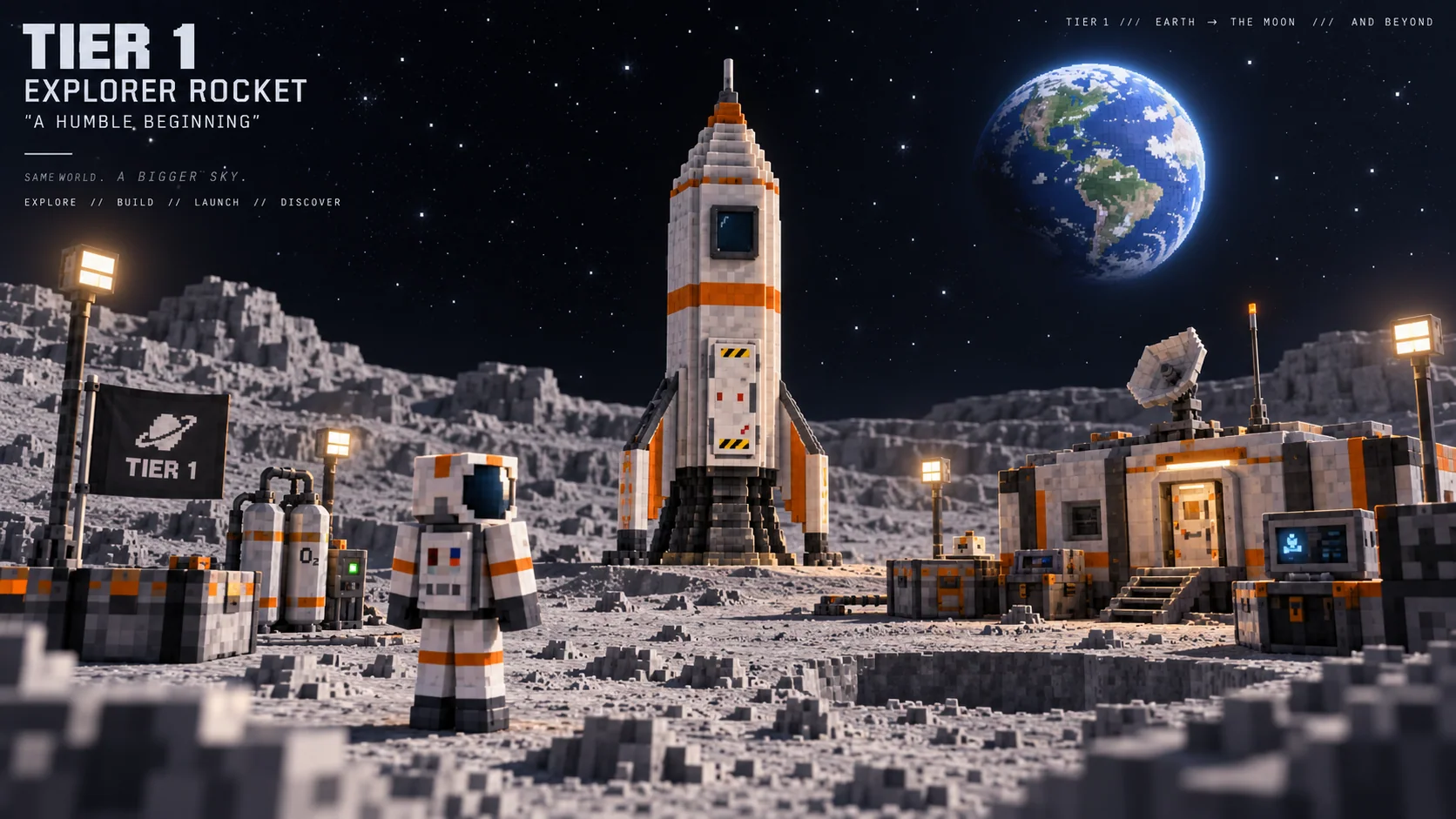
All earlier writing and artwork remain. Start with a reading path, inspect the changes or jump to one of the three completed documentation slices.
This edition adds 12,774 words in eight chapters, six selected concept boards, eight editable diagrams and four unchanged style references from the Website. The first-Moon workshop loop remains credited; Mars expands its existing five regions and three journey identities.
Current evidence, decisions, style references and meaningful reading paths.
Three configurations, focused machinery and accountable worked orders.
Five regions, three complete outings, a useful yard and the connected investigation.
The following navigation, search and chapter notes work across the complete reader. Use each chapter’s review box to record what should stay or change, then export your notes.
Current evidence, settled choices, recommendations and remaining art review.
Start with a job; compare scale; keep earlier work useful.
Arrival, three complete outings, a useful yard and homecoming.
Read responsibilities and completion criteria; keep runtime claims qualified.
No new user decision blocks these documentation slices. Existing approvals retain their limits; new authored examples remain recommendations.
Candidate 9 high, 3 × 3 body, 5 × 5 fin envelope; usable airlocked cabin and supplied identity required.
Read the exact context →REF10 fabrication; REF09 assembly with separate linked full-size berth; no third mandatory assembly table.
Read the exact context →The geological campaign, PM04 route and new boards have no required native mats.
Read the exact context →Cinematic Minecraft with rich weathered environments and readable game items; avoid clean toy-like cubes and photoreal inventory microdetail. Restraining image resolution is not a demand for simplistic terrain. REF03 is the primary style benchmark; CD05-A03 is the machinery benchmark.
Read the exact context →Compact, regional and frontier options support different orders; no requirement to build every one of 66 functions before flight.
Read the exact context →PM03 first improves a supported external Survey Rover member; earlier frame stock remains useful. No new cargo-capacity claim.
Read the exact context →A selected process or habitat-service duty consumes prepared active stock. Cleaning does not restore spent active material.
Read the exact context →Arrival refuge, mobile staging, modest yard and a developed second home are valid choices. Greenhouse and depot are optional improvements.
Read the exact context →Unselected coefficients, capacities, rates, substitutions and tag equivalences remain null; null never means free or zero.
Read the exact context →Retain the three configurations and select future exact recipes only for an authorized gameplay slice. Review this section.
Keep these first applications while leaving additional product families in the preserved catalogue. Review this section.
Keep all three journeys and allow a small useful yard to remain a valid stopping point. Review this section.
Use originals as the style authority. Treat C07-A01–05 as functional concept studies and C07-A06 as the corrected environmental candidate, not final production art. Any further generation needs a separately selected budget. Review this section.
The Tier 1 Moon scene is the primary benchmark. The forming workshop guides machinery. The four environment examples preserve pixel materials, substantial geometry and atmospheric depth.
Rich game materials, recognizable Minecraft forms and grounded atmosphere. Original reference and context.
Working parts, varied iron/copper/wood and visible service access. Preserved board and context.
Read the complete visual standard and view the four environment examples · Reference files, hashes and Website source pin.
Each figure appears beside its writing, with original-file access, a stable ID and explicit limits. Existing art remains in its original context.
C07-A01 Power for a useful outingEdition 07 concept boardC07-A02 Panels, textiles and replaceable protectionEdition 07 concept boardC07-A03 Protected samples and a finite process cartridgeEdition 07 concept boardC07-A04 Read the channel, choose the route, find shelterEdition 07 concept boardC07-A05 A yard worth returning toEdition 07 concept boardC07-A06 Brine Scarps and the connected RootstoneEdition 07 concept boardC07-D01 Workshop choices: goals determine the required functionsEdition 07 editable diagramC07-D02 Compact, regional and frontier configurationsEdition 07 editable diagramC07-D03 A bounded workshop order: custody and interruptionEdition 07 editable diagramC07-D04 Mars preparation: protected return and actual field allocationsEdition 07 editable diagramC07-D05 Mars route relationships and three complete outingsEdition 07 editable diagramC07-D06 Signature investigation: retained evidence and useful wrong turnsEdition 07 editable diagramC07-D07 Frontier Yard: useful stages and optional growthEdition 07 editable diagramC07-D08 PM03 and PM04: accountable first applicationsEdition 07 editable diagramC07-REF01 Ravine: material variation and depthConfirmed Edition 07 style referenceC07-REF02 Chasm: geological scale and restraintConfirmed Edition 07 style referenceC07-REF03 Strata: a material boundary with continuityConfirmed Edition 07 style referenceC07-REF04 Cavern: a readable place with a quiet habitatConfirmed Edition 07 style referenceBrowse all 102 visual records · Eight-call generation and correction ledger
Every canonical name and operation is retained. This overlay explains participation and optional scale; it does not create 66 mandatory separate blocks.
66 records
| Canonical responsibility | Context | Participation / host boundary | Writing |
|---|---|---|---|
IND-M01Carpenter and repair bench | Basic work and forming Compact; regional repeat work | Select the required operation for the accepted stock and order. Compatible work positions may share a bench or control host; preserve the actual tool/process. | Edition 07 relationship · Original operation card |
IND-M02Part Fabrication Table | Basic work and forming Compact; regional repeat work | REF10 fabrication identity; compatible operations may share its work position, not a new compulsory table. | Edition 07 relationship · Original operation card |
IND-M03Timber mill | Basic work and forming Compact; regional repeat work | Select the required operation for the accepted stock and order. Compatible work positions may share a bench or control host; preserve the actual tool/process. | Edition 07 relationship · Original operation card |
IND-M04Forming press and rolling stand | Basic work and forming Compact; regional repeat work | Select the required operation for the accepted stock and order. Compatible work positions may share a bench or control host; preserve the actual tool/process. | Edition 07 relationship · Original operation card |
IND-M05Drawing and precision bench | Basic work and forming Compact; regional repeat work | Select the required operation for the accepted stock and order. Compatible work positions may share a bench or control host; preserve the actual tool/process. | Edition 07 relationship · Original operation card |
IND-M06Carbon retort | Basic work and forming Compact; regional repeat work | Select the required operation for the accepted stock and order. Compatible work positions may share a bench or control host; preserve the actual tool/process. | Edition 07 relationship · Original operation card |
IND-M07Alloy hearth | Basic work and forming Compact; regional repeat work | Select the required operation for the accepted stock and order. Compatible work positions may share a bench or control host; preserve the actual tool/process. | Edition 07 relationship · Original operation card |
IND-M08Controlled steel furnace | Basic work and forming Compact; regional repeat work | Select the required operation for the accepted stock and order. Compatible work positions may share a bench or control host; preserve the actual tool/process. | Edition 07 relationship · Original operation card |
IND-M09Kiln and ceramic forming station | Basic work and forming Compact; regional repeat work | Select the required operation for the accepted stock and order. Compatible work positions may share a bench or control host; preserve the actual tool/process. | Edition 07 relationship · Original operation card |
IND-M10Panel and laminate table | Protection components Compact protection; frontier service | Select the textile, panel or seal operation required by a component. Shared preparation area is possible; distinct materials and supported duties remain. | Edition 07 relationship · Original operation card |
IND-M11Loom and textile station | Protection components Compact protection; frontier service | Select the textile, panel or seal operation required by a component. Shared preparation area is possible; distinct materials and supported duties remain. | Edition 07 relationship · Original operation card |
IND-M12Seal and filter bench | Protection components Compact protection; frontier service | Select the textile, panel or seal operation required by a component. Shared preparation area is possible; distinct materials and supported duties remain. | Edition 07 relationship · Original operation card |
IND-M13Managed cultivation beds | Biological specialization Later/selected biological route | Optional cultivation or biological process. Not a first-flight or geological-Mars gate. | Edition 07 relationship · Original operation card |
IND-M14Biological extractor and fermenter | Biological specialization Later/selected biological route | Optional cultivation or biological process. Not a first-flight or geological-Mars gate. | Edition 07 relationship · Original operation card |
IND-M15Pump installation | Liquid services Regional wet process; selected frontier service | Required only by the selected wet process or environmental service. Reservoir, treatment and transfer remain distinct typed duties. | Edition 07 relationship · Original operation card |
IND-M16Water treatment station | Liquid services Regional wet process; selected frontier service | Required only by the selected wet process or environmental service. Reservoir, treatment and transfer remain distinct typed duties. | Edition 07 relationship · Original operation card |
IND-M17Reservoir and manifold | Liquid services Regional wet process; selected frontier service | Required only by the selected wet process or environmental service. Reservoir, treatment and transfer remain distinct typed duties. | Edition 07 relationship · Original operation card |
IND-M18Crusher | Feed preparation Regional material route | Feedstock-dependent preparation; already prepared compatible stock can skip irrelevant stages. | Edition 07 relationship · Original operation card |
IND-M19Washing and classification table | Feed preparation Regional material route | Feedstock-dependent preparation; already prepared compatible stock can skip irrelevant stages. | Edition 07 relationship · Original operation card |
IND-M20Concentration separator | Feed preparation Regional material route | Feedstock-dependent preparation; already prepared compatible stock can skip irrelevant stages. | Edition 07 relationship · Original operation card |
IND-M21Electrical materials cell | Specialized transformation Regional or frontier selected process | Required only by the chosen actual material route. A shared controller does not merge incompatible chambers or supplies. | Edition 07 relationship · Original operation card |
IND-M22High-duty alloy and treatment furnace | Specialized transformation Regional or frontier selected process | Required only by the chosen actual material route. A shared controller does not merge incompatible chambers or supplies. | Edition 07 relationship · Original operation card |
IND-M23Reaction vessel | Specialized transformation Regional or frontier selected process | Proposed compact PM04 processing duty; exact recipe and reaction method unselected. | Edition 07 relationship · Original operation card |
IND-M24Evaporation and crystallization works | Specialized transformation Regional or frontier selected process | Only when the accepted process needs evaporation/crystallization; not compulsory for the first specimen. | Edition 07 relationship · Original operation card |
IND-M25Electrolytic separator | Specialized transformation Regional or frontier selected process | Required only by the chosen actual material route. A shared controller does not merge incompatible chambers or supplies. | Edition 07 relationship · Original operation card |
IND-M26Gas conditioning and compressor | Specialized transformation Regional or frontier selected process | Required only by the chosen actual material route. A shared controller does not merge incompatible chambers or supplies. | Edition 07 relationship · Original operation card |
IND-M27Phase-conditioning unit | Specialized transformation Regional or frontier selected process | Required only by the chosen actual material route. A shared controller does not merge incompatible chambers or supplies. | Edition 07 relationship · Original operation card |
IND-M28Chemical washing and recovery train | Specialized transformation Regional or frontier selected process | Required only by the chosen actual material route. A shared controller does not merge incompatible chambers or supplies. | Edition 07 relationship · Original operation card |
IND-M29Crystal and optical growth chamber | Specialized transformation Regional or frontier selected process | Required only by the chosen actual material route. A shared controller does not merge incompatible chambers or supplies. | Edition 07 relationship · Original operation card |
IND-M30Polymer and composite works | Specialized transformation Regional or frontier selected process | Required only by the chosen actual material route. A shared controller does not merge incompatible chambers or supplies. | Edition 07 relationship · Original operation card |
IND-M31Scrap and residue reclaimer | Specialized transformation Regional or frontier selected process | Required only by the chosen actual material route. A shared controller does not merge incompatible chambers or supplies. | Edition 07 relationship · Original operation card |
IND-M32Workshop dynamo and source assemblies | Power-source alternatives Compact, regional or frontier source choice | Choose a supported source for the job and place; installing every source is not required. Supply must be real. | Edition 07 relationship · Original operation card |
IND-M33Boiler, engine, and condenser plant | Power-source alternatives Compact, regional or frontier source choice | Choose a supported source for the job and place; installing every source is not required. Supply must be real. | Edition 07 relationship · Original operation card |
IND-M34Liquid or gas fuel engine | Power-source alternatives Compact, regional or frontier source choice | Choose a supported source for the job and place; installing every source is not required. Supply must be real. | Edition 07 relationship · Original operation card |
IND-M35Solar array and controller | Power-source alternatives Compact, regional or frontier source choice | Choose a supported source for the job and place; installing every source is not required. Supply must be real. | Edition 07 relationship · Original operation card |
IND-M36Thermal recovery module | Power-source alternatives Compact, regional or frontier source choice | Choose a supported source for the job and place; installing every source is not required. Supply must be real. | Edition 07 relationship · Original operation card |
IND-M37Stationary power bank | Storage, distribution and charging Compact equipment; regional buffers; frontier service | Buffer stores supplied energy without multiplication; a supported direct-source job can omit it. | Edition 07 relationship · Original operation card |
IND-M38Switchboard and distribution station | Storage, distribution and charging Compact equipment; regional buffers; frontier service | Expose branch load and isolation with typed connections; no infinite distribution capacity. | Edition 07 relationship · Original operation card |
IND-M39Field-cell charging rack | Storage, distribution and charging Compact equipment; regional buffers; frontier service | Prepares one supported receiver; energy input and delivered amount remain accountable. | Edition 07 relationship · Original operation card |
IND-M40Oxygen Generator — compact air-supply preparation (T1-M05) | Breathing and habitat services Chosen flight or habitat configuration | Use the supported operation when supplying breathing stock or an enclosure. Process fluids, fuel and breathing supply remain separate. | Edition 07 relationship · Original operation card |
IND-M41Breathing-supply refill rack | Breathing and habitat services Chosen flight or habitat configuration | Use the supported operation when supplying breathing stock or an enclosure. Process fluids, fuel and breathing supply remain separate. | Edition 07 relationship · Original operation card |
IND-M42Seal and enclosure test cabinet | Breathing and habitat services Chosen flight or habitat configuration | Use the supported operation when supplying breathing stock or an enclosure. Process fluids, fuel and breathing supply remain separate. | Edition 07 relationship · Original operation card |
IND-M43Habitat utility module | Breathing and habitat services Chosen flight or habitat configuration | Use the supported operation when supplying breathing stock or an enclosure. Process fluids, fuel and breathing supply remain separate. | Edition 07 relationship · Original operation card |
IND-M44Thermal service unit | Breathing and habitat services Chosen flight or habitat configuration | Use the supported operation when supplying breathing stock or an enclosure. Process fluids, fuel and breathing supply remain separate. | Edition 07 relationship · Original operation card |
IND-M45Fuel Refinery — propellant preparation (T1-M03) | Flight and equipment service Compact flight branch; supported vehicle preparation | Chosen-flight obligations from WP05/Tier 1 remain; earlier methods supply first capability. Fabrication and assembly identities are not multiplied. | Edition 07 relationship · Original operation card |
IND-M46Rocket Assembly Station | Flight and equipment service Compact flight branch; supported vehicle preparation | REF09 assembly identity with separate linked berth; no third compulsory assembly table. | Edition 07 relationship · Original operation card |
IND-M47Component service and test stand | Flight and equipment service Compact flight branch; supported vehicle preparation | Chosen-flight obligations from WP05/Tier 1 remain; earlier methods supply first capability. Fabrication and assembly identities are not multiplied. | Edition 07 relationship · Original operation card |
IND-M48Launch service and recovery connections | Flight and equipment service Compact flight branch; supported vehicle preparation | Chosen-flight obligations from WP05/Tier 1 remain; earlier methods supply first capability. Fabrication and assembly identities are not multiplied. | Edition 07 relationship · Original operation card |
IND-M49Suit and equipment service dock | Flight and equipment service Compact flight branch; supported vehicle preparation | Chosen-flight obligations from WP05/Tier 1 remain; earlier methods supply first capability. Fabrication and assembly identities are not multiplied. | Edition 07 relationship · Original operation card |
IND-M50Survey and optical bench | Observation and control Compact science; Mars investigation | Select observation, sample or control duties as needed. Stored evidence is distinct from consumed specimen quantity. | Edition 07 relationship · Original operation card |
IND-M51Sample laboratory | Observation and control Compact science; Mars investigation | Registers actual specimens and selected operations; study, processing and reserve have separate custody. | Edition 07 relationship · Original operation card |
IND-M52Sensor and control cabinet | Observation and control Compact science; Mars investigation | Select observation, sample or control duties as needed. Stored evidence is distinct from consumed specimen quantity. | Edition 07 relationship · Original operation card |
IND-M53Hoist and lift installation | Handling and regional logistics Regional repeat work; frontier vehicle service | Scale only where the selected load/order justifies it. Freight moves reserved actual goods; parallel production pays for actual working positions. | Edition 07 relationship · Original operation card |
IND-M54Conveyor and loading bay | Handling and regional logistics Regional repeat work; frontier vehicle service | Scale only where the selected load/order justifies it. Freight moves reserved actual goods; parallel production pays for actual working positions. | Edition 07 relationship · Original operation card |
IND-M55Stockroom and order desk | Handling and regional logistics Regional repeat work; frontier vehicle service | Scale only where the selected load/order justifies it. Freight moves reserved actual goods; parallel production pays for actual working positions. | Edition 07 relationship · Original operation card |
IND-M56Freight dispatch and receiving service | Handling and regional logistics Regional repeat work; frontier vehicle service | Scale only where the selected load/order justifies it. Freight moves reserved actual goods; parallel production pays for actual working positions. | Edition 07 relationship · Original operation card |
IND-M57Bounded excavation assembly | Handling and regional logistics Regional repeat work; frontier vehicle service | Scale only where the selected load/order justifies it. Freight moves reserved actual goods; parallel production pays for actual working positions. | Edition 07 relationship · Original operation card |
IND-M58Frontier vehicle service bay | Handling and regional logistics Regional repeat work; frontier vehicle service | Supported vehicle service position; earlier-stock field repair remains available for routine jobs. | Edition 07 relationship · Original operation card |
IND-M59Parallel production line | Handling and regional logistics Regional repeat work; frontier vehicle service | Scale only where the selected load/order justifies it. Freight moves reserved actual goods; parallel production pays for actual working positions. | Edition 07 relationship · Original operation card |
IND-M60Shielded materials laboratory | Later specialist research and transit Deferred specialization context | Later or optional specialist responsibility. Does not become a hidden first-Moon/Mars prerequisite. | Edition 07 relationship · Original operation card |
IND-M61Shielded fission power plant | Later specialist research and transit Deferred specialization context | Later or optional specialist responsibility. Does not become a hidden first-Moon/Mars prerequisite. | Edition 07 relationship · Original operation card |
IND-M62Fusion research plant | Later specialist research and transit Deferred specialization context | Later or optional specialist responsibility. Does not become a hidden first-Moon/Mars prerequisite. | Edition 07 relationship · Original operation card |
IND-M63Precision field apparatus | Later specialist research and transit Deferred specialization context | Later or optional specialist responsibility. Does not become a hidden first-Moon/Mars prerequisite. | Edition 07 relationship · Original operation card |
IND-M64Navigation and transit assembly | Later specialist research and transit Deferred specialization context | Later or optional specialist responsibility. Does not become a hidden first-Moon/Mars prerequisite. | Edition 07 relationship · Original operation card |
IND-M65Advanced route terminal | Later specialist research and transit Deferred specialization context | Later or optional specialist responsibility. Does not become a hidden first-Moon/Mars prerequisite. | Edition 07 relationship · Original operation card |
IND-M66Modular powered equipment dock | Later specialist research and transit Deferred specialization context | Later or optional specialist responsibility. Does not become a hidden first-Moon/Mars prerequisite. | Edition 07 relationship · Original operation card |
The three selected slices are documented. This complete commissioning overlay keeps long-term detailed artwork distinct from the selected balanced overview.
All 1,076 historical view records are reconciled: 27 inherited delivered references/overviews, 12 previously delivered exact illustrative layouts, and 1,037 separately unfilled detailed views. Representative imagery is linked where its source IDs support that relationship. These are historical commissioning possibilities, including excluded packages; they are not 1,037 required tasks for this edition.
Only for an explicitly authorized game slice; no numerical values invented here.
Read scope and evidence →Actual model/player/suit/cargo geometry; bring concrete alternatives only if a confirmed direction must change.
Read scope and evidence →Run actual generated terrain and mission/service states after game BUILD authorization.
Read scope and evidence →C07-A01–05 remain useful functional studies; assess material richness beside canonical art before commissioning refinements. No generation budget remains.
Read scope and evidence →Website agent owns current-app reconciliation, focused release checks and any authorized publication; return pinned evidence.
Read scope and evidence →Prior NOT RUN status retained; this source build does not execute public-site/native QA.
Read scope and evidence →No hidden expansion: farther campaigns, broad equipment/Earth ecology, later hulls, broad interfaces/narrative/audio, new worlds and full reader redesign remain separate selections.
Read scope and evidence →No action needed for the geological campaign; add only after deliberate selection.
Read scope and evidence →1076 records
This preserved source describes Afterlight, Cairn or Morrow. It is proposed creative direction, not implemented game content.
| Subject and original ID | Requested view | Current reading | Related representative artwork |
|---|---|---|---|
OV-EARTHFour remaining Earth realms | High-level concept board Historical: Overview included | Overview included inherited delivered reference/overview | OV-EARTH |
OV-MOONMoon overview | High-level concept board Historical: Overview included | Overview included inherited delivered reference/overview | OV-MOON |
OV-MARSMars overview | High-level concept board Historical: Overview included | Overview included inherited delivered reference/overview | OV-MARS |
OV-OUTERCeres, Europa, Io, and Titan overview | High-level concept board Historical: Overview included | Overview included inherited delivered reference/overview | OV-OUTER |
OV-FRONTIERSPluto, Cairn, and Morrow overview | High-level concept board Historical: Overview included | Overview included inherited delivered reference/overview | OV-FRONTIERS |
EAR01-HOverworld | Establishing view Historical: Concept image included | Concept image included inherited delivered reference/overview | C06-D05 · CD05-A01 · EAR01_H · ILL-D05 · ILL03-01 |
EAR01-V01Bluewater Quarry Coast | Named experience view Historical: Detailed artwork — backlog | Representative/context artwork available; detailed view still backlogged detailed view remains separately unfilled | C06-D05 · CD05-A01 · EAR01_H · ILL-D05 · ILL03-01 |
EAR01-V02Rooted Uplands | Named experience view Historical: Detailed artwork — backlog | Representative/context artwork available; detailed view still backlogged detailed view remains separately unfilled | C06-D05 · CD05-A01 · EAR01_H · ILL-D05 · ILL03-01 |
EAR01-V03Rivergate Country | Named experience view Historical: Detailed artwork — backlog | Representative/context artwork available; detailed view still backlogged detailed view remains separately unfilled | C06-D05 · CD05-A01 · EAR01_H · ILL-D05 · ILL03-01 |
EAR01-V04Windscar Heights | Named experience view Historical: Detailed artwork — backlog | Representative/context artwork available; detailed view still backlogged detailed view remains separately unfilled | C06-D05 · CD05-A01 · EAR01_H · ILL-D05 · ILL03-01 |
EAR01-V05Rainwood Hollows | Named experience view Historical: Detailed artwork — backlog | Representative/context artwork available; detailed view still backlogged detailed view remains separately unfilled | C06-D05 · CD05-A01 · EAR01_H · ILL-D05 · ILL03-01 |
EAR01-SOverworld | Refuge exterior Historical: Detailed artwork — backlog | Representative/context artwork available; detailed view still backlogged detailed view remains separately unfilled | C06-D05 · CD05-A01 · EAR01_H · ILL-D05 · ILL03-01 |
EAR01-IOverworld | Useful refuge interior Historical: Detailed artwork — backlog | Representative/context artwork available; detailed view still backlogged detailed view remains separately unfilled | C06-D05 · CD05-A01 · EAR01_H · ILL-D05 · ILL03-01 |
EAR01-AOverworld | Expedition activity Historical: Detailed artwork — backlog | Representative/context artwork available; detailed view still backlogged detailed view remains separately unfilled | C06-D05 · CD05-A01 · EAR01_H · ILL-D05 · ILL03-01 |
EAR01-XOverworld | Exact drawn realm reference Historical: Detailed artwork — backlog | Representative/context artwork available; detailed view still backlogged detailed view remains separately unfilled | C06-D05 · CD05-A01 · EAR01_H · ILL-D05 · ILL03-01 |
EAR02-HShallows | Establishing view Historical: Detailed artwork — backlog | Representative/context artwork available; detailed view still backlogged detailed view remains separately unfilled | C06-A03 · C06-D05 · ILL-D01 · ILL-D05 · ILL-U03 · ILL03-01 · OV-EARTH |
EAR02-V01Rootlace Galleries | Named experience view Historical: Detailed artwork — backlog | Representative/context artwork available; detailed view still backlogged detailed view remains separately unfilled | C06-A03 · C06-D05 · ILL-D01 · ILL-D05 · ILL-U03 · ILL03-01 · OV-EARTH |
EAR02-V02Chalkstep Terraces | Named experience view Historical: Detailed artwork — backlog | Representative/context artwork available; detailed view still backlogged detailed view remains separately unfilled | C06-A03 · C06-D05 · ILL-D01 · ILL-D05 · ILL-U03 · ILL03-01 · OV-EARTH |
EAR02-V03Copperwash Channels | Named experience view Historical: Detailed artwork — backlog | Representative/context artwork available; detailed view still backlogged detailed view remains separately unfilled | C06-A03 · C06-D05 · ILL-D01 · ILL-D05 · ILL-U03 · ILL03-01 · OV-EARTH |
EAR02-V04Glasswell Pools | Named experience view Historical: Detailed artwork — backlog | Representative/context artwork available; detailed view still backlogged detailed view remains separately unfilled | C06-A03 · C06-D05 · ILL-D01 · ILL-D05 · ILL-U03 · ILL03-01 · OV-EARTH |
EAR02-V05Drybell Vaults | Named experience view Historical: Detailed artwork — backlog | Representative/context artwork available; detailed view still backlogged detailed view remains separately unfilled | C06-A03 · C06-D05 · ILL-D01 · ILL-D05 · ILL-U03 · ILL03-01 · OV-EARTH |
EAR02-SShallows | Refuge exterior Historical: Detailed artwork — backlog | Representative/context artwork available; detailed view still backlogged detailed view remains separately unfilled | C06-A03 · C06-D05 · ILL-D01 · ILL-D05 · ILL-U03 · ILL03-01 · OV-EARTH |
EAR02-IShallows | Useful refuge interior Historical: Detailed artwork — backlog | Representative/context artwork available; detailed view still backlogged detailed view remains separately unfilled | C06-A03 · C06-D05 · ILL-D01 · ILL-D05 · ILL-U03 · ILL03-01 · OV-EARTH |
EAR02-AShallows | Expedition activity Historical: Detailed artwork — backlog | Representative/context artwork available; detailed view still backlogged detailed view remains separately unfilled | C06-A03 · C06-D05 · ILL-D01 · ILL-D05 · ILL-U03 · ILL03-01 · OV-EARTH |
EAR02-XShallows | Exact drawn realm reference Historical: Detailed artwork — backlog | Representative/context artwork available; detailed view still backlogged detailed view remains separately unfilled | C06-A03 · C06-D05 · ILL-D01 · ILL-D05 · ILL-U03 · ILL03-01 · OV-EARTH |
EAR03-HDeepwilds | Establishing view Historical: Concept image included | Concept image included inherited delivered reference/overview | C06-A03 · C06-D05 · EAR03_H · ILL-D05 |
EAR03-V01Lanternroot Forests | Named experience view Historical: Detailed artwork — backlog | Representative/context artwork available; detailed view still backlogged detailed view remains separately unfilled | C06-A03 · C06-D05 · EAR03_H · ILL-D05 |
EAR03-V02Sporemeadow Basins | Named experience view Historical: Detailed artwork — backlog | Representative/context artwork available; detailed view still backlogged detailed view remains separately unfilled | C06-A03 · C06-D05 · EAR03_H · ILL-D05 |
EAR03-V03Hanging Gardens | Named experience view Historical: Detailed artwork — backlog | Representative/context artwork available; detailed view still backlogged detailed view remains separately unfilled | C06-A03 · C06-D05 · EAR03_H · ILL-D05 |
EAR03-V04Bluefen Groves | Named experience view Historical: Detailed artwork — backlog | Representative/context artwork available; detailed view still backlogged detailed view remains separately unfilled | C06-A03 · C06-D05 · EAR03_H · ILL-D05 |
EAR03-V05Quietwood Hollows | Named experience view Historical: Detailed artwork — backlog | Representative/context artwork available; detailed view still backlogged detailed view remains separately unfilled | C06-A03 · C06-D05 · EAR03_H · ILL-D05 |
EAR03-SDeepwilds | Refuge exterior Historical: Detailed artwork — backlog | Representative/context artwork available; detailed view still backlogged detailed view remains separately unfilled | C06-A03 · C06-D05 · EAR03_H · ILL-D05 |
EAR03-IDeepwilds | Useful refuge interior Historical: Detailed artwork — backlog | Representative/context artwork available; detailed view still backlogged detailed view remains separately unfilled | C06-A03 · C06-D05 · EAR03_H · ILL-D05 |
EAR03-ADeepwilds | Expedition activity Historical: Detailed artwork — backlog | Representative/context artwork available; detailed view still backlogged detailed view remains separately unfilled | C06-A03 · C06-D05 · EAR03_H · ILL-D05 |
EAR03-XDeepwilds | Exact drawn realm reference Historical: Detailed artwork — backlog | Representative/context artwork available; detailed view still backlogged detailed view remains separately unfilled | C06-A03 · C06-D05 · EAR03_H · ILL-D05 |
EAR04-HUnderreach | Establishing view Historical: Detailed artwork — backlog | Representative/context artwork available; detailed view still backlogged detailed view remains separately unfilled | C06-A03 · C06-D05 · ILL-D05 · OV-EARTH |
EAR04-V01Ironfold Ridges | Named experience view Historical: Detailed artwork — backlog | Representative/context artwork available; detailed view still backlogged detailed view remains separately unfilled | C06-A03 · C06-D05 · ILL-D05 · OV-EARTH |
EAR04-V02Saltmirror Halls | Named experience view Historical: Detailed artwork — backlog | Representative/context artwork available; detailed view still backlogged detailed view remains separately unfilled | C06-A03 · C06-D05 · ILL-D05 · OV-EARTH |
EAR04-V03Blackriver Galleries | Named experience view Historical: Detailed artwork — backlog | Representative/context artwork available; detailed view still backlogged detailed view remains separately unfilled | C06-A03 · C06-D05 · ILL-D05 · OV-EARTH |
EAR04-V04Echoquartz Fields | Named experience view Historical: Detailed artwork — backlog | Representative/context artwork available; detailed view still backlogged detailed view remains separately unfilled | C06-A03 · C06-D05 · ILL-D05 · OV-EARTH |
EAR04-V05Dustroad Expanse | Named experience view Historical: Detailed artwork — backlog | Representative/context artwork available; detailed view still backlogged detailed view remains separately unfilled | C06-A03 · C06-D05 · ILL-D05 · OV-EARTH |
EAR04-SUnderreach | Refuge exterior Historical: Detailed artwork — backlog | Representative/context artwork available; detailed view still backlogged detailed view remains separately unfilled | C06-A03 · C06-D05 · ILL-D05 · OV-EARTH |
EAR04-IUnderreach | Useful refuge interior Historical: Detailed artwork — backlog | Representative/context artwork available; detailed view still backlogged detailed view remains separately unfilled | C06-A03 · C06-D05 · ILL-D05 · OV-EARTH |
EAR04-AUnderreach | Expedition activity Historical: Detailed artwork — backlog | Representative/context artwork available; detailed view still backlogged detailed view remains separately unfilled | C06-A03 · C06-D05 · ILL-D05 · OV-EARTH |
EAR04-XUnderreach | Exact drawn realm reference Historical: Detailed artwork — backlog | Representative/context artwork available; detailed view still backlogged detailed view remains separately unfilled | C06-A03 · C06-D05 · ILL-D05 · OV-EARTH |
EAR05-HAbyss | Establishing view Historical: Concept image included | Concept image included inherited delivered reference/overview | C06-D05 · EAR05_H · ILL-D05 |
EAR05-V01Pillarfall Reaches | Named experience view Historical: Detailed artwork — backlog | Representative/context artwork available; detailed view still backlogged detailed view remains separately unfilled | C06-D05 · EAR05_H · ILL-D05 |
EAR05-V02Stillsea Basin | Named experience view Historical: Detailed artwork — backlog | Representative/context artwork available; detailed view still backlogged detailed view remains separately unfilled | C06-D05 · EAR05_H · ILL-D05 |
EAR05-V03Moonmilk Shelves | Named experience view Historical: Detailed artwork — backlog | Representative/context artwork available; detailed view still backlogged detailed view remains separately unfilled | C06-D05 · EAR05_H · ILL-D05 |
EAR05-V04Whisper Chasms | Named experience view Historical: Detailed artwork — backlog | Representative/context artwork available; detailed view still backlogged detailed view remains separately unfilled | C06-D05 · EAR05_H · ILL-D05 |
EAR05-V05Drowned Stair Country | Named experience view Historical: Detailed artwork — backlog | Representative/context artwork available; detailed view still backlogged detailed view remains separately unfilled | C06-D05 · EAR05_H · ILL-D05 |
EAR05-SAbyss | Refuge exterior Historical: Detailed artwork — backlog | Representative/context artwork available; detailed view still backlogged detailed view remains separately unfilled | C06-D05 · EAR05_H · ILL-D05 |
EAR05-IAbyss | Useful refuge interior Historical: Detailed artwork — backlog | Representative/context artwork available; detailed view still backlogged detailed view remains separately unfilled | C06-D05 · EAR05_H · ILL-D05 |
EAR05-AAbyss | Expedition activity Historical: Detailed artwork — backlog | Representative/context artwork available; detailed view still backlogged detailed view remains separately unfilled | C06-D05 · EAR05_H · ILL-D05 |
EAR05-XAbyss | Exact drawn realm reference Historical: Detailed artwork — backlog | Representative/context artwork available; detailed view still backlogged detailed view remains separately unfilled | C06-D05 · EAR05_H · ILL-D05 |
EAR06-HMantle | Establishing view Historical: Detailed artwork — backlog | Representative/context artwork available; detailed view still backlogged detailed view remains separately unfilled | C06-A03 · C06-D05 · ILL-D05 · OV-EARTH |
EAR06-V01Basalt Steps | Named experience view Historical: Detailed artwork — backlog | Representative/context artwork available; detailed view still backlogged detailed view remains separately unfilled | C06-A03 · C06-D05 · ILL-D05 · OV-EARTH |
EAR06-V02Ember Gardens | Named experience view Historical: Detailed artwork — backlog | Representative/context artwork available; detailed view still backlogged detailed view remains separately unfilled | C06-A03 · C06-D05 · ILL-D05 · OV-EARTH |
EAR06-V03Ashen Hollows | Named experience view Historical: Detailed artwork — backlog | Representative/context artwork available; detailed view still backlogged detailed view remains separately unfilled | C06-A03 · C06-D05 · ILL-D05 · OV-EARTH |
EAR06-V04Redglass Margins | Named experience view Historical: Detailed artwork — backlog | Representative/context artwork available; detailed view still backlogged detailed view remains separately unfilled | C06-A03 · C06-D05 · ILL-D05 · OV-EARTH |
EAR06-V05Steamvaults | Named experience view Historical: Detailed artwork — backlog | Representative/context artwork available; detailed view still backlogged detailed view remains separately unfilled | C06-A03 · C06-D05 · ILL-D05 · OV-EARTH |
EAR06-SMantle | Refuge exterior Historical: Detailed artwork — backlog | Representative/context artwork available; detailed view still backlogged detailed view remains separately unfilled | C06-A03 · C06-D05 · ILL-D05 · OV-EARTH |
EAR06-IMantle | Useful refuge interior Historical: Detailed artwork — backlog | Representative/context artwork available; detailed view still backlogged detailed view remains separately unfilled | C06-A03 · C06-D05 · ILL-D05 · OV-EARTH |
EAR06-AMantle | Expedition activity Historical: Detailed artwork — backlog | Representative/context artwork available; detailed view still backlogged detailed view remains separately unfilled | C06-A03 · C06-D05 · ILL-D05 · OV-EARTH |
EAR06-XMantle | Exact drawn realm reference Historical: Detailed artwork — backlog | Representative/context artwork available; detailed view still backlogged detailed view remains separately unfilled | C06-A03 · C06-D05 · ILL-D05 · OV-EARTH |
EAR07-HCore | Establishing view Historical: Detailed artwork — backlog | Representative/context artwork available; detailed view still backlogged detailed view remains separately unfilled | C06-D05 · ILL-D05 · OV-EARTH |
EAR07-V01Heartglass Groves | Named experience view Historical: Detailed artwork — backlog | Representative/context artwork available; detailed view still backlogged detailed view remains separately unfilled | C06-D05 · ILL-D05 · OV-EARTH |
EAR07-V02Pale Resonance Fields | Named experience view Historical: Detailed artwork — backlog | Representative/context artwork available; detailed view still backlogged detailed view remains separately unfilled | C06-D05 · ILL-D05 · OV-EARTH |
EAR07-V03Stillwater Sanctuaries | Named experience view Historical: Detailed artwork — backlog | Representative/context artwork available; detailed view still backlogged detailed view remains separately unfilled | C06-D05 · ILL-D05 · OV-EARTH |
EAR07-V04Blackroot Islands | Named experience view Historical: Detailed artwork — backlog | Representative/context artwork available; detailed view still backlogged detailed view remains separately unfilled | C06-D05 · ILL-D05 · OV-EARTH |
EAR07-V05The Heart Chamber | Named experience view Historical: Detailed artwork — backlog | Representative/context artwork available; detailed view still backlogged detailed view remains separately unfilled | C06-D05 · ILL-D05 · OV-EARTH |
EAR07-SCore | Refuge exterior Historical: Detailed artwork — backlog | Representative/context artwork available; detailed view still backlogged detailed view remains separately unfilled | C06-D05 · ILL-D05 · OV-EARTH |
EAR07-ICore | Useful refuge interior Historical: Detailed artwork — backlog | Representative/context artwork available; detailed view still backlogged detailed view remains separately unfilled | C06-D05 · ILL-D05 · OV-EARTH |
EAR07-ACore | Expedition activity Historical: Detailed artwork — backlog | Representative/context artwork available; detailed view still backlogged detailed view remains separately unfilled | C06-D05 · ILL-D05 · OV-EARTH |
EAR07-XCore | Exact drawn realm reference Historical: Detailed artwork — backlog | Representative/context artwork available; detailed view still backlogged detailed view remains separately unfilled | C06-D05 · ILL-D05 · OV-EARTH |
EAR01-EAR02-TRANSQuarry opening into the Shallows | Transition scene Historical: Detailed artwork — backlog | Representative/context artwork available; detailed view still backlogged detailed view remains separately unfilled | C06-A03 · C06-D05 · CD05-A01 · ILL-D01 · ILL-D05 · ILL-U03 · ILL03-01 · OV-EARTH |
EAR02-EAR03-TRANSFirst living cavern beyond a repaired waterway | Transition scene Historical: Detailed artwork — backlog | Representative/context artwork available; detailed view still backlogged detailed view remains separately unfilled | C06-A03 · C06-D05 · EAR03_H · ILL-D01 · ILL-D05 · ILL-U03 · ILL03-01 |
EAR03-EAR04-TRANSForest thinning into Underreach rock | Transition scene Historical: Detailed artwork — backlog | Representative/context artwork available; detailed view still backlogged detailed view remains separately unfilled | C06-A03 · C06-D05 · ILL-D05 · OV-EARTH |
EAR04-EAR05-TRANSWorking route reaching the Abyss | Transition scene Historical: Detailed artwork — backlog | Representative/context artwork available; detailed view still backlogged detailed view remains separately unfilled | C06-A03 · C06-D05 · EAR05_H · ILL-D05 |
EAR05-EAR06-TRANSWater terraces giving way to thermal margins | Transition scene Historical: Detailed artwork — backlog | Representative/context artwork available; detailed view still backlogged detailed view remains separately unfilled | C06-A03 · C06-D05 · ILL-D05 · OV-EARTH |
EAR06-EAR07-TRANSMantle approaching the quieter Heart environment | Transition scene Historical: Detailed artwork — backlog | Representative/context artwork available; detailed view still backlogged detailed view remains separately unfilled | C06-A03 · C06-D05 · ILL-D05 · OV-EARTH |
DST01-MO-S1-WEarthrise Rim | Wide regional identity Historical: Detailed artwork — backlog | Representative/context artwork available; detailed view still backlogged detailed view remains separately unfilled | C06-D08 · CD05-A02 · CD05-D01 · ILL-U03 · OV-MOON |
DST01-MO-S1-AEarthrise Rim | Distinct regional activity Historical: Detailed artwork — backlog | Representative/context artwork available; detailed view still backlogged detailed view remains separately unfilled | C06-D08 · CD05-A02 · CD05-D01 · ILL-U03 · OV-MOON |
DST01-MO-S2-WShadow Basin | Wide regional identity Historical: Detailed artwork — backlog | Representative/context artwork available; detailed view still backlogged detailed view remains separately unfilled | C06-A08 · C06-D08 · CD05-A02 · CD05-D01 · ILL-U03 · OV-MOON |
DST01-MO-S2-AShadow Basin | Distinct regional activity Historical: Detailed artwork — backlog | Representative/context artwork available; detailed view still backlogged detailed view remains separately unfilled | C06-A08 · C06-D08 · CD05-A02 · CD05-D01 · ILL-U03 · OV-MOON |
DST01-MO-L1-WRegolith Hollows | Wide regional identity Historical: Detailed artwork — backlog | Representative/context artwork available; detailed view still backlogged detailed view remains separately unfilled | C06-D08 · CD05-A02 · CD05-D01 · ILL-U03 · OV-MOON |
DST01-MO-L1-ARegolith Hollows | Distinct regional activity Historical: Detailed artwork — backlog | Representative/context artwork available; detailed view still backlogged detailed view remains separately unfilled | C06-D08 · CD05-A02 · CD05-D01 · ILL-U03 · OV-MOON |
DST01-MO-L2-WBasalt Galleries | Wide regional identity Historical: Detailed artwork — backlog | Representative/context artwork available; detailed view still backlogged detailed view remains separately unfilled | C06-A08 · C06-D08 · CD05-A02 · CD05-D01 · ILL-U03 · OV-MOON |
DST01-MO-L2-ABasalt Galleries | Distinct regional activity Historical: Detailed artwork — backlog | Representative/context artwork available; detailed view still backlogged detailed view remains separately unfilled | C06-A08 · C06-D08 · CD05-A02 · CD05-D01 · ILL-U03 · OV-MOON |
DST01-MO-L3-WGlassfall Vaults | Wide regional identity Historical: Detailed artwork — backlog | Representative/context artwork available; detailed view still backlogged detailed view remains separately unfilled | C06-A08 · C06-D08 · CD05-A02 · CD05-D01 · ILL-U03 · OV-MOON |
DST01-MO-L3-AGlassfall Vaults | Distinct regional activity Historical: Detailed artwork — backlog | Representative/context artwork available; detailed view still backlogged detailed view remains separately unfilled | C06-A08 · C06-D08 · CD05-A02 · CD05-D01 · ILL-U03 · OV-MOON |
DST02-MA-S1-WWindcut Tablelands | Wide regional identity Historical: Detailed artwork — backlog | Representative/context artwork available; detailed view still backlogged detailed view remains separately unfilled | C07-A04 · C07-D04 · C07-D05 · C07-D06 · OV-MARS |
DST02-MA-S1-AWindcut Tablelands | Distinct regional activity Historical: Detailed artwork — backlog | Representative/context artwork available; detailed view still backlogged detailed view remains separately unfilled | C07-A04 · C07-D04 · C07-D05 · C07-D06 · OV-MARS |
DST02-MA-S2-WBuried Delta | Wide regional identity Historical: Detailed artwork — backlog | Representative/context artwork available; detailed view still backlogged detailed view remains separately unfilled | C07-A04 · C07-D04 · C07-D05 · C07-D06 · OV-MARS |
DST02-MA-S2-ABuried Delta | Distinct regional activity Historical: Detailed artwork — backlog | Representative/context artwork available; detailed view still backlogged detailed view remains separately unfilled | C07-A04 · C07-D04 · C07-D05 · C07-D06 · OV-MARS |
DST02-MA-L1-WOchre Galleries | Wide regional identity Historical: Detailed artwork — backlog | Representative/context artwork available; detailed view still backlogged detailed view remains separately unfilled | C07-A04 · C07-D04 · C07-D05 · C07-D06 · OV-MARS |
DST02-MA-L1-AOchre Galleries | Distinct regional activity Historical: Detailed artwork — backlog | Representative/context artwork available; detailed view still backlogged detailed view remains separately unfilled | C07-A04 · C07-D04 · C07-D05 · C07-D06 · OV-MARS |
DST02-MA-L2-WBrine Scarps | Wide regional identity Historical: Detailed artwork — backlog | Representative/context artwork available; detailed view still backlogged detailed view remains separately unfilled | C07-A06 · C07-D04 · C07-D05 · C07-D06 · OV-MARS |
DST02-MA-L2-ABrine Scarps | Distinct regional activity Historical: Detailed artwork — backlog | Representative/context artwork available; detailed view still backlogged detailed view remains separately unfilled | C07-A06 · C07-D04 · C07-D05 · C07-D06 · OV-MARS |
DST02-MA-L3-WRootstone Chambers | Wide regional identity Historical: Detailed artwork — backlog | Representative/context artwork available; detailed view still backlogged detailed view remains separately unfilled | C07-A06 · C07-D04 · C07-D05 · C07-D06 · OV-MARS |
DST02-MA-L3-ARootstone Chambers | Distinct regional activity Historical: Detailed artwork — backlog | Representative/context artwork available; detailed view still backlogged detailed view remains separately unfilled | C07-A06 · C07-D04 · C07-D05 · C07-D06 · OV-MARS |
DST03-CE-S1-WBroken Crown | Wide regional identity Historical: Detailed artwork — backlog | Representative/context artwork available; detailed view still backlogged detailed view remains separately unfilled | OV-OUTER |
DST03-CE-S1-ABroken Crown | Distinct regional activity Historical: Detailed artwork — backlog | Representative/context artwork available; detailed view still backlogged detailed view remains separately unfilled | OV-OUTER |
DST03-CE-L1-WRubble Mazes | Wide regional identity Historical: Detailed artwork — backlog | Representative/context artwork available; detailed view still backlogged detailed view remains separately unfilled | OV-OUTER |
DST03-CE-L1-ARubble Mazes | Distinct regional activity Historical: Detailed artwork — backlog | Representative/context artwork available; detailed view still backlogged detailed view remains separately unfilled | OV-OUTER |
DST03-CE-L2-WIce Pockets | Wide regional identity Historical: Detailed artwork — backlog | Representative/context artwork available; detailed view still backlogged detailed view remains separately unfilled | OV-OUTER |
DST03-CE-L2-AIce Pockets | Distinct regional activity Historical: Detailed artwork — backlog | Representative/context artwork available; detailed view still backlogged detailed view remains separately unfilled | OV-OUTER |
DST03-CE-L3-WAnchorstone Spine | Wide regional identity Historical: Detailed artwork — backlog | Representative/context artwork available; detailed view still backlogged detailed view remains separately unfilled | OV-OUTER |
DST03-CE-L3-AAnchorstone Spine | Distinct regional activity Historical: Detailed artwork — backlog | Representative/context artwork available; detailed view still backlogged detailed view remains separately unfilled | OV-OUTER |
DST04-EU-S1-WFracture Plains | Wide regional identity Historical: Detailed artwork — backlog | Representative/context artwork available; detailed view still backlogged detailed view remains separately unfilled | C06-A05 · OV-OUTER |
DST04-EU-S1-AFracture Plains | Distinct regional activity Historical: Detailed artwork — backlog | Representative/context artwork available; detailed view still backlogged detailed view remains separately unfilled | C06-A05 · OV-OUTER |
DST04-EU-L1-WBlue Pressure Halls | Wide regional identity Historical: Detailed artwork — backlog | Representative/context artwork available; detailed view still backlogged detailed view remains separately unfilled | C06-A05 · OV-OUTER |
DST04-EU-L1-ABlue Pressure Halls | Distinct regional activity Historical: Detailed artwork — backlog | Representative/context artwork available; detailed view still backlogged detailed view remains separately unfilled | C06-A05 · OV-OUTER |
DST04-EU-L2-WLantern Ocean | Wide regional identity Historical: Detailed artwork — backlog | Representative/context artwork available; detailed view still backlogged detailed view remains separately unfilled | C06-A05 · OV-OUTER |
DST04-EU-L2-ALantern Ocean | Distinct regional activity Historical: Detailed artwork — backlog | Representative/context artwork available; detailed view still backlogged detailed view remains separately unfilled | C06-A05 · OV-OUTER |
DST04-EU-L3-WVent Gardens | Wide regional identity Historical: Detailed artwork — backlog | Representative/context artwork available; detailed view still backlogged detailed view remains separately unfilled | C06-A05 · OV-OUTER |
DST04-EU-L3-AVent Gardens | Distinct regional activity Historical: Detailed artwork — backlog | Representative/context artwork available; detailed view still backlogged detailed view remains separately unfilled | C06-A05 · OV-OUTER |
DST05-IO-S1-WSulfur Terraces | Wide regional identity Historical: Detailed artwork — backlog | Representative/context artwork available; detailed view still backlogged detailed view remains separately unfilled | OV-OUTER |
DST05-IO-S1-ASulfur Terraces | Distinct regional activity Historical: Detailed artwork — backlog | Representative/context artwork available; detailed view still backlogged detailed view remains separately unfilled | OV-OUTER |
DST05-IO-L1-WCooling Galleries | Wide regional identity Historical: Detailed artwork — backlog | Representative/context artwork available; detailed view still backlogged detailed view remains separately unfilled | OV-OUTER |
DST05-IO-L1-ACooling Galleries | Distinct regional activity Historical: Detailed artwork — backlog | Representative/context artwork available; detailed view still backlogged detailed view remains separately unfilled | OV-OUTER |
DST05-IO-L2-WPressure Orchards | Wide regional identity Historical: Detailed artwork — backlog | Representative/context artwork available; detailed view still backlogged detailed view remains separately unfilled | OV-OUTER |
DST05-IO-L2-APressure Orchards | Distinct regional activity Historical: Detailed artwork — backlog | Representative/context artwork available; detailed view still backlogged detailed view remains separately unfilled | OV-OUTER |
DST05-IO-L3-WFurnace Wells | Wide regional identity Historical: Detailed artwork — backlog | Representative/context artwork available; detailed view still backlogged detailed view remains separately unfilled | OV-OUTER |
DST05-IO-L3-AFurnace Wells | Distinct regional activity Historical: Detailed artwork — backlog | Representative/context artwork available; detailed view still backlogged detailed view remains separately unfilled | OV-OUTER |
DST06-TI-S1-WAmber Littoral | Wide regional identity Historical: Detailed artwork — backlog | Representative/context artwork available; detailed view still backlogged detailed view remains separately unfilled | C06-A06 · OV-OUTER |
DST06-TI-S1-AAmber Littoral | Distinct regional activity Historical: Detailed artwork — backlog | Representative/context artwork available; detailed view still backlogged detailed view remains separately unfilled | C06-A06 · OV-OUTER |
DST06-TI-L1-WWaxstone Canyons | Wide regional identity Historical: Detailed artwork — backlog | Representative/context artwork available; detailed view still backlogged detailed view remains separately unfilled | C06-A06 · OV-OUTER |
DST06-TI-L1-AWaxstone Canyons | Distinct regional activity Historical: Detailed artwork — backlog | Representative/context artwork available; detailed view still backlogged detailed view remains separately unfilled | C06-A06 · OV-OUTER |
DST06-TI-L2-WHollow Weather | Wide regional identity Historical: Detailed artwork — backlog | Representative/context artwork available; detailed view still backlogged detailed view remains separately unfilled | C06-A06 · OV-OUTER |
DST06-TI-L2-AHollow Weather | Distinct regional activity Historical: Detailed artwork — backlog | Representative/context artwork available; detailed view still backlogged detailed view remains separately unfilled | C06-A06 · OV-OUTER |
DST06-TI-L3-WSlow Gardens | Wide regional identity Historical: Detailed artwork — backlog | Representative/context artwork available; detailed view still backlogged detailed view remains separately unfilled | C06-A06 · OV-OUTER |
DST06-TI-L3-ASlow Gardens | Distinct regional activity Historical: Detailed artwork — backlog | Representative/context artwork available; detailed view still backlogged detailed view remains separately unfilled | C06-A06 · OV-OUTER |
DST07-PL-S1-WLong Shadow Plain | Wide regional identity Historical: Detailed artwork — backlog | Representative/context artwork available; detailed view still backlogged detailed view remains separately unfilled | OV-FRONTIERS |
DST07-PL-S1-ALong Shadow Plain | Distinct regional activity Historical: Detailed artwork — backlog | Representative/context artwork available; detailed view still backlogged detailed view remains separately unfilled | OV-FRONTIERS |
DST07-PL-L1-WFrost Fold | Wide regional identity Historical: Detailed artwork — backlog | Representative/context artwork available; detailed view still backlogged detailed view remains separately unfilled | OV-FRONTIERS |
DST07-PL-L1-AFrost Fold | Distinct regional activity Historical: Detailed artwork — backlog | Representative/context artwork available; detailed view still backlogged detailed view remains separately unfilled | OV-FRONTIERS |
DST07-PL-L2-WNightglass Rifts | Wide regional identity Historical: Detailed artwork — backlog | Representative/context artwork available; detailed view still backlogged detailed view remains separately unfilled | OV-FRONTIERS |
DST07-PL-L2-ANightglass Rifts | Distinct regional activity Historical: Detailed artwork — backlog | Representative/context artwork available; detailed view still backlogged detailed view remains separately unfilled | OV-FRONTIERS |
DST07-PL-L3-WQuiet Lens | Wide regional identity Historical: Detailed artwork — backlog | Representative/context artwork available; detailed view still backlogged detailed view remains separately unfilled | OV-FRONTIERS |
DST07-PL-L3-AQuiet Lens | Distinct regional activity Historical: Detailed artwork — backlog | Representative/context artwork available; detailed view still backlogged detailed view remains separately unfilled | OV-FRONTIERS |
DST08-CA-S1-WShard March | Wide regional identity Historical: Detailed artwork — backlog | Representative/context artwork available; detailed view still backlogged detailed view remains separately unfilled | OV-FRONTIERS |
DST08-CA-S1-AShard March | Distinct regional activity Historical: Detailed artwork — backlog | Representative/context artwork available; detailed view still backlogged detailed view remains separately unfilled | OV-FRONTIERS |
DST08-CA-L1-WInverted Terraces | Wide regional identity Historical: Detailed artwork — backlog | Representative/context artwork available; detailed view still backlogged detailed view remains separately unfilled | OV-FRONTIERS |
DST08-CA-L1-AInverted Terraces | Distinct regional activity Historical: Detailed artwork — backlog | Representative/context artwork available; detailed view still backlogged detailed view remains separately unfilled | OV-FRONTIERS |
DST08-CA-L2-WPalimpsest Halls | Wide regional identity Historical: Detailed artwork — backlog | Representative/context artwork available; detailed view still backlogged detailed view remains separately unfilled | OV-FRONTIERS |
DST08-CA-L2-APalimpsest Halls | Distinct regional activity Historical: Detailed artwork — backlog | Representative/context artwork available; detailed view still backlogged detailed view remains separately unfilled | OV-FRONTIERS |
DST08-CA-L3-WWitness Engine | Wide regional identity Historical: Detailed artwork — backlog | Representative/context artwork available; detailed view still backlogged detailed view remains separately unfilled | OV-FRONTIERS |
DST08-CA-L3-AWitness Engine | Distinct regional activity Historical: Detailed artwork — backlog | Representative/context artwork available; detailed view still backlogged detailed view remains separately unfilled | OV-FRONTIERS |
DST09-MR-S1-WDawn Canopy | Wide regional identity Historical: Detailed artwork — backlog | Representative/context artwork available; detailed view still backlogged detailed view remains separately unfilled | C06-A07 · OV-FRONTIERS |
DST09-MR-S1-ADawn Canopy | Distinct regional activity Historical: Detailed artwork — backlog | Representative/context artwork available; detailed view still backlogged detailed view remains separately unfilled | C06-A07 · OV-FRONTIERS |
DST09-MR-L1-WRooted Vaults | Wide regional identity Historical: Detailed artwork — backlog | Representative/context artwork available; detailed view still backlogged detailed view remains separately unfilled | C06-A07 · OV-FRONTIERS |
DST09-MR-L1-ARooted Vaults | Distinct regional activity Historical: Detailed artwork — backlog | Representative/context artwork available; detailed view still backlogged detailed view remains separately unfilled | C06-A07 · OV-FRONTIERS |
DST09-MR-L2-WTide Orchards | Wide regional identity Historical: Detailed artwork — backlog | Representative/context artwork available; detailed view still backlogged detailed view remains separately unfilled | C06-A07 · OV-FRONTIERS |
DST09-MR-L2-ATide Orchards | Distinct regional activity Historical: Detailed artwork — backlog | Representative/context artwork available; detailed view still backlogged detailed view remains separately unfilled | C06-A07 · OV-FRONTIERS |
DST09-MR-L3-WHearthsea | Wide regional identity Historical: Detailed artwork — backlog | Representative/context artwork available; detailed view still backlogged detailed view remains separately unfilled | C06-A07 · OV-FRONTIERS |
DST09-MR-L3-AHearthsea | Distinct regional activity Historical: Detailed artwork — backlog | Representative/context artwork available; detailed view still backlogged detailed view remains separately unfilled | C06-A07 · OV-FRONTIERS |
DST02-MA-S1-ST1Windcut Tablelands weather | Approaching dust front Historical: Detailed artwork — backlog | Representative/context artwork available; detailed view still backlogged detailed view remains separately unfilled | OV-MARS |
DST02-MA-S1-ST2Windcut Tablelands weather | Sheltered aftermath Historical: Detailed artwork — backlog | Representative/context artwork available; detailed view still backlogged detailed view remains separately unfilled | OV-MARS |
DST05-IO-L2-ST1Pressure Orchards cycle | Quiet mineral chimneys Historical: Detailed artwork — backlog | Representative/context artwork available; detailed view still backlogged detailed view remains separately unfilled | OV-OUTER |
DST05-IO-L2-ST2Pressure Orchards cycle | Active plume cycle Historical: Detailed artwork — backlog | Representative/context artwork available; detailed view still backlogged detailed view remains separately unfilled | OV-OUTER |
DST06-TI-L2-ST1Hollow Weather visibility | Obscured state Historical: Detailed artwork — backlog | Representative/context artwork available; detailed view still backlogged detailed view remains separately unfilled | OV-OUTER |
DST06-TI-L2-ST2Hollow Weather visibility | Clear interval Historical: Detailed artwork — backlog | Representative/context artwork available; detailed view still backlogged detailed view remains separately unfilled | OV-OUTER |
DST09-MR-L2-ST1Tide Orchards route | Closed route state Historical: Detailed artwork — backlog | Representative/context artwork available; detailed view still backlogged detailed view remains separately unfilled | OV-FRONTIERS |
DST09-MR-L2-ST2Tide Orchards route | Open route state Historical: Detailed artwork — backlog | Representative/context artwork available; detailed view still backlogged detailed view remains separately unfilled | OV-FRONTIERS |
DST01-HMoon | Arrival view Historical: Detailed artwork — backlog | Representative/context artwork available; detailed view still backlogged detailed view remains separately unfilled | C06-D08 · CD05-A02 · CD05-D01 · ILL-U03 · OV-MOON |
DST01-SMoon | Outpost exterior Historical: Detailed artwork — backlog | Representative/context artwork available; detailed view still backlogged detailed view remains separately unfilled | C06-D08 · CD05-A02 · CD05-D01 · ILL-U03 · OV-MOON |
DST01-IMoon | Occupied outpost interior Historical: Detailed artwork — backlog | Representative/context artwork available; detailed view still backlogged detailed view remains separately unfilled | C06-D08 · CD05-A02 · CD05-D01 · ILL-U03 · OV-MOON |
DST01-AMoon | Signature fieldwork Historical: Detailed artwork — backlog | Representative/context artwork available; detailed view still backlogged detailed view remains separately unfilled | C06-D08 · CD05-A02 · CD05-D01 · ILL-U03 · OV-MOON |
DST01-BUILDMoon | Outpost construction stages Historical: Detailed artwork — backlog | Representative/context artwork available; detailed view still backlogged detailed view remains separately unfilled | C06-D08 · CD05-A02 · CD05-D01 · ILL-U03 · OV-MOON |
DST01-XMoon | Exact drawn layer and route reference Historical: Detailed artwork — backlog | Representative/context artwork available; detailed view still backlogged detailed view remains separately unfilled | C06-D08 · CD05-A02 · CD05-D01 · ILL-U03 · OV-MOON |
DST02-HMars | Arrival view Historical: Detailed artwork — backlog | Representative/context artwork available; detailed view still backlogged detailed view remains separately unfilled | C07-D04 · CD05-A02 · OV-MARS |
DST02-SMars | Outpost exterior Historical: Detailed artwork — backlog | Representative/context artwork available; detailed view still backlogged detailed view remains separately unfilled | C07-D04 · CD05-A02 · OV-MARS |
DST02-IMars | Occupied outpost interior Historical: Detailed artwork — backlog | Representative/context artwork available; detailed view still backlogged detailed view remains separately unfilled | C07-D04 · CD05-A02 · OV-MARS |
DST02-AMars | Signature fieldwork Historical: Detailed artwork — backlog | Representative/context artwork available; detailed view still backlogged detailed view remains separately unfilled | C07-D04 · CD05-A02 · OV-MARS |
DST02-BUILDMars | Outpost construction stages Historical: Detailed artwork — backlog | Representative/context artwork available; detailed view still backlogged detailed view remains separately unfilled | C07-D04 · CD05-A02 · OV-MARS |
DST02-XMars | Exact drawn layer and route reference Historical: Detailed artwork — backlog | Representative/context artwork available; detailed view still backlogged detailed view remains separately unfilled | C07-D04 · CD05-A02 · OV-MARS |
DST03-HCeres | Arrival view Historical: Detailed artwork — backlog | Representative/context artwork available; detailed view still backlogged detailed view remains separately unfilled | CD05-A02 · OV-OUTER |
DST03-SCeres | Outpost exterior Historical: Detailed artwork — backlog | Representative/context artwork available; detailed view still backlogged detailed view remains separately unfilled | CD05-A02 · OV-OUTER |
DST03-ICeres | Occupied outpost interior Historical: Detailed artwork — backlog | Representative/context artwork available; detailed view still backlogged detailed view remains separately unfilled | CD05-A02 · OV-OUTER |
DST03-ACeres | Signature fieldwork Historical: Detailed artwork — backlog | Representative/context artwork available; detailed view still backlogged detailed view remains separately unfilled | CD05-A02 · OV-OUTER |
DST03-BUILDCeres | Outpost construction stages Historical: Detailed artwork — backlog | Representative/context artwork available; detailed view still backlogged detailed view remains separately unfilled | CD05-A02 · OV-OUTER |
DST03-XCeres | Exact drawn layer and route reference Historical: Detailed artwork — backlog | Representative/context artwork available; detailed view still backlogged detailed view remains separately unfilled | CD05-A02 · OV-OUTER |
DST04-HEuropa | Arrival view Historical: Detailed artwork — backlog | Representative/context artwork available; detailed view still backlogged detailed view remains separately unfilled | C06-A05 · CD05-A02 · OV-OUTER |
DST04-SEuropa | Outpost exterior Historical: Detailed artwork — backlog | Representative/context artwork available; detailed view still backlogged detailed view remains separately unfilled | C06-A05 · CD05-A02 · OV-OUTER |
DST04-IEuropa | Occupied outpost interior Historical: Detailed artwork — backlog | Representative/context artwork available; detailed view still backlogged detailed view remains separately unfilled | C06-A05 · CD05-A02 · OV-OUTER |
DST04-AEuropa | Signature fieldwork Historical: Detailed artwork — backlog | Representative/context artwork available; detailed view still backlogged detailed view remains separately unfilled | C06-A05 · CD05-A02 · OV-OUTER |
DST04-BUILDEuropa | Outpost construction stages Historical: Detailed artwork — backlog | Representative/context artwork available; detailed view still backlogged detailed view remains separately unfilled | C06-A05 · CD05-A02 · OV-OUTER |
DST04-XEuropa | Exact drawn layer and route reference Historical: Detailed artwork — backlog | Representative/context artwork available; detailed view still backlogged detailed view remains separately unfilled | C06-A05 · CD05-A02 · OV-OUTER |
DST05-HIo | Arrival view Historical: Detailed artwork — backlog | Representative/context artwork available; detailed view still backlogged detailed view remains separately unfilled | CD05-A02 · OV-OUTER |
DST05-SIo | Outpost exterior Historical: Detailed artwork — backlog | Representative/context artwork available; detailed view still backlogged detailed view remains separately unfilled | CD05-A02 · OV-OUTER |
DST05-IIo | Occupied outpost interior Historical: Detailed artwork — backlog | Representative/context artwork available; detailed view still backlogged detailed view remains separately unfilled | CD05-A02 · OV-OUTER |
DST05-AIo | Signature fieldwork Historical: Detailed artwork — backlog | Representative/context artwork available; detailed view still backlogged detailed view remains separately unfilled | CD05-A02 · OV-OUTER |
DST05-BUILDIo | Outpost construction stages Historical: Detailed artwork — backlog | Representative/context artwork available; detailed view still backlogged detailed view remains separately unfilled | CD05-A02 · OV-OUTER |
DST05-XIo | Exact drawn layer and route reference Historical: Detailed artwork — backlog | Representative/context artwork available; detailed view still backlogged detailed view remains separately unfilled | CD05-A02 · OV-OUTER |
DST06-HTitan | Arrival view Historical: Detailed artwork — backlog | Representative/context artwork available; detailed view still backlogged detailed view remains separately unfilled | C06-A06 · CD05-A02 · OV-OUTER |
DST06-STitan | Outpost exterior Historical: Detailed artwork — backlog | Representative/context artwork available; detailed view still backlogged detailed view remains separately unfilled | C06-A06 · CD05-A02 · OV-OUTER |
DST06-ITitan | Occupied outpost interior Historical: Detailed artwork — backlog | Representative/context artwork available; detailed view still backlogged detailed view remains separately unfilled | C06-A06 · CD05-A02 · OV-OUTER |
DST06-ATitan | Signature fieldwork Historical: Detailed artwork — backlog | Representative/context artwork available; detailed view still backlogged detailed view remains separately unfilled | C06-A06 · CD05-A02 · OV-OUTER |
DST06-BUILDTitan | Outpost construction stages Historical: Detailed artwork — backlog | Representative/context artwork available; detailed view still backlogged detailed view remains separately unfilled | C06-A06 · CD05-A02 · OV-OUTER |
DST06-XTitan | Exact drawn layer and route reference Historical: Detailed artwork — backlog | Representative/context artwork available; detailed view still backlogged detailed view remains separately unfilled | C06-A06 · CD05-A02 · OV-OUTER |
DST07-HPluto | Arrival view Historical: Detailed artwork — backlog | Representative/context artwork available; detailed view still backlogged detailed view remains separately unfilled | CD05-A02 · OV-FRONTIERS |
DST07-SPluto | Outpost exterior Historical: Detailed artwork — backlog | Representative/context artwork available; detailed view still backlogged detailed view remains separately unfilled | CD05-A02 · OV-FRONTIERS |
DST07-IPluto | Occupied outpost interior Historical: Detailed artwork — backlog | Representative/context artwork available; detailed view still backlogged detailed view remains separately unfilled | CD05-A02 · OV-FRONTIERS |
DST07-APluto | Signature fieldwork Historical: Detailed artwork — backlog | Representative/context artwork available; detailed view still backlogged detailed view remains separately unfilled | CD05-A02 · OV-FRONTIERS |
DST07-BUILDPluto | Outpost construction stages Historical: Detailed artwork — backlog | Representative/context artwork available; detailed view still backlogged detailed view remains separately unfilled | CD05-A02 · OV-FRONTIERS |
DST07-XPluto | Exact drawn layer and route reference Historical: Detailed artwork — backlog | Representative/context artwork available; detailed view still backlogged detailed view remains separately unfilled | CD05-A02 · OV-FRONTIERS |
DST08-HCairn | Arrival view Historical: Detailed artwork — backlog | Representative/context artwork available; detailed view still backlogged detailed view remains separately unfilled | CD05-A02 · OV-FRONTIERS |
DST08-SCairn | Outpost exterior Historical: Detailed artwork — backlog | Representative/context artwork available; detailed view still backlogged detailed view remains separately unfilled | CD05-A02 · OV-FRONTIERS |
DST08-ICairn | Occupied outpost interior Historical: Detailed artwork — backlog | Representative/context artwork available; detailed view still backlogged detailed view remains separately unfilled | CD05-A02 · OV-FRONTIERS |
DST08-ACairn | Signature fieldwork Historical: Detailed artwork — backlog | Representative/context artwork available; detailed view still backlogged detailed view remains separately unfilled | CD05-A02 · OV-FRONTIERS |
DST08-BUILDCairn | Outpost construction stages Historical: Detailed artwork — backlog | Representative/context artwork available; detailed view still backlogged detailed view remains separately unfilled | CD05-A02 · OV-FRONTIERS |
DST08-XCairn | Exact drawn layer and route reference Historical: Detailed artwork — backlog | Representative/context artwork available; detailed view still backlogged detailed view remains separately unfilled | CD05-A02 · OV-FRONTIERS |
DST09-HMorrow | Arrival view Historical: Detailed artwork — backlog | Representative/context artwork available; detailed view still backlogged detailed view remains separately unfilled | C06-A07 · CD05-A02 · OV-FRONTIERS |
DST09-SMorrow | Outpost exterior Historical: Detailed artwork — backlog | Representative/context artwork available; detailed view still backlogged detailed view remains separately unfilled | C06-A07 · CD05-A02 · OV-FRONTIERS |
DST09-IMorrow | Occupied outpost interior Historical: Detailed artwork — backlog | Representative/context artwork available; detailed view still backlogged detailed view remains separately unfilled | C06-A07 · CD05-A02 · OV-FRONTIERS |
DST09-AMorrow | Signature fieldwork Historical: Detailed artwork — backlog | Representative/context artwork available; detailed view still backlogged detailed view remains separately unfilled | C06-A07 · CD05-A02 · OV-FRONTIERS |
DST09-BUILDMorrow | Outpost construction stages Historical: Detailed artwork — backlog | Representative/context artwork available; detailed view still backlogged detailed view remains separately unfilled | C06-A07 · CD05-A02 · OV-FRONTIERS |
DST09-XMorrow | Exact drawn layer and route reference Historical: Detailed artwork — backlog | Representative/context artwork available; detailed view still backlogged detailed view remains separately unfilled | C06-A07 · CD05-A02 · OV-FRONTIERS |
DST01-RIM-SRim Observatory Controller | Observatory exterior Historical: Detailed artwork — backlog | Representative/context artwork available; detailed view still backlogged detailed view remains separately unfilled | C06-D08 · CD05-A02 · CD05-D01 · ILL-D06 · ILL-U03 · OV-MOON |
DST01-RIM-IRim Observatory Controller | Observation workspace Historical: Detailed artwork — backlog | Representative/context artwork available; detailed view still backlogged detailed view remains separately unfilled | C06-D08 · CD05-A02 · CD05-D01 · ILL-D06 · ILL-U03 · OV-MOON |
DST01-RIM-BUILDRim Observatory Controller | Observatory stages and reflector route Historical: Detailed artwork — backlog | Representative/context artwork available; detailed view still backlogged detailed view remains separately unfilled | C06-D08 · CD05-A02 · CD05-D01 · ILL-D06 · ILL-U03 · OV-MOON |
DST01-WORKSHOPLunar workshop | Local industry scene Historical: Detailed artwork — backlog | Representative/context artwork available; detailed view still backlogged detailed view remains separately unfilled | C06-D08 · C06-D09 · CD05-A02 · CD05-D01 · CD05-D03 · CD05-D06 · ILL-D06 · ILL-U03 · OV-MOON |
DST01-EXTRACTLunar bounded extraction site | Extraction activity Historical: Detailed artwork — backlog | Representative/context artwork available; detailed view still backlogged detailed view remains separately unfilled | C06-D08 · CD05-A02 · CD05-D01 · ILL-U03 · OV-MOON |
DST02-FIELDLABMars compact field laboratory | Portable field service Historical: Detailed artwork — backlog | Representative/context artwork available; detailed view still backlogged detailed view remains separately unfilled | C06-D09 · C07-D04 · ILL-D06 · OV-MARS |
DST02-WORKSHOPMars materials workshop | Established frontier industry Historical: Detailed artwork — backlog | Representative/context artwork available; detailed view still backlogged detailed view remains separately unfilled | C06-D09 · C07-A05 · C07-D04 · C07-D07 · ILL-D06 · OV-MARS |
DST02-MISSION-XThe River That Isn't There | Exact evidence and observation sequence Historical: Detailed artwork — backlog | Representative/context artwork available; detailed view still backlogged detailed view remains separately unfilled | C07-D04 · C07-D06 · ILL-D06 · OV-MARS |
HUL01-EXTLark — Atmospheric | Three-quarter exterior Historical: Detailed artwork — backlog | Detailed artwork — backlog detailed view remains separately unfilled | No currently mapped representative view |
HUL01-ORTLark — Atmospheric | Aligned concept views Historical: Detailed artwork — backlog | Detailed artwork — backlog detailed view remains separately unfilled | No currently mapped representative view |
HUL01-INTLark — Atmospheric | Inhabited cutaway Historical: Detailed artwork — backlog | Detailed artwork — backlog detailed view remains separately unfilled | No currently mapped representative view |
HUL01-COCLark — Atmospheric | Pilot-eye cockpit Historical: Detailed artwork — backlog | Detailed artwork — backlog detailed view remains separately unfilled | No currently mapped representative view |
HUL01-MODLark — Atmospheric | Module options Historical: Detailed artwork — backlog | Detailed artwork — backlog detailed view remains separately unfilled | No currently mapped representative view |
HUL01-ASMLark — Atmospheric | Seven-stage construction sheet Historical: Detailed artwork — backlog | Detailed artwork — backlog detailed view remains separately unfilled | No currently mapped representative view |
HUL01-OPSLark — Atmospheric | Characteristic operation Historical: Detailed artwork — backlog | Detailed artwork — backlog detailed view remains separately unfilled | No currently mapped representative view |
HUL02-EXTKeel — Orbital | Three-quarter exterior Historical: Detailed artwork — backlog | Representative/context artwork available; detailed view still backlogged detailed view remains separately unfilled | C06-D10 · CD05-D03 · CD05-D05 · ILL-D08 · ILL-U04 · REF11 |
HUL02-ORTKeel — Orbital | Aligned concept views Historical: Detailed artwork — backlog | Representative/context artwork available; detailed view still backlogged detailed view remains separately unfilled | C06-D10 · CD05-D03 · CD05-D05 · ILL-D08 · ILL-U04 · REF11 |
HUL02-INTKeel — Orbital | Inhabited cutaway Historical: Detailed artwork — backlog | Representative/context artwork available; detailed view still backlogged detailed view remains separately unfilled | C06-D10 · CD05-D03 · CD05-D05 · ILL-D08 · ILL-U04 · REF11 |
HUL02-COCKeel — Orbital | Pilot-eye cockpit Historical: Detailed artwork — backlog | Representative/context artwork available; detailed view still backlogged detailed view remains separately unfilled | C06-D10 · CD05-D03 · CD05-D05 · ILL-D08 · ILL-U04 · REF11 |
HUL02-MODKeel — Orbital | Module options Historical: Detailed artwork — backlog | Representative/context artwork available; detailed view still backlogged detailed view remains separately unfilled | C06-D10 · CD05-D03 · CD05-D05 · ILL-D08 · ILL-U04 · REF11 |
HUL02-ASMKeel — Orbital | Seven-stage construction sheet Historical: Detailed artwork — backlog | Representative/context artwork available; detailed view still backlogged detailed view remains separately unfilled | C06-D10 · CD05-D03 · CD05-D05 · ILL-D08 · ILL-U04 · REF11 |
HUL02-OPSKeel — Orbital | Characteristic operation Historical: Detailed artwork — backlog | Representative/context artwork available; detailed view still backlogged detailed view remains separately unfilled | C06-D10 · CD05-D03 · CD05-D05 · ILL-D08 · ILL-U04 · REF11 |
HUL03-EXTPilgrim — Lunar | Three-quarter exterior Historical: Detailed artwork — backlog | Representative/context artwork available; detailed view still backlogged detailed view remains separately unfilled | C06-D10 · CD05-D03 · CD05-D05 · ILL-D08 · ILL-U04 · REF11 |
HUL03-ORTPilgrim — Lunar | Aligned concept views Historical: Detailed artwork — backlog | Representative/context artwork available; detailed view still backlogged detailed view remains separately unfilled | C06-D10 · CD05-D03 · CD05-D05 · ILL-D08 · ILL-U04 · REF11 |
HUL03-INTPilgrim — Lunar | Inhabited cutaway Historical: Detailed artwork — backlog | Representative/context artwork available; detailed view still backlogged detailed view remains separately unfilled | C06-D10 · CD05-D03 · CD05-D05 · ILL-D08 · ILL-U04 · REF11 |
HUL03-COCPilgrim — Lunar | Pilot-eye cockpit Historical: Detailed artwork — backlog | Representative/context artwork available; detailed view still backlogged detailed view remains separately unfilled | C06-D10 · CD05-D03 · CD05-D05 · ILL-D08 · ILL-U04 · REF11 |
HUL03-MODPilgrim — Lunar | Module options Historical: Detailed artwork — backlog | Representative/context artwork available; detailed view still backlogged detailed view remains separately unfilled | C06-D10 · CD05-D03 · CD05-D05 · ILL-D08 · ILL-U04 · REF11 |
HUL03-ASMPilgrim — Lunar | Seven-stage construction sheet Historical: Detailed artwork — backlog | Representative/context artwork available; detailed view still backlogged detailed view remains separately unfilled | C06-D10 · CD05-D03 · CD05-D05 · ILL-D08 · ILL-U04 · REF11 |
HUL03-OPSPilgrim — Lunar | Characteristic operation Historical: Detailed artwork — backlog | Representative/context artwork available; detailed view still backlogged detailed view remains separately unfilled | C06-D10 · CD05-D03 · CD05-D05 · ILL-D08 · ILL-U04 · REF11 |
HUL04-EXTPeregrine — Interplanetary | Three-quarter exterior Historical: Detailed artwork — backlog | Detailed artwork — backlog detailed view remains separately unfilled | No currently mapped representative view |
HUL04-ORTPeregrine — Interplanetary | Aligned concept views Historical: Detailed artwork — backlog | Detailed artwork — backlog detailed view remains separately unfilled | No currently mapped representative view |
HUL04-INTPeregrine — Interplanetary | Inhabited cutaway Historical: Detailed artwork — backlog | Detailed artwork — backlog detailed view remains separately unfilled | No currently mapped representative view |
HUL04-COCPeregrine — Interplanetary | Pilot-eye cockpit Historical: Detailed artwork — backlog | Detailed artwork — backlog detailed view remains separately unfilled | No currently mapped representative view |
HUL04-MODPeregrine — Interplanetary | Module options Historical: Detailed artwork — backlog | Detailed artwork — backlog detailed view remains separately unfilled | No currently mapped representative view |
HUL04-ASMPeregrine — Interplanetary | Seven-stage construction sheet Historical: Detailed artwork — backlog | Detailed artwork — backlog detailed view remains separately unfilled | No currently mapped representative view |
HUL04-OPSPeregrine — Interplanetary | Characteristic operation Historical: Detailed artwork — backlog | Detailed artwork — backlog detailed view remains separately unfilled | No currently mapped representative view |
HUL05-EXTHearth — Deep-Space | Three-quarter exterior Historical: Detailed artwork — backlog | Detailed artwork — backlog detailed view remains separately unfilled | No currently mapped representative view |
HUL05-ORTHearth — Deep-Space | Aligned concept views Historical: Detailed artwork — backlog | Detailed artwork — backlog detailed view remains separately unfilled | No currently mapped representative view |
HUL05-INTHearth — Deep-Space | Inhabited cutaway Historical: Detailed artwork — backlog | Detailed artwork — backlog detailed view remains separately unfilled | No currently mapped representative view |
HUL05-COCHearth — Deep-Space | Pilot-eye cockpit Historical: Detailed artwork — backlog | Detailed artwork — backlog detailed view remains separately unfilled | No currently mapped representative view |
HUL05-MODHearth — Deep-Space | Module options Historical: Detailed artwork — backlog | Detailed artwork — backlog detailed view remains separately unfilled | No currently mapped representative view |
HUL05-ASMHearth — Deep-Space | Seven-stage construction sheet Historical: Detailed artwork — backlog | Detailed artwork — backlog detailed view remains separately unfilled | No currently mapped representative view |
HUL05-OPSHearth — Deep-Space | Characteristic operation Historical: Detailed artwork — backlog | Detailed artwork — backlog detailed view remains separately unfilled | No currently mapped representative view |
HUL06-EXTFar Lantern — Interstellar | Three-quarter exterior Historical: Detailed artwork — backlog | Detailed artwork — backlog detailed view remains separately unfilled | No currently mapped representative view |
HUL06-ORTFar Lantern — Interstellar | Aligned concept views Historical: Detailed artwork — backlog | Detailed artwork — backlog detailed view remains separately unfilled | No currently mapped representative view |
HUL06-INTFar Lantern — Interstellar | Inhabited cutaway Historical: Detailed artwork — backlog | Detailed artwork — backlog detailed view remains separately unfilled | No currently mapped representative view |
HUL06-COCFar Lantern — Interstellar | Pilot-eye cockpit Historical: Detailed artwork — backlog | Detailed artwork — backlog detailed view remains separately unfilled | No currently mapped representative view |
HUL06-MODFar Lantern — Interstellar | Module options Historical: Detailed artwork — backlog | Detailed artwork — backlog detailed view remains separately unfilled | No currently mapped representative view |
HUL06-ASMFar Lantern — Interstellar | Seven-stage construction sheet Historical: Detailed artwork — backlog | Detailed artwork — backlog detailed view remains separately unfilled | No currently mapped representative view |
HUL06-OPSFar Lantern — Interstellar | Characteristic operation Historical: Detailed artwork — backlog | Detailed artwork — backlog detailed view remains separately unfilled | No currently mapped representative view |
HUL04-V1Peregrine | Cargo-heavy variant Historical: Detailed artwork — backlog | Detailed artwork — backlog detailed view remains separately unfilled | No currently mapped representative view |
HUL04-V2Peregrine | Research-heavy variant Historical: Detailed artwork — backlog | Detailed artwork — backlog detailed view remains separately unfilled | No currently mapped representative view |
HUL05-V1Hearth | Cargo-heavy variant Historical: Detailed artwork — backlog | Detailed artwork — backlog detailed view remains separately unfilled | No currently mapped representative view |
HUL05-V2Hearth | Research-heavy variant Historical: Detailed artwork — backlog | Detailed artwork — backlog detailed view remains separately unfilled | No currently mapped representative view |
HUL02-SEPLaunch/capsule/service relationship | Conditional separation-state sheet Historical: Detailed artwork — backlog | Representative/context artwork available; detailed view still backlogged detailed view remains separately unfilled | CD05-D05 · REF11 |
HUL05-SEPHearth carrier-to-lander relationship | Conditional separation-state sheet Historical: Detailed artwork — backlog | Detailed artwork — backlog detailed view remains separately unfilled | No currently mapped representative view |
HUL06-SEPFar Lantern carrier-to-lander relationship | Conditional separation-state sheet Historical: Detailed artwork — backlog | Detailed artwork — backlog detailed view remains separately unfilled | No currently mapped representative view |
SUP01-EXTSurvey Rover | Exterior and boarding Historical: Detailed artwork — backlog | Representative/context artwork available; detailed view still backlogged detailed view remains separately unfilled | C06-A10 · C06-D12 · C07-A04 · C07-A05 · C07-D04 · C07-D07 · C07-D08 · OV-MARS |
SUP01-INTSurvey Rover | Cockpit or exposed service layout Historical: Detailed artwork — backlog | Representative/context artwork available; detailed view still backlogged detailed view remains separately unfilled | C06-A10 · C06-D12 · C07-A04 · C07-A05 · C07-D04 · C07-D07 · C07-D08 · OV-MARS |
SUP01-LOADSurvey Rover | Payload and equipment interface Historical: Detailed artwork — backlog | Representative/context artwork available; detailed view still backlogged detailed view remains separately unfilled | C06-A10 · C06-D12 · C07-A04 · C07-A05 · C07-D04 · C07-D07 · C07-D08 · OV-MARS |
SUP01-OPSSurvey Rover | Characteristic operation Historical: Detailed artwork — backlog | Representative/context artwork available; detailed view still backlogged detailed view remains separately unfilled | C06-A10 · C06-D12 · C07-A04 · C07-A05 · C07-D04 · C07-D07 · C07-D08 · OV-MARS |
SUP02-EXTCargo Crawler | Exterior and boarding Historical: Detailed artwork — backlog | Representative/context artwork available; detailed view still backlogged detailed view remains separately unfilled | C06-A10 · C06-D12 · OV-OUTER |
SUP02-INTCargo Crawler | Cockpit or exposed service layout Historical: Detailed artwork — backlog | Representative/context artwork available; detailed view still backlogged detailed view remains separately unfilled | C06-A10 · C06-D12 · OV-OUTER |
SUP02-LOADCargo Crawler | Payload and equipment interface Historical: Detailed artwork — backlog | Representative/context artwork available; detailed view still backlogged detailed view remains separately unfilled | C06-A10 · C06-D12 · OV-OUTER |
SUP02-OPSCargo Crawler | Characteristic operation Historical: Detailed artwork — backlog | Representative/context artwork available; detailed view still backlogged detailed view remains separately unfilled | C06-A10 · C06-D12 · OV-OUTER |
SUP03-EXTIce Submersible | Exterior and boarding Historical: Detailed artwork — backlog | Representative/context artwork available; detailed view still backlogged detailed view remains separately unfilled | C06-A11 · C06-D12 · OV-OUTER |
SUP03-INTIce Submersible | Cockpit or exposed service layout Historical: Detailed artwork — backlog | Representative/context artwork available; detailed view still backlogged detailed view remains separately unfilled | C06-A11 · C06-D12 · OV-OUTER |
SUP03-LOADIce Submersible | Payload and equipment interface Historical: Detailed artwork — backlog | Representative/context artwork available; detailed view still backlogged detailed view remains separately unfilled | C06-A11 · C06-D12 · OV-OUTER |
SUP03-OPSIce Submersible | Characteristic operation Historical: Detailed artwork — backlog | Representative/context artwork available; detailed view still backlogged detailed view remains separately unfilled | C06-A11 · C06-D12 · OV-OUTER |
SUP04-EXTAtmospheric Survey Skiff | Exterior and boarding Historical: Detailed artwork — backlog | Representative/context artwork available; detailed view still backlogged detailed view remains separately unfilled | C06-A11 · C06-D12 · OV-OUTER |
SUP04-INTAtmospheric Survey Skiff | Cockpit or exposed service layout Historical: Detailed artwork — backlog | Representative/context artwork available; detailed view still backlogged detailed view remains separately unfilled | C06-A11 · C06-D12 · OV-OUTER |
SUP04-LOADAtmospheric Survey Skiff | Payload and equipment interface Historical: Detailed artwork — backlog | Representative/context artwork available; detailed view still backlogged detailed view remains separately unfilled | C06-A11 · C06-D12 · OV-OUTER |
SUP04-OPSAtmospheric Survey Skiff | Characteristic operation Historical: Detailed artwork — backlog | Representative/context artwork available; detailed view still backlogged detailed view remains separately unfilled | C06-A11 · C06-D12 · OV-OUTER |
CEC01-FORMOptional brine mat | Anatomy and silhouette Historical: Detailed artwork — backlog | Representative/context artwork available; detailed view still backlogged detailed view remains separately unfilled | C06-D01 · OV-MARS |
CEC01-HABOptional brine mat | In habitat Historical: Detailed artwork — backlog | Representative/context artwork available; detailed view still backlogged detailed view remains separately unfilled | C06-D01 · OV-MARS |
CEC01-ACTOptional brine mat | Characteristic response Historical: Detailed artwork — backlog | Representative/context artwork available; detailed view still backlogged detailed view remains separately unfilled | C06-D01 · OV-MARS |
CEC02-FORMLuminous drifter | Anatomy and silhouette Historical: Detailed artwork — backlog | Representative/context artwork available; detailed view still backlogged detailed view remains separately unfilled | C06-A05 · C06-D07 · OV-OUTER |
CEC02-HABLuminous drifter | In habitat Historical: Detailed artwork — backlog | Representative/context artwork available; detailed view still backlogged detailed view remains separately unfilled | C06-A05 · C06-D07 · OV-OUTER |
CEC02-ACTLuminous drifter | Characteristic response Historical: Detailed artwork — backlog | Representative/context artwork available; detailed view still backlogged detailed view remains separately unfilled | C06-A05 · C06-D07 · OV-OUTER |
CEC03-FORMRibbon grazer | Anatomy and silhouette Historical: Detailed artwork — backlog | Representative/context artwork available; detailed view still backlogged detailed view remains separately unfilled | C06-A05 · C06-D07 · OV-OUTER |
CEC03-HABRibbon grazer | In habitat Historical: Detailed artwork — backlog | Representative/context artwork available; detailed view still backlogged detailed view remains separately unfilled | C06-A05 · C06-D07 · OV-OUTER |
CEC03-ACTRibbon grazer | Characteristic response Historical: Detailed artwork — backlog | Representative/context artwork available; detailed view still backlogged detailed view remains separately unfilled | C06-A05 · C06-D07 · OV-OUTER |
CEC04-FORMFilter colony | Anatomy and silhouette Historical: Detailed artwork — backlog | Representative/context artwork available; detailed view still backlogged detailed view remains separately unfilled | C06-A05 · C06-D07 · OV-OUTER |
CEC04-HABFilter colony | In habitat Historical: Detailed artwork — backlog | Representative/context artwork available; detailed view still backlogged detailed view remains separately unfilled | C06-A05 · C06-D07 · OV-OUTER |
CEC04-ACTFilter colony | Characteristic response Historical: Detailed artwork — backlog | Representative/context artwork available; detailed view still backlogged detailed view remains separately unfilled | C06-A05 · C06-D07 · OV-OUTER |
CEC05-FORMMat colony | Anatomy and silhouette Historical: Detailed artwork — backlog | Representative/context artwork available; detailed view still backlogged detailed view remains separately unfilled | C06-A06 · C06-D07 · OV-OUTER |
CEC05-HABMat colony | In habitat Historical: Detailed artwork — backlog | Representative/context artwork available; detailed view still backlogged detailed view remains separately unfilled | C06-A06 · C06-D07 · OV-OUTER |
CEC05-ACTMat colony | Characteristic response Historical: Detailed artwork — backlog | Representative/context artwork available; detailed view still backlogged detailed view remains separately unfilled | C06-A06 · C06-D07 · OV-OUTER |
CEC06-FORMMembrane fan | Anatomy and silhouette Historical: Detailed artwork — backlog | Representative/context artwork available; detailed view still backlogged detailed view remains separately unfilled | C06-A06 · C06-D07 · OV-OUTER |
CEC06-HABMembrane fan | In habitat Historical: Detailed artwork — backlog | Representative/context artwork available; detailed view still backlogged detailed view remains separately unfilled | C06-A06 · C06-D07 · OV-OUTER |
CEC06-ACTMembrane fan | Characteristic response Historical: Detailed artwork — backlog | Representative/context artwork available; detailed view still backlogged detailed view remains separately unfilled | C06-A06 · C06-D07 · OV-OUTER |
CEC07-FORMDrifting seed form | Anatomy and silhouette Historical: Detailed artwork — backlog | Representative/context artwork available; detailed view still backlogged detailed view remains separately unfilled | C06-A06 · C06-D07 · OV-OUTER |
CEC07-HABDrifting seed form | In habitat Historical: Detailed artwork — backlog | Representative/context artwork available; detailed view still backlogged detailed view remains separately unfilled | C06-A06 · C06-D07 · OV-OUTER |
CEC07-ACTDrifting seed form | Characteristic response Historical: Detailed artwork — backlog | Representative/context artwork available; detailed view still backlogged detailed view remains separately unfilled | C06-A06 · C06-D07 · OV-OUTER |
CEC08-FORMFan growth | Anatomy and silhouette Historical: Detailed artwork — backlog | Representative/context artwork available; detailed view still backlogged detailed view remains separately unfilled | C06-A07 · C06-D07 · OV-FRONTIERS |
CEC08-HABFan growth | In habitat Historical: Detailed artwork — backlog | Representative/context artwork available; detailed view still backlogged detailed view remains separately unfilled | C06-A07 · C06-D07 · OV-FRONTIERS |
CEC08-ACTFan growth | Characteristic response Historical: Detailed artwork — backlog | Representative/context artwork available; detailed view still backlogged detailed view remains separately unfilled | C06-A07 · C06-D07 · OV-FRONTIERS |
CEC09-FORMHanging membrane growth | Anatomy and silhouette Historical: Detailed artwork — backlog | Representative/context artwork available; detailed view still backlogged detailed view remains separately unfilled | C06-A07 · C06-D07 · OV-FRONTIERS |
CEC09-HABHanging membrane growth | In habitat Historical: Detailed artwork — backlog | Representative/context artwork available; detailed view still backlogged detailed view remains separately unfilled | C06-A07 · C06-D07 · OV-FRONTIERS |
CEC09-ACTHanging membrane growth | Characteristic response Historical: Detailed artwork — backlog | Representative/context artwork available; detailed view still backlogged detailed view remains separately unfilled | C06-A07 · C06-D07 · OV-FRONTIERS |
CEC10-FORMBundled pillar growth | Anatomy and silhouette Historical: Detailed artwork — backlog | Representative/context artwork available; detailed view still backlogged detailed view remains separately unfilled | C06-A07 · C06-D07 · OV-FRONTIERS |
CEC10-HABBundled pillar growth | In habitat Historical: Detailed artwork — backlog | Representative/context artwork available; detailed view still backlogged detailed view remains separately unfilled | C06-A07 · C06-D07 · OV-FRONTIERS |
CEC10-ACTBundled pillar growth | Characteristic response Historical: Detailed artwork — backlog | Representative/context artwork available; detailed view still backlogged detailed view remains separately unfilled | C06-A07 · C06-D07 · OV-FRONTIERS |
CEC11-FORMBasin colony | Anatomy and silhouette Historical: Detailed artwork — backlog | Representative/context artwork available; detailed view still backlogged detailed view remains separately unfilled | C06-A07 · C06-D07 · OV-FRONTIERS |
CEC11-HABBasin colony | In habitat Historical: Detailed artwork — backlog | Representative/context artwork available; detailed view still backlogged detailed view remains separately unfilled | C06-A07 · C06-D07 · OV-FRONTIERS |
CEC11-ACTBasin colony | Characteristic response Historical: Detailed artwork — backlog | Representative/context artwork available; detailed view still backlogged detailed view remains separately unfilled | C06-A07 · C06-D07 · OV-FRONTIERS |
SPX01-OBJDust-service station | Isolated object reference Historical: Detailed artwork — backlog | Representative/context artwork available; detailed view still backlogged detailed view remains separately unfilled | OV-MOON |
SPX01-USEDust-service station | Destination-appropriate use Historical: Detailed artwork — backlog | Representative/context artwork available; detailed view still backlogged detailed view remains separately unfilled | OV-MOON |
SPX02-OBJBrine-sampling sleeve | Isolated object reference Historical: Detailed artwork — backlog | Representative/context artwork available; detailed view still backlogged detailed view remains separately unfilled | OV-MARS |
SPX02-USEBrine-sampling sleeve | Destination-appropriate use Historical: Detailed artwork — backlog | Representative/context artwork available; detailed view still backlogged detailed view remains separately unfilled | OV-MARS |
SPX03-OBJPressure lock | Isolated object reference Historical: Detailed artwork — backlog | Representative/context artwork available; detailed view still backlogged detailed view remains separately unfilled | OV-OUTER |
SPX03-USEPressure lock | Destination-appropriate use Historical: Detailed artwork — backlog | Representative/context artwork available; detailed view still backlogged detailed view remains separately unfilled | OV-OUTER |
SPX04-OBJProtected heat-exchanger arm | Isolated object reference Historical: Detailed artwork — backlog | Representative/context artwork available; detailed view still backlogged detailed view remains separately unfilled | OV-OUTER |
SPX04-USEProtected heat-exchanger arm | Destination-appropriate use Historical: Detailed artwork — backlog | Representative/context artwork available; detailed view still backlogged detailed view remains separately unfilled | OV-OUTER |
SPX05-OBJWeather beacon | Isolated object reference Historical: Detailed artwork — backlog | Representative/context artwork available; detailed view still backlogged detailed view remains separately unfilled | OV-OUTER |
SPX05-USEWeather beacon | Destination-appropriate use Historical: Detailed artwork — backlog | Representative/context artwork available; detailed view still backlogged detailed view remains separately unfilled | OV-OUTER |
SPX06-OBJOptical alignment instrument | Isolated object reference Historical: Detailed artwork — backlog | Representative/context artwork available; detailed view still backlogged detailed view remains separately unfilled | OV-FRONTIERS |
SPX06-USEOptical alignment instrument | Destination-appropriate use Historical: Detailed artwork — backlog | Representative/context artwork available; detailed view still backlogged detailed view remains separately unfilled | OV-FRONTIERS |
SPX07-OBJSensitive sampling tool | Isolated object reference Historical: Detailed artwork — backlog | Representative/context artwork available; detailed view still backlogged detailed view remains separately unfilled | OV-FRONTIERS |
SPX07-USESensitive sampling tool | Destination-appropriate use Historical: Detailed artwork — backlog | Representative/context artwork available; detailed view still backlogged detailed view remains separately unfilled | OV-FRONTIERS |
SPX08-OBJContained cultivation enclosure | Isolated object reference Historical: Detailed artwork — backlog | Representative/context artwork available; detailed view still backlogged detailed view remains separately unfilled | OV-FRONTIERS |
SPX08-USEContained cultivation enclosure | Destination-appropriate use Historical: Detailed artwork — backlog | Representative/context artwork available; detailed view still backlogged detailed view remains separately unfilled | OV-FRONTIERS |
STA01-EXTHome Orbit Anchorage | Exterior above Earth Historical: Detailed artwork — backlog | Representative/context artwork available; detailed view still backlogged detailed view remains separately unfilled | C06-A12 · C06-D13 |
STA01-APPHome Orbit Anchorage | Docking approach Historical: Detailed artwork — backlog | Representative/context artwork available; detailed view still backlogged detailed view remains separately unfilled | C06-A12 · C06-D13 |
STA01-OBSHome Orbit Anchorage | Observation room Historical: Detailed artwork — backlog | Representative/context artwork available; detailed view still backlogged detailed view remains separately unfilled | C06-A12 · C06-D13 |
STA01-INTHome Orbit Anchorage | Working storage and service interior Historical: Detailed artwork — backlog | Representative/context artwork available; detailed view still backlogged detailed view remains separately unfilled | C06-A12 · C06-D13 |
STA01-XHome Orbit Anchorage | Exact docking, refuge, and service layout Historical: Detailed artwork — backlog | Representative/context artwork available; detailed view still backlogged detailed view remains separately unfilled | C06-A12 · C06-D13 |
STA02-EXTTransfer Yard | Exterior at an established route node Historical: Detailed artwork — backlog | Representative/context artwork available; detailed view still backlogged detailed view remains separately unfilled | C06-A12 · C06-D13 |
STA02-CARGOTransfer Yard | Cargo arrival Historical: Detailed artwork — backlog | Representative/context artwork available; detailed view still backlogged detailed view remains separately unfilled | C06-A12 · C06-D13 |
STA02-INTTransfer Yard | Refuge interior Historical: Detailed artwork — backlog | Representative/context artwork available; detailed view still backlogged detailed view remains separately unfilled | C06-A12 · C06-D13 |
STA02-BUILDTransfer Yard | Staged expansion Historical: Detailed artwork — backlog | Representative/context artwork available; detailed view still backlogged detailed view remains separately unfilled | C06-A12 · C06-D13 |
STA02-XTransfer Yard | Exact cargo, docking, and refuge layout Historical: Detailed artwork — backlog | Representative/context artwork available; detailed view still backlogged detailed view remains separately unfilled | C06-A12 · C06-D13 |
STA03-DOCKDocking collar | Individually labeled station module Historical: Detailed artwork — backlog | Representative/context artwork available; detailed view still backlogged detailed view remains separately unfilled | C06-A12 · C06-D13 |
STA03-CORRIDORPressure corridor | Individually labeled station module Historical: Detailed artwork — backlog | Representative/context artwork available; detailed view still backlogged detailed view remains separately unfilled | C06-A12 · C06-D13 |
STA03-WINDOWWindow room | Individually labeled station module Historical: Detailed artwork — backlog | Representative/context artwork available; detailed view still backlogged detailed view remains separately unfilled | C06-A12 · C06-D13 |
STA03-STORAGEStorage spine | Individually labeled station module Historical: Detailed artwork — backlog | Representative/context artwork available; detailed view still backlogged detailed view remains separately unfilled | C06-A12 · C06-D13 |
STA03-POWERPower module | Individually labeled station module Historical: Detailed artwork — backlog | Representative/context artwork available; detailed view still backlogged detailed view remains separately unfilled | C06-A12 · C06-D13 |
STA03-SERVICEService panel | Individually labeled station module Historical: Detailed artwork — backlog | Representative/context artwork available; detailed view still backlogged detailed view remains separately unfilled | C06-A12 · C06-D13 |
STA03-REFUGEEmergency refuge | Individually labeled station module Historical: Detailed artwork — backlog | Representative/context artwork available; detailed view still backlogged detailed view remains separately unfilled | C06-A12 · C06-D13 |
STA03-XShared station modules | Exact connection reference Historical: Detailed artwork — backlog | Representative/context artwork available; detailed view still backlogged detailed view remains separately unfilled | C06-A12 · C06-D13 |
SET01-ARRA place to stay | Guesthouse arrival Historical: Detailed artwork — backlog | Representative/context artwork available; detailed view still backlogged detailed view remains separately unfilled | C06-A04 · CD05-A01 · CD05-D01 · CD05-D04 · ILL-D01 · ILL-U01 · ILL-U02 |
SET01-REPAIRA place to stay | Visible repair stage Historical: Detailed artwork — backlog | Representative/context artwork available; detailed view still backlogged detailed view remains separately unfilled | C06-A04 · CD05-A01 · CD05-D01 · CD05-D04 · ILL-D01 · ILL-U01 · ILL-U02 |
SET01-ROOMA place to stay | Working guest room Historical: Detailed artwork — backlog | Representative/context artwork available; detailed view still backlogged detailed view remains separately unfilled | C06-A04 · CD05-A01 · CD05-D01 · CD05-D04 · ILL-D01 · ILL-U01 · ILL-U02 |
SET01-COMMONA place to stay | Working common area Historical: Detailed artwork — backlog | Representative/context artwork available; detailed view still backlogged detailed view remains separately unfilled | C06-A04 · CD05-A01 · CD05-D01 · CD05-D04 · ILL-D01 · ILL-U01 · ILL-U02 |
SET02-BEFOREThe old crossing | Damaged span Historical: Detailed artwork — backlog | Representative/context artwork available; detailed view still backlogged detailed view remains separately unfilled | ILL-D01 · ILL-U01 |
SET02-SUPPORTThe old crossing | Approved support stage Historical: Detailed artwork — backlog | Representative/context artwork available; detailed view still backlogged detailed view remains separately unfilled | ILL-D01 · ILL-U01 |
SET02-DECKThe old crossing | Approved deck stage Historical: Detailed artwork — backlog | Representative/context artwork available; detailed view still backlogged detailed view remains separately unfilled | ILL-D01 · ILL-U01 |
SET02-USEThe old crossing | Completed crossing in use Historical: Detailed artwork — backlog | Representative/context artwork available; detailed view still backlogged detailed view remains separately unfilled | ILL-D01 · ILL-U01 |
SET03-LANDThe quarry | Working landscape Historical: Detailed artwork — backlog | Representative/context artwork available; detailed view still backlogged detailed view remains separately unfilled | ILL-D01 |
SET03-HANDLINGThe quarry | Handling equipment Historical: Detailed artwork — backlog | Representative/context artwork available; detailed view still backlogged detailed view remains separately unfilled | ILL-D01 |
SET03-RESTOREThe quarry | Restored work area Historical: Detailed artwork — backlog | Representative/context artwork available; detailed view still backlogged detailed view remains separately unfilled | ILL-D01 |
SET03-DESCENTThe quarry | First underground invitation Historical: Detailed artwork — backlog | Representative/context artwork available; detailed view still backlogged detailed view remains separately unfilled | ILL-D01 |
SET04-MILLA working settlement | Grain mill at work Historical: Detailed artwork — backlog | Representative/context artwork available; detailed view still backlogged detailed view remains separately unfilled | ILL-D01 · ILL-U02 |
SET04-WORKSHOPA working settlement | Useful workshop Historical: Detailed artwork — backlog | Representative/context artwork available; detailed view still backlogged detailed view remains separately unfilled | ILL-D01 · ILL-U02 |
SET04-MARKETA working settlement | Market preparations Historical: Detailed artwork — backlog | Representative/context artwork available; detailed view still backlogged detailed view remains separately unfilled | ILL-D01 · ILL-U02 |
SET04-XA working settlement | Exact physical relationship view Historical: Detailed artwork — backlog | Representative/context artwork available; detailed view still backlogged detailed view remains separately unfilled | ILL-D01 · ILL-U02 |
SET05-ARRThe first market | Visitor arrival Historical: Detailed artwork — backlog | Detailed artwork — backlog detailed view remains separately unfilled | No currently mapped representative view |
SET05-STALLSThe first market | Occupied stalls Historical: Detailed artwork — backlog | Detailed artwork — backlog detailed view remains separately unfilled | No currently mapped representative view |
SET05-RESIDENTSThe first market | Familiar residents Historical: Detailed artwork — backlog | Detailed artwork — backlog detailed view remains separately unfilled | No currently mapped representative view |
SET05-GUESTHOUSEThe first market | Guesthouse activity Historical: Detailed artwork — backlog | Detailed artwork — backlog detailed view remains separately unfilled | No currently mapped representative view |
SET05-CLOSEThe first market | Calm closing moment Historical: Detailed artwork — backlog | Detailed artwork — backlog detailed view remains separately unfilled | No currently mapped representative view |
SET06-SHELTERSurface route infrastructure | Wayside shelter Historical: Detailed artwork — backlog | Detailed artwork — backlog detailed view remains separately unfilled | No currently mapped representative view |
SET06-CROSSINGSurface route infrastructure | Modest crossing Historical: Detailed artwork — backlog | Detailed artwork — backlog detailed view remains separately unfilled | No currently mapped representative view |
SET06-LOOKOUTSurface route infrastructure | Lookout Historical: Detailed artwork — backlog | Detailed artwork — backlog detailed view remains separately unfilled | No currently mapped representative view |
SET06-FREIGHTSurface route infrastructure | Freight area Historical: Detailed artwork — backlog | Detailed artwork — backlog detailed view remains separately unfilled | No currently mapped representative view |
SET07-ENTRANCEUnderground route infrastructure | Entrance station Historical: Detailed artwork — backlog | Detailed artwork — backlog detailed view remains separately unfilled | No currently mapped representative view |
SET07-LIFTUnderground route infrastructure | Lift landing Historical: Detailed artwork — backlog | Detailed artwork — backlog detailed view remains separately unfilled | No currently mapped representative view |
SET07-SURVEYUnderground route infrastructure | Survey post Historical: Detailed artwork — backlog | Detailed artwork — backlog detailed view remains separately unfilled | No currently mapped representative view |
SET07-CACHEUnderground route infrastructure | Supply cache Historical: Detailed artwork — backlog | Detailed artwork — backlog detailed view remains separately unfilled | No currently mapped representative view |
SET07-DOCKUnderground route infrastructure | Dock Historical: Detailed artwork — backlog | Detailed artwork — backlog detailed view remains separately unfilled | No currently mapped representative view |
SET07-OBSERVEUnderground route infrastructure | Anchored observation point Historical: Detailed artwork — backlog | Detailed artwork — backlog detailed view remains separately unfilled | No currently mapped representative view |
SET08-DELIVERPlanetary habitat project | Delivered modules Historical: Detailed artwork — backlog | Representative/context artwork available; detailed view still backlogged detailed view remains separately unfilled | CD05-A02 · OV-MOON |
SET08-BUILDPlanetary habitat project | Construction stages Historical: Detailed artwork — backlog | Representative/context artwork available; detailed view still backlogged detailed view remains separately unfilled | CD05-A02 · OV-MOON |
SET08-AIRLOCKPlanetary habitat project | Functioning airlock Historical: Detailed artwork — backlog | Representative/context artwork available; detailed view still backlogged detailed view remains separately unfilled | CD05-A02 · OV-MOON |
SET08-LABPlanetary habitat project | Laboratory Historical: Detailed artwork — backlog | Representative/context artwork available; detailed view still backlogged detailed view remains separately unfilled | CD05-A02 · OV-MOON |
SET08-UTILITIESPlanetary habitat project | Utility services Historical: Detailed artwork — backlog | Representative/context artwork available; detailed view still backlogged detailed view remains separately unfilled | CD05-A02 · OV-MOON |
SET08-LIVINGPlanetary habitat project | Protected living space Historical: Detailed artwork — backlog | Representative/context artwork available; detailed view still backlogged detailed view remains separately unfilled | CD05-A02 · OV-MOON |
SET09-SURFACEPlayer-built home | Independent surface home Historical: Detailed artwork — backlog | Detailed artwork — backlog detailed view remains separately unfilled | No currently mapped representative view |
SET09-DEEPPlayer-built home | Underground home Historical: Detailed artwork — backlog | Detailed artwork — backlog detailed view remains separately unfilled | No currently mapped representative view |
SET09-OUTPOSTPlayer-built home | Personal outpost interior Historical: Detailed artwork — backlog | Detailed artwork — backlog detailed view remains separately unfilled | No currently mapped representative view |
NPC01-REFInnkeeper | Role reference sheet Historical: Detailed artwork — backlog | Detailed artwork — backlog detailed view remains separately unfilled | No currently mapped representative view |
NPC02-REFTraveler | Role reference sheet Historical: Detailed artwork — backlog | Detailed artwork — backlog detailed view remains separately unfilled | No currently mapped representative view |
NPC03-REFMason | Role reference sheet Historical: Detailed artwork — backlog | Detailed artwork — backlog detailed view remains separately unfilled | No currently mapped representative view |
NPC04-REFMill worker | Role reference sheet Historical: Detailed artwork — backlog | Detailed artwork — backlog detailed view remains separately unfilled | No currently mapped representative view |
NPC05-REFWorkshop specialist | Role reference sheet Historical: Detailed artwork — backlog | Detailed artwork — backlog detailed view remains separately unfilled | No currently mapped representative view |
NPC06-REFMarket organizer | Role reference sheet Historical: Detailed artwork — backlog | Detailed artwork — backlog detailed view remains separately unfilled | No currently mapped representative view |
NPC07-REFField specialist | Role reference sheet Historical: Detailed artwork — backlog | Detailed artwork — backlog detailed view remains separately unfilled | No currently mapped representative view |
NPC08-REFSurveyor | Role reference sheet Historical: Detailed artwork — backlog | Detailed artwork — backlog detailed view remains separately unfilled | No currently mapped representative view |
MAT01-SRCTin | Natural source Historical: Detailed artwork — backlog | Representative/context artwork available; detailed view still backlogged detailed view remains separately unfilled | C06-A02 · ILL-D03 · ILL03-05 |
MAT01-SMPTin | Recoverable sample Historical: Detailed artwork — backlog | Representative/context artwork available; detailed view still backlogged detailed view remains separately unfilled | C06-A02 · ILL-D03 · ILL03-05 |
MAT01-USETin | Recognizable use Historical: Detailed artwork — backlog | Representative/context artwork available; detailed view still backlogged detailed view remains separately unfilled | C06-A02 · ILL-D03 · ILL03-05 |
MAT02-SRCNickel | Natural source Historical: Detailed artwork — backlog | Detailed artwork — backlog detailed view remains separately unfilled | No currently mapped representative view |
MAT02-SMPNickel | Recoverable sample Historical: Detailed artwork — backlog | Detailed artwork — backlog detailed view remains separately unfilled | No currently mapped representative view |
MAT02-USENickel | Recognizable use Historical: Detailed artwork — backlog | Detailed artwork — backlog detailed view remains separately unfilled | No currently mapped representative view |
MAT03-SRCAlumina clay | Natural source Historical: Detailed artwork — backlog | Detailed artwork — backlog detailed view remains separately unfilled | No currently mapped representative view |
MAT03-SMPAlumina clay | Recoverable sample Historical: Detailed artwork — backlog | Detailed artwork — backlog detailed view remains separately unfilled | No currently mapped representative view |
MAT03-USEAlumina clay | Recognizable use Historical: Detailed artwork — backlog | Detailed artwork — backlog detailed view remains separately unfilled | No currently mapped representative view |
MAT04-SRCTitaniferous ore | Natural source Historical: Detailed artwork — backlog | Detailed artwork — backlog detailed view remains separately unfilled | No currently mapped representative view |
MAT04-SMPTitaniferous ore | Recoverable sample Historical: Detailed artwork — backlog | Detailed artwork — backlog detailed view remains separately unfilled | No currently mapped representative view |
MAT04-USETitaniferous ore | Recognizable use Historical: Detailed artwork — backlog | Detailed artwork — backlog detailed view remains separately unfilled | No currently mapped representative view |
MAT05-SRCGraphite | Natural source Historical: Detailed artwork — backlog | Representative/context artwork available; detailed view still backlogged detailed view remains separately unfilled | ILL03-05 |
MAT05-SMPGraphite | Recoverable sample Historical: Detailed artwork — backlog | Representative/context artwork available; detailed view still backlogged detailed view remains separately unfilled | ILL03-05 |
MAT05-USEGraphite | Recognizable use Historical: Detailed artwork — backlog | Representative/context artwork available; detailed view still backlogged detailed view remains separately unfilled | ILL03-05 |
MAT06-SRCClear quartz | Natural source Historical: Detailed artwork — backlog | Representative/context artwork available; detailed view still backlogged detailed view remains separately unfilled | ILL03-05 |
MAT06-SMPClear quartz | Recoverable sample Historical: Detailed artwork — backlog | Representative/context artwork available; detailed view still backlogged detailed view remains separately unfilled | ILL03-05 |
MAT06-USEClear quartz | Recognizable use Historical: Detailed artwork — backlog | Representative/context artwork available; detailed view still backlogged detailed view remains separately unfilled | ILL03-05 |
MAT07-SRCSulfur | Natural source Historical: Detailed artwork — backlog | Detailed artwork — backlog detailed view remains separately unfilled | No currently mapped representative view |
MAT07-SMPSulfur | Recoverable sample Historical: Detailed artwork — backlog | Detailed artwork — backlog detailed view remains separately unfilled | No currently mapped representative view |
MAT07-USESulfur | Recognizable use Historical: Detailed artwork — backlog | Detailed artwork — backlog detailed view remains separately unfilled | No currently mapped representative view |
MAT08-SRCRock salt | Natural source Historical: Detailed artwork — backlog | Detailed artwork — backlog detailed view remains separately unfilled | No currently mapped representative view |
MAT08-SMPRock salt | Recoverable sample Historical: Detailed artwork — backlog | Detailed artwork — backlog detailed view remains separately unfilled | No currently mapped representative view |
MAT08-USERock salt | Recognizable use Historical: Detailed artwork — backlog | Detailed artwork — backlog detailed view remains separately unfilled | No currently mapped representative view |
MAT09-SRCCeramic clay | Natural source Historical: Detailed artwork — backlog | Representative/context artwork available; detailed view still backlogged detailed view remains separately unfilled | C06-A02 |
MAT09-SMPCeramic clay | Recoverable sample Historical: Detailed artwork — backlog | Representative/context artwork available; detailed view still backlogged detailed view remains separately unfilled | C06-A02 |
MAT09-USECeramic clay | Recognizable use Historical: Detailed artwork — backlog | Representative/context artwork available; detailed view still backlogged detailed view remains separately unfilled | C06-A02 |
MAT10-SRCRoot resin | Natural source Historical: Detailed artwork — backlog | Representative/context artwork available; detailed view still backlogged detailed view remains separately unfilled | C06-A02 · ILL03-05 · ILL03-08 |
MAT10-SMPRoot resin | Recoverable sample Historical: Detailed artwork — backlog | Representative/context artwork available; detailed view still backlogged detailed view remains separately unfilled | C06-A02 · ILL03-05 · ILL03-08 |
MAT10-USERoot resin | Recognizable use Historical: Detailed artwork — backlog | Representative/context artwork available; detailed view still backlogged detailed view remains separately unfilled | C06-A02 · ILL03-05 · ILL03-08 |
MAT11-SRCSpore fiber | Natural source Historical: Detailed artwork — backlog | Representative/context artwork available; detailed view still backlogged detailed view remains separately unfilled | C06-A02 · ILL03-08 |
MAT11-SMPSpore fiber | Recoverable sample Historical: Detailed artwork — backlog | Representative/context artwork available; detailed view still backlogged detailed view remains separately unfilled | C06-A02 · ILL03-08 |
MAT11-USESpore fiber | Recognizable use Historical: Detailed artwork — backlog | Representative/context artwork available; detailed view still backlogged detailed view remains separately unfilled | C06-A02 · ILL03-08 |
MAT12-SRCShellstone | Natural source Historical: Detailed artwork — backlog | Detailed artwork — backlog detailed view remains separately unfilled | No currently mapped representative view |
MAT12-SMPShellstone | Recoverable sample Historical: Detailed artwork — backlog | Detailed artwork — backlog detailed view remains separately unfilled | No currently mapped representative view |
MAT12-USEShellstone | Recognizable use Historical: Detailed artwork — backlog | Detailed artwork — backlog detailed view remains separately unfilled | No currently mapped representative view |
MAT13-SRCLens crystal | Natural source Historical: Detailed artwork — backlog | Detailed artwork — backlog detailed view remains separately unfilled | No currently mapped representative view |
MAT13-SMPLens crystal | Recoverable sample Historical: Detailed artwork — backlog | Detailed artwork — backlog detailed view remains separately unfilled | No currently mapped representative view |
MAT13-USELens crystal | Recognizable use Historical: Detailed artwork — backlog | Detailed artwork — backlog detailed view remains separately unfilled | No currently mapped representative view |
MAT14-SRCResonant quartz | Natural source Historical: Detailed artwork — backlog | Detailed artwork — backlog detailed view remains separately unfilled | No currently mapped representative view |
MAT14-SMPResonant quartz | Recoverable sample Historical: Detailed artwork — backlog | Detailed artwork — backlog detailed view remains separately unfilled | No currently mapped representative view |
MAT14-USEResonant quartz | Recognizable use Historical: Detailed artwork — backlog | Detailed artwork — backlog detailed view remains separately unfilled | No currently mapped representative view |
MAT15-SRCHeartglass | Natural source Historical: Detailed artwork — backlog | Representative/context artwork available; detailed view still backlogged detailed view remains separately unfilled | ILL03-05 |
MAT15-SMPHeartglass | Recoverable sample Historical: Detailed artwork — backlog | Representative/context artwork available; detailed view still backlogged detailed view remains separately unfilled | ILL03-05 |
MAT15-USEHeartglass | Recognizable use Historical: Detailed artwork — backlog | Representative/context artwork available; detailed view still backlogged detailed view remains separately unfilled | ILL03-05 |
MAT16-SRCThermal salt | Natural source Historical: Detailed artwork — backlog | Representative/context artwork available; detailed view still backlogged detailed view remains separately unfilled | ILL03-05 |
MAT16-SMPThermal salt | Recoverable sample Historical: Detailed artwork — backlog | Representative/context artwork available; detailed view still backlogged detailed view remains separately unfilled | ILL03-05 |
MAT16-USEThermal salt | Recognizable use Historical: Detailed artwork — backlog | Representative/context artwork available; detailed view still backlogged detailed view remains separately unfilled | ILL03-05 |
MAT17-SRCMycelial loam | Natural source Historical: Detailed artwork — backlog | Detailed artwork — backlog detailed view remains separately unfilled | No currently mapped representative view |
MAT17-SMPMycelial loam | Recoverable sample Historical: Detailed artwork — backlog | Detailed artwork — backlog detailed view remains separately unfilled | No currently mapped representative view |
MAT17-USEMycelial loam | Recognizable use Historical: Detailed artwork — backlog | Detailed artwork — backlog detailed view remains separately unfilled | No currently mapped representative view |
MAT18-SRCIronbark fiber | Natural source Historical: Detailed artwork — backlog | Detailed artwork — backlog detailed view remains separately unfilled | No currently mapped representative view |
MAT18-SMPIronbark fiber | Recoverable sample Historical: Detailed artwork — backlog | Detailed artwork — backlog detailed view remains separately unfilled | No currently mapped representative view |
MAT18-USEIronbark fiber | Recognizable use Historical: Detailed artwork — backlog | Detailed artwork — backlog detailed view remains separately unfilled | No currently mapped representative view |
MAT19-SRCBiolume culture | Natural source Historical: Detailed artwork — backlog | Representative/context artwork available; detailed view still backlogged detailed view remains separately unfilled | ILL03-08 |
MAT19-SMPBiolume culture | Recoverable sample Historical: Detailed artwork — backlog | Representative/context artwork available; detailed view still backlogged detailed view remains separately unfilled | ILL03-08 |
MAT19-USEBiolume culture | Recognizable use Historical: Detailed artwork — backlog | Representative/context artwork available; detailed view still backlogged detailed view remains separately unfilled | ILL03-08 |
PROD01-OUTBronze fittings | Individually labeled processed output Historical: Detailed artwork — backlog | Detailed artwork — backlog detailed view remains separately unfilled | No currently mapped representative view |
PROD02-OUTStructural steel | Individually labeled processed output Historical: Detailed artwork — backlog | Detailed artwork — backlog detailed view remains separately unfilled | No currently mapped representative view |
PROD03-OUTSealed cloth | Individually labeled processed output Historical: Detailed artwork — backlog | Detailed artwork — backlog detailed view remains separately unfilled | No currently mapped representative view |
PROD04-OUTTechnical ceramics | Individually labeled processed output Historical: Detailed artwork — backlog | Detailed artwork — backlog detailed view remains separately unfilled | No currently mapped representative view |
PROD05-OUTLightweight plates | Individually labeled processed output Historical: Detailed artwork — backlog | Detailed artwork — backlog detailed view remains separately unfilled | No currently mapped representative view |
PROD06-OUTReinforced alloy | Individually labeled processed output Historical: Detailed artwork — backlog | Detailed artwork — backlog detailed view remains separately unfilled | No currently mapped representative view |
PROD07-OUTTitanium frame stock | Individually labeled processed output Historical: Detailed artwork — backlog | Detailed artwork — backlog detailed view remains separately unfilled | No currently mapped representative view |
PROD08-OUTOptical assemblies | Individually labeled processed output Historical: Detailed artwork — backlog | Detailed artwork — backlog detailed view remains separately unfilled | No currently mapped representative view |
PROD09-OUTResonant components | Individually labeled processed output Historical: Detailed artwork — backlog | Detailed artwork — backlog detailed view remains separately unfilled | No currently mapped representative view |
PROD10-OUTHeartglass assemblies | Individually labeled processed output Historical: Detailed artwork — backlog | Detailed artwork — backlog detailed view remains separately unfilled | No currently mapped representative view |
FAM01-XFamiliar Minecraft resources | Comparative integration plate Historical: Detailed artwork — backlog | Detailed artwork — backlog detailed view remains separately unfilled | No currently mapped representative view |
PM01-SRCRegolith Ceramic | Source or collection context Historical: Detailed artwork — backlog | Representative/context artwork available; detailed view still backlogged detailed view remains separately unfilled | C06-A02 · C06-A08 · C06-D04 · C06-D08 · C06-D09 · CD05-D02 · ILL-D06 · OV-MOON |
PM01-SMPRegolith Ceramic | Sample or feedstock Historical: Detailed artwork — backlog | Representative/context artwork available; detailed view still backlogged detailed view remains separately unfilled | C06-A02 · C06-A08 · C06-D04 · C06-D08 · C06-D09 · CD05-D02 · ILL-D06 · OV-MOON |
PM01-OUTRegolith Ceramic | Prepared or preserved form Historical: Detailed artwork — backlog | Representative/context artwork available; detailed view still backlogged detailed view remains separately unfilled | C06-A02 · C06-A08 · C06-D04 · C06-D08 · C06-D09 · CD05-D02 · ILL-D06 · OV-MOON |
PM01-USERegolith Ceramic | Recognizable application Historical: Detailed artwork — backlog | Representative/context artwork available; detailed view still backlogged detailed view remains separately unfilled | C06-A02 · C06-A08 · C06-D04 · C06-D08 · C06-D09 · CD05-D02 · ILL-D06 · OV-MOON |
PM02-SRCLunar Glass Filament | Source or collection context Historical: Detailed artwork — backlog | Representative/context artwork available; detailed view still backlogged detailed view remains separately unfilled | C06-A02 · C06-A08 · C06-D08 · C06-D09 · CD05-D02 · ILL-D06 · OV-MOON |
PM02-SMPLunar Glass Filament | Sample or feedstock Historical: Detailed artwork — backlog | Representative/context artwork available; detailed view still backlogged detailed view remains separately unfilled | C06-A02 · C06-A08 · C06-D08 · C06-D09 · CD05-D02 · ILL-D06 · OV-MOON |
PM02-OUTLunar Glass Filament | Prepared or preserved form Historical: Detailed artwork — backlog | Representative/context artwork available; detailed view still backlogged detailed view remains separately unfilled | C06-A02 · C06-A08 · C06-D08 · C06-D09 · CD05-D02 · ILL-D06 · OV-MOON |
PM02-USELunar Glass Filament | Recognizable application Historical: Detailed artwork — backlog | Representative/context artwork available; detailed view still backlogged detailed view remains separately unfilled | C06-A02 · C06-A08 · C06-D08 · C06-D09 · CD05-D02 · ILL-D06 · OV-MOON |
PM03-SRCFerric Lattice | Source or collection context Historical: Detailed artwork — backlog | Representative/context artwork available; detailed view still backlogged detailed view remains separately unfilled | C06-A02 · C06-D12 · C07-D04 · C07-D08 · ILL-D06 · OV-MARS |
PM03-SMPFerric Lattice | Sample or feedstock Historical: Detailed artwork — backlog | Representative/context artwork available; detailed view still backlogged detailed view remains separately unfilled | C06-A02 · C06-D12 · C07-D04 · C07-D08 · ILL-D06 · OV-MARS |
PM03-OUTFerric Lattice | Prepared or preserved form Historical: Detailed artwork — backlog | Representative/context artwork available; detailed view still backlogged detailed view remains separately unfilled | C06-A02 · C06-D12 · C07-D04 · C07-D08 · ILL-D06 · OV-MARS |
PM03-USEFerric Lattice | Recognizable application Historical: Detailed artwork — backlog | Representative/context artwork available; detailed view still backlogged detailed view remains separately unfilled | C06-A02 · C06-D12 · C07-D04 · C07-D08 · ILL-D06 · OV-MARS |
PM04-SRCBrine Catalyst | Source or collection context Historical: Detailed artwork — backlog | Representative/context artwork available; detailed view still backlogged detailed view remains separately unfilled | C07-A03 · C07-D04 · C07-D08 · ILL-D06 · OV-MARS |
PM04-SMPBrine Catalyst | Sample or feedstock Historical: Detailed artwork — backlog | Representative/context artwork available; detailed view still backlogged detailed view remains separately unfilled | C07-A03 · C07-D04 · C07-D08 · ILL-D06 · OV-MARS |
PM04-OUTBrine Catalyst | Prepared or preserved form Historical: Detailed artwork — backlog | Representative/context artwork available; detailed view still backlogged detailed view remains separately unfilled | C07-A03 · C07-D04 · C07-D08 · ILL-D06 · OV-MARS |
PM04-USEBrine Catalyst | Recognizable application Historical: Detailed artwork — backlog | Representative/context artwork available; detailed view still backlogged detailed view remains separately unfilled | C07-A03 · C07-D04 · C07-D08 · ILL-D06 · OV-MARS |
PM05-SRCDark-Ice Concentrate | Source or collection context Historical: Detailed artwork — backlog | Representative/context artwork available; detailed view still backlogged detailed view remains separately unfilled | OV-OUTER |
PM05-SMPDark-Ice Concentrate | Sample or feedstock Historical: Detailed artwork — backlog | Representative/context artwork available; detailed view still backlogged detailed view remains separately unfilled | OV-OUTER |
PM05-OUTDark-Ice Concentrate | Prepared or preserved form Historical: Detailed artwork — backlog | Representative/context artwork available; detailed view still backlogged detailed view remains separately unfilled | OV-OUTER |
PM05-USEDark-Ice Concentrate | Recognizable application Historical: Detailed artwork — backlog | Representative/context artwork available; detailed view still backlogged detailed view remains separately unfilled | OV-OUTER |
PM06-SRCPorous Nickel Matrix | Source or collection context Historical: Detailed artwork — backlog | Representative/context artwork available; detailed view still backlogged detailed view remains separately unfilled | C06-D12 · OV-OUTER |
PM06-SMPPorous Nickel Matrix | Sample or feedstock Historical: Detailed artwork — backlog | Representative/context artwork available; detailed view still backlogged detailed view remains separately unfilled | C06-D12 · OV-OUTER |
PM06-OUTPorous Nickel Matrix | Prepared or preserved form Historical: Detailed artwork — backlog | Representative/context artwork available; detailed view still backlogged detailed view remains separately unfilled | C06-D12 · OV-OUTER |
PM06-USEPorous Nickel Matrix | Recognizable application Historical: Detailed artwork — backlog | Representative/context artwork available; detailed view still backlogged detailed view remains separately unfilled | C06-D12 · OV-OUTER |
PM07-SRCCryoseal Gel | Source or collection context Historical: Detailed artwork — backlog | Representative/context artwork available; detailed view still backlogged detailed view remains separately unfilled | C06-A02 · C06-D12 · OV-OUTER |
PM07-SMPCryoseal Gel | Sample or feedstock Historical: Detailed artwork — backlog | Representative/context artwork available; detailed view still backlogged detailed view remains separately unfilled | C06-A02 · C06-D12 · OV-OUTER |
PM07-OUTCryoseal Gel | Prepared or preserved form Historical: Detailed artwork — backlog | Representative/context artwork available; detailed view still backlogged detailed view remains separately unfilled | C06-A02 · C06-D12 · OV-OUTER |
PM07-USECryoseal Gel | Recognizable application Historical: Detailed artwork — backlog | Representative/context artwork available; detailed view still backlogged detailed view remains separately unfilled | C06-A02 · C06-D12 · OV-OUTER |
PM08-SRCResonant Silica | Source or collection context Historical: Detailed artwork — backlog | Representative/context artwork available; detailed view still backlogged detailed view remains separately unfilled | C06-D12 · OV-OUTER |
PM08-SMPResonant Silica | Sample or feedstock Historical: Detailed artwork — backlog | Representative/context artwork available; detailed view still backlogged detailed view remains separately unfilled | C06-D12 · OV-OUTER |
PM08-OUTResonant Silica | Prepared or preserved form Historical: Detailed artwork — backlog | Representative/context artwork available; detailed view still backlogged detailed view remains separately unfilled | C06-D12 · OV-OUTER |
PM08-USEResonant Silica | Recognizable application Historical: Detailed artwork — backlog | Representative/context artwork available; detailed view still backlogged detailed view remains separately unfilled | C06-D12 · OV-OUTER |
PM09-SRCThermal Spine Crystal | Source or collection context Historical: Detailed artwork — backlog | Representative/context artwork available; detailed view still backlogged detailed view remains separately unfilled | OV-OUTER |
PM09-SMPThermal Spine Crystal | Sample or feedstock Historical: Detailed artwork — backlog | Representative/context artwork available; detailed view still backlogged detailed view remains separately unfilled | OV-OUTER |
PM09-OUTThermal Spine Crystal | Prepared or preserved form Historical: Detailed artwork — backlog | Representative/context artwork available; detailed view still backlogged detailed view remains separately unfilled | OV-OUTER |
PM09-USEThermal Spine Crystal | Recognizable application Historical: Detailed artwork — backlog | Representative/context artwork available; detailed view still backlogged detailed view remains separately unfilled | OV-OUTER |
PM10-SRCSulfur Ceramic | Source or collection context Historical: Detailed artwork — backlog | Representative/context artwork available; detailed view still backlogged detailed view remains separately unfilled | OV-OUTER |
PM10-SMPSulfur Ceramic | Sample or feedstock Historical: Detailed artwork — backlog | Representative/context artwork available; detailed view still backlogged detailed view remains separately unfilled | OV-OUTER |
PM10-OUTSulfur Ceramic | Prepared or preserved form Historical: Detailed artwork — backlog | Representative/context artwork available; detailed view still backlogged detailed view remains separately unfilled | OV-OUTER |
PM10-USESulfur Ceramic | Recognizable application Historical: Detailed artwork — backlog | Representative/context artwork available; detailed view still backlogged detailed view remains separately unfilled | OV-OUTER |
PM11-SRCAmber Polymer | Source or collection context Historical: Detailed artwork — backlog | Representative/context artwork available; detailed view still backlogged detailed view remains separately unfilled | C06-A02 · C06-D12 · OV-OUTER |
PM11-SMPAmber Polymer | Sample or feedstock Historical: Detailed artwork — backlog | Representative/context artwork available; detailed view still backlogged detailed view remains separately unfilled | C06-A02 · C06-D12 · OV-OUTER |
PM11-OUTAmber Polymer | Prepared or preserved form Historical: Detailed artwork — backlog | Representative/context artwork available; detailed view still backlogged detailed view remains separately unfilled | C06-A02 · C06-D12 · OV-OUTER |
PM11-USEAmber Polymer | Recognizable application Historical: Detailed artwork — backlog | Representative/context artwork available; detailed view still backlogged detailed view remains separately unfilled | C06-A02 · C06-D12 · OV-OUTER |
PM12-SRCLiftweave Membrane | Source or collection context Historical: Detailed artwork — backlog | Representative/context artwork available; detailed view still backlogged detailed view remains separately unfilled | C06-D12 · OV-OUTER |
PM12-SMPLiftweave Membrane | Sample or feedstock Historical: Detailed artwork — backlog | Representative/context artwork available; detailed view still backlogged detailed view remains separately unfilled | C06-D12 · OV-OUTER |
PM12-OUTLiftweave Membrane | Prepared or preserved form Historical: Detailed artwork — backlog | Representative/context artwork available; detailed view still backlogged detailed view remains separately unfilled | C06-D12 · OV-OUTER |
PM12-USELiftweave Membrane | Recognizable application Historical: Detailed artwork — backlog | Representative/context artwork available; detailed view still backlogged detailed view remains separately unfilled | C06-D12 · OV-OUTER |
PM13-SRCNightglass | Source or collection context Historical: Detailed artwork — backlog | Representative/context artwork available; detailed view still backlogged detailed view remains separately unfilled | OV-FRONTIERS |
PM13-SMPNightglass | Sample or feedstock Historical: Detailed artwork — backlog | Representative/context artwork available; detailed view still backlogged detailed view remains separately unfilled | OV-FRONTIERS |
PM13-OUTNightglass | Prepared or preserved form Historical: Detailed artwork — backlog | Representative/context artwork available; detailed view still backlogged detailed view remains separately unfilled | OV-FRONTIERS |
PM13-USENightglass | Recognizable application Historical: Detailed artwork — backlog | Representative/context artwork available; detailed view still backlogged detailed view remains separately unfilled | OV-FRONTIERS |
PM14-SRCMemory Frost | Source or collection context Historical: Detailed artwork — backlog | Representative/context artwork available; detailed view still backlogged detailed view remains separately unfilled | OV-FRONTIERS |
PM14-SMPMemory Frost | Sample or feedstock Historical: Detailed artwork — backlog | Representative/context artwork available; detailed view still backlogged detailed view remains separately unfilled | OV-FRONTIERS |
PM14-OUTMemory Frost | Prepared or preserved form Historical: Detailed artwork — backlog | Representative/context artwork available; detailed view still backlogged detailed view remains separately unfilled | OV-FRONTIERS |
PM14-USEMemory Frost | Recognizable application Historical: Detailed artwork — backlog | Representative/context artwork available; detailed view still backlogged detailed view remains separately unfilled | OV-FRONTIERS |
PM15-SRCPalimpsest Plate | Source or collection context Historical: Detailed artwork — backlog | Representative/context artwork available; detailed view still backlogged detailed view remains separately unfilled | OV-FRONTIERS |
PM15-SMPPalimpsest Plate | Sample or feedstock Historical: Detailed artwork — backlog | Representative/context artwork available; detailed view still backlogged detailed view remains separately unfilled | OV-FRONTIERS |
PM15-OUTPalimpsest Plate | Prepared or preserved form Historical: Detailed artwork — backlog | Representative/context artwork available; detailed view still backlogged detailed view remains separately unfilled | OV-FRONTIERS |
PM15-USEPalimpsest Plate | Recognizable application Historical: Detailed artwork — backlog | Representative/context artwork available; detailed view still backlogged detailed view remains separately unfilled | OV-FRONTIERS |
PM16-SRCPhase Tine | Source or collection context Historical: Detailed artwork — backlog | Representative/context artwork available; detailed view still backlogged detailed view remains separately unfilled | OV-FRONTIERS |
PM16-SMPPhase Tine | Sample or feedstock Historical: Detailed artwork — backlog | Representative/context artwork available; detailed view still backlogged detailed view remains separately unfilled | OV-FRONTIERS |
PM16-OUTPhase Tine | Prepared or preserved form Historical: Detailed artwork — backlog | Representative/context artwork available; detailed view still backlogged detailed view remains separately unfilled | OV-FRONTIERS |
PM16-USEPhase Tine | Recognizable application Historical: Detailed artwork — backlog | Representative/context artwork available; detailed view still backlogged detailed view remains separately unfilled | OV-FRONTIERS |
PM17-SRCLiving Ceramic | Source or collection context Historical: Detailed artwork — backlog | Representative/context artwork available; detailed view still backlogged detailed view remains separately unfilled | C06-A02 · C06-D07 · OV-FRONTIERS |
PM17-SMPLiving Ceramic | Sample or feedstock Historical: Detailed artwork — backlog | Representative/context artwork available; detailed view still backlogged detailed view remains separately unfilled | C06-A02 · C06-D07 · OV-FRONTIERS |
PM17-OUTLiving Ceramic | Prepared or preserved form Historical: Detailed artwork — backlog | Representative/context artwork available; detailed view still backlogged detailed view remains separately unfilled | C06-A02 · C06-D07 · OV-FRONTIERS |
PM17-USELiving Ceramic | Recognizable application Historical: Detailed artwork — backlog | Representative/context artwork available; detailed view still backlogged detailed view remains separately unfilled | C06-A02 · C06-D07 · OV-FRONTIERS |
PM18-SRCTidelace Fiber | Source or collection context Historical: Detailed artwork — backlog | Representative/context artwork available; detailed view still backlogged detailed view remains separately unfilled | C06-A02 · C06-D07 · OV-FRONTIERS |
PM18-SMPTidelace Fiber | Sample or feedstock Historical: Detailed artwork — backlog | Representative/context artwork available; detailed view still backlogged detailed view remains separately unfilled | C06-A02 · C06-D07 · OV-FRONTIERS |
PM18-OUTTidelace Fiber | Prepared or preserved form Historical: Detailed artwork — backlog | Representative/context artwork available; detailed view still backlogged detailed view remains separately unfilled | C06-A02 · C06-D07 · OV-FRONTIERS |
PM18-USETidelace Fiber | Recognizable application Historical: Detailed artwork — backlog | Representative/context artwork available; detailed view still backlogged detailed view remains separately unfilled | C06-A02 · C06-D07 · OV-FRONTIERS |
EQ01-REFExpedition pickaxe | Equipment reference plate Historical: Detailed artwork — backlog | Detailed artwork — backlog detailed view remains separately unfilled | No currently mapped representative view |
EQ01-AExpedition pickaxe | Functional action Historical: Detailed artwork — backlog | Detailed artwork — backlog detailed view remains separately unfilled | No currently mapped representative view |
EQ02-REFGeological hammer | Equipment reference plate Historical: Detailed artwork — backlog | Representative/context artwork available; detailed view still backlogged detailed view remains separately unfilled | ILL03-06 |
EQ02-AGeological hammer | Functional action Historical: Detailed artwork — backlog | Representative/context artwork available; detailed view still backlogged detailed view remains separately unfilled | ILL03-06 |
EQ03-REFField chisel | Equipment reference plate Historical: Detailed artwork — backlog | Detailed artwork — backlog detailed view remains separately unfilled | No currently mapped representative view |
EQ03-AField chisel | Functional action Historical: Detailed artwork — backlog | Detailed artwork — backlog detailed view remains separately unfilled | No currently mapped representative view |
EQ04-REFPowered hand drill | Equipment reference plate Historical: Detailed artwork — backlog | Representative/context artwork available; detailed view still backlogged detailed view remains separately unfilled | ILL03-06 |
EQ04-APowered hand drill | Functional action Historical: Detailed artwork — backlog | Representative/context artwork available; detailed view still backlogged detailed view remains separately unfilled | ILL03-06 |
EQ05-REFStationary drill frame | Equipment reference plate Historical: Detailed artwork — backlog | Detailed artwork — backlog detailed view remains separately unfilled | No currently mapped representative view |
EQ05-AStationary drill frame | Deployed footprint action Historical: Detailed artwork — backlog | Detailed artwork — backlog detailed view remains separately unfilled | No currently mapped representative view |
EQ06-REFRope and anchor kit | Equipment reference plate Historical: Detailed artwork — backlog | Representative/context artwork available; detailed view still backlogged detailed view remains separately unfilled | ILL03-06 |
EQ06-ARope and anchor kit | Functional action Historical: Detailed artwork — backlog | Representative/context artwork available; detailed view still backlogged detailed view remains separately unfilled | ILL03-06 |
EQ07-REFExpedition harness | Equipment reference plate Historical: Detailed artwork — backlog | Detailed artwork — backlog detailed view remains separately unfilled | No currently mapped representative view |
EQ07-AExpedition harness | Functional action Historical: Detailed artwork — backlog | Detailed artwork — backlog detailed view remains separately unfilled | No currently mapped representative view |
EQ07-WORNExpedition harness | Worn or installed scale sheet Historical: Detailed artwork — backlog | Detailed artwork — backlog detailed view remains separately unfilled | No currently mapped representative view |
EQ08-REFCargo winch | Equipment reference plate Historical: Detailed artwork — backlog | Detailed artwork — backlog detailed view remains separately unfilled | No currently mapped representative view |
EQ08-ACargo winch | Deployed footprint action Historical: Detailed artwork — backlog | Detailed artwork — backlog detailed view remains separately unfilled | No currently mapped representative view |
EQ09-REFDeployable crossing kit | Equipment reference plate Historical: Detailed artwork — backlog | Detailed artwork — backlog detailed view remains separately unfilled | No currently mapped representative view |
EQ09-ADeployable crossing kit | Deployed footprint action Historical: Detailed artwork — backlog | Detailed artwork — backlog detailed view remains separately unfilled | No currently mapped representative view |
EQ10-REFCarrying frame | Equipment reference plate Historical: Detailed artwork — backlog | Detailed artwork — backlog detailed view remains separately unfilled | No currently mapped representative view |
EQ10-ACarrying frame | Functional action Historical: Detailed artwork — backlog | Detailed artwork — backlog detailed view remains separately unfilled | No currently mapped representative view |
EQ10-WORNCarrying frame | Worn or installed scale sheet Historical: Detailed artwork — backlog | Detailed artwork — backlog detailed view remains separately unfilled | No currently mapped representative view |
EQ11-REFExpedition lamp | Equipment reference plate Historical: Detailed artwork — backlog | Representative/context artwork available; detailed view still backlogged detailed view remains separately unfilled | ILL03-06 |
EQ11-AExpedition lamp | Functional action Historical: Detailed artwork — backlog | Representative/context artwork available; detailed view still backlogged detailed view remains separately unfilled | ILL03-06 |
EQ12-REFWork light | Equipment reference plate Historical: Detailed artwork — backlog | Detailed artwork — backlog detailed view remains separately unfilled | No currently mapped representative view |
EQ12-AWork light | Functional action Historical: Detailed artwork — backlog | Detailed artwork — backlog detailed view remains separately unfilled | No currently mapped representative view |
EQ13-REFRoute markers | Equipment reference plate Historical: Detailed artwork — backlog | Detailed artwork — backlog detailed view remains separately unfilled | No currently mapped representative view |
EQ13-ARoute markers | Functional action Historical: Detailed artwork — backlog | Detailed artwork — backlog detailed view remains separately unfilled | No currently mapped representative view |
EQ14-REFSurvey instrument | Equipment reference plate Historical: Detailed artwork — backlog | Detailed artwork — backlog detailed view remains separately unfilled | No currently mapped representative view |
EQ14-ASurvey instrument | Functional action Historical: Detailed artwork — backlog | Detailed artwork — backlog detailed view remains separately unfilled | No currently mapped representative view |
EQ15-REFField journal | Equipment reference plate Historical: Detailed artwork — backlog | Detailed artwork — backlog detailed view remains separately unfilled | No currently mapped representative view |
EQ15-AField journal | Functional action Historical: Detailed artwork — backlog | Detailed artwork — backlog detailed view remains separately unfilled | No currently mapped representative view |
EQ16-REFSample kit | Equipment reference plate Historical: Detailed artwork — backlog | Representative/context artwork available; detailed view still backlogged detailed view remains separately unfilled | ILL03-06 |
EQ16-ASample kit | Functional action Historical: Detailed artwork — backlog | Representative/context artwork available; detailed view still backlogged detailed view remains separately unfilled | ILL03-06 |
EQ17-REFCultivation tools | Equipment reference plate Historical: Detailed artwork — backlog | Detailed artwork — backlog detailed view remains separately unfilled | No currently mapped representative view |
EQ17-ACultivation tools | Functional action Historical: Detailed artwork — backlog | Detailed artwork — backlog detailed view remains separately unfilled | No currently mapped representative view |
EQ18-REFPortable pump | Equipment reference plate Historical: Detailed artwork — backlog | Detailed artwork — backlog detailed view remains separately unfilled | No currently mapped representative view |
EQ18-APortable pump | Deployed footprint action Historical: Detailed artwork — backlog | Detailed artwork — backlog detailed view remains separately unfilled | No currently mapped representative view |
EQ19-REFField battery | Equipment reference plate Historical: Detailed artwork — backlog | Detailed artwork — backlog detailed view remains separately unfilled | No currently mapped representative view |
EQ19-AField battery | Functional action Historical: Detailed artwork — backlog | Detailed artwork — backlog detailed view remains separately unfilled | No currently mapped representative view |
EQ20-REFFiltered work mask | Equipment reference plate Historical: Detailed artwork — backlog | Detailed artwork — backlog detailed view remains separately unfilled | No currently mapped representative view |
EQ20-AFiltered work mask | Functional action Historical: Detailed artwork — backlog | Detailed artwork — backlog detailed view remains separately unfilled | No currently mapped representative view |
EQ20-WORNFiltered work mask | Worn or installed scale sheet Historical: Detailed artwork — backlog | Detailed artwork — backlog detailed view remains separately unfilled | No currently mapped representative view |
EQ21-REFThermal expedition suit | Equipment reference plate Historical: Detailed artwork — backlog | Representative/context artwork available; detailed view still backlogged detailed view remains separately unfilled | ILL03-06 |
EQ21-AThermal expedition suit | Functional action Historical: Detailed artwork — backlog | Representative/context artwork available; detailed view still backlogged detailed view remains separately unfilled | ILL03-06 |
EQ21-WORNThermal expedition suit | Worn or installed scale sheet Historical: Detailed artwork — backlog | Representative/context artwork available; detailed view still backlogged detailed view remains separately unfilled | ILL03-06 |
EQ22-REFCeramic heat shield | Equipment reference plate Historical: Detailed artwork — backlog | Detailed artwork — backlog detailed view remains separately unfilled | No currently mapped representative view |
EQ22-ACeramic heat shield | Functional action Historical: Detailed artwork — backlog | Detailed artwork — backlog detailed view remains separately unfilled | No currently mapped representative view |
EQ23-REFSealed expedition suit | Equipment reference plate Historical: Concept reference included | Concept reference included inherited delivered reference/overview | C06-D10 · CD05-A02 · CD05-D05 · REF12 |
EQ23-ASealed expedition suit | Functional action Historical: Detailed artwork — backlog | Representative/context artwork available; detailed view still backlogged detailed view remains separately unfilled | C06-D10 · CD05-A02 · CD05-D05 · REF12 |
EQ23-WORNSealed expedition suit | Worn or installed scale sheet Historical: Concept reference included | Concept reference included inherited delivered reference/overview | C06-D10 · CD05-A02 · CD05-D05 · REF12 |
EQ24-REFBreathing supply | Equipment reference plate Historical: Detailed artwork — backlog | Representative/context artwork available; detailed view still backlogged detailed view remains separately unfilled | C06-D11 · C07-A06 · REF15 |
EQ24-ABreathing supply | Functional action Historical: Detailed artwork — backlog | Representative/context artwork available; detailed view still backlogged detailed view remains separately unfilled | C06-D11 · C07-A06 · REF15 |
EQ25-REFShelter kit | Equipment reference plate Historical: Detailed artwork — backlog | Representative/context artwork available; detailed view still backlogged detailed view remains separately unfilled | CD05-A02 |
EQ25-AShelter kit | Deployed footprint action Historical: Detailed artwork — backlog | Representative/context artwork available; detailed view still backlogged detailed view remains separately unfilled | CD05-A02 |
EQ26-REFCommunications beacon | Equipment reference plate Historical: Detailed artwork — backlog | Detailed artwork — backlog detailed view remains separately unfilled | No currently mapped representative view |
EQ26-ACommunications beacon | Functional action Historical: Detailed artwork — backlog | Detailed artwork — backlog detailed view remains separately unfilled | No currently mapped representative view |
EQ27-REFRepair and patch kit | Equipment reference plate Historical: Detailed artwork — backlog | Detailed artwork — backlog detailed view remains separately unfilled | No currently mapped representative view |
EQ27-ARepair and patch kit | Functional action Historical: Detailed artwork — backlog | Detailed artwork — backlog detailed view remains separately unfilled | No currently mapped representative view |
EQ28-REFAquatic survey kit | Equipment reference plate Historical: Detailed artwork — backlog | Detailed artwork — backlog detailed view remains separately unfilled | No currently mapped representative view |
EQ28-AAquatic survey kit | Functional action Historical: Detailed artwork — backlog | Detailed artwork — backlog detailed view remains separately unfilled | No currently mapped representative view |
EQ29-REFRadiation shielding module | Equipment reference plate Historical: Detailed artwork — backlog | Detailed artwork — backlog detailed view remains separately unfilled | No currently mapped representative view |
EQ29-ARadiation shielding module | Functional action Historical: Detailed artwork — backlog | Detailed artwork — backlog detailed view remains separately unfilled | No currently mapped representative view |
EQ29-WORNRadiation shielding module | Worn or installed scale sheet Historical: Detailed artwork — backlog | Detailed artwork — backlog detailed view remains separately unfilled | No currently mapped representative view |
EQ30-REFResonance reader | Equipment reference plate Historical: Detailed artwork — backlog | Detailed artwork — backlog detailed view remains separately unfilled | No currently mapped representative view |
EQ30-AResonance reader | Functional action Historical: Detailed artwork — backlog | Detailed artwork — backlog detailed view remains separately unfilled | No currently mapped representative view |
EQ31-REFCargo sled or field cart | Equipment reference plate Historical: Detailed artwork — backlog | Detailed artwork — backlog detailed view remains separately unfilled | No currently mapped representative view |
EQ31-ACargo sled or field cart | Functional action Historical: Detailed artwork — backlog | Detailed artwork — backlog detailed view remains separately unfilled | No currently mapped representative view |
EQ32-REFExpedition cutting tool | Equipment reference plate Historical: Detailed artwork — backlog | Detailed artwork — backlog detailed view remains separately unfilled | No currently mapped representative view |
EQ32-AExpedition cutting tool | Functional action Historical: Detailed artwork — backlog | Detailed artwork — backlog detailed view remains separately unfilled | No currently mapped representative view |
EQ11-STATEExpedition lamp | Off, on, and equipped states Historical: Detailed artwork — backlog | Representative/context artwork available; detailed view still backlogged detailed view remains separately unfilled | ILL03-06 |
EQ12-STATEWork light | Working-light state and useful coverage Historical: Detailed artwork — backlog | Detailed artwork — backlog detailed view remains separately unfilled | No currently mapped representative view |
EQ13-XRoute markers | Exact arrows, symbols, and color-independent marker set Historical: Detailed artwork — backlog | Detailed artwork — backlog detailed view remains separately unfilled | No currently mapped representative view |
EQ14-XSurvey instrument | Exact survey screen information hierarchy and known-target state Historical: Detailed artwork — backlog | Detailed artwork — backlog detailed view remains separately unfilled | No currently mapped representative view |
EQ15-XField journal | Exact journal, route, observation, and annotation layout Historical: Detailed artwork — backlog | Detailed artwork — backlog detailed view remains separately unfilled | No currently mapped representative view |
EQ18-STATEPortable pump | Intake, outlet, powered operation, and a clearly stopped transfer Historical: Detailed artwork — backlog | Detailed artwork — backlog detailed view remains separately unfilled | No currently mapped representative view |
EQ19-STATEField battery | Transport, charging, charged reserve, and low-charge indication Historical: Detailed artwork — backlog | Detailed artwork — backlog detailed view remains separately unfilled | No currently mapped representative view |
EQ20-STATEFiltered work mask | Replaceable filter and readable service-condition indication Historical: Detailed artwork — backlog | Detailed artwork — backlog detailed view remains separately unfilled | No currently mapped representative view |
EQ21-STATEThermal expedition suit | Thermal module and early warning of the supported exposure limit Historical: Detailed artwork — backlog | Representative/context artwork available; detailed view still backlogged detailed view remains separately unfilled | ILL03-06 |
EQ23-STATESealed expedition suit | Sealed suit service, connection, and active reserve indication Historical: Detailed artwork — backlog | Representative/context artwork available; detailed view still backlogged detailed view remains separately unfilled | CD05-A02 · CD05-D05 · REF12 |
EQ24-STATEBreathing supply | Refill, portable use, mounted use, and reserve indication Historical: Detailed artwork — backlog | Detailed artwork — backlog detailed view remains separately unfilled | No currently mapped representative view |
EQ26-STATECommunications beacon | Recorded site, ordinary beacon, and recovery-beacon mode Historical: Detailed artwork — backlog | Detailed artwork — backlog detailed view remains separately unfilled | No currently mapped representative view |
EQ29-STATERadiation shielding module | Worn or installed shielding module and relevant refuge relationship Historical: Detailed artwork — backlog | Detailed artwork — backlog detailed view remains separately unfilled | No currently mapped representative view |
EQ30-STATEResonance reader | Probe, display, and response to a defined deep trace Historical: Detailed artwork — backlog | Detailed artwork — backlog detailed view remains separately unfilled | No currently mapped representative view |
SUPPLY01-SRCStandard spacecraft propellant | Feedstock or service Historical: Detailed artwork — backlog | Representative/context artwork available; detailed view still backlogged detailed view remains separately unfilled | C06-D11 · C07-A06 · CD05-D03 · REF15 |
SUPPLY01-CONTStandard spacecraft propellant | Supply container Historical: Detailed artwork — backlog | Representative/context artwork available; detailed view still backlogged detailed view remains separately unfilled | C06-D11 · C07-A06 · CD05-D03 · REF15 |
SUPPLY01-CONNStandard spacecraft propellant | Compatible connection Historical: Detailed artwork — backlog | Representative/context artwork available; detailed view still backlogged detailed view remains separately unfilled | C06-D11 · C07-A06 · CD05-D03 · REF15 |
SUPPLY01-USEStandard spacecraft propellant | In-use supply and reserve Historical: Detailed artwork — backlog | Representative/context artwork available; detailed view still backlogged detailed view remains separately unfilled | C06-D11 · C07-A06 · CD05-D03 · REF15 |
SUPPLY02-SRCBreathing-supply refill | Feedstock or service Historical: Detailed artwork — backlog | Representative/context artwork available; detailed view still backlogged detailed view remains separately unfilled | C06-D11 · C07-A06 · CD05-D03 · REF15 |
SUPPLY02-CONTBreathing-supply refill | Supply container Historical: Detailed artwork — backlog | Representative/context artwork available; detailed view still backlogged detailed view remains separately unfilled | C06-D11 · C07-A06 · CD05-D03 · REF15 |
SUPPLY02-CONNBreathing-supply refill | Compatible connection Historical: Detailed artwork — backlog | Representative/context artwork available; detailed view still backlogged detailed view remains separately unfilled | C06-D11 · C07-A06 · CD05-D03 · REF15 |
SUPPLY02-USEBreathing-supply refill | In-use supply and reserve Historical: Detailed artwork — backlog | Representative/context artwork available; detailed view still backlogged detailed view remains separately unfilled | C06-D11 · C07-A06 · CD05-D03 · REF15 |
SUPPLY03-SRCCharged field cell | Feedstock or service Historical: Detailed artwork — backlog | Representative/context artwork available; detailed view still backlogged detailed view remains separately unfilled | CD05-D03 |
SUPPLY03-CONTCharged field cell | Supply container Historical: Detailed artwork — backlog | Representative/context artwork available; detailed view still backlogged detailed view remains separately unfilled | CD05-D03 |
SUPPLY03-CONNCharged field cell | Compatible connection Historical: Detailed artwork — backlog | Representative/context artwork available; detailed view still backlogged detailed view remains separately unfilled | CD05-D03 |
SUPPLY03-USECharged field cell | In-use supply and reserve Historical: Detailed artwork — backlog | Representative/context artwork available; detailed view still backlogged detailed view remains separately unfilled | CD05-D03 |
BIO01-REFPebbleback | Creature reference sheet Historical: Detailed artwork — backlog | Representative/context artwork available; detailed view still backlogged detailed view remains separately unfilled | EAR01_H · ILL03-07 |
BIO01-HABPebbleback | Readable habitat appearance Historical: Detailed artwork — backlog | Representative/context artwork available; detailed view still backlogged detailed view remains separately unfilled | EAR01_H · ILL03-07 |
BIO01-ACTPebbleback | Characteristic behavior Historical: Detailed artwork — backlog | Representative/context artwork available; detailed view still backlogged detailed view remains separately unfilled | EAR01_H · ILL03-07 |
BIO02-REFWickmoth | Creature reference sheet Historical: Detailed artwork — backlog | Representative/context artwork available; detailed view still backlogged detailed view remains separately unfilled | EAR03_H |
BIO02-HABWickmoth | Readable habitat appearance Historical: Detailed artwork — backlog | Representative/context artwork available; detailed view still backlogged detailed view remains separately unfilled | EAR03_H |
BIO02-ACTWickmoth | Characteristic behavior Historical: Detailed artwork — backlog | Representative/context artwork available; detailed view still backlogged detailed view remains separately unfilled | EAR03_H |
BIO03-REFTunneltuft | Creature reference sheet Historical: Detailed artwork — backlog | Representative/context artwork available; detailed view still backlogged detailed view remains separately unfilled | OV-EARTH |
BIO03-HABTunneltuft | Readable habitat appearance Historical: Detailed artwork — backlog | Representative/context artwork available; detailed view still backlogged detailed view remains separately unfilled | OV-EARTH |
BIO03-ACTTunneltuft | Characteristic behavior Historical: Detailed artwork — backlog | Representative/context artwork available; detailed view still backlogged detailed view remains separately unfilled | OV-EARTH |
BIO03-WARNTunneltuft | Readable warning posture Historical: Detailed artwork — backlog | Representative/context artwork available; detailed view still backlogged detailed view remains separately unfilled | OV-EARTH |
BIO04-REFMossback | Creature reference sheet Historical: Detailed artwork — backlog | Representative/context artwork available; detailed view still backlogged detailed view remains separately unfilled | EAR03_H · ILL03-07 |
BIO04-HABMossback | Readable habitat appearance Historical: Detailed artwork — backlog | Representative/context artwork available; detailed view still backlogged detailed view remains separately unfilled | EAR03_H · ILL03-07 |
BIO04-ACTMossback | Characteristic behavior Historical: Detailed artwork — backlog | Representative/context artwork available; detailed view still backlogged detailed view remains separately unfilled | EAR03_H · ILL03-07 |
BIO04-WARNMossback | Readable warning posture Historical: Detailed artwork — backlog | Representative/context artwork available; detailed view still backlogged detailed view remains separately unfilled | EAR03_H · ILL03-07 |
BIO05-REFCanopy Skimmer | Creature reference sheet Historical: Detailed artwork — backlog | Representative/context artwork available; detailed view still backlogged detailed view remains separately unfilled | EAR03_H |
BIO05-HABCanopy Skimmer | Readable habitat appearance Historical: Detailed artwork — backlog | Representative/context artwork available; detailed view still backlogged detailed view remains separately unfilled | EAR03_H |
BIO05-ACTCanopy Skimmer | Characteristic behavior Historical: Detailed artwork — backlog | Representative/context artwork available; detailed view still backlogged detailed view remains separately unfilled | EAR03_H |
BIO05-WARNCanopy Skimmer | Readable warning posture Historical: Detailed artwork — backlog | Representative/context artwork available; detailed view still backlogged detailed view remains separately unfilled | EAR03_H |
BIO06-REFFenpaddle | Creature reference sheet Historical: Detailed artwork — backlog | Representative/context artwork available; detailed view still backlogged detailed view remains separately unfilled | EAR03_H |
BIO06-HABFenpaddle | Readable habitat appearance Historical: Detailed artwork — backlog | Representative/context artwork available; detailed view still backlogged detailed view remains separately unfilled | EAR03_H |
BIO06-ACTFenpaddle | Characteristic behavior Historical: Detailed artwork — backlog | Representative/context artwork available; detailed view still backlogged detailed view remains separately unfilled | EAR03_H |
BIO06-WARNFenpaddle | Readable warning posture Historical: Detailed artwork — backlog | Representative/context artwork available; detailed view still backlogged detailed view remains separately unfilled | EAR03_H |
BIO07-REFSlateback | Creature reference sheet Historical: Detailed artwork — backlog | Representative/context artwork available; detailed view still backlogged detailed view remains separately unfilled | ILL03-07 · OV-EARTH |
BIO07-HABSlateback | Readable habitat appearance Historical: Detailed artwork — backlog | Representative/context artwork available; detailed view still backlogged detailed view remains separately unfilled | ILL03-07 · OV-EARTH |
BIO07-ACTSlateback | Characteristic behavior Historical: Detailed artwork — backlog | Representative/context artwork available; detailed view still backlogged detailed view remains separately unfilled | ILL03-07 · OV-EARTH |
BIO07-WARNSlateback | Readable warning posture Historical: Detailed artwork — backlog | Representative/context artwork available; detailed view still backlogged detailed view remains separately unfilled | ILL03-07 · OV-EARTH |
BIO08-REFRillfin | Creature reference sheet Historical: Detailed artwork — backlog | Representative/context artwork available; detailed view still backlogged detailed view remains separately unfilled | EAR01_H |
BIO08-HABRillfin | Readable habitat appearance Historical: Detailed artwork — backlog | Representative/context artwork available; detailed view still backlogged detailed view remains separately unfilled | EAR01_H |
BIO08-ACTRillfin | Characteristic behavior Historical: Detailed artwork — backlog | Representative/context artwork available; detailed view still backlogged detailed view remains separately unfilled | EAR01_H |
BIO09-REFVeilray | Creature reference sheet Historical: Detailed artwork — backlog | Representative/context artwork available; detailed view still backlogged detailed view remains separately unfilled | EAR05_H · ILL03-07 |
BIO09-HABVeilray | Readable habitat appearance Historical: Detailed artwork — backlog | Representative/context artwork available; detailed view still backlogged detailed view remains separately unfilled | EAR05_H · ILL03-07 |
BIO09-ACTVeilray | Characteristic behavior Historical: Detailed artwork — backlog | Representative/context artwork available; detailed view still backlogged detailed view remains separately unfilled | EAR05_H · ILL03-07 |
BIO09-WARNVeilray | Readable warning posture Historical: Detailed artwork — backlog | Representative/context artwork available; detailed view still backlogged detailed view remains separately unfilled | EAR05_H · ILL03-07 |
BIO10-REFShelfstalker | Creature reference sheet Historical: Detailed artwork — backlog | Representative/context artwork available; detailed view still backlogged detailed view remains separately unfilled | EAR05_H |
BIO10-HABShelfstalker | Readable habitat appearance Historical: Detailed artwork — backlog | Representative/context artwork available; detailed view still backlogged detailed view remains separately unfilled | EAR05_H |
BIO10-ACTShelfstalker | Characteristic behavior Historical: Detailed artwork — backlog | Representative/context artwork available; detailed view still backlogged detailed view remains separately unfilled | EAR05_H |
BIO10-WARNShelfstalker | Readable warning posture Historical: Detailed artwork — backlog | Representative/context artwork available; detailed view still backlogged detailed view remains separately unfilled | EAR05_H |
BIO11-REFEmberback | Creature reference sheet Historical: Detailed artwork — backlog | Representative/context artwork available; detailed view still backlogged detailed view remains separately unfilled | OV-EARTH |
BIO11-HABEmberback | Readable habitat appearance Historical: Detailed artwork — backlog | Representative/context artwork available; detailed view still backlogged detailed view remains separately unfilled | OV-EARTH |
BIO11-ACTEmberback | Characteristic behavior Historical: Detailed artwork — backlog | Representative/context artwork available; detailed view still backlogged detailed view remains separately unfilled | OV-EARTH |
BIO11-WARNEmberback | Readable warning posture Historical: Detailed artwork — backlog | Representative/context artwork available; detailed view still backlogged detailed view remains separately unfilled | OV-EARTH |
BIO12-REFStillhorn | Creature reference sheet Historical: Detailed artwork — backlog | Representative/context artwork available; detailed view still backlogged detailed view remains separately unfilled | OV-EARTH |
BIO12-HABStillhorn | Readable habitat appearance Historical: Detailed artwork — backlog | Representative/context artwork available; detailed view still backlogged detailed view remains separately unfilled | OV-EARTH |
BIO12-ACTStillhorn | Characteristic behavior Historical: Detailed artwork — backlog | Representative/context artwork available; detailed view still backlogged detailed view remains separately unfilled | OV-EARTH |
FL01-REFTideleaf | Plant or fungal reference sheet Historical: Detailed artwork — backlog | Representative/context artwork available; detailed view still backlogged detailed view remains separately unfilled | EAR01_H · ILL03-08 |
FL01-HABTideleaf | Source habitat Historical: Detailed artwork — backlog | Representative/context artwork available; detailed view still backlogged detailed view remains separately unfilled | EAR01_H · ILL03-08 |
FL01-HARVTideleaf | Harvestable element and gathering Historical: Detailed artwork — backlog | Representative/context artwork available; detailed view still backlogged detailed view remains separately unfilled | EAR01_H · ILL03-08 |
FL01-CULTTideleaf | Cultivated form Historical: Detailed artwork — backlog | Representative/context artwork available; detailed view still backlogged detailed view remains separately unfilled | EAR01_H · ILL03-08 |
FL02-REFSpringfern | Plant or fungal reference sheet Historical: Detailed artwork — backlog | Representative/context artwork available; detailed view still backlogged detailed view remains separately unfilled | EAR01_H · ILL03-08 |
FL02-HABSpringfern | Source habitat Historical: Detailed artwork — backlog | Representative/context artwork available; detailed view still backlogged detailed view remains separately unfilled | EAR01_H · ILL03-08 |
FL02-HARVSpringfern | Harvestable element and gathering Historical: Detailed artwork — backlog | Representative/context artwork available; detailed view still backlogged detailed view remains separately unfilled | EAR01_H · ILL03-08 |
FL02-CULTSpringfern | Cultivated form Historical: Detailed artwork — backlog | Representative/context artwork available; detailed view still backlogged detailed view remains separately unfilled | EAR01_H · ILL03-08 |
FL03-REFLanternroot | Plant or fungal reference sheet Historical: Detailed artwork — backlog | Representative/context artwork available; detailed view still backlogged detailed view remains separately unfilled | EAR03_H · ILL03-08 |
FL03-HABLanternroot | Source habitat Historical: Detailed artwork — backlog | Representative/context artwork available; detailed view still backlogged detailed view remains separately unfilled | EAR03_H · ILL03-08 |
FL03-HARVLanternroot | Harvestable element and gathering Historical: Detailed artwork — backlog | Representative/context artwork available; detailed view still backlogged detailed view remains separately unfilled | EAR03_H · ILL03-08 |
FL03-CULTLanternroot | Cultivated form Historical: Detailed artwork — backlog | Representative/context artwork available; detailed view still backlogged detailed view remains separately unfilled | EAR03_H · ILL03-08 |
FL04-REFBreadcap | Plant or fungal reference sheet Historical: Detailed artwork — backlog | Representative/context artwork available; detailed view still backlogged detailed view remains separately unfilled | EAR03_H · ILL03-08 |
FL04-HABBreadcap | Source habitat Historical: Detailed artwork — backlog | Representative/context artwork available; detailed view still backlogged detailed view remains separately unfilled | EAR03_H · ILL03-08 |
FL04-HARVBreadcap | Harvestable element and gathering Historical: Detailed artwork — backlog | Representative/context artwork available; detailed view still backlogged detailed view remains separately unfilled | EAR03_H · ILL03-08 |
FL04-CULTBreadcap | Cultivated form Historical: Detailed artwork — backlog | Representative/context artwork available; detailed view still backlogged detailed view remains separately unfilled | EAR03_H · ILL03-08 |
FL05-REFThreadmoss | Plant or fungal reference sheet Historical: Detailed artwork — backlog | Representative/context artwork available; detailed view still backlogged detailed view remains separately unfilled | EAR03_H · ILL03-08 |
FL05-HABThreadmoss | Source habitat Historical: Detailed artwork — backlog | Representative/context artwork available; detailed view still backlogged detailed view remains separately unfilled | EAR03_H · ILL03-08 |
FL05-HARVThreadmoss | Harvestable element and gathering Historical: Detailed artwork — backlog | Representative/context artwork available; detailed view still backlogged detailed view remains separately unfilled | EAR03_H · ILL03-08 |
FL05-CULTThreadmoss | Cultivated form Historical: Detailed artwork — backlog | Representative/context artwork available; detailed view still backlogged detailed view remains separately unfilled | EAR03_H · ILL03-08 |
FL06-REFIronbark | Plant or fungal reference sheet Historical: Detailed artwork — backlog | Representative/context artwork available; detailed view still backlogged detailed view remains separately unfilled | EAR03_H |
FL06-HABIronbark | Source habitat Historical: Detailed artwork — backlog | Representative/context artwork available; detailed view still backlogged detailed view remains separately unfilled | EAR03_H |
FL06-HARVIronbark | Harvestable element and gathering Historical: Detailed artwork — backlog | Representative/context artwork available; detailed view still backlogged detailed view remains separately unfilled | EAR03_H |
FL06-CULTIronbark | Cultivated form Historical: Detailed artwork — backlog | Representative/context artwork available; detailed view still backlogged detailed view remains separately unfilled | EAR03_H |
FL07-REFLoamweave | Plant or fungal reference sheet Historical: Detailed artwork — backlog | Representative/context artwork available; detailed view still backlogged detailed view remains separately unfilled | EAR03_H |
FL07-HABLoamweave | Source habitat Historical: Detailed artwork — backlog | Representative/context artwork available; detailed view still backlogged detailed view remains separately unfilled | EAR03_H |
FL07-HARVLoamweave | Harvestable element and gathering Historical: Detailed artwork — backlog | Representative/context artwork available; detailed view still backlogged detailed view remains separately unfilled | EAR03_H |
FL07-CULTLoamweave | Cultivated form Historical: Detailed artwork — backlog | Representative/context artwork available; detailed view still backlogged detailed view remains separately unfilled | EAR03_H |
FL08-REFGlowcup | Plant or fungal reference sheet Historical: Detailed artwork — backlog | Representative/context artwork available; detailed view still backlogged detailed view remains separately unfilled | EAR03_H · ILL03-08 |
FL08-HABGlowcup | Source habitat Historical: Detailed artwork — backlog | Representative/context artwork available; detailed view still backlogged detailed view remains separately unfilled | EAR03_H · ILL03-08 |
FL08-HARVGlowcup | Harvestable element and gathering Historical: Detailed artwork — backlog | Representative/context artwork available; detailed view still backlogged detailed view remains separately unfilled | EAR03_H · ILL03-08 |
FL08-CULTGlowcup | Cultivated form Historical: Detailed artwork — backlog | Representative/context artwork available; detailed view still backlogged detailed view remains separately unfilled | EAR03_H · ILL03-08 |
FL09-REFEmberreed | Plant or fungal reference sheet Historical: Detailed artwork — backlog | Representative/context artwork available; detailed view still backlogged detailed view remains separately unfilled | OV-EARTH |
FL09-HABEmberreed | Source habitat Historical: Detailed artwork — backlog | Representative/context artwork available; detailed view still backlogged detailed view remains separately unfilled | OV-EARTH |
FL09-HARVEmberreed | Harvestable element and gathering Historical: Detailed artwork — backlog | Representative/context artwork available; detailed view still backlogged detailed view remains separately unfilled | OV-EARTH |
FL09-CULTEmberreed | Cultivated form Historical: Detailed artwork — backlog | Representative/context artwork available; detailed view still backlogged detailed view remains separately unfilled | OV-EARTH |
FL10-REFGlassleaf | Plant or fungal reference sheet Historical: Detailed artwork — backlog | Representative/context artwork available; detailed view still backlogged detailed view remains separately unfilled | OV-EARTH |
FL10-HABGlassleaf | Source habitat Historical: Detailed artwork — backlog | Representative/context artwork available; detailed view still backlogged detailed view remains separately unfilled | OV-EARTH |
FL10-HARVGlassleaf | Harvestable element and gathering Historical: Detailed artwork — backlog | Representative/context artwork available; detailed view still backlogged detailed view remains separately unfilled | OV-EARTH |
FL10-CULTGlassleaf | Cultivated form Historical: Detailed artwork — backlog | Representative/context artwork available; detailed view still backlogged detailed view remains separately unfilled | OV-EARTH |
ENC01-HThe Canopy Crossing | Readable encounter overview Historical: Detailed artwork — backlog | Representative/context artwork available; detailed view still backlogged detailed view remains separately unfilled | EAR03_H · ILL03-07 |
ENC01-AThe Canopy Crossing | Intended player response Historical: Detailed artwork — backlog | Representative/context artwork available; detailed view still backlogged detailed view remains separately unfilled | EAR03_H · ILL03-07 |
ENC02-HSlateback at the Landing | Readable encounter overview Historical: Detailed artwork — backlog | Representative/context artwork available; detailed view still backlogged detailed view remains separately unfilled | ILL03-07 · OV-EARTH |
ENC02-ASlateback at the Landing | Intended player response Historical: Detailed artwork — backlog | Representative/context artwork available; detailed view still backlogged detailed view remains separately unfilled | ILL03-07 · OV-EARTH |
ENC03-HThe Far Beacon Recovery | Readable encounter overview Historical: Detailed artwork — backlog | Representative/context artwork available; detailed view still backlogged detailed view remains separately unfilled | EAR05_H · ILL03-07 |
ENC03-AThe Far Beacon Recovery | Intended player response Historical: Detailed artwork — backlog | Representative/context artwork available; detailed view still backlogged detailed view remains separately unfilled | EAR05_H · ILL03-07 |
ENC04-HThe Thermal Relay | Readable encounter overview Historical: Detailed artwork — backlog | Representative/context artwork available; detailed view still backlogged detailed view remains separately unfilled | OV-EARTH |
ENC04-AThe Thermal Relay | Intended player response Historical: Detailed artwork — backlog | Representative/context artwork available; detailed view still backlogged detailed view remains separately unfilled | OV-EARTH |
TEC01-REFCarpenter and repair bench | Individually identifiable installation Historical: Detailed artwork — backlog | Representative/context artwork available; detailed view still backlogged detailed view remains separately unfilled | ILL03-02 |
TEC01-OPSCarpenter and repair bench | Operating installation Historical: Detailed artwork — backlog | Representative/context artwork available; detailed view still backlogged detailed view remains separately unfilled | ILL03-02 |
TEC01-STATECarpenter and repair bench | Critical installation states Historical: Detailed artwork — backlog | Representative/context artwork available; detailed view still backlogged detailed view remains separately unfilled | ILL03-02 |
TEC02-REFKiln and ceramics station | Individually identifiable installation Historical: Detailed artwork — backlog | Representative/context artwork available; detailed view still backlogged detailed view remains separately unfilled | C06-D09 |
TEC02-OPSKiln and ceramics station | Operating installation Historical: Detailed artwork — backlog | Representative/context artwork available; detailed view still backlogged detailed view remains separately unfilled | C06-D09 |
TEC02-STATEKiln and ceramics station | Critical installation states Historical: Detailed artwork — backlog | Representative/context artwork available; detailed view still backlogged detailed view remains separately unfilled | C06-D09 |
TEC03-REFSmithy and alloy furnace | Individually identifiable installation Historical: Detailed artwork — backlog | Representative/context artwork available; detailed view still backlogged detailed view remains separately unfilled | CD05-A03 · ILL03-02 |
TEC03-OPSSmithy and alloy furnace | Operating installation Historical: Detailed artwork — backlog | Representative/context artwork available; detailed view still backlogged detailed view remains separately unfilled | CD05-A03 · ILL03-02 |
TEC03-STATESmithy and alloy furnace | Critical installation states Historical: Detailed artwork — backlog | Representative/context artwork available; detailed view still backlogged detailed view remains separately unfilled | CD05-A03 · ILL03-02 |
TEC04-REFTextile and seal workshop | Individually identifiable installation Historical: Detailed artwork — backlog | Detailed artwork — backlog detailed view remains separately unfilled | No currently mapped representative view |
TEC04-OPSTextile and seal workshop | Operating installation Historical: Detailed artwork — backlog | Detailed artwork — backlog detailed view remains separately unfilled | No currently mapped representative view |
TEC04-STATETextile and seal workshop | Critical installation states Historical: Detailed artwork — backlog | Detailed artwork — backlog detailed view remains separately unfilled | No currently mapped representative view |
TEC05-REFCultivation house | Individually identifiable installation Historical: Detailed artwork — backlog | Detailed artwork — backlog detailed view remains separately unfilled | No currently mapped representative view |
TEC05-OPSCultivation house | Operating installation Historical: Detailed artwork — backlog | Detailed artwork — backlog detailed view remains separately unfilled | No currently mapped representative view |
TEC05-STATECultivation house | Critical installation states Historical: Detailed artwork — backlog | Detailed artwork — backlog detailed view remains separately unfilled | No currently mapped representative view |
TEC06-REFPump and water station | Individually identifiable installation Historical: Detailed artwork — backlog | Detailed artwork — backlog detailed view remains separately unfilled | No currently mapped representative view |
TEC06-OPSPump and water station | Operating installation Historical: Detailed artwork — backlog | Detailed artwork — backlog detailed view remains separately unfilled | No currently mapped representative view |
TEC06-STATEPump and water station | Critical installation states Historical: Detailed artwork — backlog | Detailed artwork — backlog detailed view remains separately unfilled | No currently mapped representative view |
TEC07-REFPower workshop | Individually identifiable installation Historical: Detailed artwork — backlog | Detailed artwork — backlog detailed view remains separately unfilled | No currently mapped representative view |
TEC07-OPSPower workshop | Operating installation Historical: Detailed artwork — backlog | Detailed artwork — backlog detailed view remains separately unfilled | No currently mapped representative view |
TEC07-STATEPower workshop | Critical installation states Historical: Detailed artwork — backlog | Detailed artwork — backlog detailed view remains separately unfilled | No currently mapped representative view |
TEC08-REFRefinery and materials lab | Individually identifiable installation Historical: Detailed artwork — backlog | Representative/context artwork available; detailed view still backlogged detailed view remains separately unfilled | C06-D09 |
TEC08-OPSRefinery and materials lab | Operating installation Historical: Detailed artwork — backlog | Representative/context artwork available; detailed view still backlogged detailed view remains separately unfilled | C06-D09 |
TEC08-STATERefinery and materials lab | Critical installation states Historical: Detailed artwork — backlog | Representative/context artwork available; detailed view still backlogged detailed view remains separately unfilled | C06-D09 |
TEC09-REFSurvey office and observatory | Individually identifiable installation Historical: Detailed artwork — backlog | Detailed artwork — backlog detailed view remains separately unfilled | No currently mapped representative view |
TEC09-OPSSurvey office and observatory | Operating installation Historical: Detailed artwork — backlog | Detailed artwork — backlog detailed view remains separately unfilled | No currently mapped representative view |
TEC09-STATESurvey office and observatory | Critical installation states Historical: Detailed artwork — backlog | Detailed artwork — backlog detailed view remains separately unfilled | No currently mapped representative view |
TEC10-REFLift and transfer station | Individually identifiable installation Historical: Detailed artwork — backlog | Representative/context artwork available; detailed view still backlogged detailed view remains separately unfilled | ILL03-02 |
TEC10-OPSLift and transfer station | Operating installation Historical: Detailed artwork — backlog | Representative/context artwork available; detailed view still backlogged detailed view remains separately unfilled | ILL03-02 |
TEC10-STATELift and transfer station | Critical installation states Historical: Detailed artwork — backlog | Representative/context artwork available; detailed view still backlogged detailed view remains separately unfilled | ILL03-02 |
TEC11-REFRail or cart depot | Individually identifiable installation Historical: Detailed artwork — backlog | Detailed artwork — backlog detailed view remains separately unfilled | No currently mapped representative view |
TEC11-OPSRail or cart depot | Operating installation Historical: Detailed artwork — backlog | Detailed artwork — backlog detailed view remains separately unfilled | No currently mapped representative view |
TEC11-STATERail or cart depot | Critical installation states Historical: Detailed artwork — backlog | Detailed artwork — backlog detailed view remains separately unfilled | No currently mapped representative view |
TEC12-REFHabitat and life-support workshop | Individually identifiable installation Historical: Detailed artwork — backlog | Representative/context artwork available; detailed view still backlogged detailed view remains separately unfilled | REF15 |
TEC12-OPSHabitat and life-support workshop | Operating installation Historical: Detailed artwork — backlog | Representative/context artwork available; detailed view still backlogged detailed view remains separately unfilled | REF15 |
TEC12-STATEHabitat and life-support workshop | Critical installation states Historical: Detailed artwork — backlog | Representative/context artwork available; detailed view still backlogged detailed view remains separately unfilled | REF15 |
TEC13-REFVehicle assembly hall | Individually identifiable installation Historical: Detailed artwork — backlog | Representative/context artwork available; detailed view still backlogged detailed view remains separately unfilled | REF15 |
TEC13-OPSVehicle assembly hall | Operating installation Historical: Detailed artwork — backlog | Representative/context artwork available; detailed view still backlogged detailed view remains separately unfilled | REF15 |
TEC13-STATEVehicle assembly hall | Critical installation states Historical: Detailed artwork — backlog | Representative/context artwork available; detailed view still backlogged detailed view remains separately unfilled | REF15 |
TEC14-REFLaunch and recovery complex | Individually identifiable installation Historical: Detailed artwork — backlog | Representative/context artwork available; detailed view still backlogged detailed view remains separately unfilled | REF15 |
TEC14-OPSLaunch and recovery complex | Operating installation Historical: Detailed artwork — backlog | Representative/context artwork available; detailed view still backlogged detailed view remains separately unfilled | REF15 |
TEC14-STATELaunch and recovery complex | Critical installation states Historical: Detailed artwork — backlog | Representative/context artwork available; detailed view still backlogged detailed view remains separately unfilled | REF15 |
UX01-XProject controller | Exact editable layout Historical: Detailed artwork — backlog | Illustrative layout included exact illustrative view delivered | ILL-U01 |
UX02-XProject footprint preview | Exact editable layout Historical: Detailed artwork — backlog | Illustrative layout included exact illustrative view delivered | ILL-U01 |
UX03-XConstruction stages | Exact editable layout Historical: Detailed artwork — backlog | Illustrative layout included exact illustrative view delivered | ILL-U01 |
UX04-XRegional activity boundary | Exact editable layout Historical: Detailed artwork — backlog | Illustrative layout included exact illustrative view delivered | ILL-U02 |
UX05-XOwnership and contribution | Exact editable layout Historical: Detailed artwork — backlog | Illustrative layout included exact illustrative view delivered | ILL-U02 |
UX06-XReturn-to-play journal | Exact editable layout Historical: Detailed artwork — backlog | Illustrative layout included exact illustrative view delivered | ILL-U02 |
UX07-XUnderground navigation | Exact editable layout Historical: Detailed artwork — backlog | Illustrative layout included exact illustrative view delivered | ILL-U03 |
UX08-XExpedition preparation | Exact editable layout Historical: Detailed artwork — backlog | Illustrative layout included exact illustrative view delivered | ILL-U03 |
UX09-XSpacecraft assembly | Exact editable layout Historical: Detailed artwork — backlog | Illustrative layout included exact illustrative view delivered | ILL-U04 |
UX10-XMission readiness | Exact editable layout Historical: Detailed artwork — backlog | Illustrative layout included exact illustrative view delivered | ILL-U04 |
UX11-XDestination and route map | Exact editable layout Historical: Detailed artwork — backlog | Illustrative layout included exact illustrative view delivered | ILL-U03 |
UX12-XAccessibility settings | Exact editable layout Historical: Detailed artwork — backlog | Illustrative layout included exact illustrative view delivered | ILL-U04 |
IND-M01-REFCarpenter and repair bench | Machine concept reference Historical: Detailed artwork — backlog | Representative/context artwork available; detailed view still backlogged detailed view remains separately unfilled | ILL-D03 · ILL03-02 |
IND-M01-OPSCarpenter and repair bench | Working process and material path Historical: Detailed artwork — backlog | Representative/context artwork available; detailed view still backlogged detailed view remains separately unfilled | ILL-D03 · ILL03-02 |
IND-M01-PORTCarpenter and repair bench | Exact placement, service, and connection reference Historical: Detailed artwork — backlog | Representative/context artwork available; detailed view still backlogged detailed view remains separately unfilled | ILL-D03 · ILL03-02 |
IND-M01-STATECarpenter and repair bench | Readable machine states Historical: Detailed artwork — backlog | Representative/context artwork available; detailed view still backlogged detailed view remains separately unfilled | ILL-D03 · ILL03-02 |
IND-M02-REFPart Fabrication Table | Machine concept reference Historical: Concept reference included | Concept reference included inherited delivered reference/overview | C06-A09 · C06-D11 · CD05-D02 · CD05-D05 · ILL-D07 · ILL03-02 · REF01 · REF10 |
IND-M02-OPSPart Fabrication Table | Working process and material path Historical: Detailed artwork — backlog | Representative/context artwork available; detailed view still backlogged detailed view remains separately unfilled | C06-A09 · C06-D11 · CD05-D02 · CD05-D05 · ILL-D07 · ILL03-02 · REF01 · REF10 |
IND-M02-PORTPart Fabrication Table | Exact placement, service, and connection reference Historical: Detailed artwork — backlog | Representative/context artwork available; detailed view still backlogged detailed view remains separately unfilled | C06-A09 · C06-D11 · CD05-D02 · CD05-D05 · ILL-D07 · ILL03-02 · REF01 · REF10 |
IND-M02-STATEPart Fabrication Table | Readable machine states Historical: Detailed artwork — backlog | Representative/context artwork available; detailed view still backlogged detailed view remains separately unfilled | C06-A09 · C06-D11 · CD05-D02 · CD05-D05 · ILL-D07 · ILL03-02 · REF01 · REF10 |
IND-M03-REFTimber mill | Machine concept reference Historical: Detailed artwork — backlog | Representative/context artwork available; detailed view still backlogged detailed view remains separately unfilled | C06-D06 · ILL-D04 · ILL03-02 |
IND-M03-OPSTimber mill | Working process and material path Historical: Detailed artwork — backlog | Representative/context artwork available; detailed view still backlogged detailed view remains separately unfilled | C06-D06 · ILL-D04 · ILL03-02 |
IND-M03-PORTTimber mill | Exact placement, service, and connection reference Historical: Detailed artwork — backlog | Representative/context artwork available; detailed view still backlogged detailed view remains separately unfilled | C06-D06 · ILL-D04 · ILL03-02 |
IND-M03-STATETimber mill | Readable machine states Historical: Detailed artwork — backlog | Representative/context artwork available; detailed view still backlogged detailed view remains separately unfilled | C06-D06 · ILL-D04 · ILL03-02 |
IND-M04-REFForming press and rolling stand | Machine concept reference Historical: Detailed artwork — backlog | Representative/context artwork available; detailed view still backlogged detailed view remains separately unfilled | C06-D03 · CD05-A03 · CD05-D02 · ILL-D04 · ILL03-02 · ILL03-03 |
IND-M04-OPSForming press and rolling stand | Working process and material path Historical: Detailed artwork — backlog | Representative/context artwork available; detailed view still backlogged detailed view remains separately unfilled | C06-D03 · CD05-A03 · CD05-D02 · ILL-D04 · ILL03-02 · ILL03-03 |
IND-M04-PORTForming press and rolling stand | Exact placement, service, and connection reference Historical: Detailed artwork — backlog | Representative/context artwork available; detailed view still backlogged detailed view remains separately unfilled | C06-D03 · CD05-A03 · CD05-D02 · ILL-D04 · ILL03-02 · ILL03-03 |
IND-M04-STATEForming press and rolling stand | Readable machine states Historical: Detailed artwork — backlog | Representative/context artwork available; detailed view still backlogged detailed view remains separately unfilled | C06-D03 · CD05-A03 · CD05-D02 · ILL-D04 · ILL03-02 · ILL03-03 |
IND-M05-REFDrawing and precision bench | Machine concept reference Historical: Detailed artwork — backlog | Representative/context artwork available; detailed view still backlogged detailed view remains separately unfilled | C06-D03 · CD05-A03 · ILL03-02 |
IND-M05-OPSDrawing and precision bench | Working process and material path Historical: Detailed artwork — backlog | Representative/context artwork available; detailed view still backlogged detailed view remains separately unfilled | C06-D03 · CD05-A03 · ILL03-02 |
IND-M05-PORTDrawing and precision bench | Exact placement, service, and connection reference Historical: Detailed artwork — backlog | Representative/context artwork available; detailed view still backlogged detailed view remains separately unfilled | C06-D03 · CD05-A03 · ILL03-02 |
IND-M05-STATEDrawing and precision bench | Readable machine states Historical: Detailed artwork — backlog | Representative/context artwork available; detailed view still backlogged detailed view remains separately unfilled | C06-D03 · CD05-A03 · ILL03-02 |
IND-M06-REFCarbon retort | Machine concept reference Historical: Detailed artwork — backlog | Representative/context artwork available; detailed view still backlogged detailed view remains separately unfilled | CD05-A03 · ILL-D04 · ILL03-02 |
IND-M06-OPSCarbon retort | Working process and material path Historical: Detailed artwork — backlog | Representative/context artwork available; detailed view still backlogged detailed view remains separately unfilled | CD05-A03 · ILL-D04 · ILL03-02 |
IND-M06-PORTCarbon retort | Exact placement, service, and connection reference Historical: Detailed artwork — backlog | Representative/context artwork available; detailed view still backlogged detailed view remains separately unfilled | CD05-A03 · ILL-D04 · ILL03-02 |
IND-M06-STATECarbon retort | Readable machine states Historical: Detailed artwork — backlog | Representative/context artwork available; detailed view still backlogged detailed view remains separately unfilled | CD05-A03 · ILL-D04 · ILL03-02 |
IND-M07-REFAlloy hearth | Machine concept reference Historical: Detailed artwork — backlog | Representative/context artwork available; detailed view still backlogged detailed view remains separately unfilled | C06-D03 · CD05-A03 · ILL-D03 · ILL03-02 |
IND-M07-OPSAlloy hearth | Working process and material path Historical: Detailed artwork — backlog | Representative/context artwork available; detailed view still backlogged detailed view remains separately unfilled | C06-D03 · CD05-A03 · ILL-D03 · ILL03-02 |
IND-M07-PORTAlloy hearth | Exact placement, service, and connection reference Historical: Detailed artwork — backlog | Representative/context artwork available; detailed view still backlogged detailed view remains separately unfilled | C06-D03 · CD05-A03 · ILL-D03 · ILL03-02 |
IND-M07-STATEAlloy hearth | Readable machine states Historical: Detailed artwork — backlog | Representative/context artwork available; detailed view still backlogged detailed view remains separately unfilled | C06-D03 · CD05-A03 · ILL-D03 · ILL03-02 |
IND-M08-REFControlled steel furnace | Machine concept reference Historical: Detailed artwork — backlog | Representative/context artwork available; detailed view still backlogged detailed view remains separately unfilled | CD05-A03 · ILL-D04 · ILL03-02 · ILL03-03 |
IND-M08-OPSControlled steel furnace | Working process and material path Historical: Detailed artwork — backlog | Representative/context artwork available; detailed view still backlogged detailed view remains separately unfilled | CD05-A03 · ILL-D04 · ILL03-02 · ILL03-03 |
IND-M08-PORTControlled steel furnace | Exact placement, service, and connection reference Historical: Detailed artwork — backlog | Representative/context artwork available; detailed view still backlogged detailed view remains separately unfilled | CD05-A03 · ILL-D04 · ILL03-02 · ILL03-03 |
IND-M08-STATEControlled steel furnace | Readable machine states Historical: Detailed artwork — backlog | Representative/context artwork available; detailed view still backlogged detailed view remains separately unfilled | CD05-A03 · ILL-D04 · ILL03-02 · ILL03-03 |
IND-M09-REFKiln and ceramic forming station | Machine concept reference Historical: Detailed artwork — backlog | Representative/context artwork available; detailed view still backlogged detailed view remains separately unfilled | C06-D04 · C06-D09 |
IND-M09-OPSKiln and ceramic forming station | Working process and material path Historical: Detailed artwork — backlog | Representative/context artwork available; detailed view still backlogged detailed view remains separately unfilled | C06-D04 · C06-D09 |
IND-M09-PORTKiln and ceramic forming station | Exact placement, service, and connection reference Historical: Detailed artwork — backlog | Representative/context artwork available; detailed view still backlogged detailed view remains separately unfilled | C06-D04 · C06-D09 |
IND-M09-STATEKiln and ceramic forming station | Readable machine states Historical: Detailed artwork — backlog | Representative/context artwork available; detailed view still backlogged detailed view remains separately unfilled | C06-D04 · C06-D09 |
IND-M10-REFPanel and laminate table | Machine concept reference Historical: Detailed artwork — backlog | Representative/context artwork available; detailed view still backlogged detailed view remains separately unfilled | C06-D09 · C07-A02 |
IND-M10-OPSPanel and laminate table | Working process and material path Historical: Detailed artwork — backlog | Representative/context artwork available; detailed view still backlogged detailed view remains separately unfilled | C06-D09 · C07-A02 |
IND-M10-PORTPanel and laminate table | Exact placement, service, and connection reference Historical: Detailed artwork — backlog | Representative/context artwork available; detailed view still backlogged detailed view remains separately unfilled | C06-D09 · C07-A02 |
IND-M10-STATEPanel and laminate table | Readable machine states Historical: Detailed artwork — backlog | Representative/context artwork available; detailed view still backlogged detailed view remains separately unfilled | C06-D09 · C07-A02 |
IND-M11-REFLoom and textile station | Machine concept reference Historical: Detailed artwork — backlog | Representative/context artwork available; detailed view still backlogged detailed view remains separately unfilled | C07-A02 |
IND-M11-OPSLoom and textile station | Working process and material path Historical: Detailed artwork — backlog | Representative/context artwork available; detailed view still backlogged detailed view remains separately unfilled | C07-A02 |
IND-M11-PORTLoom and textile station | Exact placement, service, and connection reference Historical: Detailed artwork — backlog | Representative/context artwork available; detailed view still backlogged detailed view remains separately unfilled | C07-A02 |
IND-M11-STATELoom and textile station | Readable machine states Historical: Detailed artwork — backlog | Representative/context artwork available; detailed view still backlogged detailed view remains separately unfilled | C07-A02 |
IND-M12-REFSeal and filter bench | Machine concept reference Historical: Detailed artwork — backlog | Representative/context artwork available; detailed view still backlogged detailed view remains separately unfilled | C07-A02 |
IND-M12-OPSSeal and filter bench | Working process and material path Historical: Detailed artwork — backlog | Representative/context artwork available; detailed view still backlogged detailed view remains separately unfilled | C07-A02 |
IND-M12-PORTSeal and filter bench | Exact placement, service, and connection reference Historical: Detailed artwork — backlog | Representative/context artwork available; detailed view still backlogged detailed view remains separately unfilled | C07-A02 |
IND-M12-STATESeal and filter bench | Readable machine states Historical: Detailed artwork — backlog | Representative/context artwork available; detailed view still backlogged detailed view remains separately unfilled | C07-A02 |
IND-M13-REFManaged cultivation beds | Machine concept reference Historical: Detailed artwork — backlog | Detailed artwork — backlog detailed view remains separately unfilled | No currently mapped representative view |
IND-M13-OPSManaged cultivation beds | Working process and material path Historical: Detailed artwork — backlog | Detailed artwork — backlog detailed view remains separately unfilled | No currently mapped representative view |
IND-M13-PORTManaged cultivation beds | Exact placement, service, and connection reference Historical: Detailed artwork — backlog | Detailed artwork — backlog detailed view remains separately unfilled | No currently mapped representative view |
IND-M13-STATEManaged cultivation beds | Readable machine states Historical: Detailed artwork — backlog | Detailed artwork — backlog detailed view remains separately unfilled | No currently mapped representative view |
IND-M14-REFBiological extractor and fermenter | Machine concept reference Historical: Detailed artwork — backlog | Representative/context artwork available; detailed view still backlogged detailed view remains separately unfilled | C06-D09 |
IND-M14-OPSBiological extractor and fermenter | Working process and material path Historical: Detailed artwork — backlog | Representative/context artwork available; detailed view still backlogged detailed view remains separately unfilled | C06-D09 |
IND-M14-PORTBiological extractor and fermenter | Exact placement, service, and connection reference Historical: Detailed artwork — backlog | Representative/context artwork available; detailed view still backlogged detailed view remains separately unfilled | C06-D09 |
IND-M14-STATEBiological extractor and fermenter | Readable machine states Historical: Detailed artwork — backlog | Representative/context artwork available; detailed view still backlogged detailed view remains separately unfilled | C06-D09 |
IND-M15-REFPump installation | Machine concept reference Historical: Detailed artwork — backlog | Representative/context artwork available; detailed view still backlogged detailed view remains separately unfilled | C06-A01 · C06-D03 |
IND-M15-OPSPump installation | Working process and material path Historical: Detailed artwork — backlog | Representative/context artwork available; detailed view still backlogged detailed view remains separately unfilled | C06-A01 · C06-D03 |
IND-M15-PORTPump installation | Exact placement, service, and connection reference Historical: Detailed artwork — backlog | Representative/context artwork available; detailed view still backlogged detailed view remains separately unfilled | C06-A01 · C06-D03 |
IND-M15-STATEPump installation | Readable machine states Historical: Detailed artwork — backlog | Representative/context artwork available; detailed view still backlogged detailed view remains separately unfilled | C06-A01 · C06-D03 |
IND-M16-REFWater treatment station | Machine concept reference Historical: Detailed artwork — backlog | Representative/context artwork available; detailed view still backlogged detailed view remains separately unfilled | C06-A01 · C06-D03 |
IND-M16-OPSWater treatment station | Working process and material path Historical: Detailed artwork — backlog | Representative/context artwork available; detailed view still backlogged detailed view remains separately unfilled | C06-A01 · C06-D03 |
IND-M16-PORTWater treatment station | Exact placement, service, and connection reference Historical: Detailed artwork — backlog | Representative/context artwork available; detailed view still backlogged detailed view remains separately unfilled | C06-A01 · C06-D03 |
IND-M16-STATEWater treatment station | Readable machine states Historical: Detailed artwork — backlog | Representative/context artwork available; detailed view still backlogged detailed view remains separately unfilled | C06-A01 · C06-D03 |
IND-M17-REFReservoir and manifold | Machine concept reference Historical: Detailed artwork — backlog | Representative/context artwork available; detailed view still backlogged detailed view remains separately unfilled | C06-A01 · C06-D03 · C06-D11 · C07-A06 · ILL-D08 · REF15 |
IND-M17-OPSReservoir and manifold | Working process and material path Historical: Detailed artwork — backlog | Representative/context artwork available; detailed view still backlogged detailed view remains separately unfilled | C06-A01 · C06-D03 · C06-D11 · C07-A06 · ILL-D08 · REF15 |
IND-M17-PORTReservoir and manifold | Exact placement, service, and connection reference Historical: Detailed artwork — backlog | Representative/context artwork available; detailed view still backlogged detailed view remains separately unfilled | C06-A01 · C06-D03 · C06-D11 · C07-A06 · ILL-D08 · REF15 |
IND-M17-STATEReservoir and manifold | Readable machine states Historical: Detailed artwork — backlog | Representative/context artwork available; detailed view still backlogged detailed view remains separately unfilled | C06-A01 · C06-D03 · C06-D11 · C07-A06 · ILL-D08 · REF15 |
IND-M18-REFCrusher | Machine concept reference Historical: Detailed artwork — backlog | Representative/context artwork available; detailed view still backlogged detailed view remains separately unfilled | C06-A01 · C06-D03 · C06-D09 |
IND-M18-OPSCrusher | Working process and material path Historical: Detailed artwork — backlog | Representative/context artwork available; detailed view still backlogged detailed view remains separately unfilled | C06-A01 · C06-D03 · C06-D09 |
IND-M18-PORTCrusher | Exact placement, service, and connection reference Historical: Detailed artwork — backlog | Representative/context artwork available; detailed view still backlogged detailed view remains separately unfilled | C06-A01 · C06-D03 · C06-D09 |
IND-M18-STATECrusher | Readable machine states Historical: Detailed artwork — backlog | Representative/context artwork available; detailed view still backlogged detailed view remains separately unfilled | C06-A01 · C06-D03 · C06-D09 |
IND-M19-REFWashing and classification table | Machine concept reference Historical: Detailed artwork — backlog | Representative/context artwork available; detailed view still backlogged detailed view remains separately unfilled | C06-A01 · C06-D03 · C06-D09 |
IND-M19-OPSWashing and classification table | Working process and material path Historical: Detailed artwork — backlog | Representative/context artwork available; detailed view still backlogged detailed view remains separately unfilled | C06-A01 · C06-D03 · C06-D09 |
IND-M19-PORTWashing and classification table | Exact placement, service, and connection reference Historical: Detailed artwork — backlog | Representative/context artwork available; detailed view still backlogged detailed view remains separately unfilled | C06-A01 · C06-D03 · C06-D09 |
IND-M19-STATEWashing and classification table | Readable machine states Historical: Detailed artwork — backlog | Representative/context artwork available; detailed view still backlogged detailed view remains separately unfilled | C06-A01 · C06-D03 · C06-D09 |
IND-M20-REFConcentration separator | Machine concept reference Historical: Detailed artwork — backlog | Representative/context artwork available; detailed view still backlogged detailed view remains separately unfilled | C06-A01 · C06-D09 |
IND-M20-OPSConcentration separator | Working process and material path Historical: Detailed artwork — backlog | Representative/context artwork available; detailed view still backlogged detailed view remains separately unfilled | C06-A01 · C06-D09 |
IND-M20-PORTConcentration separator | Exact placement, service, and connection reference Historical: Detailed artwork — backlog | Representative/context artwork available; detailed view still backlogged detailed view remains separately unfilled | C06-A01 · C06-D09 |
IND-M20-STATEConcentration separator | Readable machine states Historical: Detailed artwork — backlog | Representative/context artwork available; detailed view still backlogged detailed view remains separately unfilled | C06-A01 · C06-D09 |
IND-M21-REFElectrical materials cell | Machine concept reference Historical: Detailed artwork — backlog | Representative/context artwork available; detailed view still backlogged detailed view remains separately unfilled | C06-D09 |
IND-M21-OPSElectrical materials cell | Working process and material path Historical: Detailed artwork — backlog | Representative/context artwork available; detailed view still backlogged detailed view remains separately unfilled | C06-D09 |
IND-M21-PORTElectrical materials cell | Exact placement, service, and connection reference Historical: Detailed artwork — backlog | Representative/context artwork available; detailed view still backlogged detailed view remains separately unfilled | C06-D09 |
IND-M21-STATEElectrical materials cell | Readable machine states Historical: Detailed artwork — backlog | Representative/context artwork available; detailed view still backlogged detailed view remains separately unfilled | C06-D09 |
IND-M22-REFHigh-duty alloy and treatment furnace | Machine concept reference Historical: Detailed artwork — backlog | Representative/context artwork available; detailed view still backlogged detailed view remains separately unfilled | C06-D09 · CD05-A03 · ILL03-02 |
IND-M22-OPSHigh-duty alloy and treatment furnace | Working process and material path Historical: Detailed artwork — backlog | Representative/context artwork available; detailed view still backlogged detailed view remains separately unfilled | C06-D09 · CD05-A03 · ILL03-02 |
IND-M22-PORTHigh-duty alloy and treatment furnace | Exact placement, service, and connection reference Historical: Detailed artwork — backlog | Representative/context artwork available; detailed view still backlogged detailed view remains separately unfilled | C06-D09 · CD05-A03 · ILL03-02 |
IND-M22-STATEHigh-duty alloy and treatment furnace | Readable machine states Historical: Detailed artwork — backlog | Representative/context artwork available; detailed view still backlogged detailed view remains separately unfilled | C06-D09 · CD05-A03 · ILL03-02 |
IND-M23-REFReaction vessel | Machine concept reference Historical: Detailed artwork — backlog | Representative/context artwork available; detailed view still backlogged detailed view remains separately unfilled | C06-D09 · C07-A03 · C07-D08 · ILL03-04 |
IND-M23-OPSReaction vessel | Working process and material path Historical: Detailed artwork — backlog | Representative/context artwork available; detailed view still backlogged detailed view remains separately unfilled | C06-D09 · C07-A03 · C07-D08 · ILL03-04 |
IND-M23-PORTReaction vessel | Exact placement, service, and connection reference Historical: Detailed artwork — backlog | Representative/context artwork available; detailed view still backlogged detailed view remains separately unfilled | C06-D09 · C07-A03 · C07-D08 · ILL03-04 |
IND-M23-STATEReaction vessel | Readable machine states Historical: Detailed artwork — backlog | Representative/context artwork available; detailed view still backlogged detailed view remains separately unfilled | C06-D09 · C07-A03 · C07-D08 · ILL03-04 |
IND-M24-REFEvaporation and crystallization works | Machine concept reference Historical: Detailed artwork — backlog | Representative/context artwork available; detailed view still backlogged detailed view remains separately unfilled | C06-D09 |
IND-M24-OPSEvaporation and crystallization works | Working process and material path Historical: Detailed artwork — backlog | Representative/context artwork available; detailed view still backlogged detailed view remains separately unfilled | C06-D09 |
IND-M24-PORTEvaporation and crystallization works | Exact placement, service, and connection reference Historical: Detailed artwork — backlog | Representative/context artwork available; detailed view still backlogged detailed view remains separately unfilled | C06-D09 |
IND-M24-STATEEvaporation and crystallization works | Readable machine states Historical: Detailed artwork — backlog | Representative/context artwork available; detailed view still backlogged detailed view remains separately unfilled | C06-D09 |
IND-M25-REFElectrolytic separator | Machine concept reference Historical: Detailed artwork — backlog | Representative/context artwork available; detailed view still backlogged detailed view remains separately unfilled | C06-D09 |
IND-M25-OPSElectrolytic separator | Working process and material path Historical: Detailed artwork — backlog | Representative/context artwork available; detailed view still backlogged detailed view remains separately unfilled | C06-D09 |
IND-M25-PORTElectrolytic separator | Exact placement, service, and connection reference Historical: Detailed artwork — backlog | Representative/context artwork available; detailed view still backlogged detailed view remains separately unfilled | C06-D09 |
IND-M25-STATEElectrolytic separator | Readable machine states Historical: Detailed artwork — backlog | Representative/context artwork available; detailed view still backlogged detailed view remains separately unfilled | C06-D09 |
IND-M26-REFGas conditioning and compressor | Machine concept reference Historical: Detailed artwork — backlog | Representative/context artwork available; detailed view still backlogged detailed view remains separately unfilled | C06-D09 |
IND-M26-OPSGas conditioning and compressor | Working process and material path Historical: Detailed artwork — backlog | Representative/context artwork available; detailed view still backlogged detailed view remains separately unfilled | C06-D09 |
IND-M26-PORTGas conditioning and compressor | Exact placement, service, and connection reference Historical: Detailed artwork — backlog | Representative/context artwork available; detailed view still backlogged detailed view remains separately unfilled | C06-D09 |
IND-M26-STATEGas conditioning and compressor | Readable machine states Historical: Detailed artwork — backlog | Representative/context artwork available; detailed view still backlogged detailed view remains separately unfilled | C06-D09 |
IND-M27-REFPhase-conditioning unit | Machine concept reference Historical: Detailed artwork — backlog | Representative/context artwork available; detailed view still backlogged detailed view remains separately unfilled | C06-D09 |
IND-M27-OPSPhase-conditioning unit | Working process and material path Historical: Detailed artwork — backlog | Representative/context artwork available; detailed view still backlogged detailed view remains separately unfilled | C06-D09 |
IND-M27-PORTPhase-conditioning unit | Exact placement, service, and connection reference Historical: Detailed artwork — backlog | Representative/context artwork available; detailed view still backlogged detailed view remains separately unfilled | C06-D09 |
IND-M27-STATEPhase-conditioning unit | Readable machine states Historical: Detailed artwork — backlog | Representative/context artwork available; detailed view still backlogged detailed view remains separately unfilled | C06-D09 |
IND-M28-REFChemical washing and recovery train | Machine concept reference Historical: Detailed artwork — backlog | Representative/context artwork available; detailed view still backlogged detailed view remains separately unfilled | C06-D09 |
IND-M28-OPSChemical washing and recovery train | Working process and material path Historical: Detailed artwork — backlog | Representative/context artwork available; detailed view still backlogged detailed view remains separately unfilled | C06-D09 |
IND-M28-PORTChemical washing and recovery train | Exact placement, service, and connection reference Historical: Detailed artwork — backlog | Representative/context artwork available; detailed view still backlogged detailed view remains separately unfilled | C06-D09 |
IND-M28-STATEChemical washing and recovery train | Readable machine states Historical: Detailed artwork — backlog | Representative/context artwork available; detailed view still backlogged detailed view remains separately unfilled | C06-D09 |
IND-M29-REFCrystal and optical growth chamber | Machine concept reference Historical: Detailed artwork — backlog | Representative/context artwork available; detailed view still backlogged detailed view remains separately unfilled | C06-D09 · ILL03-04 |
IND-M29-OPSCrystal and optical growth chamber | Working process and material path Historical: Detailed artwork — backlog | Representative/context artwork available; detailed view still backlogged detailed view remains separately unfilled | C06-D09 · ILL03-04 |
IND-M29-PORTCrystal and optical growth chamber | Exact placement, service, and connection reference Historical: Detailed artwork — backlog | Representative/context artwork available; detailed view still backlogged detailed view remains separately unfilled | C06-D09 · ILL03-04 |
IND-M29-STATECrystal and optical growth chamber | Readable machine states Historical: Detailed artwork — backlog | Representative/context artwork available; detailed view still backlogged detailed view remains separately unfilled | C06-D09 · ILL03-04 |
IND-M30-REFPolymer and composite works | Machine concept reference Historical: Detailed artwork — backlog | Representative/context artwork available; detailed view still backlogged detailed view remains separately unfilled | C06-D09 · ILL03-04 |
IND-M30-OPSPolymer and composite works | Working process and material path Historical: Detailed artwork — backlog | Representative/context artwork available; detailed view still backlogged detailed view remains separately unfilled | C06-D09 · ILL03-04 |
IND-M30-PORTPolymer and composite works | Exact placement, service, and connection reference Historical: Detailed artwork — backlog | Representative/context artwork available; detailed view still backlogged detailed view remains separately unfilled | C06-D09 · ILL03-04 |
IND-M30-STATEPolymer and composite works | Readable machine states Historical: Detailed artwork — backlog | Representative/context artwork available; detailed view still backlogged detailed view remains separately unfilled | C06-D09 · ILL03-04 |
IND-M31-REFScrap and residue reclaimer | Machine concept reference Historical: Detailed artwork — backlog | Representative/context artwork available; detailed view still backlogged detailed view remains separately unfilled | C06-A01 · C06-D03 · C06-D04 · C06-D09 |
IND-M31-OPSScrap and residue reclaimer | Working process and material path Historical: Detailed artwork — backlog | Representative/context artwork available; detailed view still backlogged detailed view remains separately unfilled | C06-A01 · C06-D03 · C06-D04 · C06-D09 |
IND-M31-PORTScrap and residue reclaimer | Exact placement, service, and connection reference Historical: Detailed artwork — backlog | Representative/context artwork available; detailed view still backlogged detailed view remains separately unfilled | C06-A01 · C06-D03 · C06-D04 · C06-D09 |
IND-M31-STATEScrap and residue reclaimer | Readable machine states Historical: Detailed artwork — backlog | Representative/context artwork available; detailed view still backlogged detailed view remains separately unfilled | C06-A01 · C06-D03 · C06-D04 · C06-D09 |
IND-M32-REFWorkshop dynamo and source assemblies | Machine concept reference Historical: Detailed artwork — backlog | Representative/context artwork available; detailed view still backlogged detailed view remains separately unfilled | C06-D03 · C07-A01 · C07-D02 · CD05-A03 · CD05-D02 · ILL-D04 · ILL03-03 |
IND-M32-OPSWorkshop dynamo and source assemblies | Working process and material path Historical: Detailed artwork — backlog | Representative/context artwork available; detailed view still backlogged detailed view remains separately unfilled | C06-D03 · C07-A01 · C07-D02 · CD05-A03 · CD05-D02 · ILL-D04 · ILL03-03 |
IND-M32-PORTWorkshop dynamo and source assemblies | Exact placement, service, and connection reference Historical: Detailed artwork — backlog | Representative/context artwork available; detailed view still backlogged detailed view remains separately unfilled | C06-D03 · C07-A01 · C07-D02 · CD05-A03 · CD05-D02 · ILL-D04 · ILL03-03 |
IND-M32-STATEWorkshop dynamo and source assemblies | Readable machine states Historical: Detailed artwork — backlog | Representative/context artwork available; detailed view still backlogged detailed view remains separately unfilled | C06-D03 · C07-A01 · C07-D02 · CD05-A03 · CD05-D02 · ILL-D04 · ILL03-03 |
IND-M33-REFBoiler, engine, and condenser plant | Machine concept reference Historical: Detailed artwork — backlog | Detailed artwork — backlog detailed view remains separately unfilled | No currently mapped representative view |
IND-M33-OPSBoiler, engine, and condenser plant | Working process and material path Historical: Detailed artwork — backlog | Detailed artwork — backlog detailed view remains separately unfilled | No currently mapped representative view |
IND-M33-PORTBoiler, engine, and condenser plant | Exact placement, service, and connection reference Historical: Detailed artwork — backlog | Detailed artwork — backlog detailed view remains separately unfilled | No currently mapped representative view |
IND-M33-STATEBoiler, engine, and condenser plant | Readable machine states Historical: Detailed artwork — backlog | Detailed artwork — backlog detailed view remains separately unfilled | No currently mapped representative view |
IND-M34-REFLiquid or gas fuel engine | Machine concept reference Historical: Detailed artwork — backlog | Detailed artwork — backlog detailed view remains separately unfilled | No currently mapped representative view |
IND-M34-OPSLiquid or gas fuel engine | Working process and material path Historical: Detailed artwork — backlog | Detailed artwork — backlog detailed view remains separately unfilled | No currently mapped representative view |
IND-M34-PORTLiquid or gas fuel engine | Exact placement, service, and connection reference Historical: Detailed artwork — backlog | Detailed artwork — backlog detailed view remains separately unfilled | No currently mapped representative view |
IND-M34-STATELiquid or gas fuel engine | Readable machine states Historical: Detailed artwork — backlog | Detailed artwork — backlog detailed view remains separately unfilled | No currently mapped representative view |
IND-M35-REFSolar array and controller | Machine concept reference Historical: Detailed artwork — backlog | Detailed artwork — backlog detailed view remains separately unfilled | No currently mapped representative view |
IND-M35-OPSSolar array and controller | Working process and material path Historical: Detailed artwork — backlog | Detailed artwork — backlog detailed view remains separately unfilled | No currently mapped representative view |
IND-M35-PORTSolar array and controller | Exact placement, service, and connection reference Historical: Detailed artwork — backlog | Detailed artwork — backlog detailed view remains separately unfilled | No currently mapped representative view |
IND-M35-STATESolar array and controller | Readable machine states Historical: Detailed artwork — backlog | Detailed artwork — backlog detailed view remains separately unfilled | No currently mapped representative view |
IND-M36-REFThermal recovery module | Machine concept reference Historical: Detailed artwork — backlog | Representative/context artwork available; detailed view still backlogged detailed view remains separately unfilled | C06-D09 |
IND-M36-OPSThermal recovery module | Working process and material path Historical: Detailed artwork — backlog | Representative/context artwork available; detailed view still backlogged detailed view remains separately unfilled | C06-D09 |
IND-M36-PORTThermal recovery module | Exact placement, service, and connection reference Historical: Detailed artwork — backlog | Representative/context artwork available; detailed view still backlogged detailed view remains separately unfilled | C06-D09 |
IND-M36-STATEThermal recovery module | Readable machine states Historical: Detailed artwork — backlog | Representative/context artwork available; detailed view still backlogged detailed view remains separately unfilled | C06-D09 |
IND-M37-REFStationary power bank | Machine concept reference Historical: Detailed artwork — backlog | Representative/context artwork available; detailed view still backlogged detailed view remains separately unfilled | C07-A01 · CD05-D02 · ILL-D04 |
IND-M37-OPSStationary power bank | Working process and material path Historical: Detailed artwork — backlog | Representative/context artwork available; detailed view still backlogged detailed view remains separately unfilled | C07-A01 · CD05-D02 · ILL-D04 |
IND-M37-PORTStationary power bank | Exact placement, service, and connection reference Historical: Detailed artwork — backlog | Representative/context artwork available; detailed view still backlogged detailed view remains separately unfilled | C07-A01 · CD05-D02 · ILL-D04 |
IND-M37-STATEStationary power bank | Readable machine states Historical: Detailed artwork — backlog | Representative/context artwork available; detailed view still backlogged detailed view remains separately unfilled | C07-A01 · CD05-D02 · ILL-D04 |
IND-M38-REFSwitchboard and distribution station | Machine concept reference Historical: Detailed artwork — backlog | Representative/context artwork available; detailed view still backlogged detailed view remains separately unfilled | C06-D03 · C07-A01 · C07-D02 · CD05-D02 · ILL-D04 |
IND-M38-OPSSwitchboard and distribution station | Working process and material path Historical: Detailed artwork — backlog | Representative/context artwork available; detailed view still backlogged detailed view remains separately unfilled | C06-D03 · C07-A01 · C07-D02 · CD05-D02 · ILL-D04 |
IND-M38-PORTSwitchboard and distribution station | Exact placement, service, and connection reference Historical: Detailed artwork — backlog | Representative/context artwork available; detailed view still backlogged detailed view remains separately unfilled | C06-D03 · C07-A01 · C07-D02 · CD05-D02 · ILL-D04 |
IND-M38-STATESwitchboard and distribution station | Readable machine states Historical: Detailed artwork — backlog | Representative/context artwork available; detailed view still backlogged detailed view remains separately unfilled | C06-D03 · C07-A01 · C07-D02 · CD05-D02 · ILL-D04 |
IND-M39-REFField-cell charging rack | Machine concept reference Historical: Detailed artwork — backlog | Representative/context artwork available; detailed view still backlogged detailed view remains separately unfilled | C07-A01 · C07-D01 · C07-D02 · C07-D03 · CD05-D02 |
IND-M39-OPSField-cell charging rack | Working process and material path Historical: Detailed artwork — backlog | Representative/context artwork available; detailed view still backlogged detailed view remains separately unfilled | C07-A01 · C07-D01 · C07-D02 · C07-D03 · CD05-D02 |
IND-M39-PORTField-cell charging rack | Exact placement, service, and connection reference Historical: Detailed artwork — backlog | Representative/context artwork available; detailed view still backlogged detailed view remains separately unfilled | C07-A01 · C07-D01 · C07-D02 · C07-D03 · CD05-D02 |
IND-M39-STATEField-cell charging rack | Readable machine states Historical: Detailed artwork — backlog | Representative/context artwork available; detailed view still backlogged detailed view remains separately unfilled | C07-A01 · C07-D01 · C07-D02 · C07-D03 · CD05-D02 |
IND-M40-REFOxygen Generator — compact air-supply preparation (T1-M05) | Machine concept reference Historical: Detailed artwork — backlog | Representative/context artwork available; detailed view still backlogged detailed view remains separately unfilled | C06-D11 · C07-A06 · CD05-D02 · ILL-D08 · REF15 |
IND-M40-OPSOxygen Generator — compact air-supply preparation (T1-M05) | Working process and material path Historical: Detailed artwork — backlog | Representative/context artwork available; detailed view still backlogged detailed view remains separately unfilled | C06-D11 · C07-A06 · CD05-D02 · ILL-D08 · REF15 |
IND-M40-PORTOxygen Generator — compact air-supply preparation (T1-M05) | Exact placement, service, and connection reference Historical: Detailed artwork — backlog | Representative/context artwork available; detailed view still backlogged detailed view remains separately unfilled | C06-D11 · C07-A06 · CD05-D02 · ILL-D08 · REF15 |
IND-M40-STATEOxygen Generator — compact air-supply preparation (T1-M05) | Readable machine states Historical: Detailed artwork — backlog | Representative/context artwork available; detailed view still backlogged detailed view remains separately unfilled | C06-D11 · C07-A06 · CD05-D02 · ILL-D08 · REF15 |
IND-M41-REFBreathing-supply refill rack | Machine concept reference Historical: Detailed artwork — backlog | Representative/context artwork available; detailed view still backlogged detailed view remains separately unfilled | C06-D11 · C07-A06 · REF15 |
IND-M41-OPSBreathing-supply refill rack | Working process and material path Historical: Detailed artwork — backlog | Representative/context artwork available; detailed view still backlogged detailed view remains separately unfilled | C06-D11 · C07-A06 · REF15 |
IND-M41-PORTBreathing-supply refill rack | Exact placement, service, and connection reference Historical: Detailed artwork — backlog | Representative/context artwork available; detailed view still backlogged detailed view remains separately unfilled | C06-D11 · C07-A06 · REF15 |
IND-M41-STATEBreathing-supply refill rack | Readable machine states Historical: Detailed artwork — backlog | Representative/context artwork available; detailed view still backlogged detailed view remains separately unfilled | C06-D11 · C07-A06 · REF15 |
IND-M42-REFSeal and enclosure test cabinet | Machine concept reference Historical: Detailed artwork — backlog | Detailed artwork — backlog detailed view remains separately unfilled | No currently mapped representative view |
IND-M42-OPSSeal and enclosure test cabinet | Working process and material path Historical: Detailed artwork — backlog | Detailed artwork — backlog detailed view remains separately unfilled | No currently mapped representative view |
IND-M42-PORTSeal and enclosure test cabinet | Exact placement, service, and connection reference Historical: Detailed artwork — backlog | Detailed artwork — backlog detailed view remains separately unfilled | No currently mapped representative view |
IND-M42-STATESeal and enclosure test cabinet | Readable machine states Historical: Detailed artwork — backlog | Detailed artwork — backlog detailed view remains separately unfilled | No currently mapped representative view |
IND-M43-REFHabitat utility module | Machine concept reference Historical: Detailed artwork — backlog | Detailed artwork — backlog detailed view remains separately unfilled | No currently mapped representative view |
IND-M43-OPSHabitat utility module | Working process and material path Historical: Detailed artwork — backlog | Detailed artwork — backlog detailed view remains separately unfilled | No currently mapped representative view |
IND-M43-PORTHabitat utility module | Exact placement, service, and connection reference Historical: Detailed artwork — backlog | Detailed artwork — backlog detailed view remains separately unfilled | No currently mapped representative view |
IND-M43-STATEHabitat utility module | Readable machine states Historical: Detailed artwork — backlog | Detailed artwork — backlog detailed view remains separately unfilled | No currently mapped representative view |
IND-M44-REFThermal service unit | Machine concept reference Historical: Detailed artwork — backlog | Detailed artwork — backlog detailed view remains separately unfilled | No currently mapped representative view |
IND-M44-OPSThermal service unit | Working process and material path Historical: Detailed artwork — backlog | Detailed artwork — backlog detailed view remains separately unfilled | No currently mapped representative view |
IND-M44-PORTThermal service unit | Exact placement, service, and connection reference Historical: Detailed artwork — backlog | Detailed artwork — backlog detailed view remains separately unfilled | No currently mapped representative view |
IND-M44-STATEThermal service unit | Readable machine states Historical: Detailed artwork — backlog | Detailed artwork — backlog detailed view remains separately unfilled | No currently mapped representative view |
IND-M45-REFFuel Refinery — propellant preparation (T1-M03) | Machine concept reference Historical: Detailed artwork — backlog | Representative/context artwork available; detailed view still backlogged detailed view remains separately unfilled | C06-D09 · C06-D11 · C07-A06 · CD05-D02 · ILL-D08 · REF15 |
IND-M45-OPSFuel Refinery — propellant preparation (T1-M03) | Working process and material path Historical: Detailed artwork — backlog | Representative/context artwork available; detailed view still backlogged detailed view remains separately unfilled | C06-D09 · C06-D11 · C07-A06 · CD05-D02 · ILL-D08 · REF15 |
IND-M45-PORTFuel Refinery — propellant preparation (T1-M03) | Exact placement, service, and connection reference Historical: Detailed artwork — backlog | Representative/context artwork available; detailed view still backlogged detailed view remains separately unfilled | C06-D09 · C06-D11 · C07-A06 · CD05-D02 · ILL-D08 · REF15 |
IND-M45-STATEFuel Refinery — propellant preparation (T1-M03) | Readable machine states Historical: Detailed artwork — backlog | Representative/context artwork available; detailed view still backlogged detailed view remains separately unfilled | C06-D09 · C06-D11 · C07-A06 · CD05-D02 · ILL-D08 · REF15 |
IND-M46-REFRocket Assembly Station | Machine concept reference Historical: Concept reference included | Concept reference included inherited delivered reference/overview | C06-A09 · C06-D11 · C07-A06 · CD05-D02 · CD05-D05 · ILL-D07 · ILL-U04 · REF01 · REF09 · REF15 |
IND-M46-OPSRocket Assembly Station | Working process and material path Historical: Detailed artwork — backlog | Representative/context artwork available; detailed view still backlogged detailed view remains separately unfilled | C06-A09 · C06-D11 · C07-A06 · CD05-D02 · CD05-D05 · ILL-D07 · ILL-U04 · REF01 · REF09 · REF15 |
IND-M46-PORTRocket Assembly Station | Exact placement, service, and connection reference Historical: Detailed artwork — backlog | Representative/context artwork available; detailed view still backlogged detailed view remains separately unfilled | C06-A09 · C06-D11 · C07-A06 · CD05-D02 · CD05-D05 · ILL-D07 · ILL-U04 · REF01 · REF09 · REF15 |
IND-M46-STATERocket Assembly Station | Readable machine states Historical: Detailed artwork — backlog | Representative/context artwork available; detailed view still backlogged detailed view remains separately unfilled | C06-A09 · C06-D11 · C07-A06 · CD05-D02 · CD05-D05 · ILL-D07 · ILL-U04 · REF01 · REF09 · REF15 |
IND-M47-REFComponent service and test stand | Machine concept reference Historical: Detailed artwork — backlog | Detailed artwork — backlog detailed view remains separately unfilled | No currently mapped representative view |
IND-M47-OPSComponent service and test stand | Working process and material path Historical: Detailed artwork — backlog | Detailed artwork — backlog detailed view remains separately unfilled | No currently mapped representative view |
IND-M47-PORTComponent service and test stand | Exact placement, service, and connection reference Historical: Detailed artwork — backlog | Detailed artwork — backlog detailed view remains separately unfilled | No currently mapped representative view |
IND-M47-STATEComponent service and test stand | Readable machine states Historical: Detailed artwork — backlog | Detailed artwork — backlog detailed view remains separately unfilled | No currently mapped representative view |
IND-M48-REFLaunch service and recovery connections | Machine concept reference Historical: Detailed artwork — backlog | Representative/context artwork available; detailed view still backlogged detailed view remains separately unfilled | C06-D10 · C06-D11 · C07-A06 · CD05-D02 · ILL-D07 · ILL-D08 · ILL-U04 · REF04 · REF05 · REF15 |
IND-M48-OPSLaunch service and recovery connections | Working process and material path Historical: Detailed artwork — backlog | Representative/context artwork available; detailed view still backlogged detailed view remains separately unfilled | C06-D10 · C06-D11 · C07-A06 · CD05-D02 · ILL-D07 · ILL-D08 · ILL-U04 · REF04 · REF05 · REF15 |
IND-M48-PORTLaunch service and recovery connections | Exact placement, service, and connection reference Historical: Detailed artwork — backlog | Representative/context artwork available; detailed view still backlogged detailed view remains separately unfilled | C06-D10 · C06-D11 · C07-A06 · CD05-D02 · ILL-D07 · ILL-D08 · ILL-U04 · REF04 · REF05 · REF15 |
IND-M48-STATELaunch service and recovery connections | Readable machine states Historical: Detailed artwork — backlog | Representative/context artwork available; detailed view still backlogged detailed view remains separately unfilled | C06-D10 · C06-D11 · C07-A06 · CD05-D02 · ILL-D07 · ILL-D08 · ILL-U04 · REF04 · REF05 · REF15 |
IND-M49-REFSuit and equipment service dock | Machine concept reference Historical: Detailed artwork — backlog | Representative/context artwork available; detailed view still backlogged detailed view remains separately unfilled | C06-D10 · C06-D11 · C07-A06 · CD05-A02 · CD05-D05 · ILL-D08 · REF12 · REF15 |
IND-M49-OPSSuit and equipment service dock | Working process and material path Historical: Detailed artwork — backlog | Representative/context artwork available; detailed view still backlogged detailed view remains separately unfilled | C06-D10 · C06-D11 · C07-A06 · CD05-A02 · CD05-D05 · ILL-D08 · REF12 · REF15 |
IND-M49-PORTSuit and equipment service dock | Exact placement, service, and connection reference Historical: Detailed artwork — backlog | Representative/context artwork available; detailed view still backlogged detailed view remains separately unfilled | C06-D10 · C06-D11 · C07-A06 · CD05-A02 · CD05-D05 · ILL-D08 · REF12 · REF15 |
IND-M49-STATESuit and equipment service dock | Readable machine states Historical: Detailed artwork — backlog | Representative/context artwork available; detailed view still backlogged detailed view remains separately unfilled | C06-D10 · C06-D11 · C07-A06 · CD05-A02 · CD05-D05 · ILL-D08 · REF12 · REF15 |
IND-M50-REFSurvey and optical bench | Machine concept reference Historical: Detailed artwork — backlog | Detailed artwork — backlog detailed view remains separately unfilled | No currently mapped representative view |
IND-M50-OPSSurvey and optical bench | Working process and material path Historical: Detailed artwork — backlog | Detailed artwork — backlog detailed view remains separately unfilled | No currently mapped representative view |
IND-M50-PORTSurvey and optical bench | Exact placement, service, and connection reference Historical: Detailed artwork — backlog | Detailed artwork — backlog detailed view remains separately unfilled | No currently mapped representative view |
IND-M50-STATESurvey and optical bench | Readable machine states Historical: Detailed artwork — backlog | Detailed artwork — backlog detailed view remains separately unfilled | No currently mapped representative view |
IND-M51-REFSample laboratory | Machine concept reference Historical: Detailed artwork — backlog | Representative/context artwork available; detailed view still backlogged detailed view remains separately unfilled | C06-D03 · C06-D04 · C06-D09 · C07-A03 · C07-A05 · C07-D02 · C07-D03 · C07-D07 · C07-D08 |
IND-M51-OPSSample laboratory | Working process and material path Historical: Detailed artwork — backlog | Representative/context artwork available; detailed view still backlogged detailed view remains separately unfilled | C06-D03 · C06-D04 · C06-D09 · C07-A03 · C07-A05 · C07-D02 · C07-D03 · C07-D07 · C07-D08 |
IND-M51-PORTSample laboratory | Exact placement, service, and connection reference Historical: Detailed artwork — backlog | Representative/context artwork available; detailed view still backlogged detailed view remains separately unfilled | C06-D03 · C06-D04 · C06-D09 · C07-A03 · C07-A05 · C07-D02 · C07-D03 · C07-D07 · C07-D08 |
IND-M51-STATESample laboratory | Readable machine states Historical: Detailed artwork — backlog | Representative/context artwork available; detailed view still backlogged detailed view remains separately unfilled | C06-D03 · C06-D04 · C06-D09 · C07-A03 · C07-A05 · C07-D02 · C07-D03 · C07-D07 · C07-D08 |
IND-M52-REFSensor and control cabinet | Machine concept reference Historical: Detailed artwork — backlog | Detailed artwork — backlog detailed view remains separately unfilled | No currently mapped representative view |
IND-M52-OPSSensor and control cabinet | Working process and material path Historical: Detailed artwork — backlog | Detailed artwork — backlog detailed view remains separately unfilled | No currently mapped representative view |
IND-M52-PORTSensor and control cabinet | Exact placement, service, and connection reference Historical: Detailed artwork — backlog | Detailed artwork — backlog detailed view remains separately unfilled | No currently mapped representative view |
IND-M52-STATESensor and control cabinet | Readable machine states Historical: Detailed artwork — backlog | Detailed artwork — backlog detailed view remains separately unfilled | No currently mapped representative view |
IND-M53-REFHoist and lift installation | Machine concept reference Historical: Detailed artwork — backlog | Representative/context artwork available; detailed view still backlogged detailed view remains separately unfilled | ILL-D03 · ILL03-02 |
IND-M53-OPSHoist and lift installation | Working process and material path Historical: Detailed artwork — backlog | Representative/context artwork available; detailed view still backlogged detailed view remains separately unfilled | ILL-D03 · ILL03-02 |
IND-M53-PORTHoist and lift installation | Exact placement, service, and connection reference Historical: Detailed artwork — backlog | Representative/context artwork available; detailed view still backlogged detailed view remains separately unfilled | ILL-D03 · ILL03-02 |
IND-M53-STATEHoist and lift installation | Readable machine states Historical: Detailed artwork — backlog | Representative/context artwork available; detailed view still backlogged detailed view remains separately unfilled | ILL-D03 · ILL03-02 |
IND-M54-REFConveyor and loading bay | Machine concept reference Historical: Detailed artwork — backlog | Representative/context artwork available; detailed view still backlogged detailed view remains separately unfilled | ILL-D04 · ILL03-03 |
IND-M54-OPSConveyor and loading bay | Working process and material path Historical: Detailed artwork — backlog | Representative/context artwork available; detailed view still backlogged detailed view remains separately unfilled | ILL-D04 · ILL03-03 |
IND-M54-PORTConveyor and loading bay | Exact placement, service, and connection reference Historical: Detailed artwork — backlog | Representative/context artwork available; detailed view still backlogged detailed view remains separately unfilled | ILL-D04 · ILL03-03 |
IND-M54-STATEConveyor and loading bay | Readable machine states Historical: Detailed artwork — backlog | Representative/context artwork available; detailed view still backlogged detailed view remains separately unfilled | ILL-D04 · ILL03-03 |
IND-M55-REFStockroom and order desk | Machine concept reference Historical: Detailed artwork — backlog | Representative/context artwork available; detailed view still backlogged detailed view remains separately unfilled | C06-D03 · C06-D04 · C06-D11 · C07-A06 · C07-D03 · ILL-D04 · REF15 |
IND-M55-OPSStockroom and order desk | Working process and material path Historical: Detailed artwork — backlog | Representative/context artwork available; detailed view still backlogged detailed view remains separately unfilled | C06-D03 · C06-D04 · C06-D11 · C07-A06 · C07-D03 · ILL-D04 · REF15 |
IND-M55-PORTStockroom and order desk | Exact placement, service, and connection reference Historical: Detailed artwork — backlog | Representative/context artwork available; detailed view still backlogged detailed view remains separately unfilled | C06-D03 · C06-D04 · C06-D11 · C07-A06 · C07-D03 · ILL-D04 · REF15 |
IND-M55-STATEStockroom and order desk | Readable machine states Historical: Detailed artwork — backlog | Representative/context artwork available; detailed view still backlogged detailed view remains separately unfilled | C06-D03 · C06-D04 · C06-D11 · C07-A06 · C07-D03 · ILL-D04 · REF15 |
IND-M56-REFFreight dispatch and receiving service | Machine concept reference Historical: Detailed artwork — backlog | Representative/context artwork available; detailed view still backlogged detailed view remains separately unfilled | C06-D04 · C07-D07 · ILL-D04 |
IND-M56-OPSFreight dispatch and receiving service | Working process and material path Historical: Detailed artwork — backlog | Representative/context artwork available; detailed view still backlogged detailed view remains separately unfilled | C06-D04 · C07-D07 · ILL-D04 |
IND-M56-PORTFreight dispatch and receiving service | Exact placement, service, and connection reference Historical: Detailed artwork — backlog | Representative/context artwork available; detailed view still backlogged detailed view remains separately unfilled | C06-D04 · C07-D07 · ILL-D04 |
IND-M56-STATEFreight dispatch and receiving service | Readable machine states Historical: Detailed artwork — backlog | Representative/context artwork available; detailed view still backlogged detailed view remains separately unfilled | C06-D04 · C07-D07 · ILL-D04 |
IND-M57-REFBounded excavation assembly | Machine concept reference Historical: Detailed artwork — backlog | Representative/context artwork available; detailed view still backlogged detailed view remains separately unfilled | C06-D09 |
IND-M57-OPSBounded excavation assembly | Working process and material path Historical: Detailed artwork — backlog | Representative/context artwork available; detailed view still backlogged detailed view remains separately unfilled | C06-D09 |
IND-M57-PORTBounded excavation assembly | Exact placement, service, and connection reference Historical: Detailed artwork — backlog | Representative/context artwork available; detailed view still backlogged detailed view remains separately unfilled | C06-D09 |
IND-M57-STATEBounded excavation assembly | Readable machine states Historical: Detailed artwork — backlog | Representative/context artwork available; detailed view still backlogged detailed view remains separately unfilled | C06-D09 |
IND-M58-REFFrontier vehicle service bay | Machine concept reference Historical: Detailed artwork — backlog | Representative/context artwork available; detailed view still backlogged detailed view remains separately unfilled | C07-A05 · C07-D02 · C07-D03 · C07-D07 · C07-D08 |
IND-M58-OPSFrontier vehicle service bay | Working process and material path Historical: Detailed artwork — backlog | Representative/context artwork available; detailed view still backlogged detailed view remains separately unfilled | C07-A05 · C07-D02 · C07-D03 · C07-D07 · C07-D08 |
IND-M58-PORTFrontier vehicle service bay | Exact placement, service, and connection reference Historical: Detailed artwork — backlog | Representative/context artwork available; detailed view still backlogged detailed view remains separately unfilled | C07-A05 · C07-D02 · C07-D03 · C07-D07 · C07-D08 |
IND-M58-STATEFrontier vehicle service bay | Readable machine states Historical: Detailed artwork — backlog | Representative/context artwork available; detailed view still backlogged detailed view remains separately unfilled | C07-A05 · C07-D02 · C07-D03 · C07-D07 · C07-D08 |
IND-M59-REFParallel production line | Machine concept reference Historical: Detailed artwork — backlog | Representative/context artwork available; detailed view still backlogged detailed view remains separately unfilled | C06-D09 · CD05-A03 · ILL03-02 |
IND-M59-OPSParallel production line | Working process and material path Historical: Detailed artwork — backlog | Representative/context artwork available; detailed view still backlogged detailed view remains separately unfilled | C06-D09 · CD05-A03 · ILL03-02 |
IND-M59-PORTParallel production line | Exact placement, service, and connection reference Historical: Detailed artwork — backlog | Representative/context artwork available; detailed view still backlogged detailed view remains separately unfilled | C06-D09 · CD05-A03 · ILL03-02 |
IND-M59-STATEParallel production line | Readable machine states Historical: Detailed artwork — backlog | Representative/context artwork available; detailed view still backlogged detailed view remains separately unfilled | C06-D09 · CD05-A03 · ILL03-02 |
IND-M60-REFShielded materials laboratory | Machine concept reference Historical: Detailed artwork — backlog | Representative/context artwork available; detailed view still backlogged detailed view remains separately unfilled | C06-D09 |
IND-M60-OPSShielded materials laboratory | Working process and material path Historical: Detailed artwork — backlog | Representative/context artwork available; detailed view still backlogged detailed view remains separately unfilled | C06-D09 |
IND-M60-PORTShielded materials laboratory | Exact placement, service, and connection reference Historical: Detailed artwork — backlog | Representative/context artwork available; detailed view still backlogged detailed view remains separately unfilled | C06-D09 |
IND-M60-STATEShielded materials laboratory | Readable machine states Historical: Detailed artwork — backlog | Representative/context artwork available; detailed view still backlogged detailed view remains separately unfilled | C06-D09 |
IND-M61-REFShielded fission power plant | Machine concept reference Historical: Detailed artwork — backlog | Detailed artwork — backlog detailed view remains separately unfilled | No currently mapped representative view |
IND-M61-OPSShielded fission power plant | Working process and material path Historical: Detailed artwork — backlog | Detailed artwork — backlog detailed view remains separately unfilled | No currently mapped representative view |
IND-M61-PORTShielded fission power plant | Exact placement, service, and connection reference Historical: Detailed artwork — backlog | Detailed artwork — backlog detailed view remains separately unfilled | No currently mapped representative view |
IND-M61-STATEShielded fission power plant | Readable machine states Historical: Detailed artwork — backlog | Detailed artwork — backlog detailed view remains separately unfilled | No currently mapped representative view |
IND-M62-REFFusion research plant | Machine concept reference Historical: Detailed artwork — backlog | Representative/context artwork available; detailed view still backlogged detailed view remains separately unfilled | ILL03-04 |
IND-M62-OPSFusion research plant | Working process and material path Historical: Detailed artwork — backlog | Representative/context artwork available; detailed view still backlogged detailed view remains separately unfilled | ILL03-04 |
IND-M62-PORTFusion research plant | Exact placement, service, and connection reference Historical: Detailed artwork — backlog | Representative/context artwork available; detailed view still backlogged detailed view remains separately unfilled | ILL03-04 |
IND-M62-STATEFusion research plant | Readable machine states Historical: Detailed artwork — backlog | Representative/context artwork available; detailed view still backlogged detailed view remains separately unfilled | ILL03-04 |
IND-M63-REFPrecision field apparatus | Machine concept reference Historical: Detailed artwork — backlog | Representative/context artwork available; detailed view still backlogged detailed view remains separately unfilled | C06-D09 |
IND-M63-OPSPrecision field apparatus | Working process and material path Historical: Detailed artwork — backlog | Representative/context artwork available; detailed view still backlogged detailed view remains separately unfilled | C06-D09 |
IND-M63-PORTPrecision field apparatus | Exact placement, service, and connection reference Historical: Detailed artwork — backlog | Representative/context artwork available; detailed view still backlogged detailed view remains separately unfilled | C06-D09 |
IND-M63-STATEPrecision field apparatus | Readable machine states Historical: Detailed artwork — backlog | Representative/context artwork available; detailed view still backlogged detailed view remains separately unfilled | C06-D09 |
IND-M64-REFNavigation and transit assembly | Machine concept reference Historical: Detailed artwork — backlog | Detailed artwork — backlog detailed view remains separately unfilled | No currently mapped representative view |
IND-M64-OPSNavigation and transit assembly | Working process and material path Historical: Detailed artwork — backlog | Detailed artwork — backlog detailed view remains separately unfilled | No currently mapped representative view |
IND-M64-PORTNavigation and transit assembly | Exact placement, service, and connection reference Historical: Detailed artwork — backlog | Detailed artwork — backlog detailed view remains separately unfilled | No currently mapped representative view |
IND-M64-STATENavigation and transit assembly | Readable machine states Historical: Detailed artwork — backlog | Detailed artwork — backlog detailed view remains separately unfilled | No currently mapped representative view |
IND-M65-REFAdvanced route terminal | Machine concept reference Historical: Detailed artwork — backlog | Detailed artwork — backlog detailed view remains separately unfilled | No currently mapped representative view |
IND-M65-OPSAdvanced route terminal | Working process and material path Historical: Detailed artwork — backlog | Detailed artwork — backlog detailed view remains separately unfilled | No currently mapped representative view |
IND-M65-PORTAdvanced route terminal | Exact placement, service, and connection reference Historical: Detailed artwork — backlog | Detailed artwork — backlog detailed view remains separately unfilled | No currently mapped representative view |
IND-M65-STATEAdvanced route terminal | Readable machine states Historical: Detailed artwork — backlog | Detailed artwork — backlog detailed view remains separately unfilled | No currently mapped representative view |
IND-M66-REFModular powered equipment dock | Machine concept reference Historical: Detailed artwork — backlog | Detailed artwork — backlog detailed view remains separately unfilled | No currently mapped representative view |
IND-M66-OPSModular powered equipment dock | Working process and material path Historical: Detailed artwork — backlog | Detailed artwork — backlog detailed view remains separately unfilled | No currently mapped representative view |
IND-M66-PORTModular powered equipment dock | Exact placement, service, and connection reference Historical: Detailed artwork — backlog | Detailed artwork — backlog detailed view remains separately unfilled | No currently mapped representative view |
IND-M66-STATEModular powered equipment dock | Readable machine states Historical: Detailed artwork — backlog | Detailed artwork — backlog detailed view remains separately unfilled | No currently mapped representative view |
REF01TIER 1 / EXPLORER ROCKET / “A HUMBLE BEGINNING” | Supplied concept/reference sheet Historical: Concept reference included | Concept reference included inherited delivered reference/overview | REF01 |
REF02TIER 1 / EXPLORER ROCKET / “A Humble Beginning” | Supplied concept/reference sheet Historical: Concept reference included | Concept reference included inherited delivered reference/overview | CD05-D05 · REF02 |
REF03TIER 1 / EXPLORER ROCKET / “A HUMBLE BEGINNING” | Supplied concept/reference sheet Historical: Concept reference included | Concept reference included inherited delivered reference/overview | C07-A06 · CD05-A02 · CD05-D04 · REF03 |
REF04Untitled rocket access-hatch and launch-pad close-up | Supplied concept/reference sheet Historical: Concept reference included | Concept reference included inherited delivered reference/overview | REF04 |
REF05Untitled rocket and launch-yard overview | Supplied concept/reference sheet Historical: Concept reference included | Concept reference included inherited delivered reference/overview | REF05 |
REF06HORIZON SPACEWORKS / CONCEPT 2 / EARTH LAUNCH SITE | Supplied concept/reference sheet Historical: Concept reference included | Concept reference included inherited delivered reference/overview | REF06 |
REF07BEYOND THE BLOCKS / CONCEPT 3 / DEEP-SPACE ROCKET | Supplied concept/reference sheet Historical: Concept reference included | Concept reference included inherited delivered reference/overview | REF07 |
REF08TIER 1 / EXPLORER ROCKET / “A HUMBLE BEGINNING” | Supplied concept/reference sheet Historical: Concept reference included | Concept reference included inherited delivered reference/overview | CD05-D05 · REF08 |
REF09TIER 1 / ROCKET ASSEMBLY STATION / “BUILD BIGGER THINGS” | Supplied concept/reference sheet Historical: Concept reference included | Concept reference included inherited delivered reference/overview | C06-A09 · C06-D11 · CD05-D05 · REF09 |
REF10TIER 1 / EXPLORER ROCKET / PART FABRICATION TABLE | Supplied concept/reference sheet Historical: Concept reference included | Concept reference included inherited delivered reference/overview | C06-A09 · C06-D11 · CD05-D05 · REF10 |
REF11TIER 1 / EXPLORER ROCKET / “A HUMBLE BEGINNING” | Supplied concept/reference sheet Historical: Concept reference included | Concept reference included inherited delivered reference/overview | CD05-D05 · REF11 |
REF12TIER 1 / PLAYER SPACE SUIT / “A HUMBLE BEGINNING” | Supplied concept/reference sheet Historical: Concept reference included | Concept reference included inherited delivered reference/overview | CD05-A02 · CD05-D05 · REF12 |
REF13TIER 1 / EXPLORER ROCKET / “A HUMBLE BEGINNING” | Supplied concept/reference sheet Historical: Concept reference included | Concept reference included inherited delivered reference/overview | REF13 |
REF14TIER 1 / EXPLORER ROCKET / “A HUMBLE BEGINNING” | Supplied concept/reference sheet Historical: Concept reference included | Concept reference included inherited delivered reference/overview | CD05-D05 · REF14 |
REF15TIER 1 / EXPLORER ROCKET / “A HUMBLE BEGINNING” | Supplied concept/reference sheet Historical: Concept reference included | Concept reference included inherited delivered reference/overview | C06-D11 · C07-A06 · REF15 |
SYS01-XSolar System and Afterlight atlas | Exact destination and scope map Historical: Detailed artwork — backlog | Representative/context artwork available; detailed view still backlogged detailed view remains separately unfilled | C06-A05 · C06-A06 · C06-A07 · C06-D08 · C07-D04 · CD05-A02 · CD05-D01 · ILL-U03 |
SYS-MERCURY-OVMercury | Body overview and future design brief Historical: Detailed artwork — backlog | Detailed artwork — backlog detailed view remains separately unfilled | No currently mapped representative view |
SYS-VENUS-OVVenus | Body overview and future design brief Historical: Detailed artwork — backlog | Detailed artwork — backlog detailed view remains separately unfilled | No currently mapped representative view |
SYS-URANUS-OVUranus | Orbital overview and future design brief Historical: Detailed artwork — backlog | Detailed artwork — backlog detailed view remains separately unfilled | No currently mapped representative view |
SYS-NEPTUNE-OVNeptune | Orbital overview and future design brief Historical: Detailed artwork — backlog | Detailed artwork — backlog detailed view remains separately unfilled | No currently mapped representative view |
SYS-JUPITER-OVJupiter | Orbital and moon-sky views Historical: Detailed artwork — backlog | Detailed artwork — backlog detailed view remains separately unfilled | No currently mapped representative view |
SYS-SATURN-OVSaturn | Orbital and ring-system views Historical: Detailed artwork — backlog | Detailed artwork — backlog detailed view remains separately unfilled | No currently mapped representative view |
SYS-SUN-OVSun | System-level visual context Historical: Detailed artwork — backlog | Detailed artwork — backlog detailed view remains separately unfilled | No currently mapped representative view |
Complete current visual coverage · Remaining work and activation rules · Selected slice coverage
All 25 narratives are complete text sources. JSON registers carry relationships and review status; exact images and editable diagrams stay in this folder.
| New exact source | Slice | Scope | SHA-256 prefix |
|---|---|---|---|
| review_direction_07.txt | S1 · P00 | 2,150 words / 1 chapters | 3352b868221c0567 |
| workshop_refinement_07.txt | S2 · P06/P07 | 4,426 words / 3 chapters | eef56a50b2040b9c |
| mars_campaign_07.txt | S3 · P04 | 6,198 words / 4 chapters | a3586b53e1bb9fce |
Reader builder · SVG builder · Build receipt · Verification and actual limits · Independent verifier · Package guide
Exact preserved R1 reader · R1 manifest · Complete 313-file baseline inventory. Source commit identity belongs in the external delivery receipt, avoiding self-referential hashes.
The reference now develops three selected slices: a current review structure, connected workshop progression, and the full Mars campaign. Edition 06 R1 remains the preserved source foundation. The new work adds explanations, comparisons and worked experiences to that foundation rather than replacing its catalogues. Mars activates the previously deferred P04 expansion. Workshop refines the relationships within P06 and P07 and their existing links to Old Valley, Tier 1 and frontier services.
The aim is a document from which a person can make a decision. A reader should be able to find the relevant experience, understand the machines and materials supporting it, inspect its artwork, and see which statements are confirmed direction or recommendations. Reading every older source in chronological order should not be necessary to discover what is current. Older words and identifiers nevertheless remain available, including the reasons previous editions recorded something as provisional.
The creative pillars continue through this edition: prepare for a place, explore with attention, return with something meaningful, and make a familiar place or piece of equipment more useful. Industry supports that loop through visible work. Mars extends the loop through distance, weather, regional routes and serviceable equipment. A larger factory and a larger settlement are options with benefits, not universal admission requirements for the next destination.
Begin with the current review entrance when checking the overall direction. Use the complete chapter directory when following a source in full. The reader's existing current-section controls, copy links, review notes and export remain the working tools for feedback. Review notes are local to the browser; exporting them produces a portable report for a later reconciliation. A locally selected review label is feedback, not an automatic change to canonical approval.
| Question | First reading path | What to inspect afterward |
|---|---|---|
| What does the next workshop actually improve? | C07-WORK-01 through C07-WORK-06 | Existing machine handbook C06-IND-01 through C06-IND-66 and the linked figure context. |
| Which machines are compulsory for a journey? | C07-WORK-03 and the reviewed machine relationships | WP05-PLAN-04, the proposed early recipe families and the readiness rules for the particular trip. |
| What makes Mars different from the Moon? | C07-MARS-01 through C07-MARS-06 | The three expanded MA-EXP journeys and their regional route diagrams. |
| How do samples become useful? | C07-ORDER-03 and C07-YARD-05 through C07-YARD-07 | PM03 and PM04 cards, actual custody rules and the chosen processing host. |
| What do I need to confirm? | C07-REV-05 and the current decision register | Only the affected proposal and its concrete alternatives. |
| What art exists and what is still deferred? | Current visual coverage and the full visual catalogue | Each figure's stated subject, specific view, status and original file. |
Review one connected unit at a time. For a workshop, read its purpose, a representative order, its installation comparison and its board together. For an expedition, read the preparation, the actual sequence, one interruption and the homecoming together. This avoids approving a convincing illustration whose supporting experience has not been understood.
The canonical baseline is Edition 06 R1 at source commit 37e53c694a862411c161ec08da92c0294712959c. Its Website incorporation report is pinned at f26b096f8a08a0ca7f6671ed7656b4e5a8fbbf55. The documentation closeout at 48ea8b046c25a66af1d168913ffa71005d90dee2 records all three source corrections as incorporated. Their former pending labels remain historical; this edition does not reopen the Windows path, two repaired exports or 26 prose-mapping corrections.
The game authority cited by that reconciliation remains a0a702c2b5788d099645ab55ad23d8a5bf45c137. It records a 672-level working column and fifteen implemented depth biomes, distinct from the preserved historical 512-level creative column and the thirty-five named creative experiences. Smelt remains the next unbuilt gameplay slice at that pin. This edition does not claim a newer game audit, run Minecraft, or change the implementation sequence. A machine described in the creative handbook does not become implemented because its documentation is complete.
The Website's native Windows, browser, accessibility and production results remain attributed Website evidence. Hash checks and reader checks executed for this edition are separately recorded with their method and scope. The Website agent's additional eighteen focused final-deployment checks remain chat-reported where no corresponding committed execution artifact was inspected. No later summary should collapse those evidence categories into a new comprehensive test claim.
| Classification | How the reader should interpret it |
|---|---|
| Confirmed direction | An existing user choice or accepted creative constraint, with its actual limits retained. |
| Documented recommendation | A concrete authored option or default that supports planning; it does not silently approve numerical balance or final geometry. |
| Illustrated coverage | A particular explanatory view exists; its subject and scope are stated by the figure record. |
| Selected expansion | Work included in these three documentation slices. |
| Deferred | A known subject outside this edition's selected expansion. |
| Implementation evidence needed | A claim requiring actual models, game operation, route traversal or another stated test. |
The audit covers the complete file, chapter and visual inventory and a focused semantic review of the selected workshop/Mars seams. It does not claim a new independent line-by-line approval of every historical paragraph. The baseline local folder matched all 313 supplied manifest entries. All twenty-two narrative files, the sixty-seven chapter identities and the existing visual records are treated as preserved evidence. The added writing is counted separately.
| Finding | Supported observation | Treatment in this edition |
|---|---|---|
C07-F01 | Historical R1 records still describe a future Website handoff although the later committed receipt closes it. | Add a current incorporation notice and evidence record; preserve the older snapshots and their wording. |
C07-F02 | Follow-scroll controls, chapter review notes and note export already exist. | Add a useful current review entrance and reading routes; retain these controls and their saved-state keys. |
C07-F03 | WP05 already closes the compact workshop-to-Moon design loop. | Credit that loop. Compare compact, regional and frontier choices instead of authoring a duplicate first-Moon campaign. |
C07-F04 | Mars already has five regions, a staged yard, a seven-step investigation and MA-EXP-01–03 outlines. | Deepen those same identities into complete worked journeys, evidence and supply relationships. |
C07-F05 | The historical artwork register contains view tasks whose statuses predate later illustrations. | Add current matching records with exact-view versus representative coverage. Do not turn every depicted subject into completed detailed art. |
C07-F06 | Machine functions and aliases can be mistaken for separate compulsory blocks. | Provide a reviewed relationship matrix and state which functions can share a host, which are optional and what a composition actually requires. |
C07-F07 | PM03/PM04 need a concrete first useful application without becoming prerequisites for first arrival. | Supply a repairable external member and a finite service cartridge as recommended application examples, with earlier alternatives intact. |
C07-F08 | Recipe coefficients, actual capacity and geometry remain unresolved. | Keep numerical fields null where no value is selected, and separate illustrative accounting from game tuning. |
C07-F09 | Attractive service artwork cannot prove power isolation, pressure containment, vehicle fit or cargo capacity. | Pair concept views with exact relationship diagrams, captions and later verification criteria. |
C07-F10 | The fixed point of Mars progression could be mistaken for a requirement to build a large regional settlement. | Make refuge, mobile staging, modest yard and developed second home explicit alternatives with different benefits. |
Compact-first Explorer remains the confirmed candidate: nine blocks high, three by three in its body and five by five across its fin envelope. A usable airlocked cabin and the supplied identity remain requirements. Actual player/suit/cargo fit and final dimensions are not verified. A real fit result requiring enlargement is the trigger for a new user decision; this edition does not simulate that result through a drawing.
REF10 remains the dedicated fabrication identity, REF09 the assembly identity, and assembly connects to a separate full-size berth. The lower-bench wording remains an alias or alternative presentation within that responsibility. No third compulsory assembly table is introduced. The Survey Rover retains the existing low cab, accessible service side, modular rear rack and short instrument mast candidate. A sealed single-pilot example does not establish a final seat limit or transport envelope.
CEC01 remains conditional and unselected. Mars is fully playable as a geological campaign in the proposed design, including brine sampling, catalyst manufacture and Rootstone investigation. No new board includes living mats. Selecting a Mars campaign expansion does not itself select that optional ecology.
The new workshop configurations, example applications and Mars scenario choices are documented recommendations within the approved writing scope. Final recipes, compatible substitutions, resource tags, batch coefficients, weather timings, site dimensions and capacities remain separately qualified. The original six advanced-industry routes remain recommended and receive no new numerical approval here.
The programme selects six concept boards and permits at most eight generation calls including corrections and failed calls. Existing figures and references remain in place. A selected original PNG and its display WebP are two files for one visual identity. An unchanged crop or export is not a new concept, and an overview board does not complete every production view of its depicted machine.
The actual homepage environments and confirmed Tier 1 Moon and equipment references set the visual standard. Minecraft remains recognizable through block topology, player proportions, readable attachments and economical model silhouettes. The environments retain rich, weathered material variation, convincing stratification, irregular broken terrain and cinematic game-style lighting. They must not become uniformly clean cubes or a childlike toy landscape. Restraining image resolution and item detail does not require flattening environmental materials. An ingot still reads as an inventory ingot; powder and cloth use readable game textures without photographic grains or woven threads. REF03, REF15, EAR01_H and EAR03_H are the comparison references, rather than an abstract demand that every surface have the same coarse pattern. Attractive shader-like lighting in artwork is not evidence of shipped shader support.
During review, the user rejected the first underground Mars treatment for clean simplistic terrain and an insufficiently distinct setting. The final replacement returns to those supplied references and strengthens the existing Brine Scarps and Rootstone geological identities. The generation ledger preserves both the initial roof correction and the later style correction. Eight calls supplied six selected boards; selection for the document does not mean the user has separately approved each new image.
The user then supplied six explicit preferred examples: the Tier 1 Moon scene, the forming-workshop sheet, a sunlit ravine, a deep chasm, a continuous pale stratum, and a quiet cavern lake. REF03 is the primary style benchmark and CD05-A03 guides machinery. Four matching Website environment assets are included unchanged as C07-REF01–04, with their original repository paths, hashes and revision recorded. Their role is an approved visual standard; their reuse does not rewrite world-generation specifications.
| Reference | What to carry forward | What it does not establish |
|---|---|---|
REF03 — Tier 1 Moon | Pixel material richness, grounded suit and equipment, lunar terrain relief, restrained cinematic light | Final vehicle/cabin dimensions or shader availability |
CD05-A03 — Forming workshop | Substantial mechanical frames, readable joints and working parts, varied iron/copper/wood, clear feed/output/service | Every machine must use this exact layout or animation |
C07-REF01 — Sunlit ravine | Rough pixel stone, large ledges, geological continuity and atmospheric depth | New Mars water or a new implemented Earth biome |
C07-REF02 — Deep chasm | Large block-built forms, deliberate dark space and localized lighting | Exact depth, safe traversal or lava on Mars |
C07-REF03 — Pale stratum | A broad uneven mineral band visible through varied terrain | A new material recipe or implemented ore equivalence |
C07-REF04 — Quiet cavern | Strong columns/arches, calm water and sparse intentional habitat | Optional Mars life or a copied Earth environment |
The first five new boards remain functional concept studies with cleaner material treatments than these references. Their layouts can guide review; they must not supersede the confirmed material standard or be called final model artwork. The remaining-work register keeps any desired polish explicit, within a later selected image budget.
Each board explains a bounded design question. Exact connections, quantities, state transitions, evidence order and dependencies are drawn as editable diagrams or written tables. Illustrated rays, cables or indicator lights do not establish actual power capacity. A scenic sheltered cave is not a breathable enclosure. An appealing rover rack is not a verified cargo manifest.
Rough pixel stone, large readable ledges, water and atmospheric light. User-selected visual standard; unchanged Website asset copied at its recorded source pin. It is not a new generated concept or new game evidence.
Status: User-confirmed style example; unchanged existing Website artwork
New implementation facts; New material or world-generation decisions; Shader availability
Source identities: C07-REF01
Related writing: C07-REV-06
Substantial block topology, broad negative space and localized warm light. User-selected visual standard; unchanged Website asset copied at its recorded source pin. It is not a new generated concept or new game evidence.
Status: User-confirmed style example; unchanged existing Website artwork
New implementation facts; New material or world-generation decisions; Shader availability
Source identities: C07-REF02
Related writing: C07-REV-06
An uneven continuous pale band crossing dark host rock; material contrast works at landscape scale. User-selected visual standard; unchanged Website asset copied at its recorded source pin. It is not a new generated concept or new game evidence.
Status: User-confirmed style example; unchanged existing Website artwork
New implementation facts; New material or world-generation decisions; Shader availability
Source identities: C07-REF03
Related writing: C07-REV-06
Strong columns and arches, a calm pool, sparse vegetation and controlled tonal variation. User-selected visual standard; unchanged Website asset copied at its recorded source pin. It is not a new generated concept or new game evidence.
Status: User-confirmed style example; unchanged existing Website artwork
New implementation facts; New material or world-generation decisions; Shader availability
Source identities: C07-REF04
Related writing: C07-REV-06
This edition activates P04 and refines the selected P06/P07 relationships. It does not activate the full P05 farther-destination campaigns, P08 equipment catalogue, P09 Earth ecology, P12-C later hull engineering, P13 broad interface/narrative/audio programme, P14 additional worlds or full P15 reader redesign. Their existing context can be referenced without silently expanding their scope. Necessary Mars equipment use and limited review-entry improvements are included here because the selected experiences need them.
The remaining-work register separates optional documentation from future implementation evidence. Actual vehicle fit, gameplay balance, native route feasibility, save/reload behavior and game performance require their own authorized work. A roadmap can use the new completion criteria to define a future build slice, but the document's completion status does not grant game BUILD. The next public Website incorporation is manual and carries a pinned source edition, changed mappings, new figures, current qualifications and a focused return report.
A workshop becomes memorable when the player knows what each part contributes. An unfinished load sits beside a bench, the next operation occupies a visible machine, a completed component waits in the right place, and the resulting improvement can be found in the world. The player should be able to explain why the workshop grew. A charging rack exists because equipment now leaves for longer trips; a controlled production line exists because a recurring order became worth organizing; a protected sample bench exists because the last expedition brought home something that needs careful handling.
The industrial ambition remains broad: mechanical work, power, material preparation, chemistry, environmental services, storage, freight and advanced specializations. Breadth is expressed through different useful capabilities. It is not expressed by making every ordinary object pass through the entire catalogue. The industrial bands remain overlapping capability descriptions. IP04 regional production may improve the cost of a repeated order while a compact IP03 flight workshop is already preparing its first mission. A player can develop deeper Earth industry before another journey or return from the Moon with a reason to improve a small existing room.
This refinement uses three installation configurations as review tools. They are layouts and work patterns, not three new controller blocks, settlements or technology tiers. Their functions retain the existing IND identities. A free-built workshop can satisfy the same functional relationships as a room in Old Valley. The settlement story gives those improvements a setting; it does not become an invisible permit to operate an otherwise complete machine.
Source basis: C06-P06-01–05; IP00–IP09; WP05-PLAN-01–04; C06-P02-03–05.
| Configuration | First meaningful job | Essential organization | What expansion earns |
|---|---|---|---|
| Compact workshop | Repair equipment, charge a field cell, fabricate a bounded part order, prepare a supported journey | Reachable ordinary inputs, deliberate hand work, compatible typed services and a place for finished goods | The player can do a complete useful job without committing to regional throughput. |
| Regional workshop | Repeat a known order for several projects or a regular expedition programme | Material-specific preparation, sufficient actual power, local handling, separate residues and reserved stock | Fewer repeated actions, more convenient batches, better recovery or useful material properties. |
| Frontier workshop | Survey, service the rover and process selected samples close to a Mars route | Imported starter equipment, commissioned refuge, protected working surfaces and actual local supplies | Faster interpretation, shorter repair journeys and selective reduction in imported service burden. |
A compact workshop should look complete when it performs its chosen job. It may have a few benches against a wall, a modest source, labeled shelves and a short loading path. Empty future machinery footprints do not need to dominate it. A regional installation can expose larger material and cargo movement, but its dry pedestrian route should remain understandable. The frontier workshop can share a shelter-adjacent service court with the rover and a contained workroom for samples. The surrounding terrain still matters: the yard earns its site by serving a real route.
The configuration comparison fixes responsibilities, not floor dimensions. Working surfaces, player approach, motion, tanks, cargo and service faces all need space. A later model fit study must test those spaces together. A diagram can identify an access strip without claiming a particular number of blocks is already sufficient. Reusing a footprint label from concept art does not verify a replacement machine fits that footprint.
The compact installation supports useful ordinary work and a prepared field receiver. Flight, repeated regional production and frontier service are chosen goals with different requirements, not three compulsory upgrades in sequence.
Status: Editable explanatory diagram; documented recommendation, not implemented behavior.
Final dimensions; Numeric recipes or capacities; Runtime behavior
Source identities: IP00 · IP01 · IP02 · IND-M39
Related writing: C07-WORK-02 · C07-WORK-04
A capability is required when the chosen job cannot be honestly performed without it. A supported propellant preparation method is required for an expedition that consumes that propellant. A large chemical train is not automatically required when the compact Fuel Refinery already has an earlier accepted process. The final recipe still needs selection, but the documentation must not contradict its early-access obligation. Similarly, field equipment needs actual charge, while a large stationary bank is only necessary when its storage or delivery role solves the selected installation's demand.
Use four explicit relationship labels in the machine review matrix: core function for a selected job; conditional function for a selected process; capacity/convenience option; later specialist branch. These labels apply to use cases, not permanent prestige rankings. IND-M09 is central to a ceramic order and irrelevant to a simple metal fitting repair. IND-M24 can make sense for a regional crystallization process without becoming compulsory for the first contained Brine Catalyst sample route. A large installation is not exempt from explaining its prerequisite simply because it looks advanced.
An installation can combine compatible responsibilities where the player can still identify the work and its costs. Textile preparation, panel assembly and seal fitting can share a serviced room and some storage. Their operations and recipes remain distinct. Service inspections can share the appropriate equipped surface. Full-vehicle assembly remains the dedicated REF09 identity and its linked berth; the smaller REF10 fabrication table remains separately recognizable. Sharing a host is not permission to turn either into a universal machine.
The first safe route takes precedence when a proposed recipe conflicts with its own bootstrap requirement. Identify the conflicting input, retain it as an unresolved proposal, and use an explicitly earlier alternative in the worked design. Do not silently rename bauxite into alumina clay or treat Heartglass as draconium. The current chart relationship and creative material role remain separate until a supported equivalence is chosen.
The compact configuration begins with already useful hand and mechanical work. A player brings ordinary prepared stock, places a known repair order, and keeps the repaired tool's identity. Common smelting and shaping remain practical for small amounts. Reusable patterns describe a familiar component family; individual decorative screws and rivets do not become an expanding inventory puzzle.
The first electrical job is preparation of an existing field cell for a lamp or survey instrument. The source, delivery path, compatible receiver and charge state are visible. A modest bank can separate the time the source runs from the time equipment is prepared, but it does not amplify the supplied energy. A missing source is different from an incompatible cell, and a full receiver is different from a broken charger. Those distinctions should be inspectable before the player places another machine.
When the player chooses flight, the existing WP05 worked progression applies. Ordinary stock and earlier processes support fabrication, assembly and typed launch services. Fuel, breathing supply and electricity remain different quantities. The workshop's basic usefulness is already established before the complete rocket order begins. After the first return, the same benches repair equipment and help make a lunar-derived light guide or ceramic application. This edition credits that complete loop rather than charging its starting workshop costs a second time.
The compact layout leaves one useful finished-goods position and a declared place for reusable containers. A sample offered for study is distinguishable from a unit committed to production. A bound equipment order identifies the selected object, the required replacement, the available input and the requested outcome. If the player cancels before work begins, the object and unconsumed stock remain accessible. A completed repair does not create a second copy of the tool.
Consider a player making the same frame and enclosure stock for several projects. The compact route works but requires repeated preparation, manual movement and attention at each batch. The regional option responds to those costs through explicit working positions, a selected material-preparation route, better buffers and local transport. It does not grant an unexplained universal output multiplier.
The wet-processing board C06-A01 remains the representative layout for material-specific crushing, washing, water handling and residue recovery. Use it where the chosen feedstock and recipe justify those functions. A clean already-prepared stock may not need that entire route. The comparison table should state which incoming form is accepted by each method, whether it changes usable output or handling, what extra water or service it needs, and what happens to the residues. Higher throughput cannot be credited without accounting for its additional supply and parallel working positions.
The regional stockroom reserves goods for an actual order without making a second physical inventory. A completed batch enters a real receiver; a full receiver stops the affected line before valuable stock is discarded. Belts and chutes explain local transfer. A freight record reserves already-produced goods and follows the existing receiving-region rule. It never keeps an absent factory secretly producing, and it does not require simultaneous attendance at both endpoints.
Regional growth preserves a useful compact route. The player may still hand-make a replacement part while the bulk line is waiting for a missing feedstock. A damaged high-throughput service should not strand every ordinary repair behind itself. The comparison therefore records a fallback for routine work and a distinct process requirement for specialized products. A hand bench can shape a simple fitting; it cannot invent the unique chemical result of an unavailable processor.
The first Mars capability is carried in. The first rover frame, protection, sampling equipment, refuge and return supplies use earlier reachable Earth/Moon resources. The field workshop makes the initial plan more convenient; it cannot be the only means to survive long enough to commission itself. A compact sample operation can return a protected specimen to the established home workshop before a local production line exists.
The recommended first frontier arrangement has a dry personal/service area, a clear rover stopping and turning area, and a contained sample working position associated with the actual suitable enclosure or equipment. Cleaning an external fitting is different from refilling breathing stock. A dust-protected table in a cave is different from a commissioned breathable room. Each service states whether it can be performed outside in protected equipment or needs an enclosed working environment.
Mars adds two particularly useful reasons to revisit this installation. PM03 Ferric Lattice supports a replaceable external rack member or repairable support. PM04 Brine Catalyst supplies a finite active cartridge for a selected process or habitat-service improvement. Both are upgrades after earlier capability. The rover remains operable with its earlier frame, and ordinary imported habitat supplies remain valid. The player chooses local processing when its result or reduced carrying burden justifies the site.
Three illustrative responsibility groupings compare incoming stock, actual work and useful results. The compact arrangement can remain useful; regional scale pays for its added process; frontier capability arrives before local material upgrades.
Status: Editable explanatory diagram; documented recommendation, not implemented behavior.
Final dimensions; Numeric recipes or capacities; Runtime behavior
Source identities: IND-M32 · IND-M38 · IND-M39 · IND-M51 · IND-M58
Related writing: C07-WORK-06 · C07-MACH-04
Each focused family is specified through purpose, player action, visible components, connection types, assembly stages, operating states, service access, interruption/recovery and upgrade value. A card also states its first supported job and what is outside its responsibility. The new cards refine existing functions. They do not replace the original handbook or establish final mesh dimensions, UVs, texture atlases, animation files or runtime implementation.
The common state vocabulary remains unassembled, isolated, idle, waiting, ready, running, output held, service required and parked where applicable. Reasons remain attached to states: waiting for a compatible receiver is different from waiting for water. Animation follows the actual operation, not the presence of decorative light. Isolation makes the relevant mechanism stop and the service condition visible; a separate inspection light may remain supplied only if its independence is explicit. An illustrator's orange indicator never proves isolation.
IND-M32, IND-M37, IND-M38 and IND-M39 form the first focused family. Their visual identities should remain distinct even when the installation is compact. The source shows the input that drives it. The bank shows stored charge. The switchboard shows permitted distribution and the state of branches. The charging rack shows the particular compatible item being prepared. These are four responsibilities rather than four compulsory buildings.
| Function | Visible components and connections | Player operation | Boundary |
|---|---|---|---|
IND-M32 source assembly | A supported mechanical drive or declared fuel source, generator housing, reachable isolation and electrical output | Commission the supplied source; choose whether it serves a current load or charges storage | The pictured drive must connect to a real supported source; an idle decorative wheel creates no energy. |
IND-M37 stationary bank | Contained storage modules, compatible input/output, charge indication and access face | Reserve or release a portion of actual charge for a declared purpose | Stored energy, maximum delivery and compatibility remain separate values. |
IND-M38 distribution | Input, distinct essential and workshop branches, readable controls | Inspect demand and assign supported priority | A job cannot silently consume the occupied refuge's protected allocation. |
IND-M39 charging rack | Compatible equipment slot, actual input, occupied/ready indication and removal access | Insert a supported cell, request a target charge and retrieve the same item | Filling a cell does not manufacture another cell or bypass conversion cost. |
The proposed assembly sequence is place supported housings, establish the source input, connect the bank/distribution relationship, attach the compatible load, and perform a small commissioning order. A bank is included where its buffering is useful. A direct compatible source-to-load route can remain an earlier option. Neither diagram nor model implies that power can pass through any nearby decorative block.
A running drive uses restrained rotation; a charging rack indicates actual transfer; a ready receiver stops its transfer animation. Removing the receiver pauses delivery safely and preserves charge already inside it. Source interruption reduces current supply without erasing stored energy. Dismantling requires actual stored goods and connected services to be accounted for. Expanding storage adds real capacity, while expanding source/delivery adds the corresponding supported capability and costs. Neither upgrades the other automatically.
A modest source, bank, distribution face and field-cell receiver occupy distinct work positions. The lower views show simple equipment items and service access; the orange indicator does not establish electrical isolation.
Status: Selected functional concept study; material finish remains reviewable beside REF03 and CD05-A03.
Numeric recipes or capacity; Final models and dimensions; Runtime state; Shader implementation
Source identities: IND-M32 · IND-M37 · IND-M38 · IND-M39
Related writing: C07-MACH-02
IND-M10 panel/laminate work, IND-M11 textile work and IND-M12 seal/filter work can occupy a related group of benches. The recommended family uses common frame details, flat working surfaces, visible reusable patterns, short stock racks and distinctly placed finished components. It should look like practical Minecraft equipment with simple cloth sheets, spools and block-scale housings. No microscopic fiber or photographic weave is needed to identify the material.
The player selects a known protection or repair job, supplies its supported stock, checks what the pattern will make, and performs a bounded operation. The input can be an ordinary earlier textile or seal option where the chosen route supports it. Later resin, fiber or laminate variants improve specified properties; they do not retroactively make the first suit impossible. A seal is matched to a supported fitting class, and a filter cartridge has a declared active medium and spent state. Decorative colors do not create incompatible hidden subtypes.
The panel table exposes the layer arrangement and the actual component receiving it. Textile preparation handles ordinary cloth or a selected usable fiber and returns its supported sheet/spool form. Seal/filter work fits a finite prepared insert into reusable housing. A shared work surface may support these operations through distinct tools and explicit recipes. It cannot perform every operation simultaneously using one occupied slot, and changing a tool does not duplicate work held in progress.
The assembly preview distinguishes the bench, any motion envelope, storage and a free approach. A cutting or pressing motion stops before service begins. A blocked completed-item position holds the finished part. A damaged input is inspected before a consumptive action where that fault matters. Interrupted coating or curing returns the stated intermediate or continues from its saved process stage; it does not become a fresh raw sheet plus a finished panel. Cancellation semantics must be written for any irreversible stage before that recipe is accepted.
The first useful result may be a repairable enclosure seal, an appropriate filter insert or a simple protective panel. The later benefit may be easier cartridge replacement, reuse of housing, a more convenient batch or a specific supported environmental property. A single universal textile should not erase every destination's preparation. Higher-grade protection should also not force the player to discard every previous bench and spare fitting.
Textile preparation, panel work and seal/filter fitting share a practical workshop area while retaining separate material responsibilities. The items explain a proposed component family, not exact recipes or approved model dimensions.
Status: Selected functional concept study; material finish remains reviewable beside REF03 and CD05-A03.
Numeric recipes or capacity; Final models and dimensions; Runtime state; Shader implementation
Source identities: IND-M10 · IND-M11 · IND-M12
Related writing: C07-MACH-03
IND-M51 sample laboratory and IND-M23 reaction-vessel preparation provide the proposed first PM04 route. IND-M16 water treatment, IND-M24 evaporation/crystallization and IND-M58 vehicle service are neighboring responsibilities when a particular process requires them. They are not all automatic prerequisites for an initial sample. The documentation records which host performs each operation and leaves unsupported numerical recipes unresolved.
The sample position includes a supported closed incoming container, an inspectable work surface, a suitable process chamber where needed, a labeled receiver and a place for reusable or spent components. Clear tubing in concept art represents a typed connection, not permission to merge breathing supply with process fluid. A field lab needs the actual power, containment, environmental support and carrier stock named by its selected method. The first sample can be shipped to an already equipped workshop if those requirements are not locally met.
The player registers a sample's provenance without consuming a second imaginary copy, selects study or processing, and commits only the units required by that action. Knowledge can remain after material is consumed, but a display specimen, a processing input and an unprocessed reserve must occupy their actual separate quantities. A closed container retains ownership and condition through transport. If a receiver is incompatible, the process waits before attempting a transfer.
For the compact catalyst example, the active material is a finite prepared charge inside a reusable cartridge housing. Input preparation produces a named active batch, a declared residue if any, and recovered containers. The cartridge supplies a particular supported duty and later enters an exhausted state. Replacing its active charge consumes new accepted material. Cleaning the housing does not reactivate spent contents. An unexplained perpetual catalyst would contradict the selected finite-service design and is excluded from this worked recommendation.
The regional alternative may add a larger source batch, preparation stages, recovery and more convenient distribution. It must pay for those stages through actual input, energy, service stock and equipment. Its advantage is declared before commissioning: less repetitive sample handling, improved recovery for that feedstock, a compact supported duty or a specified material property. The model cannot claim all those advantages merely by being taller.
An incoming sample position, a contained process and a receiver make the proposed compact processing responsibility readable. The cartridge is a finite active charge in reusable housing. Its pictured size, plumbing and illumination do not establish capacity or process chemistry.
Status: Selected functional concept study; material finish remains reviewable beside REF03 and CD05-A03.
Numeric recipes or capacity; Final models and dimensions; Runtime state; Shader implementation
Source identities: IND-M51 · IND-M23 · PM04
Related writing: C07-MACH-04
IND-M58 adapts the shared workshop language to the supported vehicle. The Survey Rover has an accessible service side, a rear modular rack, a stowed instrument mast and declared supply compartments. A service bay provides a stopping position, isolation, the selected repair tools, actual compatible stock and clearance for boarding and emergency access. It does not repair every possible chassis at once or confer a pressure seal on an open cargo deck.
The first repaired external rack corner is a useful modest example. The player parks, secures the load elsewhere if it blocks access, selects the damaged member, isolates relevant motion, consumes the declared replacement stock and returns the vehicle to a known ready condition. If a PM03 member is available, it may support a defined modular-repair advantage. If it is not, a supported earlier member remains valid. Neither choice increases verified cargo capacity unless a later configuration study explicitly establishes it.
More demanding service can require a gantry or a larger bay, but routine field repair keeps a supported carried alternative. A disabled rover preserves its recorded position, cargo and mission association. Player recovery and later cargo salvage are different outcomes. A repair operation cannot clear a mission's protected supply reservation merely to obtain the last compatible cell.
The boards supply the family language and work context. The exact diagrams supply connections and state relationships. Final production sheets must later address measured exterior and occupied bounds, port coordinates, moving parts, access strips, animation clips, texture conventions and exports. This edition does not pretend that a multi-view board answers every production question.
When a future artist develops the machines, begin with the supported operation and its component boundary. Preserve the chosen silhouettes and the existing confirmed Tier 1 references. Use repeatable material conventions so a cable port, a process connection, a structural attachment and a control face remain distinguishable without relying solely on color. Do not add realistic rivet fields, tiny exposed wires or ornate machine interiors to imply sophistication. Complexity should come from a meaningful arrangement of legible parts.
The player owns a supported lamp or survey instrument and a compatible partially charged cell. The immediate objective is one prepared outing, not a bank filled to an arbitrary maximum. They inspect the remaining charge, choose the known target, and connect the cell to IND-M39. IND-M38 exposes whether the workshop branch can meet the charging input while preserving an essential service. IND-M32 provides actual supply; IND-M37 contributes only what is present and permitted.
Let the requested delivered charge be Q and the supported charging efficiency be eta, where 0 < eta <= 1. Input is at least Q / eta plus any separately declared process duty. The difference is charged to a stated loss or process cost. These symbols are accounting relationships, not finalized unit values. The cell cannot accept more than its supported remaining capacity, and neither the board's two pictured cartridges nor the cabinet size establishes that capacity.
A source interruption pauses the order with its delivered amount retained. Retrieving the cell returns the same object with that real amount. A full destination ends the transfer. A repeat order can remember the desired target but cannot reserve nonexistent charge. The resulting lamp makes a familiar work or survey task more convenient. That change is enough to justify the first electrical capability even if the space programme is postponed.
An order reserves actual stock, performs a selected operation and returns one accountable result. Cancellation, interruption and output blockage have different material consequences. The charging formula is symbolic accounting, not a finalized recipe.
Status: Editable explanatory diagram; documented recommendation, not implemented behavior.
Final dimensions; Numeric recipes or capacities; Runtime behavior
Source identities: IND-M39 · IND-M51 · IND-M55 · IND-M58
Related writing: C07-ORDER-01 · C07-ORDER-02 · C07-ORDER-03
The player has several known projects needing the same accepted fitting and panel family. The compact route has already demonstrated the products. Before expanding, the order desk identifies the total requirement, actual unreserved stock, reusable tooling, and the portions committed to other projects. Existing workshop construction is a sunk installation cost; it is not counted again as a consumable for every batch.
For each candidate route, record accepted input form, preparation, transformation, outputs, mandatory byproducts, service inputs and receiving capacity. A raw feedstock may justify preparation that a clean stock skips. The regional comparison includes actual additional working positions, power and water requirements, occupied area and manual handling. The result can favor compact production for a few pieces and regional production for repeated orders without declaring either universally superior.
| Question | Compact method | Regional method |
|---|---|---|
| What must be installed? | Existing suitable benches and the selected actual process | Additional preparation or parallel work only where justified by the chosen feedstock and order |
| What work repeats? | More direct loading and small-batch attention | Organized intake and receivers, with actual transfer and service costs |
| What changes in output? | The defined recipe result | Only the declared process-specific yield, form or property; no generic multiplier |
| What if output is full? | Hold the finished item or wait before starting | Backpressure pauses the affected stage and retains its in-process custody |
| What if the site parks? | Retain real stock and progress | Retain the whole composed order state without remote production |
The player commissions one small order before reserving the full programme. A readable successful batch becomes the template for repeat work. If a material substitution remains unresolved, the interface and document show that field explicitly; the route is not declared build-ready. A mismatch is a reason to refine the proposed recipe, not to silently substitute a similarly named creative ore.
After a successful survey, actual accepted source stock supports one selected PM03 repairable member. The study record explains its geological origin; manufacture creates the lattice member through a declared supported forming/composite procedure using ordinary companion inputs. The lattice beam is manufactured geometry. It is not a naturally growing truss harvested intact from a Martian cliff.
The proposed application is a replaceable exterior rack corner on SUP01. That component has a visible attachment and a clear service job. Its purpose is convenient modular repair or a defined rugged member property. It does not automatically add cargo slots, make the rover climb cliffs, or improve every statistic. Earlier rack stock remains compatible where the configuration permits it. Choosing not to make the new part does not invalidate the next expedition.
The order explicitly separates one preserved specimen, material committed to the component, and remaining reserve. The old member is returned as a stated reusable part, recoverable stock or residue according to the accepted recipe; it cannot simultaneously remain installed. The installed member becomes part of the existing rover's recorded configuration. A second vehicle would require its own actual component.
The same pattern applies to PM04. A contained sample becomes a finite active charge, the charge occupies a reusable housing, and the housing is installed in one supported processing or habitat-service duty. The improvement is selected and visible. The procedure must identify what happens when its active stock is exhausted and how a conventional supplied mode remains available. Final savings, capacity and consumption rates remain tuning fields rather than claims made by the diagram.
The outcome of each order should have a location in the player's experience. Charged equipment leaves the workshop. A new fitting improves a hoist, crossing or room. A better sample workflow makes an actual expedition easier to prepare. A Mars-derived component changes a recognizable vehicle at the same service bay that handled its original frame. The homecoming is therefore part of progression, not a loading screen between resource deposits.
Review each major capability against an earlier alternative and a later reason to retain it. Manual work remains suitable for small repairs. A compact plant remains a practical remote or backup installation. A regional workshop supports repeated construction. A frontier yard makes a particular route more useful. Specialist Earth and outer-world processes can remain ambitious options without becoming invisible requirements for this Mars programme.
This slice is complete when the three configurations, reviewed machine relationships, focused families and worked orders are linked to their sources and figures. Each selected order has reachable input categories, a responsible host, a useful result, actual custody and a recovery path. All sixty-six canonical responsibilities retain their names and original roles. The new relationship matrix is a recommendation overlay, not a replacement catalogue or a new implementation schedule.
Before a future game slice can claim acceptance, its recipes need exact compatible inputs, quantities, mandatory outputs and byproduct destinations; its power and service values need whole-loop balance; its geometry needs measured player and cargo access; and its interrupted operations need runtime testing. Numerical nulls mean unresolved, never free. The same separation applies to the Mars campaign: a complete written journey is a basis for implementation planning, not evidence that the journey already works in generated terrain.
Mars changes the scale of preparation. A lunar outing begins with a close relationship to its landing refuge; a Mars region asks the player to understand several places and the routes between them. A distant escarpment, a dry channel seen from above, a known rover stopping shelf and a supplied camp become part of one mental map. Reaching an objective should feel like the result of interpreting and preparing that landscape, not merely following a longer marker.
This expansion preserves DST02 and all five existing regions. Windcut Tablelands and Buried Delta organize surface travel. Ochre Galleries, Brine Scarps and Rootstone Chambers complicate those relationships below ground. The Frontier Yard grows because repeated work benefits from a dependable local place. The River That Isn't There connects visible drainage evidence, protected sampling and a final geological observation. MA-EXP-01, MA-EXP-02 and MA-EXP-03 are the existing expedition identities now worked in detail.
The Mars of SUBSTELLAR is deliberate game fiction. Its deposits, accessible brines, material properties and Rootstone pulses are creative elements, not statements about actual planetary conditions. Its campaign remains geological. CEC01 optional brine mats remain conditional and absent from this edition's required routes, recipes and imagery. Rootstone remains mineral structure, not proof of enormous plants or an abandoned alien city.
The player selects a previously reachable, appropriately supported Mars transport configuration. The compact Tier 1 Explorer's documented lunar configuration is not silently granted Mars capability or enough cargo for every illustrated load. The actual craft, packed rover or supported assembly kit, refuge components, personal supplies and return allowance require a later joint capacity check. If the desired load does not fit, use an explicitly supported shipment or configuration in the future design; do not assume invisible cargo, extra seats or a larger hull hidden behind a thumbnail.
The first Mars order includes appropriate protection, breathing stock, compatible energy, food, supported water/service supplies, repair and filter stock, samples and instruments, route markers, a dependable refuge and the supported rover deployment method. Common Earth/Moon components provide the first frame, seals and service parts. PM03 Ferric Lattice and PM04 Brine Catalyst can improve later work, but neither appears as an indispensable first-arrival ingredient.
Arrival has a conservative commissioning sequence. Park the actual craft, confirm return records and remaining allocations, inspect the immediate area within the imported personal envelope, identify a suitable refuge location, and commission its complete supported first stage. Record the craft and refuge as distinct retreat options where both are usable. A natural overhang can shelter the work from weather; it does not supply breathing air. A doorway, attractive interior or controller mesh alone does not complete a functioning enclosure.
Useful nearby work remains available if rover deployment is postponed. A walking inspection can compare a local sediment exposure, record a channel junction and establish a marker. That gives the player a meaningful first task and a basis for planning the rover route. The first required campaign evidence cannot lie beyond the only vehicle capability whose components depend on that evidence.
| Region | How the space is read | What the player does | Useful infrastructure | What remains different on a revisit |
|---|---|---|---|---|
MA-S1 Windcut Tablelands | Terraces, saddles, long silhouettes and visible sheltered faces | Choose an approach, forecast an exposed segment, compare viewpoints | Landing/service shelf, markers, lookout or roadside refuge | Better route confidence, alternate terrace approaches and a more useful supply stop |
MA-S2 Buried Delta | Large branching channels, cross-sections and partly buried continuations | Compare candidate paths, take cores, stage rover-to-foot transfers | Turning shelf, cache, route record and selected crossing | A known cargo route, different branch evidence and opportunities to simplify travel |
MA-L1 Ochre Galleries | Sloping bedding, thin partitions and windows between elevations | Follow sediment, inspect an outlet and commission a supported camp | Sealed module on a clear shelf, stored supplies and mapped approach | Protected work during weather and a dependable link between surface and deeper sites |
MA-L2 Brine Scarps | Stepped mineral faces, isolated pockets and stable working ledges | Choose a protected sample position, compare a modest source with a larger site | Imported sleeve/remote tool, closed containers and optional platform | Selective sample work, later handling improvements and optional local batches |
MA-L3 Rootstone Chambers | Continuous mineral ribs across separated exposures and large negative spaces | Trace a relationship, move an instrument, compare readings and commission an observation | Supported working platform, known retreat and deliberate crossing where useful | A recorded route, further observations and a possible distant refuge or second yard |
Each region retains its earlier variants. The new campaign adds a reason to choose among them. A longer gully may support the rover when a shorter slot only admits a suited walker. A modest brine interface may complete the investigation while a larger pocket rewards a later work platform. A chamber's most spectacular rib need not be destroyed to place the instrument. Good routes can include construction, but construction should solve a specific access problem rather than pave over the whole environment.
The first campaign region needs a supported arrival area, a useful nearby walking circuit, a valid initial vehicle route or meaningful walking alternative, a possible commissioned field camp, reachable common material sources, a protected first brine opportunity and a connected route toward the Rootstone investigation. These are design obligations to be tested in actual seeds later. The reference does not assign permanent depth bands, guaranteed block coordinates or final measured rover clearances.
The regional graph distinguishes arrival/service nodes, vehicle stopping nodes, pedestrian transitions, camp sites, evidence locations, material work positions and retreat links. A connection has a travel category: drivable, walking-only, staged cargo, or optional constructed improvement. The map records what the player has surveyed, including limitations. A generic line between two markers must not imply that a loaded rover can negotiate every turn and slope along it.
Every required vehicle section needs a valid approach, room to stop and a way to turn or use its supported recovery. A narrow branch can be attractive to walkers while cargo remains at a stable shelf. The route to an essential camp cannot require the player to leave all emergency equipment inside a rover that cannot return through its own entrance. The generated layout and the actual supported loadout must be reviewed together.
The mission's buried continuation needs coherent evidence. Terrain, sample provenance and survey readings must refer to the same authored geological relationship. Random decorative branching cannot invalidate the clue chain after placement. Later excavation may reveal or simplify a recorded route, but arbitrary destruction of one wall is not the intended substitute for collecting the evidence. Missing or damaged optional scenery should not permanently erase the only observation needed to finish the campaign.
MA-EXP-01 completes a surface/gallery return; MA-EXP-02 follows a buried continuation to a protected brine sample; MA-EXP-03 builds on known routes for Rootstone observations. Each returns to a supported place and preserves earlier route value.
Status: Editable explanatory diagram; documented recommendation, not implemented behavior.
Final dimensions; Numeric recipes or capacities; Runtime behavior
Source identities: MA-S1 · MA-S2 · MA-L1 · MA-L2 · MA-L3 · MA-EXP-01 · MA-EXP-02 · MA-EXP-03
Related writing: C07-MARS-04 · C07-EXP1-01 · C07-EXP2-01 · C07-EXP3-01
One local map and four connected decisions keep the known refuge and retreat readable across approaching dust, retreat, sheltered recheck and clearing conditions.
Status: Rendered and visually reviewed editable reference candidate; final user review and runtime implementation separate.
The route is a schematic explanatory example, not a generated Mars map, universal forecast coverage or timed weather schedule.; No measured geometry, fit, occupancy capacity, pressure rating, numerical service demand or runtime behavior is approved.; Companion raster supplies place appearance; the diagram supplies exact relationships and state semantics.; Saved work and actual stock persist; absence is stable parking without growth, supply debt or catch-up production.
Related identities: DST02 · MA-S1 · C07-MARS-05 · C07-MARS-06
Writing: C07-MARS-05 · C07-MARS-06 · C07-EXP1-02 · C07-EXP1-03 · moon-mars-02-mars-complete-destination-planning-expansion--ma-plan-04-weather-field-service-and-recoverable-mistakes
The recommended weather vocabulary is readable conditions, approaching front, active front and clearing. Exact duration, frequency and severity remain balancing questions. Forecast information describes the known local region and its uncertainty; it does not expose every unsurveyed destination. A first-campaign front has a usable response window and a viable choice to shelter, postpone, return or follow an appropriate protected route.
A front changes sightlines, the attractiveness of exposed terrain and the relevant service demand. It does not silently delete roads, bury every doorway or create destructive absence debt. During an active front, a commissioned camp can support modest sample work, repair, route comparison or simply waiting by a view of the weather. There should be a supported progression path that does not require guessing an invisible perfect departure instant.
The example sequence begins with the player seeing a front from safety. Later they compare the direct exposed saddle with the longer gully. A known stopping shelf and recorded retreat make the choice inspectable. If conditions worsen during the field scenario, the player can shorten the optional observation, stop at the supplied refuge or return before entering the next exposed leg. The protected planetary return allocation remains distinct from local travel demand.
Every journey has separate real stocks for transport, personal protection, rover operation, camp service and field instruments as supported. Labels such as return, emergency or optional survey describe allocations within actual vessels or inventories; they do not create additional quantities. Supplies in a sealed spare, a rover compartment and a camp reservoir remain different custody locations. Refill transfers debit one compatible source and credit one receiver exactly once.
The planning relationship is starting usable stock equals active consumption plus stock still held in each location plus any explicitly recorded loss. The conservative departure requirement adds measured planned demand, protected return, contingency and the selected optional allowance. All values are currently symbolic. Propellant, breathing supply and electrical energy are different quantities and cannot be combined into a universal survival bar. A process water container is not automatically a drinking-water or breathing-supply source.
The default worked rover example uses one supported pilot configuration. Additional participants require actual seats, personal protection, per-person supplies and compatible occupied service. Co-op work can also use separate prepared vehicles or staged pedestrian tasks. Cargo capacity must accommodate essential equipment before optional sample ambitions. An illustration containing many crates is not evidence those crates fit a real kit or carrier.
The arrival plan distinguishes protected planetary return, refuge support and outing allocations. Field stock is associated with actual vehicle, personal, camp and instrument locations. No diagrammed box grants capacity or an additional copy of a supply.
Status: Editable explanatory diagram; documented recommendation, not implemented behavior.
Final dimensions; Numeric recipes or capacities; Runtime behavior
Source identities: DST02 · SUP01 · PM03 · PM04
Related writing: C07-MARS-06 · C07-MARS-02
The first outing teaches that a familiar landmark can be reached through different kinds of route. Its completion result is a mapped channel junction, a useful geological observation, a retained sample where collected, and a serviced return. It does not require Brine Scarps, a permanent Frontier Yard or local propellant/oxygen manufacture. The player can finish with a modest imported setup and postpone deeper expansion.
At the arrival refuge, the player inspects the actual rover configuration or selects the supported walking variation. The travel plan names the visible terrace, the channel junction, the stopping shelf and the retreat point. The load contains appropriate protection, a known survey instrument, closed sample containers, a route marker, compatible repair/filter stock, food and the required supply allocations. The protected transport return stays reserved in the actual craft. Optional sampling space is whatever remains after the essential load fits.
Before departure, the player completes a local service rehearsal: stop and board the rover, close the supported cabin boundary, inspect charge and breathing supply, identify the independent personal fallback, and check that the sample container can be retrieved while parked. A warning about a missing cartridge names that missing item. It does not masquerade as a vague vehicle-readiness percentage that leaves the player guessing which system is incomplete.
The rover travels along a surveyed or visually inspectable terrace toward the recognizable channel mouth. The player sees two options before committing. A direct saddle crosses exposed ground and offers a clear view; a longer gully provides more shelter and a gentler cargo approach. The forecast indicates an approaching front. The decision has a visible cause and a manageable consequence, rather than a secretly correct answer chosen by an arbitrary timer.
The worked conservative route uses the gully and stops at a broad turning shelf. The player records the stopping position, leaves the rover secured and carries the survey and sample equipment to a narrow sediment exposure. A short walking-only continuation gives the player a useful role outside the cab. The instrument supports reading the physical layers; it does not replace looking at the channel junction with a complete automatic map.
The observation records the visible branch pattern and the sample's actual source. A small ordinary sample may be collected without establishing extraction machinery. The player then compares the approaching front against the known return and nearby camp option. Taking another sample remains optional. The game should make the cost of that extension legible while preserving the earlier useful result if the player decides to return.
The existing Survey Rover candidate appears at a channel viewpoint, a ground-level inspection and a shelter stop. The scenes explain a forecast-aware expedition; they do not establish traversable block slopes or measured vehicle clearance.
Status: Selected functional concept study; material finish remains reviewable beside REF03 and CD05-A03.
The chosen Ochre Gallery camp location has a clear approach and room for a supported sealed module. If the player brought the complete kit and suitable site supplies, commissioning creates a real working refuge; otherwise the natural hollow remains a weather shelter for a suited person and the rover/craft retreat plan still applies. A partly built attractive room is not granted breathing service before its required boundaries and supplies exist.
The conservative completed scenario establishes the small supported camp, records it and conducts one modest observation while the front passes. A failure variation presents a blocked deployment preview. The player retrieves uncommitted construction stock, selects another suitable site or returns to the previous refuge. A second variation presents a cartridge/service warning at the stopped rover. The player uses the imported supported replacement or shortens the outing. Neither variation invents a local Mars-only ingredient for the repair.
On return, the rover is the same recorded vehicle, carrying the retained sample and remaining supplies. The player unloads it, records the channel and service findings, separates the preserved specimen from any processing allocation, and replenishes consumed stock. A simple first manufacturing or survey application can be proposed at the home or frontier workshop. A modest result is enough: the player now understands the next channel and has a dependable route to use again.
MA-EXP-01 is document-complete when both the rover and useful walking variation explain preparation, a known retreat, a weather decision, a source observation and a conserved homecoming. Actual route length, kit capacity and supply rates remain future evidence. Walking variation does not promise that every long regional journey is equally convenient on foot; it guarantees meaningful first work before vehicle expansion.
The second outing uses the previous route record to ask a more specific question: which buried continuation connects the surface drainage to the deeper mineral interfaces? Its completion result is supported evidence, a protected first brine sample where chosen, a useful return route and a demonstrated finite PM04 application. A mature extraction plant is optional. The same evidence path remains valid with CEC01 disabled.
Preparation adds protected sampling equipment, actual closed receivers, a supported field-camp allocation if one is not already commissioned, sufficient instrument power and the required local/return reserves. SPX02's brine-sampling sleeve or the supported remote sampling form protects the initial operation. The first sample lies within the capabilities of this imported equipment. A better later frame, platform or carrier can improve larger extraction without becoming the prerequisite for the first observation.
The mission record shows the completed channel evidence and the next missing comparison. It does not demand that the player restart the initial survey because a different participant is now present. Shared knowledge and ownership permissions need a coherent future implementation, while consumptive sample and equipment costs remain actual individual inventory records. A prior photograph or journal entry does not conjure a new physical specimen.
Several accessible cross-sections let the player compare a supported continuation with a side basin. The recommendation is a legible distinction through bedding, elevation relationship and recorded sample provenance. An incorrect candidate should still provide a useful observation, ordinary material or route possibility. It explains why the interpretation is incomplete rather than issuing an unexplained failure marker after a long trip.
The player parks at the known cargo shelf and carries the protected kit through Ochre Galleries. Bedding and visible windows between levels lead toward the next interface. The camp is commissioned or serviced before the player commits to deeper work. Route markers and a known camp boundary provide a dependable retreat even if specialist instrument quality becomes poor. The physical route stays useful when the mystery instrument cannot supply an answer.
As the passages approach Brine Scarps, pale crusts and isolated contained traces appear before the broader stepped faces. These details distinguish the layer without turning Mars into a cave river. A stable upper shelf supports a modest first sample. A larger pocket farther below suggests a future platform and handling project. The player can choose the smaller source and still advance the investigation.
The player selects a compatible closed receiver and checks the sampling position. The interaction communicates the source, required protection, expected supported handling and current receiver capacity. If the receiver is full or incompatible, the operation waits before transfer. No sample is quietly spilled into the world to clear a slot. The player retains the recorded geological evidence if they choose to stop without collecting more material.
At the safe working stop, the sample is assigned either to preserved observation stock or a selected processing order. The first batch may return to an already equipped Earth or lunar workshop; local manufacture is only available after its actual host, containment, power and carrier inputs are commissioned. This preserves the value of a portable field lab without requiring it before the first discovery.
The recommended PM04 demonstration fills a reusable service cartridge with a finite prepared active charge. One selected supported process or habitat duty uses that cartridge under a declared operating rule. The documentation does not promise a universal catalyst, infinite cycle or exact consumption reduction. When exhausted, the active charge becomes the named spent state; the housing can return to service after the appropriate work, but cleaning does not create new active material.
The return closes three records: campaign knowledge retained, sample material located, and supplies reconciled. The player has a reason to improve the workshop and a reason to revisit the site. A later bulk pocket can become an optional regional order; it is not a retroactive requirement to make the initial sortie count.
One worked interruption places the larger source beyond a route whose cargo support is not yet adequate. The player uses the upper sample or returns with the observation and marks a later platform project. Another presents a poor instrument reading caused by local interference or unsuitable positioning. The player compares an adjacent exposure or a second observation point. Both retain the earlier records; neither consumes a unique unreplaceable campaign sample to retry.
The campaign can continue through a conservative modest-batch route. The Frontier Yard becomes attractive when repeated service and interpretation justify it, not because the mission suddenly requires a city. Completion acceptance checks the earlier availability of every required sleeve, container, service part and refuge input; the actual field-route and numerical batch tests remain future implementation work.
The third expedition resolves the signature investigation and offers a meaningful settlement choice afterward. It uses the known surface/channel/camp relationship, confirmed brine evidence and the supported route toward Rootstone. Its preparation includes a serviced rover, known refuges, spare service stock, protected instrument cargo, the selected crossing or support materials and a clear allocation for returning. PM03 improvements are useful options; earlier supported members still work.
The final instrument's required components must be manufacturable before the destination of their first use. The mystery can unlock a method through earlier observations, but it cannot demand a Rootstone-only result from the same instrument that is required to obtain that result. The interface lists the missing observation, component, supply or site condition separately. Earlier campaign progress survives a postponed departure.
The load plan identifies what stays with the rover, what moves to camp, what the player carries into the chamber and what remains protected for retreat. Extra crew require real occupied capacity and personal supplies. The recommendation does not use a cargo icon as a stand-in for a passenger or assume the largest illustrated crate can pass through a narrow walking route.
The rover reaches a known stopping point, then the crew stages the instrument through the supported pedestrian/cargo route. A difficult segment can invite a small constructed crossing, a supported handling setup or a deliberate carried transfer within actual item capabilities. The chosen method names its stock, support and retreat path. A diagram's arrow does not establish a crane or lift that has not been built.
Rootstone introduces a change in interpretation. The player follows connected mineral ribs across windows and separated chambers, compares the visible continuity with the surface drainage record, and uses bounded readings to test the relationship. Large negative spaces create memorable views and route questions. The player need not destroy the most important formation or guess through random walls to obtain a valid observation.
The recommended instrument site sits on a workable supported position with a legible view of the relevant structure. Its placement checks support, power, instrument identity, access and the necessary earlier evidence. An unsuitable orientation or obstructed view explains the missing condition. Calibration is a meaningful comparison, not a repeated random chance to consume another instrument kit.
The replacement follows the confirmed Tier 1 and homepage material standard. Brine Scarps uses broken strata, pale deposits and isolated dark pockets; Rootstone uses enormous branching ferric ribs with distinct navigable gaps. Both activities retain enclosed underground context. This is a selected candidate for review, not new user approval of final geology.
Status: Selected replacement after source/style correction; user image approval and final production geometry remain open.
Commissioning records the relationship between surface drainage, the buried route, the brine interface and the observed Rootstone structure. The result should explain what the player has learned in plain language within the fictional mystery. It can relate to Earth's deeper trace family without introducing an unselected alien city or replacing the geological campaign with an unrelated revelation.
The practical result is a recorded route and a better understanding of this region. The crew can return with that discovery, leave a compact supplied refuge, or establish a second Frontier Yard near the new approach. Those are different investments. A second yard makes repeat journeys and local service easier; it is not the only valid completion. A player who values a modest foothold should not be penalized with an incomplete campaign badge after finishing the investigation.
Back at the arrival yard or home workshop, the player services the same equipment, unloads surviving stock and decides which practical improvement follows. A modular rack member, a finite processing cartridge, a clearer instrument arrangement or a better regional supply stop can make the result visible. The next visit reuses the existing vehicle and infrastructure. It does not demand another complete craft, duplicated equipment or a new mandatory research tax for the same observation.
If the instrument loses power or the route becomes temporarily unsuitable, the verified prior observations remain. A partially completed installation retains the actual committed stock and supported process state. It either resumes or returns the documented uncommitted components. The player can retreat without forfeiting the only way to complete the investigation.
If the rover becomes disabled, the player follows the supported personal/camp retreat and configured recovery association. The vehicle and cargo retain one coherent recorded state. Nonessential cargo may become a disclosed salvage task; the journal's verified knowledge is not trapped forever inside a physical crate. Recovery consequences remain a difficulty and implementation question, but no default consequence should permanently remove the only campaign continuation.
The documentation is complete when a normal and interrupted observation both have an explainable outcome; the route, field stock, instrument custody and homecoming agree; and the second-yard choice remains optional. Physical kit fit, cargo movement, pressure behavior, actual route traversal and runtime persistence remain explicit future acceptance work.
The first yard should look like a place a player has begun to understand. A rover stops where it can turn, the refuge entrance is clear, returned samples have a working position, spare filters occupy a visible rack, and a mast identifies the place from the approach. Its useful first stage does not require every later building in the illustration. The player can make a practical service stop before choosing a substantial second home.
The authored core and free building cooperate. Required support, enclosure boundaries, operation and emergency approach must remain valid; surrounding paths, signs, rooms and decoration can express the player. A route improvement is meaningful because it connects a real stopping place to a real expedition. The yard should not become a generic reward platform detached from the landscape that justified it.
| Stage | Work and commissioning | Benefit | Optional continuation |
|---|---|---|---|
| Service pad and refuge | Valid arrival/turning approach, complete supported refuge, actual reserves, stored goods and recorded retreat | A dependable place to prepare, return and rest | Add a larger workshop only when its work is useful. |
| Rover bay and repair position | Supported stopped vehicle, accessible service face, tools, compatible spares and preserved emergency access | Routine repair and loadout changes | A gantry supports selected larger jobs after fit and equipment requirements are met. |
| Weather mast and map station | Actual instrument coverage, power and existing observations | Better local confidence and route planning | Additional instruments extend stated coverage, not omniscient knowledge. |
| Materials workshop | Defined sample custody, selected processing host, power, containment, outputs and service stock | Faster interpretation and useful local batches | Expand preparation or recovery for repeated selected orders. |
| Greenhouse module | Commissioned enclosure, imported seeds, actual light/energy, water/nutrients and finite growing duty | Supported food and a more comfortable home | Larger cultivation trades space and inputs for its stated result. |
| Regional depot | Authorized existing goods, capacity, receiving positions and an established link | Less repetitive replenishment carrying | A second stop supports a useful route without waking an absent factory. |
These stages are functional descriptions of the existing Frontier Yard, not six new mandatory controllers. Some can be commissioned independently once their actual prerequisites exist. A map station need not wait for the greenhouse. A compact lab can serve a modest refuge without a full depot. The record explicitly identifies whether the next stage adds a new capability, more capacity or greater convenience.
A supported first refuge can acquire a rover bay, observation space and a selected material process as they become useful. Greenhouse and depot remain optional additions with their own actual services. Dashed links indicate optional growth from the established yard, not sufficient engineering dependencies.
Status: Editable explanatory diagram; documented recommendation, not implemented behavior.
Final dimensions; Numeric recipes or capacities; Runtime behavior
Source identities: MA-PLAN-06 · SUP01 · IND-M58 · IND-M51 · IND-M56
Related writing: C07-YARD-02 · C07-YARD-03
Pedestrian circulation stays distinct from the vehicle approach and moving service equipment. The player should be able to reach the refuge and essential supplies while the rover is parked at its normal service position. Returned material can reach the sample station without crossing an active tool envelope. A larger work platform must not block the only turning area that made the original site suitable.
Supply types remain separate. Charging uses compatible energy and delivery. Breathing refill uses a real compatible prepared source. Cleaning uses the declared tools and service stock. Food cultivation uses imported starter resources and ongoing finite inputs. Mars brine is not assumed drinkable, breathable or a complete habitat feedstock. A local-production mode is only advertised when its entire input and output route is documented and commissioned.
An occupied habitat keeps serving eligible present participants when its owner leaves. An unoccupied managed region parks under the established model, retaining stocks and authored progress without catch-up production or absence consumption. The greenhouse does not become a hidden maintenance debt. Freight advances only through its declared receiving-region rule and reserved goods; it does not restart the source workshop while no participant is there.
A modest refuge, parked rover, weather mast and sample room give an established route a useful home. Service and interior views illustrate reachable work. Pressure boundaries and turning clearance require later actual layout evidence.
Status: Selected functional concept study; material finish remains reviewable beside REF03 and CD05-A03.
Numeric recipes or capacity; Final models and dimensions; Runtime state; Shader implementation
Source identities: SUP01 · IND-M58 · IND-M51 · MA-PLAN-06
Related writing: C07-YARD-03
The rover enters the stopping position, secures movement and shows what needs attention. The player can unload samples first when they need protected custody, then inspect filters, charge, breathing stock, repair needs and the next route allocation. A combined status view can shorten inspection without merging these services into one magical refill button. Each action names what it consumes or transfers and what the player receives.
A missing compatible spare leaves the affected function waiting while other supported work can continue. A full sample receiver holds the closed container safely. A disconnected power source pauses charging without removing the charge already delivered. A queued repair does not withdraw a protected emergency part without an explicit changed plan. These routines should make repeated preparation simpler as the yard grows, while keeping the service responsibilities understandable.
The first accepted iron-bearing source and common structural companions reach a supported preparation and forming/composite route. The source card retains PM03's identity and the distinction between a natural feedstock and a manufactured lattice. The exact accepted item/tag recipe, tool, energy cost and yield remain unresolved numerical design fields. The workflow nevertheless identifies each responsibility and the finished application.
The recommended first use is a replaceable external rack corner or similar modular member on the existing Survey Rover. It demonstrates repairability directly. IND-M58 installs it into the actual vehicle after the old member and any blocking cargo are accounted for. The earlier frame remains a valid alternative. A more rugged member does not automatically increase speed, slope capability, sealed cabin volume or inventory capacity.
The first batch may be processed at an established home workshop. Local production becomes useful when repeated repairs and construction justify bringing or building the appropriate equipment. A large local extraction assembly remains an option. It cannot appear as the only means of obtaining the very component needed to deploy that assembly.
The first PM03 example is manufactured replacement geometry for one existing rover member. The PM04 example is a finite active charge in reusable housing. Both retain actual input custody, a defined exhausted/removed disposition and an earlier supported alternative.
Status: Editable explanatory diagram; documented recommendation, not implemented behavior.
Final dimensions; Numeric recipes or capacities; Runtime behavior
Source identities: PM03 · PM04 · IND-M23 · IND-M51 · IND-M58 · SUP01
Related writing: C07-YARD-05 · C07-YARD-06 · C07-ORDER-03
The first sample comes from a reachable upper interface and uses imported protective equipment. Closed custody connects collection to IND-M51 study and the proposed IND-M23 preparation route. Any carrier, process water, energy, service media, container and mandatory residue must be defined before the recipe becomes executable. IND-M16 or IND-M24 is included only where the selected actual process needs that function; its position in the catalogue does not make it an automatic extra stage.
The prepared output occupies a reusable cartridge housing with a finite active charge. The selected receiving process or habitat duty declares its benefit and its cost. A compact installation might use that charge to support a particular service arrangement or reduce a defined burden, while an ordinary earlier supplied mode remains available. Until exact values are chosen, the document does not claim an efficiency percentage, service duration or infinite closed loop.
The spent charge remains identified. Housing recovery is a different operation from active-material preparation. No mat colony, animal drop or rare living niche is required. A player can choose to preserve all optional Mars life if such life is later selected and still complete this material route. The current edition's six boards do not depict that conditional ecology.
The return can improve an Earth workshop, a lunar refuge or the familiar Mars yard. Ferric Lattice makes a visible repairable member possible. Brine Catalyst supports a chosen finite processing/service module. Survey knowledge improves the player's understanding of a route. A palette of protected windows, warm rooms, practical fixtures and dusty structural forms gives the player a reason to build something personal.
The campaign's outward connection remains the established broader progression toward Europa. That context does not activate a full Europa campaign, later hull interiors or new production artwork in this edition. A player can pause with a useful Mars foothold and keep developing home. The route onward needs its own earlier capability and independent return plan when that future slice is selected.
The signature investigation asks the player to reconstruct a buried drainage relationship, then observe its continuation in Rootstone. The existing seven steps remain: read the surface pattern; compare candidate continuations; establish a field camp; follow the mineral interfaces; trace connected structure; commission the observation; make the route useful. The expanded record specifies what each step contributes and how incomplete evidence is explained.
| Evidence step | What supports it | What is retained | If it is incomplete |
|---|---|---|---|
| Surface pattern | Viewpoint, visible channel branches and an identified missing continuation | Recorded observation and its location | Move to a suitable view or inspect the relevant branch; no random reveal roll. |
| Candidate comparison | Accessible cross-sections, bedding relationships and sample provenance where needed | A supported interpretation and useful rejected alternatives | Explain which relationship is unconfirmed; another candidate remains reachable. |
| Field camp | Actual commissioned refuge and recorded approach | A practical retreat and staging location | Finish the missing service or use the previous refuge; natural shelter stays non-breathable. |
| Mineral interface | Protected Brine Scarp observation and supported sampling | Geological evidence, separate from consumptive sample stock | Reposition or select the modest reachable interface; no optional mat dependency. |
| Rootstone continuity | Related separated exposures and bounded instrument comparisons | The tested structural relationship | Identify poor position, obstruction or local signal quality; retain earlier observations. |
| Commissioned observation | Correct instrument, support, power, calibration and required prior evidence | A clear interpretation and completed record | Name the missing component or evidence; resume without duplicating committed stock. |
| Useful route | Recorded connection, return and chosen markers/infrastructure | A route the player can revisit | A second yard remains optional; the completed discovery survives postponed construction. |
The investigation's answer should be legible. Its atmospheric mystery can leave larger questions open, but this local campaign owes the player an explanation of the relationship they established and what it changes. A sequence of cryptic fragments without a usable conclusion would not meet the intended payoff.
The existing seven-step signature investigation links visible drainage, candidate comparison, field support, mineral interfaces and connected Rootstone exposures. A rejected candidate preserves evidence and allows reconsideration; it does not wipe earlier progress.
Status: Editable explanatory diagram; documented recommendation, not implemented behavior.
Final dimensions; Numeric recipes or capacities; Runtime behavior
Source identities: MA-PLAN-07 · MA-S1 · MA-S2 · MA-L1 · MA-L2 · MA-L3
Related writing: C07-EVID-01 · C07-EVID-02
An unsupported channel candidate can reveal why a branch belongs to a side basin, provide ordinary material, offer a future sheltered route or improve the regional map. The player learns something and can act on it. The design does not reward every attempt with a correct answer, but it avoids empty travel whose only result is being told to search somewhere else.
The same principle applies underground. A poor instrument location explains its limitation through a visible obstruction, unstable support or a bounded local reading problem. Moving the instrument is a task grounded in the chamber. It should not require grinding more copies of a rare calibration item until a hidden random condition accepts one. A permanently lost unique object cannot be the sole surviving proof of a previously completed observation.
| Problem | Immediate useful response | Persistent result |
|---|---|---|
| Weather interrupts an optional segment | Return to the known stopping point, use the commissioned refuge or select the appropriate alternative | Prior observations, placed markers, real supplies and the route record remain. |
| Rover is blocked or disabled | Stop before unsuitable terrain, use the walking/alternate route or declared recovery association | One vehicle and cargo state; nonessential salvage can remain a later disclosed job. |
| Camp or process commissioning is interrupted | Identify missing support/input, recover uncommitted stock or resume the saved stage | No duplicate installed structure, free refill or second output. |
| Final observation loses power or has a poor view | Restore the named service or reposition within the supported site | Earlier evidence survives and the same instrument retains its actual assembly/custody state. |
Recovery preserves meaningful consequences without permanently trapping the campaign. The exact loss and salvage rules still belong to the chosen game difficulty and future implementation. The documentation requires those consequences to be communicated before an irreversible action. It does not turn every mistake into free supplies or guarantee that every optional cargo unit is automatically returned.
A solo player can stage driving, carrying, sampling and construction across several outings. Co-op can divide those tasks if the actual vehicle, personal supplies, project permissions and shared observation rules support it. A departing owner cannot freeze another participant's active suit demand or occupied refuge. Conversely, an unoccupied managed region does not simulate hidden weather damage and supply consumption while everyone is elsewhere.
Knowledge, installed projects and material custody have different sharing rules. A campaign observation may be available to authorized participants without duplicating its physical sample. A shared yard can reserve real stock for one project at a time. A freight arrival can complete through the existing receiving-region rule without running remote manufacturing. The implementation will need to test these rules; this edition provides the acceptance relationships and records no such runtime pass.
After the signature mission, Mars supports more elegant routes, alternative channel basins, selected material work, new gallery connections, field trials and personal construction. Survey records should tell the player what differs at a new site. Repeating the same sample under a new label is not enough to make another journey meaningful.
The mature player's mastery is visible in choices. They can carry less redundant cargo because known shelters exist, choose a more suitable vehicle configuration, prepare a specific small order, or invest in a second yard serving several routes. Supplies remain real and finite, but preparation becomes more confident. A completed campaign with a modest foothold is a valid stopping point. A developed second home is an additional expression of the same vision.
The documentation closes P04 when the existing regional identities, three expanded expeditions, signature evidence chain, yard stages, two material applications, service relationships, recovery boundaries and return value are all linked and illustrated at the selected level. The source and visual registers retain the earlier writing and label new recommendations. Disabling CEC01 leaves every required path intact.
Future gameplay acceptance must inspect representative generated routes, actual turning and stopping clearances, player/suit/vehicle/cargo fit, full recipe and supply numbers, readable weather timing, compatible process and enclosure services, interrupted project states and active/parked participant behavior. These are not passed by prose, an SVG route or a rendered board. The completion backlog keeps them distinct from the finished documentation and from optional farther-world expansion.
The completed Website integration is credited. This revision repairs portable paths, two display exports and 26 navigation mappings. All prior narrative text, artwork originals and reader IDs remain.
67 chapters · 22 narrative sources · 148,817 source-recorded words · 84 visual identities. No new artwork was generated. Explorer fit and final dimensions remain unverified; recipe equivalences, substitutions and coefficients remain unresolved. Minecraft cuboids and coarse pixel materials remain the direction.
Correction and evidence record · Current verification · Raster decode checks · Narrow Website handoff
Evidence boundary: the Website report and its release artifacts were inspected and hash-checked here. Their browser and production results remain attributed reports; those checks were not rerun by this documentation revision.
| Identity | Package | Existing prose section |
|---|---|---|
MO-EXP-01 | P03 | C06-P03-01 |
MO-EXP-02 | P03 | C06-P03-08 |
MO-EXP-03 | P03 | C06-P03-11 |
C06-AP01 | P06 | C06-P06-ADV02 |
C06-AP02 | P06 | C06-P06-ADV03 |
C06-AP03 | P06 | C06-P06-ADV04 |
C06-AP04 | P06 | C06-P06-ADV04 |
C06-AP05 | P06 | C06-P06-ADV05 |
C06-AP06 | P06 | C06-P06-ADV06 |
PR06-01 | P07 | C06-P07-04 |
PR06-02 | P07 | C06-P07-04 |
PR06-03 | P07 | C06-P07-04 |
PR06-04 | P07 | C06-P07-04 |
PR06-05 | P07 | C06-P07-04 |
PR06-06 | P07 | C06-P07-04 |
PR06-07 | P07 | C06-P07-04 |
PR06-08 | P07 | C06-P07-04 |
PR06-09 | P07 | C06-P07-04 |
PR06-10 | P07 | C06-P07-04 |
STA03-DOCKING-COLLAR | P12-B | C06-P12B-07 |
STA03-PRESSURE-CORRIDOR | P12-B | C06-P12B-08 |
STA03-WINDOW-ROOM | P12-B | C06-P12B-09 |
STA03-STORAGE-SPINE | P12-B | C06-P12B-10 |
STA03-POWER-MODULE | P12-B | C06-P12B-11 |
STA03-SERVICE-PANEL | P12-B | C06-P12B-12 |
STA03-EMERGENCY-REFUGE | P12-B | C06-P12B-13 |
Confirmed figure viewing and model/assembly prose keep separate targets:
Read the selected additions in four waves, or enter the package you want to review. Every earlier chapter, supplied reference and existing illustration remains available below.
This edition adds 37,406 words, 18 chapters, 12 Minecraft concept boards and 13 editable diagrams. The images establish broad forms and activities with coarse game-scale materials. Exact recipes, final model fit and runtime behaviour retain their explicit evidence limits.
a0a702c2b578 is accessible and pushed, with its development work unmerged. The working column is 672 levels and the current guide has 15 implemented depth biomes. Seven realms and 35 creative experiences describe the creative atlas; they are not a one-to-one biome mapping. Smelt remains the next unbuilt gameplay slice. Website receipt adc088109436 is recorded separately. Read the evidence and limitations.These cards describe delivered documentation scope. New game implementation and public Website publication remain separate work.
Revision-bound game and Website evidence, retained history, confirmed choices, selected scope and the report round trip.
Figures: C06-D01
Read this package →Seven realms and all 35 named creative experiences; generation grammar, lateral routes, construction relationships and review criteria.
Read this package →Grain milling, a useful workshop, public circulation, the first market, partial progress, recovery and completion criteria.
Read this package →Five regional contexts, the credited first expedition, two additional complete expeditions, a signature mission and a working gallery.
Figures: C06-A08 · C06-D08 · C06-D09
Read this package →IP00–IP09, all 66 machine responsibilities, connections and operating states, plus six proposed advanced input-to-product routes.
Figures: C06-A01 · C06-D02 · C06-D03
Read this package →Nineteen Earth and eighteen planetary material families, ten product families, chart reconciliation and explicit recipe limits.
Read this package →This preserved source describes Afterlight, Cairn or Morrow. It is proposed creative direction, not implemented game content.
Ten established families: form, habitat, response, recovery, sampling, bounded cultivation and return value. CEC01 remains conditional.
Figures: C06-A05 · C06-A06 · C06-A07 · C06-D07
Read this package →Twenty canonical assets, confirmed reference identities, compact-first Explorer arithmetic, separate station functions and forty future verification scenarios.
Figures: C06-A09 · C06-D10 · C06-D11
Read this package →Survey Rover, Cargo Crawler, Ice Submersible and Atmospheric Survey Skiff: deployment, occupied use, services, complete outings and recovery.
Figures: C06-A10 · C06-A11 · C06-D12
Read this package →Home Orbit Anchorage, Transfer Yard and seven shared module subjects; staged building, pressure boundaries, personal rooms, arrivals and returns.
Read this package →The design directions below are settled for this programme. Physical fit, numeric tuning and implementation evidence remain separate questions.
The preferred candidate is nine blocks high, with a 3 × 3 body and a 5 × 5 fin envelope. Preserve the confirmed appearance and a usable airlocked cabin. The section study tests proposed occupied allocations; it does not verify actual cabin fit or approve final dimensions.
Inspect the fit arithmetic and remaining evidence →REF10 supplies the fabrication identity; REF09 supplies the assembly-station identity. Assembly controls a separate, explicitly linked vehicle berth. There are two mandatory functions, with no third mandatory assembly table. Final placement, dimensions and access need model evidence.
Read the station responsibilities →This preserved source describes Afterlight, Cairn or Morrow. It is proposed creative direction, not implemented game content.
The selected ecology work covers the established Europa, Titan and Morrow families. A Mars mat direction has not been selected and receives no new concept board in this programme.
Read the selected ecology scope →null; energy, capacity, timing, gameplay balance and runtime recovery need later evidence. Material record policy · Advanced route status.Twelve selected concept boards show the high-level forms and experiences. Thirteen exact SVG diagrams explain relationships, flows and boundaries. Every figure is placed beside its source section, with a full-size view and provenance.
The generation ledger records 15 calls of the agreed maximum 16, including two user-rejected outputs and one failed reference-load attempt. Only the twelve selected boards are presented as the new edition’s artwork. The corrected direction keeps block-built shapes and coarse pixel materials. Lighting in concept art is not a promise of shader availability.
C06-D01 Source authority and edition reconciliationEditable diagramC06-A01 A regional wet-process workshopMinecraft concept boardC06-A02 Materials become recognizable productsMinecraft concept boardC06-D02 Industrial capabilities and optional expansionEditable diagramC06-D03 Workshop bays and distinct service flowsEditable diagramC06-D04 Material custody, study, production and recoveryEditable diagramC06-A03 Earth — four quieter regional contrastsMinecraft concept boardC06-A04 Old Valley — grain, useful work and a first marketMinecraft concept boardC06-A05 Europa — three ecological familiesMinecraft concept boardC06-A06 Titan — folded and drifting lifeMinecraft concept boardC06-A07 Morrow — four ways a habitat respondsMinecraft concept boardC06-D05 Earth generation: seven realms become playable placesEditable diagramC06-D06 Old Valley: public paths, service access and useful goodsEditable diagramC06-D07 Planetary ecology: response, recovery and contained cultivationEditable diagramC06-A08 Moon — the basin relay and the glass routeMinecraft concept boardC06-A09 Two stations and one separate vehicle berthMinecraft concept boardC06-A10 Survey Rover and Cargo CrawlerMinecraft concept boardC06-A11 Ice Submersible and Atmospheric Survey SkiffMinecraft concept boardC06-A12 Orbital places worth returning toMinecraft concept boardC06-D08 Three lunar expeditions, three complete returnsEditable diagramC06-D09 Lunar materials: imported capability, useful local workEditable diagramC06-D10 Explorer compact-first spatial studyEditable diagramC06-D11 Dedicated stations, linked berth and separate servicesEditable diagramC06-D12 Four support craft: mission and service comparisonEditable diagramC06-D13 Orbital modules: occupied connections and separate servicesEditable diagramBrowse all 84 visual records · Download the complete catalogue · Read generation provenance and style corrections
The ordinary text files and JSON registers carry the complete source. This HTML provides the reading experience, contextual artwork, direct links, search and local review notes.
| Exact narrative source | Reading route | Scope | SHA-256 prefix |
|---|---|---|---|
| reconciliation_06.txt | W0 · P00 Read in the document | 1,516 words 1 chapter | deb1899e8a8c80a9 |
| industry_completion_06.txt | W1 · P06 Read in the document | 7,864 words 2 chapters | 5b73558281f7fe7f |
| advanced_industry_routes_06.txt | W1 · P06 Read in the document | 1,231 words 1 chapter | 947f1ecba085069f |
| materials_completion_06.txt | W1 · P07 Read in the document | 4,644 words 3 chapters | 700e691e356adaaf |
| earth_completion_06.txt | W2 · P01 Read in the document | 4,078 words 3 chapters | 33e836eb610cd69a |
| old_valley_completion_06.txt | W2 · P02 Read in the document | 2,026 words 1 chapter | cfb331b232ff07b8 |
| ecology_completion_06.txt | W2 · P10 Read in the document | 2,731 words 3 chapters | 5360ff7ec0deb7e3 |
| moon_completion_06.txt | W3 · P03 Read in the document | 4,026 words 1 chapter | 446af4d201e2bb8e |
| tier1_completion_06.txt | W3 · P11 Read in the document | 3,403 words 1 chapter | 3a5e912f8481cc57 |
| support_vehicles_06.txt | W3 · P12-A Read in the document | 2,801 words 1 chapter | 2fb9da78863f45ab |
| orbital_places_06.txt | W3 · P12-B Read in the document | 3,086 words 1 chapter | 2f510647eeb03bb4 |
25 new figure records · Generation and selection ledger · Reader build and preservation checks · Independent verification receipt · Independent verifier · Portable additive builder
Give the Website agent the pinned source edition and handoff. It should credit the Edition 05 work already integrated, preserve newer work, map these additions into its derived summaries and return a report with exact revisions, coverage, source corrections, artwork derivatives and actual verification. The documentation maintainer then reconciles that report into a later source record.
The immutable source prompt is accompanied by a ready-to-send WEBSITE_AGENT_PROMPT.txt in the delivery envelope. That prompt and the repository delivery receipt identify the exact source commit; use their pin instead of assuming the branch has not moved. The return template keeps unknown and NOT RUN evidence explicit. Public Website implementation and publication belong to the Website agent; this reader build makes no deployment claim.
Source authority, confirmed choices and the manual Website report round trip.
Back to the Edition 06 overview ↑This edition executes the user's selected documentation programme: P00, P01, P02, P03, P06, P07, P10, P11, P12-A and P12-B, repacked into W0 through W3. It extends the complete creative source and its illustrated reader. The previous eleven narrative sources, all supplied reference sheets and all earlier concepts and diagrams remain preserved. The selected additions define useful relationships and fill documented gaps; they do not replace the original atlas, worked expedition, model specifications or illustrated overview.
The scope is documentation, editable diagrams, concept artwork and the portable document website. Actual game development has not been authorized by this instruction. The Website agent owns the public application and its publication. The documentation maintainer owns this source edition, its decision records and its source-to-figure relationships. An agent can derive a roadmap or report from the source, but must distinguish a documented intention from a verified implementation.
W0 establishes evidence and corrections. W1 connects industry and materials. W2 completes selected Earth, settlement and planetary ecology detail. W3 connects the Moon, Tier 1, support vehicles and orbital places. Final source integration and the report round trip belong to these selected waves. No omitted package is silently activated as a dependency.
The preserved Edition 05 baseline is the 191-file package at K-J2/Substellar-Website commit 56984398aec4e03bc5206ec9389a9a9cd6c5a271. It contains 49 chapters and 59 distinct visuals. The immutable folder is docs/creative-direction/snapshots/current-direction-05/substellar/. The new edition keeps that identity in its preservation inventory and gives every addition a separate source identity.
The earlier inspected game record 88fae640ac47ddf44706e38602db361902b62213 established the working column as Y=-352 through Y=319 inclusive, height 672, with sea level 63. That evidence is now corroborated by the accessible pushed development record a0a702c2b5788d099645ab55ad23d8a5bf45c137. Its STATE, ROADMAP, DECISIONS and ORES documents were inspected at that exact revision. The development branch remains unmerged; access to a commit is not a claim that it is game main or a stable release.
ROADMAP and DECISIONS both reject the old 512-level description as current guidance. The older 512-level hypothesis remains readable as historical source text. It must not govern a new diagram, website summary or implementation task. Neither the current working envelope nor this documentation locks final permanent-world coordinates.
The seven creative Earth realms and 35 named experiences describe the intended variety of places and activities. They are not 35 implemented biome registrations. The current source describes three biomes in each of Deepwilds, Underreach, Abyss, Mantle and Core, preserving the fifteen-biome implementation record. A creative experience can combine landform, ecology, routes and authored work across a registered biome. Consequently, a reconciliation table records relationships without inventing one-to-one numerical conversions or assigning unsupported permanent depth bounds to all 35 experiences.
The same game source states that sprint 11.1 Smelt is Next and unbuilt. The industry capability bands in this edition describe creative dependencies and player value; they do not reorder that approved implementation sequence. The game source's shader-off policy remains authoritative for implemented rendering. Atmospheric concept treatment is illustration, and creative mineral responses do not establish emissive quartz, emissive draconium or an approved shader change.
Current source evidence: https://github.com/K-J2/Substellar/blob/a0a702c2b5788d099645ab55ad23d8a5bf45c137/docs/STATE.md , https://github.com/K-J2/Substellar/blob/a0a702c2b5788d099645ab55ad23d8a5bf45c137/docs/ROADMAP.md , https://github.com/K-J2/Substellar/blob/a0a702c2b5788d099645ab55ad23d8a5bf45c137/docs/DECISIONS.md and https://github.com/K-J2/Substellar/blob/a0a702c2b5788d099645ab55ad23d8a5bf45c137/docs/ORES.md . The earlier inspection remains traceable at https://github.com/K-J2/Substellar/blob/88fae640ac47ddf44706e38602db361902b62213/docs/ROADMAP.md . These are revision-bound source observations, not a claim to have run the mod.
User choices establish creative direction, preserved editions retain their history, and accessible game commits establish revision-bound implementation facts. The historical 512-level proposal and 35 creative experiences are distinct from the current 672-level working column and 15 implemented depth biomes. Game commit a0a702c2b578 is now accessible as a pushed, unmerged development record. Website reports return through manual reconciliation; startup activation remains a scoped reported result.
Status: Exact source-relationship diagram; facts are revision-bound and report limits are retained
Not established: a one-to-one conversion from 35 creative experiences to 15 implemented biomes; a0a702 development commit merged into game main; independent rerun of game or live Website checks; new implemented features from the reported 0.6.0-dev.1 startup activation; automatic source synchronization or publication
Source identities: C06-P00-02 · C06-P00-03 · C06-P00-04 · C06-P00-05 · T1-DEC01 · T1-DEC02 · CEC01
Related sections: C06-P00-02 · C06-P00-03 · C06-P00-04 · C06-P00-05
The earlier Website record 06e68f87b24449c3938f4138cca6b7ebb6cdf533 contains completed Reference, Worlds and Systems receipts and the Edition 05 integration records. Its artwork register records zero of its three new-illustration slots used. It reused supplied images with layout crops and HTML captions, preserving the original pixels. The newer completed-workspace receipt at Website main adc0881094369589d411a8715cfaf656d966cdba again records zero new-artwork slots used. This edition therefore credits the Website presentation work without importing nonexistent new generations or spending image calls to duplicate the supplied boards.
The earlier Systems production receipt names deployed website commit b0b8538402c628a8364020cd8d07fe9331220dee. The newer receipt names tested Website commit 179f5a35cf878254667870e8dc0e34a2fbf6da72 and published product merge b7352a6dbc0ccd19d5a10b8c8ef1571460ca4f17, with matching tested and merged trees. It records its own production and accessibility checks. The product merge and later documentation receipt are distinct revisions. Those results remain Website-agent-reported evidence; this documentation task has not independently rerun the public site's release gate or verified live production. Independent desktop/mobile UI review, performance benchmarking, Firefox/WebKit and broader game/native QA remain unrun in the receipt.
At the earlier handoff, Website provenance cited game record 1500e7757f37fe7e0f561975d26b4ab0bb6ebbd8 for startup acceptance and labelled the branch unpushed; the connected read could not retrieve it. That failed fetch is preserved as history. The newly accessible a0a702c2b5788d099645ab55ad23d8a5bf45c137 record resolves the current authority-document access gap. Prior user startup acceptance remains bound to implementation 75be089547f25ad58da435b6aed384f9362b359f and its 1500e775 record; current access does not reassign that acceptance to a new package.
The newer game source and Website receipt report checked local activation of 0.6.0-dev.1 from implementation 7fc377dd840b3a3dbb674d8ab3a4dcc6d0775ca3. Its native menu, mod-load, framebuffer and exit observations are scoped startup evidence. They do not establish new gameplay quality, new exact-package GUI/BAT user acceptance, implemented Smelt or a stable release. The new exact-package acceptance remains pending, and broader gameplay, joins, clean-machine, failure/reload/layout and native QA remain deferred. The creative documentation creates no new game build or feature by incorporating that report.
The Website reconciliation also identified two useful wording corrections. The worked lunar sample collection is intended to enable an improvement, but unresolved yield means a small pictured sample cannot promise a completed project's quantity. The illustrated first-gallery route is one braced example; a conservative adjacent route remains valid. Reaching the gallery completes that exploration objective. Homecoming and the selected useful application complete the full expedition loop. These qualifications govern new summaries and are shown beside affected retained guidance.
Website evidence: https://github.com/K-J2/Substellar-Website/blob/adc0881094369589d411a8715cfaf656d966cdba/handoffs/2026-10-07-game-workspace-completed-website-production.md . Earlier integration evidence remains at https://github.com/K-J2/Substellar-Website/blob/06e68f87b24449c3938f4138cca6b7ebb6cdf533/docs/creative-direction/reports/2026-10-07-integration/edition-05-reconciliation.md and https://github.com/K-J2/Substellar-Website/blob/06e68f87b24449c3938f4138cca6b7ebb6cdf533/handoffs/2026-10-07-edition-05-systems-production.md . Source qualifications travel with any derived report.
T1-DEC01 is compact first. The preferred Explorer candidate is nine blocks tall, with a three-by-three main body and five-by-five fin envelope. Confirmed appearance and a usable airlocked cabin take priority. This is approval to investigate the compact candidate, not approval of an untested interior. The fit study must account for a suited player, backpack, two pressure boundaries, boarding, ladder, pilot position, cargo, service housings and egress. A necessary enlargement returns for review with a concrete comparison.
T1-DEC02 is a dedicated pair. REF10 defines the Part Fabrication Table, and REF09 defines the Rocket Assembly Station controlling a separately linked full-size vehicle berth. Part fabrication and rocket assembly are two responsibilities. The lower assembly-table artwork remains a variant of the second responsibility, not a third mandatory station. Numeric footprints and clearances stay proposed until tested. The model supplement records how this choice changes the working specifications.
This preserved source describes Afterlight, Cairn or Morrow. It is proposed creative direction, not implemented game content.
CEC01 remains conditional and unselected. P10 develops the ten established Europa, Titan and Morrow families. This edition adds no Mars brine-mat artwork and makes no new Mars-life commitment. Existing conditional discussion remains preserved. No further creative decision is required to complete this edition's selected scope.
Confirmed direction means the user's supplied source or explicit choice establishes the intended identity. A recommended specification is a practical authoring default with reasons and validation criteria. Geometry candidate means a measured drawing can describe a hypothesis without proving player fit. Source-verified implementation means an accessible committed project record supports the specific claim; it does not mean this task executed the game. Reported evidence names another agent's receipt and its limits. Deferred work is intentionally outside the selected programme.
P04, P05, P08, P09, P12-C, P13, P14 and the full P15 reader programme remain deferred. Existing Mars and outer-world writing stays in the reader. Standalone later materials, ecology, machinery and support vehicles remain included through the packages the user selected. Their required context does not create new full campaigns, new hull tiers or a broad equipment catalogue.
This edition uses a maximum of sixteen image-generation calls including edits and retries, with at most four per batch. Exact diagrams are authored SVG. The generation ledger records attempts, selected outputs, prompts and review limits. Coverage distinguishes an original reference, a shared overview, a dedicated concept, a precise diagram and an unfilled production view. A shared board can support several subjects without claiming to be every subject's final model sheet.
Documentation completion requires coherent prose, source relationships, useful illustrations at the selected coverage level, clear unresolved validation, and a usable complete reader. It does not require final meshes, UV layouts, textures, recipes, capacity tuning, gameplay tests or mod code. Those future tasks retain explicit criteria so the documentation can later inform a roadmap without being mistaken for an implemented release.
All ten industrial capability bands, 66 machine responsibilities, 37 material families and ten manufactured-product families.
SUBSTELLAR industry should make a useful result physically understandable. The player sees stock arrive, a particular operation happen, a recognizable product leave and that product improve a route, tool, room or expedition. Timber framing, visible drives, bolted housings, copper service lines, ceramic hot-work parts and accessible maintenance faces give the workshop its language. Later equipment can become more specialized without abandoning that legibility.
The 66 existing industry entries describe responsibilities. Some are individual benches; some are configurations of a family; some are composed installations or services. They are not a commitment to 66 unrelated single-block machines. This supplement preserves every identifier and defines its operating relationship, interruption example and upgrade value. The original register retains each purpose and first-use tradeoff. Together they form the machine handbook.
The breadth includes mechanical work, power, liquids, gases, chemistry, storage, freight, excavation, environmental services and optional advanced science. It earns balance through useful choices: a small direct route, a larger repeat-production route and a specialist route for a specific property. A more elaborate factory should solve a reason to build it. It must not be required merely to make ordinary hinges or replace a familiar pickaxe.
These bands describe creative capability, and can overlap. First use is established by reachable inputs and a meaningful activity. They do not rewrite the game's source-verified next sprint, Smelt. A later destination product can improve a machine whose basic version existed earlier. A band's position is not permission to require that destination's material for its first arrival.
This preserved source describes Afterlight, Cairn or Morrow. It is proposed creative direction, not implemented game content.
| Band | First useful achievement | Practical boundary and continuing value |
|---|---|---|
| IP00 Campcraft | Shelter, ordinary repair, light, records and a prepared descent | Manual work remains appropriate for small jobs throughout the campaign. |
| IP01 Mechanical workshop | Shaped common stock, cloth, ceramics, fittings and handling | Make each first method accessible before powered optimization; reuse tools and patterns. |
| IP02 Powered workshop | A visible source powers one useful load, then buffers and branches | Power improves useful work; it does not become a decorative progress bar disconnected from loads. |
| IP03 Tier 1 flight preparation | Accessible part fabrication, assembly and separate flight services | Earth-prepared outward and return supplies support the first Moon visit. |
| IP04 Regional industry | Repeated orders, material-specific recovery, storage and freight | Larger production trades space, supplies and service for less repeated hand work. |
| IP05 Deep thermal and chemical work | Specific higher-duty materials and instruments | First thermal preparation uses earlier stock; deep finds improve subsequent reach. |
| IP06 Lunar industry | Local ceramic, glass and service convenience after a complete first arrival | Imported equipment can commission initial local work; the Moon does not hold the only first-return ingredient. |
| IP07 Frontier industry | Destination support vehicles, cold services and selected specialist feedstocks | Common frames and imported spares establish the first supported operation. |
| IP08 Outer-world systems | Mature outpost networks and optional contained industrial projects | Optional power ambitions need complete source, service, waste and recovery paths. |
| IP09 Interstellar science | Mature observations, bounded advanced processes and prepared transit | First Beyond Sol capability uses pre-Afterlight resources and an independent route home. |
This preserved source describes Afterlight, Cairn or Morrow. It is proposed creative direction, not implemented game content.
All ten capability bands are shown as a representative branched route. The powered workshop supports compact Earth-prepared Tier 1 travel without a prior regional or deep chemical plant. Regional scale, lunar refits and specialist later services contribute where useful; the edges do not define exclusive recipe gates or reorder the approved implementation sprint.
Status: Proposed capability relationship diagram; overlap and optional scale are explicit
Not established: mandatory ten-step linear progression; exclusive destination or recipe prerequisites; reactors required for ordinary habitats or first lunar travel; numeric costs or capacities; implemented machinery or a new sprint order
Source identities: IP00 · IP01 · IP02 · IP03 · IP04 · IP05 · IP06 · IP07 · IP08 · IP09 · C06-P06-02 · C06-P06-05 · C06-P06-ADV01
Related sections: C06-P06-02 · C06-P06-05 · C06-P06-ADV01
The recommended common vocabulary is unassembled, isolated, idle, waiting, ready, running, output held, service required and parked. Each machine uses only relevant states and gives a specific reason. Waiting for a receiver differs from waiting for power. Parked means its managed region is inactive, with saved inventory and progress retained. It does not mean invisible background simulation.
Start validates the recipe, compatible connections, ownership, actual available inputs and capacity for mandatory outputs. Reservation commits stock to one order. A visible process owns its in-flight inventory. Completion transfers its defined outputs once. Cancellation returns unused stock and retained reusable components; any irreversible fictional process stage must disclose its recoverable intermediate before it begins. Restart cannot consume the same ingredients twice or create a second completed item.
Motion communicates state: a press completes a bounded stroke, a reel shows active winding, a furnace communicates contained heat, a liquid service displays a real transfer, and a bank shows available charge. Warning states combine words, icons and changed motion. Color alone is insufficient. A low-energy machine should not look broken, and an isolated service hatch must not suggest an active cutting operation.
A placement preview distinguishes occupied structure, operating movement, service access, delivery path and optional expansion. The user can place an authorized authored configuration, supply materials and advance visible construction stages. A new obstruction pauses the affected stage with its location shown. Player construction outside the reserved area remains normal building; an authored project is not general protection for an entire region.
Interfaces have separate responsibilities: item transfer; identified liquid; identified gas or breathing supply; electrical energy; mechanical drive where used; thermal service; control/data; and structural attachment. A blue data terminal does not create inventory. A neighboring tank does not supply a machine until a compatible connection or explicit local-inventory rule exists. Actual port coordinates belong to model candidates, while this edition fixes what those ports mean.
Every installation needs a way to remove it without eating its contents. The dismantle preview lists stored goods, in-process work, reusable modules and dependent services. Evacuate or deliberately reassign them first. Cutting a connection pauses its affected process, and a supported recovery container holds any in-transit stock. Upgrades preserve named devices, personalized appearance and existing project allocations where compatible.
An optional expanded workshop separates receiving, wet classification, hot work/forming, protected samples, recovery and finishing. Direct compatible stock can bypass the wet bay. Power, named-grade process water, stock movement and bounded recovery have distinct routes, with explicit junctions and service access. The plan establishes functional adjacency, not final block dimensions or a universal recipe.
Status: Proposed spatial/service schematic; no measured footprint or operational fit is claimed
Not established: final machine dimensions or collision; a compulsory wet-processing chain; universal ore multipliers; perfect closed-loop water recovery; implemented transfer mechanisms; recipes or numerical yields
Source identities: IND-M04 · IND-M05 · IND-M07 · IND-M15 · IND-M16 · IND-M17 · IND-M18 · IND-M19 · IND-M31 · IND-M32 · IND-M38 · IND-M51 · IND-M55 · C06-P06-04 · C06-P06-05
Related sections: C06-P06-04 · C06-P06-05 · C06-IND-04 · C06-IND-05 · C06-IND-07 · C06-IND-15 · C06-IND-16 · C06-IND-17 · C06-IND-18 · C06-IND-19 · C06-IND-31 · C06-IND-32 · C06-IND-38 · C06-IND-51 · C06-IND-55
A regional workshop keeps crushing, washing, water storage, residue recovery and a dry service aisle physically distinct. This is an optional repeat-production layout; the first workshop and Tier 1 route can use simpler supported methods. The corrected version uses coarse Minecraft materials.
Status: selected Minecraft concept illustration; no implementation claim
Not established: final game meshes or texture atlases; exact dimensions, quantities or capacities; runtime behaviour or shader availability
Source identities: IND-M15 · IND-M16 · IND-M17 · IND-M18 · IND-M19 · IND-M20 · IND-M31
Related sections: C06-P06-04 · C06-IND-19
A direct process is compact, understandable and sufficient for common orders. Preparation or recovery is justified by a selected material's property or a sustained workload. Parallel production adds real working positions and corresponding demand. Automation saves repeated actions after the player understands them. None of these paths creates a generic sequence of universal ore multipliers.
Review an upgrade across five dimensions: first setup effort, site area, input and service demand, repeat handling, and the useful result it changes. Explain which dimension improves and which cost remains. A lower running cost can justify a larger remote site; a portable fueled source can justify recurring freight; a large stationary source can justify distribution work. Earlier alternatives remain suitable for some needs.
All recipe coefficients, rates, capacities, wear intervals and power values in this new supplement remain unresolved. They are not zero or free. Later balance tests should compare complete loops, including fuel preparation, reusable containers, recovery, startup energy and service replacements. Material recovery cannot exceed originating inputs. Conversion loops cannot generate net free energy. A recipe may not require the first machine's own exclusive output for its frame.
Each entry adds operational detail to its existing IND identifier. The first-use band is a recommended creative position, not a new hard gate. Shared operating states, accounting and ownership rules apply throughout. The individual acceptance example is a future product test scenario; no runtime pass is claimed here. The selected diagrams explain representative layouts and relationships, while the reference catalogue preserves confirmed Tier 1 forms.
Recommended first use: IP00. Physical responsibility: open bench. The preserved industry register supplies the original purpose and material direction.
Keep an input shelf, clear hand-work area and returned-tool rack on different faces of one bench. Tools occupy reusable hooks; neither a decorative chest nor a nearby dropped item is an implicit input.
A repair request identifies the worn part and reserves its replacement. Removing a handle before the order starts releases the reservation; a finished repair returns the same tool identity and its personalization.
Add racks and repeated orders before replacing the bench. The first useful repair needs common stock and hand work.
Recommended first use: IP01. Physical responsibility: confirmed table. The preserved industry register supplies the original purpose and material direction.
Follow REF10: pale worktop, orange side posts, dark mechanism, heavy feet and a small blue terminal. Raw stock enters the marked tray and completed named parts occupy the output position; the service face stays reachable.
Select a known part, inspect the ingredient categories, insert actual stock and complete one manual batch. Full output holds the finished part; an unpowered later attachment does not disable the supported hand-work recipe.
Powered assistance reduces repeated work. It never introduces an advanced-alloy gate to the first Explorer parts.
Recommended first use: IP01. Physical responsibility: linear machine. The preserved industry register supplies the original purpose and material direction.
A log-loading cradle faces a guarded cutting zone and board rack. Mechanical drive or a compatible motor attaches at the side, with a separate offcut basket and a walking route outside the feed lane.
A crooked or unsupported feed item is rejected before consumption. A full board rack stops feed; the current cut settles into its reserved output. Isolate motion before the visible blade/tool swap.
Longer beds and powered handling increase batch convenience; ordinary hand preparation remains suitable for a few boards.
Recommended first use: IP04. Physical responsibility: forming installation. The preserved industry register supplies the original purpose and material direction.
Use the existing forming-press reference with a stock rack, central working position and distinct formed-parts tray. Reserve pattern storage and a side service aisle. A rolling attachment is a configuration of this family, not a compulsory extra tier.
The selected reusable pattern defines the output. A blocked receiving tray pauses before another blank enters. A worn forming tool requests replacement only after its current safe cycle; a hand-shaped alternative remains available for initial brackets.
Extra width, repeat rate and handling capacity cost physical stations and power. The press is an optional capacity improvement in the worked first-flight route.
Recommended first use: IP01. Physical responsibility: precision bench. The preserved industry register supplies the original purpose and material direction.
Prepared stock enters a short straight feed path toward reusable draw or shaping tools. Wire winds onto a visible reel, while rods and couplings enter a separate tray. Place the power attachment behind the bench without blocking hand access.
A full reel stops wire drawing cleanly and shows the replacement action. Changing to rods returns compatible remaining stock to its tray, never converting it silently. A common copper fitting is the first commissioning example.
Later tooling adds named precision duties; it does not make every basic fitting expire.
Recommended first use: IP01. Physical responsibility: batch hot-work. The preserved industry register supplies the original purpose and material direction.
Keep the charge door, visible heat input, cooled output and residue bin distinct. Loading access stays outside the hot door's working space. A chimney-like form is a visual exhaust feature whose gameplay effect must be explicitly specified.
A batch lists accepted renewable carbon feedstock and where both outputs will go. Missing residue capacity blocks start only for recipes that actually require it. Cooling completes safely before extraction; parking preserves the accounted batch.
Consistency and bounded byproduct recovery justify the retort. Ordinary charcoal remains an accessible first-furnace option.
Recommended first use: IP01. Physical responsibility: batch hot-work. The preserved industry register supplies the original purpose and material direction.
A compact hearth has separate charge, fuel, heat-state and ingot-rack positions. Use common refractory masonry and a familiar hand-operated appearance. A bronze-pattern display communicates the chosen alloy family.
The recipe reserves both constituent stocks. Insufficient heat delays progress without consuming another charge. The cooled batch appears once, with any residue in its assigned receiver. Unknown combinations remain unchanged and produce a clear refusal.
The first copper-and-tin fittings solve pump and workshop needs. Improved heat handling saves attention on repeated batches.
Recommended first use: IP04. Physical responsibility: batch hot-work. The preserved industry register supplies the original purpose and material direction.
Build a refractory body with a loading face, controlled working zone, steel receiver and slag receiver. Early fuel access and later blower access are distinct; the service aisle stays outside stock deliveries.
A stopped blower reduces the supported powered recipe or pauses it; it cannot silently replace the selected fuel method. Full slag storage blocks the next charge. Retain the actual hot batch and cool it before recovery.
The first furnace uses earlier refractory and carbon stock. Add controlled air, recovery or handling only when repeat steel orders justify the site.
Recommended first use: IP01. Physical responsibility: ceramic work area. The preserved industry register supplies the original purpose and material direction.
Put wet forming beside green-piece shelves, a closed firing body and a distinct cooling rack. Clay input, reusable molds, fuel or power and completed vessels have clear positions.
A firing order reserves compatible clay and a free cooling position. A missing heat source pauses a supported stage, retaining the piece. Replacing a liner requires isolation and accessible earlier stock.
Common-clay vessels and inserts commission the first kiln. Technical and lunar recipes reuse the family with selected additives instead of demanding a new universal furnace tier.
Recommended first use: IP01. Physical responsibility: layered assembly bench. The preserved industry register supplies the original purpose and material direction.
Arrange sheet stock, cloth and seal material beside a flat lay-up surface, reusable alignment fixtures and an output shelf. The operator sees the chosen layers and fitted frame.
Changing a laminate order before commitment returns its actual separate layers. A completed sealed panel cannot also refund those ingredients. A failed supported inspection retains a repairable panel or declared intermediate.
Offer light, repairable, insulating and higher-duty fits with visible tradeoffs. A later specialist composite must not silently replace every ordinary plank or iron cover.
Recommended first use: IP01. Physical responsibility: textile work area. The preserved industry register supplies the original purpose and material direction.
Fiber bundles feed a visible loom or preparation frame. Finished rolls, straps and reusable reels leave through separate reachable positions; powered assistance mounts outside hand access.
An exhausted fiber input stops the active weave at a retained partial roll. Swapping a pattern identifies recoverable stock; a full roll rack stops further feed. No rare creature kill is an essential ingredient.
Hand-prepared ordinary cloth supports first services. Cultivation and powered repeat work reduce gathering and handling after their value is understood.
Recommended first use: IP01. Physical responsibility: service bench. The preserved industry register supplies the original purpose and material direction.
Separate clean prepared stock, reusable cylinder or housing fittings, assembly and returned worn parts. Keep a small test connection on the service side instead of mixing breathing, fuel and water lines.
Select the actual carried item and named replacement. A missing patch leaves the original item present and unchanged. The finished repair preserves its identity; an incompatible gasket reports the mismatch before use.
An early approved seal vocabulary supports first Tier 1 supplies. Resin and polymer variants improve stated duties and remain replaceable components.
Recommended first use: IP01. Physical responsibility: bounded managed plot. The preserved industry register supplies the original purpose and material direction.
A marked bed contains identified substrate, supported culture and one or two visible condition indicators. Harvest and retained propagation stock occupy distinct containers beside an ordinary access path.
Unsuitable conditions slow or pause the defined growth state with an explanation. Removing a crop returns only recoverable actual stock. Parking freezes the managed state without absence decay or background surplus.
Larger beds cost space and relevant active care. Routine cultivation supplies useful renewable stock while wild habitat keeps its scale, variety and observation value.
Recommended first use: IP04. Physical responsibility: batch biological process. The preserved industry register supplies the original purpose and material direction.
Place a feed basket, closed working vessel, culture record and product receiver around an accessible service face. Water, heat or electricity connect only where the selected game process requires them.
Missing a mandatory product receiver prevents start. A stopped vessel retains its in-process feed and culture state. A supported cleanup returns a declared intermediate or spent stock, not a second fresh batch.
The whole route includes growing and transporting feedstock. Renewable fuel remains finite and pays for processing; a vessel cannot perpetually feed itself.
Recommended first use: IP01. Physical responsibility: mounted fluid service. The preserved industry register supplies the original purpose and material direction.
Show an actual intake, compatible drive, shutoff, identified transfer pipe and receiving vessel. The placement preview marks the bounded water access and destination, with ordinary walking space outside moving fittings.
A dry intake or full receiver stops transfer and names the cause. Disconnecting a hose keeps its accounted contents with a declared endpoint or recovery container; it cannot drain an entire unseen lake.
Permanent mounting adds useful duty and distribution. EQ18 remains the portable family; a small hand or carried-water route supports earlier work.
Recommended first use: IP01. Physical responsibility: water preparation service. The preserved industry register supplies the original purpose and material direction.
Dirty input, treatment media, process body and intended clean-water output use different markings and connectors. A returned-media position stays separate from finished habitat supplies.
An exhausted medium pauses preparation before unsupported product is issued. The old medium remains identifiable for replacement or allowed recovery. A water category mismatch refuses the transfer.
A compact service prepares what a project needs. Regional recovery lowers repeat supply demand; ordinary Minecraft life does not gain a universal drinking-water chore.
Recommended first use: IP01. Physical responsibility: storage and routing assembly. The preserved industry register supplies the original purpose and material direction.
Each tank names its actual material and fill state. Intake, selected outlet and shutoff are visible; incompatible liquids or gases do not share an unexplained common receiver.
A wrong-material connection is rejected before mixing. Closing a valve stops that branch while preserving other stock. Removing a loaded vessel requires compatible transfer or an explicit retained container.
Buffers buy interruption tolerance and less repeated carrying. More capacity occupies real space and never creates material or erases service identity.
Recommended first use: IP04. Physical responsibility: guarded mechanical process. The preserved industry register supplies the original purpose and material direction.
Feed descends through a guarded crusher to a prepared-material receiver. Put the drive and replaceable working head on a reachable service side, with an optional aggregate receiver outside the walking aisle.
Full output prevents the next feed. A service request stops motion before opening the head. Restart resumes the same in-flight material; finished ingots do not receive a new raw-ore recovery benefit.
Crushing prepares selected ores or useful construction aggregate. Direct ordinary smelting remains a compact comparison route.
Recommended first use: IP04. Physical responsibility: wet separation work area. The preserved industry register supplies the original purpose and material direction.
A feed hopper supplies a screen and shallow wash route. Distinct concentrate, secondary fraction, residue and process-water recovery receivers make the selected material recipe readable.
Missing water or a mandatory receiver pauses feed. Screen replacement happens at an isolated position; reserved material remains with the batch. A wrong feedstock offers no universal recovery bonus.
Improved recovery or reduced downstream work trades site area, power, water and residue handling. Place the dry service aisle away from splash and delivery routes.
Recommended first use: IP04. Physical responsibility: material-specific separator. The preserved industry register supplies the original purpose and material direction.
Mount the selected authored separation module between a prepared-feed buffer and distinct accepted fractions. Provide a service hatch and labeled electricity or mechanical connection appropriate to the module.
The recipe and module must agree before stock is committed. A full secondary receiver pauses separation while retaining its actual batch. Changing a module cannot turn every concentrate into the same metal.
One useful material property justifies the module. It does not discover hidden ore through terrain or multiply already finished stock.
Recommended first use: IP04. Physical responsibility: electrical material process. The preserved industry register supplies the original purpose and material direction.
Prepared alumina feed, earlier conductive working parts, power and finished-stock receivers surround an insulated process body. The initial frame uses previously reachable common metal and ceramics.
Missing power or a required consumable pauses its declared stage. Output is retained in a compatible receiver; a replacement working element uses declared stock and preserves in-process ownership.
The first cell cannot require its own exclusive lightweight-metal product. Later light plates improve chosen tanks or frames without gating the first common-material Explorer.
Recommended first use: IP05. Physical responsibility: higher-duty thermal process. The preserved industry register supplies the original purpose and material direction.
Keep selected metal feed, additive positions, controlled heat, treatment service and cooling/output separate. Refractory access and handling space remain visible on an earlier-material frame.
The chosen alloy or treatment names its acceptable feed. Loss of thermal support holds a defined intermediate or stops the next batch; it cannot award the final duty category on interruption.
Nickel-bearing and titaniferous products solve particular loads or environments. Extra heat, power and service cost keep ordinary steel useful.
Recommended first use: IP04. Physical responsibility: configured reaction vessel. The preserved industry register supplies the original purpose and material direction.
A named compatible vessel exposes actual solids, liquid or gas inputs, working contents and product receivers. Control selection does not itself supply missing inputs or convert incompatible tanks.
Start checks every mandatory output and service. An interrupted batch keeps its declared contents; a supported drain or recovery order names the destination before disconnecting a vessel.
A small set of reusable process patterns supports chemistry. Larger duties require appropriate enclosure, services and receiving capacity rather than more arbitrary crafting steps.
Recommended first use: IP04. Physical responsibility: site or enclosed concentration works. The preserved industry register supplies the original purpose and material direction.
Show saline or mineral-bearing input, broad working surfaces or an enclosed chamber, concentrated supply and separated-product receivers. Heat or supported climate exposure belongs to an explicit method.
An unsuitable site pauses the selected passive method without consuming a replacement batch. An enclosed powered fit can work under its own supported conditions. Full product space halts further feed.
Open site use exchanges reliability and area for lower supplied energy; powered enclosure exchanges power and construction for predictable service. Ordinary salt retains simple uses.
Recommended first use: IP04. Physical responsibility: multi-output electrical process. The preserved industry register supplies the original purpose and material direction.
An identified liquid enters an electrically supplied chamber with separate declared gas or chemical outlets. Every mandatory stream has a compatible real receiver or a specified supported handling route.
A blocked second outlet prevents further separation. An interruption retains actual material and does not refill both receivers twice. Recombining outputs never refunds more energy than the full preparation chain consumed.
This optional plant supports chosen bulk processes. The compact first breathing preparation route remains available without a compulsory regional chemical train.
Recommended first use: IP03. Physical responsibility: gas preparation service. The preserved industry register supplies the original purpose and material direction.
A compatible gas inlet leads through visible conditioning, drive and storage roles to a declared fill position. Small early service and larger plant variants retain the same supply identity.
Wrong gas or vessel type is refused. Loss of charge stops filling at an accounted amount; removing a vessel commits only the transferred stock. A service filter is replaced at an isolated point.
Higher supported storage duty costs power, vessels and servicing. The interface uses readable game categories rather than an unnecessary pressure-engineering spreadsheet.
Recommended first use: IP05. Physical responsibility: thermal storage conversion. The preserved industry register supplies the original purpose and material direction.
Distinct liquid and gas endpoints flank a process body with a real electrical and thermal service. A direction indicator shows which supported form is currently prepared.
A lost thermal sink pauses conversion before a false finished batch is issued. Reversing direction consumes the appropriate service and moves the same material; it does not copy a tank.
Compact storage or a specific frontier process justifies the added equipment. Simpler containers remain valid where their volume is acceptable.
Recommended first use: IP05. Physical responsibility: purification and recovery train. The preserved industry register supplies the original purpose and material direction.
Arrange prepared feed, reagent vessel, treatment body, product receiver and spent-stream recovery in order. A dry side aisle reaches every isolation valve and service opening.
Blocked recovery storage stops a recipe that requires it. Changing reagent retains compatible stock at its actual location. Cleanup reports a finite recoverable intermediate and unavoidable spent remainder.
Better purity or yield pays for space, energy, reagents and handling. Simpler direct processes remain effective for ordinary projects.
Recommended first use: IP05. Physical responsibility: controlled optical production. The preserved industry register supplies the original purpose and material direction.
Prepared mineral stock enters a protected growth/finishing chamber with a viewing face, named condition controls and a finished optical-element tray. First instruments still use reachable glass and quartz.
A lost condition pauses the defined growth state or leaves a named intermediate. Removing the output cannot also reset the chamber to a second completed crystal. Inspection retains a collection specimen when reserved.
The plant improves reliability or one optical property. Lunar and distant-world inputs extend it after those sources are reached.
Recommended first use: IP05. Physical responsibility: composite process line. The preserved industry register supplies the original purpose and material direction.
Distinct preparation, forming and curing positions process selected feedstock into seal stock, membranes or panels. Containers, reusable forms and finished sheets have separate accessible racks.
An unavailable mold or receiver holds the current order. Curing retains accounted material through a supported interruption; a repairable intermediate is identified before a destructive cancellation.
Earth products establish first operation. Titan and other discoveries improve specific duties, with no universal plastic inserted into every unrelated recipe.
Recommended first use: IP04. Physical responsibility: inspection and recovery service. The preserved industry register supplies the original purpose and material direction.
Returned parts are inspected before scrap enters a bounded reclaim process. Keep reusable modules, recoverable material and final spent stock in separate receivers, with specimens and mission reserves excluded.
A preserved-sample tag refuses ordinary reclamation. Dismantling an upgraded frame returns only the declared recoverable parts. The full chain cannot recover more matter than it originally consumed.
Recovery rewards useful workshop layout and reduces repeated gathering. It retains physical component identity where repair makes more sense than melting everything down.
Recommended first use: IP02. Physical responsibility: visible power source. The preserved industry register supplies the original purpose and material direction.
A supported drive and dynamo connect to one traceable electrical output. A compact fueled configuration commissions independently of geography; water or wind variants have declared site requirements.
An absent drive input stops generation while the connected bank retains its actual charge. An isolated source can be serviced without pretending a disconnected load still has power.
Renewable sites trade placement, variation and footprint for less ongoing feed. The small fueled source remains a useful field and intermittent-work option.
Recommended first use: IP04. Physical responsibility: closed-loop heat power installation. The preserved industry register supplies the original purpose and material direction.
Keep heat source, water service, boiler, engine or turbine, condenser and electrical output visually separate. Maintenance access reaches each role without walking through material loading.
Loss of a required receiver or service initiates its defined controlled stop. Condensed working supply remains in one loop; it is neither a second independent output nor free replacement heat.
Larger sustained duty pays for construction, thermal service and distribution. A compact earlier generator remains appropriate for small workloads.
Recommended first use: IP04. Physical responsibility: prepared-fuel generator. The preserved industry register supplies the original purpose and material direction.
An accepted fuel tank, engine, electrical output, thermal service and shutoff form one readable installation. Spent or exhaust handling is included only as the specific game recipe requires.
Incompatible fuel is rejected; an empty tank produces a clear waiting state. A cooling fault stops the active engine through its declared recovery, keeping residual fuel accounted.
Convenient sustained output pays for cultivation or extraction, refinement, delivery and use together. Fuel-engine loops cannot generate a self-feeding surplus from their own byproducts.
Recommended first use: IP03. Physical responsibility: site-dependent electrical source. The preserved industry register supplies the original purpose and material direction.
A supported exposed panel group connects through one controller to distribution or storage. The site preview explains the world's authored lighting conditions and the clear maintenance route.
Unsupported lighting or disconnection stops generation rather than filling a hidden bank. The display separates present supply, stored charge and protected loads.
Useful area and suitable placement balance convenience. This option cannot become a free universal power source in dark underground rooms.
Recommended first use: IP04. Physical responsibility: bounded heat recovery. The preserved industry register supplies the original purpose and material direction.
A visible exchanger links an already supplied hot process or specifically supported environmental site to a distinct receiving loop. Source and recipient contents remain separate.
Removing the heat source stops recovery. A full receiving thermal allocation pauses transfer without increasing stored energy or material. The original process's energy account remains the upper bound.
Reuse of available heat lowers some supplied demand. An optional Io site introduces its own preparation and service cost; recapturing waste cannot run the source forever.
Recommended first use: IP02. Physical responsibility: modular power storage. The preserved industry register supplies the original purpose and material direction.
Visible cell housings, charge indication, input/output and isolation points connect a source to supported loads. Mark essential and expedition reservations separately from discretionary work.
A demand above supported discharge pauses the selected branch. Parking retains the bank's actual saved state. Dismantling uses safe relocation of modules and does not spawn a second full charge.
Greater capacity buys time; greater supported output buys simultaneous loads. Both need actual components, site space and an appropriate charged supply.
Recommended first use: IP02. Physical responsibility: electrical distribution. The preserved industry register supplies the original purpose and material direction.
Traceable source inputs feed labeled branches with explicit priority and isolation. The player can follow a chosen load back to its source, bank and current available duty.
A branch overload stops with its location and cause shown. Reset follows a resolved demand or fault; it does not refill the source or destroy an ordinary house by default.
Higher-duty conductors and housings support larger real demand. Early switches stay useful for a small workshop or field camp.
Recommended first use: IP02. Physical responsibility: field-cell service rack. The preserved industry register supplies the original purpose and material direction.
Compatible reusable cells occupy individual charging slots, beside a physically marked expedition allocation. Power input and a returned-cell position remain obvious.
Removing one partly charged cell retains its actual charge. An automatic workshop order cannot consume a cell already reserved for a mission or emergency load.
More slots reduce repeat handling and ask for supply capacity. They do not charge multiple cells from the energy of one.
Recommended first use: IP03. Physical responsibility: confirmed breathing preparation. The preserved industry register supplies the original purpose and material direction.
Retain the compact Oxygen Generator identity from REF15 and T1-M05. A defined Earth-compatible input, electrical supply, service consumable and SUPPLY02 receiver have distinct meanings.
Unresolved atmosphere-versus-water feed choice stays visible in the recipe record. Incompatible local conditions refuse operation. Loss of power or full breathing receiver pauses preparation without issuing free supply.
The compact first route is accessible. A later outpost requires independently resolved compatible feedstock; importing the first complete lunar supplies remains valid.
Recommended first use: IP03. Physical responsibility: breathing refill service. The preserved industry register supplies the original purpose and material direction.
Prepared SUPPLY02 feeds compatible EQ24 vessels through clearly identified fill fittings. Mission and refuge cylinders occupy protected positions apart from general stock.
Disconnecting a partial refill records only actual transferred contents. A wrong vessel or supply refuses connection. Reusing a cylinder does not create another empty or full vessel.
Larger racks improve preparation convenience while preserving the same supply family and real reserve allocations.
Recommended first use: IP03. Physical responsibility: enclosed inspection position. The preserved industry register supplies the original purpose and material direction.
A reachable cabinet holds a declared suit part, vessel or small module, with compatible service connections and an unmistakable usable/repair-needed result.
A failed check returns the same identifiable object and names the supported repair. Missing test service pauses the cycle; repeated random trials cannot be required to obtain a valid result.
Inspection reveals defined faults. It supports reliable readiness without becoming a simulation of real certification or an unpredictable statistical gate.
Recommended first use: IP03. Physical responsibility: occupied habitat service. The preserved industry register supplies the original purpose and material direction.
Breathing supply, essential power, environmental status and reserves belong to a readable utility installation serving one commissioned habitat configuration.
If an essential service is insufficient during occupied work, the interface identifies supported refuge or return. An inactive managed habitat parks stably without remote depletion or resident harm.
Larger occupied configurations ask for more actual services and cargo. Imported first-use stock precedes local supply convenience.
Recommended first use: IP03. Physical responsibility: thermal service installation. The preserved industry register supplies the original purpose and material direction.
Show a supported heating/cooling loop, supplied power and reachable exchange/service surfaces. Its destination is a named equipment or occupied-room duty, not every neighboring block.
A lost sink or supply pauses the affected duty and reports a supported recovery. Replacing a thermal insert preserves actual stored or spent contents instead of refreshing it by removal.
Compactness, active demand and supported duration create alternatives. Mantle materials improve later inserts after an earlier kit makes collection possible.
Recommended first use: IP03. Physical responsibility: confirmed propellant preparation. The preserved industry register supplies the original purpose and material direction.
Retain Fuel Refinery T1-M03 from REF15. Accessible Earth inputs, power and an identified SUPPLY01 output connect to separate launch or transport storage.
The exact early recipe remains a decision record until approved. Full propellant storage stops preparation. Ordinary workshop fuel orders cannot consume the first outward or homeward allocation.
Small first-flight preparation precedes regional bulk convenience. It is one confirmed function, not a hidden second mandatory starter refinery.
Recommended first use: IP03. Physical responsibility: confirmed assembly controller. The preserved industry register supplies the original purpose and material direction.
Follow REF09 and the dedicated-pair decision. Real completed parts are supplied to the Rocket Assembly Station, which explicitly controls a separate full-size vehicle berth.
A blocked berth pauses assembly and identifies the obstruction. Installed parts belong to one saved craft project. Completion never creates a vehicle item plus a duplicate deployed rocket.
Handling improvements support repeated assembly. REF15's lower table stays an alternative form, not a third compulsory manufacturing stage.
Recommended first use: IP03. Physical responsibility: component inspection stand. The preserved industry register supplies the original purpose and material direction.
A known removable module mounts on an accessible stand, with its supported test/repair service and a distinct returned-component position.
An unavailable replacement leaves the original component recorded. An interrupted service order retains installed work and unused stock, without resetting condition for free.
The stand explains readiness and repair for actual modules. It does not demand real engine-test procedures or unnecessary specialist infrastructure for a first trip.
Recommended first use: IP03. Physical responsibility: vehicle service connections. The preserved industry register supplies the original purpose and material direction.
Expose separate electrical, propellant, breathing and cargo endpoints on the actual supported craft and site. Keep access routes, coupler sweeps and departure space visible.
Departure stops transfers, closes boundaries and releases compatible couplers in a defined sequence. Remaining supply stays at the source; cargo and vehicle identity persist through arrival and recovery.
Ground services make repeated journeys easier. Natural lunar landing and the first return do not require a prebuilt pad, refinery or external console.
Recommended first use: IP03. Physical responsibility: equipment preparation dock. The preserved industry register supplies the original purpose and material direction.
Bring refill, charging, repair and cleaning positions together without merging supply types. The selected loadout names the carried items and the route they support.
A missing service ingredient marks only its affected action. The dock preserves real partially serviced items and returns worn parts to the appropriate receiver.
Convenience consolidates familiar preparation. It does not produce stock, repair equipment or grant protection from an empty shared interface.
Recommended first use: IP01. Physical responsibility: survey and optical workbench. The preserved industry register supplies the original purpose and material direction.
Physical specimens, reusable optics, prepared housings and retained observations meet at an accessible instrument bench. The map/record surface stays separate from production stock.
A calibration consumes only its declared allocation and retains unique knowledge. An instrument fault leaves the ordinary return map available; analysis does not duplicate the sample.
Basic glass and records support first use. Specialist optics reveal a bounded new method or improve useful clarity after their source is reached.
Recommended first use: IP04. Physical responsibility: sample laboratory. The preserved industry register supplies the original purpose and material direction.
Keep preserved collection, designated research aliquots, contained working sample and possible product allocation separately labeled. Compatible environments remain attached to each sample's identity.
An unsuitable enclosure stops a sample action before untracked loss. Repeated essential observations can recover knowledge without dependence on one destructible specimen.
Portable first analysis precedes deeper laboratory work. A lab unlocks a supported method; production still uses actual collected material.
Recommended first use: IP04. Physical responsibility: bounded control installation. The preserved industry register supplies the original purpose and material direction.
Sensors and declared redstone-compatible conditions connect to known machines. A control face names the real receiver, reserve and reason an order is waiting.
A missing or unauthorized endpoint suspends its command without taking private stock. Inactive-region equipment cannot run secretly merely because a remote signal exists.
Useful simple conditions come before elaborate logic. Automation reduces repeated handling after the player can understand and override the process.
Recommended first use: IP01. Physical responsibility: authored lift and hoist. The preserved industry register supplies the original purpose and material direction.
A supported frame and drive connect known landing positions through a declared travel envelope. Cargo attachments and passenger access avoid the moving path.
An obstructed landing or incompatible load pauses travel at a supported state. Loss of drive invokes declared holding or recovery; it cannot drop untracked cargo or create a duplicate attachment.
Mechanical first handling and EQ08 cargo winches remain useful. Larger loads pay for frames, services and real landing clearance.
Recommended first use: IP04. Physical responsibility: local material handling. The preserved industry register supplies the original purpose and material direction.
Belts, chutes or loaders connect named finite buffers with visible directions and service access. A route uses actual nearby links, not imaginary inventory reach.
Backpressure stops feeding when the receiver fills. A removed segment retains in-transit goods in a supported recovery position; it does not spill valuables by default.
Handling saves repeated walking and sorting at the cost of area, power and planned receiving space.
Recommended first use: IP04. Physical responsibility: physical stock and order interface. The preserved industry register supplies the original purpose and material direction.
Racks and containers retain location and ownership while a desk indexes available stock, specimens, project allocations and protected reserves.
A requested order reserves actual compatible goods once. Full storage or missing authorization holds the order. A search result cannot create capacity or copy material.
Start with labeled ordinary storage. Later indexing improves visibility and repeated orders without replacing every container with infinite remote inventory.
Recommended first use: IP04. Physical responsibility: established freight service. The preserved industry register supplies the original purpose and material direction.
Dispatch, transit and receipt track already-produced authorized cargo along a known link. Actual departure and receiver positions expose progress, space and the cause of waiting.
Full or inactive receiving service retains goods with their actual owner/location. A receiving region may advance a previously dispatched shipment without starting new production at an absent source.
A useful freight network saves repeated carrying. It does not require both ends occupied simultaneously, discover a route or manufacture remote replacement stock.
Recommended first use: IP04. Physical responsibility: bounded excavation installation. The preserved industry register supplies the original purpose and material direction.
A surveyed working envelope contains a visible digging head, support, services and finite collection buffer. Protected structures, unknown hazards and excluded materials are previewed.
An unexpected exclusion or full receiver stops excavation and reports its position. Recovery retains actual dug stock and the head's condition; reloading does not reveal every ore through walls.
Power, service heads, site area and real deposits limit repeat production. Manual exploration remains necessary to establish a suitable site.
Recommended first use: IP07. Physical responsibility: vehicle-specific service bay. The preserved industry register supplies the original purpose and material direction.
Use a shared workshop frame with SUP01–04-specific boarding, movement, pressure or environmental service positions. Charging, cargo, repair and instrument work remain separate.
A wrong craft configuration refuses connection. Removing a service keeps the same vehicle and actual stock; a disabled craft needs supported earlier spares or recovery.
First deployment arrives with a viable bay and imported services. Local materials improve a particular replaceable module later.
Recommended first use: IP04. Physical responsibility: parallel working positions. The preserved industry register supplies the original purpose and material direction.
Additional known machines, real buffers, repeated working spaces and adequate handling create a larger line. Services scale with the positions they actually support.
One full receiver pauses its affected work without duplicating completed batches elsewhere. A shared supply shortage follows declared priority and retains all committed work.
Capacity pays approximately for the machines and supply demand it replaces. A generic upgrade chip cannot multiply one tiny block into a whole invisible factory.
Recommended first use: IP08. Physical responsibility: contained material preparation. The preserved industry register supplies the original purpose and material direction.
Separate approved feed, shielded preparation, actual product and spent-stock custody in an accessible enclosure. The edition-specific recommended routes are C06-P06-ADV01–07.
An incompatible or missing receiver blocks commissioning. A stopped fictional preparation retains its named intermediate and container identity; recovery cannot copy the original feed.
Earlier frames, ceramics, power and handled charted feed support the proposed optional branch. No new ore alias or compulsory campaign dependency is introduced.
Recommended first use: IP08. Physical responsibility: optional contained heat source. The preserved industry register supplies the original purpose and material direction.
A contained core, service access, heat transfer, IND-M33 power conversion and separately tracked spent material form one complete plant. Read the finite proposed route in C06-P06-ADV03.
Service interruption initiates an authored controlled stop. The same cassette matter becomes spent stock; it is not both returned fresh and discarded spent. Inactive operation parks stably.
Sustained industrial duty trades setup, distribution, service and full fuel/spent-stock costs. This is optional game fiction with unresolved numbers.
Recommended first use: IP08. Physical responsibility: optional high-duty research plant. The preserved industry register supplies the original purpose and material direction.
Show prepared finite feed cartridges, startup-energy supply, central apparatus, thermal service and distribution. Its earlier construction route and consumed service charge are named in C06-P06-ADV04.
Without startup or thermal support, the apparatus waits or stops through its declared recovery. Spent cartridges preserve custody; no gas separation/recombination loop generates net free fuel.
The whole preparation-to-output route must justify the large project. Ordinary habitats, Tier1 and lunar returns do not depend on it.
Recommended first use: IP09. Physical responsibility: narrow field-processing apparatus. The preserved industry register supplies the original purpose and material direction.
Conductive frames, prepared optical/ceramic parts, bounded input material and a service chamber produce one defined component, with a real consumed preparation supply.
An interruption retains the actual input or declared intermediate. Output inspection confirms the one supported component; this apparatus cannot synthesize arbitrary ore or award universal powers.
The finite game route in C06-P06-ADV05 serves a narrow advanced purpose. Earlier materials construct the first apparatus.
Recommended first use: IP09. Physical responsibility: navigation and transit assembly. The preserved industry register supplies the original purpose and material direction.
Previously reachable hardware, mature observations, calibration and actual voyage supplies meet at an inspectable assembly. Read C06-P06-ADV06 for the proposed finite module route.
Missing route evidence prevents an unsupported transit order. Calibration keeps the source observations; a cancelled voyage preserves actual unused supplies and the independent return allocation.
This preserved source describes Afterlight, Cairn or Morrow. It is proposed creative direction, not implemented game content.
Pluto and earlier context supports first Beyond Sol access. Cairn and Morrow products enter later refits, never the first machine needed to reach them.
Recommended first use: IP09. Physical responsibility: late route coordination. The preserved industry register supplies the original purpose and material direction.
The terminal names already surveyed destinations, real receiving services, supported craft/cargo and protected homeward allocations. Data is a coordination interface rather than a new transport physics promise.
An unavailable receiver holds the departure or offers an already supported alternative. No command opens an unbuilt refuge or relocates arbitrary structures.
Convenience follows established preparation. Any instantaneous variant remains a distinct future decision and must preserve meaningful vehicle roles.
Recommended first use: IP08. Physical responsibility: modular equipment service. The preserved industry register supplies the original purpose and material direction.
Known equipment accepts compatible work, sensing, movement or environment modules at visible attachment positions. Separate charge, supplies, changed handling and protection remain readable.
A swap retains the actual removed module and checks the new fitted envelope. Lost power exposes its supported fallback; the item cannot grant every environment capability indefinitely.
Limited choices trade endurance, carried space, handling and protection. Powered excavation stays bounded and movement requires a supported local context.
This P06 appendix closes the named-input-to-use gap for IND-M60–64. Every recipe below is an edition-scoped, unapproved recommendation for fictional game systems. The C06-AR recipe and C06-AP product references are documentation labels, not new MAT resources, registered items or implemented recipes. Quantities, yields, energy coefficients, capacities and durations remain null. Null means unresolved, not free.
This preserved source describes Afterlight, Cairn or Morrow. It is proposed creative direction, not implemented game content.
The routes use already named Earth or pre-Afterlight materials. Charted uranium remains uranium; it is not renamed or used to approve a real fuel process. Redstone-based reaction material is overt game fiction. Nothing here supplies real enrichment, chemistry, reactor geometry or operating instructions. The existing optional fission, fusion and advanced-field identities remain optional industrial ambitions. Neither first lunar travel nor an ordinary habitat gains a reactor requirement.
Recommended recipe C06-AR01 uses actual charted uranium stock, an empty structural-steel cassette housing, a technical-ceramic liner and an accepted seal set. IND-M60 performs a bounded preparation interaction using supplied electricity and replaceable service stock. Its first enclosure, work fixture and tracked receiving stores use earlier structural steel, technical ceramics, copper connections and ordinary control parts. No first-machine component requires output from the reactor it will later supply.
The output, C06-AP01 Shielded Fuel Cassette, owns its loaded feedstock and reusable housing. Preparation also reserves a compatible receiver for declared retained preparation residue. The amount remains unresolved; it cannot be omitted from capacity checks if the selected recipe produces it. Unworked uranium stays identified stock. A stopped preparation retains one accounted intermediate; cancelling before commitment returns its unused ingredients.
This recommendation establishes a fictional packaged fuel route only. The preparation animation can show insertion, enclosure and a successful custody check. It does not imply real material conversion detail. The first electricity comes from an already working source such as IND-M32 or a supplied IND-M34, with buffering through IND-M37 where useful.
Recommended operation C06-AR02 accepts C06-AP01, supplied process-water service, control electricity and the declared service parts. Earlier steel, technical ceramics, copper service components and known control equipment construct the plant and its connected thermal loop. IND-M33 receives its bounded heat output and supplies electricity through the existing generation and distribution relationship. The first plant therefore uses an already reachable power connection for commissioning.
Active operation consumes the cassette's defined fuel allocation and returns C06-AP02 Spent Fuel Cassette to a reserved tracked store. The outer housing remains the same recoverable component. At IND-M60's isolated service position, a supported handling job can transfer the retained spent payload into its designated store and return the inspected empty housing. Consumed fuel is not recreated. Reusable housings reduce construction demand; they do not refill themselves.
A full spent receiver blocks a new operating allocation. Missing cooling or a severed heat connection produces controlled local shutdown with the current cassette and loop contents preserved. Working water recirculates only within the defined retained quantity; any top-up and losses are explicit later coefficients. Region parking stops authored demand. The default consequence of a fault is a bounded service task, not an unattended disaster after absence.
C06-AR03 recommends a compatible IND-M60 preparation fixture for a separate game recipe: redstone stock, prepared carbon, a technical-ceramic insert, copper contacts, an empty cartridge shell and a finite supplied electrical service charge produce C06-AP03 High-Duty Reaction Cartridge. Redstone is the existing familiar resource category; carbon follows the ordinary or IND-M06 route. Preparation retains any declared residue in a named receiver. This is fictional reaction material, not a claim that those ingredients are real fusion fuel.
C06-AR04 consumes that loaded cartridge at IND-M62. Its earlier-built plant uses structural steel or an already available reinforced-alloy option, technical ceramics, copper conductors, ordinary optical/control assemblies and compatible thermal service. A real IND-M37 startup allocation is required in addition to preparation charge. Neither charge appears from a full-looking display. The configured process delivers bounded heat or power through its declared output interface and produces C06-AP04 Spent Reaction Cartridge.
The spent cartridge goes to an inspected service position: retained spent material enters tracked storage, while compatible shell parts return through normal service/reclamation. Neither the consumed redstone/carbon allocation nor its charge is recovered as fresh fuel. Its source is finite material plus actual preparation work, rather than a gas-separation loop that feeds itself. Later balance must count extraction, carbon preparation, cartridge manufacture, startup, active service and all recoverable fractions together. Until those coefficients are established, no efficiency or net-output promise is made.
C06-AR05 recommends prepared copper conductor stock, an ordinary glass or explicitly accepted clear-quartz optical element, a technical-ceramic carrier and a consumed redstone/carbon process insert. Supplied electricity and a compatible thermal connection support one bounded IND-M63 operation. Its first apparatus uses earlier steel, ceramic, copper and ordinary optical parts. A proposed specialist optical upgrade is unnecessary for constructing that initial apparatus.
The output, C06-AP05 Aligned-Field Component, serves a defined advanced instrument or the supported transit assembly. It contains the contributed conductor, carrier and optical parts; preparation consumes the named insert. A spent insert goes to tracked service storage, and any reusable fixture stays installed. A failed readiness check consumes nothing. Once a process commits, its item and stage remain recoverable through the established interruption rule.
This apparatus does not synthesize ore, duplicate specimens or create arbitrary energy. Alignment is a bounded game interaction with a named recipient and observable result. Dismantling returns compatible retained components through finite recovery, never a fresh complete insert plus the already-produced component.
C06-AR06 combines C06-AP05, an earlier structural frame, copper service connections, an existing optical assembly, ordinary control parts and a declared prepared redstone calibration insert. IND-M64 uses supplied electricity, the supported fixture and previously obtained route observations to produce C06-AP06 Calibrated Transit Module. The observations are a nonconsumed knowledge prerequisite; completing a job neither deletes the discovery record nor creates another physical sample.
This preserved source describes Afterlight, Cairn or Morrow. It is proposed creative direction, not implemented game content.
The first module uses entirely pre-Afterlight stock. Established Pluto observations can support its route record, and PM13 Nightglass is a proposed specialist optical option where an accepted recipe warrants it. Neither Cairn's PM15/PM16 nor Morrow's PM17/PM18 enters the first bootstrap. Used calibration stock enters a declared spent receiver; unused fixtures and apparatus remain available for another job.
Installing this module does not invent a new hull or certify a complete voyage. The existing spacecraft capability must separately provide supported travel, power, navigation, conventional protection, real operating supplies and an independent homeward allocation. The return depends on those already carried services and retained route knowledge. Later discoveries can improve a refit after arrival, while failure or deferral preserves the original supported home route.
The companion register names every recommended recipe's inputs, output, service, byproduct, receiver, reusable component and earlier first-machine construction category. These routes close the prose-level dependency gap while retaining their unapproved recommendation status. They neither change the implemented mineral chart nor move Smelt from its next-work position.
Future evidence must resolve accepted recipe quantities, balanced losses and recovery, complete energy accounting, output capacities, actual geometry, warning intervals and runtime persistence. Review one complete supplied job, missing-input refusal, output blockage, controlled interruption, parked region and conserved recovery for each operation. No numerical or gameplay pass is claimed by this appendix.
The complete catalogue already supplies nineteen proposed Earth resource identities, eighteen planetary material identities and ten principal manufactured-product families. This supplement closes the source-to-use relationship for each. A natural sample, prepared stock, finished component and installed device are different stages. Pictures placed beside one another show a relationship, not an exact recipe or a declaration that every pictured object is necessary for the first use.
A clear first result makes a material memorable: a valve holds a water route open, a ceramic insert supports an accessible thermal tool, a seal repairs carried equipment, a light guide improves a survey, or a frame makes a cargo rack easier to service. Decorative and research value remain legitimate uses. A sample can belong in a collection without being automatically converted into its maximum sale value.
The recommended future recipe-record format contains input identity, accepted alternatives, method/machine, knowledge requirement, energy and service responsibility, output identity, recovery path and reservation rules. The delivered material register records identity, form, process direction, application and limits, with numeric_yield set to null. It is a material-direction register, not a complete numeric recipe database. Unassigned quantities remain undecided: null never means free, zero or infinite. Keep container identity separate from the supply inside it and reuse cylinders, cases, patterns and tools where the existing design supports reuse.
The regolith example follows one material through field custody, transit and receiving before assigning actual portions to preservation, research, production and reserves. Research produces knowledge; actual process stock and services make PM01 Regolith Ceramic. Earlier components enable a useful panel or insert, with named residues and reusable parts following bounded recovery. No quantity is inferred from the size of a pictured sample.
Status: Exact accounting and source-to-use relationships; fictional processing coefficients remain unresolved
Not established: sample duplication when allocating goods; research knowledge as physical stock; numeric yield or completed-project quantity; a first lunar return dependent on local ceramic production; implemented recipes or inventory behaviour
Source identities: PM01 · IND-M09 · IND-M31 · IND-M51 · IND-M55 · IND-M56 · C06-P07-01 · C06-P07-05 · C06-P07-06 · C06-MAT-PM01
Related sections: C06-P07-01 · C06-P07-05 · C06-P07-06 · C06-MAT-PM01 · C06-IND-09 · C06-IND-31 · C06-IND-51 · C06-IND-55 · C06-IND-56
At the inspected pushed development record a0a702c2b5788d099645ab55ad23d8a5bf45c137, ORES.md assigns familiar vanilla ores to Shallows ranges; tin, zinc, silver, sulfur and apatite to Deepwilds; lead, nickel, bauxite, fluorite, salt, certus quartz and niter to Underreach; osmium, uranium and cinnabar to Abyss; and draconium only to Core smooth quartz. Mantle and separator bands have no chart minerals. The chart also describes existing water, crude-oil pockets and lava, and explicitly excludes machine fluids as world layers.
Those identities are preserved. The creative MAT catalogue is not a migration list that removes zinc, silver, apatite, lead, fluorite, niter, osmium, uranium or cinnabar. It also cannot silently turn bauxite into alumina clay, certus quartz into resonant quartz, or draconium into Heartglass. An implemented uranium source does not establish a working fission plant or its approved fuel chain. The selected advanced routes are now named in C06-P06-ADV01–07 and advanced_routes_06.json as unapproved fictional game recommendations. They close the prose dependency gap; accepted recipes and numerical balance remain future decisions.
Source: https://github.com/K-J2/Substellar/blob/a0a702c2b5788d099645ab55ad23d8a5bf45c137/docs/ORES.md . The following crosswalk describes evidence relationships, not new world-generation changes.
| Creative identity | Current chart relationship | Current interpretation |
|---|---|---|
| MAT01 | Tin | Same named material; proposed shallow first source differs from charted Deepwilds. Keep chart placement as current evidence; early recipe substitutes remain proposals. |
| MAT02 | Nickel | Same named material in Underreach; new alloy processing is future direction. |
| MAT03 | Bauxite | Related precursor role only. Alumina clay and bauxite are not approved aliases or identical generation. |
| MAT04 | No named counterpart | Titaniferous source and processing remain creative proposals. |
| MAT05 | No named counterpart | Graphite is distinct from ordinary carbon fuel; no chart addition is inferred. |
| MAT06 | Vanilla quartz / certus quartz context | Clear quartz is a creative material role; accepted substitution and source tags require a recipe decision. |
| MAT07 | Sulfur | Same named material in Deepwilds; vent collection remains a future placement proposal. |
| MAT08 | Salt | Charted beside Underreach lakes; creative evaporite forms and processing are not all implemented. |
| MAT09 | Ordinary clay context | Common clay can support an early recipe proposal; a new named deposit is not verified. |
| MAT10–MAT12 | No named chart counterpart | Root resin, spore fiber and Shellstone are proposed ecological/building material families. |
| MAT13–MAT14 | No approved one-to-one counterpart | Lens crystal and resonant quartz are not silent renamings of amethyst or certus quartz. |
| MAT15 | Draconium is distinct | Core draconium does not become Heartglass; both names retain their separate source status. |
| MAT16 | Mantle has no chart minerals | Thermal salt remains a proposed future source and product family. |
| MAT17–MAT19 | No named chart counterpart | Mycelial loam, ironbark fiber and biolume culture remain creative living-material direction. |
| PM01–PM18 | Outside the implemented Earth chart | All planetary families retain their fictional source and process direction without claiming registered deposits or recipes. |
The user explicitly rejected photorealistic material samples during this edition. New images must use Minecraft geometry and coarse pixel-scale surfaces. A powder is a flat item icon or a simple blocky heap, not individually rendered grains. An ingot has a readable game-item silhouette, not polished cast-metal microdetail. Cloth has a few broad texture bands rather than visible threads. Natural blocks use restrained host textures and broad mineral pixels. Crafted objects use simple cuboids, economical bevel-like steps and clear functional shapes.
Artistic lighting can be beautiful. It must not disguise high-resolution real-world product models as Minecraft assets. The corrected product sheet establishes the scale of detail for later concepts. Generated images remain reference illustrations; export-ready item textures, block models and UV sheets are later production work. The text and SVG diagrams carry exact identities, captions and relationships.
This preserved source describes Afterlight, Cairn or Morrow. It is proposed creative direction, not implemented game content.
Six representative groups connect a source form, prepared item and practical application: bronze fittings; clay and sealed cloth; lunar ceramic and glass; manufactured Ferric Lattice; cold-service seals; and controlled ecological products. The complete 37-material catalogue remains in the text. These are simple Minecraft items and blocks, with no implied recipe quantities.
Status: selected Minecraft concept illustration; no implementation claim
Not established: final game meshes or texture atlases; exact dimensions, quantities or capacities; runtime behaviour or shader availability
Source identities: MAT01 · MAT09 · MAT10 · MAT11 · PM01 · PM02 · PM03 · PM07 · PM11 · PM17 · PM18
Related sections: C06-P07-03 · C06-P07-04
All eight intended forms are distinctly readable. Tin and nickel retain different host-rock colour/patch patterns; prepared stock and manufactured application are separate panels. Rich coarse Minecraft materials and workbench/context scale remain consistent.
Status: Selected reference candidate; final user review pending
The illustration does not visibly demonstrate copper/tin alloy processing; the bronze application is identified by the exact source direction.; Nickel reinforcement properties and structural capacity remain untested; the shown bolts are visual vocabulary, not a connection specification.; Reference candidate awaiting final user visual approval; not a screenshot or game-ready asset.; No numeric yield, recipe ratio, duration, capacity, physical fit or runtime implementation is established.; All source access uses earlier equipment; natural placements and process identities remain qualified by the source register.; Coarse pixel material and silhouette are the reference; cinematic lighting is not a shader product feature.
Related identities: MAT01 · MAT02
Writing: C06-MAT-MAT01 · C06-MAT-MAT02
A dull host-stone block with a few pale mineral pixels; a simple extruded pixel-item tin ingot, followed by a chunky bronze fitting.
The current chart places tin in Deepwilds. A supported prepared tin route joins copper at IND-M07, then IND-M05 shapes valves and couplings. Initial part recipes retain proposed common-material alternatives where the earliest service must precede that charted source.
A repairable pump fitting or workbench mechanism makes the alloy memorable. The creative shallow-seam proposal cannot move an implemented deposit by documentation alone.
Muted warm-silver patches in dense host stone; stock and an inset reinforcement strip remain distinct game items.
Identify actual nickel-bearing feed, prepare it only through a compatible route, then combine selected stock at IND-M22 for a named higher-duty component. Earlier steel and ceramics build the first apparatus.
Use a replaceable loaded frame or thermal fitting. Improved duty trades processing and service for a specific benefit; nickel never makes every earlier iron tool obsolete.
The paired material rows clearly distinguish soft layered Alumina clay from darker streaked titaniferous rock. Each row includes a carried specimen, fabricated stock and useful replaceable structural/enclosure form.
Status: Selected reference candidate; final user review pending
Alumina clay remains its own fictional precursor; the image does not approve bauxite equivalence or a specific reduction method.; Titaniferous source is exposed at a worked outcrop; a deep intrusive geological placement or implemented deposit is not proved by the visible daylight context.; Plate and beam dimensions/load properties are illustrative.; Reference candidate awaiting final user visual approval; not a screenshot or game-ready asset.; No numeric yield, recipe ratio, duration, capacity, physical fit or runtime implementation is established.; All source access uses earlier equipment; natural placements and process identities remain qualified by the source register.; Coarse pixel material and silhouette are the reference; cinematic lighting is not a shader product feature.
Related identities: MAT03 · MAT04
Writing: C06-MAT-MAT03 · C06-MAT-MAT04
Chalky cream and rust block bands, a prepared pale feed item and a simple light-metal plate.
IND-M51 identifies the fictional precursor. A resolved prepared-alumina recipe supplies IND-M21, whose first frame, insulation, working parts and electrical source use earlier materials. Bauxite is charted but is not an approved alias for this clay.
Light plates improve a chosen cargo or enclosure application. Recipe substitution and any new deposit remain explicit decisions; the first common-material Explorer does not require this plant.
Dark host stone with a few subdued flat streaks; prepared stock and a recognizably fabricated beam form.
A protected earlier expedition surveys the proposed intrusive-rock source. A compatible preparation route and IND-M22 make selected high-duty stock; IND-M05 or an appropriate forming fixture finishes it.
A specialist load-support part earns the process. The first source-access kit and first processing frame cannot require the exclusive titanium output; natural placement is still proposed.
Eight material forms remain legible: graphite uses layered dark slabs, while clear quartz uses simple pale stepped crystal shapes and a housed lens. The prepared inserts are visually distinct from their raw source.
Status: Selected reference candidate; final user review pending
The graphite service recipient is a concept assembly; electrical duty and process compatibility are not proved.; The quartz sample is relatively large beside the tray; carried mass/stack size is unselected. Clear quartz is not declared interchangeable with vanilla/certus quartz.; Reference candidate awaiting final user visual approval; not a screenshot or game-ready asset.; No numeric yield, recipe ratio, duration, capacity, physical fit or runtime implementation is established.; All source access uses earlier equipment; natural placements and process identities remain qualified by the source register.; Coarse pixel material and silhouette are the reference; cinematic lighting is not a shader product feature.
Related identities: MAT05 · MAT06
Writing: C06-MAT-MAT05 · C06-MAT-MAT06
Broad charcoal layers on a seam block, a flat dark item and a simple conductive or service insert.
A studied dry source yields bounded actual feed. Material-specific preparation supports an IND-M05 electrical/service part or a selected advanced process. Ordinary charcoal remains a different supported starter carbon route.
Conductive or low-friction game categories provide narrow uses. Graphite is not a silent rename of every fuel item and does not create a self-feeding energy loop.
A few simple milky or clear stepped crystal forms, a flat lens item and a square housed instrument.
Reachable glass or accepted quartz supports early IND-M50 surveying. Sorting and shaping prepare a useful optical element; later IND-M29 can improve a defined property or consistency.
The first instrument makes a route easier to read. Clear quartz, vanilla quartz and certus quartz have related context without becoming approved interchangeable material tags.
Sulfur and salt are differentiated by colour, source geometry, containment and recipient. All eight panels are readable without text; prepared cartridge and provision use are recognizable.
Status: Selected reference candidate; final user review pending
The sulfur receiver contains loose yellow material rather than an identifiable spent cartridge; this figure is not evidence of a spent-state loop.; The yellow flat form is a coarse item representation, not microscopic powder or a real chemical specification.; Provision use does not create food spoilage debt or mandatory preservation chores.; Reference candidate awaiting final user visual approval; not a screenshot or game-ready asset.; No numeric yield, recipe ratio, duration, capacity, physical fit or runtime implementation is established.; All source access uses earlier equipment; natural placements and process identities remain qualified by the source register.; Coarse pixel material and silhouette are the reference; cinematic lighting is not a shader product feature.
Related identities: MAT07 · MAT08
Writing: C06-MAT-MAT07 · C06-MAT-MAT08
Yellow crust represented by broad texture squares on host blocks; a flat powder item and a closed reagent cartridge.
A bounded collection or the charted Deepwilds source provides actual stock. IND-M23 or a named supported processing recipe prepares its selected reagent; earlier protection and containers precede exposure.
A service reagent or later composite has a declared recipient. No individual powder grains, uncontrolled vent harvesting or universal chemical ingredient is implied.
Pale block layers and cubic inclusions, a flat salt item, then an ordinary supply or process container.
Simple compatible collected stock supports initial use. IND-M24 can concentrate a specified saline feed later, with actual heat or site requirements and separate product receivers.
Preserved supply, decorative masonry and selected chemistry give continuing value. This does not add an ordinary-survival food-spoilage chore or make an evaporation plant mandatory for every pinch of salt.
Ceramic clay and Root resin each have readable source, carried, prepared and application forms. The ceramic row keeps fired products visibly separate from the bank; the resin row preserves the living root and provides a recognizable repair patch.
Status: Selected reference candidate; final user review pending
The resin finish is more glossy than the coarse base materials; this is a visual candidate, not a material shader requirement.; The patch and joint show use direction, not pressure rating or a proven waterproof connection.; The kiln shelf sits over heat rather than showing a separate cooling-only phase; process timing is not established.; Reference candidate awaiting final user visual approval; not a screenshot or game-ready asset.; No numeric yield, recipe ratio, duration, capacity, physical fit or runtime implementation is established.; All source access uses earlier equipment; natural placements and process identities remain qualified by the source register.; Coarse pixel material and silhouette are the reference; cinematic lighting is not a shader product feature.
Related identities: MAT09 · MAT10
Writing: C06-MAT-MAT09 · C06-MAT-MAT10
Warm-grey or red clay bank blocks, simple formed pieces and cream fired slabs with coarse edge pixels.
Ordinary or accepted ceramic clay is shaped and fired at IND-M09 using an earlier reachable fuel/heat route. Reusable molds and cooling shelves remain available after completion.
Begin with a vessel, insulating insert or household tile. Specialist additives change a named duty; a technical panel is manufactured rather than mined as a finished machine part.
Amber square marks on a living root block, a contained resin item and a simple seal patch.
Safe fringe collection preserves the host and a finite regrowth point. Studied managed growth can supply repeat stock; IND-M12 combines it with compatible cloth or fittings. Approved early alternatives may use the existing basic seal vocabulary.
A waterproof fitting or repair patch makes the source useful at home. Essential first protection precedes a dangerous resin source, and extraction cannot silently strip a whole habitat.
The corrected top row removes the fine individual threads and knitted microloops. Source strips, flat bundle, spool/cloth and plain filter now use broad coarse Minecraft forms. The lower Shellstone sequence remains readable and visually consistent.
Status: Selected reference candidate; final user review pending
The spore-fibre source remains a proposed broad fungal substrate; it does not identify every pale mushroom as harvestable stock.; The adjacent starter holder is a separate living specimen context, not a promise that ordinary fibre bundles propagate.; Shellstone markings are inert deposits, not living animals or a creature-harvest requirement.; Reference candidate awaiting final user visual approval; not a screenshot or game-ready asset.; No numeric yield, recipe ratio, duration, capacity, physical fit or runtime implementation is established.; All source access uses earlier equipment; natural placements and process identities remain qualified by the source register.; Coarse pixel material and silhouette are the reference; cinematic lighting is not a shader product feature.
Related identities: MAT11 · MAT12
Writing: C06-MAT-MAT11 · C06-MAT-MAT12
Pale bands within fungal substrate, a flat fiber bundle item, a square spool and a plain cloth patch.
A safe initial sample establishes a bounded IND-M13 plot where permitted. Prepared fiber reaches IND-M11 and IND-M12 for textiles, filters or insulation. Ordinary cloth remains an earlier supported alternative.
Replace a worn service layer or furnish a room. Wild fungal spaces remain valuable; no individual thread rendering or mandatory rare-creature harvest belongs in the item chain.
Pale simple shell-shaped marks inside dense block stone, cut masonry and a chunky composite panel.
Surveyed old deposits provide inert source stock. Compatible cutting/forms supply decorative blocks; an IND-M10 recipe can combine prepared Shellstone with earlier binders for a particular composite.
Build durable, recognizable walls or a selected panel. A dead deposit is distinct from living aquatic habitat; the material does not require farming or killing rare fauna.
Eight panels clearly separate Lens crystal from Resonant quartz and show meaningful handled and housed forms. The conventional survey scene and local interface scene preserve distinct uses rather than turning every crystal into the same magic component.
Status: Selected reference candidate; final user review pending
Glints and internal warm lines are conceptual; no current quartz emission, shader feature or universal wall-scanning ability is established.; The carried holders are open-sided protective frames rather than demonstrated hermetic containment.; Instrument precision and the depicted local interface connection remain design proposals.; Reference candidate awaiting final user visual approval; not a screenshot or game-ready asset.; No numeric yield, recipe ratio, duration, capacity, physical fit or runtime implementation is established.; All source access uses earlier equipment; natural placements and process identities remain qualified by the source register.; Coarse pixel material and silhouette are the reference; cinematic lighting is not a shader product feature.
Related identities: MAT13 · MAT14
Writing: C06-MAT-MAT13 · C06-MAT-MAT14
A simple clear center in an angular growth block, a distinct optical insert and an ordinary instrument housing.
IND-M50/51 identifies a relevant property and preserves a specimen. A selected finishing recipe or later IND-M29 provides the advanced lens while ordinary glass instruments still perform the first survey.
Improve one observation or measurement task. Better optics do not reveal every resource through stone or erase the need to read terrain and establish a route.
Pale outer blocks around a smoky center with a few broad line pixels; a contained insert inside a plain housing.
A prepared expedition studies its defined response and reserves an actual sample. IND-M50/51 turns relevant knowledge plus contributed material into a calibrated resonant component.
Read a bounded device or trace family while retaining the ordinary return map. This is separate from charted certus quartz; an illustrative response does not make current quartz ore emissive.
Heartglass and Thermal salt retain contrasting source shapes and carried forms, followed by clearly housed applications. The rare dark glass is carried as a solid fragment; thermal stock is a separate rust-white material, with device service visibly distinct from source.
Status: Selected reference candidate; final user review pending
Warm Heartglass planes and the charged-device image are bright concept treatments; they do not implement emissive ore or require shaders.; The pictured natural thermal salt is not shown emitting light; reflected warm local lighting is not a charged source state.; The prepared thermal insert lacks a separately staged charging demonstration; no energy balance, duration or self-supply is claimed.; Reference candidate awaiting final user visual approval; not a screenshot or game-ready asset.; No numeric yield, recipe ratio, duration, capacity, physical fit or runtime implementation is established.; All source access uses earlier equipment; natural placements and process identities remain qualified by the source register.; Coarse pixel material and silhouette are the reference; cinematic lighting is not a shader product feature.
Related identities: MAT15 · MAT16
Writing: C06-MAT-MAT15 · C06-MAT-MAT16
Thick dark block-glass formations with restrained warm planes, solid fragment icons and a housed advanced element.
An earlier protected route reaches the proposed Core source. Retain a specimen, identify it, then use compatible IND-M29/44/50 processing and earlier fittings for a selected optical or thermal assembly.
The result improves subsequent advanced exploration. Heartglass is distinct from draconium and cannot become a hidden ingredient in the first equipment needed to obtain it.
Rust-white clustered texture blocks, a contained flat material item and a simple installed thermal insert.
An earlier ceramic/frame/thermal-service kit supports a short Mantle-margin collection proposal. A specified IND-M44-compatible route prepares a bounded heat-service product, with actual charging energy where required.
A later insert can improve supported duration or compactness. Mantle currently has no chart minerals; placement remains creative direction. A charged device's effect is distinct from naturally glowing ore.
Both materials show source, collected stock, prepared form and local use. The loam application stays bounded to one plot, while Ironbark fibre is visibly prepared into ordinary service rope and strap rather than becoming a free-standing machine.
Status: Selected reference candidate; final user review pending
The loam sample holder is open-topped rather than sealed; viable transport containment remains separately specified by D063.; Pale loam network and rope strands are more detailed than the simplified inventory bundle; use coarse silhouette/bands for future game assets.; The hoist scene does not approve load rating, collision dimensions, passenger carriage or autonomous operation.; Reference candidate awaiting final user visual approval; not a screenshot or game-ready asset.; No numeric yield, recipe ratio, duration, capacity, physical fit or runtime implementation is established.; All source access uses earlier equipment; natural placements and process identities remain qualified by the source register.; Coarse pixel material and silhouette are the reference; cinematic lighting is not a shader product feature.
Related identities: MAT17 · MAT18
Writing: C06-MAT-MAT17 · C06-MAT-MAT18
Dark soil blocks with a restrained pale pixel network, a contained substrate sample and a marked managed bed.
A small compatible sample enters a documented cultivation recipe with ordinary earlier tools and substrate support. IND-M13 maintains only the local declared plot and active-use conditions.
Improve a cultivated patch or restore a damaged plot through a bounded action. Carrying loam cannot infect arbitrary builds, create remote growth or erase a biome's ecological limits.
Dark-brown broad strip patterns on an identified woody source, a flat bundle item and a thick rope or panel edge.
Careful edge harvesting retains the established growth. Prepared strips reach IND-M11 or IND-M10 with earlier materials for a tough textile or composite, with studied cultivation only where supported.
A repairable hoist rope, strap or panel benefits a route. Higher strength trades weight, handling or preparation; ordinary rope remains useful and one sample cannot supply endless stock.
Four distinct views preserve the same cup-shaped colony, its contained sample, prepared housing and maintained route use. The physical housing and ordinary path lighting remain readable.
Status: Selected reference candidate; final user review pending
The rendered colony glow is stronger than the written low-intensity direction; this figure establishes form/containment/application only, not approved emission strength.; No shader product feature, self-powered light specification, cultivation yield or unbounded culture propagation is established.; Reference candidate awaiting final user visual approval; not a screenshot or game-ready asset.; No numeric yield, recipe ratio, duration, capacity, physical fit or runtime implementation is established.; All source access uses earlier equipment; natural placements and process identities remain qualified by the source register.; Coarse pixel material and silhouette are the reference; cinematic lighting is not a shader product feature.
Related identities: MAT19
Writing: C06-MAT-MAT19
A small protected colony in a square jar or growth block, with a restrained cool color area and simple housing.
A known compatible sample and bounded conditions establish controlled cultivation. Its relevant lamp or route-marker product uses an actual housing and supported supplies; finished stock stays distinct from a living source.
A maintained low-intensity display can help a home or route. New living-light behaviour remains future design and does not authorize current shader or emissive-ore changes.
Regolith Ceramic is clearly manufactured after collection, and Lunar Glass Filament progresses from finite dark shards to a prepared spool and local instrument. First-arrival shelter and protective equipment already exist in the source context.
Status: Selected reference candidate; final user review pending
The glass sample tray is open in the pictured workshop, not a sealed transport state.; The filament spool has finer reflective turns than the broad item strips; this is an illustrative candidate rather than a microscopic textile asset.; A visible instrument ray is concept lighting, not a route traversal mechanism, power specification or production asset.; Reference candidate awaiting final user visual approval; not a screenshot or game-ready asset.; No numeric yield, recipe ratio, duration, capacity, physical fit or runtime implementation is established.; All source access uses earlier equipment; natural placements and process identities remain qualified by the source register.; Coarse pixel material and silhouette are the reference; cinematic lighting is not a shader product feature.
Related identities: PM01 · PM02
Writing: C06-MAT-PM01 · C06-MAT-PM02
Regolith cube, coarse prepared feed item and pale ceramic panel with a few dusty edge pixels.
IND-M51 identifies the sample and reserves a specimen; an imported or home IND-M09 configuration forms the supported ceramic product. Initial apparatus, liners and power come from earlier sources.
A refuge insulation panel or thermal insert improves the next visit. The first arrival shelter and independent return were already packed on Earth.
A few dark impact-glass shard icons, a square spool and a housed light-guide element.
IND-M50/51 identifies the glass and develops a supported filament/instrument recipe. A larger IND-M29 configuration can improve consistency later. Exact sample yield remains unresolved.
Improve a survey instrument or local light guide. A tiny illustrated sample cannot promise a completed observatory; repeat collection remains a real expedition.
The Mars board keeps Ferric Lattice manufactured and shows its removable rover use. Brine Catalyst remains mineral/feedstock based, with explicit finite active and depleted cartridges and a separated receiving position.
Status: Selected reference candidate; final user review pending
Rover and rack geometry illustrate material application only; vehicle silhouette/fit, performance and imported first-arrival stock remain governed by their own references.; The active/spent appearance is proposed visual grammar, not catalyst duty, chemical specification or proof of endless reuse.; No CEC01 brine mat is present or selected.
Related identities: PM03 · PM04
Writing: C06-MAT-PM03 · C06-MAT-PM04
Familiar rusty mineral stock, a clearly manufactured reddish lattice beam and a removable rover-rack corner.
Mars iron-bearing feed and common structural ingredients pass through a selected forming/composite route, then IND-M58 fits the declared component. The first rover uses an earlier frame and imported spares.
Improve repair access or a rugged load member. A lattice is manufactured, not a naturally growing truss, and it is unnecessary for the first arrival that discovers its feedstock.
A bounded brine-source context, closed sample and prepared processing cartridge with a simple distinct icon.
Compatible contained samples reach IND-M51 and a specified IND-M23 preparation route using earlier apparatus. A reusable cartridge housing holds an actual finite active supply with a declared spent state.
Improve one compact processing or closed-loop service. It is separate from optional Mars life; no brine mat is required or selected, and a catalyst is not an infinite material generator.
Ceres source, specimen, prepared module and application are readable in each material row. Dark ice remains actual contained stock, and the nickel matrix is visibly manufactured into open members rather than treated as a finished ore block.
Status: Selected reference candidate; final user review pending
Ice concentrate chemistry, storage conditions and any fuel use are not established by the dark fill appearance.; Porous geometry is a coarse material-design reference, not a tested load rating or universal superior structure.; Apparatus shown precedes local products; first return still uses imported provision.
Related identities: PM05 · PM06
Writing: C06-MAT-PM05 · C06-MAT-PM06
Dark volatile-bearing ice blocks, a closed extraction container and a compact storage module.
A supplied Ceres expedition surveys actual ice pockets. Compatible separation/conditioning prepares the defined concentrate and its storage form using earlier thermal, power and containment capability.
Offer a specific industrial feedstock or storage advantage. Any fuel use pays the complete preparation and consumption route; the first return is already supplied before local extraction.
Familiar metal-bearing fragment, a prepared open matrix block and a light cargo-rack member.
A Ceres sample is identified, prepared and formed through a compatible alloy/porous-structure game recipe. Earlier metal frames and apparatus construct the first process; the finished matrix is not simply a loose ore block.
Reduce a chosen structural burden or isolate an instrument. Porosity brings a defined property and retained load limits, not an all-purpose superior material.
The corrected Europa source panels remove the invented-looking bulbous deposit. Cryoseal now comes from a visibly bounded compatible contained-source context with a separate finite gel portion. Resonant Silica has a distinct nonliving ribbed mineral occurrence beside retained colony forms; prepared parts remain readable.
Status: Selected reference candidate; final user visual approval pending
The pictured stationary family is a proposed compatible culture context, not a claim that every wild fan produces the material.; The source collection cup is visible but the secretion transfer itself is not animated or mechanically established.; Submersible connector fit, pressure rating, gel duty, mineral harvest permission and sensing range remain design proposals.; Reference candidate awaiting final user visual approval; not a screenshot or game-ready asset.; No numeric yield, recipe ratio, duration, capacity, physical fit or runtime implementation is established.; All source access uses earlier equipment; natural placements and process identities remain qualified by the source register.; Coarse pixel material and silhouette are the reference; cinematic lighting is not a shader product feature.
Related identities: PM07 · PM08
Writing: C06-MAT-PM07 · C06-MAT-PM08
A contained blue-grey sample or cartridge, a simple dark gasket and an installed cold-service connector.
Only permitted limited colony secretion or a documented contained cultivated feedstock supplies the material. IND-M51 and an appropriate seal process prepare a finite replaceable stock; imported seals support initial Europa operation.
Improve an Ice Submersible or other supported cold-service seal after discovery. Observation can succeed without harvesting a colony, and collected material does not certify real pressure-vessel engineering.
Broad porous ribbed laminae represented by block faces, a refined sensor element and a square acoustic housing.
A mapped mineral/colony interface is surveyed without destroying its ecological structure. A compatible collected or approved supplied sample supports IND-M50/51 processing with earlier protected equipment.
Improve a defined acoustic observation task. It remains distinct from Earth resonant quartz; quiet sensing trades useful instrument space or duty, without detecting everything everywhere.
Both Io rows distinguish natural mineral source from carried stock and manufactured service component. Closed protective equipment and ordinary apparatus remain visible; the sulfur ceramic is clearly fabricated rather than mined ready-made.
Status: Selected reference candidate; final user review pending
The carried thermal crystal is already in a fitted protective casing; the image does not show a bare carried shard or prove a specific preparation method.; Bright orange crystal appearance is concept treatment, not an emission or power feature.; Thermal service connections are illustrative; no heat-recovery efficiency or self-sustaining energy loop is established.
Related identities: PM09 · PM10
Writing: C06-MAT-PM09 · C06-MAT-PM10
A few stepped native crystal forms, a protected solid sample and a simple exchanger insert.
An earlier thermal kit reaches an identified Io formation. A bounded sample is prepared into a compatible IND-M44/36 service element using an independently powered earlier installation.
Improve selected heat transfer after initial access. The first collector cannot require this same crystal, and the process does not create energy by endlessly recovering its own waste heat.
Sulfur-bearing feed item, prepared ceramic piece and a thick enclosure panel.
Gathered compatible Io feed joins familiar binders and a resolved IND-M09 or composite firing route. First apparatus and protection arrive from previous materials and supplies.
A chemical or thermal enclosure gains a stated duty. The ceramic is manufactured, not a finished panel mined from a seam, and every hot process keeps real input and receiver costs.
Titan chemical and membrane rows retain distinct handled forms and applications. The broad membrane vocabulary follows established flat pad/sheet anatomy, while the finished envelope is visibly fabricated and supported.
Status: Selected reference candidate; final user review pending
The membrane collection panel is a natural edge context; a managed enclosure boundary is not visible, so cultivation permissions and finite collection remain stated design constraints.; The supported envelope view does not establish free flight, skiff fit, aerodynamic performance or a new vehicle identity.; The feed cases are open for inspection, not evidence of transport sealing. No windborne seed harvest is depicted.
Related identities: PM11 · PM12
Writing: C06-MAT-PM11 · C06-MAT-PM12
A surveyed chemical source or bounded renewable sample, a flat amber sheet and a cold-service housing.
An identified Titan feedstock passes through an appropriate preparation and IND-M30 forming/curing route. Earlier Earth products and imported service stock support the initial plant.
A lightweight or cold-environment casing improves a selected craft/service module. Keep a few broad pixel colors; no photographic resin droplets or universal plastic requirement.
Simple broad raw membrane planes, flat patterned sheet and a clearly fabricated supported lift-envelope section.
A permitted Titan source supports a finite preparation/textile/composite route, using earlier tools and a compatible enclosure. Only a declared local flight-support configuration accepts the finished envelope.
Refit the Atmospheric Survey Skiff after an earlier viable craft reaches its operating site. No cloth fibers, unrestricted planetary flight or real lift calculation is established by the picture.
Nightglass retains a solid dark optical identity, while Memory Frost is preserved as a layered sample and recorded knowledge. The eight panels distinguish ordinary source access, carried specimens, prepared/preserved forms and bounded observation uses.
Status: Selected reference candidate; final user visual approval pending
The band-pattern screen is illustrative information, not an actual analysis algorithm or reconstructable archive of arbitrary objects.; Optical performance, low-light sensitivity and route-calibration accuracy are unselected.; The frost carrier is visibly closed; thermal stability and sample survival duration remain technical validation work.; Reference candidate awaiting final user visual approval; not a screenshot or game-ready asset.; No numeric yield, recipe ratio, duration, capacity, physical fit or runtime implementation is established.; All source access uses earlier equipment; natural placements and process identities remain qualified by the source register.; Coarse pixel material and silhouette are the reference; cinematic lighting is not a shader product feature.
Related identities: PM13 · PM14
Writing: C06-MAT-PM13 · C06-MAT-PM14
Dark reflective seam blocks, a housed low-light optical element and a simple navigation assembly.
A prepared Pluto expedition identifies a suitable seam and retains a specimen. IND-M50/29 prepares a selected optical element with earlier housings; basic navigation and return already work.
This preserved source describes Afterlight, Cairn or Morrow. It is proposed creative direction, not implemented game content.
Improve low-light observation or a bounded route-calibration method. It can be a pre-Afterlight specialist option, while ordinary earlier optics remain available where the recipe permits.
Layered frost in broad pale bands, an intact contained sample and a simple recorded analysis image.
Collect a supported layered sample without treating every ice block as a copied archive. Earlier containment and IND-M51 preserve actual sample state, while analysis produces retained knowledge or a named intermediate.
Research a preserved pattern. One sample cannot promise a whole transit installation, unlimited memory stock or reconstruction of arbitrary lost objects.
This preserved source describes Afterlight, Cairn or Morrow. It is proposed creative direction, not implemented game content.
The two concealed frontier material families each show a finite recoverable source, protected specimen, prepared fitting and bounded local application. The monumental setting remains intact and the components do not become teleportation or universal unlocking devices.
Status: Selected reference candidate; final user visual approval pending
The prepared pronged component is exposed in a calibration fixture; a closed operating housing is not demonstrated by that panel.; The source trays imply a designated recoverable secondary stock location, not approval to dismantle primary puzzle architecture.; Names, thumbnails, alt text and captions require deliberate reveal; the visible local response does not establish arbitrary remote control.; Reference candidate awaiting final user visual approval; not a screenshot or game-ready asset.; No numeric yield, recipe ratio, duration, capacity, physical fit or runtime implementation is established.; All source access uses earlier equipment; natural placements and process identities remain qualified by the source register.; Coarse pixel material and silhouette are the reference; cinematic lighting is not a shader product feature.
Related identities: PM15 · PM16
Writing: C06-MAT-PM15 · C06-MAT-PM16
A designated recoverable plate fragment with broad surface layers, a protected item and an archival interface panel.
This preserved source describes Afterlight, Cairn or Morrow. It is proposed creative direction, not implemented game content.
Cairn repeatable secondary sources provide approved fragments outside protected puzzle cores. Earlier instruments identify and fit them through a declared precision/archive project; ordinary route knowledge stays intact.
This preserved source describes Afterlight, Cairn or Morrow. It is proposed creative direction, not implemented game content.
Improve archival or precision work after reaching Cairn. Removing indispensable puzzle architecture is not the normal resource route, and the plate cannot gate the first voyage to its own source.
A simple resonant component silhouette, a square protective housing and a small local sensing assembly.
This preserved source describes Afterlight, Cairn or Morrow. It is proposed creative direction, not implemented game content.
A repeatable Cairn secondary site supplies actual compatible stock. Earlier calibration and a bounded instrument recipe prepare its stated alignment role, with protected observations preserved.
Support a narrow anomaly-sensing interaction. It does not erase conventional hazards, open every locked device or authorize general teleportation.
This preserved source describes Afterlight, Cairn or Morrow. It is proposed creative direction, not implemented game content.
The final material board preserves the crucial living/inert distinction: contained upright growth and carried living specimen are separate from inert cream panels and their conventional wall. The companion family progresses from established broad hanging sheet forms to contained stock, prepared spool and an instrument screen.
Status: Selected reference candidate; final user visual approval pending
The lower source panel is a natural habitat appearance, not a visible managed enclosure; the contained source method is also shown in the established farther C08-A021 lower-right panel.; The prepared spool is approximately squared at its support rather than a fully square solid spool; the broad material bands are the transferable reference.; No finished wall propagates life, no fibre yield is selected, and names/preview text require the concealed-content policy.; Reference candidate awaiting final user visual approval; not a screenshot or game-ready asset.; No numeric yield, recipe ratio, duration, capacity, physical fit or runtime implementation is established.; All source access uses earlier equipment; natural placements and process identities remain qualified by the source register.; Coarse pixel material and silhouette are the reference; cinematic lighting is not a shader product feature.
Related identities: PM17 · PM18
Writing: C06-MAT-PM17 · C06-MAT-PM18
A contained angular pale growth, a separate inert finished cream panel and a coarse block-built habitat application.
This preserved source describes Afterlight, Cairn or Morrow. It is proposed creative direction, not implemented game content.
Studied Morrow growth is cultivated only in a declared managed enclosure. A finite harvest is prepared or rendered inert through its supported process, then fitted with earlier construction materials.
This preserved source describes Afterlight, Cairn or Morrow. It is proposed creative direction, not implemented game content.
Make a controlled ecological building product. Finished walls do not propagate a living colony through the home; first Morrow arrival and its return use pre-existing supplies.
Broad managed growth-edge forms, a squared teal-grey spool and a simple responsive screen block.
Permitted renewable fiber collection preserves habitat structure and a retained specimen. Compatible textile/optical preparation produces a finite instrument or tool component with earlier supports.
A lightweight tool or ecological display gains a particular response. It does not consume the only sample, grow without boundaries or turn ordinary cloth into a universal frontier material.
These PR06 identifiers are edition-specific product-card references. They supplement existing named families without renaming MAT, PM, TEC or T1 identities. A product is manufactured through its named route; it is not an extra naturally generated ore.
| Reference | Product | Process direction | First recognizable use | Balance and access rule |
|---|---|---|---|---|
| PR06-01 | Bronze fittings | Copper and tin; IND-M07 then IND-M05 | Pump elbows, valves and serviceable couplings | Plain earlier fittings or manual transfer can cover a small first job. Bronze provides a readable repairable mechanical family, not a new universal pickaxe tier. |
| PR06-02 | Structural steel | Iron and supported carbon; IND-M08 then IND-M04 | Lifts, project frames, replaceable structural parts | The first furnace uses accessible refractory materials. Powered blowers and better handling improve repeated production later. |
| PR06-03 | Sealed cloth | Ordinary or studied fiber plus approved seal stock; IND-M11/12 | Bags, filters, patches and protective layers | Safe-fringe inputs and surface substitutes precede the first need for protection. Replace a service part instead of recreating the complete item. |
| PR06-04 | Technical ceramics | Accepted clay and selected additives; IND-M09 | Vessels, insulation, hot-work parts and habitat inserts | Household and simple technical recipes keep common clay valuable. Specialist panels improve a particular thermal or environmental duty. |
| PR06-05 | Lightweight plates | A resolved prepared alumina route; IND-M21 then IND-M04 | Tanks, cargo frames and selected equipment panels | An earlier common-metal frame builds the first process cell. The common-material Explorer is not retroactively made dependent on this plant. |
| PR06-06 | Reinforced alloy | Selected nickel-bearing stock; IND-M22 | Higher-duty fittings and replaceable structural modules | Use the property where a load or environment warrants it. Existing steel frames remain viable and repairable. |
| PR06-07 | Titanium frame stock | Approved titaniferous precursor; IND-M22/05 | Specialist load support and advanced craft structures | First source access and high-temperature processing use earlier equipment. A new natural source is a later generation decision. |
| PR06-08 | Optical assemblies | Glass/quartz or a supported specialist lens; IND-M50/29 | Navigation, surveying and observation | Basic instruments work before specialist growth. Better optics reveal a bounded extra method rather than all resources through walls. |
| PR06-09 | Resonant components | Studied resonant quartz in an instrument housing; IND-M50/51 | A defined family of unusual devices and traces | Knowledge and physical components remain separate. Calibration never erases the ordinary return map or consumes a unique mission record. |
| PR06-10 | Heartglass assemblies | Prepared Heartglass with established optical or thermal parts; IND-M29/44/50 | Advanced protection and specialist research | Preserve a specimen and a repeatable collection route. A deep product improves later work without becoming a hidden ingredient in its own first-access kit. |
The first workshop repair uses common iron/copper stock, accessible hand or furnace work, a named fitting and an existing pump or handling installation. The immediate result is a working local route. Bulk recovery remains an optional future improvement.
A regional ore route uses a surveyed deposit, guarded crushing where relevant, material-specific classification, a prepared concentrate and an existing compatible finishing recipe. Every fraction has an assigned receiver. Direct ordinary smelting remains the comparison case for space, water, energy and handling cost. Reprocessing a concentrate or finished ingot cannot restart the raw-deposit recovery gain.
A cultivation-to-service route uses a safe initial sample or ordinary substitute, a bounded managed bed, prepared fiber or resin, and a replaceable seal/filter made at IND-M11/12. It ends in a visible service action on carried equipment. Wild habitat remains worth revisiting even after routine stock becomes renewable at home.
The first thermal fringe route begins with accessible ceramics, common frames, cloth and supported cooling service. A short prepared visit can then recover a limited new thermal material. That material improves a later insert or operating duration. The improved kit cannot be required for the collection that creates it.
The first Moon route carries a complete Earth-made expedition kit. Returned regolith or impact glass is divided into a preserved specimen, research allocation, processing allocation and retained reserve. Identification unlocks a relevant method. Actual prepared material and earlier components produce the selected panel or instrument improvement. The diagram's small pictured samples make no unverified yield promise.
The first frontier vehicle uses earlier frames, imported seals, known power and carried repair stock. A destination's Ferric Lattice, Cryoseal Gel or Amber Polymer can then improve a specific module at a compatible service bay. The new part's benefit is named, and the old part can remain a fallback or be recovered through the normal repair chain.
This preserved source describes Afterlight, Cairn or Morrow. It is proposed creative direction, not implemented game content.
The pre-Afterlight navigation route develops observations and instruments from previously reachable worlds, including the established Pluto context. Physical hardware, calibration records, supplies and a homeward contingency establish the first voyage. Cairn or Morrow products only enter later refits, research and ordinary construction after their sources are reached.
A late cultivated-product route separates the contained ecological source from renewable harvest, prepared stock and an inert manufactured panel or instrument. A working enclosure supplies the studied conditions. Finished Living Ceramic walls do not propagate organisms into the house, and a fiber screen does not consume the only retained ecological specimen.
Mark a specimen as preserved before a stockroom indexes production supplies. Project reservations and personal collections are visible allocations of actual goods. A research action can use a designated aliquot, but its output is knowledge or a named intermediate; it cannot copy the entire original sample. Cargo remains in one custody location at a time, including dispatch, transit, receiving and recovery.
Waste is useful where it creates a real choice: aggregate for construction, offcuts for an allowed small use, reagent recovery within finite losses, or safely retained specialist spent stock. A small workshop should not need a dozen compulsory nuisance bins. Recipes introduce additional fractions only when the player has a meaningful destination and the interface explains their effect before starting.
Documentation acceptance asks whether each material has a recognizable source, understandable handled form, reachable first process, worthwhile application, bounded repeat source or recovery, and a clear relationship to current implementation. The cards and crosswalk provide those relationships. Exact numerical recipe and gameplay validation remain future work, with no hidden free values.
Seven Earth realms and 35 experiences, Old Valley’s grain mill and first market, and ten selected Europa, Titan and Morrow ecology families.
A surface cut and root-supported opening preserve a visible relationship to ordinary land, water and a known homeward trail. The local expedition relates First descent and return shortcut to Surface Expedition House, its supplied project stages and the surrounding landforms. Five independent experience specimens and overlapping conditions preserve the realm’s lateral variety. The drawn arrangement expresses source relationships; it does not fix the five places into one map or establish scale or exact generated placement.
Status: Source-bound editable conceptual exact reference; no game implementation.
Illustrative motif arrangement is not fixed adjacency among the five named experiences.; The specimens are not five sequential levels or universal depth bands.; No measured scale, Y allocation, numeric generation recipe, seed-guaranteed exact geometry or engineering fit is established.; Source proposals and authored route roles are not implemented game assets or runtime behavior.; Required campaign reachability is a source obligation, not validation of this drawn geometry.
Related identities: EAR01 · C06-REG01 · C06-REG02 · C06-REG03 · C06-REG04 · C06-REG05
Writing: C06-P01-01 · C06-P01-02 · C06-P01-03 · C06-P01-04
Supported rooted roofs enclose pale shelves, a substantial dry route and contained water pockets. The dry rim remains distinct from optional deeper water. The local expedition relates Broken Waterway Passage to Shallows Waystation, its supplied project stages and the surrounding landforms. Five independent experience specimens and overlapping conditions preserve the realm’s lateral variety. The drawn arrangement expresses source relationships; it does not fix the five places into one map or establish scale or exact generated placement.
Status: Source-bound editable conceptual exact reference; no game implementation.
Illustrative motif arrangement is not fixed adjacency among the five named experiences.; The specimens are not five sequential levels or universal depth bands.; No measured scale, Y allocation, numeric generation recipe, seed-guaranteed exact geometry or engineering fit is established.; Source proposals and authored route roles are not implemented game assets or runtime behavior.; Required campaign reachability is a source obligation, not validation of this drawn geometry.
Related identities: EAR02 · C06-REG06 · C06-REG07 · C06-REG08 · C06-REG09 · C06-REG10
Writing: C06-P01-01 · C06-P01-02 · C06-P01-03 · C06-P01-04
Tall roots and supported shelves create a layered canopy over an ordinary lower route and narrow river; managed beds occupy a viable garden edge. The local expedition relates Canopy-to-River Circuit to Deepwilds Conservatory, its supplied project stages and the surrounding landforms. Five independent experience specimens and overlapping conditions preserve the realm’s lateral variety. The drawn arrangement expresses source relationships; it does not fix the five places into one map or establish scale or exact generated placement.
Status: Source-bound editable conceptual exact reference; no game implementation.
Illustrative motif arrangement is not fixed adjacency among the five named experiences.; The specimens are not five sequential levels or universal depth bands.; No measured scale, Y allocation, numeric generation recipe, seed-guaranteed exact geometry or engineering fit is established.; Source proposals and authored route roles are not implemented game assets or runtime behavior.; Required campaign reachability is a source obligation, not validation of this drawn geometry.
Related identities: EAR03 · C06-REG11 · C06-REG12 · C06-REG13 · C06-REG14 · C06-REG15
Writing: C06-P01-01 · C06-P01-02 · C06-P01-03 · C06-P01-04
Folded mineral ribs divide parallel dry routes while a contained river has usable quays. A dry freight connection and the water route meet at supported landings. The local expedition relates Three-Landing Supply Route to Underreach Junction, its supplied project stages and the surrounding landforms. Five independent experience specimens and overlapping conditions preserve the realm’s lateral variety. The drawn arrangement expresses source relationships; it does not fix the five places into one map or establish scale or exact generated placement.
Status: Source-bound editable conceptual exact reference; no game implementation.
Illustrative motif arrangement is not fixed adjacency among the five named experiences.; The specimens are not five sequential levels or universal depth bands.; No measured scale, Y allocation, numeric generation recipe, seed-guaranteed exact geometry or engineering fit is established.; Source proposals and authored route roles are not implemented game assets or runtime behavior.; Required campaign reachability is a source obligation, not validation of this drawn geometry.
Related identities: EAR04 · C06-REG16 · C06-REG17 · C06-REG18 · C06-REG19 · C06-REG20
Writing: C06-P01-01 · C06-P01-02 · C06-P01-03 · C06-P01-04
Massive columns support shoulders and terrace connections above contained dark water. A pale balcony and a small local light chain give distance a homeward reading. The local expedition relates Far-Shelf Survey to Abyss Beacon Refuge, its supplied project stages and the surrounding landforms. Five independent experience specimens and overlapping conditions preserve the realm’s lateral variety. The drawn arrangement expresses source relationships; it does not fix the five places into one map or establish scale or exact generated placement.
Status: Source-bound editable conceptual exact reference; no game implementation.
Illustrative motif arrangement is not fixed adjacency among the five named experiences.; The specimens are not five sequential levels or universal depth bands.; No measured scale, Y allocation, numeric generation recipe, seed-guaranteed exact geometry or engineering fit is established.; Source proposals and authored route roles are not implemented game assets or runtime behavior.; Required campaign reachability is a source obligation, not validation of this drawn geometry.
Related identities: EAR05 · C06-REG21 · C06-REG22 · C06-REG23 · C06-REG24 · C06-REG25
Writing: C06-P01-01 · C06-P01-02 · C06-P01-03 · C06-P01-04
Broad cooled stone is the working ground. Thick ribs shelter cooler pockets; small visible heat sources, warm water and a supported bypass remain spatially distinct. The local expedition relates Thermal Survey Circuit to Mantle Works, its supplied project stages and the surrounding landforms. Five independent experience specimens and overlapping conditions preserve the realm’s lateral variety. The drawn arrangement expresses source relationships; it does not fix the five places into one map or establish scale or exact generated placement.
Status: Source-bound editable conceptual exact reference; no game implementation.
Illustrative motif arrangement is not fixed adjacency among the five named experiences.; The specimens are not five sequential levels or universal depth bands.; No measured scale, Y allocation, numeric generation recipe, seed-guaranteed exact geometry or engineering fit is established.; Source proposals and authored route roles are not implemented game assets or runtime behavior.; Required campaign reachability is a source obligation, not validation of this drawn geometry.
Related identities: EAR06 · C06-REG26 · C06-REG27 · C06-REG28 · C06-REG29 · C06-REG30
Writing: C06-P01-01 · C06-P01-02 · C06-P01-03 · C06-P01-04
In this fictional enclosed deep-crustal region, dark and pale mineral forms have visible support. Quiet water, ordinary footing and an achievable Observatory frame the chapter landmark. The local expedition relates The Heartward Route to Heart Observatory, its supplied project stages and the surrounding landforms. Five independent experience specimens and overlapping conditions preserve the realm’s lateral variety. The drawn arrangement expresses source relationships; it does not fix the five places into one map or establish scale or exact generated placement.
Status: Source-bound editable conceptual exact reference; no game implementation.
Illustrative motif arrangement is not fixed adjacency among the five named experiences.; The specimens are not five sequential levels or universal depth bands.; No measured scale, Y allocation, numeric generation recipe, seed-guaranteed exact geometry or engineering fit is established.; Source proposals and authored route roles are not implemented game assets or runtime behavior.; Required campaign reachability is a source obligation, not validation of this drawn geometry.; Core is a fictional enclosed deep-crustal adventure region, not the actual planetary core; this plate establishes no portal, magic heart, boss encounter or new fauna.
Related identities: EAR07 · C06-REG31 · C06-REG32 · C06-REG33 · C06-REG34 · C06-REG35
Writing: C06-P01-01 · C06-P01-02 · C06-P01-03 · C06-P01-04
The existing atlas defines seven realms and five named experiences within each. This handbook adds placement grammar, a playable local loop, a meaningful variation and a useful return for every named experience. The C06-REG identifiers are edition-specific reference cards. They do not rename the original places or become 35 new biome IDs.
Current numerical context comes from the source-verified working envelope recorded for Edition 06: 672 levels, Y=-352 through Y=319. The reconciliation package records the evidence and its limits. Creative experience cards do not assign permanent numerical bands. Some experiences share a broad altitude tendency while differing laterally in geology, water, habitat or authored routes. A geological motif must remain readable under the current shader-off policy; illustrative lighting is a reference treatment, not a renderer change.
The seven creative realm identities guide regional form, landforms and expedition routes, then local detail. Thirty-five named experience cards remain creative specifications rather than new biome registrations. A lateral route example shows a supported shelf and optional wet detour sharing a useful goal and a known return point.
Status: New editable explanatory SVG; proposed generation responsibilities and route grammar.
Not established: Fixed realm altitude boundaries; New implemented biome registrations; Exact terrain dimensions; Generated-seed traversal or performance validation
Source identities: EAR01 · EAR02 · EAR03 · EAR04 · EAR05 · EAR06 · EAR07
Related sections: C06-P01-01 · C06-P01-02 · C06-P01-03 · C06-P01-04 · C06-P01-05
At regional scale, select coherent wet basins, dry ridges, living districts, mineral country and thermal districts. Preserve lateral reasons to travel. A single straight shaft under spawn cannot contain every intended experience. Boundaries overlap through landform and local conditions rather than replacing all blocks at one universal flat plane.
At landform scale, combine supported roofs, pillars, shoulders, terraces, channels and occasional large chambers. A dramatic space needs traversable foreground, readable middle-distance choices and a destination or natural landmark. Large spaces remain exceptional enough that quiet passages and plain building ground matter. A continuous world does not need a universal empty cavern.
At expedition scale, place a recognizable approach, a worthwhile local choice, a useful rest or return relation and optional branches. Required anchors need a supported reachable placement or an explicit validated fallback. Optional structures may be omitted when their footprint cannot fit. A valid world must not lose Old Valley or the Heart destination because an uncommon placement failed.
At detail scale, use coherent clusters and plain relief. Small mineral exposures, wet stains, roots and sparse ground cover reinforce an existing shape. They must not cover every floor, obstruct mandatory movement or imply additional implemented resources. Living growth follows habitat context, while unfamiliar materials retain the catalogue's proposal status.
Major water bodies have a source or visual catchment, defined containment, recognizable channel/basin relationships and stable ordinary behavior. A waterfall ends in water or a continued channel. A small block break does not trigger an unbounded simulation through distant settlements. Finite flood or collapse encounters have authored bounds, visible clues and a supported retreat.
Each structure proposal declares its required surface, occupied area, terrain adaptation, approach, useful sightline, service space and free-building margin. A dock requires a usable shore; a lookout needs a view; a lift needs both landings. Foundations use a short family of supported variants. Generation must not routinely carve giant rectangular holes to force a building into unsuitable terrain.
Player construction remains meaningful. The managed project reserves only the area needed for its authored function. A nearby tower or garden requires no productivity score. Active construction checks new obstructions before the affected stage and stops without overwriting them. Essential route access remains valid during staged growth, and repair restores a specific missing responsibility.
| Boundary | Recognizable approach | Conservative route and camp | Optional variation |
|---|---|---|---|
| Overworld / Shallows | Root, quarry or stream clues tie the opening to surface terrain | A dry ledge preserves orientation to daylight and ordinary supplies | A water or chimney branch promises later exploration. |
| Shallows / Deepwilds | Roots thicken and localized living surfaces gather around moisture | A plain clearing or shelf establishes the first contained view | A canopy route offers a second reveal without replacing the lower path. |
| Deepwilds / Underreach | Growth thins toward dry rock ribs and a worked river landing | A forest-edge refuge keeps the two identities visible together | An exposed ridge can provide a direct but more demanding route. |
| Underreach / Abyss | A familiar transport gallery opens onto substantial distance | A broad near shelf provides the first beacon or survey position | A shore approach gives a different reading of the same larger basin. |
| Abyss / Mantle | Warm seepage and a visible hot source appear below stable dry ground | A cool thick-rib pocket holds the first prepared stop | A protected water-to-stone stair contrasts with an exposed fissure route. |
| Mantle / Core | Active sound and fractured surfaces give way to calmer water and deliberate forms | An ordinary stable landing frames the first Heartward view | A quiet side approach preserves surprise without making the destination optional. |
Three different Overworld experiences retain specific landforms and practical activity: stone handling at the quarry coast, dry-path/storage work under roots, and provisions moving along a river connection. Large scene areas keep water alternatives and dependable ground readable.
Status: Maintainer-selected concept candidate; final user approval not implied.
Exact creative experiences C06-REG01–03, not a claim of implemented biome registration.; No measured depth, numerical recipe, unlimited freight or mandatory early underwater retrieval is established.
Related identities: EAR01 · C06-REG01 · C06-REG02 · C06-REG03
Place a pale terraced cut beside a contained coastal cove, with one dry office shoulder and a visible cave invitation.
Carry stone to secure the quarry approach, inspect the water edge and choose whether to defer the submerged side room. A shallow dry loop and a deeper optional water loop share landmarks. Preserve a working shoreline and building terrace; no mandatory early underwater retrieval.
The first depot gains a familiar stone source, an intelligible descent and a reason to return with diving preparation.
Connect forested hills to shallow chambers through supported root arches, soil pockets and a stream with a visible sink and contained continuation.
Track water below the roots, open a modest dry path, collect common building supplies and mark a storage chamber before returning to daylight. Vary a broad root arch and a tighter stream-side entrance. Sparse ordinary stone keeps footing legible; marked nesting branches and wet slots are optional, and the known return remains usable.
A convenient home-to-cave route, secure storage and gathered cultivation stock turn the new entrance into part of everyday life.
Set farms and modest settlement sites beside a broad river, with dependable high banks, a visible rock-arch bend and suitable shore positions.
Survey the broken connection, choose a supported ferry landing or short restored bridge, then carry provisions between farm and expedition depot. Vary a gravel-bank crossing and a higher-bank branch. Flooded side channels stay bounded and optional; arrivals can still reach ordinary shelter when one local crossing needs work.
The restored route carries provisions and useful freight long after the first descent.
The paired Overworld views separate exposed survey country from wet orientation and cultivation work. Each includes an active practical position and a conservative ordinary return amid the specific landform.
Status: Maintainer-selected concept candidate; final user approval not implied.
C06-REG04/05 creative-reference views only; no measured depth or implemented biome claim.; The whole mountain saddle or underground lateral network continues beyond the camera; no final coordinates are inferred.
Related identities: EAR01 · C06-REG04 · C06-REG05
Arrange exposed mountain faces around protected bowls, saddles and an old survey platform, with daylight continuing into a real rock passage.
Use visible sightlines to mark a safe climb, inspect the mountain opening and return through the protected saddle. Alternate snowline exposure, sunny rock cuts and shaded bowls. A dramatic view never makes a precision cliff jump the only main route.
Survey information, building stone and a repeatable route into mineral country make the platform a lasting waypoint.
Place fern-lined openings, shallow pools and sinkholes among dark woodland soil and pale stone, with connected hollows separated by recognizable surface landmarks.
Map neighboring entrances, mark the dry approach and gather an approved plant sample before opening a supported lateral connection. Vary rainy dense canopy and a more open sinkhole edge. Raised ordinary ground gives a conservative route; darkness and sound enhance orientation without becoming the only cues.
A field station and marked wet-ground route turn confusing woodland into a useful garden and exploration base.
Three Shallows places show their own grammar and activity: rooted cultivation with supported access, pale masonry terraces with survey and alcove work, and common-metal channel mining with finite freight. The immutable geological style and practical scale remain readable.
Status: Maintainer-selected concept candidate; final user approval not implied.
Exact C06-REG06–08 creative experiences, with no measured depth or biome registration claim.; A still view shows a source-supported variant, not every possible local generation branch.
Related identities: EAR02 · C06-REG06 · C06-REG07 · C06-REG08
Let broad roots follow chamber roofs above mossy stone, small soil pockets and contained pools; preserve a substantial dry ledge beneath the largest root group.
Read a familiar surface connection, take a permitted cultivation sample and place a small supported walkway toward the next visible junction. Use scattered daylight or a more enclosed lamp-lit variant. Territorial nests occupy announced side pockets; decorative roots cannot seal the required walking route.
A recognizable dry root ledge becomes an early supply stop and a route to a home garden.
Stack pale shelves around a shallow stream with contrasting seams, small cascades and a dry rim that can be read from above.
Survey a pale building face, descend by the chosen route and secure a terrace alcove for a small workshop. Vary narrow cascades and quiet stepped pools. A deep basin is previewable from above and never holds the sole required first ingredient.
Useful pale masonry, familiar ore exposure and a dependable alcove support both building and later pool exploration.
Warm common-metal exposures follow worn channel walls and gravel banks, with a dry cut above the active stream and a feasible short transport path.
Read the exposure, establish a modest working face and carry a useful metal batch along the cleared transport path. Use a single-channel teaching example or a branched survey variant. Signpost the main return with landform before adding route markers.
A convenient mine, repeatable stock movement and a dry working position connect discovery directly to the workshop.
The pair clearly distinguishes a water habitat with a dry first-sample margin from a dry aggregate-and-work district. Visible actions and real accessible work areas explain why each place remains useful after discovery.
Status: Maintainer-selected concept candidate; final user approval not implied.
Exact C06-REG09/10 creative experiences; no required early dive or global collapse mechanic.; Crystal brightness and shaft placement establish a readable concept variant, not a measured lighting or worldgen rule.
Related identities: EAR02 · C06-REG09 · C06-REG10
Arrange clear pools in stepped pockets beneath actual openings, with pale waterline growth, dark deeper branches and a dry margin suitable for a small dock.
Survey the surface loop, collect an accessible decorative specimen and record the submerged continuation for a later equipped visit. Vary open roof light and a more enclosed reflected-light pocket. The first useful sample and ordinary return remain dry; deeper water never supplies an obligatory early retrieval.
A memorable water habitat, marked shortcut and prepared dock make later diving a chosen extension of a familiar place.
Use smooth roof domes, gravel fans and narrow chimneys over broad dry floors, leaving clear building space outside designated loose-material patches.
Compare shape and sound, survey an aggregate face and establish a communal work or supply position before investigating a side chimney. A sparse entrance-shaft version contrasts with a fully enclosed vault. Loose banks have visible bounds; normal walls and player-built supports do not collapse as an unannounced global system.
Common stone, aggregate and a spacious refuge give this quiet district continuing construction value.
Clockwise from upper left: Drybell Vaults, Quietwood Hollows, Ashen Hollows and Saltmirror Halls. The board adds quieter, dry, sheltered and reflective contrasts to the retained realm illustrations. Local camp sites and paths are representative placements; exact seed geometry and realm boundaries remain future world-generation work.
Status: selected Minecraft concept illustration; no implementation claim
Not established: final game meshes or texture atlases; exact dimensions, quantities or capacities; runtime behaviour or shader availability
Source identities: EAR02 · EAR03 · EAR04 · EAR06 · C06-REG10 · C06-REG15 · C06-REG17 · C06-REG28
Related sections: C06-REG10 · C06-REG15 · C06-REG17 · C06-REG28
The Deepwilds board presents three distinct relationships between growth and ordinary ground: a rooted clearing with a higher return view, a patch-based fungal growhouse district, and an ascending garden above a lower river route. Actual collection or harvest appears in each scene.
Status: Maintainer-selected concept candidate; final user approval not implied.
One source-supported composition; measured depth, quantities, construction/route fit, procedural distribution and runtime behavior remain unvalidated.; Incidental distant life provides environmental context only and is not credited as a new individual fauna identity or transport capability.
Related identities: EAR03 · C06-REG11 · C06-REG12 · C06-REG13
Tall supported root columns and hanging growth frame stone shelves, pools and a wide clearing; luminous clusters remain localized within a darker forest.
Follow the lower walkable route, collect a cultivation sample and return via an optional elevated viewpoint. Vary a dense canopy side branch and a sparse open clearing. Territorial life uses readable paths; concealed drops have edge cues.
The clearing becomes a useful living-material base, while an upper return view helps the player understand the forest they crossed.
Place low fungal fields around shallow water and scattered rocks beneath a vaulted roof, with plain margins between distinct growth patches.
Observe a local growing condition, collect a bounded food or processing batch and restore a small supported growhouse position. Vary amber-dominant and muted-blue growth districts without changing the underlying activity. A dense spore patch warns locally and permits a clear bypass; ordinary meadow ground stays comfortable.
Managed cultivation and a familiar growhouse support provisions and useful workshop ingredients after the first discovery.
Vegetated shelves step up mineral-streaked walls above a narrow river; supported rock ribs and a readable lower route frame the climb.
Compare the water-level path and shelf climb, add a short bridge and obtain a plant sample from a reachable edge. Vary open rock shelves and denser hanging growth. Nesting pockets are local; an ordinary route reaches the useful first sample.
An upper balcony refuge, new plant stock and a supported link between river and canopy reward more than one style of exploration.
Bluefen is a practical wetland with secure landings and fishing; Quietwood is a calm pale-wood district with ordinary dry movement, mapping and bounded propagation. Their contrasting landforms and activities remain clear within generous paired scenes.
Status: Maintainer-selected concept candidate; final user approval not implied.
One source-supported composition; measured depth, quantities, construction/route fit, procedural distribution and runtime behavior remain unvalidated.; Incidental distant life provides environmental context only and is not credited as a new individual fauna identity or transport capability.
Related identities: EAR03 · C06-REG14 · C06-REG15
Dark shallow channels divide root islands and broad-leaf margins, with visible depth edges, sound landings and one dry island that works as a landmark.
Follow the marked bank, establish a raised crossing, collect wetland stock or fish, then return through the same secure landing. Vary a winding channel and broader island basin. Submerged root pockets remain optional; protective animals have readable local areas and a dry route supports retreat.
A dock settlement, fishing position and raised route make the wet landscape a comfortable return point.
Dry stone bowls hold pale woody growth, sheltered pools and broad gaps; contrasting trunk or roof landmarks distinguish connected hollows.
Map a concealed lateral exit, examine a protected seed store and start a bounded renewable growing project outside the ordinary walking route. Vary open woodland and a quieter enclosed bowl at the Underreach edge. Similar chambers retain distinctive landmarks, and gathering from a managed source preserves natural shelter.
Renewable construction material, seeds and comfortable building ground connect a calm home to the deeper transport network.
The Underreach board differentiates folded-seam mining, reflective shore/storehouse survey and bounded water logistics. Supported camps, margins and receiving positions make the work and retreat readable within large mineral-led terrain.
Status: Maintainer-selected concept candidate; final user approval not implied.
One source-supported composition; measured depth, quantities, construction/route fit, procedural distribution and runtime behavior remain unvalidated.; Incidental distant life provides environmental context only and is not credited as a new individual fauna identity or transport capability.; Warm mineral highlights do not establish molten metal or a heat-powered extraction recipe.
Related identities: EAR04 · C06-REG16 · C06-REG17 · C06-REG18
Broad folded rock ribs divide parallel valleys and stepped mineral faces; include a protected shelf, short bridge positions and room for measured excavation.
Survey a visible seam, identify safe access, recover a useful selected batch and secure a short material route back to the camp shelf. Vary ridge-top exposure and sheltered gully approaches. Mandatory supplies remain reachable before any optional exposed shortcut; mining does not erase the camp or required route by default.
A repeatable mine and expandable material camp can feed the Underreach Junction without making every visit another first expedition.
Place pale crusts and reflected facets around still dark pools, with supported shore paths and a legible storehouse approach beneath clean vaults.
Survey a safe pool margin, gather a modest decorative sample and recover a storehouse record through the supported route. Vary dry crust shelves and a wetter crossing. Brittle-looking authored tiles are local and readable; a whole floor cannot collapse without warning.
Unusual building material and a mapped water connection make the district useful after the storehouse discovery.
A substantial contained river connects stone quays, gravel bars, arches and dry former banks; usable landings and shore shelves define each segment.
Repair a short towpath, commission one supported dock and make a bounded boat or shelf journey between actual receiving positions. Vary a broad quiet reach and a clearly signposted rapid encounter. Keep refuge landings and an ordinary return; fast current is local rather than an unbounded whole-river simulation.
A water logistics route reduces repeated carrying and creates inhabited stopping places.
Echoquartz retains its selected instrument/sample relationship and relief in ordinary stone; Dustroad retains a grounded scout route, persistent landmarks and rest stop after a narrow removal of the unrequested foreground pack animal. The two experiences now stay focused on their specified practical activities.
Status: Maintainer-selected concept candidate; final user approval not implied.
One source-supported composition; measured depth, quantities, construction/route fit, procedural distribution and runtime behavior remain unvalidated.; Incidental distant life provides environmental context only and is not credited as a new individual fauna identity or transport capability.; Narrow edit removed the foreground pack-animal capability; tiny distant life-like shapes are not individual fauna approvals.
Related identities: EAR04 · C06-REG19 · C06-REG20
Pale outer growth and smoky cores occupy fractures and isolated fans in dark rock, with ordinary stone passages and a plain refuge pocket.
Compare a bounded signal at selected formations, recover a permitted sample and connect visible survey points before returning to quiet stone. Vary a sparse fractured wall and a denser fan district. Exposed ledges have a conservative alternative; visual indicators support any audible response, and not every crystal rings continuously.
Resonant-quartz study, careful harvesting and a mapped opening support instruments and later investigation without stripping the whole field.
Broad dry floors, sparse pillars and shallow gullies lead toward distant shelves and a recognizable rest stop, with sheltered islands for existing life.
Scout a visible rest stop, mark the route between two landmarks and select a modest transport corridor. Vary open country and a shallow-gully detour. Local dust can obscure one stretch, but a main return route has persistent physical cues.
Space for controlled projects, a useful freight corridor and connected resource satellites make the underground feel like inhabited country.
The Abyss board shows three specific scales of supported movement: bridge-to-column staging, dock-to-island crossing, and a deliberate pale mineral shelf climb. Finite cases, ordinary lamps and broad landings preserve useful footing within the deep space.
Status: Maintainer-selected concept candidate; final user approval not implied.
One source-supported composition; measured depth, quantities, construction/route fit, procedural distribution and runtime behavior remain unvalidated.; Incidental distant life provides environmental context only and is not credited as a new individual fauna identity or transport capability.
Related identities: EAR05 · C06-REG21 · C06-REG22 · C06-REG23
Massive irregular columns must provide connected shoulders and reachable shelves across the intended route.
Read the far shelf from a broad landing, bridge a short supported span and establish an intermediate supply position before the farther survey. Vary broken-arch and wall-shelf connections. Long exposure stays optional when the first camp is reached; visible footing and a supported retreat matter more than sheer void size.
An illuminated chain of safe places turns distance into a route the player recognizes as their own work.
A large contained lake combines quiet coves, dark open water, rock islands and submerged terraces, with recognizable shoreline silhouettes and suitable docks.
Reach a known island by shore or boat, set a staging point and reserve deeper diving for suitable equipment. Vary open-water sightlines and protected cove routes. Optional submerged rooms never contain the only way to continue the campaign.
A dependable crossing and island refuge support later mineral, archive and diving work while preserving the first homeward route.
Pale mineral forms spread across dark walls as supported terraces, shallow seep grooves and selected side openings, with a broad balcony visible from the approach.
Climb the deliberate shelf route, collect permitted mineral stock and expose a concealed side passage before returning to the pale balcony. Vary wide flowing forms and a tighter ledge branch. Narrow crossings are clearly announced and bypassable where progression requires access; the shelter itself remains ordinary stable terrain.
Distinct masonry and a memorable refuge reward deliberate route-making.
The Abyss pair distinguishes mapping parallel dry clefts from repairing a stepped water-and-ledge route. Physical markers, dry observation positions and supported local links preserve return information independently of sound or optional diving.
Status: Maintainer-selected concept candidate; final user approval not implied.
One source-supported composition; measured depth, quantities, construction/route fit, procedural distribution and runtime behavior remain unvalidated.; Incidental distant life provides environmental context only and is not credited as a new individual fauna identity or transport capability.; The small underwater silhouette is optional branch context, not proof of breathing equipment identity, supply capacity or safe diving duration.
Related identities: EAR05 · C06-REG24 · C06-REG25
Parallel narrow clefts connect larger spaces through identifiable rock ribs, mist pockets and intermittent water, with dry marker positions outside nest branches.
Place a small marker set, compare two parallel passages and map a sheltered through-route. Vary a quiet dry cleft and a misty wet constriction. Directional sound supplements visible cues; it cannot be the only accessible instruction.
A major shortcut, useful material pockets and a known retreat reward systematic exploration rather than guessing from audio alone.
Arrange finite pools and dry ledges as a stepped route, with authored platforms only where supported.
Survey the next landing from dry ground, repair a short connection and alternate ordinary walking with explicitly prepared optional diving. Vary shallow stepped pools and a deeper salvage side room. Flooded encounters have declared bounds; the primary descent and recovery plan cannot rely on draining a whole distant region.
A protected route toward thermal country and a newly secured return passage retain value after any optional salvage is collected.
The corrected Mantle board distinguishes a protected basalt materials route, a warm mineral-water garden with selective harvest, and quiet additive/storage work. The narrow edit removes the unsupported hot crossing and restores the intended local thermal relationships.
Status: Maintainer-selected concept candidate; final user approval not implied.
Exact C06-REG26–28 creative experiences, not measured heat physics or new biome registrations.; The optional exposed shortcut is intentionally omitted from the corrected concept; the source-supported conservative route remains the activity shown.
Related identities: EAR06 · C06-REG26 · C06-REG27 · C06-REG28
Broad dark terraces and broken columns descend beside contained hot channels, with thick rock ribs separating exposure from cooler working pockets.
Survey the wide outside route, gather structural stone and evaluate an optional shorter hot crossing. Vary active-channel edges and quiet cooling shelves. Heat follows identifiable sources; stable cool ground remains useful for first staging.
A protected materials yard and later thermal workshop make the realm workable.
Sheltered warm basins contain tough luminous growth around small vents and mineral pools, with cooler collection edges and plain approach ground.
Observe a bounded vent cycle, gather a permitted ingredient at a safe edge and restore a protected garden enclosure. Vary a cooler quiet basin and a more active neighboring vent. Hazards stay near visible sources; earlier equipment reaches the first useful stock, and cultivation follows explicit conditions.
Useful ingredients and a managed enclosure improve subsequent thermal travel and habitation while allowing the natural garden to remain.
Layered pale dust banks and dark stone islands occupy quiet dry chambers beside traces of inactive heat channels, with obvious stable storage ledges.
Survey a buried side-room clue, recover a selected mineral additive and establish dry stock storage away from the designated soft bank. Vary open ash country and a tighter layered alcove. Only visibly bounded loose-material encounters shift when disturbed; roofs and distant settlements remain stable through ordinary play and absence.
Sheltered storage, useful additives and a calm staging place make this district a practical pause between active thermal sites.
The corrected pair preserves two practical Mantle activities inside unequivocally enclosed rock: selected volcanic-glass sampling from a limited ridge and restoration of one shielded wet-gallery connection. Massive roof continuity restores the intended realm identity.
Status: Maintainer-selected concept candidate; final user approval not implied.
Exact C06-REG29/30 creative experiences; source-compatible activity and enclosed realm context only.; Steam belongs to depicted local water/vent relationships; no planet-wide thermal or fluid simulation is inferred.
Related identities: EAR06 · C06-REG29 · C06-REG30
Cooled dark-glass shapes and red-brown stone flank identifiable active fissures; steam belongs only to specific water contacts, and a high ridge offers limited camp space.
Plan footing from a safe ridge, collect a selected glass sample and use the ridge to mark a repeatable route. Vary a quiet cooled margin and a locally active seam. Reflection helps show edges but never replaces solid geometry or a readable bypass.
A distinctive approved processing feedstock and a safe overlook support later work without requiring a huge industrial platform at every fissure.
Warm pools, mineral chimneys and wet bridges sit beneath large roof pockets; individual vent openings, shielding positions and a dry gallery remain readable.
Watch a complete local vent pattern, select the conservative route and restore one shielding section. Vary a low-activity gallery and an exposed shortcut. Mist remains local; visual markers and instrument feedback repeat the useful warning.
A protected return walkway and service site connect regional processing to a dependable homeward route.
Three enclosed Core places retain different practical rewards: limited Heartglass survey stock without destroying the landmark, a short sequence of visible resonance observations, and a modest Stillwater cultivation/research landing. Ordinary lamps, cases and usable stone remain meaningful beside the deep-world spectacle.
Status: Maintainer-selected concept candidate; final user approval not implied.
Exact C06-REG31–33 creative experiences; Heartglass remains distinct from draconium and later stock is not required for the first Explorer.; No measured depth, precise acoustic/optical law, free breathing or planetary water simulation is implied.
Related identities: EAR07 · C06-REG31 · C06-REG32 · C06-REG33
Sparse thick mineral clusters rise from dark ground, with restrained translucent edge planes, small pools and a plain stone clearing between formations.
Survey a repeated pattern, take a bounded sample through a deliberate supported method and mark a gentle route back to the clearing. Vary an open grove and a closer group of mineral fans. Fragile-looking collection sites have local rules; required movement and reserve supplies do not depend on destroying the central landmark.
Distinct deep-world equipment and research stock accompany a comfortable camp; these later discoveries do not become a prerequisite for the first Explorer.
Rhythmic pale ribs and selected interactive seams cross broad shelves, with ordinary footing between stations and sheltered water only in bounded basins.
Compare a short sequence of visible survey responses, record the useful relation and deliver information to the supported project. Vary scattered independent formations and a longer shelf sequence. Local unstable features warn before consequence, and the required information has visible equivalents for sound cues.
A useful observation record and clear survey path connect the field to the Heart Observatory without an arbitrary research timer.
Clear contained pools fill quiet pale-edged chambers, leaving a substantial dry research landing and restrained living growth around protected margins.
Document the habitat, take an approved cultivation sample and establish a simple sheltered research position before choosing any deeper water route. Vary reflective roof pockets and open landing chambers. Difficult submerged branches remain optional; the serene view does not imply free breathing, inexhaustible stock or a simulated planetary water network.
A secure deep home, distinct living material and a generous resting place remain worthwhile even after the main Earth chapter ends.
Two distinct enclosed Core destinations remain usable at ordinary expedition scale. Blackroot Islands connects rooted stone islands by short supported bridges around a marked side island, while the Heart Chamber concentrates its landmark in supported dark and pale mineral ribs above quiet pools. Warm practical lamps, finite cases and a clear survey position retain the human return relationship beside the geological spectacle.
Status: Maintainer-selected concept candidate; final user approval not implied.
Exact C06-REG34 and C06-REG35 creative experiences in the fictional enclosed deep-crust Core realm; these are not biome registrations or final game assets.; The two places supply distinct substantial region and activity reference. No new fauna, magical destination identity or implemented campaign behavior is approved.
Related identities: EAR07 · C06-REG34 · C06-REG35
Stone islands support dark rootlike forms above recessed fissures, with a visible multi-stop route and plain landing pads.
Restore short supported connections, detour around a marked nesting island and reach a protected archive approach. Vary a wider bridge circuit and a more enclosed stone-neck route. The backdrop may suggest depth without pretending every glowing surface is walkable.
A repeatable archive route, familiar lights and useful material edges support later occupation.
Place the chapter landmark in a supported enclosing formation with useful foreground shelves, quiet pools, side chambers and at least one reachable campaign approach.
Establish the Observatory return relation, join survey and practical restoration, reach the meaningful discovery, then return through the route the player helped secure. Vary the order of enclosing ribs and side approaches while preserving its identity and validated required placement. Uncommon does not mean absent; no seed may lose the destination because an optional placement failed.
The Earth chapter gains an earned discovery, lasting homeward infrastructure and future ambitions without erasing Earth's continuing value or making combat the sole definition of arrival.
A later generation review should select representative seeds and inspect complete journeys, not only isolated beautiful chambers. For each intended district, record its recognizable terrain, ordinary arrival route, local choice, shelter relationship, material status and return. Include a sparse region, a wet region, an unusually constrained placement, an expanded chamber, a boundary and a required campaign anchor. A screenshot alone cannot establish traversal or persistence.
Check that first capabilities remain reachable with earlier equipment. A required input cannot live only beyond the hazard its product solves. Resource bodies do not invisibly refill, authored routes do not reroll after unloading, and previously generated player work is not rewritten by a new creative diagram. Current project policies for fresh worlds and ungenerated chunks remain separate from any future migration decision.
An implementation review should distinguish the realm's intended character from actual registered biome or material behavior. Record the working source revision, selected seed, entry and return, supported structure footprint, player-built obstruction, ordinary inactive state and relevant current limits. A failed optional structure can be omitted; a required campaign placement needs a demonstrated fallback. Source reconciliation and measured generation evidence decide implemented claims.
For each of the 35 cards, the documented completion standard is a distinctive placement grammar, activity, variation, recovery boundary and homeward value. The source atlas retains fuller atmosphere and specimen direction. Individual final block palettes, spawn weights, detailed creature catalogues, exact performance limits and tested world-generation implementation remain later scoped work. P09's comprehensive Earth-life expansion is not activated by using existing habitat context here.
Old Valley's five-stage arc remains the guesthouse, restored crossing, quarry, working settlement and first market. The narrower Old Valley opening documented earlier is still a smaller playable proposal within that arc. Expanding the complete settlement direction does not enlarge the first implementation milestone by implication.
The guesthouse's occupied room, the quarry's first useful route and the worked workshop-to-Moon example are already documented. This supplement concentrates on the connections between them: provisions, common components, repair, public access, storage, resident availability and the market occasion that makes the valley's work visible. The aim is a home people use. An output counter alone does not create a convincing settlement.
The valley stays understandable when a player has spent time elsewhere. Its board explains which projects are complete, which service is waiting and what useful action is available now. Essential residents do not starve, disappear or punish the group for exploring another world. A shortage can pause a service or narrow an optional offering; it cannot turn every established home into an absence-maintenance obligation.
The guesthouse fronts a public arrival path. The restored crossing connects that path to the quarry route and its practical delivery point. The grain mill occupies a supported working site with a delivery approach and a clear public edge. The workshop accepts prepared stock at a service yard and returns parts through a separate collection face. The market square connects the guesthouse, public route and common storage without forcing visitors through machine service aisles.
The site plan reserves five different kinds of space: the ordinary public route; working access for deliveries; a machine's moving or service area; managed construction boundaries; and room for player additions. These distinctions are visible in previews. A picturesque machine cannot block the guesthouse entrance or make a market visitor cross the press feed lane. Decorative gardens, handmade buildings and gathering places can occupy the free-building margins without inventing service bonuses.
Actual dimensions remain site candidates. The document's plan diagram describes adjacency and circulation, not a universal foundation that will be stamped over any terrain. A narrow river site can use a short supported branch path; a wider square can add optional seating or stalls. Required functions retain their access and readable relationships in both.
The proposed site topology connects guesthouse, market and common storage along public frontage. Quarry delivery, grain stock, workshop servicing and optional wet/hot processing use rear working access. Clean provisions and finished parts leave collection faces for the market. The grain mill makes meal from grain; IND-M03 timber milling remains a separate family.
Status: New editable explanatory SVG; proposed adjacency and circulation, not a fixed construction footprint.
Not established: Building dimensions; Terrain-specific foundation; Actual pathfinding or actor circulation; Machine operating clearances; Implemented market or grain-mill systems
Source identities: C06-P02-02 · C06-P02-03 · C06-P02-04 · C06-P02-05 · C06-P02-08 · IND-M03
Related sections: C06-P02-02 · C06-P02-03 · C06-P02-04 · C06-P02-05 · C06-P02-08 · C06-P02-09
The Old Valley mill is a grain mill. IND-M03 is the separate timber-mill family. They may share a broad mechanical visual language, but they process different goods and need different content records. The grain mill receives accepted locally grown grain, performs a bounded milling operation, stores meal and supports staple food or expedition-provision preparation. Timber never enters this food chain simply because both machines are called mills.
Its visible sequence is grain sacks or a marked input store, the guarded milling mechanism, a meal receiver and a collected provision order. A working surface explains the operator's action. Bulk storage sits outside the public walking route. A waterwheel-looking or other supported drive has an explicit local mechanical responsibility; nearby water alone does not create free food.
The first operation accepts a modest amount of ordinary stock through the existing project/service interaction. A manual or supported trade alternative covers an incidental missing component. Milling output has finite capacity. A full meal receiver stops new feed; an empty grain store displays a useful request. Leaving the region parks its managed progress. A resident's resting routine changes their animation or conversation location, while the board retains the necessary order and requirement information.
An upgrade can add stockroom handling, repeated orders, a larger receiver or a convenient provisioning counter. It improves a reason the player has already experienced. The first market does not require industrial-scale milling, and a home garden remains useful after the mill operates.
The workshop turns prepared ordinary resources into project components and supported repairs. Its first layout needs a raw-stock rack, a clear work position, reusable tool/pattern storage, a finished-order shelf and an accessible service face. The existing forming-press scene remains an optional later capacity example; the first workable bench is sufficient for the initial useful order.
The player selects an actual project or repair, sees accepted ingredients and alternatives, and reserves the intended materials. The next action explains whether work is waiting for stock, power, a receiver or a supported tool. A completed component sits where the player expects to collect it. Repair keeps the original item's identity where the equipment system supports it, replacing a named service part rather than manufacturing a whole new tool unnecessarily.
The first settlement component order should visibly improve something nearby: a fitting for the mill's service, a bracket or hinge for a market stall, a repaired handling part at the quarry, or a useful rack in the guesthouse. The exact initial recipe remains the earlier opening proposal and later balance work. This supplement supplies a coherent family of follow-on uses, not a silent replacement of that proposal.
The powered workshop then removes repeated effort. A known source runs one useful load; buffers and named branches explain expansion. Bulk shaping, washing or alloy work occupies larger appropriate space when its workload justifies it. The ordinary repair bench remains valuable even beside a regional factory.
The first market requires the established arc's usable guesthouse, crossing, quarry contribution and connected working services. The market project supplies a public surface, supported stalls, access, storage and an event board. Optional decoration, a wider food selection or an additional visitor display makes the occasion personal. Completing only the core requirements still produces a satisfying first market.
Preparation records name actual responsibilities: arrivals can reach the square; stalls have their supported places and initial stock; visitors have a usable lodging relation; and the event can start without trapping a route or consuming someone else's private inventory. A row of decorative barrels does not count as supplied stall stock unless the owner deliberately assigns it. Visual dressing can represent already-accounted goods, but cannot become a second collectible copy.
The ready view shows what will happen, who may start the event and which optional preparations have been selected. A concise preview identifies any remaining core blocker. It does not demand unanimous approval for every ingredient contribution. The group's documented ownership rules decide who may trigger the significant event or replace the market variant.
The same Old Valley market is shown welcoming returning travelers and closing calmly later in the day. Residents finish useful work and conversation; settlement life does not depend on a spectacle.
Status: Maintainer-selected concept candidate; final user approval not implied.
Concept views do not prove measured fit, numerical capacity, pressure behavior or runtime implementation. Final user approval is not implied by maintainer selection.
Related identities: SET05 · NPC01 · NPC02 · NPC04 · NPC06
Writing: C06-P02-06 · C08-LIFE-36
The opening beat brings a small authored arrival along the restored route. The guesthouse becomes occupied in a new way, residents move to a few meaningful public positions and the stalls display goods associated with the player's actual work. A mill product, a repaired tool, a quarry stone sample and a useful component connect the occasion to the valley's previous effort.
The stable activity phase allows trade, conversation, inspection, quiet observation and discovery of the next lead. The player can arrive late, leave a conversation or spend time building nearby without missing the only copy of an essential clue. Important information remains available in the journal, event board or a supported catch-up interaction. Flavor conversations can vary without becoming required timed collectibles.
A clear interaction closes the authored occasion. Persistent outcomes include the completed market framework, known visitor possibilities, recorded discoveries and the next available activity. Decorative arrivals do not leave an infinite supply of loot. Recurring markets reuse the established square with bounded stock and visit conditions rather than restarting the whole five-stage arc.
If all eligible participants leave, the managed occasion parks at a coherent stage. Return continues from that stage. Closing the game between arrival and activity cannot duplicate stock, repeat a unique reward or reset a finished project. These are product requirements for future implementation; this documentation does not claim they have been tested in-game.
A first market grows around useful repairs, a working grain mill, a modest workshop and an improved crossing. The lower scenes distinguish grain handling from a repaired-tool handoff. The Old Valley grain mill and IND-M03 Timber mill have separate roles; the settlement is a proposed player-earned sequence.
Status: selected Minecraft concept illustration; no implementation claim
Not established: final game meshes or texture atlases; exact dimensions, quantities or capacities; runtime behaviour or shader availability
Source identities: SET01 · C06-P02-02 · C06-P02-03 · C06-P02-06
Related sections: C06-P02-06 · C06-P02-03
| Existing role | Familiar working context | Response to a real milestone | Essential service fallback |
|---|---|---|---|
| Innkeeper | Guesthouse welcome, room and meal space | Notices the restored crossing and new market visitors | Room/project information remains on the supported board. |
| Traveler | Arrival route, guesthouse and market edge | Recognizes a quarry or regional find and offers a lead | The relevant discovery remains in a recoverable record. |
| Mason | Quarry work point and material display | Comments on the repaired route or useful component | Requirements and contributions remain available during rest. |
| Mill worker | Grain delivery, milling position and output counter | Connects provisions to the valley's next expedition | The mill order view preserves stock and waiting reasons. |
| Workshop specialist | Workbench, tool rack and service yard | Interprets a returned sample or finished project component | Known methods and repair requirements remain inspectable. |
| Market organizer | Event board and public square | Acknowledges core readiness and optional personal touches | Event state and the next allowed action stay visible. |
These are role references for the established cast, not new names or a requirement to create one new resident per building. One character may hold compatible roles. Routines use a small authored set of working, available, resting, attending and waiting states. Personality comes from grounded reactions and familiar interests, while functional availability remains forgiving.
The player returns from an ordinary quarry trip with building stone and a recorded problem: a damaged loading fitting makes the delivery awkward. The mason's request identifies a supported replacement. The workshop accepts common prepared stock, shows the next useful action and produces the named component. Fitting it restores the handling route and creates a dependable collection point.
That route can now deliver a bounded order associated with market preparation. The grain mill fills a modest meal order from existing grain, and the provision counter prepares the supported finished goods. The market board shows that core stock and access are ready. The player adds a favorite stone display or handmade awning as a personal choice, then begins the event.
At the market, a visitor notices a specimen from the same quarry district and connects it to a deeper survey. The result is a reason to leave and a better place to return to: supplies are easier to prepare, a workshop can repair equipment and a room holds the visible history of earlier work. The new lead does not require tearing down the valley or waiting for a remote factory to finish unseen.
| Situation | Required visible result | Preserved information |
|---|---|---|
| Grain or workshop input runs out | Service waits with the missing category named | Existing output, current order and delivered material remain accounted. |
| Output storage fills | Feed pauses before overflowing | Completed goods remain in their receiver; nothing is dropped or duplicated. |
| A new build blocks a managed stage | Preview marks the obstruction and stops that stage | Committed work and recoverable supplies retain their state. |
| A resident is resting or unavailable | Flavor routine changes; essential information remains accessible | Known methods, event requirements and project progress persist. |
| A participant joins after the crossing is complete | They see the shared restored world and a catch-up explanation | Personal discovery and rewards remain distinct from shared construction. |
| The group leaves during the market | The occasion parks at its saved coherent phase | Stock, conversations needed for progress and event outcomes remain recoverable. |
The selected document completion includes the mill's food chain, the workshop's useful order, circulation and service-space rules, market readiness and event states, resident roles, recovery and the resulting deeper-exploration lead. The preserved guesthouse and first-workshop material supplies the earlier occupation detail. The new concept sheet concentrates on the mill-to-market relationship, and the exact diagrams explain stock and access.
For a later approved implementation roadmap, the highest priority is a complete small useful loop with one order and one persistent result. Next come reliable waiting, interruption and return states, then a bounded first market and its catch-up path. Expanded visitor variety, decorative stall options and larger automation follow a stable core. Completion evidence would show a solo player and an ordinary small group reaching the same shared market outcome without duplicated rewards, lost material or a strict attendance trap. Those are future game acceptance criteria, not tests performed during document production.
This preserved source describes Afterlight, Cairn or Morrow. It is proposed creative direction, not implemented game content.
This package develops CEC02 through CEC11. CEC01, the optional Mars brine mat, remains conditional and unselected by the user's explicit choice. The Moon, Ceres, Io, Pluto and Cairn receive no new indigenous population through incidental scenery. Existing fuller destination chapters supply context, while this selected package concentrates on ecological form, habitat, response and useful interaction.
This preserved source describes Afterlight, Cairn or Morrow. It is proposed creative direction, not implemented game content.
The organisms are overt game fiction. Europa uses suspended, ribbon-like and attached filter forms. Titan uses low mats, folded fans and slow drifting seed bodies. Morrow uses broad fans, hanging membranes, bundled pillars and basin colonies. These families should remain distinguishable by silhouette before color, labels or particle effects are added. They are not reskinned Earth animals collected into a combat catalogue.
This preserved source describes Afterlight, Cairn or Morrow. It is proposed creative direction, not implemented game content.
Local behaviour gives warning before a bounded response. Backing away can start recovery before escalation, and restoring the documented condition returns a familiar state. A careful study may yield useful knowledge or a permitted sample; only compatible studied sources enter contained cultivation. The ten selected families belong to Europa, Titan and Morrow; CEC01 Mars mats remain unselected.
Status: New editable explanatory SVG; proposed fictional ecological states and sample custody.
Not established: Animation production frames; Ecological simulation implementation; All-family cultivation compatibility; Sample rates or recipes; Runtime custody/persistence validation; Mars mat selection
Source identities: CEC02 · CEC03 · CEC04 · CEC05 · CEC06 · CEC07 · CEC08 · CEC09 · CEC10 · CEC11 · PM17 · PM18
Related sections: C06-P10-01 · C06-P10-02 · C06-P10-03 · C06-P10-04 · C06-P10-05 · C06-P10-06
The player first sees a normal posture or movement. A close approach reveals an understandable relationship: light, vibration, flow or a small set of substrate conditions. A warning changes posture, movement or a broad visual pattern before any meaningful consequence. A supported careful action obtains information or a limited sample. Disturbance can close an optional route or create a local obstacle, while a stable alternative allows retreat. The organism returns to a familiar ordinary state when the documented condition is restored.
The journal separates observed facts from an untested hypothesis. It can state that a fan folded after bright light without claiming all members of the species share every possible hidden variable. A repeat observation or bounded study establishes the supported method. No essential discovery requires arbitrary idle research time, an exact real-time appointment or one irreplaceable specimen.
Normal, warning, response, recovery and parked are useful state responsibilities, not a demand for five separate screens. The main view shows the current useful cue and action. Sound supports posture and visible feedback. Essential information must remain available without hearing subtle audio, distinguishing a single pair of colors or relying on cinematic shaders.
The first visit brings suitable instruments, containers, protective equipment and a conventional refuge from previously available sources. Local gel, membrane or ceramic products improve later operations. A player does not need the local discovery to construct the only tool capable of making that discovery.
Record a sample's origin, family, containment duty and allocation. A retained specimen, a research portion and production stock are separate custody choices. A compatible culture can supply routine demand after the required conditions are understood. Ordinary dropped items and finished products cannot spread uncontrolled life through a home. Finished Living Ceramic panels are inert; exported fiber is an ordinary bounded item; living displays remain within supported enclosures.
Cultivation asks for one or two meaningful conditions. A failed condition produces a clear waiting or recovery action rather than a hidden ecosystem score. Wild sites retain their scale and distinctive forms, while managed sources make repeated functional use practical. Routine collection cannot require killing a rare creature or dismantling a unique structural organism.
A small suspended body built from a few translucent-looking cuboids, with a broad luminous patch and short angular trailing forms. Its readable silhouette differs from an Earth fish or a realistic jellyfish.
Lantern Ocean corridors around ice keels and sheltered rock prominences. The family occupies identifiable local groups rather than filling all open water. A resting eddy gives the player a stable observation position.
Ordinary drift follows a slow local path. A close bright approach changes the patch pattern and turns the group away. Reducing disturbance from a safe distance lets the familiar movement return.
Observe a repeated path and record the relation between light cue and shelter. The useful result is local navigation or ecological knowledge. Collection, where supported, uses a small contained sample from a repeatable source rather than killing the only specimen.
The light cue supplements landmarks and instruments. Drifters are not automatic quest arrows or an unlimited portable energy source. Initial observation uses imported equipment, and returned samples remain inside compatible containment.
Europa's drifter, ribbon-grazer and filter-colony families receive distinct simple model silhouettes and habitat contexts. The text defines observation, disturbance and bounded sampling. The board does not authorize harvesting every organism or establish final movement and collision.
Status: selected Minecraft concept illustration; no implementation claim
A short, broad segmented ribbon with flat pixel bands and an economical block-shaped head. A few stepped joints communicate bending; avoid a long photorealistic wet body or dozens of thin tendrils.
Sheltered surfaces and low-current ledges near the Lantern Ocean and garden margins. Grazing traces and quiet resting patches explain where it spends time; it does not populate every blank seabed.
Ordinary feeding moves gradually along a defined patch. Obstruction or close vibration makes it gather its body and withdraw to cover. A clear alternate path lets the player retreat while the group settles.
Observe feeding without standing on its preferred surface, then collect a permitted trace or record an ecological relationship. A mapped quiet passage and a repeatable research opportunity are valid rewards without a mandatory combat encounter.
A grazer is not a tame mount by implication. Its response cannot cut off the only return to a pressure refuge. Any future harvest must protect a recoverable population and a contained research source.
A small group of blocky fan or cup forms fixed to a broad mineral base, with a few opening plates. Pale blue-grey and muted teal patches distinguish the living surfaces from nearby ribbed mineral laminae.
Vent Garden interfaces where a bounded flow passes a supported mineral surface. Plain rock and a protected observation ledge give relief and keep a safe route visible beside the active patch.
An open ordinary posture filters along the local flow. Excess light or vibration folds the plates and visibly reduces passage through the patch. A quiet interval restores the same readable local state.
Observe from the ledge, use the low-disturbance tool and collect a limited renewable secretion or approved research portion. A compatible contained culture can later support PM07 Cryoseal Gel. PM08 Resonant Silica comes from a defined mineral interface, not automatically from every animal.
The response is a bounded environmental puzzle. A folded colony can affect an optional route but cannot permanently trap the player. Recovery is understandable, and no global ocean ecology simulation is required.
Low overlapping squared pads spread across a limited surface, with broad amber, slate and pale edge pixels. The mat is visibly flat and layered; it must not become ordinary grass, coral photo-detail or an Earth moss texture.
Sheltered interfaces in Slow Gardens, with links to quiet Waxstone or Hollow Weather conditions. Mark a clear collection edge and preserve plain surrounding ground for movement and equipment.
An ordinary flat posture changes slowly in a few visible folds when disturbed. The first lifted edge provides warning; moving away or changing the documented local input lets it flatten again.
Map the patch, inspect the edge and take a small supported sample after the warning settles. Research can identify a compatible renewable feedstock for a selected polymer-related process. Ordinary chemical deposits remain an alternative where the source direction allows them.
The mat's texture does not imply that every floor is adhesive, edible or combustible. No invisible universal ecological score penalizes nearby ordinary building. Contained cultivation needs one or two explicitly learned conditions.
Titan's mat colony, membrane fan and drifting seed form use low, folded and suspended silhouettes. Small alternate poses illustrate the response vocabulary. Pixel textures stay coarse, and the new ecology remains confined to the documented families and conditions.
Status: selected Minecraft concept illustration; no implementation claim
A compact angular support holds two or three broad flat membrane panels. The panels have coarse stripes and simple stepped edges, with no visible real fibers. Closed and open silhouettes must differ clearly at player distance.
Protected Slow Garden ledges and local circulation pockets. Fans occupy discrete anchored groups, leaving recognizable shore, ridge or rock routes. They never form a generic tree canopy covering all of Titan.
Ordinary panels open toward the supported local flow. A disturbed fan folds and releases a small visible vapor cue within a defined patch. The path outside that patch remains usable while it returns to ordinary posture.
Compare open and folded forms from the side, record the safe approach and take an allowed edge sample. A studied managed source can support a membrane material or related instrument without requiring wholesale removal of the natural fan.
Vapor is a readable local response, with matching tool feedback where it has gameplay effect. It cannot fill an entire region, damage a remote base or continue accumulating while the region is parked.
A simple central cuboid seed body with a few flat angular sail-like surfaces. Slow rotation is expressed through a small number of deliberate poses. Its silhouette is an unfamiliar propagule rather than a feathered animal.
Sheltered local air corridors in Hollow Weather and Slow Gardens. Landmarks, receiver shelves and a calm pocket bound the movement so observation is possible without chasing an object across the planet.
Ordinary drift follows the visible local condition. A disturbed form folds its sails or changes its short path. A settled pocket provides an obvious interception or observation opportunity when the condition returns.
Use a prepared collector at the calm shelf, retain one contained study sample and record the propagation condition. Later cultivation can supply a defined material source; the first useful result may simply be a dependable weather-linked observation method.
No unlimited uncontrolled seeding occurs from a dropped inventory item. The seed does not itself grant flight, and capturing it never requires a locally manufactured skiff on the first visit.
This preserved source describes Afterlight, Cairn or Morrow. It is proposed creative direction, not implemented game content.
Large broad fan planes supported by a few economical stepped ribs and a stable base. The form uses muted cool-green, cream and warm accent pixels, with broad surfaces and clear gaps rather than photorealistic leaves.
Dawn Canopy clearings and protected upper-vault margins. Fans create shelter and colored shade while bare stone shelves remain suitable for first landings and conventional refuge construction.
Ordinary posture admits light to a visible clearing. Excessive close disturbance folds a selected panel and changes that local route's shade or access. Retreat restores the familiar posture without requiring a full-world reset.
Observe the light relationship, identify a tolerant edge and collect an approved small sample or survey record. A carefully placed marker or walkway can improve access without cutting the whole structure.
The plant does not make surrounding air breathable or local food safe. First study uses imported protection. A decorative home version requires contained compatible cultivation and bounded item behavior.
Morrow's fan growth, hanging membrane growth, bundled pillars and basin colonies shape four different local spaces. Open and folded forms suggest readable responses and ordinary fallback routes. Cultivated sources and inert manufactured products remain separate.
Status: selected Minecraft concept illustration; no implementation claim
A small number of broad suspended sheets attach to visible rock or structural growth. Stepped folds and coarse two-tone pixels express the membrane; avoid ropes of realistic skin or thousands of thin hanging strands.
Rooted Vaults and sheltered transition spaces where a lower ground route and an upper observation approach can coexist. Anchor points remain visible, and movement has enough clear space to read.
Ordinary sheets hang with a gentle limited motion. Nearby cutting, bright light or another documented disturbance causes a selected fold to close. The player can step onto the stable side route while it settles.
Map the response and take an approved edge sample with an earlier-made sensitive tool. A managed source can support PM18 Tidelace Fiber or a related responsive screen after study and explicit processing.
Membranes are not automatically safe climbing surfaces. Only documented tolerant contacts support traversal. A folded sheet cannot trap a player in an unbreathable pocket or erase the known exit.
Several thick angular stems form a bundled column with visible supporting contacts. Broad bark-like pixel bands and pale finished-growth patches give it a restrained material identity. Keep ordinary stone visible around its base.
Rooted Vaults and selected Dawn Canopy structures. Some authored tolerant surfaces provide ramps or platforms, while sensitive edges remain clearly distinct. Unique structural landmarks are protected from routine bulk recipes.
Ordinary growth is stable in its saved form. A local disturbance changes a limited edge posture or warning pattern before a supported response. The main load-bearing shape does not unexpectedly collapse through player absence.
Survey the tolerated route and study a renewable managed edge. A separate contained propagation source can mature into PM17 Living Ceramic, which is then processed into inert construction panels.
Do not harvest the only support column to complete a required recipe. The natural landmark, cultivation source and finished building material remain separate identities with finite material accounting.
A low cluster of broad hinged-looking cups and fan plates follows a contained basin edge. The form stays economical and blocky, with readable open and folded silhouettes and a few restrained light patches.
Tide Orchards and Hearthsea margins around explicitly bounded local flows. Raised ordinary ground provides a fallback route and a conventional observation position outside the changing water edge.
Ordinary opening follows a visible local phase. A changed flow or direct disturbance folds part of the colony and alters a small route. The next supported phase or a reversible local adjustment restores access.
Observe a complete local cycle, place harmless markers and choose a raised crossing or a small approved restoration. Research, improved access and a managed cultivation record are worthwhile results beyond harvesting.
The cycle is not a planet-wide tide simulation or a real-time absence timer. Paused regions retain coherent state. Restoration changes the selected site and cannot silently redirect water through remote homes.
At Europa, the player starts from a known anchored refuge or dock with imported pressure and cold capability. A sheltered observation ledge frames a filter colony and its flow. The player compares ordinary and folded postures, backs away from a warning and uses the low-disturbance method once the normal state returns. A preserved record and limited approved sample return to the refuge. Later compatible cultivation or processing can improve a cold seal. The first mission's exit and breathing reserve remain independent of that sample.
At Titan, a ground route reaches a calm shelf near a Slow Garden and a sheltered air corridor. The player observes a membrane fan before approaching a drifting seed form. A change in local visibility suggests shelter and a later observation attempt, with partial survey progress retained. A prepared collector and known stable receiver support the sample. The return produces a useful weather or cultivation record, and a later membrane application improves a supported local craft. This is a field study inside existing context, not a newly expanded Titan campaign.
This preserved source describes Afterlight, Cairn or Morrow. It is proposed creative direction, not implemented game content.
At Morrow, a conventional refuge supports a visit to a Tide Orchard basin. The player observes a complete bounded local phase from raised ground, records the colony's opening and chooses a harmless marker line or supported crossing. A disturbance can be reversed without erasing the observation. The useful return is a clearer route, a contained research sample and a future local restoration option. Living Ceramic or Tidelace production follows an explicit studied managed source, not indiscriminate harvesting of the first beautiful landscape.
The three concept sheets show each world's selected family set with readable ordinary forms and local contexts. Exact captions identify which form belongs to which CEC record; the images contain no invented names or numerical capabilities. Their role is to establish comparison and shape vocabulary. Detailed individual animation frames, meshes, textures and every harvest state remain later production tasks, with the textual state descriptions providing the required direction.
New models should use economical cuboids, broad membrane planes and coarse pixel textures consistent with the user's Minecraft reference sheets. Artistic lighting can frame a habitat, while tiny photorealistic fibers, organic pores, translucent skin detail and granular surfaces are excluded. Scale is communicated by a simple player or equipment silhouette where useful, and remains a proposed design comparison rather than a final collision measurement.
The documented family is complete when its silhouette, habitat, ordinary behavior, warning, supported interaction, recovery, containment and useful result are all intelligible. The cards supply these relationships for all ten selected families. A future implementation review should demonstrate an ordinary approach, a supported careful action, a recoverable disturbance, leaving and returning, and correct sample custody. No organism response may consume supplies or grow absence debt in an inactive managed region.
A natural route has a fallback before a reactive patch can obstruct it. A contained sample has an actual receiving space before collection begins. A research result is recorded once. Repeating a study can support optional observation or production but cannot duplicate unique story knowledge into free material. Full Mars ecology, broader creature combat, complete farther-world campaigns and an unrestricted planetary ecosystem simulator remain outside this selected package.
The remaining Moon journeys, Tier 1 documentation and fit study, four local support vehicles, and two orbital station families with seven shared modules.
Back to the Edition 06 overview ↑P03 completes the remaining Moon documentation around the established DST01 destination. MO-EXP-01, “The first tube and the view home,” is already a complete worked expedition in LE05-PLAN-01–15. That treatment retains its arrival, independent refuge, Hollow-to-Gallery route, samples, interruption, Earth return and useful workshop application. This supplement credits that work and develops the two later expeditions, all five regions, the Rim Observatory and practical local industry.
The governing sources are MO-PLAN-01–11, MO-EXP-01–03, lunar_expedition_05.txt and its register, and CD05-T07. Existing regional and material identities remain unchanged. New C06-P03 identifiers identify additional treatment, not replacement destinations. All described behaviour is proposed game design; no generation, machine, mission, habitat or travel implementation has been verified here. Quantities, dimensions, route durations, yields and recipes remain unresolved or proposed until tested in the project.
The Moon remains lifeless and exposed. Rock cover alone never makes a cave breathable. First arrival and its independent return use imported equipment and supplies; lunar materials, a lunar landing pad, refinery and locally produced oxygen cannot be prerequisites. Later industry improves convenience and construction choice without retrospectively becoming a first-trip requirement. The visual direction uses Minecraft-scale blocks, pixel-readable materials and the confirmed equipment family. Atmospheric light may enrich the scene; photoreal grains, powders and polished product renders do not define its materials.
Compare the completed Edition 05 first expedition with the expanded basin relay and Glassfall routes. All use imported preparation and a supported independent return; later work has useful stopping points.
Status: delivered_editable_relationship_diagram
Not established: Measured terrain or distance; Final route duration; Recipes or material yields; Vehicle fit; Implemented gameplay
Source identities: DST01 · MO-EXP-01 · MO-EXP-02 · MO-EXP-03 · MO-PLAN-07 · LE05-PLAN-01 · LE05-PLAN-15 · PM01 · PM02
Related sections: C06-P03-01 · C06-P03-08 · C06-P03-09 · C06-P03-10 · C06-P03-11 · C06-P03-12 · C06-P03-14
The five regions form connected geological experiences rather than five uniform horizontal bands. A crater shoulder can contain a shallow Hollow above a sweeping Gallery, while a Glassfall fracture meets that Gallery laterally. Earthrise Rim and Shadow Basin can interleave along the same surface journey. Their distribution should explain entrances, terrain clues and contrasting activities while retaining meaningful uncertainty.
Generation first reserves campaign opportunities and the access relationships they require, then applies local variation. The protected starter envelope retains the landing shelf, refuge pocket, walking inspection, achievable descent, initial glass opportunity and viable return documented in LE05-R01–06. Later envelopes reserve two useful observation viewpoints with at least one feasible relay solution, and a supported route into a deeper glass-bearing area. None guarantees a completed bridge, powered instrument or prebuilt workshop.
Route validation distinguishes a suited walker, a person carrying an instrument, and bulky workshop cargo. A walkable crack does not silently count as a machine delivery corridor. Later construction can improve an otherwise conservative route; required equipment must also have a supported staged or carried approach. A secondary exit stays a candidate until surveyed in both directions. Optional geometry can be difficult without moving the only practical return beyond available equipment.
Review variants include a broad and a constrained rim approach, shallow and terraced shadow pockets, braced and bypassed Hollows, single and braided Galleries, and inclined and tall Glassfall chambers. Each must preserve recognizable foreground cues under ordinary game lighting. These are authored design cases, not a claim that particular seeds have passed runtime checks. Unusual traces are optional observations with their own recorded status, never a substitute for geological route information.
The later Rim experience begins at the same recognizable homeward approach. The refuge light, Explorer stance and saddle have become familiar; farther broken ridges now invite deliberate surveying. A crescent ridge variant emphasizes a long lateral walk, overlapping crater bowls present competing sightlines, and a stepped outer shoulder offers separate pedestrian and future freight approaches. Each keeps a usable shelf for stopping and inspecting the next route.
A full regional outing prepares an observation load at the refuge, checks the near viewpoint, surveys one candidate instrument stance and returns with an obstruction record. The useful choice is whether a dramatic high site justifies extra access construction or a lower, easier site already performs the measurement. Height alone cannot make a location mechanically superior. The construction preview names support, service reach and the actual observable sector.
Common regolith collection remains available away from critical structures. Marked collection patches distinguish construction feedstock from preserved geological specimens. No narrow ridge is carpeted with gleaming ore. Later, a panel-lined service threshold or instrument plinth makes that collected material's purpose visible without transforming the Moon into a metallic showroom.
Repeat value comes from a different view, improved approach, another observation baseline or a player-designed place to watch Earth. The Rim Observatory adds a recognizable silhouette while its accessible stairs, instrument position and map station remain understandable at block scale. Its optional viewing room cannot be the price of completing an essential observation.
Regolith Hollows and Basalt Galleries have different geological scales and working uses. The enclosed Hollows supports a bounded extraction stance; the much larger gallery supports a small serviced workshop and closed refuge.
Status: Maintainer-selected concept candidate; final user approval not implied.
Visible warm process light does not establish open combustion in lunar vacuum or a pressure-control implementation.; Concept views do not prove measured fit, numerical capacity, pressure behavior or runtime implementation. Final user approval is not implied by maintainer selection.
Related identities: DST01 · MO-L1 · MO-L2 · EQ05 · TEC02 · TEC08
Writing: C06-P03-04 · C06-P03-05 · moon-mars-01-moon-complete-destination-planning-expansion--mo-plan-05-materials-machines-and-useful-local-industry
A Shadow Basin outing starts with a bright boundary behind the player and a visible enclosing slope ahead. The floor is quiet, with slumped shelves, block groups and scattered reflective route markers. A shallow pocket offers a gradual crossing; a terraced bowl trades distance for dependable footing; linked dark hollows create a sequence of exposed crossings separated by recognizable ridges. Darkness changes what preparation is useful without concealing every usable surface.
The player first carries a light survey load. They identify the return terrace, place two-way markers, test proposed anchor sites and record a safe equipment cache. Thermal and electrical demand is communicated through the established suit and field interfaces. A rock overhang is a navigational pause with only its explicitly supported environmental benefit; it supplies no air, charge or invisible protection.
The larger activity is moving an observation instrument through the route the player has prepared. A shorter shelf crossing competes with a longer margin that has better standing positions. Both choices remain legible in the journal as surveyed facts. An unavailable connection reports terrain obstruction or missing equipment rather than merely showing a red icon.
Returning follows familiar lights in reverse. Subsequent visits can improve a handoff point, retrieve a cache, inspect an additional viewpoint or use the crossing to reach another region. The dark terrain beyond the maintained route remains spacious and uncertain. There are no invented lunar predators or atmospheric dust storms to supply artificial interruption.
Hollows retain their cramped compressed shelves, impact fragments and short vertical breaks. After the first expedition, a second hollow can offer a different proportion of competent rock and loose material: adjacent low cavities for surveying, a small extraction bay, or an overlooked connection toward a Gallery roof opening. Familiarity should help players read those clues while the actual route remains locally distinct.
A repeat visit takes a probe, ordinary collection tools, compatible braces where required, and a sample container. The player inspects a designated working face, establishes a return-safe stance, preserves a specimen and separately collects an accepted processing allocation. They then label the face and its access restrictions before returning. Specimen quality comes from the defined collection action, not from doubling the output of bulk excavation.
A signalled local slump can stop optional extraction. The response is to isolate that face, use a surveyed bypass or leave a work note. It cannot collapse the protected starter exit, propagate into a habitat or turn every ordinary block into an unpredictable hazard. A later cargo improvement must preserve emergency pedestrian access and the useful geological character of the passage.
The enduring reward is dependable small-scale access. A well-lit brace and an intelligible junction can remain valuable when the player owns larger machines. Industrial progression need not erase the careful route that first taught them how the Moon works.
The Gallery changes scale through broad tubes, boulder chokes, stacked junctions and occasional roof light. A single passage with side shelves favors a linear walking survey. A braided network invites route comparison around an intact central wall. Joined chambers at different levels make a freight path a separate construction problem. Multiple roof openings provide recognizable landmarks and possible future exits.
The occupied-gallery sequence begins with surveying a stable construction shelf. The player checks the approach, a place to turn carried equipment, room for the intended enclosure and a clear retreat around it. They then commission a bounded sealed module using the established Lunar Shelter Controller system. Only the actual functioning enclosure advertises breathable conditions; the surrounding Gallery remains vacuum even when warmly lit.
The first useful extension can be a service cell and stores. A later workroom connects a material preparation point, repair surface and product rack while keeping dirty handling outside the occupied clean area where the supported equipment requires it. Visible service connections and reachable shutoffs explain the workshop better than an oversized glowing reactor. No decorative duct supplies a capability absent from the service record.
A player can stop after making a reliable place to rest and sort specimens. An industrial player can add a bounded line, cargo lane and observation window. Both preserve the tube's natural scale. Returning through an immense dark chamber toward the same compact warm room is the regional payoff.
Glassfall is geological glass in rock: folded seams, hanging fragments, polished fractures and ledges. Pixel-scale inclusions and a few controlled highlights distinguish it from basalt. An inclined fracture emphasizes supported lateral movement; a tall chamber emphasizes choosing a safe instrument stance; a seam crossing separated rooms invites comparison of connected exposures. Constant glow and photoreal crystal detail would erase that distinction.
The regional activity positions a light and instrument, identifies a continuous seam, records the actual visible relation and selects an accessible sampling face. A route cue remains visible when a reflection changes. Gloss cannot make a drop appear to be a safe floor. Large hanging forms have explicit hazard silhouettes, and any interactive unstable feature follows the bounded local rules used elsewhere.
Careful sampling can preserve an unusual specimen; separately accepted feedstock supports PM02 Lunar Glass Filament. The collection record distinguishes source, intended processing allocation and protected display material. Neither a photograph nor a trace observation creates extra matter. A tiny attractive shard is not promised to yield every component in a workshop.
The deeper optional trace can compare a local observation with an existing Earth-depth record. It provides a question and a revisitable site, without establishing lunar inhabitants, mandatory ruins or a new survival ingredient. Completing the geological trip does not depend on finding that rare variant. Better collection routes, additional specimen forms and a personally chosen gallery base supply repeat value independently.
Rim Observatory work has a protected stance, an instrument workspace and a local survey connection. The route plan and deliberate alignment sequence remain in the editable mission diagrams.
Status: Maintainer-selected concept candidate; final user approval not implied.
Instrument pose is illustrative; precise optical alignment, range and calibration require future testing. The workspace is an exterior suited station, not an open occupied pressure room.; Concept views do not prove measured fit, numerical capacity, pressure behavior or runtime implementation. Final user approval is not implied by maintainer selection.
Related identities: DST01 · TEC09
Writing: C06-P03-08 · moon-mars-01-moon-complete-destination-planning-expansion--mo-plan-07-a-light-across-the-basin
The Rim Observatory Controller grows through useful stages. First, a supported instrument stance and safe approach allow local readings. Next, protected equipment storage and a map station organize the record. Linked reflector or relay installations add the regional observation network. A viewing room and architectural finish extend the place after its principal service works.
The controller identifies the two natural viewpoints by what each can actually observe. It records candidate relay sites, verified connections and known obstructions. The player chooses a functional route among supported alternatives. No arbitrary decorative pedestal is mandatory merely because it looks attractive in a concept sheet. Alignment is a bounded interaction with a readable orientation preview, service condition and next corrective action.
Commissioning separates construction, power, protection, alignment and observation. A completed mount awaiting an instrument is a useful construction checkpoint. A working local instrument with an obstructed onward connection retains its readings. A complete connected network awaits the participant-present observation state, without requiring a real astronomical timetable or a second player at a distant switch.
The completed mission improves confidence in the surveyed local region, preserves the observation record and leaves recognizable infrastructure in the landscape. It does not reveal all underground chambers or guarantee unlimited communication everywhere. Faults identify a specific cause and retain valid earlier contributions. The exact progression consequence belongs to the central technology plan; it cannot be invented here as a new gate to every later destination.
The later lunar programme moves from a conservative Shadow Basin relay route to Glassfall sampling and an optional sealed Basalt Gallery workshop. All exterior workers remain suited. The cave is vacuum; local industry follows a complete Earth-prepared first arrival and independent return.
Status: selected Minecraft concept illustration; no implementation claim
Not established: final game meshes or texture atlases; exact dimensions, quantities or capacities; runtime behaviour or shader availability
Source identities: MO-S2 · MO-L2 · MO-L3 · MO-EXP-02 · MO-EXP-03 · PM01 · PM02
Related sections: C06-P03-08 · C06-P03-09 · C06-P03-10 · C06-P03-12
The objective is to establish the basin route, connect the two viewpoints and complete A Light Across the Basin, then bring both the expedition and a useful result home. The player starts with their existing refuge record, mapped first approach and actual remaining stores. The default solo sequence permits several sorties within one visit or successive visits.
Earth preparation replenishes breathing supply, compatible charged cells, protection, repair stock, food and independent return reserves. The manifest adds reflector and relay components, supported power connections, survey equipment, markers, anchors, protected instrument carrying and declared cache containers. These components come from previously reachable production. Lunar products may be optional improvements where the central catalogue permits them; they cannot circularly unlock the first relay route needed to obtain them.
On arrival, the player checks the same craft's landed return state and the refuge's actual commissioned services. Stock left on the previous trip is a recorded quantity, not a promise of a particular duration. The near viewpoint is inspected with a light load. The journal then compares the short exposed shelf and longer protected-margin approach, showing verified standing places, unresolved segments and the equipment-carrying restriction.
Before committing cargo, the player walks and returns from the chosen reconnaissance segment. The short segment establishes a trustworthy boundary for later work. A mission that can only succeed after carrying every instrument into unknown darkness would waste the very surveying capability the expedition is meant to teach.
The first working sortie marks the route, places supported anchors and establishes a recorded cache on a suitable stance. The player inspects the same markers from the return direction. At the refuge, the route record now supports a conservative carrying plan: carry to the cache, inspect and secure the load, return for the next declared component, and continue when the complete next segment fits actual supplies. Solo staging substitutes for simultaneous team labour.
Installation begins at the near instrument and proceeds along verified sites. Each mount previews support and access; each connection states whether it is physically obstructed, unpowered, insufficiently protected or awaiting alignment. The far viewpoint closes the route's observation purpose. A successful connection does not automatically reveal hidden terrain beyond the surveyed sector.
The worked interruption is a blocked onward view after an instrument is installed. A rock shoulder obscures the intended next site. The instrument remains usable and its earlier reading stays recorded. The player can rotate within the supported range, move the next planned mount to a surveyed alternative, or return with a note that one further stance needs inspection. No instrument is consumed simply because an alignment fails. If field supply reaches its retreat threshold, the correct next action is the known return route.
Partial progress has explicit value: marked segments remain marked, actual cached components remain in their containers, commissioned mounts retain their state and successful readings remain in the journal. An incomplete network is shown as incomplete. A later visit rechecks real local service and resumes the missing connection. A larger personal failure uses the established recovery association, with the existing visible cargo and supply consequences; it does not award a spare craft or free refill.
Once the network passes its service and alignment checks, the player starts the supported observation from the observatory. The response connects the two viewpoints, instrument feedback and a completed local record. The return through the marker chain is part of the mission, followed by refuge service, cargo review and the independent Earth flight.
A separately declared regolith processing collection provides the material outcome. At Earth, an accepted batch can become PM01 insulating pieces for a selected workshop service threshold or thermal assembly, with actual supplemental fittings counted. Alternatively, supplied prior stock may finish an observatory component already planned. The diagram shows the process relationship without promising a yield from a token sample. The durable outcomes are a surveyed crossing, the functioning network, the chosen real application and a useful preparation record for another visit.
PM01 and PM02 connect identified feedstock to a selected real application through shared processing functions. Earth processing is valid; local industry uses an imported bootstrap and independently commissioned services.
Status: delivered_editable_relationship_diagram
Not established: Final recipes, yields or capacities; Local oxygen feedstock; Automatic propellant service; Measured station footprint; Implemented machine behaviour
Source identities: MO-PLAN-05 · MO-AC-04 · PM01 · PM02 · TEC02 · TEC08 · T1-X04
Related sections: C06-P03-10 · C06-P03-12 · C06-P03-13 · C06-P03-14
The objective is to survey the deeper glass route, return with protected specimens and processing feedstock, and decide whether a gallery workshop is worthwhile. Completion does not require building that workshop. Earlier maps provide an approach, while their unvisited branches remain honestly unresolved.
Preparation imports renewed expedition and return supplies, suitable anchors, protection, lights, survey instruments, careful sampling tools, named containers and repair stock. The modest-camp option includes the complete supported enclosure and service contents needed for its commissioned stage. The industrial option additionally declares the shared processing equipment, power, connections, fixtures and complementary inputs. A generic crate labelled “factory” cannot conceal an unlimited workshop.
The arrival review compares carrying capacity and actual route access. The selected Gallery choke is walked before bulky equipment moves. A short foot route with a cache can serve specimens; a wider detour, supported cargo transfer or later constructed crossing can serve heavier equipment. If the industrial route is still unsuitable, the specimen trip remains complete and useful with its own independent return.
Before descending, the player names the conservative objective and the limit of discretionary work: reach a supported Glassfall stance, record a seam, collect the planned allocation and return. Extending toward a candidate distant exit or committing a workshop is a later decision made from evidence at a safe point, rather than a surprise requirement after the deepest collection.
The approach passes the familiar Hollow junction and Gallery overlook, then takes a separately surveyed route around the cargo choke. At each transition, the journal distinguishes walking access from equipment access. The player establishes a protected working pause only if an actual commissioned enclosure and service stock support it. An unsealed equipment cache remains vacuum storage.
In Glassfall, the light is positioned to reveal both the ledge and the seam. The player surveys the standing area, identifies the safe sampling face, records the continuous exposure and takes the selected specimen. Processing material enters its own container. A preserved display fragment stays out of the production allocation. The player can stop with a complete scientific and material collection; a rare unusual trace is optional.
The worked interruption is an unsuitable carry route revealed by the loaded container and instrument together. The same narrow turn that was walkable is awkward for the combined load. The player returns to the established stance, separates the loads into supported trips, uses the verified wider route or leaves a recorded nonessential cache. They cannot solve it by clipping cargo through the rock. A bounded tool or fixture service problem uses the named replacement or postpones that operation while preserving the collected material.
At the safe Gallery site, the player chooses the return-only or workshop continuation. Returning now preserves the samples, route and future site record without a diminished mission result. The workshop continuation first commissions its imported shelter/service stage, then prepares the material area, connects the particular production capability and checks waste, storage and circulation. Real feedstock and complementary inputs support one demonstrated job. Decoration cannot commission oxygen or propellant production.
The proposed local job makes PM01 insulating or panel components for the selected enclosure extension, or PM02 stock for a defined light-guide or instrument application. The exact accepted recipe, quantity and quality requirement remain open. The source material is visibly transformed through shared equipment and transferred into a named application; it does not emerge automatically because the player placed a workshop controller.
A candidate distant surface exit offers an optional final survey. It becomes a completed loop only after its connection, surface approach and return to the refuge are verified. If the exit is blocked or outside the current supply margin, the original marked route remains the planned way home. Unverified map lines stay candidates.
Return service unloads specimens and processed or unprocessed cargo into separate custody, records left stores and secures the working site. The same craft returns with its protected allocation. At the Earth workshop, PM02 can contribute to a compact light-guide or survey instrument component, paid for by the actual returned processing stock and ordinary fittings. The display specimen remains intact. Future visits can compare another seam, improve freight access, extend the occupied workshop or complete the alternate exit without replaying recorded success.
Local production is an optional advantage after a supported arrival. Its main value is processing bulky feedstock near collection, maintaining field equipment and producing components for a chosen lunar home. An explorer may instead bring feedstock to an existing Earth workshop. Both routes preserve the same material identities and actual custody.
Regolith Ceramic, PM01, begins with identified common regolith. Collection is followed by screening and preparation, forming, and controlled firing through the established TEC02 capability with the relevant TEC08 material procedure. The selected output is a panel component, insulating piece or building form with a defined property. The central industry catalogue decides which shared station performs each stage; every process verb need not introduce a new machine. Rejected fractions need a named collection, reuse or disposal path.
Lunar Glass Filament, PM02, begins with accepted glass-bearing feedstock, distinct from preserved specimens. Sorting, controlled refinement and forming use the established powered workshop and TEC08 procedure. Light-guide stock or a selected instrument component then combines with its ordinary fittings. Processing inputs, fixtures and service parts must already be reachable or imported. Product labels record intended use and suitability without implying that every glass fragment has interchangeable quality.
The line's operating states are planned, supplied, ready, working, output-blocked, service-needed and parked. Each state identifies the next action. An empty feed container cannot start a job; a full output rack stops the affected operation coherently; missing power does not consume another completed product; a serviced fixture uses its declared part. Final interruption and conservation behaviour needs later implementation evidence.
Services remain separate. A charged machine establishes electrical availability for its declared load. A functioning refuge provides its commissioned enclosure and stored-supply services. Breathing refill requires compatible actual supply and connections; local oxygen manufacture requires a separately documented reachable feed and capability. Propellant service likewise needs its own defined inputs and equipment. Neither is granted by a ceramics furnace, dark shelter, nearby rock or a decorative tank.
Protected expedition and return allocations remain outside discretionary production. The operator sees available process stock and the reserves left after a proposed job. Local recovery of material cannot multiply conserved goods. Exact machine footprints, cycle rates, capacities, yields and supply thresholds remain proposals to resolve with the shared industry and Tier 1 specifications. The local line is complete as a design when its inputs, stages, useful output, physical access, blocked states and conservation rules are explicit.
The three expeditions now have distinct complete purposes: first arrival and a useful discovery; a dependable basin route and linked observation; deeper material work with an optional gallery workshop. They can span more than one visit. The Moon remains useful through alternate geology, repaired routes, specimen collections, architectural materials, instrument improvements and a home the player chooses to occupy.
Managed local construction, authored processing and supply use park with recorded goods when their eligible region is unoccupied. Active participants continue to have actual service needs. The owner leaving cannot freeze a teammate in an occupied region, and a distant unrelated cave does not necessarily keep the surface project running. Native Minecraft systems outside these managed rules retain their own behaviour. These are documented requirements, not verified runtime results.
P03 writing completion requires every region to have variants, a legible activity, a supported return and continuing value; both later trips to cover preparation through real home application; and local industry to name its imported bootstrap and independent service limits. The accompanying register maps these treatments to original IDs and lists measurable future acceptance scenes. Diagram C06-D08 compares expedition scope and stopping points. Diagram C06-D09 traces the two material chains and the imported service boundary.
Those diagrams specify relationships rather than surveyed terrain or production geometry. Dedicated activity concepts, turnarounds and implementation validation remain separately tracked unless matching delivered assets or project evidence close them. The present work adds no Mars campaign, new destination, mod code or claim that a concept illustration proves a working system.
P11 connects the twenty existing Tier 1 responsibilities to the user's confirmed compact-first Explorer and dedicated manufacturing pair. It supplements T1-SPEC-01–20 and the complete first-expedition chapter. Their original text, identifiers and supplied artwork remain preserved. The new decision record takes precedence over their historical statements that those two visual choices await an initial answer. It does not turn proposed dimensions into production measurements.
T1-DEC01 now means: test a nine-block-tall Explorer, a three-by-three main body and a five-by-five maximum fin envelope first; retain a usable physical airlocked cabin; bring any necessary enlargement back for review. T1-DEC02 now means: use REF10 for the Part Fabrication Table and REF09 for the Rocket Assembly Station, with the vehicle constructed at a separate explicitly linked berth. REF15's lower assembly table remains a preserved variant of assembly. These are two mandatory functions, with no additional compulsory assembly-table stage.
The closure register maps every canonical asset to its existing specification, evidence, components, ports, operating states and focused acceptance scenarios. Documentation closure means that these responsibilities can be followed and reviewed. Actual player fit, collision, recipes, capacities, persistence, rendering and travel remain unverified here. This slice creates neither final production meshes nor mod implementation. Further engineering begins only under the user's separate explicit mod BUILD approval.
The user's correction makes the visual standard explicit: SUBSTELLAR assets must retain Minecraft proportions, deliberate cuboids, stepped silhouettes and coarse pixel-texture material blocks. Beautiful directional light and a restrained shader-like atmosphere may frame a concept. The object itself must still look credible beside Minecraft blocks. Photorealistic metal grain, microscopic scratches, individually rendered powder grains, polished product-photography ingots and smooth real-world machinery are outside this direction.
For Tier 1, preserve pale casing, orange bands and handling corners, dark mechanisms, navy glass and small blue displays. Shape the Explorer's stepped nose, square window, low hatch, diagonal fixed fins and four-nozzle underside before adding surface detail. Keep the suit's square pack and block-proportioned limbs. Ordinary world surfaces retain the existing proposed sixteen-texel-per-block starting point; texture resolution is a production proposal rather than a demand for large files. Fine symbols may receive a justified local treatment without making every surface high definition.
Separate structure from presentation. Major clamps, collars, recesses, covers and moving hatches need an intelligible shape. Small seams and wear belong in sparse pixel marks. A realistic render is not evidence for a new material, manufacturing process or connector. The two diagrams in this supplement are exact explanatory drawings. They establish relationships and disclose uncertainties, while the confirmed reference sheets continue to establish visual identity.
The existing candidate reserves vehicle-local Y 0–1.5 for lower propulsion/support; a vestibule from Y 1.5 to 3.625; a quarter-block pressure partition from 3.625 to 3.875; an upper occupied level from 3.875 to 6; and nose/equipment/antenna space to Y 9. Both occupied height allowances are 2.125 blocks. The working interior is 2.25 by 2.25 inside the three-by-three shell.
These numbers reveal useful constraints. If the interior is centred, the difference between three and 2.25 leaves 0.375 block on each side for the entire shell band. It is not 0.375 block of spare storage after structure, insulation, fittings and sockets. A half-block portable tank cannot automatically be hidden wholly inside that band at the same section. Installed housings may differ from portable displays, but must declare their real occupied space.
The proposed neutral suit art envelope is one block wide/deep and two high. Each standing allocation therefore leaves only 0.125 block of nominal height above that envelope. The one-by-two outer doorway has zero nominal width and height margin against the same envelope. Neither calculation measures the game's player collider, moving backpack, camera or worn rig; neither proves impossibility. Together they identify the doorway and occupied levels as early fit questions. C06-D10 shows the arithmetic without depicting a successfully fitted cockpit.
The confirmed compact-first direction is tested against the existing candidate dimensions. Two 2.125-block occupied height allocations, a centred 0.375-block shell band and a one-by-two doorway expose fit questions. The suit rectangle is a proposed art envelope, not measured game collision or proof that a cabin fits.
Status: Authored exact explanatory SVG; candidate arithmetic checked; physical fit unverified
Not established: final vehicle dimensions; actual player/suit/camera movement fit; installed seat/ladder/tank/cargo arrangement; working airlock; collision or in-game validation
Source identities: T1-DEC01 · T1-SPEC-03 · T1-SPEC-05 · T1-SPEC-07 · T1-SPEC-14 · T1-V01 · T1-M06 · T1-E01
Related sections: C06-P11-03 · C06-P11-04 · C06-P11-05
The measured study must follow one continuous route: ground approach, boarding steps, outer hatch, vestibule, inner pressure hatch and ladder, pilot position, cargo/service reach, then the same route outward. A collection of individually plausible camera views cannot substitute for that route. Begin by reserving the two occupied volumes, then insert actual rig poses, hatch leaves, ladder, seat, console, supply housings and cargo. Any overlapping uses must be resolved visibly.
The upper cabin needs a standing/egress position as well as a seated pilot. The forward square window must yield a useful view from the fitted eye point. Opening the exterior while retaining the upper cabin's isolation requires an actual inner boundary with a valid passage opening and closure sweep. Its precise opening and ladder arrangement remain hypotheses; the partition band in the diagram is not a completed hatch design. Two one-block-wide reservations side by side within 2.25 blocks leave only 0.25 block for all separation, so a ladder beside a suited standing pose needs deliberate checking.
If the compact arrangement fails, first document the obstruction and examine local arrangement, hinges and installed housings while preserving the silhouette and usable cabin. If those changes cannot solve it, propose the smallest necessary shell or height change with a before/after comparison. Show the consequences for fins, pad, boarding, supply sockets and cargo. The user reviews that enlargement before final dimensions are adopted. Deleting the airlock or presenting an unexplained larger interior is not an acceptable resolution.
The inherited convention remains bottom-centre origin, +Y up, +Z front and +X right when looking outward through the front. Quarter turns rotate all bounds, ports, normals, approaches and previews together, then apply translation. This is a documentation convention to reconcile with the actual project, not a verified renderer API.
On the proposed pad, the Explorer origin is at pad-local (0, 0.5, 0). Its fuel socket (1.5, 2, −0.5) therefore meets the pad coupler at (1.5, 2.5, −0.5); their outward normals oppose. Breathing, power and data follow the same half-block vertical translation. The nine-block craft reaches pad-local Y 9.5. A natural lunar landing uses the surveyed contact plane directly, so it does not inherit the pad's half-block offset.
The seven-by-seven deck provides one block beyond the five-by-five maximum fin envelope on each side. The nine-by-nine controlled site includes additional approach and service reservations. Those nested rectangles do not prove fin, hatch or coupler sweeps fit. Departure requires the proposed seven-by-seven clear column through the supported ascent presentation, whose upper transition boundary awaits project evidence. The register preserves the two stepped Fuel Pipe terminal adapters because their offset machine endpoints cannot be replaced by a conveniently drawn straight grid pipe.
REF10 defines fabrication and REF09 defines assembly. Vehicle construction happens at a separately linked berth; fuel, breathing, power and mission data remain distinct services. The table shows the four proposed pad-coupler coordinates after the Explorer’s half-block pad translation. Numerical alignment is checked; mechanisms and runtime behaviour remain unverified.
Status: Authored exact explanatory SVG; documented coordinate arithmetic checked; mechanisms and runtime unverified
Not established: final station or berth geometry; approved twelve-block link distance; physical stock conveyor between stations; in-game pipe and service mechanisms; verified launch operation
Source identities: T1-DEC02 · REF09 · REF10 · REF15 · T1-SPEC-08 · T1-SPEC-09 · T1-SPEC-10 · T1-SPEC-11 · T1-SPEC-12 · T1-SPEC-16 · T1-M01 · T1-M02 · T1-M03 · T1-M04 · T1-M05 · T1-M06 · T1-M07
Related sections: C06-P11-05 · C06-P11-06 · C06-P11-07 · C06-P11-08 · C06-P11-09 · C06-P11-10
REF10 is the selected appearance for the Part Fabrication Table: pale worktop, short supports, orange accents, dark mechanism and angled blue terminal. Retain its proposed two-by-two footprint, two-block maximum height and worktop near Y 1 as fit candidates. The left input, right output, rear power and front interaction anchors stay separate and rotate with the machine. Front and side service space must remain visible in placement studies.
A complete component order begins with authorized prepared Earth stock and an available output position. The selected component appears in the bounded work area; clamp/tool motion follows active fabrication. Missing stock highlights the input responsibility, and output full highlights the collection responsibility. An unpowered or paused order holds a settled pose. Completion places the recorded output once.
The useful acceptance sequence is hand-load, start, block the output, resume, interrupt, reload and collect. Its evidence must identify consumed stock, remaining stock, work stage and the single output. This is also the service-parts workstation after the first launch, retaining value for repairs and refits. No full-size Explorer appears on its worktop, and decorative tools do not add hidden ingredient types.
The confirmed REF10 Part Fabrication Table and REF09 Rocket Assembly Station remain distinct, with the assembly controller linked to a separate vehicle berth. The floor platform is the working berth, not a third mandatory crafting station. Supplied reference sheets retain authority over equipment identity; this proposed layout establishes no final vehicle fit.
Status: selected Minecraft concept illustration; no implementation claim
Not established: final game meshes or texture atlases; exact dimensions, quantities or capacities; runtime behaviour or shader availability
Source identities: REF09 · REF10 · T1-DEC02
Related sections: C06-P11-06 · C06-P11-07
REF09 is the selected Rocket Assembly Station: broad platform, stout short corner supports, clamps, orange details and blue control. Its proposed three-by-three machine footprint and two-block height sit inside a five-by-five access area. These dimensions remain candidates. The explicitly linked vehicle berth receives the nine-tall craft; the low station surface holds parts and subassemblies.
The order identifies one vacant authorized berth, one craft configuration, deposited parts and the next authored construction stage. The earlier proposed twelve-block maximum horizontal origin distance is retained as a local-layout hypothesis, not engine evidence. The association carries an assembly order and visible location, not an occupied vehicle through an item pipe. The station and berth must be eligible within the same managed region.
Reserve parts and berth, build the lower structure/engine, install tanks and body, complete cabin/pressure components, fit nose/fins/services, then commission one persistent Explorer. Obstruction pauses before the next stage commits. Cancellation explains already committed construction and returns only the appropriate recorded stock. Refit uses the existing craft identity. C06-D11 separates this assembly association from fuel, breathing, power and mission control. REF15's lower table remains available as a source variant without creating another required manufacturing stop.
The Fuel Refinery retains its compact REF15 process housing, top service cover, front information surface, distinct feedstock inlet, fuel outlet and rear power. Its proposed two-by-two-by-two bounds and half-block top-cover allowance require reach and sweep checks. The first recipe must use reachable Earth inputs and explicitly account for every required output. P06/P07 own the connected process description; the Tier 1 entry must reference that same recipe decision.
The Fuel Pipe remains a dark block-grid segment with orange collars and fuel-only connections. Straights, elbows, valves and the existing terminal adapters belong to that family. A valve's motion has a declared swept space. Each route names its source, destination, requested target and stop condition. The pipe indicates transfer only while actual transfer progresses.
Production and transfer are different states. An idle refinery can feed already stored propellant without claiming to manufacture more. A full receiving tank, broken pipe or incompatible breathing fitting stops before losing quantity. Interrupting or rebuilding a route leaves supply in its recorded containers; the initial design does not invent fluid stock inside decorative segments. A protected return allocation remains unavailable to routine workshop orders. The first lunar round trip carries its propellant from Earth.
The Oxygen Generator preserves REF15's vented cube and blue display. Its process input, breathing output, electrical connection and human interaction face remain distinct. A supported Earth atmosphere or water-processing route must identify inputs, output and required service stock in the shared industry record. Its current one-block cube is proposed geometry. A Moon placement does not make an Earth atmosphere intake valid.
T1-S01 groups refill, dust service, repair and field charging at a stocked host. Its proposed one-by-two rack or shelter-integrated frontage exposes the tank dock, separate cell slot and work/brush area. Integration shares the real reservoirs and inventories through declared connections. It does not create duplicate stock or require a new machine for every service action.
The interaction states the task: refill the selected EQ24 tank from SUPPLY02 storage; charge EQ19 from available electrical supply; clean a named joint; repair with EQ27 stock. A brush animation cannot imply replenished oxygen. Missing stock and interrupted charging identify the actual source. Equipment changes owner/location once during a dock operation. Occupied refuge breathing and protected return supply take priority over optional tool or workshop demand. A service point can transfer Earth-carried breathing stock on the first Moon visit without local production.
The Launch Pad comprises foundation/deck, edge markings, indicators, berth and proposed retracting service couplers. Fixed external routes end at the pad edge. Raised couplers connect the parked craft and retract before departure; their swept space cannot push a player aside. A blocked ascent or boarding approach identifies the actual obstruction. A later built lunar pad is convenient infrastructure, while the first arrival and return use valid natural terrain and onboard systems.
The Control Console shows one named craft and mission. Its wide screen, shallow worktop, key interaction, rear power and data remain distinct. The leading information is the next concrete blocker: absent hardware, empty supply, unsupported route, occupied berth, missing pilot or unusable closure. Optional cargo receives lower urgency. Turning a Launch Key requests the checked action and never bypasses it.
The Storage Crate retains REF15's gray panels and orange corners. The world lid needs its proposed half-block sweep; a mounted cabin access-panel variant avoids opening a lid into the pilot. Reservations mark actual contents. The example six cargo slots do not outweigh a complete safe manifest. Record the shelter kit, breathing, field power, repair stock, survey equipment and protected return provision before optional loads. Unload Earth-carried shelter goods to make useful room for samples. An interrupted cargo move cannot leave the same contents ashore and aboard.
Rocket Part is the manageable structural component family, with REF15's pale perforated piece as its inventory identity. The record maps quantities to installed body, cockpit, nose, fin and support responsibilities. Small inventory dimensions are display bounds; installed meshes have their own declared transforms and spaces. Cosmetic panels do not become extra recoverable components whenever a craft reloads.
Rocket Engine / Engine Module remains one managed propulsion-cluster role with four visible installed nozzles, following REF11 and REF15. Preserve the mount, propellant connection, inspection access and four plume origins. A compact workshop icon does not prove the installed lower band can fit every engine and support part. Grounded service must settle the craft, isolate the relevant operation, expose the service point and preserve the existing vehicle identity and supplies.
Both roles use available, reserved, installed and service-related states. Structural stage visibility follows a recorded assembly commit. Engine plume follows actual operating state; the four emitters do not become four separately simulated systems without an approved need. The acceptance scene covers missing or incompatible parts, installation, safe service and interruption. Earth-made replacement/service stock must support the first complete trip.
Fuel Tank preserves its pale vessel, orange band and keyed fuel fitting. Its half-block-wide portable display does not set installed capacity or housing size. Empty, filled, reserved and installed are states of a reusable vessel with actual contents. A fitting, shell or valve cannot occupy the protected cabin passage merely because it was hidden in an illustration. Transfer acceptance checks the source, destination, conserved amount and protected return portion.
Navigation Chip / Guidance Chip is one reusable hardware identity, retaining the dark plate, orange contacts and blue centre. Installation must expose recognized hardware, supported routes and the specific reason a route is unavailable. Earth-prepared survey/navigation records support the first lunar journey. The chip does not consume itself at each launch or reveal every cave. Replaceable hardware can recover already earned route knowledge from the established record.
Launch Key preserves its orange head and gray shank. Its held and inserted poses reference the same item ownership. A key authorizes only an already permitted operation; it cannot grant another player's inventory, bypass readiness or duplicate itself during a turn animation. Lost-key replacement follows existing ownership recovery. These items need restrained, readable attachment actions rather than large new mechanisms or new mandatory fabrication stages.
The Tier 1 Player Space Suit, Space Helmet and Oxygen Tank remain EQ23/EQ24 responsibilities within one understandable protection system. REF12 constrains the square pale helmet, navy external visor, orange bands, dark gloves/boots, chest control and integrated square pack. REF15 constrains the named tank with its prominent breathing valve. Keep the tank attachment within the reviewed pack arrangement rather than adding an unreferenced large cylinder.
The neutral one-by-one-by-two suit art envelope is an initial review guide only. Measure standing, head turn, arm/tool reach, crouch, climbing, seated posture, tank access and first-person camera. Normal player collision is the proposed starting direction; worn geometry must still fit visually and operationally. The half-wide portable tank and 0.75-cube helmet display sizes do not replace fitted rig anchors.
Ready means required protection parts, valid seals, actual breathing supply and appropriate power. Missing tank hardware, empty contents and service-needed equipment have different remedies. Refill, tank swap and charging have explicit interrupted states. Helmet-only readiness is invalid. Keep the centre view and tool targeting readable; opaque exterior glass does not require an opaque or heavily darkened first-person overlay. Text/icons and optional sound communicate reserves and faults even with restrained effects. A return warning remains usable during movement and service animation.
The Starter lunar refuge keeps its EQ25 kit and Lunar Shelter Controller identity. REF03 supplies its compact pale/orange habitat atmosphere; the seven-by-nine-by-four structure, nine-by-eleven terrain allowance and separate three-by-three approach remain proposed spatial records. A measured interior must contain both airlock closures, a usable sleeping/service cell, circulation, storage and actual supply housings. The terrain allowance alone does not include all forward approach clearance.
The first commissioned stage includes the complete protected cell and airlock with Earth-carried breathing and power. Foundation or decorative shell completion is not enough. The independent Explorer remains usable during construction. Commission the refuge before a committed underground descent; local lunar manufacture can improve a later outpost after its input route exists.
Expedition Recovery Beacon mode remains a function of EQ26, with its association among participant, craft, refuge and supported return service. Its proposed mast is a context-derived presentation rather than confirmed device geometry. The player can inspect the recognized destination, availability, consequence and next action. Recovery may use an explicit allowance or leave nonessential cargo, but cannot conjure fuel or another Explorer. A blocked home pad, lost key or disabled craft must retain a coherent recorded outcome. An occupied teammate refuge continues its real service budget when its owner departs; an unoccupied managed region parks without catch-up consumption.
The integration scene begins with reachable Earth stock and ends with useful samples at the same home workshop. Fabricate components, erect and commission one Explorer, make and load actual supplies, test the suit, reserve the full lunar manifest, board through both pressure boundaries and request departure. Test a deliberately blocked output or route and show its remedy before continuing. The scene must demonstrate understandable work, not only a successful launch effect.
At the Moon, verify natural support, hatch access, departure space and a feasible refuge plot. Use onboard Earth-prepared supplies and controls. Establish and commission the refuge, complete the conservative first surface/underground loop, load samples, inspect return allocation and return to Earth. Include a changed home-berth case with a supported alternative. First travel never relies on making fuel, oxygen, a pad or an external console on the Moon.
Evidence records the actual configuration, rig, cargo, quantities, meaningful state transitions and result. Interrupt assembly, a transfer and a supported travel stage to check that each asset and quantity has one owner/location. Reduced-motion presentation must retain closure state, readiness, cancellation and arrival information. No result is marked passed by this document; these are focused acceptance requirements for future approved implementation and model validation.
The P11 deliverables are this supplement, the twenty-role closure register and two editable diagrams: C06-D10 for the compact candidate's spatial evidence and C06-D11 for the dedicated pair, linked berth and separate services. Source anchors and original visual evidence remain attached to each record. No additional Tier 1 raster generation is needed to replace already confirmed shapes.
The remaining geometry evidence is finite: actual rig and camera measurements; continuous boarding/cabin/egress fit; installed tank and cargo volumes; hatch, ladder and coupler motion; all-facing port alignment; and valid natural/pad contact and departure space. The compact-first choice is settled, while final dimensions remain unapproved until this evidence is reviewed. Any necessary enlargement returns as a concrete comparison.
Recipe and mission-capacity tuning require the connected industry/material record and future play evidence. Runtime, ownership and persistence claims require committed project evidence. Historical source statements remain accessible with this supplement's current decision status. The documentation can be delivered while those engineering checks remain explicitly open, preserving the distinction between a complete creative specification and a verified game feature.
SUP01 Survey Rover, SUP02 Cargo Crawler, SUP03 Ice Submersible and SUP04 Atmospheric Survey Skiff are four existing support-vehicle families. They solve local terrain and working problems; they do not add spacecraft capability classes or assign destinations to the supplied Tier 2/3 rocket silhouettes. This package develops their configurations, occupied use, services and return journeys. Full Mars and farther-world campaigns remain outside the selected expansion.
The source authority is the preserved Spacecraft and orbital places chapter, its support-craft register, the Planetary materials and reference catalogue, the relevant destination chapters, and CD05-T09/T11. These pages add recommended design detail. Geometry, crew capacity, cargo budgets, movement physics and exact supply rates remain proposed. Described behaviour is a documentation target, with no implementation or runtime verification claimed.
The visual direction remains Minecraft themed: chunky block-built silhouettes, readable low-resolution texture patterns, square glazing, visible service panels and restrained material palettes. Attractive atmospheric light may frame a scene, while the objects themselves retain simple game-scale surfaces. A powdered sample is a small pixel-textured pile or contained item; metal stock has readable flat faces rather than microscopic scratches and photoreal highlights. New support families should feel related to the confirmed pale casing, dark mechanisms, orange markings and focused blue screens without copying Explorer fins onto every object. Different environments justify different structural shapes.
Each first vehicle arrives as a prepared craft or a bounded assembly package carried by a capable earlier expedition. Its deployment bay, handling equipment, commissioning supplies, spare service items and independently viable return plan are included before departure. A folded-looking model does not prove that a full vehicle fits inside an Explorer. Carrier fit requires a separate declared payload and access review. The current Explorer remains the first orbital/lunar craft; support vehicles do not silently expand its capability.
A local controller previews the vehicle's occupied shape, boarding space, loading access, moving envelope and service position. Assembly advances through support frame, motion system, controls and protection, equipment fittings, then commissioning. Committed parts remain with one persistent vehicle identity. An unfinished chassis can be saved and resumed; loose parts remain identifiable stock. Upgrading, storing or transferring a vehicle cannot produce both a complete vehicle item and a second deployed copy.
Services keep their identities. Charge or a declared propulsion supply powers movement. Breathing supplies serve an occupied sealed compartment where present. Environmental conditioning has a visible equipment role. Cargo passes through a load position; data synchronization transfers records, not material. A service connector reports the actual linked craft and stock. Mechanical locks release and couplers retract before movement. Protected return reserves cannot be consumed by ordinary processing or an automatic cargo order.
The shared state vocabulary is assembly, isolated service, parked ready, occupied preparation, local travel, working stop, return requested, refuge/recovery and inactive parked. A stopped motor or thruster has visibly stopped motion. Words and icons accompany warning colors. No eligible participating player means stable parked inventory and mission state, without remote fuel drain, unearned production or absence debt. An active excursion has clear interruption rules rather than silently advancing while its player is elsewhere.
Each support craft solves a different local route problem. First deployment uses earlier supplies; planetary materials improve later configurations. Service categories are semantic relationships, not final connectors or measured capacities.
Status: New editable explanatory SVG; proposed design relationships, not implemented behaviour.
Not established: Exact geometry/connectors; Crew/cargo capacity; Travel physics/range; Runtime validation
Source identities: SUP01 · SUP02 · SUP03 · SUP04 · PM03 · PM06 · PM07 · PM08 · PM11 · PM12 · CD05-E20
Related sections: C06-P12A-02 · C06-P12A-03 · C06-P12A-05 · C06-P12A-07 · C06-P12A-09
The Survey Rover carries a survey kit, manageable samples and a compact shelter allocation along suitable Mars routes. Its value is a mobile working base between established shelters. It does not climb every cliff or make a pedestrian route automatically drivable. Generation and surveying distinguish wheel clearance, turning space, stopping shelves and the walking connections that complete a route.
The recommended candidate has a low rectangular cab, broad visible wheel assemblies, an accessible side step, a rear modular rack and a short instrument mast that remains below its declared travel envelope. The suited pilot occupies a forward control position with useful ground visibility. A rear service partition keeps reserve breathing stock and electrical equipment out of the footwell. Sample boxes and shelter packages secure to the rack with recognizable clamps. A reachable exterior work surface supports reading a sample or replacing a prepared cartridge while parked. Wheel count, suspension travel, cabin dimensions and additional seats require later fit and handling studies.
The default documented outing uses one pilot in a sealed cab; this is a planning example, not a final seat limit. Enter from the stopped service side, close the pressure boundary, confirm route and return allocations, then release the parking state. The display keeps heading, known refuge, movement energy, protection and route condition together. A survey page can expand without obscuring the essential travel information. Moving instruments animate gently; stowed equipment stays secured. Opening a service panel requests an isolated stop rather than allowing a repair animation inside a moving wheel.
Earth/Moon stock provides the initial frame, seals, cells, instruments and spares. PM03 Ferric Lattice can later replace selected repairable frame members, while PM04 Brine Catalyst can improve an appropriate local processing or service module. Neither is needed to deploy or bring back the first rover. Changes should be visible at interchangeable external members and service boxes, rather than turning the entire vehicle into unrecognizable luxury bodywork.
Survey Rover and Cargo Crawler differ in work: local survey and samples versus secured heavy delivery. The lower scenes show a supplied Mars stop and an Earth receiving yard. Wheel count, carrier fit, dimensions and capacity remain model proposals; the first craft uses earlier materials.
Status: selected Minecraft concept illustration; no implementation claim
Not established: final game meshes or texture atlases; exact dimensions, quantities or capacities; runtime behaviour or shader availability
Source identities: SUP01 · SUP02
Related sections: C06-P12A-03 · C06-P12A-05
At an established Windcut Tablelands service pad, the player loads a survey instrument, sealed empty sample boxes, repair stock and a deployable refuge allocation. The initial map identifies a drivable terrace and a walking-only continuation. Departure preserves enough movement and life-support stock for the planned return plus its defined contingency. Weather information makes the conservative route legible before the player leaves shelter.
The rover follows the terrace into a broad Buried Delta channel. At a narrow junction, the player parks on a marked turning shelf, establishes a physical route marker and carries a sample tool along the foot route. Data identifies a useful continuation, while collected ordinary geological samples remain in separately tracked containers. This outing does not require optional Mars life. A forecast dust front encourages a return to the sheltered stopping point instead of a race through reduced visibility.
If the front arrives earlier in the worked scenario, the player closes the cab, checks the known sheltered route and waits or proceeds within the vehicle's stated capability. A filter warning names the cartridge and remaining supported margin. A blocked gully triggers a mapped alternate or a retreat to the previous stopping shelf; it does not teleport the rover through terrain. Back at the pad, the player unloads samples, synchronizes the route, replaces consumed service stock and leaves the same rover parked ready. The useful result is a better route and a material investigation, followed by a practical frame or service improvement once its processing chain exists.
Survey fit, cargo fit and additional occupied space compete for the same authored module allowance. More protection may reduce sample space or demand more service effort. A compact configuration retains access to narrower routes. The completion example must demonstrate an obstructed route, interrupted service and recoverable disabled craft as well as a normal drive. EQ26's supported recovery mode preserves the player and unique progression records; nonessential cargo may await a disclosed salvage task.
The Cargo Crawler moves bulky equipment and repeated supplies over prepared local routes. It makes a workshop, quarry service area, remote pad or outpost easier to sustain. It does not replace all storage systems or deliver through any available gap. The route includes a load bay, secure path, passing or stopping positions where needed, and an unload bay that can accept the intended shipment.
The recommended shape is a low, broad deck on clearly separated tracked bogies, with a short forward control enclosure and upright load stops. This is a proposed silhouette, subject to the terrain and turning review. The load deck remains visually dominant. Tie-downs, crate footprints and a side service cabinet explain its job. A cab or protected control position matches the destination; an open industrial yard configuration should not be presented as vacuum safe. External supply boxes must not occupy the driver's access path.
The payload interface handles declared freight modules, secured crates or supported equipment packages. Loading a machine package records its components and state; it does not scoop up arbitrary occupied buildings. A yard hoist, gantry or compatible loading device places the package at its authorized attachment. Cargo locks animate closed, and the manifest identifies the destination receiver. Crew cannot ride as ordinary cargo. Any extra occupied position requires a designed restraint/seat and the corresponding protection and supplies.
First operation uses established frames, traction parts, energy storage and ordinary handling fittings. PM06 Porous Nickel Matrix can later offer a lighter rack or isolated instrument mount, while PM03 can support repairable heavy-duty members. These are alternative property choices, not prerequisites for every crawler. A large rack can carry an awkward useful package but takes more turning and loading space; a compact rack serves smaller established paths.
An occupied regional yard needs a replacement service assembly and ordinary structural stock. At the departure workshop, the player selects the receiver, checks available unload space and stages the real goods beside the crawler. The loader places the secured package, the manifest reserves its inventory once, and the vehicle reports the route's current clearance. The player boards only after loading motion stops.
The outward journey follows a prepared track with one constrained bridge approach. A newly placed crate obstructs the approach in this example. The crawler stops before the unsafe span, showing the obstruction and available retreat. The player clears the route or returns to a passing position while arranging an alternate. Choosing another path requires a usable survey and actual clearance; the route display cannot invent a road through a cliff.
At the destination, a full receiving bay pauses delivery while keeping the shipment on the crawler. The player makes room, lowers the load into the assigned position and confirms the receiving installation's accepted components. Returned empty containers, a worn replaceable assembly and surplus reusable packaging form the homeward load. Back at the original yard, recovered material goes to its proper inspection or reclaim process. The delivery is complete when the receiver can use the supplied assembly and the crawler is available again.
A power interruption during handling leaves the load secured in a declared stable state. A disabled traction unit allows an isolated repair with imported spares or supported recovery to an established service point. Salvage cannot duplicate delivered stock. Later route assistance or logistical assignments remain separately scoped capabilities; this worked outing succeeds through direct player operation. Acceptance compares the crawler's setup and service effort with the repeated walking/handling it saves, rather than claiming an unmeasured throughput number.
The Ice Submersible extends an established Europa descent into mapped local water volumes. It works from the submerged dock reached through the Ice Descent Controller's protected shaft and pressure lock. The first usable craft and initial seals, thermal support, instruments and recovery equipment come from prior resources. Its initial operating zone includes accessible upper-ocean observations; local gel or acoustic material cannot be required to survive its first outing.
The recommended design is a compact block-built protected body with a faceted forward window, guarded lamps, visibly bounded maneuvering units, a short sample manipulator and separate external sample boxes. The occupied compartment is an actual fitted space with reachable controls and a defined hatch. Service volumes remain outside the pilot's movement area. Hull ratings are fictional game capabilities represented in the interface; the concept is not a real pressure-vessel design.
At the dock, the player enters through a controlled pressure connection, verifies return supplies and releases the capture fittings only after the boundary state is correct. Pressure, cold, current and visibility have separate readings and responses. The motion model is approachable supported local movement. Known ice keels, dock lights and route markers complement instruments, and an assistance option can follow an already surveyed return corridor. Exact buoyancy, thrust and numerical operating envelopes remain unresolved.
The manipulator performs only a bounded sampling or instrument-placement action while the craft holds a permitted working position. Lamps, sensing pulses and motion have documented ecological effects where the established colony rules require them. PM07 Cryoseal Gel can improve a replaceable cold-service seal; PM08 Resonant Silica can improve an acoustic sensor element. The two improvements remain distinct and both follow first discovery with imported equipment.
The Ice Submersible returns through known water access to a pressure dock; the Atmospheric Survey Skiff works between supported local landings. Their protective bodies and service access remain readable Minecraft forms. These concepts establish neither real engineering ratings nor unrestricted flight or ascent through solid ice.
Status: selected Minecraft concept illustration; no implementation claim
Not established: final game meshes or texture atlases; exact dimensions, quantities or capacities; runtime behaviour or shader availability
Source identities: SUP03 · SUP04
Related sections: C06-P12A-07 · C06-P12A-09
The player starts at the existing submerged dock, with a mapped corridor beside an ice keel and an accessible observation point. Imported seals and supplies cover the entire route. Leaving the dock records a return path and protected allocation. The first stretch establishes the light and scale of Lantern Ocean while keeping identifiable terrain within useful view.
At the observation point, the player stops outside a filter colony's stated disturbance zone, dims the appropriate light and records its response to the current. A permitted instrument is placed on a surveyed nonliving attachment site. A modest accessible sample is collected only if the selected activity allows it; observation itself remains a useful result. This example does not demand entry into deeper Vent Gardens or harvesting the organism that makes the scene meaningful.
A current change closes the preferred approach in the return example. The player follows the surveyed sheltered alternative around the keel, comparing current and visibility indicators. If a service fault reduces the operating margin, the response is a supported return to a known reachable dock or refuge, with EQ26 recovery when the declared contingency applies. “Emergency ascent” never means passing vertically through solid ice or assuming an unknown surface opening.
Capture guidance aligns the returning submersible with the submerged dock. Motion stops; capture completes; the pressure interface becomes safe before either hatch opens. Samples move to separate storage, records synchronize and worn service elements are inspected. A later quiet-sensing fit trades sample storage or endurance allocation for improved observation. Acceptance requires a complete wet-side departure and return, clear pressure states, an interrupted service transfer and recovery without lost unique records.
The Atmospheric Survey Skiff connects established sheltered landings and observation points inside supported Titan local volumes, including Hollow Weather. A ground route and a functioning landing refuge precede its first use. It does not turn all of Titan into unrestricted flight or cross to orbit. A surveyed launch/landing area, weather information and a conservative return route are part of its service site.
The proposed silhouette places an angular compact gondola beneath a clearly braced flight-support structure with block-stepped lift cells, visible steering surfaces and accessible landing feet. This reads as a distinctive local work craft. The player position has forward and downward visibility; a small instrument rack and secured sample allocation sit behind it. The chosen occupied enclosure must meet the documented atmosphere requirements. Exposed crew imagery cannot substitute for that protection.
The first supported flight fit uses pre-existing suitable materials and complete imported service supplies. After discovery, PM11 Amber Polymer can improve cold-environment housings and PM12 Liftweave Membrane can enable a specialized replacement lift-envelope configuration. The latter improves an already viable route rather than creating a circular requirement for reaching its own source. The simplified flight system does not assert real Titan chemistry or final lift calculations.
At an established Harbor Lantern hangar, the player loads a weather observation package and checks two surveyed landing shelves. During a forecast clear interval, the skiff follows a supported local corridor into Hollow Weather. Physical markers and terrain remain part of navigation. At the first shelf, it lands and secures before the player places the instrument on an approved nonliving mount.
Fog returns across the farther route. The player selects the known sheltered return leg instead of continuing toward an unverified opening. A missed interval means landing at the previously checked refuge and retaining the protected homeward supply. A damaged steering or support module triggers the defined controlled-landing/recovery response within supported terrain; the documentation does not promise a safe landing anywhere. At the hangar, the player unloads records, replenishes consumed stock and inspects the same craft. The useful result is a more dependable observation route for later work.
An instrument-focused fit offers better route information; a freight fit provides more secured load space; a larger support envelope asks for a larger hangar and operating clearance. None is a universal upgrade. Final acceptance for all four families requires a coherent exterior and occupied layout, complete earlier-resource deployment, explicit services, a worked mission and return, a recoverable interruption, saved partial/parked states and a property tradeoff. Remaining measured-fit, terrain, capacity and runtime tests stay visible in the register. These pages complete the selected design explanation; they do not claim those future tests have passed.
STA01 Home Orbit Anchorage is the first proposed station family. STA02 Transfer Yard is a later family for already established route nodes. STA03 identifies their seven shared module subjects: docking collar, pressure corridor, window room, storage spine, power module, service panel and emergency refuge. This package describes occupied use, assembly, connections and one complete arrival-to-return example for each station. It does not add destination campaigns, later rocket classes or unrestricted moving voxel bases.
The preserved Spacecraft and orbital places chapter, Planetary materials and reference catalogue, CD05-T09/T11 and CD05-E20 establish the family direction. This supplement recommends coherent working configurations. Layouts, geometry, occupant capacity, docking tolerances and service rates remain proposed. No station, navigation behaviour or pressure system is claimed as implemented. Future fit and gameplay evidence must establish the actual limits.
A station earns its construction through useful preparation, storage, vehicle service, selected small projects and a place to inhabit. Home Orbit Anchorage must not become a compulsory stop between every Earth activity and the Moon. Transfer Yards help selected routes; they cannot become toll booths that erase the value of a dependable direct return. Window views, personal objects and an understandable working interior matter alongside cargo efficiency.
The visual language is Minecraft themed: block-built structural frames, low-resolution textures, square or stepped windows, chunky attachment collars and readable equipment housings. Warm lamps, pale technical panels, dark mechanisms, restrained copper/orange markings and personal wood fittings can coexist. Atmospheric rendering may be beautiful without turning surfaces into photographic metal, fine-grained real concrete or intricately manufactured aerospace hardware. A station should look buildable within its game vocabulary.
The Station Controller names one authored station project at a defined local orbital site. Its placement reference establishes a game construction location, not a claim about realistic anchoring in space. The preview separates the station body, docking approach, transfer clearances, service access and permitted expansion ends. Occupied-space connections are distinct from external power or thermal routes. A decorative hull surface cannot supply pressure or electricity merely by touching another mesh.
The first deployment is a supplied expedition from an already supported route. The arriving vessel brings the selected assembly package, tools, commissioning stock and its own independent homeward supplies. Payload and handling fit are reviewed for that vessel. This package does not assume that Explorer's provisional dimensions can carry an entire finished station or that every piece fits through its hatch. A small unoccupied seed can precede inhabited construction through multiple planned deliveries.
Stages commit real material to one persistent project. The first frame establishes recognizable shape and an identified connection point. Capped module shells can then be fitted without pretending they are occupied rooms. Pressure boundaries and essential services commission before habitation. Work areas, viewing rooms and further branches follow as useful additions. Each stage lists accepted stock, visible result, incomplete connections and the next available action.
If a delivery stops halfway, installed structure remains; allocated components stay allocated; unused cargo stays where it actually is. Cancelling a planned branch returns only recoverable unused parts and safely dismantled components. The system never turns an unfinished room into a second complete module item. Removing an inhabited or service-critical module first requires relocation of occupants, contents and dependencies to valid spaces.
A proposed compact station connects a captured vessel through an isolated transfer cell into the inhabited corridor. Rooms and a separately closable refuge branch from that corridor. Power and environmental lines are separate service paths; capped future branches remain isolated until commissioned. Transfer Yard can extend this topology at authored connection points.
Status: New editable explanatory SVG; proposed adjacency/boundary logic, not final geometry.
Not established: Numerical dimensions; Final footprint; Pressure simulation; Dock tolerance; Occupant capacity; Runtime validation
Source identities: STA01 · STA02 · STA03 · CD05-E20
Related sections: C06-P12B-02 · C06-P12B-03 · C06-P12B-04 · C06-P12B-06 · C06-P12B-07 · C06-P12B-08 · C06-P12B-13
A branching core plan keeps the refuge off the optional extension route. The state table separates capture, controlled transfer, actual cargo receipt, isolated expansion and clear departure.
Status: Rendered and visually reviewed editable reference candidate; final user review and runtime implementation separate.
No measured geometry, fit, occupancy capacity, pressure rating, numerical service demand or runtime behavior is approved.; Companion raster supplies place appearance; the diagram supplies exact relationships and state semantics.; Saved work and actual stock persist; absence is stable parking without growth, supply debt or catch-up production.
Related identities: STA01 · STA02 · STA03 · C06-D13
Writing: C06-P12B-03 · C06-P12B-05 · C06-P12B-07 · C06-P12B-08 · C06-P12B-13 · C06-P12B-14
The shared layout starts with a docking collar and an isolated transfer cell at the end of a pressure corridor. Beyond that controlled threshold, the corridor leads to storage and working areas; window room and emergency refuge branch from the inhabited side. The refuge has its own closing boundary and reserved supplies. Power and service modules attach through service interfaces, with maintenance access from designated safe positions. Exterior panels do not create a walkable shortcut through vacuum.
Dock capture, transfer authorization and fluid/gas service are different states. A vehicle can be mechanically secured while the passage remains closed. After seal checks and the required transfer-cell state, the permitted hatch sequence connects occupants. A supply hose does not open an airlock. A cargo transfer order does not spend return propellant. Electrical, breathing, thermal, cargo and data paths each identify their source, recipient and current state.
Personal building occupies declared safe interior or exterior zones. The preview shows which walls accept trim, shelves, benches, display samples and lights, and which volumes belong to doors, escape routes, service covers and dock approach. A player's objects persist through compatible module upgrades. Where a wall must move, the change preview provides actual relocation storage instead of deleting fittings. Personalization cannot conceal a hatch indicator, obstruct the only escape path or expand the station's supported pressure volume without commissioning a real module.
Baseline protection should make a connected room understandable without asking the player to inspect an invisible simulation of every decorative block. The authored shell defines its supported occupied volume; optional designated construction fills that space. General free-built pressure architecture remains a separate capability decision. A station scene can show a cozy room and a modest workshop while remaining honest about those boundaries.
Home Orbit Anchorage demonstrates a closed-boundary capture approach. Transfer Yard demonstrates finite cargo receiving and one restrained expansion while preserving access to the occupied core and refuge. C08-D176 gives the exact operating relationships.
Status: Maintainer-selected concept candidate; final user approval not implied.
The approaching object is a declared capture fixture, not a new player spacecraft or evidence that Explorer can dock nose-first.; Concept views do not prove measured fit, numerical capacity, pressure behavior or runtime implementation. Final user approval is not implied by maintainer selection.
Related identities: STA01 · STA02 · STA03
Writing: C06-P12B-04 · C06-P12B-05 · C06-P12B-06 · C08-CRAFT-20
Home Orbit Anchorage presents a compact dock, a short readable interior route and one recognizable Earth-facing room. A storage spine and dry workshop bay make preparation practical. Instrumentation has its own attachment area with safe access. The service exterior shows where power and thermal equipment belong; it does not surround every window with decorative pipe complexity.
The recommended stages are: site and delivery plan; unoccupied dock/frame seed; commissioned sealed core with essential services and emergency refuge; observation room, storage and workshop fit; then optional instrumentation or carefully bounded extension. The first stage is useful evidence of permanent progress. The sealed core becomes a legitimate destination only when a suited visitor can enter, use its supplied services and leave with an independent return still available.
The occupied layout proposes one route from transfer cell into a central working corridor. Storage opens from the corridor without requiring the player to stand in a hatch sweep. The workshop is a function bay on that storage/working side; it is not an eighth shared module identity or a compulsory copy of every Earth machine. The observation room branches away from freight movement. A personal shelf, a seat and an Earth view give a reason to stop that is different from operating a service terminal.
Initial components use established metal frames, technical ceramics, suitable glazing, seals, power equipment and brought environmental stock. PM01 Regolith Ceramic can later improve selected panels or thermal-management fittings; PM02 Lunar Glass Filament can improve instrument/light-guide assemblies. Their introduction follows lunar discovery, and neither is required for the first independently viable station visit. Optional materials from later worlds remain refits with alternatives, not a retrospective gate on this earlier achievement.
Home Orbit Anchorage and a later Transfer Yard combine separate docking, occupied rooms, storage and external services. A personal window room and an accessible working corridor give each station a reason to revisit. The shared-module diagram defines the relationships; these scenes are proposed configurations, not measured layouts or implemented travel.
Status: selected Minecraft concept illustration; no implementation claim
Not established: final game meshes or texture atlases; exact dimensions, quantities or capacities; runtime behaviour or shader availability
Source identities: STA01 · STA02 · STA03
Related sections: C06-P12B-04 · C06-P12B-06 · C06-P12B-09 · C06-P12B-10
The example begins after the station's sealed core has been commissioned from brought supplies. On Earth, the player prepares a valid orbital manifest for the chosen craft and reserves the entire return. The station manifest separately identifies the observation-room fittings, ordinary replenishment stock and the small instrument project being delivered. The destination display names the actual station and whether its dock is accepting arrivals.
In the supported local approach volume, the player sees an unobstructed capture path, alignment feedback and a holding position. Manual approach or assistance along this established approach can complete capture. The ship stops and secures; both pressure sides remain isolated until the transfer conditions are met. The player enters a readable transfer cell, then the working corridor. A failure to establish a safe connection leaves the vessel closed and independently habitable.
Inside, the player unloads the selected components into real station storage, fits a small observation instrument through the supported work project, and installs personal fittings in the allowed window-room area. Earth is visible from the occupied room. The project produces a useful observation record or preparation capability already linked to the wider direction; it does not invent a new mandatory currency. The remaining return allocation is visible before the player reboards.
A deliberately full station storage rack in the example holds some cargo on the ship until space is made. A service interruption cannot silently move that cargo or consume it. Departure confirms that all occupants are aboard their intended location, passage hatches are closed, supply transfers have stopped and couplers have released. The craft clears the approach and follows its supported Earth return. Station contents and personalized room remain for the next visit. The mission closes when the player reaches the home service site and the new station capability can be identified in the source record.
A Transfer Yard supports a route that already has known access, suitable craft and established destination services. Its first delivery comes from those earlier capabilities with every ingredient needed to commission the chosen initial stage. Local destination materials may improve later service equipment. No optional yard or world can supply the only ingredient for the first return from that route.
The recommended family has a clear cargo spine, separately identifiable docking branches, protected refuge cells and service equipment along an external working face. The exact number and size of docks are configuration proposals. The smallest useful version may serve one craft at a time; a later branch adds a real occupied berth and service capacity rather than merely painting a second docking symbol. Cargo arrangements separate arrivals, allocated outbound shipments, returned containers and protected emergency stock.
Stages begin with a supplied unoccupied seed, then a commissioned refuge/service core, then working cargo storage and a receiving dock, followed by optional additional branches. The route-node setting supplies the view: a gas giant may dominate the window without implying a conventional surface campaign. Personal rooms and observation niches sit outside the primary freight path. New branches use authored attachment ends, retained approach clearances and independently closable boundaries.
In the worked visit, an established expedition arrives with sample crates and a worn replaceable service component. The yard reports one available receiving position and reserves it for this arrival. Capture and controlled transfer complete before unloading. Samples enter the intended sealed storage category; the worn component goes to an inspection/work position. Previously prepared replacement stock is fitted through a declared service order, with the original vehicle identity retained.
The next route leg is optional. The player can instead load homebound samples and return directly using the preserved allocation. If the selected onward receiver is unavailable, cargo stays at the yard or on the craft according to its actual transfer state; there is no forced departure. At departure, the manifest names what remains stored, what travels and which supplies are protected. Homecoming delivers the selected samples to an established receiving workshop, while the yard preserves the remainder for a future trip. This complete arrival/service/return proves its intended convenience without adding a new campaign.
The docking collar provides an authored mechanical capture interface and a passage boundary. Its chunky frame, visible capture fittings, approach markers and hatch face remain legible at a distance. The ship-side hatch and station-side transfer boundary have separate state indications. A successful mechanical capture does not automatically authorize people or supplies to cross.
Its occupied connection leads only into the transfer cell of a commissioned corridor module. Power, data and any supported replenishment lines are distinct service endpoints. Cargo crosses through declared handling rules rather than being implied by an open door. Assembly establishes frame, capture hardware, seals/door and control checks in that order. Acceptance requires a stopped captured craft, a failed-seal response, an interrupted connection and a release that leaves no attached hose or occupant in the moving envelope. Exact mating geometry remains a fit-study dependency.
The pressure corridor is the dependable occupied connection between rooms. Its dock-end configuration contains a transfer cell with two controlled boundaries; interior branch positions have closable doors where isolation is required. Floor markings and lamps show the route, while a recessed service strip leaves walking space clear. It should not become an invisible universal pipe.
A new branch remains capped while installed and tested. The existing corridor stays occupied only if its commissioned boundary remains intact. Door motion, obstruction feedback and transfer state use consistent words and icons. A blocked hatch pauses the operation without crushing a player or deleting an item. Later longer configurations trade material and service demand for more attachment space; room count, pressure volume and occupant capacity require explicit validation.
The window room provides an inhabited view and optional observation work. A stepped structural window frame, protected instrument position, personal bench and usable floor establish its shape. It is a destination along the corridor, away from the compulsory freight route. Glass appearance cannot by itself certify an inhabited volume; the room commissions as a complete shell with an actual boundary connection.
Safe furnishing areas accept personal objects without blocking the door, view controls or service access. A scientific fit can use some of that room for bounded observation equipment; a personal fit retains more display and rest space. Neither creates a new occupant merely by placing a chair. Acceptance shows entry, a useful observation or personal activity, accessible service and preserved furnishings after a compatible refit.
The storage spine connects a walkable aisle with identifiable cargo bays, sample lockers and staging positions. It exposes the difference between ordinary stock, project allocation and protected reserves. A workshop attachment occupies its declared working bay; no unexplained factory is hidden behind one tiny locker.
Receivers accept compatible cargo only when real space is available. Full storage leaves goods at the sender or supported transfer container. Returned reusable packaging retains its identity. An extension adds actual bays and preserves the aisle and existing manifests. Acceptance follows one shipment through receipt, allocation, retrieval and removal, including an interrupted transfer and a full-bay case. Throughput, stack budgets and cargo dimensions remain proposed.
The power module hosts an approved generation/storage configuration and visible distribution connections. A solar-looking exterior is a visual family option, with output behaviour to be established in the game model. It is not a promise of realistic orbital lighting simulation or a free universal energy source. Stored energy, current available supply and disconnected loads have distinct information.
Exterior moving or unfolding surfaces, if chosen later, require a clear animation envelope outside docking paths. The initial concept can use a fixed configuration. Commissioning checks source, actual storage, distribution and required essential loads before habitation. Upgrades add supported duty or redundancy at the cost of space, stock and servicing. A loss-of-supply scenario must preserve a readable refuge response; offline station parking does not secretly drain the bank.
The service panel hosts accessible environmental and thermal interfaces, with clearly identified breathing, conditioning and heat-management responsibilities where configured. Radiator-like exterior forms communicate a service job; they do not establish numerical thermal engineering. Imported working supplies and replacement parts support the first commissioned configuration.
Separate sockets and marked service covers prevent confusion with power or cargo connections. A panel can be isolated for a bounded replacement while an independently sufficient essential service or the refuge supports the occupied state. If that condition cannot be met, occupants relocate before the work begins. Acceptance includes wrong-service rejection, supply interruption, retained stock and restoration without falsely resetting wear or duplicating a cartridge.
The emergency refuge is a recognizable independently closable occupied room with actual reserved supplies, communications access and a clear route from normal station spaces. Its exterior indication remains visible when other systems need service. Rest positions and storage are fitted within a declared capacity; adding a decorative bunk does not increase it.
Commissioning verifies the enclosure, usable entrance, supplies, essential power and supported recovery connection. Ordinary fabrication and freight cannot consume its protected stock. A working example closes its boundary after an adjacent branch fault, identifies occupants and resources, then restores a supported transfer or rescue route. The refuge is a consequence-management system, not an unlimited duplicate source of food, air or power. Its reserve duration and capacity remain balance questions.
Station states include unoccupied construction, isolated commissioning, accepting arrival, captured/closed, controlled transfer, occupied work, isolated service, refuge response, departure clearance and inactive parked. A saved state identifies occupants, cargo, vehicle location, reservations and completed construction stages. Reload must not reopen an unsafe boundary, duplicate an arrival, finish an unpowered project or consume the same supply transfer twice.
A blocked approach holds a craft outside the capture path while its independent supplies remain intact. A branch fault closes its intended boundary and identifies the affected rooms. A lost service connection pauses the associated process. An unavailable destination permits waiting at a valid refuge or taking the already supported homeward route. When no eligible player participates, the station remains stable: no hidden production, depletion, resident harm or accumulation of chores.
Expansion choices trade storage, occupied space, instruments, service redundancy and dock capacity against construction effort and ongoing active-use demand. Earlier compact stations remain useful for personal visits and modest work. Completion of this documentation package means both station families have staged first deployment, a coherent occupied layout, separate service meanings, useful personalization, a complete arrival-to-return example and a recoverable interruption. Each shared module has a role, connection rule, operating action and acceptance scenario. Measured fit, pressure logic, pathing, docking, capacities, save/reload behaviour and runtime performance remain explicit future validation needs.
| Shared module choice | Useful gain and retained cost |
|---|---|
| Docking collar configuration | A supported larger interface can fit a declared craft family, while requiring matching approach, capture and passage clearances. Size alone does not establish compatibility. |
| Corridor length and branches | More real attachment positions require additional shell, service support and walking distance. |
| Window-room fit | More observation equipment uses some personal furnishing space; a larger view reduces available solid-wall storage. |
| Storage-spine extension | Extra receiving positions use station footprint and handling space; the walking aisle must remain usable. |
| Power configuration | Greater supported supply or reserve adds real source/storage components and distribution requirements. |
| Service-panel configuration | Easier replacement and redundant essential service use equipment space and stocked spares. |
| Refuge configuration | A larger validated occupied allowance requires matching enclosure, reserves and access; decorative beds do not grant capacity. |
Four completed documentation slices bring the current direction together, follow a worked industrial chain, show occupied places, and describe one complete lunar expedition. All earlier writing and artwork remain available in full.
Thirteen current topics, all earlier chapter links, thirteen reconciliations and a concise decision review.
Document slice completeCD05-S02A complete worked capability chain, explicitly proposed service choices, conserved allocations and honest recovery.
Document slice completeCD05-S03Three focused concept boards and exact visual explanations of access, service, states and pending Tier 1 forms.
Document slice completeCD05-S04One complete named expedition: preparation, foothold, descent, observations, choices, return and lasting reward.
Document slice completeCurrent reading guidance does not replace the complete sources. New quantitative examples, geometry and model choices retain their stated proposal status. The original approved text and confirmed artwork are preserved.
SUBSTELLAR is a Minecraft survival adventure about a home worth returning to and worlds worth exploring. Familiar survival, ordinary building, and a useful community establish the beginning. Underground exploration reveals a second geography of water, living habitats, mineral country, routes, refuges, and unfinished work. Space extends that same adventure: arrive prepared, learn a place, make a dependable foothold, discover something useful, and bring its benefits into the wider network of homes.
Exact authored relationships and labels; the diagram is an editable design artifact.
Review status: This is a review structure, not an automatic precedence rule that turns later proposals into approved canon.
Source context: SET01 · DST01 · T1-DEC01 · T1-DEC02 · FP-PLAN-03 · MO-PLAN-06
The name joins what lies beneath with what lies among the stars. “Every world goes deeper” therefore has a practical consequence: another sky is the beginning of another landscape, including substantial underground experiences. Progression should be remembered through places and actions—the repaired crossing, the first useful workshop, a forest beneath stone, a marked route through darkness, and a warm room beside a lunar lander. Equipment and industry help the player understand and inhabit those places.
This chapter is a consolidated current reading layer. It covers every subject in the seven baseline text sources, whose 45 chapters contain 90,735 words under the edition's established counting method. It does not replace those chapters or claim to reproduce their complete detail. The source map identifies every original chapter by its source key, exact title, filename, and existing HTML anchor. The original writing and 50 baseline visuals remain the preserved record; this edition adds an account of how their current meanings fit together.
The existing sources have several kinds of authority. Their differences matter when judging a picture, a proposed recipe, or the readiness of a feature.
| Kind of record | How to read it now |
|---|---|
| Established foundation and approved original writing | The project's creative direction and the preserved source of its world, journey, settlement, and content vocabulary. |
| Fifteen supplied reference sheets | Confirmed visual references, retained with their original labels and pixels. Particular example measurements, recipe grids, and brands retain their separate evidence status. |
| Industry, destination, Tier 1, and First Playable expansions | The current detailed planning account. Their operational proposals and recommended defaults remain distinguishable from confirmed artwork and verified implementation. |
| Generated concepts and editable diagrams | Delivered visual explanations. A generated scene can establish an atmosphere or working relationship without proving exact geometry, an implemented interface, or playable balance. |
| Recipes, dimensions, timings, capacities, and performance | Proposed values or unverified engineering questions unless a record explicitly supplies the corresponding measurement or implementation evidence. |
The present work is authorized documentation, creative development, worked examples, and a bounded set of new images and diagrams. It makes the next content update concrete for the separate Website agent. Actual mod development still requires a scoped BUILD instruction. The available documentation workspace did not establish the mod's current code, loader, version, saves, or performance; that finding is about this workspace and does not assert that no implementation exists elsewhere.
The audience remains solo players and cooperative groups. Exploring, building, preparing machinery, and supplying companions are all useful contributions. The standalone-first direction preserves a coherent game without mandatory gameplay-mod integrations. Guided chapters supply reliable invitations and satisfying changes while free building, independent exploration, and quiet domestic play remain valid uses of an evening. The long vision is larger than an initial release, and the generation-first foundation still precedes claims that its later systems work.
Full-source details: approved — The creative foundation; The complete player journey; Source records and terminology. Planning authority: first-playable — First Playable — Old Valley, the Quarry, and the First Workshop / FP-PLAN-01 and FP-PLAN-22; tier1-models — Tier 1 — Model and Implementation Specifications / T1-SPEC-01. Preservation and counts: edition-manifest.json.
The five journey families remain First Descent, Pale Horizon, Red Frontier, Outer Worlds, and Beyond Sol. They describe the widening adventure. Industrial bands describe workshop capabilities; rocket tiers describe the supplied spacecraft design families; spacecraft classes describe travel capabilities. These systems relate to one another, but their numbers are not interchangeable. A player does not need to finish every machine in an earlier industrial band before taking a supported expedition.
This preserved source describes Afterlight, Cairn or Morrow. It is proposed creative direction, not implemented game content.
First Descent contains Old Valley and the extended Earth adventure. Pale Horizon develops orbital and lunar travel. Red Frontier makes longer planetary work practical. Outer Worlds separates the demands of pressure, cold, weather, isolation, and specialist equipment. Beyond Sol opens the proposed Afterlight continuation. The recommended principal destination route remains Earth, Moon, Mars, Europa, Titan, and Pluto. Ceres and Io offer substantial optional branches. Pluto supplies a satisfying Solar System conclusion; Cairn and Morrow form a further proposed journey.
The most consequential progression clarification is the early Tier 1 branch. A practical Explorer mission can become possible before the player exhausts Earth's seven realms. Core completion, Heartglass, titanium-grade industry, nuclear power, lunar materials, and rare creature drops are not first-flight requirements. Earth remains the source of the workshop, preparation, people, and supplies behind the first mission. Its deeper routes continue alongside lunar exploration and gain useful improvements from it. The broad Earth-to-space narrative never overrides a mission's actual accessible prerequisites.
Old Valley retains its complete five-chapter spine. Its inhabitants are recorded through established roles where names are unavailable, preserving rather than replacing any cast found in the actual project.
| Old Valley chapter | Essential change in the world | Relationship to First Playable |
|---|---|---|
| A place to stay | Restore the guesthouse's essential entrance, sleeping place, storage arrangement, and common-space access. | Complete essential Chapter 1 outcome. Optional rooms remain optional. |
| The old crossing | Repair the supported crossing and its transport fittings so the route genuinely works. | Complete essential Chapter 2 outcome. A personal bridge can help travel without awarding this authored chapter. |
| The quarry | Restore access, the work bay, baseline cargo handling, and a finite ordinary stone service. | Complete essential Chapter 3 outcome, achievable before the bronze upgrade. |
| A working settlement | Develop the grain mill, fuller workshop, market preparations, and their useful relationships. | Only a limited workshop service is introduced. The chapter remains incomplete. |
| The first market | Open an occupied public gathering with visitors, useful exchanges, and a lead toward another adventure. | A distinct later payoff, neither triggered nor awarded by First Playable. |
The bounded First Playable includes the first three essential chapter outcomes, one Copperwash Channels expedition, and a returned-find improvement to the existing quarry hoist. Its three canonical machine functions are IND-M01 Carpenter and repair bench, IND-M07 Alloy hearth, and IND-M53 Hoist and lift installation. The hoist is cargo-only, between fixed landings. The quarry's ordinary stone recipe service is not the ore crusher, and the grain mill remains a food-processing service in the later chapter.
The proposed bronze demonstration makes four fittings from three copper ingots, one tin ingot, and one hearth fuel item. With four planks, those fittings improve the existing cradle from one occupied cargo slot to two while preserving its route and cycle time. A four-iron-and-four-plank alternative produces the same basic cargo improvement without demonstrating the alloy method. These remain planning recipes. Their value is clear in play: the returned discovery lets the player move two real occupied stacks in one trip. The baseline quarry already works before this upgrade.
The opening's shared restoration budget is separately recorded from personal tools, lighting, fuel, food, and the stone-service demonstration. That accounting prevents the same material from being charged twice. Its 90–150-minute directed-play target is a proposed observation range, not a deadline or evidence of measured gameplay. No new user decision is required to finish this planning. Its ending is a usable valley, a known underground route, and a workshop improvement with a natural next invitation. New worked examples begin beyond that boundary and do not retroactively claim the whole settlement is complete.
Full-source details: approved — The complete player journey; Old Valley; Space exploration. Current progression clarification: industry — Industry and progression / Three kinds of progression, IP03 and IP06. Exact opening plans, costs, alternatives, and acceptance: first-playable — First Playable — Old Valley, the Quarry, and the First Workshop / FP-PLAN-02 through FP-PLAN-20; first_playable_register.json.
The documented working envelope is 512 total block levels, with valid Y values from -192 through 319 and an exclusive upper boundary at 320. From a reference surface around Y 63, that is about 255 blocks down to the floor. It is not 512 blocks of underground depth. The earlier three prototype design bands are experiments in generation, not approved final allocations for seven finished realms. The creative atlas assigns no permanent universal Y range to a realm.
Depth is a strong tendency combined with lateral geography. Regions overlap through shelves, basins, cliffs, watersheds, root systems, and thermal margins. Deepwilds and Underreach can occupy comparable local elevations while differing in moisture, life, structure, and routes. The Abyss can form large basins and exposed spaces within a connected network. Mantle and Core are fictional progression environments; the Core's Heart region is a deep-crustal adventure destination, not the literal center of Earth.
| Realm | Five named experiences, retained in atlas order | Anchor and characteristic purpose |
|---|---|---|
| Overworld / EAR01 | Bluewater Quarry Coast; Rooted Uplands; Rivergate Country; Windscar Heights; Rainwood Hollows | Familiar homes, farming, travel, and entrances. Old Valley's guesthouse is the opening home; the optional Surface Expedition House is a regional depot after the first market. |
| Shallows / EAR02 | Rootlace Galleries; Chalkstep Terraces; Copperwash Channels; Glasswell Pools; Drybell Vaults | Shallows Waystation. Read water, rock, roots, light, and a dependable route before committing to deeper travel. |
| Deepwilds / EAR03 | Lanternroot Forests; Sporemeadow Basins; Hanging Gardens; Bluefen Groves; Quietwood Hollows | Deepwilds Conservatory. Learn living habitats, cultivation, canopy routes, and productive underground home life. |
| Underreach / EAR04 | Ironfold Ridges; Saltmirror Halls; Blackriver Galleries; Echoquartz Fields; Dustroad Expanse | Underreach Junction. Connect substantial mineral country, freight landings, workshops, and regional movement. |
| Abyss / EAR05 | Pillarfall Reaches; Stillsea Basin; Moonmilk Shelves; Whisper Chasms; Drowned Stair Country | Abyss Beacon Refuge. Turn distance, exposed shelves, and dark water into an understood chain of safe places. |
| Mantle / EAR06 | Basalt Steps; Ember Gardens; Ashen Hollows; Redglass Margins; Steamvaults | Mantle Works. Read local heat, use protected routes, and establish purposeful industry in cooler pockets. |
| Core / EAR07 | Heartglass Groves; Pale Resonance Fields; Stillwater Sanctuaries; Blackroot Islands; The Heart Chamber | Heart Observatory. Combine learned expedition skills, quiet research, unusual materials, and a reliable return from the deepest Earth destination. |
Generation works at several scales. Broad districts create reasons to travel horizontally. Chambers and landforms provide terraces, pillars, river trenches, roof openings, ledges, and meaningful empty space. Routes supply local choices: a dry rim or a shorter wet crossing, a long safe climb or an exposed ledge, a resource detour or a return before reserves become tight. Detail then reinforces those choices through host rock, runoff, roots, deposits, and habitat. A large smooth room with no internal geography does not meet the creative aim simply by being large.
Required expedition routes need an intelligible outward and return path using the capability available when they first matter. Optional isolated pockets and demanding branches can exist, but the main route cannot require a single invisible crack, an untelegraphed lethal jump, or equipment found only beyond its own barrier. Player tunneling, bridges, stairs, boats, and personal markers remain useful. Authored routes earn attention through comfortable staging points, landmarks, services, and discoveries. They rarely rely on an unexplained indestructible door to make a buildable world obey a story flag.
Natural terrain supplies variation; authored places supply dependable relationships and services. Supported foundations, limited rotations, short paths, and a small family of suitable layouts connect the two. Generation reserves critical anchors before dressing their surroundings and verifies reachability with the relevant equipment. Old Valley and the intended Heart destination must have a supported reachable campaign placement. An optional site may be omitted when it cannot fit. A required one cannot disappear from an unlucky seed or be forced into place by erasing a large unrelated landscape.
Water, heat, air effects, and ecology follow local readable rules. Stable generated water gives a region identity; special floods and pumping problems occupy finite declared areas. Heat comes from a signaled vent, channel, or apparatus with a response and a usable safe interval. Mist, dust, spores, and living light have recognizable sources. A dark cave should retain sufficient form for navigation without relying on a shader. Ordinary mining leaves persistent excavation; an ore body does not secretly refill after a chunk unloads. Renewable supplies come from explicitly renewable cultivation or processing.
Every realm retains a lateral life beyond its first route. A Shallows mine can become a convenient supply stop, a Conservatory can export useful cultivation stock, a Junction can connect working districts, and an Abyss refuge can become a quiet personal home. Later mobility or equipment opens side routes while established transport reduces repetition. The world becomes more familiar through the player's work without becoming entirely solved.
Fitting this atlas into a durable world envelope remains a future engineering gate. Representative cross-sections and actual routes must demonstrate sufficient room, transition quality, structure access, and a familiar surface before permanent save expectations are fixed. A larger continuous envelope or another deliberate arrangement may be evaluated if needed. Separate deep dimensions have not been silently selected. This current consolidation preserves the working specification and the full creative ambition while keeping that untested fit visible.
Full-source details: approved — The vertical world specification; World generation and the Earth atlas; Overworld; Shallows; Deepwilds; Underreach; Abyss; Mantle; Core. First local placement graph: first-playable / FP-PLAN-11 and FP-PLAN-12. Overview explanation: illustrated / ILL-S04.
A settlement is a place whose usefulness the player can see. Its buildings have accessible interiors, recognizable silhouettes, working services, material storage, and room for ordinary movement. Residents occupy a few understandable roles and respond to actual milestones. The innkeeper has guests because the crossing and lodging work; a workshop specialist has useful work because the player returned with a discovery. Bounded routines and forgiving interactions supply continuity without requiring an uncontrolled simulation of every character's life.
Each managed project has an in-world controller suited to its setting: a board, marker, workshop control, or outpost terminal. Its ordinary view explains purpose, next stage, materials, current condition, and the next useful action. A preview exposes the occupied footprint, access, intended terrain changes, and conflicts before the player commits. The material-fed authored build preserves the local aesthetic while giving the player the satisfaction of contributing to its visible construction.
Discovered, Preview, Claimed or assigned, Awaiting requirements, Ready, Building, Paused, Blocked, Complete, and Upgrade available remain the canonical product states. They do not require ten separate screens. A finished service continues working while an optional extension waits. A chest placed inside a proposed deck produces a marked obstruction and preserved stock. A person standing in the next placement volume stops the action. Neither situation authorizes the project to delete belongings, push through an occupant, or tunnel arbitrarily to find another solution.
Construction has real custody. A contribution leaves an authorized inventory once. Uncommitted supplies remain distinguishable from material committed to a stage and material already built into the world. Cancellation returns recoverable stock according to its stated stage; it cannot produce both a completed wall and a refund for that wall. A stopped batch retains its ingredients or product in a coherent owned state. An interrupted hoist or freight order preserves the same cargo and delivers it once. This trust is central to the experience because players build long-lived places from those quantities.
Managed regional activity depends on eligible participants within the region's dimension, horizontal boundary, and explicit vertical bounds. The last eligible participant leaving pauses authored construction, production, visits, consumption, and encounters coherently. Return resumes the saved situation without absence debt or a catch-up stockpile. A passerby does not secretly activate a private project. One participating friend can keep an occupied refuge working while its owner travels. Ordinary Minecraft systems outside these managed services retain their own behavior; the pause promise does not freeze the whole world.
Freight moves already-produced, authorized, reserved goods between established endpoints. Its receiving process can advance when the destination is active while the source remains parked. Both endpoints need not be occupied together. This permission does not restart the remote factory or consume an absent habitat's reserve. Remote inspection can show recorded stock and status without granting remote production. These rules let several settlements become useful homes rather than a growing collection of obligations demanding simultaneous attendance.
Free building remains a complete form of participation. Personal homes and added paths can coexist with supported projects, using the same material families. A later bounded commissioning system may recognize generic shelter, cultivation, or a supported workshop in a player's building. Physical usefulness, civic-service recognition, and completion of a particular authored chapter remain separate facts. A homemade cottage is useful without completing the guesthouse. An alternate crossing can satisfy a particular optional encounter only when that encounter explicitly supports it.
The connected episodes develop existing anchors. The sheltered water belongs to the Deepwilds Conservatory and Canopy-to-River Circuit. Freight through the dark develops Underreach Junction's Three-Landing Supply Route. A light across the gap develops the Abyss Beacon Refuge and Far-Shelf Survey. Their titles do not add three new mandatory towns. Earth and planetary episodes share an expedition rhythm while giving each refuge a different meaning: a productive garden, a handling hub, a beacon across exposed water, a sealed room under a new sky, or a remote return-support installation.
Full-source details: approved — Settlements and authored adventures; Old Valley; Residents and settlement systems; Connected adventures and player experience; Production transport and settlement technology; Power fuel and the cost of travel. Detailed opening behavior: first-playable / FP-PLAN-13 through FP-PLAN-17. Regional industry and freight: industry — Production chains, balance, and machine progression / Regional pause and coherent custody.
The industrial ambition combines substantial machinery with a broad set of useful functions. A player should understand a plant by walking through it: receiving area, preparation, recognizable processing, finishing, storage, and dispatch. Timber, masonry, iron, copper, ceramic insulation, glass, marked housings, and accessible service paths connect early machinery to later sealed planetary installations. Size earns its place when it creates a meaningful material path, service aisle, loading position, or vehicle berth. Compact benches and field machines retain value beside large plants.
TEC01–TEC14 remain installation families, from the carpenter's bench to the launch and recovery complex. IND-M01–IND-M66 describe functions within them, rather than 66 compulsory separate machine blocks. Related functions can share a clear host. Distinct processes keep distinct working identities: a mill makes food, a crusher prepares material, a fabricator makes components, and an assembly station controls a vehicle build. Industrial breadth is the set of useful possibilities a player can select from, not a requirement to install the whole catalogue before an expedition.
| Industrial bands | Current meaning |
|---|---|
| IP00–IP01 | Ordinary preparation, repairs, useful motion, ceramics, accessible fittings, water handling, and a workshop with a visible first result. |
| IP02–IP03 | Modest electricity, field charging, repeatable components, and the complete accessible Tier 1 preparation branch. |
| IP04–IP05 | Regional steel, handling, selected ore recovery, bounded orders, thermal work, advanced alloys, and useful chemical specialization. |
| IP06–IP07 | Lunar service, ceramics and optics; then Mars field repair, compact processing, mobile work, and regional outpost logistics. |
| IP08–IP09 | Destination-specific outer-world systems, mature independent services, precision observation, and bounded Interstellar preparation. |
These bands are an explanatory order. IP06 does not demand completion of every IP04 or IP05 system. A mission's capability record identifies its own required products and services. Optional fission, fusion, advanced field apparatus, route terminals, and powered equipment preserve a substantial engineering horizon. Their full resource paths, local limits, and environmental roles need later detailed work; they do not quietly enter the early rocket recipe.
Materials are organized by useful properties and first reachable sources. Familiar iron, copper, fuel, redstone, glass, quartz, and ordinary construction resources remain important. MAT01–MAT19 cover nineteen Earth resource families, including metals, clay, salts, crystals, resin, fiber, soil, and living culture. They are not nineteen mining permissions. The ten processed families—bronze fittings, steel, sealed cloth, technical ceramics, lightweight plates, reinforced alloy, titanium frame stock, optical assemblies, resonant components, and Heartglass assemblies—provide a reusable manufacturing vocabulary.
The first version of a capability uses earlier accessible inputs. A copper-and-redstone power supply can run the first electrical material process before that process produces aluminum. Ordinary clay and fuel can establish the early kiln. Accessible cloth and supported seals make the first filters before the player needs to enter a dangerous spore patch. Ceramics, metalwork, cloth, and an available cooling supply support the first thermal-margin visit before thermal salt improves it. Later recipes can reward richer deposits, better equipment, or selected local materials without erasing the shorter first route.
An upgrade should improve a specific measure. More yield per deposit, faster throughput, lower energy use, smaller footprint, easier service, greater cargo capacity, and a stronger environmental envelope are different advantages. A larger line pays for its extra equipment and services. A chemical recovery loop reduces a real recurring cost within a finite material budget. Repacking stock, reclaiming scrap, filling a tank, or changing storage phase cannot grant repeated bonuses to the same material. Shared intermediate families avoid a separate mandatory inventory item for every screw.
Electrical power uses a common understandable accounting language: available supply, stored reserve, demand, supported delivery rate, and priority. A small cell can run a field device without becoming an adapter for a whole refinery. Heat, fluids, gases, items, and control retain distinct roles and connections. A plant can use simple supported duties and process categories without simulating every real voltage, temperature, or pressure. Shape, direction, symbols, and labels complement color, so a connection remains understandable under ordinary lighting and accessibility settings.
Automation removes repeated work the player already understands. An order names its source, recipe, quantity or reserve target, destination, permission scope, and stop condition. It pauses safely for missing input, full output, a blocked route, or insufficient discretionary power. Essential occupied-habitat and mission reserves have priority over optional manufacturing. Service follows meaningful use, such as dust exposure, filter work, or excavation; frequent unexplained random failure does not make a workshop richer. The successful industrial loop ends with a useful object, a changed route, a prepared expedition, or a more capable home.
Full-source details: approved — Materials and the crafting economy; Production transport and settlement technology; Power fuel and the cost of travel; Planetary materials and reference catalogue. Detailed functions and chain directions: industry — Industry and progression; Machinery and industrial systems; Production chains, balance, and machine progression. Stable catalogue: industry_progression_register.json. Visual context: ILL03-02 through ILL03-06.
The current Tier 1 vehicle is the Explorer Rocket, with Tier 1 Rocket as its compact item label. One prepared Explorer supports the first orbital and lunar missions and a dependable return. The earlier Keel and Pilgrim remain preserved proposed hull concepts; they are not two additional compulsory spacecraft. Their useful intentions—readable launch body, real cabin, accessible equipment, and a homeward refuge—inform the current Explorer experience. Orbital and Lunar remain capability classes that one vehicle can span. Mars access is not inferred from that overlap.
The confirmed visual family is pale white and gray casing, restrained orange bands, dark machinery, navy glass, focused blue screens, a stepped nose, square forward window, low hatch, four fins, and a four-nozzle underside. REF11 anchors the detailed vehicle; REF12 anchors the suit; REF09 and REF10 distinguish manufacturing roles; REF15 gathers the named system. REF03 gives the first lunar foothold its visual context. Original sheet brands and approximate figures remain visible as source evidence without becoming production branding or final measurements.
| Stable role | Current responsibility |
|---|---|
| T1-M01 Part Fabrication Table | Make recognizable component families from accessible Earth stock. Show inputs, work, a named missing requirement, and real output. |
| T1-M02 Rocket Assembly Station | Control authored construction of one Explorer in a linked berth. Rocket Assembly Table remains a reference alias and possible visual variant. |
| T1-M03 Fuel Refinery and T1-M04 Fuel Pipe | Prepare and transfer SUPPLY01 standard spacecraft propellant through compatible bounded connections. |
| T1-M05 Oxygen Generator | Prepare SUPPLY02 breathing supply through a defined supported Earth input route; filling a tank moves real stored supply. |
| T1-M06 Launch Pad and T1-M07 Control Console | Provide the registered berth, ground services, access, mission selection, cargo preparation, reserve visibility, and departure checks. |
| T1-M08 Storage Crate | Carry real components, equipment, shelter stock, and returned samples with explicit reservations and permissions. |
| T1-S01–T1-S03 | Group refill, dust service, and charging; establish the starter lunar refuge; provide the existing EQ26 recovery-beacon mode. |
The named component family contains Rocket Part, Rocket Engine or Engine Module, Fuel Tank, Navigation Chip or Guidance Chip, and Launch Key. The two chip names refer to one current role. The key and navigation hardware are reusable and recoverable through authorized services. The suit, helmet, and Oxygen Tank implement EQ23 and EQ24 with actual SUPPLY02. A four-nozzle appearance can use one managed engine-cluster responsibility. A labelled drawing part is not automatically a new mandatory item or independently simulated subsystem.
Vehicle assembly and expedition preparation run together. The player makes components and erects a recognizable craft while preparing Earth-produced propellant, breathing supplies, charged field cells, protection, tools, navigation, repair stock, and a complete return allocation. For the default lunar mission, EQ25 starter shelter and its commissioning supplies accompany the working airlocked cabin. The conservative arrival and first committed descent must be supportable by that complete manifest. An optional orbital rehearsal has its own valid smaller manifest and does not require the lunar shelter.
The edition 05 worked example recommends candidate starter supply routes: prepared renewable carbon feedstock, process water, and electricity for propellant; a powered Earth atmosphere-processing mode for breathing supply. These are proposed game recipe families, not confirmed chemistry or completed bills. Coefficients, service demand, and byproduct handling remain explicit unresolved recipe work. Its numerical supply examples demonstrate custody and arithmetic, not measured balance. The first lunar mission assumes no local manufacture of either supply.
The first lunar landing uses surveyed natural ground. It does not require a prebuilt lunar Launch Pad, an external local console, or a lunar refinery. The Explorer's cabin is the immediate retreat while the player deploys and commissions the separate starter refuge. The refuge must work before the first committed underground descent. Later permanent rooms, observatory work, gallery enclosures, and local production expand a foothold that was independently viable from the beginning.
The model specification proposes a nine-block total vehicle height, three-by-three main body, and five-by-five fin envelope. It proposes separate vestibule and upper cabin spaces with two pressure boundaries, one pilot position, real access, and declared supply housings. Those dimensions are not approved production geometry. The six-, nine-, and twelve-block source treatments disagree. T1-DEC01 requires a measured fit review before final model production. The correct response to a failed fit is a deliberate revision, not an impossible hidden interior or the removal of required refuge capability.
T1-DEC02 concerns the station forms: the recommended two-by-two smaller fabricator and three-by-three broader assembly station remain proposed. The assembly station is a controller and jig whose linked berth holds the full vehicle; its small work surface does not contain a nine-block rocket. Pad, hatch, fin, coupler, player, and service clearances must be measured together. The reference's example six-slot cargo display indicates compactness but cannot exclude the full safe starter loadout. Additional crew require designed seats and supplies rather than treating another player as cargo.
The completed Tier 1 experience includes a first meaningful lunar walk and descent, useful samples home, and an improvement to an existing service. One authoritative vehicle identity persists through assembly, travel, landing, refit, recovery, and return. Protected reserves remain actual stock. A blocked home pad, lost key, or interrupted flight has a supported recoverable outcome. A rendered launch or a rocket on a pad is progress toward that experience, not evidence that the complete expedition is implemented.
Full-source details: tier1 — Tier 1 space systems — complete first expedition / T1-OV01 through T1-A02. Proposed fit, ports, stages, and acceptance: tier1-models — Tier 1 — Model and Implementation Specifications / T1-SPEC-02 through T1-SPEC-20; tier1_model_register.json. Confirmed appearance: REF01–REF15, especially REF03, REF09–REF12, and REF15.
Edition 05 candidate supply routes and illustrative accounting: progression_worked_example_05.txt / WP05-PLAN-05 through WP05-PLAN-07.
The Moon's initial power comes from absence. The cabin is warm, the terrain is spare, Earth is visible, and ordinary fieldwork suddenly depends on supplies the expedition brought. Sound emphasizes suit breathing, transmitted contact, radio, and connected machinery. The intended landscape is predominantly lifeless. Route preparation, dust service, geological observation, construction, and restraint already provide meaningful activity without adding a routine population of lunar enemies.
Its five regional experiences retain their distinct jobs. MO-S1 Earthrise Rim offers long silhouettes, safe construction shelves, arrival inspection, and the first homeward view. MO-S2 Shadow Basin turns darkness into a choice of marker chains, anchors, sheltered margins, and longer conservative routes. MO-L1 Regolith Hollows uses cramped fractured spaces, dust shelves, bounded unstable features, and careful braced sampling. MO-L2 Basalt Galleries opens into sweeping tubes, choke points, roof light, alternate exits, and attractive sites for deliberately enclosed habitats. MO-L3 Glassfall Vaults adds impact-glass seams, reflective fractures, ledges, and careful instrument movement.
The first campaign region guarantees an attainable landing, walking loop, shallow descent, Basalt Gallery reveal, common regolith, an obtainable initial glass sample, and a viable return using pre-lunar equipment. These are opportunity guarantees, not one fixed map. Critical access avoids precision-jump-only solutions. A roofed gallery remains exposed unless a supported sealed habitat actually operates inside it. A visually sheltered alcove does not manufacture air or charge a cell.
The Lunar Shelter Controller grows through stable support, a protected sleeping cell and powered airlock, dust porch and stores, workshop, and optional expanded rooms or gallery enclosure. Each commissioned service works while later extensions remain unfinished. The Rim Observatory Controller is a separate purposeful landmark. Its observations improve known local survey information rather than exposing every underground chamber. Original plans remain the authority for the working boundary of each room and service.
A Light Across the Basin gives repeat visits a visible purpose. The player identifies two natural viewpoints, surveys candidate relay positions, prepares a working route, carries instruments, corrects readable connection or alignment problems, and deliberately completes the observation. The project uses bounded alignment and participant-present viewing conditions. Its reward is a maintained route, better local knowledge, and an observatory worth visiting. A failed alignment explains its cause without consuming the whole instrument or erasing earlier success.
PM01 Regolith Ceramic and PM02 Lunar Glass Filament first reward a survivable expedition. Regolith becomes useful panels, insulating pieces, and building forms; glass-bearing feedstock becomes light guides and instrument parts. A first batch can be processed at home. Local machinery later reduces bulky transport and improves outpost convenience, using imported equipment and explicit inputs. A powered lunar workshop is not automatically a breathing-refill or propellant service. Each capability names the supply route it actually supports.
The three existing expeditions progress from the first tube and view home, to the basin relay route, to a deeper glass route and optional gallery workshop. They retain shorter successful stopping points, clear return allocations, and reasons to revisit after Mars opens. New interior art illustrates the occupied refuge and its service threshold; it does not certify exact fit or silently pressurize the surrounding cave.
Full-source details: approved — Moon; moon-mars — Moon — complete destination planning expansion / MO-PLAN-01 through MO-PLAN-11 and MO-EXP-01 through MO-EXP-03. Current Tier 1 relation: tier1 / T1-X02 through T1-X04 and T1-S02. Visual context: OV-MOON, REF03, and the existing Moon layer and expedition diagrams.
Mars extends an expedition from a radius around one refuge into a connected regional journey. Distant escarpments, old drainage, weather, rover routes, and sheltered camps turn the horizon into a practical question. The arriving expedition brings protection, filtration, insulation, supplies, repairs, sample handling, a weather reader, refuge capability, and a rover or its supported assembly materials from previously available production. Nearby useful surveying remains possible while rover assembly is postponed.
MA-S1 Windcut Tablelands provides terraces, saddles, gullies, service shelves, and viewpoints from which a route can be judged. MA-S2 Buried Delta supplies branching dry channels, cross-sections, concealed continuations, and decisions about where to leave the rover. MA-L1 Ochre Galleries offers sheltered layered passages and supported sealed camp sites. MA-L2 Brine Scarps concentrates isolated fictional brine pockets, protected sampling positions, and equipment handling. MA-L3 Rootstone Chambers changes the exploration language to tracing connected geological ribs through several spaces.
Walking access and vehicle access are different surveyed facts. A narrow slot may connect two rooms without carrying a rover or bulky instrument. A useful cargo route needs clearance, turning and stopping places, and a workable connection to shelter. The player can choose a longer drivable channel, a foot route with a cache, or a later constructed crossing. Required progression must retain a viable solution without insisting that an unsuitable generated route somehow accommodates the vehicle.
Weather changes a known landscape without destroying its continuity. Dust fronts have visible approach, forecast information, and sufficient response time. Shelter, postponement, and protected channels are useful answers. The first weather change is observable from safety. A camp can support service, sample work, or another modest activity while exposure is unattractive. Parked destinations do not secretly ruin filters, bury every doorway, or consume the greenhouse during real-world absence.
The Frontier Yard grows incrementally: service pad and shelter; rover bay and repair gantry; weather mast and map station; materials workshop; greenhouse; regional supply depot. Clear cargo lanes, pedestrian access, protected stock, sample work, and repair positions give the yard a readable shape. The player can stop with a modest useful refuge and bay, specialize in field industry, or develop a comfortable second home. Not every route needs an identical full settlement.
The River That Isn't There connects surface pattern, candidate continuations, field camp, protected brine evidence, and a Rootstone instrument site. Each outing narrows the explanation and opens a usable route. Bad readings have identifiable local causes and alternative measurement positions. Partial observations survive weather interruptions and returns. A solo player can stage the same tasks that a group divides among driving, surveying, carrying, sampling, and construction.
PM03 Ferric Lattice improves repairable frames, rover components, and field machinery after arrival. It cannot be necessary to build the first rover that reaches its source. PM04 Brine Catalyst supports selected compact processes and habitat improvements, with imported sampling protection available first. CEC01 optional brine mats remain conditional: their absence must leave survival, recipes, clues, and progression intact. Rootstone remains predominantly geological. Current new scenes should omit unselected mats rather than accidentally deciding the unresolved life proposal through attractive scenery.
Full-source details: approved — Mars; moon-mars — Mars — complete destination planning expansion / MA-PLAN-01 through MA-PLAN-11 and MA-EXP-01 through MA-EXP-03. Conditional ecology: CEC01 in the approved visual register and illustrated_03_scope_data.json. Visual context: OV-MARS and the existing Mars layer and expedition diagrams.
This preserved source describes Afterlight, Cairn or Morrow. It is proposed creative direction, not implemented game content.
Each farther destination changes the work of exploration and gives the player's earlier network another use. The nine documented celestial destinations contain 38 named regional experiences and eighteen planetary material entries. Those entries include processed products and research media; they are not eighteen new conventional ores. The full source catalogue preserves every named region, controller, mission, and material. The comparison below keeps the relationship between place, expedition, and reward visible without substituting a row for its complete chapter.
| Destination | Characteristic expedition and retained project | Useful contribution and route status |
|---|---|---|
| Ceres | Broken Crown, Rubble Mazes, Ice Pockets, and Anchorstone Spine support the Tetherworks and Holdfast anchored-cargo mission. | Optional Interplanetary branch. Dark-Ice Concentrate and Porous Nickel Matrix improve selected storage, handling, and manufacturing choices. |
| Europa | Fracture Plains and Blue Pressure Halls open into Lantern Ocean and Vent Gardens through the Ice Descent project and Where the Ceiling Glows. | Principal Deep-Space destination. Cryoseal Gel improves cold sealing; Resonant Silica supports acoustic sensing and stays distinct from Earth's resonant quartz. |
| Io | Sulfur Terraces, Cooling Galleries, Pressure Orchards, and Furnace Wells support Heatworks and Borrowed Fire. | Optional Deep-Space engineering branch. Thermal Spine Crystal and Sulfur Ceramic improve bounded heat-transfer and enclosure duties. Pressure Orchards are mineral chimneys, not plants. |
| Titan | Amber Littoral, Waxstone Canyons, Hollow Weather, and Slow Gardens connect Harbor Lantern with A Route Through the Haze. | Principal Deep-Space destination. Amber Polymer and Liftweave Membrane support particular housings, lightweight structures, and bounded local atmospheric craft. |
| Pluto | Long Shadow Plain, Frost Fold, Nightglass Rifts, and Quiet Lens support the Far Observatory and The Last Familiar Sky. | Solar System conclusion. Nightglass improves low-light optics; Memory Frost preserves a research record; observation supports a further route hypothesis. |
| Cairn | Shard March, Inverted Terraces, Palimpsest Halls, and Witness Engine support Witness Camp and What Remains in the Gaps. | Proposed Interstellar continuation in Afterlight. Palimpsest Plate and Phase Tine support bounded local precision and archival work after arrival. |
| Morrow | Dawn Canopy, Rooted Vaults, Tide Orchards, and Hearthsea support Hearthsea Conservatory and A Place for Tomorrow. | Proposed Afterlight capstone. Living Ceramic and Tidelace Fiber connect controlled cultivation, construction, sensing, and optional restoration. |
All first-arrival equipment and an independent return come from already reachable sources. Europa's imported pressure-rated equipment reaches its initial useful sampling zone; improved local products extend later work. Io's high-energy branch remains optional for the principal outward route. Titan supports a useful first landing without a locally built aircraft. Pluto's expedition arrives with known long-duration services rather than depending on a mysterious new material to stay alive.
Pluto completes a real campaign, with a constructed observatory, interpreted observations, and a return worth celebrating. Its route evidence does not conjure an Interstellar vessel. The first Afterlight voyage combines previously reachable components, conventional independent survival, calibrated navigation, and a bounded fictional transit assembly. Cairn products improve subsequent local investigation and are not prerequisites for reaching Cairn. Cairn's observations chart the safe local approach to Morrow while preserving an independent route back to the Solar System.
Afterlight remains a proposed working system name. Cairn's memory and interpretation lead to Morrow's living frontier, where a capstone can involve observation, a chosen restoration plan, and a useful community rather than one final stronger ore. Conventional shelter still makes first contact manageable. Bounded extraordinary mechanisms have limited jobs; they do not supply infinite energy, arbitrary terrain rewriting, or universal solutions to every system. Completing the story leaves the world inhabited and available for continued play.
The six spacecraft capability classes remain Atmospheric, Orbital, Lunar, Interplanetary, Deep-Space, and Interstellar. Lark, Keel, Pilgrim, Peregrine, Hearth, and Far Lantern are preserved representative hull proposals. The current Explorer supersedes the assumption of separate mandatory Keel and Pilgrim vehicles for Tier 1. REF06 and REF07 preserve the supplied later-tier appearance references, but size and printed concept labels alone do not assign their final destination capability. Detailed Tier 2 and Tier 3 systems remain to be developed deliberately.
Ships and stations use recognizable authored configurations with cockpit, cabin, cargo, service, laboratory, and workshop choices appropriate to their actual size. Parked vessels are useful explorable places. The recommended travel model combines authored launches and landings, supported local movement, bounded docking, and destination travel with an optional shorter presentation for familiar journeys. Home Orbit Anchorage, Transfer Yard, and their shared modules support already established routes. Survey Rover, Cargo Crawler, Ice Submersible, and Atmospheric Survey Skiff are support-vehicle families, not four more spacecraft classes.
The illustrated atlas also represents bodies without full landing campaigns. Mercury, Venus, Uranus, and Neptune retain further-design status. Jupiter and Saturn supply orbital and sky context for the documented moons. Their presence in a solar-system view does not claim finished surface content. A new destination would need its own distinctive experience, arrival and return chain, regional geography, and lasting home benefit before being treated as another documented campaign.
Full-source details: approved — Space exploration; Ceres; Europa; Io; Titan; Pluto; Afterlight; Cairn; Morrow; Spacecraft and orbital places; Planetary materials and reference catalogue. Current scope: illustrated / ILL-S06 and ILL-S10; illustrated_03_scope_data.json. Current Explorer reconciliation: tier1 / T1-OV01. Visual context: OV-OUTER, OV-FRONTIERS, REF06, and REF07.
Equipment follows tasks rather than a universal gear score. The 32 EQ families cover hand tools, controlled excavation, traversal, carrying, lighting, navigation, samples, cultivation, pumping, field power, protection, shelter, communication, repair, aquatic work, shielding, and specialist sensing. A useful first version teaches an action; an improvement extends duration, range, cargo comfort, precision, or a supported environmental duty. One late suit should not erase every meaningful route problem or make all familiar equipment obsolete.
Prepared loadouts remain legible. The player chooses a destination or known route and sees relevant equipment, supplies, cargo, reserves, and any essential omission. Serious exposure belongs to suitable protection and actual operating supply. Ordinary food can support travel while regional cooking supplies variety and convenience. The design avoids independent nutrition or service meters for every local ingredient. Saved preparation orders eventually make familiar trips easier without silently borrowing private storage or consuming protected reserves.
The twelve Earth creature families are Pebbleback, Wickmoth, Tunneltuft, Mossback, Canopy Skimmer, Fenpaddle, Slateback, Rillfin, Veilray, Shelfstalker, Emberback, and Stillhorn. Their identities connect habitat, posture, movement, readable warning, and player response. Watching an animal can reveal a shallow margin, an existing material exposure, a crossing, or a vent cycle. Territorial behavior can invite a detour, a barrier, patience, distraction, or combat. No unique progression ingredient requires repeated killing of a rare specimen.
The ten plant and fungal families are Tideleaf, Springfern, Lanternroot, Breadcap, Threadmoss, Ironbark, Loamweave, Glowcup, Emberreed, and Glassleaf. They connect habitat to food, resin, fiber, soil, cultivation, light, and optional display. Their source, harvestable growth, carried sample, and managed cultivated form need consistent visual relationships. A giant natural root column can have a modest cultivable form. A bounded bed uses one or two understandable conditions, retains a renewable base where appropriate, and does not spread indefinitely into unrelated blocks.
This preserved source describes Afterlight, Cairn or Morrow. It is proposed creative direction, not implemented game content.
Living content supplies quiet activity as well as danger. Familiar surface farming remains dependable. Fishing rewards reading shore shape, depth, and visible activity. Cultivation gives a returned sample a place in a home. A natural refuge, a garden, or a peaceful Stillhorn encounter can complete a worthwhile outing without combat. Moon, Ceres, Io, Pluto, and Cairn retain environmental encounters without invented indigenous creature populations. Europa, Titan, and Morrow contain specific fictional family proposals; conditional CEC01 is treated separately.
The four Earth encounter proposals remain The Canopy Crossing, Slateback at the Landing, The Far Beacon Recovery, and The Thermal Relay. Each resolves a local situation through learned capabilities. The canopy route can support an explicitly commissioned optional alternate crossing. The Slateback encounter can end with a bypass, redirection, or combat. The beacon expedition combines navigation and bounded water work with a dry alternative. The thermal relay uses signaled phases, shielding, service, and safe staging. These choices preserve the wider construction and recovery rules rather than inventing encounter-only exceptions.
Sound and visual treatment preserve each realm's emotional range. Familiar weather and open air give way to nearby water, living activity, working spaces, distance, thermal movement, and deep stillness. Music accompanies discoveries and returns while leaving useful environmental listening possible. Warnings depend on actual events and have clear endings. Essential information uses more than one channel: text, shape, placement, motion, contrast, and optional sound. Reduced particles, motion, bloom, or stereo hearing must leave a route and its dangers understandable.
Full-source details: approved — Tools equipment and preparation; Life ecology and encounters; Materials and the crafting economy; Connected adventures and player experience; Visual direction and the illustrated edition. Stable families: EQ01–EQ32, BIO01–BIO12, FL01–FL10, ENC01–ENC04, CEC01–CEC11. Representative visual context: ILL03-06 through ILL03-08.
The accepted quarry and shoreline direction remains the surface visual target: rich blue water, visible underwater growth, expressive trees, warm sunlight, shaded rock, and depth that makes the landscape inviting to explore. It must be translated into two kinds of work. New ledges, cave entrances, plant forms, tree silhouettes, materials, and structures require actual content. Soft shadows, reflections, atmospheric haze, bloom, and grading are presentation. A shader can enrich existing shape; it cannot be credited with generating the extra geography invented by a concept image.
Minecraft-compatible forms, material boundaries, human-scale access, and modifiable space are the base. Dark regions use readable foregrounds and selected landmarks. Living light comes from recognizable growth rather than universal colored illumination. Mantle heat has visible sources and cooler usable pockets. Core scenes use restraint around unusual formations. Warm maintained interiors give the player a reason to value shelter in all of those places. The same copper fitting, suit, crate, or processed panel should remain identifiable under a new world's light.
The preserved baseline contains fifteen confirmed reference sheets, sixteen raster concepts, and nineteen editable diagrams or interface sheets: fifty distinct visuals. The original and display raster copies produce more files without creating more distinct designs. The ten illustrated guides complete the agreed overview coverage. Their representative family boards do not complete every regional activity image, machine turnaround, creature pose, growth state, or production asset requested by the much larger commissioning register.
The current visual-status overlay resolves specific historical wording. UX01–UX12 are supplied as illustrative editable layouts across four interface sheets. FP-ART01 and FP-ART02 are supplied by ILL03-01 Old Valley and ILL03-02 First workshop. Earlier source sentences saying that those images are planned, or that a historical planning slice generated no images, remain accurate records of their time. The overlay supplies current delivery state without changing those originals. A record with no matching delivered view retains its existing status.
New occupied-space concepts should answer the next concrete questions: where a person enters, stands, rests, stores equipment, passes a service threshold, and sees the change produced by restoration or commissioning. The guesthouse and starter lunar refuge are selected because their exterior role is already established while their use benefits from a closer look. A selected machine or expedition scene can extend that explanation. Each actual new asset receives its own ID, source references, purpose, status, and limits in the new delivery record.
Precise information belongs in editable diagrams: dimensions, room relationships, typed ports, material flows, chapter links, route alternatives, and state transitions. Generated scenes illustrate atmosphere, occupation, and material character. They do not certify a cabin fit, count an inventory, or decide the disputed station form. The current edition should label the documented proposed dimensions beside an exact layout, while the source reference remains accessible for comparison. Text and diagrams govern when an attractive generated detail conflicts with the plan.
A complete object study eventually needs a silhouette, attachment or grip, access, and the states that affect use. A material needs source, sample, processed appearance where relevant, and an application. A creature needs a normal pose, relevant warning or response, scale, and habitat. A structure needs prior condition, meaningful construction stage, working result, and a connected interior. These are useful production questions. They remain individual work items until corresponding views exist, and a new broad board cannot close them by implication.
Full-source details: approved — Visual direction and the illustrated edition; illustrated — Illustrated overview — ten reading guides. Current specific completions: current_visual_coverage.json, illustrated_coverage.json, illustrated_visual_catalogue.json. Preserved source references: reference_catalogue.json. Complete historical commission register: artwork_backlog.json. New delivery counts belong to the edition 05 asset manifest.
Only three material creative choices belong in the present decision review. T1-DEC01 is the Explorer scale and usable cabin. The recommendation is to test the nine-block, three-by-three body and five-by-five fin arrangement with real access, two pressure boundaries, suit clearance, pilot position, cargo, and service volumes. A larger shell remains a legitimate alternative if the actual fit fails. Approval to illustrate this proposal does not approve its dimensions for final production.
Exact authored relationships and labels; the diagram is an editable design artifact.
Review status: Nine-block rocket height, 3 × 3 body, 5 × 5 fins and station sizes are current proposed defaults. The schematic cabin zone is not a validated usable cabin. T1-DEC01 and T1-DEC02 remain pending final model review.
Source context: T1-DEC01 · T1-DEC02 · T1-V01 · T1-M01 · T1-M02 · REF02 · REF08 · REF09 · REF10 · REF11 · REF12 · REF14
T1-DEC02 is the manufacturing-station form. The recommendation is a visibly smaller Part Fabrication Table based on REF10 and a broader Rocket Assembly Station based on REF09 controlling construction in its linked berth. The lower bench variants remain preserved alternatives. Selecting a form changes footprint and presentation; it does not introduce a third mandatory manufacturing role. Final station models should follow the specific reviewed distinction.
CEC01 is optional Mars brine-mat life. The current recommendation is to retain it as a conditional future option and omit it from unselected current scenes. If enabled later, sparse colonies add observation and local response without becoming survival, recipe, or mission dependencies. If declined, Brine Scarps remains a complete geological and protected-sampling experience. Nothing else in the current documentation waits on this choice.
Other issues are resolved editorially or left with their existing evidence gate. Early Tier 1 does not require Core. Explorer consolidates the current orbital/lunar vehicle. Navigation and Guidance Chip remain one role; Rocket Assembly Table is an assembly-station alias; the recovery beacon is EQ26's mode. A grain mill, ordinary quarry stone service, and ore crusher have different functions. Surface Expedition House is a later optional depot rather than the opening guesthouse. Proposed values remain proposed, and reference brands do not rename SUBSTELLAR.
The reconciliation ledger records the source passages and the current resolution for these relationships. It also distinguishes historical “next image” language from delivered views and the bounded First Playable from later Chapter 4 and market work. World-envelope feasibility, native recipes, engine integration, performance, detailed balance, and measured fit remain future investigation or validation tasks. Their existence is not a request to answer a long questionnaire before this documentation can be complete.
Full-source details: decisions_05.json and direction_map_05.json / reconciliations; tier1_model_register.json / decisions; first_playable_register.json / user_decisions_required_to_finish_planning; moon-mars / MA-PLAN-03, MA-PLAN-10, and MA-PLAN-11.
The remaining expansion register turns the larger vision into defined content work without calling every illustrative or implementation task complete. Each entry names an existing family, the useful further detail, its source references, a completion criterion, and the evidence still required. A complete scene-level example can be delivered for one expedition while other expeditions retain their existing overview. New writing broadens the plan; only matching delivered art closes a visual requirement.
The next useful level for Earth's regions is a full route through one selected experience: arrival, landmarks, choices, useful work, shelter, interruption, return, and a lasting change. That pattern applies to all thirty-five named experiences while preserving their different purposes. Old Valley's remaining chapter work needs the grain mill, connected workshop and market preparations, then an occupied first market with arrivals and a durable result. The guesthouse interior study enriches the first chapter without completing those later events.
Moon and Mars already have detailed campaigns and three expeditions each. Further work should make selected rooms, service actions, route segments, weather interruptions, vehicle uses, and regional variants concrete. Their documents do not need another introductory rewrite. Farther destinations need the same scene-level depth: a complete arrival-to-return expedition, a locally distinctive working refuge, a first useful product, and an optional continuation. A new regional view should show an activity and a way home as clearly as its distant atmosphere.
Machine work proceeds by related function or production chain. A finished detail slice identifies first accessible inputs, useful output, physical flow, connection types, working and service access, blocked and parked states, and the property an upgrade improves. Material work connects a natural source or collection process to its handled form and installed use. Equipment work adds grip, attachment, carrying, warnings, and field operation. Life work adds behavior, posture, propagation, habitat, and encounter response. These related treatments keep objects consistent when they appear in an expedition scene.
Spacecraft expansion retains the same discipline. A later hull needs an explicit capability, configuration, interior, cargo plan, service chain, boarding relationship, independent first-arrival survival, and return before its larger silhouette means a complete feature. The supplied Tier 2 and Tier 3 concepts remain the appearance starting point. Orbital hubs and support vehicles need their own occupied working scenes and docking or terrain relationships. New planet concepts beyond the documented campaigns must first earn a distinctive gameplay purpose.
The authorized four-slice update brings together the current-direction account, worked industry and expedition chains, selected occupied-space imagery and exact diagrams, and a complete scene-level experience. Its concrete deliverables can be handed to the Website agent through a bounded content update with source IDs and clear asset metadata. Existing website implementation and the preserved source history remain available to that agent. This is a finished documentation increment, with the full remaining families visible and future mod implementation still governed by an explicit BUILD scope.
The selected scene-level experience is MO-EXP-01, The first tube and the view home, expanded through LE05-PLAN-01–15. The selected concepts are the guesthouse restoration, starter lunar refuge, and IND-M04 forming press. Six exact diagrams accompany their source, workflow, reserve, room, decision, and route relationships. Shadow Basin, Glassfall Vaults, and other dedicated views keep their separate remaining scope.
Full-source details: remaining_expansion_05.json; approved — Turning the creative direction into a future roadmap; source-specific artwork sections; illustrated_coverage.json / dedicated_views_remaining. Exact edition 05 delivery scope and newly supplied image IDs are recorded in the package manifest rather than inferred from this family register.
A completed Explorer should be the visible outcome of a workshop the player understands. A successful Moon expedition should then give that workshop something useful to do. This worked example follows that complete relationship: existing mechanical competence, the first useful electrical service, a finite Tier 1 production order, a prepared round trip, and two possible uses for the returned material. The end is a better light or habitat component installed somewhere the player already cares about.
The starting point is after the bounded First Playable's repaired guesthouse, crossing, quarry, first alloy demonstration and useful hoist improvement. Their construction costs are already documented under FP-C01–FP-C06 and FP-R01–FP-R04. They are not charged again. Old Valley can host the next work, but an independently built workshop with equivalent reachable services is equally valid. Chapters 4 and 5 remain part of Old Valley's continuing story; they do not become unstated permission checks for every Tier 1 component.
This is a complete design walk-through at the level of obtainable resource families, machine roles, supply custody and player consequences. Final machine bills, numerical recipes, route costs and cargo capacities remain proposals. The small numerical ledgers below are expressly illustrative accounting examples. They show whether one proposed allocation can be followed without duplication; they do not establish measured gameplay balance or claim that a six-slot illustration already fits the manifest. No mod implementation has been inspected or authorized by this document.
Source basis: IP02, IP03; T1-OV01–T1-OV03; FP-PLAN-02, FP-PLAN-09–FP-PLAN-10; T1-SPEC-01–T1-SPEC-02. Machine aliases retain their source identity throughout: IND-M02 is T1-M01; IND-M46 is T1-M02; IND-M45 is T1-M03; IND-M40 is T1-M05.
The player begins with known ordinary sources and opens only the branches that answer a real project. Iron supports frames and replaceable fittings. Copper supports electrical conductors and familiar service connections. Glass provides windows and early optical parts. Redstone supplies the control vocabulary. Clay, fuel, ordinary fibers and supported sealing materials complete the first preparation family. Stone and timber continue to give machinery a place to stand.
| Input family | Reachable first source | First relevant use | Avoided dependency |
|---|---|---|---|
| Iron, copper, stone and timber | Familiar Earth gathering, approachable Shallows exposures and existing quarry access | Frames, conductors, tools, supports and common fittings | A crusher, electric refinery or space material is not required to obtain the first stock. |
| Glass and basic circuit stock | Established Earth glassmaking and reachable redstone; ordinary prepared components | Windows, navigation hardware and machine controls | Improved lunar optics are a later refit. |
| Clay and furnace fuel | Accessible Earth deposits and an audited coal or renewable-charcoal route | Simple fired insulation and vessels | A technical kiln cannot require its own first finished lining. |
| Cloth and sealing stock | Ordinary fibers, safe cultivated/fringe sources, and the supported honeycomb or early seal option | Sealed cloth, filters, gaskets, suit service and shelter joints | Deepwilds resin may offer another route; hazardous deep collection is not mandatory. |
| Water and renewable carbon feedstock | A reachable source and familiar fuel preparation | Candidate compact propellant process and supported workshop service | No lunar ice, advanced fermentation plant or new rare ore. |
| Survey knowledge | Earth observation service, existing field records and initial mission data | A supported Explorer lunar route | The Navigation Chip never asks for its own first lunar sample. |
These are availability obligations for the eventual content plan. A seed must offer a practical earlier source or a deliberately supported substitute for each required family. A rare tree, unique ruin chest, scarce creature drop or distant mandatory biome cannot become a hidden bottleneck because a placeholder recipe happened to use it. Where a substitute changes performance, the interface should explain that property; it should not quietly make the accessible option incapable of the advertised mission.
Source basis: original “Familiar resources that remain useful,” “Biological gathering and cultivation” and “Processed products”; MAT01, MAT09–MAT11; industry “Chain A” and “Chain B”; T1-OV01; T1-M01; T1-M05.
The first powered installation should answer a small visible need. The player mounts a workshop dynamo and source assembly, links it to a modest stationary bank through the switchboard, and connects a field-cell charging position. The first output is an existing EQ19 battery with usable SUPPLY03 charge. A work light and survey instrument can now leave the bench ready for an expedition. This result matters even if the rocket project is postponed.
A suitable existing mechanical source can drive the dynamo. A small fueled source supplies an alternative where water or wind is inconvenient. The construction of that first source uses earlier common stock; refined aluminum, high-duty alloy and the output of an electrical materials cell are excluded from its bootstrap bill. Furnace fuel used to make charcoal, raw logs consumed by that preparation, and active generator fuel are separate costs. A prepared fuel allowance never proves that producing the allowance was free.
The switchboard initially has an essential service branch and a workshop branch. The player can read current supply, stored charge, permitted delivery and connected demand. When a fabrication order exceeds delivery, it waits or uses an explicitly supported slower mode. It does not extinguish an occupied test enclosure to keep producing fins. Stored energy and maximum delivery are separate constraints: a well-charged field cell is not automatically an acceptable refinery supply.
An expanded forming press, rolling stand or powered handling line is attractive when repeated shaping becomes the inconvenience. It remains an IP04 capacity investment rather than a compulsory machine between every common ingot and the first rocket. Simple shaping, hand loading and small batches retain useful places. This is the same machine family becoming more convenient through selected tooling and power, without turning an early bench into a universal factory.
Source basis: IND-M04, IND-M05, IND-M32, IND-M37–IND-M39; EQ19; TEC07; IP02; industry “Power as a set of visible decisions.”
The first space program uses compact functions within recognizable installation families. The player need not construct a separate building for each line below. Related tests and services can share an appropriately equipped work surface, while the actual material transformation remains visible and inspectable.
Exact authored relationships and labels; the diagram is an editable design artifact.
Review status: Functional dependencies only; numerical recipes, pacing and production scale remain proposed. An installed regional forming press improves capacity; simple shaping remains available earlier.
Source context: WP05-01 · WP05-02 · WP05-03 · WP05-04 · WP05-05 · WP05-06 · WP05-07 · WP05-08 · WP05-11 · WP05-12 · MO-EXP-01 · IND-M04 · IND-M32 · IND-M37 · IND-M38 · IND-M39 · T1-M01 · T1-M02 · T1-M03 · T1-M05 · T1-M06 · T1-M07 · PM01 · PM02
| Working place | Function and output | Why it remains useful |
|---|---|---|
| Metalworking and ordinary bench | Common fittings, supports, prepared stock and service parts | Repairs, paths, lifting equipment and later construction reuse the same vocabulary. |
| Kiln and ceramic station, IND-M09 / TEC02 | Earth-fired vessels and insulation | The station later accepts a documented lunar ceramic procedure. |
| Textile, panel and seal work, IND-M10–IND-M12 / TEC04 | Sealed cloth, protection layers, service gaskets and enclosure parts | The same stock repairs the suit and refuge rather than producing a unique seal for each object. |
| Part Fabrication Table, T1-M01 / IND-M02 | Recognized rocket structural parts and prepared component assemblies | Refit and replacement orders remain available after the first launch. |
| Rocket Assembly Station, T1-M02 / IND-M46 | One registered Explorer from its complete component order | It services the existing vehicle; assembly is not repeated merely to travel again. |
| Fuel Refinery, T1-M03 / IND-M45 | SUPPLY01 Standard spacecraft propellant | The product serves supported Tier 1 routes through one typed supply family. |
| Oxygen Generator and refill service, T1-M05 / IND-M40–IND-M41 | SUPPLY02 prepared on Earth and transferred into compatible vessels | Empty tanks remain refillable hardware. |
| Equipment service and test functions, IND-M42, IND-M47, IND-M49 | Inspected suit, enclosure and vehicle components | They identify missing hardware, missing supply and bounded faults separately. |
| Sample and optical work, IND-M50–IND-M51 / TEC08–TEC09 | Interpreted specimens and a relevant light-guide or survey component | Returned observations lead to a visible improvement. |
The simple fabrication route prepares a small structural family, an Engine Module, a Fuel Tank, Navigation Chip and Launch Key. Decorative details such as individual rivets, every nozzle, each bracket silhouette and each screw do not automatically become independent inventory requirements. The assembly record explains which prepared parts become the body, cockpit, service supports and installed propulsion. The four visible nozzles remain one managed engine cluster under T1-SPEC-13.
The complete order includes functioning cabin and cargo services. A hull without them is a visibly incomplete vehicle, even if its silhouette resembles the finished reference. The player can commission the pad while the assembly station waits with a completed craft; that delay cannot create a second rocket bill. T1-I01–T1-I05, REF10, REF09, REF11 and REF15 govern the relevant identities and source appearances.
For further review, this example recommends a compact Earth propellant recipe family based on prepared renewable carbon feedstock, process water and electricity. It deliberately names game input categories rather than asserting an actual rocket chemistry. The final accepted feedstock, quantities, batch output, service use and bounded residue destination still require recipe design. An advanced chemical train may improve throughput or flexibility later; it cannot be silently inserted into this first route.
Write the candidate batch as C units of accepted carbon feedstock plus W units of accepted process water plus E_P units of workshop energy, with any declared service consumption, producing Y_P units of SUPPLY01 and R units of identified residue. C, W, E_P and Y_P are positive defined recipe values before implementation. R may be zero only if that is an explicit design decision. When residue exists, it occupies a supported buffer or named destination and cannot yield more inputs on reprocessing than the process consumed. These letters are ledger parameters, not collectible items.
For the first Oxygen Generator, the recommended default is a powered Earth atmosphere-processing mode with a valid local intake, defined service media and a compatible breathing receiver. The environment supplies the allowed intake; electricity and service stock pay the process cost. Rejected intake exits through the declared Earth exhaust behavior, without creating a new mandatory industrial gas item. The eventual recipe defines output per supported operation and service interval. A water-processing alternative can be added once its whole input and byproduct chain is specified. Neither option claims real gas chemistry.
On the Moon the Earth intake mode is unavailable. The first shelter provides stored-supply transfer, equipment checks and service using what was brought. A machine mesh does not establish local production. If later local processing is offered, its location-specific recipe, energy demand, service stock and actual feedstock become a separate commissioned capability. The first trip's reserve calculation assumes zero local manufacture of fuel or breathing supply.
Both candidate processes must expose a complete production order before the player spends the build cost. At this planning stage, the dependency graph closes at obtainable Earth categories; it does not yet yield a final whole-project bill of materials. That is a concrete remaining numerical design task, not a reason to invent definitive recipes from an illustrative grid.
Source basis: T1-M03, T1-M05, T1-S01; IND-M16–IND-M17, IND-M40–IND-M45; industry “Chain D,” “Chain E,” and “Fluids, gases, and heat.”
The manufacturing ledger has three different kinds of cost. Infrastructure is installed once: the required workshop functions, launch services and assembly equipment. Reusable mission hardware includes the Explorer, suit, tanks, field equipment and shelter structure. Active use consumes defined propellant, breathing supply, energy and actual service stock. A second visit normally pays replenishment and chosen upgrades, not a new hull, another key and an entire duplicate factory.
For every recipe j, record an integer batch count n_j, input vector a_j, output vector b_j, permitted machine and available earlier sources. Gross demand for input i is the sum of n_j × a_ij plus direct construction and mission consumption. Existing unreserved stock and legitimate outputs reduce new gathering demand. A reusable pattern is counted once as installed tooling; a component committed to the Explorer is counted as part of that craft and is unavailable for a simultaneous shelter order. Uncommitted queued stock remains in its actual source inventory.
| Ledger line | Proposed scope | Accounting boundary |
|---|---|---|
| WP05-B01 | Existing mechanical workshop and First Playable result | Starting infrastructure; its previous bill is neither erased nor charged again. |
| WP05-B02 | Required electrical, fabrication, supply and launch functions | Exact common-material build recipes remain to be filled. Optional capacity upgrades are separate. |
| WP05-B03 | One Explorer, one supported pilot configuration, one suit/helmet system | The pilot is a passenger record, never an item. Installed tanks, chip, key and service parts retain their identities. |
| WP05-B04 | One EQ25 starter refuge kit and actual commissioning stores | Packed construction contents transfer into one supported structure. Materials and installed result cannot both remain in cargo. |
| WP05-B05 | Selected personal and route equipment, supplies and repair stock | Equipment is reusable unless a particular active action consumes its stated part. |
| WP05-B06 | First outbound leg, lunar activity and return | Supply allocations draw from actual vessels. Reserves are purpose labels within real stock. |
| WP05-B07 | Returned specimens and one selected material application | Study, preserved display samples and processing have different custody; the same sample cannot satisfy all three consumptively. |
The companion progression_ledger_05.json records these distinctions, supply allocations, dependency edges, assumptions and acceptance conditions. It is a design ledger with deliberately unresolved parameters; empty numerical recipe fields must not be interpreted as zero-cost crafting.
The following numbers are a closed arithmetic illustration, identified WP05-EX01. “PU,” “BU,” and “EU” mean illustrative propellant, breathing and electrical accounting units respectively. They have no prescribed relationship to liters, seconds, real energy or future inventory capacity. They are different quantities and cannot be exchanged. Their purpose is to make allocation, consumption and remaining custody inspectable.
Exact authored relationships and labels; the diagram is an editable design artifact.
Review status: Symbols are explanatory variables, not new inventory items, units, recipes or finalized capacity values. Actual craft/refuge volumes and thresholds remain subject to measured fit and playtesting. B_field includes the surface and descent sorties. B_refuge includes active and retained refuge stock, matching the worked ledger.
Source context: WP05-06 · WP05-07 · WP05-08 · WP05-11 · SUPPLY01 · SUPPLY02 · SUPPLY03 · T1-V01 · T1-S02 · MO-PLAN-04 · MO-PLAN-05 · MO-PLAN-06
| Supply | Initial mission allocation | Baseline active consumption | Remainder after homecoming |
|---|---|---|---|
| SUPPLY01: 120 PU | Outbound 50; protected return 50; contingency 15; optional manoeuvre allowance 5 | Outbound 50 plus return 50 = 100 | 20 in the same returned Explorer; unused allowance is retained. |
| SUPPLY02: 240 BU | Outbound cabin 20; surface work 40; descent 40; refuge 60; protected return 20; emergency 40; unassigned refuge stock 20 | 20 + 40 + 40 + 60 + 20 = 180 | 40 emergency BU returns in its real vessel; 20 BU remains in the parked refuge. |
| Stored electricity: 320 EU | Cabin/travel 80; suit 60; field light/survey 50; refuge 100; emergency 30 | 80 + 60 + 50 + 80 = 270 | 30 emergency EU returns in real storage; 20 EU remains in the parked refuge. |
The propellant example begins with 150 PU already produced in an Earth reservoir. Loading 120 leaves 30 there. After the round trip, the system therefore holds 30 PU at home plus 20 in the returned vehicle, with 100 consumed. Refilling the craft changes location, not total supply. The example does not specify how many refinery batches produce 150; that follows only when Y_P and its input costs are defined.
The breathing example assigns 40 BU to the cabin, 60 to the fitted field vessel, 60 to a spare and 80 to the refuge's imported storage. The fitted vessel supports 40 BU of surface use and the first 20 of the descent allocation. The spare provides the remaining 20 of descent use while preserving 40 emergency BU. The refuge consumes 60 and retains 20. A transfer between these vessels must debit one and credit the other once. Its displayed mission labels never create a second stockpile.
The electrical example assigns 90 EU to vehicle storage, 70 to supported suit storage, 60 to field-device storage and 100 to the refuge. Ten EU in each of the first three locations remains reserved, for a total 30 EU emergency allowance. Device compatibility and delivery limits still apply. The returned 30 EU is not one universal cell that can power any machine. Charging input is at least delivered charge divided by a defined efficiency, with conversion loss and workshop process energy charged separately.
Actual values must eventually come from a route's measured active demand, protection settings, transfer losses where supported, and a fair return margin. Required storage must fit the selected physical configuration with all other essential cargo present. If the example cannot fit, change the configuration or rebalance the complete mission; do not remove its refuge, repair means or protected return simply to preserve a reference screen's slot count.
The default illustration assumes one pilot, matching the current Explorer recommendation. Additional travelers require supported seats, per-person suit and breathing allowances, appropriate cabin service and actual carrying space. A second participant does not fit by sharing the pilot's oxygen figure or becoming a cargo icon. Co-op can also use independently prepared craft and shared local projects.
The required pack includes the suit system, reusable field and spare breathing vessels, charged portable equipment, EQ25 with its complete first-stage contents, EQ06 rope/anchors, EQ07 harness, EQ11 lamp, EQ13 markers, EQ14 survey instrument, EQ15 journal, EQ16 sample kit, EQ26 beacon mode, EQ27 repair stock and ordinary food. A working cabin, route hardware and installed supply are checked as vehicle configuration, not automatically charged again as loose cargo. Ordinary tools already owned remain usable; a powered drill, rover, bulk refinery and observatory shipment are optional.
For a representative first loadout, reserve six marker placements, two usable anchor placements and one compatible repair/patch action. These are proposed route-service allowances inside existing equipment families, not six new marker species or an automatically consumed kit. The eventual route must be navigable within the supported allowance or offer a fair earlier alternative. Unused markers and repair stock return; installed anchors remain at their recorded positions unless recovered after everyone has passed.
Reserve room for eight regolith feedstock units and four glass-bearing sample units as a proposed collection target. These count actual accepted sample inventory units once the item's stack rules are defined, not kilograms. The player may bring fewer and still complete the observation outing. One preserved unit from each family is withheld from processing; six regolith and two glass units are provisionally assigned to first product work; one unit of each remains unprocessed reserve. Product yields stay symbolic until recipes are chosen. A small collection should support a useful first application at the final balance, rather than forcing a second trip merely because its first batch threshold was never checked.
Before launch, the player completes a ground service rehearsal: fill an actual empty breathing tank, fit it, check the suit, commission the cabin, load and access the full cargo, verify return records, and inspect the three separate supply services. The console combines vehicle completion and mission preparation into one current answer. Missing seal stock is a different action from missing oxygen; a filled Fuel Tank is not a breathing reserve. A valid Launch Key requests the authorized sequence after checks, with a cancellable interval.
The lunar activity follows MO-EXP-01, expanded in LE05-PLAN-01–LE05-PLAN-15. The player lands on Earthrise Rim, makes a short inspection loop and returns, commissions the independent starter refuge, then descends through Regolith Hollows to an accessible Basalt Gallery overlook. They collect common regolith and reachable glass-bearing feedstock, record the chamber and observe Earth through a roof opening under supported viewing conditions. The dark branch is optional. Shadow Basin, the reflector mission and Glassfall Vaults remain further reasons to visit.
The protected return allocation remains in the Explorer while local activity uses its own supplies. An instrument can recommend retreat using known route demand and uncertainty, but a machine may not silently cancel the return reservation to permit another optional sample. If the player deliberately revises the plan, the consequence must be visible before transfer. Pausing the managed surface project while the participant is underground does not pause that participant's active suit demand or turn the cave breathable.
Source basis: T1-X01–T1-X04; T1-SPEC-15–T1-SPEC-18; MO-PLAN-01, MO-PLAN-04, MO-EXP-01.
| Interruption | Available response | Conserved result |
|---|---|---|
| Workshop generation is insufficient | Schedule one demanding order, use an appropriate bank or source, or hand-prepare ordinary stock where supported | Existing power and material remain recorded; incomplete output is not granted. |
| Advanced processing seems required by a proposed recipe | Use the early common-material recipe or correct that recipe's gate | No aluminum, Core material or lunar stock becomes its own bootstrap requirement. |
| Refinery or refill receiver is full | Stop at the requested target; select another compatible receiver explicitly | Supply stays in its actual vessel or supported in-process buffer. |
| Refuge placement is obstructed | Return to the cabin, choose another valid preview or clear the obstruction deliberately | Uncommitted construction stock returns; completed stages are not refunded as new duplicates. |
| Field supply is lower than expected | End the optional branch, retreat along the marked route, use the declared emergency allowance if needed | Observation progress survives; protected vehicle return remains separate. |
| A bounded part needs service | Use the supported EQ27 repair action or retreat for workshop service | A repair consumes its named stock once; cleaning does not manufacture fuel or air. |
| A craft is disabled or a person cannot retreat | Use the explicitly configured EQ26 recovery association and its stated difficulty consequences | One player/craft state, recoverable knowledge and a visible cargo/salvage outcome; no free second Explorer. |
Manual alternatives apply to sensible work: ordinary smelting, simple shaping, sample collection, hand loading and small construction. They reduce dependence on bulk machinery. They do not bypass the specific process that produces propellant or invent oxygen through handcrafting. The first dedicated refinery and preparation service remain meaningful machines with obtainable construction and inputs.
Region parking preserves committed input, partial work, installed construction and real stored supply without absence production or consumption. Active teammates continue to receive the region's real services. A departing owner cannot freeze someone else's occupied refuge. Already reserved freight obeys its established receiving-region rule and does not run a remote factory. These rules are requirements for a future implementation, not verified runtime behavior.
On the return pad, the player unloads sample containers, inspects the suit and sees the same Explorer that departed. The journal already holds verified observations; processing an actual specimen has a separate material cost. A preserved glass fragment belongs on a shelf if the player chooses, while a different accepted unit enters the refinement order. Samples are neither infinitely copied by scanning nor destroyed merely to remember the route.
The regolith route uses screening/preparation, forming and firing through TEC02 with its TEC08 procedure. The first PM01 Regolith Ceramic output should support a limited habitat or thermal component. That can improve a supported panel in the lunar refuge or a relevant Earth workshop enclosure. Its benefit is a specific service or construction property, not an unexplained universal armor increase. Imported common frames, seals and energy still pay their part of the finished component.
The glass route uses sorted feedstock, controlled refinement and forming through established materials and optical work. PM02 Lunar Glass Filament can support a compact light guide or an improved survey housing. The recommended first display is an existing work light at Old Valley's quarry, or an equivalent lamp in the player's own workshop, fitted with the new component. A familiar location makes its change easy to judge. It should improve a stated property such as compact routing or useful instrument integration; brightness, power demand and range remain tuning choices.
The player chooses one application first. The other route remains known and the retained sample stock remains available. A future lunar line can process bulky material near its source, but this outing already paid off without one. The next preparation order reuses hardware, replenishes consumed supplies, checks service and adds a chosen upgrade. That shorter cycle is the practical reward for the workshop investment.
Source basis: PM01, PM02; MO-PLAN-05, MO-PLAN-09; industry “Chain F”; T1-X04; IND-M09, IND-M50–IND-M51.
This example establishes an acyclic capability route at the design-family level. Every first-launch input originates on Earth, a first lunar sample rewards arrival rather than enabling survival, and ordinary workshop services remain valuable after the expedition. The ledger separates construction, reusable hardware, active consumables, protected reserves and optional production. The scenario has a conservative success path and recoverable optional failure.
| Completion reference | Evidence required before this becomes a build specification |
|---|---|
| WP05-AC01 | Every nonempty mandatory input has a reachable earlier source or a named working substitute; no lunar ingredient appears in first-launch production. |
| WP05-AC02 | All infrastructure and first component recipes have explicit batch inputs, outputs, energy/service costs and byproduct destinations. No unresolved parameter is treated as zero. |
| WP05-AC03 | The selected Explorer physically accommodates its pilot, operating systems, full first shelter, personal/route supplies and proposed sample allowance. |
| WP05-AC04 | Fuel, breathing and energy ledgers conserve their own quantities through loading, transfer, active use, return and parked storage. |
| WP05-AC05 | Walking and construction demands, supply warnings and retreat margins are measured together during later playtesting. No proposed units imply minutes without evidence. |
| WP05-AC06 | Interrupted orders, region parking and vehicle handoffs preserve one cost, one result and one owner/location record. |
| WP05-AC07 | The first returned quantity supports a useful application with all supplemental Earth inputs counted; preserved specimens remain unconsumed. |
| WP05-AC08 | A second mission reuses the existing spacecraft and useful workshop; repeated supply work becomes simpler through saved bounded orders. |
The recommended next numerical work is therefore concrete: choose the two starter supply recipes, fill the relevant common-material component bills, pack the complete manifest against the resolved cabin/cargo proposal, and measure the first route once implementation is explicitly authorized. The present edition supplies the connected design and honest accounting structure needed to do that work without undoing the existing creative direction.
The next visual detail pass follows the player into three places where useful work has a visible result: the Old Valley guesthouse, the starter lunar refuge, and an early forming press. The existing opening and machinery boards establish their broader setting. These views concentrate on occupation, access, service and change. Their purpose is to help a reader judge the experience before production models or a complete terrain template are commissioned.
The guesthouse should communicate that restoration has made an existing room genuinely useful. The lunar refuge should communicate that a protected interior is the result of a commissioned structure and supported supplies. The press should communicate a physical process with a deliberate input, a recognisable operation and a usable output. Together they connect the familiar work of making a home with the less familiar work of sustaining an expedition.
CD05-A01, CD05-A02 and CD05-A03 are concept boards. Their drawn details suggest appearance and occupation; they do not approve dimensions, recipes, inventory limits or material consumption. The accompanying CD05-D04 relationship diagram and CD05-D05 decision comparison establish precise stated relationships separately. Existing full specifications remain available through FP-PLAN-03, MO-PLAN-06, T1-SPEC-15, T1-DEC01, T1-DEC02 and IND-M04.
Each visual has one finite question. For the guesthouse: can the player recognise their room and the shared place around it? For the refuge: can the player understand how to enter, service equipment, occupy the room and prepare to leave? For the press: can the player see what is being shaped and where to act when work stops? A successful picture makes those questions easier to discuss. It does not need to display every possible object or interface simultaneously.
Old Valley is already inhabited when the player arrives. The public doorway, dry awning, stored timber and maintained parts of the building establish a place with existing occupants. The required restoration should belong to that building. It must not appear that the player has purchased an entirely new inn with a small repair order.
Selected interior and repair-progression coverage for SET01 / FP-PLAN-03. Extends the existing opening art without replacing it or completing every guesthouse room.
Review status: Generated atmosphere and room-use concept, not an exact floor plan, construction recipe or measured block model. The existing bed is retained. Nearby timber, stone and early iron repair access and fittings; no new wool/bed gate is introduced. Personal/shared storage behavior and bed/spawn operation require implementation verification.
Source context: SET01 · EAR01 · FP-PLAN-03 · FP-C01 · ILL03-01 · ILL03-02
The essential project retains a recognisable entrance, sleeping place, storage and common area. FP-C01 already supplies the proposed restoration bill and FP-PLAN-03 already defines the two short stages. This visual review adds no third compulsory stage. The first stage restores the needed enclosure and approach. The second commissions the room, storage assignment and common-space access. Retained walls, furniture and fittings remain visible across the sequence so the change is legible.
The before view should show a repairable space rather than a completely erased interior. A bed or its repairable furnishing belongs to the original site. The repair does not secretly require a newly crafted bed, a particular sheep, a specialist machine or stock beyond the river. A room that appears accessible before commissioning can still show its actual broken approach or incomplete fittings. The illustration should not suggest that an invisible quest wall is the only problem.
The occupied view should communicate personal and shared space through arrangement. The sleeping position and assigned container form an understandable personal corner. A modest common table or ordinary crafting corner remains approachable by other occupants. The public route does not pass through a player's private storage, and the innkeeper remains available without forcing a precise appointment. NPC01 and NPC02 identify existing planning roles; the board does not invent replacement names or personalities.
| Relationship | Visual requirement | Design consequence |
|---|---|---|
| Public approach to restored entrance | A continuous, readable approach with retained structure | The player can understand what their first repair restores. |
| Entrance to sleeping place | The sleeping place is visible or clearly approached from the room | Claiming the room has a spatial meaning beyond a journal update. |
| Personal storage to common area | Assigned and shared containers have distinct positions and clear explanation | Cooperation does not require guessing which supplies belong to whom. |
| Common work corner to quarry work bay | Ordinary crafting is available here; the specialist repair bench belongs later at the quarry | Guesthouse restoration does not acquire an industrial prerequisite. |
| Essential restoration to optional decoration | Usable room functions are complete before ornamental expansion | A player can continue the journey without finishing an entire interior catalogue. |
Warm light, timber, familiar stone, stored supplies and a restrained amount of lived-in detail continue the existing Old Valley atmosphere. The object density should let the player read the doorway and circulation. A crowded decorative market, a powered fabrication hall or a new guild system would change the brief and are outside this particular room view.
A cooperative version may add supported sleeping positions or a clear local recovery alternative. It should preserve one shared construction bill for the project. Each player's personal claim and equipment remain separate. The concept does not establish actual respawn behaviour; the real game's supported bed and recovery rules must eventually be checked. In the document, the promised outcome is explicit enough that this cannot be mistaken for a decorative bed alone.
The visual sequence should preserve a consistent architectural identity. A repair view may expose an unfinished edge, blocked opening or temporarily placed material, while the occupied view restores it. The camera can show a different useful angle if necessary, but it should not imply that a different building has replaced the original.
Construction is an authored, bounded operation. Its site preview distinguishes retained structure, intended repair and player obstruction. If a chest occupies a placement cell, the explanation identifies that conflict before the affected stage consumes its stock. A player standing in the work area causes a temporary wait. These are documented behaviours to show in the exact state explanation, not reasons to fill the concept board with warning text.
The commissioning moment should have a practical demonstration. The player enters through the repaired approach, identifies the sleeping place, claims storage and uses the common corner. The innkeeper's response acknowledges the changed space. The next invitation can point toward the crossing while the guesthouse chapter remains responsible for its complete essential outcome.
Optional free building remains available. A personal cabin elsewhere can be a useful home without automatically completing the authored guesthouse project. That distinction should appear in the chapter description and controller explanation. The project recognises the intended restored site, while the wider game respects the player's independent construction.
The visual review is complete when the before/repair/occupied relationship is clear, the required functions can be located, and the depiction does not introduce a hidden additional bill or station. It does not require a final block-by-block structure manifest. That later production document should account for retained, repaired and added geometry explicitly.
The first lunar refuge develops the compact white-and-orange habitat direction in REF03. The clean exterior panels, warm contained light, dark utilities and readable service area connect it to the Explorer family. The Moon around it remains exposed and lifeless. A lamp, an open cave or a picturesque doorway does not establish breathable conditions.
Selected occupied refuge and service-threshold coverage for T1-S02 / SET08 / MO-PLAN-06, also supporting MO-EXP-01. The optional porch is shown as a later convenience, not a prerequisite for first descent.
Review status: Generated occupancy/appearance concept. The separate views do not prove final geometric fit, seal behavior, reservoir size, power routing or airlock implementation. First commissioned stage: complete powered airlock plus protected sleeping/service cell. Dust porch/stores are a subsequent optional convenience stage. The proposed 7 × 9 footprint remains pending measured fit. A pictured room cannot establish breathable conditions for adjacent player-built spaces. REF03 and REF12 remain the confirmed appearance references; this sheet is a new generated interpretation.
Source context: REF03 · REF12 · DST01 · SET08 · EQ25 · T1-S02 · MO-PLAN-06 · MO-EXP-01
Exact authored relationships and labels; the diagram is an editable design artifact.
Review status: Plan shapes are conceptual and have no construction scale. The optional dust porch/stores are a later convenience stage, not a requirement before the first descent. The proposed lunar 7 × 9 footprint and all measured access remain pending fit.
Source context: SET01 · FP-PLAN-03 · FP-C01 · T1-S02 · T1-SPEC-15 · MO-PLAN-06 · REF03
The first complete refuge is supplied from Earth. Its initial cell, commissioning resources and supported services cannot require the lunar material that the first underground expedition is supposed to obtain. The functioning Explorer remains the retreat while construction proceeds. The refuge is commissioned before the first committed descent into Regolith Hollows and the accessible Basalt Gallery overlook.
T1-SPEC-15 records a proposed seven-by-nine footprint and related approach allowances for T1-S02. This is a design candidate, not a measured plan supplied by REF03. The concept board should be labelled as a layout concept and should avoid printed measurements. CD05-D04 records adjacency and access relationships; final cabin and shelter clearance still need their appropriate fit review.
The refuge is useful as a small set of connected functions: a dust-aware entry, an occupied protected cell, a defined equipment service point, recognised storage, and a place to inspect the next journey. Those functions should not disappear beneath decorative consoles. The suit, backpack and portable supply arrangement should remain visually compatible with the confirmed Tier 1 references.
The dust porch provides a place to manage exposed equipment before entering the clean area. It is not automatically a second fully equipped workshop, a limitless decontamination machine or a source of atmosphere. Entry state and service state must be understandable separately. A completed enclosure without adequate supported supplies remains an incomplete service outcome, even if its appearance looks finished.
The first commissioned airlock and sleeping/service cell already support the initial expedition. MO-PLAN-06 places the larger dust porch and organised stores in a later convenience stage. A board that shows that addition illustrates a useful expanded arrangement, not a new prerequisite for the first descent. The working layout should label that distinction so an attractive complete room does not silently enlarge the initial construction bill.
| Refuge area | What the player should understand | Boundary to preserve |
|---|---|---|
| Exterior approach | Where to stand, bring cargo and request entry | The usable route stays separate from a blocked construction footprint. |
| Dust porch or entry threshold | Where exposed equipment is handled and entry conditions are shown | Local dust management does not create breathing supply. |
| Protected cell | Where the player can occupy a recognised commissioned room | Occupation depends on the documented enclosure and services. |
| Service position | Which equipment is being inspected, charged or refilled | Fuel, breathing supply, electrical power and control data remain distinct. |
| Storage and samples | Which items are mission stock, personal equipment or returned finds | A sample container does not silently spend protected return stock. |
| Map and departure preparation | What route is known, what has been learned and whether departure is ready | The mission may be successful without every optional branch visited. |
The interior can be warm and modestly personal. A seat, clear work surface, bedding arrangement where supported, a view toward the approach and a few carefully placed containers can make it feel occupied. Those details do not imply unlimited comfort systems or a self-sufficient settlement. The first lunar foothold is deliberately small enough that the player can understand its requirements.
Before departure, the refuge is a preparation place. The player checks their equipped supplies, the planned route, the service inventory and the protected return arrangement. Equipment taken into the field is identified as field equipment. Materials retained for refuge operation or spacecraft return remain accounted for at their actual location. An interface can explain the allocation without pretending every service is one interchangeable energy number.
After the expedition, the room makes the outcome visible. Dusty equipment returns to its service position. Samples move into recognised storage. The route record gains the measured or observed landmarks described in the mission. A small recovered ceramic feedstock and glass-bearing sample can be brought home for a useful first batch; the player does not need to install a lunar factory before the trip counts as worthwhile.
The quiet contrast matters. The Regolith Hollows descent asks the player to watch footing, markers and reserves. The larger gallery introduces scale and a view toward light. Returning to a contained room lets the player inspect what changed and choose a next action without a constant emergency. Warmth in the image expresses that relief; the document supplies the actual conditions that make it dependable.
An interruption should produce a comprehensible state. If a service input is missing, the relevant action waits and identifies the missing supply. If storage is full, the player chooses what to retain or move. If the outward route no longer fits the available reserve, the plan points toward a shorter objective, the refuge or the return craft. A recovery beacon remains an explicitly bounded recovery service; it does not conjure fuel or provide the normal solution to an impossible mission budget.
The refuge may later gain stores, a work bay, an observation mast or a larger settlement role under the existing lunar plan. These are visible future opportunities. The starter board should keep the current first-expedition functions distinct from that later growth, so the reader can judge the cost and character of the foothold itself.
IND-M04 combines a forming press and rolling stand role within TEC03. It shapes ordinary or refined metal stock into recognised plates, brackets, beams and other supported forms. Its value is reliable repeated shaping at a useful scale. Earlier simple shaping remains available, so the installation does not become a hidden compulsory factory gate for the first rocket.
Selected operating and service detail for the existing IND-M04 function. Represents the press variant, not a new machine or a complete illustration of all rolling configurations.
Review status: Generated physical-form concept, not final dimensions, collision volumes, recipe quantities, drive geometry or a verified safety state. Simple shaping remains available earlier; wider/faster regional forming trades power and workspace for capacity. The board does not add a mandatory new station or require the pictured press before every early shaped component. The written operating-state and obstruction rules govern the implementation; pictured latches and clearances are proposals.
The visual should make the process readable from player height. Incoming stock has an identifiable staging position. A supported forming or rolling area explains where the transformation occurs. The output position is reachable without walking through moving machinery. Reusable patterns are organised as meaningful choices, rather than a separate unique mould for every trivial component. Feed, operation and collection have distinct places.
The press can have the substantial physical presence requested for SUBSTELLAR industry: a stable frame, visible working elements, a practical control surface, power access and a serviceable mechanical arrangement. The picture should fit the existing early-machinery family. It should not introduce glowing late-tier exotic materials, a universal processing cube or unexplained output streams.
A stopped machine should still be understandable. The player can see the stock waiting, the relevant output lane and the control that explains the next action. The operating image should reserve a plausible human interaction area. Protective enclosure, supports and mechanical proportion are design intentions; exact collision, reach and renderer behaviour remain future implementation checks.
| Operating situation | Observable appearance | Information the interface must supply |
|---|---|---|
| Idle | Working elements settled; input and output areas readable | The selected supported job, if any, and the action that starts it. |
| Ready | Accepted stock is staged and the selected form is clear | Required supply and available output capacity. |
| Active | Bounded motion follows the actual processing step | Progress or the current operation, without making animation the source of production. |
| Output blocked | Motion stops at a documented safe point; finished stock remains attributable | Which output position needs attention and what has already been produced. |
| Paused | The machine rests in a stable, resumable presentation | Why activity is paused and what will resume it. |
| Service required | A clear service indication points to the relevant component or supply | The necessary action and its effect; cosmetic wear alone does not create an arbitrary punishment. |
The state explanation should distinguish a missing input from a full output or an unavailable power supply. A single red lamp cannot communicate all three reliably. Labels and shapes carry the meaning; colour reinforces it. A close-up of a service hatch or control surface can help a reader compare the proposed operation with the full industrial catalogue.
Physical connections have a declared purpose. Power provides the selected energy abstraction. Process input accepts the recipe's actual stock. Output holds the resulting recognised item family. Control exposes orders and state; it does not silently transfer material. A human interaction position is not a machine port merely because the drawing places both near a front panel.
The same discipline applies to the nearby Tier 1 stations. The Part Fabrication Table prepares the confirmed component families. The Rocket Assembly Station accepts those components and controls the visible assembly sequence in its linked berth. The optional forming press can improve stock preparation without becoming a third compulsory interpretation of those two stations. Existing labels and aliases stay traceable to REF09, REF10 and the Tier 1 reconciliation.
CD05-D05 should help the reader separate two questions: what the stations do, and which of the preserved appearance variants best serves those roles. The proposed smaller fabrication surface and broader assembly station remain the recommended distinction. Displaying their candidate footprints is useful for review, but does not constitute final model approval.
Likewise, the Explorer's proposed envelope is only a candidate until the cabin, access, airlock, supplies and silhouette can be reconciled. A concept image may suggest occupation while being geometrically inconsistent. The decision comparison should therefore show the evidence and identify the unresolved fit, rather than select a final interior by visual confidence alone.
Review the guesthouse for continuity of retained architecture, the complete essential room functions, and clear personal/shared use. Review the refuge for a recognisable entry sequence, supported protected occupation, reachable service areas, sample storage and a believable relationship to the exterior. Review the press for its input/process/output relationship, operator access and states that explain interruption.
The three new boards provide additional context for specific documented places and machinery. They do not complete every resident portrait, every shelter stage, every machine state or every regional variation in the historical artwork register. Their captions and current coverage records identify exactly what each board contributes. Original confirmed artwork remains available at full quality and keeps its authority over appearance.
Precise figure checks are separate from concept review. Diagram labels must resolve to the correct source roles. Route arrows must not imply an unavailable resource or mandatory later expedition. Service lines must remain typed. A conceptual floor plan must identify its lack of measured production approval. These relationships can be checked in the document now, while actual model fit and in-game behaviour remain future work.
This slice is complete when all three concept boards and the relevant editable diagrams are present, legible, linked to their source context and accurately described; when the two Tier 1 form questions remain visible; and when the reader can state what the player does in each place. The Website agent receives original assets, display copies, figure metadata and source IDs so these views can be used in the appropriate pages without losing their status or context.
The first lunar expedition begins with a room the player made on Earth and ends with a light improved by something found beneath the Moon. Between those two familiar objects lies an immense, quiet landscape. The player learns that the same habits which made Old Valley workable—prepare a route, give supplies a place, make a useful repair, bring a discovery home—can create a foothold far beyond it.
This treatment deepens the existing MO-EXP-01, “The first tube and the view home.” It belongs to DST01 and the Pale Horizon journey. Its required geography is Earthrise Rim, MO-S1; a shallow Regolith Hollow, MO-L1; and the approachable edge of a Basalt Gallery, MO-L2. It deliberately stops before a deep vault campaign. Shadow Basin, MO-S2, appears as a future route; Glassfall Vaults, MO-L3, and the full “A Light Across the Basin” mission retain their later purposes.
The default expedition is solo in the currently proposed one-pilot Explorer configuration. Cooperative play uses supported seats and full per-person supplies if that configuration is eventually designed, or separately prepared craft. No second person is required to hold a switch, keep a distant region running or perform a mandatory simultaneous action. A group can share surveying, construction and cargo work without changing the essential sequence.
All dimensions, capacities, route budgets and active timings remain design proposals. The supplied spacecraft and suit references govern visual identity; new interior and activity boards are concept development. The Moon's geology, working materials, viewing conditions and environmental systems are authored game fiction. This treatment does not establish a physical lunar simulator, new lunar life, or implemented functionality. Source basis: MO-PLAN-01–MO-PLAN-10; T1-X01–T1-X04; T1-SPEC-15–T1-SPEC-18.
The selected starter variant uses a broad landing shelf inside a broken rim. The Explorer's hatch faces a clear approach. A shallow bedrock pocket nearby can support the starter refuge. A low saddle leads toward a collapsed shoulder whose fractured material hints at a hollow. Beneath that shoulder, a short, braced passage opens onto a stable ledge overlooking a larger basalt tube and its roof opening. The return retraces a route the player has actually inspected.
Exact authored relationships and labels; the diagram is an editable design artifact.
Review status: The route is an authored relationship diagram and does not establish measured terrain or exact map placement. The commissioned airlock/sleeping cell precedes committed descent. Dust porch/stores are optional later conveniences. Shadow Basin and Glassfall remain subsequent journeys.
Source context: LE05-01 · LE05-02 · LE05-03 · LE05-04 · LE05-05 · LE05-06 · LE05-07 · LE05-08 · LE05-09 · LE05-10 · LE05-11 · LE05-12 · MO-EXP-01 · MO-PLAN-04 · MO-PLAN-05 · MO-PLAN-06 · MO-PLAN-08 · T1-S02 · WP05-08 · WP05-11 · WP05-12
This is a relationship between places, not a single copied map. The saddle can be broad or stepped, the hollow can bend left or right, and the gallery can contain a central wall, a boulder group or a second roof shaft. Each generated variant must preserve the same achievable opportunities. Decorative changes cannot make the first usable anchor inaccessible, move the only glass sample onto an advanced ledge, or put the refuge approach in the launch clearance.
| Route anchor | Required function | Freedom retained |
|---|---|---|
| LE05-R01 — Landing shelf | Supported Explorer parking, hatch access, service reach and usable return state | Several safe candidate sites and free-built surroundings. |
| LE05-R02 — Refuge pocket | Feasible controller footprint, clear approach and independent retreat while commissioning | Supported surface placement variants; exact footprint follows the reviewed model plan. |
| LE05-R03 — Survey saddle | A short loop with a clear way home and a readable view toward the collapse | Different rim silhouettes and optional nearby observations. |
| LE05-R04 — Hollow entrance | A recognizable geological opening, conservative access and first brace/anchor opportunity | Crouched passage, short step or supported tethered descent variants. |
| LE05-R05 — Gallery overlook | Stable first-arrival footing, sample access and a memorable change of scale | Different chamber forms, daylight shafts and optional branch mouths. |
| LE05-R06 — Return junction | A landmark the player can identify from both directions | Physical markers and signs placed by the player. |
A useful route estimate accounts for walking both ways, construction, service, looking around and one recoverable interruption. The journal need not display a countdown at every doorway. It should communicate whether the proposed outing fits the current supplies and which uncertainty deserves attention. Final block distances and consumption values follow later measured play, rather than being inferred from the dramatic scale of a concept image.
Moment LE05-01 starts with the Explorer standing where the player assembled and inspected it. The workshop can still be modest. The Part Fabrication Table has a reason to remain beside the assembly area, and the service rack has the worn comfort of equipment used on Earth expeditions. The lunar manifest makes these objects feel connected: the sealed cloth, prepared ceramics, circuit work and charged cells are all becoming part of one journey.
The selected mission is the conservative Earthrise Rim landing and return. The console distinguishes installed hardware, loose cargo and stored supplies. The pilot sees a complete suit, a filled fitted vessel and spare, field charge, lamp, rope/anchors, harness, markers, ordinary tools, sample kit, repair stock, food and the Earth-made EQ25 refuge. The cabin and protected return allocation are verified separately. A crate label can show an actual manifest, but it cannot conceal unlimited contents behind the phrase “mission kit.”
The player chooses what to put in the remaining discretionary space. More sample capacity supports collection. An extra work light makes the future refuge approach more comfortable. Optional furnishings express attachment before arrival. Each choice comes after the safe manifest fits. A rover, complete lunar refinery and reflector installation are unnecessary for this trip. WP05-PLAN-06–WP05-PLAN-08 supply the supporting ledger and explicit illustrative budgets.
The last check is useful even for someone who has read every page: fill a real tank, fit it, inspect the current protection state, and see the cabin's independent supply. The reusable Launch Key then requests departure. During the short cancellable sequence, the player still understands where they are going and what would stop the launch. The passage gives time to notice Earth receding; an established route can later use a shorter presentation. Repetition should preserve meaningful preparation without requiring the same long spectacle.
At LE05-02, the craft settles into its recognized landed state. The first view from the cabin is spare: a shelf, a broken rim, a dark edge and the broad unfamiliar light beyond them. The player's next action is to verify the parked craft and open its service view, not to rush toward the distant cave. The cabin display identifies its breathing reserve, equipment condition, protected return and known Earth destination. The vessel that arrived is the same registered Explorer that departed.
The hatch opens onto a usable approach. Contact, breathing, radio and connected machinery carry the sound. There is no invented lunar wind moving the dust across the landing area. Small disturbance at a boot or tool is local activity. The white-and-orange suit and vehicle remain recognizable against muted rock; the scene's scale comes from space between the few objects the player brought.
The first promise is modest: walk a short circuit and come back. In LE05-03, the player marks the hatch direction, checks the nearby refuge pocket, walks to the survey saddle and identifies a route toward the fractured shoulder. A sample of ordinary regolith is within that short circuit. The journal records what has been seen rather than opening a complete subterranean map. A distant dark basin can attract curiosity while the player's current task remains understandable.
Returning once before construction or descent makes the cabin a known place. The player has used its entrance, recognized it from the saddle and seen the supply cost of a small walk. If the suit indicates a problem, this is the fair time to service it or return to Earth. A first arrival and modest recorded survey are retained as real progress even when the full tube expedition is postponed.
LE05-04 turns the refuge pocket into the expedition's second dependable place. The Lunar Shelter Controller previews its actual supported plot, access and first operational stage. The first stage includes an airlock and protected sleeping/service cell with real imported breathing and power. A partly built white shell does not advertise breathable conditions. The Explorer remains available throughout construction.
The pilot contributes the packed construction contents, inspects any obstruction and starts the bounded stage. Ground support, enclosure and services appear in an understandable sequence. Uncommitted materials remain recoverable when placement fails or the player changes the location. Installed stages remain installed. A small native rock, a player crate or the Explorer's hatch clearance is never silently overwritten to make the picture look clean.
Inside, the early room is simple. There is a place to rest, a place to set down samples, a compact service face and enough clear circulation to use them. The entry threshold separates dusty handling from the protected occupied cell. The first required clean-up interaction can be compact; the larger dedicated dust porch and store arrangement belong to the next useful stage. Its illustrative interior board may show that extension, with the basic and expanded states labelled separately.
| Refuge state | Advertised capability | Required evidence |
|---|---|---|
| Preview or partial shell | Construction only | Actual footprint, materials and access are visible; no breathable claim. |
| Commissioned first stage | Protected sleeping cell, airlock, supported safe-point and stored-supply service | Closures, boundaries, breathing, power and circulation pass their checks. |
| Dust porch and stores added | Organized dirty/clean handling and convenient replenishment | Service face uses actual repair and refill stock; emergency exit stays usable. |
| Later workshop added | Specific field repairs, charging and selected production | Each service names its real inputs and output; none is granted by decoration. |
The first occupied view matters. When the helmet can be removed in a genuinely supported breathable cell, the landscape outside is still enormous, but there is now a boundary the player understands and helped make. Light communicates warmth and occupancy. The service state, rather than the mere presence of a lamp, determines protection.
LE05-05 begins at the service face. Samples from the inspection circuit are unloaded, the suit receives its supported dust check, the fitted tank is refilled or exchanged from actual unreserved stock, and the next route is selected. The refill interface names its source and the refuge reserve it will leave. Optional tool charging cannot take the last allocation assigned to occupied service.
The descent objective has three parts the player can remember: find a dependable route into the tube, record the gallery and bring a small useful sample back. Looking at Earth through the roof opening provides the experience's visual reward. The participant can finish a smaller observation without collecting the maximum sample target. The planned glass-bearing sample lies on the conservative route and does not require committing to the darkest branch.
The rope/anchor kit, harness, lamp, markers, survey instrument and ordinary sampling tools are appropriate to the first route. Two anchor placements and six marker placements are representative planning allowances, not final item capacities or an instruction to spend everything. A route preview explains whether the supported variant requires a brace and where it can be established. Any needed common brace material is included in the existing route kit or declared separately in the manifest; it cannot appear free during an animation.
Before leaving, the player checks their association with EQ26's Expedition Recovery Beacon mode. Its destination, availability and possible cargo consequence are plain. That check supports recovery from a mistake; it does not allow the manifest to omit the return supplies. The player then leaves the refuge by the same door they have already used and follows the saddle toward the marked shoulder.
At LE05-06 the route tightens. Compressed shelves, broken impact material and a low ceiling make each movement feel more deliberate than the surface walk. The lamp finds the next standing position before the player moves into it. A short drop has a sound anchor position and a usable return arrangement. The first tether is an understandable connection between where the player stands now and where they will need to stand again.
The hollow presents a designated working face with cracks and small falling particles. These are a specific warning associated with that face, not a claim that every block in the Moon is running a hidden collapse simulation. A probe or survey interaction identifies the supported brace position. The player braces before sampling or uses the conservative adjacent path if their loadout or confidence favors it. Neither route requires a precision jump with no alternative.
One specimen can be preserved with the geological hammer and sample kit. Bulk regolith gathering is a different action and does not grant the same intact display object automatically. The player's observations connect texture, location and result: loose surface material, compressed shelf material and exposed basalt each have a reason to look different. The place need not be filled with luminous ore to offer something worth noticing.
On the conservative path, a return marker faces the direction of emergence, not merely the direction in which it was placed. A two-way landmark matters because the lamp and body face different ways on the return. The journal can note a crouched passage, tethered step or cargo restriction without pretending that a walkable opening is already a route for a large machine. That distinction makes a later construction visit useful.
Any bounded slump is confined to an explicitly designated optional face. It can interrupt an extra collection attempt or demonstrate why bracing matters. It cannot remove the only starter exit, destroy the required observation ledge or damage the refuge at a distance. The first experience is about understanding terrain well enough to act, rather than guessing which ordinary-looking block will end the campaign.
LE05-07 begins as the hollow's walls gradually change. The passage widens, its floor becomes more continuous and the lamp no longer reaches the far side. The last cramped turn opens onto a stable overlook. Across it lies the sweeping tube: a broad dark chamber, a boulder shoulder, a natural junction and a roof opening through which light reaches the floor. The contrast should be legible before a title appears.
The player can stop here. The ledge supports the actual suited stance, a placed light and the survey interaction. The view is not balanced on a single unsafe block designed solely for a screenshot. A deliberate step back remains possible without losing the instrument interaction. The chamber stays vacuum; the larger volume and rock cover do not produce oxygen or replace thermal equipment.
The survey record names what was observed: the overlook, the visible walking floor, the roof opening and the two visible branch directions. Hidden passages stay hidden. An apparent secondary exit can be recorded as a candidate until approached and verified. The player has discovered a useful map fragment and a future construction opportunity, not unlocked an omniscient cave scanner.
The eye can imagine a warm enclosed workshop on a stable shelf in that darkness. That is a future option. This first visit needs no pressurization of the whole gallery, immense bridge or remote factory. A supported enclosed habitat might later use a surveyed site without erasing the natural scale that made the reveal memorable. The current refuge remains up on Earthrise Rim, with a route the player has already secured.
In LE05-08, an accessible fracture near the overlook contains glass-bearing material. Its appearance follows the established geological glass family: dark or translucent fragments in rock, with restrained reflections when the lamp moves. It is not a field of glowing crystals. The careful sample action preserves the selected specimen; other accepted material can enter a processing container. The interface explains the prospective light-guide or instrument use without requiring a full lunar workshop before leaving.
The roof opening supports the expedition's Earth observation under authored viewing conditions. The player positions the instrument or camera and records the supported sightline. The scene should allow looking around, re-framing and a quiet pause. It must not require waiting through a real astronomical cycle. If the chosen geometry uses a different valid framing, the observation should match that actual view rather than placing Earth through a solid ceiling for the sake of a fixed composition.
The record joins a place, an observation and a material. The user-facing result is understandable: a verified tube approach, a view home and a promising glass sample. The journal can now identify two further interests—the dark branch within the current gallery and a more distant regional route—without claiming that either is required to make today's trip count.
| Choice at LE05-09 | What the player gains | What the player commits |
|---|---|---|
| Return now | Completed core observation, samples and a dependable successful outing | Only the known route back and planned service. |
| Survey one nearby side shelf | A more useful map detail or another specimen opportunity | A bounded additional route and discretionary supply; the protected return stays assigned. |
| Leave a marked future-work note | A deliberate next visit and a clearer cargo/route requirement | No extra exposure now; the note grants no unvisited discovery. |
The optional side shelf is an extension of the same gallery, not an accidental entrance into a compulsory Glassfall Vault. Its maximum scope is readable before commitment. If the loadout no longer supports it, the warning states the limiting service and the consequence. Returning with the core work complete is presented as a confident expedition decision.
One authored variant can introduce dust-related instrument service on the optional side survey. Fine material from a designated working face has settled around an exposed instrument cover or suit service surface. The warning identifies the affected function. A map reading can be less convenient or a service action may be advised, but an unexplained fault does not instantly empty the breathing tank or consume the protected return fuel.
The player has three reasonable responses. They can use the one compatible service action carried in EQ27, stop the additional collection and return to the refuge, or leave a marked nonessential equipment cache for a later retrieval. Each response is a successful handling of the interruption. A repair uses a named available part or patch once. A brush animation can remove supported dust contamination; it cannot repair every component or replenish supply.
This event is a variant, not an obligatory first-trip disaster. The calm route may complete without a fault. Other supported variants can use a visible blocked side path, a tool running low or an output container becoming full. Only one clear problem should carry the introductory interruption. Combining an unexpected collapse, failing suit, lost map and empty tank would obscure the lesson and make the plan's contingency impossible to judge.
If the player falls, loses the route or experiences a larger supported failure, the recovery interface distinguishes the situation. A last verified marker helps with navigation. A reserve supports retreat. The established beacon association can return the participant to a valid supported safe point or service under the selected difficulty, with the consequence shown. A disabled Explorer may require the return service and later salvage. The system preserves discoveries and completed project states, records the location of recoverable cargo and offers a concrete next action.
Recovery does not claim to create a spare rocket, refill every vessel or transport arbitrary valuable loads for free. It must also remain available enough to prevent one failed optional sortie from permanently ending the campaign. Exact cost, active interval and dropped-cargo rules belong to the future recovery configuration; this document specifies the experience and conservation requirements.
The core outing is not finished at the photograph. LE05-10 follows the known route back through the hollow. The gallery light is now behind the player, making their own physical markers valuable. A tether that first felt cautious now feels like infrastructure. The return junction has a familiar shape, and the saddle eventually brings the refuge and Explorer back into view. The same landscape reads differently because the player knows how it connects.
Installed anchors remain until they are no longer needed by any participant. A solo player may recover an unneeded marker after passing it; a group cannot dismantle the only shared descent while another person remains below. These are ordinary ownership and route-use concerns with visible consequences, not a demand for a new complex rope simulation. Equipment left intentionally in a cache has a recorded location and contents.
At the refuge threshold, the sequence is useful and brief: unload sample containers, perform the supported dust service, check seals, reconnect or exchange the actual breathing vessel, charge from available power and review the outing. In the basic refuge this uses the compact service position. In the optional porch extension it takes place across a clearer dirty/clean flow. Animation and layout communicate the same actions that the underlying stock records perform.
The record shows what changed: a commissioned shelter, a verified return route, gallery observations, a preserved image, collected material and any deliberately deferred work. A lost optional container does not erase the observation. A saved photograph does not create an extra physical specimen. The player can rest in the working cell, enjoy the scene and choose whether the next action is another small outing or return preparation.
LE05-11 begins with the return plan while the player is still at a refuge. The console confirms the same supported Earth destination, actual pilot, working cabin, protected return propellant and breathing allowance, current service and loaded sample cargo. The player's desire to add one more crate cannot silently discard required equipment or make the departure readiness stale.
The shelter may keep intentionally left stock, spare furnishings and installed route equipment. Its close-out record states what remains, where it is and which services are currently commissioned. If the last eligible participant leaves the managed region, its authored consumption, production and events enter the parked state with exact stored quantities. The cell does not consume a month's supplies while nobody is present. If a teammate stays, that occupied region continues under its real service budget. Departure by the owner does not freeze the teammate's needs or world.
The illustrative ledger in WP05-EX01 leaves 20 BU of breathing and 20 EU of electrical charge at the parked refuge, with unused emergency stores returning in real portable storage. These numbers demonstrate custody only. They do not promise a fixed future stay duration or that an empty uncommissioned shelter becomes a safe point. A returning player sees the actual remaining capability before relying on it.
LE05-12 takes the Explorer back to the existing launch and recovery site. The player unloads, services what actually needs attention and retains the vehicle for another mission. The first product can use PM02 Lunar Glass Filament in a compact light-guide or relevant survey component; PM01 Regolith Ceramic provides another habitat or thermal application. The returned material pays its recipe cost and ordinary Earth fittings still contribute. The observation record explains why the material was useful.
The recommended final scene is familiar: a work light at the quarry or the player's own bench has a new component, and a preserved lunar fragment sits nearby. The room is still part of Earth. What changed is the player's relationship to the distant gray place that supplied it. The journal offers a better-equipped return, the Shadow Basin route and the future reflector mission as concrete possibilities.
| Reward ID | Persistent result | Limit and continuing value |
|---|---|---|
| LE05-RW01 | Earthrise Rim landing and refuge record | Records actual commissioned services; does not imply an infinite resupply base. |
| LE05-RW02 | Verified Hollow-to-Gallery route and observation | Preserves explored knowledge without revealing unvisited vaults. |
| LE05-RW03 | Earth-through-opening image or supported observation record | A durable personal and shared expedition memory under world permissions. |
| LE05-RW04 | Real regolith and glass-bearing samples | Preserve, process or display according to actual custody; no duplicate sample rewards. |
| LE05-RW05 | A first PM01 or PM02 application | One useful chosen improvement, retaining Earth equipment and workshop relevance. |
| LE05-RW06 | Saved next-mission preparation and local work notes | Less repeated planning, with actual replenishment and new cargo choices still visible. |
“A Light Across the Basin” remains the larger signature observation mission. This expedition can reveal a promising viewpoint or record a question about a connection, but it does not automatically complete the mission's two viewpoints, route preparation, relay installation, alignment and observation. Those stages deserve their own later outing. Similarly, a visible glass-bearing fracture gives a basic sample without claiming that the player has explored Glassfall Vaults.
The second visit can therefore change the shape of activity. An explorer might bring better light and compare another tube. A builder might improve the dust porch and stores. A survey-oriented player can prepare the Shadow Basin crossing and reflector components. An industrial player might investigate a bounded local ceramic line after importing the machinery and proving its inputs. The original refuge supports these choices without becoming a recurring upkeep obligation while absent.
The experience needs a few strong compositions: cabin against empty landscape, first refuge light, the hollow's close working posture, the gallery opening and the view home. The player should retain movement, instrument use and a readable retreat during these moments. A forced camera sequence is unnecessary for most of them. Reduced motion and restrained effects can preserve the emotional sequence without obscuring warnings or making a precise standing position difficult to use.
CD05-D06 provides the exact route-and-choice diagram. CD05-D03 explains real supplies and protected allocations. CD05-D02 connects the expedition to Earth production and returned material uses. Their arrows and labels carry dependencies that concept art cannot prove. Interior and activity imagery should refer to the same craft, suit, refuge and geological identities, with proposed dimensions and operation states distinguished from approved references.
| Interface reference | Information needed at the moment |
|---|---|
| LE05-UI01 — Mission preparation | Actual destination, crew, complete essential cargo, operating supply, protected return and next blocking action. |
| LE05-UI02 — Suit/field status | Breathing, available charge, relevant service condition and current retreat implication, using text/icons and optional sound. |
| LE05-UI03 — Refuge commissioning/service | Supported boundary, closures, real stored supply, reserve priority, usable services and missing inputs. |
| LE05-UI04 — Route journal | Verified anchors, observed geometry, unresolved branches, last safe point and preserved completed observations. |
| LE05-UI05 — Recovery | Recognized destination, current availability, supply/cargo consequence and next action. |
| LE05-UI06 — Return close-out | Actual remaining participant/craft/cargo state, left stores, parked or occupied refuge and useful home applications. |
The Moon's visual emptiness is deliberate. Ordinary creature combat, trees, pools of free water, atmospheric dust storms and glowing biological cave growth do not belong in this first expedition. Geological interest, environmental preparation, equipment contact and player-created light supply activity. Optional unusual deep traces remain restrained later content and are not used to manufacture a new lunar civilization around the first glass sample.
| Acceptance ID | Required design or later validation result |
|---|---|
| LE05-AC01 | A supported first landing, independent starter refuge, shallow descent, gallery reveal, sample opportunity and return are reachable with Earth-made first-arrival equipment. |
| LE05-AC02 | The first inspection loop returns before the committed descent; the refuge's functioning first stage is commissioned with actual supplies before that descent. |
| LE05-AC03 | The conservative route contains a meaningful observation and obtainable initial glass sample; deeper or darker optional branches are not required for success. |
| LE05-AC04 | Route clues and physical markers are useful in both directions. No essential crossing relies solely on precision jumping. |
| LE05-AC05 | The hollow, gallery and surface remain visually distinguishable, lifeless in this treatment, and non-breathable outside supported functioning enclosures. |
| LE05-AC06 | The supply budget includes active walking, construction, service, observation, return and a recoverable interruption, with quantities and warnings tuned together later. |
| LE05-AC07 | A bounded optional slump or service fault cannot destroy the sole starter return route or critical campaign anchors. |
| LE05-AC08 | Interruption, recovery and reload preserve one craft, real cargo custody, completed observations and an available continuation path. |
| LE05-AC09 | Paused managed regions preserve exact goods and reserves; active participants and their suit needs are not frozen by leaving another project boundary. |
| LE05-AC10 | A complete small returned collection can produce a useful first application with supplemental Earth inputs counted, while intentionally preserved specimens remain intact. |
| LE05-AC11 | A solo participant can complete every required action. Co-op capacity and personal supplies are counted explicitly where supported. |
| LE05-AC12 | The result opens specific revisit choices without requiring every lunar workshop, the full reflector mission or Glassfall Vaults on the first trip. |
Completion of this writing slice means the expedition's preparation, geography, actions, choices, interruption, return and durable result are defined and cross-referenced. Future implementation completion requires the acceptance scenes to run in the actual inspected project after explicit BUILD authorization. The present treatment supplies the coherent experience that those scenes should demonstrate.
The first two affect final Tier 1 form; the third is an optional fictional ecology choice. These do not prevent the completed document or the Website agent from being used.
Recommendation: Test the existing nine-block total height, three-by-three body, and five-by-five fin envelope with a real two-boundary airlocked cabin.
Why it matters: Preserves compactness and the current proposed pad/service relationships. May increase model, pad, boarding, service, and cargo envelope; retains the cabin and airlock promise.
REF02: 3 x 3 x 9 EXAMPLE; REF08: approximately 9 blocks; REF11: approximately 12 blocks; REF12: approximately 6 blocks; REF14: approximately 9 blocks
T1-DEC01 · REF02 · REF08 · REF11 · REF12 · REF14
Recommendation: Use the smaller REF10 Part Fabrication Table and broader REF09 Rocket Assembly Station controlling an explicitly linked vehicle berth.
Why it matters: Makes the roles visually distinct; preserves the linked berth for the full-size vehicle. Changes appearance and measured footprint while retaining the same two functions.
Before final station models; exact dimensions remain proposed until measured.
T1-DEC02 · REF09 · REF10 · T1-SPEC-08 · T1-SPEC-09
Recommendation: Keep the option conditional and omit it from current unselected Mars imagery. The geological campaign proceeds completely without it.
Why it matters: Brine sampling, Brine Catalyst, Rootstone observations, and all progression remain complete. Adds localized light/vibration response and optional observation art, with no survival, recipe, or mission dependency.
Before commissioning CEC01-FORM/HAB/ACT as current Mars ecology or enabling it in generation.
CEC01 · MA-L2 · MA-PLAN-03
All other documented dimensions, quantities and timings remain explicit working defaults where stated. This packet does not ask for blanket reconfirmation of the approved original direction.
All 45 baseline chapters are mapped below. The current reading layer consolidates their direction; each linked chapter retains its complete writing, tables and artwork context.
These clarifications retain their evidence and preserve the earlier wording. Proposed design additions stay distinguishable from confirmed choices.
| Subject | Current reading | Evidence and retained context |
|---|---|---|
| CD05-R01 · The Earth-to-space arc and the attainable early Tier 1 branch | Use the explicit common-material Tier 1 requirements for first-flight gating. Preserve Core as a major deep-Earth achievement and later specialist source; Earth and lunar branches can advance alongside one another. | approved / The extended Earth adventure; industry / Three kinds of progression; tier1 / T1-OV01 — Status, authority and the Explorer |
| CD05-R02 · Explorer versus the earlier Keel and Pilgrim hull proposals | Explorer is the current single Tier 1 physical family supporting orbital and lunar capability. Keep Keel and Pilgrim searchable as preserved earlier proposals, with their useful intentions retained; do not require extra first-tier hulls. | approved / Capability classes and proposed representative hulls; tier1 / T1-OV01 — Status, authority and the Explorer; tier1-models / T1-SPEC-01 — Purpose, authority and current technical status |
| CD05-R03 · Six-, nine-, and twelve-block reference treatments versus the proposed fit model | Display the proposed nine-block height, three-by-three body, and five-by-five fin envelope as a candidate fit. Resolve real cabin, two closures, suit, boarding, cargo, and service geometry at T1-DEC01 before final production. | tier1 / T1-V01 — Vehicle layout, cabin and use; tier1-models / T1-SPEC-05 — Explorer dimensions and the cabin fit gate; sources/tier1_model_register.json |
| CD05-R04 · Rocket Assembly Station, Rocket Assembly Table, and Part Fabrication Table | Retain two functions: fabricate components and assemble one registered craft. Rocket Assembly Table is the latter role's reference alias. T1-DEC02 compares the smaller REF10 fabricator with the broader REF09 assembly controller and retains lower-bench alternatives. | tier1 / T1-M02 — Rocket Assembly Station and the table variant; tier1-models / T1-SPEC-08 — Part Fabrication Table production specification; tier1-models / T1-SPEC-09 — Rocket Assembly Station and vehicle handoff |
| CD05-R05 · Navigation Chip and Guidance Chip | Use Navigation Chip as the current label and Guidance Chip as a searchable source alias for one reusable role. Preserve recoverable route knowledge separately from physical hardware. | tier1 / T1-I04 — Navigation Chip / Guidance Chip |
| CD05-R06 · Embedded source-sheet brands and illustrative recipe/cargo quantities | Preserve all pixels and labels in originals. Production uses SUBSTELLAR identity and explicitly reviewed quantities. The complete safe manifest, real cabin, and coherent recipes take precedence over illustrative grids or material analogies. | tier1-models / T1-SPEC-02 — Evidence, source conflicts and the two review choices; tier1 / T1-M08 — Storage Crate; tier1-models / T1-SPEC-04 — Geometry, materials, textures and readable detail |
| CD05-R07 · The global First Playable versus the Tier 1 chapter's first implementation loop | First Playable refers to the bounded Old Valley/Copperwash/workshop opening. The first Tier 1 implementation target is a later complete slice within the Tier 1 workstream. Neither describes verified running code. Complete Chapter 4 and the first market remain separate content. | tier1 / T1-A02 — A concrete first playable implementation slice; first-playable / FP-PLAN-02 — Preserve the five chapters and define the endpoint; first-playable / FP-PLAN-22 — Recommendations, decisions, and future handoff |
| CD05-R08 · FP-ART01 and FP-ART02 opening-board briefs | Show ILL03-01 and ILL03-02 as supplied overview concepts fulfilling these named briefs. Retain the earlier planned/no-generation wording as history. Separate interior, construction-stage, machine-detail, and model needs remain open. | first-playable / FP-PLAN-21 — Next image slice, planned only; tier1-models / T1-SPEC-20 — Acceptance scenes, pending artwork and handoff; sources/current_visual_coverage.json |
| CD05-R09 · Twelve exact interface references | Show the twelve matched requests as illustrative editable layouts included on four sheets. Keep implemented UI, responsive variants, and every possible operating state distinct. | approved / Exact interface and information references; illustrated / ILL-S02 — Follow the workflows; sources/current_visual_coverage.json |
| CD05-R10 · Ten completed illustrated guides and the detailed artwork register | Report overview completion and detailed coverage separately. Fifty baseline visuals are preserved; each new matching view can close only its specified subject and view. Alternate file formats or crops do not add distinct designs. | approved / Image identifiers and coverage rules; illustrated / ILL-S01 — Read the whole direction; sources/illustrated_coverage.json; sources/current_visual_coverage.json |
| CD05-R11 · A working Explorer cabin, carried EQ25 refuge, and optional larger lunar outpost | The default first lunar mission carries both cabin retreat and a complete EQ25 starter refuge, commissioned before committed descent. A prebuilt lunar pad or factory is not required. Larger permanent rooms and local production remain later choices; orbital rehearsal uses its own manifest. | approved / Identity and arrival; industry / IP03 — A complete early Tier 1 space branch; tier1-models / T1-SPEC-15 — Starter refuge and recovery boundaries; tier1-models / T1-SPEC-07 — Landing, launch and service space |
| CD05-R12 · New image generation and creative expansion while BUILD remains separate | Carry out the authorized four-slice documentation update, selected image generation, exact diagrams, worked examples, and broader expansion register. Preserve historical no-generation statements as records of their slice. No mod BUILD is implied. | first-playable / FP-PLAN-21 — Next image slice, planned only; ; first-playable / FP-PLAN-22 — Recommendations, decisions, and future handoff |
| CD05-R13 · Edition 05 narrows the starter supply example without confirming a numerical recipe | The worked example recommends prepared renewable carbon feedstock, process water, and electricity for SUPPLY01, plus powered Earth atmosphere processing for SUPPLY02. Treat these as candidate game-process families. Coefficients, batch output, media, service costs, and residue/byproduct handling remain explicit numerical design work; the first lunar trip assumes zero local production. | tier1 / T1-M03 — Fuel Refinery; tier1 / T1-M05 — Oxygen Generator; tier1-models / T1-SPEC-11 — Oxygen Generator and grouped service functions; WP05-PLAN-05 — Supply production without a circular recipe |
The four current slices are delivered. These bounded subjects describe possible further depth and their completion criteria; they are not missing overview chapters or an instruction to generate every historical artwork record.
This preserved source describes Afterlight, Cairn or Morrow. It is proposed creative direction, not implemented game content.
| Subject | Current coverage | Next bounded detail | Done when |
|---|---|---|---|
| CD05-E01 · Earth world envelope, transitions, and generation | Family direction documented; further detail is individually scoped | Representative continuous cross-sections, supported placement relationships, ordinary outward/return traversal, and readable transitions for the intended realm distribution. | A bounded design study maps feasible terrain and structure relationships; later actual-repository and playable-route evidence is required before permanent dimensions or universal reachability claims. |
| CD05-E02 · Earth regional experiences and anchors | Family direction documented; further detail is individually scoped | Scene-level arrival, route choice, useful work, shelter, interruption, return, and lasting benefit for each of the 35 named experiences, developed in selected coherent batches. | Every selected experience has recognizable local geography, at least one meaningful choice, accessible first-use inputs, a dependable stopping point, and a source-linked activity/anchor treatment. |
| CD05-E03 · Old Valley and its complete social opening | Family direction documented; further detail is individually scoped · Selected edition05 coverage: CD05-A01, CD05-D04 | Develop occupied guesthouse use, then the remaining Chapter 4 grain mill/workshop/market preparation network and the first market as a complete arrival-to-lasting-result event. | The selected scene has accessible services, preserved character roles, tangible outcomes, pausable activity, and no new hidden first-chapter input. Full Chapter 4 and market completion are claimed only after their own content is supplied. |
| CD05-E04 · Moon first expedition and occupied refuge | Family direction documented; further detail is individually scoped · Selected edition05 coverage: LE05-PLAN-01..15, CD05-A02, CD05-D04, CD05-D06 | Complete The first tube and the view home from Earthrise Rim through Regolith Hollows to the accessible Basalt Gallery overlook, then back through refuge service and Earth homecoming. | The source-linked scene sequence includes preparation, cabin/refuge commissioning, a conservative route, a meaningful optional turn-back decision, conserved samples and reserves, interruption/recovery, and one useful result at home. |
| CD05-E05 · Moon later campaigns and local industry | Family direction documented; further detail is individually scoped | Expand A Light Across the Basin and the deeper glass route into distinct later outings, with selected relay geometry, instrument movement, samples, optional local processing, and working gallery space. | Each selected outing states accessible equipment, valid route alternatives, partial progress, return benefit, and the exact new scene or object views delivered. |
| CD05-E06 · Mars expeditions and Frontier Yard | Family direction documented; further detail is individually scoped | Develop a full weather-interrupted rover and walking expedition, supported field camp, first local material use, and a working Frontier Yard sequence within the existing campaign. | Arrival uses pre-Mars equipment; routes distinguish walking and cargo; weather offers useful options; service and recovery are clear; optional CEC01 is unnecessary. |
| CD05-E07 · Ceres complete destination experience | Family direction documented; further detail is individually scoped | A complete Holdfast anchored cargo expedition from a conventional landing to a verified route and useful returned handling improvement. | The selected experience has a self-sufficient first arrival, a distinctive local problem, useful intermediate shelter, recoverable partial progress, a complete return, and a benefit that keeps earlier homes useful. Optional route status remains unchanged. |
| CD05-E08 · Europa complete destination experience | Family direction documented; further detail is individually scoped | A complete Ice Descent and first upper-ocean research outing using imported pressure equipment, clear recovery, and a useful seal or acoustic result. | The selected experience has a self-sufficient first arrival, a distinctive local problem, useful intermediate shelter, recoverable partial progress, a complete return, and a benefit that keeps earlier homes useful. Optional route status remains unchanged. |
| CD05-E09 · Io complete destination experience | Family direction documented; further detail is individually scoped | A complete Borrowed Fire operation with observed windows, protected installation, one bounded commissioning batch, and a retreat. | The selected experience has a self-sufficient first arrival, a distinctive local problem, useful intermediate shelter, recoverable partial progress, a complete return, and a benefit that keeps earlier homes useful. Optional route status remains unchanged. |
| CD05-E10 · Titan complete destination experience | Family direction documented; further detail is individually scoped | A complete Harbor Lantern route through limited visibility to a selected Slow Garden, with ground access and later bounded local flight. | The selected experience has a self-sufficient first arrival, a distinctive local problem, useful intermediate shelter, recoverable partial progress, a complete return, and a benefit that keeps earlier homes useful. Optional route status remains unchanged. |
| CD05-E11 · Pluto complete destination experience | Family direction documented; further detail is individually scoped | A complete Far Observatory campaign segment linking a surface record, Quiet Lens alignment, preserved results, and a satisfying return. | The selected experience has a self-sufficient first arrival, a distinctive local problem, useful intermediate shelter, recoverable partial progress, a complete return, and a benefit that keeps earlier homes useful. Optional route status remains unchanged. |
| CD05-E12 · Cairn complete destination experience | Family direction documented; further detail is individually scoped | A complete comparison-and-interpretation expedition with conventional shelter, one bounded mechanism vocabulary, and a charted local route to Morrow. | The selected experience has a self-sufficient first arrival, a distinctive local problem, useful intermediate shelter, recoverable partial progress, a complete return, and a benefit that keeps earlier homes useful. Optional route status remains unchanged. |
| CD05-E13 · Morrow complete destination experience | Family direction documented; further detail is individually scoped | A complete Hearthsea observation or restoration charter with readable ecological choices, controlled cultivation, and a lived-in outcome. | The selected experience has a self-sufficient first arrival, a distinctive local problem, useful intermediate shelter, recoverable partial progress, a complete return, and a benefit that keeps earlier homes useful. Optional route status remains unchanged. |
| CD05-E14 · Industry families, upgrade choices, and process examples | Family direction documented; further detail is individually scoped · Selected edition05 coverage: CD05-A03, CD05-D02, CD05-D03 | Develop selected complete chains and coherent machine families from reachable input through useful output, with physical flow, ports, service, reserve priority, blocked states, pause, and upgrades that change a stated property. | Every selected process has an accessible first recipe direction, a complete resource/service account, useful output, an explicit stop condition, and exact matching visual coverage. No prototype balance is called measured game balance. |
| CD05-E15 · Materials and processed products | Family direction documented; further detail is individually scoped | Make first sources, sample forms, process stages, substitute routes, installed applications, and worthwhile building palettes individually legible. | A chosen family has coherent source/sample/product/use views and an acyclic first-use role. Counts distinguish material entries from unique game assets; ordinary renewable demand is supported. |
| CD05-E16 · Equipment and loadouts | Family direction documented; further detail is individually scoped | Develop useful grips, mounts, carried and worn arrangements, packed/deployed forms, condition warnings, service actions, and selected environment loadouts. | The chosen equipment can be understood at player and inventory scale, has a meaningful action and first source, fits its wearer/site, and communicates state without color-only information. |
| CD05-E17 · Earth creatures, flora, food, and encounters | Family direction documented; further detail is individually scoped | Develop habitat, ordinary/warning/response behavior, growth and harvest stages, cultivation, food, and one complete encounter at a time. | The selected family has recognizable behavior, useful non-compulsory-combat interactions, a bounded renewable or recoverable source, and matched form/habitat/action views. |
| CD05-E18 · Planetary fictional ecology | Family direction documented; further detail is individually scoped | Develop the distinct Europa, Titan, and Morrow family forms and responses; keep CEC01 a separately reviewed optional Mars proposal. | Each selected family has form, habitat, interaction, clear local limits, and a compatible sampling/cultivation role. No indigenous populations are added to lifeless destinations by scenery. |
| CD05-E19 · Tier 1 final geometry and operational asset detail | Family direction documented; further detail is individually scoped · Selected edition05 coverage: CD05-D05 | Resolve T1-DEC01/02 through measured fit, then produce consistent model turnarounds, collisions, textures, hatch/coupler/suit attachments, material custody, and state-driven operation. | Production claims require measured fit and actual integration evidence. Selected edition 05 diagrams describe proposals only; all 20 canonical responsibilities retain their identity. |
| CD05-E20 · Later spacecraft, support vehicles, and orbital homes | Family direction documented; further detail is individually scoped | Develop Tier 2/3 capabilities from supplied references, preserve earlier named hull proposals, and define selected craft/station interiors, cargo, boarding, service, docking, and first-arrival supply chains. | Each selected craft has an explicit supported mission, coherent configuration and interior, complete arrival/return chain, and individually matched exterior/interior/operation references. No capability is inferred from size or embedded tier labels. |
| CD05-E21 · Supplemental space objects and field service | Family direction documented; further detail is individually scoped · Selected edition05 coverage: CD05-A02 | Develop dust service, brine sleeve, pressure lock, protected exchanger arm, weather beacon, optical alignment instrument, sensitive sampling tool, and contained cultivation enclosure as uses of existing systems. | Each selected object has clear physical interaction, supplies, access, and state in its destination; no duplicate required device or processor is introduced by a new illustration. |
| CD05-E22 · Interfaces, accessibility, narrative, and audio | Family direction documented; further detail is individually scoped | Extend supplied illustrative layouts through selected real states, smaller-screen arrangements, forgiving dialogue availability, return-to-play records, supported input methods, and recognizable audio cues. | Each selected information flow answers the current player question, locates blockers, preserves shared/personal distinctions, and works through multiple information channels. Game behavior requires actual implementation evidence. |
| CD05-E23 · Further planetary scope beyond documented campaigns | Family direction documented; further detail is individually scoped | For any intentionally selected new landing campaign, define a distinctive purpose, surface/depth relationship, accessible arrival, useful local work, outpost, and return benefit. Keep gas-giant sky/orbital context explicit. | A new campaign earns a complete player experience and its own documented scope before additional views or map presence are described as finished destination content. |
The ten guides and their original eight-board production record are preserved below. Their edition-specific counts describe that earlier overview. The visual directory includes the three additional concept boards and six diagrams from edition 05.
Choose a place, follow a process, or inspect an object. These ten reading guides connect the complete writing to concept boards, exact diagrams, and interface references.
The full text and original artwork remain available. A board introduces representative appearance and activity; a diagram explains a relationship; a supplied reference anchors an established design. Dedicated variants and production views remain individually tracked.
Begin with the promise of the experience, then choose the world, system, or object you want to inspect. The visual guide opens the complete writing; it does not replace it.
Overview complete02 / ILL-S02The diagrams and interface sheets make preparation, contribution, construction, travel, and return readable as sequences of decisions.
Overview complete03 / ILL-S03The opening is a connected sequence of places and practical improvements: guesthouse, crossing, quarry, Copperwash, and the first workshop service.
Overview complete04 / ILL-S04Seven realm identities contain thirty-five named experiences. Their transitions and lateral geography matter as much as their depth.
Overview complete05 / ILL-S05Arrival, shelter, regional exploration, useful local work, and returning home give the existing destination chapters a clear visual sequence.
Overview complete06 / ILL-S06The destination atlas distinguishes each world's activities and purpose while preserving optional branches and the proposed continuation beyond Sol.
Overview complete07 / ILL-S07Machinery should look like useful equipment with a readable physical job. Its breadth grows through clear production relationships and distinct capabilities.
Overview complete08 / ILL-S08Materials, products, tools, and equipment belong to a clear gathering-to-use story. Their appearance should stay recognizable across different environments.
Overview complete09 / ILL-S09Creature behaviour, useful plants, food, cultivation, encounters, and quiet activities make the world feel inhabited between major discoveries.
Overview complete10 / ILL-S10Your confirmed reference sheets connect the Explorer, its parts, preparation machines, equipment, and mission into one illustrated chapter.
Overview completeOverview completion describes the illustrated reference. It does not erase the dedicated-view backlog or imply that a concept image is a finished game asset.
| Slice | Coverage in this edition | Further dedicated views |
|---|---|---|
| 01 · Read the whole direction Overview complete | Ten reading guides, a chapter directory, a visual catalogue, and explicit coverage notes. | Individual model views, regional variants, and final production assets retain their separate backlog. |
| 02 · Follow the workflows Overview complete | Construction-state figure and all twelve interface references on four sheets. | Alternative screen sizes, every possible UI state, and final interaction assets are further visual work. |
| 03 · Make Old Valley useful Overview complete | Both commissioned opening boards, the route diagram, and the complete first-workshop material explanation. | Final structure interiors, every construction stage, resident portraits, and the full market scene remain dedicated views. |
| 04 · Read Earth's second geography Overview complete | Realm comparison table, retained identity art, complete experience index, and an additional geography/route figure. | A separate activity, refuge interior, and regional-variation view for every Earth experience remains beyond this overview pass. |
| 05 · Live through a Moon or Mars expedition Overview complete | Complete regional comparison, existing layer/identity visuals, and a paired expedition workflow. | Each outpost interior, weather condition, rover activity, and regional close-up remains a further illustration task. |
| 06 · Compare the farther worlds Overview complete | One consistent destination comparison, annotated retained overview art links, and explicit scope for every represented body. | Additional regional, outpost, interior, and activity images for the farther destinations remain named future work. |
| 07 · See how industry belongs in the world Overview complete | Two machine-family boards, an industrial flow figure, and capability/role comparisons linked to the sixty-six-function catalogue. | Individual orthographic, connection, and operating-state plates for every machine remain separate from representative family coverage. |
| 08 · Connect a resource to a useful object Overview complete | Representative material and equipment boards, capability comparisons, and source-linked catalogue navigation. | Every individual material sample, tool state, grip, attachment, and worn view retains its dedicated visual task. |
| 09 · Meet the living landscape Overview complete | Representative creature and plant boards, habitat/interaction notes, and links to the complete life and encounter catalogues. | Each creature pose, warning behaviour, habitat, growth stage, encounter scene, and character portrait remains individually tracked. |
| 10 · Understand the Explorer as a complete expedition Overview complete | Source-linked hardware explanations, assembly and service diagrams, retained confirmed sheets, and mission/interface cross-links. | Further exact cutaways, final model turnarounds, every operating-state view, and Tier 2/3 production art remain beyond this overview. |
Every earlier chapter has a concise guide and a route into the illustrated companion. The underlying writing is preserved in full.
All 67 complete chapters are indexed here: 18 Edition 06 additions, four preserved Edition 05 additions and the 45 earlier chapters.
All 75 complete chapters are indexed here: eight Edition 07 additions and 67 preserved earlier chapters.
Current complete reader: 110 chapters, including all 75 earlier chapters.
This preserved source describes Afterlight, Cairn or Morrow. It is proposed creative direction, not implemented game content.
This preserved source describes Afterlight, Cairn or Morrow. It is proposed creative direction, not implemented game content.
Current evidence, decisions, style references and meaningful reading paths.
Slice context →Three configurations, focused machinery and accountable worked orders.
Slice context →Three configurations, focused machinery and accountable worked orders.
Slice context →Three configurations, focused machinery and accountable worked orders.
Slice context →Five regions, three complete outings, a useful yard and the connected investigation.
Slice context →Five regions, three complete outings, a useful yard and the connected investigation.
Slice context →Five regions, three complete outings, a useful yard and the connected investigation.
Slice context →Five regions, three complete outings, a useful yard and the connected investigation.
Slice context →Revision-bound game and Website evidence, retained history, confirmed choices, selected scope and the report round trip.
Current wave context →IP00–IP09, all 66 machine responsibilities, connections and operating states, plus six proposed advanced input-to-product routes.
Current wave context →IP00–IP09, all 66 machine responsibilities, connections and operating states, plus six proposed advanced input-to-product routes.
Current wave context →IP00–IP09, all 66 machine responsibilities, connections and operating states, plus six proposed advanced input-to-product routes.
Current wave context →Nineteen Earth and eighteen planetary material families, ten product families, chart reconciliation and explicit recipe limits.
Current wave context →Nineteen Earth and eighteen planetary material families, ten product families, chart reconciliation and explicit recipe limits.
Current wave context →Nineteen Earth and eighteen planetary material families, ten product families, chart reconciliation and explicit recipe limits.
Current wave context →Seven realms and all 35 named creative experiences; generation grammar, lateral routes, construction relationships and review criteria.
Current wave context →Seven realms and all 35 named creative experiences; generation grammar, lateral routes, construction relationships and review criteria.
Current wave context →Seven realms and all 35 named creative experiences; generation grammar, lateral routes, construction relationships and review criteria.
Current wave context →Grain milling, a useful workshop, public circulation, the first market, partial progress, recovery and completion criteria.
Current wave context →This preserved source describes Afterlight, Cairn or Morrow. It is proposed creative direction, not implemented game content.
Ten established families: form, habitat, response, recovery, sampling, bounded cultivation and return value. CEC01 remains conditional.
Current wave context →Ten established families: form, habitat, response, recovery, sampling, bounded cultivation and return value. CEC01 remains conditional.
Current wave context →Ten established families: form, habitat, response, recovery, sampling, bounded cultivation and return value. CEC01 remains conditional.
Current wave context →Five regional contexts, the credited first expedition, two additional complete expeditions, a signature mission and a working gallery.
Current wave context →Twenty canonical assets, confirmed reference identities, compact-first Explorer arithmetic, separate station functions and forty future verification scenarios.
Current wave context →Survey Rover, Cargo Crawler, Ice Submersible and Atmospheric Survey Skiff: deployment, occupied use, services, complete outings and recovery.
Current wave context →Home Orbit Anchorage, Transfer Yard and seven shared module subjects; staged building, pressure boundaries, personal rooms, arrivals and returns.
Current wave context →Complete earlier source, preserved with its historical proposal and evidence context.
Edition 05 context →Complete earlier source, preserved with its historical proposal and evidence context.
Edition 05 context →Complete earlier source, preserved with its historical proposal and evidence context.
Edition 05 context →Complete earlier source, preserved with its historical proposal and evidence context.
Edition 05 context →Complete earlier source, preserved with its historical proposal and evidence context.
Edition 05 context →The common promise: familiar survival, useful community, curiosity, and a place worth returning to.
Illustrated reading guide →Follow the long arc from the first descent to planetary exploration and the proposed Beyond Sol continuation.
Illustrated reading guide →Understand the working height envelope and why named realms are not final universal depth bands.
Illustrated reading guide →Read the common rules for regions, landforms, routes, resources, environmental cues, and authored placement.
Illustrated reading guide →The home landscape connects ordinary survival, useful settlements, and the first clues to the geography below.
Illustrated reading guide →Roots, chalk, water, mineral traces, and approachable routes establish the first underground expeditions.
Illustrated reading guide →Living habitats, dark intervals, cultivation, and a conservatory make the underground a landscape to revisit.
Illustrated reading guide →Mineral ridges, working routes, dark waterways, and a junction connect exploration to regional industry.
Illustrated reading guide →Exposed voids, water, pale shelves, and maintained refuge make visibility and return routes consequential.
Illustrated reading guide →Bounded heat, safe shelves, distinct mineral forms, and useful thermal work shape the deep expedition.
Illustrated reading guide →The fictional deep-crust Heart concludes Earth's strange geography through observation, shelter, and the observatory.
Illustrated reading guide →Useful places combine controlled structure identity, variable terrain, staged work, and optional player building.
Illustrated reading guide →Read all five chapters, from the guesthouse and crossing to a working settlement and the first market.
Illustrated reading guide →Residents, services, contribution, ownership, activity boundaries, and pause support a dependable shared place.
Illustrated reading guide →Discovery, journals, navigation, preparation, accessibility, and recovery connect individual expeditions.
Illustrated reading guide →Creature and plant families, cultivation, food, encounters, lore, and sound give places their lived character.
Illustrated reading guide →Follow resources from recognizable deposits and gathering to processing, useful products, and enduring demand.
Illustrated reading guide →Choose excavation, traversal, light, navigation, protection, and supplies for a particular expedition.
Illustrated reading guide →Visible work, installations, transport, and useful automation connect local effort to a working settlement.
Illustrated reading guide →Understand the distinct supplies, preparation, habitat use, and protected allocations that support travel.
Illustrated reading guide →The wider journey keeps recognizable destinations, optional branches, preparation, and reliable return.
Illustrated reading guide →The original lunar profile establishes its regions and identity; the later expansion supplies the complete destination plan.
Illustrated reading guide →The original frontier profile introduces weather, drainage, regions, and outpost work; the later expansion adds the full plan.
Illustrated reading guide →An optional industrial branch turns fractured ground, anchoring, routes, and cargo into distinctive fieldwork.
Illustrated reading guide →The ice and Lantern Ocean require preparation, pressure-aware refuge, and a readable expedition beneath the surface.
Illustrated reading guide →An optional thermal branch uses timing, sheltered routes, and bounded working conditions to make difficult ground useful.
Illustrated reading guide →Haze, shorelines, weather, and unusual material landscapes support a different kind of harbour and expedition.
Illustrated reading guide →Cold, autonomy, navigation, and the Far Observatory provide a satisfying Solar System conclusion.
Illustrated reading guide →This preserved source describes Afterlight, Cairn or Morrow. It is proposed creative direction, not implemented game content.
The proposed continuation beyond Sol introduces Cairn and Morrow while preserving a meaningful earlier stopping point.
Illustrated reading guide →This preserved source describes Afterlight, Cairn or Morrow. It is proposed creative direction, not implemented game content.
Fractured places, interpretation, routes, and the Witness Engine define this proposed later investigation.
Illustrated reading guide →This preserved source describes Afterlight, Cairn or Morrow. It is proposed creative direction, not implemented game content.
Living waters, observation, cultivation, and a useful conservatory turn the proposed later discovery into a place to tend.
Illustrated reading guide →Read the broader vehicle and station roles alongside the confirmed Explorer reconciliation and later-tier deferrals.
Illustrated reading guide →Compare local materials and what they improve without making first-arrival survival depend on them.
Illustrated reading guide →The original palette, geometry, view requirements, and commissioning register explain the full illustration programme.
Illustrated reading guide →The source explains how a later roadmap can select complete experiences from this reference.
Illustrated reading guide →Source provenance and shared terms distinguish the established direction from historical context and proposed detail.
Illustrated reading guide →Ten industrial capability bands connect useful work to exploration, including an attainable early flight branch.
Illustrated reading guide →The complete sixty-six-function catalogue describes purpose, physical process, relationships, and limits.
Illustrated reading guide →Example chains explain accessible first uses, optional efficiencies, interruption, and meaningful industrial choices.
Illustrated reading guide →The complete lunar chapter joins arrival, regions, refuge, materials, industry, expeditions, recovery, and revisits.
Illustrated reading guide →The complete frontier chapter joins regions, weather, travel, camps, the Frontier Yard, materials, and expeditions.
Illustrated reading guide →The Explorer and its machines, parts, equipment, supplies, services, and mission are described as one complete journey.
Illustrated reading guide →The bounded opening connects three essential Old Valley chapters, Copperwash, and a practical workshop improvement.
Illustrated reading guide →The reference translates confirmed appearance into proposed asset, component, connection, assembly, state, and fit specifications.
Illustrated reading guide →Concepts, confirmed references, exact diagrams, and interface sheets are indexed separately. Search includes their captions and source identifiers.
Current catalogue: 84 records — 46 raster concepts/references and 38 editable diagrams or interface sheets. Earlier statuses retain their edition context. View the 25 Edition 06 additions.
Edition 07 current catalogue: 102 visual identities. Earlier counts below are historical. View this edition’s additions.
Current catalogue: 444 visual identities. Earlier count labels below retain their original edition context.
This preserved source describes Afterlight, Cairn or Morrow. It is proposed creative direction, not implemented game content.
| Visual | Kind | What it explains | Source context |
|---|---|---|---|
EAR01_HOverworld — home and the first descent | Retained concept Included before this edition | The familiar surface remains the emotional center: blue water, a readable quarry, warm shelter, and a route into the Earth. Existing concept image, reused in this edition. | EAR01_H |
EAR03_HDeepwilds — a living underground landscape | Retained concept Included before this edition | A shared atmosphere reference for vegetation, water, player scale, and warm maintained refuges. The complete written atlas retains quiet, sparse, wet, and dry variations beyond this image. | EAR03_H |
EAR05_HAbyss — a refuge against the deep | Retained concept Included before this edition | Warm shelter and a maintained crossing establish a route through immense columns, dark water, and exposed ground. The other Abyss experiences remain individually named in the text and artwork backlog. | EAR05_H |
OV-EARTHEarth — four more realm identities | Retained concept Included before this edition | Shallows, Underreach, Mantle, and Core receive an overview panel each. These are concept moods and example activities; the seven-realm diagram defines the relationships, and the complete text defines all 35 regional experiences. | OV-EARTH |
OV-MOONMoon — from the surface to Glassfall Vaults | Retained concept Included before this edition | A first foothold on a crater rim, a tethered shallow descent, a sheltered gallery habitat, and a deep glass survey. Surface and cave profiles are fictional game regions, with no implied breathable lunar caves. | OV-MOON |
OV-MARSMars — a frontier above and below ground | Retained concept Included before this edition | Windcut terrain and old drainage lead into Ochre Galleries, Brine Scarps, and Rootstone Chambers. Imported equipment supports the first expedition; local materials improve subsequent operations. | OV-MARS |
OV-OUTERCeres, Europa, Io, and Titan — four different expeditions | Retained concept Included before this edition | Anchored cargo work on fractured Ceres, a protected route beneath Europa’s ice, shielded thermal work on Io, and a raised harbor at Titan. These overview scenes establish distinct landscape and activity identities; detailed habitats, pressure interfaces, and machine designs remain separate tasks. | OV-OUTER |
OV-FRONTIERSPluto, Cairn, and Morrow — distant frontiers | Retained concept Included before this edition | The quiet frozen edge of the Solar System, a fractured world of interpretation, and the living waters of Hearthsea. The observatory, bridge, and conservatory illustrate what the player builds to make each journey meaningful. | OV-FRONTIERS |
REF01TIER 1 / EXPLORER ROCKET / “A HUMBLE BEGINNING” | Confirmed reference Included before this edition | Off-white and pale gray stepped voxel rocket, narrow tall body, tiered pointed nose and antenna, orange horizontal bands, four splayed fins, dark square cockpit window, low white access hatch with black/yellow hazard stripes and small red controls, dark engine cluster.; Matching white/orange suit with dark blue visor, black/dark gray gloves and boots, square life-support backpack and colored chest/back controls. | REF01 |
REF02TIER 1 / EXPLORER ROCKET / “A Humble Beginning” | Confirmed reference Included before this edition | Same white/gray/orange stepped rocket and suit; four dark exhaust apertures visible from below.; A small pad and lattice gantry support the Earth launch setting. | REF02 |
REF03TIER 1 / EXPLORER ROCKET / “A HUMBLE BEGINNING” | Confirmed reference Included before this edition | Lunar outpost overview: matching rocket and suited player, pale terraced crater terrain, large Earth in sky.; White/orange habitat with lit doorway/steps, roof dish and mast, small workstations and crates, warm lamps and a Tier 1 flag. | REF03 |
REF04Untitled rocket access-hatch and launch-pad close-up | Confirmed reference Included before this edition | Close view of a white/orange weathered riveted rocket with open low hatch, warm interior, tall external access ladder, very large fins and dark engine bells.; Heavy pad masonry, yellow railings, exposed pipes, orange crates, warm lamps and adjacent workshop beneath forested mountains. | REF04 |
REF05Untitled rocket and launch-yard overview | Confirmed reference Included before this edition | Full weathered white/orange rocket at a mountain-lake industrial launch yard with sunset light.; Ringed-planet emblem on broad orange band; external ladder reaches an open low hatch. | REF05 |
REF06HORIZON SPACEWORKS / CONCEPT 2 / EARTH LAUNCH SITE | Confirmed reference Included before this edition | Tall smooth-panelled white rocket with black vertical/diagonal structure, orange bands and larger swept fins, beside a full gantry with access bridges.; Larger cockpit has dark wraparound glazing; single large central exhaust form visible from this angle. | REF06 |
REF07BEYOND THE BLOCKS / CONCEPT 3 / DEEP-SPACE ROCKET | Confirmed reference Included before this edition | Large heavy-lift multi-body rocket, dark charcoal structural bands, pale panels, cyan vertical/status lighting and multiple engine bells.; Central pointed craft with flanking boosters/modules; no orange-dominant T1 striping on hull. | REF07 |
REF08TIER 1 / EXPLORER ROCKET / “A HUMBLE BEGINNING” | Confirmed reference Included before this edition | Orthographic rocket and suit sheet with palette, details and scale comparison, matching the dominant white/orange T1 family.; Source has substantial nonopaque pixels and fully transparent background holes; retain transparency and provide a dark viewer background when displaying. | REF08 |
REF09TIER 1 / ROCKET ASSEMBLY STATION / “BUILD BIGGER THINGS” | Confirmed reference Included before this edition | Heavy square gray/white raised work platform with four strong feet/columns, orange vertical safety accents, corner clamps and orange center cross.; Small tilted blue control screen; active state illuminates orange rails/columns and surface. | REF09 |
REF10TIER 1 / EXPLORER ROCKET / PART FABRICATION TABLE | Confirmed reference Included before this edition | Pale rectangular industrial work surface with orange inset markings, dark mechanism beneath, heavy footings, tall orange/gray side posts and small blue terminal.; Active state warms to orange with small sparks; idle screen is blue. | REF10 |
REF11TIER 1 / EXPLORER ROCKET / “A HUMBLE BEGINNING” | Confirmed reference Included before this edition | Strongest rocket component/exploded-view source: separates stepped antenna/nose, command/cockpit region, upper tank, core body, four fins and four-engine cluster.; Hatch opens outward to warm lit interior with visible panels and depth. | REF11 |
REF12TIER 1 / PLAYER SPACE SUIT / “A HUMBLE BEGINNING” | Confirmed reference Included before this edition | White/light-gray squared helmet/body/limbs, orange stripe over helmet and on upper arms/lower legs, dark cuffed gloves and heavy boots.; Opaque dark navy blue visor with bright blue square reflection; no visible face on this T1 sheet. | REF12 |
REF13TIER 1 / EXPLORER ROCKET / “A HUMBLE BEGINNING” | Confirmed reference Included before this edition | Broad showcase combines white/orange rocket/suit hero render, ortho and detail tiles, launch experience strip and early-game material icons.; Fuel/load panel shows the player working beside lower hatch and a compact machine; no panel gives detailed fuel chemistry. | REF13 |
REF14TIER 1 / EXPLORER ROCKET / “A HUMBLE BEGINNING” | Confirmed reference Included before this edition | White/orange rocket and opaque-blue-visor suit, ortho top/bottom and close-ups, 9-block estimated height panel, launch sequence and Earth pad.; A small hazard-striped launch pad and dark gantry are visible in environmental panels. | REF14 |
REF15TIER 1 / EXPLORER ROCKET / “A HUMBLE BEGINNING” | Confirmed reference Included before this edition | Best overview of the full Tier 1 equipment/machine family alongside rocket, suit and complete round-trip journey.; Rocket Part is a pale rectangular structural component with dark perforations and orange detail; Rocket Engine is a dark cubic mechanism with orange top connector. | REF15 |
SVG-solar-systemSolar System & destination atlas | Retained diagram Included before this edition | The principal route is Earth, Moon, Mars, Europa, Titan, and Pluto. Ceres is an optional Interplanetary branch and Io an optional Deep-Space branch. The proposed Beyond Sol route continues to Cairn and Morrow in Afterlight. All eight Solar System planets are listed separately; Mercury, Venus, Uranus, and Neptune have further destination planning in the backlog. Jupiter and Saturn provide orbital scenery and access to their documented moons. The atlas is not to scale. | |
SVG-progressionProgression: exploration & industry | Retained diagram Included before this edition | IP00 Campcraft, IP01 Mechanical workshop and IP02 Powered workshop lead to an early IP03 Tier 1 flight preparation branch in Pale Horizon. That branch reaches IP06 Lunar industry without requiring the parallel IP04 Regional industry and IP05 Deep thermal and chemical work branch. IP07 Frontier industry supports Mars and optional Ceres; IP08 Outer-world systems supports Europa, Titan, Pluto and optional Io; IP09 Interstellar science supports Cairn and Morrow. The five journey families remain First Descent, Pale Horizon, Red Frontier, Outer Worlds and Beyond Sol. Industrial bands are not rocket tiers. Core, Heartglass, titanium, advanced chemical refining and nuclear power are not first-flight requirements. | |
SVG-earth-layersEarth: seven connected realms | Retained diagram Included before this edition | Seven Earth realms are shown in order: Overworld, Shallows, Deepwilds, Underreach, Abyss, Mantle, and Core. Each lists all five named experiences and its anchor project. Irregular boundaries indicate conceptual transitions rather than literal geological strata or final block-height allocations. The established engineering envelope is 512 total block levels, from Y minus 192 through 319. Core is the fictional deep-crust Heart environment, not the literal center of Earth. | |
SVG-moon-layersMoon: surface, depths & a first foothold | Retained diagram Included before this edition | The Moon has two surface experiences, Earthrise Rim and Shadow Basin, above connected Regolith Hollows, Basalt Galleries, and Glassfall Vaults. The diagram shows conceptual access, not literal geological layers. Roof openings can also connect the surface and galleries. Regolith Ceramic and Lunar Glass Filament improve habitation and instruments. The default first complete mission brings a working airlocked cabin and an Earth-carried EQ25 starter shelter, commissioned before the first committed descent. Equipment and protected return reserves come from Earth; caves are not automatically breathable. | |
SVG-mars-layersMars: a regional journey into the depths | Retained diagram Included before this edition | Mars has Windcut Tablelands and Buried Delta at the surface, with connected Ochre Galleries, Brine Scarps, and Rootstone Chambers below. These are fictional game-generation families rather than exact scientific strata. Weather and route planning lead to field camps and a Frontier Yard. Ferric Lattice and Brine Catalyst improve sustained operations. Optional mat-like life is not required for survival, resources, or missions. | |
SVG-settlement-cycleSettlements: from discovery to a working place | Retained diagram Included before this edition | Old Valley retains five chapters: A place to stay with the guesthouse; The old crossing; The quarry; A working settlement including grain mill, workshop, and market preparation; and The first market. The project lifecycle is discover and inspect, contribute authorized materials, construct a stage, commission useful service, and choose further expansion. Managed projects, production, visitors and events operate only with eligible participants inside horizontal, vertical and dimension bounds, otherwise parking safely. Cargo reserves existing goods and progresses on arrival in the active receiving region, without restarting remote factories. | |
SVG-resources-equipmentResources → equipment → useful expeditions | Retained diagram Included before this edition | Three parallel examples connect Earth materials, lunar materials, and Mars materials through processing, equipment, expeditions, and settlement benefits. Earth uses established metals, ceramics and cultivated fibres for serviceable tools and first planetary support. Regolith Ceramic and Lunar Glass Filament improve habitat parts, compact lights and instruments. Ferric Lattice and Brine Catalyst improve field frames, repairs and selected processing or habitat functions. Processing refers to the shared TEC machine families. These are relationship examples, not crafting recipes; first-arrival equipment uses earlier sources and essential supplies never require killing rare creatures. | |
ILL03-01Old Valley — the opening route | New concept board Included | Four illustrative views connect the warm guesthouse, authored crossing, practical quarry, and pale, rooted Copperwash return route. | EAR01, EAR02, FP-PLAN-03, FP-PLAN-04, FP-PLAN-05, FP-PLAN-06 |
ILL03-02First workshop — materials into a useful service | New concept board Included | A practical quarry workshop joins bench work, small-batch alloying, and a hand-operated cargo hoist; physical poses show idle, working, and waiting states. | IND-M01, IND-M07, IND-M53, TEC01, TEC03, TEC10 |
ILL03-03Early and regional machinery | New concept board Included | Four representative functions show the physical language of forming, controlled steel batches, modest site power, and local loading. | IND-M04, IND-M08, IND-M32, IND-M54 |
ILL03-04Advanced machinery — optional specialisation | New concept board Included | Reaction, optical growth, composite production, and optional fusion research illustrate distinct advanced specialisations and visible service needs. | IND-M23, IND-M29, IND-M30, IND-M62 |
ILL03-05Materials and ores — sources and handled samples | New concept board Included | Six contrasting material families distinguish natural exposure from handled samples using grain, fracture, living origin, and restrained optical character. | MAT01, MAT05, MAT06, MAT10, MAT15, MAT16 |
ILL03-06Tools and equipment — prepared exploration | New concept board Included | Representative field equipment makes sampling, secured routes, dependable light, preserved finds, controlled excavation, and thermal preparation tangible. | EQ02, EQ04, EQ06, EQ11, EQ16, EQ21 |
ILL03-07Creatures and encounters — observation and passage | New concept board Included | Four creatures connect observation to safer shorelines, a shared crossing, a territorial landing, and a prepared water route. | BIO01, BIO04, BIO07, BIO09, ENC01, ENC02, ENC03 |
ILL03-08Plants, cultivation, and living habitats | New concept board Included | Six living sources show recognizable habitats, preserved growing bases, and manageable cultivation for food, fibre, resin, and route lighting. | FL01, FL02, FL03, FL04, FL05, FL08, MAT10, MAT11, MAT19 |
ILL-D01Old Valley: a journey that returns to useful work | New diagram Included | The route preserves the five-chapter Old Valley structure while showing the limited endpoint of the first playable. The orange return link connects the workshop improvement back to the existing quarry service. | FP-PLAN-02, FP-PLAN-03, FP-PLAN-04, FP-PLAN-05, FP-PLAN-06, FP-PLAN-07, FP-PLAN-11, FP-PLAN-12, SET01, SET02, SET03, SET04, EAR02, IP01 |
ILL-D02Project states: progress, interruption and custody | New diagram Included | A conceptual state and custody map. Dashed interruption branches retain the same operation; resumption always depends on the relevant activity and clearance checks. Normal Minecraft simulation is outside this managed-project diagram. | FP-PLAN-13, FP-PLAN-14, FP-PLAN-15, FP-PLAN-16 |
ILL-D03The first workshop: one batch, one useful improvement | New diagram Included | Proposed playtest quantities are reproduced from the structured register. The iron route replaces the cradle cost. The diagram does not assign a new material recipe to the six-wall demonstration or imply the preparation allowance is shared by every player. | FP-PLAN-07, FP-PLAN-08, FP-PLAN-09, FP-PLAN-10, IND-M01, IND-M07, IND-M53, MAT01 |
ILL-D04Industry: material, power and freight stay legible | New diagram Included | These selected paths explain how the catalogue functions fit together. They are not a mandatory sequence through all 66 machines, an exact recipe list, a power-capacity chart or an implementation claim. | IND-M03, IND-M04, IND-M06, IND-M08, IND-M32, IND-M37, IND-M38, IND-M54, IND-M55, IND-M56, IP01, IP02, IP04 |
ILL-D05Earth: depth, lateral regions and return routes | New diagram Included | The section emphasizes lateral overlap, supported refuges, route choices and transition space. Its graphic proportions are conceptual. The original seven-realm atlas remains the complete named-regional overview. | EAR01, EAR02, EAR03, EAR04, EAR05, EAR06, EAR07 |
ILL-D06Moon and Mars: prepared arrival, useful return | New diagram Included | Each lane is an experience sequence, not a requirement to visit every listed region in one outing. Lunar first arrival and return need no Moon-built pad, local refinery or external console. Mars preserves useful nearby exploration for a player who delays rover assembly. | MO-PLAN-01, MO-PLAN-02, MO-PLAN-05, MO-PLAN-06, MO-PLAN-07, MO-PLAN-08, MO-PLAN-09, MA-PLAN-01, MA-PLAN-02, MA-PLAN-05, MA-PLAN-06, MA-PLAN-07, MA-PLAN-08, MA-PLAN-09, T1-SPEC-07, T1-SPEC-15, PM01, PM02, PM03, PM04 |
ILL-D07Tier 1 assembly: parts become one persistent craft | New diagram Included | Assembly is a documented product workflow. All stated workstation dimensions and the 12-block association distance are proposed defaults. Hardware roles are kept distinct from decorative meshes and from recipe quantities. | T1-SPEC-06, T1-SPEC-08, T1-SPEC-09, T1-SPEC-12, T1-SPEC-13, T1-SPEC-15, T1-SPEC-18, T1-M01, T1-M02, T1-M06, T1-M07, T1-I01, T1-I02, T1-I03, T1-I04, T1-I05, IND-M02, IND-M46 |
ILL-D08Tier 1 services: separate envelopes, separate supplies | New diagram Included | The proportional top view separates nominal body, fin, deck and site extents. The cabin stack is functional, not a measured floor plan. The pad's proposed 3-block maximum service height belongs to raised couplers; its deck remains 0.5 high. Fuel Pipe terminal adapters resolve the recorded grid/socket offsets within the existing pipe family. | T1-SPEC-05, T1-SPEC-07, T1-SPEC-10, T1-SPEC-11, T1-SPEC-12, T1-SPEC-15, T1-SPEC-16, T1-SPEC-18, T1-DEC01, T1-V01, T1-M03, T1-M04, T1-M05, T1-M06, T1-M07, T1-S01, IND-M40, IND-M45 |
ILL-U01Construction interfaces | New interface sheet Included | Illustrative layouts for UX01–UX03. The example guesthouse bills and stage stock follow FP-C01; a marked player chest blocks the crossing rather than being overwritten. Available, committed, built, and recoverable stock remain distinct. Values are planning examples. | UX01, UX02, UX03, SET01, SET02, FP-C01, FP-C03, FP-PLAN-03, FP-PLAN-04, FP-PLAN-13, FP-PLAN-14, FP-PLAN-16 |
ILL-U02Community and return interfaces | New interface sheet Included | Illustrative layouts for UX04–UX06. Managed activity needs eligible participants within the correct dimension and horizontal and vertical bounds. Contributions and shared construction are distinct from personal discoveries. The journal keeps Chapter 4 open after the limited first workshop service. | UX04, UX05, UX06, SET01, SET04, FP-PLAN-02, FP-PLAN-07, FP-PLAN-15, FP-PLAN-16, FP-PLAN-17 |
ILL-U03Navigation and expedition interfaces | New interface sheet Included | Illustrative layouts for UX07–UX08 and UX11. Navigation separates known routes from unexplored branches. The local walking trip uses early tools and ordinary light. The lunar itinerary requires a supported natural arrival and Earth-carried essentials; no lunar pad or refinery is assumed. | UX07, UX08, UX11, EAR02, DST01, FP-PLAN-06, FP-PLAN-16, FP-PLAN-17, T1-OV01, T1-OV02, T1-SPEC-07, T1-SPEC-12, T1-SPEC-15, T1-SPEC-18 |
ILL-U04Spacecraft and accessibility interfaces | New interface sheet Included | Illustrative layouts for UX09–UX10 and UX12. The six committed Explorer stages follow T1-SPEC-06; the station controls an explicitly linked vehicle berth. Mission readiness names the immediate blocker and keeps return fuel and breathing reserves protected. Readable static states survive reduced motion and effects. Numeric fuel, oxygen, and cargo capacities are intentionally not invented. | UX09, UX10, UX12, T1-M02, T1-M07, T1-V01, T1-SPEC-06, T1-SPEC-09, T1-SPEC-12, T1-SPEC-15, T1-SPEC-17, T1-SPEC-18 |
CD05-A01Old Valley — a room becomes a home | Edition 05 concept board Included; design proposals remain labelled | Old Valley’s existing room becomes a dependable home: the retained bed, repaired entrance, assigned chest and modest common furnishings remain consistent across before, repair and occupied views. | SET01, EAR01, FP-PLAN-03, FP-C01, ILL03-01, ILL03-02 |
CD05-A02Starter lunar refuge — clean interior and dust porch | Edition 05 concept board Included; design proposals remain labelled | An occupied starter lunar sleeping/service cell is paired with a later optional dust porch and stores. The commissioned cell and two-closure airlock establish the first usable refuge; the porch makes subsequent equipment service more convenient. | REF03, REF12, DST01, SET08, EQ25, T1-S02, MO-PLAN-06, MO-EXP-01 |
CD05-A03Forming press — visible material flow and service access | Edition 05 concept board Included; design proposals remain labelled | A forming-press variant of IND-M04 makes the physical work visible: supported stock enters from the feed side, formed plates and brackets collect separately, and the drive can be reached in a stopped service state. Reusable patterns organize shapes. | IND-M04, TEC03, ILL03-03, IND-M32 |
CD05-D01How the current direction relates to its sources | Edition 05 editable diagram Included; design proposals remain labelled | The current account groups the applicable sources for each topic while preserving artwork roles, older variants and unresolved decisions. | SET01, DST01, T1-DEC01, T1-DEC02, FP-PLAN-03, MO-PLAN-06 |
CD05-D02From the powered workshop to the first lunar return | Edition 05 editable diagram Included; design proposals remain labelled | Four independently prepared capabilities meet at commissioning. Returned lunar material expands useful options after the first complete expedition. | WP05-01, WP05-02, WP05-03, WP05-04, WP05-05, WP05-06, WP05-07, WP05-08, WP05-11, WP05-12, MO-EXP-01, IND-M04, IND-M32, IND-M37, IND-M38, IND-M39, T1-M01, T1-M02, T1-M03, T1-M05, T1-M06, T1-M07, PM01, PM02 |
CD05-D03Mission stock, protected reserves and cargo | Edition 05 editable diagram Included; design proposals remain labelled | Independent symbolic accounts protect the return journey while keeping physical transfers and both cargo manifests coherent. | WP05-06, WP05-07, WP05-08, WP05-11, SUPPLY01, SUPPLY02, SUPPLY03, T1-V01, T1-S02, MO-PLAN-04, MO-PLAN-05, MO-PLAN-06 |
CD05-D04Two useful return points, two different boundaries | Edition 05 editable diagram Included; design proposals remain labelled | The guesthouse repairs an existing room; the lunar refuge commissions a defined supported cell and airlock. Both provide a clear return route, storage and an occupied place to rest. | SET01, FP-PLAN-03, FP-C01, T1-S02, T1-SPEC-15, MO-PLAN-06, REF03 |
CD05-D05Tier 1: the two production-form decisions | Edition 05 editable diagram Included; design proposals remain labelled | Review the Explorer candidate against preserved scale evidence, then compare the two stations by their distinct jobs and proposed working envelopes. | T1-DEC01, T1-DEC02, T1-V01, T1-M01, T1-M02, REF02, REF08, REF09, REF10, REF11, REF12, REF14 |
CD05-D06The first tube and the view home | Edition 05 editable diagram Included; design proposals remain labelled | The first lunar objective is complete at the accessible Basalt Gallery. Returning then is a full success; a short optional survey remains bounded by the checked equipment, route and reserves. | LE05-01, LE05-02, LE05-03, LE05-04, LE05-05, LE05-06, LE05-07, LE05-08, LE05-09, LE05-10, LE05-11, LE05-12, MO-EXP-01, MO-PLAN-04, MO-PLAN-05, MO-PLAN-06, MO-PLAN-08, T1-S02, WP05-08, WP05-11, WP05-12 |
C06-A01A regional wet-process workshop | Edition 06 concept board selected Minecraft concept illustration; no implementation claim | A regional workshop keeps crushing, washing, water storage, residue recovery and a dry service aisle physically distinct. This is an optional repeat-production layout; the first workshop and Tier 1 route can use simpler supported methods. The corrected version uses coarse Minecraft materials. | IND-M15 · IND-M16 · IND-M17 · IND-M18 · IND-M19 · IND-M20 · IND-M31 |
C06-A02Materials become recognizable products | Edition 06 concept board selected Minecraft concept illustration; no implementation claim | Six representative groups connect a source form, prepared item and practical application: bronze fittings; clay and sealed cloth; lunar ceramic and glass; manufactured Ferric Lattice; cold-service seals; and controlled ecological products. The complete 37-material catalogue remains in the text. These are simple Minecraft items and blocks, with no implied recipe quantities. | MAT01 · MAT09 · MAT10 · MAT11 · PM01 · PM02 · PM03 · PM07 · PM11 · PM17 · PM18 |
C06-A03Earth — four quieter regional contrasts | Edition 06 concept board selected Minecraft concept illustration; no implementation claim | Clockwise from upper left: Drybell Vaults, Quietwood Hollows, Ashen Hollows and Saltmirror Halls. The board adds quieter, dry, sheltered and reflective contrasts to the retained realm illustrations. Local camp sites and paths are representative placements; exact seed geometry and realm boundaries remain future world-generation work. | EAR02 · EAR03 · EAR04 · EAR06 · C06-REG10 · C06-REG15 · C06-REG17 · C06-REG28 |
C06-A04Old Valley — grain, useful work and a first market | Edition 06 concept board selected Minecraft concept illustration; no implementation claim | A first market grows around useful repairs, a working grain mill, a modest workshop and an improved crossing. The lower scenes distinguish grain handling from a repaired-tool handoff. The Old Valley grain mill and IND-M03 Timber mill have separate roles; the settlement is a proposed player-earned sequence. | SET01 · C06-P02-02 · C06-P02-03 · C06-P02-06 |
C06-A05Europa — three ecological families | Edition 06 concept board selected Minecraft concept illustration; no implementation claim | Europa's drifter, ribbon-grazer and filter-colony families receive distinct simple model silhouettes and habitat contexts. The text defines observation, disturbance and bounded sampling. The board does not authorize harvesting every organism or establish final movement and collision. | CEC02 · CEC03 · CEC04 · DST04 |
C06-A06Titan — folded and drifting life | Edition 06 concept board selected Minecraft concept illustration; no implementation claim | Titan's mat colony, membrane fan and drifting seed form use low, folded and suspended silhouettes. Small alternate poses illustrate the response vocabulary. Pixel textures stay coarse, and the new ecology remains confined to the documented families and conditions. | CEC05 · CEC06 · CEC07 · DST06 |
C06-A07Morrow — four ways a habitat responds | Edition 06 concept board selected Minecraft concept illustration; no implementation claim | Morrow's fan growth, hanging membrane growth, bundled pillars and basin colonies shape four different local spaces. Open and folded forms suggest readable responses and ordinary fallback routes. Cultivated sources and inert manufactured products remain separate. | CEC08 · CEC09 · CEC10 · CEC11 · DST09 |
C06-A08Moon — the basin relay and the glass route | Edition 06 concept board selected Minecraft concept illustration; no implementation claim | The later lunar programme moves from a conservative Shadow Basin relay route to Glassfall sampling and an optional sealed Basalt Gallery workshop. All exterior workers remain suited. The cave is vacuum; local industry follows a complete Earth-prepared first arrival and independent return. | MO-S2 · MO-L2 · MO-L3 · MO-EXP-02 · MO-EXP-03 · PM01 · PM02 |
C06-A09Two stations and one separate vehicle berth | Edition 06 concept board selected Minecraft concept illustration; no implementation claim | The confirmed REF10 Part Fabrication Table and REF09 Rocket Assembly Station remain distinct, with the assembly controller linked to a separate vehicle berth. The floor platform is the working berth, not a third mandatory crafting station. Supplied reference sheets retain authority over equipment identity; this proposed layout establishes no final vehicle fit. | REF09 · REF10 · T1-DEC02 |
C06-A10Survey Rover and Cargo Crawler | Edition 06 concept board selected Minecraft concept illustration; no implementation claim | Survey Rover and Cargo Crawler differ in work: local survey and samples versus secured heavy delivery. The lower scenes show a supplied Mars stop and an Earth receiving yard. Wheel count, carrier fit, dimensions and capacity remain model proposals; the first craft uses earlier materials. | SUP01 · SUP02 |
C06-A11Ice Submersible and Atmospheric Survey Skiff | Edition 06 concept board selected Minecraft concept illustration; no implementation claim | The Ice Submersible returns through known water access to a pressure dock; the Atmospheric Survey Skiff works between supported local landings. Their protective bodies and service access remain readable Minecraft forms. These concepts establish neither real engineering ratings nor unrestricted flight or ascent through solid ice. | SUP03 · SUP04 |
C06-A12Orbital places worth returning to | Edition 06 concept board selected Minecraft concept illustration; no implementation claim | Home Orbit Anchorage and a later Transfer Yard combine separate docking, occupied rooms, storage and external services. A personal window room and an accessible working corridor give each station a reason to revisit. The shared-module diagram defines the relationships; these scenes are proposed configurations, not measured layouts or implemented travel. | STA01 · STA02 · STA03 |
C06-D01Source authority and edition reconciliation | Edition 06 editable diagram Exact source-relationship diagram; facts are revision-bound and report limits are retained | User choices establish creative direction, preserved editions retain their history, and accessible game commits establish revision-bound implementation facts. The historical 512-level proposal and 35 creative experiences are distinct from the current 672-level working column and 15 implemented depth biomes. Game commit a0a702c2b578 is now accessible as a pushed, unmerged development record. Website reports return through manual reconciliation; startup activation remains a scoped reported result. | C06-P00-02 · C06-P00-03 · C06-P00-04 · C06-P00-05 · T1-DEC01 · T1-DEC02 · CEC01 |
C06-D02Industrial capabilities and optional expansion | Edition 06 editable diagram Proposed capability relationship diagram; overlap and optional scale are explicit | All ten capability bands are shown as a representative branched route. The powered workshop supports compact Earth-prepared Tier 1 travel without a prior regional or deep chemical plant. Regional scale, lunar refits and specialist later services contribute where useful; the edges do not define exclusive recipe gates or reorder the approved implementation sprint. | IP00 · IP01 · IP02 · IP03 · IP04 · IP05 · IP06 · IP07 · IP08 · IP09 · C06-P06-02 · C06-P06-05 · C06-P06-ADV01 |
C06-D03Workshop bays and distinct service flows | Edition 06 editable diagram Proposed spatial/service schematic; no measured footprint or operational fit is claimed | An optional expanded workshop separates receiving, wet classification, hot work/forming, protected samples, recovery and finishing. Direct compatible stock can bypass the wet bay. Power, named-grade process water, stock movement and bounded recovery have distinct routes, with explicit junctions and service access. The plan establishes functional adjacency, not final block dimensions or a universal recipe. | IND-M04 · IND-M05 · IND-M07 · IND-M15 · IND-M16 · IND-M17 · IND-M18 · IND-M19 · IND-M31 · IND-M32 · IND-M38 · IND-M51 · IND-M55 · C06-P06-04 · C06-P06-05 |
C06-D04Material custody, study, production and recovery | Edition 06 editable diagram Exact accounting and source-to-use relationships; fictional processing coefficients remain unresolved | The regolith example follows one material through field custody, transit and receiving before assigning actual portions to preservation, research, production and reserves. Research produces knowledge; actual process stock and services make PM01 Regolith Ceramic. Earlier components enable a useful panel or insert, with named residues and reusable parts following bounded recovery. No quantity is inferred from the size of a pictured sample. | PM01 · IND-M09 · IND-M31 · IND-M51 · IND-M55 · IND-M56 · C06-P07-01 · C06-P07-05 · C06-P07-06 · C06-MAT-PM01 |
C06-D05Earth generation: seven realms become playable places | Edition 06 editable diagram New editable explanatory SVG; proposed generation responsibilities and route grammar. | The seven creative realm identities guide regional form, landforms and expedition routes, then local detail. Thirty-five named experience cards remain creative specifications rather than new biome registrations. A lateral route example shows a supported shelf and optional wet detour sharing a useful goal and a known return point. | EAR01 · EAR02 · EAR03 · EAR04 · EAR05 · EAR06 · EAR07 |
C06-D06Old Valley: public paths, service access and useful goods | Edition 06 editable diagram New editable explanatory SVG; proposed adjacency and circulation, not a fixed construction footprint. | The proposed site topology connects guesthouse, market and common storage along public frontage. Quarry delivery, grain stock, workshop servicing and optional wet/hot processing use rear working access. Clean provisions and finished parts leave collection faces for the market. The grain mill makes meal from grain; IND-M03 timber milling remains a separate family. | C06-P02-02 · C06-P02-03 · C06-P02-04 · C06-P02-05 · C06-P02-08 · IND-M03 |
C06-D07Planetary ecology: response, recovery and contained cultivation | Edition 06 editable diagram New editable explanatory SVG; proposed fictional ecological states and sample custody. | Local behaviour gives warning before a bounded response. Backing away can start recovery before escalation, and restoring the documented condition returns a familiar state. A careful study may yield useful knowledge or a permitted sample; only compatible studied sources enter contained cultivation. The ten selected families belong to Europa, Titan and Morrow; CEC01 Mars mats remain unselected. | CEC02 · CEC03 · CEC04 · CEC05 · CEC06 · CEC07 · CEC08 · CEC09 · CEC10 · CEC11 · PM17 · PM18 |
C06-D08Three lunar expeditions, three complete returns | Edition 06 editable diagram delivered_editable_relationship_diagram | Compare the completed Edition 05 first expedition with the expanded basin relay and Glassfall routes. All use imported preparation and a supported independent return; later work has useful stopping points. | DST01 · MO-EXP-01 · MO-EXP-02 · MO-EXP-03 · MO-PLAN-07 · LE05-PLAN-01 · LE05-PLAN-15 · PM01 · PM02 |
C06-D09Lunar materials: imported capability, useful local work | Edition 06 editable diagram delivered_editable_relationship_diagram | PM01 and PM02 connect identified feedstock to a selected real application through shared processing functions. Earth processing is valid; local industry uses an imported bootstrap and independently commissioned services. | MO-PLAN-05 · MO-AC-04 · PM01 · PM02 · TEC02 · TEC08 · T1-X04 |
C06-D10Explorer compact-first spatial study | Edition 06 editable diagram Authored exact explanatory SVG; candidate arithmetic checked; physical fit unverified | The confirmed compact-first direction is tested against the existing candidate dimensions. Two 2.125-block occupied height allocations, a centred 0.375-block shell band and a one-by-two doorway expose fit questions. The suit rectangle is a proposed art envelope, not measured game collision or proof that a cabin fits. | T1-DEC01 · T1-SPEC-03 · T1-SPEC-05 · T1-SPEC-07 · T1-SPEC-14 · T1-V01 · T1-M06 · T1-E01 |
C06-D11Dedicated stations, linked berth and separate services | Edition 06 editable diagram Authored exact explanatory SVG; documented coordinate arithmetic checked; mechanisms and runtime unverified | REF10 defines fabrication and REF09 defines assembly. Vehicle construction happens at a separately linked berth; fuel, breathing, power and mission data remain distinct services. The table shows the four proposed pad-coupler coordinates after the Explorer’s half-block pad translation. Numerical alignment is checked; mechanisms and runtime behaviour remain unverified. | T1-DEC02 · REF09 · REF10 · REF15 · T1-SPEC-08 · T1-SPEC-09 · T1-SPEC-10 · T1-SPEC-11 · T1-SPEC-12 · T1-SPEC-16 · T1-M01 · T1-M02 · T1-M03 · T1-M04 · T1-M05 · T1-M06 · T1-M07 |
C06-D12Four support craft: mission and service comparison | Edition 06 editable diagram New editable explanatory SVG; proposed design relationships, not implemented behaviour. | Each support craft solves a different local route problem. First deployment uses earlier supplies; planetary materials improve later configurations. Service categories are semantic relationships, not final connectors or measured capacities. | SUP01 · SUP02 · SUP03 · SUP04 · PM03 · PM06 · PM07 · PM08 · PM11 · PM12 · CD05-E20 |
C06-D13Orbital modules: occupied connections and separate services | Edition 06 editable diagram New editable explanatory SVG; proposed adjacency/boundary logic, not final geometry. | A proposed compact station connects a captured vessel through an isolated transfer cell into the inhabited corridor. Rooms and a separately closable refuge branch from that corridor. Power and environmental lines are separate service paths; capped future branches remain isolated until commissioned. Transfer Yard can extend this topology at authored connection points. | STA01 · STA02 · STA03 · CD05-E20 |
C07-A01Power for a useful outing | Edition 07 concept board Selected functional concept study; material finish remains reviewable beside REF03 and CD05-A03. | A modest source, bank, distribution face and field-cell receiver occupy distinct work positions. The lower views show simple equipment items and service access; the orange indicator does not establish electrical isolation. | IND-M32 · IND-M37 · IND-M38 · IND-M39 |
C07-A02Panels, textiles and replaceable protection | Edition 07 concept board Selected functional concept study; material finish remains reviewable beside REF03 and CD05-A03. | Textile preparation, panel work and seal/filter fitting share a practical workshop area while retaining separate material responsibilities. The items explain a proposed component family, not exact recipes or approved model dimensions. | IND-M10 · IND-M11 · IND-M12 |
C07-A03Protected samples and a finite process cartridge | Edition 07 concept board Selected functional concept study; material finish remains reviewable beside REF03 and CD05-A03. | An incoming sample position, a contained process and a receiver make the proposed compact processing responsibility readable. The cartridge is a finite active charge in reusable housing. Its pictured size, plumbing and illumination do not establish capacity or process chemistry. | IND-M51 · IND-M23 · PM04 |
C07-A04Read the channel, choose the route, find shelter | Edition 07 concept board Selected functional concept study; material finish remains reviewable beside REF03 and CD05-A03. | The existing Survey Rover candidate appears at a channel viewpoint, a ground-level inspection and a shelter stop. The scenes explain a forecast-aware expedition; they do not establish traversable block slopes or measured vehicle clearance. | MA-S1 · MA-S2 · MA-L1 · MA-EXP-01 · SUP01 · C06-A10 |
C07-A05A yard worth returning to | Edition 07 concept board Selected functional concept study; material finish remains reviewable beside REF03 and CD05-A03. | A modest refuge, parked rover, weather mast and sample room give an established route a useful home. Service and interior views illustrate reachable work. Pressure boundaries and turning clearance require later actual layout evidence. | SUP01 · IND-M58 · IND-M51 · MA-PLAN-06 |
C07-A06Brine Scarps and the connected Rootstone | Edition 07 concept board Selected replacement after source/style correction; user image approval and final production geometry remain open. | The replacement follows the confirmed Tier 1 and homepage material standard. Brine Scarps uses broken strata, pale deposits and isolated dark pockets; Rootstone uses enormous branching ferric ribs with distinct navigable gaps. Both activities retain enclosed underground context. This is a selected candidate for review, not new user approval of final geology. | MA-L2 · MA-L3 · MA-EXP-02 · MA-EXP-03 · REF03 · REF15 |
C07-D01Workshop choices: goals determine the required functions | Edition 07 editable diagram Editable explanatory diagram; documented recommendation, not implemented behavior. | The compact installation supports useful ordinary work and a prepared field receiver. Flight, repeated regional production and frontier service are chosen goals with different requirements, not three compulsory upgrades in sequence. | IP00 · IP01 · IP02 · IND-M39 |
C07-D02Compact, regional and frontier configurations | Edition 07 editable diagram Editable explanatory diagram; documented recommendation, not implemented behavior. | Three illustrative responsibility groupings compare incoming stock, actual work and useful results. The compact arrangement can remain useful; regional scale pays for its added process; frontier capability arrives before local material upgrades. | IND-M32 · IND-M38 · IND-M39 · IND-M51 · IND-M58 |
C07-D03A bounded workshop order: custody and interruption | Edition 07 editable diagram Editable explanatory diagram; documented recommendation, not implemented behavior. | An order reserves actual stock, performs a selected operation and returns one accountable result. Cancellation, interruption and output blockage have different material consequences. The charging formula is symbolic accounting, not a finalized recipe. | IND-M39 · IND-M51 · IND-M55 · IND-M58 |
C07-D04Mars preparation: protected return and actual field allocations | Edition 07 editable diagram Editable explanatory diagram; documented recommendation, not implemented behavior. | The arrival plan distinguishes protected planetary return, refuge support and outing allocations. Field stock is associated with actual vehicle, personal, camp and instrument locations. No diagrammed box grants capacity or an additional copy of a supply. | DST02 · SUP01 · PM03 · PM04 |
C07-D05Mars route relationships and three complete outings | Edition 07 editable diagram Editable explanatory diagram; documented recommendation, not implemented behavior. | MA-EXP-01 completes a surface/gallery return; MA-EXP-02 follows a buried continuation to a protected brine sample; MA-EXP-03 builds on known routes for Rootstone observations. Each returns to a supported place and preserves earlier route value. | MA-S1 · MA-S2 · MA-L1 · MA-L2 · MA-L3 · MA-EXP-01 · MA-EXP-02 · MA-EXP-03 |
C07-D06Signature investigation: retained evidence and useful wrong turns | Edition 07 editable diagram Editable explanatory diagram; documented recommendation, not implemented behavior. | The existing seven-step signature investigation links visible drainage, candidate comparison, field support, mineral interfaces and connected Rootstone exposures. A rejected candidate preserves evidence and allows reconsideration; it does not wipe earlier progress. | MA-PLAN-07 · MA-S1 · MA-S2 · MA-L1 · MA-L2 · MA-L3 |
C07-D07Frontier Yard: useful stages and optional growth | Edition 07 editable diagram Editable explanatory diagram; documented recommendation, not implemented behavior. | A supported first refuge can acquire a rover bay, observation space and a selected material process as they become useful. Greenhouse and depot remain optional additions with their own actual services. Dashed links indicate optional growth from the established yard, not sufficient engineering dependencies. | MA-PLAN-06 · SUP01 · IND-M58 · IND-M51 · IND-M56 |
C07-D08PM03 and PM04: accountable first applications | Edition 07 editable diagram Editable explanatory diagram; documented recommendation, not implemented behavior. | The first PM03 example is manufactured replacement geometry for one existing rover member. The PM04 example is a finite active charge in reusable housing. Both retain actual input custody, a defined exhausted/removed disposition and an earlier supported alternative. | PM03 · PM04 · IND-M23 · IND-M51 · IND-M58 · SUP01 |
C07-REF01Ravine: material variation and depth | Confirmed Edition 07 style reference User-confirmed style example; unchanged existing Website artwork | Rough pixel stone, large readable ledges, water and atmospheric light. User-selected visual standard; unchanged Website asset copied at its recorded source pin. It is not a new generated concept or new game evidence. | C07-REF01 |
C07-REF02Chasm: geological scale and restraint | Confirmed Edition 07 style reference User-confirmed style example; unchanged existing Website artwork | Substantial block topology, broad negative space and localized warm light. User-selected visual standard; unchanged Website asset copied at its recorded source pin. It is not a new generated concept or new game evidence. | C07-REF02 |
C07-REF03Strata: a material boundary with continuity | Confirmed Edition 07 style reference User-confirmed style example; unchanged existing Website artwork | An uneven continuous pale band crossing dark host rock; material contrast works at landscape scale. User-selected visual standard; unchanged Website asset copied at its recorded source pin. It is not a new generated concept or new game evidence. | C07-REF03 |
C07-REF04Cavern: a readable place with a quiet habitat | Confirmed Edition 07 style reference User-confirmed style example; unchanged existing Website artwork | Strong columns and arches, a calm pool, sparse vegetation and controlled tonal variation. User-selected visual standard; unchanged Website asset copied at its recorded source pin. It is not a new generated concept or new game evidence. | C07-REF04 |
C08-A01Ceres — four ways to read fractured ground | Edition 08 world concept Maintainer-selected concept candidate; final user approval not implied. | Broken Crown, Rubble Mazes, Ice Pockets and Anchorstone Spine are distinct connected working environments. A secured approach, local sampling position and supported cargo route give the regions practical purposes. | DST03 · CE-S1 · CE-L1 · CE-L2 · CE-L3 |
C08-PUB01Approved Website reference — Abyss Close Warren Player | Approved published environment reference Existing published aesthetic endorsed by the user; original bytes preserved. | Unchanged artwork captured from the user-endorsed Website revision. This is a visual standard and a published environment example; it is not automatically a one-to-one identity mapping to a creative Earth experience. | |
C08-PUB02Approved Website reference — Abyss Magma Vent Variety | Approved published environment reference Existing published aesthetic endorsed by the user; original bytes preserved. | Unchanged artwork captured from the user-endorsed Website revision. This is a visual standard and a published environment example; it is not automatically a one-to-one identity mapping to a creative Earth experience. | |
C08-PUB03Approved Website reference — Abyss Quiet Vaults Wide | Approved published environment reference Existing published aesthetic endorsed by the user; original bytes preserved. | Unchanged artwork captured from the user-endorsed Website revision. This is a visual standard and a published environment example; it is not automatically a one-to-one identity mapping to a creative Earth experience. | |
C08-PUB04Approved Website reference — Core Player Bright Cracks | Approved published environment reference Existing published aesthetic endorsed by the user; original bytes preserved. | Unchanged artwork captured from the user-endorsed Website revision. This is a visual standard and a published environment example; it is not automatically a one-to-one identity mapping to a creative Earth experience. | |
C08-PUB05Approved Website reference — Core Variety Still Heart | Approved published environment reference Existing published aesthetic endorsed by the user; original bytes preserved. | Unchanged artwork captured from the user-endorsed Website revision. This is a visual standard and a published environment example; it is not automatically a one-to-one identity mapping to a creative Earth experience. | |
C08-PUB06Approved Website reference — Core Wide Pale Galleries | Approved published environment reference Existing published aesthetic endorsed by the user; original bytes preserved. | Unchanged artwork captured from the user-endorsed Website revision. This is a visual standard and a published environment example; it is not automatically a one-to-one identity mapping to a creative Earth experience. | |
C08-PUB07Approved Website reference — Deepwilds Fracture Halls Wide | Approved published environment reference Existing published aesthetic endorsed by the user; original bytes preserved. | Unchanged artwork captured from the user-endorsed Website revision. This is a visual standard and a published environment example; it is not automatically a one-to-one identity mapping to a creative Earth experience. | |
C08-PUB08Approved Website reference — Deepwilds Grove Terraces Variety | Approved published environment reference Existing published aesthetic endorsed by the user; original bytes preserved. | Unchanged artwork captured from the user-endorsed Website revision. This is a visual standard and a published environment example; it is not automatically a one-to-one identity mapping to a creative Earth experience. | |
C08-PUB09Approved Website reference — Deepwilds River Lowlands Player | Approved published environment reference Existing published aesthetic endorsed by the user; original bytes preserved. | Unchanged artwork captured from the user-endorsed Website revision. This is a visual standard and a published environment example; it is not automatically a one-to-one identity mapping to a creative Earth experience. | |
C08-PUB10Approved Website reference — Mantle Basalt Seams Wide | Approved published environment reference Existing published aesthetic endorsed by the user; original bytes preserved. | Unchanged artwork captured from the user-endorsed Website revision. This is a visual standard and a published environment example; it is not automatically a one-to-one identity mapping to a creative Earth experience. | |
C08-PUB11Approved Website reference — Mantle Cinder Pockets Player | Approved published environment reference Existing published aesthetic endorsed by the user; original bytes preserved. | Unchanged artwork captured from the user-endorsed Website revision. This is a visual standard and a published environment example; it is not automatically a one-to-one identity mapping to a creative Earth experience. | |
C08-PUB12Approved Website reference — Mantle Closed Foundry Variety | Approved published environment reference Existing published aesthetic endorsed by the user; original bytes preserved. | Unchanged artwork captured from the user-endorsed Website revision. This is a visual standard and a published environment example; it is not automatically a one-to-one identity mapping to a creative Earth experience. | |
C08-PUB13Approved Website reference — Shallows Player Aquifer Ledge | Approved published environment reference Existing published aesthetic endorsed by the user; original bytes preserved. | Unchanged artwork captured from the user-endorsed Website revision. This is a visual standard and a published environment example; it is not automatically a one-to-one identity mapping to a creative Earth experience. | |
C08-PUB14Approved Website reference — Shallows Variety Dripstone Chamber | Approved published environment reference Existing published aesthetic endorsed by the user; original bytes preserved. | Unchanged artwork captured from the user-endorsed Website revision. This is a visual standard and a published environment example; it is not automatically a one-to-one identity mapping to a creative Earth experience. | |
C08-PUB15Approved Website reference — Shallows Wide Forest Ravine | Approved published environment reference Existing published aesthetic endorsed by the user; original bytes preserved. | Unchanged artwork captured from the user-endorsed Website revision. This is a visual standard and a published environment example; it is not automatically a one-to-one identity mapping to a creative Earth experience. | |
C08-PUB16Approved Website reference — Underreach Drip Galleries Player | Approved published environment reference Existing published aesthetic endorsed by the user; original bytes preserved. | Unchanged artwork captured from the user-endorsed Website revision. This is a visual standard and a published environment example; it is not automatically a one-to-one identity mapping to a creative Earth experience. | |
C08-PUB17Approved Website reference — Underreach Still Lakes Wide | Approved published environment reference Existing published aesthetic endorsed by the user; original bytes preserved. | Unchanged artwork captured from the user-endorsed Website revision. This is a visual standard and a published environment example; it is not automatically a one-to-one identity mapping to a creative Earth experience. | |
C08-PUB18Approved Website reference — Underreach Tunnel Maze Variety | Approved published environment reference Existing published aesthetic endorsed by the user; original bytes preserved. | Unchanged artwork captured from the user-endorsed Website revision. This is a visual standard and a published environment example; it is not automatically a one-to-one identity mapping to a creative Earth experience. | |
C08-PUB19Approved Website reference — Abyss | Approved published environment reference Existing published aesthetic endorsed by the user; original bytes preserved. | Unchanged artwork captured from the user-endorsed Website revision. This is a visual standard and a published environment example; it is not automatically a one-to-one identity mapping to a creative Earth experience. | |
C08-PUB20Approved Website reference — Abyss Cutaway | Approved published environment reference Existing published aesthetic endorsed by the user; original bytes preserved. | Unchanged artwork captured from the user-endorsed Website revision. This is a visual standard and a published environment example; it is not automatically a one-to-one identity mapping to a creative Earth experience. | |
C08-PUB21Approved Website reference — Band Dark | Approved published environment reference Existing published aesthetic endorsed by the user; original bytes preserved. | Unchanged artwork captured from the user-endorsed Website revision. This is a visual standard and a published environment example; it is not automatically a one-to-one identity mapping to a creative Earth experience. | |
C08-PUB23Approved Website reference — Band Magma | Approved published environment reference Existing published aesthetic endorsed by the user; original bytes preserved. | Unchanged artwork captured from the user-endorsed Website revision. This is a visual standard and a published environment example; it is not automatically a one-to-one identity mapping to a creative Earth experience. | |
C08-PUB24Approved Website reference — Core | Approved published environment reference Existing published aesthetic endorsed by the user; original bytes preserved. | Unchanged artwork captured from the user-endorsed Website revision. This is a visual standard and a published environment example; it is not automatically a one-to-one identity mapping to a creative Earth experience. | |
C08-PUB25Approved Website reference — Core Cutaway | Approved published environment reference Existing published aesthetic endorsed by the user; original bytes preserved. | Unchanged artwork captured from the user-endorsed Website revision. This is a visual standard and a published environment example; it is not automatically a one-to-one identity mapping to a creative Earth experience. | |
C08-PUB27Approved Website reference — Deepwilds Cutaway | Approved published environment reference Existing published aesthetic endorsed by the user; original bytes preserved. | Unchanged artwork captured from the user-endorsed Website revision. This is a visual standard and a published environment example; it is not automatically a one-to-one identity mapping to a creative Earth experience. | |
C08-PUB29Approved Website reference — Mantle Cutaway | Approved published environment reference Existing published aesthetic endorsed by the user; original bytes preserved. | Unchanged artwork captured from the user-endorsed Website revision. This is a visual standard and a published environment example; it is not automatically a one-to-one identity mapping to a creative Earth experience. | |
C08-PUB31Approved Website reference — Shallows Cutaway | Approved published environment reference Existing published aesthetic endorsed by the user; original bytes preserved. | Unchanged artwork captured from the user-endorsed Website revision. This is a visual standard and a published environment example; it is not automatically a one-to-one identity mapping to a creative Earth experience. | |
C08-PUB32Approved Website reference — Surface | Approved published environment reference Existing published aesthetic endorsed by the user; original bytes preserved. | Unchanged artwork captured from the user-endorsed Website revision. This is a visual standard and a published environment example; it is not automatically a one-to-one identity mapping to a creative Earth experience. | |
C08-PUB33Approved Website reference — Surface Cutaway | Approved published environment reference Existing published aesthetic endorsed by the user; original bytes preserved. | Unchanged artwork captured from the user-endorsed Website revision. This is a visual standard and a published environment example; it is not automatically a one-to-one identity mapping to a creative Earth experience. | |
C08-PUB34Approved Website reference — Underreach | Approved published environment reference Existing published aesthetic endorsed by the user; original bytes preserved. | Unchanged artwork captured from the user-endorsed Website revision. This is a visual standard and a published environment example; it is not automatically a one-to-one identity mapping to a creative Earth experience. | |
C08-PUB35Approved Website reference — Underreach Cutaway | Approved published environment reference Existing published aesthetic endorsed by the user; original bytes preserved. | Unchanged artwork captured from the user-endorsed Website revision. This is a visual standard and a published environment example; it is not automatically a one-to-one identity mapping to a creative Earth experience. | |
C08-D01The connected journey and its optional branches | Edition 08 editable reference Maintainer-authored explanatory reference; creative recommendation, not runtime or engineering proof. | The main creative route connects Earth, Moon, Mars, Europa, Titan and Pluto. Ceres and Io retain full optional campaigns. The diagram distinguishes a complete Solar conclusion from the separately proposed continuation. | DST01 · DST02 · DST03 · DST04 · DST05 · DST06 · DST07 · IP00 · IP09 |
C08-D02Industry, equipment and craft capability are distinct | Edition 08 editable reference Maintainer-authored explanatory reference; creative recommendation, not runtime or engineering proof. | A selected outcome is evaluated across industrial method, personal preparation and an actual vessel configuration. Their shared validation is a whole completed duty. | IP00 · IP09 · HUL01 · HUL06 · T1-V01 |
C08-D03Observation, material, allocation and home display | Edition 08 editable reference Maintainer-authored explanatory reference; creative recommendation, not runtime or engineering proof. | The same discovery has a persistent informational record and finite physical material. Production and display each retain actual custody rather than duplicating the sample. | PM03 · PM04 · IND-M51 · IND-M55 |
C08-D04Typed services from real source to compatible receiver | Edition 08 editable reference Maintainer-authored explanatory reference; creative recommendation, not runtime or engineering proof. | Four explicit service paths compare the supplying source, intended receiver and custody boundary. No line establishes a universal connector or final rate. | IND-M38 · IND-M39 · IND-M40 · IND-M45 · T1-V01 |
C08-D05Generation: variable places, preserved critical relationships | Edition 08 editable reference Maintainer-authored explanatory reference; creative recommendation, not runtime or engineering proof. | Arrival, observation, work and return form the critical local contract. Meaningful variation changes the player choice while retaining the complete supported loop. | EAR01 · EAR07 |
C08-D06Creative intent, implementation selection and evidence | Edition 08 editable reference Maintainer-authored explanatory reference; creative recommendation, not runtime or engineering proof. | Creative direction becomes a future implementation brief, measured behavior and user-facing acceptance evidence. Failed evidence changes the explicit assumption rather than rewriting history. | |
C08-D07Active work, preserved parked state and return | Edition 08 editable reference Maintainer-authored explanatory reference; creative recommendation, not runtime or engineering proof. | Managed activity preserves actual stock and partial work across departure and return. This is a specific future state contract, not a claim that all vanilla processes pause. | IND-M59 |
C08-D08The finite atlas and the roles of other catalogued bodies | Edition 08 editable reference Maintainer-authored explanatory reference; creative recommendation, not runtime or engineering proof. | The map separates the included Solar campaigns from existing atlas-context bodies and preserves the finite proposed continuation. Positions are for reading, not orbital scale. | SYS01 · DST01 · DST02 · DST03 · DST04 · DST05 · DST06 · DST07 |
C08-D09Operating states, causes and recoverable transitions | Edition 08 editable reference Maintainer-authored explanatory reference; creative recommendation, not runtime or engineering proof. | A shared state vocabulary distinguishes commissioning, readiness, actual work, held output and service. Individual machine contracts define their specific causes and recovery. | IND-M59 |
C08-D11Ceres · regional relationships | Edition 08 editable reference Maintainer-authored explanatory reference; creative recommendation, not runtime or engineering proof. | Four distinct region contracts show their relationships, allowed variation and protected invariants. The full prose defines alternative routes and specific hazards. | DST03 · CE-S1 · CE-L1 · CE-L2 · CE-L3 |
C08-D12Ceres · a useful support place | Edition 08 editable reference Maintainer-authored explanatory reference; creative recommendation, not runtime or engineering proof. | The established support stages are shown with conventional occupancy, material custody and optional growth. Stage order describes useful commissioning relationships rather than an all-buildings gate. | DST03 |
C08-D13Ceres · three complete outings | Edition 08 editable reference Maintainer-authored explanatory reference; creative recommendation, not runtime or engineering proof. | Three complete outing columns retain their distinct objectives and ordered source actions. Each interruption preserves real stock or known progress and each outing has a specific homecoming result. | DST03 · C08-CER-J01 · C08-CER-J02 · C08-CER-J03 |
C08-D14Europa · regional relationships | Edition 08 editable reference Maintainer-authored explanatory reference; creative recommendation, not runtime or engineering proof. | Four distinct region contracts show their relationships, allowed variation and protected invariants. The full prose defines alternative routes and specific hazards. | DST04 · EU-S1 · EU-L1 · EU-L2 · EU-L3 |
C08-D15Europa · a useful support place | Edition 08 editable reference Maintainer-authored explanatory reference; creative recommendation, not runtime or engineering proof. | The established support stages are shown with conventional occupancy, material custody and optional growth. Stage order describes useful commissioning relationships rather than an all-buildings gate. | DST04 |
C08-D16Europa · three complete outings | Edition 08 editable reference Maintainer-authored explanatory reference; creative recommendation, not runtime or engineering proof. | Three complete outing columns retain their distinct objectives and ordered source actions. Each interruption preserves real stock or known progress and each outing has a specific homecoming result. | DST04 · C08-EUR-J01 · C08-EUR-J02 · C08-EUR-J03 |
C08-D17Io · regional relationships | Edition 08 editable reference Maintainer-authored explanatory reference; creative recommendation, not runtime or engineering proof. | Four distinct region contracts show their relationships, allowed variation and protected invariants. The full prose defines alternative routes and specific hazards. | DST05 · IO-S1 · IO-L1 · IO-L2 · IO-L3 |
C08-D18Io · a useful support place | Edition 08 editable reference Maintainer-authored explanatory reference; creative recommendation, not runtime or engineering proof. | The established support stages are shown with conventional occupancy, material custody and optional growth. Stage order describes useful commissioning relationships rather than an all-buildings gate. | DST05 |
C08-D19Io · three complete outings | Edition 08 editable reference Maintainer-authored explanatory reference; creative recommendation, not runtime or engineering proof. | Three complete outing columns retain their distinct objectives and ordered source actions. Each interruption preserves real stock or known progress and each outing has a specific homecoming result. | DST05 · C08-IO-J01 · C08-IO-J02 · C08-IO-J03 |
C08-D20Titan · regional relationships | Edition 08 editable reference Maintainer-authored explanatory reference; creative recommendation, not runtime or engineering proof. | Four distinct region contracts show their relationships, allowed variation and protected invariants. The full prose defines alternative routes and specific hazards. | DST06 · TI-S1 · TI-L1 · TI-L2 · TI-L3 |
C08-D21Titan · a useful support place | Edition 08 editable reference Maintainer-authored explanatory reference; creative recommendation, not runtime or engineering proof. | The established support stages are shown with conventional occupancy, material custody and optional growth. Stage order describes useful commissioning relationships rather than an all-buildings gate. | DST06 |
C08-D22Titan · three complete outings | Edition 08 editable reference Maintainer-authored explanatory reference; creative recommendation, not runtime or engineering proof. | Three complete outing columns retain their distinct objectives and ordered source actions. Each interruption preserves real stock or known progress and each outing has a specific homecoming result. | DST06 · C08-TIT-J01 · C08-TIT-J02 · C08-TIT-J03 |
C08-D23Pluto · regional relationships | Edition 08 editable reference Maintainer-authored explanatory reference; creative recommendation, not runtime or engineering proof. | Four distinct region contracts show their relationships, allowed variation and protected invariants. The full prose defines alternative routes and specific hazards. | DST07 · PL-S1 · PL-L1 · PL-L2 · PL-L3 |
C08-D24Pluto · a useful support place | Edition 08 editable reference Maintainer-authored explanatory reference; creative recommendation, not runtime or engineering proof. | The established support stages are shown with conventional occupancy, material custody and optional growth. Stage order describes useful commissioning relationships rather than an all-buildings gate. | DST07 |
C08-D25Pluto · three complete outings | Edition 08 editable reference Maintainer-authored explanatory reference; creative recommendation, not runtime or engineering proof. | Three complete outing columns retain their distinct objectives and ordered source actions. Each interruption preserves real stock or known progress and each outing has a specific homecoming result. | DST07 · C08-PLU-J01 · C08-PLU-J02 · C08-PLU-J03 |
C08-D26Cairn · regional relationships | Edition 08 editable reference Maintainer-authored explanatory reference; creative recommendation, not runtime or engineering proof. | Four distinct region contracts show their relationships, allowed variation and protected invariants. The full prose defines alternative routes and specific hazards. | DST08 · CA-S1 · CA-L1 · CA-L2 · CA-L3 |
C08-D27Cairn · a useful support place | Edition 08 editable reference Maintainer-authored explanatory reference; creative recommendation, not runtime or engineering proof. | The established support stages are shown with conventional occupancy, material custody and optional growth. Stage order describes useful commissioning relationships rather than an all-buildings gate. | DST08 |
C08-D28Cairn · three complete outings | Edition 08 editable reference Maintainer-authored explanatory reference; creative recommendation, not runtime or engineering proof. | Three complete outing columns retain their distinct objectives and ordered source actions. Each interruption preserves real stock or known progress and each outing has a specific homecoming result. | DST08 · C08-CAI-J01 · C08-CAI-J02 · C08-CAI-J03 |
C08-D29Morrow · regional relationships | Edition 08 editable reference Maintainer-authored explanatory reference; creative recommendation, not runtime or engineering proof. | Four distinct region contracts show their relationships, allowed variation and protected invariants. The full prose defines alternative routes and specific hazards. | DST09 · MR-S1 · MR-L1 · MR-L2 · MR-L3 |
C08-D30Morrow · a useful support place | Edition 08 editable reference Maintainer-authored explanatory reference; creative recommendation, not runtime or engineering proof. | The established support stages are shown with conventional occupancy, material custody and optional growth. Stage order describes useful commissioning relationships rather than an all-buildings gate. | DST09 |
C08-D31Morrow · three complete outings | Edition 08 editable reference Maintainer-authored explanatory reference; creative recommendation, not runtime or engineering proof. | Three complete outing columns retain their distinct objectives and ordered source actions. Each interruption preserves real stock or known progress and each outing has a specific homecoming result. | DST09 · C08-MOR-J01 · C08-MOR-J02 · C08-MOR-J03 |
C08-D101IND-M01 · Carpenter and repair bench | Edition 08 editable reference Maintainer-authored explanatory reference; creative recommendation, not runtime or engineering proof. | Carpenter and repair bench has a specific work responsibility, physical connection relationship, interruption contract and progression alternative. The sheet preserves their exact structured wording and identifies related typed duties. | IND-M01 · TEC01 |
C08-D102IND-M02 · Part Fabrication Table | Edition 08 editable reference Maintainer-authored explanatory reference; creative recommendation, not runtime or engineering proof. | Part Fabrication Table has a specific work responsibility, physical connection relationship, interruption contract and progression alternative. The sheet preserves their exact structured wording and identifies related typed duties. | IND-M02 · TEC01 · TEC13 |
C08-D103IND-M03 · Timber mill | Edition 08 editable reference Maintainer-authored explanatory reference; creative recommendation, not runtime or engineering proof. | Timber mill has a specific work responsibility, physical connection relationship, interruption contract and progression alternative. The sheet preserves their exact structured wording and identifies related typed duties. | IND-M03 · TEC01 |
C08-D104IND-M04 · Forming press and rolling stand | Edition 08 editable reference Maintainer-authored explanatory reference; creative recommendation, not runtime or engineering proof. | Forming press and rolling stand has a specific work responsibility, physical connection relationship, interruption contract and progression alternative. The sheet preserves their exact structured wording and identifies related typed duties. | IND-M04 · TEC03 |
C08-D105IND-M05 · Drawing and precision bench | Edition 08 editable reference Maintainer-authored explanatory reference; creative recommendation, not runtime or engineering proof. | Drawing and precision bench has a specific work responsibility, physical connection relationship, interruption contract and progression alternative. The sheet preserves their exact structured wording and identifies related typed duties. | IND-M05 · TEC03 |
C08-D106IND-M06 · Carbon retort | Edition 08 editable reference Maintainer-authored explanatory reference; creative recommendation, not runtime or engineering proof. | Carbon retort has a specific work responsibility, physical connection relationship, interruption contract and progression alternative. The sheet preserves their exact structured wording and identifies related typed duties. | IND-M06 · TEC03 |
C08-D107IND-M07 · Alloy hearth | Edition 08 editable reference Maintainer-authored explanatory reference; creative recommendation, not runtime or engineering proof. | Alloy hearth has a specific work responsibility, physical connection relationship, interruption contract and progression alternative. The sheet preserves their exact structured wording and identifies related typed duties. | IND-M07 · TEC03 |
C08-D108IND-M08 · Controlled steel furnace | Edition 08 editable reference Maintainer-authored explanatory reference; creative recommendation, not runtime or engineering proof. | Controlled steel furnace has a specific work responsibility, physical connection relationship, interruption contract and progression alternative. The sheet preserves their exact structured wording and identifies related typed duties. | IND-M08 · TEC03 |
C08-D109IND-M09 · Kiln and ceramic forming station | Edition 08 editable reference Maintainer-authored explanatory reference; creative recommendation, not runtime or engineering proof. | Kiln and ceramic forming station has a specific work responsibility, physical connection relationship, interruption contract and progression alternative. The sheet preserves their exact structured wording and identifies related typed duties. | IND-M09 · TEC02 |
C08-D110IND-M10 · Panel and laminate table | Edition 08 editable reference Maintainer-authored explanatory reference; creative recommendation, not runtime or engineering proof. | Panel and laminate table has a specific work responsibility, physical connection relationship, interruption contract and progression alternative. The sheet preserves their exact structured wording and identifies related typed duties. | IND-M10 · TEC02 · TEC04 |
C08-D111IND-M11 · Loom and textile station | Edition 08 editable reference Maintainer-authored explanatory reference; creative recommendation, not runtime or engineering proof. | Loom and textile station has a specific work responsibility, physical connection relationship, interruption contract and progression alternative. The sheet preserves their exact structured wording and identifies related typed duties. | IND-M11 · TEC04 |
C08-D112IND-M12 · Seal and filter bench | Edition 08 editable reference Maintainer-authored explanatory reference; creative recommendation, not runtime or engineering proof. | Seal and filter bench has a specific work responsibility, physical connection relationship, interruption contract and progression alternative. The sheet preserves their exact structured wording and identifies related typed duties. | IND-M12 · TEC04 · TEC12 |
C08-D113IND-M13 · Managed cultivation beds | Edition 08 editable reference Maintainer-authored explanatory reference; creative recommendation, not runtime or engineering proof. | Managed cultivation beds has a specific work responsibility, physical connection relationship, interruption contract and progression alternative. The sheet preserves their exact structured wording and identifies related typed duties. | IND-M13 · TEC05 |
C08-D114IND-M14 · Biological extractor and fermenter | Edition 08 editable reference Maintainer-authored explanatory reference; creative recommendation, not runtime or engineering proof. | Biological extractor and fermenter has a specific work responsibility, physical connection relationship, interruption contract and progression alternative. The sheet preserves their exact structured wording and identifies related typed duties. | IND-M14 · TEC05 · TEC08 |
C08-D115IND-M15 · Pump installation | Edition 08 editable reference Maintainer-authored explanatory reference; creative recommendation, not runtime or engineering proof. | Pump installation has a specific work responsibility, physical connection relationship, interruption contract and progression alternative. The sheet preserves their exact structured wording and identifies related typed duties. | IND-M15 · TEC06 |
C08-D116IND-M16 · Water treatment station | Edition 08 editable reference Maintainer-authored explanatory reference; creative recommendation, not runtime or engineering proof. | Water treatment station has a specific work responsibility, physical connection relationship, interruption contract and progression alternative. The sheet preserves their exact structured wording and identifies related typed duties. | IND-M16 · TEC06 |
C08-D117IND-M17 · Reservoir and manifold | Edition 08 editable reference Maintainer-authored explanatory reference; creative recommendation, not runtime or engineering proof. | Reservoir and manifold has a specific work responsibility, physical connection relationship, interruption contract and progression alternative. The sheet preserves their exact structured wording and identifies related typed duties. | IND-M17 · TEC06 |
C08-D118IND-M18 · Crusher | Edition 08 editable reference Maintainer-authored explanatory reference; creative recommendation, not runtime or engineering proof. | Crusher has a specific work responsibility, physical connection relationship, interruption contract and progression alternative. The sheet preserves their exact structured wording and identifies related typed duties. | IND-M18 · TEC08 |
C08-D119IND-M19 · Washing and classification table | Edition 08 editable reference Maintainer-authored explanatory reference; creative recommendation, not runtime or engineering proof. | Washing and classification table has a specific work responsibility, physical connection relationship, interruption contract and progression alternative. The sheet preserves their exact structured wording and identifies related typed duties. | IND-M19 · TEC08 |
C08-D120IND-M20 · Concentration separator | Edition 08 editable reference Maintainer-authored explanatory reference; creative recommendation, not runtime or engineering proof. | Concentration separator has a specific work responsibility, physical connection relationship, interruption contract and progression alternative. The sheet preserves their exact structured wording and identifies related typed duties. | IND-M20 · TEC08 |
C08-D121IND-M21 · Electrical materials cell | Edition 08 editable reference Maintainer-authored explanatory reference; creative recommendation, not runtime or engineering proof. | Electrical materials cell has a specific work responsibility, physical connection relationship, interruption contract and progression alternative. The sheet preserves their exact structured wording and identifies related typed duties. | IND-M21 · TEC08 |
C08-D122IND-M22 · High-duty alloy and treatment furnace | Edition 08 editable reference Maintainer-authored explanatory reference; creative recommendation, not runtime or engineering proof. | High-duty alloy and treatment furnace has a specific work responsibility, physical connection relationship, interruption contract and progression alternative. The sheet preserves their exact structured wording and identifies related typed duties. | IND-M22 · TEC03 · TEC08 |
C08-D123IND-M23 · Reaction vessel | Edition 08 editable reference Maintainer-authored explanatory reference; creative recommendation, not runtime or engineering proof. | Reaction vessel has a specific work responsibility, physical connection relationship, interruption contract and progression alternative. The sheet preserves their exact structured wording and identifies related typed duties. | IND-M23 · TEC08 |
C08-D124IND-M24 · Evaporation and crystallization works | Edition 08 editable reference Maintainer-authored explanatory reference; creative recommendation, not runtime or engineering proof. | Evaporation and crystallization works has a specific work responsibility, physical connection relationship, interruption contract and progression alternative. The sheet preserves their exact structured wording and identifies related typed duties. | IND-M24 · TEC08 |
C08-D125IND-M25 · Electrolytic separator | Edition 08 editable reference Maintainer-authored explanatory reference; creative recommendation, not runtime or engineering proof. | Electrolytic separator has a specific work responsibility, physical connection relationship, interruption contract and progression alternative. The sheet preserves their exact structured wording and identifies related typed duties. | IND-M25 · TEC08 |
C08-D126IND-M26 · Gas conditioning and compressor | Edition 08 editable reference Maintainer-authored explanatory reference; creative recommendation, not runtime or engineering proof. | Gas conditioning and compressor has a specific work responsibility, physical connection relationship, interruption contract and progression alternative. The sheet preserves their exact structured wording and identifies related typed duties. | IND-M26 · TEC08 · TEC12 |
C08-D127IND-M27 · Phase-conditioning unit | Edition 08 editable reference Maintainer-authored explanatory reference; creative recommendation, not runtime or engineering proof. | Phase-conditioning unit has a specific work responsibility, physical connection relationship, interruption contract and progression alternative. The sheet preserves their exact structured wording and identifies related typed duties. | IND-M27 · TEC08 |
C08-D128IND-M28 · Chemical washing and recovery train | Edition 08 editable reference Maintainer-authored explanatory reference; creative recommendation, not runtime or engineering proof. | Chemical washing and recovery train has a specific work responsibility, physical connection relationship, interruption contract and progression alternative. The sheet preserves their exact structured wording and identifies related typed duties. | IND-M28 · TEC08 |
C08-D129IND-M29 · Crystal and optical growth chamber | Edition 08 editable reference Maintainer-authored explanatory reference; creative recommendation, not runtime or engineering proof. | Crystal and optical growth chamber has a specific work responsibility, physical connection relationship, interruption contract and progression alternative. The sheet preserves their exact structured wording and identifies related typed duties. | IND-M29 · TEC08 · TEC09 |
C08-D130IND-M30 · Polymer and composite works | Edition 08 editable reference Maintainer-authored explanatory reference; creative recommendation, not runtime or engineering proof. | Polymer and composite works has a specific work responsibility, physical connection relationship, interruption contract and progression alternative. The sheet preserves their exact structured wording and identifies related typed duties. | IND-M30 · TEC08 |
C08-D131IND-M31 · Scrap and residue reclaimer | Edition 08 editable reference Maintainer-authored explanatory reference; creative recommendation, not runtime or engineering proof. | Scrap and residue reclaimer has a specific work responsibility, physical connection relationship, interruption contract and progression alternative. The sheet preserves their exact structured wording and identifies related typed duties. | IND-M31 · TEC08 |
C08-D132IND-M32 · Workshop dynamo and source assemblies | Edition 08 editable reference Maintainer-authored explanatory reference; creative recommendation, not runtime or engineering proof. | Workshop dynamo and source assemblies has a specific work responsibility, physical connection relationship, interruption contract and progression alternative. The sheet preserves their exact structured wording and identifies related typed duties. | IND-M32 · TEC07 |
C08-D133IND-M33 · Boiler, engine, and condenser plant | Edition 08 editable reference Maintainer-authored explanatory reference; creative recommendation, not runtime or engineering proof. | Boiler, engine, and condenser plant has a specific work responsibility, physical connection relationship, interruption contract and progression alternative. The sheet preserves their exact structured wording and identifies related typed duties. | IND-M33 · TEC07 |
C08-D134IND-M34 · Liquid or gas fuel engine | Edition 08 editable reference Maintainer-authored explanatory reference; creative recommendation, not runtime or engineering proof. | Liquid or gas fuel engine has a specific work responsibility, physical connection relationship, interruption contract and progression alternative. The sheet preserves their exact structured wording and identifies related typed duties. | IND-M34 · TEC07 |
C08-D135IND-M35 · Solar array and controller | Edition 08 editable reference Maintainer-authored explanatory reference; creative recommendation, not runtime or engineering proof. | Solar array and controller has a specific work responsibility, physical connection relationship, interruption contract and progression alternative. The sheet preserves their exact structured wording and identifies related typed duties. | IND-M35 · TEC07 |
C08-D136IND-M36 · Thermal recovery module | Edition 08 editable reference Maintainer-authored explanatory reference; creative recommendation, not runtime or engineering proof. | Thermal recovery module has a specific work responsibility, physical connection relationship, interruption contract and progression alternative. The sheet preserves their exact structured wording and identifies related typed duties. | IND-M36 · TEC07 · TEC08 |
C08-D137IND-M37 · Stationary power bank | Edition 08 editable reference Maintainer-authored explanatory reference; creative recommendation, not runtime or engineering proof. | Stationary power bank has a specific work responsibility, physical connection relationship, interruption contract and progression alternative. The sheet preserves their exact structured wording and identifies related typed duties. | IND-M37 · TEC07 |
C08-D138IND-M38 · Switchboard and distribution station | Edition 08 editable reference Maintainer-authored explanatory reference; creative recommendation, not runtime or engineering proof. | Switchboard and distribution station has a specific work responsibility, physical connection relationship, interruption contract and progression alternative. The sheet preserves their exact structured wording and identifies related typed duties. | IND-M38 · TEC07 |
C08-D139IND-M39 · Field-cell charging rack | Edition 08 editable reference Maintainer-authored explanatory reference; creative recommendation, not runtime or engineering proof. | Field-cell charging rack has a specific work responsibility, physical connection relationship, interruption contract and progression alternative. The sheet preserves their exact structured wording and identifies related typed duties. | IND-M39 · TEC07 |
C08-D140IND-M40 · Oxygen Generator — compact air-supply preparation (T1-M05) | Edition 08 editable reference Maintainer-authored explanatory reference; creative recommendation, not runtime or engineering proof. | Oxygen Generator — compact air-supply preparation (T1-M05) has a specific work responsibility, physical connection relationship, interruption contract and progression alternative. The sheet preserves their exact structured wording and identifies related typed duties. | IND-M40 · TEC12 |
C08-D141IND-M41 · Breathing-supply refill rack | Edition 08 editable reference Maintainer-authored explanatory reference; creative recommendation, not runtime or engineering proof. | Breathing-supply refill rack has a specific work responsibility, physical connection relationship, interruption contract and progression alternative. The sheet preserves their exact structured wording and identifies related typed duties. | IND-M41 · TEC12 |
C08-D142IND-M42 · Seal and enclosure test cabinet | Edition 08 editable reference Maintainer-authored explanatory reference; creative recommendation, not runtime or engineering proof. | Seal and enclosure test cabinet has a specific work responsibility, physical connection relationship, interruption contract and progression alternative. The sheet preserves their exact structured wording and identifies related typed duties. | IND-M42 · TEC12 |
C08-D143IND-M43 · Habitat utility module | Edition 08 editable reference Maintainer-authored explanatory reference; creative recommendation, not runtime or engineering proof. | Habitat utility module has a specific work responsibility, physical connection relationship, interruption contract and progression alternative. The sheet preserves their exact structured wording and identifies related typed duties. | IND-M43 · TEC12 |
C08-D144IND-M44 · Thermal service unit | Edition 08 editable reference Maintainer-authored explanatory reference; creative recommendation, not runtime or engineering proof. | Thermal service unit has a specific work responsibility, physical connection relationship, interruption contract and progression alternative. The sheet preserves their exact structured wording and identifies related typed duties. | IND-M44 · TEC12 |
C08-D145IND-M45 · Fuel Refinery — propellant preparation (T1-M03) | Edition 08 editable reference Maintainer-authored explanatory reference; creative recommendation, not runtime or engineering proof. | Fuel Refinery — propellant preparation (T1-M03) has a specific work responsibility, physical connection relationship, interruption contract and progression alternative. The sheet preserves their exact structured wording and identifies related typed duties. | IND-M45 · TEC08 · TEC14 |
C08-D146IND-M46 · Rocket Assembly Station | Edition 08 editable reference Maintainer-authored explanatory reference; creative recommendation, not runtime or engineering proof. | Rocket Assembly Station has a specific work responsibility, physical connection relationship, interruption contract and progression alternative. The sheet preserves their exact structured wording and identifies related typed duties. | IND-M46 · TEC13 |
C08-D147IND-M47 · Component service and test stand | Edition 08 editable reference Maintainer-authored explanatory reference; creative recommendation, not runtime or engineering proof. | Component service and test stand has a specific work responsibility, physical connection relationship, interruption contract and progression alternative. The sheet preserves their exact structured wording and identifies related typed duties. | IND-M47 · TEC13 |
C08-D148IND-M48 · Launch service and recovery connections | Edition 08 editable reference Maintainer-authored explanatory reference; creative recommendation, not runtime or engineering proof. | Launch service and recovery connections has a specific work responsibility, physical connection relationship, interruption contract and progression alternative. The sheet preserves their exact structured wording and identifies related typed duties. | IND-M48 · TEC14 |
C08-D149IND-M49 · Suit and equipment service dock | Edition 08 editable reference Maintainer-authored explanatory reference; creative recommendation, not runtime or engineering proof. | Suit and equipment service dock has a specific work responsibility, physical connection relationship, interruption contract and progression alternative. The sheet preserves their exact structured wording and identifies related typed duties. | IND-M49 · TEC12 · TEC13 |
C08-D150IND-M50 · Survey and optical bench | Edition 08 editable reference Maintainer-authored explanatory reference; creative recommendation, not runtime or engineering proof. | Survey and optical bench has a specific work responsibility, physical connection relationship, interruption contract and progression alternative. The sheet preserves their exact structured wording and identifies related typed duties. | IND-M50 · TEC09 |
C08-D151IND-M51 · Sample laboratory | Edition 08 editable reference Maintainer-authored explanatory reference; creative recommendation, not runtime or engineering proof. | Sample laboratory has a specific work responsibility, physical connection relationship, interruption contract and progression alternative. The sheet preserves their exact structured wording and identifies related typed duties. | IND-M51 · TEC08 · TEC09 |
C08-D152IND-M52 · Sensor and control cabinet | Edition 08 editable reference Maintainer-authored explanatory reference; creative recommendation, not runtime or engineering proof. | Sensor and control cabinet has a specific work responsibility, physical connection relationship, interruption contract and progression alternative. The sheet preserves their exact structured wording and identifies related typed duties. | IND-M52 · TEC07 · TEC09 |
C08-D153IND-M53 · Hoist and lift installation | Edition 08 editable reference Maintainer-authored explanatory reference; creative recommendation, not runtime or engineering proof. | Hoist and lift installation has a specific work responsibility, physical connection relationship, interruption contract and progression alternative. The sheet preserves their exact structured wording and identifies related typed duties. | IND-M53 · TEC10 |
C08-D154IND-M54 · Conveyor and loading bay | Edition 08 editable reference Maintainer-authored explanatory reference; creative recommendation, not runtime or engineering proof. | Conveyor and loading bay has a specific work responsibility, physical connection relationship, interruption contract and progression alternative. The sheet preserves their exact structured wording and identifies related typed duties. | IND-M54 · TEC11 |
C08-D155IND-M55 · Stockroom and order desk | Edition 08 editable reference Maintainer-authored explanatory reference; creative recommendation, not runtime or engineering proof. | Stockroom and order desk has a specific work responsibility, physical connection relationship, interruption contract and progression alternative. The sheet preserves their exact structured wording and identifies related typed duties. | IND-M55 · TEC11 |
C08-D156IND-M56 · Freight dispatch and receiving service | Edition 08 editable reference Maintainer-authored explanatory reference; creative recommendation, not runtime or engineering proof. | Freight dispatch and receiving service has a specific work responsibility, physical connection relationship, interruption contract and progression alternative. The sheet preserves their exact structured wording and identifies related typed duties. | IND-M56 · TEC11 |
C08-D157IND-M57 · Bounded excavation assembly | Edition 08 editable reference Maintainer-authored explanatory reference; creative recommendation, not runtime or engineering proof. | Bounded excavation assembly has a specific work responsibility, physical connection relationship, interruption contract and progression alternative. The sheet preserves their exact structured wording and identifies related typed duties. | IND-M57 · EQ05 · TEC08 |
C08-D158IND-M58 · Frontier vehicle service bay | Edition 08 editable reference Maintainer-authored explanatory reference; creative recommendation, not runtime or engineering proof. | Frontier vehicle service bay has a specific work responsibility, physical connection relationship, interruption contract and progression alternative. The sheet preserves their exact structured wording and identifies related typed duties. | IND-M58 · TEC13 |
C08-D159IND-M59 · Parallel production line | Edition 08 editable reference Maintainer-authored explanatory reference; creative recommendation, not runtime or engineering proof. | Parallel production line has a specific work responsibility, physical connection relationship, interruption contract and progression alternative. The sheet preserves their exact structured wording and identifies related typed duties. | IND-M59 · TEC01 · TEC03 · TEC08 |
C08-D160IND-M60 · Shielded materials laboratory | Edition 08 editable reference Maintainer-authored explanatory reference; creative recommendation, not runtime or engineering proof. | Shielded materials laboratory has a specific work responsibility, physical connection relationship, interruption contract and progression alternative. The sheet preserves their exact structured wording and identifies related typed duties. | IND-M60 · TEC08 |
C08-D161IND-M61 · Shielded fission power plant | Edition 08 editable reference Maintainer-authored explanatory reference; creative recommendation, not runtime or engineering proof. | Shielded fission power plant has a specific work responsibility, physical connection relationship, interruption contract and progression alternative. The sheet preserves their exact structured wording and identifies related typed duties. | IND-M61 · TEC07 |
C08-D162IND-M62 · Fusion research plant | Edition 08 editable reference Maintainer-authored explanatory reference; creative recommendation, not runtime or engineering proof. | Fusion research plant has a specific work responsibility, physical connection relationship, interruption contract and progression alternative. The sheet preserves their exact structured wording and identifies related typed duties. | IND-M62 · TEC07 |
C08-D163IND-M63 · Precision field apparatus | Edition 08 editable reference Maintainer-authored explanatory reference; creative recommendation, not runtime or engineering proof. | Precision field apparatus has a specific work responsibility, physical connection relationship, interruption contract and progression alternative. The sheet preserves their exact structured wording and identifies related typed duties. | IND-M63 · TEC08 |
C08-D164IND-M64 · Navigation and transit assembly | Edition 08 editable reference Maintainer-authored explanatory reference; creative recommendation, not runtime or engineering proof. | Navigation and transit assembly has a specific work responsibility, physical connection relationship, interruption contract and progression alternative. The sheet preserves their exact structured wording and identifies related typed duties. | IND-M64 · TEC09 · TEC13 |
C08-D165IND-M65 · Advanced route terminal | Edition 08 editable reference Maintainer-authored explanatory reference; creative recommendation, not runtime or engineering proof. | Advanced route terminal has a specific work responsibility, physical connection relationship, interruption contract and progression alternative. The sheet preserves their exact structured wording and identifies related typed duties. | IND-M65 · TEC11 · TEC14 |
C08-D166IND-M66 · Modular powered equipment dock | Edition 08 editable reference Maintainer-authored explanatory reference; creative recommendation, not runtime or engineering proof. | Modular powered equipment dock has a specific work responsibility, physical connection relationship, interruption contract and progression alternative. The sheet preserves their exact structured wording and identifies related typed duties. | IND-M66 · TEC12 · TEC13 |
C08-D170Craft assembly · the established seven stages | Edition 08 editable reference Maintainer-authored explanatory reference; creative recommendation, not runtime or engineering proof. | Seven authored construction stages preserve their source order and visible result. Each family uses its own actual parts and suitable berth; final geometry is tested separately. | T1-V01 · REF09 · REF10 · HUL01 · HUL06 |
C08-D171Craft operation · preparation, passage, service and return | Edition 08 editable reference Maintainer-authored explanatory reference; creative recommendation, not runtime or engineering proof. | The shared state contract links preparation to supported travel and return. The selected craft retains its own component and movement requirements; this does not certify Tier 2 or Tier 3 destinations. | T1-V01 · REF06 · REF07 · HUL01 · HUL06 |
C08-D172Craft modules · useful choices and real trade-offs | Edition 08 editable reference Maintainer-authored explanatory reference; creative recommendation, not runtime or engineering proof. | Six distinct module responsibilities make configuration choices reviewable. The actual family reference supplies the physical concept; these relationships preserve capacity, fit and transport qualifications. | REF06 · REF07 · HUL04 · HUL05 · HUL06 |
C08-D173Europa pressure lock · access, isolation and restoration | Edition 08 editable reference Maintainer-authored explanatory reference; creative recommendation, not runtime or engineering proof. | Distinct access and isolated states make the intended pressure-lock relationship explicit beside the component and installation cutaways. Exact enclosure geometry, transitions, timing and validation remain future implementation requirements. | SPX03 · DST04 · SUP03 |
C08-A002Ceres — Base stages, occupied room and service | Edition 08 concept reference Maintainer-selected concept candidate; final user approval not implied. | Tetherworks reads as a supplied conventional refuge beside a later supported cargo deck. The occupied room and receiver service view make it usable; cargo suspended on the winch is an operating illustration, not a safe stopped-state claim. | DST03 · Tetherworks Controller · CE-S1 |
C08-A003Ceres — Three campaign outings | Edition 08 concept reference Maintainer-selected concept candidate; final user approval not implied. | The outings distinguish contained pocket work, correction of a supported cargo line from an independent walking position, and a delivered useful instrument at the terminal. | DST03 · Holdfast · PM05 · PM06 · Tetherworks Controller · CE-L1 · CE-L2 · CE-L3 |
C08-A004Europa — Four regions and their work | Edition 08 concept reference Maintainer-selected concept candidate; final user approval not implied. | Europa's four places separate supplied surface arrival, a controlled dry pressure interface, the vast ocean under hanging keels and a distinct attached garden. The familiar SUP03 and selected ecology silhouettes are visible, without new fauna. | CEC02 · CEC03 · CEC04 · DST04 · Ice Descent Controller · PM08 · SUP03 · EU-L1 · EU-L2 · EU-L3 · EU-S1 |
C08-A005Europa — Base stages, occupied room and service | Edition 08 concept reference Maintainer-selected concept candidate; final user approval not implied. | The Ice Descent study links supplied surface entrance, captured underwater craft, a dry occupied room and an isolated dry service bay. Separate real stock and practical access are visible without certifying pressure or fit. | DST04 · Ice Descent Controller · SUP03 · EU-L1 · EU-L2 · EU-S1 |
C08-A006Europa — First view of the Lantern Ocean | Edition 08 concept reference Maintainer-selected concept candidate; final user approval not implied. | A spacious full view makes the first ocean emotionally and practically legible from a dry warm conventional room. Thick glazing, a closed hatch, retained case and known captured SUP03 preserve refuge and return while sparse established drifters give the immense keels scale. | CEC02 · DST04 · Ice Descent Controller · SUP03 · EU-L1 · EU-L2 |
C08-A007Europa — Three campaign outings | Edition 08 concept reference Maintainer-selected concept candidate; final user approval not implied. | The three scenes show commissioning work at a closed boundary, an ocean terrain-return outing, and a protected garden observation position. They supplement the dedicated first-ocean reveal without inventing a new craft or ecology. | CEC02 · CEC03 · CEC04 · DST04 · Ice Descent Controller · SUP03 · EU-L1 · EU-L2 · EU-L3 |
C08-A008Io — Four regions and their work | Edition 08 concept reference Maintainer-selected concept candidate; final user approval not implied. | Io remains a lifeless mineral and heat landscape. The four panels distinguish supplied sulfur terraces, shielded cooling pauses, mineral chimney orchards and protected furnace operations. A separate matched pair is required for the quiet/active orchard relationship. | DST05 · Heatworks Controller · PM09 · PM10 · IO-L1 · IO-L2 · IO-L3 · IO-S1 |
C08-A009Io — Base stages, occupied room and service | Edition 08 concept reference Maintainer-selected concept candidate; final user approval not implied. | Heatworks grows from a supplied sealed refuge into a shielded working receiver with finite enclosure-panel stock. A warm occupied room and a capped service face make maintenance tangible without turning the natural well into free unlimited energy. | DST05 · Heatworks Controller · PM09 · PM10 · IO-L3 · IO-S1 |
C08-A010Io — Three campaign outings | Edition 08 concept reference Maintainer-selected concept candidate; final user approval not implied. | The board shows protected observation, bounded sample/fitting work and a secured case returned from a quiet receiving installation. The preparation rack already contains panels, so it is not evidence of an empty first-run receiver. | DST05 · PM09 · PM10 · IO-L1 · IO-L2 · IO-L3 · IO-S1 |
C08-A011Io — Same-site regional activity | Edition 08 concept reference Maintainer-selected concept candidate; final user approval not implied. | The selected corrected pair preserves matching shelter, observer, lamps, case, instrument and three mineral chimneys. Stronger local plumes obscure exposed ground in the right panel while the protected return remains visible. Vacuum sky corrects the rejected Earthlike sky. | DST05 · PM09 · PM10 · IO-L2 |
C08-A012Titan — Four regions and their work | Edition 08 concept reference Maintainer-selected concept candidate; final user approval not implied. | The shore, layered canyon, roofed weather hollow and sparse garden patches are independently legible. The region board alone does not close the matched weather-pair requirement or a complete ecology state set. | CEC05 · CEC06 · CEC07 · DST06 · PM11 · TI-L1 · TI-L2 · TI-L3 · TI-S1 |
C08-A013Titan — Base stages, occupied room and service | Edition 08 concept reference Maintainer-selected concept candidate; final user approval not implied. | Harbor Lantern's first and expanded stages share the original hut, shore and arch. The added lab and separate hangar retain ordinary access. The occupied room and service view preserve the established SUP04 twin-cell family and real finite module work. | DST06 · Harbor Lantern Controller · SUP04 · TI-S1 |
C08-A014Titan — Same-site weather and grounded return | Edition 08 concept reference Maintainer-selected concept candidate; final user approval not implied. | The matched views retain observer, instrument, case, shelter, roof, far arch and beacons. Local haze changes visibility while grounded near refuge and wall route stay legible. The receiver's complete perimeter connection remains outside this view. | DST06 · TI-L2 |
C08-A015Titan — Three campaign outings | Edition 08 concept reference Maintainer-selected concept candidate; final user approval not implied. | Titan's three tasks remain grounded: a single case returns along shore markers, an instrument is mounted with finite tools at a rock plinth, and a garden is studied from outside local vapor while a bounded drifting seed approaches a prepared receiver. | CEC05 · CEC06 · CEC07 · DST06 · TI-L1 · TI-L2 · TI-L3 · TI-S1 |
C08-A016Pluto — Four regions and their work | Edition 08 concept reference Maintainer-selected concept candidate; final user approval not implied. | Pluto progresses from intentionally spare long-shadow plain through sheltered folds and reflective rifts into a naturally aligned deep chamber. Small warm player-built equipment gives the route purpose without indigenous life or alien machinery. | DST07 · PM13 · PM14 · PL-L1 · PL-L2 · PL-L3 · PL-S1 |
C08-A017Pluto — Base stages, occupied room and service | Edition 08 concept reference Maintainer-selected concept candidate; final user approval not implied. | The observatory's supplied and expanded stages share the same hut, ridge and dark protrusion. Real instrument plinths and an occupied comparison room make the work tangible; the deep annex has accessible optical service. | DST07 · Far Observatory Controller · PM13 · PM14 · PL-L3 · PL-S1 |
C08-A018Pluto — Three campaign outings | Edition 08 concept reference Maintainer-selected concept candidate; final user approval not implied. | The corrected board shows finite Frost Fold work, independent physical navigation beside an instrument-lit Nightglass face, and the concluding Quiet Lens observation with retained records inside its protected annex. | DST07 · Far Observatory Controller · PM13 · PM14 · PL-L1 · PL-L2 · PL-L3 |
C08-A019Cairn — Base stages, occupied room and service | Edition 08 concept reference Maintainer-selected concept candidate; final user approval not implied. | Witness Camp remains conventional and useful amid monumental tilted pale plates. The shared refuge, later comparison lab/deck, occupied archive work and separate local gantry preserve the difference between dependable expedition services and an uncertain bounded anomaly. This is spoiler-qualified proposed Afterlight reference. | DST08 · PM13 · PM15 · PM16 · Witness Camp Controller · CA-L3 · CA-S1 |
C08-A020Morrow — Four regions and their work | Edition 08 concept reference Maintainer-selected concept candidate; final user approval not implied. | Morrow's four regional identities are distinct and preserve the exact coarse teal/cream families from C06-A07. Bare-ground first refuge, an ordinary Rooted Vaults side route, raised Tide Orchard observation and a spacious Hearthsea reveal show conventional access beside selected life. The single basin image is deliberately not counted as the required matched phase comparison. | CEC08 · CEC09 · CEC10 · CEC11 · DST09 · MR-L1 · MR-L2 · MR-L3 · MR-S1 |
C08-A021Morrow — Base stages, occupied room and service | Edition 08 concept reference Maintainer-selected concept candidate; final user approval not implied. | The Conservatory preserves a coherent mineral-island site through supplied and expanded stages. The shared room has actual people, records and access. Its detailed service view clearly separates a contained managed bundled source, retained hanging-sheet specimen and finite finished panels/spool, while remaining conventional expedition architecture. | CEC09 · CEC10 · CEC11 · DST09 · Hearthsea Conservatory Controller · PM17 · PM18 · MR-L3 |
C08-A022Morrow — Same-site regional activity | Edition 08 concept reference Maintainer-selected concept candidate; final user approval not implied. | The matched Tide Orchards pair clearly keeps the same basin, three colony basal locations, refuge, raised crossing, observer, instrument and case while local flow and CEC11 posture change. The lower stepping shortcut is visible in the open/low-flow view and covered in the fuller-flow/folded view; the raised ordinary return stays dry and usable. | CEC11 · DST09 · MR-L2 |
C08-A023Morrow — Three campaign outings | Edition 08 concept reference Maintainer-selected concept candidate; final user approval not implied. | Morrow's outings show three distinct practical actions: stopping on an ordinary refuge-side ledge beside a folded hanging membrane, recording a local crossing from raised ground, and using a modest completed raised-access charter with people and finite cargo. The phase-specific folded basin relationship remains in C08-A022 because the second outing panel here renders open colonies. | CEC09 · CEC10 · CEC11 · DST09 · Hearthsea Conservatory Controller · MR-L1 · MR-L2 · MR-L3 |
C08-A024Morrow — Same site charter pair | Edition 08 concept reference Maintainer-selected concept candidate; final user approval not implied. | A concrete same-site raised-access charter comparison: the inlet, rock arch, water level, existing high refuge approach, foreground case and selected colony positions are preserved while a modest supported crossing is added and used by two participants with one finite cargo case. The central colony stays open in both, so the evidence is useful access with ordinary life preserved, not a depicted fold/recovery event. | CEC11 · DST09 · Hearthsea Conservatory Controller · MR-L3 |
C08-A025Cairn — Three campaign outings | Edition 08 concept reference Maintainer-selected concept candidate; final user approval not implied. | The Cairn outings distinguish a dependable ordinary return under extraordinary strata, finite interpretation and fragment custody, and one bounded shutter/channel relationship addressed from a small conventional gantry. Familiar lamps and refuge remain useful; the uncertain apparatus does not become a portal, universal power source or confirmed-origin exposition. | DST08 · PM15 · PM16 · Witness Camp Controller · CA-L1 · CA-L2 · CA-L3 |
C08-A026Cairn — Four regions and their work | Edition 08 concept reference Maintainer-selected concept candidate; final user approval not implied. | Four substantial Cairn views preserve lifeless monumental pale geometry and conventional supplied work. The arrival refuge, supported ordinary bridge, incomplete-record comparison and one bounded Witness Engine interface are distinct and readable. Corrected Far Lantern family appears only as a tiny distant context; neither a landing nor an atmosphere capability is established. | DST08 · HUL06 · PM15 · PM16 · CA-L1 · CA-L2 · CA-L3 · CA-S1 |
C08-D32Luminous drifter · local response | Edition 08 editable reference Editable creative reference; proposed_not_implemented | Small local groups rest and travel beneath ice keels. Broad luminous patches communicate the normal local pattern. Close bright approach first changes the patch pattern; continued disturbance turns this group away. This is a visible signal, not a quest arrow. Lower the light and withdraw to the known safe margin. Familiar local movement resumes when the learned condition is restored. | DST04 · CEC02 · EU-L2 |
C08-D33Ribbon grazer · local response | Edition 08 editable reference Editable creative reference; proposed_not_implemented | A short broad segmented body progresses gradually across a defined low-current feeding patch; plain rock marks the observation edge. Obstruction or nearby vibration gathers the body and leads it toward existing cover. The changed posture precedes local withdrawal. Clear the obstruction or back away along the ordinary side ledge. When the local disturbance ends, the grazer settles and returns to its patch. | DST04 · CEC03 · EU-L3 |
C08-D34Filter colony · local response | Edition 08 editable reference Editable creative reference; proposed_not_implemented | Several coarse cup or fan plates open above a stable mineral base in a bounded vent flow. Plain rock remains the observer route. Excess light or vibration folds the plates and reduces passage through this optional patch. Shape and instrument feedback show the response. Retreat onto the plain-rock ledge and restore the learned quiet condition. A supported quiet interval returns the same plates to their open posture. | DST04 · CEC04 · EU-L3 |
C08-D35Mat colony · local response | Edition 08 editable reference Editable creative reference; proposed_not_implemented | A limited patch of broad amber/slate pads lies on a sheltered ledge. A marked collection edge meets ordinary working ground. A lifted edge warns before a few pads fold under continuing disturbance. The rest of the floor does not become a hazard or consumable feed. Move onto bare ground and reverse the learned local input. The same patch flattens after the disturbance clears. | DST06 · CEC05 · TI-L3 |
C08-D36Membrane fan · local response | Edition 08 editable reference Editable creative reference; proposed_not_implemented | Two or three striped angular panels stand on a compact support in a discrete circulation pocket. Bare ground passes outside the fan group. A close disturbance folds the fan and releases a small local vapor patch. Pose, local effect and tool feedback agree; it never fills the whole realm. Use the outside path and reduce the disturbance. The patch clears locally and panels return toward the ordinary flow condition. | DST06 · CEC06 · TI-L3 |
C08-D37Drifting seed form · local response | Edition 08 editable reference Editable creative reference; proposed_not_implemented | A cuboid center and flat sails drift slowly through a bounded sheltered air corridor between recognizable ledges and a calm receiver shelf. Disturbance folds the sails and alters only the nearby path. A readable pose warns; no global wind simulation or sudden realm-wide dispersal is implied. Step back to the calm shelf and restore the local condition. The familiar interception pocket becomes readable again before collection. | DST06 · CEC07 · TI-L2 |
C08-D38Fan growth · local response | Edition 08 editable reference Editable creative reference; proposed_not_implemented | Large stepped ribs rise from a stable base beside open mineral shelves. The ordinary posture defines colored shade without implying safe air or food. Excessive close disturbance folds a selected panel, changing only nearby shade or optional access. The permanent base and main refuge route stay legible. Retreat onto the bare-stone clearing. Restore the learned local condition and the selected panel returns without a world reset. | DST09 · CEC08 · MR-S1 |
C08-D39Hanging membrane growth · local response | Edition 08 editable reference Editable creative reference; proposed_not_implemented | A few broad two-tone sheets hang from visible upper contacts above ground and observation routes. Ordinary limited motion preserves these attachments. Nearby cutting, bright light or the selected documented disturbance closes one sheet. Visible folding precedes the local change in access. Use the stable stone side route while the disturbance ends. The same sheet settles; it cannot seal the only exit or make a pressure trap. | DST09 · CEC09 · MR-L1 |
C08-D40Bundled pillar growth · local response | Edition 08 editable reference Editable creative reference; proposed_not_implemented | Several thick angular columns contact ordinary stone. Selected tolerant ramps or platforms are distinguished from sensitive edges and protected landmarks. A local edge posture or warning pattern changes before a bounded response. The saved main support shape remains stable; absence cannot collapse it. Withdraw from the sensitive edge to the ordinary walkway and reverse the learned input. Reinspect the local contact before returning to permitted work. | DST09 · CEC10 · MR-L1 |
C08-D41Basin colony · local response | Edition 08 editable reference Editable creative reference; proposed_not_implemented | Broad cups or fan plates open along a bounded basin. Permanent markers and a raised fallback reveal the same site through the whole local cycle. Flow change or direct disturbance folds part of the colony and closes only an optional low route. The changed plate posture and local water level both read clearly. Use the raised fallback. The next supported phase or reversible local adjustment restores access; retain a coherent state while the region is parked. | DST09 · CEC11 · MR-L2 |
C08-D42Europa · boundary, tether and observation | Edition 08 editable reference Editable creative reference; proposed_not_implemented | Three distinct responsibilities preserve the occupied pressure boundary, manage a physical support relationship to SUP03 and observe CEC04 from a nonliving mounting position. Failure holds or retreats along the known route. | DST04 · SUP03 · EU-L1 · EU-L2 · EU-L3 · CEC04 |
C08-D43Cairn · one bounded shutter and beam | Edition 08 editable reference Editable creative reference; proposed_not_implemented | The same supported local instrument, selected shutter, beam receiver and conventional escape ledge remain identifiable before, during and after the one bounded action. Both observations and the actual finite sample retain custody. | DST08 · CA-L3 · CA-L2 · PM15 · PM16 |
C08-D44Titan · ground first, optional supported flight | Edition 08 editable reference Editable creative reference; proposed_not_implemented | An optional SUP04 journey links a serviced supported origin and prepared receiving ledge only after the grounded route and imported refuge work. Clear and obscured conditions change the flight decision without removing the ground return. | DST06 · TI-L2 · SUP04 |
C08-D45Ceres · contain the pocket, capture the cargo | Edition 08 editable reference Editable creative reference; proposed_not_implemented | Imported containment and a real receiver precede extraction. A loose-fragment cue stops work; independent personal tethering preserves retreat. Cargo becomes the receiver’s actual load only after supported capture, never by duplication. | DST03 · CE-L2 · CE-L3 · PM05 · PM06 |
C08-D46Pluto · optical comparison and independent return | Edition 08 editable reference Editable creative reference; proposed_not_implemented | A supported source, selected reflective face and separate receiver establish a bounded comparison with retained baseline evidence. A continuous anchored walkway provides return regardless of optical success; the diagram deliberately makes no measured ray-angle claim. | DST07 · PL-L2 · PL-L3 · PM13 · PM14 |
C08-D47Rooted Vaults · tolerant contact and selective sampling | Edition 08 editable reference Editable creative reference; proposed_not_implemented | A stable ordinary stone approach climbs to a separately surveyed tolerant platform. Protected bundled contacts remain intact while a permitted secondary edge portion enters one compatible case; a warning stops work and returns the observer along stone. | DST09 · MR-L1 · CEC09 · CEC10 · PM17 · PM18 |
C08-A201Overworld — Bluewater Quarry Coast, Rooted Uplands, Rivergate Country | Edition 08 concept reference Maintainer-selected concept candidate; final user approval not implied. | Three different Overworld experiences retain specific landforms and practical activity: stone handling at the quarry coast, dry-path/storage work under roots, and provisions moving along a river connection. Large scene areas keep water alternatives and dependable ground readable. | EAR01 · C06-REG01 · C06-REG02 · C06-REG03 |
C08-A202Overworld — Windscar Heights, Rainwood Hollows | Edition 08 concept reference Maintainer-selected concept candidate; final user approval not implied. | The paired Overworld views separate exposed survey country from wet orientation and cultivation work. Each includes an active practical position and a conservative ordinary return amid the specific landform. | EAR01 · C06-REG04 · C06-REG05 |
C08-A203Shallows — Rootlace Galleries, Chalkstep Terraces, Copperwash Channels | Edition 08 concept reference Maintainer-selected concept candidate; final user approval not implied. | Three Shallows places show their own grammar and activity: rooted cultivation with supported access, pale masonry terraces with survey and alcove work, and common-metal channel mining with finite freight. The immutable geological style and practical scale remain readable. | EAR02 · C06-REG06 · C06-REG07 · C06-REG08 |
C08-A204Shallows — Glasswell Pools, Drybell Vaults | Edition 08 concept reference Maintainer-selected concept candidate; final user approval not implied. | The pair clearly distinguishes a water habitat with a dry first-sample margin from a dry aggregate-and-work district. Visible actions and real accessible work areas explain why each place remains useful after discovery. | EAR02 · C06-REG09 · C06-REG10 |
C08-A205Deepwilds — Lanternroot Forests, Sporemeadow Basins, Hanging Gardens | Edition 08 concept reference Maintainer-selected concept candidate; final user approval not implied. | The Deepwilds board presents three distinct relationships between growth and ordinary ground: a rooted clearing with a higher return view, a patch-based fungal growhouse district, and an ascending garden above a lower river route. Actual collection or harvest appears in each scene. | EAR03 · C06-REG11 · C06-REG12 · C06-REG13 |
C08-A206Deepwilds — Bluefen Groves, Quietwood Hollows | Edition 08 concept reference Maintainer-selected concept candidate; final user approval not implied. | Bluefen is a practical wetland with secure landings and fishing; Quietwood is a calm pale-wood district with ordinary dry movement, mapping and bounded propagation. Their contrasting landforms and activities remain clear within generous paired scenes. | EAR03 · C06-REG14 · C06-REG15 |
C08-A207Underreach — Ironfold Ridges, Saltmirror Halls, Blackriver Galleries | Edition 08 concept reference Maintainer-selected concept candidate; final user approval not implied. | The Underreach board differentiates folded-seam mining, reflective shore/storehouse survey and bounded water logistics. Supported camps, margins and receiving positions make the work and retreat readable within large mineral-led terrain. | EAR04 · C06-REG16 · C06-REG17 · C06-REG18 |
C08-A208Underreach — Echoquartz Fields, Dustroad Expanse | Edition 08 concept reference Maintainer-selected concept candidate; final user approval not implied. | Echoquartz retains its selected instrument/sample relationship and relief in ordinary stone; Dustroad retains a grounded scout route, persistent landmarks and rest stop after a narrow removal of the unrequested foreground pack animal. The two experiences now stay focused on their specified practical activities. | EAR04 · C06-REG19 · C06-REG20 |
C08-A209Abyss — Pillarfall Reaches, Stillsea Basin, Moonmilk Shelves | Edition 08 concept reference Maintainer-selected concept candidate; final user approval not implied. | The Abyss board shows three specific scales of supported movement: bridge-to-column staging, dock-to-island crossing, and a deliberate pale mineral shelf climb. Finite cases, ordinary lamps and broad landings preserve useful footing within the deep space. | EAR05 · C06-REG21 · C06-REG22 · C06-REG23 |
C08-A210Abyss — Whisper Chasms, Drowned Stair Country | Edition 08 concept reference Maintainer-selected concept candidate; final user approval not implied. | The Abyss pair distinguishes mapping parallel dry clefts from repairing a stepped water-and-ledge route. Physical markers, dry observation positions and supported local links preserve return information independently of sound or optional diving. | EAR05 · C06-REG24 · C06-REG25 |
C08-A211Mantle — Basalt Steps, Ember Gardens, Ashen Hollows | Edition 08 concept reference Maintainer-selected concept candidate; final user approval not implied. | The corrected Mantle board distinguishes a protected basalt materials route, a warm mineral-water garden with selective harvest, and quiet additive/storage work. The narrow edit removes the unsupported hot crossing and restores the intended local thermal relationships. | EAR06 · C06-REG26 · C06-REG27 · C06-REG28 |
C08-A212Mantle — Redglass Margins, Steamvaults | Edition 08 concept reference Maintainer-selected concept candidate; final user approval not implied. | The corrected pair preserves two practical Mantle activities inside unequivocally enclosed rock: selected volcanic-glass sampling from a limited ridge and restoration of one shielded wet-gallery connection. Massive roof continuity restores the intended realm identity. | EAR06 · C06-REG29 · C06-REG30 |
C08-A213Core — Heartglass Groves, Pale Resonance Fields, Stillwater Sanctuaries | Edition 08 concept reference Maintainer-selected concept candidate; final user approval not implied. | Three enclosed Core places retain different practical rewards: limited Heartglass survey stock without destroying the landmark, a short sequence of visible resonance observations, and a modest Stillwater cultivation/research landing. Ordinary lamps, cases and usable stone remain meaningful beside the deep-world spectacle. | EAR07 · C06-REG31 · C06-REG32 · C06-REG33 |
C08-A214Core — Blackroot Islands, The Heart Chamber | Edition 08 concept reference Maintainer-selected concept candidate; final user approval not implied. | Two distinct enclosed Core destinations remain usable at ordinary expedition scale. Blackroot Islands connects rooted stone islands by short supported bridges around a marked side island, while the Heart Chamber concentrates its landmark in supported dark and pale mineral ribs above quiet pools. Warm practical lamps, finite cases and a clear survey position retain the human return relationship beside the geological spectacle. | EAR07 · C06-REG34 · C06-REG35 |
C08-D181Overworld · conceptual landform grammar | Edition 08 editable reference Source-bound editable conceptual exact reference; no game implementation. | A surface cut and root-supported opening preserve a visible relationship to ordinary land, water and a known homeward trail. The local expedition relates First descent and return shortcut to Surface Expedition House, its supplied project stages and the surrounding landforms. Five independent experience specimens and overlapping conditions preserve the realm’s lateral variety. The drawn arrangement expresses source relationships; it does not fix the five places into one map or establish scale or exact generated placement. | EAR01 · C06-REG01 · C06-REG02 · C06-REG03 · C06-REG04 · C06-REG05 |
C08-D182Shallows · conceptual landform grammar | Edition 08 editable reference Source-bound editable conceptual exact reference; no game implementation. | Supported rooted roofs enclose pale shelves, a substantial dry route and contained water pockets. The dry rim remains distinct from optional deeper water. The local expedition relates Broken Waterway Passage to Shallows Waystation, its supplied project stages and the surrounding landforms. Five independent experience specimens and overlapping conditions preserve the realm’s lateral variety. The drawn arrangement expresses source relationships; it does not fix the five places into one map or establish scale or exact generated placement. | EAR02 · C06-REG06 · C06-REG07 · C06-REG08 · C06-REG09 · C06-REG10 |
C08-D183Deepwilds · conceptual landform grammar | Edition 08 editable reference Source-bound editable conceptual exact reference; no game implementation. | Tall roots and supported shelves create a layered canopy over an ordinary lower route and narrow river; managed beds occupy a viable garden edge. The local expedition relates Canopy-to-River Circuit to Deepwilds Conservatory, its supplied project stages and the surrounding landforms. Five independent experience specimens and overlapping conditions preserve the realm’s lateral variety. The drawn arrangement expresses source relationships; it does not fix the five places into one map or establish scale or exact generated placement. | EAR03 · C06-REG11 · C06-REG12 · C06-REG13 · C06-REG14 · C06-REG15 |
C08-D184Underreach · conceptual landform grammar | Edition 08 editable reference Source-bound editable conceptual exact reference; no game implementation. | Folded mineral ribs divide parallel dry routes while a contained river has usable quays. A dry freight connection and the water route meet at supported landings. The local expedition relates Three-Landing Supply Route to Underreach Junction, its supplied project stages and the surrounding landforms. Five independent experience specimens and overlapping conditions preserve the realm’s lateral variety. The drawn arrangement expresses source relationships; it does not fix the five places into one map or establish scale or exact generated placement. | EAR04 · C06-REG16 · C06-REG17 · C06-REG18 · C06-REG19 · C06-REG20 |
C08-D185Abyss · conceptual landform grammar | Edition 08 editable reference Source-bound editable conceptual exact reference; no game implementation. | Massive columns support shoulders and terrace connections above contained dark water. A pale balcony and a small local light chain give distance a homeward reading. The local expedition relates Far-Shelf Survey to Abyss Beacon Refuge, its supplied project stages and the surrounding landforms. Five independent experience specimens and overlapping conditions preserve the realm’s lateral variety. The drawn arrangement expresses source relationships; it does not fix the five places into one map or establish scale or exact generated placement. | EAR05 · C06-REG21 · C06-REG22 · C06-REG23 · C06-REG24 · C06-REG25 |
C08-D186Mantle · conceptual landform grammar | Edition 08 editable reference Source-bound editable conceptual exact reference; no game implementation. | Broad cooled stone is the working ground. Thick ribs shelter cooler pockets; small visible heat sources, warm water and a supported bypass remain spatially distinct. The local expedition relates Thermal Survey Circuit to Mantle Works, its supplied project stages and the surrounding landforms. Five independent experience specimens and overlapping conditions preserve the realm’s lateral variety. The drawn arrangement expresses source relationships; it does not fix the five places into one map or establish scale or exact generated placement. | EAR06 · C06-REG26 · C06-REG27 · C06-REG28 · C06-REG29 · C06-REG30 |
C08-D187Core · conceptual landform grammar | Edition 08 editable reference Source-bound editable conceptual exact reference; no game implementation. | In this fictional enclosed deep-crustal region, dark and pale mineral forms have visible support. Quiet water, ordinary footing and an achievable Observatory frame the chapter landmark. The local expedition relates The Heartward Route to Heart Observatory, its supplied project stages and the surrounding landforms. Five independent experience specimens and overlapping conditions preserve the realm’s lateral variety. The drawn arrangement expresses source relationships; it does not fix the five places into one map or establish scale or exact generated placement. | EAR07 · C06-REG31 · C06-REG32 · C06-REG33 · C06-REG34 · C06-REG35 |
C08-A215Surface Expedition House — exterior and occupied interior | Edition 08 concept reference Maintainer-selected concept candidate; final user approval not implied. | The optional Surface Expedition House is a modest supplied depot at a quarry entrance, with a covered receiving porch and an occupied map-and-packing room. Matched timber framing, pale stone, low roof and quarry-facing openings connect its exterior and interior. | EAR01 · EAR01-S · EAR01-I |
C08-A216Shallows Waystation — exterior and occupied interior | Edition 08 concept reference Maintainer-selected concept candidate; final user approval not implied. | A compact stone-and-timber Waystation occupies a dry junction beside a water crossing. Its supported bridge, finite receiving work and protected workshop room retain a visible route toward daylight and a practical deeper return. | EAR02 · EAR02-S · EAR02-I |
C08-A217Deepwilds Conservatory — exterior and occupied interior | Edition 08 concept reference Maintainer-selected concept candidate; final user approval not implied. | The Deepwilds Conservatory now has a legible roofed refuge at the edge of its established managed garden and a matching occupied study-and-growing room. Its contained beds, seed stores, water service and canopy connection sit within a much larger living cavern. | EAR03 · EAR03-S · EAR03-I |
C08-A218Underreach Junction — exterior and occupied interior | Edition 08 concept reference Maintainer-selected concept candidate; final user approval not implied. | Underreach Junction connects a river landing and a supported dry regional route to an occupied receiving, workshop and common-refuge hall. Actual incoming freight, finite stores, useful repair and a clear return aisle give the settlement its source-defined handling role. | EAR04 · EAR04-S · EAR04-I |
C08-A220Mantle Works — exterior and occupied interior | Edition 08 concept reference Maintainer-selected concept candidate; final user approval not implied. | The Mantle Works pairs a contained industrial shelter and protected materials terrace with an occupied finishing-and-refuge room. A local thermal interface remains on the outer service face, while the dry return and quieter living space stay visibly separate. | EAR06 · EAR06-S · EAR06-I |
C08-A221Heart Observatory — exterior and occupied interior | Edition 08 concept reference Maintainer-selected concept candidate; final user approval not implied. | The Heart Observatory remains a modest achievable research and staging base within the enclosed deep-crust Core. A supported instrument balcony and known lamp-marked return connect to a matching occupied room with finite survey stock, protected cases and one contained Glassleaf enclosure. | EAR07 · EAR07-S · EAR07-I |
C08-A101A mechanical court completing a repair | exact recovered native concept original Maintainer-selected concept candidate; not final user approval, measured fit or gameplay proof. | Ordinary tool repair and stock handling share a practical workshop while kiln work retains separate cooled output and service. | IND-M01 · IND-M03 · IND-M05 · IND-M09 |
C08-A102Regional metal order and recoverable stop | explicit replacement candidate after unavailable historical payload Maintainer-selected concept candidate; not final user approval, measured fit or gameplay proof. | A regional metal order keeps wet fractions, forming stock and inspected reclaimed parts in real receiving places. | IND-M18 · IND-M19 · IND-M08 · IND-M04 · IND-M54 · IND-M31 |
C08-A103Lightweight cell and two concentration choices | explicit replacement candidate after unavailable historical payload Maintainer-selected concept candidate; not final user approval, measured fit or gameplay proof. | The electrical materials cell, two concentration approaches and phase conditioner retain separate material forms and service access. | IND-M21 · IND-M24 · IND-M27 · MAT03 |
C08-A104Chemical line with every mandatory receiver | explicit replacement candidate after unavailable historical payload Maintainer-selected concept candidate; not final user approval, measured fit or gameplay proof. | Selected chemical work provides separate vessels, receivers and a dry service route; recovered and spent stock remain separate. | IND-M23 · IND-M25 · IND-M26 · IND-M28 |
C08-A105Thermal conversion and useful recovered heat | explicit replacement candidate after unavailable historical payload Maintainer-selected concept candidate; not final user approval, measured fit or gameplay proof. | A finite heat source drives conversion while working water, recovered heat and stationary electrical storage remain separate. | IND-M33 · IND-M34 · IND-M36 · IND-M37 |
C08-A106Construction handoff, controls and real stock | native replacement candidate for unavailable historical original Maintainer-selected concept candidate; not final user approval, measured fit or gameplay proof. | A real order passes from the supplied fabrication and assembly stations to a separate full spacecraft berth. | IND-M46 · IND-M52 · IND-M55 · IND-M56 · REF09 · REF10 |
C08-A107Optional research with finite cartridge custody | native replacement candidate for unavailable historical original Maintainer-selected concept candidate; not final user approval, measured fit or gameplay proof. | Five optional research responsibilities have separate physical identities and finite service positions. | IND-M60 · IND-M61 · IND-M62 · IND-M63 · IND-M64 |
C08-A108Ordinary hand tools with different jobs | native replacement candidate for unavailable historical original Maintainer-selected concept candidate; not final user approval, measured fit or gameplay proof. | Familiar tools do different work: mining, specimen removal, shaping and cutting retained fiber. | EQ01 · EQ02 · EQ03 · EQ32 |
C08-A109Powered excavation at hand and site scale | native replacement candidate for unavailable historical original Maintainer-selected concept candidate; not final user approval, measured fit or gameplay proof. | Handheld and installed excavation retain different scope, physical power and finite receivers. | EQ04 · EQ05 · IND-M57 |
C08-A110A secured vertical route with carrying choices | native replacement candidate for unavailable historical original Maintainer-selected concept candidate; not final user approval, measured fit or gameplay proof. | A secured known vertical route keeps climbing attachments, carrying equipment and cargo handling separate. | EQ06 · EQ07 · EQ08 · EQ10 |
C08-A111Crossing kit and surface cargo return | native replacement candidate for unavailable historical original Maintainer-selected concept candidate; not final user approval, measured fit or gameplay proof. | Crossing components and terrain-specific cargo carriers retain tangible stock and ordinary repair. | EQ09 · EQ31 |
C08-A112Light, route and a retained observation | native replacement candidate for unavailable historical original Maintainer-selected concept candidate; not final user approval, measured fit or gameplay proof. | Finite light, physical route markers and retained observation support a bounded field investigation. | EQ11 · EQ12 · EQ13 · EQ14 · EQ15 · EQ30 |
C08-A113Sample containers and a small controlled culture | native replacement candidate for unavailable historical original Maintainer-selected concept candidate; not final user approval, measured fit or gameplay proof. | Sample handling preserves different container forms and a separate small cultivation use. | EQ16 · EQ17 · IND-M51 · IND-M13 |
C08-A114Portable water and electrical service | native replacement candidate for unavailable historical original Maintainer-selected concept candidate; not final user approval, measured fit or gameplay proof. | Portable pumping transfers known water while compatible electrical cells retain independent finite service. | EQ18 · EQ19 · IND-M15 · IND-M39 |
C08-A115Protection layers and a limited repair | native replacement candidate for unavailable historical original Maintainer-selected concept candidate; not final user approval, measured fit or gameplay proof. | Protection layers remain separate, with bounded heat shielding, compatible suit service and limited repair. | EQ20 · EQ21 · EQ22 · EQ23 · EQ24 · EQ27 · EQ29 · REF12 · REF15 |
C08-A116A supplied refuge and the existing recovery mode | native replacement candidate for unavailable historical original Maintainer-selected concept candidate; not final user approval, measured fit or gameplay proof. | A supplied small refuge is assembled beside the retained return craft, and one beacon serves bounded site and recovery modes. | EQ25 · EQ26 · T1-S02 · T1-S03 · REF03 |
C08-A117Aquatic field kit from dock to known return | native replacement candidate for unavailable historical original Maintainer-selected concept candidate; not final user approval, measured fit or gameplay proof. | Aquatic equipment and the preserved Ice Submersible use a controlled dock and a known return around solid ice. | EQ28 · SUP03 · PM07 · PM08 |
C08-A118Concept 2 component and occupied-state study | native replacement candidate for unavailable historical original Maintainer-selected concept candidate; not final user approval, measured fit or gameplay proof. | Concept 2 retains its supplied tall white/black/orange form while exposing occupied access and separate service components. | REF06 |
C08-A119Concept 3 connected modular-state study | native replacement candidate for unavailable historical original Maintainer-selected concept candidate; not final user approval, measured fit or gameplay proof. | Concept 3 retains the supplied clustered pale/charcoal/cyan family, with inspectable side-body links and occupied service. | REF07 |
C08-A120Lark complete coherent hull reference | native replacement candidate for unavailable historical original Maintainer-selected concept candidate; not final user approval, measured fit or gameplay proof. | Lark keeps local atmospheric work compact, with broad stabilizers, terrain visibility and a real external load rack. | HUL01 |
C08-A121Keel complete coherent hull reference | native replacement candidate for unavailable historical original Maintainer-selected concept candidate; not final user approval, measured fit or gameplay proof. | Keel separates an upright service spine, occupied capsule and bounded payload position. | HUL02 |
C08-A122Pilgrim complete coherent hull reference | native replacement candidate for unavailable historical original Maintainer-selected concept candidate; not final user approval, measured fit or gameplay proof. | Pilgrim offers a broad-footed lunar refuge relationship, with side entry and accessible conventional service. | HUL03 |
C08-A123Peregrine complete coherent hull reference | native replacement candidate for unavailable historical original Maintainer-selected concept candidate; not final user approval, measured fit or gameplay proof. | Peregrine separates interplanetary travel spaces from field cargo and compares cargo with research arrangements. | HUL04 |
C08-A124Hearth complete coherent hull reference | native new concept Maintainer-selected concept candidate; not final user approval, measured fit or gameplay proof. | Hearth protects a central habitat inside a strong frame, with outboard service and genuinely alternative cargo or research interiors. | HUL05 |
C08-A125Far Lantern complete coherent hull reference | native targeted correction Maintainer-selected concept candidate; not final user approval, measured fit or gameplay proof. | Far Lantern joins a substantial forward habitat to conventional propulsion through a protected span, with a bounded navigation package and retained reserves. | HUL06 |
C08-D201Portable lamp — exact indicator and interaction states | Edition 08 editable equipment reference Maintainer-authored editable reference candidate; not final user approval or runtime proof. | The selected equipment form is paired with exact named states, redundant symbol/text recommendations and finite service/recovery. These are authored interface semantics, not implemented indicators or numeric capacity approval. | EQ11 |
C08-D202Work light — exact indicator and interaction states | Edition 08 editable equipment reference Maintainer-authored editable reference candidate; not final user approval or runtime proof. | The selected equipment form is paired with exact named states, redundant symbol/text recommendations and finite service/recovery. These are authored interface semantics, not implemented indicators or numeric capacity approval. | EQ12 |
C08-D203Route markers — exact indicator and interaction states | Edition 08 editable equipment reference Maintainer-authored editable reference candidate; not final user approval or runtime proof. | The selected equipment form is paired with exact named states, redundant symbol/text recommendations and finite service/recovery. These are authored interface semantics, not implemented indicators or numeric capacity approval. | EQ13 |
C08-D204Survey instrument — exact indicator and interaction states | Edition 08 editable equipment reference Maintainer-authored editable reference candidate; not final user approval or runtime proof. | The selected equipment form is paired with exact named states, redundant symbol/text recommendations and finite service/recovery. These are authored interface semantics, not implemented indicators or numeric capacity approval. | EQ14 |
C08-D205Field journal — exact indicator and interaction states | Edition 08 editable equipment reference Maintainer-authored editable reference candidate; not final user approval or runtime proof. | The selected equipment form is paired with exact named states, redundant symbol/text recommendations and finite service/recovery. These are authored interface semantics, not implemented indicators or numeric capacity approval. | EQ15 |
C08-D206Portable pump — exact indicator and interaction states | Edition 08 editable equipment reference Maintainer-authored editable reference candidate; not final user approval or runtime proof. | The selected equipment form is paired with exact named states, redundant symbol/text recommendations and finite service/recovery. These are authored interface semantics, not implemented indicators or numeric capacity approval. | EQ18 |
C08-D207Field battery — exact indicator and interaction states | Edition 08 editable equipment reference Maintainer-authored editable reference candidate; not final user approval or runtime proof. | The selected equipment form is paired with exact named states, redundant symbol/text recommendations and finite service/recovery. These are authored interface semantics, not implemented indicators or numeric capacity approval. | EQ19 |
C08-D208Filter mask — exact indicator and interaction states | Edition 08 editable equipment reference Maintainer-authored editable reference candidate; not final user approval or runtime proof. | The selected equipment form is paired with exact named states, redundant symbol/text recommendations and finite service/recovery. These are authored interface semantics, not implemented indicators or numeric capacity approval. | EQ20 |
C08-D209Thermal layers — exact indicator and interaction states | Edition 08 editable equipment reference Maintainer-authored editable reference candidate; not final user approval or runtime proof. | The selected equipment form is paired with exact named states, redundant symbol/text recommendations and finite service/recovery. These are authored interface semantics, not implemented indicators or numeric capacity approval. | EQ21 |
C08-D210Sealed suit — exact indicator and interaction states | Edition 08 editable equipment reference Maintainer-authored editable reference candidate; not final user approval or runtime proof. | The selected equipment form is paired with exact named states, redundant symbol/text recommendations and finite service/recovery. These are authored interface semantics, not implemented indicators or numeric capacity approval. | EQ23 |
C08-D211Breathing cylinder — exact indicator and interaction states | Edition 08 editable equipment reference Maintainer-authored editable reference candidate; not final user approval or runtime proof. | The selected equipment form is paired with exact named states, redundant symbol/text recommendations and finite service/recovery. These are authored interface semantics, not implemented indicators or numeric capacity approval. | EQ24 |
C08-D212Site/recovery beacon — exact indicator and interaction states | Edition 08 editable equipment reference Maintainer-authored editable reference candidate; not final user approval or runtime proof. | The selected equipment form is paired with exact named states, redundant symbol/text recommendations and finite service/recovery. These are authored interface semantics, not implemented indicators or numeric capacity approval. | EQ26 |
C08-D213Radiation shielding module — exact indicator and interaction states | Edition 08 editable equipment reference Maintainer-authored editable reference candidate; not final user approval or runtime proof. | The selected equipment form is paired with exact named states, redundant symbol/text recommendations and finite service/recovery. These are authored interface semantics, not implemented indicators or numeric capacity approval. | EQ29 |
C08-D214Resonance reader — exact indicator and interaction states | Edition 08 editable equipment reference Maintainer-authored editable reference candidate; not final user approval or runtime proof. | The selected equipment form is paired with exact named states, redundant symbol/text recommendations and finite service/recovery. These are authored interface semantics, not implemented indicators or numeric capacity approval. | EQ30 |
C08-A231Stock preparation and ordinary forming | Edition 08 concept reference Maintainer-selected concept candidate; not final user approval, geometry proof or game implementation. | Ordinary preparation and forming use distinct mills, benches, retorts, hearths and layered work surfaces. | IND-M03 · IND-M05 · IND-M06 · IND-M07 · IND-M08 · IND-M10 |
C08-A232Textiles, seals, biology and water handling | Edition 08 concept reference Maintainer-selected concept candidate; not final user approval, geometry proof or game implementation. | Textile, seal, biological and water duties have different work surfaces, vessels and service faces. | IND-M11 · IND-M12 · IND-M14 · IND-M16 · IND-M17 |
C08-A233Specialized finishing and controlled materials | Edition 08 concept reference Maintainer-selected concept candidate; not final user approval, geometry proof or game implementation. | Selected separators, high-duty heat, optical growth and composites retain different working apparatus. | IND-M20 · IND-M22 · IND-M29 · IND-M30 |
C08-A234Sources and electrical distribution | Edition 08 concept reference Maintainer-selected concept candidate; not final user approval, geometry proof or game implementation. | Sources and distribution remain traceable: a driven dynamo, prepared-fuel engine, site-dependent solar array and branch switchboard. | IND-M32 · IND-M34 · IND-M35 · IND-M38 |
C08-A235Breathing, habitat and modular equipment service | Edition 08 concept reference Maintainer-selected concept candidate; not final user approval, geometry proof or game implementation. | Breathing refill, test, habitat utility, thermal service, suit maintenance and modular equipment use visibly different work positions. | IND-M41 · IND-M42 · IND-M43 · IND-M44 · IND-M49 · IND-M66 |
C08-A236Component, launch, observation and bounded control | Edition 08 concept reference Maintainer-selected concept candidate; not final user approval, geometry proof or game implementation. | Components, craft services, observations, controls and actual stock have individually inspectable work positions. | IND-M47 · IND-M48 · IND-M50 · IND-M51 · IND-M52 · IND-M55 |
C08-A237Local handling, freight and frontier workshop scale | Edition 08 concept reference Maintainer-selected concept candidate; not final user approval, geometry proof or game implementation. | Local transport, freight custody, rover service, parallel known production and route preparation occupy different workshop arrangements. | IND-M54 · IND-M56 · IND-M58 · IND-M59 · IND-M65 |
C08-A238Hearth and Far Lantern — preserved overhead design views | Edition 08 concept reference Maintainer-selected concept candidate; not final user approval, geometry proof or game implementation. | Dedicated overhead design views complete the orientation references for Hearth and Far Lantern while preserving their different inhabited structures. | HUL05 · HUL06 |
C08-A051Pebbleback and Mossback | Edition 08 concept reference Illustrative reference candidate; final user approval pending | Pebbleback and Mossback retain the inspected original-board identities. Basking, retreat, grazing and protective stance are individually readable. | BIO01 · BIO04 |
C08-A052Wickmoth and Tunneltuft | Edition 08 concept reference Illustrative reference candidate; final user approval pending | The pale amber Wickmoth and broad-footed Tunneltuft are distinct and legible. The initial moth rest pose remained too raised and was explicitly supplemented by C08-A080. | BIO02 · BIO03 |
C08-A053Canopy Skimmer and Fenpaddle | Edition 08 concept reference Illustrative reference candidate; final user approval pending | Clinging and gliding remain distinct from Fenpaddle rest and warning. Coarse cuboid forms, substantial habitat and player distance remain readable. | BIO05 · BIO06 |
C08-A054Slateback and Shelfstalker | Edition 08 concept reference Illustrative reference candidate; final user approval pending | The correction gives Slateback a continuous underground Underreach setting while preserving its broad plated source identity and clear cover response. Shelfstalker now has a much leaner unarmoured body, broad feet, long balancing tail and distinct watching versus compressed pre-leap poses. Both player retreats are visible. Selected as a reference candidate for final user form review. | BIO07 · BIO10 |
C08-A055Rillfin and Veilray | Edition 08 concept reference Illustrative reference candidate; final user approval pending | The corrected lower-right observer now visibly wears a cuboid sealed helmet, visor and breathing equipment. Rillfin retains its sturdy tall dorsal form, the bank release remains readable, and Veilray keeps its source silhouette with cruising and raised-fin warning responses. Selected for final user visual review. | BIO08 · BIO09 |
C08-A056Emberback and Stillhorn | Edition 08 concept reference Illustrative reference candidate; final user approval pending | Emberback now has a broad unarmoured salamander body, wide head and feet, tapering tail and sparse restrained warm flank marks. Its cool-pool rest and refuge movement are distinct. Stillhorn has low branching horns, a quiet pale grazer body and separate drinking and attentive poses. Selected for final user visual review. | BIO11 · BIO12 |
C08-A057Tideleaf and Springfern | Edition 08 concept reference Illustrative reference candidate; final user approval pending | The paired six-panel sheet gives Tideleaf a clearly rooted waterside source, partial harvest scene and bounded water bed. Springfern has mature fronds and distinct tender curls, a collected cutting tray and a shaded damp cultivation bed. Families and stages are individually legible. | FL01 · FL02 |
C08-A058Lanternroot and Breadcap | Edition 08 concept reference Illustrative reference candidate; final user approval pending | Lanternroot source roots with amber beads, collected root material and bounded support frames are distinct across the top row. Breadcap source caps, cut edible portions and young-to-mature cultivated caps remain legible across the lower row. Both families retain the established weathered underground visual language. | FL03 · FL04 |
C08-A059Threadmoss and Loamweave | Edition 08 concept reference Illustrative reference candidate; final user approval pending | Threadmoss has distinct raised looping strands and a readable combing action into ordinary fibre. Loamweave remains closer to the soil as a pale fungal network with a real organic-input bin, starter placement and bounded loam receiver. Wild, collected and managed contexts are distinct. | FL05 · FL07 |
C08-A060Ironbark and Glowcup | Edition 08 concept reference Illustrative reference candidate; final user approval pending | Ironbark presents a retained trunk during bark work, gathered fibre and a separate young cutting, then a managed tree with a collection rack. Glowcup has a recognizable open cup silhouette, a physically contained collected culture and bounded lamp/bed applications. | FL06 · FL08 |
C08-A061Emberreed and Glassleaf | Edition 08 concept reference Illustrative reference candidate; final user approval pending | The targeted correction adds clearly closed thermal helmet, heavy cuboid protective clothing, gloves and a cooling/support pack to the Emberreed sampler. All plant forms and bounded beds remain legible; Glassleaf keeps broad pale-veined leaves and a visible leaf/root specimen. | FL09 · FL10 |
C08-A062The Canopy Crossing | Edition 08 concept reference Illustrative reference candidate; final user approval pending | The damaged upper span, usable lower route, supported repair positions, separate Mossback clearing and perched Canopy Skimmer are all readable. Two block-bodied workers fit the crossing from substantial timber landings. The habitat retains scale and depth. | ENC01 · BIO04 · BIO05 |
C08-A063Slateback at the Landing | Edition 08 concept reference Illustrative reference candidate; final user approval pending | A broad underground landing, overhead bypass, stone cover and finite cargo establish the encounter space. The action panel shows the explorer behind cover while Slateback advances; another explorer can use the elevated bypass. | ENC02 · BIO07 |
C08-A064The Far Beacon Recovery | Edition 08 concept reference Illustrative reference candidate; final user approval pending | The Stillsea overview makes supported dry stairs, rim links, refuge, landings and the optional water channel visible. Veilray retains its broad pale-edged identity. The worker adjusts a bounded local sluice from a dry stage. | ENC03 · BIO09 |
C08-A065The Thermal Relay | Edition 08 concept reference Illustrative reference candidate; final user approval pending | The correction replaces the right-side full eruption with a localized glowing aperture and lighter steam during panel work. The active distant left-side vent remains a contrasting phase viewed from a protected staging area. The suited worker, solid panel and Emberback refuge movement remain readable. | ENC04 · BIO11 |
C08-A066Innkeeper | Edition 08 concept reference Illustrative reference candidate; final user approval pending | The Innkeeper role is consistent across a substantial guesthouse meal service scene, neutral full-body stance and seated rest pose. Apron, service cloth, square head and cuboid limbs remain legible; the entrance and common room support ordinary arrival and gathering. | NPC01 |
C08-A067Traveler | Edition 08 concept reference Illustrative reference candidate; final user approval pending | The Traveler uses the same coat, scarf, square backpack and map across specimen inspection, neutral stance and seated route reading. A restored ordinary crossing and packed bag connect the role to travel without creating a new named person. | NPC02 |
C08-A068Mason | Edition 08 concept reference Illustrative reference candidate; final user approval pending | The Mason is recognizable through cap, work belt, hammer and boots in all three poses. The working scene connects a sample bench to a quarry approach, hoist and real cargo receiver, with substantial weathered geometry. | NPC03 |
C08-A069Mill worker | Edition 08 concept reference Illustrative reference candidate; final user approval pending | The Mill worker sheet clearly shows grain sacks, guarded grain milling, a separate meal receiver and a public collection edge. Work, neutral and seated-rest poses retain the same flour-marked apron and block anatomy. This is a grain mill, not a timber sawmill. | NPC04 |
C08-A070Workshop specialist | Edition 08 concept reference Illustrative reference candidate; final user approval pending | The Workshop specialist uses consistent cap, shirt, suspenders/apron, boots and block anatomy in a substantial hand-work scene, neutral pose and seated rest. Coarse finished fittings, stock shelves and workshop machinery are physically readable. | NPC05 |
C08-A071Market organizer | Edition 08 concept reference Illustrative reference candidate; final user approval pending | The Market organizer is identifiable by apron, checklist and stall-facing activity across work, neutral and rest panels. A substantial event board, grain provisions, quarry display and clear visitor route establish the public purpose. | NPC06 |
C08-A072Field specialist | Edition 08 concept reference Illustrative reference candidate; final user approval pending | The Field specialist compares Breadcap at a sample bench next to a bounded bed with mature and young caps. A sample case, tools and observation walkway connect ordinary study to a larger Deepwilds habitat. Work and rest clothing stay consistent. | NPC07 |
C08-A073Surveyor | Edition 08 concept reference Illustrative reference candidate; final user approval pending | The Surveyor uses a physical map, sturdy optical instrument and anchored refuge platform to inspect known distant stages. The return stair is visible. Neutral and seated-rest poses preserve the same field coat, hat and satchel. | NPC08 |
C08-A074Guesthouse evening and a returned sample | Edition 08 concept reference Illustrative reference candidate; final user approval pending | The matched guesthouse views preserve the same room, stairs, upper sleeping relation, common table and storage. The modest return adds an explorer placing a recognizable Springfern sample in a clear physical holder on the previously empty shelf, while the Innkeeper continues ordinary common-room work. | NPC01 · FL02 |
C08-A075Grain mill to market provisions | Edition 08 concept reference Illustrative reference candidate; final user approval pending | The grain mill frontage visibly connects finite grain sacks, a guarded grain-milling mechanism, meal collection counter and nearby public market stalls. The Mill worker serves a collected provision while the Market organizer checks a list; visitors use the public path beside the work area. | NPC04 · NPC06 |
C08-A076Conservatory work and wildlife | Edition 08 concept reference Illustrative reference candidate; final user approval pending | The Conservatory remains a small maintained working place within a much larger cavern. Foreground Breadcap and Threadmoss beds, a low worked area, sample holder, comb and finite fibre receiver are readable. A separate sparse soil bed, giant root structure, lower route and upper walk connect the station to a wild Mossback clearing and a visible Canopy Skimmer. | BIO04 · BIO05 · FL03 · FL04 · FL05 · FL07 |
C08-A077Bluefen dock and quiet cove | Edition 08 concept reference Illustrative reference candidate; final user approval pending | The Bluefen scene clearly separates a substantial human dock from Fenpaddle’s bank-side resting platform. Its full long body, broad flat tail and reedlike whiskers are visible. The dock underside leaves water passage open; an unused small platform, a quiet visitor and distinct shallow/deeper water support the shared-cove relationship. | BIO06 · FL08 |
C08-A078Abyss refuge return | Edition 08 concept reference Illustrative reference candidate; final user approval pending | The returning explorer carries a secure physical sample holder up a dry stair to a protected counter and closed recovery chest. The anchored warm refuge looks across Stillsea to a solid working beacon, intermediate platforms and a supported dry route. Veilray is individually readable below the near water surface. | BIO09 · FL08 |
C08-A079Glassleaf at a chosen home | Edition 08 concept reference Illustrative reference candidate; final user approval pending | The home remains a useful inhabited room with rest chair, sleeping/storage relation, maps and clear doorway. A bounded clear-water Glassleaf bed, a smaller protected specimen holder and an open notebook make the returned study a domestic record. Stillhorn appears only as a notebook sketch, with no captive live animal indoors. | FL10 · BIO12 |
C08-A080Wickmoth folded rest and covered lamp | Edition 08 concept reference Illustrative reference candidate; final user approval pending | The supplement makes the missing low fully folded Wickmoth wing silhouette clearly legible in the left and right panels, contrasting it with open flight wings in the middle. The last panel shows a physically opaque closed lamp shutter and a resting moth away from the covered lamp. | BIO02 |
C08-A081Canopy Skimmer and Emberback — readable warnings | Edition 08 concept reference Illustrative reference candidate; final user approval pending | Four distinct panels show Canopy Skimmer calling beside a visible nest, the observer backing away as the animal retreats, Emberback facing a suited observer in a broad planted stance, and the relaxed animal at its pool after withdrawal. Rich cuboid habitat and Minecraft people remain legible. | BIO05 · BIO11 |
C08-A082Gathering Springfern, Lanternroot resin and Breadcap | Edition 08 concept reference Illustrative reference candidate; final user approval pending | Three generous panels clearly show a Springfern curl cut above its retained base, a Lanternroot resin bead being gathered with a finite tray, and a mature Breadcap lifted above its retained stout base. Proper Minecraft workers, actual receivers and retained younger growth are visible. | FL02 · FL03 · FL04 |
C08-D051Project controller | Edition 08 editable reference Exact editable reference proposal; visual/design review is separate from implementation approval. | A blocked crossing controller and four state variants preserve the useful next action and contribution history. | UX01 |
C08-D052Project footprint preview | Edition 08 editable reference Exact editable reference proposal; visual/design review is separate from implementation approval. | A matching plan and cuboid overlay separate structure, public path, service space, terrain permission and protected chest/occupant conflicts. | UX02 |
C08-D053Construction stages and custody | Edition 08 editable reference Exact editable reference proposal; visual/design review is separate from implementation approval. | A state flow and ledger distinguish supplied, committed, built and still-required stock, with a concrete partial-cancellation review. | UX03 |
C08-D054Regional activity boundary | Edition 08 editable reference Exact editable reference proposal; visual/design review is separate from implementation approval. | Plan and section identify an eligible member, visitor and absent owner. A finite destination receipt does not reactivate its parked source. | UX04 |
C08-D055Ownership and contribution | Edition 08 editable reference Exact editable reference proposal; visual/design review is separate from implementation approval. | A configured permission matrix and point-of-action responses preserve actual custody and distinguish shared completion from personal discovery. | UX05 |
C08-D056Return-to-play journal | Edition 08 editable reference Exact editable reference proposal; visual/design review is separate from implementation approval. | The journal distinguishes shared crossing completion, a personal unvisited landing, waiting receiver, optional archived work and filtered search. | UX06 |
C08-D057Underground navigation | Edition 08 editable reference Exact editable reference proposal; visual/design review is separate from implementation approval. | A local plan and section show an upper dry route, lower approach, selected stair and optional water shelf, plus unavailable service and uncharted branch. | UX07 |
C08-D058Expedition loadout | Edition 08 editable reference Exact editable reference proposal; visual/design review is separate from implementation approval. | A worked Deepwilds study loadout shows missing filter, partial replenishment, optional omission and changed stock, with an explicit first-lunar comparison. | UX08 |
C08-D059Spacecraft assembly | Edition 08 editable reference Exact editable reference proposal; visual/design review is separate from implementation approval. | An unchanged Explorer source image anchors an assembly review with incomplete, available-module, incompatible-duty and cargo-conflict states. | UX09 |
C08-D060Mission readiness | Edition 08 editable reference Exact editable reference proposal; visual/design review is separate from implementation approval. | A first lunar readiness screen gives essentials priority, keeps return unresolved visibly blocking and includes ready and changed-review states. | UX10 |
C08-D061Destination routes and freight | Edition 08 editable reference Exact editable reference proposal; visual/design review is separate from implementation approval. | An established Earth route and custody table distinguish unestablished destination, parked source, transit, waiting receiver and one completed receipt. | UX11 |
C08-D062Accessibility settings | Edition 08 editable reference Exact editable reference proposal; visual/design review is separate from implementation approval. | A settings screen includes real text-size previews, six navigation groups, personal/shared scope and explicit preview, apply, reset and unavailable states. | UX12 |
C08-D063Sample and research allocation | Edition 08 editable reference Exact editable reference proposal; visual/design review is separate from implementation approval. | A worked Threadmoss research screen separates observation, method and one specimen allocation; a Loamweave gathering sequence retains the living bed and transfers finite ordinary loam. | |
C08-D064Machine and cultivation order | Edition 08 editable reference Exact editable reference proposal; visual/design review is separate from implementation approval. | Distinct grain-mill and Threadmoss-bed flows show actual material holders, receiver blockage and missing water, followed by the shared service state grammar. | |
C08-D065Recipes, stock and finite freight | Edition 08 editable reference Exact editable reference proposal; visual/design review is separate from implementation approval. | A sealed-cloth recipe direction and explicit allocation ledger lead to shortage, unestablished method, reservation, dispatch, waiting and recovery states. | |
C08-D066Warning and response equivalence | Edition 08 editable reference Exact editable reference proposal; visual/design review is separate from implementation approval. | A single urgent HUD example and six-source matrix give posture, sound/caption, response and resolution for vents, wildlife, reserves and receiver blockage. | |
C08-D067Recovery and late cooperative arrival | Edition 08 editable reference Exact editable reference proposal; visual/design review is separate from implementation approval. | A sample-case recovery flow and unique-item review preserve identity, while a separate late-join flow preserves shared crossing completion and personal discovery. | |
C08-D068Spoiler-safe journal states | Edition 08 editable reference Exact editable reference proposal; visual/design review is separate from implementation approval. | Four journal states and an entry-point matrix show concealment, deliberate reveal and preference reversal using only generic discovery labels. | |
C08-D069Audio cue and silence score | Edition 08 editable reference Exact editable reference proposal; visual/design review is separate from implementation approval. | A six-track, five-phase symbolic score shows a local warning overriding a machine result, a sheltered resolution and a return phrase that ends. | |
C08-A261Tin and Nickel — four material forms | Edition 08 concept reference Selected reference candidate; final user review pending | All eight intended forms are distinctly readable. Tin and nickel retain different host-rock colour/patch patterns; prepared stock and manufactured application are separate panels. Rich coarse Minecraft materials and workbench/context scale remain consistent. | MAT01 · MAT02 |
C08-A262Alumina clay and Titaniferous ore — four material forms | Edition 08 concept reference Selected reference candidate; final user review pending | The paired material rows clearly distinguish soft layered Alumina clay from darker streaked titaniferous rock. Each row includes a carried specimen, fabricated stock and useful replaceable structural/enclosure form. | MAT03 · MAT04 |
C08-A263Graphite and Clear quartz — four material forms | Edition 08 concept reference Selected reference candidate; final user review pending | Eight material forms remain legible: graphite uses layered dark slabs, while clear quartz uses simple pale stepped crystal shapes and a housed lens. The prepared inserts are visually distinct from their raw source. | MAT05 · MAT06 |
C08-A264Sulfur and Rock salt — four material forms | Edition 08 concept reference Selected reference candidate; final user review pending | Sulfur and salt are differentiated by colour, source geometry, containment and recipient. All eight panels are readable without text; prepared cartridge and provision use are recognizable. | MAT07 · MAT08 |
C08-A265Ceramic clay and Root resin — four material forms | Edition 08 concept reference Selected reference candidate; final user review pending | Ceramic clay and Root resin each have readable source, carried, prepared and application forms. The ceramic row keeps fired products visibly separate from the bank; the resin row preserves the living root and provides a recognizable repair patch. | MAT09 · MAT10 |
C08-A266Spore fiber and Shellstone — four material forms | Edition 08 concept reference Selected reference candidate; final user review pending | The corrected top row removes the fine individual threads and knitted microloops. Source strips, flat bundle, spool/cloth and plain filter now use broad coarse Minecraft forms. The lower Shellstone sequence remains readable and visually consistent. | MAT11 · MAT12 |
C08-A267Lens crystal and Resonant quartz — four material forms | Edition 08 concept reference Selected reference candidate; final user review pending | Eight panels clearly separate Lens crystal from Resonant quartz and show meaningful handled and housed forms. The conventional survey scene and local interface scene preserve distinct uses rather than turning every crystal into the same magic component. | MAT13 · MAT14 |
C08-A268Heartglass and Thermal salt — four material forms | Edition 08 concept reference Selected reference candidate; final user review pending | Heartglass and Thermal salt retain contrasting source shapes and carried forms, followed by clearly housed applications. The rare dark glass is carried as a solid fragment; thermal stock is a separate rust-white material, with device service visibly distinct from source. | MAT15 · MAT16 |
C08-A269Mycelial loam and Ironbark fiber — four material forms | Edition 08 concept reference Selected reference candidate; final user review pending | Both materials show source, collected stock, prepared form and local use. The loam application stays bounded to one plot, while Ironbark fibre is visibly prepared into ordinary service rope and strap rather than becoming a free-standing machine. | MAT17 · MAT18 |
C08-A270Biolume culture — four material forms | Edition 08 concept reference Selected reference candidate; final user review pending | Four distinct views preserve the same cup-shaped colony, its contained sample, prepared housing and maintained route use. The physical housing and ordinary path lighting remain readable. | MAT19 |
C08-A271Regolith Ceramic and Lunar Glass Filament — four material forms | Edition 08 concept reference Selected reference candidate; final user review pending | Regolith Ceramic is clearly manufactured after collection, and Lunar Glass Filament progresses from finite dark shards to a prepared spool and local instrument. First-arrival shelter and protective equipment already exist in the source context. | PM01 · PM02 |
C08-A272Ferric Lattice and Brine Catalyst — four material forms | Edition 08 concept reference Selected reference candidate; final user review pending | The Mars board keeps Ferric Lattice manufactured and shows its removable rover use. Brine Catalyst remains mineral/feedstock based, with explicit finite active and depleted cartridges and a separated receiving position. | PM03 · PM04 |
C08-A273Dark-Ice Concentrate and Porous Nickel Matrix — four material forms | Edition 08 concept reference Selected reference candidate; final user review pending | Ceres source, specimen, prepared module and application are readable in each material row. Dark ice remains actual contained stock, and the nickel matrix is visibly manufactured into open members rather than treated as a finished ore block. | PM05 · PM06 |
C08-A274Cryoseal Gel and Resonant Silica — four material forms | Edition 08 concept reference Selected reference candidate; final user visual approval pending | The corrected Europa source panels remove the invented-looking bulbous deposit. Cryoseal now comes from a visibly bounded compatible contained-source context with a separate finite gel portion. Resonant Silica has a distinct nonliving ribbed mineral occurrence beside retained colony forms; prepared parts remain readable. | PM07 · PM08 |
C08-A275Thermal Spine Crystal and Sulfur Ceramic — four material forms | Edition 08 concept reference Selected reference candidate; final user review pending | Both Io rows distinguish natural mineral source from carried stock and manufactured service component. Closed protective equipment and ordinary apparatus remain visible; the sulfur ceramic is clearly fabricated rather than mined ready-made. | PM09 · PM10 |
C08-A276Amber Polymer and Liftweave Membrane — four material forms | Edition 08 concept reference Selected reference candidate; final user review pending | Titan chemical and membrane rows retain distinct handled forms and applications. The broad membrane vocabulary follows established flat pad/sheet anatomy, while the finished envelope is visibly fabricated and supported. | PM11 · PM12 |
C08-A277Nightglass and Memory Frost — four material forms | Edition 08 concept reference Selected reference candidate; final user visual approval pending | Nightglass retains a solid dark optical identity, while Memory Frost is preserved as a layered sample and recorded knowledge. The eight panels distinguish ordinary source access, carried specimens, prepared/preserved forms and bounded observation uses. | PM13 · PM14 |
C08-A278Palimpsest Plate and Phase Tine — four material forms | Edition 08 concept reference Selected reference candidate; final user visual approval pending | The two concealed frontier material families each show a finite recoverable source, protected specimen, prepared fitting and bounded local application. The monumental setting remains intact and the components do not become teleportation or universal unlocking devices. | PM15 · PM16 |
C08-A279Living Ceramic and Tidelace Fiber — four material forms | Edition 08 concept reference Selected reference candidate; final user visual approval pending | The final material board preserves the crucial living/inert distinction: contained upright growth and carried living specimen are separate from inert cream panels and their conventional wall. The companion family progresses from established broad hanging sheet forms to contained stock, prepared spool and an instrument screen. | PM17 · PM18 |
C08-D174Old Valley crossing stages | Edition 08 editable reference Rendered and visually reviewed editable reference candidate; final user review and runtime implementation separate. | A single site plan and three matched schematic piers separate support, deck and finished transport states. Chest blockage and occupant pause preserve both custody and the safe public bypass. | SET02 · NPC03 · FP-PLAN-04 |
C08-D175Lunar shelter stages and airlock | Edition 08 editable reference Rendered and visually reviewed editable reference candidate; final user review and runtime implementation separate. | Five construction reviews lead to a commissioned cell. A controlled hatch sequence and four separate service responsibilities explain what makes occupation supported. | SET08 · DST01 · MO-PLAN-06 · REF03 · CD05-A02 |
C08-D176Orbital transfer and independent refuge | Edition 08 editable reference Rendered and visually reviewed editable reference candidate; final user review and runtime implementation separate. | A branching core plan keeps the refuge off the optional extension route. The state table separates capture, controlled transfer, actual cargo receipt, isolated expansion and clear departure. | STA01 · STA02 · STA03 · C06-D13 |
C08-D177Mars dust and sheltered recheck | Edition 08 editable reference Rendered and visually reviewed editable reference candidate; final user review and runtime implementation separate. | One local map and four connected decisions keep the known refuge and retreat readable across approaching dust, retreat, sheltered recheck and clearing conditions. | DST02 · MA-S1 · C07-MARS-05 · C07-MARS-06 |
C08-A301Orbital modules — arrival, transfer, window and storage | Edition 08 component and use concept Maintainer-selected concept candidate; final user approval not implied. | Four component studies give the shared orbital architecture distinct working spaces. Cutaway walls are removed for explanation; pressure boundaries remain complete in use. | STA03 |
C08-A302Orbital modules — power, service and refuge | Edition 08 component and use concept Maintainer-selected concept candidate; final user approval not implied. | Fixed power structure, replaceable service equipment and a stocked refuge remain separate responsibilities. The open wall in the exterior view is a presentation cutaway. | STA03 |
C08-A303Moon and Mars — dust service and protected sampling | Edition 08 component and use concept Maintainer-selected concept candidate; final user approval not implied. | The lunar bench separates captured dirt from clean spare parts. The Mars sleeve protects a small local collection and preserves the capped cartridge identity. | SPX01 · SPX02 |
C08-A304Europa and Io — pressure transfer and protected heat work | Edition 08 component and use concept Maintainer-selected concept candidate; final user approval not implied. | The pressure lock and exchanger arm are distinct structures with accessible services. Both Europa panels are explanatory cutaways, so the removed facing wall does not depict an operational opening. | SPX03 · SPX04 |
C08-A305Titan and Pluto — route weather and optical alignment | Edition 08 component and use concept Maintainer-selected concept candidate; final user approval not implied. | A grounded weather beacon supports a marked harbor route. A separate optical instrument serves a prepared observation baseline. | SPX05 · SPX06 |
C08-A306Morrow — sensitive handling and contained cultivation | Edition 08 component and use concept Maintainer-selected concept candidate; final user approval not implied. | Sensitive handling and a bounded local cultivation enclosure preserve ordinary material custody and compatible services. The pictured fan specimen is a reference candidate, not proof of a propagation cycle. | SPX07 · SPX08 · DST09 |
C08-A307Earth transitions — quarry, waterway and first living cavern | Edition 08 environment relationship Maintainer-selected concept candidate; final user approval not implied. | Natural overlap keeps a recognizable approach and a reason to continue. Local quarry work and a repaired crossing connect familiar preparation with deeper discovery. | EAR01 · EAR02 · EAR03 |
C08-A308Earth transitions — thinning forest and the wider dark | Edition 08 environment relationship Maintainer-selected concept candidate; final user approval not implied. | Vegetation thins through a mixed mineral region before the worked route reaches the scale of the Abyss. These are connected environmental experiences, without fixed depth bands. | EAR03 · EAR04 · EAR05 |
C08-A309Earth transitions — thermal margins and the quiet Heart | Edition 08 environment relationship Maintainer-selected concept candidate; final user approval not implied. | Prepared dry routes connect water, heat and a quieter pale environment. This is the established fictional accessible deep-crust journey, not Earth’s literal planetary center. | EAR05 · EAR06 · EAR07 |
C08-A310The old crossing — four visible construction states | Edition 08 place, service and operating-state concept Maintainer-selected concept candidate; final user approval not implied. | The old crossing changes through supported construction stages while a public bypass remains available. The exact custody, blockage and occupation rules are shown in C08-D174. | SET02 |
C08-A311Quarry service — a restored cargo route | Edition 08 place, service and operating-state concept Maintainer-selected concept candidate; final user approval not implied. | The quarry becomes useful through a serviced cargo cradle, a bounded repair position and a loaded handling route that remains separate from people. | SET03 · IND-M53 · IND-M01 · EQ08 |
C08-A312Surface routes — shelter, crossing, lookout and freight | Edition 08 place, service and operating-state concept Maintainer-selected concept candidate; final user approval not implied. | Four modest surface installations make travel useful: shelter, a maintained crossing, a lookout and a freight stop. Each belongs to an ordinary route instead of becoming a new settlement campaign. | SET06 |
C08-A313Underground places — a lived-in home and a useful entrance | Edition 08 place, service and operating-state concept Maintainer-selected concept candidate; final user approval not implied. | An underground home and an entrance station support different everyday needs. The home offers a personal place to return; the entrance separates retained cargo from a walkable descent. | SET07 · SET09 · TEC10 |
C08-A314The first market — arrival and a calm closing | Edition 08 place, service and operating-state concept Maintainer-selected concept candidate; final user approval not implied. | The same Old Valley market is shown welcoming returning travelers and closing calmly later in the day. Residents finish useful work and conversation; settlement life does not depend on a spectacle. | SET05 · NPC01 · NPC02 · NPC04 · NPC06 |
C08-A315Regolith Hollows and Basalt Galleries — enclosed geology correction | Edition 08 place, service and operating-state concept Maintainer-selected concept candidate; final user approval not implied. | Regolith Hollows and Basalt Galleries have different geological scales and working uses. The enclosed Hollows supports a bounded extraction stance; the much larger gallery supports a small serviced workshop and closed refuge. | DST01 · MO-L1 · MO-L2 · EQ05 · TEC02 · TEC08 |
C08-A316Lunar shelter — delivered, assembled and occupied | Edition 08 place, service and operating-state concept Maintainer-selected concept candidate; final user approval not implied. | A lunar shelter progresses from delivered finite parts to a supported shell, connected closed habitat and occupied working interior. C08-D175 explains the exact service and airlock relationships. | DST01 · SET08 |
C08-A317Rim Observatory — a stance, a workspace and a local connection | Edition 08 place, service and operating-state concept Maintainer-selected concept candidate; final user approval not implied. | Rim Observatory work has a protected stance, an instrument workspace and a local survey connection. The route plan and deliberate alignment sequence remain in the editable mission diagrams. | DST01 · TEC09 |
C08-A318Mars — arrival and an Ochre Galleries field camp | Edition 08 place, service and operating-state concept Maintainer-selected concept candidate; final user approval not implied. | Mars begins with a deliberate arrival and extends into a sheltered geological field camp. Delivered refuge and service cases stay finite, and the return route remains visible. | DST02 · MA-S1 · MA-L1 · REF06 |
C08-A319Windcut Tablelands — dust warning and sheltered recheck | Edition 08 place, service and operating-state concept Maintainer-selected concept candidate; final user approval not implied. | A dust warning changes the decision to travel. The same protected refuge and parked Survey Rover support a sheltered recheck before another deliberate departure; C08-D177 supplies the exact state flow. | DST02 · MA-S1 |
C08-A320Orbital work — consistent Transfer Yard backdrop | Edition 08 place, service and operating-state concept Maintainer-selected concept candidate; final user approval not implied. | Home Orbit Anchorage demonstrates a closed-boundary capture approach. Transfer Yard demonstrates finite cargo receiving and one restrained expansion while preserving access to the occupied core and refuge. C08-D176 gives the exact operating relationships. | STA01 · STA02 · STA03 |
C08-A321Solar context — six bodies beyond the campaign views | Edition 08 place, service and operating-state concept Maintainer-selected concept candidate; final user approval not implied. | Six context portraits complement the campaign atlas: the Sun, Mercury, Venus, Saturn and its rings, Uranus and Neptune. Panel size, placement and lighting do not represent physical scale, orbital distances or playable surfaces. | SYS-SUN-OV · SYS-MERCURY-OV · SYS-VENUS-OV · SYS-SATURN-OV · SYS-URANUS-OV · SYS-NEPTUNE-OV |
This retained planning record predates the illustrated overview. Its zero-generation statement and two pending briefs describe that earlier delivery. The current visual catalogue records the completed overview boards and diagrams.
Two complete additions connect the direction to reviewable build work. All previous writing and artwork remain in this edition.
Restore the guesthouse, repair the crossing, reopen the quarry, explore a bounded Copperwash Channels route, and turn early materials into a useful hoist improvement.
The opening keeps its authored chapter order. The first workshop is a limited service, with the full settlement network and first market still ahead.
Proposed dimensions, component boundaries, connections, collision, assembly, animations, and operating states for the Explorer and its supporting systems.
Confirmed appearance is preserved. Geometry and production choices are explicitly proposed and remain subject to review and future in-game fit checks.
The specifications make practical defaults explicit. Approval of the documentation does not mark provisional dimensions as tested or authorize a mod build.
Recommendation: Greybox 9-block total height, 3 x 3 body, 5 x 5 fin envelope with real two-boundary airlocked cabin.
Resolve before: Before final geometry/textures after T1-BLD02 measured fit; no automatic final approval implied.
Recommendation: 2 x 2 shorter Part Fabrication Table using REF10; 3 x 3 broader REF09 Rocket Assembly Station controlling authored construction in linked berth.
Resolve before: Before final station models; all underlying source variants remain preserved.
Opening scope, initial recipe quantities, timing targets, material accounting, and task order are recommended playtest defaults in the First Playable specification. The actual project audit determines which implementation work is already present and which work remains.
Dimensions below are proposed block units. Body, fin, deck, and moving-service envelopes are distinguished where needed. The full specification governs collision, door sweeps, access, and fit checks.
| Asset | Proposed dimensions | Confirmed visual context | Role and detailed specification |
|---|---|---|---|
T1-V01Explorer Rocket | 3 × 3 body; 5 × 5 closed fin envelope; 9 high Proposed · fit check required | REF15 · REF11 · REF01 · REF02 · REF08 · REF14 · REF12 | One physical first spacecraft supporting orbital and lunar missions and a dependable return; includes usable airlocked cabin, cargo, supplies, control and recovery association. Read the complete asset specification → Inspect dimensions, ports, components, states, and acceptance
|
T1-M01Part Fabrication Table | 2 × 2 nominal; 2 high Proposed · fit check required | REF10 · REF01 | Produces the small Earth-made rocket-component family from prepared accessible stock; does not assemble the full vehicle. Read the complete asset specification → Inspect dimensions, ports, components, states, and acceptance
|
T1-M02Rocket Assembly Station | 3 × 3 nominal; 2 high Proposed · fit check required | REF09 · REF01 · REF15 | Receives prepared parts, controls authored Explorer stages in a linked vacant Launch Pad berth, and commissions one persistent vehicle. Read the complete asset specification → Inspect dimensions, ports, components, states, and acceptance
|
T1-M03Fuel Refinery | 2 × 2 nominal; 2 high Proposed · fit check required | REF15 | Manufactures SUPPLY01 Standard spacecraft propellant from a defined Earth-accessible input route, with power and explicit secondary-output handling. Read the complete asset specification → Inspect dimensions, ports, components, states, and acceptance
|
T1-M04Fuel Pipe | 1 × 1 nominal; 1 high Placement cell; visible pipe body is approximately 0.25 blocks thick. Proposed · fit check required | REF15 | Visible local SUPPLY01 transfer route with declared source, destination and stop condition. Read the complete asset specification → Inspect dimensions, ports, components, states, and acceptance
|
T1-M05Oxygen Generator | 1 × 1 nominal; 1 high Proposed · fit check required | REF15 | Produces the breathing-supply refill product SUPPLY02 from the supported process and fills compatible real storage. Read the complete asset specification → Inspect dimensions, ports, components, states, and acceptance
|
T1-M06Launch Pad | 7 × 7 deck; 0.5 deck height; service pose up to 3 Proposed · fit check required | REF15 · REF02 · REF14 | Registered support, launch and return berth with typed services, verified clearance and one active craft. Read the complete asset specification → Inspect dimensions, ports, components, states, and acceptance
|
T1-M07Control Console | 2 × 1 nominal; 1.5 high Proposed · fit check required | REF15 | Displays and operates a declared craft/mission, its actual loadout and blockers; does not silently manufacture or claim missing stock. Read the complete asset specification → Inspect dimensions, ports, components, states, and acceptance
|
T1-M08Storage Crate | 1 × 1 nominal; 1 high Proposed · fit check required | REF15 · REF03 | Stores actual goods and visible mission reservations; mounted cargo variant shares the role without duplicating inventory. Read the complete asset specification → Inspect dimensions, ports, components, states, and acceptance
|
T1-I01Rocket Part and structural component family | 1 × 0.25 nominal; 0.5 high Loose component display envelope. Proposed · fit check required | REF15 · REF11 | Manageable reusable structural component family mapped explicitly to authored rocket stages rather than a mandatory item per decorative mesh. Read the complete asset specification → Inspect dimensions, ports, components, states, and acceptance
|
T1-I02Rocket Engine / Engine Module | 1 × 1 nominal; 1 high Loose component display envelope. Installed assembly: 3.0 × 3.0 × 1.5 (width × depth × height). Proposed · fit check required | REF15 · REF11 | One managed engine-cluster module with four visible nozzles in the installed Explorer. Read the complete asset specification → Inspect dimensions, ports, components, states, and acceptance
|
T1-I03Fuel Tank | 0.5 × 0.5 nominal; 1 high Portable container envelope. Proposed · fit check required | REF15 · REF02 | Reusable SUPPLY01 vessel and installed tank role with actual contents and protected allocation. Read the complete asset specification → Inspect dimensions, ports, components, states, and acceptance
|
T1-I04Navigation Chip / Guidance Chip | 0.5 × 0.5 nominal; 0.125 high Loose component display envelope. Proposed · fit check required | REF15 · REF02 | Reusable accessible-Earth navigation hardware supporting recorded routes and recoverable survey knowledge. Read the complete asset specification → Inspect dimensions, ports, components, states, and acceptance
|
T1-I05Launch Key | 0.5 × 0.125 nominal; 0.25 high Handheld item display envelope. Proposed · fit check required | REF15 | Reusable physical departure-control item tied to authorized operation, not a permission bypass. Read the complete asset specification → Inspect dimensions, ports, components, states, and acceptance
|
T1-E01Tier 1 Player Space Suit | 1 × 1 nominal; 2 high Art-review envelope; this does not change the player hitbox. Proposed · fit check required | REF12 · REF15 | EQ23 protection system using normal player movement/collision and tested suit/pack clearances, with actual breathing and power services. Read the complete asset specification → Inspect dimensions, ports, components, states, and acceptance
|
T1-E02Space Helmet | 0.75 × 0.75 nominal; 0.75 high Wearable art envelope; fit to the supported player rig. Proposed · fit check required | REF12 · REF15 | Helmet component of EQ23, with opaque navy exterior visor and readable first-person treatment. Read the complete asset specification → Inspect dimensions, ports, components, states, and acceptance
|
T1-E03Oxygen Tank | 0.5 × 0.5 nominal; 1 high Portable equipment envelope. Proposed · fit check required | REF15 · REF03 | Refillable EQ24 vessel containing SUPPLY02 with explicit breathing and emergency allocations. Read the complete asset specification → Inspect dimensions, ports, components, states, and acceptance
|
T1-S01Refill, dust service and field charging | 1 × 2 nominal; 2 high Proposed service frontage or rack envelope. Proposed · fit check required | REF03 · REF12 | Groups existing suit check, cleaning, refill, repair and EQ19 field charging at a real stocked host; does not manufacture free supplies. Read the complete asset specification → Inspect dimensions, ports, components, states, and acceptance
|
T1-S02Starter lunar refuge | 7 × 9 nominal; 4 high Structure envelope; terrain allowance is defined separately. Proposed · fit check required | REF03 | EQ25 and Lunar Shelter Controller establish a complete powered airlock and protected sleeping/service cell from Earth-carried materials. Read the complete asset specification → Inspect dimensions, ports, components, states, and acceptance
|
T1-S03Expedition Recovery Beacon mode | 1 × 1 nominal; 2 high Existing beacon service mode; no extra mandatory machine. Proposed · fit check required | REF03 | Mode of existing EQ26 Communications beacon associating participant, craft, refuge and supported recovery/return service. Read the complete asset specification → Inspect dimensions, ports, components, states, and acceptance
|
Every entry is proposed work. Dependencies identify what must be established first; acceptance criteria describe the evidence that a future build must produce.
| Task | Priority and scope | Depends on | Completion criteria |
|---|---|---|---|
FP-B01Inspect the actual mod project | P0 First Playable Read-only inspection is a pre-BUILD dependency. Mod implementation remains unauthorized. | No earlier task |
|
FP-B02Define slice manifests and material ledger | P0 First Playable Manifests and recipe/resource planning for the three opening chapters and bounded first service. | FP-B01 |
|
FP-B03Establish the Old Valley placement graph | P0 First Playable One required region graph, one complete Copperwash branch, and one optional alcove. | FP-B02 |
|
FP-B04Project custody and construction states | P0 First Playable Reusable bounded authored-construction behaviour sufficient for this slice; completed-story dismantling deferred. | FP-B02 |
|
FP-B05Regional participation and pause | P0 First Playable Solo and small-group region activation, explicit participation, and no absence penalty. | FP-B04 |
|
FP-B06Guesthouse chapter and basic journal | P1 First Playable Complete essential Old Valley Chapter 1, ordinary work access, and durable return-to-play information. | FP-B03 · FP-B04 · FP-B05 |
|
FP-B07Crossing chapter | P1 First Playable Complete essential Old Valley Chapter 2 and one bounded arrival response, without full freight simulation. | FP-B06 |
|
FP-B08Quarry baseline services | P1 First Playable Complete essential Old Valley Chapter 3 with a baseline hoist and modest ordinary stone service. | FP-B07 |
|
FP-B09Copperwash branch and optional alcove | P1 First Playable One representative Shallows habitat and one optional discovery; broader Shallows and Waystation remain future work. | FP-B03 · FP-B06 |
|
FP-B10Carpenter bench, alloy hearth, and cradle order | P1 First Playable One finite alloy order and one useful installed improvement; no universal fabrication system or full workshop network. | FP-B08 · FP-B09 |
|
FP-B11Complete interfaces and accessibility pass | P1 First Playable Focused controller, machine, journal, and world feedback; complete 3D cartography deferred. | FP-B06 · FP-B07 · FP-B08 · FP-B09 · FP-B10 |
|
FP-B12Seed, recovery, and cooperative verification | P1 First Playable Focused completion gates for this slice; record reproducible seeds, coordinates, and failures. | FP-B03 · FP-B04 · FP-B05 · FP-B06 · FP-B07 · FP-B08 · FP-B09 · FP-B10 · FP-B11 |
|
FP-B13First-playable evaluation and handoff | P1 First Playable Acceptance of the bounded first playable; implementation status updates require evidence. | FP-B12 |
|
FP-B14Later content boundary | P2 First Playable Later roadmap planning only; further mod implementation requires its own approved BUILD scope. | FP-B13 |
|
T1-BLD01Inspect the actual mod project | P0 Tier 1 models and implementation Pre-BUILD read-only project inspection | No earlier task External prerequisite: Actual mod project access |
|
T1-BLD02Measure Explorer and player fit | P0 Tier 1 models and implementation Future explicitly approved Tier 1 BUILD scope; not started by this document | T1-BLD01 Final production review: T1-DEC01 Named creative decisions are required before final production art; measured prototype tests may inform their review. |
|
T1-BLD03Freeze coordinates and interface contract | P0 Tier 1 models and implementation Future explicitly approved Tier 1 BUILD scope; not started by this document | T1-BLD02 |
|
T1-BLD04Define identity, permissions and transaction records | P0 Tier 1 models and implementation Future explicitly approved Tier 1 BUILD scope; not started by this document | T1-BLD01 |
|
T1-BLD05Implement first fabrication and assembly loop | P1 Tier 1 models and implementation Future explicitly approved Tier 1 BUILD scope; not started by this document | T1-BLD03 · T1-BLD04 Final production review: T1-DEC02 Named creative decisions are required before final production art; measured prototype tests may inform their review. |
|
T1-BLD06Implement fuel, breathing and charging services | P1 Tier 1 models and implementation Future explicitly approved Tier 1 BUILD scope; not started by this document | T1-BLD03 · T1-BLD04 |
|
T1-BLD07Implement pad, console and cargo preparation | P1 Tier 1 models and implementation Future explicitly approved Tier 1 BUILD scope; not started by this document | T1-BLD03 · T1-BLD04 · T1-BLD05 · T1-BLD06 |
|
T1-BLD08Implement suit, tank and service interactions | P1 Tier 1 models and implementation Future explicitly approved Tier 1 BUILD scope; not started by this document | T1-BLD02 · T1-BLD04 · T1-BLD06 |
|
T1-BLD09Implement cabin and airlock operation | P1 Tier 1 models and implementation Future explicitly approved Tier 1 BUILD scope; not started by this document | T1-BLD02 · T1-BLD03 · T1-BLD04 · T1-BLD08 |
|
T1-BLD10Implement bounded travel and return handoff | P1 Tier 1 models and implementation Future explicitly approved Tier 1 BUILD scope; not started by this document | T1-BLD07 · T1-BLD09 |
|
T1-BLD11Implement first lunar arrival and refuge | P1 Tier 1 models and implementation Future explicitly approved Tier 1 BUILD scope; not started by this document | T1-BLD08 · T1-BLD09 · T1-BLD10 External prerequisite: Lunar placement/arrival audit |
|
T1-BLD12Implement recovery and changed-arrival handling | P1 Tier 1 models and implementation Future explicitly approved Tier 1 BUILD scope; not started by this document | T1-BLD04 · T1-BLD10 · T1-BLD11 |
|
T1-BLD13Produce final Tier 1 models and textures | P2 Tier 1 models and implementation Future explicitly approved Tier 1 BUILD scope; not started by this document | T1-BLD02 · T1-BLD03 Final production review: T1-DEC01 · T1-DEC02 Named creative decisions are required before final production art; measured prototype tests may inform their review. |
|
T1-BLD14Add operating animations and feedback | P2 Tier 1 models and implementation Future explicitly approved Tier 1 BUILD scope; not started by this document | T1-BLD05 · T1-BLD06 · T1-BLD07 · T1-BLD08 · T1-BLD09 · T1-BLD10 · T1-BLD11 · T1-BLD12 · T1-BLD13 |
|
T1-BLD15Exercise one complete Earth–Moon–Earth expedition | P0 verification gate Tier 1 models and implementation Future explicitly approved Tier 1 BUILD scope; not started by this document | T1-BLD05 · T1-BLD06 · T1-BLD07 · T1-BLD08 · T1-BLD09 · T1-BLD10 · T1-BLD11 · T1-BLD12 |
|
T1-BLD16Verify persistence, shared use and measured performance | P0 verification gate Tier 1 models and implementation Future explicitly approved Tier 1 BUILD scope; not started by this document | T1-BLD14 · T1-BLD15 |
|
The registers preserve the full deliverables, asset mappings, and verification requirements. No task is marked implemented or tested from the existence of a design entry. Actual mod development remains behind explicit BUILD approval.
The proposed boards support the first playable. Your existing Tier 1 references continue to guide the model specification.
Review the relationship and atmosphere of the guesthouse, crossing, quarry, and first Shallows branch before producing detailed environment assets.
Format: One modest-resolution 2 by 2 concept board, four legible scenes. It is an atmosphere and experience board, not an exact map or a model blueprint.
Create a compact four-panel SUBSTELLAR concept board in the established Minecraft block scale and the warm sunlight, rich blue water, readable natural terrain, and maintained refuge mood of the existing Overworld and Shallows references. Show four related places: GUESTHOUSE, OLD CROSSING, QUARRY, COPPERWASH CHANNELS. Show a modest guesthouse restoration, an authored timber-and-stone crossing with an understandable route, a worked quarry with a small manual hoist and a marked underground entrance, and a pale rooted Shallows passage with copper-stained stone, a shallow stream, one local landmark, and warm return lamps. Preserve ordinary early materials and player scale. Landscape and useful structures dominate. This is one concept board of possible views, not a precise geography map, final block layout, or promised lighting implementation. Four simple panel labels only. Do not invent named characters, giant settlements, futuristic machines, space hardware, or inaccessible required resources.
Review the visual language, player access, material staging, and operating feedback of the three selected early industrial functions.
Format: One compact workshop scene with three supporting detail panels. Exact footprints and state logic remain defined by the written specifications.
Create one compact SUBSTELLAR early-workshop concept board in Minecraft block geometry. Use timber, ordinary stone, brick or refractory hearth material, iron hardware, copper, and restrained bronze details. Show a coherent work area with the Carpenter and repair bench, a small Alloy hearth, and a nearby hand-operated Hoist and lift installation serving a fixed quarry landing. Make the path from raw metal stock to finished bronze fittings to an improved cargo-handling service understandable. Include small supporting views of idle, active, and visibly blocked states using pose, part movement, load position, and simple physical indicators. Match the existing warm, useful Old Valley environment. Maintain player scale and accessible working faces. Broad, legible concept detail is enough. Use only short subject or state labels. Do not add advanced electronic factories, complex fluid chemistry, extra technology tiers, free-moving cranes, spacecraft, or final manufacturing dimensions.
The original five world overview boards and their earlier edition labels are retained. Current illustrated coverage is recorded in the ten reading guides and visual catalogue above.
The approved text remains intact. New planning is identifiable, and future artwork has named tasks.
All 36 chapters and 28 tables from the approved text edition remain below, in full and in order.
The industrial progression, machine catalogue, Moon, Mars, and complete Tier 1 systems are expanded for review.
Your 15 supplied sheets define the space hardware’s visual direction. Their labels are searchable as ordinary text.
Overview coverage is kept separate from individual regions, machine states, model views, and final asset production.
The Tier 1 Explorer Rocket is the first physical spacecraft and supports both orbital and lunar missions. The earlier Keel and Pilgrim hull proposals are retained in the approved text for context. Attainable Earth materials support the first complete round trip; advanced industry and deep Earth discoveries strengthen later exploration. The new expansion explains these changes explicitly.
Use the contents to open any chapter, or press / to search across the full writing, reference labels, and art backlog. Section links identify passages. Optional review notes stay in your browser and can be exported. The illustrations are creative references; exact connections and labels live in the diagrams and text.
All eight planets are represented. Campaign destinations, optional branches, orbital settings, and planning backlog are distinguished.
This preserved source describes Afterlight, Cairn or Morrow. It is proposed creative direction, not implemented game content.
Learn to leave, descend, establish a refuge, and return. Silence, dust, fractured hollows, basalt passages, and impact glass.
Read the old drainage, cross a weather-shaped surface, build a Frontier Yard, and investigate the geology beneath it.
Anchors, fractured routes, contained ice-pocket extraction, and cargo transfer. Holdfast makes a difficult route workable.
Descend through the ice ceiling into Lantern Ocean and its fictional vent ecology. Pressure, current, sensing, and protected refuge define the expedition.
Survey and time an operation among mineral chimneys, cooling passages, and Furnace Wells. Build a bounded pocket of industrial order.
Amber shorelines, waxlike passages, local underground weather, and slow folded life. Establish a harbor and learn a route through haze.
Long shadows, frozen folds, Nightglass optics, and the Quiet Lens. Complete the Far Observatory and choose what comes after homecoming.
This preserved source describes Afterlight, Cairn or Morrow. It is proposed creative direction, not implemented game content.
Tilted plates, Inverted Terraces, Palimpsest Halls, and the Witness Engine. Read what remains and chart a local route to Morrow.
This preserved source describes Afterlight, Cairn or Morrow. It is proposed creative direction, not implemented game content.
Sheltering growth, Rooted Vaults, Tide Orchards, and Hearthsea. Observation and a useful conservatory turn discovery into a place to tend.
A named Solar System location in the atlas. Landing, strata, activities, and campaign role await design.
Atmosphere and surface identity need a deliberate gameplay brief before a new destination is promised.
A monumental orbital view and access context for Europa and Io. No conventional solid landing surface is promised.
Ringed orbital scenery and access context for Titan. Station and route details remain future work.
Represented in the atlas. A future brief must choose orbital activity, supported moons, or another explicit experience.
Represented in the atlas. Future destination planning must define its role and scope before content expansion.
This preserved source describes Afterlight, Cairn or Morrow. It is proposed creative direction, not implemented game content.
Depth is a tendency, with lateral geography and overlapping transitions. These are not seven equally thick floors.
Ordinary survival, expressive landscapes, a useful home, and the quarry’s invitation underground.
A living underground landscape of canopies, shores, gardens, cultivation, and established return routes.
Exposed crossings, pillars, dark water, careful navigation, and the emotional warmth of a dependable refuge.
Two surface experiences and three underground regions, with a first foothold, a growing workshop, a campaign, and reasons to return.
Connect observations, reflectors, and relay sites; learn the return route; expand from a small refuge to a useful lunar base.
Regolith Ceramic strengthens habitats and thermal panels. Lunar Glass Filament improves instruments and lighting. Earth-built equipment enables the first samples.
Weather, rover routes, repairable industry, buried drainage, and a more independent frontier home.
Connect the surface delta to buried channels and Rootstone observations. The mission rewards interpreting a connected place.
A service pad and shelter grow into a rover bay, repair gantry, weather mast, greenhouse, and supply depot. Ferric Lattice and Brine Catalyst improve later operations.
A readable industrial world: machinery with physical purpose, broad processing capability, and meaningful operating choices.
This preserved source describes Afterlight, Cairn or Morrow. It is proposed creative direction, not implemented game content.
After the first powered workshop, the player can prepare the Explorer and pursue a lunar foothold while regional and deep Earth industry continue. The industrial bands describe capabilities. They are not ten mandatory, sequential crafting gates, and they are separate from rocket Tiers 1–3.
This preserved source describes Afterlight, Cairn or Morrow. It is proposed creative direction, not implemented game content.
| Band | Capability | First useful result | Relationship to the world |
|---|---|---|---|
| IP00 Campcraft | Familiar hand tools, repairs, light, ordinary smelting, field records | A prepared descent and a dependable way home | Overworld and approachable Shallows routes |
| IP01 Mechanical workshop | Timber work, ceramics, simple fittings, useful motion, water handling | A working mill, pump, hoist, or repaired workshop | Old Valley and repeated local journeys |
| IP02 Powered workshop | Modest electricity, charging, repeatable parts, basic control | A tool or service powered by a workshop the player built | Surface industry and more capable field work |
| IP03 Tier 1 flight preparation | Confirmed fabrication and assembly stations, basic sealed equipment, prepared travel supplies | A commissioned Tier 1 expedition with a protected return | First orbital or lunar mission supported by its actual craft configuration |
| IP04 Regional industry | Steel production, bulk handling, concentration, reliable local automation | A repeatable supply order and a working regional connection | Deepwilds, Underreach, Abyss, and developed home regions |
| IP05 Deep thermal and chemical work | Better alloys, refined lightweight stock, managed heat, specialized chemistry | A longer difficult expedition or a new material process | Mantle, Core, demanding Earth sites, and optional factory specialization |
| IP06 Lunar industry | Dust service, local ceramics, optical products, small habitat production | A useful lunar refit and a stronger second expedition | Moon surface regions and all three lunar underground layers |
| IP07 Frontier industry | Mobile service, durable frames, compact processing, longer logistics | A self-sufficient field operation and a developed Frontier Yard | Mars; Ceres is an optional industrial branch |
| IP08 Outer-world systems | Pressure, extreme cold, specialized materials, larger energy and research options | A supported expedition into a distinctly different environment | Europa, Titan, Pluto, with optional Io specialization |
| IP09 Interstellar science | Mature independent services, precision navigation, bounded advanced field work | A prepared Afterlight voyage and later local investigations | Cairn and Morrow, with an independent return capability |
Repair benches, timber work, ceramics, seals, textile production, forming, alloys, and recognizable vehicle parts.
Crushing, washing, concentration, electrical refining, controlled chemical processing, gases, fluids, and useful recovery streams.
Mechanical sources, generators, storage, distribution, shutoff, protected service allocations, and later specialist energy systems.
Charging, breathing supplies, propellant, habitat service, survey instruments, mobile repairs, and launch and recovery.
Cargo, conveyors, ports, bounded excavation, local order handling, established freight routes, and visible stop conditions.
Optional specialist processes, larger energy projects, precision systems, powered equipment, and surveyed transit. Each keeps a defined role and cost.
The inspiration is Immersive Engineering’s visible industrial construction and Mekanism’s breadth of connected processing and configurable systems. SUBSTELLAR’s implementation and balance proposals are its own. Read the progression and reference basis →
The Explorer, its machines and items, the launch site, the lunar foothold, and the return are one connected feature.
Craft identified components from accessible Earth stock. Show input, working state, missing material, output, and safe interruption.
Turn prepared components into one registered Explorer, commission it, and hand it to the launch site. “Rocket Assembly Table” remains a visible source alias.
| System | Role in the first complete journey | Full planning |
|---|---|---|
| Fuel Refinery | Produce standard game propellant from defined, Earth-accessible inputs. | T1-M03 |
| Fuel Pipe | Move propellant between compatible containers and a parked craft with explicit fill targets. | T1-M04 |
| Oxygen Generator | Prepare breathing supplies for suit, cabin, and supported habitat services. | T1-M05 |
| Launch Pad | Provide the registered staging, boarding, departure, and recovery location. | T1-M06 |
| Control Console | Show route, readiness, cargo, services, reserves, and the next action. | T1-M07 |
| Storage Crate | Keep workshop stock, mission cargo, samples, and reserved supplies distinct. | T1-M08 |
| Rocket parts, engine, and tank | A small recognizable component family supports assembly, servicing, and refits. | T1-I01 |
| Navigation Chip / Guidance Chip | Store and use supported route and mission information. | T1-I04 |
| Launch Key | Make vehicle operation and ownership deliberate, with recovery if the key is lost. | T1-I05 |
| Suit, helmet, and oxygen tank | Extend safe operation outside the cabin with legible reserves and serviceable equipment. | T1-E01 |
| Explorer cabin and cargo | An inhabited first vehicle with compact seating, storage, access, and essential services. | T1-V01 |
| Starter shelter and recovery | Earth-supplied survival, a lunar refuge, protected return allocations, and recoverable failure. | T1-S02 |
An upright white-and-orange rocket with a stepped nose, dark cockpit window, visible hatch, fins, and dark engine cluster. One physical family covers first orbital and lunar capability.
The matching practical suit, dark blue visor, reinforced gloves and boots, chest controls, and backpack establish the Tier 1 worn-equipment family.
The supplied Concept 2 / Earth Launch Site image establishes a later silhouette and launch-setting reference. Detailed systems and destination mapping remain for a later slice.
The supplied Concept 3 / Deep-Space Rocket shows a larger modular form. Its label is preserved; interstellar capability is not inferred from size alone.
The wider systems retain their complete writing and catalogues. These diagrams make the relationships easier to review.
Regional shape, geology, water, light, ecology, fair variation, reachable landmarks, transitions, and return routes.
Old Valley’s five chapters, construction controllers, residents, cooperative contribution, regional activity, and free building.
19 Earth resources, 10 processed product families, 18 planetary materials, ordinary Minecraft resources, and source-to-use relationships.
32 equipment families, loadouts, traversal, light, survey, excavation, protection, samples, repairs, and rescue.
Earth creatures and plants, food, cultivation, fishing, encounters, lore, audio, and fictional offworld ecology.
Orbit Anchorage, Transfer Yards, shared modules, rover, crawler, submersible, and atmospheric survey skiff.
Every sheet is included unmodified in the folder. Names, purposes, scale notes, and variants are transcribed below each image.
The recurring Tier 1 language is off-white and pale gray block forms, orange bands and service accents, dark machinery, blue glass or displays, clear hatches, and practical assembly. Source-sheet branding is preserved in the images; the project name remains SUBSTELLAR. Select an image to enlarge it.
Off-white and pale gray stepped voxel rocket, narrow tall body, tiered pointed nose and antenna, orange horizontal bands, four splayed fins, dark square cockpit window, low white access hatch with black/yellow hazard stripes and small red controls, dark engine cluster. Matching white/orange suit with dark blue visor, black/dark gray gloves and boots, square life-support backpack and colored chest/back controls. Fabrication workbench is low and open underneath; assembly station is a raised platform surrounded by tall orange/gray columns. Both have blue displays. Panels show Earth launch, lit cockpit, separate cargo scene, lunar landing and Earth in lunar sky.
Same white/gray/orange stepped rocket and suit; four dark exhaust apertures visible from below. A small pad and lattice gantry support the Earth launch setting. Interior has a forward seat, small side controls, overhead light and window with Earth visible. Component tiles include a blue-topped square chip called Guidance Chip.
Lunar outpost overview: matching rocket and suited player, pale terraced crater terrain, large Earth in sky. White/orange habitat with lit doorway/steps, roof dish and mast, small workstations and crates, warm lamps and a Tier 1 flag. Two upright connected white/orange cylinders carry an O₂ marking beside a small green status screen. Their gas-storage role is inferred from O₂, not a full explicit specification.
Close view of a white/orange weathered riveted rocket with open low hatch, warm interior, tall external access ladder, very large fins and dark engine bells. Heavy pad masonry, yellow railings, exposed pipes, orange crates, warm lamps and adjacent workshop beneath forested mountains. Ringed-planet emblem on hull, orange banner and crates. No legible text identifies a brand or tier. Rendering is far more finely detailed and weathered than the compact voxel asset sheets; useful material/atmosphere reference, not exact dimensions.
Full weathered white/orange rocket at a mountain-lake industrial launch yard with sunset light. Ringed-planet emblem on broad orange band; external ladder reaches an open low hatch. Four fin-like outriggers around dark engines; visible upright tanks, pipework, crates, lattice towers, dish, workshop, lamps and guardrails. This larger, highly detailed environment conveys buildable industrial context; no text establishes exact game-scale dimensions.
Tall smooth-panelled white rocket with black vertical/diagonal structure, orange bands and larger swept fins, beside a full gantry with access bridges. Larger cockpit has dark wraparound glazing; single large central exhaust form visible from this angle. White/orange astronaut has a visibly exposed face behind a helmet opening/visor, unlike opaque blue T1 visor sheets. Ringed-planet corporate emblem; sandy Earth launch site at warm dusk.
Large heavy-lift multi-body rocket, dark charcoal structural bands, pale panels, cyan vertical/status lighting and multiple engine bells. Central pointed craft with flanking boosters/modules; no orange-dominant T1 striping on hull. Matching advanced suit with illuminated cyan backpack, accents and dark blue visor; launch gantry and lake/mountain dusk setting. Panel includes simplified front, side and top outlines.
Orthographic rocket and suit sheet with palette, details and scale comparison, matching the dominant white/orange T1 family. Source has substantial nonopaque pixels and fully transparent background holes; retain transparency and provide a dark viewer background when displaying.
Heavy square gray/white raised work platform with four strong feet/columns, orange vertical safety accents, corner clamps and orange center cross. Small tilted blue control screen; active state illuminates orange rails/columns and surface. Industrial vent/cable recesses and mechanical dark underbody, stronger and more enclosed than an ordinary crafting table.
Pale rectangular industrial work surface with orange inset markings, dark mechanism beneath, heavy footings, tall orange/gray side posts and small blue terminal. Active state warms to orange with small sparks; idle screen is blue. In-world sample places it inside a stone workshop with wood chests and torches.
Strongest rocket component/exploded-view source: separates stepped antenna/nose, command/cockpit region, upper tank, core body, four fins and four-engine cluster. Hatch opens outward to warm lit interior with visible panels and depth. Four dark square bell openings unambiguously pictured beneath the cluster; outer fins are white with orange inset and dark upper braces.
White/light-gray squared helmet/body/limbs, orange stripe over helmet and on upper arms/lower legs, dark cuffed gloves and heavy boots. Opaque dark navy blue visor with bright blue square reflection; no visible face on this T1 sheet. Integrated backpack and front chest-control block with colored simple status/control squares. Physical control colors differ across views. Suit silhouette stays recognizably Minecraft, without a glossy aerodynamic supersuit body.
Broad showcase combines white/orange rocket/suit hero render, ortho and detail tiles, launch experience strip and early-game material icons. Fuel/load panel shows the player working beside lower hatch and a compact machine; no panel gives detailed fuel chemistry. Rocket/suit scale is compositional, without labelled dimensions on this sheet.
White/orange rocket and opaque-blue-visor suit, ortho top/bottom and close-ups, 9-block estimated height panel, launch sequence and Earth pad. A small hazard-striped launch pad and dark gantry are visible in environmental panels.
Best overview of the full Tier 1 equipment/machine family alongside rocket, suit and complete round-trip journey. Rocket Part is a pale rectangular structural component with dark perforations and orange detail; Rocket Engine is a dark cubic mechanism with orange top connector. Fuel Tank and Oxygen Tank are pale cylindrical containers with orange bands; the oxygen tank has a prominent orange/dark top valve. Navigation Chip is a flat dark plate with orange contact corners and bright blue center; Launch Key is a physical orange-headed gray key. Rocket Assembly Table is a low open gray/white bench with orange corners and a blue screen. Fuel Refinery is a compact dark-gray machine with vertical orange treatment and pipe-like top fittings. Launch Pad is a low square reinforced deck with dark work surface, yellow/black front markings and small corner posts/lights. Fuel Pipe is a dark rectangular horizontal segment with orange end collars. Oxygen Generator is a gray cube with vents and a blue front display. Control Console is a wide blue screen above a narrow keyboard/worktop; Storage Crate is a gray box with orange corner/edge accents. A lattice launch tower is pictured behind the rocket in the hero environment but is not separately named in the machine list.
The sheets do not agree on final rocket scale; the assembly form and chip name have variants. Their example recipes and sample interface values are retained as evidence. The new Tier 1 chapter gives the working interpretation and the production decisions still to resolve. Read the reconciliation
The ten-part overview is complete. The register below retains individual view requests, with current delivery status shown where a specific earlier request has now been supplied.
ILL-U01 · ILL-U02 · ILL-U03 · ILL-U04 · ILL03-01 · ILL03-02
Download current coverage mappingsThis register names the individual future views across realms, regional experiences, planets, materials, equipment, creatures, machines, interfaces, and construction. It records the writing status separately from the art status and links each task back to its planning context. Filter by a family, object, or stable ID.
This preserved source describes Afterlight, Cairn or Morrow. It is proposed creative direction, not implemented game content.
| Task ID | Subject and view | Writing | Artwork status | Available context and remaining work |
|---|---|---|---|---|
| OV-EARTH | Four remaining Earth realms High-level concept board | Documented | Overview included | OV-EARTH Four-panel concept board: Shallows, Underreach, Mantle, and Core. Reuse the existing Overworld, Deepwilds, and Abyss establishing images alongside it. |
| OV-MOON | Moon overview High-level concept board | Documented | Overview included | OV-MOON Arrival and surface context plus Regolith Hollows, Basalt Galleries, and Glassfall Vaults. The separate exact route/layer diagram must also identify Shadow Basin. |
| OV-MARS | Mars overview High-level concept board | Documented | Overview included | OV-MARS Surface frontier plus Ochre Galleries, Brine Scarps, and Rootstone Chambers. Buried Delta receives explicit diagram or inset coverage; optional mats are not assumed. |
| OV-OUTER | Ceres, Europa, Io, and Titan overview High-level concept board | Documented | Overview included | OV-OUTER Four distinct destination panels. Europa and Io can show Jupiter in appropriate sky or orbital context; no solid gas-giant landing surface is implied. |
| OV-FRONTIERS | Pluto, Cairn, and Morrow overview High-level concept board | Documented | Overview included | OV-FRONTIERS Distinct remote-world panels: Pluto's cold precision, Cairn's monumental fractured terrain, and Morrow's living environment. |
| EAR01-H | Overworld Establishing view | Documented | Concept image included | EAR01_H Readable natural scale, realm silhouette, navigable foreground, material palette, and a player-scale reference. Refuge context: Optional Surface Expedition House after the first market; Old Valley guesthouse remains the opening home. |
| EAR01-V01 | Bluewater Quarry Coast Named experience view | Documented | Detailed artwork — backlog | EAR01_H Dedicated Overworld experience. Match this named region's generation, routes, materials, activity, and atmosphere; do not substitute another cave in the same realm. Include a quiet or domestic activity among the five variants where the profile supports it. |
| EAR01-V02 | Rooted Uplands Named experience view | Documented | Detailed artwork — backlog | EAR01_H Dedicated Overworld experience. Match this named region's generation, routes, materials, activity, and atmosphere; do not substitute another cave in the same realm. Include a quiet or domestic activity among the five variants where the profile supports it. |
| EAR01-V03 | Rivergate Country Named experience view | Documented | Detailed artwork — backlog | EAR01_H Dedicated Overworld experience. Match this named region's generation, routes, materials, activity, and atmosphere; do not substitute another cave in the same realm. Include a quiet or domestic activity among the five variants where the profile supports it. |
| EAR01-V04 | Windscar Heights Named experience view | Documented | Detailed artwork — backlog | EAR01_H Dedicated Overworld experience. Match this named region's generation, routes, materials, activity, and atmosphere; do not substitute another cave in the same realm. Include a quiet or domestic activity among the five variants where the profile supports it. |
| EAR01-V05 | Rainwood Hollows Named experience view | Documented | Detailed artwork — backlog | EAR01_H Dedicated Overworld experience. Match this named region's generation, routes, materials, activity, and atmosphere; do not substitute another cave in the same realm. Include a quiet or domestic activity among the five variants where the profile supports it. |
| EAR01-S | Overworld Refuge exterior | Documented | Detailed artwork — backlog | EAR01_H Individually readable exterior and approach for Optional Surface Expedition House after the first market; Old Valley guesthouse remains the opening home. Natural terrain remains dominant. |
| EAR01-I | Overworld Useful refuge interior | Documented | Detailed artwork — backlog | EAR01_H An occupied, usable interior associated with Optional Surface Expedition House after the first market; Old Valley guesthouse remains the opening home. Match the exterior geometry and the described services. |
| EAR01-A | Overworld Expedition activity | Documented | Detailed artwork — backlog | EAR01_H Show an actual route, field task, relevant preparation, useful equipment, and a practical return or refuge relationship. |
| EAR01-X | Overworld Exact drawn realm reference | Documented | Detailed artwork — backlog | EAR01_H Draw the realm's shape grammar, route relationships, landmark hierarchy, and overlapping transitions. Treat depth placement as conceptual; do not invent final Y boundaries or seven equally thick floors. |
| EAR02-H | Shallows Establishing view | Documented | Detailed artwork — backlog | OV-EARTH Readable natural scale, realm silhouette, navigable foreground, material palette, and a player-scale reference. Refuge context: Shallows Waystation. |
| EAR02-V01 | Rootlace Galleries Named experience view | Documented | Detailed artwork — backlog | OV-EARTH Dedicated Shallows experience. Match this named region's generation, routes, materials, activity, and atmosphere; do not substitute another cave in the same realm. Include a quiet or domestic activity among the five variants where the profile supports it. |
| EAR02-V02 | Chalkstep Terraces Named experience view | Documented | Detailed artwork — backlog | OV-EARTH Dedicated Shallows experience. Match this named region's generation, routes, materials, activity, and atmosphere; do not substitute another cave in the same realm. Include a quiet or domestic activity among the five variants where the profile supports it. |
| EAR02-V03 | Copperwash Channels Named experience view | Documented | Detailed artwork — backlog | OV-EARTH Dedicated Shallows experience. Match this named region's generation, routes, materials, activity, and atmosphere; do not substitute another cave in the same realm. Include a quiet or domestic activity among the five variants where the profile supports it. |
| EAR02-V04 | Glasswell Pools Named experience view | Documented | Detailed artwork — backlog | OV-EARTH Dedicated Shallows experience. Match this named region's generation, routes, materials, activity, and atmosphere; do not substitute another cave in the same realm. Include a quiet or domestic activity among the five variants where the profile supports it. |
| EAR02-V05 | Drybell Vaults Named experience view | Documented | Detailed artwork — backlog | OV-EARTH Dedicated Shallows experience. Match this named region's generation, routes, materials, activity, and atmosphere; do not substitute another cave in the same realm. Include a quiet or domestic activity among the five variants where the profile supports it. |
| EAR02-S | Shallows Refuge exterior | Documented | Detailed artwork — backlog | OV-EARTH Individually readable exterior and approach for Shallows Waystation. Natural terrain remains dominant. |
| EAR02-I | Shallows Useful refuge interior | Documented | Detailed artwork — backlog | OV-EARTH An occupied, usable interior associated with Shallows Waystation. Match the exterior geometry and the described services. |
| EAR02-A | Shallows Expedition activity | Documented | Detailed artwork — backlog | OV-EARTH Show an actual route, field task, relevant preparation, useful equipment, and a practical return or refuge relationship. |
| EAR02-X | Shallows Exact drawn realm reference | Documented | Detailed artwork — backlog | OV-EARTH Draw the realm's shape grammar, route relationships, landmark hierarchy, and overlapping transitions. Treat depth placement as conceptual; do not invent final Y boundaries or seven equally thick floors. |
| EAR03-H | Deepwilds Establishing view | Documented | Concept image included | EAR03_H Readable natural scale, realm silhouette, navigable foreground, material palette, and a player-scale reference. Refuge context: Deepwilds Conservatory. |
| EAR03-V01 | Lanternroot Forests Named experience view | Documented | Detailed artwork — backlog | EAR03_H Dedicated Deepwilds experience. Match this named region's generation, routes, materials, activity, and atmosphere; do not substitute another cave in the same realm. Include a quiet or domestic activity among the five variants where the profile supports it. |
| EAR03-V02 | Sporemeadow Basins Named experience view | Documented | Detailed artwork — backlog | EAR03_H Dedicated Deepwilds experience. Match this named region's generation, routes, materials, activity, and atmosphere; do not substitute another cave in the same realm. Include a quiet or domestic activity among the five variants where the profile supports it. |
| EAR03-V03 | Hanging Gardens Named experience view | Documented | Detailed artwork — backlog | EAR03_H Dedicated Deepwilds experience. Match this named region's generation, routes, materials, activity, and atmosphere; do not substitute another cave in the same realm. Include a quiet or domestic activity among the five variants where the profile supports it. |
| EAR03-V04 | Bluefen Groves Named experience view | Documented | Detailed artwork — backlog | EAR03_H Dedicated Deepwilds experience. Match this named region's generation, routes, materials, activity, and atmosphere; do not substitute another cave in the same realm. Include a quiet or domestic activity among the five variants where the profile supports it. |
| EAR03-V05 | Quietwood Hollows Named experience view | Documented | Detailed artwork — backlog | EAR03_H Dedicated Deepwilds experience. Match this named region's generation, routes, materials, activity, and atmosphere; do not substitute another cave in the same realm. Include a quiet or domestic activity among the five variants where the profile supports it. |
| EAR03-S | Deepwilds Refuge exterior | Documented | Detailed artwork — backlog | EAR03_H Individually readable exterior and approach for Deepwilds Conservatory. Natural terrain remains dominant. |
| EAR03-I | Deepwilds Useful refuge interior | Documented | Detailed artwork — backlog | EAR03_H An occupied, usable interior associated with Deepwilds Conservatory. Match the exterior geometry and the described services. |
| EAR03-A | Deepwilds Expedition activity | Documented | Detailed artwork — backlog | EAR03_H Show an actual route, field task, relevant preparation, useful equipment, and a practical return or refuge relationship. |
| EAR03-X | Deepwilds Exact drawn realm reference | Documented | Detailed artwork — backlog | EAR03_H Draw the realm's shape grammar, route relationships, landmark hierarchy, and overlapping transitions. Treat depth placement as conceptual; do not invent final Y boundaries or seven equally thick floors. |
| EAR04-H | Underreach Establishing view | Documented | Detailed artwork — backlog | OV-EARTH Readable natural scale, realm silhouette, navigable foreground, material palette, and a player-scale reference. Refuge context: Underreach Junction. |
| EAR04-V01 | Ironfold Ridges Named experience view | Documented | Detailed artwork — backlog | OV-EARTH Dedicated Underreach experience. Match this named region's generation, routes, materials, activity, and atmosphere; do not substitute another cave in the same realm. Include a quiet or domestic activity among the five variants where the profile supports it. |
| EAR04-V02 | Saltmirror Halls Named experience view | Documented | Detailed artwork — backlog | OV-EARTH Dedicated Underreach experience. Match this named region's generation, routes, materials, activity, and atmosphere; do not substitute another cave in the same realm. Include a quiet or domestic activity among the five variants where the profile supports it. |
| EAR04-V03 | Blackriver Galleries Named experience view | Documented | Detailed artwork — backlog | OV-EARTH Dedicated Underreach experience. Match this named region's generation, routes, materials, activity, and atmosphere; do not substitute another cave in the same realm. Include a quiet or domestic activity among the five variants where the profile supports it. |
| EAR04-V04 | Echoquartz Fields Named experience view | Documented | Detailed artwork — backlog | OV-EARTH Dedicated Underreach experience. Match this named region's generation, routes, materials, activity, and atmosphere; do not substitute another cave in the same realm. Include a quiet or domestic activity among the five variants where the profile supports it. |
| EAR04-V05 | Dustroad Expanse Named experience view | Documented | Detailed artwork — backlog | OV-EARTH Dedicated Underreach experience. Match this named region's generation, routes, materials, activity, and atmosphere; do not substitute another cave in the same realm. Include a quiet or domestic activity among the five variants where the profile supports it. |
| EAR04-S | Underreach Refuge exterior | Documented | Detailed artwork — backlog | OV-EARTH Individually readable exterior and approach for Underreach Junction. Natural terrain remains dominant. |
| EAR04-I | Underreach Useful refuge interior | Documented | Detailed artwork — backlog | OV-EARTH An occupied, usable interior associated with Underreach Junction. Match the exterior geometry and the described services. |
| EAR04-A | Underreach Expedition activity | Documented | Detailed artwork — backlog | OV-EARTH Show an actual route, field task, relevant preparation, useful equipment, and a practical return or refuge relationship. |
| EAR04-X | Underreach Exact drawn realm reference | Documented | Detailed artwork — backlog | OV-EARTH Draw the realm's shape grammar, route relationships, landmark hierarchy, and overlapping transitions. Treat depth placement as conceptual; do not invent final Y boundaries or seven equally thick floors. |
| EAR05-H | Abyss Establishing view | Documented | Concept image included | EAR05_H Readable natural scale, realm silhouette, navigable foreground, material palette, and a player-scale reference. Refuge context: Abyss Beacon Refuge. |
| EAR05-V01 | Pillarfall Reaches Named experience view | Documented | Detailed artwork — backlog | EAR05_H Dedicated Abyss experience. Match this named region's generation, routes, materials, activity, and atmosphere; do not substitute another cave in the same realm. Include a quiet or domestic activity among the five variants where the profile supports it. |
| EAR05-V02 | Stillsea Basin Named experience view | Documented | Detailed artwork — backlog | EAR05_H Dedicated Abyss experience. Match this named region's generation, routes, materials, activity, and atmosphere; do not substitute another cave in the same realm. Include a quiet or domestic activity among the five variants where the profile supports it. |
| EAR05-V03 | Moonmilk Shelves Named experience view | Documented | Detailed artwork — backlog | EAR05_H Dedicated Abyss experience. Match this named region's generation, routes, materials, activity, and atmosphere; do not substitute another cave in the same realm. Include a quiet or domestic activity among the five variants where the profile supports it. |
| EAR05-V04 | Whisper Chasms Named experience view | Documented | Detailed artwork — backlog | EAR05_H Dedicated Abyss experience. Match this named region's generation, routes, materials, activity, and atmosphere; do not substitute another cave in the same realm. Include a quiet or domestic activity among the five variants where the profile supports it. |
| EAR05-V05 | Drowned Stair Country Named experience view | Documented | Detailed artwork — backlog | EAR05_H Dedicated Abyss experience. Match this named region's generation, routes, materials, activity, and atmosphere; do not substitute another cave in the same realm. Include a quiet or domestic activity among the five variants where the profile supports it. |
| EAR05-S | Abyss Refuge exterior | Documented | Detailed artwork — backlog | EAR05_H Individually readable exterior and approach for Abyss Beacon Refuge. Natural terrain remains dominant. |
| EAR05-I | Abyss Useful refuge interior | Documented | Detailed artwork — backlog | EAR05_H An occupied, usable interior associated with Abyss Beacon Refuge. Match the exterior geometry and the described services. |
| EAR05-A | Abyss Expedition activity | Documented | Detailed artwork — backlog | EAR05_H Show an actual route, field task, relevant preparation, useful equipment, and a practical return or refuge relationship. |
| EAR05-X | Abyss Exact drawn realm reference | Documented | Detailed artwork — backlog | EAR05_H Draw the realm's shape grammar, route relationships, landmark hierarchy, and overlapping transitions. Treat depth placement as conceptual; do not invent final Y boundaries or seven equally thick floors. |
| EAR06-H | Mantle Establishing view | Documented | Detailed artwork — backlog | OV-EARTH Readable natural scale, realm silhouette, navigable foreground, material palette, and a player-scale reference. Refuge context: Mantle Works. |
| EAR06-V01 | Basalt Steps Named experience view | Documented | Detailed artwork — backlog | OV-EARTH Dedicated Mantle experience. Match this named region's generation, routes, materials, activity, and atmosphere; do not substitute another cave in the same realm. Include a quiet or domestic activity among the five variants where the profile supports it. |
| EAR06-V02 | Ember Gardens Named experience view | Documented | Detailed artwork — backlog | OV-EARTH Dedicated Mantle experience. Match this named region's generation, routes, materials, activity, and atmosphere; do not substitute another cave in the same realm. Include a quiet or domestic activity among the five variants where the profile supports it. |
| EAR06-V03 | Ashen Hollows Named experience view | Documented | Detailed artwork — backlog | OV-EARTH Dedicated Mantle experience. Match this named region's generation, routes, materials, activity, and atmosphere; do not substitute another cave in the same realm. Include a quiet or domestic activity among the five variants where the profile supports it. |
| EAR06-V04 | Redglass Margins Named experience view | Documented | Detailed artwork — backlog | OV-EARTH Dedicated Mantle experience. Match this named region's generation, routes, materials, activity, and atmosphere; do not substitute another cave in the same realm. Include a quiet or domestic activity among the five variants where the profile supports it. |
| EAR06-V05 | Steamvaults Named experience view | Documented | Detailed artwork — backlog | OV-EARTH Dedicated Mantle experience. Match this named region's generation, routes, materials, activity, and atmosphere; do not substitute another cave in the same realm. Include a quiet or domestic activity among the five variants where the profile supports it. |
| EAR06-S | Mantle Refuge exterior | Documented | Detailed artwork — backlog | OV-EARTH Individually readable exterior and approach for Mantle Works. Natural terrain remains dominant. |
| EAR06-I | Mantle Useful refuge interior | Documented | Detailed artwork — backlog | OV-EARTH An occupied, usable interior associated with Mantle Works. Match the exterior geometry and the described services. |
| EAR06-A | Mantle Expedition activity | Documented | Detailed artwork — backlog | OV-EARTH Show an actual route, field task, relevant preparation, useful equipment, and a practical return or refuge relationship. |
| EAR06-X | Mantle Exact drawn realm reference | Documented | Detailed artwork — backlog | OV-EARTH Draw the realm's shape grammar, route relationships, landmark hierarchy, and overlapping transitions. Treat depth placement as conceptual; do not invent final Y boundaries or seven equally thick floors. |
| EAR07-H | Core Establishing view | Documented | Detailed artwork — backlog | OV-EARTH Readable natural scale, realm silhouette, navigable foreground, material palette, and a player-scale reference. Refuge context: Heart Observatory. |
| EAR07-V01 | Heartglass Groves Named experience view | Documented | Detailed artwork — backlog | OV-EARTH Dedicated Core experience. Match this named region's generation, routes, materials, activity, and atmosphere; do not substitute another cave in the same realm. Include a quiet or domestic activity among the five variants where the profile supports it. |
| EAR07-V02 | Pale Resonance Fields Named experience view | Documented | Detailed artwork — backlog | OV-EARTH Dedicated Core experience. Match this named region's generation, routes, materials, activity, and atmosphere; do not substitute another cave in the same realm. Include a quiet or domestic activity among the five variants where the profile supports it. |
| EAR07-V03 | Stillwater Sanctuaries Named experience view | Documented | Detailed artwork — backlog | OV-EARTH Dedicated Core experience. Match this named region's generation, routes, materials, activity, and atmosphere; do not substitute another cave in the same realm. Include a quiet or domestic activity among the five variants where the profile supports it. |
| EAR07-V04 | Blackroot Islands Named experience view | Documented | Detailed artwork — backlog | OV-EARTH Dedicated Core experience. Match this named region's generation, routes, materials, activity, and atmosphere; do not substitute another cave in the same realm. Include a quiet or domestic activity among the five variants where the profile supports it. |
| EAR07-V05 | The Heart Chamber Named experience view | Documented | Detailed artwork — backlog | OV-EARTH Dedicated Core experience. Match this named region's generation, routes, materials, activity, and atmosphere; do not substitute another cave in the same realm. Include a quiet or domestic activity among the five variants where the profile supports it. |
| EAR07-S | Core Refuge exterior | Documented | Detailed artwork — backlog | OV-EARTH Individually readable exterior and approach for Heart Observatory. Natural terrain remains dominant. |
| EAR07-I | Core Useful refuge interior | Documented | Detailed artwork — backlog | OV-EARTH An occupied, usable interior associated with Heart Observatory. Match the exterior geometry and the described services. |
| EAR07-A | Core Expedition activity | Documented | Detailed artwork — backlog | OV-EARTH Show an actual route, field task, relevant preparation, useful equipment, and a practical return or refuge relationship. |
| EAR07-X | Core Exact drawn realm reference | Documented | Detailed artwork — backlog | OV-EARTH Draw the realm's shape grammar, route relationships, landmark hierarchy, and overlapping transitions. Treat depth placement as conceptual; do not invent final Y boundaries or seven equally thick floors. |
| EAR01-EAR02-TRANS | Quarry opening into the Shallows Transition scene | Documented | Detailed artwork — backlog | OV-EARTH Show recognizable features of both Overworld and Shallows, natural overlap, and a navigable route. Avoid a flat horizontal wall or a hard visual biome seam. |
| EAR02-EAR03-TRANS | First living cavern beyond a repaired waterway Transition scene | Documented | Detailed artwork — backlog | EAR03_H Show recognizable features of both Shallows and Deepwilds, natural overlap, and a navigable route. Avoid a flat horizontal wall or a hard visual biome seam. |
| EAR03-EAR04-TRANS | Forest thinning into Underreach rock Transition scene | Documented | Detailed artwork — backlog | OV-EARTH Show recognizable features of both Deepwilds and Underreach, natural overlap, and a navigable route. Avoid a flat horizontal wall or a hard visual biome seam. |
| EAR04-EAR05-TRANS | Working route reaching the Abyss Transition scene | Documented | Detailed artwork — backlog | EAR05_H Show recognizable features of both Underreach and Abyss, natural overlap, and a navigable route. Avoid a flat horizontal wall or a hard visual biome seam. |
| EAR05-EAR06-TRANS | Water terraces giving way to thermal margins Transition scene | Documented | Detailed artwork — backlog | OV-EARTH Show recognizable features of both Abyss and Mantle, natural overlap, and a navigable route. Avoid a flat horizontal wall or a hard visual biome seam. |
| EAR06-EAR07-TRANS | Mantle approaching the quieter Heart environment Transition scene | Documented | Detailed artwork — backlog | OV-EARTH Show recognizable features of both Mantle and Core, natural overlap, and a navigable route. Avoid a flat horizontal wall or a hard visual biome seam. |
| DST01-MO-S1-W | Earthrise Rim Wide regional identity | Documented | Detailed artwork — backlog | OV-MOON Earth above crater rim. Preserve the same geology, landmarks, equipment language, and fictional ecology across paired views. Use the confirmed Tier 1 equipment when depicting the first expedition; the Moon remains lifeless. |
| DST01-MO-S1-A | Earthrise Rim Distinct regional activity | Documented | Detailed artwork — backlog | OV-MOON first lander refuge deployment. Preserve the same geology, landmarks, equipment language, and fictional ecology across paired views. Use the confirmed Tier 1 equipment when depicting the first expedition; the Moon remains lifeless. |
| DST01-MO-S2-W | Shadow Basin Wide regional identity | Documented | Detailed artwork — backlog | OV-MOON Dark crater shelves. Preserve the same geology, landmarks, equipment language, and fictional ecology across paired views. Use the confirmed Tier 1 equipment when depicting the first expedition; the Moon remains lifeless. |
| DST01-MO-S2-A | Shadow Basin Distinct regional activity | Documented | Detailed artwork — backlog | OV-MOON illuminated marker-and-tether route. Preserve the same geology, landmarks, equipment language, and fictional ecology across paired views. Use the confirmed Tier 1 equipment when depicting the first expedition; the Moon remains lifeless. |
| DST01-MO-L1-W | Regolith Hollows Wide regional identity | Documented | Detailed artwork — backlog | OV-MOON Tight dust-and-fracture cavities. Preserve the same geology, landmarks, equipment language, and fictional ecology across paired views. Use the confirmed Tier 1 equipment when depicting the first expedition; the Moon remains lifeless. |
| DST01-MO-L1-A | Regolith Hollows Distinct regional activity | Documented | Detailed artwork — backlog | OV-MOON braced extraction beside a small void. Preserve the same geology, landmarks, equipment language, and fictional ecology across paired views. Use the confirmed Tier 1 equipment when depicting the first expedition; the Moon remains lifeless. |
| DST01-MO-L2-W | Basalt Galleries Wide regional identity | Documented | Detailed artwork — backlog | OV-MOON Immense sweeping tube. Preserve the same geology, landmarks, equipment language, and fictional ecology across paired views. Use the confirmed Tier 1 equipment when depicting the first expedition; the Moon remains lifeless. |
| DST01-MO-L2-A | Basalt Galleries Distinct regional activity | Documented | Detailed artwork — backlog | OV-MOON pressurized gallery habitat construction. Preserve the same geology, landmarks, equipment language, and fictional ecology across paired views. Use the confirmed Tier 1 equipment when depicting the first expedition; the Moon remains lifeless. |
| DST01-MO-L3-W | Glassfall Vaults Wide regional identity | Documented | Detailed artwork — backlog | OV-MOON Polished fractures and hanging glass. Preserve the same geology, landmarks, equipment language, and fictional ecology across paired views. Use the confirmed Tier 1 equipment when depicting the first expedition; the Moon remains lifeless. |
| DST01-MO-L3-A | Glassfall Vaults Distinct regional activity | Documented | Detailed artwork — backlog | OV-MOON careful ledge sampling. Preserve the same geology, landmarks, equipment language, and fictional ecology across paired views. Use the confirmed Tier 1 equipment when depicting the first expedition; the Moon remains lifeless. |
| DST02-MA-S1-W | Windcut Tablelands Wide regional identity | Documented | Detailed artwork — backlog | OV-MARS Terraced escarpments. Preserve the same geology, landmarks, equipment language, and fictional ecology across paired views. Mars remains predominantly geological; optional brine mats are not a default requirement. |
| DST02-MA-S1-A | Windcut Tablelands Distinct regional activity | Documented | Detailed artwork — backlog | OV-MARS rover convoy approaching a shelter. Preserve the same geology, landmarks, equipment language, and fictional ecology across paired views. Mars remains predominantly geological; optional brine mats are not a default requirement. |
| DST02-MA-S2-W | Buried Delta Wide regional identity | Documented | Detailed artwork — backlog | OV-MARS Overhead branching dry channels. Preserve the same geology, landmarks, equipment language, and fictional ecology across paired views. Mars remains predominantly geological; optional brine mats are not a default requirement. |
| DST02-MA-S2-A | Buried Delta Distinct regional activity | Documented | Detailed artwork — backlog | OV-MARS interpreting a channel-to-cave junction. Preserve the same geology, landmarks, equipment language, and fictional ecology across paired views. Mars remains predominantly geological; optional brine mats are not a default requirement. |
| DST02-MA-L1-W | Ochre Galleries Wide regional identity | Documented | Detailed artwork — backlog | OV-MARS Layered sheltered passages. Preserve the same geology, landmarks, equipment language, and fictional ecology across paired views. Mars remains predominantly geological; optional brine mats are not a default requirement. |
| DST02-MA-L1-A | Ochre Galleries Distinct regional activity | Documented | Detailed artwork — backlog | OV-MARS compact underground field camp. Preserve the same geology, landmarks, equipment language, and fictional ecology across paired views. Mars remains predominantly geological; optional brine mats are not a default requirement. |
| DST02-MA-L2-W | Brine Scarps Wide regional identity | Documented | Detailed artwork — backlog | OV-MARS Stepped mineral cliffs and isolated pools. Preserve the same geology, landmarks, equipment language, and fictional ecology across paired views. Mars remains predominantly geological; optional brine mats are not a default requirement. |
| DST02-MA-L2-A | Brine Scarps Distinct regional activity | Documented | Detailed artwork — backlog | OV-MARS protected sampling. Preserve the same geology, landmarks, equipment language, and fictional ecology across paired views. Mars remains predominantly geological; optional brine mats are not a default requirement. |
| DST02-MA-L3-W | Rootstone Chambers Wide regional identity | Documented | Detailed artwork — backlog | OV-MARS Branching geological ribs. Preserve the same geology, landmarks, equipment language, and fictional ecology across paired views. Mars remains predominantly geological; optional brine mats are not a default requirement. |
| DST02-MA-L3-A | Rootstone Chambers Distinct regional activity | Documented | Detailed artwork — backlog | OV-MARS instrument survey through linked chambers. Preserve the same geology, landmarks, equipment language, and fictional ecology across paired views. Mars remains predominantly geological; optional brine mats are not a default requirement. |
| DST03-CE-S1-W | Broken Crown Wide regional identity | Documented | Detailed artwork — backlog | OV-OUTER Angular ridges and exposed masses. Preserve the same geology, landmarks, equipment language, and fictional ecology across paired views. Do not invent an indigenous creature population. |
| DST03-CE-S1-A | Broken Crown Distinct regional activity | Documented | Detailed artwork — backlog | OV-OUTER tethered gap crossing. Preserve the same geology, landmarks, equipment language, and fictional ecology across paired views. Do not invent an indigenous creature population. |
| DST03-CE-L1-W | Rubble Mazes Wide regional identity | Documented | Detailed artwork — backlog | OV-OUTER Interlocking voids around giant blocks. Preserve the same geology, landmarks, equipment language, and fictional ecology across paired views. Do not invent an indigenous creature population. |
| DST03-CE-L1-A | Rubble Mazes Distinct regional activity | Documented | Detailed artwork — backlog | OV-OUTER establishing a braced route. Preserve the same geology, landmarks, equipment language, and fictional ecology across paired views. Do not invent an indigenous creature population. |
| DST03-CE-L2-W | Ice Pockets Wide regional identity | Documented | Detailed artwork — backlog | OV-OUTER Enclosed reflective deposit chamber. Preserve the same geology, landmarks, equipment language, and fictional ecology across paired views. Do not invent an indigenous creature population. |
| DST03-CE-L2-A | Ice Pockets Distinct regional activity | Documented | Detailed artwork — backlog | OV-OUTER staged containment extraction. Preserve the same geology, landmarks, equipment language, and fictional ecology across paired views. Do not invent an indigenous creature population. |
| DST03-CE-L3-W | Anchorstone Spine Wide regional identity | Documented | Detailed artwork — backlog | OV-OUTER Continuous structural ribs. Preserve the same geology, landmarks, equipment language, and fictional ecology across paired views. Do not invent an indigenous creature population. |
| DST03-CE-L3-A | Anchorstone Spine Distinct regional activity | Documented | Detailed artwork — backlog | OV-OUTER bulky cargo following verified anchors. Preserve the same geology, landmarks, equipment language, and fictional ecology across paired views. Do not invent an indigenous creature population. |
| DST04-EU-S1-W | Fracture Plains Wide regional identity | Documented | Detailed artwork — backlog | OV-OUTER Ice ridges beneath Jupiter. Preserve the same geology, landmarks, equipment language, and fictional ecology across paired views. |
| DST04-EU-S1-A | Fracture Plains Distinct regional activity | Documented | Detailed artwork — backlog | OV-OUTER selecting and securing a bore site. Preserve the same geology, landmarks, equipment language, and fictional ecology across paired views. |
| DST04-EU-L1-W | Blue Pressure Halls Wide regional identity | Documented | Detailed artwork — backlog | OV-OUTER Compressed blue ice galleries. Preserve the same geology, landmarks, equipment language, and fictional ecology across paired views. |
| DST04-EU-L1-A | Blue Pressure Halls Distinct regional activity | Documented | Detailed artwork — backlog | OV-OUTER controlled water-interface opening. Preserve the same geology, landmarks, equipment language, and fictional ecology across paired views. |
| DST04-EU-L2-W | Lantern Ocean Wide regional identity | Documented | Detailed artwork — backlog | OV-OUTER Ocean beneath hanging ice keels. Preserve the same geology, landmarks, equipment language, and fictional ecology across paired views. |
| DST04-EU-L2-A | Lantern Ocean Distinct regional activity | Documented | Detailed artwork — backlog | OV-OUTER tethered submersible exploration. Preserve the same geology, landmarks, equipment language, and fictional ecology across paired views. |
| DST04-EU-L3-W | Vent Gardens Wide regional identity | Documented | Detailed artwork — backlog | OV-OUTER Luminous vent-centered ecology. Preserve the same geology, landmarks, equipment language, and fictional ecology across paired views. |
| DST04-EU-L3-A | Vent Gardens Distinct regional activity | Documented | Detailed artwork — backlog | OV-OUTER non-destructive acoustic observation. Preserve the same geology, landmarks, equipment language, and fictional ecology across paired views. |
| DST05-IO-S1-W | Sulfur Terraces Wide regional identity | Documented | Detailed artwork — backlog | OV-OUTER Colored shelves and active fissures. Preserve the same geology, landmarks, equipment language, and fictional ecology across paired views. Do not invent an indigenous creature population. |
| DST05-IO-S1-A | Sulfur Terraces Distinct regional activity | Documented | Detailed artwork — backlog | OV-OUTER sheltered approach route. Preserve the same geology, landmarks, equipment language, and fictional ecology across paired views. Do not invent an indigenous creature population. |
| DST05-IO-L1-W | Cooling Galleries Wide regional identity | Documented | Detailed artwork — backlog | OV-OUTER Hardened flow passages. Preserve the same geology, landmarks, equipment language, and fictional ecology across paired views. Do not invent an indigenous creature population. |
| DST05-IO-L1-A | Cooling Galleries Distinct regional activity | Documented | Detailed artwork — backlog | OV-OUTER moving between shielded pauses. Preserve the same geology, landmarks, equipment language, and fictional ecology across paired views. Do not invent an indigenous creature population. |
| DST05-IO-L2-W | Pressure Orchards Wide regional identity | Documented | Detailed artwork — backlog | OV-OUTER Branching mineral chimneys. Preserve the same geology, landmarks, equipment language, and fictional ecology across paired views. Do not invent an indigenous creature population. |
| DST05-IO-L2-A | Pressure Orchards Distinct regional activity | Documented | Detailed artwork — backlog | OV-OUTER timed crossing beside a plume cycle. Preserve the same geology, landmarks, equipment language, and fictional ecology across paired views. Do not invent an indigenous creature population. |
| DST05-IO-L3-W | Furnace Wells Wide regional identity | Documented | Detailed artwork — backlog | OV-OUTER Deep heat chamber. Preserve the same geology, landmarks, equipment language, and fictional ecology across paired views. Do not invent an indigenous creature population. |
| DST05-IO-L3-A | Furnace Wells Distinct regional activity | Documented | Detailed artwork — backlog | OV-OUTER exchanger commissioning from protected gantries. Preserve the same geology, landmarks, equipment language, and fictional ecology across paired views. Do not invent an indigenous creature population. |
| DST06-TI-S1-W | Amber Littoral Wide regional identity | Documented | Detailed artwork — backlog | OV-OUTER Hazy shoreline and dark lakes. Preserve the same geology, landmarks, equipment language, and fictional ecology across paired views. |
| DST06-TI-S1-A | Amber Littoral Distinct regional activity | Documented | Detailed artwork — backlog | OV-OUTER raised harbor operations. Preserve the same geology, landmarks, equipment language, and fictional ecology across paired views. |
| DST06-TI-L1-W | Waxstone Canyons Wide regional identity | Documented | Detailed artwork — backlog | OV-OUTER Sculpted underground channels. Preserve the same geology, landmarks, equipment language, and fictional ecology across paired views. |
| DST06-TI-L1-A | Waxstone Canyons Distinct regional activity | Documented | Detailed artwork — backlog | OV-OUTER beacon-assisted route mapping. Preserve the same geology, landmarks, equipment language, and fictional ecology across paired views. |
| DST06-TI-L2-W | Hollow Weather Wide regional identity | Documented | Detailed artwork — backlog | OV-OUTER Cavern-scale fog and circulation. Preserve the same geology, landmarks, equipment language, and fictional ecology across paired views. |
| DST06-TI-L2-A | Hollow Weather Distinct regional activity | Documented | Detailed artwork — backlog | OV-OUTER supported flight between observation ledges. Preserve the same geology, landmarks, equipment language, and fictional ecology across paired views. |
| DST06-TI-L3-W | Slow Gardens Wide regional identity | Documented | Detailed artwork — backlog | OV-OUTER Folded membrane and mat ecology. Preserve the same geology, landmarks, equipment language, and fictional ecology across paired views. |
| DST06-TI-L3-A | Slow Gardens Distinct regional activity | Documented | Detailed artwork — backlog | OV-OUTER patient selective collection. Preserve the same geology, landmarks, equipment language, and fictional ecology across paired views. |
| DST07-PL-S1-W | Long Shadow Plain Wide regional identity | Documented | Detailed artwork — backlog | OV-FRONTIERS Restrained landscape and distant light. Preserve the same geology, landmarks, equipment language, and fictional ecology across paired views. Do not invent an indigenous creature population. |
| DST07-PL-S1-A | Long Shadow Plain Distinct regional activity | Documented | Detailed artwork — backlog | OV-FRONTIERS refuge navigation by landmarks. Preserve the same geology, landmarks, equipment language, and fictional ecology across paired views. Do not invent an indigenous creature population. |
| DST07-PL-L1-W | Frost Fold Wide regional identity | Documented | Detailed artwork — backlog | OV-FRONTIERS Overlapping frozen planes. Preserve the same geology, landmarks, equipment language, and fictional ecology across paired views. Do not invent an indigenous creature population. |
| DST07-PL-L1-A | Frost Fold Distinct regional activity | Documented | Detailed artwork — backlog | OV-FRONTIERS warm expedition camp in a sheltered fold. Preserve the same geology, landmarks, equipment language, and fictional ecology across paired views. Do not invent an indigenous creature population. |
| DST07-PL-L2-W | Nightglass Rifts Wide regional identity | Documented | Detailed artwork — backlog | OV-FRONTIERS Dark reflective fractures. Preserve the same geology, landmarks, equipment language, and fictional ecology across paired views. Do not invent an indigenous creature population. |
| DST07-PL-L2-A | Nightglass Rifts Distinct regional activity | Documented | Detailed artwork — backlog | OV-FRONTIERS optical survey along anchored ledges. Preserve the same geology, landmarks, equipment language, and fictional ecology across paired views. Do not invent an indigenous creature population. |
| DST07-PL-L3-W | Quiet Lens Wide regional identity | Documented | Detailed artwork — backlog | OV-FRONTIERS Aligned natural-looking reflective faces. Preserve the same geology, landmarks, equipment language, and fictional ecology across paired views. Do not invent an indigenous creature population. |
| DST07-PL-L3-A | Quiet Lens Distinct regional activity | Documented | Detailed artwork — backlog | OV-FRONTIERS player-built instrument calibration. Preserve the same geology, landmarks, equipment language, and fictional ecology across paired views. Do not invent an indigenous creature population. |
| DST08-CA-S1-W | Shard March Wide regional identity | Documented | Detailed artwork — backlog | OV-FRONTIERS Vast tilted plates. Preserve the same geology, landmarks, equipment language, and fictional ecology across paired views. Do not invent an indigenous creature population. |
| DST08-CA-S1-A | Shard March Distinct regional activity | Documented | Detailed artwork — backlog | OV-FRONTIERS first conventional refuge beneath monumental terrain. Preserve the same geology, landmarks, equipment language, and fictional ecology across paired views. Do not invent an indigenous creature population. |
| DST08-CA-L1-W | Inverted Terraces Wide regional identity | Documented | Detailed artwork — backlog | OV-FRONTIERS Echoing ceiling and floor terraces. Preserve the same geology, landmarks, equipment language, and fictional ecology across paired views. Do not invent an indigenous creature population. |
| DST08-CA-L1-A | Inverted Terraces Distinct regional activity | Documented | Detailed artwork — backlog | OV-FRONTIERS constructed bridges joining separated ledges. Preserve the same geology, landmarks, equipment language, and fictional ecology across paired views. Do not invent an indigenous creature population. |
| DST08-CA-L2-W | Palimpsest Halls Wide regional identity | Documented | Detailed artwork — backlog | OV-FRONTIERS Overlapping markings and built-looking strata. Preserve the same geology, landmarks, equipment language, and fictional ecology across paired views. Do not invent an indigenous creature population. |
| DST08-CA-L2-A | Palimpsest Halls Distinct regional activity | Documented | Detailed artwork — backlog | OV-FRONTIERS comparing incomplete records. Preserve the same geology, landmarks, equipment language, and fictional ecology across paired views. Do not invent an indigenous creature population. |
| DST08-CA-L3-W | Witness Engine Wide regional identity | Documented | Detailed artwork — backlog | OV-FRONTIERS One coherent anomalous installation. Preserve the same geology, landmarks, equipment language, and fictional ecology across paired views. Do not invent an indigenous creature population. |
| DST08-CA-L3-A | Witness Engine Distinct regional activity | Documented | Detailed artwork — backlog | OV-FRONTIERS bounded shutter-and-beam interaction. Preserve the same geology, landmarks, equipment language, and fictional ecology across paired views. Do not invent an indigenous creature population. |
| DST09-MR-S1-W | Dawn Canopy Wide regional identity | Documented | Detailed artwork — backlog | OV-FRONTIERS Sheltering growth and open stone shelves. Preserve the same geology, landmarks, equipment language, and fictional ecology across paired views. |
| DST09-MR-S1-A | Dawn Canopy Distinct regional activity | Documented | Detailed artwork — backlog | OV-FRONTIERS cautious first surface survey. Preserve the same geology, landmarks, equipment language, and fictional ecology across paired views. |
| DST09-MR-L1-W | Rooted Vaults Wide regional identity | Documented | Detailed artwork — backlog | OV-FRONTIERS Structural growth threaded through rock. Preserve the same geology, landmarks, equipment language, and fictional ecology across paired views. |
| DST09-MR-L1-A | Rooted Vaults Distinct regional activity | Documented | Detailed artwork — backlog | OV-FRONTIERS careful climbing and sampling. Preserve the same geology, landmarks, equipment language, and fictional ecology across paired views. |
| DST09-MR-L2-W | Tide Orchards Wide regional identity | Documented | Detailed artwork — backlog | OV-FRONTIERS Living basins and periodic flows. Preserve the same geology, landmarks, equipment language, and fictional ecology across paired views. |
| DST09-MR-L2-A | Tide Orchards Distinct regional activity | Documented | Detailed artwork — backlog | OV-FRONTIERS raised crossings at a changing route. Preserve the same geology, landmarks, equipment language, and fictional ecology across paired views. |
| DST09-MR-L3-W | Hearthsea Wide regional identity | Documented | Detailed artwork — backlog | OV-FRONTIERS Luminous waters, islands, and expansive colonies. Preserve the same geology, landmarks, equipment language, and fictional ecology across paired views. |
| DST09-MR-L3-A | Hearthsea Distinct regional activity | Documented | Detailed artwork — backlog | OV-FRONTIERS conservatory community at work. Preserve the same geology, landmarks, equipment language, and fictional ecology across paired views. |
| DST02-MA-S1-ST1 | Windcut Tablelands weather Approaching dust front | Documented | Detailed artwork — backlog | OV-MARS Matched-viewpoint state pair: Approaching dust front / Sheltered aftermath. Preserve framing and landmarks so the actual environmental change and player response can be compared. |
| DST02-MA-S1-ST2 | Windcut Tablelands weather Sheltered aftermath | Documented | Detailed artwork — backlog | OV-MARS Matched-viewpoint state pair: Approaching dust front / Sheltered aftermath. Preserve framing and landmarks so the actual environmental change and player response can be compared. |
| DST05-IO-L2-ST1 | Pressure Orchards cycle Quiet mineral chimneys | Documented | Detailed artwork — backlog | OV-OUTER Matched-viewpoint state pair: Quiet mineral chimneys / Active plume cycle. Preserve framing and landmarks so the actual environmental change and player response can be compared. |
| DST05-IO-L2-ST2 | Pressure Orchards cycle Active plume cycle | Documented | Detailed artwork — backlog | OV-OUTER Matched-viewpoint state pair: Quiet mineral chimneys / Active plume cycle. Preserve framing and landmarks so the actual environmental change and player response can be compared. |
| DST06-TI-L2-ST1 | Hollow Weather visibility Obscured state | Documented | Detailed artwork — backlog | OV-OUTER Matched-viewpoint state pair: Obscured state / Clear interval. Preserve framing and landmarks so the actual environmental change and player response can be compared. |
| DST06-TI-L2-ST2 | Hollow Weather visibility Clear interval | Documented | Detailed artwork — backlog | OV-OUTER Matched-viewpoint state pair: Obscured state / Clear interval. Preserve framing and landmarks so the actual environmental change and player response can be compared. |
| DST09-MR-L2-ST1 | Tide Orchards route Closed route state | Documented | Detailed artwork — backlog | OV-FRONTIERS Matched-viewpoint state pair: Closed route state / Open route state. Preserve framing and landmarks so the actual environmental change and player response can be compared. |
| DST09-MR-L2-ST2 | Tide Orchards route Open route state | Documented | Detailed artwork — backlog | OV-FRONTIERS Matched-viewpoint state pair: Closed route state / Open route state. Preserve framing and landmarks so the actual environmental change and player response can be compared. |
| DST01-H | Moon Arrival view | Documented | Detailed artwork — backlog | OV-MOON Show first arrival, scale, the recognizable destination, landing or approach, and the self-sufficient refuge and return capability brought from previously reachable worlds. |
| DST01-S | Moon Outpost exterior | Documented | Detailed artwork — backlog | OV-MOON Show Lunar Shelter Controller as a useful foothold with approach, service clearance, access, and an appropriate relationship to the natural setting. |
| DST01-I | Moon Occupied outpost interior | Documented | Detailed artwork — backlog | OV-MOON Show the described refuge, storage, working services, and inhabitation of Lunar Shelter Controller; interior and exterior must agree. |
| DST01-A | Moon Signature fieldwork | Documented | Detailed artwork — backlog | OV-MOON Depict a specific practical moment from A Light Across the Basin, with the equipment, terrain, and counterplay defined by the destination profile. |
| DST01-BUILD | Moon Outpost construction stages | Documented | Detailed artwork — backlog | OV-MOON Show delivered modules or materials, supported foundation, at least one coherent intermediate state, and the working result for Lunar Shelter Controller. Pause and custody remain understandable. |
| DST01-X | Moon Exact drawn layer and route reference | Documented | Detailed artwork — backlog | OV-MOON Draw surface-to-underground relationships, named regions, primary refuge, useful alternative routes, and recovery connections. This is a conceptual gameplay layout, not real geology or finalized coordinates. |
| DST02-H | Mars Arrival view | Documented | Detailed artwork — backlog | OV-MARS Show first arrival, scale, the recognizable destination, landing or approach, and the self-sufficient refuge and return capability brought from previously reachable worlds. |
| DST02-S | Mars Outpost exterior | Documented | Detailed artwork — backlog | OV-MARS Show Frontier Yard Controller as a useful foothold with approach, service clearance, access, and an appropriate relationship to the natural setting. |
| DST02-I | Mars Occupied outpost interior | Documented | Detailed artwork — backlog | OV-MARS Show the described refuge, storage, working services, and inhabitation of Frontier Yard Controller; interior and exterior must agree. |
| DST02-A | Mars Signature fieldwork | Documented | Detailed artwork — backlog | OV-MARS Depict a specific practical moment from The River That Isn't There, with the equipment, terrain, and counterplay defined by the destination profile. |
| DST02-BUILD | Mars Outpost construction stages | Documented | Detailed artwork — backlog | OV-MARS Show delivered modules or materials, supported foundation, at least one coherent intermediate state, and the working result for Frontier Yard Controller. Pause and custody remain understandable. |
| DST02-X | Mars Exact drawn layer and route reference | Documented | Detailed artwork — backlog | OV-MARS Draw surface-to-underground relationships, named regions, primary refuge, useful alternative routes, and recovery connections. This is a conceptual gameplay layout, not real geology or finalized coordinates. |
| DST03-H | Ceres Arrival view | Documented | Detailed artwork — backlog | OV-OUTER Show first arrival, scale, the recognizable destination, landing or approach, and the self-sufficient refuge and return capability brought from previously reachable worlds. |
| DST03-S | Ceres Outpost exterior | Documented | Detailed artwork — backlog | OV-OUTER Show Tetherworks Controller as a useful foothold with approach, service clearance, access, and an appropriate relationship to the natural setting. |
| DST03-I | Ceres Occupied outpost interior | Documented | Detailed artwork — backlog | OV-OUTER Show the described refuge, storage, working services, and inhabitation of Tetherworks Controller; interior and exterior must agree. |
| DST03-A | Ceres Signature fieldwork | Documented | Detailed artwork — backlog | OV-OUTER Depict a specific practical moment from Holdfast, with the equipment, terrain, and counterplay defined by the destination profile. |
| DST03-BUILD | Ceres Outpost construction stages | Documented | Detailed artwork — backlog | OV-OUTER Show delivered modules or materials, supported foundation, at least one coherent intermediate state, and the working result for Tetherworks Controller. Pause and custody remain understandable. |
| DST03-X | Ceres Exact drawn layer and route reference | Documented | Detailed artwork — backlog | OV-OUTER Draw surface-to-underground relationships, named regions, primary refuge, useful alternative routes, and recovery connections. This is a conceptual gameplay layout, not real geology or finalized coordinates. |
| DST04-H | Europa Arrival view | Documented | Detailed artwork — backlog | OV-OUTER Show first arrival, scale, the recognizable destination, landing or approach, and the self-sufficient refuge and return capability brought from previously reachable worlds. |
| DST04-S | Europa Outpost exterior | Documented | Detailed artwork — backlog | OV-OUTER Show Ice Descent Controller as a useful foothold with approach, service clearance, access, and an appropriate relationship to the natural setting. |
| DST04-I | Europa Occupied outpost interior | Documented | Detailed artwork — backlog | OV-OUTER Show the described refuge, storage, working services, and inhabitation of Ice Descent Controller; interior and exterior must agree. |
| DST04-A | Europa Signature fieldwork | Documented | Detailed artwork — backlog | OV-OUTER Depict a specific practical moment from Where the Ceiling Glows, with the equipment, terrain, and counterplay defined by the destination profile. |
| DST04-BUILD | Europa Outpost construction stages | Documented | Detailed artwork — backlog | OV-OUTER Show delivered modules or materials, supported foundation, at least one coherent intermediate state, and the working result for Ice Descent Controller. Pause and custody remain understandable. |
| DST04-X | Europa Exact drawn layer and route reference | Documented | Detailed artwork — backlog | OV-OUTER Draw surface-to-underground relationships, named regions, primary refuge, useful alternative routes, and recovery connections. This is a conceptual gameplay layout, not real geology or finalized coordinates. |
| DST05-H | Io Arrival view | Documented | Detailed artwork — backlog | OV-OUTER Show first arrival, scale, the recognizable destination, landing or approach, and the self-sufficient refuge and return capability brought from previously reachable worlds. |
| DST05-S | Io Outpost exterior | Documented | Detailed artwork — backlog | OV-OUTER Show Heatworks Controller as a useful foothold with approach, service clearance, access, and an appropriate relationship to the natural setting. |
| DST05-I | Io Occupied outpost interior | Documented | Detailed artwork — backlog | OV-OUTER Show the described refuge, storage, working services, and inhabitation of Heatworks Controller; interior and exterior must agree. |
| DST05-A | Io Signature fieldwork | Documented | Detailed artwork — backlog | OV-OUTER Depict a specific practical moment from Borrowed Fire, with the equipment, terrain, and counterplay defined by the destination profile. |
| DST05-BUILD | Io Outpost construction stages | Documented | Detailed artwork — backlog | OV-OUTER Show delivered modules or materials, supported foundation, at least one coherent intermediate state, and the working result for Heatworks Controller. Pause and custody remain understandable. |
| DST05-X | Io Exact drawn layer and route reference | Documented | Detailed artwork — backlog | OV-OUTER Draw surface-to-underground relationships, named regions, primary refuge, useful alternative routes, and recovery connections. This is a conceptual gameplay layout, not real geology or finalized coordinates. |
| DST06-H | Titan Arrival view | Documented | Detailed artwork — backlog | OV-OUTER Show first arrival, scale, the recognizable destination, landing or approach, and the self-sufficient refuge and return capability brought from previously reachable worlds. |
| DST06-S | Titan Outpost exterior | Documented | Detailed artwork — backlog | OV-OUTER Show Harbor Lantern Controller as a useful foothold with approach, service clearance, access, and an appropriate relationship to the natural setting. |
| DST06-I | Titan Occupied outpost interior | Documented | Detailed artwork — backlog | OV-OUTER Show the described refuge, storage, working services, and inhabitation of Harbor Lantern Controller; interior and exterior must agree. |
| DST06-A | Titan Signature fieldwork | Documented | Detailed artwork — backlog | OV-OUTER Depict a specific practical moment from A Route Through the Haze, with the equipment, terrain, and counterplay defined by the destination profile. |
| DST06-BUILD | Titan Outpost construction stages | Documented | Detailed artwork — backlog | OV-OUTER Show delivered modules or materials, supported foundation, at least one coherent intermediate state, and the working result for Harbor Lantern Controller. Pause and custody remain understandable. |
| DST06-X | Titan Exact drawn layer and route reference | Documented | Detailed artwork — backlog | OV-OUTER Draw surface-to-underground relationships, named regions, primary refuge, useful alternative routes, and recovery connections. This is a conceptual gameplay layout, not real geology or finalized coordinates. |
| DST07-H | Pluto Arrival view | Documented | Detailed artwork — backlog | OV-FRONTIERS Show first arrival, scale, the recognizable destination, landing or approach, and the self-sufficient refuge and return capability brought from previously reachable worlds. |
| DST07-S | Pluto Outpost exterior | Documented | Detailed artwork — backlog | OV-FRONTIERS Show Far Observatory Controller as a useful foothold with approach, service clearance, access, and an appropriate relationship to the natural setting. |
| DST07-I | Pluto Occupied outpost interior | Documented | Detailed artwork — backlog | OV-FRONTIERS Show the described refuge, storage, working services, and inhabitation of Far Observatory Controller; interior and exterior must agree. |
| DST07-A | Pluto Signature fieldwork | Documented | Detailed artwork — backlog | OV-FRONTIERS Depict a specific practical moment from The Last Familiar Sky, with the equipment, terrain, and counterplay defined by the destination profile. |
| DST07-BUILD | Pluto Outpost construction stages | Documented | Detailed artwork — backlog | OV-FRONTIERS Show delivered modules or materials, supported foundation, at least one coherent intermediate state, and the working result for Far Observatory Controller. Pause and custody remain understandable. |
| DST07-X | Pluto Exact drawn layer and route reference | Documented | Detailed artwork — backlog | OV-FRONTIERS Draw surface-to-underground relationships, named regions, primary refuge, useful alternative routes, and recovery connections. This is a conceptual gameplay layout, not real geology or finalized coordinates. |
| DST08-H | Cairn Arrival view | Documented | Detailed artwork — backlog | OV-FRONTIERS Show first arrival, scale, the recognizable destination, landing or approach, and the self-sufficient refuge and return capability brought from previously reachable worlds. |
| DST08-S | Cairn Outpost exterior | Documented | Detailed artwork — backlog | OV-FRONTIERS Show Witness Camp Controller as a useful foothold with approach, service clearance, access, and an appropriate relationship to the natural setting. |
| DST08-I | Cairn Occupied outpost interior | Documented | Detailed artwork — backlog | OV-FRONTIERS Show the described refuge, storage, working services, and inhabitation of Witness Camp Controller; interior and exterior must agree. |
| DST08-A | Cairn Signature fieldwork | Documented | Detailed artwork — backlog | OV-FRONTIERS Depict a specific practical moment from What Remains in the Gaps, with the equipment, terrain, and counterplay defined by the destination profile. |
| DST08-BUILD | Cairn Outpost construction stages | Documented | Detailed artwork — backlog | OV-FRONTIERS Show delivered modules or materials, supported foundation, at least one coherent intermediate state, and the working result for Witness Camp Controller. Pause and custody remain understandable. |
| DST08-X | Cairn Exact drawn layer and route reference | Documented | Detailed artwork — backlog | OV-FRONTIERS Draw surface-to-underground relationships, named regions, primary refuge, useful alternative routes, and recovery connections. This is a conceptual gameplay layout, not real geology or finalized coordinates. |
| DST09-H | Morrow Arrival view | Documented | Detailed artwork — backlog | OV-FRONTIERS Show first arrival, scale, the recognizable destination, landing or approach, and the self-sufficient refuge and return capability brought from previously reachable worlds. |
| DST09-S | Morrow Outpost exterior | Documented | Detailed artwork — backlog | OV-FRONTIERS Show Hearthsea Conservatory Controller as a useful foothold with approach, service clearance, access, and an appropriate relationship to the natural setting. |
| DST09-I | Morrow Occupied outpost interior | Documented | Detailed artwork — backlog | OV-FRONTIERS Show the described refuge, storage, working services, and inhabitation of Hearthsea Conservatory Controller; interior and exterior must agree. |
| DST09-A | Morrow Signature fieldwork | Documented | Detailed artwork — backlog | OV-FRONTIERS Depict a specific practical moment from A Place for Tomorrow, with the equipment, terrain, and counterplay defined by the destination profile. |
| DST09-BUILD | Morrow Outpost construction stages | Documented | Detailed artwork — backlog | OV-FRONTIERS Show delivered modules or materials, supported foundation, at least one coherent intermediate state, and the working result for Hearthsea Conservatory Controller. Pause and custody remain understandable. |
| DST09-X | Morrow Exact drawn layer and route reference | Documented | Detailed artwork — backlog | OV-FRONTIERS Draw surface-to-underground relationships, named regions, primary refuge, useful alternative routes, and recovery connections. This is a conceptual gameplay layout, not real geology or finalized coordinates. |
| DST01-RIM-S | Rim Observatory Controller Observatory exterior | Documented | Detailed artwork — backlog | OV-MOON Show the supported observation site and its two natural viewpoints without replacing the Lunar Shelter's separate refuge role. |
| DST01-RIM-I | Rim Observatory Controller Observation workspace | Documented | Detailed artwork — backlog | OV-MOON Show the instruments, map or record work, service access, and physical relationship to the visible viewpoint. |
| DST01-RIM-BUILD | Rim Observatory Controller Observatory stages and reflector route | Documented | Detailed artwork — backlog | OV-MOON Show staged observation work and A Light Across the Basin: natural viewpoints, relay placement, alignment activity, and the completed local connection. |
| DST01-WORKSHOP | Lunar workshop Local industry scene | Documented | Detailed artwork — backlog | OV-MOON Show limited useful lunar production with shared machine designs, visible inputs, outputs, power, and storage; arrival equipment remains Earth-produced. |
| DST01-EXTRACT | Lunar bounded extraction site Extraction activity | Documented | Detailed artwork — backlog | OV-MOON Show a measured extraction or sampling site, bracing and service equipment where appropriate, and retained natural terrain. |
| DST02-FIELDLAB | Mars compact field laboratory Portable field service | Documented | Detailed artwork — backlog | OV-MARS Show contained samples, modest analysis and repair capability, clear power, and useful cargo handling at an expedition camp. |
| DST02-WORKSHOP | Mars materials workshop Established frontier industry | Documented | Detailed artwork — backlog | OV-MARS Show the mature Frontier Yard's repairable frames, compact processing, service lane, and appropriate containment. |
| DST02-MISSION-X | The River That Isn't There Exact evidence and observation sequence | Documented | Detailed artwork — backlog | OV-MARS Draw the relationship between surface channels, samples, field camp, brine interface, Rootstone instruments, and the interpreted route. Preserve the mission's geological focus. |
| HUL01-EXT | Lark — Atmospheric Three-quarter exterior | Documented | Detailed artwork — backlog | Player scale and a readable boarding path. Compact work craft, broad stabilizing forms, landing feet, visible load rack. Preserve the proposed capability class without automatically equating it with the user's later Tier 2 or Tier 3 rocket reference. |
| HUL01-ORT | Lark — Atmospheric Aligned concept views | Documented | Detailed artwork — backlog | Consistent front, side, and top design views. These are concept references, not engineering drawings. Compact work craft, broad stabilizing forms, landing feet, visible load rack. Preserve the proposed capability class without automatically equating it with the user's later Tier 2 or Tier 3 rocket reference. |
| HUL01-INT | Lark — Atmospheric Inhabited cutaway | Documented | Detailed artwork — backlog | Cockpit, cabin, cargo, service access, and support spaces appropriate to the actual hull size. Compact work craft, broad stabilizing forms, landing feet, visible load rack. Preserve the proposed capability class without automatically equating it with the user's later Tier 2 or Tier 3 rocket reference. |
| HUL01-COC | Lark — Atmospheric Pilot-eye cockpit | Documented | Detailed artwork — backlog | Stable location of essential status information, visibility, controls, and access. Compact work craft, broad stabilizing forms, landing feet, visible load rack. Preserve the proposed capability class without automatically equating it with the user's later Tier 2 or Tier 3 rocket reference. |
| HUL01-MOD | Lark — Atmospheric Module options | Documented | Detailed artwork — backlog | Applicable cockpit, cabin, cargo, life-support, workshop, and laboratory options; fit the defined hull rather than inventing unlimited interior space. Compact work craft, broad stabilizing forms, landing feet, visible load rack. Preserve the proposed capability class without automatically equating it with the user's later Tier 2 or Tier 3 rocket reference. |
| HUL01-ASM | Lark — Atmospheric Seven-stage construction sheet | Documented | Detailed artwork — backlog | Foundation/gantry; frame/gear; propulsion/services; habitat/cargo; shell/fittings; interior; commissioning. Compact work craft, broad stabilizing forms, landing feet, visible load rack. Preserve the proposed capability class without automatically equating it with the user's later Tier 2 or Tier 3 rocket reference. |
| HUL01-OPS | Lark — Atmospheric Characteristic operation | Documented | Detailed artwork — backlog | Local surveying in a supported atmosphere. Compact work craft, broad stabilizing forms, landing feet, visible load rack. Preserve the proposed capability class without automatically equating it with the user's later Tier 2 or Tier 3 rocket reference. |
| HUL02-EXT | Keel — Orbital Three-quarter exterior | Documented — retained alternative | Detailed artwork — backlog | REF11 Player scale and a readable boarding path. Upright launch spine, distinct capsule, service body, clearly legible payload zone. Retained Keel proposal from the approved document. Confirmed Explorer artwork supersedes this proposed silhouette for initial orbital/lunar implementation. REF11 supplies replacement context, not a completed image of Keel. |
| HUL02-ORT | Keel — Orbital Aligned concept views | Documented — retained alternative | Detailed artwork — backlog | REF11 Consistent front, side, and top design views. These are concept references, not engineering drawings. Upright launch spine, distinct capsule, service body, clearly legible payload zone. Retained Keel proposal from the approved document. Confirmed Explorer artwork supersedes this proposed silhouette for initial orbital/lunar implementation. REF11 supplies replacement context, not a completed image of Keel. |
| HUL02-INT | Keel — Orbital Inhabited cutaway | Documented — retained alternative | Detailed artwork — backlog | REF11 Cockpit, cabin, cargo, service access, and support spaces appropriate to the actual hull size. Upright launch spine, distinct capsule, service body, clearly legible payload zone. Retained Keel proposal from the approved document. Confirmed Explorer artwork supersedes this proposed silhouette for initial orbital/lunar implementation. REF11 supplies replacement context, not a completed image of Keel. |
| HUL02-COC | Keel — Orbital Pilot-eye cockpit | Documented — retained alternative | Detailed artwork — backlog | REF11 Stable location of essential status information, visibility, controls, and access. Upright launch spine, distinct capsule, service body, clearly legible payload zone. Retained Keel proposal from the approved document. Confirmed Explorer artwork supersedes this proposed silhouette for initial orbital/lunar implementation. REF11 supplies replacement context, not a completed image of Keel. |
| HUL02-MOD | Keel — Orbital Module options | Documented — retained alternative | Detailed artwork — backlog | REF11 Applicable cockpit, cabin, cargo, life-support, workshop, and laboratory options; fit the defined hull rather than inventing unlimited interior space. Upright launch spine, distinct capsule, service body, clearly legible payload zone. Retained Keel proposal from the approved document. Confirmed Explorer artwork supersedes this proposed silhouette for initial orbital/lunar implementation. REF11 supplies replacement context, not a completed image of Keel. |
| HUL02-ASM | Keel — Orbital Seven-stage construction sheet | Documented — retained alternative | Detailed artwork — backlog | REF11 Foundation/gantry; frame/gear; propulsion/services; habitat/cargo; shell/fittings; interior; commissioning. Upright launch spine, distinct capsule, service body, clearly legible payload zone. Retained Keel proposal from the approved document. Confirmed Explorer artwork supersedes this proposed silhouette for initial orbital/lunar implementation. REF11 supplies replacement context, not a completed image of Keel. |
| HUL02-OPS | Keel — Orbital Characteristic operation | Documented — retained alternative | Detailed artwork — backlog | REF11 Launch and orbital service in the retained proposal. Upright launch spine, distinct capsule, service body, clearly legible payload zone. Retained Keel proposal from the approved document. Confirmed Explorer artwork supersedes this proposed silhouette for initial orbital/lunar implementation. REF11 supplies replacement context, not a completed image of Keel. |
| HUL03-EXT | Pilgrim — Lunar Three-quarter exterior | Documented — retained alternative | Detailed artwork — backlog | REF11 Player scale and a readable boarding path. Squat broad-footed lander, side airlock, lamps, accessible equipment shelves. Retained Pilgrim proposal from the approved document. Confirmed Explorer artwork supersedes this proposed silhouette for initial orbital/lunar implementation. REF11 supplies replacement context, not a completed image of Pilgrim. |
| HUL03-ORT | Pilgrim — Lunar Aligned concept views | Documented — retained alternative | Detailed artwork — backlog | REF11 Consistent front, side, and top design views. These are concept references, not engineering drawings. Squat broad-footed lander, side airlock, lamps, accessible equipment shelves. Retained Pilgrim proposal from the approved document. Confirmed Explorer artwork supersedes this proposed silhouette for initial orbital/lunar implementation. REF11 supplies replacement context, not a completed image of Pilgrim. |
| HUL03-INT | Pilgrim — Lunar Inhabited cutaway | Documented — retained alternative | Detailed artwork — backlog | REF11 Cockpit, cabin, cargo, service access, and support spaces appropriate to the actual hull size. Squat broad-footed lander, side airlock, lamps, accessible equipment shelves. Retained Pilgrim proposal from the approved document. Confirmed Explorer artwork supersedes this proposed silhouette for initial orbital/lunar implementation. REF11 supplies replacement context, not a completed image of Pilgrim. |
| HUL03-COC | Pilgrim — Lunar Pilot-eye cockpit | Documented — retained alternative | Detailed artwork — backlog | REF11 Stable location of essential status information, visibility, controls, and access. Squat broad-footed lander, side airlock, lamps, accessible equipment shelves. Retained Pilgrim proposal from the approved document. Confirmed Explorer artwork supersedes this proposed silhouette for initial orbital/lunar implementation. REF11 supplies replacement context, not a completed image of Pilgrim. |
| HUL03-MOD | Pilgrim — Lunar Module options | Documented — retained alternative | Detailed artwork — backlog | REF11 Applicable cockpit, cabin, cargo, life-support, workshop, and laboratory options; fit the defined hull rather than inventing unlimited interior space. Squat broad-footed lander, side airlock, lamps, accessible equipment shelves. Retained Pilgrim proposal from the approved document. Confirmed Explorer artwork supersedes this proposed silhouette for initial orbital/lunar implementation. REF11 supplies replacement context, not a completed image of Pilgrim. |
| HUL03-ASM | Pilgrim — Lunar Seven-stage construction sheet | Documented — retained alternative | Detailed artwork — backlog | REF11 Foundation/gantry; frame/gear; propulsion/services; habitat/cargo; shell/fittings; interior; commissioning. Squat broad-footed lander, side airlock, lamps, accessible equipment shelves. Retained Pilgrim proposal from the approved document. Confirmed Explorer artwork supersedes this proposed silhouette for initial orbital/lunar implementation. REF11 supplies replacement context, not a completed image of Pilgrim. |
| HUL03-OPS | Pilgrim — Lunar Characteristic operation | Documented — retained alternative | Detailed artwork — backlog | REF11 Lunar landing and refuge use in the retained proposal. Squat broad-footed lander, side airlock, lamps, accessible equipment shelves. Retained Pilgrim proposal from the approved document. Confirmed Explorer artwork supersedes this proposed silhouette for initial orbital/lunar implementation. REF11 supplies replacement context, not a completed image of Pilgrim. |
| HUL04-EXT | Peregrine — Interplanetary Three-quarter exterior | Documented | Detailed artwork — backlog | Player scale and a readable boarding path. Long expedition body, rover bay, repairable frame, separated cabin and workshop. Preserve the proposed capability class without automatically equating it with the user's later Tier 2 or Tier 3 rocket reference. |
| HUL04-ORT | Peregrine — Interplanetary Aligned concept views | Documented | Detailed artwork — backlog | Consistent front, side, and top design views. These are concept references, not engineering drawings. Long expedition body, rover bay, repairable frame, separated cabin and workshop. Preserve the proposed capability class without automatically equating it with the user's later Tier 2 or Tier 3 rocket reference. |
| HUL04-INT | Peregrine — Interplanetary Inhabited cutaway | Documented | Detailed artwork — backlog | Cockpit, cabin, cargo, service access, and support spaces appropriate to the actual hull size. Long expedition body, rover bay, repairable frame, separated cabin and workshop. Preserve the proposed capability class without automatically equating it with the user's later Tier 2 or Tier 3 rocket reference. |
| HUL04-COC | Peregrine — Interplanetary Pilot-eye cockpit | Documented | Detailed artwork — backlog | Stable location of essential status information, visibility, controls, and access. Long expedition body, rover bay, repairable frame, separated cabin and workshop. Preserve the proposed capability class without automatically equating it with the user's later Tier 2 or Tier 3 rocket reference. |
| HUL04-MOD | Peregrine — Interplanetary Module options | Documented | Detailed artwork — backlog | Applicable cockpit, cabin, cargo, life-support, workshop, and laboratory options; fit the defined hull rather than inventing unlimited interior space. Long expedition body, rover bay, repairable frame, separated cabin and workshop. Preserve the proposed capability class without automatically equating it with the user's later Tier 2 or Tier 3 rocket reference. |
| HUL04-ASM | Peregrine — Interplanetary Seven-stage construction sheet | Documented | Detailed artwork — backlog | Foundation/gantry; frame/gear; propulsion/services; habitat/cargo; shell/fittings; interior; commissioning. Long expedition body, rover bay, repairable frame, separated cabin and workshop. Preserve the proposed capability class without automatically equating it with the user's later Tier 2 or Tier 3 rocket reference. |
| HUL04-OPS | Peregrine — Interplanetary Characteristic operation | Documented | Detailed artwork — backlog | Unloading a rover and establishing an extended field operation. Long expedition body, rover bay, repairable frame, separated cabin and workshop. Preserve the proposed capability class without automatically equating it with the user's later Tier 2 or Tier 3 rocket reference. |
| HUL05-EXT | Hearth — Deep-Space Three-quarter exterior | Documented | Detailed artwork — backlog | Player scale and a readable boarding path. Protected habitat, specialized service modules, laboratory, rescue and cargo options. Preserve the proposed capability class without automatically equating it with the user's later Tier 2 or Tier 3 rocket reference. |
| HUL05-ORT | Hearth — Deep-Space Aligned concept views | Documented | Detailed artwork — backlog | Consistent front, side, and top design views. These are concept references, not engineering drawings. Protected habitat, specialized service modules, laboratory, rescue and cargo options. Preserve the proposed capability class without automatically equating it with the user's later Tier 2 or Tier 3 rocket reference. |
| HUL05-INT | Hearth — Deep-Space Inhabited cutaway | Documented | Detailed artwork — backlog | Cockpit, cabin, cargo, service access, and support spaces appropriate to the actual hull size. Protected habitat, specialized service modules, laboratory, rescue and cargo options. Preserve the proposed capability class without automatically equating it with the user's later Tier 2 or Tier 3 rocket reference. |
| HUL05-COC | Hearth — Deep-Space Pilot-eye cockpit | Documented | Detailed artwork — backlog | Stable location of essential status information, visibility, controls, and access. Protected habitat, specialized service modules, laboratory, rescue and cargo options. Preserve the proposed capability class without automatically equating it with the user's later Tier 2 or Tier 3 rocket reference. |
| HUL05-MOD | Hearth — Deep-Space Module options | Documented | Detailed artwork — backlog | Applicable cockpit, cabin, cargo, life-support, workshop, and laboratory options; fit the defined hull rather than inventing unlimited interior space. Protected habitat, specialized service modules, laboratory, rescue and cargo options. Preserve the proposed capability class without automatically equating it with the user's later Tier 2 or Tier 3 rocket reference. |
| HUL05-ASM | Hearth — Deep-Space Seven-stage construction sheet | Documented | Detailed artwork — backlog | Foundation/gantry; frame/gear; propulsion/services; habitat/cargo; shell/fittings; interior; commissioning. Protected habitat, specialized service modules, laboratory, rescue and cargo options. Preserve the proposed capability class without automatically equating it with the user's later Tier 2 or Tier 3 rocket reference. |
| HUL05-OPS | Hearth — Deep-Space Characteristic operation | Documented | Detailed artwork — backlog | Supporting an outer-world expedition with independent services. Protected habitat, specialized service modules, laboratory, rescue and cargo options. Preserve the proposed capability class without automatically equating it with the user's later Tier 2 or Tier 3 rocket reference. |
| HUL06-EXT | Far Lantern — Interstellar Three-quarter exterior | Documented | Detailed artwork — backlog | Player scale and a readable boarding path. Coherent expedition vessel, substantial habitat, observatory, bounded navigation assembly. Preserve the proposed capability class without automatically equating it with the user's later Tier 2 or Tier 3 rocket reference. |
| HUL06-ORT | Far Lantern — Interstellar Aligned concept views | Documented | Detailed artwork — backlog | Consistent front, side, and top design views. These are concept references, not engineering drawings. Coherent expedition vessel, substantial habitat, observatory, bounded navigation assembly. Preserve the proposed capability class without automatically equating it with the user's later Tier 2 or Tier 3 rocket reference. |
| HUL06-INT | Far Lantern — Interstellar Inhabited cutaway | Documented | Detailed artwork — backlog | Cockpit, cabin, cargo, service access, and support spaces appropriate to the actual hull size. Coherent expedition vessel, substantial habitat, observatory, bounded navigation assembly. Preserve the proposed capability class without automatically equating it with the user's later Tier 2 or Tier 3 rocket reference. |
| HUL06-COC | Far Lantern — Interstellar Pilot-eye cockpit | Documented | Detailed artwork — backlog | Stable location of essential status information, visibility, controls, and access. Coherent expedition vessel, substantial habitat, observatory, bounded navigation assembly. Preserve the proposed capability class without automatically equating it with the user's later Tier 2 or Tier 3 rocket reference. |
| HUL06-MOD | Far Lantern — Interstellar Module options | Documented | Detailed artwork — backlog | Applicable cockpit, cabin, cargo, life-support, workshop, and laboratory options; fit the defined hull rather than inventing unlimited interior space. Coherent expedition vessel, substantial habitat, observatory, bounded navigation assembly. Preserve the proposed capability class without automatically equating it with the user's later Tier 2 or Tier 3 rocket reference. |
| HUL06-ASM | Far Lantern — Interstellar Seven-stage construction sheet | Documented | Detailed artwork — backlog | Foundation/gantry; frame/gear; propulsion/services; habitat/cargo; shell/fittings; interior; commissioning. Coherent expedition vessel, substantial habitat, observatory, bounded navigation assembly. Preserve the proposed capability class without automatically equating it with the user's later Tier 2 or Tier 3 rocket reference. |
| HUL06-OPS | Far Lantern — Interstellar Characteristic operation | Documented | Detailed artwork — backlog | Departing for Afterlight with mature conventional support around the transit assembly. Coherent expedition vessel, substantial habitat, observatory, bounded navigation assembly. Preserve the proposed capability class without automatically equating it with the user's later Tier 2 or Tier 3 rocket reference. |
| HUL04-V1 | Peregrine Cargo-heavy variant | Documented | Detailed artwork — backlog | Show a consistent hull family with the actual module tradeoff. Keep boarding, life support, protected reserves, personal fittings, and cargo access identifiable. |
| HUL04-V2 | Peregrine Research-heavy variant | Documented | Detailed artwork — backlog | Show a consistent hull family with the actual module tradeoff. Keep boarding, life support, protected reserves, personal fittings, and cargo access identifiable. |
| HUL05-V1 | Hearth Cargo-heavy variant | Documented | Detailed artwork — backlog | Show a consistent hull family with the actual module tradeoff. Keep boarding, life support, protected reserves, personal fittings, and cargo access identifiable. |
| HUL05-V2 | Hearth Research-heavy variant | Documented | Detailed artwork — backlog | Show a consistent hull family with the actual module tradeoff. Keep boarding, life support, protected reserves, personal fittings, and cargo access identifiable. |
| HUL02-SEP | Launch/capsule/service relationship Conditional separation-state sheet | Documented | Detailed artwork — backlog | REF11 Only commission if the confirmed configuration includes mechanical separation. Show before, detached, and docked states with matching joints; decorative seams do not imply detachable systems. For HUL02, the retained proposal cannot override the confirmed Explorer's chosen construction. |
| HUL05-SEP | Hearth carrier-to-lander relationship Conditional separation-state sheet | Documented | Detailed artwork — backlog | Only commission if the confirmed configuration includes mechanical separation. Show before, detached, and docked states with matching joints; decorative seams do not imply detachable systems. For HUL02, the retained proposal cannot override the confirmed Explorer's chosen construction. |
| HUL06-SEP | Far Lantern carrier-to-lander relationship Conditional separation-state sheet | Documented | Detailed artwork — backlog | Only commission if the confirmed configuration includes mechanical separation. Show before, detached, and docked states with matching joints; decorative seams do not imply detachable systems. For HUL02, the retained proposal cannot override the confirmed Explorer's chosen construction. |
| SUP01-EXT | Survey Rover Exterior and boarding | Documented | Detailed artwork — backlog | OV-MARS Exterior, cockpit, sample/tool loadout, Mars route operation. Show occupant access, secured cargo, service needs, and return to the supporting refuge. A pressure-boundary or flight-support layout uses exact drawn relationships where required. |
| SUP01-INT | Survey Rover Cockpit or exposed service layout | Documented | Detailed artwork — backlog | OV-MARS Exterior, cockpit, sample/tool loadout, Mars route operation. Show occupant access, secured cargo, service needs, and return to the supporting refuge. A pressure-boundary or flight-support layout uses exact drawn relationships where required. |
| SUP01-LOAD | Survey Rover Payload and equipment interface | Documented | Detailed artwork — backlog | OV-MARS Exterior, cockpit, sample/tool loadout, Mars route operation. Show occupant access, secured cargo, service needs, and return to the supporting refuge. A pressure-boundary or flight-support layout uses exact drawn relationships where required. |
| SUP01-OPS | Survey Rover Characteristic operation | Documented | Detailed artwork — backlog | OV-MARS Exterior, cockpit, sample/tool loadout, Mars route operation. Show occupant access, secured cargo, service needs, and return to the supporting refuge. A pressure-boundary or flight-support layout uses exact drawn relationships where required. |
| SUP02-EXT | Cargo Crawler Exterior and boarding | Documented | Detailed artwork — backlog | OV-OUTER Exterior, payload interface, prepared-route traversal, parked loading. Show occupant access, secured cargo, service needs, and return to the supporting refuge. A pressure-boundary or flight-support layout uses exact drawn relationships where required. |
| SUP02-INT | Cargo Crawler Cockpit or exposed service layout | Documented | Detailed artwork — backlog | OV-OUTER Exterior, payload interface, prepared-route traversal, parked loading. Show occupant access, secured cargo, service needs, and return to the supporting refuge. A pressure-boundary or flight-support layout uses exact drawn relationships where required. |
| SUP02-LOAD | Cargo Crawler Payload and equipment interface | Documented | Detailed artwork — backlog | OV-OUTER Exterior, payload interface, prepared-route traversal, parked loading. Show occupant access, secured cargo, service needs, and return to the supporting refuge. A pressure-boundary or flight-support layout uses exact drawn relationships where required. |
| SUP02-OPS | Cargo Crawler Characteristic operation | Documented | Detailed artwork — backlog | OV-OUTER Exterior, payload interface, prepared-route traversal, parked loading. Show occupant access, secured cargo, service needs, and return to the supporting refuge. A pressure-boundary or flight-support layout uses exact drawn relationships where required. |
| SUP03-EXT | Ice Submersible Exterior and boarding | Documented | Detailed artwork — backlog | OV-OUTER Exterior, cockpit, pressure-boundary cutaway, Lantern Ocean operation. Show occupant access, secured cargo, service needs, and return to the supporting refuge. A pressure-boundary or flight-support layout uses exact drawn relationships where required. |
| SUP03-INT | Ice Submersible Cockpit or exposed service layout | Documented | Detailed artwork — backlog | OV-OUTER Exterior, cockpit, pressure-boundary cutaway, Lantern Ocean operation. Show occupant access, secured cargo, service needs, and return to the supporting refuge. A pressure-boundary or flight-support layout uses exact drawn relationships where required. |
| SUP03-LOAD | Ice Submersible Payload and equipment interface | Documented | Detailed artwork — backlog | OV-OUTER Exterior, cockpit, pressure-boundary cutaway, Lantern Ocean operation. Show occupant access, secured cargo, service needs, and return to the supporting refuge. A pressure-boundary or flight-support layout uses exact drawn relationships where required. |
| SUP03-OPS | Ice Submersible Characteristic operation | Documented | Detailed artwork — backlog | OV-OUTER Exterior, cockpit, pressure-boundary cutaway, Lantern Ocean operation. Show occupant access, secured cargo, service needs, and return to the supporting refuge. A pressure-boundary or flight-support layout uses exact drawn relationships where required. |
| SUP04-EXT | Atmospheric Survey Skiff Exterior and boarding | Documented | Detailed artwork — backlog | OV-OUTER Exterior, pilot position, flight-support structure, Hollow Weather operation. Show occupant access, secured cargo, service needs, and return to the supporting refuge. A pressure-boundary or flight-support layout uses exact drawn relationships where required. |
| SUP04-INT | Atmospheric Survey Skiff Cockpit or exposed service layout | Documented | Detailed artwork — backlog | OV-OUTER Exterior, pilot position, flight-support structure, Hollow Weather operation. Show occupant access, secured cargo, service needs, and return to the supporting refuge. A pressure-boundary or flight-support layout uses exact drawn relationships where required. |
| SUP04-LOAD | Atmospheric Survey Skiff Payload and equipment interface | Documented | Detailed artwork — backlog | OV-OUTER Exterior, pilot position, flight-support structure, Hollow Weather operation. Show occupant access, secured cargo, service needs, and return to the supporting refuge. A pressure-boundary or flight-support layout uses exact drawn relationships where required. |
| SUP04-OPS | Atmospheric Survey Skiff Characteristic operation | Documented | Detailed artwork — backlog | OV-OUTER Exterior, pilot position, flight-support structure, Hollow Weather operation. Show occupant access, secured cargo, service needs, and return to the supporting refuge. A pressure-boundary or flight-support layout uses exact drawn relationships where required. |
| CEC01-FORM | Optional brine mat Anatomy and silhouette | Documented | Detailed artwork — backlog | OV-MARS Clear scale, anatomy or growth form, ordinary posture, and distinctive structure. Conditional optional Mars ecology: only produce if this local fiction is deliberately enabled; it is neither a required brine source nor a campaign prerequisite. |
| CEC01-HAB | Optional brine mat In habitat | Documented | Detailed artwork — backlog | OV-MARS Place the family in its described Mars environment without overwhelming the terrain. Conditional optional Mars ecology: only produce if this local fiction is deliberately enabled; it is neither a required brine source nor a campaign prerequisite. |
| CEC01-ACT | Optional brine mat Characteristic response | Documented | Detailed artwork — backlog | OV-MARS Localized light or vibration response. Conditional optional Mars ecology: only produce if this local fiction is deliberately enabled; it is neither a required brine source nor a campaign prerequisite. |
| CEC02-FORM | Luminous drifter Anatomy and silhouette | Documented | Detailed artwork — backlog | OV-OUTER Clear scale, anatomy or growth form, ordinary posture, and distinctive structure. |
| CEC02-HAB | Luminous drifter In habitat | Documented | Detailed artwork — backlog | OV-OUTER Place the family in its described Europa environment without overwhelming the terrain. |
| CEC02-ACT | Luminous drifter Characteristic response | Documented | Detailed artwork — backlog | OV-OUTER Suspended movement and light communication cues. |
| CEC03-FORM | Ribbon grazer Anatomy and silhouette | Documented | Detailed artwork — backlog | OV-OUTER Clear scale, anatomy or growth form, ordinary posture, and distinctive structure. |
| CEC03-HAB | Ribbon grazer In habitat | Documented | Detailed artwork — backlog | OV-OUTER Place the family in its described Europa environment without overwhelming the terrain. |
| CEC03-ACT | Ribbon grazer Characteristic response | Documented | Detailed artwork — backlog | OV-OUTER Feeding movement across sheltered terrain. |
| CEC04-FORM | Filter colony Anatomy and silhouette | Documented | Detailed artwork — backlog | OV-OUTER Clear scale, anatomy or growth form, ordinary posture, and distinctive structure. |
| CEC04-HAB | Filter colony In habitat | Documented | Detailed artwork — backlog | OV-OUTER Place the family in its described Europa environment without overwhelming the terrain. |
| CEC04-ACT | Filter colony Characteristic response | Documented | Detailed artwork — backlog | OV-OUTER Flow-linked opening and filtering. |
| CEC05-FORM | Mat colony Anatomy and silhouette | Documented | Detailed artwork — backlog | OV-OUTER Clear scale, anatomy or growth form, ordinary posture, and distinctive structure. |
| CEC05-HAB | Mat colony In habitat | Documented | Detailed artwork — backlog | OV-OUTER Place the family in its described Titan environment without overwhelming the terrain. |
| CEC05-ACT | Mat colony Characteristic response | Documented | Detailed artwork — backlog | OV-OUTER Slow folding or surface response. |
| CEC06-FORM | Membrane fan Anatomy and silhouette | Documented | Detailed artwork — backlog | OV-OUTER Clear scale, anatomy or growth form, ordinary posture, and distinctive structure. |
| CEC06-HAB | Membrane fan In habitat | Documented | Detailed artwork — backlog | OV-OUTER Place the family in its described Titan environment without overwhelming the terrain. |
| CEC06-ACT | Membrane fan Characteristic response | Documented | Detailed artwork — backlog | OV-OUTER Folding and controlled vapor release. |
| CEC07-FORM | Drifting seed form Anatomy and silhouette | Documented | Detailed artwork — backlog | OV-OUTER Clear scale, anatomy or growth form, ordinary posture, and distinctive structure. |
| CEC07-HAB | Drifting seed form In habitat | Documented | Detailed artwork — backlog | OV-OUTER Place the family in its described Titan environment without overwhelming the terrain. |
| CEC07-ACT | Drifting seed form Characteristic response | Documented | Detailed artwork — backlog | OV-OUTER Slow transport through sheltered air. |
| CEC08-FORM | Fan growth Anatomy and silhouette | Documented | Detailed artwork — backlog | OV-FRONTIERS Clear scale, anatomy or growth form, ordinary posture, and distinctive structure. |
| CEC08-HAB | Fan growth In habitat | Documented | Detailed artwork — backlog | OV-FRONTIERS Place the family in its described Morrow environment without overwhelming the terrain. |
| CEC08-ACT | Fan growth Characteristic response | Documented | Detailed artwork — backlog | OV-FRONTIERS Shelter and light-responsive posture. |
| CEC09-FORM | Hanging membrane growth Anatomy and silhouette | Documented | Detailed artwork — backlog | OV-FRONTIERS Clear scale, anatomy or growth form, ordinary posture, and distinctive structure. |
| CEC09-HAB | Hanging membrane growth In habitat | Documented | Detailed artwork — backlog | OV-FRONTIERS Place the family in its described Morrow environment without overwhelming the terrain. |
| CEC09-ACT | Hanging membrane growth Characteristic response | Documented | Detailed artwork — backlog | OV-FRONTIERS Suspended surfaces and disturbance response. |
| CEC10-FORM | Bundled pillar growth Anatomy and silhouette | Documented | Detailed artwork — backlog | OV-FRONTIERS Clear scale, anatomy or growth form, ordinary posture, and distinctive structure. |
| CEC10-HAB | Bundled pillar growth In habitat | Documented | Detailed artwork — backlog | OV-FRONTIERS Place the family in its described Morrow environment without overwhelming the terrain. |
| CEC10-ACT | Bundled pillar growth Characteristic response | Documented | Detailed artwork — backlog | OV-FRONTIERS Structural growth and safe traversal relationship. |
| CEC11-FORM | Basin colony Anatomy and silhouette | Documented | Detailed artwork — backlog | OV-FRONTIERS Clear scale, anatomy or growth form, ordinary posture, and distinctive structure. |
| CEC11-HAB | Basin colony In habitat | Documented | Detailed artwork — backlog | OV-FRONTIERS Place the family in its described Morrow environment without overwhelming the terrain. |
| CEC11-ACT | Basin colony Characteristic response | Documented | Detailed artwork — backlog | OV-FRONTIERS Tide-linked opening and route changes. |
| SPX01-OBJ | Dust-service station Isolated object reference | Documented | Detailed artwork — backlog | OV-MOON Moon suit and machinery seal maintenance. Preserve the shared equipment family and recognizable service connections; source-defined properties remain authoritative. |
| SPX01-USE | Dust-service station Destination-appropriate use | Documented | Detailed artwork — backlog | OV-MOON Moon suit and machinery seal maintenance. Preserve the shared equipment family and recognizable service connections; source-defined properties remain authoritative. |
| SPX02-OBJ | Brine-sampling sleeve Isolated object reference | Documented | Detailed artwork — backlog | OV-MARS Protected Mars sample collection. Preserve the shared equipment family and recognizable service connections; source-defined properties remain authoritative. |
| SPX02-USE | Brine-sampling sleeve Destination-appropriate use | Documented | Detailed artwork — backlog | OV-MARS Protected Mars sample collection. Preserve the shared equipment family and recognizable service connections; source-defined properties remain authoritative. |
| SPX03-OBJ | Pressure lock Isolated object reference | Documented | Detailed artwork — backlog | OV-OUTER Europa controlled transition to the submerged dock. Preserve the shared equipment family and recognizable service connections; source-defined properties remain authoritative. |
| SPX03-USE | Pressure lock Destination-appropriate use | Documented | Detailed artwork — backlog | OV-OUTER Europa controlled transition to the submerged dock. Preserve the shared equipment family and recognizable service connections; source-defined properties remain authoritative. |
| SPX04-OBJ | Protected heat-exchanger arm Isolated object reference | Documented | Detailed artwork — backlog | OV-OUTER Io commissioning within a shielded work zone. Preserve the shared equipment family and recognizable service connections; source-defined properties remain authoritative. |
| SPX04-USE | Protected heat-exchanger arm Destination-appropriate use | Documented | Detailed artwork — backlog | OV-OUTER Io commissioning within a shielded work zone. Preserve the shared equipment family and recognizable service connections; source-defined properties remain authoritative. |
| SPX05-OBJ | Weather beacon Isolated object reference | Documented | Detailed artwork — backlog | OV-OUTER Titan route marking through restricted visibility. Preserve the shared equipment family and recognizable service connections; source-defined properties remain authoritative. |
| SPX05-USE | Weather beacon Destination-appropriate use | Documented | Detailed artwork — backlog | OV-OUTER Titan route marking through restricted visibility. Preserve the shared equipment family and recognizable service connections; source-defined properties remain authoritative. |
| SPX06-OBJ | Optical alignment instrument Isolated object reference | Documented | Detailed artwork — backlog | OV-FRONTIERS Pluto observation and Quiet Lens calibration. Preserve the shared equipment family and recognizable service connections; source-defined properties remain authoritative. |
| SPX06-USE | Optical alignment instrument Destination-appropriate use | Documented | Detailed artwork — backlog | OV-FRONTIERS Pluto observation and Quiet Lens calibration. Preserve the shared equipment family and recognizable service connections; source-defined properties remain authoritative. |
| SPX07-OBJ | Sensitive sampling tool Isolated object reference | Documented | Detailed artwork — backlog | OV-FRONTIERS Non-destructive collection beside a living colony. Preserve the shared equipment family and recognizable service connections; source-defined properties remain authoritative. |
| SPX07-USE | Sensitive sampling tool Destination-appropriate use | Documented | Detailed artwork — backlog | OV-FRONTIERS Non-destructive collection beside a living colony. Preserve the shared equipment family and recognizable service connections; source-defined properties remain authoritative. |
| SPX08-OBJ | Contained cultivation enclosure Isolated object reference | Documented | Detailed artwork — backlog | OV-FRONTIERS Isolated research and renewable sample production. Preserve the shared equipment family and recognizable service connections; source-defined properties remain authoritative. |
| SPX08-USE | Contained cultivation enclosure Destination-appropriate use | Documented | Detailed artwork — backlog | OV-FRONTIERS Isolated research and renewable sample production. Preserve the shared equipment family and recognizable service connections; source-defined properties remain authoritative. |
| STA01-EXT | Home Orbit Anchorage Exterior above Earth | Documented | Detailed artwork — backlog | Show occupancy, scale, supported arrival, useful service spaces, and relationships defined in the station profile. Exact connection diagrams are drawn; no arbitrary moving buildings or unbounded station growth is implied. |
| STA01-APP | Home Orbit Anchorage Docking approach | Documented | Detailed artwork — backlog | Show occupancy, scale, supported arrival, useful service spaces, and relationships defined in the station profile. Exact connection diagrams are drawn; no arbitrary moving buildings or unbounded station growth is implied. |
| STA01-OBS | Home Orbit Anchorage Observation room | Documented | Detailed artwork — backlog | Show occupancy, scale, supported arrival, useful service spaces, and relationships defined in the station profile. Exact connection diagrams are drawn; no arbitrary moving buildings or unbounded station growth is implied. |
| STA01-INT | Home Orbit Anchorage Working storage and service interior | Documented | Detailed artwork — backlog | Show occupancy, scale, supported arrival, useful service spaces, and relationships defined in the station profile. Exact connection diagrams are drawn; no arbitrary moving buildings or unbounded station growth is implied. |
| STA01-X | Home Orbit Anchorage Exact docking, refuge, and service layout | Documented | Detailed artwork — backlog | Show occupancy, scale, supported arrival, useful service spaces, and relationships defined in the station profile. Exact connection diagrams are drawn; no arbitrary moving buildings or unbounded station growth is implied. |
| STA02-EXT | Transfer Yard Exterior at an established route node | Documented | Detailed artwork — backlog | Show occupancy, scale, supported arrival, useful service spaces, and relationships defined in the station profile. Exact connection diagrams are drawn; no arbitrary moving buildings or unbounded station growth is implied. |
| STA02-CARGO | Transfer Yard Cargo arrival | Documented | Detailed artwork — backlog | Show occupancy, scale, supported arrival, useful service spaces, and relationships defined in the station profile. Exact connection diagrams are drawn; no arbitrary moving buildings or unbounded station growth is implied. |
| STA02-INT | Transfer Yard Refuge interior | Documented | Detailed artwork — backlog | Show occupancy, scale, supported arrival, useful service spaces, and relationships defined in the station profile. Exact connection diagrams are drawn; no arbitrary moving buildings or unbounded station growth is implied. |
| STA02-BUILD | Transfer Yard Staged expansion | Documented | Detailed artwork — backlog | Show occupancy, scale, supported arrival, useful service spaces, and relationships defined in the station profile. Exact connection diagrams are drawn; no arbitrary moving buildings or unbounded station growth is implied. |
| STA02-X | Transfer Yard Exact cargo, docking, and refuge layout | Documented | Detailed artwork — backlog | Show occupancy, scale, supported arrival, useful service spaces, and relationships defined in the station profile. Exact connection diagrams are drawn; no arbitrary moving buildings or unbounded station growth is implied. |
| STA03-DOCK | Docking collar Individually labeled station module | Documented | Detailed artwork — backlog | Show scale, entry or attachment, service role, and a consistent station construction language. This is one module in the shared STA03 family, not a new independent content identity. |
| STA03-CORRIDOR | Pressure corridor Individually labeled station module | Documented | Detailed artwork — backlog | Show scale, entry or attachment, service role, and a consistent station construction language. This is one module in the shared STA03 family, not a new independent content identity. |
| STA03-WINDOW | Window room Individually labeled station module | Documented | Detailed artwork — backlog | Show scale, entry or attachment, service role, and a consistent station construction language. This is one module in the shared STA03 family, not a new independent content identity. |
| STA03-STORAGE | Storage spine Individually labeled station module | Documented | Detailed artwork — backlog | Show scale, entry or attachment, service role, and a consistent station construction language. This is one module in the shared STA03 family, not a new independent content identity. |
| STA03-POWER | Power module Individually labeled station module | Documented | Detailed artwork — backlog | Show scale, entry or attachment, service role, and a consistent station construction language. This is one module in the shared STA03 family, not a new independent content identity. |
| STA03-SERVICE | Service panel Individually labeled station module | Documented | Detailed artwork — backlog | Show scale, entry or attachment, service role, and a consistent station construction language. This is one module in the shared STA03 family, not a new independent content identity. |
| STA03-REFUGE | Emergency refuge Individually labeled station module | Documented | Detailed artwork — backlog | Show scale, entry or attachment, service role, and a consistent station construction language. This is one module in the shared STA03 family, not a new independent content identity. |
| STA03-X | Shared station modules Exact connection reference | Documented | Detailed artwork — backlog | Draw how the seven named modules connect within supported layouts, preserving pressure boundaries, protected refuge access, and actual service relationships. |
| SET01-ARR | A place to stay Guesthouse arrival | Documented | Detailed artwork — backlog | Preserve the named subject, local construction vocabulary, ownership, accessible circulation, and established story purpose. These views add social or construction coverage to the environment exteriors. |
| SET01-REPAIR | A place to stay Visible repair stage | Documented | Detailed artwork — backlog | Preserve the named subject, local construction vocabulary, ownership, accessible circulation, and established story purpose. These views add social or construction coverage to the environment exteriors. |
| SET01-ROOM | A place to stay Working guest room | Documented | Detailed artwork — backlog | Preserve the named subject, local construction vocabulary, ownership, accessible circulation, and established story purpose. These views add social or construction coverage to the environment exteriors. |
| SET01-COMMON | A place to stay Working common area | Documented | Detailed artwork — backlog | Preserve the named subject, local construction vocabulary, ownership, accessible circulation, and established story purpose. These views add social or construction coverage to the environment exteriors. |
| SET02-BEFORE | The old crossing Damaged span | Documented | Detailed artwork — backlog | Preserve the named subject, local construction vocabulary, ownership, accessible circulation, and established story purpose. These views add social or construction coverage to the environment exteriors. |
| SET02-SUPPORT | The old crossing Approved support stage | Documented | Detailed artwork — backlog | Preserve the named subject, local construction vocabulary, ownership, accessible circulation, and established story purpose. These views add social or construction coverage to the environment exteriors. |
| SET02-DECK | The old crossing Approved deck stage | Documented | Detailed artwork — backlog | Preserve the named subject, local construction vocabulary, ownership, accessible circulation, and established story purpose. These views add social or construction coverage to the environment exteriors. |
| SET02-USE | The old crossing Completed crossing in use | Documented | Detailed artwork — backlog | Preserve the named subject, local construction vocabulary, ownership, accessible circulation, and established story purpose. These views add social or construction coverage to the environment exteriors. |
| SET03-LAND | The quarry Working landscape | Documented | Detailed artwork — backlog | Preserve the named subject, local construction vocabulary, ownership, accessible circulation, and established story purpose. These views add social or construction coverage to the environment exteriors. |
| SET03-HANDLING | The quarry Handling equipment | Documented | Detailed artwork — backlog | Preserve the named subject, local construction vocabulary, ownership, accessible circulation, and established story purpose. These views add social or construction coverage to the environment exteriors. |
| SET03-RESTORE | The quarry Restored work area | Documented | Detailed artwork — backlog | Preserve the named subject, local construction vocabulary, ownership, accessible circulation, and established story purpose. These views add social or construction coverage to the environment exteriors. |
| SET03-DESCENT | The quarry First underground invitation | Documented | Detailed artwork — backlog | Preserve the named subject, local construction vocabulary, ownership, accessible circulation, and established story purpose. These views add social or construction coverage to the environment exteriors. |
| SET04-MILL | A working settlement Grain mill at work | Documented | Detailed artwork — backlog | Preserve the named subject, local construction vocabulary, ownership, accessible circulation, and established story purpose. These views add social or construction coverage to the environment exteriors. The mill processes grain into meal or staple food; it is not the ore crusher. |
| SET04-WORKSHOP | A working settlement Useful workshop | Documented | Detailed artwork — backlog | Preserve the named subject, local construction vocabulary, ownership, accessible circulation, and established story purpose. These views add social or construction coverage to the environment exteriors. |
| SET04-MARKET | A working settlement Market preparations | Documented | Detailed artwork — backlog | Preserve the named subject, local construction vocabulary, ownership, accessible circulation, and established story purpose. These views add social or construction coverage to the environment exteriors. |
| SET04-X | A working settlement Exact physical relationship view | Documented | Detailed artwork — backlog | Preserve the named subject, local construction vocabulary, ownership, accessible circulation, and established story purpose. These views add social or construction coverage to the environment exteriors. |
| SET05-ARR | The first market Visitor arrival | Documented | Detailed artwork — backlog | Preserve the named subject, local construction vocabulary, ownership, accessible circulation, and established story purpose. These views add social or construction coverage to the environment exteriors. |
| SET05-STALLS | The first market Occupied stalls | Documented | Detailed artwork — backlog | Preserve the named subject, local construction vocabulary, ownership, accessible circulation, and established story purpose. These views add social or construction coverage to the environment exteriors. |
| SET05-RESIDENTS | The first market Familiar residents | Documented | Detailed artwork — backlog | Preserve the named subject, local construction vocabulary, ownership, accessible circulation, and established story purpose. These views add social or construction coverage to the environment exteriors. |
| SET05-GUESTHOUSE | The first market Guesthouse activity | Documented | Detailed artwork — backlog | Preserve the named subject, local construction vocabulary, ownership, accessible circulation, and established story purpose. These views add social or construction coverage to the environment exteriors. |
| SET05-CLOSE | The first market Calm closing moment | Documented | Detailed artwork — backlog | Preserve the named subject, local construction vocabulary, ownership, accessible circulation, and established story purpose. These views add social or construction coverage to the environment exteriors. |
| SET06-SHELTER | Surface route infrastructure Wayside shelter | Documented | Detailed artwork — backlog | Preserve the named subject, local construction vocabulary, ownership, accessible circulation, and established story purpose. These views add social or construction coverage to the environment exteriors. |
| SET06-CROSSING | Surface route infrastructure Modest crossing | Documented | Detailed artwork — backlog | Preserve the named subject, local construction vocabulary, ownership, accessible circulation, and established story purpose. These views add social or construction coverage to the environment exteriors. |
| SET06-LOOKOUT | Surface route infrastructure Lookout | Documented | Detailed artwork — backlog | Preserve the named subject, local construction vocabulary, ownership, accessible circulation, and established story purpose. These views add social or construction coverage to the environment exteriors. |
| SET06-FREIGHT | Surface route infrastructure Freight area | Documented | Detailed artwork — backlog | Preserve the named subject, local construction vocabulary, ownership, accessible circulation, and established story purpose. These views add social or construction coverage to the environment exteriors. |
| SET07-ENTRANCE | Underground route infrastructure Entrance station | Documented | Detailed artwork — backlog | Preserve the named subject, local construction vocabulary, ownership, accessible circulation, and established story purpose. These views add social or construction coverage to the environment exteriors. |
| SET07-LIFT | Underground route infrastructure Lift landing | Documented | Detailed artwork — backlog | Preserve the named subject, local construction vocabulary, ownership, accessible circulation, and established story purpose. These views add social or construction coverage to the environment exteriors. |
| SET07-SURVEY | Underground route infrastructure Survey post | Documented | Detailed artwork — backlog | Preserve the named subject, local construction vocabulary, ownership, accessible circulation, and established story purpose. These views add social or construction coverage to the environment exteriors. |
| SET07-CACHE | Underground route infrastructure Supply cache | Documented | Detailed artwork — backlog | Preserve the named subject, local construction vocabulary, ownership, accessible circulation, and established story purpose. These views add social or construction coverage to the environment exteriors. |
| SET07-DOCK | Underground route infrastructure Dock | Documented | Detailed artwork — backlog | Preserve the named subject, local construction vocabulary, ownership, accessible circulation, and established story purpose. These views add social or construction coverage to the environment exteriors. |
| SET07-OBSERVE | Underground route infrastructure Anchored observation point | Documented | Detailed artwork — backlog | Preserve the named subject, local construction vocabulary, ownership, accessible circulation, and established story purpose. These views add social or construction coverage to the environment exteriors. |
| SET08-DELIVER | Planetary habitat project Delivered modules | Documented | Detailed artwork — backlog | OV-MOON Preserve the named subject, local construction vocabulary, ownership, accessible circulation, and established story purpose. These views add social or construction coverage to the environment exteriors. Use a defined habitat boundary and Earth-provided first-arrival services; do not imply a whole breathable cave. |
| SET08-BUILD | Planetary habitat project Construction stages | Documented | Detailed artwork — backlog | OV-MOON Preserve the named subject, local construction vocabulary, ownership, accessible circulation, and established story purpose. These views add social or construction coverage to the environment exteriors. Use a defined habitat boundary and Earth-provided first-arrival services; do not imply a whole breathable cave. |
| SET08-AIRLOCK | Planetary habitat project Functioning airlock | Documented | Detailed artwork — backlog | OV-MOON Preserve the named subject, local construction vocabulary, ownership, accessible circulation, and established story purpose. These views add social or construction coverage to the environment exteriors. Use a defined habitat boundary and Earth-provided first-arrival services; do not imply a whole breathable cave. |
| SET08-LAB | Planetary habitat project Laboratory | Documented | Detailed artwork — backlog | OV-MOON Preserve the named subject, local construction vocabulary, ownership, accessible circulation, and established story purpose. These views add social or construction coverage to the environment exteriors. Use a defined habitat boundary and Earth-provided first-arrival services; do not imply a whole breathable cave. |
| SET08-UTILITIES | Planetary habitat project Utility services | Documented | Detailed artwork — backlog | OV-MOON Preserve the named subject, local construction vocabulary, ownership, accessible circulation, and established story purpose. These views add social or construction coverage to the environment exteriors. Use a defined habitat boundary and Earth-provided first-arrival services; do not imply a whole breathable cave. |
| SET08-LIVING | Planetary habitat project Protected living space | Documented | Detailed artwork — backlog | OV-MOON Preserve the named subject, local construction vocabulary, ownership, accessible circulation, and established story purpose. These views add social or construction coverage to the environment exteriors. Use a defined habitat boundary and Earth-provided first-arrival services; do not imply a whole breathable cave. |
| SET09-SURFACE | Player-built home Independent surface home | Documented | Detailed artwork — backlog | Preserve the named subject, local construction vocabulary, ownership, accessible circulation, and established story purpose. These views add social or construction coverage to the environment exteriors. |
| SET09-DEEP | Player-built home Underground home | Documented | Detailed artwork — backlog | Preserve the named subject, local construction vocabulary, ownership, accessible circulation, and established story purpose. These views add social or construction coverage to the environment exteriors. |
| SET09-OUTPOST | Player-built home Personal outpost interior | Documented | Detailed artwork — backlog | Preserve the named subject, local construction vocabulary, ownership, accessible circulation, and established story purpose. These views add social or construction coverage to the environment exteriors. |
| NPC01-REF | Innkeeper Role reference sheet | Documented | Detailed artwork — backlog | Ordinary clothing; associated tools or possessions; conversational stance; work pose; and scale beside a familiar block. These are role references until established names and cast continuity are reconciled; compatible roles may belong to one character. |
| NPC02-REF | Traveler Role reference sheet | Documented | Detailed artwork — backlog | Ordinary clothing; associated tools or possessions; conversational stance; work pose; and scale beside a familiar block. These are role references until established names and cast continuity are reconciled; compatible roles may belong to one character. |
| NPC03-REF | Mason Role reference sheet | Documented | Detailed artwork — backlog | Ordinary clothing; associated tools or possessions; conversational stance; work pose; and scale beside a familiar block. These are role references until established names and cast continuity are reconciled; compatible roles may belong to one character. |
| NPC04-REF | Mill worker Role reference sheet | Documented | Detailed artwork — backlog | Ordinary clothing; associated tools or possessions; conversational stance; work pose; and scale beside a familiar block. These are role references until established names and cast continuity are reconciled; compatible roles may belong to one character. |
| NPC05-REF | Workshop specialist Role reference sheet | Documented | Detailed artwork — backlog | Ordinary clothing; associated tools or possessions; conversational stance; work pose; and scale beside a familiar block. These are role references until established names and cast continuity are reconciled; compatible roles may belong to one character. |
| NPC06-REF | Market organizer Role reference sheet | Documented | Detailed artwork — backlog | Ordinary clothing; associated tools or possessions; conversational stance; work pose; and scale beside a familiar block. These are role references until established names and cast continuity are reconciled; compatible roles may belong to one character. |
| NPC07-REF | Field specialist Role reference sheet | Documented | Detailed artwork — backlog | Ordinary clothing; associated tools or possessions; conversational stance; work pose; and scale beside a familiar block. These are role references until established names and cast continuity are reconciled; compatible roles may belong to one character. |
| NPC08-REF | Surveyor Role reference sheet | Documented | Detailed artwork — backlog | Ordinary clothing; associated tools or possessions; conversational stance; work pose; and scale beside a familiar block. These are role references until established names and cast continuity are reconciled; compatible roles may belong to one character. |
| MAT01-SRC | Tin Natural source | Documented | Detailed artwork — backlog | Tin in shallow worked stone and sedimentary seams. Small pale metallic flecks in a dull brown matrix; recognizable without bright emission. |
| MAT01-SMP | Tin Recoverable sample | Documented | Detailed artwork — backlog | Small pale metallic flecks in a dull brown matrix; recognizable without bright emission. Show the carried sample clearly and preserve its relationship to the natural source. |
| MAT01-USE | Tin Recognizable use | Documented | Detailed artwork — backlog | Bronze fittings and approachable early machinery. Distinguish the raw resource from the relevant prepared product. |
| MAT02-SRC | Nickel Natural source | Documented | Detailed artwork — backlog | Nickel in deeper dense rock and certain planetary deposits. Muted warm silver inclusions with a coarse irregular seam. |
| MAT02-SMP | Nickel Recoverable sample | Documented | Detailed artwork — backlog | Muted warm silver inclusions with a coarse irregular seam. Show the carried sample clearly and preserve its relationship to the natural source. |
| MAT02-USE | Nickel Recognizable use | Documented | Detailed artwork — backlog | Durable alloys, heat-resistant fittings, long-lived components. Distinguish the raw resource from the relevant prepared product. |
| MAT03-SRC | Alumina clay Natural source | Documented | Detailed artwork — backlog | Alumina clay in weathered stone pockets and layered deposits. Chalky cream and rust bands; soft-looking material clearly distinct from metal ore. |
| MAT03-SMP | Alumina clay Recoverable sample | Documented | Detailed artwork — backlog | Chalky cream and rust bands; soft-looking material clearly distinct from metal ore. Show the carried sample clearly and preserve its relationship to the natural source. |
| MAT03-USE | Alumina clay Recognizable use | Documented | Detailed artwork — backlog | Lightweight metal processing and ceramic precursor. Distinguish the raw resource from the relevant prepared product. |
| MAT04-SRC | Titaniferous ore Natural source | Documented | Detailed artwork — backlog | Titaniferous ore in deep intrusive rock. Dark granular stone with subdued metallic streaks; exposed in broad veins rather than tiny glowing dots. |
| MAT04-SMP | Titaniferous ore Recoverable sample | Documented | Detailed artwork — backlog | Dark granular stone with subdued metallic streaks; exposed in broad veins rather than tiny glowing dots. Show the carried sample clearly and preserve its relationship to the natural source. |
| MAT04-USE | Titaniferous ore Recognizable use | Documented | Detailed artwork — backlog | Advanced load-bearing frames and specialist tools. Distinguish the raw resource from the relevant prepared product. |
| MAT05-SRC | Graphite Natural source | Documented | Detailed artwork — backlog | Graphite in dry dark seams. Charcoal plates with a restrained sheen and visible layered fracture. |
| MAT05-SMP | Graphite Recoverable sample | Documented | Detailed artwork — backlog | Charcoal plates with a restrained sheen and visible layered fracture. Show the carried sample clearly and preserve its relationship to the natural source. |
| MAT05-USE | Graphite Recognizable use | Documented | Detailed artwork — backlog | Conductive components, lubricated machinery, advanced processing. Distinguish the raw resource from the relevant prepared product. |
| MAT06-SRC | Clear quartz Natural source | Documented | Detailed artwork — backlog | Clear quartz in ordinary and deeper crystal pockets. Transparent or milky block crystals; shape and clarity communicate quality. |
| MAT06-SMP | Clear quartz Recoverable sample | Documented | Detailed artwork — backlog | Transparent or milky block crystals; shape and clarity communicate quality. Show the carried sample clearly and preserve its relationship to the natural source. |
| MAT06-USE | Clear quartz Recognizable use | Documented | Detailed artwork — backlog | Optical instruments, early electronics, surveying. Distinguish the raw resource from the relevant prepared product. |
| MAT07-SRC | Sulfur Natural source | Documented | Detailed artwork — backlog | Sulfur around selected dry vents and mineral basins. Powdery yellow crusts clustered near a clearly signaled environmental feature. |
| MAT07-SMP | Sulfur Recoverable sample | Documented | Detailed artwork — backlog | Powdery yellow crusts clustered near a clearly signaled environmental feature. Show the carried sample clearly and preserve its relationship to the natural source. |
| MAT07-USE | Sulfur Recognizable use | Documented | Detailed artwork — backlog | Processing reagents and specialist consumables. Distinguish the raw resource from the relevant prepared product. |
| MAT08-SRC | Rock salt Natural source | Documented | Detailed artwork — backlog | Rock salt in dry basins and evaporated passages. Pale granular layers and cubic deposits, with variants kept visually related. |
| MAT08-SMP | Rock salt Recoverable sample | Documented | Detailed artwork — backlog | Pale granular layers and cubic deposits, with variants kept visually related. Show the carried sample clearly and preserve its relationship to the natural source. |
| MAT08-USE | Rock salt Recognizable use | Documented | Detailed artwork — backlog | Preserved supplies, chemical processing, decorative blocks. Distinguish the raw resource from the relevant prepared product. |
| MAT09-SRC | Ceramic clay Natural source | Documented | Detailed artwork — backlog | Ceramic clay in quiet water deposits and protected shelves. Smooth warm gray or reddish banks with fine horizontal layering. |
| MAT09-SMP | Ceramic clay Recoverable sample | Documented | Detailed artwork — backlog | Smooth warm gray or reddish banks with fine horizontal layering. Show the carried sample clearly and preserve its relationship to the natural source. |
| MAT09-USE | Ceramic clay Recognizable use | Documented | Detailed artwork — backlog | Kilns, insulating components, heat equipment, household blocks. Distinguish the raw resource from the relevant prepared product. |
| MAT10-SRC | Root resin Natural source | Documented | Detailed artwork — backlog | Root resin in mature Deepwilds growth. Translucent amber beads on living roots; harvesting marks a limited regrowth point. |
| MAT10-SMP | Root resin Recoverable sample | Documented | Detailed artwork — backlog | Translucent amber beads on living roots; harvesting marks a limited regrowth point. Show the carried sample clearly and preserve its relationship to the natural source. |
| MAT10-USE | Root resin Recognizable use | Documented | Detailed artwork — backlog | Seals, repairs, early waterproofing, flexible fittings. Distinguish the raw resource from the relevant prepared product. |
| MAT11-SRC | Spore fiber Natural source | Documented | Detailed artwork — backlog | Spore fiber in cultivated fungal mats. Pale strands within a broad fungal substrate; never read as a metallic ore. |
| MAT11-SMP | Spore fiber Recoverable sample | Documented | Detailed artwork — backlog | Pale strands within a broad fungal substrate; never read as a metallic ore. Show the carried sample clearly and preserve its relationship to the natural source. |
| MAT11-USE | Spore fiber Recognizable use | Documented | Detailed artwork — backlog | Filters, cloth, soft insulation, decorative textiles. Distinguish the raw resource from the relevant prepared product. |
| MAT12-SRC | Shellstone Natural source | Documented | Detailed artwork — backlog | Shellstone in old aquatic deposits. Pale shells and curved fragments inside dense stone. |
| MAT12-SMP | Shellstone Recoverable sample | Documented | Detailed artwork — backlog | Pale shells and curved fragments inside dense stone. Show the carried sample clearly and preserve its relationship to the natural source. |
| MAT12-USE | Shellstone Recognizable use | Documented | Detailed artwork — backlog | Tough decorative masonry and certain composite products. Distinguish the raw resource from the relevant prepared product. |
| MAT13-SRC | Lens crystal Natural source | Documented | Detailed artwork — backlog | Lens crystal in clear-water or dry crystalline pockets. A compact clear center with a distinctive faceted surrounding growth. |
| MAT13-SMP | Lens crystal Recoverable sample | Documented | Detailed artwork — backlog | A compact clear center with a distinctive faceted surrounding growth. Show the carried sample clearly and preserve its relationship to the natural source. |
| MAT13-USE | Lens crystal Recognizable use | Documented | Detailed artwork — backlog | Improved instruments and precision surveying. Distinguish the raw resource from the relevant prepared product. |
| MAT14-SRC | Resonant quartz Natural source | Documented | Detailed artwork — backlog | Resonant quartz in restricted deep formations. Pale outer growth around a smoky core with quiet internal lines; interaction gives a readable pulse. |
| MAT14-SMP | Resonant quartz Recoverable sample | Documented | Detailed artwork — backlog | Pale outer growth around a smoky core with quiet internal lines; interaction gives a readable pulse. Show the carried sample clearly and preserve its relationship to the natural source. |
| MAT14-USE | Resonant quartz Recognizable use | Documented | Detailed artwork — backlog | Reading ancient devices and locating specific buried features. Distinguish the raw resource from the relevant prepared product. |
| MAT15-SRC | Heartglass Natural source | Documented | Detailed artwork — backlog | Heartglass in rare Core formations. Dark glass in thick formations, translucent at thin edges, with warm internal planes; carried as solid fragments. |
| MAT15-SMP | Heartglass Recoverable sample | Documented | Detailed artwork — backlog | Dark glass in thick formations, translucent at thin edges, with warm internal planes; carried as solid fragments. Show the carried sample clearly and preserve its relationship to the natural source. |
| MAT15-USE | Heartglass Recognizable use | Documented | Detailed artwork — backlog | Specialized optical and thermal components for advanced exploration. Distinguish the raw resource from the relevant prepared product. |
| MAT16-SRC | Thermal salt Natural source | Documented | Detailed artwork — backlog | Thermal salt in selected Mantle margins. Rust-white clustered crystals beside mineral crusts; low flicker only when charged in a device. |
| MAT16-SMP | Thermal salt Recoverable sample | Documented | Detailed artwork — backlog | Rust-white clustered crystals beside mineral crusts; low flicker only when charged in a device. Show the carried sample clearly and preserve its relationship to the natural source. |
| MAT16-USE | Thermal salt Recognizable use | Documented | Detailed artwork — backlog | Compact heat-storage products and advanced thermal preparation. Distinguish the raw resource from the relevant prepared product. |
| MAT17-SRC | Mycelial loam Natural source | Documented | Detailed artwork — backlog | Mycelial loam in healthy underground ecosystems. Dark organic soil with a restrained pale root network. |
| MAT17-SMP | Mycelial loam Recoverable sample | Documented | Detailed artwork — backlog | Dark organic soil with a restrained pale root network. Show the carried sample clearly and preserve its relationship to the natural source. |
| MAT17-USE | Mycelial loam Recognizable use | Documented | Detailed artwork — backlog | Cultivation, soil improvement, restoring damaged plots. Distinguish the raw resource from the relevant prepared product. |
| MAT18-SRC | Ironbark fiber Natural source | Documented | Detailed artwork — backlog | Ironbark fiber in established underground woody growth. Deep brown strips with a long fibrous grain and a clear living source. |
| MAT18-SMP | Ironbark fiber Recoverable sample | Documented | Detailed artwork — backlog | Deep brown strips with a long fibrous grain and a clear living source. Show the carried sample clearly and preserve its relationship to the natural source. |
| MAT18-USE | Ironbark fiber Recognizable use | Documented | Detailed artwork — backlog | Tough ropes, composite panels, strong textiles. Distinguish the raw resource from the relevant prepared product. |
| MAT19-SRC | Biolume culture Natural source | Documented | Detailed artwork — backlog | Biolume culture from identified underground organisms. A small protected colony in a jar or growth block, with controlled cool light. |
| MAT19-SMP | Biolume culture Recoverable sample | Documented | Detailed artwork — backlog | A small protected colony in a jar or growth block, with controlled cool light. Show the carried sample clearly and preserve its relationship to the natural source. |
| MAT19-USE | Biolume culture Recognizable use | Documented | Detailed artwork — backlog | Cultivated lamps, route markers, low-intensity living displays. Distinguish the raw resource from the relevant prepared product. |
| PROD01-OUT | Bronze fittings Individually labeled processed output | Documented | Detailed artwork — backlog | Copper and tin at an approachable early furnace. Repairable pumps, valves, simple tools, and workshop fixtures. Show a complete recognizable output and its relationship to stock or component scale; do not invent a new resource identity for each pictured shape. |
| PROD02-OUT | Structural steel Individually labeled processed output | Documented | Detailed artwork — backlog | Iron, carbon supplies, and a controlled furnace process. Reliable frames, lifts, larger projects, and better expedition equipment. Show a complete recognizable output and its relationship to stock or component scale; do not invent a new resource identity for each pictured shape. |
| PROD03-OUT | Sealed cloth Individually labeled processed output | Documented | Detailed artwork — backlog | Fiber, resin, and a textile workstation. Water-resistant bags, simple filters, and practical protective clothing. Show a complete recognizable output and its relationship to stock or component scale; do not invent a new resource identity for each pictured shape. |
| PROD04-OUT | Technical ceramics Individually labeled processed output | Documented | Detailed artwork — backlog | Selected clay and a kiln. Insulating tiles, durable vessels, furnace parts, and thermal equipment. Show a complete recognizable output and its relationship to stock or component scale; do not invent a new resource identity for each pictured shape. |
| PROD05-OUT | Lightweight plates Individually labeled processed output | Documented | Detailed artwork — backlog | Refined alumina material with an electrical processing station. Less burdensome tanks, expedition frames, and early spacecraft panels. Show a complete recognizable output and its relationship to stock or component scale; do not invent a new resource identity for each pictured shape. |
| PROD06-OUT | Reinforced alloy Individually labeled processed output | Documented | Detailed artwork — backlog | Nickel-bearing and other selected metals in an improved furnace. Higher-duty mechanical parts and more resilient equipment. Show a complete recognizable output and its relationship to stock or component scale; do not invent a new resource identity for each pictured shape. |
| PROD07-OUT | Titanium frame stock Individually labeled processed output | Documented | Detailed artwork — backlog | Titaniferous material processed with established high-temperature equipment. Advanced load support and specialist craft structures. Show a complete recognizable output and its relationship to stock or component scale; do not invent a new resource identity for each pictured shape. |
| PROD08-OUT | Optical assemblies Individually labeled processed output | Documented | Detailed artwork — backlog | Quartz or lens crystal, metal fittings, and careful workshop assembly. Improved navigation, surveying, instruments, and observation. Show a complete recognizable output and its relationship to stock or component scale; do not invent a new resource identity for each pictured shape. |
| PROD09-OUT | Resonant components Individually labeled processed output | Documented | Detailed artwork — backlog | Carefully prepared resonant quartz and instrument housings. Reading a defined family of unusual machines and traces. Show a complete recognizable output and its relationship to stock or component scale; do not invent a new resource identity for each pictured shape. |
| PROD10-OUT | Heartglass assemblies Individually labeled processed output | Documented | Detailed artwork — backlog | Heartglass combined with established optical or thermal hardware. Advanced protection and instruments for the wider expedition arc. Show a complete recognizable output and its relationship to stock or component scale; do not invent a new resource identity for each pictured shape. |
| FAM01-X | Familiar Minecraft resources Comparative integration plate | Documented | Detailed artwork — backlog | When a new treatment is proposed, compare it with the recognizable existing identity of iron, copper, coal or charcoal, redstone, gold, quartz, glass, diamond, and other relevant familiar resources. This conditional plate does not mandate redesigning every vanilla item. |
| PM01-SRC | Regolith Ceramic Source or collection context | Documented | Detailed artwork — backlog | OV-MOON Common surface regolith is processed into Regolith Ceramic; show the feedstock rather than a mineable finished panel. |
| PM01-SMP | Regolith Ceramic Sample or feedstock | Documented | Detailed artwork — backlog | OV-MOON Show the recoverable or manufactured feedstock appropriate to this family. Feedstock, finished panel, habitat application. |
| PM01-OUT | Regolith Ceramic Prepared or preserved form | Documented | Detailed artwork — backlog | OV-MOON Show the processed form where applicable, or the correctly preserved useful specimen. A finished composite, gel, ceramic, or research sample is not automatically a mineable ore. Feedstock, finished panel, habitat application. |
| PM01-USE | Regolith Ceramic Recognizable application | Documented | Detailed artwork — backlog | OV-MOON Vacuum habitat panels and thermal management. Feedstock, finished panel, habitat application. |
| PM02-SRC | Lunar Glass Filament Source or collection context | Documented | Detailed artwork — backlog | OV-MOON Mapped impact-glass seams provide the source refined into Lunar Glass Filament. |
| PM02-SMP | Lunar Glass Filament Sample or feedstock | Documented | Detailed artwork — backlog | OV-MOON Show the recoverable or manufactured feedstock appropriate to this family. Raw glass seam, fiber spool, illuminated instrument. |
| PM02-OUT | Lunar Glass Filament Prepared or preserved form | Documented | Detailed artwork — backlog | OV-MOON Show the processed form where applicable, or the correctly preserved useful specimen. A finished composite, gel, ceramic, or research sample is not automatically a mineable ore. Raw glass seam, fiber spool, illuminated instrument. |
| PM02-USE | Lunar Glass Filament Recognizable application | Documented | Detailed artwork — backlog | OV-MOON Sensors and compact light guides. Raw glass seam, fiber spool, illuminated instrument. |
| PM03-SRC | Ferric Lattice Source or collection context | Documented | Detailed artwork — backlog | OV-MARS Familiar iron-bearing deposits and common structural ingredients are manufactured into Ferric Lattice; the finished composite is not a natural ore seam. |
| PM03-SMP | Ferric Lattice Sample or feedstock | Documented | Detailed artwork — backlog | OV-MARS Show the recoverable or manufactured feedstock appropriate to this family. Composite sample, frame member, rover application. |
| PM03-OUT | Ferric Lattice Prepared or preserved form | Documented | Detailed artwork — backlog | OV-MARS Show the processed form where applicable, or the correctly preserved useful specimen. A finished composite, gel, ceramic, or research sample is not automatically a mineable ore. Composite sample, frame member, rover application. |
| PM03-USE | Ferric Lattice Recognizable application | Documented | Detailed artwork — backlog | OV-MARS Rugged repairable frames. Composite sample, frame member, rover application. |
| PM04-SRC | Brine Catalyst Source or collection context | Documented | Detailed artwork — backlog | OV-MARS Contained brine samples provide the feedstock concentrated into Brine Catalyst; an optional brine mat is not a required source. |
| PM04-SMP | Brine Catalyst Sample or feedstock | Documented | Detailed artwork — backlog | OV-MARS Show the recoverable or manufactured feedstock appropriate to this family. Deposit context, sealed sample, processing cartridge. |
| PM04-OUT | Brine Catalyst Prepared or preserved form | Documented | Detailed artwork — backlog | OV-MARS Show the processed form where applicable, or the correctly preserved useful specimen. A finished composite, gel, ceramic, or research sample is not automatically a mineable ore. Deposit context, sealed sample, processing cartridge. |
| PM04-USE | Brine Catalyst Recognizable application | Documented | Detailed artwork — backlog | OV-MARS Compact processing and closed-loop equipment. Deposit context, sealed sample, processing cartridge. |
| PM05-SRC | Dark-Ice Concentrate Source or collection context | Documented | Detailed artwork — backlog | OV-OUTER Surveyed volatile-bearing ice pockets provide material for Dark-Ice Concentrate, with contained extraction and storage. |
| PM05-SMP | Dark-Ice Concentrate Sample or feedstock | Documented | Detailed artwork — backlog | OV-OUTER Show the recoverable or manufactured feedstock appropriate to this family. Ice pocket, extraction container, storage module. |
| PM05-OUT | Dark-Ice Concentrate Prepared or preserved form | Documented | Detailed artwork — backlog | OV-OUTER Show the processed form where applicable, or the correctly preserved useful specimen. A finished composite, gel, ceramic, or research sample is not automatically a mineable ore. Ice pocket, extraction container, storage module. |
| PM05-USE | Dark-Ice Concentrate Recognizable application | Documented | Detailed artwork — backlog | OV-OUTER Alternative industrial feedstock and storage efficiency. Ice pocket, extraction container, storage module. |
| PM06-SRC | Porous Nickel Matrix Source or collection context | Documented | Detailed artwork — backlog | OV-OUTER Familiar metal-bearing fragments are manufactured into Porous Nickel Matrix; show the fragment-to-structure relationship. |
| PM06-SMP | Porous Nickel Matrix Sample or feedstock | Documented | Detailed artwork — backlog | OV-OUTER Show the recoverable or manufactured feedstock appropriate to this family. Cross-section, lightweight frame, cargo rack. |
| PM06-OUT | Porous Nickel Matrix Prepared or preserved form | Documented | Detailed artwork — backlog | OV-OUTER Show the processed form where applicable, or the correctly preserved useful specimen. A finished composite, gel, ceramic, or research sample is not automatically a mineable ore. Cross-section, lightweight frame, cargo rack. |
| PM06-USE | Porous Nickel Matrix Recognizable application | Documented | Detailed artwork — backlog | OV-OUTER Cargo structures and isolated instrument mounts. Cross-section, lightweight frame, cargo rack. |
| PM07-SRC | Cryoseal Gel Source or collection context | Documented | Detailed artwork — backlog | OV-OUTER Limited renewable colony secretions or contained cultivated feedstock support Cryoseal Gel; essential repeated supply does not require killing rare organisms. |
| PM07-SMP | Cryoseal Gel Sample or feedstock | Documented | Detailed artwork — backlog | OV-OUTER Show the recoverable or manufactured feedstock appropriate to this family. Safe sample, gel cartridge, flexible seal. |
| PM07-OUT | Cryoseal Gel Prepared or preserved form | Documented | Detailed artwork — backlog | OV-OUTER Show the processed form where applicable, or the correctly preserved useful specimen. A finished composite, gel, ceramic, or research sample is not automatically a mineable ore. Safe sample, gel cartridge, flexible seal. |
| PM07-USE | Cryoseal Gel Recognizable application | Documented | Detailed artwork — backlog | OV-OUTER Cold-resistant sealing and repairs. Safe sample, gel cartridge, flexible seal. |
| PM08-SRC | Resonant Silica Source or collection context | Documented | Detailed artwork — backlog | OV-OUTER Mapped mineral-and-colony interfaces provide Resonant Silica for collection and refinement; preserve its distinction from Earth's resonant quartz. |
| PM08-SMP | Resonant Silica Sample or feedstock | Documented | Detailed artwork — backlog | OV-OUTER Show the recoverable or manufactured feedstock appropriate to this family. Porous ribbed laminae at a garden interface, refined element, sensor assembly. |
| PM08-OUT | Resonant Silica Prepared or preserved form | Documented | Detailed artwork — backlog | OV-OUTER Show the processed form where applicable, or the correctly preserved useful specimen. A finished composite, gel, ceramic, or research sample is not automatically a mineable ore. Porous ribbed laminae at a garden interface, refined element, sensor assembly. |
| PM08-USE | Resonant Silica Recognizable application | Documented | Detailed artwork — backlog | OV-OUTER Acoustic sensing, distinct from Earth resonant quartz. Porous ribbed laminae at a garden interface, refined element, sensor assembly. |
| PM09-SRC | Thermal Spine Crystal Source or collection context | Documented | Detailed artwork — backlog | OV-OUTER Identified crystalline formations provide Thermal Spine Crystal, collected as protected samples and prepared exchanger inserts. |
| PM09-SMP | Thermal Spine Crystal Sample or feedstock | Documented | Detailed artwork — backlog | OV-OUTER Show the recoverable or manufactured feedstock appropriate to this family. Native formation, protected sample, exchanger insert. |
| PM09-OUT | Thermal Spine Crystal Prepared or preserved form | Documented | Detailed artwork — backlog | OV-OUTER Show the processed form where applicable, or the correctly preserved useful specimen. A finished composite, gel, ceramic, or research sample is not automatically a mineable ore. Native formation, protected sample, exchanger insert. |
| PM09-USE | Thermal Spine Crystal Recognizable application | Documented | Detailed artwork — backlog | OV-OUTER Bounded heat-transfer equipment. Native formation, protected sample, exchanger insert. |
| PM10-SRC | Sulfur Ceramic Source or collection context | Documented | Detailed artwork — backlog | OV-OUTER Gathered sulfur-bearing feedstock and familiar binders are processed into Sulfur Ceramic; the enclosure is a manufactured product. |
| PM10-SMP | Sulfur Ceramic Sample or feedstock | Documented | Detailed artwork — backlog | OV-OUTER Show the recoverable or manufactured feedstock appropriate to this family. Processed sample, shielding panel, industrial application. |
| PM10-OUT | Sulfur Ceramic Prepared or preserved form | Documented | Detailed artwork — backlog | OV-OUTER Show the processed form where applicable, or the correctly preserved useful specimen. A finished composite, gel, ceramic, or research sample is not automatically a mineable ore. Processed sample, shielding panel, industrial application. |
| PM10-USE | Sulfur Ceramic Recognizable application | Documented | Detailed artwork — backlog | OV-OUTER Chemical and thermal equipment enclosures. Processed sample, shielding panel, industrial application. |
| PM11-SRC | Amber Polymer Source or collection context | Documented | Detailed artwork — backlog | OV-OUTER The documented Titan chemical deposits and selected renewable samples support Amber Polymer processing; distinguish the source from the finished sheet or housing. |
| PM11-SMP | Amber Polymer Sample or feedstock | Documented | Detailed artwork — backlog | OV-OUTER Show the recoverable or manufactured feedstock appropriate to this family. Feedstock, flexible sheet, sealed housing. |
| PM11-OUT | Amber Polymer Prepared or preserved form | Documented | Detailed artwork — backlog | OV-OUTER Show the processed form where applicable, or the correctly preserved useful specimen. A finished composite, gel, ceramic, or research sample is not automatically a mineable ore. Feedstock, flexible sheet, sealed housing. |
| PM11-USE | Amber Polymer Recognizable application | Documented | Detailed artwork — backlog | OV-OUTER Cold-environment housings and lightweight structures. Feedstock, flexible sheet, sealed housing. |
| PM12-SRC | Liftweave Membrane Source or collection context | Documented | Detailed artwork — backlog | OV-OUTER The documented Titan feedstocks and raw membrane form support fabricated Liftweave Membrane; show its source, prepared envelope, and supported craft relationship. |
| PM12-SMP | Liftweave Membrane Sample or feedstock | Documented | Detailed artwork — backlog | OV-OUTER Show the recoverable or manufactured feedstock appropriate to this family. Raw membrane, fabricated envelope, craft application. |
| PM12-OUT | Liftweave Membrane Prepared or preserved form | Documented | Detailed artwork — backlog | OV-OUTER Show the processed form where applicable, or the correctly preserved useful specimen. A finished composite, gel, ceramic, or research sample is not automatically a mineable ore. Raw membrane, fabricated envelope, craft application. |
| PM12-USE | Liftweave Membrane Recognizable application | Documented | Detailed artwork — backlog | OV-OUTER Specialized supported atmospheric movement. Raw membrane, fabricated envelope, craft application. |
| PM13-SRC | Nightglass Source or collection context | Documented | Detailed artwork — backlog | OV-FRONTIERS Identified dark reflective seams provide Nightglass for collection and refinement into optical components. |
| PM13-SMP | Nightglass Sample or feedstock | Documented | Detailed artwork — backlog | OV-FRONTIERS Show the recoverable or manufactured feedstock appropriate to this family. Rifts formation, optical element, navigation array. |
| PM13-OUT | Nightglass Prepared or preserved form | Documented | Detailed artwork — backlog | OV-FRONTIERS Show the processed form where applicable, or the correctly preserved useful specimen. A finished composite, gel, ceramic, or research sample is not automatically a mineable ore. Rifts formation, optical element, navigation array. |
| PM13-USE | Nightglass Recognizable application | Documented | Detailed artwork — backlog | OV-FRONTIERS Low-light optics and route calibration. Rifts formation, optical element, navigation array. |
| PM14-SRC | Memory Frost Source or collection context | Documented | Detailed artwork — backlog | OV-FRONTIERS Preserved layered frost is retained as a Memory Frost research sample; do not convert its identity into an ordinary smelted ingot. |
| PM14-SMP | Memory Frost Sample or feedstock | Documented | Detailed artwork — backlog | OV-FRONTIERS Show the recoverable or manufactured feedstock appropriate to this family. Layered sample, containment case, analysis image. |
| PM14-OUT | Memory Frost Prepared or preserved form | Documented | Detailed artwork — backlog | OV-FRONTIERS Show the processed form where applicable, or the correctly preserved useful specimen. A finished composite, gel, ceramic, or research sample is not automatically a mineable ore. Layered sample, containment case, analysis image. |
| PM14-USE | Memory Frost Recognizable application | Documented | Detailed artwork — backlog | OV-FRONTIERS Preserved-pattern research medium. Layered sample, containment case, analysis image. |
| PM15-SRC | Palimpsest Plate Source or collection context | Documented | Detailed artwork — backlog | OV-FRONTIERS Designated recoverable fragments outside protected puzzle cores provide Palimpsest Plate. |
| PM15-SMP | Palimpsest Plate Sample or feedstock | Documented | Detailed artwork — backlog | OV-FRONTIERS Show the recoverable or manufactured feedstock appropriate to this family. Recoverable fragment, layered surface, archive interface. |
| PM15-OUT | Palimpsest Plate Prepared or preserved form | Documented | Detailed artwork — backlog | OV-FRONTIERS Show the processed form where applicable, or the correctly preserved useful specimen. A finished composite, gel, ceramic, or research sample is not automatically a mineable ore. Recoverable fragment, layered surface, archive interface. |
| PM15-USE | Palimpsest Plate Recognizable application | Documented | Detailed artwork — backlog | OV-FRONTIERS Precision and archival equipment. Recoverable fragment, layered surface, archive interface. |
| PM16-SRC | Phase Tine Source or collection context | Documented | Detailed artwork — backlog | OV-FRONTIERS Resonant components from repeatable secondary sites support Phase Tine preparation without consuming the unique mission structure. |
| PM16-SMP | Phase Tine Sample or feedstock | Documented | Detailed artwork — backlog | OV-FRONTIERS Show the recoverable or manufactured feedstock appropriate to this family. Resonant component, protective housing, local device. |
| PM16-OUT | Phase Tine Prepared or preserved form | Documented | Detailed artwork — backlog | OV-FRONTIERS Show the processed form where applicable, or the correctly preserved useful specimen. A finished composite, gel, ceramic, or research sample is not automatically a mineable ore. Resonant component, protective housing, local device. |
| PM16-USE | Phase Tine Recognizable application | Documented | Detailed artwork — backlog | OV-FRONTIERS Bounded anomaly sensing and alignment. Resonant component, protective housing, local device. |
| PM17-SRC | Living Ceramic Source or collection context | Documented | Detailed artwork — backlog | OV-FRONTIERS Controlled cultivation of studied local growths provides Living Ceramic that matures and is processed into inert finished panels. |
| PM17-SMP | Living Ceramic Sample or feedstock | Documented | Detailed artwork — backlog | OV-FRONTIERS Show the recoverable or manufactured feedstock appropriate to this family. Cultivated growth, inert finished panel, habitat application. |
| PM17-OUT | Living Ceramic Prepared or preserved form | Documented | Detailed artwork — backlog | OV-FRONTIERS Show the processed form where applicable, or the correctly preserved useful specimen. A finished composite, gel, ceramic, or research sample is not automatically a mineable ore. Cultivated growth, inert finished panel, habitat application. |
| PM17-USE | Living Ceramic Recognizable application | Documented | Detailed artwork — backlog | OV-FRONTIERS Controlled ecological construction. Cultivated growth, inert finished panel, habitat application. |
| PM18-SRC | Tidelace Fiber Source or collection context | Documented | Detailed artwork — backlog | OV-FRONTIERS Renewable fibers at managed growth edges provide Tidelace Fiber for refinement into useful filaments and instruments. |
| PM18-SMP | Tidelace Fiber Sample or feedstock | Documented | Detailed artwork — backlog | OV-FRONTIERS Show the recoverable or manufactured feedstock appropriate to this family. Growth source, filament spool, responsive screen. |
| PM18-OUT | Tidelace Fiber Prepared or preserved form | Documented | Detailed artwork — backlog | OV-FRONTIERS Show the processed form where applicable, or the correctly preserved useful specimen. A finished composite, gel, ceramic, or research sample is not automatically a mineable ore. Growth source, filament spool, responsive screen. |
| PM18-USE | Tidelace Fiber Recognizable application | Documented | Detailed artwork — backlog | OV-FRONTIERS Lightweight tools and ecological instruments. Growth source, filament spool, responsive screen. |
| EQ01-REF | Expedition pickaxe Equipment reference plate | Documented | Detailed artwork — backlog | Held scale, head detail, material variants. Show complete silhouette, working surface, grip or attachment, and relevant alternate form. Concept references do not finalize dimensions, UVs, collision, or production topology. |
| EQ01-A | Expedition pickaxe Functional action | Documented | Detailed artwork — backlog | Familiar, maintainable mining tool. Held scale, head detail, material variants. Show an appropriate environment and an understandable player action. |
| EQ02-REF | Geological hammer Equipment reference plate | Documented | Detailed artwork — backlog | Side view and a specimen-recovery action. Show complete silhouette, working surface, grip or attachment, and relevant alternate form. Concept references do not finalize dimensions, UVs, collision, or production topology. |
| EQ02-A | Geological hammer Functional action | Documented | Detailed artwork — backlog | Preserve and collect specimens. Side view and a specimen-recovery action. Show an appropriate environment and an understandable player action. |
| EQ03-REF | Field chisel Equipment reference plate | Documented | Detailed artwork — backlog | Handle, cutting edge, and block-scale use. Show complete silhouette, working surface, grip or attachment, and relevant alternate form. Concept references do not finalize dimensions, UVs, collision, or production topology. |
| EQ03-A | Field chisel Functional action | Documented | Detailed artwork — backlog | Recover or shape selected stone details. Handle, cutting edge, and block-scale use. Show an appropriate environment and an understandable player action. |
| EQ04-REF | Powered hand drill Equipment reference plate | Documented | Detailed artwork — backlog | Working head, battery position, and readable held silhouette. Show complete silhouette, working surface, grip or attachment, and relevant alternate form. Concept references do not finalize dimensions, UVs, collision, or production topology. |
| EQ04-A | Powered hand drill Functional action | Documented | Detailed artwork — backlog | Controlled small-volume excavation. Working head, battery position, and readable held silhouette. Show an appropriate environment and an understandable player action. |
| EQ05-REF | Stationary drill frame Equipment reference plate | Documented | Detailed artwork — backlog | Full installation, worker access, output bin, safety boundary. Show complete silhouette, working surface, grip or attachment, and relevant alternate form. Concept references do not finalize dimensions, UVs, collision, or production topology. |
| EQ05-A | Stationary drill frame Deployed footprint action | Documented | Detailed artwork — backlog | Work a bounded excavation project. Full installation, worker access, output bin, safety boundary. The installation footprint, access, boundaries, and deployed state must be clear. |
| EQ06-REF | Rope and anchor kit Equipment reference plate | Documented | Detailed artwork — backlog | Components and an anchor mounted in real block geometry. Show complete silhouette, working surface, grip or attachment, and relevant alternate form. Concept references do not finalize dimensions, UVs, collision, or production topology. |
| EQ06-A | Rope and anchor kit Functional action | Documented | Detailed artwork — backlog | Establish a climb and return route. Components and an anchor mounted in real block geometry. Show an appropriate environment and an understandable player action. |
| EQ07-REF | Expedition harness Equipment reference plate | Documented | Detailed artwork — backlog | Front and back worn views with attachment points. Show complete silhouette, working surface, grip or attachment, and relevant alternate form. Concept references do not finalize dimensions, UVs, collision, or production topology. |
| EQ07-A | Expedition harness Functional action | Documented | Detailed artwork — backlog | Use secured vertical routes. Front and back worn views with attachment points. Show an appropriate environment and an understandable player action. |
| EQ07-WORN | Expedition harness Worn or installed scale sheet | Documented | Detailed artwork — backlog | Front and rear or equivalent installed views at player scale, with attachment points, relevant modules, and comfortable operation. The confirmed suit sheet establishes appearance; final production geometry and fit remain unresolved. |
| EQ08-REF | Cargo winch Equipment reference plate | Documented | Detailed artwork — backlog | Frame, drum, power input, and suspended load. Show complete silhouette, working surface, grip or attachment, and relevant alternate form. Concept references do not finalize dimensions, UVs, collision, or production topology. |
| EQ08-A | Cargo winch Deployed footprint action | Documented | Detailed artwork — backlog | Move supplies through vertical terrain. Frame, drum, power input, and suspended load. The installation footprint, access, boundaries, and deployed state must be clear. |
| EQ09-REF | Deployable crossing kit Equipment reference plate | Documented | Detailed artwork — backlog | Packed state, placement preview, deployed span. Show complete silhouette, working surface, grip or attachment, and relevant alternate form. Concept references do not finalize dimensions, UVs, collision, or production topology. |
| EQ09-A | Deployable crossing kit Deployed footprint action | Documented | Detailed artwork — backlog | Bridge a limited temporary gap. Packed state, placement preview, deployed span. The installation footprint, access, boundaries, and deployed state must be clear. |
| EQ10-REF | Carrying frame Equipment reference plate | Documented | Detailed artwork — backlog | Worn silhouette, cargo attachments, loaded variation. Show complete silhouette, working surface, grip or attachment, and relevant alternate form. Concept references do not finalize dimensions, UVs, collision, or production topology. |
| EQ10-A | Carrying frame Functional action | Documented | Detailed artwork — backlog | Carry a sample or expedition cargo. Worn silhouette, cargo attachments, loaded variation. Show an appropriate environment and an understandable player action. |
| EQ10-WORN | Carrying frame Worn or installed scale sheet | Documented | Detailed artwork — backlog | Front and rear or equivalent installed views at player scale, with attachment points, relevant modules, and comfortable operation. The confirmed suit sheet establishes appearance; final production geometry and fit remain unresolved. |
| EQ11-REF | Expedition lamp Equipment reference plate | Documented | Detailed artwork — backlog | Off, on, and equipped views. Show complete silhouette, working surface, grip or attachment, and relevant alternate form. Concept references do not finalize dimensions, UVs, collision, or production topology. |
| EQ11-A | Expedition lamp Functional action | Documented | Detailed artwork — backlog | Provide dependable mobile light. Off, on, and equipped views. Show an appropriate environment and an understandable player action. |
| EQ12-REF | Work light Equipment reference plate | Documented | Detailed artwork — backlog | Deployed stand and coverage context. Show complete silhouette, working surface, grip or attachment, and relevant alternate form. Concept references do not finalize dimensions, UVs, collision, or production topology. |
| EQ12-A | Work light Functional action | Documented | Detailed artwork — backlog | Illuminate a construction or sampling area. Deployed stand and coverage context. Show an appropriate environment and an understandable player action. |
| EQ13-REF | Route markers Equipment reference plate | Documented | Detailed artwork — backlog | Shape set, arrows, symbols, and color-independent reading. Show complete silhouette, working surface, grip or attachment, and relevant alternate form. Concept references do not finalize dimensions, UVs, collision, or production topology. |
| EQ13-A | Route markers Functional action | Documented | Detailed artwork — backlog | Mark a route and communicate direction. Shape set, arrows, symbols, and color-independent reading. Show an appropriate environment and an understandable player action. |
| EQ14-REF | Survey instrument Equipment reference plate | Documented | Detailed artwork — backlog | Held tool, field use, and screen information hierarchy. Show complete silhouette, working surface, grip or attachment, and relevant alternate form. Concept references do not finalize dimensions, UVs, collision, or production topology. |
| EQ14-A | Survey instrument Functional action | Documented | Detailed artwork — backlog | Record terrain and locate known targets. Held tool, field use, and screen information hierarchy. Show an appropriate environment and an understandable player action. |
| EQ15-REF | Field journal Equipment reference plate | Documented | Detailed artwork — backlog | Open pages or screen, map relationship, annotation example. Show complete silhouette, working surface, grip or attachment, and relevant alternate form. Concept references do not finalize dimensions, UVs, collision, or production topology. |
| EQ15-A | Field journal Functional action | Documented | Detailed artwork — backlog | Connect discoveries and next actions. Open pages or screen, map relationship, annotation example. Show an appropriate environment and an understandable player action. |
| EQ16-REF | Sample kit Equipment reference plate | Documented | Detailed artwork — backlog | Containers for dry, wet, fragile, and living samples. Show complete silhouette, working surface, grip or attachment, and relevant alternate form. Concept references do not finalize dimensions, UVs, collision, or production topology. |
| EQ16-A | Sample kit Functional action | Documented | Detailed artwork — backlog | Preserve mineral and biological finds. Containers for dry, wet, fragile, and living samples. Show an appropriate environment and an understandable player action. |
| EQ17-REF | Cultivation tools Equipment reference plate | Documented | Detailed artwork — backlog | Hand tools, prepared bed, and a healthy sample. Show complete silhouette, working surface, grip or attachment, and relevant alternate form. Concept references do not finalize dimensions, UVs, collision, or production topology. |
| EQ17-A | Cultivation tools Functional action | Documented | Detailed artwork — backlog | Establish controlled underground growth. Hand tools, prepared bed, and a healthy sample. Show an appropriate environment and an understandable player action. |
| EQ18-REF | Portable pump Equipment reference plate | Documented | Detailed artwork — backlog | Intake, outlet, hose route, and powered installation. Show complete silhouette, working surface, grip or attachment, and relevant alternate form. Concept references do not finalize dimensions, UVs, collision, or production topology. |
| EQ18-A | Portable pump Deployed footprint action | Documented | Detailed artwork — backlog | Clear or control a bounded water problem. Intake, outlet, hose route, and powered installation. The installation footprint, access, boundaries, and deployed state must be clear. |
| EQ19-REF | Field battery Equipment reference plate | Documented | Detailed artwork — backlog | Connector language, charge indicator, transport state. Show complete silhouette, working surface, grip or attachment, and relevant alternate form. Concept references do not finalize dimensions, UVs, collision, or production topology. |
| EQ19-A | Field battery Functional action | Documented | Detailed artwork — backlog | Support portable equipment. Connector language, charge indicator, transport state. Show an appropriate environment and an understandable player action. |
| EQ20-REF | Filtered work mask Equipment reference plate | Documented | Detailed artwork — backlog | Worn fit, replaceable filter, and readable condition indicator. Show complete silhouette, working surface, grip or attachment, and relevant alternate form. Concept references do not finalize dimensions, UVs, collision, or production topology. |
| EQ20-A | Filtered work mask Functional action | Documented | Detailed artwork — backlog | Enter a specifically signaled airborne hazard. Worn fit, replaceable filter, and readable condition indicator. Show an appropriate environment and an understandable player action. |
| EQ20-WORN | Filtered work mask Worn or installed scale sheet | Documented | Detailed artwork — backlog | Front and rear or equivalent installed views at player scale, with attachment points, relevant modules, and comfortable operation. The confirmed suit sheet establishes appearance; final production geometry and fit remain unresolved. |
| EQ21-REF | Thermal expedition suit Equipment reference plate | Documented | Detailed artwork — backlog | Worn silhouette, insulated joints, cooling or heating module. Show complete silhouette, working surface, grip or attachment, and relevant alternate form. Concept references do not finalize dimensions, UVs, collision, or production topology. |
| EQ21-A | Thermal expedition suit Functional action | Documented | Detailed artwork — backlog | Extend time in hot or cold regions. Worn silhouette, insulated joints, cooling or heating module. Show an appropriate environment and an understandable player action. |
| EQ21-WORN | Thermal expedition suit Worn or installed scale sheet | Documented | Detailed artwork — backlog | Front and rear or equivalent installed views at player scale, with attachment points, relevant modules, and comfortable operation. The confirmed suit sheet establishes appearance; final production geometry and fit remain unresolved. |
| EQ22-REF | Ceramic heat shield Equipment reference plate | Documented | Detailed artwork — backlog | Surface pattern, carry position, interaction with a route. Show complete silhouette, working surface, grip or attachment, and relevant alternate form. Concept references do not finalize dimensions, UVs, collision, or production topology. |
| EQ22-A | Ceramic heat shield Functional action | Documented | Detailed artwork — backlog | Support a short controlled hot-zone crossing. Surface pattern, carry position, interaction with a route. Show an appropriate environment and an understandable player action. |
| EQ23-REF | Sealed expedition suit Equipment reference plate | Documented | Concept reference included | REF12 Front, rear, helmet, gloves, boots, and tank connection. Show complete silhouette, working surface, grip or attachment, and relevant alternate form. Concept references do not finalize dimensions, UVs, collision, or production topology. |
| EQ23-A | Sealed expedition suit Functional action | Documented | Detailed artwork — backlog | REF12 Support extravehicular planetary exploration. Front, rear, helmet, gloves, boots, and tank connection. Show an appropriate environment and an understandable player action. |
| EQ23-WORN | Sealed expedition suit Worn or installed scale sheet | Documented | Concept reference included | REF12 Front and rear or equivalent installed views at player scale, with attachment points, relevant modules, and comfortable operation. The confirmed suit sheet establishes appearance; final production geometry and fit remain unresolved. |
| EQ24-REF | Breathing supply Equipment reference plate | Documented | Detailed artwork — backlog | REF15 Tank, portable refill connection, and mounted version. Show complete silhouette, working surface, grip or attachment, and relevant alternate form. Concept references do not finalize dimensions, UVs, collision, or production topology. |
| EQ24-A | Breathing supply Functional action | Documented | Detailed artwork — backlog | REF15 Provide a clear reserve and refill system. Tank, portable refill connection, and mounted version. Show an appropriate environment and an understandable player action. |
| EQ25-REF | Shelter kit Equipment reference plate | Documented | Detailed artwork — backlog | Packed cargo, assembly stages, interior, and entrance. Show complete silhouette, working surface, grip or attachment, and relevant alternate form. Concept references do not finalize dimensions, UVs, collision, or production topology. |
| EQ25-A | Shelter kit Deployed footprint action | Documented | Detailed artwork — backlog | Establish a reliable small expedition refuge. Packed cargo, assembly stages, interior, and entrance. The installation footprint, access, boundaries, and deployed state must be clear. |
| EQ26-REF | Communications beacon Equipment reference plate | Documented | Detailed artwork — backlog | Deployed beacon, recovery mode, indicators, map association. Show complete silhouette, working surface, grip or attachment, and relevant alternate form. Concept references do not finalize dimensions, UVs, collision, or production topology. |
| EQ26-A | Communications beacon Functional action | Documented | Detailed artwork — backlog | Record a site, coordinate return, and support planetary recovery mode. Deployed beacon, recovery mode, indicators, map association. Show an appropriate environment and an understandable player action. |
| EQ27-REF | Repair and patch kit Equipment reference plate | Documented | Detailed artwork — backlog | Contents, distinct material uses, and practical repair scene. Show complete silhouette, working surface, grip or attachment, and relevant alternate form. Concept references do not finalize dimensions, UVs, collision, or production topology. |
| EQ27-A | Repair and patch kit Functional action | Documented | Detailed artwork — backlog | Recover from a limited equipment fault. Contents, distinct material uses, and practical repair scene. Show an appropriate environment and an understandable player action. |
| EQ28-REF | Aquatic survey kit Equipment reference plate | Documented | Detailed artwork — backlog | Mask or helmet module, tether, light, and sample storage. Show complete silhouette, working surface, grip or attachment, and relevant alternate form. Concept references do not finalize dimensions, UVs, collision, or production topology. |
| EQ28-A | Aquatic survey kit Functional action | Documented | Detailed artwork — backlog | Explore an approved underwater route. Mask or helmet module, tether, light, and sample storage. Show an appropriate environment and an understandable player action. |
| EQ29-REF | Radiation shielding module Equipment reference plate | Documented | Detailed artwork — backlog | Worn or installed module and protected refuge relationship. Show complete silhouette, working surface, grip or attachment, and relevant alternate form. Concept references do not finalize dimensions, UVs, collision, or production topology. |
| EQ29-A | Radiation shielding module Functional action | Documented | Detailed artwork — backlog | Prepare for specified planetary exposure. Worn or installed module and protected refuge relationship. Show an appropriate environment and an understandable player action. |
| EQ29-WORN | Radiation shielding module Worn or installed scale sheet | Documented | Detailed artwork — backlog | Front and rear or equivalent installed views at player scale, with attachment points, relevant modules, and comfortable operation. The confirmed suit sheet establishes appearance; final production geometry and fit remain unresolved. |
| EQ30-REF | Resonance reader Equipment reference plate | Documented | Detailed artwork — backlog | Probe, display, and interaction with an unusual formation. Show complete silhouette, working surface, grip or attachment, and relevant alternate form. Concept references do not finalize dimensions, UVs, collision, or production topology. |
| EQ30-A | Resonance reader Functional action | Documented | Detailed artwork — backlog | Interpret a defined family of deep traces. Probe, display, and interaction with an unusual formation. Show an appropriate environment and an understandable player action. |
| EQ31-REF | Cargo sled or field cart Equipment reference plate | Documented | Detailed artwork — backlog | Empty and loaded forms, hitch, route context. Show complete silhouette, working surface, grip or attachment, and relevant alternate form. Concept references do not finalize dimensions, UVs, collision, or production topology. |
| EQ31-A | Cargo sled or field cart Functional action | Documented | Detailed artwork — backlog | Move supplies along a suitable route. Empty and loaded forms, hitch, route context. Show an appropriate environment and an understandable player action. |
| EQ32-REF | Expedition cutting tool Equipment reference plate | Documented | Detailed artwork — backlog | Held silhouette and practical utility use. Show complete silhouette, working surface, grip or attachment, and relevant alternate form. Concept references do not finalize dimensions, UVs, collision, or production topology. |
| EQ32-A | Expedition cutting tool Functional action | Documented | Detailed artwork — backlog | Clear vegetation and utility obstacles. Held silhouette and practical utility use. Show an appropriate environment and an understandable player action. |
| EQ11-STATE | Expedition lamp Off, on, and equipped states | Documented | Detailed artwork — backlog | Draw exact indicator information after the shape is selected; show the specific supported states and appropriate physical connections. A supplied overview does not complete this detailed state reference. |
| EQ12-STATE | Work light Working-light state and useful coverage | Documented | Detailed artwork — backlog | Draw exact indicator information after the shape is selected; show the specific supported states and appropriate physical connections. A supplied overview does not complete this detailed state reference. |
| EQ13-X | Route markers Exact arrows, symbols, and color-independent marker set | Documented | Detailed artwork — backlog | Draw exact indicator information after the shape is selected; show the specific supported states and appropriate physical connections. A supplied overview does not complete this detailed state reference. |
| EQ14-X | Survey instrument Exact survey screen information hierarchy and known-target state | Documented | Detailed artwork — backlog | Draw exact indicator information after the shape is selected; show the specific supported states and appropriate physical connections. A supplied overview does not complete this detailed state reference. |
| EQ15-X | Field journal Exact journal, route, observation, and annotation layout | Documented | Detailed artwork — backlog | Draw exact indicator information after the shape is selected; show the specific supported states and appropriate physical connections. A supplied overview does not complete this detailed state reference. |
| EQ18-STATE | Portable pump Intake, outlet, powered operation, and a clearly stopped transfer | Documented | Detailed artwork — backlog | Draw exact indicator information after the shape is selected; show the specific supported states and appropriate physical connections. A supplied overview does not complete this detailed state reference. |
| EQ19-STATE | Field battery Transport, charging, charged reserve, and low-charge indication | Documented | Detailed artwork — backlog | Draw exact indicator information after the shape is selected; show the specific supported states and appropriate physical connections. A supplied overview does not complete this detailed state reference. |
| EQ20-STATE | Filtered work mask Replaceable filter and readable service-condition indication | Documented | Detailed artwork — backlog | Draw exact indicator information after the shape is selected; show the specific supported states and appropriate physical connections. A supplied overview does not complete this detailed state reference. |
| EQ21-STATE | Thermal expedition suit Thermal module and early warning of the supported exposure limit | Documented | Detailed artwork — backlog | Draw exact indicator information after the shape is selected; show the specific supported states and appropriate physical connections. A supplied overview does not complete this detailed state reference. |
| EQ23-STATE | Sealed expedition suit Sealed suit service, connection, and active reserve indication | Documented | Detailed artwork — backlog | REF12 Draw exact indicator information after the shape is selected; show the specific supported states and appropriate physical connections. A supplied overview does not complete this detailed state reference. |
| EQ24-STATE | Breathing supply Refill, portable use, mounted use, and reserve indication | Documented | Detailed artwork — backlog | Draw exact indicator information after the shape is selected; show the specific supported states and appropriate physical connections. A supplied overview does not complete this detailed state reference. |
| EQ26-STATE | Communications beacon Recorded site, ordinary beacon, and recovery-beacon mode | Documented | Detailed artwork — backlog | Draw exact indicator information after the shape is selected; show the specific supported states and appropriate physical connections. A supplied overview does not complete this detailed state reference. |
| EQ29-STATE | Radiation shielding module Worn or installed shielding module and relevant refuge relationship | Documented | Detailed artwork — backlog | Draw exact indicator information after the shape is selected; show the specific supported states and appropriate physical connections. A supplied overview does not complete this detailed state reference. |
| EQ30-STATE | Resonance reader Probe, display, and response to a defined deep trace | Documented | Detailed artwork — backlog | Draw exact indicator information after the shape is selected; show the specific supported states and appropriate physical connections. A supplied overview does not complete this detailed state reference. |
| SUPPLY01-SRC | Standard spacecraft propellant Feedstock or service | Documented | Detailed artwork — backlog | REF15 Earth preparation installation using accessible feedstocks and established power. Feedstock handling, sealed transport container, refill connection, protected return allocation. Maintain one consistent identity across production, storage, preparation, and field use; protect the allocated return reserve. |
| SUPPLY01-CONT | Standard spacecraft propellant Supply container | Documented | Detailed artwork — backlog | REF15 Earth preparation installation using accessible feedstocks and established power. Feedstock handling, sealed transport container, refill connection, protected return allocation. Maintain one consistent identity across production, storage, preparation, and field use; protect the allocated return reserve. |
| SUPPLY01-CONN | Standard spacecraft propellant Compatible connection | Documented | Detailed artwork — backlog | REF15 Earth preparation installation using accessible feedstocks and established power. Feedstock handling, sealed transport container, refill connection, protected return allocation. Maintain one consistent identity across production, storage, preparation, and field use; protect the allocated return reserve. |
| SUPPLY01-USE | Standard spacecraft propellant In-use supply and reserve | Documented | Detailed artwork — backlog | REF15 Earth preparation installation using accessible feedstocks and established power. Feedstock handling, sealed transport container, refill connection, protected return allocation. Maintain one consistent identity across production, storage, preparation, and field use; protect the allocated return reserve. |
| SUPPLY02-SRC | Breathing-supply refill Feedstock or service | Documented | Detailed artwork — backlog | REF15 Earth habitat workshop with a defined water or atmosphere-processing input. Processing station, filled tank, suit connection, reserve indicator. Maintain one consistent identity across production, storage, preparation, and field use; protect the allocated return reserve. |
| SUPPLY02-CONT | Breathing-supply refill Supply container | Documented | Detailed artwork — backlog | REF15 Earth habitat workshop with a defined water or atmosphere-processing input. Processing station, filled tank, suit connection, reserve indicator. Maintain one consistent identity across production, storage, preparation, and field use; protect the allocated return reserve. |
| SUPPLY02-CONN | Breathing-supply refill Compatible connection | Documented | Detailed artwork — backlog | REF15 Earth habitat workshop with a defined water or atmosphere-processing input. Processing station, filled tank, suit connection, reserve indicator. Maintain one consistent identity across production, storage, preparation, and field use; protect the allocated return reserve. |
| SUPPLY02-USE | Breathing-supply refill In-use supply and reserve | Documented | Detailed artwork — backlog | REF15 Earth habitat workshop with a defined water or atmosphere-processing input. Processing station, filled tank, suit connection, reserve indicator. Maintain one consistent identity across production, storage, preparation, and field use; protect the allocated return reserve. |
| SUPPLY03-SRC | Charged field cell Feedstock or service | Documented | Detailed artwork — backlog | Earth power workshop before planetary travel. Uncharged and charged cell, charging rack, installed device. Maintain one consistent identity across production, storage, preparation, and field use; protect the allocated return reserve. |
| SUPPLY03-CONT | Charged field cell Supply container | Documented | Detailed artwork — backlog | Earth power workshop before planetary travel. Uncharged and charged cell, charging rack, installed device. Maintain one consistent identity across production, storage, preparation, and field use; protect the allocated return reserve. |
| SUPPLY03-CONN | Charged field cell Compatible connection | Documented | Detailed artwork — backlog | Earth power workshop before planetary travel. Uncharged and charged cell, charging rack, installed device. Maintain one consistent identity across production, storage, preparation, and field use; protect the allocated return reserve. |
| SUPPLY03-USE | Charged field cell In-use supply and reserve | Documented | Detailed artwork — backlog | Earth power workshop before planetary travel. Uncharged and charged cell, charging rack, installed device. Maintain one consistent identity across production, storage, preparation, and field use; protect the allocated return reserve. |
| BIO01-REF | Pebbleback Creature reference sheet | Documented | Detailed artwork — backlog | EAR01_H Show scale, complete silhouette, anatomy, ordinary posture, and the behavior that matters to play. |
| BIO01-HAB | Pebbleback Readable habitat appearance | Documented | Detailed artwork — backlog | EAR01_H A squat, broad-footed amphibian with a rounded, stone-colored back lives around Bluewater Quarry Coast and Glasswell Pools. Make the organism individually identifiable and captioned if this view shares an environment plate. |
| BIO01-ACT | Pebbleback Characteristic behavior | Documented | Detailed artwork — backlog | EAR01_H Illustrate the creature's documented behavior and the player response; essential material gathering must not require killing it. |
| BIO02-REF | Wickmoth Creature reference sheet | Documented | Detailed artwork — backlog | EAR03_H Show scale, complete silhouette, anatomy, ordinary posture, and the behavior that matters to play. |
| BIO02-HAB | Wickmoth Readable habitat appearance | Documented | Detailed artwork — backlog | EAR03_H Pale, broad-winged moths gather in Rootlace Galleries and near damp Deepwilds entrances. Make the organism individually identifiable and captioned if this view shares an environment plate. |
| BIO02-ACT | Wickmoth Characteristic behavior | Documented | Detailed artwork — backlog | EAR03_H Illustrate the creature's documented behavior and the player response; essential material gathering must not require killing it. |
| BIO03-REF | Tunneltuft Creature reference sheet | Documented | Detailed artwork — backlog | OV-EARTH Show scale, complete silhouette, anatomy, ordinary posture, and the behavior that matters to play. |
| BIO03-HAB | Tunneltuft Readable habitat appearance | Documented | Detailed artwork — backlog | OV-EARTH A compact burrowing mammal with strong forefeet and a conspicuous tufted tail inhabits Copperwash Channels and Drybell Vaults. Make the organism individually identifiable and captioned if this view shares an environment plate. |
| BIO03-ACT | Tunneltuft Characteristic behavior | Documented | Detailed artwork — backlog | OV-EARTH Illustrate the creature's documented behavior and the player response; essential material gathering must not require killing it. |
| BIO03-WARN | Tunneltuft Readable warning posture | Documented | Detailed artwork — backlog | OV-EARTH Show the specific warning, territorial, or defensive cue described in this creature's profile, with a readable opportunity for distance, cover, timing, or an alternate route. |
| BIO04-REF | Mossback Creature reference sheet | Documented | Detailed artwork — backlog | EAR03_H Show scale, complete silhouette, anatomy, ordinary posture, and the behavior that matters to play. |
| BIO04-HAB | Mossback Readable habitat appearance | Documented | Detailed artwork — backlog | EAR03_H Heavy, gently rounded grazers move through Lanternroot Forests and Sporemeadow Basins. Make the organism individually identifiable and captioned if this view shares an environment plate. |
| BIO04-ACT | Mossback Characteristic behavior | Documented | Detailed artwork — backlog | EAR03_H Illustrate the creature's documented behavior and the player response; essential material gathering must not require killing it. |
| BIO04-WARN | Mossback Readable warning posture | Documented | Detailed artwork — backlog | EAR03_H Show the specific warning, territorial, or defensive cue described in this creature's profile, with a readable opportunity for distance, cover, timing, or an alternate route. |
| BIO05-REF | Canopy Skimmer Creature reference sheet | Documented | Detailed artwork — backlog | EAR03_H Show scale, complete silhouette, anatomy, ordinary posture, and the behavior that matters to play. |
| BIO05-HAB | Canopy Skimmer Readable habitat appearance | Documented | Detailed artwork — backlog | EAR03_H A slender climbing animal with broad side membranes lives in Hanging Gardens. Make the organism individually identifiable and captioned if this view shares an environment plate. |
| BIO05-ACT | Canopy Skimmer Characteristic behavior | Documented | Detailed artwork — backlog | EAR03_H Illustrate the creature's documented behavior and the player response; essential material gathering must not require killing it. |
| BIO05-WARN | Canopy Skimmer Readable warning posture | Documented | Detailed artwork — backlog | EAR03_H Show the specific warning, territorial, or defensive cue described in this creature's profile, with a readable opportunity for distance, cover, timing, or an alternate route. |
| BIO06-REF | Fenpaddle Creature reference sheet | Documented | Detailed artwork — backlog | EAR03_H Show scale, complete silhouette, anatomy, ordinary posture, and the behavior that matters to play. |
| BIO06-HAB | Fenpaddle Readable habitat appearance | Documented | Detailed artwork — backlog | EAR03_H A long-bodied swimmer with a flat tail and reedlike whiskers occupies Bluefen Groves. Make the organism individually identifiable and captioned if this view shares an environment plate. |
| BIO06-ACT | Fenpaddle Characteristic behavior | Documented | Detailed artwork — backlog | EAR03_H Illustrate the creature's documented behavior and the player response; essential material gathering must not require killing it. |
| BIO06-WARN | Fenpaddle Readable warning posture | Documented | Detailed artwork — backlog | EAR03_H Show the specific warning, territorial, or defensive cue described in this creature's profile, with a readable opportunity for distance, cover, timing, or an alternate route. |
| BIO07-REF | Slateback Creature reference sheet | Documented | Detailed artwork — backlog | OV-EARTH Show scale, complete silhouette, anatomy, ordinary posture, and the behavior that matters to play. |
| BIO07-HAB | Slateback Readable habitat appearance | Documented | Detailed artwork — backlog | OV-EARTH A large, low reptile with overlapping dark plates inhabits Ironfold Ridges and selected Underreach route junctions. Make the organism individually identifiable and captioned if this view shares an environment plate. |
| BIO07-ACT | Slateback Characteristic behavior | Documented | Detailed artwork — backlog | OV-EARTH Illustrate the creature's documented behavior and the player response; essential material gathering must not require killing it. |
| BIO07-WARN | Slateback Readable warning posture | Documented | Detailed artwork — backlog | OV-EARTH Show the specific warning, territorial, or defensive cue described in this creature's profile, with a readable opportunity for distance, cover, timing, or an alternate route. |
| BIO08-REF | Rillfin Creature reference sheet | Documented | Detailed artwork — backlog | EAR01_H Show scale, complete silhouette, anatomy, ordinary posture, and the behavior that matters to play. |
| BIO08-HAB | Rillfin Readable habitat appearance | Documented | Detailed artwork — backlog | EAR01_H A sturdy river fish with a tall dorsal fin inhabits Rivergate Country, Blackriver Galleries, and suitable connected pools. Make the organism individually identifiable and captioned if this view shares an environment plate. |
| BIO08-ACT | Rillfin Characteristic behavior | Documented | Detailed artwork — backlog | EAR01_H Illustrate the creature's documented behavior and the player response; essential material gathering must not require killing it. |
| BIO09-REF | Veilray Creature reference sheet | Documented | Detailed artwork — backlog | EAR05_H Show scale, complete silhouette, anatomy, ordinary posture, and the behavior that matters to play. |
| BIO09-HAB | Veilray Readable habitat appearance | Documented | Detailed artwork — backlog | EAR05_H A broad-finned aquatic creature moves slowly through Stillsea Basin. Make the organism individually identifiable and captioned if this view shares an environment plate. |
| BIO09-ACT | Veilray Characteristic behavior | Documented | Detailed artwork — backlog | EAR05_H Illustrate the creature's documented behavior and the player response; essential material gathering must not require killing it. |
| BIO09-WARN | Veilray Readable warning posture | Documented | Detailed artwork — backlog | EAR05_H Show the specific warning, territorial, or defensive cue described in this creature's profile, with a readable opportunity for distance, cover, timing, or an alternate route. |
| BIO10-REF | Shelfstalker Creature reference sheet | Documented | Detailed artwork — backlog | EAR05_H Show scale, complete silhouette, anatomy, ordinary posture, and the behavior that matters to play. |
| BIO10-HAB | Shelfstalker Readable habitat appearance | Documented | Detailed artwork — backlog | EAR05_H A lean climbing predator with broad gripping feet occupies selected Pillarfall Reaches and Whisper Chasms. Make the organism individually identifiable and captioned if this view shares an environment plate. |
| BIO10-ACT | Shelfstalker Characteristic behavior | Documented | Detailed artwork — backlog | EAR05_H Illustrate the creature's documented behavior and the player response; essential material gathering must not require killing it. |
| BIO10-WARN | Shelfstalker Readable warning posture | Documented | Detailed artwork — backlog | EAR05_H Show the specific warning, territorial, or defensive cue described in this creature's profile, with a readable opportunity for distance, cover, timing, or an alternate route. |
| BIO11-REF | Emberback Creature reference sheet | Documented | Detailed artwork — backlog | OV-EARTH Show scale, complete silhouette, anatomy, ordinary posture, and the behavior that matters to play. |
| BIO11-HAB | Emberback Readable habitat appearance | Documented | Detailed artwork — backlog | OV-EARTH A stocky, dark salamander-like animal shelters around Ember Gardens and cooler Steamvault pools. Make the organism individually identifiable and captioned if this view shares an environment plate. |
| BIO11-ACT | Emberback Characteristic behavior | Documented | Detailed artwork — backlog | OV-EARTH Illustrate the creature's documented behavior and the player response; essential material gathering must not require killing it. |
| BIO11-WARN | Emberback Readable warning posture | Documented | Detailed artwork — backlog | OV-EARTH Show the specific warning, territorial, or defensive cue described in this creature's profile, with a readable opportunity for distance, cover, timing, or an alternate route. |
| BIO12-REF | Stillhorn Creature reference sheet | Documented | Detailed artwork — backlog | OV-EARTH Show scale, complete silhouette, anatomy, ordinary posture, and the behavior that matters to play. |
| BIO12-HAB | Stillhorn Readable habitat appearance | Documented | Detailed artwork — backlog | OV-EARTH A tall, quiet grazer with low branching horns appears in selected Stillwater Sanctuaries and sheltered Core shelves. Make the organism individually identifiable and captioned if this view shares an environment plate. |
| BIO12-ACT | Stillhorn Characteristic behavior | Documented | Detailed artwork — backlog | OV-EARTH Illustrate the creature's documented behavior and the player response; essential material gathering must not require killing it. |
| FL01-REF | Tideleaf Plant or fungal reference sheet | Documented | Detailed artwork — backlog | EAR01_H Show growth form, mature silhouette, scale, and the harvestable element as described. |
| FL01-HAB | Tideleaf Source habitat | Documented | Detailed artwork — backlog | EAR01_H Broad submerged leaves and fine waving stems define the blue water of Quarry Coast shallows. Preserve the habitat's natural scale and make the subject visibly identifiable. |
| FL01-HARV | Tideleaf Harvestable element and gathering | Documented | Detailed artwork — backlog | EAR01_H Show the correct harvest point, appropriate tool or container, and the source that remains where regrowth is supported. |
| FL01-CULT | Tideleaf Cultivated form | Documented | Detailed artwork — backlog | EAR01_H Show the managed bed or frame, the one or two stated growth conditions, and a recognizable healthy sample. Cultivation does not imply unlimited spread or compulsory reconstruction of a giant natural formation. |
| FL02-REF | Springfern Plant or fungal reference sheet | Documented | Detailed artwork — backlog | EAR01_H Show growth form, mature silhouette, scale, and the harvestable element as described. |
| FL02-HAB | Springfern Source habitat | Documented | Detailed artwork — backlog | EAR01_H Layered fern fronds occupy Rainwood Hollows and damp Shallows entrances. Preserve the habitat's natural scale and make the subject visibly identifiable. |
| FL02-HARV | Springfern Harvestable element and gathering | Documented | Detailed artwork — backlog | EAR01_H Show the correct harvest point, appropriate tool or container, and the source that remains where regrowth is supported. |
| FL02-CULT | Springfern Cultivated form | Documented | Detailed artwork — backlog | EAR01_H Show the managed bed or frame, the one or two stated growth conditions, and a recognizable healthy sample. Cultivation does not imply unlimited spread or compulsory reconstruction of a giant natural formation. |
| FL03-REF | Lanternroot Plant or fungal reference sheet | Documented | Detailed artwork — backlog | EAR03_H Show growth form, mature silhouette, scale, and the harvestable element as described. |
| FL03-HAB | Lanternroot Source habitat | Documented | Detailed artwork — backlog | EAR03_H Large natural root structures support a smaller harvestable growth family in Lanternroot Forests. Preserve the habitat's natural scale and make the subject visibly identifiable. |
| FL03-HARV | Lanternroot Harvestable element and gathering | Documented | Detailed artwork — backlog | EAR03_H Show the correct harvest point, appropriate tool or container, and the source that remains where regrowth is supported. |
| FL03-CULT | Lanternroot Cultivated form | Documented | Detailed artwork — backlog | EAR03_H Show the managed bed or frame, the one or two stated growth conditions, and a recognizable healthy sample. Cultivation does not imply unlimited spread or compulsory reconstruction of a giant natural formation. |
| FL04-REF | Breadcap Plant or fungal reference sheet | Documented | Detailed artwork — backlog | EAR03_H Show growth form, mature silhouette, scale, and the harvestable element as described. |
| FL04-HAB | Breadcap Source habitat | Documented | Detailed artwork — backlog | EAR03_H Thick, pale-capped fungi gather in Sporemeadow Basins. Preserve the habitat's natural scale and make the subject visibly identifiable. |
| FL04-HARV | Breadcap Harvestable element and gathering | Documented | Detailed artwork — backlog | EAR03_H Show the correct harvest point, appropriate tool or container, and the source that remains where regrowth is supported. |
| FL04-CULT | Breadcap Cultivated form | Documented | Detailed artwork — backlog | EAR03_H Show the managed bed or frame, the one or two stated growth conditions, and a recognizable healthy sample. Cultivation does not imply unlimited spread or compulsory reconstruction of a giant natural formation. |
| FL05-REF | Threadmoss Plant or fungal reference sheet | Documented | Detailed artwork — backlog | EAR03_H Show growth form, mature silhouette, scale, and the harvestable element as described. |
| FL05-HAB | Threadmoss Source habitat | Documented | Detailed artwork — backlog | EAR03_H This fictional fungal mat forms pale looping strands across sheltered Deepwilds beds. Preserve the habitat's natural scale and make the subject visibly identifiable. |
| FL05-HARV | Threadmoss Harvestable element and gathering | Documented | Detailed artwork — backlog | EAR03_H Show the correct harvest point, appropriate tool or container, and the source that remains where regrowth is supported. |
| FL05-CULT | Threadmoss Cultivated form | Documented | Detailed artwork — backlog | EAR03_H Show the managed bed or frame, the one or two stated growth conditions, and a recognizable healthy sample. Cultivation does not imply unlimited spread or compulsory reconstruction of a giant natural formation. |
| FL06-REF | Ironbark Plant or fungal reference sheet | Documented | Detailed artwork — backlog | EAR03_H Show growth form, mature silhouette, scale, and the harvestable element as described. |
| FL06-HAB | Ironbark Source habitat | Documented | Detailed artwork — backlog | EAR03_H Dark woody growth in Quietwood Hollows and selected Hanging Gardens has long, fibrous grain and modest foliage. Preserve the habitat's natural scale and make the subject visibly identifiable. |
| FL06-HARV | Ironbark Harvestable element and gathering | Documented | Detailed artwork — backlog | EAR03_H Show the correct harvest point, appropriate tool or container, and the source that remains where regrowth is supported. |
| FL06-CULT | Ironbark Cultivated form | Documented | Detailed artwork — backlog | EAR03_H Show the managed bed or frame, the one or two stated growth conditions, and a recognizable healthy sample. Cultivation does not imply unlimited spread or compulsory reconstruction of a giant natural formation. |
| FL07-REF | Loamweave Plant or fungal reference sheet | Documented | Detailed artwork — backlog | EAR03_H Show growth form, mature silhouette, scale, and the harvestable element as described. |
| FL07-HAB | Loamweave Source habitat | Documented | Detailed artwork — backlog | EAR03_H A restrained pale fungal network binds healthy dark soil beneath Deepwilds growth. Preserve the habitat's natural scale and make the subject visibly identifiable. |
| FL07-HARV | Loamweave Harvestable element and gathering | Documented | Detailed artwork — backlog | EAR03_H Show the correct harvest point, appropriate tool or container, and the source that remains where regrowth is supported. |
| FL07-CULT | Loamweave Cultivated form | Documented | Detailed artwork — backlog | EAR03_H Show the managed bed or frame, the one or two stated growth conditions, and a recognizable healthy sample. Cultivation does not imply unlimited spread or compulsory reconstruction of a giant natural formation. |
| FL08-REF | Glowcup Plant or fungal reference sheet | Documented | Detailed artwork — backlog | EAR03_H Show growth form, mature silhouette, scale, and the harvestable element as described. |
| FL08-HAB | Glowcup Source habitat | Documented | Detailed artwork — backlog | EAR03_H Small cup-shaped colonies cling to damp stone near Deepwilds water and selected Abyss shores. Preserve the habitat's natural scale and make the subject visibly identifiable. |
| FL08-HARV | Glowcup Harvestable element and gathering | Documented | Detailed artwork — backlog | EAR03_H Show the correct harvest point, appropriate tool or container, and the source that remains where regrowth is supported. |
| FL08-CULT | Glowcup Cultivated form | Documented | Detailed artwork — backlog | EAR03_H Show the managed bed or frame, the one or two stated growth conditions, and a recognizable healthy sample. Cultivation does not imply unlimited spread or compulsory reconstruction of a giant natural formation. |
| FL09-REF | Emberreed Plant or fungal reference sheet | Documented | Detailed artwork — backlog | OV-EARTH Show growth form, mature silhouette, scale, and the harvestable element as described. |
| FL09-HAB | Emberreed Source habitat | Documented | Detailed artwork — backlog | OV-EARTH Stiff dark reeds with warm seed heads occupy protected Ember Gardens and Steamvault margins. Preserve the habitat's natural scale and make the subject visibly identifiable. |
| FL09-HARV | Emberreed Harvestable element and gathering | Documented | Detailed artwork — backlog | OV-EARTH Show the correct harvest point, appropriate tool or container, and the source that remains where regrowth is supported. |
| FL09-CULT | Emberreed Cultivated form | Documented | Detailed artwork — backlog | OV-EARTH Show the managed bed or frame, the one or two stated growth conditions, and a recognizable healthy sample. Cultivation does not imply unlimited spread or compulsory reconstruction of a giant natural formation. |
| FL10-REF | Glassleaf Plant or fungal reference sheet | Documented | Detailed artwork — backlog | OV-EARTH Show growth form, mature silhouette, scale, and the harvestable element as described. |
| FL10-HAB | Glassleaf Source habitat | Documented | Detailed artwork — backlog | OV-EARTH Broad, faintly translucent leaves grow around selected Stillwater Sanctuaries. Preserve the habitat's natural scale and make the subject visibly identifiable. |
| FL10-HARV | Glassleaf Harvestable element and gathering | Documented | Detailed artwork — backlog | OV-EARTH Show the correct harvest point, appropriate tool or container, and the source that remains where regrowth is supported. |
| FL10-CULT | Glassleaf Cultivated form | Documented | Detailed artwork — backlog | OV-EARTH Show the managed bed or frame, the one or two stated growth conditions, and a recognizable healthy sample. Cultivation does not imply unlimited spread or compulsory reconstruction of a giant natural formation. |
| ENC01-H | The Canopy Crossing Readable encounter overview | Documented | Detailed artwork — backlog | EAR03_H Show the local objective, usable geography, important actors or machinery, safe stages, and alternate or recovery routes. |
| ENC01-A | The Canopy Crossing Intended player response | Documented | Detailed artwork — backlog | EAR03_H Show one actual phase and its counterplay from the written encounter, with the required warning, preparation, construction, navigation, or timing action. |
| ENC02-H | Slateback at the Landing Readable encounter overview | Documented | Detailed artwork — backlog | OV-EARTH Show the local objective, usable geography, important actors or machinery, safe stages, and alternate or recovery routes. |
| ENC02-A | Slateback at the Landing Intended player response | Documented | Detailed artwork — backlog | OV-EARTH Show one actual phase and its counterplay from the written encounter, with the required warning, preparation, construction, navigation, or timing action. |
| ENC03-H | The Far Beacon Recovery Readable encounter overview | Documented | Detailed artwork — backlog | EAR05_H Show the local objective, usable geography, important actors or machinery, safe stages, and alternate or recovery routes. |
| ENC03-A | The Far Beacon Recovery Intended player response | Documented | Detailed artwork — backlog | EAR05_H Show one actual phase and its counterplay from the written encounter, with the required warning, preparation, construction, navigation, or timing action. |
| ENC04-H | The Thermal Relay Readable encounter overview | Documented | Detailed artwork — backlog | OV-EARTH Show the local objective, usable geography, important actors or machinery, safe stages, and alternate or recovery routes. |
| ENC04-A | The Thermal Relay Intended player response | Documented | Detailed artwork — backlog | OV-EARTH Show one actual phase and its counterplay from the written encounter, with the required warning, preparation, construction, navigation, or timing action. |
| TEC01-REF | Carpenter and repair bench Individually identifiable installation | Documented | Detailed artwork — backlog | Work surfaces, racks, stored materials, and finished orders. Show the whole installation, scale, services, access, and its useful place. |
| TEC01-OPS | Carpenter and repair bench Operating installation | Documented | Detailed artwork — backlog | Maintain ordinary tools and produce structural parts. Show actual inputs, process, outputs, occupied workspace, and relevant services. |
| TEC01-STATE | Carpenter and repair bench Critical installation states | Documented | Detailed artwork — backlog | Show the critical operating and stopped, blocked, service, or paused condition that cannot be explained by the settlement scene. Use only states relevant to this installation. |
| TEC02-REF | Kiln and ceramics station Individually identifiable installation | Documented | Detailed artwork — backlog | Fuel area, chamber, cooling shelves, and glazed products. Show the whole installation, scale, services, access, and its useful place. |
| TEC02-OPS | Kiln and ceramics station Operating installation | Documented | Detailed artwork — backlog | Produce durable vessels and insulating parts. Show actual inputs, process, outputs, occupied workspace, and relevant services. |
| TEC02-STATE | Kiln and ceramics station Critical installation states | Documented | Detailed artwork — backlog | Show the critical operating and stopped, blocked, service, or paused condition that cannot be explained by the settlement scene. Use only states relevant to this installation. |
| TEC03-REF | Smithy and alloy furnace Individually identifiable installation | Documented | Detailed artwork — backlog | Charge area, furnace, work surface, and standardized stock. Show the whole installation, scale, services, access, and its useful place. |
| TEC03-OPS | Smithy and alloy furnace Operating installation | Documented | Detailed artwork — backlog | Make metal parts and improved equipment. Show actual inputs, process, outputs, occupied workspace, and relevant services. |
| TEC03-STATE | Smithy and alloy furnace Critical installation states | Documented | Detailed artwork — backlog | Show the critical operating and stopped, blocked, service, or paused condition that cannot be explained by the settlement scene. Use only states relevant to this installation. |
| TEC04-REF | Textile and seal workshop Individually identifiable installation | Documented | Detailed artwork — backlog | Fiber storage, drying racks, work tables, and finished bundles. Show the whole installation, scale, services, access, and its useful place. |
| TEC04-OPS | Textile and seal workshop Operating installation | Documented | Detailed artwork — backlog | Produce filters, cloth, bags, and flexible seals. Show actual inputs, process, outputs, occupied workspace, and relevant services. |
| TEC04-STATE | Textile and seal workshop Critical installation states | Documented | Detailed artwork — backlog | Show the critical operating and stopped, blocked, service, or paused condition that cannot be explained by the settlement scene. Use only states relevant to this installation. |
| TEC05-REF | Cultivation house Individually identifiable installation | Documented | Detailed artwork — backlog | Prepared beds, moisture control, mature crops, and sample records. Show the whole installation, scale, services, access, and its useful place. |
| TEC05-OPS | Cultivation house Operating installation | Documented | Detailed artwork — backlog | Grow food and useful biological materials. Show actual inputs, process, outputs, occupied workspace, and relevant services. |
| TEC05-STATE | Cultivation house Critical installation states | Documented | Detailed artwork — backlog | Show the critical operating and stopped, blocked, service, or paused condition that cannot be explained by the settlement scene. Use only states relevant to this installation. |
| TEC06-REF | Pump and water station Individually identifiable installation | Documented | Detailed artwork — backlog | Intake, pipes, service path, outlet, and maintenance access. Show the whole installation, scale, services, access, and its useful place. |
| TEC06-OPS | Pump and water station Operating installation | Documented | Detailed artwork — backlog | Support bounded drainage and reliable local water. Show actual inputs, process, outputs, occupied workspace, and relevant services. |
| TEC06-STATE | Pump and water station Critical installation states | Documented | Detailed artwork — backlog | Show the critical operating and stopped, blocked, service, or paused condition that cannot be explained by the settlement scene. Use only states relevant to this installation. |
| TEC07-REF | Power workshop Individually identifiable installation | Documented | Detailed artwork — backlog | Generator or source connection, storage, visible distribution, and shutoff. Show the whole installation, scale, services, access, and its useful place. |
| TEC07-OPS | Power workshop Operating installation | Documented | Detailed artwork — backlog | Support electrical processes and field charging. Show actual inputs, process, outputs, occupied workspace, and relevant services. |
| TEC07-STATE | Power workshop Critical installation states | Documented | Detailed artwork — backlog | Show the critical operating and stopped, blocked, service, or paused condition that cannot be explained by the settlement scene. Use only states relevant to this installation. |
| TEC08-REF | Refinery and materials lab Individually identifiable installation | Documented | Detailed artwork — backlog | Input bins, process stations, sample windows, and product storage. Show the whole installation, scale, services, access, and its useful place. |
| TEC08-OPS | Refinery and materials lab Operating installation | Documented | Detailed artwork — backlog | Process advanced materials and examine finds. Show actual inputs, process, outputs, occupied workspace, and relevant services. |
| TEC08-STATE | Refinery and materials lab Critical installation states | Documented | Detailed artwork — backlog | Show the critical operating and stopped, blocked, service, or paused condition that cannot be explained by the settlement scene. Use only states relevant to this installation. |
| TEC09-REF | Survey office and observatory Individually identifiable installation | Documented | Detailed artwork — backlog | Map tables, instruments, specimens, and observation equipment. Show the whole installation, scale, services, access, and its useful place. |
| TEC09-OPS | Survey office and observatory Operating installation | Documented | Detailed artwork — backlog | Connect field records to future expeditions. Show actual inputs, process, outputs, occupied workspace, and relevant services. |
| TEC09-STATE | Survey office and observatory Critical installation states | Documented | Detailed artwork — backlog | Show the critical operating and stopped, blocked, service, or paused condition that cannot be explained by the settlement scene. Use only states relevant to this installation. |
| TEC10-REF | Lift and transfer station Individually identifiable installation | Documented | Detailed artwork — backlog | Landings, hoist, loading areas, and route signage. Show the whole installation, scale, services, access, and its useful place. |
| TEC10-OPS | Lift and transfer station Operating installation | Documented | Detailed artwork — backlog | Move players and cargo through a known vertical route. Show actual inputs, process, outputs, occupied workspace, and relevant services. |
| TEC10-STATE | Lift and transfer station Critical installation states | Documented | Detailed artwork — backlog | Show the critical operating and stopped, blocked, service, or paused condition that cannot be explained by the settlement scene. Use only states relevant to this installation. |
| TEC11-REF | Rail or cart depot Individually identifiable installation | Documented | Detailed artwork — backlog | Track or prepared path, loading points, storage, and arrival indicators. Show the whole installation, scale, services, access, and its useful place. |
| TEC11-OPS | Rail or cart depot Operating installation | Documented | Detailed artwork — backlog | Organize repeated local transport. Show actual inputs, process, outputs, occupied workspace, and relevant services. |
| TEC11-STATE | Rail or cart depot Critical installation states | Documented | Detailed artwork — backlog | Show the critical operating and stopped, blocked, service, or paused condition that cannot be explained by the settlement scene. Use only states relevant to this installation. |
| TEC12-REF | Habitat and life-support workshop Individually identifiable installation | Documented | Detailed artwork — backlog | REF15 Tested cabin modules, tanks, refill points, and service connections. Show the whole installation, scale, services, access, and its useful place. |
| TEC12-OPS | Habitat and life-support workshop Operating installation | Documented | Detailed artwork — backlog | REF15 Prepare sealed expedition systems. Show actual inputs, process, outputs, occupied workspace, and relevant services. |
| TEC12-STATE | Habitat and life-support workshop Critical installation states | Documented | Detailed artwork — backlog | REF15 Show the critical operating and stopped, blocked, service, or paused condition that cannot be explained by the settlement scene. Use only states relevant to this installation. |
| TEC13-REF | Vehicle assembly hall Individually identifiable installation | Documented | Detailed artwork — backlog | REF15 Jigs, staged hull sections, tools, cargo lanes, and completed craft. Show the whole installation, scale, services, access, and its useful place. |
| TEC13-OPS | Vehicle assembly hall Operating installation | Documented | Detailed artwork — backlog | REF15 Build and maintain recognized craft designs. Show actual inputs, process, outputs, occupied workspace, and relevant services. |
| TEC13-STATE | Vehicle assembly hall Critical installation states | Documented | Detailed artwork — backlog | REF15 Show the critical operating and stopped, blocked, service, or paused condition that cannot be explained by the settlement scene. Use only states relevant to this installation. |
| TEC14-REF | Launch and recovery complex Individually identifiable installation | Documented | Detailed artwork — backlog | REF15 Pad, service gantry, supply connections, briefing area, and recovery storage. Show the whole installation, scale, services, access, and its useful place. |
| TEC14-OPS | Launch and recovery complex Operating installation | Documented | Detailed artwork — backlog | REF15 Prepare spacecraft and receive returning expeditions. Show actual inputs, process, outputs, occupied workspace, and relevant services. |
| TEC14-STATE | Launch and recovery complex Critical installation states | Documented | Detailed artwork — backlog | REF15 Show the critical operating and stopped, blocked, service, or paused condition that cannot be explained by the settlement scene. Use only states relevant to this installation. |
| UX01-X | Project controller Exact editable layout | Documented | Illustrative layout includedEarlier statusDetailed artwork — backlog | Open ILL-U01 · UX01 is supplied as an individually labelled, editable documentation layout on ILL-U01. This satisfies the requested illustrative reference view. It does not claim an implemented interface, final interaction assets, every possible state, or layouts for every screen size. Original view briefPurpose, current stage, next action, material requirements, and current status. Build with precise drawing or interface tools. Labels, relationships, and states must agree with the writing; generated decorative lettering does not count as a functional interface reference. |
| UX02-X | Project footprint preview Exact editable layout | Documented | Illustrative layout includedEarlier statusDetailed artwork — backlog | Open ILL-U01 · UX02 is supplied as an individually labelled, editable documentation layout on ILL-U01. This satisfies the requested illustrative reference view. It does not claim an implemented interface, final interaction assets, every possible state, or layouts for every screen size. Original view briefPlacement, terrain changes, access, occupied space, and protected conflicts. Build with precise drawing or interface tools. Labels, relationships, and states must agree with the writing; generated decorative lettering does not count as a functional interface reference. |
| UX03-X | Construction stages Exact editable layout | Documented | Illustrative layout includedEarlier statusDetailed artwork — backlog | Open ILL-U01 · UX03 is supplied as an individually labelled, editable documentation layout on ILL-U01. This satisfies the requested illustrative reference view. It does not claim an implemented interface, final interaction assets, every possible state, or layouts for every screen size. Original view briefSupplied materials, committed materials, safe interruption, and finished result. Build with precise drawing or interface tools. Labels, relationships, and states must agree with the writing; generated decorative lettering does not count as a functional interface reference. |
| UX04-X | Regional activity boundary Exact editable layout | Documented | Illustrative layout includedEarlier statusDetailed artwork — backlog | Open ILL-U02 · UX04 is supplied as an individually labelled, editable documentation layout on ILL-U02. This satisfies the requested illustrative reference view. It does not claim an implemented interface, final interaction assets, every possible state, or layouts for every screen size. Original view briefHorizontal area, vertical scope, participating players, pause and resume. Build with precise drawing or interface tools. Labels, relationships, and states must agree with the writing; generated decorative lettering does not count as a functional interface reference. |
| UX05-X | Ownership and contribution Exact editable layout | Documented | Illustrative layout includedEarlier statusDetailed artwork — backlog | Open ILL-U02 · UX05 is supplied as an individually labelled, editable documentation layout on ILL-U02. This satisfies the requested illustrative reference view. It does not claim an implemented interface, final interaction assets, every possible state, or layouts for every screen size. Original view briefWho can act, who supplied resources, and the shared project state. Build with precise drawing or interface tools. Labels, relationships, and states must agree with the writing; generated decorative lettering does not count as a functional interface reference. |
| UX06-X | Return-to-play journal Exact editable layout | Documented | Illustrative layout includedEarlier statusDetailed artwork — backlog | Open ILL-U02 · UX06 is supplied as an individually labelled, editable documentation layout on ILL-U02. This satisfies the requested illustrative reference view. It does not claim an implemented interface, final interaction assets, every possible state, or layouts for every screen size. Original view briefLast meaningful event, current objective, optional opportunities, and useful destination links. Build with precise drawing or interface tools. Labels, relationships, and states must agree with the writing; generated decorative lettering does not count as a functional interface reference. |
| UX07-X | Underground navigation Exact editable layout | Documented | Illustrative layout includedEarlier statusDetailed artwork — backlog | Open ILL-U03 · UX07 is supplied as an individually labelled, editable documentation layout on ILL-U03. This satisfies the requested illustrative reference view. It does not claim an implemented interface, final interaction assets, every possible state, or layouts for every screen size. Original view briefLayer or local elevation, route, known refuge, personal markers, and unexplored branches. Build with precise drawing or interface tools. Labels, relationships, and states must agree with the writing; generated decorative lettering does not count as a functional interface reference. |
| UX08-X | Expedition preparation Exact editable layout | Documented | Illustrative layout includedEarlier statusDetailed artwork — backlog | Open ILL-U03 · UX08 is supplied as an individually labelled, editable documentation layout on ILL-U03. This satisfies the requested illustrative reference view. It does not claim an implemented interface, final interaction assets, every possible state, or layouts for every screen size. Original view briefDestination, known hazards, carried equipment, reserves, and chosen cargo. Build with precise drawing or interface tools. Labels, relationships, and states must agree with the writing; generated decorative lettering does not count as a functional interface reference. |
| UX09-X | Spacecraft assembly Exact editable layout | Documented | Illustrative layout includedEarlier statusDetailed artwork — backlog | Open ILL-U04 · UX09 is supplied as an individually labelled, editable documentation layout on ILL-U04. This satisfies the requested illustrative reference view. It does not claim an implemented interface, final interaction assets, every possible state, or layouts for every screen size. Original view briefRecognized hull, modules, build stages, cargo space, and missing capabilities. Build with precise drawing or interface tools. Labels, relationships, and states must agree with the writing; generated decorative lettering does not count as a functional interface reference. |
| UX10-X | Mission readiness Exact editable layout | Documented | Illustrative layout includedEarlier statusDetailed artwork — backlog | Open ILL-U04 · UX10 is supplied as an individually labelled, editable documentation layout on ILL-U04. This satisfies the requested illustrative reference view. It does not claim an implemented interface, final interaction assets, every possible state, or layouts for every screen size. Original view briefDestination suitability, crew, fuel and breathing reserves, cargo, and return plan. Build with precise drawing or interface tools. Labels, relationships, and states must agree with the writing; generated decorative lettering does not count as a functional interface reference. |
| UX11-X | Destination and route map Exact editable layout | Documented | Illustrative layout includedEarlier statusDetailed artwork — backlog | Open ILL-U03 · UX11 is supplied as an individually labelled, editable documentation layout on ILL-U03. This satisfies the requested illustrative reference view. It does not claim an implemented interface, final interaction assets, every possible state, or layouts for every screen size. Original view briefSurveyed travel links, landing sites, outposts, unavailable services, and selected itinerary. Build with precise drawing or interface tools. Labels, relationships, and states must agree with the writing; generated decorative lettering does not count as a functional interface reference. |
| UX12-X | Accessibility settings Exact editable layout | Documented | Illustrative layout includedEarlier statusDetailed artwork — backlog | Open ILL-U04 · UX12 is supplied as an individually labelled, editable documentation layout on ILL-U04. This satisfies the requested illustrative reference view. It does not claim an implemented interface, final interaction assets, every possible state, or layouts for every screen size. Original view briefReadable text, contrast, motion controls, hazard cues, captions, and assistance preferences. Build with precise drawing or interface tools. Labels, relationships, and states must agree with the writing; generated decorative lettering does not count as a functional interface reference. |
| IND-M01-REF | Carpenter and repair bench Machine concept reference | Documented | Detailed artwork — backlog | Show the complete machine or function, player scale, silhouette, working surface, and service access. Familiar stock, handles, fasteners, and damaged ordinary equipment become structural parts or repaired tools. Work happens on an open bench with racks and a returned-item position. |
| IND-M01-OPS | Carpenter and repair bench Working process and material path | Documented | Detailed artwork — backlog | Familiar stock, handles, fasteners, and damaged ordinary equipment become structural parts or repaired tools. Work happens on an open bench with racks and a returned-item position. Show one complete understandable operation, with the actual input and receiving output visible. |
| IND-M01-PORT | Carpenter and repair bench Exact placement, service, and connection reference | Documented | Detailed artwork — backlog | Draw the actual occupied blocks, interaction space, access, and required item, power, fluid, gas, or heat connections; omit irrelevant services. Establish final dimensions only after model and interaction decisions. Early. Low setup cost and broad ordinary utility; manual batches remain practical. Repair consumes relevant replacement material rather than another whole tool. |
| IND-M01-STATE | Carpenter and repair bench Readable machine states | Documented | Detailed artwork — backlog | Show ready or idle, working, the relevant missing-input/output-full or service state, and coherent regional parking where applicable. Use labels and exact indicators that support the stated function. Supplied idle/working concepts are references; missing production states remain backlog. |
| IND-M02-REF | Part Fabrication Table Machine concept reference | Documented | Concept reference included | REF10 · REF01 Show the complete machine or function, player scale, silhouette, working surface, and service access. The confirmed Tier 1 station produces its labeled components from accessible ingredients and ordinary prepared parts. Component positions and the finished-part display follow the supplied concepts. Cross-reference the confirmed Tier 1 system where the function overlaps; do not create a duplicate mandatory machine because two catalogues describe the same role. |
| IND-M02-OPS | Part Fabrication Table Working process and material path | Documented | Detailed artwork — backlog | REF10 · REF01 The confirmed Tier 1 station produces its labeled components from accessible ingredients and ordinary prepared parts. Component positions and the finished-part display follow the supplied concepts. Show one complete understandable operation, with the actual input and receiving output visible. Cross-reference the confirmed Tier 1 system where the function overlaps; do not create a duplicate mandatory machine because two catalogues describe the same role. |
| IND-M02-PORT | Part Fabrication Table Exact placement, service, and connection reference | Documented | Detailed artwork — backlog | REF10 · REF01 Draw the actual occupied blocks, interaction space, access, and required item, power, fluid, gas, or heat connections; omit irrelevant services. Establish final dimensions only after model and interaction decisions. Early Tier 1. The first recipe set stays short and legible. Powered attachments can accelerate repeated orders without changing the station's identity or making advanced alloys a hidden prerequisite. Cross-reference the confirmed Tier 1 system where the function overlaps; do not create a duplicate mandatory machine because two catalogues describe the same role. |
| IND-M02-STATE | Part Fabrication Table Readable machine states | Documented | Detailed artwork — backlog | REF10 · REF01 Show ready or idle, working, the relevant missing-input/output-full or service state, and coherent regional parking where applicable. Use labels and exact indicators that support the stated function. Supplied idle/working concepts are references; missing production states remain backlog. Cross-reference the confirmed Tier 1 system where the function overlaps; do not create a duplicate mandatory machine because two catalogues describe the same role. |
| IND-M03-REF | Timber mill Machine concept reference | Documented | Detailed artwork — backlog | Show the complete machine or function, player scale, silhouette, working surface, and service access. Logs or accepted timber become prepared boards and structural stock, with a separate recoverable offcut output. A visible feed table leads past the cutting action to a collection rack. |
| IND-M03-OPS | Timber mill Working process and material path | Documented | Detailed artwork — backlog | Logs or accepted timber become prepared boards and structural stock, with a separate recoverable offcut output. A visible feed table leads past the cutting action to a collection rack. Show one complete understandable operation, with the actual input and receiving output visible. |
| IND-M03-PORT | Timber mill Exact placement, service, and connection reference | Documented | Detailed artwork — backlog | Draw the actual occupied blocks, interaction space, access, and required item, power, fluid, gas, or heat connections; omit irrelevant services. Establish final dimensions only after model and interaction decisions. Mechanical or powered workshop. Better bulk handling costs space and motion. Hand preparation remains available for small orders; offcuts have bounded fuel or building uses. |
| IND-M03-STATE | Timber mill Readable machine states | Documented | Detailed artwork — backlog | Show ready or idle, working, the relevant missing-input/output-full or service state, and coherent regional parking where applicable. Use labels and exact indicators that support the stated function. Supplied idle/working concepts are references; missing production states remain backlog. |
| IND-M04-REF | Forming press and rolling stand Machine concept reference | Documented | Detailed artwork — backlog | Show the complete machine or function, player scale, silhouette, working surface, and service access. Ordinary or refined metal stock becomes plates, brackets, beams, and selected shaped parts using reusable patterns. Feed and output lanes show which stock is being worked. |
| IND-M04-OPS | Forming press and rolling stand Working process and material path | Documented | Detailed artwork — backlog | Ordinary or refined metal stock becomes plates, brackets, beams, and selected shaped parts using reusable patterns. Feed and output lanes show which stock is being worked. Show one complete understandable operation, with the actual input and receiving output visible. |
| IND-M04-PORT | Forming press and rolling stand Exact placement, service, and connection reference | Documented | Detailed artwork — backlog | Draw the actual occupied blocks, interaction space, access, and required item, power, fluid, gas, or heat connections; omit irrelevant services. Establish final dimensions only after model and interaction decisions. Regional capacity upgrade, with simple shaping available earlier. Wider or faster production requires more power and workspace. Patterns organize useful shapes instead of creating a unique mold for every trivial item. |
| IND-M04-STATE | Forming press and rolling stand Readable machine states | Documented | Detailed artwork — backlog | Show ready or idle, working, the relevant missing-input/output-full or service state, and coherent regional parking where applicable. Use labels and exact indicators that support the stated function. Supplied idle/working concepts are references; missing production states remain backlog. |
| IND-M05-REF | Drawing and precision bench Machine concept reference | Documented | Detailed artwork — backlog | Show the complete machine or function, player scale, silhouette, working surface, and service access. Prepared stock becomes wire, rods, couplings, and service components. The player selects a known form, mounts a reusable tool, and collects a bounded batch. |
| IND-M05-OPS | Drawing and precision bench Working process and material path | Documented | Detailed artwork — backlog | Prepared stock becomes wire, rods, couplings, and service components. The player selects a known form, mounts a reusable tool, and collects a bounded batch. Show one complete understandable operation, with the actual input and receiving output visible. |
| IND-M05-PORT | Drawing and precision bench Exact placement, service, and connection reference | Documented | Detailed artwork — backlog | Draw the actual occupied blocks, interaction space, access, and required item, power, fluid, gas, or heat connections; omit irrelevant services. Establish final dimensions only after model and interaction decisions. Basic versions support early copper fittings. Precision tooling later unlocks specialist tolerances as game categories. It improves relevant components rather than multiplying every item's power. |
| IND-M05-STATE | Drawing and precision bench Readable machine states | Documented | Detailed artwork — backlog | Show ready or idle, working, the relevant missing-input/output-full or service state, and coherent regional parking where applicable. Use labels and exact indicators that support the stated function. Supplied idle/working concepts are references; missing production states remain backlog. |
| IND-M06-REF | Carbon retort Machine concept reference | Documented | Detailed artwork — backlog | Show the complete machine or function, player scale, silhouette, working surface, and service access. Suitable renewable carbon feedstock becomes consistent furnace carbon and a limited useful residue. A charge door, heat source, cooled output, and recoverable byproduct store explain its cycle. |
| IND-M06-OPS | Carbon retort Working process and material path | Documented | Detailed artwork — backlog | Suitable renewable carbon feedstock becomes consistent furnace carbon and a limited useful residue. A charge door, heat source, cooled output, and recoverable byproduct store explain its cycle. Show one complete understandable operation, with the actual input and receiving output visible. |
| IND-M06-PORT | Carbon retort Exact placement, service, and connection reference | Documented | Detailed artwork — backlog | Draw the actual occupied blocks, interaction space, access, and required item, power, fluid, gas, or heat connections; omit irrelevant services. Establish final dimensions only after model and interaction decisions. Optional early-to-regional efficiency. Ordinary charcoal and supported substitutes keep the first steel route accessible. Residue handling cannot become a compulsory nuisance for a small workshop. |
| IND-M06-STATE | Carbon retort Readable machine states | Documented | Detailed artwork — backlog | Show ready or idle, working, the relevant missing-input/output-full or service state, and coherent regional parking where applicable. Use labels and exact indicators that support the stated function. Supplied idle/working concepts are references; missing production states remain backlog. |
| IND-M07-REF | Alloy hearth Machine concept reference | Documented | Detailed artwork — backlog | Show the complete machine or function, player scale, silhouette, working surface, and service access. Copper, tin, and approved metal combinations become recognizable basic alloys. The hearth shows charge, heat, and a finished stock position. |
| IND-M07-OPS | Alloy hearth Working process and material path | Documented | Detailed artwork — backlog | Copper, tin, and approved metal combinations become recognizable basic alloys. The hearth shows charge, heat, and a finished stock position. Show one complete understandable operation, with the actual input and receiving output visible. |
| IND-M07-PORT | Alloy hearth Exact placement, service, and connection reference | Documented | Detailed artwork — backlog | Draw the actual occupied blocks, interaction space, access, and required item, power, fluid, gas, or heat connections; omit irrelevant services. Establish final dimensions only after model and interaction decisions. Early. Fuel and a small batch limit provide a simple first route. Bronze is useful for fittings without replacing all iron equipment. Alternative common-material Tier 1 parts remain possible where the confirmed design requires them. |
| IND-M07-STATE | Alloy hearth Readable machine states | Documented | Detailed artwork — backlog | Show ready or idle, working, the relevant missing-input/output-full or service state, and coherent regional parking where applicable. Use labels and exact indicators that support the stated function. Supplied idle/working concepts are references; missing production states remain backlog. |
| IND-M08-REF | Controlled steel furnace Machine concept reference | Documented | Detailed artwork — backlog | Show the complete machine or function, player scale, silhouette, working surface, and service access. Iron and a supported carbon supply pass through a visible controlled batch to structural steel, with a bounded slag output. Loading and hot-work access remain distinct. |
| IND-M08-OPS | Controlled steel furnace Working process and material path | Documented | Detailed artwork — backlog | Iron and a supported carbon supply pass through a visible controlled batch to structural steel, with a bounded slag output. Loading and hot-work access remain distinct. Show one complete understandable operation, with the actual input and receiving output visible. |
| IND-M08-PORT | Controlled steel furnace Exact placement, service, and connection reference | Documented | Detailed artwork — backlog | Draw the actual occupied blocks, interaction space, access, and required item, power, fluid, gas, or heat connections; omit irrelevant services. Establish final dimensions only after model and interaction decisions. Regional industry; useful earlier where a project justifies it. The first furnace uses accessible refractory construction and fuel. Electrical blowers and improved heat recovery are upgrades, not prerequisites for the first steel. |
| IND-M08-STATE | Controlled steel furnace Readable machine states | Documented | Detailed artwork — backlog | Show ready or idle, working, the relevant missing-input/output-full or service state, and coherent regional parking where applicable. Use labels and exact indicators that support the stated function. Supplied idle/working concepts are references; missing production states remain backlog. |
| IND-M09-REF | Kiln and ceramic forming station Machine concept reference | Documented | Detailed artwork — backlog | Show the complete machine or function, player scale, silhouette, working surface, and service access. Ceramic clay and selected additives become vessels, insulation, furnace parts, or supported panels. Green pieces, a firing chamber, and cooling shelves expose the stages. |
| IND-M09-OPS | Kiln and ceramic forming station Working process and material path | Documented | Detailed artwork — backlog | Ceramic clay and selected additives become vessels, insulation, furnace parts, or supported panels. Green pieces, a firing chamber, and cooling shelves expose the stages. Show one complete understandable operation, with the actual input and receiving output visible. |
| IND-M09-PORT | Kiln and ceramic forming station Exact placement, service, and connection reference | Documented | Detailed artwork — backlog | Draw the actual occupied blocks, interaction space, access, and required item, power, fluid, gas, or heat connections; omit irrelevant services. Establish final dimensions only after model and interaction decisions. Early. Simple recipes use common clay and fuel. Technical, lunar, and specialized recipes extend the same family. A larger kiln improves batch capacity while asking for a larger site and heat supply. |
| IND-M09-STATE | Kiln and ceramic forming station Readable machine states | Documented | Detailed artwork — backlog | Show ready or idle, working, the relevant missing-input/output-full or service state, and coherent regional parking where applicable. Use labels and exact indicators that support the stated function. Supplied idle/working concepts are references; missing production states remain backlog. |
| IND-M10-REF | Panel and laminate table Machine concept reference | Documented | Detailed artwork — backlog | Show the complete machine or function, player scale, silhouette, working surface, and service access. Prepared panels, cloth, resin or an approved early seal material, and fittings become composites and enclosed service parts. Layers and joins remain visible during assembly. |
| IND-M10-OPS | Panel and laminate table Working process and material path | Documented | Detailed artwork — backlog | Prepared panels, cloth, resin or an approved early seal material, and fittings become composites and enclosed service parts. Layers and joins remain visible during assembly. Show one complete understandable operation, with the actual input and receiving output visible. |
| IND-M10-PORT | Panel and laminate table Exact placement, service, and connection reference | Documented | Detailed artwork — backlog | Draw the actual occupied blocks, interaction space, access, and required item, power, fluid, gas, or heat connections; omit irrelevant services. Establish final dimensions only after model and interaction decisions. Early simple enclosures; regional specialist composites. Property choices trade lightness, repairability, insulation, or protection. A panel should not acquire every beneficial property merely because its recipe is longer. |
| IND-M10-STATE | Panel and laminate table Readable machine states | Documented | Detailed artwork — backlog | Show ready or idle, working, the relevant missing-input/output-full or service state, and coherent regional parking where applicable. Use labels and exact indicators that support the stated function. Supplied idle/working concepts are references; missing production states remain backlog. |
| IND-M11-REF | Loom and textile station Machine concept reference | Documented | Detailed artwork — backlog | Show the complete machine or function, player scale, silhouette, working surface, and service access. Gathered or cultivated fiber becomes cloth, straps, rope treatments, and insulation. The station shows raw bundles, active weaving, and finished rolls. |
| IND-M11-OPS | Loom and textile station Working process and material path | Documented | Detailed artwork — backlog | Gathered or cultivated fiber becomes cloth, straps, rope treatments, and insulation. The station shows raw bundles, active weaving, and finished rolls. Show one complete understandable operation, with the actual input and receiving output visible. |
| IND-M11-PORT | Loom and textile station Exact placement, service, and connection reference | Documented | Detailed artwork — backlog | Draw the actual occupied blocks, interaction space, access, and required item, power, fluid, gas, or heat connections; omit irrelevant services. Establish final dimensions only after model and interaction decisions. Early. Safe fringe sources and ordinary substitutes support the first use. Powered production increases repeat capacity. The essential supply chain never requires killing rare wildlife. |
| IND-M11-STATE | Loom and textile station Readable machine states | Documented | Detailed artwork — backlog | Show ready or idle, working, the relevant missing-input/output-full or service state, and coherent regional parking where applicable. Use labels and exact indicators that support the stated function. Supplied idle/working concepts are references; missing production states remain backlog. |
| IND-M12-REF | Seal and filter bench Machine concept reference | Documented | Detailed artwork — backlog | Show the complete machine or function, player scale, silhouette, working surface, and service access. Appropriate cloth, sealing material, fittings, and service stock become replaceable filters, gaskets, patches, and simple sealed equipment parts. Used components are inspected at a clear work surface. |
| IND-M12-OPS | Seal and filter bench Working process and material path | Documented | Detailed artwork — backlog | Appropriate cloth, sealing material, fittings, and service stock become replaceable filters, gaskets, patches, and simple sealed equipment parts. Used components are inspected at a clear work surface. Show one complete understandable operation, with the actual input and receiving output visible. |
| IND-M12-PORT | Seal and filter bench Exact placement, service, and connection reference | Documented | Detailed artwork — backlog | Draw the actual occupied blocks, interaction space, access, and required item, power, fluid, gas, or heat connections; omit irrelevant services. Establish final dimensions only after model and interaction decisions. Early Tier 1 support. Honeycomb's appears in supplied example material lists can fit the game's basic seal vocabulary. Later resin or polymer variants improve particular duties; this is fictional crafting, not a claim of real aerospace suitability. |
| IND-M12-STATE | Seal and filter bench Readable machine states | Documented | Detailed artwork — backlog | Show ready or idle, working, the relevant missing-input/output-full or service state, and coherent regional parking where applicable. Use labels and exact indicators that support the stated function. Supplied idle/working concepts are references; missing production states remain backlog. |
| IND-M13-REF | Managed cultivation beds Machine concept reference | Documented | Detailed artwork — backlog | Show the complete machine or function, player scale, silhouette, working surface, and service access. A known sample, suitable substrate, and one or two readable conditions produce renewable food, fiber, resin, or biolume material. Bed markers and visible growth show the current condition. |
| IND-M13-OPS | Managed cultivation beds Working process and material path | Documented | Detailed artwork — backlog | A known sample, suitable substrate, and one or two readable conditions produce renewable food, fiber, resin, or biolume material. Bed markers and visible growth show the current condition. Show one complete understandable operation, with the actual input and receiving output visible. |
| IND-M13-PORT | Managed cultivation beds Exact placement, service, and connection reference | Documented | Detailed artwork — backlog | Draw the actual occupied blocks, interaction space, access, and required item, power, fluid, gas, or heat connections; omit irrelevant services. Establish final dimensions only after model and interaction decisions. Early fringe cultivation through later planetary specializations. Initial samples unlock propagation. Managed plots have finite output and local boundaries, protecting the value of natural environments and preventing unlimited accidental spread. |
| IND-M13-STATE | Managed cultivation beds Readable machine states | Documented | Detailed artwork — backlog | Show ready or idle, working, the relevant missing-input/output-full or service state, and coherent regional parking where applicable. Use labels and exact indicators that support the stated function. Supplied idle/working concepts are references; missing production states remain backlog. |
| IND-M14-REF | Biological extractor and fermenter Machine concept reference | Documented | Detailed artwork — backlog | Show the complete machine or function, player scale, silhouette, working surface, and service access. Approved renewable biomass becomes a bounded useful extract, industrial feedstock, or supported fuel precursor. A vessel, feed basket, culture record, and collection point make the process visible. |
| IND-M14-OPS | Biological extractor and fermenter Working process and material path | Documented | Detailed artwork — backlog | Approved renewable biomass becomes a bounded useful extract, industrial feedstock, or supported fuel precursor. A vessel, feed basket, culture record, and collection point make the process visible. Show one complete understandable operation, with the actual input and receiving output visible. |
| IND-M14-PORT | Biological extractor and fermenter Exact placement, service, and connection reference | Documented | Detailed artwork — backlog | Draw the actual occupied blocks, interaction space, access, and required item, power, fluid, gas, or heat connections; omit irrelevant services. Establish final dimensions only after model and interaction decisions. Regional optional branch. It offers a use for sustained cultivation and excess produce. The complete fuel chain must pay its land, power, and feedstock costs; self-feeding production cannot generate unlimited resources. |
| IND-M14-STATE | Biological extractor and fermenter Readable machine states | Documented | Detailed artwork — backlog | Show ready or idle, working, the relevant missing-input/output-full or service state, and coherent regional parking where applicable. Use labels and exact indicators that support the stated function. Supplied idle/working concepts are references; missing production states remain backlog. |
| IND-M15-REF | Pump installation Machine concept reference | Documented | Detailed artwork — backlog | Show the complete machine or function, player scale, silhouette, working surface, and service access. A visible intake moves an identified liquid to an authorized destination through a readable pipe route. The portable version remains EQ18; a permanent installation adds capacity and mounting. |
| IND-M15-OPS | Pump installation Working process and material path | Documented | Detailed artwork — backlog | A visible intake moves an identified liquid to an authorized destination through a readable pipe route. The portable version remains EQ18; a permanent installation adds capacity and mounting. Show one complete understandable operation, with the actual input and receiving output visible. |
| IND-M15-PORT | Pump installation Exact placement, service, and connection reference | Documented | Detailed artwork — backlog | Draw the actual occupied blocks, interaction space, access, and required item, power, fluid, gas, or heat connections; omit irrelevant services. Establish final dimensions only after model and interaction decisions. Early through regional. It solves a bounded water or transfer problem. Previewed limits, head category, and receiving capacity prevent silently draining a whole lake or filling a protected settlement. |
| IND-M15-STATE | Pump installation Readable machine states | Documented | Detailed artwork — backlog | Show ready or idle, working, the relevant missing-input/output-full or service state, and coherent regional parking where applicable. Use labels and exact indicators that support the stated function. Supplied idle/working concepts are references; missing production states remain backlog. |
| IND-M16-REF | Water treatment station Machine concept reference | Documented | Detailed artwork — backlog | Show the complete machine or function, player scale, silhouette, working surface, and service access. Collected or supplied water passes through replaceable treatment media to the process-water or habitat-water category the recipe requires. The dirty-input and clean-output points differ in shape and label. |
| IND-M16-OPS | Water treatment station Working process and material path | Documented | Detailed artwork — backlog | Collected or supplied water passes through replaceable treatment media to the process-water or habitat-water category the recipe requires. The dirty-input and clean-output points differ in shape and label. Show one complete understandable operation, with the actual input and receiving output visible. |
| IND-M16-PORT | Water treatment station Exact placement, service, and connection reference | Documented | Detailed artwork — backlog | Draw the actual occupied blocks, interaction space, access, and required item, power, fluid, gas, or heat connections; omit irrelevant services. Establish final dimensions only after model and interaction decisions. Early compact service, regional recovery upgrades. A first lunar loadout can carry prepared supplies. Treatment adds specific utility without introducing a universal drinking-water chore into ordinary Minecraft survival. |
| IND-M16-STATE | Water treatment station Readable machine states | Documented | Detailed artwork — backlog | Show ready or idle, working, the relevant missing-input/output-full or service state, and coherent regional parking where applicable. Use labels and exact indicators that support the stated function. Supplied idle/working concepts are references; missing production states remain backlog. |
| IND-M17-REF | Reservoir and manifold Machine concept reference | Documented | Detailed artwork — backlog | REF15 Show the complete machine or function, player scale, silhouette, working surface, and service access. Accepted fluid batches enter labeled tanks and leave through configured valves. A sight gauge, material icon, fill connector, and drain destination remain visible. Cross-reference the confirmed Tier 1 system where the function overlaps; do not create a duplicate mandatory machine because two catalogues describe the same role. |
| IND-M17-OPS | Reservoir and manifold Working process and material path | Documented | Detailed artwork — backlog | REF15 Accepted fluid batches enter labeled tanks and leave through configured valves. A sight gauge, material icon, fill connector, and drain destination remain visible. Show one complete understandable operation, with the actual input and receiving output visible. Cross-reference the confirmed Tier 1 system where the function overlaps; do not create a duplicate mandatory machine because two catalogues describe the same role. |
| IND-M17-PORT | Reservoir and manifold Exact placement, service, and connection reference | Documented | Detailed artwork — backlog | REF15 Draw the actual occupied blocks, interaction space, access, and required item, power, fluid, gas, or heat connections; omit irrelevant services. Establish final dimensions only after model and interaction decisions. Early containers; regional shared systems. Storage buys time and convenience but occupies space. Incompatible batches are rejected with an explanation instead of silently deleting or transforming their contents. Cross-reference the confirmed Tier 1 system where the function overlaps; do not create a duplicate mandatory machine because two catalogues describe the same role. |
| IND-M17-STATE | Reservoir and manifold Readable machine states | Documented | Detailed artwork — backlog | REF15 Show ready or idle, working, the relevant missing-input/output-full or service state, and coherent regional parking where applicable. Use labels and exact indicators that support the stated function. Supplied idle/working concepts are references; missing production states remain backlog. Cross-reference the confirmed Tier 1 system where the function overlaps; do not create a duplicate mandatory machine because two catalogues describe the same role. |
| IND-M18-REF | Crusher Machine concept reference | Documented | Detailed artwork — backlog | Show the complete machine or function, player scale, silhouette, working surface, and service access. Ore-bearing material becomes a prepared feedstock or aggregate. Material descends through a guarded visible crushing action toward a collection bin. |
| IND-M18-OPS | Crusher Working process and material path | Documented | Detailed artwork — backlog | Ore-bearing material becomes a prepared feedstock or aggregate. Material descends through a guarded visible crushing action toward a collection bin. Show one complete understandable operation, with the actual input and receiving output visible. |
| IND-M18-PORT | Crusher Exact placement, service, and connection reference | Documented | Detailed artwork — backlog | Draw the actual occupied blocks, interaction space, access, and required item, power, fluid, gas, or heat connections; omit irrelevant services. Establish final dimensions only after model and interaction decisions. Regional bulk process, with direct ordinary smelting retained. Crushing enables selected recovery routes and construction products. It consumes power, wears a serviceable working component during use, and needs real output capacity. |
| IND-M18-STATE | Crusher Readable machine states | Documented | Detailed artwork — backlog | Show ready or idle, working, the relevant missing-input/output-full or service state, and coherent regional parking where applicable. Use labels and exact indicators that support the stated function. Supplied idle/working concepts are references; missing production states remain backlog. |
| IND-M19-REF | Washing and classification table Machine concept reference | Documented | Detailed artwork — backlog | Show the complete machine or function, player scale, silhouette, working surface, and service access. Crushed material and process water become separated usable fractions plus a recoverable residue. Moving screens, channels, and labeled discharge points explain the separation. |
| IND-M19-OPS | Washing and classification table Working process and material path | Documented | Detailed artwork — backlog | Crushed material and process water become separated usable fractions plus a recoverable residue. Moving screens, channels, and labeled discharge points explain the separation. Show one complete understandable operation, with the actual input and receiving output visible. |
| IND-M19-PORT | Washing and classification table Exact placement, service, and connection reference | Documented | Detailed artwork — backlog | Draw the actual occupied blocks, interaction space, access, and required item, power, fluid, gas, or heat connections; omit irrelevant services. Establish final dimensions only after model and interaction decisions. Regional specialization. It can improve recovery from suitable deposits or reduce later process load. Water use and residue capacity create a site decision; unsuitable ores do not receive an automatic benefit. |
| IND-M19-STATE | Washing and classification table Readable machine states | Documented | Detailed artwork — backlog | Show ready or idle, working, the relevant missing-input/output-full or service state, and coherent regional parking where applicable. Use labels and exact indicators that support the stated function. Supplied idle/working concepts are references; missing production states remain backlog. |
| IND-M20-REF | Concentration separator Machine concept reference | Documented | Detailed artwork — backlog | Show the complete machine or function, player scale, silhouette, working surface, and service access. A material-specific prepared feedstock becomes a richer concentrate and a bounded secondary fraction. A magnetic-looking, density, or other authored process module expresses the recipe's physical identity. |
| IND-M20-OPS | Concentration separator Working process and material path | Documented | Detailed artwork — backlog | A material-specific prepared feedstock becomes a richer concentrate and a bounded secondary fraction. A magnetic-looking, density, or other authored process module expresses the recipe's physical identity. Show one complete understandable operation, with the actual input and receiving output visible. |
| IND-M20-PORT | Concentration separator Exact placement, service, and connection reference | Documented | Detailed artwork — backlog | Draw the actual occupied blocks, interaction space, access, and required item, power, fluid, gas, or heat connections; omit irrelevant services. Establish final dimensions only after model and interaction decisions. Regional. Module choice depends on material family. The machine improves selected feedstocks and does not detect every valuable block in the world or multiply finished ingots. |
| IND-M20-STATE | Concentration separator Readable machine states | Documented | Detailed artwork — backlog | Show ready or idle, working, the relevant missing-input/output-full or service state, and coherent regional parking where applicable. Use labels and exact indicators that support the stated function. Supplied idle/working concepts are references; missing production states remain backlog. |
| IND-M21-REF | Electrical materials cell Machine concept reference | Documented | Detailed artwork — backlog | Show the complete machine or function, player scale, silhouette, working surface, and service access. Prepared alumina feedstock and supported consumables become lightweight metal stock using established electricity. Separate charge, process, and finished-material zones show the transformation. |
| IND-M21-OPS | Electrical materials cell Working process and material path | Documented | Detailed artwork — backlog | Prepared alumina feedstock and supported consumables become lightweight metal stock using established electricity. Separate charge, process, and finished-material zones show the transformation. Show one complete understandable operation, with the actual input and receiving output visible. |
| IND-M21-PORT | Electrical materials cell Exact placement, service, and connection reference | Documented | Detailed artwork — backlog | Draw the actual occupied blocks, interaction space, access, and required item, power, fluid, gas, or heat connections; omit irrelevant services. Establish final dimensions only after model and interaction decisions. Regional specialization. Its first frame, electrodes, and insulation use previously reachable materials. It cannot require its own finished aluminum product. Lightweight stock improves selected cargo and equipment choices without gating the confirmed common-material Tier 1 hull. |
| IND-M21-STATE | Electrical materials cell Readable machine states | Documented | Detailed artwork — backlog | Show ready or idle, working, the relevant missing-input/output-full or service state, and coherent regional parking where applicable. Use labels and exact indicators that support the stated function. Supplied idle/working concepts are references; missing production states remain backlog. |
| IND-M22-REF | High-duty alloy and treatment furnace Machine concept reference | Documented | Detailed artwork — backlog | Show the complete machine or function, player scale, silhouette, working surface, and service access. Prepared metals and selected additives become reinforced alloy or titanium frame stock through controlled thermal work. A treatment recipe can change an existing component's appropriate duty category. |
| IND-M22-OPS | High-duty alloy and treatment furnace Working process and material path | Documented | Detailed artwork — backlog | Prepared metals and selected additives become reinforced alloy or titanium frame stock through controlled thermal work. A treatment recipe can change an existing component's appropriate duty category. Show one complete understandable operation, with the actual input and receiving output visible. |
| IND-M22-PORT | High-duty alloy and treatment furnace Exact placement, service, and connection reference | Documented | Detailed artwork — backlog | Draw the actual occupied blocks, interaction space, access, and required item, power, fluid, gas, or heat connections; omit irrelevant services. Establish final dimensions only after model and interaction decisions. Deep industry. Nickel and titaniferous sources support distinct uses. Heat, power, and refractory service create costs. Higher-duty parts improve specific loads and environments rather than invalidating every earlier frame. |
| IND-M22-STATE | High-duty alloy and treatment furnace Readable machine states | Documented | Detailed artwork — backlog | Show ready or idle, working, the relevant missing-input/output-full or service state, and coherent regional parking where applicable. Use labels and exact indicators that support the stated function. Supplied idle/working concepts are references; missing production states remain backlog. |
| IND-M23-REF | Reaction vessel Machine concept reference | Documented | Detailed artwork — backlog | Show the complete machine or function, player scale, silhouette, working surface, and service access. Supported solid, liquid, or gas inputs become a specified reagent, composite precursor, or treated material. The vessel shows recipe identity, contents, service connections, and a bounded process state. |
| IND-M23-OPS | Reaction vessel Working process and material path | Documented | Detailed artwork — backlog | Supported solid, liquid, or gas inputs become a specified reagent, composite precursor, or treated material. The vessel shows recipe identity, contents, service connections, and a bounded process state. Show one complete understandable operation, with the actual input and receiving output visible. |
| IND-M23-PORT | Reaction vessel Exact placement, service, and connection reference | Documented | Detailed artwork — backlog | Draw the actual occupied blocks, interaction space, access, and required item, power, fluid, gas, or heat connections; omit irrelevant services. Establish final dimensions only after model and interaction decisions. Regional chemistry. A small set of reusable reaction patterns carries the system. Mixed recipes do not run without deliberate selection, adequate output storage, and a valid compatible vessel configuration. |
| IND-M23-STATE | Reaction vessel Readable machine states | Documented | Detailed artwork — backlog | Show ready or idle, working, the relevant missing-input/output-full or service state, and coherent regional parking where applicable. Use labels and exact indicators that support the stated function. Supplied idle/working concepts are references; missing production states remain backlog. |
| IND-M24-REF | Evaporation and crystallization works Machine concept reference | Documented | Detailed artwork — backlog | Show the complete machine or function, player scale, silhouette, working surface, and service access. Saline or mineral-bearing feedstock becomes a concentrated process supply and useful separated material. Broad surfaces or enclosed chambers match the selected heat and climate method. |
| IND-M24-OPS | Evaporation and crystallization works Working process and material path | Documented | Detailed artwork — backlog | Saline or mineral-bearing feedstock becomes a concentrated process supply and useful separated material. Broad surfaces or enclosed chambers match the selected heat and climate method. Show one complete understandable operation, with the actual input and receiving output visible. |
| IND-M24-PORT | Evaporation and crystallization works Exact placement, service, and connection reference | Documented | Detailed artwork — backlog | Draw the actual occupied blocks, interaction space, access, and required item, power, fluid, gas, or heat connections; omit irrelevant services. Establish final dimensions only after model and interaction decisions. Regional, with frontier variants. Sun-assisted or local-heat operation trades site suitability for lower supplied energy. Powered enclosure offers reliability and compactness. Ordinary rock salt retains a simpler route into relevant recipes. |
| IND-M24-STATE | Evaporation and crystallization works Readable machine states | Documented | Detailed artwork — backlog | Show ready or idle, working, the relevant missing-input/output-full or service state, and coherent regional parking where applicable. Use labels and exact indicators that support the stated function. Supplied idle/working concepts are references; missing production states remain backlog. |
| IND-M25-REF | Electrolytic separator Machine concept reference | Documented | Detailed artwork — backlog | Show the complete machine or function, player scale, silhouette, working surface, and service access. Supported liquid feedstocks become defined process-gas or chemical outputs. Separate collection paths and clear gauges teach that one input can create more than one useful stream. |
| IND-M25-OPS | Electrolytic separator Working process and material path | Documented | Detailed artwork — backlog | Supported liquid feedstocks become defined process-gas or chemical outputs. Separate collection paths and clear gauges teach that one input can create more than one useful stream. Show one complete understandable operation, with the actual input and receiving output visible. |
| IND-M25-PORT | Electrolytic separator Exact placement, service, and connection reference | Documented | Detailed artwork — backlog | Draw the actual occupied blocks, interaction space, access, and required item, power, fluid, gas, or heat connections; omit irrelevant services. Establish final dimensions only after model and interaction decisions. Regional chemistry. Every required output needs space or an explicit supported handling choice. The complete separation-and-generation loop must consume net energy; the first breathing refill service need not require this advanced plant. |
| IND-M25-STATE | Electrolytic separator Readable machine states | Documented | Detailed artwork — backlog | Show ready or idle, working, the relevant missing-input/output-full or service state, and coherent regional parking where applicable. Use labels and exact indicators that support the stated function. Supplied idle/working concepts are references; missing production states remain backlog. |
| IND-M26-REF | Gas conditioning and compressor Machine concept reference | Documented | Detailed artwork — backlog | Show the complete machine or function, player scale, silhouette, working surface, and service access. Accepted process gas becomes a dry, compressed, or otherwise supported service batch for an appropriate vessel. Drive, intake, filter, storage, and fill connection remain recognizable. |
| IND-M26-OPS | Gas conditioning and compressor Working process and material path | Documented | Detailed artwork — backlog | Accepted process gas becomes a dry, compressed, or otherwise supported service batch for an appropriate vessel. Drive, intake, filter, storage, and fill connection remain recognizable. Show one complete understandable operation, with the actual input and receiving output visible. |
| IND-M26-PORT | Gas conditioning and compressor Exact placement, service, and connection reference | Documented | Detailed artwork — backlog | Draw the actual occupied blocks, interaction space, access, and required item, power, fluid, gas, or heat connections; omit irrelevant services. Establish final dimensions only after model and interaction decisions. Early service form for mission supplies; regional plant form for bulk work. Greater storage density trades energy, vessel cost, and service needs. The player sees a simple duty category rather than many overlapping real-world pressure calculations. |
| IND-M26-STATE | Gas conditioning and compressor Readable machine states | Documented | Detailed artwork — backlog | Show ready or idle, working, the relevant missing-input/output-full or service state, and coherent regional parking where applicable. Use labels and exact indicators that support the stated function. Supplied idle/working concepts are references; missing production states remain backlog. |
| IND-M27-REF | Phase-conditioning unit Machine concept reference | Documented | Detailed artwork — backlog | Show the complete machine or function, player scale, silhouette, working surface, and service access. A supported material changes between the game's useful liquid and gas storage forms through a powered thermal process. Both physical connections and the current direction are visible. |
| IND-M27-OPS | Phase-conditioning unit Working process and material path | Documented | Detailed artwork — backlog | A supported material changes between the game's useful liquid and gas storage forms through a powered thermal process. Both physical connections and the current direction are visible. Show one complete understandable operation, with the actual input and receiving output visible. |
| IND-M27-PORT | Phase-conditioning unit Exact placement, service, and connection reference | Documented | Detailed artwork — backlog | Draw the actual occupied blocks, interaction space, access, and required item, power, fluid, gas, or heat connections; omit irrelevant services. Establish final dimensions only after model and interaction decisions. Regional-to-frontier. Compact storage or a particular recipe justifies the conversion. Heating and cooling need a sink or source. Reversing the process cannot create free energy or duplicate material. |
| IND-M27-STATE | Phase-conditioning unit Readable machine states | Documented | Detailed artwork — backlog | Show ready or idle, working, the relevant missing-input/output-full or service state, and coherent regional parking where applicable. Use labels and exact indicators that support the stated function. Supplied idle/working concepts are references; missing production states remain backlog. |
| IND-M28-REF | Chemical washing and recovery train Machine concept reference | Documented | Detailed artwork — backlog | Show the complete machine or function, player scale, silhouette, working surface, and service access. Selected concentrate, a known reagent, and process water produce a purified material plus a recoverable spent stream. Separate vessels make treatment and recovery readable. |
| IND-M28-OPS | Chemical washing and recovery train Working process and material path | Documented | Detailed artwork — backlog | Selected concentrate, a known reagent, and process water produce a purified material plus a recoverable spent stream. Separate vessels make treatment and recovery readable. Show one complete understandable operation, with the actual input and receiving output visible. |
| IND-M28-PORT | Chemical washing and recovery train Exact placement, service, and connection reference | Documented | Detailed artwork — backlog | Draw the actual occupied blocks, interaction space, access, and required item, power, fluid, gas, or heat connections; omit irrelevant services. Establish final dimensions only after model and interaction decisions. Advanced regional option. Improved yield or purity costs plant space, energy, and reagent handling. A simpler direct process remains viable for ordinary projects. Residue recovery reduces costs within a finite material budget. |
| IND-M28-STATE | Chemical washing and recovery train Readable machine states | Documented | Detailed artwork — backlog | Show ready or idle, working, the relevant missing-input/output-full or service state, and coherent regional parking where applicable. Use labels and exact indicators that support the stated function. Supplied idle/working concepts are references; missing production states remain backlog. |
| IND-M29-REF | Crystal and optical growth chamber Machine concept reference | Documented | Detailed artwork — backlog | Show the complete machine or function, player scale, silhouette, working surface, and service access. Prepared mineral stock and controlled conditions produce a defined optical or instrument component. A protected growth space and inspection window provide a distinctive action. |
| IND-M29-OPS | Crystal and optical growth chamber Working process and material path | Documented | Detailed artwork — backlog | Prepared mineral stock and controlled conditions produce a defined optical or instrument component. A protected growth space and inspection window provide a distinctive action. Show one complete understandable operation, with the actual input and receiving output visible. |
| IND-M29-PORT | Crystal and optical growth chamber Exact placement, service, and connection reference | Documented | Detailed artwork — backlog | Draw the actual occupied blocks, interaction space, access, and required item, power, fluid, gas, or heat connections; omit irrelevant services. Establish final dimensions only after model and interaction decisions. Deep and frontier specialization. Natural quartz and basic glass provide the first instruments. The chamber adds reliability or special properties for later optics, including lunar and distant-world products. |
| IND-M29-STATE | Crystal and optical growth chamber Readable machine states | Documented | Detailed artwork — backlog | Show ready or idle, working, the relevant missing-input/output-full or service state, and coherent regional parking where applicable. Use labels and exact indicators that support the stated function. Supplied idle/working concepts are references; missing production states remain backlog. |
| IND-M30-REF | Polymer and composite works Machine concept reference | Documented | Detailed artwork — backlog | Show the complete machine or function, player scale, silhouette, working surface, and service access. Approved Earth or planetary feedstocks become seal stock, insulating products, membranes, and supported composite parts. Reaction, forming, and curing appear as a short readable sequence. |
| IND-M30-OPS | Polymer and composite works Working process and material path | Documented | Detailed artwork — backlog | Approved Earth or planetary feedstocks become seal stock, insulating products, membranes, and supported composite parts. Reaction, forming, and curing appear as a short readable sequence. Show one complete understandable operation, with the actual input and receiving output visible. |
| IND-M30-PORT | Polymer and composite works Exact placement, service, and connection reference | Documented | Detailed artwork — backlog | Draw the actual occupied blocks, interaction space, access, and required item, power, fluid, gas, or heat connections; omit irrelevant services. Establish final dimensions only after model and interaction decisions. Regional-to-frontier. Earth products cover initial needs; Titan and other discoveries offer specific improvements. The plant creates material choices rather than a universal plastic required for every unrelated object. |
| IND-M30-STATE | Polymer and composite works Readable machine states | Documented | Detailed artwork — backlog | Show ready or idle, working, the relevant missing-input/output-full or service state, and coherent regional parking where applicable. Use labels and exact indicators that support the stated function. Supplied idle/working concepts are references; missing production states remain backlog. |
| IND-M31-REF | Scrap and residue reclaimer Machine concept reference | Documented | Detailed artwork — backlog | Show the complete machine or function, player scale, silhouette, working surface, and service access. Supported scrap, offcuts, and selected spent materials return a stated recoverable fraction or a useful construction product. Inspection distinguishes reusable components from material for processing. |
| IND-M31-OPS | Scrap and residue reclaimer Working process and material path | Documented | Detailed artwork — backlog | Supported scrap, offcuts, and selected spent materials return a stated recoverable fraction or a useful construction product. Inspection distinguishes reusable components from material for processing. Show one complete understandable operation, with the actual input and receiving output visible. |
| IND-M31-PORT | Scrap and residue reclaimer Exact placement, service, and connection reference | Documented | Detailed artwork — backlog | Draw the actual occupied blocks, interaction space, access, and required item, power, fluid, gas, or heat connections; omit irrelevant services. Establish final dimensions only after model and interaction decisions. Regional. It rewards thoughtful layouts and upgrades. It never returns more total material than the originating chain supplied, preserves component identity where appropriate, and excludes protected specimens and mission reserves. |
| IND-M31-STATE | Scrap and residue reclaimer Readable machine states | Documented | Detailed artwork — backlog | Show ready or idle, working, the relevant missing-input/output-full or service state, and coherent regional parking where applicable. Use labels and exact indicators that support the stated function. Supplied idle/working concepts are references; missing production states remain backlog. |
| IND-M32-REF | Workshop dynamo and source assemblies Machine concept reference | Documented | Detailed artwork — backlog | Show the complete machine or function, player scale, silhouette, working surface, and service access. An authored waterwheel, wind source, or small fueled drive provides modest electricity through a visible dynamo and connector. Motion makes generation easy to recognize. |
| IND-M32-OPS | Workshop dynamo and source assemblies Working process and material path | Documented | Detailed artwork — backlog | An authored waterwheel, wind source, or small fueled drive provides modest electricity through a visible dynamo and connector. Motion makes generation easy to recognize. Show one complete understandable operation, with the actual input and receiving output visible. |
| IND-M32-PORT | Workshop dynamo and source assemblies Exact placement, service, and connection reference | Documented | Detailed artwork — backlog | Draw the actual occupied blocks, interaction space, access, and required item, power, fluid, gas, or heat connections; omit irrelevant services. Establish final dimensions only after model and interaction decisions. Early. A compact fueled option guarantees a geography-independent starting route. Renewable site choices exchange ongoing feedstock needs for placement requirements, variable output, or a larger footprint. |
| IND-M32-STATE | Workshop dynamo and source assemblies Readable machine states | Documented | Detailed artwork — backlog | Show ready or idle, working, the relevant missing-input/output-full or service state, and coherent regional parking where applicable. Use labels and exact indicators that support the stated function. Supplied idle/working concepts are references; missing production states remain backlog. |
| IND-M33-REF | Boiler, engine, and condenser plant Machine concept reference | Documented | Detailed artwork — backlog | Show the complete machine or function, player scale, silhouette, working surface, and service access. Fuel or a supported heat source drives a closed, readable steam-power game process. Water connection, boiler, moving engine or turbine, and return condenser remain separate visible roles. |
| IND-M33-OPS | Boiler, engine, and condenser plant Working process and material path | Documented | Detailed artwork — backlog | Fuel or a supported heat source drives a closed, readable steam-power game process. Water connection, boiler, moving engine or turbine, and return condenser remain separate visible roles. Show one complete understandable operation, with the actual input and receiving output visible. |
| IND-M33-PORT | Boiler, engine, and condenser plant Exact placement, service, and connection reference | Documented | Detailed artwork — backlog | Draw the actual occupied blocks, interaction space, access, and required item, power, fluid, gas, or heat connections; omit irrelevant services. Establish final dimensions only after model and interaction decisions. Regional. Better sustained output costs space, heat management, and service capacity. A compact early generator remains useful for intermittent work and field locations. The condenser reduces supply burden without creating free inputs. |
| IND-M33-STATE | Boiler, engine, and condenser plant Readable machine states | Documented | Detailed artwork — backlog | Show ready or idle, working, the relevant missing-input/output-full or service state, and coherent regional parking where applicable. Use labels and exact indicators that support the stated function. Supplied idle/working concepts are references; missing production states remain backlog. |
| IND-M34-REF | Liquid or gas fuel engine Machine concept reference | Documented | Detailed artwork — backlog | Show the complete machine or function, player scale, silhouette, working surface, and service access. An accepted prepared fuel becomes electricity and a bounded heat or exhaust output. A tank, engine, cooling service, and shutoff explain operation. |
| IND-M34-OPS | Liquid or gas fuel engine Working process and material path | Documented | Detailed artwork — backlog | An accepted prepared fuel becomes electricity and a bounded heat or exhaust output. A tank, engine, cooling service, and shutoff explain operation. Show one complete understandable operation, with the actual input and receiving output visible. |
| IND-M34-PORT | Liquid or gas fuel engine Exact placement, service, and connection reference | Documented | Detailed artwork — backlog | Draw the actual occupied blocks, interaction space, access, and required item, power, fluid, gas, or heat connections; omit irrelevant services. Establish final dimensions only after model and interaction decisions. Regional optional generation. Convenient sustained power pays for its whole upstream fuel chain. Renewable biological and other approved sources are evaluated as complete systems, including their cultivation and processing demand. |
| IND-M34-STATE | Liquid or gas fuel engine Readable machine states | Documented | Detailed artwork — backlog | Show ready or idle, working, the relevant missing-input/output-full or service state, and coherent regional parking where applicable. Use labels and exact indicators that support the stated function. Supplied idle/working concepts are references; missing production states remain backlog. |
| IND-M35-REF | Solar array and controller Machine concept reference | Documented | Detailed artwork — backlog | Show the complete machine or function, player scale, silhouette, working surface, and service access. A suitable exposed array provides power according to the world's supported lighting rules. A controller and storage connection show what is available now and what is reserved. |
| IND-M35-OPS | Solar array and controller Working process and material path | Documented | Detailed artwork — backlog | A suitable exposed array provides power according to the world's supported lighting rules. A controller and storage connection show what is available now and what is reserved. Show one complete understandable operation, with the actual input and receiving output visible. |
| IND-M35-PORT | Solar array and controller Exact placement, service, and connection reference | Documented | Detailed artwork — backlog | Draw the actual occupied blocks, interaction space, access, and required item, power, fluid, gas, or heat connections; omit irrelevant services. Establish final dimensions only after model and interaction decisions. Early or regional where its actual recipe permits; useful planetary option. Area, shading or authored local conditions, and storage need balance its convenience. It cannot be a universal solution in dark underground sites. |
| IND-M35-STATE | Solar array and controller Readable machine states | Documented | Detailed artwork — backlog | Show ready or idle, working, the relevant missing-input/output-full or service state, and coherent regional parking where applicable. Use labels and exact indicators that support the stated function. Supplied idle/working concepts are references; missing production states remain backlog. |
| IND-M36-REF | Thermal recovery module Machine concept reference | Documented | Detailed artwork — backlog | Show the complete machine or function, player scale, silhouette, working surface, and service access. An existing hot process or approved environmental installation supplies useful heat to another service or contributes bounded electricity. A visible exchanger separates the source from the receiving loop. |
| IND-M36-OPS | Thermal recovery module Working process and material path | Documented | Detailed artwork — backlog | An existing hot process or approved environmental installation supplies useful heat to another service or contributes bounded electricity. A visible exchanger separates the source from the receiving loop. Show one complete understandable operation, with the actual input and receiving output visible. |
| IND-M36-PORT | Thermal recovery module Exact placement, service, and connection reference | Documented | Detailed artwork — backlog | Draw the actual occupied blocks, interaction space, access, and required item, power, fluid, gas, or heat connections; omit irrelevant services. Establish final dimensions only after model and interaction decisions. Regional through optional Io specialization. It recovers part of energy already being supplied or accesses a defined site resource. A device cannot power itself indefinitely by recapturing its own waste heat. |
| IND-M36-STATE | Thermal recovery module Readable machine states | Documented | Detailed artwork — backlog | Show ready or idle, working, the relevant missing-input/output-full or service state, and coherent regional parking where applicable. Use labels and exact indicators that support the stated function. Supplied idle/working concepts are references; missing production states remain backlog. |
| IND-M37-REF | Stationary power bank Machine concept reference | Documented | Detailed artwork — backlog | Show the complete machine or function, player scale, silhouette, working surface, and service access. Electrical input charges modular storage that later supplies a defined capacity and discharge rate. Cell housings, a charge gauge, and isolation points communicate scale. |
| IND-M37-OPS | Stationary power bank Working process and material path | Documented | Detailed artwork — backlog | Electrical input charges modular storage that later supplies a defined capacity and discharge rate. Cell housings, a charge gauge, and isolation points communicate scale. Show one complete understandable operation, with the actual input and receiving output visible. |
| IND-M37-PORT | Stationary power bank Exact placement, service, and connection reference | Documented | Detailed artwork — backlog | Draw the actual occupied blocks, interaction space, access, and required item, power, fluid, gas, or heat connections; omit irrelevant services. Establish final dimensions only after model and interaction decisions. Early small buffers; regional banks. Capacity supports interruptions and expeditions. Output rate limits how many heavy processes run together. Stored energy remains stable during an absent region's parked state. |
| IND-M37-STATE | Stationary power bank Readable machine states | Documented | Detailed artwork — backlog | Show ready or idle, working, the relevant missing-input/output-full or service state, and coherent regional parking where applicable. Use labels and exact indicators that support the stated function. Supplied idle/working concepts are references; missing production states remain backlog. |
| IND-M38-REF | Switchboard and distribution station Machine concept reference | Documented | Detailed artwork — backlog | Show the complete machine or function, player scale, silhouette, working surface, and service access. Sources connect to labeled service branches with breakers, priority assignments, and supported cable or bus connections. The player can trace a selected machine back to its supply. |
| IND-M38-OPS | Switchboard and distribution station Working process and material path | Documented | Detailed artwork — backlog | Sources connect to labeled service branches with breakers, priority assignments, and supported cable or bus connections. The player can trace a selected machine back to its supply. Show one complete understandable operation, with the actual input and receiving output visible. |
| IND-M38-PORT | Switchboard and distribution station Exact placement, service, and connection reference | Documented | Detailed artwork — backlog | Draw the actual occupied blocks, interaction space, access, and required item, power, fluid, gas, or heat connections; omit irrelevant services. Establish final dimensions only after model and interaction decisions. Early simple switch, regional distribution. Higher-duty branches require appropriate conductors and housings. Overload stops a readable branch safely by default; it does not invisibly remove energy or destroy an ordinary home. |
| IND-M38-STATE | Switchboard and distribution station Readable machine states | Documented | Detailed artwork — backlog | Show ready or idle, working, the relevant missing-input/output-full or service state, and coherent regional parking where applicable. Use labels and exact indicators that support the stated function. Supplied idle/working concepts are references; missing production states remain backlog. |
| IND-M39-REF | Field-cell charging rack Machine concept reference | Documented | Detailed artwork — backlog | Show the complete machine or function, player scale, silhouette, working surface, and service access. Available electricity charges reusable field cells and EQ19 field batteries through recognizable slots. A reserved expedition tray distinguishes packed supplies from general stock. |
| IND-M39-OPS | Field-cell charging rack Working process and material path | Documented | Detailed artwork — backlog | Available electricity charges reusable field cells and EQ19 field batteries through recognizable slots. A reserved expedition tray distinguishes packed supplies from general stock. Show one complete understandable operation, with the actual input and receiving output visible. |
| IND-M39-PORT | Field-cell charging rack Exact placement, service, and connection reference | Documented | Detailed artwork — backlog | Draw the actual occupied blocks, interaction space, access, and required item, power, fluid, gas, or heat connections; omit irrelevant services. Establish final dimensions only after model and interaction decisions. Early and Tier 1 support. Charging takes active-region work and an appropriate power supply. Routine automation cannot consume the cells already assigned to an expedition or an emergency service. |
| IND-M39-STATE | Field-cell charging rack Readable machine states | Documented | Detailed artwork — backlog | Show ready or idle, working, the relevant missing-input/output-full or service state, and coherent regional parking where applicable. Use labels and exact indicators that support the stated function. Supplied idle/working concepts are references; missing production states remain backlog. |
| IND-M40-REF | Oxygen Generator — compact air-supply preparation (T1-M05) Machine concept reference | Documented | Detailed artwork — backlog | REF15 Show the complete machine or function, player scale, silhouette, working surface, and service access. A defined Earth atmosphere or water-processing input supports the game's breathing-supply product. The player supplies power and service materials and collects a prepared batch. This is the confirmed Oxygen Generator in REF15; the preparation-bench wording describes its function, not a separate required machine. Cross-reference the confirmed Tier 1 system where the function overlaps; do not create a duplicate mandatory machine because two catalogues describe the same role. |
| IND-M40-OPS | Oxygen Generator — compact air-supply preparation (T1-M05) Working process and material path | Documented | Detailed artwork — backlog | REF15 A defined Earth atmosphere or water-processing input supports the game's breathing-supply product. The player supplies power and service materials and collects a prepared batch. This is the confirmed Oxygen Generator in REF15; the preparation-bench wording describes its function, not a separate required machine. Show one complete understandable operation, with the actual input and receiving output visible. Cross-reference the confirmed Tier 1 system where the function overlaps; do not create a duplicate mandatory machine because two catalogues describe the same role. |
| IND-M40-PORT | Oxygen Generator — compact air-supply preparation (T1-M05) Exact placement, service, and connection reference | Documented | Detailed artwork — backlog | REF15 Draw the actual occupied blocks, interaction space, access, and required item, power, fluid, gas, or heat connections; omit irrelevant services. Establish final dimensions only after model and interaction decisions. Early Tier 1. It is deliberately accessible without a large chemical plant. The route is a game abstraction with explicit inputs; local environments must be compatible before an outpost can reproduce the same service. Cross-reference the confirmed Tier 1 system where the function overlaps; do not create a duplicate mandatory machine because two catalogues describe the same role. |
| IND-M40-STATE | Oxygen Generator — compact air-supply preparation (T1-M05) Readable machine states | Documented | Detailed artwork — backlog | REF15 Show ready or idle, working, the relevant missing-input/output-full or service state, and coherent regional parking where applicable. Use labels and exact indicators that support the stated function. Supplied idle/working concepts are references; missing production states remain backlog. Cross-reference the confirmed Tier 1 system where the function overlaps; do not create a duplicate mandatory machine because two catalogues describe the same role. |
| IND-M41-REF | Breathing-supply refill rack Machine concept reference | Documented | Detailed artwork — backlog | REF15 Show the complete machine or function, player scale, silhouette, working surface, and service access. Prepared SUPPLY02 fills the existing EQ24 vessels through the confirmed compatible fittings. Gauge, cylinder state, and occupied fill positions are visible. Cross-reference the confirmed Tier 1 system where the function overlaps; do not create a duplicate mandatory machine because two catalogues describe the same role. |
| IND-M41-OPS | Breathing-supply refill rack Working process and material path | Documented | Detailed artwork — backlog | REF15 Prepared SUPPLY02 fills the existing EQ24 vessels through the confirmed compatible fittings. Gauge, cylinder state, and occupied fill positions are visible. Show one complete understandable operation, with the actual input and receiving output visible. Cross-reference the confirmed Tier 1 system where the function overlaps; do not create a duplicate mandatory machine because two catalogues describe the same role. |
| IND-M41-PORT | Breathing-supply refill rack Exact placement, service, and connection reference | Documented | Detailed artwork — backlog | REF15 Draw the actual occupied blocks, interaction space, access, and required item, power, fluid, gas, or heat connections; omit irrelevant services. Establish final dimensions only after model and interaction decisions. Early Tier 1. Refill replaces repeated manufacture of whole tanks. Reserve protection separates mission, refuge, and ordinary stock. Larger racks improve group preparation without altering the underlying supply family. Cross-reference the confirmed Tier 1 system where the function overlaps; do not create a duplicate mandatory machine because two catalogues describe the same role. |
| IND-M41-STATE | Breathing-supply refill rack Readable machine states | Documented | Detailed artwork — backlog | REF15 Show ready or idle, working, the relevant missing-input/output-full or service state, and coherent regional parking where applicable. Use labels and exact indicators that support the stated function. Supplied idle/working concepts are references; missing production states remain backlog. Cross-reference the confirmed Tier 1 system where the function overlaps; do not create a duplicate mandatory machine because two catalogues describe the same role. |
| IND-M42-REF | Seal and enclosure test cabinet Machine concept reference | Documented | Detailed artwork — backlog | Show the complete machine or function, player scale, silhouette, working surface, and service access. A supported suit component, small vessel, or assembled service module enters a bounded inspection cycle and leaves with a clear usable or repair-needed state. |
| IND-M42-OPS | Seal and enclosure test cabinet Working process and material path | Documented | Detailed artwork — backlog | A supported suit component, small vessel, or assembled service module enters a bounded inspection cycle and leaves with a clear usable or repair-needed state. Show one complete understandable operation, with the actual input and receiving output visible. |
| IND-M42-PORT | Seal and enclosure test cabinet Exact placement, service, and connection reference | Documented | Detailed artwork — backlog | Draw the actual occupied blocks, interaction space, access, and required item, power, fluid, gas, or heat connections; omit irrelevant services. Establish final dimensions only after model and interaction decisions. Early Tier 1 support. Inspection consumes modest power and relevant service material where required. It reveals defined faults; it should not demand random repeated trials or surprise hidden certification statistics. |
| IND-M42-STATE | Seal and enclosure test cabinet Readable machine states | Documented | Detailed artwork — backlog | Show ready or idle, working, the relevant missing-input/output-full or service state, and coherent regional parking where applicable. Use labels and exact indicators that support the stated function. Supplied idle/working concepts are references; missing production states remain backlog. |
| IND-M43-REF | Habitat utility module Machine concept reference | Documented | Detailed artwork — backlog | Show the complete machine or function, player scale, silhouette, working surface, and service access. An occupied supported habitat receives breathable service, power priority, and environmental status from a readable combined utility installation. Stored reserves and active demand are easy to inspect. |
| IND-M43-OPS | Habitat utility module Working process and material path | Documented | Detailed artwork — backlog | An occupied supported habitat receives breathable service, power priority, and environmental status from a readable combined utility installation. Stored reserves and active demand are easy to inspect. Show one complete understandable operation, with the actual input and receiving output visible. |
| IND-M43-PORT | Habitat utility module Exact placement, service, and connection reference | Documented | Detailed artwork — backlog | Draw the actual occupied blocks, interaction space, access, and required item, power, fluid, gas, or heat connections; omit irrelevant services. Establish final dimensions only after model and interaction decisions. Tier 1 refuge onward. A larger or more independent habitat needs more capacity and cargo investment. Parked managed habitats retain their saved safe state; their services do not consume supplies through an absence penalty. |
| IND-M43-STATE | Habitat utility module Readable machine states | Documented | Detailed artwork — backlog | Show ready or idle, working, the relevant missing-input/output-full or service state, and coherent regional parking where applicable. Use labels and exact indicators that support the stated function. Supplied idle/working concepts are references; missing production states remain backlog. |
| IND-M44-REF | Thermal service unit Machine concept reference | Documented | Detailed artwork — backlog | Show the complete machine or function, player scale, silhouette, working surface, and service access. Power, a reusable cooling or heating loop, and suitable support material maintain the game's defined thermal equipment or room duty. Radiator-like or exchanger surfaces show its relationship to the surroundings. |
| IND-M44-OPS | Thermal service unit Working process and material path | Documented | Detailed artwork — backlog | Power, a reusable cooling or heating loop, and suitable support material maintain the game's defined thermal equipment or room duty. Radiator-like or exchanger surfaces show its relationship to the surroundings. Show one complete understandable operation, with the actual input and receiving output visible. |
| IND-M44-PORT | Thermal service unit Exact placement, service, and connection reference | Documented | Detailed artwork — backlog | Draw the actual occupied blocks, interaction space, access, and required item, power, fluid, gas, or heat connections; omit irrelevant services. Establish final dimensions only after model and interaction decisions. Basic thermal preparation through planetary specializations. Duration, compactness, and active power demand create meaningful alternatives. Mantle resources improve capability after a first accessible equipment version exists. |
| IND-M44-STATE | Thermal service unit Readable machine states | Documented | Detailed artwork — backlog | Show ready or idle, working, the relevant missing-input/output-full or service state, and coherent regional parking where applicable. Use labels and exact indicators that support the stated function. Supplied idle/working concepts are references; missing production states remain backlog. |
| IND-M45-REF | Fuel Refinery — propellant preparation (T1-M03) Machine concept reference | Documented | Detailed artwork — backlog | REF15 Show the complete machine or function, player scale, silhouette, working surface, and service access. Accessible Earth feedstocks and established power produce SUPPLY01 through the supported Tier 1 process. Prepared supply moves into labeled transport or launch storage. This is the confirmed Fuel Refinery in REF15; the preparation-service wording describes its function, not a second starter processor. Cross-reference the confirmed Tier 1 system where the function overlaps; do not create a duplicate mandatory machine because two catalogues describe the same role. |
| IND-M45-OPS | Fuel Refinery — propellant preparation (T1-M03) Working process and material path | Documented | Detailed artwork — backlog | REF15 Accessible Earth feedstocks and established power produce SUPPLY01 through the supported Tier 1 process. Prepared supply moves into labeled transport or launch storage. This is the confirmed Fuel Refinery in REF15; the preparation-service wording describes its function, not a second starter processor. Show one complete understandable operation, with the actual input and receiving output visible. Cross-reference the confirmed Tier 1 system where the function overlaps; do not create a duplicate mandatory machine because two catalogues describe the same role. |
| IND-M45-PORT | Fuel Refinery — propellant preparation (T1-M03) Exact placement, service, and connection reference | Documented | Detailed artwork — backlog | REF15 Draw the actual occupied blocks, interaction space, access, and required item, power, fluid, gas, or heat connections; omit irrelevant services. Establish final dimensions only after model and interaction decisions. Early Tier 1 service; regional bulk plant later. The final recipe must fit the confirmed early engineering branch. Travel allocations remain distinct from general workshop fuel, and the first return supply is manufactured before departure. Cross-reference the confirmed Tier 1 system where the function overlaps; do not create a duplicate mandatory machine because two catalogues describe the same role. |
| IND-M45-STATE | Fuel Refinery — propellant preparation (T1-M03) Readable machine states | Documented | Detailed artwork — backlog | REF15 Show ready or idle, working, the relevant missing-input/output-full or service state, and coherent regional parking where applicable. Use labels and exact indicators that support the stated function. Supplied idle/working concepts are references; missing production states remain backlog. Cross-reference the confirmed Tier 1 system where the function overlaps; do not create a duplicate mandatory machine because two catalogues describe the same role. |
| IND-M46-REF | Rocket Assembly Station Machine concept reference | Documented | Concept reference included | REF09 · REF01 · REF15 Show the complete machine or function, player scale, silhouette, working surface, and service access. The confirmed station receives labeled Tier 1 components and completes a recognized craft through visible authored assembly. Part positions, access, and presentation follow the supplied art. Cross-reference the confirmed Tier 1 system where the function overlaps; do not create a duplicate mandatory machine because two catalogues describe the same role. |
| IND-M46-OPS | Rocket Assembly Station Working process and material path | Documented | Detailed artwork — backlog | REF09 · REF01 · REF15 The confirmed station receives labeled Tier 1 components and completes a recognized craft through visible authored assembly. Part positions, access, and presentation follow the supplied art. Show one complete understandable operation, with the actual input and receiving output visible. Cross-reference the confirmed Tier 1 system where the function overlaps; do not create a duplicate mandatory machine because two catalogues describe the same role. |
| IND-M46-PORT | Rocket Assembly Station Exact placement, service, and connection reference | Documented | Detailed artwork — backlog | REF09 · REF01 · REF15 Draw the actual occupied blocks, interaction space, access, and required item, power, fluid, gas, or heat connections; omit irrelevant services. Establish final dimensions only after model and interaction decisions. Early Tier 1. Its controller exposes the actual required parts and useful next action. Later industrial improvements can assist handling without rewriting its accepted design or turning each assembly into a maximum-tier factory project. Cross-reference the confirmed Tier 1 system where the function overlaps; do not create a duplicate mandatory machine because two catalogues describe the same role. |
| IND-M46-STATE | Rocket Assembly Station Readable machine states | Documented | Detailed artwork — backlog | REF09 · REF01 · REF15 Show ready or idle, working, the relevant missing-input/output-full or service state, and coherent regional parking where applicable. Use labels and exact indicators that support the stated function. Supplied idle/working concepts are references; missing production states remain backlog. Cross-reference the confirmed Tier 1 system where the function overlaps; do not create a duplicate mandatory machine because two catalogues describe the same role. |
| IND-M47-REF | Component service and test stand Machine concept reference | Documented | Detailed artwork — backlog | Show the complete machine or function, player scale, silhouette, working surface, and service access. A known propulsion, electrical, control, or structural module receives a bounded game inspection or repair. The stand shows the module's identity and the service being performed. |
| IND-M47-OPS | Component service and test stand Working process and material path | Documented | Detailed artwork — backlog | A known propulsion, electrical, control, or structural module receives a bounded game inspection or repair. The stand shows the module's identity and the service being performed. Show one complete understandable operation, with the actual input and receiving output visible. |
| IND-M47-PORT | Component service and test stand Exact placement, service, and connection reference | Documented | Detailed artwork — backlog | Draw the actual occupied blocks, interaction space, access, and required item, power, fluid, gas, or heat connections; omit irrelevant services. Establish final dimensions only after model and interaction decisions. Tier 1 simple servicing, later specialist variants. The goal is understandable readiness and repair. No real engine-test procedure or elaborate engineering certification simulation is implied. |
| IND-M47-STATE | Component service and test stand Readable machine states | Documented | Detailed artwork — backlog | Show ready or idle, working, the relevant missing-input/output-full or service state, and coherent regional parking where applicable. Use labels and exact indicators that support the stated function. Supplied idle/working concepts are references; missing production states remain backlog. |
| IND-M48-REF | Launch service and recovery connections Machine concept reference | Documented | Detailed artwork — backlog | REF15 · REF04 · REF05 Show the complete machine or function, player scale, silhouette, working surface, and service access. A supported craft connects to appropriate power, fuel, preparation, cargo, and recovery services through visible attachment points and the confirmed launch-site objects. Cross-reference the confirmed Tier 1 system where the function overlaps; do not create a duplicate mandatory machine because two catalogues describe the same role. |
| IND-M48-OPS | Launch service and recovery connections Working process and material path | Documented | Detailed artwork — backlog | REF15 · REF04 · REF05 A supported craft connects to appropriate power, fuel, preparation, cargo, and recovery services through visible attachment points and the confirmed launch-site objects. Show one complete understandable operation, with the actual input and receiving output visible. Cross-reference the confirmed Tier 1 system where the function overlaps; do not create a duplicate mandatory machine because two catalogues describe the same role. |
| IND-M48-PORT | Launch service and recovery connections Exact placement, service, and connection reference | Documented | Detailed artwork — backlog | REF15 · REF04 · REF05 Draw the actual occupied blocks, interaction space, access, and required item, power, fluid, gas, or heat connections; omit irrelevant services. Establish final dimensions only after model and interaction decisions. Tier 1. Readiness depends on the actual vehicle and route. Ground services disconnect through a clear launch state and preserve remaining stock. Recovery returns cargo and repair work to a useful place at home. Cross-reference the confirmed Tier 1 system where the function overlaps; do not create a duplicate mandatory machine because two catalogues describe the same role. |
| IND-M48-STATE | Launch service and recovery connections Readable machine states | Documented | Detailed artwork — backlog | REF15 · REF04 · REF05 Show ready or idle, working, the relevant missing-input/output-full or service state, and coherent regional parking where applicable. Use labels and exact indicators that support the stated function. Supplied idle/working concepts are references; missing production states remain backlog. Cross-reference the confirmed Tier 1 system where the function overlaps; do not create a duplicate mandatory machine because two catalogues describe the same role. |
| IND-M49-REF | Suit and equipment service dock Machine concept reference | Documented | Detailed artwork — backlog | REF12 · REF15 Show the complete machine or function, player scale, silhouette, working surface, and service access. Worn or carried equipment connects to compatible refill, charging, repair, and cleaning services. The dock presents the destination loadout and individual items that need attention. Cross-reference the confirmed Tier 1 system where the function overlaps; do not create a duplicate mandatory machine because two catalogues describe the same role. |
| IND-M49-OPS | Suit and equipment service dock Working process and material path | Documented | Detailed artwork — backlog | REF12 · REF15 Worn or carried equipment connects to compatible refill, charging, repair, and cleaning services. The dock presents the destination loadout and individual items that need attention. Show one complete understandable operation, with the actual input and receiving output visible. Cross-reference the confirmed Tier 1 system where the function overlaps; do not create a duplicate mandatory machine because two catalogues describe the same role. |
| IND-M49-PORT | Suit and equipment service dock Exact placement, service, and connection reference | Documented | Detailed artwork — backlog | REF12 · REF15 Draw the actual occupied blocks, interaction space, access, and required item, power, fluid, gas, or heat connections; omit irrelevant services. Establish final dimensions only after model and interaction decisions. Early Tier 1 through frontier. It consolidates familiar preparation after the player learns each need. Its benefit is convenience; it does not provide supplies or repairs from nothing. Cross-reference the confirmed Tier 1 system where the function overlaps; do not create a duplicate mandatory machine because two catalogues describe the same role. |
| IND-M49-STATE | Suit and equipment service dock Readable machine states | Documented | Detailed artwork — backlog | REF12 · REF15 Show ready or idle, working, the relevant missing-input/output-full or service state, and coherent regional parking where applicable. Use labels and exact indicators that support the stated function. Supplied idle/working concepts are references; missing production states remain backlog. Cross-reference the confirmed Tier 1 system where the function overlaps; do not create a duplicate mandatory machine because two catalogues describe the same role. |
| IND-M50-REF | Survey and optical bench Machine concept reference | Documented | Detailed artwork — backlog | Show the complete machine or function, player scale, silhouette, working surface, and service access. Recorded observations, samples, basic optics, and housings become maps, survey assemblies, and calibrated instruments. The bench connects a physical specimen with the route or question it informs. |
| IND-M50-OPS | Survey and optical bench Working process and material path | Documented | Detailed artwork — backlog | Recorded observations, samples, basic optics, and housings become maps, survey assemblies, and calibrated instruments. The bench connects a physical specimen with the route or question it informs. Show one complete understandable operation, with the actual input and receiving output visible. |
| IND-M50-PORT | Survey and optical bench Exact placement, service, and connection reference | Documented | Detailed artwork — backlog | Draw the actual occupied blocks, interaction space, access, and required item, power, fluid, gas, or heat connections; omit irrelevant services. Establish final dimensions only after model and interaction decisions. Early field records; later optical and resonant specialization. Data unlocks a relevant method once. Production still uses actual material, and a player's basic return map stays readable during specialist instrument interference. |
| IND-M50-STATE | Survey and optical bench Readable machine states | Documented | Detailed artwork — backlog | Show ready or idle, working, the relevant missing-input/output-full or service state, and coherent regional parking where applicable. Use labels and exact indicators that support the stated function. Supplied idle/working concepts are references; missing production states remain backlog. |
| IND-M51-REF | Sample laboratory Machine concept reference | Documented | Detailed artwork — backlog | Show the complete machine or function, player scale, silhouette, working surface, and service access. A preserved mineral, fluid, or biological sample becomes a useful identification, processing option, or cultivation record. Containers and environmental needs stay attached to the sample's identity. |
| IND-M51-OPS | Sample laboratory Working process and material path | Documented | Detailed artwork — backlog | A preserved mineral, fluid, or biological sample becomes a useful identification, processing option, or cultivation record. Containers and environmental needs stay attached to the sample's identity. Show one complete understandable operation, with the actual input and receiving output visible. |
| IND-M51-PORT | Sample laboratory Exact placement, service, and connection reference | Documented | Detailed artwork — backlog | Draw the actual occupied blocks, interaction space, access, and required item, power, fluid, gas, or heat connections; omit irrelevant services. Establish final dimensions only after model and interaction decisions. Regional and planetary. Portable analysis gives a first result; an established lab supports deeper work. Essential discoveries can be recovered or repeated without relying on one destructible specimen. |
| IND-M51-STATE | Sample laboratory Readable machine states | Documented | Detailed artwork — backlog | Show ready or idle, working, the relevant missing-input/output-full or service state, and coherent regional parking where applicable. Use labels and exact indicators that support the stated function. Supplied idle/working concepts are references; missing production states remain backlog. |
| IND-M52-REF | Sensor and control cabinet Machine concept reference | Documented | Detailed artwork — backlog | Show the complete machine or function, player scale, silhouette, working surface, and service access. Simple sensors, redstone-compatible control functions, and explicit rules operate known equipment. A panel can show “reserve full,” “receiver unavailable,” or the reason an order is waiting. |
| IND-M52-OPS | Sensor and control cabinet Working process and material path | Documented | Detailed artwork — backlog | Simple sensors, redstone-compatible control functions, and explicit rules operate known equipment. A panel can show “reserve full,” “receiver unavailable,” or the reason an order is waiting. Show one complete understandable operation, with the actual input and receiving output visible. |
| IND-M52-PORT | Sensor and control cabinet Exact placement, service, and connection reference | Documented | Detailed artwork — backlog | Draw the actual occupied blocks, interaction space, access, and required item, power, fluid, gas, or heat connections; omit irrelevant services. Establish final dimensions only after model and interaction decisions. Early switches; regional automation. A small vocabulary of conditions supports useful factories before advanced logic. It follows ownership and regional activity rules and cannot keep an absent factory secretly running. |
| IND-M52-STATE | Sensor and control cabinet Readable machine states | Documented | Detailed artwork — backlog | Show ready or idle, working, the relevant missing-input/output-full or service state, and coherent regional parking where applicable. Use labels and exact indicators that support the stated function. Supplied idle/working concepts are references; missing production states remain backlog. |
| IND-M53-REF | Hoist and lift installation Machine concept reference | Documented | Detailed artwork — backlog | Show the complete machine or function, player scale, silhouette, working surface, and service access. An authored landing pair, frame, drive, and cargo attachment move players or reserved loads through a known route. EQ08 remains the cargo winch family used by this installation. |
| IND-M53-OPS | Hoist and lift installation Working process and material path | Documented | Detailed artwork — backlog | An authored landing pair, frame, drive, and cargo attachment move players or reserved loads through a known route. EQ08 remains the cargo winch family used by this installation. Show one complete understandable operation, with the actual input and receiving output visible. |
| IND-M53-PORT | Hoist and lift installation Exact placement, service, and connection reference | Documented | Detailed artwork — backlog | Draw the actual occupied blocks, interaction space, access, and required item, power, fluid, gas, or heat connections; omit irrelevant services. Establish final dimensions only after model and interaction decisions. Mechanical through regional. Load category, supported path, and landing capacity are visible. A hand or simple powered version teaches the route; later service improves reliability and capacity. |
| IND-M53-STATE | Hoist and lift installation Readable machine states | Documented | Detailed artwork — backlog | Show ready or idle, working, the relevant missing-input/output-full or service state, and coherent regional parking where applicable. Use labels and exact indicators that support the stated function. Supplied idle/working concepts are references; missing production states remain backlog. |
| IND-M54-REF | Conveyor and loading bay Machine concept reference | Documented | Detailed artwork — backlog | Show the complete machine or function, player scale, silhouette, working surface, and service access. Identified goods move between nearby authorized buffers through visible belts, chutes, loaders, or container connections. Filters and arrows describe the intended destination. |
| IND-M54-OPS | Conveyor and loading bay Working process and material path | Documented | Detailed artwork — backlog | Identified goods move between nearby authorized buffers through visible belts, chutes, loaders, or container connections. Filters and arrows describe the intended destination. Show one complete understandable operation, with the actual input and receiving output visible. |
| IND-M54-PORT | Conveyor and loading bay Exact placement, service, and connection reference | Documented | Detailed artwork — backlog | Draw the actual occupied blocks, interaction space, access, and required item, power, fluid, gas, or heat connections; omit irrelevant services. Establish final dimensions only after model and interaction decisions. Regional. Local transport trades building space and power for convenience. Backpressure stops feeding when an output is full. The system never drops valuables into the world merely because a receiving slot became occupied. |
| IND-M54-STATE | Conveyor and loading bay Readable machine states | Documented | Detailed artwork — backlog | Show ready or idle, working, the relevant missing-input/output-full or service state, and coherent regional parking where applicable. Use labels and exact indicators that support the stated function. Supplied idle/working concepts are references; missing production states remain backlog. |
| IND-M55-REF | Stockroom and order desk Machine concept reference | Documented | Detailed artwork — backlog | REF15 Show the complete machine or function, player scale, silhouette, working surface, and service access. Existing categorized storage supports a searchable inventory view, reserved project supplies, and bounded production orders. Physical racks and containers retain their place in the settlement. Cross-reference the confirmed Tier 1 system where the function overlaps; do not create a duplicate mandatory machine because two catalogues describe the same role. |
| IND-M55-OPS | Stockroom and order desk Working process and material path | Documented | Detailed artwork — backlog | REF15 Existing categorized storage supports a searchable inventory view, reserved project supplies, and bounded production orders. Physical racks and containers retain their place in the settlement. Show one complete understandable operation, with the actual input and receiving output visible. Cross-reference the confirmed Tier 1 system where the function overlaps; do not create a duplicate mandatory machine because two catalogues describe the same role. |
| IND-M55-PORT | Stockroom and order desk Exact placement, service, and connection reference | Documented | Detailed artwork — backlog | REF15 Draw the actual occupied blocks, interaction space, access, and required item, power, fluid, gas, or heat connections; omit irrelevant services. Establish final dimensions only after model and interaction decisions. Regional. The first form can use ordinary labeled storage. Later indexing reduces sorting effort; it does not create infinite capacity, duplicate stock, or grant access to another player's private containers. Cross-reference the confirmed Tier 1 system where the function overlaps; do not create a duplicate mandatory machine because two catalogues describe the same role. |
| IND-M55-STATE | Stockroom and order desk Readable machine states | Documented | Detailed artwork — backlog | REF15 Show ready or idle, working, the relevant missing-input/output-full or service state, and coherent regional parking where applicable. Use labels and exact indicators that support the stated function. Supplied idle/working concepts are references; missing production states remain backlog. Cross-reference the confirmed Tier 1 system where the function overlaps; do not create a duplicate mandatory machine because two catalogues describe the same role. |
| IND-M56-REF | Freight dispatch and receiving service Machine concept reference | Documented | Detailed artwork — backlog | Show the complete machine or function, player scale, silhouette, working surface, and service access. Already-produced authorized goods are reserved, dispatched along an established link, and received through a finite arrival process. The destination shows cargo, progress, and the reason for waiting. |
| IND-M56-OPS | Freight dispatch and receiving service Working process and material path | Documented | Detailed artwork — backlog | Already-produced authorized goods are reserved, dispatched along an established link, and received through a finite arrival process. The destination shows cargo, progress, and the reason for waiting. Show one complete understandable operation, with the actual input and receiving output visible. |
| IND-M56-PORT | Freight dispatch and receiving service Exact placement, service, and connection reference | Documented | Detailed artwork — backlog | Draw the actual occupied blocks, interaction space, access, and required item, power, fluid, gas, or heat connections; omit irrelevant services. Establish final dimensions only after model and interaction decisions. Regional through space network. Its route and capacity must exist. Receiving-region activity can advance delivery while the source is absent. Dispatch never starts fresh remote production or requires both endpoints occupied together. |
| IND-M56-STATE | Freight dispatch and receiving service Readable machine states | Documented | Detailed artwork — backlog | Show ready or idle, working, the relevant missing-input/output-full or service state, and coherent regional parking where applicable. Use labels and exact indicators that support the stated function. Supplied idle/working concepts are references; missing production states remain backlog. |
| IND-M57-REF | Bounded excavation assembly Machine concept reference | Documented | Detailed artwork — backlog | Show the complete machine or function, player scale, silhouette, working surface, and service access. A surveyed, previewed working area yields actual accessible material through a visible drill, support frame, and collection point. Its service system and excavation exclusions are inspectable. |
| IND-M57-OPS | Bounded excavation assembly Working process and material path | Documented | Detailed artwork — backlog | A surveyed, previewed working area yields actual accessible material through a visible drill, support frame, and collection point. Its service system and excavation exclusions are inspectable. Show one complete understandable operation, with the actual input and receiving output visible. |
| IND-M57-PORT | Bounded excavation assembly Exact placement, service, and connection reference | Documented | Detailed artwork — backlog | Draw the actual occupied blocks, interaction space, access, and required item, power, fluid, gas, or heat connections; omit irrelevant services. Establish final dimensions only after model and interaction decisions. Regional specialist option. Power, heads, workspace, and deposit limits balance throughput. It stops at unexpected hazards, protected content, exclusions, or full output. It does not silently mine every valuable block through unknown terrain. |
| IND-M57-STATE | Bounded excavation assembly Readable machine states | Documented | Detailed artwork — backlog | Show ready or idle, working, the relevant missing-input/output-full or service state, and coherent regional parking where applicable. Use labels and exact indicators that support the stated function. Supplied idle/working concepts are references; missing production states remain backlog. |
| IND-M58-REF | Frontier vehicle service bay Machine concept reference | Documented | Detailed artwork — backlog | Show the complete machine or function, player scale, silhouette, working surface, and service access. SUP01 rovers, SUP02 cargo crawlers, SUP03 ice submersibles, or SUP04 supported atmospheric craft receive their relevant charging, repair, pressure, cargo, and instrument service. |
| IND-M58-OPS | Frontier vehicle service bay Working process and material path | Documented | Detailed artwork — backlog | SUP01 rovers, SUP02 cargo crawlers, SUP03 ice submersibles, or SUP04 supported atmospheric craft receive their relevant charging, repair, pressure, cargo, and instrument service. Show one complete understandable operation, with the actual input and receiving output visible. |
| IND-M58-PORT | Frontier vehicle service bay Exact placement, service, and connection reference | Documented | Detailed artwork — backlog | Draw the actual occupied blocks, interaction space, access, and required item, power, fluid, gas, or heat connections; omit irrelevant services. Establish final dimensions only after model and interaction decisions. Frontier by vehicle family. Each bay uses a shared workshop language with destination-specific equipment. The first arrival carries what is necessary before locally improved products become available. |
| IND-M58-STATE | Frontier vehicle service bay Readable machine states | Documented | Detailed artwork — backlog | Show ready or idle, working, the relevant missing-input/output-full or service state, and coherent regional parking where applicable. Use labels and exact indicators that support the stated function. Supplied idle/working concepts are references; missing production states remain backlog. |
| IND-M59-REF | Parallel production line Machine concept reference | Documented | Detailed artwork — backlog | Show the complete machine or function, player scale, silhouette, working surface, and service access. Known processes gain additional working positions, buffers, and shared handling. More than one batch can be produced within a visibly larger or more capable installation. |
| IND-M59-OPS | Parallel production line Working process and material path | Documented | Detailed artwork — backlog | Known processes gain additional working positions, buffers, and shared handling. More than one batch can be produced within a visibly larger or more capable installation. Show one complete understandable operation, with the actual input and receiving output visible. |
| IND-M59-PORT | Parallel production line Exact placement, service, and connection reference | Documented | Detailed artwork — backlog | Draw the actual occupied blocks, interaction space, access, and required item, power, fluid, gas, or heat connections; omit irrelevant services. Establish final dimensions only after model and interaction decisions. Regional-to-advanced capacity option. Parallel work pays approximately for the extra machines and supply demand it replaces. It does not multiply output merely by applying a universal “factory” upgrade to one small block. |
| IND-M59-STATE | Parallel production line Readable machine states | Documented | Detailed artwork — backlog | Show ready or idle, working, the relevant missing-input/output-full or service state, and coherent regional parking where applicable. Use labels and exact indicators that support the stated function. Supplied idle/working concepts are references; missing production states remain backlog. |
| IND-M60-REF | Shielded materials laboratory Machine concept reference | Documented | Detailed artwork — backlog | Show the complete machine or function, player scale, silhouette, working surface, and service access. A dedicated enclosure prepares, contains, recovers, and accounts for the fictional specialized materials used by a reactor or radiological research branch. Separate service and storage positions make custody visible. Advanced planned function: detailed mechanics and artwork are later work, and this is not an initial Tier 1 prerequisite. |
| IND-M60-OPS | Shielded materials laboratory Working process and material path | Documented | Detailed artwork — backlog | A dedicated enclosure prepares, contains, recovers, and accounts for the fictional specialized materials used by a reactor or radiological research branch. Separate service and storage positions make custody visible. Show one complete understandable operation, with the actual input and receiving output visible. Advanced planned function: detailed mechanics and artwork are later work, and this is not an initial Tier 1 prerequisite. |
| IND-M60-PORT | Shielded materials laboratory Exact placement, service, and connection reference | Documented | Detailed artwork — backlog | Draw the actual occupied blocks, interaction space, access, and required item, power, fluid, gas, or heat connections; omit irrelevant services. Establish final dimensions only after model and interaction decisions. Advanced backlog. Any added natural feedstock needs an explicit generation and material-catalogue decision. It cannot be silently inserted into MAT01–19 or become an unnoticed requirement for the main campaign. Advanced planned function: detailed mechanics and artwork are later work, and this is not an initial Tier 1 prerequisite. |
| IND-M60-STATE | Shielded materials laboratory Readable machine states | Documented | Detailed artwork — backlog | Show ready or idle, working, the relevant missing-input/output-full or service state, and coherent regional parking where applicable. Use labels and exact indicators that support the stated function. Supplied idle/working concepts are references; missing production states remain backlog. Advanced planned function: detailed mechanics and artwork are later work, and this is not an initial Tier 1 prerequisite. |
| IND-M61-REF | Shielded fission power plant Machine concept reference | Documented | Detailed artwork — backlog | Show the complete machine or function, player scale, silhouette, working surface, and service access. A large optional installation links a contained core, heat transfer, power generation, service access, and managed spent-material storage. Its attraction is sustained industrial output and the achievement of a complete working site. Advanced planned function: detailed mechanics and artwork are later work, and this is not an initial Tier 1 prerequisite. |
| IND-M61-OPS | Shielded fission power plant Working process and material path | Documented | Detailed artwork — backlog | A large optional installation links a contained core, heat transfer, power generation, service access, and managed spent-material storage. Its attraction is sustained industrial output and the achievement of a complete working site. Show one complete understandable operation, with the actual input and receiving output visible. Advanced planned function: detailed mechanics and artwork are later work, and this is not an initial Tier 1 prerequisite. |
| IND-M61-PORT | Shielded fission power plant Exact placement, service, and connection reference | Documented | Detailed artwork — backlog | Draw the actual occupied blocks, interaction space, access, and required item, power, fluid, gas, or heat connections; omit irrelevant services. Establish final dimensions only after model and interaction decisions. Advanced backlog. The entire fuel and spent-material path must be playable before commissioning. Automatic controlled shutdown, stable parking, readable local consequences, and a recoverable cleanup project govern the default experience. Advanced planned function: detailed mechanics and artwork are later work, and this is not an initial Tier 1 prerequisite. |
| IND-M61-STATE | Shielded fission power plant Readable machine states | Documented | Detailed artwork — backlog | Show ready or idle, working, the relevant missing-input/output-full or service state, and coherent regional parking where applicable. Use labels and exact indicators that support the stated function. Supplied idle/working concepts are references; missing production states remain backlog. Advanced planned function: detailed mechanics and artwork are later work, and this is not an initial Tier 1 prerequisite. |
| IND-M62-REF | Fusion research plant Machine concept reference | Documented | Detailed artwork — backlog | Show the complete machine or function, player scale, silhouette, working surface, and service access. A later optional high-duty project combines fuel preparation, startup energy, a recognizable central apparatus, thermal service, and substantial distribution. It supports demanding science or a player-built industrial ambition. Advanced planned function: detailed mechanics and artwork are later work, and this is not an initial Tier 1 prerequisite. |
| IND-M62-OPS | Fusion research plant Working process and material path | Documented | Detailed artwork — backlog | A later optional high-duty project combines fuel preparation, startup energy, a recognizable central apparatus, thermal service, and substantial distribution. It supports demanding science or a player-built industrial ambition. Show one complete understandable operation, with the actual input and receiving output visible. Advanced planned function: detailed mechanics and artwork are later work, and this is not an initial Tier 1 prerequisite. |
| IND-M62-PORT | Fusion research plant Exact placement, service, and connection reference | Documented | Detailed artwork — backlog | Draw the actual occupied blocks, interaction space, access, and required item, power, fluid, gas, or heat connections; omit irrelevant services. Establish final dimensions only after model and interaction decisions. Advanced backlog. Inputs and startup costs remain explicit, and the complete preparation chain is balanced together. It is not required to launch Tier 1, visit the Moon, or keep an ordinary habitat alive. Advanced planned function: detailed mechanics and artwork are later work, and this is not an initial Tier 1 prerequisite. |
| IND-M62-STATE | Fusion research plant Readable machine states | Documented | Detailed artwork — backlog | Show ready or idle, working, the relevant missing-input/output-full or service state, and coherent regional parking where applicable. Use labels and exact indicators that support the stated function. Supplied idle/working concepts are references; missing production states remain backlog. Advanced planned function: detailed mechanics and artwork are later work, and this is not an initial Tier 1 prerequisite. |
| IND-M63-REF | Precision field apparatus Machine concept reference | Documented | Detailed artwork — backlog | Show the complete machine or function, player scale, silhouette, working surface, and service access. A large fictional processing installation prepares a narrowly defined advanced field component or transit consumable. Coil-like frames, service chambers, and visible material custody give the operation a physical identity. Advanced planned function: detailed mechanics and artwork are later work, and this is not an initial Tier 1 prerequisite. |
| IND-M63-OPS | Precision field apparatus Working process and material path | Documented | Detailed artwork — backlog | A large fictional processing installation prepares a narrowly defined advanced field component or transit consumable. Coil-like frames, service chambers, and visible material custody give the operation a physical identity. Show one complete understandable operation, with the actual input and receiving output visible. Advanced planned function: detailed mechanics and artwork are later work, and this is not an initial Tier 1 prerequisite. |
| IND-M63-PORT | Precision field apparatus Exact placement, service, and connection reference | Documented | Detailed artwork — backlog | Draw the actual occupied blocks, interaction space, access, and required item, power, fluid, gas, or heat connections; omit irrelevant services. Establish final dimensions only after model and interaction decisions. Advanced backlog. This fills the intended high-energy material-processing role. It cannot manufacture arbitrary ore, produce net free power, or turn one extraordinary substance into an answer to every game system. Advanced planned function: detailed mechanics and artwork are later work, and this is not an initial Tier 1 prerequisite. |
| IND-M63-STATE | Precision field apparatus Readable machine states | Documented | Detailed artwork — backlog | Show ready or idle, working, the relevant missing-input/output-full or service state, and coherent regional parking where applicable. Use labels and exact indicators that support the stated function. Supplied idle/working concepts are references; missing production states remain backlog. Advanced planned function: detailed mechanics and artwork are later work, and this is not an initial Tier 1 prerequisite. |
| IND-M64-REF | Navigation and transit assembly Machine concept reference | Documented | Detailed artwork — backlog | Show the complete machine or function, player scale, silhouette, working surface, and service access. Mature instruments, previously reachable components, and calibrated route evidence support the bounded Interstellar capability. The player can inspect the observation, assembly, and service relationships. Advanced planned function: detailed mechanics and artwork are later work, and this is not an initial Tier 1 prerequisite. |
| IND-M64-OPS | Navigation and transit assembly Working process and material path | Documented | Detailed artwork — backlog | Mature instruments, previously reachable components, and calibrated route evidence support the bounded Interstellar capability. The player can inspect the observation, assembly, and service relationships. Show one complete understandable operation, with the actual input and receiving output visible. Advanced planned function: detailed mechanics and artwork are later work, and this is not an initial Tier 1 prerequisite. |
| IND-M64-PORT | Navigation and transit assembly Exact placement, service, and connection reference | Documented | Detailed artwork — backlog | Draw the actual occupied blocks, interaction space, access, and required item, power, fluid, gas, or heat connections; omit irrelevant services. Establish final dimensions only after model and interaction decisions. Beyond Sol. Pluto evidence and pre-Afterlight materials support the first voyage. Cairn and Morrow products improve later investigation. The assembly follows defined routes and preserves an independent return plan. Advanced planned function: detailed mechanics and artwork are later work, and this is not an initial Tier 1 prerequisite. |
| IND-M64-STATE | Navigation and transit assembly Readable machine states | Documented | Detailed artwork — backlog | Show ready or idle, working, the relevant missing-input/output-full or service state, and coherent regional parking where applicable. Use labels and exact indicators that support the stated function. Supplied idle/working concepts are references; missing production states remain backlog. Advanced planned function: detailed mechanics and artwork are later work, and this is not an initial Tier 1 prerequisite. |
| IND-M65-REF | Advanced route terminal Machine concept reference | Documented | Detailed artwork — backlog | Show the complete machine or function, player scale, silhouette, working surface, and service access. A late terminal coordinates approved travel or cargo conveniences between already surveyed, secured, and appropriately serviced destinations. It shows what service actually exists at each end. Advanced planned function: detailed mechanics and artwork are later work, and this is not an initial Tier 1 prerequisite. |
| IND-M65-OPS | Advanced route terminal Working process and material path | Documented | Detailed artwork — backlog | A late terminal coordinates approved travel or cargo conveniences between already surveyed, secured, and appropriately serviced destinations. It shows what service actually exists at each end. Show one complete understandable operation, with the actual input and receiving output visible. Advanced planned function: detailed mechanics and artwork are later work, and this is not an initial Tier 1 prerequisite. |
| IND-M65-PORT | Advanced route terminal Exact placement, service, and connection reference | Documented | Detailed artwork — backlog | Draw the actual occupied blocks, interaction space, access, and required item, power, fluid, gas, or heat connections; omit irrelevant services. Establish final dimensions only after model and interaction decisions. Advanced backlog. It does not discover a destination, create its shelter, bypass first-landing preparation, or move arbitrary structures. Any instantaneous-transfer variant requires its own bounded design decision and preserves meaningful craft roles. Advanced planned function: detailed mechanics and artwork are later work, and this is not an initial Tier 1 prerequisite. |
| IND-M65-STATE | Advanced route terminal Readable machine states | Documented | Detailed artwork — backlog | Show ready or idle, working, the relevant missing-input/output-full or service state, and coherent regional parking where applicable. Use labels and exact indicators that support the stated function. Supplied idle/working concepts are references; missing production states remain backlog. Advanced planned function: detailed mechanics and artwork are later work, and this is not an initial Tier 1 prerequisite. |
| IND-M66-REF | Modular powered equipment dock Machine concept reference | Documented | Detailed artwork — backlog | Show the complete machine or function, player scale, silhouette, working surface, and service access. A service station prepares compatible movement, work, sensing, shielding, or environmental modules for the existing equipment families. Worn devices keep recognizable attachment points and service needs. Advanced planned function: detailed mechanics and artwork are later work, and this is not an initial Tier 1 prerequisite. |
| IND-M66-OPS | Modular powered equipment dock Working process and material path | Documented | Detailed artwork — backlog | A service station prepares compatible movement, work, sensing, shielding, or environmental modules for the existing equipment families. Worn devices keep recognizable attachment points and service needs. Show one complete understandable operation, with the actual input and receiving output visible. Advanced planned function: detailed mechanics and artwork are later work, and this is not an initial Tier 1 prerequisite. |
| IND-M66-PORT | Modular powered equipment dock Exact placement, service, and connection reference | Documented | Detailed artwork — backlog | Draw the actual occupied blocks, interaction space, access, and required item, power, fluid, gas, or heat connections; omit irrelevant services. Establish final dimensions only after model and interaction decisions. Frontier and advanced. Limited meaningful module choices trade charge, space, handling, and protection. A universal suit does not erase every terrain problem. Powered digging remains controlled, and flight requires a supported local context. Advanced planned function: detailed mechanics and artwork are later work, and this is not an initial Tier 1 prerequisite. |
| IND-M66-STATE | Modular powered equipment dock Readable machine states | Documented | Detailed artwork — backlog | Show ready or idle, working, the relevant missing-input/output-full or service state, and coherent regional parking where applicable. Use labels and exact indicators that support the stated function. Supplied idle/working concepts are references; missing production states remain backlog. Advanced planned function: detailed mechanics and artwork are later work, and this is not an initial Tier 1 prerequisite. |
| REF01 | TIER 1 / EXPLORER ROCKET / “A HUMBLE BEGINNING” Supplied concept/reference sheet | Documented | Concept reference included | REF01 Confirmed supplied Tier 1 visual evidence retained with its original labels, purposes, and conflicts. Reference inclusion does not finalize model topology, UVs, numerical recipes, dimensions, collision, or every operating state. |
| REF02 | TIER 1 / EXPLORER ROCKET / “A Humble Beginning” Supplied concept/reference sheet | Documented | Concept reference included | REF02 Confirmed supplied Tier 1 visual evidence retained with its original labels, purposes, and conflicts. Reference inclusion does not finalize model topology, UVs, numerical recipes, dimensions, collision, or every operating state. |
| REF03 | TIER 1 / EXPLORER ROCKET / “A HUMBLE BEGINNING” Supplied concept/reference sheet | Documented | Concept reference included | REF03 Confirmed supplied Tier 1 visual evidence retained with its original labels, purposes, and conflicts. Reference inclusion does not finalize model topology, UVs, numerical recipes, dimensions, collision, or every operating state. |
| REF04 | Untitled rocket access-hatch and launch-pad close-up Supplied concept/reference sheet | Documented | Concept reference included | REF04 Confirmed supplied Tier 1 visual evidence retained with its original labels, purposes, and conflicts. Reference inclusion does not finalize model topology, UVs, numerical recipes, dimensions, collision, or every operating state. |
| REF05 | Untitled rocket and launch-yard overview Supplied concept/reference sheet | Documented | Concept reference included | REF05 Confirmed supplied Tier 1 visual evidence retained with its original labels, purposes, and conflicts. Reference inclusion does not finalize model topology, UVs, numerical recipes, dimensions, collision, or every operating state. |
| REF06 | HORIZON SPACEWORKS / CONCEPT 2 / EARTH LAUNCH SITE Supplied concept/reference sheet | Overview documented | Concept reference included | REF06 Later-tier overview reference retained exactly as supplied; the source labels it Concept 2 or Concept 3. The user assigns it to later rocket tiers. Full Tier 2/3 design expansion and new generation are outside this slice. Reference inclusion does not finalize model topology, UVs, numerical recipes, dimensions, collision, or every operating state. |
| REF07 | BEYOND THE BLOCKS / CONCEPT 3 / DEEP-SPACE ROCKET Supplied concept/reference sheet | Overview documented | Concept reference included | REF07 Later-tier overview reference retained exactly as supplied; the source labels it Concept 2 or Concept 3. The user assigns it to later rocket tiers. Full Tier 2/3 design expansion and new generation are outside this slice. Reference inclusion does not finalize model topology, UVs, numerical recipes, dimensions, collision, or every operating state. |
| REF08 | TIER 1 / EXPLORER ROCKET / “A HUMBLE BEGINNING” Supplied concept/reference sheet | Documented | Concept reference included | REF08 Confirmed supplied Tier 1 visual evidence retained with its original labels, purposes, and conflicts. Reference inclusion does not finalize model topology, UVs, numerical recipes, dimensions, collision, or every operating state. |
| REF09 | TIER 1 / ROCKET ASSEMBLY STATION / “BUILD BIGGER THINGS” Supplied concept/reference sheet | Documented | Concept reference included | REF09 Confirmed supplied Tier 1 visual evidence retained with its original labels, purposes, and conflicts. Reference inclusion does not finalize model topology, UVs, numerical recipes, dimensions, collision, or every operating state. |
| REF10 | TIER 1 / EXPLORER ROCKET / PART FABRICATION TABLE Supplied concept/reference sheet | Documented | Concept reference included | REF10 Confirmed supplied Tier 1 visual evidence retained with its original labels, purposes, and conflicts. Reference inclusion does not finalize model topology, UVs, numerical recipes, dimensions, collision, or every operating state. |
| REF11 | TIER 1 / EXPLORER ROCKET / “A HUMBLE BEGINNING” Supplied concept/reference sheet | Documented | Concept reference included | REF11 Confirmed supplied Tier 1 visual evidence retained with its original labels, purposes, and conflicts. Reference inclusion does not finalize model topology, UVs, numerical recipes, dimensions, collision, or every operating state. |
| REF12 | TIER 1 / PLAYER SPACE SUIT / “A HUMBLE BEGINNING” Supplied concept/reference sheet | Documented | Concept reference included | REF12 Confirmed supplied Tier 1 visual evidence retained with its original labels, purposes, and conflicts. Reference inclusion does not finalize model topology, UVs, numerical recipes, dimensions, collision, or every operating state. |
| REF13 | TIER 1 / EXPLORER ROCKET / “A HUMBLE BEGINNING” Supplied concept/reference sheet | Documented | Concept reference included | REF13 Confirmed supplied Tier 1 visual evidence retained with its original labels, purposes, and conflicts. Reference inclusion does not finalize model topology, UVs, numerical recipes, dimensions, collision, or every operating state. |
| REF14 | TIER 1 / EXPLORER ROCKET / “A HUMBLE BEGINNING” Supplied concept/reference sheet | Documented | Concept reference included | REF14 Confirmed supplied Tier 1 visual evidence retained with its original labels, purposes, and conflicts. Reference inclusion does not finalize model topology, UVs, numerical recipes, dimensions, collision, or every operating state. |
| REF15 | TIER 1 / EXPLORER ROCKET / “A HUMBLE BEGINNING” Supplied concept/reference sheet | Documented | Concept reference included | REF15 Confirmed supplied Tier 1 visual evidence retained with its original labels, purposes, and conflicts. Reference inclusion does not finalize model topology, UVs, numerical recipes, dimensions, collision, or every operating state. |
| SYS01-X | Solar System and Afterlight atlas Exact destination and scope map | Documented | Detailed artwork — backlog | Show the Sun, all eight planets, the Moon, Ceres, Europa, Io, Titan, Pluto, and the separate Afterlight inset for Cairn and Morrow. Distinguish documented playable destinations, optional routes, orbital or sky context, and bodies awaiting further design. Do not depict real distances or body sizes to scale unless explicitly calculated and labeled. |
| SYS-MERCURY-OV | Mercury Body overview and future design brief | Further design expansion — backlog | Detailed artwork — backlog | High-level Solar System context. A playable destination, underground layers, materials, and campaign are not defined by the approved profiles; further design must establish whether and how Mercury becomes playable. |
| SYS-VENUS-OV | Venus Body overview and future design brief | Further design expansion — backlog | Detailed artwork — backlog | High-level Solar System context. Do not imply a completed surface or underground campaign; future design must first establish its role and a supported experience. |
| SYS-URANUS-OV | Uranus Orbital overview and future design brief | Further design expansion — backlog | Detailed artwork — backlog | High-level Solar System context. Further destination or moon-system design is backlog. This overview does not introduce a solid landable surface. |
| SYS-NEPTUNE-OV | Neptune Orbital overview and future design brief | Further design expansion — backlog | Detailed artwork — backlog | High-level Solar System context. Further destination or moon-system design is backlog. This overview does not introduce a solid landable surface. |
| SYS-JUPITER-OV | Jupiter Orbital and moon-sky views | Documented | Detailed artwork — backlog | Show the gas giant as orbital scenery or a sky presence for the supported Europa and Io experiences. Jupiter itself has no solid landable surface in this direction. |
| SYS-SATURN-OV | Saturn Orbital and ring-system views | Documented | Detailed artwork — backlog | Show the gas giant and rings as orbital context for the supported outer-world route and Titan. Saturn itself has no solid landable surface in this direction. |
| SYS-SUN-OV | Sun System-level visual context | Documented | Detailed artwork — backlog | Use as the Solar System's central contextual body. This is not a landable destination or a newly invented solar campaign. |
The full register is a production reference, not an instruction to generate everything now. Tier 2 and Tier 3 spacecraft keep their supplied overview art and deferred detail. Additional planetary campaigns are not created merely because a body appears on the atlas.
All 36 chapters and 28 tables follow in their original order. The preserved planning expansions follow the approved text. Edition notes link each source to its current topic without removing the earlier wording.
SUBSTELLAR is a Minecraft survival adventure built around the relationship between a home worth returning to and worlds worth exploring. The player begins in a recognizable Overworld, develops a useful settlement, and discovers that the underground contains enough places, lives, materials, and unfinished work to support a long adventure of its own. The capabilities earned below ground eventually make the first journey into space possible. Landing on another world opens another landscape to learn, another descent to prepare, and another place that can become a home.
This document describes the full creative and product direction. It defines the intended experiences, the rules that make those experiences coherent, and the content families that a later roadmap can draw from. Its environment profiles, settlement journeys, equipment catalogues, spacecraft classes, and illustration register are designed to be read together. A resource matters because it changes what a player can do in a place. A settlement matters because it changes the experience of leaving and returning. A planet earns its place because it asks the player to learn something different.
Version 0.1 is the complete text proposal for creative review. The established project foundation is identified below. All expanded biomes, destination treatments, material properties, supporting structures, encounters, and named examples are proposed additions until accepted. The illustration register specifies future visual work; this edition contains no newly generated concept art. Text approval comes before visual production, and neither approval automatically starts implementation.
The long-term vision is deliberately larger than an initial release. The existing generation-first development sequence remains the engineering starting point. This document supplies direction for that sequence and the work that could follow; it does not replace verified repository state, assign delivery dates, or claim that described features already run in the game.
The product name remains SUBSTELLAR. Its meaning joins what lies beneath with what lies among the stars. The established lines “Every world goes deeper” and “From the depths to the stars” describe the scope of the experience. Their practical consequence is that underground exploration must remain central after space travel arrives. A world with a distinctive sky and a shallow resource field would not fulfill that promise.
The player should eventually be able to remember a journey by its places: the crossing they repaired, the bend in the flooded passage, the roof of the fungal station, the lift that finally worked, and the first window from which Earth looked small. Progression is expressed through these memories and through increased competence. Better equipment enables new decisions; established infrastructure makes earlier journeys easier; the player's knowledge makes a once intimidating region understandable.
The adventure is intended for solo players and cooperative groups. It must support someone who enjoys careful expeditions, someone who wants to build a beautiful settlement, and someone who enjoys preparing machinery and supplies for friends. These roles should contribute to a shared journey without requiring every player to complete the same activity. Larger public-server scale remains a later product and engineering question.
| Ref. | Established direction | Consequence for the full vision |
|---|---|---|
| CF01 | Familiar surface and ordinary Minecraft building remain central. | The Overworld must support ordinary homes, farms, mountains, forests, and independent exploration. |
| CF02 | The added vertical room belongs underground. | Surface improvements express environmental richness without silently raising the world ceiling or replacing the surface with a different game. |
| CF03 | The handbook working default is 512 total block levels from Y minus 192 through 319. | Treat the seven named realms as a creative atlas, not seven equally thick floors already proven to fit. |
| CF04 | Strata have recognizable identities and irregular overlapping transitions. | Climate, geology, cave form, water, and life change across regions rather than at universal horizontal walls. |
| CF05 | Correct generation precedes new tools, hazards, crafting, and equipment progression. | Early terrain remains testable with simple equipment; later survival rules must improve a working landscape. |
| CF06 | Project Vanilla becomes part of SUBSTELLAR. | Preserve Old Valley, the approved chapter sequence, useful settlements, guided adventures, and optional free building. |
| CF07 | Interactive project blocks receive materials and trigger scripted construction. | Authored structures grow through understandable stages inside controlled plots. |
| CF08 | Authored regional activity has explicit bounds and pauses when players leave. | Construction, visits, production, and chapter events must preserve their state without absence penalties. |
| CF09 | Earth exploration enables a longer underground-to-space journey. | Rockets and planetary expeditions grow out of capabilities learned at home. |
| CF10 | New worlds bring new underground adventures. | Planet design includes surface, subsurface, deep destinations, and a useful outpost. |
| CF11 | The mod is standalone-first. | The core experience must make sense without mandatory gameplay-mod integrations. |
| CF12 | The desired visual character includes rich blue water, visible underwater growth, expressive trees, warm sunlight, and strong depth. | Separate lighting and shader presentation from the actual shapes, materials, and vegetation the world must generate. |
The development handbook is the source for CF01 through CF05 and CF11. The integrated Project Vanilla direction and the SUBSTELLAR brochure establish the settlement and journey principles. These are design records, not a report of the current implementation. Source details appear at the end of this document.
Home should feel useful, warm, and personal. A guesthouse lamp, a working mill, a bed beside a carefully arranged window, and an NPC who now has a reason to visit make the surface emotionally important. The first hours need enough quiet that later danger feels like a deliberate expedition from somewhere familiar.
Descent should move through anticipation, discovery, uncertainty, and understanding. A player's first glimpse of a giant chamber can be overwhelming. Their third visit should reveal a workable geography: a safe ledge, a source of timber, a defensible landing, and a possible transport route. The design should let knowledge change the emotional character of the same place.
Danger should encourage preparation and improvisation. Heat, flooded routes, exposed crossings, unfamiliar creatures, and limited supplies create different kinds of pressure. Every serious threat needs a signal and a response the player can learn. The difficulty comes from choosing a route or managing a situation, rather than memorizing invisible rules that kill an uninformed explorer.
Wonder should survive familiarity. Regions need broad silhouettes and major landmarks, but also small observations: roots following moisture, a mineral seam that bends around an old fracture, discarded equipment near a failed crossing, or a quiet window overlooking an underground lake. These details establish that places have relationships and histories beyond the immediate objective.
Space should first feel remote and fragile. On Earth, help and food may be a long walk away. On the Moon, the cabin is the only familiar room under an unfamiliar sky. Later destinations can become more capable homes, but the first landing should preserve that change in scale. Returning with a modest scientific sample can be an important event before interplanetary industry exists.
The overall tone is adventurous, grounded in readable materials and practical activity, and increasingly strange with depth and distance. Some regions can be frightening through darkness, scale, isolation, or sound. The default direction avoids gore and constant horror. Quiet beauty, productive work, and humor in ordinary settlement life must remain present throughout the journey.
A complete expedition begins before the player leaves. They choose a question or goal, look at what is known of the route, prepare equipment, and decide what they can carry home. At the destination they read the landscape, solve a traversal or environmental problem, discover something useful, and make a judgment about whether to continue. The return journey turns discovery into lasting change through construction, research, cultivation, or a new route.
The cycle should accommodate different lengths. A short trip might collect clay for the guesthouse roof or record a newly exposed passage. A larger expedition might establish a Deepwilds field station. A major chapter might restore an Abyss crossing or bring a lunar survey home. Each length needs a satisfying stopping point and a clear sense of what was achieved.
Local convenience grows with investment. A rope line shortens an awkward climb. A marked route reduces navigation effort. A lift carries supplies. A settlement service prepares repeated equipment orders. A surveyed and secured space route can eventually support routine travel. Investment should convert repeated preparation into easier maintenance while leaving unfamiliar regions interesting.
The game should often offer a choice between carrying resources and carrying opportunity. A player might leave ore behind to transport a fragile seed pod, a rescued survey instrument, or a component for an outpost. This works only when inventory burdens remain understandable. New materials should justify their slots through distinct uses, and routine supplies should be easy to replenish at established bases.
The guided adventure supplies authored situations, characters with useful roles, reliable chapter structure, and places prepared for memorable changes. It should answer the player's question of what might be interesting to do next. The surrounding sandbox supports free building, unstructured exploration, and self-directed goals.
Chapter order describes a narrative path; geography does not need to lock every side passage until the story permits it. A well-equipped player can discover a place early. The game records the discovery and explains which functions still need preparation. Required capabilities should appear as physical needs such as a sealed cabin, a usable crossing, or sufficient load support. An unexplained quest flag should rarely be the only obstacle.
A player who supplies an authored building gets the reliability and visual composition of the designed structure. A player who builds independently keeps ownership of their creation. A proposed later commissioning system can recognize supported generic services such as shelter, cultivation, or an approved workshop function in a free-built structure. Its check examines a visible bounded area. Physical usefulness, civic-service recognition, and narrative completion are separate facts: the five Old Valley projects retain their authored completion requirements unless a chapter explicitly supports a commissioned alternative. A beautiful cabin can function as personal shelter without resembling the guesthouse or automatically completing its chapter.
The narrative must tolerate interruption. A player can spend a week decorating a workshop, build a fortress elsewhere, or leave an active region. The next chapter remains available when they return. The world's authored activities operate within the pause rules described in the settlement chapters, and departures do not quietly erase opportunities.
Real geological and astronomical ideas provide shapes, materials, and questions that can inspire the game. The underground ecosystems, compact strata, survival envelopes, and advanced resources in this document are fictional design. Their properties are defined by how the game communicates and uses them. No claim of geological depth, biological plausibility, flight physics, or resource availability should be inferred from a concept profile.
Mantle and Core remain established progression names. Within the proposed playable Overworld, they describe extreme deep environments and the central Heart region of the adventure. A descent of a few hundred blocks is not a simulation of reaching the literal center of Earth. Art and dialogue should preserve the names while making the scale of the fiction consistent.
Later planets borrow recognizable identities from the Solar System, while the proposed secret system deliberately allows greater invention. Familiar materials and engineering language anchor this progression. Extraordinary substances should have a small number of clear game properties; a mystery becomes less interesting if it is a universal explanation for power, flight, healing, and every lock in the world.
The established chapter families are First Descent, Pale Horizon, Red Frontier, Outer Worlds, and Beyond Sol. They describe the expanding experience, not release dates. First Descent contains Old Valley and the long Earth adventure. Pale Horizon covers orbital preparation and the Moon. Red Frontier establishes independent interplanetary expeditions. Outer Worlds explores very different environments and more capable outposts. Beyond Sol opens the secret-system horizon.
| Journey family | The player's central question | Lasting change |
|---|---|---|
| First Descent | What lies beneath home, and how can we make the journey practical? | A working settlement, known underground routes, deep materials, and a launch capability. |
| Pale Horizon | Can we leave Earth, explore, and return safely? | A trusted spacecraft, a lunar foothold, and the first evidence brought home from another world. |
| Red Frontier | Can we work beyond the reach of a simple lunar mission? | A more independent expedition vessel and an outpost able to support extended journeys. |
| Outer Worlds | How does exploration change when each destination imposes different rules? | Specialized equipment, a network of homes, and knowledge that combines across worlds. |
| Beyond Sol | What can we learn somewhere the old maps do not describe? | A new exploratory horizon and a reason to reinterpret discoveries from the whole journey. |
The player arrives near Old Valley with ordinary survival needs and an immediate practical invitation. There is shelter to restore, a nearby landscape to learn, and a crossing that suggests a future route. The opening should demonstrate at least one satisfying piece of gathering, one visible construction change, and one independent discovery without demanding a large tutorial checklist.
The quarry should become a place the player can recognize from above and below. From the surface, water, exposed rock, vegetation, and worked ledges establish a coherent scene. Beneath it, a connected passage introduces the first descent. Looking back up should help the player understand where they are in relation to the familiar world.
The first evening can end after a roof is repaired, a lamp is placed, or a route is marked. The player should have an appealing next task and a place to sleep. A larger mystery can be suggested by a find, a traveler, or an inaccessible viewpoint; it should not drown the ordinary pleasure of making a place usable.
The Shallows teach route reading, light, water, and sensible preparation. The Deepwilds introduce living environments and the possibility of establishing a productive underground home. Underreach asks the player to understand larger structures, vertical connections, and supply routes. The Abyss tests navigation, exposure, and decisions about limited safe ground. Mantle introduces concentrated heat and industrial preparation. Core brings the Earth arc to a deep, unusual destination whose discoveries enable the next frontier.
These experiences need substantial lateral geography. A route may descend, follow a watershed across a region, climb to a settlement, and descend again through a different geological seam. Horizontal journeys allow each realm to support several biomes, side stories, and bases without reducing the game to one ladder through seven rooms.
Completing an Earth objective should improve Earth. Deep materials can repair transport, improve workshops, make homes more expressive, or support safe cultivation. Space preparation is one result of exploration, but players who prefer to remain underground should still have a rich endgame of settlement growth, mapping, specialist equipment, and ambitious free building.
The first spacecraft should feel assembled from the player's established world. The workshop contributes fittings, the underground supplies advanced materials, the settlement provides preparation services, and the launch site grows through visible projects. A launch therefore feels like an accomplishment of the home the player has built.
The Moon teaches expedition discipline through absence: little shelter, few familiar ecological supports, and a clear dependence on the lander. Mars supports a longer journey with several surface and underground identities. Outer destinations separate the capabilities that Earth combined: thermal protection, buoyancy or submersion, long navigation, radiation shielding, or the ability to build where local supplies are limited.
Every destination needs an early safe foothold, at least one substantial descent, a memorable local problem, and something that changes life elsewhere. No planet is included solely to hold a mandatory colored ingot. The specific destination profiles later in the document define these roles and their optional branches.
This preserved source describes Afterlight, Cairn or Morrow. It is proposed creative direction, not implemented game content.
Pluto completes the proposed Solar System campaign with a distant observatory and a meaningful return. Beyond Sol is a substantial continuation with Morrow as its capstone. Either conclusion can include a discovery, a return, and a visible change to the community that enabled the journey. It should leave the world playable. Settlements continue to offer bounded projects, established routes support future expeditions, and discoveries provide new building materials and optional specialist goals.
Completion is therefore expressed in several ways: the main expedition journal, the state of communities, the collection of surveyed regions, specialist craft mastery, and the player's own buildings. The game should avoid requiring every rare variant, creature, decorative block, or optional planet activity for the principal narrative conclusion.
The development handbook defines a working default of 512 total block levels, with valid block Y values from minus 192 through 319 and an exclusive upper boundary at 320. It preserves the upper world and adds room below the earlier floor. From a reference surface elevation around 63, the difference to minus 192 is about 255 blocks. The document therefore must never describe this envelope as 512 blocks of underground depth.
The existing prototype uses three broad design centers: A around minus 32 to minus 80, B around minus 80 to minus 128, and C around minus 128 to minus 188, with the new bottom near minus 192. Those are experiments in generation shape and transition, not approved final biome boundaries. The creative atlas retains the established realm names without assigning them unsupported permanent Y ranges.
The recommended planning model treats depth as a strong environmental tendency combined with lateral geography. A realm can contain shelves, valleys, hanging ecosystems, flooded pockets, dense rock, and passages above or below its most common range. Geology and authored routes give it recognizable continuity. Adjacent realms overlap in visible transition areas.
Some experiences can share a broad vertical region while occupying different environmental conditions. Deepwilds can favor humid chambers with living substrates. Underreach can occupy drier structural terrain, mineral cliffs, and human routes at comparable local elevations. The Abyss can appear as deep watershed basins and exposed voids. This avoids insisting that every name is a universal planetary floor.
Mantle and Core require particular care. Their current role is a long-term creative proposal for the deepest Earth experience. If a future prototype cannot provide enough readable terrain, travel distance, and separation within the working envelope, the design must be revised deliberately. Options include a larger continuous height specification or a different distribution of content within the existing world. Separate deep dimensions are an option to evaluate only if continuous generation cannot satisfy the intended journey; they are not silently selected here.
The full Earth atlas should be tested against representative cross-sections and playable routes before numerical bounds become a lasting save promise. The evidence must show that each intended realm has enough usable geography, recognizable transitions, return routes, and room for structures. A successful test also preserves the familiar surface and avoids a universal empty cavern.
This remains a future engineering decision rather than a reason to postpone the current generation-first work. The immediate prototype can prove deeper terrain, cave form, and regional variation inside the documented envelope. The creative atlas gives those experiments a destination while keeping their conclusions open.
The Overworld retains the everyday readability of Minecraft. Forests, plains, mountains, rivers, beaches, villages, ordinary resources, farming, and player construction remain valuable. New generation should strengthen the feeling that these places have a hidden underside. A wooded hill can contain a sheltered limestone entrance. A quarry can expose a mineral seam. A mountain basin can feed a deep lake. These relationships create curiosity without turning every surface vista into an advertisement for underground content.
The current handbook baseline provides 512 total Y levels, from -192 through 319, with familiar surface conditions and the additional room underneath. A reference surface near Y 63 leaves approximately 255 vertical blocks down to the floor. Its three initial prototype bands are approximately A: -32 to -80, B: -80 to -128, and C: -128 to -188, with a floor near -192. These are prototype allocation references. The creative atlas does not assign final Y boundaries to Overworld, Shallows, Deepwilds, Underreach, Abyss, Mantle, or Core, nor promise that seven complete stacked realms already fit those test bands.
The named realms describe recognizable ecological and geological identities. Their edges overlap, their chambers can occupy different local elevations, and substantial exploration runs sideways. A Shallows aquifer may descend into the upper edge of a Deepwilds basin; an Underreach escarpment may overlook an Abyss cavity. Final packaging must protect the intended experiences and realistic traversal space within the chosen world envelope. The full vision needs a later feasibility decision before any change to world height; the deeper planned realms are not a commitment to include everything in the initial prototype. The Core is a fictional deep-crustal Heart environment. Reaching it never means digging to a literal planetary center.
At the largest scale, a seed establishes broad underground regions: wet basins, dry ridges, folded mineral country, extensive living caverns, fractured cavities, and deep thermal districts. These regions provide a reason to travel horizontally. A player cannot obtain every environmental experience by digging one narrow shaft beneath the starter house.
Within a region, generation produces recognizable landforms: terraces, pillars, roof vaults, river trenches, shelves, debris slopes, submerged passages, crystal pockets, and occasional enormous chambers. Large chambers need supporting shape and internal geography. A room with a perfectly smooth roof and one flat floor quickly becomes visually empty. A compelling chamber has foreground cover, a traversable middle distance, and a landmark that explains where another route could lead.
At expedition scale, generation supplies useful decisions. A player chooses between the visible bridge and the longer shore, between a flooded shortcut and a dry climb, or between collecting a nearby seam and reaching shelter before supplies run low. Small details reinforce those decisions: runoff stains reveal water, hanging roots suggest soil above, fractured stone indicates a loose route, and a different sound suggests open space beyond a wall.
The smallest scale belongs to texture, ground cover, and resource clusters. Detail should reward attention without covering every block. Clear patches support building, navigation, combat, and appreciation of silhouettes. Some caverns should be quiet enough that their shape does the work.
Natural routes combine descending passages, lateral shelves, loops, alternative approaches, and occasional vertical challenges. A dramatic drop can introduce a place, but the region also needs an intelligible method of getting home. That method might be a winding climb, a shore path, an authored lift repaired with materials, or a player-built staircase whose landing can be secured.
Not every cave connects to every other cave. Closed pockets, isolated lakes, and difficult side branches create texture. However, the intended regional expedition network must offer viable ordinary traversal before advanced travel is unlocked. An essential route cannot depend on discovering a single invisible crack, draining an entire ocean, or repeatedly dying to cross an untelegraphed hazard.
The world supports improvisation. Players may tunnel, bridge, climb, swim, and build their own transport. Designed routes earn attention through landmarks, discoveries, comfortable staging points, and useful rewards. Progression relies primarily on obtaining capabilities and understanding an environment; it should rarely depend on an indestructible door that contradicts the surrounding buildable world.
Returning should change the emotional reading of a place. The first descent follows uncertain light across exposed ground. Later, the same view contains the player's bridge, supply hut, rail spur, and settlement lights. Shortcuts reduce repeated travel while leaving worthwhile branches and distant regions unexplored.
Stone families, seams, intrusion shapes, exposed faces, and loose debris make regions legible. Limestone shelves differ from dark fractured rock; pale crystal growth differs from a metal seam; a field of broken columns differs from a smooth mineral terrace. These are game-world material languages, with geological inspiration serving readability rather than requiring a complete Earth simulator.
Resource distribution follows several patterns. Common building materials occur in broad workable bodies. Familiar ores remain available through understandable mining. Regional materials favor particular host rock, water conditions, fractures, or structures. Valuable deposits can appear as modest exposed traces leading toward a richer body, allowing surveying and deliberate excavation to matter.
A resource should have a harvesting story beyond a higher tool number. An accessible seam might require keeping footing over a drop. A submerged mineral bed might favor a prepared diving route. A crystal cluster might be easiest to recover intact after stabilizing its supports. These challenges need clear visual clues and alternative preparation choices; random destruction of a valuable drop would be frustrating.
Scarcity is reserved for distinctive equipment, services, and optional projects. Ordinary settlement life should not demand repeated expeditions for a tiny, randomly distributed ingredient. Regions offer resources with useful roles and tradeoffs, so a Deepwilds material can remain desirable after a player reaches the Mantle. Later equipment broadens what players can do instead of invalidating every earlier tool and place.
Excavation persists. Generated ore bodies do not invisibly refill behind the player. Renewable goods come from explicitly renewable processes such as cultivated plants, managed fungal growth, settlement production, or a defined processing recipe. The world can support a mine that looks like a mine, with meaningful reasons to establish a second site elsewhere.
Water creates regional character through underground rivers, perched pools, lake basins, seepage, flooded passages, and dry former channels. Major water bodies have visible containment and believable connections within the game's visual language. Waterfalls end in basins or continuing channels. Flooded shortcuts belong to bounded spaces. A player should usually be able to recognize what they are about to open before breaking through a wet wall.
The desired experience does not require every distant aquifer to simulate continuously. Authored flooding events use finite areas and controlled states. Everyday exploration relies on stable generated water and understandable local block behavior. A small excavation should not accidentally trigger an unbounded region-wide calculation or destroy settlements far beyond the player's view.
Heat becomes important in the Mantle and selected earlier pockets. The first clues are environmental: warm light reflected under a ledge, altered plants, vent sounds, or a visibly active flow. Preparation and route choice handle danger. A broad safe shelf can cross a thermal chamber, while a shorter route through exposed vents rewards better equipment. Safe pockets remain possible within hostile regions.
Air effects emphasize atmosphere and legibility. Pollen, drifting mineral dust, mist, and warm shimmer can distinguish locations. Any gameplay effect needs a recognizable source, understandable extent, and reliable response. The default experience should avoid a permanent stack of invisible meters that forces the player to study an interface before appreciating a cavern.
Light comes from identifiable sources: openings, player equipment, fungi, exposed crystals, settlements, lava, and particular deep materials. Dark areas retain meaningful silhouettes and contrast. A bright fungal forest and a dim crystal shoreline should not share the same universal colored glow. Visibility options must preserve navigation and hazard cues for players who cannot or choose not to use advanced visual effects.
Underground life clusters around usable habitat. Roots descend from appropriate surface areas. Fungal growth gathers around damp material and decaying matter. Amphibious creatures favor water edges. Deep animals use ledges, cover, or recognizable nesting areas. Empty expanses remain part of the world, making a pocket of life feel discovered.
Creatures support exploration as much as combat. A small animal can reveal a safe path, a burrowing species can expose a seam, and a territorial grazer can require a quiet detour. Hostile encounters vary in cadence and space. A refuge should not repeatedly spawn attackers inside its intended resting area; a dangerous passage should communicate why it is dangerous.
The player's influence is visible but bounded. Lighting a camp, cultivating a local plant, or restoring water to an authored garden can change that place. These effects do not require a global ecology to run forever. Regrowth, population recovery, settlement work, and production use explicit rules and pause appropriately when their area is inactive.
Terrain supplies surprise and regional coherence. Authored structures supply dependable story, useful services, deliberate routes, and construction projects with a recognizable aesthetic. A seed decides where a suitable structure fits; its purpose, room relationships, and major beats remain controlled. Optional sites may be omitted where no supported placement exists. Required campaign anchors must have a reachable supported placement, so an unusual seed cannot remove Old Valley or the intended Heart destination.
Substantial stretches remain natural and unoccupied. Regional anchors are destinations separated by landscape, not the default furnishing of every chamber. Everyday shelters, survey routes, gardens, and working infrastructure can carry human history. Unusual ancient or unexplained technology belongs to selected narrative locations, preserving its significance when encountered. Finding a remarkable natural habitat must be able to complete an expedition on its own.
Placement uses suitable landforms: an entrance on a dry shoulder, a dock at a stable shoreline, a watchpoint with an actual view, or a lift within a usable vertical opening. Adaptable foundations, short transition paths, and a small family of variants help structures meet terrain gracefully. Repeated giant rectangular excavations would damage the world’s character.
Managed construction uses an interactable project/controller block. Players inspect the project, supply its listed materials, and trigger clear stages of a predefined build. The resulting bridge, station, workshop, or refuge belongs to the location aesthetically. Free building remains available alongside these projects, and project placement must respect designated space for player construction.
No existing character, chapter, or settlement identity is replaced by a new name in this chapter. The proposed anchors describe locations and gameplay roles. Established narrative characters can occupy those roles when the complete earlier story is incorporated.
Seeds vary chamber arrangement, route geometry, regional extent, resource pockets, secondary structures, and local dressing. Rare variants provide memorable discoveries: an unusually clear lake, a cathedral-like mineral fold, or a root column that spans several chambers. Basic campaign capabilities remain reachable through ordinary regions and predictable progression paths.
Each regional identity needs several visual states and activity patterns. Rarity alone cannot carry replay value. A wet Deepwilds basin should differ from a dry, canopy-filled hollow even when both are common. Variation also includes quiet places, accessible building sites, demanding routes, and rewarding survey viewpoints.
Generation should produce stable results that survive revisits. An established route, ore body, or authored landmark must not re-roll because a chunk unloads. Expensive detail concentrates near useful play spaces. Distant atmosphere can suggest scale, but backgrounds must not advertise reachable continents where the playable world ends abruptly.
Creative review should ask: can a player recognize this region without its title; describe a useful choice made there; find shelter; return home; build something that belongs; and explain why they would visit again? A visually striking biome that fails most of these questions needs another design pass.
The Overworld establishes trust. The player sees familiar sky, weather, terrain, farming opportunities, and manageable survival tasks. Discovery begins through a practical need: stone for a house, metal for equipment, a missing supply route, or an interesting opening encountered while exploring. The first underground invitation should feel like a discovery within an ordinary world.
The accepted shoreline/quarry image provides a visual target: rich blue water, visible underwater vegetation, detailed trees, warm sunlight, and a polished shader-like finish. The document must distinguish visual treatment from generated content. Better light and water rendering can reveal existing shapes; additional ledges, caves, trees, stone profiles, and submerged vegetation require their own world or asset work.
Bluewater Quarry Coast. A sheltered coast places broken stone terraces beside clear blue shallows. Pale exposed rock, darker wet edges, reeds, submerged plants, and scattered trees create an inviting early expedition area. Sunlight reaches the water floor near shore; deeper water becomes harder to read. The player harvests ordinary stone and familiar ores, secures a descent into a quarry opening, and finds a submerged side chamber. Slippery-looking narrow edges and sudden depth teach caution. A dry quarry office platform offers an obvious first outpost.
Rooted Uplands. Forested hills conceal shallow caves beneath broad root systems. Soil, stone, fallen wood, moss, and root arches connect above and below. Daylight filters through occasional openings, and small streams disappear into visible sinks. Wildlife makes the surface feel settled; deeper movement hints at another habitat. Players track water, open a useful path, collect early building supplies, and discover a protected chamber suitable for storage. The reward is a convenient home-to-cave connection with enough shape to make improving it satisfying.
Rivergate Country. A wide river crosses farms, modest cliffs, gravel banks, and scattered settlement sites. Its underground story appears through springs and a navigable rock arch near a bend. Familiar plants and fish give the route everyday value. Flooded side channels require care, while high banks provide dependable shelter. Players can build a ferry landing, restore a short bridge, or connect farms to an expedition depot. Food production and travel make this region useful long after its first discovery.
Windscar Heights. A mountain district contains exposed faces, sheltered bowls, scree-like slopes, and passages where daylight reaches surprisingly far underground. Snow and cold belong to recognizable surface terrain; glowing subterranean life appears only near the lower transitions. Traversal emphasizes climbing, careful descent, and route marking. An old survey platform frames a route into the mountain. Players gain sightlines, stone varieties, and access to deeper mineral country, then return through a protected saddle rather than repeating an awkward cliff scramble.
Rainwood Hollows. A lush, wet woodland hides sinkholes, fern-lined openings, and shallow pools under a dense canopy. Dark soil and pale stone make openings readable. Dripping water, insects, and distant birds form the soundscape. The chief challenge is orientation: several harmless-looking hollows can connect underneath. Exploration yields decorative plants, cultivation stock, and a sheltered entrance toward the Deepwilds. Building raised paths and a modest field station turns confusing ground into a useful living landscape.
The proposed Surface Expedition House is an optional regional depot available after the first market. Old Valley's guesthouse remains the opening home and chapter anchor. The depot stands near a promising regional entrance and an ordinary buildable landscape. Its controller constructs practical stages: marked entrance, storage, map table, covered work area, and eventually a return-transport landing. It supports later surface expeditions without dictating the player's main house or repeating the guesthouse chapter.
Its first authored expedition follows a visible trail through an entrance, a useful resource pocket, a small traversal problem, and a dry underground shelter. The return opens a modest shortcut to the original trail. A player learns how SUBSTELLAR handles prepared routes and projects while retaining freedom to explore another opening.
The surface remains the agricultural, social, and construction center of the early game. Deeper discoveries bring plants to cultivate, materials to display, tools to manufacture, and new reasons to expand the settlement. Later orbital development should feel connected to this lived-in home.
Late sunlight reaches the quarry wall. The player follows a blue pool beneath a stone lip, finds a familiar ore seam, and notices roots behind it. A short cut opens a dry ledge above an underground stream. They leave a chest and lamp, return by a newly placed stair, and can still see their house across the water. The discovery is modest, useful, and unmistakably theirs.
Later image subjects: broad quarry-coast establishing view; first-person descent at the blue pool; Rooted Uplands surface-to-cave relationship; Rivergate settlement with ordinary farming; Windscar passage with lingering daylight; Rainwood exploration in wet weather; Expedition House before and after staged construction. Include a comparison of the accepted lighting target and the additional geometry it would require.
The optional Surface Expedition House is a modest supplied depot at a quarry entrance, with a covered receiving porch and an occupied map-and-packing room. Matched timber framing, pale stone, low roof and quarry-facing openings connect its exterior and interior.
Status: Maintainer-selected concept candidate; final user approval not implied.
This is the optional Surface Expedition House after the first market; Old Valley's opening guesthouse remains a separate existing place.; Source-compatible creative architecture and use; final quantities, room dimensions, project stages and runtime behavior remain unvalidated.
Related identities: EAR01 · EAR01-S · EAR01-I
Writing: ch-05-overworld
The Shallows preserve contact with the surface while revealing that underground travel has its own geography. Roots, pale rock, damp shelves, small streams, and occasional daylight create a sense of invitation. Familiar resources are plentiful enough to support building. Danger comes from getting turned around, mishandling a crossing, or entering an obviously less forgiving branch.
Sound carries water and distant life between chambers. Routes are intimate enough for individual landmarks to matter: a split root, a pale pillar, a waterfall visible through a crack. This realm teaches observation and preparation before the stranger regions ask more of the player.
Rootlace Galleries. Broad roots follow chamber roofs and form occasional natural arches. Earthy stone, moss, exposed soil pockets, and pools distinguish this habitat from a generic cave. Scattered warm daylight gives way to player lighting along the inner route. Small harmless creatures shelter among roots; territorial nests occupy marked side pockets. Players collect renewable cultivation material, discover surface connections, and build hanging walkways. A broad dry ledge beneath the largest root system provides a dependable refuge.
Chalkstep Terraces. Pale mineral shelves descend around a shallow stream. Rounded pockets, small cascades, and contrasting dark seams help players read the landform from above. Mineral deposits catch torchlight without making the entire space glow. Wet ledges and concealed deeper basins create traversal choices. Players choose a direct descent or a longer dry rim, uncover familiar ores in terrace breaks, and obtain a useful pale building palette. Terrace alcoves make attractive workshops and supply stops.
Copperwash Channels. Warm-colored seams run through worn channels and modest chambers. Water stains, coarse stone, gravel banks, and hanging vegetation explain where the route continues. The place feels industrious before any settlement is built. Players trace an exposed seam into workable mining ground, clear a short transport path, and find a dry cut above the active stream. Branching water routes can disorient an unprepared traveler. Useful common metal and a naturally convenient mine site make the discovery immediately practical.
Glasswell Pools. Clear pools occupy a stepped pocket system with pale crystal growth near the waterline. Light travels through the openings above and reflects from small surfaces, leaving deeper passages distinctly darker. Fish and slow-moving cave life occupy the shallows. Players can collect decorative crystals, survey a submerged loop, or build a short dock and breathing station for later dives. The main rewards are a memorable water habitat, a shortcut, and access to a larger flooded district that initially remains optional.
Drybell Vaults. A comparatively dry region contains smooth roof domes, gravel fans, narrow chimneys, and broad undisturbed floors. Its sparse life and clear acoustics create relief after wet passages. Lighting comes almost entirely from the player and occasional entrance shafts. A few weak-looking slopes identify designated loose-material encounters; major load-bearing terrain remains stable under ordinary building. Players obtain aggregate and stone, practice surveying sound and shape, and establish a spacious refuge suitable for a communal workshop.
The signature anchor is a Shallows Waystation, a small authored refuge built into a dry junction near water. Its project block restores a platform, protected storage, a workbench area, route markers, and an optional cart landing. The structure teaches the value of a regional base. It never consumes the only attractive building ledge in the area.
The associated route is a Broken Waterway Passage: a washed-out crossing, a dry maintenance cut, and a small observation chamber overlooking the next habitat. Supplying materials rebuilds a controlled bridge and opens a safer return loop. The first view toward the Deepwilds should reveal a change in life and scale before the player commits to entering it.
Shallows sites remain useful as convenient mines, regional entrances, workshops, and cultivation rooms. Later tools help develop side pools and higher roof pockets. Fast return routes converge here, so earlier work acquires lasting transport value.
The player arrives with food, lamps, and timber. Following copper-stained stone brings them to a stream crossing whose far bank carries unfamiliar green light. They find the Waystation’s materials list, gather stone nearby, and build its first sheltered platform. The repaired bridge becomes the visible line home. Curiosity can now extend beyond the light they originally brought.
Later image subjects: root-filled arrival chamber; Chalkstep overlook showing both routes; copper seam and working channel; Glasswell above and below water; quiet Drybell base site; Waystation staging area; repaired bridge framing the first Deepwilds glimpse. Images should emphasize the transition from daylight to dependable player-made light.
A compact stone-and-timber Waystation occupies a dry junction beside a water crossing. Its supported bridge, finite receiving work and protected workshop room retain a visible route toward daylight and a practical deeper return.
Status: Maintainer-selected concept candidate; final user approval not implied.
Concept reference for the existing Shallows Waystation and Broken Waterway Passage context. No new settlement or transport identity.; The still shows one restored useful stage; it does not prove all project stages, world generation or runtime route behavior.
Related identities: EAR02 · EAR02-S · EAR02-I
Writing: ch-06-shallows
The Deepwilds deliver the first major revelation: the underground can feel like a living landscape. Caverns contain canopies, shorelines, clearings, animal paths, and vertical gardens. The player experiences discovery, abundance, and a need to learn a habitat rather than conquer it.
Growth varies with local moisture and shape. Dense cover occupies suitable pockets, while open water and exposed stone provide relief. Luminescence creates readable sources and patches of color. The desired impression is a hidden world with its own daily rhythms, expressed through local behaviors that remain practical to implement and understandable to players.
Lanternroot Forests. Tall root columns support hanging leaves and softly luminous growth. Dark trunks, broad stone shelves, damp soil, and clear pools create foreground and depth. Light gathers around fruiting clusters; unlit routes remain visibly separate. Small climbers and cautious grazers use established paths. Players collect cultivation stock, navigate the canopy, and seek elevated viewpoints. Territorial animals and obscured drops reward patient movement. A wide clearing beside a root column is a natural settlement site.
Sporemeadow Basins. Low fungal fields surround shallow water and scattered boulders beneath a vaulted roof. Soft amber and muted blue patches provide color without uniform brightness. Insects and small foragers move between growth clusters. Certain visibly dense spore patches briefly reduce clarity or require an alternate route; the ordinary meadow remains comfortable. Players harvest food and processing ingredients, learn cultivation conditions, and restore an authored growhouse. Managed production later makes this region a reliable supply partner.
Hanging Gardens. Vertical walls carry vegetation on stepped shelves above a narrow river. Mineral streaks, exposed rock ribs, hanging vines, and isolated platforms give the place a strong ascending silhouette. Light falls in irregular patches from plants and reflective wet stone. Nesting creatures occupy particular shelves. Traversal centers on climbing, bridging, and choosing a safe water-level route. Distinct plant varieties and roof access reward the effort. An upper balcony provides a refuge with a commanding view of the cavern network.
Bluefen Groves. A low, wet district contains dark shallow water, root islands, broad leaves, and luminous shoreline growth. The reflective surface makes depth deceptive until clear margins reveal the channel structure. Amphibious animals and occasional protective parents animate the waterline. Players build raised paths, collect wetland cultivation stock, fish, and search submerged roots for material pockets. Secure landing platforms matter more than heavy combat equipment. A central dry island supports a small dock settlement and an excellent visual landmark.
Quietwood Hollows. Dry stone bowls contain pale woody growth, leaflike litter, sheltered pools, and spacious gaps between trunks. Their restrained light and gentle local life offer a calmer Deepwilds experience. Thin edges of the forest open toward dark rock country, foreshadowing the Underreach. Players establish timber-like renewable production, explore concealed lateral exits, and uncover a protected seed store. Rewards support construction and settlement comfort. The challenge is maintaining orientation across connected hollows that look similar until their landmarks are learned.
The signature structure is a Deepwilds Conservatory, placed at the edge of a viable garden rather than in its densest growth. Its staged build provides a sheltered gathering area, seed storage, growing beds, a water station, and a canopy lookout. Local cultivation follows explicit conditions and player-controlled projects. The conservatory can become a comfortable home without turning the entire region into a mandatory farming system.
Its authored expedition, the Canopy-to-River Circuit, links a damaged upper walkway, a seed archive, a lower animal crossing, and a sheltered river landing. Restoring two short projects creates a loop through contrasting habitats. The narrative can reveal earlier inhabitants through practical objects, garden arrangements, and maintained routes instead of relying on a long text dump.
Players return for cultivation stock, food variety, decorative growth, local processing ingredients, and nearby exploration. Later equipment opens high canopy shelves and submerged roots. The conservatory becomes a source of living materials for settlements on other worlds, subject to each destination’s supported growing conditions.
A narrow passage opens above a forest whose lights move only when small animals brush the hanging plants. The player descends to a clearing, watches a creature use a shallow crossing, and follows at a distance. The route leads to an abandoned garden platform. Repairing it establishes shelter, and the return walkway reveals the cavern from above. The player leaves with seeds and a clear desire to build here.
Later image subjects: first forest reveal from a narrow entry; Lanternroot ground-level exploration; Sporemeadow harvesting and growhouse; Hanging Gardens climb with a visible lower alternative; Bluefen dock settlement; Quietwood building site; conservatory before and after restoration. Include living close-ups and a calm domestic scene, not only expansive glowing panoramas.
The Deepwilds Conservatory now has a legible roofed refuge at the edge of its established managed garden and a matching occupied study-and-growing room. Its contained beds, seed stores, water service and canopy connection sit within a much larger living cavern.
Status: Maintainer-selected concept candidate; final user approval not implied.
Matched concept architecture for the existing Deepwilds Conservatory; the selected managed footprint leaves the natural cavern dominant.; Native stills establish appearance and useful work, not implemented cultivation, seed custody or full construction-state behavior.
Related identities: EAR03 · EAR03-S · EAR03-I
Writing: ch-07-deepwilds
The Underreach shifts attention toward scale, travel, and evidence of purposeful work. Long galleries, dark stone ridges, mineral country, dry channels, and selected inhabited sites suggest that the deep can support routes and livelihoods. Vegetation becomes more concentrated. Warm settlement lights acquire emotional weight against large cool spaces.
The realm should avoid making every discovery an abandoned ruin. Some places are damaged, others are incomplete, and some can become active through established characters and project systems. The player begins thinking in regional networks: where materials move, where travelers rest, and which connection would make several settlements more useful.
Ironfold Ridges. Broad folded-looking rock ribs divide parallel valleys and stepped mining faces. Dark gray stone, exposed metal seams, rubble fans, and sparse hardy growth create an industrial palette before construction. Light is mostly carried or settlement-made. Animals favor sheltered gullies; exposed ridges require careful traversal. Players survey seams, establish a measured excavation, and bridge short gaps. A protected shelf between ridges provides a mine camp with practical expansion room.
Saltmirror Halls. Pale mineral crusts frame still, dark pools beneath high, relatively clean vaults. Scattered reflective facets respond strongly to moving light, so the player can read pillars across the water. Life gathers at limited freshwater margins. Brittle-looking crust marks specific hazardous tiles or authored routes, with solid alternate shore paths visible. Players collect decorative mineral blocks, survey pool edges, and uncover a sealed storehouse. The reward is an unusual building palette and a navigable water route through otherwise difficult country.
Blackriver Galleries. A substantial underground river passes stone quays, natural gravel bars, rock arches, and dry former banks. Subdued water reflections and warm authored lights distinguish safe stops. Fish and shoreline creatures give the channel life. Players establish docks, repair a short towpath, and choose between boat travel and shelf routes. Currents or rapids belong to clearly bounded encounters. The river can support repeat logistics once crossings and landings are secured.
Echoquartz Fields. Pale outer crystal growth surrounds smoky cores with quiet internal lines, occupying fractures and isolated fans within dark rock. The proposed material, resonant quartz, gives selected interactions a soft audible response without turning the whole biome into a continuous chime. Crystal silhouettes reveal otherwise obscure steps and openings. Players trace signal changes, recover useful pieces, and protect larger formations when preferred harvesting methods become available. Exposed ledges and disorienting overlapping sound provide challenge. A plain stone pocket outside the densest field offers relief and refuge.
Dustroad Expanse. Broad dry floors, scattered pillars, shallow gullies, and distant wall shelves create one of the first places that feels like underground countryside. Drifting dust remains localized and readable. Sparse tough plants and moving animal groups occupy islands of shelter. Players establish route markers, restore a rest stop, and scout across meaningful distances. The rewards are room for controlled settlement projects, transport infrastructure, and resource satellites. Getting lost is mitigated by distinctive skyline forms and visible wayfinding structures.
The signature anchor is an Underreach Junction, a planned settlement framework positioned where two useful routes meet. Its controller builds approved stages for a receiving yard, workshop, common refuge, storage hall, and regional transport connection. The settlement develops through discrete jobs and supplied projects; it does not require unrestricted autonomous town generation.
The principal expedition is a Three-Landing Supply Route, linking the Junction, a river landing, and a ridge mine. Each stop solves a different practical problem. A broken crossing needs materials; a blocked storehouse needs a controlled route opened; a workshop needs a specialist capability acquired elsewhere. Finishing the route changes access and local production in visible ways.
Repeat visits concern useful operations: collecting a defined output, choosing a new construction project, supplying another expedition, or exploring an unconnected district. A repaired lift or connected transport hub shortens the return journey to the Shallows while preserving the Underreach as an active destination.
Across the Dustroad, the player sees a line of lamps that ends at a broken span. Beyond it lies a receiving yard with clearly marked unfinished foundations. Supplying the bridge reopens the first leg of the route. A later trip arrives by river with ore from Ironfold country. The geography now makes economic sense because the player has physically connected its places.
Later image subjects: Underreach Junction against a broad dark landscape; Ironfold survey and mine; Saltmirror shore with clear route cues; Blackriver dock arrival; Echoquartz close-up and navigable field; Dustroad wayfinding at expedition scale; supply route before and after its bridge project. Show people-sized functional spaces within the large environment.
Underreach Junction connects a river landing and a supported dry regional route to an occupied receiving, workshop and common-refuge hall. Actual incoming freight, finite stores, useful repair and a clear return aisle give the settlement its source-defined handling role.
Status: Maintainer-selected concept candidate; final user approval not implied.
The existing Underreach Junction project is retained; the illustration introduces no autonomous town generation or new settlement roster.; Specific whole-route custody, delivery completion and project interruption remain defined by authored source contracts rather than proved by the still.
Related identities: EAR04 · EAR04-S · EAR04-I
Writing: ch-08-underreach
The Abyss introduces the strongest sensation of depth through voids, partial sightlines, suspended routes, and large dark water bodies. Its character is wonder edged with caution. The player should feel prepared enough to attempt the journey and aware that an exposed crossing deserves attention.
Darkness creates composition, not a constant inability to play. Near surfaces remain readable; distant walls emerge through mist, sparse lights, or deliberate vantage points. There are places to rest, beautiful scenes to observe, and useful discoveries beyond combat. The realm does not require gore, relentless pursuit, or a horror-game tone.
Pillarfall Reaches. Massive irregular columns and isolated wall shelves divide a deep cavity. Broken arches and hanging mineral shapes create a recognizable skyline. Pale deposits catch player light; moisture gathers on sheltered sides. Small gliding or climbing creatures demonstrate possible routes without serving as automatic guides. Players bridge short spans, descend through connected shelves, and secure observation points. Valuable seams and a route toward a lower basin reward exploration. Broad column shoulders provide reliable camps above the exposure.
Stillsea Basin. A large underground lake contains dark open water, quiet coves, exposed rock islands, and submerged terraces. Sparse luminous life defines portions of the shoreline rather than illuminating everything. The player learns the lake through docks, sound, and island silhouettes. Preparation supports diving routes, shore exploration, and boat travel. Rewards include submerged archives, mineral beds, and cross-region access. Deep water remains dangerous without appropriate supplies, while several islands offer comfortable staging sites.
Moonmilk Shelves. Pale flowing-looking mineral forms spread across dark walls and create terraces of contrasting texture. Cool soft light comes from occasional crystal pockets and the player's equipment. Water seeps through shallow grooves; small organisms gather in protected wet niches. Players climb deliberate shelf routes, collect selected mineral material, and uncover side passages concealed by unusual wall shape. Narrow crossings are the main hazard. A large pale balcony acts as a memorable refuge and a visible homeward landmark.
Whisper Chasms. Interconnected narrow clefts open unexpectedly onto larger spaces. Dark stone ribs, sparse crystals, mist caught in constrictions, and intermittent trickles make distance difficult to judge. The region uses directional environmental sound to support exploration. Players place markers, compare parallel routes, and locate a sheltered passage through the fracture network. Certain branches contain territorial creatures, clearly indicated by nesting material and movement. Useful mineral pockets and a major traversal shortcut reward systematic exploration.
Drowned Stair Country. Broken natural terraces descend through successive water levels and dry ledges. Old authored platforms can occupy suitable points, giving the impression of an earlier survey route. Water plants and small aquatic life inhabit the upper pools; lower chambers become sparse. Players alternate walking, controlled diving, and repairing short connections. Finite flooded rooms contain optional salvage and environmental stories. The route’s reward is a protected descent toward deeper thermal country and a newly secured return passage.
The signature structure is an Abyss Beacon Refuge, a compact and unmistakable safe place on a substantial dry shelf. Its staged construction establishes a protected interior, a visible lamp or beacon, reserve supplies, a survey balcony, and an eventual traversal connection. The beacon guides only across its local region. It does not magically reveal the entire underground map.
The authored expedition is a Far-Shelf Survey, taking the player from refuge to a visible distant platform through several route choices. They recover a practical survey component or record, secure an intermediate landing, and open a return link. The emotional payoff is looking back across the space and recognizing their own illuminated chain of safe places.
Later visits use better mobility, diving preparation, and survey equipment to reach optional islands, high shelves, and drowned rooms. The Abyss supplies distinctive materials and routes, while its restored refuge becomes a quiet retreat for players who enjoy building in extraordinary settings.
The player reaches the Beacon Refuge after a narrow descent. Across the cavity, a pale shelf appears whenever distant water catches the light. They follow the marked first crossing, add their own bridge at the second, and set up a supply point on a column shoulder. The return view reveals three lights where there was once only distance. The achievement is a route made understandable.
Later image subjects: first Abyss reveal with a readable foreground; Pillarfall route at player height; Stillsea boat approaching a refuge island; Moonmilk balcony; Whisper Chasms navigation; Drowned Stair surface-and-underwater encounter; Beacon Refuge seen from the far shelf. Include a warm interior scene to establish the emotional importance of shelter.
The Mantle is SUBSTELLAR’s fictional thermal realm: heated stone country, active fissures, vents, dark cooling formations, and pockets of persistent life. The name communicates an environment and progression stage rather than a literal geophysical model.
The player feels the world becoming powerful and physically demanding. Warmth and danger have identifiable sources. Solid ground, protected work areas, and cooler pockets provide a steady rhythm between exposure and relief. Visual variety matters: glowing flows are a strong accent within broader stone landscapes, so every screenshot does not become a wall of orange.
Basalt Steps. Broad dark terraces and broken column formations descend beside clearly contained hot channels. Matte stone, fresh fracture faces, faintly lit cracks, and isolated mineral deposits create a restrained palette. Sparse heat-adapted life stays near cooler margins. Players choose broad safe stairs or shorter exposed crossings, collect abundant structural stone, and survey higher-value seams. A recessed terrace behind a thick rock rib offers a defensible workshop site.
Ember Gardens. Warm sheltered basins support tough, luminous growth around shallow mineral pools and small vents. Deep reds, gold accents, dark stems, and pale mineral rims distinguish this life from the Deepwilds. Local creatures browse in cooler pockets. Players cultivate useful ingredients, observe a vent’s readable cycle, and restore a protected garden enclosure. Hazards stay close to visible sources. The region rewards patient harvesting and supplies materials that support travel and habitation in thermal environments.
Ashen Hollows. Quiet dry chambers contain pale dust deposits, layered banks, dark rock islands, and the traces of inactive heat channels. Light is mainly player-provided, with occasional warm seams in the distance. Little life occupies the open ground. Designated soft banks can shift locally when disturbed, while stable ledges remain obvious. Players survey buried side rooms, recover mineral additives, and establish sheltered storage. The atmosphere offers deliberate quiet between more active districts.
Redglass Margins. Black glassy surfaces and red-brown fractured stone frame cooled flow shapes near active fissures. Bright reflections create strong edges under moving light. Steam collects only near specific water contacts, and life is sparse. Players collect volcanic glass for approved processing uses, investigate exposed mineral pockets, and plan routes across difficult angular ground. Active fissures are legible and bypassable. A high ridge gives a spectacular view and a safe camp with limited construction space.
Steamvaults. Large roof pockets enclose warm pools, mineral chimneys, wet stone bridges, and clearly readable vent openings. White mist creates shifting local views; cool light on wet rock balances nearby warm sources. Small organisms inhabit protected pools. Players observe vent cycles, restore a shielded passage, and collect region-specific processing ingredients. Alternate routes let cautious players trade time for reduced exposure. A sealed dry gallery suitable for a refuge anchors the district.
The signature anchor is a Mantle Works, an authored industrial shelter occupying a cooler rock pocket near useful thermal terrain. Its staged projects add protected access, a materials yard, workshop equipment, a controlled processing area, and a comfortable refuge. Any thermal-powered production uses explicit placed machinery and visible local connections; the whole realm does not function as an abstract free-power source.
The associated expedition is a Thermal Survey Circuit connecting an inactive channel, an active vent district, and a secure overlook toward the Heart approaches. Each site teaches a different environmental cue. A project can add shielding or a short protected walkway where the terrain supports it. The return route eventually reaches the Works without repeating the most demanding exposed section.
Players revisit for substantial building material, specialist processing, cultivation from Ember Gardens, and unfinished industrial projects. Better preparation expands comfortable operating time and route choice. Deep progress should also improve everyday construction and transport in earlier settlements.
The first warm chamber contains mostly black stone. A narrow orange reflection under the far ledge reveals the active channel. The player follows the broad outer stairs to a sheltered materials yard, then watches steam pulse across the shorter route. After restoring a shielding section, they carry a recovered component through a passage they helped make dependable. Thermal country becomes workable without losing its scale.
Later image subjects: broad Basalt Steps with restrained lava accents; Ember Garden harvesting; quiet Ashen Hollow survey; Redglass reflected light and footing; Steamvault route during two vent states; Mantle Works interior and exterior; protected return walkway above an active channel. Show usable cool pockets and varied palettes as clearly as the heat.
The Mantle Works pairs a contained industrial shelter and protected materials terrace with an occupied finishing-and-refuge room. A local thermal interface remains on the outer service face, while the dry return and quieter living space stay visibly separate.
Status: Maintainer-selected concept candidate; final user approval not implied.
Source-defined Mantle Works in a fully enclosed fictional thermal realm; heat is localized, with useful ordinary stone and a dry return remaining visible.; No thermal generation rate, cooling requirement, shield performance, production capacity or runtime behavior is established by the still.
Related identities: EAR06 · EAR06-S · EAR06-I
Writing: ch-10-mantle
The Core is the culmination of Earth’s underground journey: a fictional Heart region within the world’s deep-crustal adventure space. Its significance comes from what players discover, connect, and choose to build. It does not portray a planet’s physical center, nor require a hollow spherical world.
The atmosphere moves from strain toward profound stillness and strange beauty. Dark stone gives way to selected luminous material, suspended-looking mineral forms supported by visible terrain, unusually clear water pockets, and habitats whose relationship to the surface is mysterious. The realm needs ordinary footing and intelligible routes within its exceptional scenery. Players arrive to a place they can inhabit and investigate.
Heartglass Groves. Sparse mineral structures rise from dark ground in recognizable clusters. Heartglass is dark in thick formations and translucent at thin edges, with restrained warm internal planes and a few brighter nodes. Spaces between formations remain calm. Small pools and slow-moving life gather around protected bases. Players survey patterns, recover limited material through a deliberate harvesting process, and identify safe paths through fragile-looking clusters. Rewards support distinctive deep-world equipment and research projects. A plain stone clearing provides a naturally comfortable camp.
Pale Resonance Fields. Pale mineral ribs and crystal seams spread across broad shelves, creating a strong rhythmic landscape. Soft tones and visual responses occur at selected interactive formations, giving the player something to investigate without constant audiovisual noise. Water is limited to sheltered basins, and life remains sparse. Players compare responses, connect a small sequence of survey points, and recover information needed for an authored project. The hazard is exposed footing and occasional unstable local formations, clearly bounded in play.
Stillwater Sanctuaries. Exceptionally clear pools fill quiet chambers edged with pale stone and restrained luminous plants. Reflections reveal roof forms that are difficult to see directly. Peaceful aquatic life gives the place a feeling of continuity with earlier waters. Players cultivate an approved rare plant, document the habitat through in-game exploration systems, and establish a sheltered research landing. Difficult submerged side routes remain optional. The primary rewards are a secure home in the deepest region, distinct living materials, and an emotionally generous resting place.
Blackroot Islands. Dark rootlike mineral and biological structures occupy separated stone islands above a shallow glowing substrate or deeply recessed fissure system. Bridges and shorelike paths create different approaches. Light comes mainly from below and from sparse growth, making silhouettes memorable. Territorial life occupies specific nesting islands. Players follow a multi-stop expedition, restore short authored connections, and locate a protected archive chamber. Valuable materials and a new understanding of Earth’s hidden relationships reward preparation.
The Heart Chamber. An uncommon major regional landmark combines natural enclosing forms with space for the Earth chapter destination. At least one supported reachable campaign placement is required; uncommon does not mean absent from an unlucky world. A concentrated central formation provides visual focus, while surrounding shelves, quiet pools, and side chambers create actual exploration. Ambient light remains calm enough for player-built lamps to matter. The main route joins survey, practical restoration, and a meaningful discovery; combat may be one encounter type, not the definition of arrival. The outcome opens future ambitions while leaving Earth a continuing home.
The signature structure is a Heart Observatory, a modest, carefully placed expedition base with a view into the region. Its project stages provide a sheltered landing, survey instruments, protected storage, a living-material enclosure, and a reliable return connection. The structure should feel achievable through the network the player has already established. Building it is evidence that the long Earth journey produced a capable community and useful infrastructure.
The principal expedition, The Heartward Route, uses several contrasting habitats before reaching the major chapter destination. It brings together learned abilities: surveying a seam or signal, cultivating or carrying the right preparation, making a crossing, restoring a project, and returning with discoveries. Established story characters and chapters supply its emotional meaning when incorporated; this atlas does not invent replacements.
The Core supports optional research, distinctive construction materials, secluded homes, unusual cultivation, and unfinished lateral regions. Its discoveries may motivate later spaceflight, but the first launch should emerge from the complete surface-to-depth network rather than render that network obsolete.
After the Mantle’s active passages, the player enters a quiet chamber where pale forms reflect in clear water. The distant Heart formation is visible through a series of stone ribs. Their first task is simple: establish the Observatory’s safe landing and connect it to the route behind them. Later, returning from the Heart Chamber, they see familiar project-built lamps against the strange terrain. Earth now feels larger because they understand more of it.
Later image subjects: first quiet Core reveal; Heartglass Grove from player height and close up; Pale Resonance survey interaction; Stillwater Sanctuary with a small lived-in base; Blackroot multi-island crossing; Heart Chamber wide view and playable foreground; Observatory return arrival. The visual climax should express scale, beauty, and earned belonging without covering the screen in effects.
Transitions deserve specific design. The Shallows-to-Deepwilds boundary can follow increasingly dense roots into a living basin. Deepwilds-to-Underreach can pass through a dry forest edge overlooking a worked river landing. Underreach-to-Abyss can make a familiar transport gallery suddenly reveal open distance. Abyss-to-Mantle can follow warm seepage along a safe lower shelf. Mantle-to-Core can trade active sound and fractured ground for stillness, clearer water, and more deliberate forms.
These transitions occupy playable territory. Players gather clues, make camp, and decide whether to proceed. A realm title or ambient cue may confirm the change, but the terrain and experience should establish it first. More than one transition form should exist for each neighboring pair, preventing every seed from delivering the same entrance scene.
A strong expedition starts with a reason to leave, offers a navigational question, reveals something worth the journey, and leaves the player with a useful change. That change can be a capability, a new material source, a restored service, a cultivated species, a secure route, or a place they want to live. A small discovery should be allowed to remain small and personal.
Long journeys need intermediate rest, visible progress, and practical recovery. Loss should create a comprehensible retrieval problem within ordinary game rules. Essential equipment should have replaceable paths. Completing a new transport connection is a substantial reward because it transforms the next journey without shrinking the world into a menu.
Explorers seek views, routes, habitats, and unusual variants. Builders seek material palettes, stable sites, and structures they can grow around. Resource-focused players seek deposits and efficient local logistics. Guided-adventure players seek authored projects and a clear next purpose. Social groups seek bases with enough room and useful roles for several people.
The same region can serve these motivations through different spaces. A dramatic landmark can coexist with a plain building terrace and a practical mine. Free-building locations should appear in the atlas’s image set alongside authored structures so that the eventual visual direction does not imply the world is only meant to be admired.
The Heart Observatory remains a modest achievable research and staging base within the enclosed deep-crust Core. A supported instrument balcony and known lamp-marked return connect to a matching occupied room with finite survey stock, protected cases and one contained Glassleaf enclosure.
Status: Maintainer-selected concept candidate; final user approval not implied.
Existing Heart Observatory stages and Heartward Route context are preserved in a fictional enclosed deep-crust realm.; The paired views are a creative architecture and activity reference; exact floor plan, cultivation conditions, campaign placement and runtime behavior remain unvalidated.
Related identities: EAR07 · EAR07-S · EAR07-I
Writing: ch-11-core
SUBSTELLAR should make a place worth returning to. Its progression is more satisfying when the player descends from a home they understand, brings back something useful, and sees that discovery change the lives and possibilities around them. Settlements give purpose to resources without reducing the world to a shopping list. Characters make routes and buildings memorable without requiring an uncontrolled social simulation. Authored projects let the player participate in beautiful, functional construction without making architectural skill a prerequisite for seeing the full experience.
This section preserves the approved Project Vanilla foundation within SUBSTELLAR: a guided survival adventure, useful player-developed settlements, a living world, connected adventures, optional free building, deterministic systems, and pausable regional activity. The five Old Valley chapters retain their established sequence and purposes. New structure examples, interface details, ownership rules, project states, and later adventures below are proposed product direction for review. Role labels preserve character functions; they do not replace names or biographies established elsewhere.
The player's central rhythm is to notice a possibility, learn what a place needs, choose a manageable project, gather or discover its requirements, help it take shape, and use the result to reach somewhere new. A repaired crossing changes actual travel. A workshop turns discoveries into new options. A refuge changes how confidently the player explores a difficult layer. An outpost makes a distant world inhabitable enough to understand. Progress should remain visible even when the player has forgotten the last conversation.
A managed settlement consists of a deliberately composed set of possible buildings, routes, spaces, residents, and project stages. Its landscape can differ between worlds, but the project knows the area in which it is allowed to operate. It has approved placement conditions and limited alternatives for adapting to terrain. It does not invent an entire town by interpreting whatever happens to exist nearby.
The Old Valley should feel like a valley discovered in this particular seed. Its bridge, quarry, guesthouse, work areas, and public gathering place nevertheless follow a legible authored relationship. Generation reserves enough space for those relationships to function. Where terrain cannot support an optional site safely, the system uses a supported alternative placement or omits that optional site. Required campaign anchors, including Old Valley and the intended Heart destination, must have at least one supported reachable placement in the playable campaign. A rare principal landmark can be regionally uncommon without being absent from an unlucky world. It must not bury a vital doorway, suspend a market over an accidental ravine, or solve an impossible slope by erasing the surrounding landscape.
Completed structures have recognizable silhouettes, interiors, practical access, and a consistent local building language. The player can see the difference between an unfinished frame and a working building. Construction stages are designed as scenes in their own right: foundation markers, stacked materials, exposed beams, occupied work areas, and finally the signs of everyday use. A completed workshop should contain an accessible workbench and useful services; its value cannot exist only in a journal checkbox.
The authored project is a foundation for participation. Free building remains a complete, valid way to live in the world. A player can build an unusual home, carve a personal workshop, establish farms, decorate a settlement's permitted areas, and connect places with their own infrastructure. Those creations remain theirs. Managed projects claim only clearly shown footprints and connections, and they never assume that every nearby player block is available to replace.
An authored region has a saved dimension, a horizontal circular boundary, and explicit lower and upper vertical bounds. This makes its activity envelope understandable while allowing surface and underground communities to occupy the same horizontal location without activating one another by accident. The exact radius and heights depend on the site's purpose and require later playtesting. They should appear in a region inspection view whenever a player needs to understand why a project is active.
A visible transitional band, provisionally about sixteen blocks wide, marks the approach to an activity boundary when boundary display is requested or a relevant transition is happening. It should be readable without permanently covering the landscape in lines. The journal can explain the same region in plain language. The band exists to communicate a transition; it must not hide an unpredictable delay before pausing. The exact activation threshold and any threshold smoothing remain tuning decisions.
When the last eligible participating player leaves that region's dimension or vertical and horizontal bounds, its authored activity pauses. Construction, production, visitor progression, settlement timers, and authored encounters retain their state. A partly assembled roof remains partly assembled. A market does not occur while everybody is away. Supplies are not silently consumed by a simulation the player cannot influence. Returning continues the same activity from a coherent point without granting a catch-up pile of products.
This is a promise about SUBSTELLAR's managed systems, not all Minecraft simulation. Ordinary world behavior, other players' activity, unrelated entities, and other systems do not become universally frozen. The interface must describe the actual guarantee accurately. If a managed refuge needs a stable power reserve to maintain its authored life-support service, that service must remain internally consistent with the pause model rather than depending on an unpaused timer that can destroy the refuge during absence.
For cooperative play, participation should be explicit. A player joins a regional project or settlement through its board or invitation. An owner can also enable a clearly explained shared-group participation mode. A nonparticipating visitor flying past must not unexpectedly resume a market, consume settlement inputs, or start an encounter for an absent owner. A participating player can intentionally keep the region active while others travel. Everyone with project access can inspect who is currently sustaining activity.
Pausing cannot be an automatic victory button during danger. When an authored encounter pauses, it preserves its opponents, objectives, and committed consequences; leaving and returning does not reroll its rewards or reset it to an easier favorable state. A retreat may return the encounter to a specifically authored safe checkpoint when that encounter calls for one, but this behavior is visible and consistent. No new attack, visitor loss, or resource debt accumulates in a paused region.
The Old Valley teaches the player how SUBSTELLAR connects survival, construction, community, and exploration. It is an inviting beginning with signs of wear and unfinished work. Paths suggest a place that once functioned better. Smoke, lamplight, stored materials, and a handful of recognizable people create the feeling that life is already here. The player contributes to it rather than arriving as an administrator of an empty menu.
Its five chapters are a stable spine, not a requirement to follow an arrow every minute. The player can wander, mine, build a personal shelter, and return. Early exploration can reveal later landmarks without letting one premature interaction corrupt chapter order. Each chapter has a modest essential outcome and optional opportunities to make that outcome more personal. The settlement should remember contributions through visible results and occasional contextual dialogue, avoiding a constant barrage of congratulatory notifications.
The first need is understandable before anyone explains it: the player needs somewhere safe to spend a night and somewhere to put their belongings. The guesthouse offers that first anchor. Its innkeeper has a practical problem that the player can solve with materials available close by. A traveler provides the sense that roads continue beyond this valley and that the building once served more people than it does now.
The first project restores a small, useful portion of the guesthouse. The player inspects its controller, sees the exact footprint and finished purpose, and contributes a manageable set of ordinary materials. The earliest stage should finish quickly enough to teach the relationship between delivery and construction. A visible repair sequence brings back an entrance, room, or essential sheltered space; the player does not need to wait through an ornamental timer to use their first bed.
The experience introduces local gathering, material delivery, interaction with a named role, a project preview, a safe return point, and the choice to explore independently. The innkeeper can direct attention to timber, exposed stone, or a nearby resource patch without turning every gathering step into a separate quest. The traveler can mention the old crossing while the player is still deciding what to do next.
The persistent change is a working guesthouse with a reliable personal sleeping place, understandable storage arrangements, and a modest public place where people can later arrive. Additional rooms and comforts can remain optional. Staying at the guesthouse must remain useful even if the player builds a home immediately; it becomes the place of arrivals, news, and early coordination.
Failure is recoverable. Lost materials can be regathered locally, and deposited materials remain in project custody. If construction is blocked by the player's chest, the project explains the obstruction and waits. Death or a long absence does not cause the guesthouse to deteriorate. The first lesson is that taking on a project creates a dependable opportunity, not a deadline.
The repaired guesthouse introduces a journey whose difficulty can be seen in the landscape. A damaged crossing interrupts a useful route. The player can reach the far side awkwardly or inspect it from the near bank, but moving goods and ordinary visitors through it is impractical. The crossing makes infrastructure meaningful before the player has access to elaborate transport.
A mason helps explain what the bridge needs and why the existing remains matter. Surveying the supported site reveals the piers or anchor points, the intended deck, and a safe work area. Material requirements use resources the player has begun to understand. A short inspection or retrieval at the far end adds adventure to the job without demanding a completely different progression tier.
The bridge is assembled in readable stages. Stabilized supports appear first, then a partial span, then a walkable crossing, and finally the completion details required for its full transport role. Temporary access and blocked edges must communicate their actual safety. A player should never mistake a decorative ghost preview for a surface that can hold them.
The persistent change is a shorter, safer route and the opening of authored visitor or freight activity. A traveler can arrive from a direction that previously felt disconnected. A route board or local conversation points toward the quarry. The player sees why restoring the crossing mattered even if they personally could have jumped, swum, or built a dirt path around the obstacle.
Player ingenuity remains legitimate. A homemade bridge can make travel easier and stay in the world, but it does not automatically count as the authored crossing merely because certain blocks exist nearby. The chapter describes the specific supported project it is restoring. If a player construction intersects its reserved span, the preview shows the conflict before materials are committed. After construction begins, any newly introduced obstruction stops that stage safely until the conflict is resolved.
Beyond the old crossing, the quarry gives the settlement a material identity and provides the first strong invitation downward. Cut rock faces, abandoned work surfaces, an incomplete hauling route, and a dark opening imply a history of use. This is a working landscape with a reachable practical goal, alongside hints of much larger geology below.
The mason needs a dependable place to obtain and prepare building stone. The player clears access, assesses a defined work area, and restores the quarry's essential handling equipment. A bounded exploration beat can locate missing tools, inspect an unstable-looking passage, or open a safer route to the active face. These tasks introduce reading the environment and returning with a finding, rather than asking only for another larger material stack.
The core chapter must be completable with early equipment. It should not force an expedition deep into SUBSTELLAR before the Old Valley can function. The quarry can reveal the first Shallows entrance, distinctive deeper material, or a route whose hazards clearly belong to a later trip. This is the moment the player understands that familiar stone is the beginning of a layered world.
The persistent change is a usable quarry project, a modest stone-processing service, and a practical source or exchange for common construction inputs. Managed quarry production follows explicit inputs and bounded output; it does not dig uncontrolled holes through the world while the player is absent. Player mining outside the managed footprint remains normal exploration and gathering.
The recovery path teaches preparation. If the player dies in the exploratory portion, the route back should be comprehensible and the deepest optional branch should not hold the sole irreplaceable chapter item. Critical findings can be recorded as knowledge or recovered through an authored replacement path. A collapsed-looking decorative area cannot become a soft lock because the player mined an unrelated block elsewhere.
With shelter, a crossing, and a quarry restored, the valley can support a connected group of useful services. This chapter includes the mill, workshop, and market preparations. Its purpose is to let the player experience a settlement functioning as a whole. It should also teach prioritization: several reasonable next actions are visible, and the player can choose which supported work package to advance first.
The proposed mill is a grain mill. It turns locally grown grain into meal used for staple food and expedition provisions. Stored grain, the milling mechanism, sacks of meal, and prepared supplies make that process visible. The workshop handles structural components, giving the two opening services different roles. The workshop converts prepared resources into project components and opens repair or fabrication services. Market preparations create a public place with stalls, access, storage, and the practical facilities needed for visitors.
Dependencies are shallow and legible. A mill upgrade might help supply the workshop, while the workshop prepares fittings for stalls. The player sees the chain before committing. There must be a modest manual or trade route around an incidental missing input so a single optional automation choice cannot strand the whole chapter. More efficient production is a reward, not permission to continue playing.
This is where authored routines begin to reinforce one another. A worker moves between the designated work area and storage during active hours. The mason responds to a finished workshop. A traveler notices that the market square is becoming usable. The innkeeper anticipates additional guests. These are bounded responses to actual milestones, not claims that every character is independently planning a life.
The persistent change is a working service network that supports the player's next stage of exploration. Common preparations become easier, local character positions become familiar, and the market has a visible sense of anticipation. Production queues show their inputs, capacity, and current reason for waiting. Output storage has a limit, preventing an unattended active region from becoming an infinite warehouse.
Recovery remains calm and local. An empty input store produces an idle workshop with a clear request. A blocked route causes a service to wait or use a supported alternative. No essential resident starves or abandons the valley because the player spent the evening building a tower. The player can enjoy the settlement between milestones instead of continuously servicing it.
The first market is the emotional payoff for the opening arc. People arrive along the restored route, occupy the prepared public space, and use the guesthouse. Goods associated with the player's work appear in stalls or displays. Familiar residents have a reason to stand somewhere new and speak about something that happened. The event turns several small projects into a place with a shared occasion.
The player chooses when to declare the preparations ready. The event board gives a concise statement of what will happen, which participants can start it, and what persists if everyone leaves. Its essential requirements concern the established chapter outcomes, while optional preparations add variety or comfort. A player who completed only the main path receives a complete first market; optional decoration should enhance it rather than rescue an intentionally disappointing version.
During the event, the player can trade, listen, inspect displays, meet a specialist, and discover a lead toward the next adventure. The event does not demand attendance at every conversation in a narrow timed window. A short authored arrival sequence can open into a stable activity phase, with the closing moment triggered through an understandable interaction. Departing the region pauses its managed progression under the regional rules.
The proposed exchange model uses simple barter and familiar currency with visible bounded stock. Restocking occurs during active regional activity and requires the stall's stated supply or visit condition. Player contributions can open specific additional offerings. Prices are readable and stable enough to plan around; speculative pricing, debt, and an unattended financial simulation are outside this direction. Exact prices remain a balancing task.
The persistent change is a proven gathering place, a useful recurring market framework, broader visitor possibilities, and a clear transition from settling in to deeper discovery. One visitor may recognize a find from the quarry; another may describe an inaccessible route. The valley's next opportunities grow from what the player has built and found. It does not empty out immediately after the celebration or become irrelevant as soon as better equipment appears.
Failure should primarily mean incomplete optional preparations or an interrupted trip, not the destruction of the celebration. A player who loses a trade item can return with another. Event-specific essentials cannot be sold accidentally without recovery. Repeated markets may vary within an authored selection, but the first market's main story completion is recorded once. Restarting or repeatedly leaving the region must not duplicate milestone rewards.
The initial cast should be small enough for the player to recognize each person's role and normal locations. The innkeeper, traveler, mason, mill worker, workshop specialist, and market organizer are useful role references for planning, subject to the established cast. One character can serve compatible roles where that creates a stronger personality and reduces clutter. A new building does not automatically need a new resident if an existing character can make it feel connected.
A resident's routine is authored around a few meaningful states: working, available for conversation, resting, attending an occasion, responding to a milestone, and waiting when a service is blocked. A routine gives the settlement texture without hiding essential functions behind a strict appointment simulator. If a workshop specialist is resting, the project board can still accept materials and explain the next step. Important quest interactions have forgiving availability.
Personality comes from interests, priorities, familiar details, and reactions to the player's choices. A mason might appreciate a particularly difficult repaired passage. The innkeeper notices new travelers. A deep-field specialist discusses how the place below differs from the surface. These responses should be selective and grounded in actual events. Unrestricted generated dialogue is not needed to make them memorable.
Visitors are bounded arrivals associated with conditions the player can understand: a usable route, spare lodging, a market being ready, a discovered location, or an invited specialist. Their progress pauses with the region. Long journeys outside the player's active surroundings can be represented through a departure, a visible status, and an arrival condition instead of simulating a vulnerable traveler across the entire world. A route matters because its condition changes the service it provides.
Consequence should create new possibilities more often than maintenance pressure. A supplied workshop can support a useful expedition preparation. A restored refuge attracts a surveyor with knowledge of a route. A market with an additional supported stall can offer another category of exchange. Where a shortage matters, it changes an output or invitation clearly and reversibly. The settlement must not become a machine that punishes the player for pursuing the exploration it was built to support.
The following catalog establishes functional families. Individual sites require their own placement, visual, narrative, and dependency sheets before they become roadmap items.
| Region or stage | Managed structures | What the player gains | Principal dependencies |
|---|---|---|---|
| Old Valley | Guesthouse, crossing, quarry works, mill, workshop, market square | A recognizable home region, early services, travelers, and an introduction to project construction | Local common materials and the five opening chapter outcomes |
| Surface routes | Wayside shelter, trail crossing, lookout, small landing or freight area where appropriate | Safer journeys, navigation, supplies, and meaningful links between communities | A surveyed supported site and an established route |
| Shallows | Mine entrance station, lift landing, equipment store, first survey post | A clear transition underground and a place to prepare or recover | Surface support and a safely accessible entrance |
| Deepwilds | Ecological field station, protected growing area, water-service shelter, observation walkway | A community that learns from the living underground and makes sustained visits practical | Careful site boundaries, suitable environmental conditions, and a return route |
| Underreach | Freight exchange, mechanical workshop, transit station, survey archive | A regional working hub that connects expeditions and turns specialist discoveries into services | Reliable access, supported transport links, and later fabrication inputs |
| Abyss | Refuge, signal station, rescue cache, anchored observation platform | Orientation, recovery, and the confidence to travel between otherwise isolated safe points | A verified route, appropriate protection, and tightly bounded placement |
| Mantle | Thermal research shelter, guarded transfer station, specialist materials workshop | A limited foothold near extreme conditions and support for focused expeditions | Environmental protection, compatible equipment, and explicit operating limits |
| Core | Final expedition staging site, survey chamber, return-support installation | A deliberate place from which to attempt the deepest objectives | Completion of the required descent capabilities and an established recovery route |
| Lunar or planetary frontier | Landing area, habitat, utility module, field laboratory, greenhouse where suitable, communications point | A functioning base for understanding a new world | Safe arrival, appropriate habitat services, and a planned return capability |
| Established space network | Freight depot, transfer station, specialized outpost, expedition preparation area | Repeatable travel, useful specialization, and links between planetary communities | Previously established destinations and the matching transport capabilities |
Depth should change the meaning of a settlement. Surface communities can spread into public space. Deep communities make careful use of protected cavities and reliable routes. At extreme depths, even a small staffed shelter can feel like a major achievement. Planetary bases reveal their purpose through airlocks, utility connections, protected rooms, and the evidence of life adapting to an unfamiliar landscape. Repeating the same village under different ceilings would weaken the journey.
Every managed structure has an interactable project or controller block that represents a specific authored project. Its physical design belongs to the location: a work board, survey marker, workshop control, or outpost terminal. Whatever its appearance, it has a consistent basic interaction. The player can understand the purpose, inspect the approved construction area, see requirements, contribute materials, and know why work is or is not proceeding.
Its conceptual states should be explicit:
| State | Player meaning |
|---|---|
| Discovered | The site or opportunity is known, but the player has not committed to it. |
| Preview | The supported footprint, result, stages, costs, and known conflicts can be inspected. |
| Claimed or assigned | A player or cooperative group has authority over this project under the world's ownership rules. |
| Awaiting requirements | The project clearly identifies missing materials, knowledge, earlier services, or a required local action. |
| Ready | The next stage can begin when an authorized player chooses to proceed. |
| Building | An authored construction stage is progressing while its region is active. |
| Paused | Eligible participants are absent or an authorized player has manually paused supported work. |
| Blocked | A specific obstruction or invalid condition requires attention; supplies and progress remain safe. |
| Complete | The finished structure provides its described function. |
| Upgrade available | A separate optional or required extension can be previewed without undoing the completed structure. |
These are product states, not necessarily ten separate screens. The ordinary view should show only the current purpose and next useful action. Detailed contribution records, boundaries, and stage history belong behind inspection controls.
Materials go into visible project custody. A contribution transfers real items out of the player's inventory; a progress counter alone never creates the supplied materials. Delivery is credited once, and the interface distinguishes supplied, committed to the current stage, and still required. Cancellation before irreversible assembly returns recoverable stored supplies under clear rules. Later cancellation cannot conjure back components already built into a completed section. Upgrades have their own requirements so players are not asked to pay again for the same foundation without a stated reason.
Scripted construction uses approved stages and bounded terrain adaptation. A project may level a designated pad within a permitted depth, use one of several supported foundations, or select an authored stair connection. It must reveal material terrain changes in its preview. It cannot decide to tunnel an unbounded new route, drain an entire lake, or move a player's home to make its layout fit.
Before each meaningful stage, the project verifies its reserved space and required access. A new chest, machine, player block, or other protected obstruction causes a clear blocked state. Dangerous collisions stop work. The player sees the precise issue in the world and can move the obstruction, choose a supported alternative where available, or leave the project paused. Project construction must not silently overwrite valuable belongings or trap an occupied player inside a new wall.
Interruption saves the last coherent stage and its committed materials. Leaving the region pauses further progress. Returning resumes from that state without repeating costs or awarding the same completion twice. If the world closes during a stage, the recovered scene must correspond to a known valid state. The requirement is consistent player-visible outcomes; the final engineering design can choose an appropriate persistence method later.
Damaging a finished managed structure should have a stated relationship to its services. Replaceable decorative details can be more permissive than an essential airlock or lift. If meaningful player damage is allowed, the controller reports the missing supported component and offers a finite repair project. It does not award unlimited new construction credit every time a player breaks and replaces the same block. Destruction rules and permissions must be established before a project enters a shared world.
A project records its owner or owning group, who may change permissions, who may start stages, and who may contribute. Visitors can inspect a public-facing purpose without receiving authority to cancel construction or empty its materials. Contributors receive acknowledgment for their actual deliveries and agreed project actions. These records support clarity between friends; they should not turn cooperative play into a competitive accounting exercise.
Major world changes are shared facts. Once a crossing is restored, everyone can see it. Personal journal completion and rewards can still depend on participation or a brief catch-up interaction. A newcomer should be able to understand the completed Old Valley and join the next stage without being forced to reconstruct a second bridge. Conversely, a player flying past during completion should not automatically receive every personal discovery reward.
The group can decide who starts a major event, and the ready screen shows whose participation is currently expected. The product should support an ordinary small group without requiring unanimous votes for every delivery. More consequential actions, such as initiating a one-time story scene, replacing a project variant, or dismantling managed work, need appropriately stronger ownership controls. Those permissions remain visible rather than hidden in technical configuration.
Resources and project knowledge must be distinguished. A player may discover a route personally while their group shares the ability to build the associated station. A region may record a shared milestone while each player retains their own travel history. This separation lets cooperative worlds remain coherent when people play at different times. The journal explains what is already complete, what the group can do next, and what the individual has not yet experienced.
The player's personal home should remain relevant throughout the game. It can be a guesthouse room, a freely built cottage, a deep workshop, a shared base, or a room within a supported outpost. It is where trophies, maps, favorite materials, and equipment tell the story of the player's choices. Managed settlement progression should create more options for home life, not replace personal ownership with compulsory standardized housing.
Provide deliberate space around authored projects for additions that do not interfere with their function. A settlement might expose several supported attachment points for terraces, gardens, or decorative frontage while leaving a broader nearby area available for completely free construction. Clearly distinguish optional supported upgrades from player builds. A beautiful handmade tower needs no fictional productivity score to justify its existence.
Logistics should grow from journeys the player has already learned. Early carrying and local storage teach the landscape. A repaired route, freight service, or transit link can later reduce repetitive transport between established points. Unlocking convenience feels earned when the player has surveyed the route and constructed its endpoints. Transport cannot move arbitrary cargo to an undiscovered destination simply because a menu can name it.
Production chains should stay readable. A local input becomes a prepared material, which supports a project component or useful service. Deeper specialization can add choices, but long chains need a clear player-facing reason. Storage capacity and queued work should be visible. Small amounts of ordinary maintenance can create texture; constant fuel shuttling between a dozen finished sites would undermine the intended exploration experience.
Ecological stewardship should also express understandable local choices. A Deepwilds field station can offer a protected harvesting area, cultivated alternatives, or a restoration project after deliberate clearing. The consequence is visible habitat and access to useful resources. Avoid an invisible universal ecological score that punishes ordinary gathering. A player should know which site is protected, what action changes it, and how to repair an unintended local consequence without a prolonged grind.
These episodes are detailed projects within the atlas anchors, rather than three additional mandatory settlements. The sheltered water develops a Conservatory water-service project within the Canopy-to-River Circuit. Freight through the dark develops an Underreach Junction project within the Three-Landing Supply Route. A light across the gap develops the Abyss Beacon Refuge and its Far-Shelf Survey. Their art and future roadmap references should point to those shared places.
The player finds a promising refuge site near a striking living water system. A field specialist wants to study the area without turning the entire cavity into a construction zone. The first task is observation: inspect a few authored points, identify a safe water-service location, and mark the path back. A small material delivery then constructs a sheltered station on a supported footprint.
Its second stage creates a walkway or controlled access point and a practical water service. The player chooses between approved placements or service variants where the site's topology supports them. Completing the project improves expedition preparation and opens a local cultivation or research opportunity. The original environment remains the dominant experience. If the player blocks a required connection, the station explains the local conflict rather than attempting to reshape the whole cavity.
A partially connected transit site suggests that useful routes once converged here. The adventure asks the player to survey two supported approaches, retrieve information or a component from a nearby authored structure, and restore a central handling area. The player encounters the surrounding Underreach through a purposeful loop: outward by one route, an informative landmark, and a return that reveals why the hub matters.
The completed exchange connects already reached places and supports a bounded freight service. A specialist or visitor can use it once its local conditions are satisfied. The reward is a changed journey and a working regional hub. Optional expansion adds storage or another supported connection. It does not automatically lay rails through unexplored terrain or transport cargo through a route that has never been established.
From a secure ledge, the player can see a dormant refuge signal across an unsettling expanse. Reaching it is a navigation and preparation challenge with authored rest points and readable route clues. The first visit restores only emergency shelter and the signal. A later project brings in the materials for a more capable refuge, allowing a deeper expedition to begin from a reliable foothold.
This story should respect the scale and danger of the Abyss. The refuge is small, purposeful, and visibly anchored. A complete project might provide orientation, a recovery cache, and an expedition staging service, while leaving the surrounding world demanding. Reaching the opposite side changes the player's emotional map of the layer: a distant light becomes a place they know. Failure returns them to an understandable recovery problem rather than deleting the only route forward.
Arrival begins with a safe foothold provided by the expedition's landing capability. Immediate survival equipment, transit shelter, and return supplies arrive with the expedition. The player surveys a supported base site and deploys the first habitat project. The construction sequence makes shelter comprehensible: foundation or anchoring, enclosure, utility connection, and a working entrance appropriate to the environment. Completing the project creates a larger, more useful place where the player can stop, organize, and look out at the world they have reached.
Further stages add a laboratory or local survey service and a deliberate supply link. The objective is to learn how this world's needs differ from the Old Valley without repeating the entire surface opening. A return capability is part of expedition planning; failure to find one incidental material should not strand the player permanently. Managed habitat services obey regional pause rules and cannot kill absent residents through hidden consumption.
A later destination offers a protected growing project as part of a larger settlement. The adventure links field observations, an appropriate local resource, and a supported environmental module. Its payoff is a lived-in place with a useful preparation or supply service. The garden provides color and daily activity against an exposed landscape, giving the outpost an identity beyond rows of storage.
Optional stages expand the range of supported crops or improve expedition provisions, subject to the final planetary design. The important choice is how this base contributes to the network: a scientific stop, a supply station, or a more inhabited community where supported variants exist. No base is required to contain every service. Specialization gives travel a reason after the initial discovery.
A remote expedition benefits from establishing a reliable transfer and recovery point. The player first restores a modest shelter, then a signal or communications function, then a freight or return-support service compatible with the transport progression. The expedition retains its prepared route home throughout the project. Environmental beauty and distance provide the atmosphere; authored tasks make the location learnable.
The completed outpost changes future expeditions by making a previously intimidating journey repeatable. A follow-up visitor or research project can arrive only after that capability exists. Its story concerns human-scale persistence in a remote place, not an endless emergency alarm. The paused base keeps its authored supplies and state intact when the player goes home.
Adventure information should begin in the world. A damaged road invites inspection. A light suggests a destination. A resident mentions a landmark visible from the settlement. A specimen raises a question about a deeper layer. The journal records those invitations so the player can take a break without losing their place; it should not replace noticing the environment with a list of map pins.
Use three useful categories of activity: the main chapter path, optional local projects, and personal discoveries. The main path describes the current purpose and next substantial step. Optional projects explain their resulting service or experience before the player invests. Discoveries preserve observations, routes, and questions even when they have no immediate quest reward. This keeps exploration valuable outside the authored spine.
Quest tasks should ask for varied actions: inspect, travel, compare, recover, survey, construct, prepare, demonstrate, and return with a finding. Gathering has a place, especially when introducing a new material, but every chapter should contain a memorable activity beyond delivering a larger quantity of something familiar. Project milestones should expose new decisions or experiences rather than merely raising the next delivery number.
The journal needs a concise return-to-play view: where the player was working, what changed, what is waiting, and the nearest sensible next action. Project entries show the site's purpose, stage, needed inputs, activity state, and access. Character entries preserve useful relationships and discoveries. Completed chapters remain readable as the history of this world instead of disappearing from the interface.
Maps distinguish known routes, personal markers, surveyed sites, and unexplored possibilities. Underground navigation needs layer and height context, recognizable entrances, and a way to understand transitions between connected places. Planetary maps need landing sites and return points. A player should be able to name a discovered location for personal use without overwriting the shared identity of an authored settlement. Exact map sophistication can scale with progression, while basic orientation remains accessible.
The presentation should make important state readable in more than one way. A project cannot communicate its only obstruction through red versus green coloring. Paused and active states need text or an icon with an explanation. Essential directions should survive reduced particles, reduced visual effects, and quieter audio settings. Dialogue should remain reviewable after it closes, and a missed ambient line must not contain the sole instruction needed to progress.
Construction previews need strong but adjustable readability against rock, foliage, and dark spaces. A compact ordinary display should reveal current stage and remaining materials; players who need it can open a detailed view. Repetitive confirmations should be minimized for ordinary deliveries. Consequential actions need clear descriptions, especially when shared projects or irreversible construction stages are involved.
Combat should support a place's experience and the player's preparations. An authored encounter can defend a route, dramatize an abandoned site, or test a new expedition capability. It should have an understandable beginning, objective, and recovery state. Random interference must not repeatedly interrupt long conversations or trap a player inside a project interface. Safe settlement areas and dangerous approaches need readable boundaries and behavior.
Death recovery should protect the adventure's continuity while allowing the surrounding survival game to retain stakes. Essential knowledge stays recorded. Unique progression objects need an explicit recovery path. The player should understand where their expedition failed and how to attempt recovery with available equipment. A failed first attempt must not require the lost equipment to obtain the only replacement for that equipment.
Difficulty options should separate environmental and combat pressure from the basic ability to enjoy the authored settlement story. Supported settings can change encounter intensity, recovery generosity, or resource demand within designed bounds. They should not silently disable entire chapters. Cooperative scaling must consider the actual participating group and avoid counting distant or nonparticipating players as if they were helping in the encounter.
The Old Valley is successful when the player can walk through it and remember why each main place works, recognize the people who use it, and identify a natural next journey. Its structures must remain useful after the first market. A late-game return should reveal a familiar home with optional room to grow, rather than an obsolete tutorial village.
The underground settlement sequence is successful when each new foothold changes how the player understands its surrounding layer. A Shallows station introduces descent. A Deepwilds field site makes a living environment approachable. An Underreach hub connects work and movement. An Abyss refuge gives meaning to a distant light. Mantle and Core support remain limited and deliberate so the extremes retain their scale.
Planetary communities are successful when the player's network contains places with distinct purposes, appearances, and memories. Home remains a choice. The player can prefer the valley, build a life below it, settle on another world, or maintain several personal spaces. SUBSTELLAR gives those choices functional support and a coherent authored journey while preserving the freedom to spend an entire evening building something simply because they want it there.
Life should make a region more understandable and worth returning to. A creature can reveal a path, occupy a recognizable territory, provide a renewable product, or make a settlement feel inhabited. A plant can connect food, materials, light, and cultivation. Many discoveries should reward observation and careful gathering. Every essential biological supply needs a practical source that does not depend on repeatedly killing a rare creature.
A squat, broad-footed amphibian with a rounded, stone-colored back lives around Bluewater Quarry Coast and Glasswell Pools. Pebblebacks move between shallow feeding patches and dry basking stones, making safe water margins easier to recognize. Their foraging occasionally exposes an existing plant cutting or loose specimen; it never generates fresh ore. Players can watch, feed, or gently redirect them. Sudden movement makes them retreat into water. They are an approachable first wildlife encounter, with observation and a useful shoreline route as the main rewards.
Pale, broad-winged moths gather in Rootlace Galleries and near damp Deepwilds entrances. Their folded silhouette resembles a small leaf against stone. They settle near particular luminous colonies and become active when local light changes, suggesting where biolume sources may be found. A portable lamp can attract them briefly; a covered lamp or slower approach keeps a sample site clear. Their reward is discovery and atmosphere. Wings are not a compulsory crafting ingredient, and settlement lighting should not produce an uncontrolled swarm.
A compact burrowing mammal with strong forefeet and a conspicuous tufted tail inhabits Copperwash Channels and Drybell Vaults. It works designated loose-material pockets, leaving small scrape patterns that can point toward an existing resource exposure. Players observe its preferred food and establish a feeding spot away from a work route. Approaching a den causes warning taps and retreat. It cannot excavate player foundations or tunnel through arbitrary walls. Field notes, recovered loose samples, and a more readable mining area reward attention.
Heavy, gently rounded grazers move through Lanternroot Forests and Sporemeadow Basins. Low vegetation clings to their broad backs, giving the herd a recognizable moving silhouette. They follow a few local feeding paths and rest in clearings. Calm animals leave recoverable plant cuttings and compostable material; rare decorative variation can reward observation. Adults defend young with a warning posture before a short charge. Players use distance, alternate paths, or a prepared feeding clearing. A Mossback habitat can become a valued neighbor to a conservatory.
A slender climbing animal with broad side membranes lives in Hanging Gardens. It travels between approved perches by short glides, revealing local connectivity without automatically guiding the player to every secret. Its outline is readable against the cavern roof, while movement remains uncommon enough to notice. Players can observe from a balcony or place a feeding perch near a garden. Disturbing a nest triggers loud warning calls and withdrawal. The reward is a journal discovery, route knowledge, and optional wildlife activity near a well-sited settlement.
A long-bodied swimmer with a flat tail and reedlike whiskers occupies Bluefen Groves. It gathers floating plant fragments into small resting platforms along sheltered banks. Watching those platforms helps players distinguish quiet coves from deeper channels. Loose cuttings provide a renewable gathering reward when collected outside an occupied nest. Players can offer a separate resting platform or leave a clear passage beneath their dock. Crowding a nest causes splashing and a defensive tail sweep. Routine behavior never dismantles player buildings or steals storage contents.
A large, low reptile with overlapping dark plates inhabits Ironfold Ridges and selected Underreach route junctions. It rests against warm stone and patrols a compact territory. Ground scrapes, polished resting patches, and a repeated warning call identify its presence. A threatened Slateback lowers its head before committing to a straight charge, leaving time to reach shelter. Players can take another route, redirect its attention, or fight if desired. Securing passage is the principal reward; no unique progression ingredient requires killing it.
A sturdy river fish with a tall dorsal fin inhabits Rivergate Country, Blackriver Galleries, and suitable connected pools. Small groups favor particular depth edges and shaded banks, creating recognizable fishing spots. Different bait categories and quieter landings improve fishing choices without requiring a large tackle system. Rillfin can provide ordinary food or be released after recording a specimen. Visible feeding activity helps players locate fish. Local recovery rules keep managed fishing useful while preventing one small pool from becoming an endless instant supply.
A broad-finned aquatic creature moves slowly through Stillsea Basin. A restrained pale edge makes its shape visible near a lamp; its body remains dark and animal-like. Veilrays follow deeper channels and sweep sediment at existing mineral beds, offering clues for prepared divers. Players gain route knowledge and access to already generated loose material. Keeping distance or waiting for a pass is safe; crowding one causes a readable fin sweep. It is a memorable encounter in open water, not a mandatory underwater enemy.
A lean climbing predator with broad gripping feet occupies selected Pillarfall Reaches and Whisper Chasms. It watches from exposed perches whose claw marks and discarded feeding remains are readable without graphic detail. The animal tracks a target briefly, gives a low call, and commits to a short leap with a clear recovery period. Players can use cover, a distraction, steady light, or a different shelf. Fighting remains available. The reward is access to a route or den-side discovery, with no compulsory trophy collection.
A stocky, dark salamander-like animal shelters around Ember Gardens and cooler Steamvault pools. Small warm markings are brightest near active vents. Emberbacks move toward protected ground before a local vent cycle, providing a useful cue that also appears through sound and environmental signs. Players observe, avoid crowding, and cultivate nearby growth without domesticating the entire habitat. A defensive warning comes before contact damage. Knowledge, a cultivation observation, and safer timing reward the encounter; harvested bodies do not substitute for thermal preparation.
A tall, quiet grazer with low branching horns appears in selected Stillwater Sanctuaries and sheltered Core shelves. Its horns resemble local mineral forms without being presented as literal crystals to mine. It follows gentle feeding circuits, pauses beside clear water, and yields space when approached patiently. Observing its preferred plants helps identify a cultivation site. A threatened animal retreats toward a visible refuge. The reward is a rare peaceful encounter and a habitat record. Its origin remains open, without making it a messenger or cosmic authority.
Broad submerged leaves and fine waving stems define the blue water of Quarry Coast shallows. Tideleaf provides ordinary underwater vegetation, a modest cooking ingredient, and a decorative plant. Harvesting a portion leaves the rooted base intact. Cultivation asks for shallow water and an appropriate bed. Players learn depth by observing its distribution; dense-looking patches should never secretly immobilize them. Its visual priority is clear form beneath water, including in the baseline renderer.
Layered fern fronds occupy Rainwood Hollows and damp Shallows entrances. Tender growth supports a simple cooked-food use; mature plants provide decoration and propagation stock. A shaded, damp bed is sufficient for cultivation. Harvestable growth has a distinct shape, with journal guidance preventing guesswork about edible forms. Springfern connects the familiar surface garden to the first underground garden and stays useful through ordinary cooking.
Large natural root structures support a smaller harvestable growth family in Lanternroot Forests. Mature points provide Root resin, MAT10, using visible amber beads and bounded regrowth. Limited luminous growth contributes to the habitat without lighting every surface. Players cultivate manageable root frames in suitable damp beds; the cultivated form need not reproduce an entire giant cavern column. Cutting every visible root should not be necessary to obtain routine seals and repairs.
Thick, pale-capped fungi gather in Sporemeadow Basins. Their broad caps and stout stems make the food source recognizable at a distance. Breadcap supports soups, cooked portions, and preserved expedition meals through shared food systems. Prepared mycelial loam and shade provide understandable growing conditions. A mature cap can be harvested while its bed remains productive. Unharvested beds may gain decorative variation without requiring a hidden spoilage simulation.
This fictional fungal mat forms pale looping strands across sheltered Deepwilds beds. It is the primary clear living source of Spore fiber, MAT11. A combing interaction or simple cultivation tool gathers mature strands while preserving the base. Controlled moisture and a suitable substrate support growth. Dense natural patches may share a visibly marked spore hazard with nearby fungi; cultivated textile beds should provide a practical, comfortable renewable supply.
Dark woody growth in Quietwood Hollows and selected Hanging Gardens has long, fibrous grain and modest foliage. Carefully marked bark strips yield Ironbark fiber, MAT18. Cultivation uses managed growth frames or modest trees, giving players a renewable rope and panel supply without requiring full natural canopy generation. A recovered cutting unlocks the growing method. Decorative wood forms should share the same grain language as processed material.
A restrained pale fungal network binds healthy dark soil beneath Deepwilds growth. Gathering suitable patches or maintaining an approved compost bed produces Mycelial loam, MAT17. The living network is visible at exposed edges and in prepared beds. Players combine ordinary organic input with a starter culture through a bounded cultivation process. Loamweave never spreads indefinitely across arbitrary blocks; healthy plots have explicit size and input requirements.
Small cup-shaped colonies cling to damp stone near Deepwilds water and selected Abyss shores. Their protected interior supports Biolume culture, MAT19, collected using a sample container. Cool light is concentrated inside each cup. Cultivation provides route markers and low-intensity living lamps, with a dependable early Deepwilds source. Harvesting an entire rare natural colony is unnecessary. Alternate shapes and placement cues preserve navigation when color or bloom is reduced.
Stiff dark reeds with warm seed heads occupy protected Ember Gardens and Steamvault margins. They provide regional cooking ingredients, decorative growth, and optional supports for cultivation projects. A warm, wet managed bed reproduces their needs. Natural harvesting rewards observing nearby vent cycles; the plant itself does not grant unexplained heat immunity. Its silhouette should differ clearly from Tideleaf and Springfern, making a thermal garden recognizable before its equipment is examined.
Broad, faintly translucent leaves grow around selected Stillwater Sanctuaries. Their pale veins catch existing light, with little self-emission. Glassleaf is an optional Core cultivation and display reward, supporting a distinctive garden and a recorded research observation. Clear-water beds and protected diffuse light are sufficient conditions. Samples travel in the existing living-sample kit. Cultivating one does not automatically reveal a cosmic secret or create an additional compulsory consumable.
Surface crops and ordinary animal husbandry remain dependable. Underground food adds variety, location, and social life. A player can support a long journey with familiar food, while local ingredients create attractive regional dishes and convenient outpost production. The design should avoid requiring ten different nutrition meters or a unique meal for every hazard.
Meals can emphasize a small number of clear benefits: convenient stackable travel food, a satisfying base meal, or a modest specialist preparation. Protection equipment remains responsible for serious environmental exposure. Cooking uses a shared set of techniques—simple preparation, cooking, drying, and preserving—so Breadcap, Rillfin, and Springfern can contribute to recognizable recipe families.
Cultivation begins small. The player returns with a viable sample, learns one or two growing conditions, and prepares a bed. A later cultivation house can maintain approved conditions and fulfill bounded production orders. Growth pauses with the regional simulation when appropriate. Established crops do not die because the player spends several real-world days away.
Fishing supports rest, observation, and supplies. Shore shape, visible activity, and water habitat help locate fish. Bait categories and optional improved equipment create a few meaningful choices. Catch-and-release recording supports collectors, while cooking supports ordinary survival. Decorative tanks or approved ponds can display collected species without requiring a full independent aquatic simulator.
Settlements can express these systems through visible work: drying racks, prepared beds, seed shelves, a kitchen, a fish landing, and shared meals. Material outputs should consolidate where appropriate. Ten plant families do not require ten unrelated crafting currencies or ten separate processing machines.
Deepwilds; cooperative construction and wildlife encounter. A damaged route crosses a Mossback feeding path below a conservatory. The player surveys an upper walkway, prepares a small alternate feeding clearing, and restores a safe crossing through a staged project. The herd responds through a few readable states: resting, moving, warning, and settled. There is no need to herd an animal across arbitrary terrain. Completion opens a useful loop and gives the conservatory a visible living neighbor. This optional encounter can explicitly support a bounded commissioned alternate crossing for players who prefer free building. That local rule does not automatically extend to the five authored Old Valley chapter projects. The encounter ends with a calmer, more useful place.
Underreach; boss-style territorial encounter. A large Slateback occupies a landing beside an old supply route. Broad cover, clear lanes, and two exit paths support observation before commitment. Warning, charge, recovery, and withdrawal states give the encounter a memorable rhythm. Players can repair a bypass, redirect the animal toward another suitable resting pocket, or fight. The valuable outcome is a secured transport connection and recovered supplies; unique progression materials are available independently. Defeating the animal should not be the mechanically superior answer to every later specimen. The set piece concludes a local route problem rather than declaring war on a species.
Abyss; navigation, water, and rescue preparation. A survey platform across Stillsea holds equipment needed to complete the local refuge connection. The player identifies a sheltered approach, secures an intermediate landing, and crosses a bounded flooded section with a clear dry alternative. Veilray movement can hint at a submerged shelf, supplementing visible terrain cues. A damaged local sluice or pump introduces a controlled water problem within the authored site. Progress persists at safe stages; a failed attempt does not reset the whole expedition. Completion lights the far beacon and creates a practical return route visible across the water.
Mantle approaches; environmental climax with boss-style phases. An old survey connection passes through several active vent chambers. The player restores protective panels, brings known equipment into service, and moves between secure stages while observing readable vent cycles. Each phase changes one local problem: access, shielding, or power connection. Safe rest points allow preparation and cooperative roles without demanding constant reflex play. Emberback behavior provides an optional extra clue. Completion restores an ordinary but valuable refuge link and opens a quiet outlook toward the Heart approaches. The climax demonstrates accumulated expedition skills without introducing an unexplained ancient superweapon.
The central story is the growth of a capable community through exploration. The player is someone who observes, returns, helps, and builds. Established characters retain their names and histories; new scenes use roles until that continuity is incorporated. A field guide can interpret a route, a gardener can explain a viable sample, and a workshop specialist can turn a discovery into a project.
History appears at several scales. Personal traces include a repaired tool, a marked lunch shelf, a maintained garden, or a practical note about a crossing. Regional history appears through old survey routes, mines, depots, and projects that outlasted their original workers. These traces can be recent, interrupted, or still useful. Every ruin does not require a vanished civilization.
Deeper mysteries occur at selected locations and retain their uncertainty. An unusual formation, an incomplete record, or a phenomenon outside current understanding can support curiosity without becoming the explanation for all life and geology. Connections to later cosmic discoveries remain open for the planetary story. The Earth chapter should not settle those questions prematurely.
Story advances through meaningful changes in places: a workshop opens, a crossing works, a garden grows, an expedition returns, or a settlement can support another journey. Dialogue and journal entries explain significance and choices. Optional records reward interested players, while the immediate purpose remains understandable from the environment and project interface. Multiplayer participants should share important discoveries without requiring one chosen protagonist.
Each realm needs a recognizable sound balance. The Overworld carries open air and familiar weather. Shallows routes emphasize nearby water and fading surface sound. The Deepwilds add localized living activity. Underreach spaces distinguish working settlements from open mineral country. The Abyss uses distance, quiet, and isolated events. The Mantle introduces identifiable vents and thermal movement. Core sanctuaries allow stillness and a few carefully placed unfamiliar sounds.
Music should arrive in phrases, discoveries, and returns, leaving environmental listening possible. A restrained recurring expedition theme can change instrumentation or texture as the journey expands. Settlements deserve warm, lived-in musical moments. Danger cues should describe an actual event and end when it ends. Continuous ominous drones would flatten the emotional range.
Surface rain, fog, snow, sunlight, and wind remain familiar. Underground atmosphere appears through local seepage, mist, dust, spores, and heat shimmer. A storm may be audible near an entrance, but every deep region does not need a synchronized weather system. Atmospheric effects remain bounded, readable, and optional where they obscure play or strain performance.
Visual design starts with block-compatible silhouettes and materials that remain identifiable under ordinary lighting. Creatures need clear poses, footprint scale, and movement cues. Plants need distinct mature and harvestable states. Warm maintained lights signal useful shelter; living light stays associated with identifiable organisms. Rich blue quarry water, underwater vegetation, detailed trees, and warm sun retain their place as an accepted surface target.
Advanced rendering can enrich that foundation with shadows, reflections, atmosphere, and material response. It must not be credited with generating missing terrain, cave forms, plant geometry, or structures. Image concepts should show baseline-playable space and identify additional assets implied by their appearance. Critical cues use shape, motion, sound, and placement together; no encounter depends solely on color, flashing light, or precise stereo hearing.
A new material deserves a place when it enables a recognizable use, changes a practical choice, supports a distinctive building language, or rewards learning a region. Ore depth alone is an insufficient identity. Two resources that make nearly identical pickaxes should usually become one material with different appearances, or one material and a decorative variant.
The catalogue below proposes the initial vocabulary for the complete creative vision. Familiar Minecraft resources remain useful. New natural deposits, biological materials, and processed products have separate identities so the player can understand what was found, what was made, and why the transformation matters. Exact recipes, stack sizes, yields, durability, mining speeds, and numerical hazard protection belong to later balancing.
Materials are assigned a first useful source rather than an exclusive universal depth. Related deposits may appear elsewhere when geology or planetary identity supports them. Early sources should teach the material clearly; later sources can improve quantity, convenience, or quality. Progression should never depend on a single destructible specimen in one structure.
Iron remains the practical structural metal for frames, rails, workstations, tools, and replaceable components. Copper gives early systems a recognizable electrical and fluid-handling language. Coal and charcoal support the beginning of processing and remain useful where power infrastructure is inconvenient. Redstone becomes a readable control material for machines and devices while retaining its ordinary building role.
Gold supports delicate contacts and instruments. Quartz and glass support lenses, observation, and windows. Diamond retains a role in durable cutting surfaces and specialist tools. Lapis, emeralds, and other familiar resources can contribute to decoration, trade, and optional craft identities without becoming mandatory ingredients in every machine.
Existing Nether and End resources should retain their identities if players visit those dimensions. The main SUBSTELLAR progression should not require defeating the vanilla End sequence merely to begin the Earth adventure. A later compatibility and balance pass can recognize exceptional vanilla equipment without making one unrelated dimension the universal solution to environmental challenges.
The following names are proposed content vocabulary. References such as MAT01 are stable design identifiers for the future content and illustration registers. A deposit appearance and a held sample should be illustrated separately whenever the two are visually different.
| ID | Resource and first useful setting | Main role | Appearance and player recognition |
|---|---|---|---|
| MAT01 | Tin in shallow worked stone and sedimentary seams | Bronze fittings and approachable early machinery | Small pale metallic flecks in a dull brown matrix; recognizable without bright emission. |
| MAT02 | Nickel in deeper dense rock and certain planetary deposits | Durable alloys, heat-resistant fittings, long-lived components | Muted warm silver inclusions with a coarse irregular seam. |
| MAT03 | Alumina clay in weathered stone pockets and layered deposits | Lightweight metal processing and ceramic precursor | Chalky cream and rust bands; soft-looking material clearly distinct from metal ore. |
| MAT04 | Titaniferous ore in deep intrusive rock | Advanced load-bearing frames and specialist tools | Dark granular stone with subdued metallic streaks; exposed in broad veins rather than tiny glowing dots. |
| MAT05 | Graphite in dry dark seams | Conductive components, lubricated machinery, advanced processing | Charcoal plates with a restrained sheen and visible layered fracture. |
| MAT06 | Clear quartz in ordinary and deeper crystal pockets | Optical instruments, early electronics, surveying | Transparent or milky block crystals; shape and clarity communicate quality. |
| MAT07 | Sulfur around selected dry vents and mineral basins | Processing reagents and specialist consumables | Powdery yellow crusts clustered near a clearly signaled environmental feature. |
| MAT08 | Rock salt in dry basins and evaporated passages | Preserved supplies, chemical processing, decorative blocks | Pale granular layers and cubic deposits, with variants kept visually related. |
| MAT09 | Ceramic clay in quiet water deposits and protected shelves | Kilns, insulating components, heat equipment, household blocks | Smooth warm gray or reddish banks with fine horizontal layering. |
| MAT10 | Root resin in mature Deepwilds growth | Seals, repairs, early waterproofing, flexible fittings | Translucent amber beads on living roots; harvesting marks a limited regrowth point. |
| MAT11 | Spore fiber in cultivated fungal mats | Filters, cloth, soft insulation, decorative textiles | Pale strands within a broad fungal substrate; never read as a metallic ore. |
| MAT12 | Shellstone in old aquatic deposits | Tough decorative masonry and certain composite products | Pale shells and curved fragments inside dense stone. |
| MAT13 | Lens crystal in clear-water or dry crystalline pockets | Improved instruments and precision surveying | A compact clear center with a distinctive faceted surrounding growth. |
| MAT14 | Resonant quartz in restricted deep formations | Reading ancient devices and locating specific buried features | Pale outer growth around a smoky core with quiet internal lines; interaction gives a readable pulse. |
| MAT15 | Heartglass in rare Core formations | Specialized optical and thermal components for advanced exploration | Dark glass in thick formations, translucent at thin edges, with warm internal planes; carried as solid fragments. |
| MAT16 | Thermal salt in selected Mantle margins | Compact heat-storage products and advanced thermal preparation | Rust-white clustered crystals beside mineral crusts; low flicker only when charged in a device. |
| MAT17 | Mycelial loam in healthy underground ecosystems | Cultivation, soil improvement, restoring damaged plots | Dark organic soil with a restrained pale root network. |
| MAT18 | Ironbark fiber in established underground woody growth | Tough ropes, composite panels, strong textiles | Deep brown strips with a long fibrous grain and a clear living source. |
| MAT19 | Biolume culture from identified underground organisms | Cultivated lamps, route markers, low-intensity living displays | A small protected colony in a jar or growth block, with controlled cool light. |
The catalogue does not require nineteen separate mining tiers. Several materials appear together, and their uses diverge. Clay, resin, and fiber can improve an expedition without replacing the player's pickaxe. Dense metallic ores support a narrower chain of stronger machinery. Crystal resources primarily expand knowledge and specialized equipment.
Deposits should tell the player something before they mine them. A seam can follow a fracture, sit between two rock types, cluster around a dried basin, or appear in boulders transported by water. A small surface exposure can imply a larger body inside the rock. The exact distribution remains a generation task, but the creative rule is that exploration and observation should improve a player's chance of finding what they need.
Common materials need accessible examples. Early iron and copper should not disappear because the new world has more vertical room. New ores should be added with awareness of the familiar progression. If a player's first useful ore lies far below a difficult expedition route, the opening has failed to support ordinary survival.
Large deposits create a second kind of reward: a reason to build infrastructure. A rich nickel body might justify a cart route, safe working floor, and storage depot. Such deposits should be uncommon enough to matter while having more than one discoverable example. A specialist survey tool can guide the search within a region without revealing every exact ore block through walls.
Ore extraction should distinguish excavation from mass destruction. Hand tools allow careful mining. Later drills can work a limited, previewed volume and stop at protected structures, unexpected fluids, or player-defined exclusions. A large machine should have visible limits and a useful reason to install it. It should not erase the world's most memorable features by default.
Decorative samples remain valuable after the functional demand is satisfied. Polished stone, natural ore display blocks, crystal clusters, and geological specimens can be used in homes, museums, schools, or observatories. The interface should make it easy to preserve a specimen intentionally rather than accidentally consume the only interesting sample in a bulk recipe.
Biological resources create a different relationship to place. A resin tree or a luminous colony should be recognizable as a living source that can be revisited. A careful first harvest yields useful material and knowledge about cultivation. Excessive collection can temporarily reduce yield inside a bounded local system, but it should not make a main progression resource permanently unavailable.
Cultivation begins with an observed condition. The player learns that a species prefers damp stone, shaded soil, moving water, or a particular substrate. Later, an appropriate cultivation bed can reproduce those conditions at a base. Each species should ask for one or two meaningful conditions rather than a long hidden chemistry simulation.
The first usable fibers and resin are obtainable from safe habitat fringes, ordinary cultivation, or a surface substitute, before a filter is needed. Cultivated sources provide renewable supplies for ordinary filters, resin seals, food, cloth, and living light. Rare natural specimens can retain unique decorative forms or unlock research, but repeated expedition consumables should become practical to produce. This gives settlements a reason to maintain gardens and gives early ecosystems continued relevance after mining advances.
Planetary ecology follows the same principle when life is part of the proposed fiction. Samples are carried in suitable containers, examined, and cultivated only where their requirements can be met. The design should avoid accidental unlimited spread from one placed block. A protected greenhouse or managed habitat provides a clear boundary for unfamiliar life.
| Product family | Inputs and process direction | What the player gains |
|---|---|---|
| Bronze fittings | Copper and tin at an approachable early furnace | Repairable pumps, valves, simple tools, and workshop fixtures. |
| Structural steel | Iron, carbon supplies, and a controlled furnace process | Reliable frames, lifts, larger projects, and better expedition equipment. |
| Sealed cloth | Fiber, resin, and a textile workstation | Water-resistant bags, simple filters, and practical protective clothing. |
| Technical ceramics | Selected clay and a kiln | Insulating tiles, durable vessels, furnace parts, and thermal equipment. |
| Lightweight plates | Refined alumina material with an electrical processing station | Less burdensome tanks, expedition frames, and early spacecraft panels. |
| Reinforced alloy | Nickel-bearing and other selected metals in an improved furnace | Higher-duty mechanical parts and more resilient equipment. |
| Titanium frame stock | Titaniferous material processed with established high-temperature equipment | Advanced load support and specialist craft structures. |
| Optical assemblies | Quartz or lens crystal, metal fittings, and careful workshop assembly | Improved navigation, surveying, instruments, and observation. |
| Resonant components | Carefully prepared resonant quartz and instrument housings | Reading a defined family of unusual machines and traces. |
| Heartglass assemblies | Heartglass combined with established optical or thermal hardware | Advanced protection and instruments for the wider expedition arc. |
These are game-recipe directions rather than real manufacturing instructions. Their purpose is to organize understandable dependencies. Detailed numerical recipes should be balanced after the corresponding activity is playable.
The first electrical processing capability must use materials available before aluminum and advanced alloys become necessary. A small copper-and-redstone workshop supply can support early experiments. A settlement power installation later handles repeated production. This avoids requiring a material to manufacture the machine that first produces it.
The first thermal equipment must be made from accessible ceramics, steel, cloth, and a serviceable cooling supply. It allows a limited visit to the edge of hotter environments. Materials recovered there improve duration and convenience. The complete advanced suit must never be required to obtain its own first essential ingredient.
Likewise, the first lunar mission must bring life support, a working cabin, fuel for the planned return, tools, and a safe starter shelter from Earth. Lunar materials improve later missions. The player should not need to find an uncertain local resource before they can breathe, refuel, or leave the first landing site.
Each planetary profile defines its own material contribution. The general rule is that the first landing exports capability, the first successful expedition imports a useful improvement, and an established outpost eventually supports local convenience. A planetary resource may improve shielding, preserve a sample, support a specialist sensor, or open an unusual building palette.
The economy should tolerate substitutes for routine uses. If both Earth and Mars can provide a common structural ingredient, either can fill that need. A distinctive planetary material should be required only where its specific property is relevant. This prevents the logistics network from becoming a string of compulsory trips for otherwise interchangeable ingredients.
The discovery of a more efficient resource should improve choices without making every existing installation worthless. A player can retrofit a frame, change a module, or continue using a dependable older tool. A beloved workshop should remain a useful place when its equipment improves.
Knowledge progression starts with doing something meaningful: identifying a deposit, repairing a device, returning a sample, mapping a water route, or observing a creature's behavior. A field journal records the result. Workstations turn relevant knowledge and materials into a practical design.
Research should not require arbitrary waiting in a menu. Some processes can take active-region time when a visible machine is doing recognizable work. The player should know what is happening, what is still required, and whether leaving will pause it. A repeated research task should unlock a function once, with later repetition serving optional production or collection.
A settlement specialist can interpret a find and connect it to a possible project. Their role is to make the discovery legible and socially meaningful. The player still needs a usable record when the specialist is away, and an essential progression path needs a recoverable alternative if the character's normal schedule is interrupted.
Early scarcity makes materials recognizable. Later infrastructure should reduce routine burden. Workshops can prepare approved loadout supplies, storage can accept clear categories, and a secured transport line can move bounded orders. The player continues making important decisions while the settlement handles work they have already mastered.
Automation requires an explicit source, destination, batch size, and stop condition. A production order should reveal its inputs and output before it runs. It should stop safely when storage is full or inputs run out. Offline progress follows the regional rules rather than a separate hidden catch-up simulation.
The creative target is a world where finding a material is exciting, putting it to use is visible, and renewing ordinary supplies eventually becomes convenient. A long progression should accumulate possibilities instead of accumulating chores.
Equipment is organized around tasks. A mining tool, a climbing kit, a lamp, a protective garment, and a survey instrument solve different problems. The player should be able to carry a preferred mining tool for a long time while changing the support equipment suited to the next expedition.
Major capabilities have an understandable first version and later improvements. A rope line teaches anchor placement before powered lifts arrive. A filtered mask supports brief work around spores before sealed equipment is available. A ceramic shield allows a cautious visit to heat before longer-duration thermal systems exist. These steps provide visible progress while keeping the number of independent equipment tiers manageable.
The proposed capability families below are progression vocabulary, not mandatory chapter locks. Players may acquire some in a different order through exploration or cooperation.
| Family | Representative equipment | New practical opportunity |
|---|---|---|
| Field exploration | Good lamp, repair supplies, journal, route markers | Reliable short descents and a clear return route. |
| Vertical travel | Rope, anchors, harness, improved carrying frame | Crossing shafts and moving supplies through awkward terrain. |
| Living environments | Filtered mask, sample jars, cultivation tools | Working in spore-rich areas and bringing useful life home. |
| Engineering expeditions | Pump, field battery, deployable bridge, survey instrument | Restoring routes and working around water or damaged infrastructure. |
| Extreme environments | Thermal protection, sealed supplies, specialist sensors | Longer visits to exposed deep areas and concentrated hazards. |
| Planetary survival | Sealed suit, tanks, communications, portable shelter | Leaving a spacecraft and operating in an unfamiliar environment. |
| Outer-world specialization | Destination-specific modules and expedition craft | Handling the unusual constraints of later moons and worlds. |
The familiar pickaxe remains the baseline interaction with rock. New tool heads can improve durability, precision, or effectiveness on a particular material family. Their appearance should make the working surface readable at inventory size. Huge decorative blades and constant glow would undermine the practical visual identity.
A geological hammer supports careful sample recovery and inspection. It is slower for bulk mining but preserves certain specimen forms. A field chisel shapes decorative stone and helps recover designed architectural details where permitted. Both give collectors and builders a reason to participate in geological exploration.
A powered hand drill extends excavation capability at the cost of charge, repair needs, or weight. It can work a small chosen pattern after the player previews the direction. It should stop at protected content and newly exposed hazards. The player retains control over what is excavated.
A stationary drill belongs to an established site. Its scaffold, power supply, collection point, and operating boundary are visible. A useful design might clear a planned shaft or work a known deposit in stages. Fully autonomous tunneling through arbitrary unknown terrain would introduce a much larger simulation and safety burden; it remains outside the default creative implementation direction.
Ropes and anchors turn vertical terrain into something the player can work with. Placement must show whether an anchor is supported and where the line will reach. The first version can use simple fixed lines and predictable climbing. The visual target emphasizes ordinary rope, metal fittings, and visible attachment points.
A harness reduces risk while using approved lines. Later winches move modest cargo and support expedition partners. A deployable crossing provides a temporary route over a bounded gap, while a permanent bridge project improves a regularly traveled connection. These solve different travel problems and should remain distinct in appearance and use.
The carrying frame helps the player transport samples or construction supplies. Its benefit should be balanced against the space or movement costs it introduces, without requiring a punitive encumbrance simulation. A few clear loadout slots or cargo attachments are preferable to many hidden weight thresholds.
Gliding or assisted movement may become appropriate in selected large spaces, but it should not trivialize every underground obstacle. Environmental limits can come from available clearance, landing areas, line of sight, and the need to move cargo. New movement must be introduced with terrain that makes its possibilities and limits understandable.
The basic expedition lamp should create a dependable readable area and a clear visual identity. A helmet or shoulder attachment frees the player's hands. A deployable work light serves construction, while small route markers communicate the way home. These tools should work with the baseline visual presentation; optional shaders can enrich their appearance.
Light is also a way to describe settlement ownership and activity. Warm lamps identify maintained refuges. Cooler cultivated light can mark underground gardens. A damaged lamp or an extinguished route marker can signal a local problem. Critical navigation should use shapes and placement as well as color.
A survey instrument begins by recording observations the player makes. It can identify a region, estimate direction to a recorded landmark, or display a coarse resource tendency. Upgrades can improve useful resolution, but the device should not erase exploration by exposing every room and object automatically.
The journal connects maps, routes, specimens, and projects. A useful entry answers where something was observed, what remains uncertain, and what would help on the next visit. It should distinguish a personal note, a confirmed discovery, and a shared party waypoint without overwhelming the player with a technical database.
Protection should be legible in layers of capability. Work clothes provide ordinary durability and carrying options. A filtered mask addresses specific airborne hazards. Insulated equipment extends time near heat or cold. Sealed planetary equipment supports operation where breathable conditions are absent in the game fiction.
The interface should show an understandable reserve for the active hazard and give warnings early enough to turn back. A failing filter, hot suit, or low tank needs a visual and optional audio signal. The player should be able to assess the problem without opening several menus during danger.
Consumables should be specific and reasonably few: food, a relevant filter or breathing supply, a power reserve, repair materials, and a destination-specific item when necessary. Stacking many independent consumable bars would make the expedition difficult to read. Established settlements should offer saved loadout preparation so a familiar trip does not require repeated manual sorting.
Emergency supplies buy recovery time rather than erase every consequence. A small breathing reserve can support a retreat to shelter. A patch kit repairs a defined fault. A signal device records a recovery location or helps a cooperative rescue. Their purpose is to turn a mistake into a tense solvable situation.
| ID | Equipment | First useful role | Image requirements |
|---|---|---|---|
| EQ01 | Expedition pickaxe | Familiar, maintainable mining tool | Held scale, head detail, material variants. |
| EQ02 | Geological hammer | Preserve and collect specimens | Side view and a specimen-recovery action. |
| EQ03 | Field chisel | Recover or shape selected stone details | Handle, cutting edge, and block-scale use. |
| EQ04 | Powered hand drill | Controlled small-volume excavation | Working head, battery position, and readable held silhouette. |
| EQ05 | Stationary drill frame | Work a bounded excavation project | Full installation, worker access, output bin, safety boundary. |
| EQ06 | Rope and anchor kit | Establish a climb and return route | Components and an anchor mounted in real block geometry. |
| EQ07 | Expedition harness | Use secured vertical routes | Front and back worn views with attachment points. |
| EQ08 | Cargo winch | Move supplies through vertical terrain | Frame, drum, power input, and suspended load. |
| EQ09 | Deployable crossing kit | Bridge a limited temporary gap | Packed state, placement preview, deployed span. |
| EQ10 | Carrying frame | Carry a sample or expedition cargo | Worn silhouette, cargo attachments, loaded variation. |
| EQ11 | Expedition lamp | Provide dependable mobile light | Off, on, and equipped views. |
| EQ12 | Work light | Illuminate a construction or sampling area | Deployed stand and coverage context. |
| EQ13 | Route markers | Mark a route and communicate direction | Shape set, arrows, symbols, and color-independent reading. |
| EQ14 | Survey instrument | Record terrain and locate known targets | Held tool, field use, and screen information hierarchy. |
| EQ15 | Field journal | Connect discoveries and next actions | Open pages or screen, map relationship, annotation example. |
| EQ16 | Sample kit | Preserve mineral and biological finds | Containers for dry, wet, fragile, and living samples. |
| EQ17 | Cultivation tools | Establish controlled underground growth | Hand tools, prepared bed, and a healthy sample. |
| EQ18 | Portable pump | Clear or control a bounded water problem | Intake, outlet, hose route, and powered installation. |
| EQ19 | Field battery | Support portable equipment | Connector language, charge indicator, transport state. |
| EQ20 | Filtered work mask | Enter a specifically signaled airborne hazard | Worn fit, replaceable filter, and readable condition indicator. |
| EQ21 | Thermal expedition suit | Extend time in hot or cold regions | Worn silhouette, insulated joints, cooling or heating module. |
| EQ22 | Ceramic heat shield | Support a short controlled hot-zone crossing | Surface pattern, carry position, interaction with a route. |
| EQ23 | Sealed expedition suit | Support extravehicular planetary exploration | Front, rear, helmet, gloves, boots, and tank connection. |
| EQ24 | Breathing supply | Provide a clear reserve and refill system | Tank, portable refill connection, and mounted version. |
| EQ25 | Shelter kit | Establish a reliable small expedition refuge | Packed cargo, assembly stages, interior, and entrance. |
| EQ26 | Communications beacon | Record a site, coordinate return, and support planetary recovery mode | Deployed beacon, recovery mode, indicators, map association. |
| EQ27 | Repair and patch kit | Recover from a limited equipment fault | Contents, distinct material uses, and practical repair scene. |
| EQ28 | Aquatic survey kit | Explore an approved underwater route | Mask or helmet module, tether, light, and sample storage. |
| EQ29 | Radiation shielding module | Prepare for specified planetary exposure | Worn or installed module and protected refuge relationship. |
| EQ30 | Resonance reader | Interpret a defined family of deep traces | Probe, display, and interaction with an unusual formation. |
| EQ31 | Cargo sled or field cart | Move supplies along a suitable route | Empty and loaded forms, hitch, route context. |
| EQ32 | Expedition cutting tool | Clear vegetation and utility obstacles | Held silhouette and practical utility use. |
The equipment register is a set of visual and functional families. It should not produce a separate inventory item for every pictured variant unless that variant changes a meaningful choice. Material skins, installed modules, and upgraded components can share a stable equipment identity.
Combat should support the environments and existing Minecraft feel. Familiar melee weapons, shields, and ranged tools provide an approachable baseline. Specialist equipment can improve control in a particular situation: a reliable shield against a charging creature, a light source that reveals movement, or a utility tool that clears a retreat.
New weapons should earn their complexity through a distinct action. A heavy weapon might trade speed for interruption, while a compact expedition weapon leaves room for other equipment. The initial direction should avoid many weapons that differ only by damage numbers or a long mandatory succession of fantasy metals.
Hostile encounters should have a readable territory or behavior. Combat is one way to solve certain situations, but navigation, timing, barriers, light, or noise can create alternatives. Essential resources should not routinely require exterminating every living thing in a biome.
Major encounters are strongest when they conclude a local situation: restoring a machine while avoiding its active hazards, securing a route occupied by a territorial creature, or navigating a hazardous chamber to retrieve an instrument. A large health bar alone does not create a memorable chapter.
The preparation screen should start with the chosen destination and known hazards. It then shows the relevant carried equipment, reserves, and cargo capacity. Missing essentials are explicit. Optional improvements remain visibly optional. Players can save a preferred loadout and replenish it from authorized settlement supplies.
A first Deepwilds trip might emphasize light, filters, sample containers, and a return line. A Mantle margin trip adds heat protection and a conservative reserve. A lunar surface trip needs a sealed suit, breathing supply, navigation, and a dependable shelter or return to the cabin. These loadouts should feel different without becoming separate games.
Preparation should support informed risk. A player can intentionally carry less or take a difficult route, but the game must distinguish that decision from an unclear interface. The default product should explain what it knows and what remains uncharted.
Early installations use timber frames, stone, rope, water, and accessible metal fittings. Their function should be readable from their parts. Later workshops introduce steel frames, ceramic insulation, copper connections, glass observation points, and standardized cargo fittings. Planetary systems inherit this language with more sealed joints and modular components.
Machines should occupy useful places. A kiln belongs near material handling and storage. A pump connects a water problem to a visible outlet. A lift has a clear upper and lower landing. An observatory points toward a view. Their arrangement can make a settlement look productive before the player opens a menu.
The following installations define creative scope for future projects. They do not all need to exist in an initial content release.
| ID | Installation | Purpose | Visible changes as it becomes useful |
|---|---|---|---|
| TEC01 | Carpenter and repair bench | Maintain ordinary tools and produce structural parts | Work surfaces, racks, stored materials, and finished orders. |
| TEC02 | Kiln and ceramics station | Produce durable vessels and insulating parts | Fuel area, chamber, cooling shelves, and glazed products. |
| TEC03 | Smithy and alloy furnace | Make metal parts and improved equipment | Charge area, furnace, work surface, and standardized stock. |
| TEC04 | Textile and seal workshop | Produce filters, cloth, bags, and flexible seals | Fiber storage, drying racks, work tables, and finished bundles. |
| TEC05 | Cultivation house | Grow food and useful biological materials | Prepared beds, moisture control, mature crops, and sample records. |
| TEC06 | Pump and water station | Support bounded drainage and reliable local water | Intake, pipes, service path, outlet, and maintenance access. |
| TEC07 | Power workshop | Support electrical processes and field charging | Generator or source connection, storage, visible distribution, and shutoff. |
| TEC08 | Refinery and materials lab | Process advanced materials and examine finds | Input bins, process stations, sample windows, and product storage. |
| TEC09 | Survey office and observatory | Connect field records to future expeditions | Map tables, instruments, specimens, and observation equipment. |
| TEC10 | Lift and transfer station | Move players and cargo through a known vertical route | Landings, hoist, loading areas, and route signage. |
| TEC11 | Rail or cart depot | Organize repeated local transport | Track or prepared path, loading points, storage, and arrival indicators. |
| TEC12 | Habitat and life-support workshop | Prepare sealed expedition systems | Tested cabin modules, tanks, refill points, and service connections. |
| TEC13 | Vehicle assembly hall | Build and maintain recognized craft designs | Jigs, staged hull sections, tools, cargo lanes, and completed craft. |
| TEC14 | Launch and recovery complex | Prepare spacecraft and receive returning expeditions | Pad, service gantry, supply connections, briefing area, and recovery storage. |
The first trip through a region should involve reading it. A later transport improvement should reward understanding and investment. Lifts, carts, prepared crossings, and surveyed travel links therefore belong at different points in the area's life. A route that becomes convenient still retains places where the player can choose to stop and explore.
Routine cargo movement can use bounded scheduled transfers between established endpoints. The player authorizes what moves and sees why a transfer is waiting. A transfer reserves already-produced goods at its source. Its finite arrival process progresses when an eligible player activates the receiving region, and completes once. Both endpoints need not be occupied simultaneously. This permission moves reserved cargo; it does not restart remote factories, create goods, or consume new production inputs in an absent region. The design should not simulate a convoy across every unloaded chunk merely to deliver a stack of supplies. Where a visible arrival matters to a scene, it can occur as a controlled event within an active settlement.
Player travel should remain clear about destination and arrival conditions. A late convenience system can connect already surveyed and secured places. It should not accidentally strand a player at an outpost whose shelter or breathing support has been removed. A destination can be listed as unavailable for routine convenience transport until its required services are restored. A self-sufficient expedition carrying its own survival equipment can still reach a supported landing or approach to repair the damaged outpost.
Authored buildings supply strong examples of how materials work together. Their palettes should be available to the player. Roofs, beams, railings, windows, floors, lamps, stairs, slabs, and appropriate trims should make it possible to extend a settlement naturally.
Decorative breadth is most useful when organized into complete building families. A new stone that has a full set of practical construction forms is more valuable than many isolated blocks. Underground and planetary palettes should include enough warm and neutral options for comfortable interiors alongside the more unusual exterior materials.
Machines and structures also need repairable states. Damage should have a visible local meaning, such as a missing rail section or a failed pump component. Repair restores a known function. Ordinary free-built architecture should not become a maintenance chore unless the player deliberately chooses a mode that adds it.
Atmosphere, electrical networks, structural support, ecology, logistics, and NPC routines can each become enormous systems. The recommended product direction uses bounded models wherever those models satisfy the experience. A known habitat module can provide a dependable sealed room. An authored foundation can support a bridge. A managed cultivation bed can support an ecosystem.
A proposed later commissioning process can recognize a limited supported function in a player-built structure, using a visible boundary and readable checks. Generic shelter, cultivation, and a supported workshop are candidate functions. This does not automatically grant completion credit for a specific authored chapter project. The approach should be proved one function at a time. It is not a promise to simulate pressure, heat, power, load, and biology across every possible block arrangement.
Complexity should be added when a playable experience needs it. The creative vision remains broad, while individual systems remain understandable enough that a player and a small development team can both reason about what should happen next.
The proposed energy system should use a few recognizable supply families. Ordinary heat supports early cooking, kilns, and metalwork. Mechanical power supports the mill and simple hauling. Electrical power supports instruments, pumps, workshops, field equipment, and habitat services. Propellant supports travel. Advanced transit adds a defined late-game navigation and drive capability without turning every machine into a consumer of a new universal crystal.
Early electrical work can use a small installation assembled from familiar resources. A later settlement power workshop expands storage and distribution. Local generation choices can differ aesthetically and practically across sites, while the equipment connection remains consistent. A player should be able to understand where a machine receives power and why it has stopped.
Portable devices use serviceable field cells or batteries. Charging replaces repeated crafting of disposable components where that would become tedious. Expedition stations can maintain a bounded reserve and show it in the preparation view. A stored battery does not silently decay during a player's absence under the default direction.
The first orbital and lunar craft use a standard game propellant manufactured at an Earth preparation installation from accessible feedstocks. The exact fictional recipe and storage scale belong to balancing, but its dependencies must be available before space travel. A lunar mineral, a Mars reagent, or an outer-world sample cannot be required for that first round trip.
Longer voyages improve efficiency, storage, servicing, and available reserves. They need not add a wholly separate branded fuel for every destination. Established workshops can prepare ordinary propellant, and suitable developed outposts can eventually use local processing alternatives. Optional Ceres or Io discoveries can make selected routes more convenient while leaving the main route viable without them.
A mission plan states the travel segments, expected operating reserve, and return allocation. Cargo and craft configuration can alter the supported envelope through a small number of understandable budgets. The interface should show the consequence directly when a heavier payload reduces reserve. Exact distances, acceleration, burn calculations, and real chemistry are outside this creative specification.
The recommended default prevents ordinary crafting and automated processing from consuming a protected return allocation. A player may deliberately revise the mission and reserves through an explicit action with a clear consequence. An unexpected shortage should have a recovery path consistent with the chosen difficulty, rather than permanently maroon the only copy of the campaign.
| ID | Supply or service | First available source | Illustration coverage |
|---|---|---|---|
| SUPPLY01 | Standard spacecraft propellant | Earth preparation installation using accessible feedstocks and established power | Feedstock handling, sealed transport container, refill connection, protected return allocation. |
| SUPPLY02 | Breathing-supply refill | Earth habitat workshop with a defined water or atmosphere-processing input | Processing station, filled tank, suit connection, reserve indicator. |
| SUPPLY03 | Charged field cell | Earth power workshop before planetary travel | Uncharged and charged cell, charging rack, installed device. |
These three families use the same physical forms in storage, mission preparation, and field equipment. Later discoveries can improve their production or storage without making the first departure circular. Refilling breathing supplies is a supported game process with explicit inputs and outputs, not a claim to reproduce real life-support chemistry.
This preserved source describes Afterlight, Cairn or Morrow. It is proposed creative direction, not implemented game content.
The first Interstellar capability combines a mature vessel, independent survival, Pluto navigation data, and a transit system that can be built using previously reachable resources. Its extraordinary operation is game fiction. Cairn's Phase Tine and Palimpsest Plate are later improvements for local instruments and archive work, not prerequisites for reaching Cairn.
The transit system follows surveyed routes and a small set of understandable operating states. It does not supply free energy to every settlement, teleport arbitrary buildings, or manufacture matter. Its boundaries should remain legible in the story and in the mission display. Expanding the map requires a new discovery or calibrated route rather than an unlimited coordinate field.
Long travel can be represented by an inhabited passage state, a short authored sequence, or an established-route shortcut. Players can spend time in the cabin when they enjoy it, but a journey should not demand hours of passive waiting. Essential mission events occur when their participants are present and ready under the saved-state rules.
An occupied habitat needs readable life-support status and a fair warning before any failure. A maintained refuge should not turn into a surprise lethal room because an unrelated production queue consumed its last reserve. Essential services have protected operating allocations and clear priority over optional work.
A managed habitat with no eligible participating occupants enters the stable parked state. Authored production, visitors, consumption, and events pause coherently. Goods and supplies already present remain recorded. Returning resumes the supported local state instead of calculating an absence penalty. Ordinary Minecraft systems outside the managed habitat retain their normal behavior.
This creates a practical distinction between an active expedition, a working occupied outpost, and a safely parked destination. It gives energy and preparation a meaningful role during play while allowing the player's network of homes to grow without becoming a real-time maintenance obligation.
This preserved source describes Afterlight, Cairn or Morrow. It is proposed creative direction, not implemented game content.
The recommended principal route is Earth → Moon → Mars → Europa → Titan → Pluto. Pluto resolves the first broad Solar System expedition arc. Ceres and Io offer substantial optional expeditions that change the player's industrial and exploration options without becoming mandatory toll booths. Cairn → Morrow, in the fictional Afterlight System, forms a proposed Beyond Sol continuation. Reaching it should feel like opening the next frontier, while leaving the player with a satisfying stopping point at Pluto.
This preserved source describes Afterlight, Cairn or Morrow. It is proposed creative direction, not implemented game content.
| Destination | Narrative role | First reliable access | Contribution to future expeditions |
|---|---|---|---|
| Moon | Pale Horizon; first independent extraterrestrial foothold | Lunar | Vacuum construction, compact thermal management, observatory practice |
| Mars | Red Frontier; first sustained planetary campaign | Interplanetary | Field maintenance, mobile exploration, stronger life-support logistics |
| Ceres | Optional industrial and navigation branch | Interplanetary | Cargo efficiency, anchors, resource processing, low-gravity construction |
| Europa | Outer Worlds; first deep alien ecosystem | Deep-Space | Ice access, pressure discipline, submersible exploration, sensitive sampling |
| Io | Optional high-energy engineering branch | Deep-Space | Heat recovery, temporary industrial operation, active-terrain navigation |
| Titan | Outer Worlds; atmosphere, weather, and chemical landscapes | Deep-Space | Flight envelopes, environmental sensing, efficient closed-loop machinery |
| Pluto | Outer Worlds culmination; distance, silence, navigation | Deep-Space | Interstellar route calibration and long-duration autonomy |
| Cairn | Beyond Sol; interpret a place outside familiar history | Interstellar | Bounded anomaly tools and access to a second destination in Afterlight |
| Morrow | Beyond Sol; apply knowledge to a living frontier | Interstellar | Ecological construction, optional restoration, meaningful endgame stewardship |
These are capability gates, not nine versions of “find a stronger ore.” The player can build the vehicle, arrival equipment, initial habitat, and safe return capability for a destination using knowledge and supplies already available. A destination's discoveries improve later expeditions or open its deeper regions. They never create a circular demand to mine beneath lethal conditions before the protection against those conditions can be crafted.
A first landing is compact: establish shelter, read the terrain, make one descent, return with a discovery. A second visit grows outward through a meaningful project such as a borehead, tether mast, weather station, or tram. Later visits support settlement, specialized industry, unusual variants, and optional mastery challenges. Mature outposts reduce repeated travel chores and expose new decisions. The landing sequence remains available for atmosphere and role-play, but established routes can use a shorter travel option.
The first two space destinations should each support a memorable campaign, rather than being tutorial rocks passed through in an hour. The Moon teaches exposure and deliberate movement; Mars teaches distance, route planning, and maintaining an expedition beyond the immediate lander. Europa and Titan broaden the game's ecology and traversal language. Pluto tests preparation and interpretation without simply maximizing damage numbers.
The Moon should feel astonishing because Earth is visible and help is suddenly far away. The soundscape moves inside the suit: breath, transmitted steps, tool contact, radio clicks, and machinery touching the ground. Its intended population is overwhelmingly lifeless. Tension comes from terrain, exposure, visibility, and one's own engineering. It should not acquire a standard crowd of reskinned hostile creatures merely to fill empty space.
The first Lunar lander brings an airlocked refuge, enough protected supplies for a complete round trip, portable lighting, a tether kit, dust seals, and a basic survey instrument. The player chooses among safe candidate landing sites described in plain language. More dramatic sites remain available to experienced expeditions. The first descent entrance sits within a feasible walking loop, while the skyline invites longer excursions after the foothold is secure.
MO-S1 — Earthrise Rim. Crater rims, shallow ridges, and broad regolith shelves create readable silhouettes. Earth appears through gaps in the rim during the expedition's authored viewing conditions. Survey lines, flag sites, and shielded habitat pockets make this the emotional home of the first landing. Surface generation must preserve long sightlines and occasional startling drops rather than producing an ordinary rolling Overworld with gray blocks.
MO-S2 — Shadow Basin. Permanently shaded-looking crater pockets offer a contrasting dark route within the game's stylized lighting model. Reflective markers and mobile lights reveal paths across slumped dust. A long surface journey might enter darkness, cross sheltered shelves, and emerge beside a bright rim. This is a navigation experience; it should not be reduced to an invisible temperature damage zone.
MO-L1 — Regolith Hollows. The shallow underground comprises small voids, compressed dust shelves, fractured impact deposits, and buried blocks. Paths are tight enough for careful suit movement and teach bracing unstable surfaces. Sound transmitted through tools can hint at an adjacent void. Different hollows favor crouched surveying, gentle extraction, or short tethered drops. Not every crater hides an entrance, and repeated geological motifs give experienced players clues.
MO-L2 — Basalt Galleries. Long, sweeping lava-tube-inspired passages open into immense dark chambers. Collapsed roofs connect some galleries to the surface, creating shafts of light and alternate exits. Routes alternate between smooth walking floors, boulder chokes, vertical tube junctions, and bridges the player constructs. Broad stable sections become attractive pressurized construction sites once a gallery's boundaries are surveyed.
MO-L3 — Glassfall Vaults. Deeper chambers contain fictional impact-glass seams, delicate hanging fragments, and steep polished fractures. Light travels across surfaces in surprising but readable ways. The signature challenge is moving instruments through narrow ledges without disturbing every seam. Rare chambers might contain an unusual pattern related to Earth's deeper mysteries, but most remain geological places without built ruins or implied inhabitants.
Dust contamination is visible on seals and exposed machinery and can be cleared at a service station. Shadowed routes advertise cold through instruments, suit feedback, and obvious lighting changes; insulation and batteries are brought from Earth. Tethers and anchors answer low-gravity falls and awkward jumps. Cavities that can collapse show cracks and falling particles before a local, bounded event. No world-spanning simulation silently destroys the first base.
Lunar Glass Filament is a proposed fictional refined material for sensors, light guides, and compact instrument housings. Regolith Ceramic uses abundant surface feedstock to improve vacuum habitat panels and thermal shielding. Both support construction and observation; neither becomes a universally stronger sword. Common structural ingredients remain obtainable through more than one local region.
The Lunar Shelter Controller begins with a powered airlock and protected sleeping cell, then adds a dust porch, workshop, storage, and optional gallery enclosure. The Rim Observatory Controller creates a visible landmark and improves regional survey maps. The flagship expedition, A Light Across the Basin, asks the player to connect two natural vantage points with a sequence of reflectors and protected relay instruments. Its goal is accurate observation and route-making, not activating an ancient lunar temple.
An early expedition lands at Earthrise Rim, establishes the shelter, walks to a known tube opening, descends through Regolith Hollows, and reaches a Basalt Gallery. The player returns with filament feedstock, a cave survey, and a photograph of Earth through the collapsed roof. A later trip approaches the same system through Shadow Basin and reaches Glassfall Vaults using improved anchors.
Home benefits include compact cave lighting, sealed workshops, observatory furniture, and more reliable survey instruments. Repeat visits offer new tube layouts, distant crater chains, unusual glass compositions, and outpost construction. The Moon should remain a useful and beautiful place to live after Mars opens.
Illustration subjects: Earthrise Rim lander vista; Shadow Basin light trail; cramped Regolith Hollows traversal; Basalt Galleries habitat; Glassfall Vaults extraction; lunar shelter stages; observatory and reflector mission; both material specimens.
Mars expands the feeling of expedition from one shelter to a connected region. Its surface offers distant escarpments, dry channels, sediment shelves, wind-carved forms, and weather that can change a familiar route. The player can see where they want to go long before they can reach it conveniently. The underground offers preserved water-shaped spaces, mineral growth, and a deep contrast between dry exposure and sheltered pockets.
Arrival equipment includes appropriate atmospheric protection, dust filtration, insulation, repair supplies, a weather reader, and a rover or materials for a small rover assembly project. It comes from Earth and the Moon. Early gameplay does not demand local life, drinkable liquid, or a functioning ancient machine to keep the expedition alive. Sparse fictional microbial or mat-like life can appear later in protected depths; this is a creative choice for review, not a claim about actual Mars.
MA-S1 — Windcut Tablelands. Layered mesas and broad benches make a clear stepping pattern between landing flats and high viewpoints. Routes follow terraces, cross narrow saddles, or take slower gullies. Dust accumulates around the lee sides of terrain and structures, giving weather direction a visible geography. The region suits rover exploration, roadside shelters, and player-built lookout towers.
MA-S2 — Buried Delta. A branching dry channel network reveals the shapes of former flow. Some channels descend into fissures, others terminate beneath sediment, and isolated basins create natural expedition loops. From above, the player can read where connected deposits may lie. Small survey projects uncover a route; they do not overwrite the landscape with quest markers everywhere.
MA-L1 — Ochre Galleries. Sheltered shallow tunnels follow cracked sediment layers. Thin partitions, window-like openings, and sloped galleries invite mapping across multiple elevations. Visible grain direction and bedding guide prospecting. Sites include concealed wind shelters, exposed cross-sections, and chambers where the player's footsteps disturb colored dust. They are hospitable places for an initial underground field camp once secured.
MA-L2 — Brine Scarps. Fictional isolated brine pockets cut into stepped mineral cliffs. Pale crusts, damp traces, and slow deposits distinguish them from Earth's abundant water caves. Players follow channels, place sampling stations, and cross shelves where corrosive material threatens equipment more than health. Optional living mats occupy a few sheltered niches and respond to light or vibration without turning the entire layer into a forest.
MA-L3 — Rootstone Chambers. Dense branching mineral formations create a misleadingly organic geometry: roots, ribs, woven walls, and arches that remain predominantly geological. Some networks carry detectable pulses through rock, tying planetary investigation to Earth's deeper observations. Traversal combines winding passages with open negative spaces between enormous formations. The player learns to identify a continuous structure across separated chambers instead of digging a straight staircase.
Dust fronts are telegraphed by sky changes, wind direction, and forecasts. A player can wait in a shelter, take protected channels, or use a marked rover route. Filters show remaining service life, and a reserve cartridge is ordinary expedition equipment. Brine damages unprotected tools gradually and visibly; sleeves and remote sampling arms are available before this layer opens. Dark mineral walls can interrupt survey readings, but physical markers remain dependable.
Ferric Lattice is a proposed processed composite for repairable frames, rover components, and rugged machinery. Brine Catalyst is a fictional reagent for compact processing and closed-loop habitat equipment. Their key benefit is sustained operation far from the primary workshop. Mars should make field engineering better without making every Earth structure obsolete.
The Frontier Yard Controller grows from service pad and shelter into rover bay, repair gantry, weather mast, greenhouse module, and regional supply depot. The River That Isn't There is the signature mission: reconstruct a buried drainage route using surface shape, core samples, and underground landmarks, then install a survey instrument in a Rootstone Chamber. The reward is both a new route and useful knowledge about the planet. The discovery does not need a second abandoned alien city.
A sample sortie starts at Windcut Tablelands, drives through Buried Delta, shelters from a dust front in Ochre Galleries, and follows mineral traces to Brine Scarps. The team establishes a sample camp, returns with a catalyst batch and terrain data, then builds equipment for the deeper Rootstone route. The same campaign later opens a distant regional yard, making a formerly difficult journey routine.
Mars contributes mobile workshops, improved settlement logistics, durable frames, weather systems, and a strong dusty frontier building palette. Repeatability comes from distinct channel basins, expedition routes, research samples with multiple uses, rover trials, and player-chosen outpost networks. A mature Mars settlement can become a second home with its own visual identity.
Illustration subjects: Windcut Tablelands rover panorama; Buried Delta overhead; Ochre Galleries field camp; Brine Scarps sampling; Rootstone Chambers traversal; dust-front shelter scene; frontier yard stages; both material specimens.
Ceres offers the pleasure of understanding a small, fractured world well enough to work with it. It is an optional industrial expedition, reached with Interplanetary capability. The main Moon–Mars route remains valid without it. A player who visits gains more efficient cargo handling, anchoring systems, processing options, and striking low-gravity construction sites. The destination is largely lifeless and should feel like a place the player is claiming through careful work.
CE-S1 — Broken Crown. An irregular chain of ridges and exposed blocks forms a natural route around the landing region. Long jumps and tethered crossings are possible, but dependable walking and anchor routes also exist. Resource exposures appear as readable broken faces and seams, not every surface covered with convenient ore. The skyline is angular, compact, and visually distinct from the Moon's broad crater language.
CE-L1 — Rubble Mazes. Shallow interlocking voids weave between huge fractured masses. Instead of a normal cave corridor, the player crosses gaps, circles blocks, and reads the same chamber from different angles. Some surfaces need braces before tools can be safely used. Tethers turn empty space into a route network. A useful generated variant is a stable central shaft surrounded by many incomplete side routes, allowing several styles of player-made access.
CE-L2 — Ice Pockets. Enclosed dark chambers contain localized fictional volatile-bearing deposits, reflective ice, and sealed fractures. Work changes the local atmosphere inside temporary containment equipment, making surveying and staged extraction more interesting than swinging a pick indefinitely. Smaller pockets reward a single visit; larger ones justify a modular processing rig. Material distribution encourages choosing a site rather than converting the whole moon-sized body into one quarry.
CE-L3 — Anchorstone Spine. Deep competent-looking rock forms long structural ribs amid the fractured surroundings. The challenge is tracing a continuous bearing surface for a tether terminal or excavation platform. Some ribs emerge at distant surface ridges, allowing the player to establish an elegant through-route. This creates an underground engineering landmark without requiring ancient machinery or a boss arena.
Loose blocks, drifting debris, and traction loss produce movement problems. Anchors, handrails, bracing foam, controlled tools, and enclosed cargo pods are the answers. All essential vacuum and temperature protection arrives aboard the ship. Equipment may lose alignment or need resetting after a clearly signaled local disturbance; the player's whole base does not tumble into space because of a background simulation.
Dark-Ice Concentrate is a fictional processed feedstock that improves storage and selected manufacturing routes. It is not a mandatory source of all spacecraft return fuel. Porous Nickel Matrix is a fictional light structural medium for cargo racks, equipment frames, and vibration-isolated instruments. Alternative recipes elsewhere keep the principal journey open.
The Tetherworks Controller builds anchor footings, a supported work deck, cargo capture rails, a small processor, and an optional orbital transfer interface. Holdfast is the signature engineering mission: map a stable route through Rubble Mazes to the Anchorstone Spine, install a sequence of verified anchors, and move a bulky instrument or cargo module through the completed route. Success depends on the route's quality and safety, not placing a fixed number of arbitrary quest blocks.
A first crew arrives at Broken Crown with a compact lander and tether kit, samples an Ice Pocket, and returns before committing to a larger plant. A second expedition builds the Tetherworks and creates a dependable path through the Rubble Mazes. Ceres then supplies efficient cargo modules and industrial feedstock while providing a satisfying construction sandbox.
Its repeatable value includes surveying alternative anchor lines, discovering unusually shaped pockets, expanding processing choices, and building dramatic suspended facilities. Outpost operations settle into a safe parked state when the player leaves. The location helps players who enjoy engineering; players focused on exploration can continue outward without a permanent extraction obligation.
Illustration subjects: Broken Crown tether crossing; Rubble Mazes navigation; Ice Pockets containment rig; Anchorstone Spine survey; Tetherworks assembly sequence; Holdfast cargo transfer; both material specimens.
Europa reverses the familiar relationship between land and sky. The player begins on an exposed frozen surface, descends through the ceiling of an alien sea, and eventually looks upward at ice instead of daylight. Its signature feeling is immense life and motion beneath an apparently spare exterior. The proposed ecology is overt game fiction, with a limited number of coherent families rather than every Earth ocean creature recolored.
A Deep-Space vessel arrives with surface shielding, thermal reserves, a protected habitat, ice survey equipment, and a pressure-rated initial descent package manufactured earlier. The first underwater zone is within that equipment's certified game capability. Better locally crafted equipment opens deeper or more specialized routes. A basic vessel can always retrieve the initial package; the player is not obliged to discover a miracle sealant while already drowning.
EU-S1 — Fracture Plains. Long dark seams divide broad fields of pale ice, with displaced ridges creating corridors and blind corners. Surface routes teach players to read safe crossing spans, active fractures, and survey sites. The generator ensures a useful initial bore location near the landing zone while leaving remote deep access sites for later. Jupiter can dominate selected vistas without becoming a landable background planet.
EU-L1 — Blue Pressure Halls. Thick ice contains galleries, sloped fissures, trapped cavities, and opaque walls that hint at movement beyond them. Instrument surveys reveal possible links before the player excavates. Some rooms are dry and shelter machinery; others contain water interfaces and require controlled openings. The architectural feeling is compressed, blue, and strangely quiet. Pressure doors and bracing projects turn precarious discovery into dependable access.
EU-L2 — Lantern Ocean. Beneath the main ice barrier, vertical water columns surround immense ice keels and scattered rock prominences. Proposed luminous drifters, grazing ribbons, and slow filter organisms make light itself a navigation language. Players follow currents, shelter behind terrain, and use tether reels or a compact submersible. Routes should have identifiable local landmarks; endless featureless open water is reserved for edges and atmosphere, not routine navigation.
EU-L3 — Vent Gardens. The deepest campaign region centers on warm-looking vent fields and richly patterned fictional colonies. Different gardens respond to light, vibration, flow, or mineral supply. Some seal routes during disturbance and reopen after calm conditions return. These are comprehensible ecological puzzles with fallback paths, not opaque multi-variable simulations. There can be defensive organisms and territorial hazards, but combat is only one part of the experience.
Exposure at the surface is addressed through brought shielding and clearly designated shelter. In water, pressure, cold, current, and visibility each have a readable instrument and a distinct equipment response. Current arrows on instruments supplement physical particles; no single interface becomes mandatory for players who prefer environmental reading. Damaged underwater equipment offers a recovery interval and emergency ascent to a known refuge where possible.
Cryoseal Gel is a fictional biological or bio-inspired processing material for flexible cold-resistant seals and repair patches. Resonant Silica comes from specific mineral-and-colony interfaces and improves acoustic sensing. It forms pale porous laminae with fine ribbed structure, visually distinct from Earth's pale-shelled, smoky-core resonant quartz. Earth quartz reads the established unusual trace family; Europa silica is an acoustic medium. Neither automatically replaces the other. First useful samples occur at an accessible upper-ocean interface within the imported equipment's operating envelope. Cryoseal feedstock can be cultivated in contained modules, while managed mineral substrates support the defined silica-growth process after discovery; the two sources remain distinct.
The Ice Descent Controller stages a shielded surface hut, instrumented bore, protected shaft, pressure lock, submerged dock, and optional deeper refuge. Where the Ceiling Glows is the signature mission: trace a pulsing illumination pattern through Lantern Ocean, learn which disturbances alter it, and place a non-destructive observatory beside a Vent Garden. The payoff is discovering a relationship among currents, organisms, and safe routes, with new sensing tools as the practical reward.
The first major expedition establishes the bore, enters Blue Pressure Halls, and reaches a small anchored dock overlooking Lantern Ocean. A later sortie follows a mapped current corridor, samples a quiet garden, and returns before a predictable vent-cycle change. This sequence makes the first sight of the ocean a substantial milestone.
Europa brings stronger aquatic exploration, cold-region habitats, sonar-like survey options, living research displays, and a blue luminous material palette back to Earth. Repeat visits explore different garden behaviors, vertical cave geometry, rare sensory organisms, and additional refuge sites. Ecological restoration and observation should be equally legitimate late activities beside harvesting.
Illustration subjects: Fracture Plains with Jupiter; Blue Pressure Halls breach; Lantern Ocean reveal; Vent Gardens research encounter; compact submersible and submerged dock; Ice Descent stages; representative drifter, ribbon grazer, and filter colony; both material specimens.
Io is a high-energy optional branch for players who enjoy engineering under changing conditions. Its central verb is time: time a crossing, schedule extraction, open a heat path, retreat before a clearly forecast event. It is predominantly lifeless. Awe comes from volcanic motion, glowing fissures, vast plumes seen at safe distances, and the player building a precise pocket of order in a hostile landscape.
The Deep-Space approach carries heat protection, chemical shielding, filtered equipment enclosures, a hardened lander, and replaceable exposed tool parts. Local discoveries improve energy systems after the first successful expedition. The main route through Europa and Titan remains possible without Io materials, and a player should not need to own a remote industrial complex here to reach Pluto.
IO-S1 — Sulfur Terraces. Wide colored shelves surround fissure fields, with channels and hardened ridges defining movement. Safe initial landing shelves sit away from active fronts. Remote viewpoints reveal slow changes across the field, so an expedition can plan its route before departing. Surface palettes use restrained yellow, charcoal, ash-white, and localized orange glow; uniform neon ground would reduce clarity.
IO-L1 — Cooling Galleries. Recently cooled-looking passages alternate smooth walls, brittle crusts, and hollow flow channels. Thermal readings identify sections that can be crossed now and areas best left alone. Some corridors briefly vent along marked seams; players construct shielded pauses between them. These events are authored and local, with stable bypasses around critical access routes.
IO-L2 — Pressure Orchards. The name refers to branching mineral chimneys, not plant life. Tall forms release periodic plumes and resonate before an event. Routes weave between chimney bases, climb insulated gantries, or cross overhead shelves. The player's task is to understand the pattern, record it, and build within safe intervals. Repeated layouts can vary timing families and branch geometry without generating impossible combinations.
IO-L3 — Furnace Wells. Deep vertical chambers expose a concentrated heat source behind thick, readable barriers. The player reaches viewing and maintenance shelves around the active center rather than swimming through arbitrary instant-death lava. Mechanical shutters, heat exchangers, and shielded service routes produce a visually dramatic industrial challenge. A natural return chimney connects some wells to distant surface ridges.
Thermal buildup is shown through suit instruments, visible machinery discoloration, and environmental sound before failure. Chemical exposure affects exposed components with understandable service needs. Eruption events obey a bounded local calendar and announce their danger zones; terrain critical to the lander and sole exit does not vanish unpredictably. Offworld absence pauses active extraction campaigns or parks the facility in a stable state.
Thermal Spine Crystal is a fictional mineral that stabilizes selected heat-transfer equipment. Sulfur Ceramic is a fictional processed shielding material for industrial enclosures and decorative panels. Their advantage is better use of heat and harsher operating envelopes, not infinite power or universal invulnerability.
The Heatworks Controller creates a survey mast, shielded workshop, heat-exchanger foundation, protected extraction arm, and safe storage modules. Borrowed Fire is the signature operation: chart a Furnace Well, install equipment in stages during known safe windows, then run a short commissioning cycle and withdraw with the first product batch. Later automation reduces manual supervision while the region is active. It follows the same participant-based pause rules as other production. The initial feat remains an expedition involving terrain and timing.
A sample sortie crosses Sulfur Terraces during a quiet period, surveys a Cooling Gallery, establishes two shielded pauses, and observes Pressure Orchards without extracting anything. After preparing the route, the player brings a compact Heatworks kit and completes the first Furnace Well cycle. Survey knowledge matters as much as the cargo brought back.
Io rewards Earth and planetary settlements with heat reclamation, efficient foundry attachments, industrial lighting, and durable service modules. Repeatability comes from different operating windows, more elegant routes, alternative well geometry, and optional advanced machinery. Its completion is a proud engineering achievement; its existence does not force every player into continuous hazard maintenance.
Illustration subjects: Sulfur Terraces approach; Cooling Galleries protected crossing; Pressure Orchards plume cycle; Furnace Wells service gantry; Heatworks stages; Borrowed Fire commissioning scene; both material specimens.
Titan offers a dense atmospheric mood after the starkness of vacuum destinations. The intended palette is amber haze, dark liquid, pale frost, and occasional luminous life below. Landforms reveal themselves in layers through changing visibility. Movement alternates among shoreline travel, supported flight, sheltered passages, and deep hollow terrain. The proposed liquids, living systems, and usable materials are fictional gameplay interpretations.
The arrival ship brings environmental protection, appropriate seals, instruments that function in limited visibility, and a shelter able to handle the local atmosphere. First excursions use safe shoreline shelves and mapped ground routes. Specialized atmospheric craft become useful after a landing base exists, but there is always a viable first-landing route without a locally built flying machine.
TI-S1 — Amber Littoral. Dark lakes and branching shorelines meet ridges that fade into orange distance. Natural harbors and high shelves invite outposts, while separated peninsulas create meaningful travel choices. The liquids have specific visible identities and interaction rules; players should never mistake a hazardous lake for ordinary drinking water. Weather changes sightlines and available routes without constantly destroying bases.
TI-L1 — Waxstone Canyons. Soft-looking, sculpted underground passages curve beneath the shores. Layered deposits create ridges, alcoves, and narrow slots where sound and instruments help navigation. Material textures suggest wax and resin without implying every wall is flammable. The first underground campaign uses recognizable channel junctions, relief camps, and mapmaking. Some canyons open into sheltered surface depressions that become secondary entrances.
TI-L2 — Hollow Weather. Enormous enclosed voids contain local fog banks, drips, suspended particles, and thermal-looking circulation. The player climbs between ledges or uses a compact supported flight craft in certified local volumes. Visibility can clear along currents, exposing distant anchor sites. This layer turns weather into a spatial puzzle: discover the observation point, predict a clear interval, place a relay, then create a dependable route.
TI-L3 — Slow Gardens. Fictional mat colonies, membrane fans, and drifting seed-like bodies occupy sheltered mineral interfaces. Their response to player activity is slow but clearly previewed: a colony folds, releases vapor, or redirects a small flow. Sampling requires patience, lighting choices, and collection tools. The world should avoid another Earthlike jungle with ordinary trunks and grass; its life is low, suspended, folded, and distributed across surfaces.
Low visibility is addressed through shore markers, radar-like readings, local beacons, and durable physical routes. Hazardous liquids use clear material cues and suit warnings. Cold and chemical exposure are managed with equipment brought from prior destinations. Weather creates detours and shelter decisions; reliable forecasts bound the risk. Taking shelter should feel like sensible expedition play, not lost time imposed by an arbitrary timer.
Amber Polymer is a fictional flexible material for cold-environment housings, seals, and lightweight structures. Liftweave Membrane supports specialized balloonlike or buoyant local craft and selected habitat skins within the game's simplified engineering. Neither requires an unsupported claim about real Titan chemistry. Both offer new shapes and movement options instead of a straight armor-stat escalation.
The Harbor Lantern Controller constructs a raised refuge, shore beacon, sealed dock, weather mast, sample lab, and later an atmospheric craft hangar. A Route Through the Haze asks the player to connect several observation stations from Amber Littoral into Hollow Weather, then use the improved route to study a Slow Garden. Completing it makes a whole region more intelligible and traversable.
A first trip follows the shoreline to a sheltered canyon entrance, sets a waypoint camp, and returns with polymer feedstock. The next trip enters Hollow Weather during a known clear interval and deploys a small mapping instrument. With the Harbor Lantern expanded, the player explores a Slow Garden and commissions a local atmospheric vehicle.
Titan contributes lightweight field structures, flexible equipment, weather mapping, unfamiliar decorative materials, and a fresh approach to local flight. Repeat visits reveal different shore networks, fog behaviors, colony interactions, and ideal harbor sites. An established Titan town should look like something built for Titan, with raised decks, glowing markers, enclosed walkways, and carefully sheltered gathering spaces.
Illustration subjects: Amber Littoral harbor; Waxstone Canyons route; Hollow Weather traversal; Slow Gardens sampling; supported atmospheric craft; Harbor Lantern stages; mat colony, membrane fan, and drifting seed form; both material specimens.
Pluto should feel far away through composition and routine, not through forcing the player to watch hours of travel. Sunlight is represented as distant and restrained; the sky, silence, long shadows, and careful use of artificial warmth carry the experience. The destination asks what a self-contained expedition really needs and gives the player time to notice subtle patterns.
This preserved source describes Afterlight, Cairn or Morrow. It is proposed creative direction, not implemented game content.
A Deep-Space craft arrives with long-duration power, insulation, redundant essential supplies, a portable refuge, and complete return capability. No mysterious local material is required to keep that equipment operating on arrival. Pluto's campaign can end satisfyingly with a completed distant observatory and a return to Earth. The proposed Afterlight route is a major further choice, not a mandatory final errand appended to the moment.
PL-S1 — Long Shadow Plain. Broad quiet expanses are interrupted by low ridges, frozen textures, and isolated dark protrusions. Lighting and silhouettes identify landmarks over distance. Small differences matter: a ridge with a continuous shadow, a reflective seam, a hollow that does not accumulate the same surface texture. The generator uses restraint; filling every vista with huge towers would undermine the remoteness.
PL-L1 — Frost Fold. Shallow layered cavities resemble overlapping sheets and compressed folds. Routes follow broad planes that suddenly tighten into thin passages, then open around preserved voids. Sheltered chambers become warm visual islands around lamps and expedition equipment. The player reads fold orientation to anticipate how passages connect, making patient observation more useful than random tunneling.
PL-L2 — Nightglass Rifts. Deep dark fractures contain reflective fictional material with subtle directional effects. Survey beams split or disappear at particular surfaces, creating an optical route-finding challenge with physical clues and manual alternatives. Ledge systems emphasize careful lighting and anchors. Occasional openings align with a distant surface exposure, allowing a striking line of sight across several levels.
PL-L3 — Quiet Lens. A rare chamber system forms a natural-looking alignment of reflective faces and preserved deposits. It appears to focus or organize faint signals associated with the broader SUBSTELLAR mystery. This is not another ruined city. The player's installation is the visible machinery: instruments, mounts, calibration targets, and a protected observation room. The structure's origin and meaning can remain uncertain until the wider narrative decides.
Cold and power discipline are visible and planned, with shelter intervals and instruments that announce remaining range. Long-distance navigation uses marked ridges, beacons, and the lander's map. Survey distortion is localized and recognizable; it never erases the player's basic ability to return. The destination's tension is precision and distance rather than a larger set of invisible lethal modifiers.
Nightglass is a fictional optical material for low-light instruments and navigational arrays. Memory Frost is a fictional sample medium whose layered pattern can preserve a record for analysis. It is a research material rather than an infinite data crystal. Once properly studied, its key findings remain in the expedition archive; losing a later physical sample does not erase the completed campaign.
This preserved source describes Afterlight, Cairn or Morrow. It is proposed creative direction, not implemented game content.
The Far Observatory Controller stages a refuge, power module, alignment plinths, optical instruments, and a deep observation annex. The Last Familiar Sky asks the player to compare surface observations with the Quiet Lens and solve a bounded alignment sequence. Completion produces a trustworthy route hypothesis toward Afterlight and a compelling scientific-looking landmark the player built. A route alone does not instantly conjure an Interstellar ship.
A first sortie crosses Long Shadow Plain to a shelter site, descends through Frost Fold, and locates the edge of Nightglass Rifts. The player returns, commissions improved optics from samples, and prepares the Quiet Lens investigation. Completing the observatory then creates a deliberate choice: return and celebrate the Solar System campaign, or begin the substantial Interstellar construction project.
Pluto adds long-range instrumentation, remote outpost autonomy, dark reflective construction accents, and a personal landmark at the familiar system's edge. Repeat value comes from additional lens configurations, distant mapping, observatory construction, and quiet exploration. Its emptiness must feel intentional and rewarding, with enough authored discoveries to justify the journey.
Illustration subjects: Long Shadow Plain refuge; Frost Fold camp; Nightglass Rifts optical survey; Quiet Lens instrument chamber; Far Observatory stages; The Last Familiar Sky alignment; both material specimens.
This preserved source describes Afterlight, Cairn or Morrow. It is proposed creative direction, not implemented game content.
Afterlight is a proposed working name: light arriving after its source has moved beyond the familiar horizon, and the continued work that follows an apparent ending. Its existence should be hinted at through a consistent set of observations, with Earth as the beginning of the mystery. The same visual motif can recur sparingly in Earth's deepest upper-crust regions, on selected space instruments, and in Pluto's signal data. This does not redefine Earth's deepest region as the literal planetary core.
The system contains two proposed playable worlds, Cairn and Morrow. Cairn concerns interpretation and memory; Morrow concerns life and what the player chooses to build. The transition expands the palette while preserving Minecraft legibility. Block forms, tools, gravity cues, and cause-and-effect remain understandable even when the scenery becomes strange.
An Interstellar voyage requires a commissioned vessel, route calibration, independent survival modules, and an abort or return plan established before departure. Cairn provides knowledge needed to chart a safe local approach to Morrow. That is a destination-navigation discovery, not a requirement to build emergency life support from materials found only on Morrow. Afterlight should be developed only when the earlier game already earns the grandeur of this reveal.
This preserved source describes Afterlight, Cairn or Morrow. It is proposed creative direction, not implemented game content.
Cairn is a fractured, mostly lifeless world with monumental negative space. It is the first destination where an unmistakably authored anomalous structure may be appropriate, because previous worlds have not all spent that device. The mood is neither generic magical purple terrain nor constant ruin tourism. Natural strata occupy most of the world; one coherent family of extraordinary structures becomes the focus of the campaign.
CA-S1 — Shard March. Vast tilted plates and long broken corridors interrupt a pale, spare surface. Some plates align across impossible-looking distances while still yielding readable walking paths, ramps, and tether routes. The first safe landing sits in a broad stable pocket with a clear view of the return vessel. Optional routes climb the edges of plates to reveal the world's larger geometry.
CA-L1 — Inverted Terraces. Caves open around enormous stepped overhangs, with ceiling geometry echoing the terrain below. Gravity remains consistent for ordinary movement; the visual surprise does not require a fully dynamic gravity simulation. Surveying finds places where ledges line up through separated rooms. Bridges, lifts, and careful excavation create continuous routes through a landscape that initially seems disjointed.
CA-L2 — Palimpsest Halls. Deep chambers contain layered markings and built-looking surfaces whose patterns overlap rather than presenting a convenient wall of exposition. The player compares records from different rooms, notices repeated absences, and reconstructs a sequence through bounded puzzles. Most of the environment remains touchable and mineable under normal rules, while clearly distinct protected components preserve important authored logic.
CA-L3 — Witness Engine. One major anomalous installation is proposed for the first campaign region. Its “engine” name is an explorer's interpretation, not a confirmed origin claim. It reacts to instruments and physical alignments with comprehensible local changes: opening a shutter, exposing a channel, redirecting a beam, or revealing a navigation pattern. It does not give the player omnipotent matter creation.
Unstable-looking geometry is separated from truly active puzzle machinery through sound, material treatment, and readable instruments. A bounded anomaly can interfere with one instrument type at a time while ordinary lights, markers, and movement remain reliable. Essential arrival shelter uses conventional systems already proven in the Solar System. There is no surprise rule that invalidates every familiar item once the player lands.
Palimpsest Plate is a fictional recoverable structural medium from designated fragments and deposits, useful for archival interfaces and selected precision equipment. Phase Tine is a fictional resonant component for tightly scoped mechanisms such as anomaly sensors or local alignment devices. Both need explicit rule limits. Neither becomes an excuse for free teleportation, infinite energy, or arbitrary terrain rewriting.
The Witness Camp Controller stages an ordinary refuge first, then a comparison lab, secure sample store, observation deck, and interface gantry. What Remains in the Gaps asks the player to assemble a sequence from incomplete environmental observations, operate the Witness Engine safely, and derive a local route to Morrow. The encounter can incorporate the established story's characters through messages or companions without inventing a replacement cast here.
A first trip establishes Witness Camp in Shard March and surveys Inverted Terraces. A second visits Palimpsest Halls using observations from Earth and Pluto, then returns with a recoverable fragment and a better model of the place. The final local mission commissions an interface to the Witness Engine and charts Morrow while preserving an independent route back to the Solar System.
Cairn brings optional precision tools, archival furnishings, unusual structural palettes, and a new understanding of prior mysteries. Repeat sites should explore a small, consistent mechanism vocabulary in different configurations. Endless unrelated alien devices would dilute the first discovery. A player may leave the world substantially undisturbed and still complete its central story.
Illustration subjects: Shard March arrival; Inverted Terraces bridging; Palimpsest Halls interpretation scene; Witness Engine full chamber; Witness Camp stages; instrument interaction close-up; both material specimens.
This preserved source describes Afterlight, Cairn or Morrow. It is proposed creative direction, not implemented game content.
Morrow is the proposed living answer to Cairn's preserved memory. The world contains ecological relationships that invite careful participation, useful construction, and optional restoration. Its emotional promise is earned hope after long descent and travel. It should preserve danger and exploration while giving the player something worth tending beyond the next machine tier.
The Interstellar vessel arrives with standard independent survival capability and known safe landing choices charted from Cairn. Local life is not immediately edible, breathable, tameable, or safe. Protective equipment and a conventional refuge allow patient study. The proposal is not a final perfect paradise that removes survival; it is a world where the player can understand local rules well enough to become a constructive presence.
MR-S1 — Dawn Canopy. Broad sheltering growths and stone ridges alternate open sky with pools of colored shade. The forms are unmistakably fictional and use a limited silhouette family: fans, terraces, hanging membranes, and bundled pillars. Traversal follows natural clearings and elevated ridges. Safe landings occupy bare shelves so the first touchdown does not destroy a unique organism or demand a magical hover capability.
MR-L1 — Rooted Vaults. Near-surface caverns contain large structural growths threaded through stone. They create ladders, ramps, suspended platforms, and partially blocked routes. Players learn which surfaces tolerate climbing and which react to cutting or bright light. Useful resources occur around renewably managed growth edges. A heavy extraction route remains possible in ordinary deposits, while sensitive chambers make the tradeoff visible.
MR-L2 — Tide Orchards. Deeper enclosed basins contain fictional periodic flows and clustered organisms that open or fold in response. The cycle is legible and bounded, providing alternate traversal routes at different phases. Players can observe, install harmless markers, build raised crossings, or redirect a small local flow with an approved project. The experience is a living landscape puzzle, with grounded fallback paths and no requirement to simulate an entire planet's hydrology.
MR-L3 — Hearthsea. A vast sheltered region brings luminous waters, mineral islands, and expansive colonies together in the game's most mature ecological landscape. The goal is not to collect one final ore from its bottom. The player chooses where to establish a research refuge, which routes to open, and whether to undertake a local restoration project. Several equally valid beautiful sites prevent one correct base location from dominating every playthrough.
Ecological hazards communicate through posture, light, movement, and repeated local patterns. Disturbed growth may close a passage or release a visible irritant cloud, with retreat routes and a settling period. Instruments explain observed relationships after sufficient study. Tools for sensitive sampling come from earlier worlds, so players are able to behave carefully on the first visit. Combat may occur around territorial organisms, but it does not become the universal language of first contact with life.
Living Ceramic is a fictional cultivated construction medium that matures into durable inert panels after controlled processing. Tidelace Fiber is a fictional flexible filament for responsive habitat screens, ecological sensors, and lightweight tools. Exported versions have bounded, ordinary item behavior; the player does not accidentally transport an uncontrolled infestation home. Once studied, contained cultivation can supply routine demand.
The Hearthsea Conservatory Controller creates a conventional shelter, isolated sample lab, raised walkways, observation niches, managed cultivation beds, and optional community spaces. A Place for Tomorrow is the proposed capstone: study a damaged or blocked local ecological route, select among a few authored restoration plans, supply the required materials, and build a useful settlement that respects the chosen site. The player sees concrete changes in accessibility, colony health cues, and community use.
A first expedition surveys Dawn Canopy and samples the edges of Rooted Vaults. A second maps a Tide Orchard cycle and establishes a temporary platform. The final campaign descent reveals Hearthsea, where the player chooses an outpost site and a restoration or observation charter. The story can conclude with the expedition returning home, establishing a new community, or maintaining both worlds as connected homes.
Morrow adds ecological construction, living visual accents, observation-driven exploration, and a final set of useful settlement projects. Its repeatable endgame includes new conservatory sites, alternate restoration approaches, specimen cultivation, local stories, and beautiful free building. A grand finale should leave the player with reasons to inhabit their world, not only a credit sequence and a stronger pickaxe.
Illustration subjects: Dawn Canopy landing; Rooted Vaults traversal; Tide Orchards contrasting cycle states; Hearthsea first reveal; conservatory stages; A Place for Tomorrow before-and-after; fan growth, membrane growth, and basin colony; both material specimens.
The six inherited classes define capability, not a mandatory set of six disposable vehicles. Players may retain, refit, specialize, and display earlier craft. Later hulls can inherit learned construction methods without requiring every flight to pass through every former class. The proposed hull names below are examples of visual and product direction, not approved brand names or final recipes.
This preserved source describes Afterlight, Cairn or Morrow. It is proposed creative direction, not implemented game content.
| Capability class | Proposed representative hull | Silhouette and internal identity | Practical role |
|---|---|---|---|
| Atmospheric | Lark | Compact body, broad stabilizing forms, exposed landing feet, visible cargo rack; close cockpit and service access | Local surveying, surface transport, supported flight on appropriate worlds |
| Orbital | Keel | Upright launch body with a clean spine, distinct capsule, service section, and separable-looking equipment zones | First orbital missions, station access, instrument deployment |
| Lunar | Pilgrim | Squat lander with broad feet, low center of visual mass, side airlock, accessible equipment shelves | Moon landing, short expedition living, cargo return, local shelter |
| Interplanetary | Peregrine | Longer craft with distinct cabin, workshop, cargo body, propulsion section, and deployable service surfaces | Mars and Ceres campaigns, rover carriage, extended field operations |
| Deep-Space | Hearth | Protected central habitat surrounded by specialized service modules and strong structural framing | Outer-world expeditions, multiple shelters, laboratory work, rescue capability |
| Interstellar | Far Lantern | Large coherent expedition vessel with an unmistakable forward habitat, central structural span, and bounded anomalous navigation assembly | Afterlight voyage, independent operation, significant modular payload |
Lark is a practical work vehicle rather than a miniature starship. Its visible skids, cargo attachments, and instrument nose explain its purpose. Interior access is compact: one cockpit, a small service locker, and a rear load area. Variants may trade survey instruments for two passengers or a sample rack. Its value continues after spaceflight, especially on Mars-like routes and Titan-specific versions using an appropriate local flight system.
Keel gives the first launch a strong authored shape. The player can walk around the assembled vehicle, see the capsule above the service body, and understand where boarding, power, cargo, and propulsion belong. Orbital modules are small and purposeful. A payload fairing might hold an instrument package or starter station component. It should make orbit feel like an achievement without demanding a detailed real aerospace certification simulator.
Pilgrim is the first ship the player expects to live beside. Its airlock, ladder, lamps, landing feet, and exterior racks are recognizable from a distance. Inside, a compact cockpit connects to sleeping, suit service, sample storage, and a tiny working surface. A wide landing stance and accessible underside give it a home-like presence. Different cabin and cargo options support solo expeditions, a companion, or a heavier shelter kit.
Peregrine separates flight and expedition living more clearly. It carries a rover or equivalent local equipment in a defined bay, has a repair bench, and provides space to organize samples. Modular length and attachment choices should change its profile within an authored family. Windows frame a destination; warm interior materials and personal objects prevent every cabin from feeling like identical white laboratory cubes.
Hearth is a traveling base in the sense of service and shelter, with its mobile representation deliberately scoped. It carries redundant essential systems, a configurable laboratory, rescue equipment, and detachable-looking lander or expedition modules. The player can choose a cargo-heavy industrial expedition or a research-oriented campaign. A recognizable shared room, observation niche, and galley make it a place to inhabit between destinations.
Far Lantern is a substantial construction achievement with a visible relationship to everything learned before. Familiar structural frames, shielding, habitat modules, optics, and logistics surround one carefully bounded new interstellar mechanism. Its silhouette should suggest a long expedition and a protected community rather than simply a bigger missile. The interior includes a navigational observatory, archive, workshops, crew space, and clearly organized reserve systems.
This preserved source describes Afterlight, Cairn or Morrow. It is proposed creative direction, not implemented game content.
The shared material language develops visibly across these craft. Lark and Keel emphasize familiar metal frames, dark service housings, bolted-looking joints, and warm practical cabin fittings. The first Pilgrim uses Earth-made technical ceramics and established glass; lunar refits can add pale Regolith Ceramic panels with dusty edge wear and Lunar Glass Filament instruments. The first Peregrine uses previously available reinforced frames; Mars refits can expose repairable Ferric Lattice and interchangeable external service boxes. Hearth begins with Solar System components available before its first outer-world voyage, then accepts destination-specific seals and shielding as improvements. The first Far Lantern combines established frames, Heartglass assemblies, Nightglass optics, and a calibrated transit system developed from Earth and Pluto observations. Cairn components are optional later instrument refits and cannot be required for the first journey to Cairn. These materials are visual and functional choices; paint, lighting, and trim remain personal, and later hulls need not become uniformly glossy white or neon purple.
The cockpit changes observation and control options: panoramic survey cabin, compact industrial cabin, or instrument-dense navigation room. It should not make ordinary flight impossible if a player prefers one visual style. Critical information remains consistently located across layouts.
The cabin trades crew or companion spaces, personal storage, rest quality, and common-room capacity within the settlement system's actual scope. Decorative freedom matters because the user may spend substantial time here. Beds, shelves, display specimens, plants in sealed modules, and trophies from earlier expeditions should fit designated safe interior areas.
The cargo system distinguishes loose resource holds, secure sample lockers, vehicle bays, externally mounted equipment, and reserved emergency supplies. Manifesting cargo is a planning tool: the player can see the shelter kit, spare filters, sample containers, and rover allocation before launch. Cargo mass or capacity should use understandable module budgets instead of simulating the physics of every decorative block.
The life-support module establishes expedition duration, environmental capability, redundancy, and service needs. It comes with an explicit destination readiness summary. A larger module can support more occupants or longer work, while a research or cargo module competes for the same finite space. Crucial reserves remain protected from ordinary crafting and automatic processing.
The laboratory and workshop define what can be done away from Earth. A survey lab identifies samples, a biology enclosure safely contains fictional organisms, and a field workshop repairs bounded equipment classes. Full industrial processing remains an outpost or home-base advantage. This preserves the value of settled places while still letting an expedition adapt.
Ships use the same material-fed project logic as managed settlements. The player places a Shipyard Controller, selects an unlocked hull family, previews the footprint and clearance envelope, and chooses a configuration. A ghosted or otherwise clearly readable plan shows foundations, boarding access, module slots, and required working space. The controller checks conflicts before construction starts.
Assembly has visible stages: foundation and gantry → frame and landing gear → propulsion and service systems → habitat and cargo modules → outer shell and fittings → interior choices → commissioning. Materials supplied to each stage produce an authored construction sequence. Scaffolds rise, components lock into place, and workers or machines use designated routes where the relevant community systems support them. The sequence can be paused safely and resumed without losing work.
The player retains expression through paint, surface finishes, lighting, selected silhouette variants, interior layouts, attachment choices, and designated free-build zones. A lunar freighter and lunar research vessel can share a reliable structural family while looking and feeling different. Cosmetic choices must not conceal the location of the airlock, remove a critical indicator, or silently violate the flight envelope.
Completed craft have a commissioning checklist within the product flow: route capability, power, environmental protection, essential supplies, cargo allocation, navigation data, and protected return reserves. It is presented as a concise readiness display with direct links to missing components. It should help a player launch confidently, not expose implementation jargon or repeat a bureaucratic approval ritual before every trip.
Upgrading a ship happens at a supported dock or shipyard. The system previews what will be replaced, which cargo needs relocation, and where personalized fittings will be stored. It never eats the player's cabin decorations because the next hull tier expects a different wall. Earlier ships can be parked, displayed, used for local journeys, or assigned to supported logistical jobs once those jobs exist.
The recommended experience combines authored launches and landings, meaningful local movement, bounded docking, explorable parked vessels, and destination-based interplanetary travel. It does not require a seamless physically simulated universe before the user can enjoy the Moon. The most valuable moments are boarding a craft that the player built, seeing home recede, navigating the destination's local space, making a first landing, and stepping outside.
Local flight can operate in defined surface or orbital volumes with clear boundaries and approachable controls. Docking begins with generous capture zones and understandable alignment feedback. A player may perform a short manual approach or use an established-route assistance option. Long journeys transition through an inhabited travel state or a shorter confirmed passage; neither demands hours of passive waiting.
When landed or docked, the vessel is a stable explorable construction with dependable collision and designated editable areas. During flight, it can use a controlled vehicle representation derived from the chosen authored configuration. Supporting arbitrary moving player-built voxel megabases should remain a separate future decision. The product should promise ships with personality, useful modularity, and reliable travel before promising unrestricted mobile architecture.
The Solar System view is a useful expedition planning interface: discovered worlds, known hazards, available landing sites, established outposts, cargo needs, and return readiness. Route lines tell a story of what the player has opened. The interface should let a mature expedition depart efficiently while retaining a deliberate first-arrival sequence for a new destination.
Home Orbit Anchorage is a proposed first station: a compact dock, panoramic Earth observation room, storage spine, workshop, and instrumentation platform. Its function is visible. It supports vehicle service, small assembly projects, and expedition preparation without becoming a mandatory bureaucracy between every Earth task and the surface.
Transfer Yard is a proposed station family that can be built at selected useful route nodes. Cargo modules, docking arms, fuel-service equipment, and refuge cells attach to authored expansion points. A station near a gas giant offers enormous views and meaningful planning for its moons. It does not imply that the giant has a conventional surface region.
The Station Controller feeds staged assembly in the same language as settlement projects. Shared station parts include docking collars, pressure corridors, window rooms, storage racks, solar-looking or other approved power modules, radiator-like service panels, and visible emergency refuges. Players choose a recognizable architectural family and then personalize interior and exterior zones.
Support craft include a Survey Rover, Cargo Crawler, Ice Submersible, and Atmospheric Survey Skiff. These are proposed functional families, not additional spacecraft capability classes. Each answers a specific terrain problem. A rover carries tools and shelter across Mars; a crawler moves bulky equipment through prepared routes; the submersible explores Europa; the skiff navigates supported atmospheric environments such as Titan's local volumes.
Every first expedition begins with an independently viable way home. Return supplies are reserved and visibly separated from ordinary cargo. When a lander and orbital carrier are both used, both ends of the route are checked. A destination's key material is never needed to manufacture the first return propellant. If players voluntarily change their loadout, the interface explains the resulting range or shelter limit before departure.
The first landing zone contains a dependable deployment footprint, a protected arrival interval, and a route to nearby initial content. This does not mean every destination is gentle. It means the player gets a fair chance to deploy the equipment that preparation earned. More difficult landings are explicit expedition choices after suitable instruments and experience exist.
The Expedition Recovery Beacon is the supported planetary recovery mode of the EQ26 Communications beacon, rather than a separate required device. It provides a bounded recovery option if a craft is disabled or a player loses the normal route. Depending on game mode, recovery may consume emergency stores, take an in-game interval, move the player to a safe shelter or established base, and leave some nonessential cargo for a later salvage mission. It should never erase discovered navigation, learned recipes, completed story milestones, or the only source of a unique progression item.
In multiplayer, another player can perform a supported rescue with spare capacity and the correct equipment. In solo play, a recovery service or automated expedition contingency provides an equivalent escape from permanent stranding. The exact fiction should match the wider settlement and faction design. Rescue preserves consequence without turning a failed expedition into an unrecoverable save.
Remote habitats enter a stable parked state when no eligible participating player is present. Flavor records can describe ordinary life, but they cannot consume actual inventory, advance production, or create absence debt while paused. Critical air, heat, and inhabitants remain stable during the player's absence. Active mission events, heat extraction windows, and ecological puzzles resume under clear local rules. A player's outward empire should expand their choices, not create a growing list of punishments for being elsewhere.
All names in this inventory are new creative proposals except the real destination names, the five inherited arc titles, and the six inherited spacecraft capability classes. The identifiers are working references for the document and later illustration commissioning, not implementation IDs. Materials below are fictional game materials; names inspired by common substances do not assert specific real deposits or engineering properties.
This preserved source describes Afterlight, Cairn or Morrow. It is proposed creative direction, not implemented game content.
| World or location | Named surface and underground subjects | Controller projects | Signature mission or structure |
|---|---|---|---|
| Moon | MO-S1 Earthrise Rim; MO-S2 Shadow Basin; MO-L1 Regolith Hollows; MO-L2 Basalt Galleries; MO-L3 Glassfall Vaults | Lunar Shelter Controller; Rim Observatory Controller | A Light Across the Basin; reflector route |
| Mars | MA-S1 Windcut Tablelands; MA-S2 Buried Delta; MA-L1 Ochre Galleries; MA-L2 Brine Scarps; MA-L3 Rootstone Chambers | Frontier Yard Controller | The River That Isn't There; buried drainage survey |
| Ceres | CE-S1 Broken Crown; CE-L1 Rubble Mazes; CE-L2 Ice Pockets; CE-L3 Anchorstone Spine | Tetherworks Controller | Holdfast; anchored cargo route |
| Europa | EU-S1 Fracture Plains; EU-L1 Blue Pressure Halls; EU-L2 Lantern Ocean; EU-L3 Vent Gardens | Ice Descent Controller | Where the Ceiling Glows; non-destructive garden observatory |
| Io | IO-S1 Sulfur Terraces; IO-L1 Cooling Galleries; IO-L2 Pressure Orchards; IO-L3 Furnace Wells | Heatworks Controller | Borrowed Fire; heat-exchanger commissioning |
| Titan | TI-S1 Amber Littoral; TI-L1 Waxstone Canyons; TI-L2 Hollow Weather; TI-L3 Slow Gardens | Harbor Lantern Controller | A Route Through the Haze; connected observation route |
| Pluto | PL-S1 Long Shadow Plain; PL-L1 Frost Fold; PL-L2 Nightglass Rifts; PL-L3 Quiet Lens | Far Observatory Controller | The Last Familiar Sky; lens alignment |
| Afterlight System / Cairn | CA-S1 Shard March; CA-L1 Inverted Terraces; CA-L2 Palimpsest Halls; CA-L3 Witness Engine | Witness Camp Controller | What Remains in the Gaps; bounded anomalous installation |
| Afterlight System / Morrow | MR-S1 Dawn Canopy; MR-L1 Rooted Vaults; MR-L2 Tide Orchards; MR-L3 Hearthsea | Hearthsea Conservatory Controller | A Place for Tomorrow; selected local restoration |
| Orbital hubs | Home Orbit Anchorage; Transfer Yard | Station Controller | First docking; cargo transfer; gas-giant observation |
| Spacecraft construction | Shipyard; assembly gantry; outfitting deck | Shipyard Controller | Frame-to-flight staged construction; commissioning |
The eighteen named entries are a compact material catalog, not eighteen additional conventional ore blocks. The raw sources described here use ordinary descriptive names. This avoids creating a second naming layer that the player must memorize before crafting. Where a mineral or artifact is itself the useful item, its raw and prepared forms keep the same family name.
This preserved source describes Afterlight, Cairn or Morrow. It is proposed creative direction, not implemented game content.
| World | Raw source or collection method | Named output or sample |
|---|---|---|
| Moon | Common surface regolith; mapped impact-glass seams | Process regolith into Regolith Ceramic; refine glass into Lunar Glass Filament |
| Mars | Familiar iron-bearing deposits and common structural ingredients; contained brine samples | Manufacture Ferric Lattice; concentrate Brine Catalyst |
| Ceres | Surveyed volatile-bearing ice pockets; familiar metal-bearing fragments | Produce Dark-Ice Concentrate; manufacture Porous Nickel Matrix |
| Europa | Limited renewable colony secretions or contained cultivated feedstock; mapped mineral-and-colony interfaces | Prepare Cryoseal Gel; collect and refine Resonant Silica |
| Io | Identified crystalline formations; gathered sulfur-bearing feedstock plus familiar binders | Collect Thermal Spine Crystal and prepare exchanger inserts; process Sulfur Ceramic |
| Titan | Surveyed chemical deposits and selected renewable samples | Process Amber Polymer; fabricate Liftweave Membrane |
| Pluto | Identified dark reflective seams; preserved layered frost samples | Collect and refine Nightglass; retain Memory Frost as a research sample |
| Cairn | Designated recoverable fragments outside protected puzzle cores; resonant components from repeatable secondary sites | Recover Palimpsest Plate; prepare Phase Tine components without consuming the unique mission structure |
| Morrow | Controlled cultivation of studied local growths; renewable fibers at managed growth edges | Mature and process Living Ceramic into inert panels; refine Tidelace Fiber |
The earlier recipe and source rules still apply: essential first-arrival equipment uses previously available ingredients, alternative construction recipes keep optional worlds optional, and a renewable or repeatable source supports routine use after the first discovery.
| Ref. | Name | Visual commission should include | Gameplay purpose |
|---|---|---|---|
| PM01 | Regolith Ceramic | Feedstock, finished panel, habitat application | Vacuum habitat panels and thermal management |
| PM02 | Lunar Glass Filament | Raw glass seam, fiber spool, illuminated instrument | Sensors and compact light guides |
| PM03 | Ferric Lattice | Composite sample, frame member, rover application | Rugged repairable frames |
| PM04 | Brine Catalyst | Deposit context, sealed sample, processing cartridge | Compact processing and closed-loop equipment |
| PM05 | Dark-Ice Concentrate | Ice pocket, extraction container, storage module | Alternative industrial feedstock and storage efficiency |
| PM06 | Porous Nickel Matrix | Cross-section, lightweight frame, cargo rack | Cargo structures and isolated instrument mounts |
| PM07 | Cryoseal Gel | Safe sample, gel cartridge, flexible seal | Cold-resistant sealing and repairs |
| PM08 | Resonant Silica | Porous ribbed laminae at a garden interface, refined element, sensor assembly | Acoustic sensing, distinct from Earth resonant quartz |
| PM09 | Thermal Spine Crystal | Native formation, protected sample, exchanger insert | Bounded heat-transfer equipment |
| PM10 | Sulfur Ceramic | Processed sample, shielding panel, industrial application | Chemical and thermal equipment enclosures |
| PM11 | Amber Polymer | Feedstock, flexible sheet, sealed housing | Cold-environment housings and lightweight structures |
| PM12 | Liftweave Membrane | Raw membrane, fabricated envelope, craft application | Specialized supported atmospheric movement |
| PM13 | Nightglass | Rifts formation, optical element, navigation array | Low-light optics and route calibration |
| PM14 | Memory Frost | Layered sample, containment case, analysis image | Preserved-pattern research medium |
| PM15 | Palimpsest Plate | Recoverable fragment, layered surface, archive interface | Precision and archival equipment |
| PM16 | Phase Tine | Resonant component, protective housing, local device | Bounded anomaly sensing and alignment |
| PM17 | Living Ceramic | Cultivated growth, inert finished panel, habitat application | Controlled ecological construction |
| PM18 | Tidelace Fiber | Growth source, filament spool, responsive screen | Lightweight tools and ecological instruments |
The illustrated edition should make the intended game easy to imagine and difficult to misinterpret. Images need to explain scale, shapes, materials, variation, activity, and the relationship between places. A beautiful distant panorama is useful, but it cannot explain how a player crosses a room, uses a tool, enters a building, or recognizes an ore seam.
This text edition defines the image programme without generating it. Once the text is confirmed, production can proceed through the complete register using one consistent visual language. Each image should refer to its corresponding content identifier and approved description. New inventions introduced while drawing or generating an image remain proposed changes until reconciled with the text.
The illustrated document should place images beside the relevant environment or system, with complete environment and object indexes at the end. It should retain the full text rather than shrink into a brochure. Images make the content more legible; they do not replace the design relationships that a later roadmap needs.
The visual direction uses recognizable block construction, readable material boundaries, and a world the player can plausibly navigate and modify. Surfaces can be textured and detailed, but the major forms must still read as blocks and designed block arrangements. Tools, creatures, plants, machinery, and spacecraft should belong to that world at the scale of an ordinary player.
The accepted surface target provides a useful starting point: rich blue water, visible growth beneath clear shallows, expressive trees, warm sunlight, shaded stone, and enough contrast to reveal depth. That treatment should extend into the underground through more specific local palettes. Deepwilds emphasizes living light and dark organic structure; Underreach emphasizes stone mass and warm working areas; Abyss emphasizes selective visibility and secure points of light; Mantle emphasizes mineral heat without bathing every surface in red; Core emphasizes restraint around unusual materials.
Art must identify which quality comes from terrain and assets and which comes from presentation. A new shelf, river bend, root arch, tree silhouette, ruin, or cave opening requires content. Shadow softness, water reflection, color grading, atmospheric haze, and light bloom are presentation choices. The later implementation plan can then assign the correct kind of work.
The baseline game must remain attractive and readable without optional shaders. Material colors, block silhouettes, landmarks, hazard markings, and route indicators carry the experience. Enhanced presentation can add depth and mood after those elements work. Generated art should not imply a shader alone can create all the pictured terrain or make missing gameplay appear.
| Realm | Dominant material and color direction | Light and composition rule |
|---|---|---|
| Overworld | Familiar greens, blue water, pale exposed stone, warm timber | Daylight establishes clear foreground, useful middle distance, and a readable route. |
| Shallows | Earth browns, chalk, copper stains, wet gray stone | Daylight fades gradually; player light becomes increasingly important. |
| Deepwilds | Dark organic forms, moss, restrained amber and blue living accents | Bright habitats are separated by darker usable paths and clearings. |
| Underreach | Dense gray rock, mineral white, dark water, warm constructed timber and metal | Large natural masses frame inhabited working places. |
| Abyss | Near-black rock, pale mineral shelves, dark water, sparse cool accents | Readable foreground and selected landmarks give darkness an understandable geography. |
| Mantle | Basalt, rust, ceramic white, limited molten orange | Heat has a source and a boundary; safe shelves remain visually distinct. |
| Core | Dark glass, pale crystal, quiet water, rare warm internal planes | Extraordinary formations receive space and restraint rather than universal glow. |
Planetary palettes follow each destination profile. Reusing a resource or tool should preserve its visual identity under different lighting. A copper fitting remains recognizable in a lunar cabin and an Earth workshop. The same approach ties spacecraft and settlements into a coherent product.
Every Earth realm needs an establishing view, one separate view for each of its five named experiences, a refuge exterior, a useful interior, and a scene showing an expedition in progress. At least one view should include an ordinary player or recognizable object for scale. One of the experience views should deliberately show a quiet or domestic activity, where appropriate.
Every playable celestial destination needs an arrival view, both a wide identity view and a closer activity view for every named surface or subsurface experience, an outpost exterior, an interior, and a practical fieldwork scene. A clearly separated plate can hold the paired regional views. A moon's orbital silhouette and a cave beneath its surface answer different questions and need distinct coverage. Gas giants can receive orbital and sky views without implying a solid landing surface.
Transitions deserve their own treatment. The illustrated edition should show the Shallows becoming Deepwilds, Deepwilds giving way to more exposed Underreach, the approach to Abyss water or void, the first thermal margins, and the arrival in the Heart region. The goal is to explain natural overlap, not to draw flat stacked floors.
Exact cross-sections, route maps, comparative scale sheets, UI layouts, and dependency diagrams should be drawn with conventional layout or diagram tools. Generated concept imagery supplies atmosphere and design exploration. It should not be trusted to label exact heights, draw accurate graph connections, count inventory items, or produce a functional interface.
Ore and material plates show the natural source, a recoverable sample, and the main processed appearance where relevant. A material may be covered by a clearly separated panel on a shared plate, provided it has an individual label and sufficient visual space. An indistinct pile containing several ores does not count as coverage of each material.
Tool plates show the complete silhouette, grip or attachment, working surface, and relevant alternate state. Equipment worn by a player needs front and rear reference views. Devices with important indicators need separate state references. A functional action scene explains how the object is used in the environment.
Creature sheets show scale, silhouette, ordinary posture, and the behavior that matters to play. Hostile or territorial behavior needs a distinct warning pose. Plants and fungal growth need source habitat, growth form, harvestable element, and cultivated form where applicable. These references should support later modelling rather than present only a dramatic portrait.
Structure coverage shows the site before work, at least one understandable intermediate stage, and the functioning result. Interiors must connect to the exterior geometry and contain the services described in text. Spacecraft need exterior proportions, access, landing configuration, cockpit, occupied interior, cargo handling, and the main module relationships. Cutaways used to establish an exact layout belong to the drawn-reference set.
The visual register uses stable content prefixes. EAR identifies Earth realms; DST identifies celestial destinations; HUL identifies representative spacecraft; MAT identifies Earth materials; PM identifies planetary materials; EQ identifies tools and equipment; TEC identifies installations; BIO and FL identify living content; ENC identifies major encounters; NPC identifies character roles; and UX identifies exact interface or information views.
Image suffixes identify the view. H is an establishing image, V is a numbered experience variant, S is an exterior structure, I is an interior, A is an action scene, and X is an exact drawn reference. For example, EAR03 V04 depicts Bluefen Groves within the Deepwilds, while EAR03 I depicts a useful interior associated with the Deepwilds Conservatory. The identifier belongs in the caption and production record, not in generated scenery.
The register is a coverage commitment for the illustrated edition, not a requirement to commission a separate file for every possible crop. A coherent plate can cover related views. Every named subject must remain individually findable, and a single image cannot silently stand in for several visibly different biomes or objects.
For every row below, create H, V01 through V05, S, I, and A coverage. Create a separate X sheet for the realm's intended shapes and route relationships when exact spatial explanation is needed. The five V images must depict different experiences rather than variations of one generic cave.
| ID | Realm | V01 to V05 in order | Refuge or settlement reference |
|---|---|---|---|
| EAR01 | Overworld | Bluewater Quarry Coast; Rooted Uplands; Rivergate Country; Windscar Heights; Rainwood Hollows | Optional Surface Expedition House after the first market; Old Valley guesthouse remains the opening home. |
| EAR02 | Shallows | Rootlace Galleries; Chalkstep Terraces; Copperwash Channels; Glasswell Pools; Drybell Vaults | Shallows Waystation. |
| EAR03 | Deepwilds | Lanternroot Forests; Sporemeadow Basins; Hanging Gardens; Bluefen Groves; Quietwood Hollows | Deepwilds Conservatory. |
| EAR04 | Underreach | Ironfold Ridges; Saltmirror Halls; Blackriver Galleries; Echoquartz Fields; Dustroad Expanse | Underreach Junction. |
| EAR05 | Abyss | Pillarfall Reaches; Stillsea Basin; Moonmilk Shelves; Whisper Chasms; Drowned Stair Country | Abyss Beacon Refuge. |
| EAR06 | Mantle | Basalt Steps; Ember Gardens; Ashen Hollows; Redglass Margins; Steamvaults | Mantle Works. |
| EAR07 | Core | Heartglass Groves; Pale Resonance Fields; Stillwater Sanctuaries; Blackroot Islands; The Heart Chamber | Heart Observatory. |
Earth transition subjects are the quarry opening into the Shallows; the first living cavern beyond a repaired waterway; the forest thinning into Underreach rock; a working route reaching the Abyss; water terraces giving way to thermal margins; and the approach from Mantle to the quieter Heart environment. Each should show traits from both sides and a navigable route.
This register covers every named planetary region, hull, support vehicle, and supplementary living or equipment family. Production follows confirmation of the text direction. The destination profiles define the intended activities and conditions.
Each destination entry has a stable destination ID and retains its existing regional reference. For every regional subject below, commission -W for the wide identity image and -A for a distinct activity image. For example, DST01-MO-S1-W is the Earthrise Rim panorama; DST01-MO-S1-A is the first-landing activity. These suffixes create separate image subjects, not alternative names for one image. Composition, scale cues, geology, lighting, equipment, and fictional ecology should agree across a region's views.
| Destination / region reference | Exact named subject | Wide identity / distinct activity |
|---|---|---|
| DST01 / MO-S1 | Earthrise Rim | Earth above crater rim / first lander refuge deployment |
| DST01 / MO-S2 | Shadow Basin | Dark crater shelves / illuminated marker-and-tether route |
| DST01 / MO-L1 | Regolith Hollows | Tight dust-and-fracture cavities / braced extraction beside a small void |
| DST01 / MO-L2 | Basalt Galleries | Immense sweeping tube / pressurized gallery habitat construction |
| DST01 / MO-L3 | Glassfall Vaults | Polished fractures and hanging glass / careful ledge sampling |
| DST02 / MA-S1 | Windcut Tablelands | Terraced escarpments / rover convoy approaching a shelter |
| DST02 / MA-S2 | Buried Delta | Overhead branching dry channels / interpreting a channel-to-cave junction |
| DST02 / MA-L1 | Ochre Galleries | Layered sheltered passages / compact underground field camp |
| DST02 / MA-L2 | Brine Scarps | Stepped mineral cliffs and isolated pools / protected sampling |
| DST02 / MA-L3 | Rootstone Chambers | Branching geological ribs / instrument survey through linked chambers |
| DST03 / CE-S1 | Broken Crown | Angular ridges and exposed masses / tethered gap crossing |
| DST03 / CE-L1 | Rubble Mazes | Interlocking voids around giant blocks / establishing a braced route |
| DST03 / CE-L2 | Ice Pockets | Enclosed reflective deposit chamber / staged containment extraction |
| DST03 / CE-L3 | Anchorstone Spine | Continuous structural ribs / bulky cargo following verified anchors |
| DST04 / EU-S1 | Fracture Plains | Ice ridges beneath Jupiter / selecting and securing a bore site |
| DST04 / EU-L1 | Blue Pressure Halls | Compressed blue ice galleries / controlled water-interface opening |
| DST04 / EU-L2 | Lantern Ocean | Ocean beneath hanging ice keels / tethered submersible exploration |
| DST04 / EU-L3 | Vent Gardens | Luminous vent-centered ecology / non-destructive acoustic observation |
| DST05 / IO-S1 | Sulfur Terraces | Colored shelves and active fissures / sheltered approach route |
| DST05 / IO-L1 | Cooling Galleries | Hardened flow passages / moving between shielded pauses |
| DST05 / IO-L2 | Pressure Orchards | Branching mineral chimneys / timed crossing beside a plume cycle |
| DST05 / IO-L3 | Furnace Wells | Deep heat chamber / exchanger commissioning from protected gantries |
| DST06 / TI-S1 | Amber Littoral | Hazy shoreline and dark lakes / raised harbor operations |
| DST06 / TI-L1 | Waxstone Canyons | Sculpted underground channels / beacon-assisted route mapping |
| DST06 / TI-L2 | Hollow Weather | Cavern-scale fog and circulation / supported flight between observation ledges |
| DST06 / TI-L3 | Slow Gardens | Folded membrane and mat ecology / patient selective collection |
| DST07 / PL-S1 | Long Shadow Plain | Restrained landscape and distant light / refuge navigation by landmarks |
| DST07 / PL-L1 | Frost Fold | Overlapping frozen planes / warm expedition camp in a sheltered fold |
| DST07 / PL-L2 | Nightglass Rifts | Dark reflective fractures / optical survey along anchored ledges |
| DST07 / PL-L3 | Quiet Lens | Aligned natural-looking reflective faces / player-built instrument calibration |
| DST08 / CA-S1 | Shard March | Vast tilted plates / first conventional refuge beneath monumental terrain |
| DST08 / CA-L1 | Inverted Terraces | Echoing ceiling and floor terraces / constructed bridges joining separated ledges |
| DST08 / CA-L2 | Palimpsest Halls | Overlapping markings and built-looking strata / comparing incomplete records |
| DST08 / CA-L3 | Witness Engine | One coherent anomalous installation / bounded shutter-and-beam interaction |
| DST09 / MR-S1 | Dawn Canopy | Sheltering growth and open stone shelves / cautious first surface survey |
| DST09 / MR-L1 | Rooted Vaults | Structural growth threaded through rock / careful climbing and sampling |
| DST09 / MR-L2 | Tide Orchards | Living basins and periodic flows / raised crossings at a changing route |
| DST09 / MR-L3 | Hearthsea | Luminous waters, islands, and expansive colonies / conservatory community at work |
This preserved source describes Afterlight, Cairn or Morrow. It is proposed creative direction, not implemented game content.
Destination mapping: DST01 Moon; DST02 Mars; DST03 Ceres; DST04 Europa; DST05 Io; DST06 Titan; DST07 Pluto; DST08 Cairn; DST09 Morrow. Cairn and Morrow belong to the proposed Afterlight System.
Additional state subjects use the same region ID: DST02-MA-S1-ST1/ST2, approaching dust front and sheltered aftermath; DST05-IO-L2-ST1/ST2, quiet and active Pressure Orchards; DST06-TI-L2-ST1/ST2, obscured and clear Hollow Weather; DST09-MR-L2-ST1/ST2, closed and open Tide Orchards. These paired images must preserve viewpoint and landmarks so changes can be compared.
| ID | Inherited class | Proposed hull | Distinguishing visual requirement |
|---|---|---|---|
| HUL01 | Atmospheric | Lark | Compact work craft, broad stabilizing forms, landing feet, visible load rack |
| HUL02 | Orbital | Keel | Upright launch spine, distinct capsule, service body, clearly legible payload zone |
| HUL03 | Lunar | Pilgrim | Squat broad-footed lander, side airlock, lamps, accessible equipment shelves |
| HUL04 | Interplanetary | Peregrine | Long expedition body, rover bay, repairable frame, separated cabin and workshop |
| HUL05 | Deep-Space | Hearth | Protected habitat, specialized service modules, laboratory, rescue and cargo options |
| HUL06 | Interstellar | Far Lantern | Coherent expedition vessel, substantial habitat, observatory, bounded navigation assembly |
Commission the following individually identified views for each HUL01–06:
Add HUL04-V1/V2 and HUL05-V1/V2 for cargo-heavy and research-heavy variants. Personal finishes, lighting, and interior choices remain visible within a consistent hull family. Life-support, protected reserves, cargo, and boarding access must remain identifiable.
Reserve HUL02-SEP for the launch/capsule/service relationship and HUL05-SEP, HUL06-SEP for carrier-to-lander arrangements only where the confirmed configuration includes mechanical separation. Show before, detached, and docked states with matching joints. Do not imply universal boosters, detachable cabins, or arbitrary moving player-built bases through decorative seams. These conditional sheets illustrate the chosen text design; they do not introduce additional vehicle systems.
| ID | Exact family | Required subjects |
|---|---|---|
| SUP01 | Survey Rover | Exterior, cockpit, sample/tool loadout, Mars route operation |
| SUP02 | Cargo Crawler | Exterior, payload interface, prepared-route traversal, parked loading |
| SUP03 | Ice Submersible | Exterior, cockpit, pressure-boundary cutaway, Lantern Ocean operation |
| SUP04 | Atmospheric Survey Skiff | Exterior, pilot position, flight-support structure, Hollow Weather operation |
Use -EXT, -INT, -LOAD, -OPS for each support family; adapt -INT to an exposed pilot or service layout where there is no enclosed cabin. Vehicle images must show how occupants board, how cargo is secured, and how the craft returns to its supporting refuge.
Each CEC subject receives -FORM, a clear anatomy/silhouette reference; -HAB, an in-habitat image; and -ACT, its characteristic response or interaction. These are family descriptions, not approved species names.
This preserved source describes Afterlight, Cairn or Morrow. It is proposed creative direction, not implemented game content.
| ID | Destination | Exact proposed family | Characteristic activity |
|---|---|---|---|
| CEC01 | Mars | Optional brine mat | Localized light or vibration response |
| CEC02 | Europa | Luminous drifter | Suspended movement and light communication cues |
| CEC03 | Europa | Ribbon grazer | Feeding movement across sheltered terrain |
| CEC04 | Europa | Filter colony | Flow-linked opening and filtering |
| CEC05 | Titan | Mat colony | Slow folding or surface response |
| CEC06 | Titan | Membrane fan | Folding and controlled vapor release |
| CEC07 | Titan | Drifting seed form | Slow transport through sheltered air |
| CEC08 | Morrow | Fan growth | Shelter and light-responsive posture |
| CEC09 | Morrow | Hanging membrane growth | Suspended surfaces and disturbance response |
| CEC10 | Morrow | Bundled pillar growth | Structural growth and safe traversal relationship |
| CEC11 | Morrow | Basin colony | Tide-linked opening and route changes |
This preserved source describes Afterlight, Cairn or Morrow. It is proposed creative direction, not implemented game content.
Moon, Ceres, Io, Pluto, and Cairn receive environmental encounter art without invented indigenous creature populations. CEC01 remains optional pending text confirmation; its existence should not be silently assumed in every Mars image.
These eight subjects supplement the main equipment catalog. Each receives -OBJ for an isolated design reference and -USE for a destination-appropriate interaction.
| ID | Exact object | Use scene |
|---|---|---|
| SPX01 | Dust-service station | Moon suit and machinery seal maintenance |
| SPX02 | Brine-sampling sleeve | Protected Mars sample collection |
| SPX03 | Pressure lock | Europa controlled transition to the submerged dock |
| SPX04 | Protected heat-exchanger arm | Io commissioning within a shielded work zone |
| SPX05 | Weather beacon | Titan route marking through restricted visibility |
| SPX06 | Optical alignment instrument | Pluto observation and Quiet Lens calibration |
| SPX07 | Sensitive sampling tool | Non-destructive collection beside a living colony |
| SPX08 | Contained cultivation enclosure | Isolated research and renewable sample production |
The existing PM01–18 references remain the sole planetary material IDs. Material illustrations must show raw source, sample or feedstock, processed form where applicable, and a recognizable use; they should not depict every refined material as a mineable ore. Destination controller builds, stations, settlement projects, and main equipment remain under their master-register IDs and should cross-reference the regional views above instead of receiving competing aliases here.
| ID | Subject | Required views |
|---|---|---|
| STA01 | Home Orbit Anchorage | Exterior above Earth, docking approach, observation room, working storage and service interior. |
| STA02 | Transfer Yard | Exterior at an established route node, cargo arrival, refuge interior, staged expansion. |
| STA03 | Shared station modules | Individually labeled docking collar, pressure corridor, window room, storage spine, power module, service panel, and emergency refuge. |
Station and spacecraft diagrams that explain exact connections use drawn layouts. Station concept images show occupancy, scale, construction language, and the relationship to the surrounding view.
| ID | Subject | Required coverage |
|---|---|---|
| SET01 | A place to stay | Guesthouse arrival, visible repair stage, working room and common area. |
| SET02 | The old crossing | Damaged span, approved support and deck stages, completed crossing in use. |
| SET03 | The quarry | Working landscape, handling equipment, restored work area, first underground invitation. |
| SET04 | A working settlement | Mill, workshop, market preparations, and a view explaining their physical relationship. |
| SET05 | The first market | Visitor arrival, occupied stalls, familiar residents, guesthouse activity, and a calm close view. |
| SET06 | Surface route infrastructure | Wayside shelter, modest crossing, lookout, and freight area as individually labeled forms. |
| SET07 | Underground route infrastructure | Entrance station, lift landing, survey post, supply cache, dock, and anchored observation point. |
| SET08 | Planetary habitat project | Delivered modules, construction stages, functioning airlock, lab, utilities, and protected living space. |
| SET09 | Player-built home | An independent surface home, an underground home, and a personal outpost interior using the shared material vocabulary. |
The seven Earth anchors and each planetary outpost are already covered by their environment entries. SET entries add construction and social views rather than duplicate the same exterior panorama. TEC01 through TEC14 receive an individually identifiable installation view and any critical operating state not visible in a settlement scene.
NPC01 through NPC08 cover the innkeeper, traveler, mason, mill worker, workshop specialist, market organizer, field specialist, and surveyor. These are role sheets until the established cast is reconciled and character names are confirmed. Each sheet includes ordinary clothing, tools or possessions associated with the role, a conversational stance, a work pose, and scale against a familiar block. Roles can be combined into fewer characters if the approved narrative calls for it.
MAT01 through MAT19 each require source, sample, and use coverage as defined in the materials catalogue. The ten processed-product families require individually labeled output references. Familiar resources need a comparative integration plate when a new treatment is proposed, preserving their recognizable game identities.
EQ01 through EQ32 each require an individually identifiable equipment plate. EQ05, EQ08, EQ09, EQ18, and EQ25 also need deployed action views because their working footprint matters. EQ07, EQ10, EQ20, EQ21, EQ23, and EQ29 require a worn or installed scale view. Device indicators should be redrawn or composed accurately after the concept shape is selected.
Every PM resource in the destination catalogue receives the same source-to-use treatment. SUPPLY01 through SUPPLY03 also receive feedstock or service, container, connection, and in-use coverage so propulsion and life support remain physically legible. Spacecraft materials should stay visually related to the products from which their hulls and systems are built. A ship's panels must not invent an unexplained seventh universal metal family.
BIO01 through BIO12 and FL01 through FL10 each receive a reference sheet and at least one habitat image. Habitat coverage may be included in an environment variant if the organism is clearly visible and captioned. ENC01 through ENC04 receive a readable encounter overview and one action moment showing the intended player response.
| ID | Reference | What the view must communicate |
|---|---|---|
| UX01 | Project controller | Purpose, current stage, next action, material requirements, and current status. |
| UX02 | Project footprint preview | Placement, terrain changes, access, occupied space, and protected conflicts. |
| UX03 | Construction stages | Supplied materials, committed materials, safe interruption, and finished result. |
| UX04 | Regional activity boundary | Horizontal area, vertical scope, participating players, pause and resume. |
| UX05 | Ownership and contribution | Who can act, who supplied resources, and the shared project state. |
| UX06 | Return-to-play journal | Last meaningful event, current objective, optional opportunities, and useful destination links. |
| UX07 | Underground navigation | Layer or local elevation, route, known refuge, personal markers, and unexplored branches. |
| UX08 | Expedition preparation | Destination, known hazards, carried equipment, reserves, and chosen cargo. |
| UX09 | Spacecraft assembly | Recognized hull, modules, build stages, cargo space, and missing capabilities. |
| UX10 | Mission readiness | Destination suitability, crew, fuel and breathing reserves, cargo, and return plan. |
| UX11 | Destination and route map | Surveyed travel links, landing sites, outposts, unavailable services, and selected itinerary. |
| UX12 | Accessibility settings | Readable text, contrast, motion controls, hazard cues, captions, and assistance preferences. |
These twelve references should be built as precise layouts. Decorative concept frames may accompany them later, but the working information must remain clear and editable. Charts, cross-sections, and diagrams should use the same labels as the text and should never add an unapproved dependency.
After text confirmation, begin with a small set of anchor images that spans the visual range: the quarry coast, a Deepwilds expedition, an Abyss refuge, the first lunar arrival, and the interior of a practical early spacecraft. Use their shared decisions about block scale, texture detail, player proportions, materials, and lighting to guide the rest of the register. The approved text remains the authority throughout production.
Produce environment views in related batches so adjacent regions share transition features. Produce all views of one hull from a stable reference before moving to another hull. Keep ore samples, tools, clothing, and machinery consistent across action scenes and reference sheets. A recognizable object should not change shape merely because it appears in a different image.
Each image record should include its identifier, associated content, view type, description used to create it, current design status, and any intentional deviation that requires text revision. The illustrated document uses captions that identify concept imagery and explain the specific design point. Captions should distinguish planned content from current gameplay.
Review the completed coverage against the register. Check whether every named environment and object is visible, whether variation is meaningful, whether routes and scale make sense, and whether the depicted activity matches the text. Images with appealing lighting but incorrect geography, invented mechanics, missing safety routes, or inconsistent object design need revision.
The future roadmap should select complete player experiences from this reference and identify the smallest set of generation, content, systems, assets, and validation needed to make each experience real. It should use the repository's actual state as its starting point. The existence of a chapter in this document does not establish that its technical prerequisites are implemented.
The handbook's immediate sequence remains the baseline: prove the vertical world, distinguish cave forms, establish minimal regional generation, demonstrate a stable descent and return, and then introduce the first useful progression. The full creative reference can inform those experiments without making finished planets, NPCs, spacecraft, or concept art prerequisites for early generation work.
| Workstream | Creative material to draw from | Example of a complete player experience |
|---|---|---|
| World shape and connectivity | Vertical specification, world-generation contract, realm silhouettes | Enter a cave, recognize a change in region, find a viable route, and return. |
| Geological and environmental identity | Realm experiences, materials, water and light rules | Learn where a useful material occurs and extract it through a readable local challenge. |
| First settlement adventure | Old Valley chapters and project states | Repair the guesthouse and use the result as a dependable home. |
| Authored construction | Footprints, custody, stages, pause, collision handling | Supply and complete a crossing that changes actual travel. |
| Ecology and cultivation | Deepwilds profiles, FL and BIO catalogues | Bring a useful sample home and cultivate it under clear conditions. |
| Expedition equipment | EQ catalogue and hazard rules | Prepare for a previously intimidating route and complete it safely. |
| Underground communities | Earth anchors, services, transport, visitors | Establish a refuge that shortens repeated expeditions and supports a local chapter. |
| Discovery and narrative | Journal, encounter designs, survey history | Return a finding, interpret it, and discover a worthwhile next destination. |
| Crafting and production | Material families, workshops, input and output rules | Build an installation that turns a local discovery into a reliable useful product. |
| Cooperative world state | Participation, ownership, shared milestones, recovery | Friends contribute at different times without losing resources or replaying a completed world change. |
| Spacecraft and mission preparation | Six craft classes, hull layouts, readiness, recovery | Assemble a lunar-capable vessel, choose a loadout, travel, and return. |
| Destination generation | Surface and subsurface celestial profiles | Establish a foothold and complete one distinctly planetary expedition. |
| Visual and audio presentation | Realm palettes, exact references, sound rules | Make a proved place readable, attractive, and accessible in baseline presentation. |
| Persistence and world evolution | State continuity and generation revision expectations | Revisit an established route and unfinished project after a save and version change. |
A later roadmap item should record the player promise, its content references, dependencies already proved, the smallest complete scenario, assets needed, important exclusions, and evidence of success. These fields can fit in one practical brief. They should not become a second lengthy design bible for every small task.
For example, a Shallows crossing experience can draw from EAR02, SET02 principles, the project controller states, and a short route in Copperwash Channels. The playable result is a clearly blocked water crossing that the player inspects, supplies, builds, crosses, leaves, and revisits with its state preserved. Initial art can use a restrained existing palette while the interaction is proved. Larger settlements, unusual creatures, and powered transport are separate additions.
The same format scales to a planetary experience. A first lunar expedition requires the chosen hull, an Earth-built survival loadout, a supported destination, a safe landing and exit, one meaningful local journey, and a verified return. A complete planetary civilization, arbitrary spacecraft physics, and every planned moon are not dependencies of that experience.
A region succeeds when players can recognize it, understand its routes, find several worthwhile activities, establish or use shelter, and describe what makes it different. Its generated variation must preserve the core experience across representative worlds. An attractive screenshot is useful evidence of visual direction, but it does not prove connectivity, survival balance, save continuity, or cooperative behavior.
A system succeeds when its purpose is clear, its normal behavior is useful, and its interrupted or blocked behavior is understandable. A project must handle missing materials and occupied space. A route must handle revisits. A spacecraft must explain return readiness. A hazard must provide a signal and a response. These outcomes belong in experience validation because players encounter them naturally.
A content update should leave existing homes and capabilities meaningful. New destinations add possibilities; new equipment improves preparation; new materials add useful choices. If each update requires discarding the previous world or abandoning every older tool, the long journey loses continuity.
| Choice | Direction proposed in this edition | What would change if revised |
|---|---|---|
| Earth scale | Keep the documented 512-level working envelope for current generation experiments; validate the full atlas before fixing long-term dimensions. | Realm spacing, route lengths, and the engineering approach to deeper content. |
| Layer identity | Preserve all seven established realm names with irregular regional overlap and substantial lateral exploration. | The central structure of the Earth atlas and its illustration sequence. |
| Planetary scope | Develop the Solar System journey and two proposed worlds in a secret system. | Destination count, late-game narrative, spacecraft needs, and visual coverage. |
| Tone | Familiar survival and community expand into dangerous, beautiful, increasingly strange exploration. | Creature design, encounter intensity, lighting, narrative language, and age suitability. |
| Story delivery | Practical community goals and rare survey mysteries connect the journey. | Character writing, ruins, discoveries, and the meaning of the final expedition. |
| Space travel | Recognized modular craft, readable local operation, and explicit destination travel. | Movement simulation, hull freedom, interiors, and technical scope. |
| Settlement behavior | Authored sites, scripted projects, useful services, and explicit regional pause. | Construction freedom, NPC complexity, absence behavior, and cooperation rules. |
| Failure and recovery | Preparation matters; essential progress and return paths remain recoverable. | Resource loss, rescue systems, difficulty modes, and expedition tension. |
| Art delivery | Complete text first, then systematic imagery for every named content family. | The order of visual production and the structure of the illustrated document. |
These choices provide concrete positions to accept or change. They are not a request to resolve every recipe, statistic, character line, or engineering detail before the creative direction can be useful.
SUBSTELLAR Development and Design Handbook version 0.1, prepared October 3, 2026, establishes the familiar surface, deeper underground, generation-first sequence, standalone-first direction, cooperative audience, and the working vertical specification. The relevant creative and scope material is on printed pages 5 and 20 through 27. The handbook's source filename is SUBSTELLAR_Development_Handbook_v0.1.pdf.
SUBSTELLAR Brochure Print, created October 5, 2026, records the connection between the guesthouse, crossing, quarry, useful construction, guided adventure, free building, and eventual planetary outposts. Its imagery is identified in that record as concept imagery. The source filename is SUBSTELLAR_Brochure_Print.pdf.
The earlier SUBSTELLAR concept approved on October 3, 2026 supplies the product identity, realm names, rocket capability classes, and the chapter families First Descent, Pale Horizon, Red Frontier, Outer Worlds, and Beyond Sol. The integrated Project Vanilla discussion approved on October 5, 2026 supplies the preserved Old Valley sequence and the material-fed, bounded, pausable construction direction. Character roles are used in this edition where a name is not fixed within the available design record; they do not supersede an established character.
New environment variants, material treatments, creatures, flora, outpost details, hull examples, and system behaviors in this edition are creative proposals. They are not scientific claims, current software documentation, or verified feature reports. Later implementation planning must consult the actual repository and then-current technical documentation for engineering details.
| Term | Meaning in this document |
|---|---|
| Realm | A major Earth environmental identity such as Deepwilds or Underreach, with irregular spatial extent. |
| Experience variant | A distinct local landscape and activity pattern within a realm or destination. |
| Stratum | A depth-related generation region or prototype band; not automatically a finished content realm. |
| Authored region | A bounded area with saved activity, chapters, construction, and participation rules. |
| Project block or controller | The in-world interface for a specific predefined project and its materials, stages, and services. |
| Anchor | A useful refuge, settlement, workshop, or outpost that gives a region a place to return to. |
| Capability | An action or condition the player can now handle, such as sealed travel or controlled vertical cargo movement. |
| Expedition | A prepared trip with a purpose, route, useful finding, and return or secured stopping point. |
| Destination | A playable world, moon, small body, or supported space location with a defined travel role. |
| Hull class | A spacecraft capability family; named hulls are proposed representative designs within that family. |
| Heart | The fictional deep Earth environment associated with the established Core realm name. |
| Illustrated edition | The complete approved text with consistent concept imagery and exact supporting diagrams integrated alongside it. |
The detailed writing is retained in full. The supplied Tier 1 artwork is confirmed; proposed operational choices and numerical tuning remain identified for review.
SUBSTELLAR should let the player build an industry they can understand by walking through it. Raw material arrives at one end, recognizable machinery changes it, pipes and cables carry specific services, and finished parts leave through a visible loading point. A mill beside a river, a steel workshop in Underreach, a carefully enclosed chemical plant, and a lunar service yard should each be places with a purpose and a character. The reward is seeing a landscape become more workable through things the player has learned and built.
The requested inspiration is the physical presence of Immersive Engineering with the functional breadth associated with Mekanism. The author-maintained Immersive Engineering description emphasizes suspended power cables, large animated processing machines, and several recognizable generation methods. The official Mekanism wiki documents progressively specialized ore processing, chemical inputs, machine configuration, and distinct systems for materials, energy, and transport. Those references support a direction with substantial machinery and interconnected production. SUBSTELLAR's proposed stages, recipes, failure rules, materials, and pacing below are its own design. The complete game remains standalone-first.
Reference basis: Immersive Engineering, author's project description, https://www.curseforge.com/minecraft/mc-mods/immersive-engineering ; Mekanism, official Ore Processing documentation, https://wiki.aidancbrady.com/wiki/Ore_Processing ; Mekanism, official Machine Configuration documentation, https://wiki.aidancbrady.com/wiki/Machine_Configuration . These references establish the inspirations, not a commitment to reproduce either mod's numerical systems or assets.
Industrial breadth means useful options across mining, sorting, smelting, alloys, fabrication, chemicals, gases, liquids, heat, electricity, storage, transport, control, cultivation, habitats, vehicles, and advanced science. It also means that a specialist builder can spend a long time improving these systems. The principal adventure must remain achievable with a sensible selected set. A player who wants the first Moon expedition should not have to complete every process branch, maximize ore recovery, build a reactor, or replace the entire workshop with its final form.
The five journey families describe the adventure's expanding horizon: First Descent, Pale Horizon, Red Frontier, Outer Worlds, and Beyond Sol. The industrial bands introduced here describe what a workshop can accomplish. Rocket Tiers 1, 2, and 3 describe the confirmed spacecraft design families. These are related systems with different purposes. A third industrial band is not automatically a Tier 3 rocket, and the six established spacecraft capability classes do not require six disposable launch vehicles.
The confirmed Tier 1 concepts establish an attainable early engineering character. Their common-material vocabulary includes iron, copper, glass, stone, redstone, and honeycomb, with named fabrication and assembly stations. Their example ingredient treatments guide identity without freezing final numerical recipes. Tier 1's essential parts and Earth preparation services must fit that level. Titanium, Heartglass, Core completion, advanced chemical refining, lunar materials, and nuclear power are not first-flight prerequisites.
This clarifies the earlier Earth-to-space arc. Earth continues to provide the knowledge, manufacturing, people, and preparation behind space exploration, while a practical Tier 1 expedition can become possible before the player has exhausted the seven Earth realms. The Core remains a major deep-Earth achievement and a source of later specialist capability. Deep exploration and early lunar exploration can strengthen one another. The journal must show the actual requirements of a mission instead of treating the broad chapter order as a hidden lock on every recipe.
Industrial bands are readable milestones, not mandatory research screens. Some capabilities arrive together, some can be approached through different sources, and established groups can divide the work. Each band needs an early useful result, a reason to return to the world, an infrastructure improvement, and a clear path onward.
This preserved source describes Afterlight, Cairn or Morrow. It is proposed creative direction, not implemented game content.
| Band | Workshop capability | First satisfying result | Relationship to exploration |
|---|---|---|---|
| IP00 — Campcraft | Familiar hand tools, repairs, light, ordinary smelting, field records | A prepared descent and a dependable way home | Overworld and approachable Shallows routes |
| IP01 — Mechanical workshop | Timber work, ceramics, simple fittings, useful motion, water handling | A working mill, pump, hoist, or repaired workshop | Old Valley and repeated local journeys |
| IP02 — Powered workshop | Modest electricity, charging, repeatable parts, basic control | A tool or service powered by a workshop the player built | Surface industry and more capable field work |
| IP03 — Tier 1 flight preparation | Confirmed fabrication and assembly stations, basic sealed equipment, prepared travel supplies | A commissioned Tier 1 expedition with a protected return | First orbital or lunar mission supported by its actual craft configuration |
| IP04 — Regional industry | Steel production, bulk handling, concentration, reliable local automation | A repeatable supply order and a working regional connection | Deepwilds, Underreach, Abyss, and developed home regions |
| IP05 — Deep thermal and chemical work | Better alloys, refined lightweight stock, managed heat, specialized chemistry | A longer difficult expedition or a new material process | Mantle, Core, demanding Earth sites, and optional factory specialization |
| IP06 — Lunar industry | Dust service, local ceramics, optical products, small habitat production | A useful lunar refit and a stronger second expedition | Moon surface regions and all three lunar underground layers |
| IP07 — Frontier industry | Mobile service, durable frames, compact processing, longer logistics | A self-sufficient field operation and a developed Frontier Yard | Mars; Ceres is an optional industrial branch |
| IP08 — Outer-world systems | Pressure, extreme cold, specialized materials, larger energy and research options | A supported expedition into a distinctly different environment | Europa, Titan, Pluto, with optional Io specialization |
| IP09 — Interstellar science | Mature independent services, precision navigation, bounded advanced field work | A prepared Afterlight voyage and later local investigations | Cairn and Morrow, with an independent return capability |
The table shows a useful order for explanation. It does not require IP04 and IP05 before IP06, or every IP08 option before Pluto. A mission's capability card names its actual dependencies. An industrial diagram should make the Tier 1 branch and the continuing deep-Earth branch visible at the same time.
The opening preserves ordinary Minecraft competence. The player gathers wood, stone, food, fuel, iron, and copper; uses familiar tools; and gains the first expedition lamp, markers, repair supplies, and field record. A geological hammer makes preserving a specimen a deliberate choice. Rope and anchors create a visible relationship between reaching a ledge and being able to return from it.
The first workshop work is small enough to support the opening's pace. Repairing the guesthouse, supplying the crossing, and learning the quarry remain Old Valley's authored story. Basic parts can be made at an ordinary work surface or a modest repair bench. A player should not need a powered fabrication hall to replace a handle, shape a bracket, or make the first route marker.
The milestone is preparedness: the player can leave with a purpose, solve a short route, and return with something useful. Gathering should teach where materials live. Early examples of important feedstocks must be available without requiring the machine that later processes their richer deposits. A handmade base and an authored settlement are both valid places to organize these supplies.
The mechanical workshop introduces reliable motion and material handling. Timber framing, rope, ordinary metal fittings, ceramic vessels, and a suitable source of motion support a grain mill, simple pump, saw bench, or cargo hoist. A river location can favor a waterwheel. Another site can use wind or a small fueled source. The required opening cannot depend on a rare ideal river arrangement or a specific wind condition generated on one seed.
The grain mill retains its established purpose: grain becomes meal or staple food. An ore crusher is a separate industrial function with its own working parts and material path. This distinction lets the settlement feel coherent and prevents one generic machine from standing for every form of production.
The player learns placement, intake, output, and a stop condition through a machine whose action is visible. A hoist needs known landings. A pump needs an intake and a supported destination. Work continues while its managed region is active, and the installation pauses coherently when its participants leave. The reward is doing a known job more conveniently and seeing a useful structure in the world.
The first electrical supply uses accessible copper, iron, redstone, simple insulation, and familiar construction materials. It must be buildable before electrically refined aluminum, high-duty alloys, or advanced electronics. A small generator, a clear connection, a modest buffer, and one working machine are enough to teach the system.
The first power choices should have distinct character. A workshop beside water can convert existing mechanical motion into electricity. A compact fueled generator is reliable where geography is inconvenient. Wind is useful at a suitable exposed site. Each has a clear installation cost and operating limit. The first milestone should not require balancing an entire town grid.
Charging a field cell, powering a work light, or completing a batch of repeatable fittings gives electricity an immediate purpose. The player sees a gauge rise, a cable connect, and a machine respond. A breaker protects the installation when demand exceeds its supported supply. The useful question is whether the workshop can complete the chosen order while maintaining its important services. Hidden universal penalties and unexplained power disappearance would obscure that lesson.
The Part Fabrication Table and Rocket Assembly Station provide the center of this branch. Their confirmed names, visual forms, labeled parts, and purpose belong to the attached asset register. The machinery catalogue below maps their functions into the industrial system without redesigning their appearance or adding an unrelated factory gate.
The fabrication table turns the confirmed accessible ingredients and prepared ordinary parts into the rocket's recognized components. The assembly station accepts those components in a visible sequence. The player also establishes the small support services needed for the chosen mission: reliable charging, supported fuel preparation, breathing-supply refill, equipment inspection, navigation, and an appropriate launch and recovery site. These may begin as compact benches and service modules. Their later industrial versions increase convenience or capacity.
Tier 1 is balanced through the total project and the expedition it enables: a finite collection of recognizable parts, a limited cargo and service envelope, a meaningful preparation journey, and a clear return plan. It does not need artificial scarcity in every screw. Assembly creates an achievement the player can walk around and inspect. Surviving and learning on the first lunar trip creates the next achievement.
The default first lunar landing carries a dependable airlocked cabin, an Earth-made EQ25 starter shelter kit, usable protection, repair supplies, navigation, and all essential return allocations. The cabin remains a retreat while the compact starter refuge is commissioned before the first committed descent; a larger permanent outpost is a later choice. An optional short orbital rehearsal uses its own supported manifest and does not require a lunar shelter kit. Local manufacturing is a later reward. A player can return with a small sample and an important observation without building a complete lunar refinery.
Regional industry develops because the player has found reasons to produce and move more material. A substantial deposit, a Deepwilds cultivation house, a three-landing supply route, or a growing workshop provides that reason. The player can make controlled steel, install bulk material handling, improve ore recovery, and authorize bounded orders.
A useful regional factory is a series of places: receiving floor, preparation machine, hot work, finishing bench, and storage. It does not have to contain every machine. A nickel works and a textile-and-seal workshop can specialize and exchange finished goods through an established route. A solo player can operate a compact combined workshop with slower batches.
The first major automation reward is an order such as “prepare the supplies for this established expedition” or “keep a modest reserve of these replacement parts.” The order exposes inputs, protected allocations, intended output, and its stop condition. It saves sorting and repetitive crafting the player has already learned. Exploration still matters because it finds better routes, new material uses, distinctive deposits, and places worth improving.
This band supports players who want substantial engineering and expeditions that need it. The workshop can refine lightweight stock, produce higher-duty alloys, manage useful heat, and operate selected chemical processes. Visible reaction vessels, heat exchangers, lined ducts, service platforms, and observation windows give the plant a physical identity.
The first visit to a hot margin uses accessible ceramics, cloth, established metalwork, and a serviceable cooling supply. Thermal salt and other Mantle discoveries improve later systems. The first equipment that reaches a deposit must not require that deposit's finished high-performance product. The same rule applies to crystal instruments, deep alloy machinery, and Core investigation.
Advanced chemistry creates choices about feedstock, recovery, compactness, and material properties. It is not a compulsory chain inserted into every early recipe after the player has already learned it. A good basic fitting remains producible through the older process. A chemical line earns its place when it recovers a useful secondary material, supports a specialist composite, or reduces the resupply burden of a demanding operation.
Lunar industry begins with service. Dust enters the fiction through protected transfer points, visible seals, and an understandable cleaning or inspection action. The arrival craft remains the first dependable room. The Lunar Shelter Controller adds a larger refuge and gradually introduces a workshop, storage, and a sheltered gallery enclosure.
Regolith Ceramic production uses collected material and equipment whose essential components arrived from Earth. Lunar Glass Filament processing adds distinctive optics and light guidance. These products improve the next habitat, instrument, or refit. They do not become retroactive prerequisites for the first rocket, first airlock, or initial breathing reserve.
The lunar workshop can remain modest. Bringing a first sample home for analysis is a valid path. A later local kiln, sample station, and refill service reward repeated visits without recreating every Earth production branch. The Earthrise Rim, Shadow Basin, Regolith Hollows, Basalt Galleries, and Glassfall Vaults give each improvement a field purpose. Better route lighting matters because the player has experienced the crossing it improves.
Mars emphasizes repairability, mobile work, weather preparation, and operating farther from a comfortable central workshop. The Frontier Yard grows from a service pad and shelter into a rover bay, gantry, weather mast, greenhouse, and supply depot. Its machinery should be reachable from a clear cargo lane and organized so a returning crew can unload samples and service equipment without crossing an active processing floor.
Ferric Lattice improves serviceable frames and machinery after the first landing. Brine Catalyst supports compact processes and habitat loops after the player has found, understood, and prepared it. The arriving expedition uses previously available structural and chemical alternatives. The Rootstone investigation rewards connected observations and instruments, not a demand to manufacture a machine from the inaccessible chamber's only ingredient.
A mobile workshop can repair defined equipment, prepare ordinary field consumables from carried inputs, and examine a sample at a useful first level. Heavy production still benefits from an established yard. Ceres adds optional deposit logistics and compact resource handling. It can improve convenience and specialization without becoming an unannounced toll booth between Mars and the main outer-world route.
Outer-world industry separates functions that Earth combines. Europa needs reliable pressure service and a supported aquatic expedition. Titan rewards seals, materials suited to its fiction, visibility-aware instrumentation, and bounded local flight. Pluto emphasizes insulation, reserves, optics, and precise observation. Io offers an optional heat-industry branch. The player chooses a destination loadout and plant configuration that answers a recognizable problem.
Larger generation systems, advanced storage, precision material treatment, specialist suit modules, and more capable order networks belong here as planned breadth. Reactor and high-energy research branches can provide ambitious engineering goals. They are optional choices with defined costs, operating envelopes, and site needs. The main expedition cannot quietly depend on finishing every one.
This preserved source describes Afterlight, Cairn or Morrow. It is proposed creative direction, not implemented game content.
Interstellar capability combines already reachable material families, mature conventional services, Pluto navigation evidence, and a bounded fictional transit assembly. Cairn's materials improve later local investigation; they are not required to manufacture the first independent shelter or first route home. Morrow expands cultivation and living materials inside controlled habitats. Advanced industry therefore opens new relationships with a world instead of turning all worlds into interchangeable feedstock bins.
A machine must communicate its process, its working scale, and the places where a player interacts. A crusher has an intake, crushing action, collection area, and service access. A compressor has a drive, a vessel, a pressure indication, and a distinguishable fill connection. A fabrication table has visible tools and component holders. These identities should survive at ordinary Minecraft viewing distance and with baseline lighting.
The common industrial palette grows from timber, masonry, iron, copper, practical ceramic insulation, glass inspection points, and painted or marked service housings. Later machinery adds better seals, protected joints, modular cartridges, and more demanding process chambers. It can become sophisticated while retaining readable construction. The supplied Tier 1 space artwork governs the appearance of those particular objects.
Large machines use authored multiblock assemblies where their footprint creates a useful activity: a receiving lane, a work platform, room for a vehicle, a material path, or a service aisle. A larger footprint should not exist merely to make crafting inconvenient. Small benches and compact field machines remain valuable. A machine's first useful version can be compact; expansion can add a second work position, a larger vessel, an attached buffer, or a parallel line.
Exact block dimensions, port counts, throughput, and clearance measurements are design backlog until their models and interactions are proved. Approved labels on reference art remain recorded as reference evidence. Conflicting concept-sheet measurements must be reconciled before they become placement rules. Every build preview eventually needs to show actual occupied blocks, active movement areas, entrances, and required service space.
TEC01 through TEC14 remain the installation catalogue. The IND-M references below identify proposed functions within those installations. They do not replace the existing IDs or require every function to become a separate inventory block. A combined station can perform closely related work if its model, interface, and recipe access remain clear. Distinct physical processes should not disappear into a universal machine.
The catalogue includes the complete intended functional breadth. “Early” means a candidate for the practical Earth and Tier 1 path. “Regional” means later Earth or established-outpost specialization. “Frontier” means destination-dependent expansion. “Advanced backlog” means a named longer-term system whose gameplay purpose is defined here, with detailed design and production still to follow. None of these labels claims implementation.
| Ref. and installation | Machine or function | Inputs, outputs, and player interaction | Gate, cost, and tradeoff |
|---|---|---|---|
| IND-M01 / TEC01 | Carpenter and repair bench | Familiar stock, handles, fasteners, and damaged ordinary equipment become structural parts or repaired tools. Work happens on an open bench with racks and a returned-item position. | Early. Low setup cost and broad ordinary utility; manual batches remain practical. Repair consumes relevant replacement material rather than another whole tool. |
| IND-M02 / TEC01 and TEC13 | Part Fabrication Table | The confirmed Tier 1 station produces its labeled components from accessible ingredients and ordinary prepared parts. Component positions and the finished-part display follow the supplied concepts. | Early Tier 1. The first recipe set stays short and legible. Powered attachments can accelerate repeated orders without changing the station's identity or making advanced alloys a hidden prerequisite. |
| IND-M03 / TEC01 | Timber mill | Logs or accepted timber become prepared boards and structural stock, with a separate recoverable offcut output. A visible feed table leads past the cutting action to a collection rack. | Mechanical or powered workshop. Better bulk handling costs space and motion. Hand preparation remains available for small orders; offcuts have bounded fuel or building uses. |
| IND-M04 / TEC03 | Forming press and rolling stand | Ordinary or refined metal stock becomes plates, brackets, beams, and selected shaped parts using reusable patterns. Feed and output lanes show which stock is being worked. | Regional capacity upgrade, with simple shaping available earlier. Wider or faster production requires more power and workspace. Patterns organize useful shapes instead of creating a unique mold for every trivial item. |
| IND-M05 / TEC03 | Drawing and precision bench | Prepared stock becomes wire, rods, couplings, and service components. The player selects a known form, mounts a reusable tool, and collects a bounded batch. | Basic versions support early copper fittings. Precision tooling later unlocks specialist tolerances as game categories. It improves relevant components rather than multiplying every item's power. |
| IND-M06 / TEC03 | Carbon retort | Suitable renewable carbon feedstock becomes consistent furnace carbon and a limited useful residue. A charge door, heat source, cooled output, and recoverable byproduct store explain its cycle. | Optional early-to-regional efficiency. Ordinary charcoal and supported substitutes keep the first steel route accessible. Residue handling cannot become a compulsory nuisance for a small workshop. |
| IND-M07 / TEC03 | Alloy hearth | Copper, tin, and approved metal combinations become recognizable basic alloys. The hearth shows charge, heat, and a finished stock position. | Early. Fuel and a small batch limit provide a simple first route. Bronze is useful for fittings without replacing all iron equipment. Alternative common-material Tier 1 parts remain possible where the confirmed design requires them. |
| IND-M08 / TEC03 | Controlled steel furnace | Iron and a supported carbon supply pass through a visible controlled batch to structural steel, with a bounded slag output. Loading and hot-work access remain distinct. | Regional industry; useful earlier where a project justifies it. The first furnace uses accessible refractory construction and fuel. Electrical blowers and improved heat recovery are upgrades, not prerequisites for the first steel. |
| IND-M09 / TEC02 | Kiln and ceramic forming station | Ceramic clay and selected additives become vessels, insulation, furnace parts, or supported panels. Green pieces, a firing chamber, and cooling shelves expose the stages. | Early. Simple recipes use common clay and fuel. Technical, lunar, and specialized recipes extend the same family. A larger kiln improves batch capacity while asking for a larger site and heat supply. |
| IND-M10 / TEC02 and TEC04 | Panel and laminate table | Prepared panels, cloth, resin or an approved early seal material, and fittings become composites and enclosed service parts. Layers and joins remain visible during assembly. | Early simple enclosures; regional specialist composites. Property choices trade lightness, repairability, insulation, or protection. A panel should not acquire every beneficial property merely because its recipe is longer. |
| IND-M11 / TEC04 | Loom and textile station | Gathered or cultivated fiber becomes cloth, straps, rope treatments, and insulation. The station shows raw bundles, active weaving, and finished rolls. | Early. Safe fringe sources and ordinary substitutes support the first use. Powered production increases repeat capacity. The essential supply chain never requires killing rare wildlife. |
| IND-M12 / TEC04 and TEC12 | Seal and filter bench | Appropriate cloth, sealing material, fittings, and service stock become replaceable filters, gaskets, patches, and simple sealed equipment parts. Used components are inspected at a clear work surface. | Early Tier 1 support. Honeycomb appears in the supplied example material lists and can fit the game's basic seal vocabulary. Later resin or polymer variants improve particular duties; this is fictional crafting, not a claim of real aerospace suitability. |
| IND-M13 / TEC05 | Managed cultivation beds | A known sample, suitable substrate, and one or two readable conditions produce renewable food, fiber, resin, or biolume material. Bed markers and visible growth show the current condition. | Early fringe cultivation through later planetary specializations. Initial samples unlock propagation. Managed plots have finite output and local boundaries, protecting the value of natural environments and preventing unlimited accidental spread. |
| IND-M14 / TEC05 and TEC08 | Biological extractor and fermenter | Approved renewable biomass becomes a bounded useful extract, industrial feedstock, or supported fuel precursor. A vessel, feed basket, culture record, and collection point make the process visible. | Regional optional branch. It offers a use for sustained cultivation and excess produce. The complete fuel chain must pay its land, power, and feedstock costs; self-feeding production cannot generate unlimited resources. |
| Ref. and installation | Machine or function | Inputs, outputs, and player interaction | Gate, cost, and tradeoff |
|---|---|---|---|
| IND-M15 / TEC06 | Pump installation | A visible intake moves an identified liquid to an authorized destination through a readable pipe route. The portable version remains EQ18; a permanent installation adds capacity and mounting. | Early through regional. It solves a bounded water or transfer problem. Previewed limits, head category, and receiving capacity prevent silently draining a whole lake or filling a protected settlement. |
| IND-M16 / TEC06 | Water treatment station | Collected or supplied water passes through replaceable treatment media to the process-water or habitat-water category the recipe requires. The dirty-input and clean-output points differ in shape and label. | Early compact service, regional recovery upgrades. A first lunar loadout can carry prepared supplies. Treatment adds specific utility without introducing a universal drinking-water chore into ordinary Minecraft survival. |
| IND-M17 / TEC06 | Reservoir and manifold | Accepted fluid batches enter labeled tanks and leave through configured valves. A sight gauge, material icon, fill connector, and drain destination remain visible. | Early containers; regional shared systems. Storage buys time and convenience but occupies space. Incompatible batches are rejected with an explanation instead of silently deleting or transforming their contents. |
| IND-M18 / TEC08 | Crusher | Ore-bearing material becomes a prepared feedstock or aggregate. Material descends through a guarded visible crushing action toward a collection bin. | Regional bulk process, with direct ordinary smelting retained. Crushing enables selected recovery routes and construction products. It consumes power, wears a serviceable working component during use, and needs real output capacity. |
| IND-M19 / TEC08 | Washing and classification table | Crushed material and process water become separated usable fractions plus a recoverable residue. Moving screens, channels, and labeled discharge points explain the separation. | Regional specialization. It can improve recovery from suitable deposits or reduce later process load. Water use and residue capacity create a site decision; unsuitable ores do not receive an automatic benefit. |
| IND-M20 / TEC08 | Concentration separator | A material-specific prepared feedstock becomes a richer concentrate and a bounded secondary fraction. A magnetic-looking, density, or other authored process module expresses the recipe's physical identity. | Regional. Module choice depends on material family. The machine improves selected feedstocks and does not detect every valuable block in the world or multiply finished ingots. |
| IND-M21 / TEC08 | Electrical materials cell | Prepared alumina feedstock and supported consumables become lightweight metal stock using established electricity. Separate charge, process, and finished-material zones show the transformation. | Regional specialization. Its first frame, electrodes, and insulation use previously reachable materials. It cannot require its own finished aluminum product. Lightweight stock improves selected cargo and equipment choices without gating the confirmed common-material Tier 1 hull. |
| IND-M22 / TEC03 and TEC08 | High-duty alloy and treatment furnace | Prepared metals and selected additives become reinforced alloy or titanium frame stock through controlled thermal work. A treatment recipe can change an existing component's appropriate duty category. | Deep industry. Nickel and titaniferous sources support distinct uses. Heat, power, and refractory service create costs. Higher-duty parts improve specific loads and environments rather than invalidating every earlier frame. |
| IND-M23 / TEC08 | Reaction vessel | Supported solid, liquid, or gas inputs become a specified reagent, composite precursor, or treated material. The vessel shows recipe identity, contents, service connections, and a bounded process state. | Regional chemistry. A small set of reusable reaction patterns carries the system. Mixed recipes do not run without deliberate selection, adequate output storage, and a valid compatible vessel configuration. |
| IND-M24 / TEC08 | Evaporation and crystallization works | Saline or mineral-bearing feedstock becomes a concentrated process supply and useful separated material. Broad surfaces or enclosed chambers match the selected heat and climate method. | Regional, with frontier variants. Sun-assisted or local-heat operation trades site suitability for lower supplied energy. Powered enclosure offers reliability and compactness. Ordinary rock salt retains a simpler route into relevant recipes. |
| IND-M25 / TEC08 | Electrolytic separator | Supported liquid feedstocks become defined process-gas or chemical outputs. Separate collection paths and clear gauges teach that one input can create more than one useful stream. | Regional chemistry. Every required output needs space or an explicit supported handling choice. The complete separation-and-generation loop must consume net energy; the first breathing refill service need not require this advanced plant. |
| IND-M26 / TEC08 and TEC12 | Gas conditioning and compressor | Accepted process gas becomes a dry, compressed, or otherwise supported service batch for an appropriate vessel. Drive, intake, filter, storage, and fill connection remain recognizable. | Early service form for mission supplies; regional plant form for bulk work. Greater storage density trades energy, vessel cost, and service needs. The player sees a simple duty category rather than many overlapping real-world pressure calculations. |
| IND-M27 / TEC08 | Phase-conditioning unit | A supported material changes between the game's useful liquid and gas storage forms through a powered thermal process. Both physical connections and the current direction are visible. | Regional-to-frontier. Compact storage or a particular recipe justifies the conversion. Heating and cooling need a sink or source. Reversing the process cannot create free energy or duplicate material. |
| IND-M28 / TEC08 | Chemical washing and recovery train | Selected concentrate, a known reagent, and process water produce a purified material plus a recoverable spent stream. Separate vessels make treatment and recovery readable. | Advanced regional option. Improved yield or purity costs plant space, energy, and reagent handling. A simpler direct process remains viable for ordinary projects. Residue recovery reduces costs within a finite material budget. |
| IND-M29 / TEC08 and TEC09 | Crystal and optical growth chamber | Prepared mineral stock and controlled conditions produce a defined optical or instrument component. A protected growth space and inspection window provide a distinctive action. | Deep and frontier specialization. Natural quartz and basic glass provide the first instruments. The chamber adds reliability or special properties for later optics, including lunar and distant-world products. |
| IND-M30 / TEC08 | Polymer and composite works | Approved Earth or planetary feedstocks become seal stock, insulating products, membranes, and supported composite parts. Reaction, forming, and curing appear as a short readable sequence. | Regional-to-frontier. Earth products cover initial needs; Titan and other discoveries offer specific improvements. The plant creates material choices rather than a universal plastic required for every unrelated object. |
| IND-M31 / TEC08 | Scrap and residue reclaimer | Supported scrap, offcuts, and selected spent materials return a stated recoverable fraction or a useful construction product. Inspection distinguishes reusable components from material for processing. | Regional. It rewards thoughtful layouts and upgrades. It never returns more total material than the originating chain supplied, preserves component identity where appropriate, and excludes protected specimens and mission reserves. |
| Ref. and installation | Machine or function | Inputs, outputs, and player interaction | Gate, cost, and tradeoff |
|---|---|---|---|
| IND-M32 / TEC07 | Workshop dynamo and source assemblies | An authored waterwheel, wind source, or small fueled drive provides modest electricity through a visible dynamo and connector. Motion makes generation easy to recognize. | Early. A compact fueled option guarantees a geography-independent starting route. Renewable site choices exchange ongoing feedstock needs for placement requirements, variable output, or a larger footprint. |
| IND-M33 / TEC07 | Boiler, engine, and condenser plant | Fuel or a supported heat source drives a closed, readable steam-power game process. Water connection, boiler, moving engine or turbine, and return condenser remain separate visible roles. | Regional. Better sustained output costs space, heat management, and service capacity. A compact early generator remains useful for intermittent work and field locations. The condenser reduces supply burden without creating free inputs. |
| IND-M34 / TEC07 | Liquid or gas fuel engine | An accepted prepared fuel becomes electricity and a bounded heat or exhaust output. A tank, engine, cooling service, and shutoff explain operation. | Regional optional generation. Convenient sustained power pays for its whole upstream fuel chain. Renewable biological and other approved sources are evaluated as complete systems, including their cultivation and processing demand. |
| IND-M35 / TEC07 | Solar array and controller | A suitable exposed array provides power according to the world's supported lighting rules. A controller and storage connection show what is available now and what is reserved. | Early or regional where its actual recipe permits; useful planetary option. Area, shading or authored local conditions, and storage need balance its convenience. It cannot be a universal solution in dark underground sites. |
| IND-M36 / TEC07 and TEC08 | Thermal recovery module | An existing hot process or approved environmental installation supplies useful heat to another service or contributes bounded electricity. A visible exchanger separates the source from the receiving loop. | Regional through optional Io specialization. It recovers part of energy already being supplied or accesses a defined site resource. A device cannot power itself indefinitely by recapturing its own waste heat. |
| IND-M37 / TEC07 | Stationary power bank | Electrical input charges modular storage that later supplies a defined capacity and discharge rate. Cell housings, a charge gauge, and isolation points communicate scale. | Early small buffers; regional banks. Capacity supports interruptions and expeditions. Output rate limits how many heavy processes run together. Stored energy remains stable during an absent region's parked state. |
| IND-M38 / TEC07 | Switchboard and distribution station | Sources connect to labeled service branches with breakers, priority assignments, and supported cable or bus connections. The player can trace a selected machine back to its supply. | Early simple switch, regional distribution. Higher-duty branches require appropriate conductors and housings. Overload stops a readable branch safely by default; it does not invisibly remove energy or destroy an ordinary home. |
| IND-M39 / TEC07 | Field-cell charging rack | Available electricity charges reusable field cells and EQ19 field batteries through recognizable slots. A reserved expedition tray distinguishes packed supplies from general stock. | Early and Tier 1 support. Charging takes active-region work and an appropriate power supply. Routine automation cannot consume the cells already assigned to an expedition or an emergency service. |
| IND-M40 / TEC12 | Oxygen Generator — compact air-supply preparation (T1-M05) | A defined Earth atmosphere or water-processing input supports the game's breathing-supply product. The player supplies power and service materials and collects a prepared batch. This is the confirmed Oxygen Generator in REF15; the preparation-bench wording describes its function, not a separate required machine. | Early Tier 1. It is deliberately accessible without a large chemical plant. The route is a game abstraction with explicit inputs; local environments must be compatible before an outpost can reproduce the same service. |
| IND-M41 / TEC12 | Breathing-supply refill rack | Prepared SUPPLY02 fills the existing EQ24 vessels through the confirmed compatible fittings. Gauge, cylinder state, and occupied fill positions are visible. | Early Tier 1. Refill replaces repeated manufacture of whole tanks. Reserve protection separates mission, refuge, and ordinary stock. Larger racks improve group preparation without altering the underlying supply family. |
| IND-M42 / TEC12 | Seal and enclosure test cabinet | A supported suit component, small vessel, or assembled service module enters a bounded inspection cycle and leaves with a clear usable or repair-needed state. | Early Tier 1 support. Inspection consumes modest power and relevant service material where required. It reveals defined faults; it should not demand random repeated trials or surprise hidden certification statistics. |
| IND-M43 / TEC12 | Habitat utility module | An occupied supported habitat receives breathable service, power priority, and environmental status from a readable combined utility installation. Stored reserves and active demand are easy to inspect. | Tier 1 refuge onward. A larger or more independent habitat needs more capacity and cargo investment. Parked managed habitats retain their saved safe state; their services do not consume supplies through an absence penalty. |
| IND-M44 / TEC12 | Thermal service unit | Power, a reusable cooling or heating loop, and suitable support material maintain the game's defined thermal equipment or room duty. Radiator-like or exchanger surfaces show its relationship to the surroundings. | Basic thermal preparation through planetary specializations. Duration, compactness, and active power demand create meaningful alternatives. Mantle resources improve capability after a first accessible equipment version exists. |
| IND-M45 / TEC08 and TEC14 | Fuel Refinery — propellant preparation (T1-M03) | Accessible Earth feedstocks and established power produce SUPPLY01 through the supported Tier 1 process. Prepared supply moves into labeled transport or launch storage. This is the confirmed Fuel Refinery in REF15; the preparation-service wording describes its function, not a second starter processor. | Early Tier 1 service; regional bulk plant later. The final recipe must fit the confirmed early engineering branch. Travel allocations remain distinct from general workshop fuel, and the first return supply is manufactured before departure. |
| Ref. and installation | Machine or function | Inputs, outputs, and player interaction | Gate, cost, and tradeoff |
|---|---|---|---|
| IND-M46 / TEC13 | Rocket Assembly Station | The confirmed station receives labeled Tier 1 components and completes a recognized craft through visible authored assembly. Part positions, access, and presentation follow the supplied art. | Early Tier 1. Its controller exposes the actual required parts and useful next action. Later industrial improvements can assist handling without rewriting its accepted design or turning each assembly into a maximum-tier factory project. |
| IND-M47 / TEC13 | Component service and test stand | A known propulsion, electrical, control, or structural module receives a bounded game inspection or repair. The stand shows the module's identity and the service being performed. | Tier 1 simple servicing, later specialist variants. The goal is understandable readiness and repair. No real engine-test procedure or elaborate engineering certification simulation is implied. |
| IND-M48 / TEC14 | Launch service and recovery connections | A supported craft connects to appropriate power, fuel, preparation, cargo, and recovery services through visible attachment points and the confirmed launch-site objects. | Tier 1. Readiness depends on the actual vehicle and route. Ground services disconnect through a clear launch state and preserve remaining stock. Recovery returns cargo and repair work to a useful place at home. |
| IND-M49 / TEC12 and TEC13 | Suit and equipment service dock | Worn or carried equipment connects to compatible refill, charging, repair, and cleaning services. The dock presents the destination loadout and individual items that need attention. | Early Tier 1 through frontier. It consolidates familiar preparation after the player learns each need. Its benefit is convenience; it does not provide supplies or repairs from nothing. |
| IND-M50 / TEC09 | Survey and optical bench | Recorded observations, samples, basic optics, and housings become maps, survey assemblies, and calibrated instruments. The bench connects a physical specimen with the route or question it informs. | Early field records; later optical and resonant specialization. Data unlocks a relevant method once. Production still uses actual material, and a player's basic return map stays readable during specialist instrument interference. |
| IND-M51 / TEC08 and TEC09 | Sample laboratory | A preserved mineral, fluid, or biological sample becomes a useful identification, processing option, or cultivation record. Containers and environmental needs stay attached to the sample's identity. | Regional and planetary. Portable analysis gives a first result; an established lab supports deeper work. Essential discoveries can be recovered or repeated without relying on one destructible specimen. |
| IND-M52 / TEC07 and TEC09 | Sensor and control cabinet | Simple sensors, redstone-compatible control functions, and explicit rules operate known equipment. A panel can show “reserve full,” “receiver unavailable,” or the reason an order is waiting. | Early switches; regional automation. A small vocabulary of conditions supports useful factories before advanced logic. It follows ownership and regional activity rules and cannot keep an absent factory secretly running. |
| IND-M53 / TEC10 | Hoist and lift installation | An authored landing pair, frame, drive, and cargo attachment move players or reserved loads through a known route. EQ08 remains the cargo winch family used by this installation. | Mechanical through regional. Load category, supported path, and landing capacity are visible. A hand or simple powered version teaches the route; later service improves reliability and capacity. |
| IND-M54 / TEC11 | Conveyor and loading bay | Identified goods move between nearby authorized buffers through visible belts, chutes, loaders, or container connections. Filters and arrows describe the intended destination. | Regional. Local transport trades building space and power for convenience. Backpressure stops feeding when an output is full. The system never drops valuables into the world merely because a receiving slot became occupied. |
| IND-M55 / TEC11 | Stockroom and order desk | Existing categorized storage supports a searchable inventory view, reserved project supplies, and bounded production orders. Physical racks and containers retain their place in the settlement. | Regional. The first form can use ordinary labeled storage. Later indexing reduces sorting effort; it does not create infinite capacity, duplicate stock, or grant access to another player's private containers. |
| IND-M56 / TEC11 | Freight dispatch and receiving service | Already-produced authorized goods are reserved, dispatched along an established link, and received through a finite arrival process. The destination shows cargo, progress, and the reason for waiting. | Regional through space network. Its route and capacity must exist. Receiving-region activity can advance delivery while the source is absent. Dispatch never starts fresh remote production or requires both endpoints occupied together. |
| IND-M57 / EQ05 and TEC08 | Bounded excavation assembly | A surveyed, previewed working area yields actual accessible material through a visible drill, support frame, and collection point. Its service system and excavation exclusions are inspectable. | Regional specialist option. Power, heads, workspace, and deposit limits balance throughput. It stops at unexpected hazards, protected content, exclusions, or full output. It does not silently mine every valuable block through unknown terrain. |
| IND-M58 / TEC13 | Frontier vehicle service bay | SUP01 rovers, SUP02 cargo crawlers, SUP03 ice submersibles, or SUP04 supported atmospheric craft receive their relevant charging, repair, pressure, cargo, and instrument service. | Frontier by vehicle family. Each bay uses a shared workshop language with destination-specific equipment. The first arrival carries what is necessary before locally improved products become available. |
| IND-M59 / TEC01, TEC03, and TEC08 | Parallel production line | Known processes gain additional working positions, buffers, and shared handling. More than one batch can be produced within a visibly larger or more capable installation. | Regional-to-advanced capacity option. Parallel work pays approximately for the extra machines and supply demand it replaces. It does not multiply output merely by applying a universal “factory” upgrade to one small block. |
The following systems preserve the desired long-term breadth without making them first-flight requirements. Their visual status in this edition is detailed artwork — backlog. Their mechanics are design directions whose exact recipes, tuning, and supported construction configurations remain to be developed through playable prototypes.
This preserved source describes Afterlight, Cairn or Morrow. It is proposed creative direction, not implemented game content.
| Ref. and installation | Planned system | Purpose and process identity | Dependencies and limits |
|---|---|---|---|
| IND-M60 / TEC08 | Shielded materials laboratory | A dedicated enclosure prepares, contains, recovers, and accounts for the fictional specialized materials used by a reactor or radiological research branch. Separate service and storage positions make custody visible. | Advanced backlog. Any added natural feedstock needs an explicit generation and material-catalogue decision. It cannot be silently inserted into MAT01–19 or become an unnoticed requirement for the main campaign. |
| IND-M61 / TEC07 | Shielded fission power plant | A large optional installation links a contained core, heat transfer, power generation, service access, and managed spent-material storage. Its attraction is sustained industrial output and the achievement of a complete working site. | Advanced backlog. The entire fuel and spent-material path must be playable before commissioning. Automatic controlled shutdown, stable parking, readable local consequences, and a recoverable cleanup project govern the default experience. |
| IND-M62 / TEC07 | Fusion research plant | A later optional high-duty project combines fuel preparation, startup energy, a recognizable central apparatus, thermal service, and substantial distribution. It supports demanding science or a player-built industrial ambition. | Advanced backlog. Inputs and startup costs remain explicit, and the complete preparation chain is balanced together. It is not required to launch Tier 1, visit the Moon, or keep an ordinary habitat alive. |
| IND-M63 / TEC08 | Precision field apparatus | A large fictional processing installation prepares a narrowly defined advanced field component or transit consumable. Coil-like frames, service chambers, and visible material custody give the operation a physical identity. | Advanced backlog. This fills the intended high-energy material-processing role. It cannot manufacture arbitrary ore, produce net free power, or turn one extraordinary substance into an answer to every game system. |
| IND-M64 / TEC09 and TEC13 | Navigation and transit assembly | Mature instruments, previously reachable components, and calibrated route evidence support the bounded Interstellar capability. The player can inspect the observation, assembly, and service relationships. | Beyond Sol. Pluto evidence and pre-Afterlight materials support the first voyage. Cairn and Morrow products improve later investigation. The assembly follows defined routes and preserves an independent return plan. |
| IND-M65 / TEC11 and TEC14 | Advanced route terminal | A late terminal coordinates approved travel or cargo conveniences between already surveyed, secured, and appropriately serviced destinations. It shows what service actually exists at each end. | Advanced backlog. It does not discover a destination, create its shelter, bypass first-landing preparation, or move arbitrary structures. Any instantaneous-transfer variant requires its own bounded design decision and preserves meaningful craft roles. |
| IND-M66 / TEC12 and TEC13 | Modular powered equipment dock | A service station prepares compatible movement, work, sensing, shielding, or environmental modules for the existing equipment families. Worn devices keep recognizable attachment points and service needs. | Frontier and advanced. Limited meaningful module choices trade charge, space, handling, and protection. A universal suit does not erase every terrain problem. Powered digging remains controlled, and flight requires a supported local context. |
The nuclear and high-energy systems above are optional proposed SUBSTELLAR systems. Mekanism's official fission documentation provides an example of linked fuel, cooling, power, and spent-material services: https://wiki.aidancbrady.com/wiki/Fission_Reactor . SUBSTELLAR's bounded failure, protected habitats, and absence rules are independent product decisions and take precedence in this plan.
Each machine presents a primary state on the object: ready, working, waiting for a named input, output full, service needed, manually stopped, or region parked. Motion and sound support that state. They must not be the only way to understand it. A quiet-accessibility option preserves visible indicators, and reduced particles keep dense workshops readable.
Every connection uses shape, direction, and a symbol in addition to color. Items have trays, chutes, belts, or recognizable container links. Liquids have a pipe or hose with a clear intake and outlet. Gases use a distinct sealed connection. Electricity uses cable anchors and protected connectors. Heat uses lined service pipes, exchangers, or an appropriate contact assembly. A small local convention is more useful than a separate connector language for every destination.
An inspection view answers five questions: what is being made, what is available, what is missing, where output goes, and what will stop the work. A detailed view can add process rates, energy use, installed modules, ownership, and history. First-use guidance should point to the physical part that needs attention. “No compatible cylinder at the refill position” is more useful than an unexplained generic error.
The standard configuration tool can reuse an existing suitable field or workshop tool identity rather than creating another permanent carried item. It shows editable ports and the destination of a selected connection in the world. Placement previews identify invalid orientations before the player supplies a construction stage. Simple supported layouts should work without advanced configuration.
Ordinary machines should not need frequent random repairs. Service is most useful when connected to work the player understands: a drill head after substantial excavation, a filter after processing a defined quantity, or seals after an active dusty expedition. The machine shows the affected part and the remaining useful service category well before it stops. Supplies used for routine service become renewable or straightforward to replenish.
Normal shortages stop safely. A full tank blocks the process that would fill it. An empty fuel store leaves the generator idle. A missing receiver retains the finished goods. An overload trips a visible branch. Dangerous specialist operations can have authored local hazards and deliberate operating decisions, but those must be introduced with counterplay and recovery. They cannot secretly endanger an unrelated home or absent participant.
The meaningful cost of a poor layout is usually reduced throughput, extra travel, awkward servicing, or a stopped order. This gives a builder reasons to improve the plant. Large-scale irreversible punishment would instead discourage the experimentation that makes machinery interesting. Optional challenge settings can be considered later, after the default readable and recoverable behavior works.
A recipe should tell a short story about what changes. Clay becomes a ceramic part. Metal stock becomes a shaped component. Cloth and a seal material become a serviceable enclosure. A selected ore-bearing feedstock can yield a better concentrate through a specific process. The complete catalogue must explain where each input first becomes available and what new decision its output enables.
Each first-use chain has a short accessible route. Later branches can improve quantity, compactness, efficiency, or special properties. These benefits need distinct meanings. More output per deposit, more output per active minute, less energy per part, smaller footprint, easier service, and better environmental performance are different advantages. One upgrade should not automatically maximize all of them.
Process recipes use a small number of shared intermediate families. Stock, wire, plates, basic fittings, sealed assemblies, optical assemblies, and relevant service supplies can recur across machines. A named component deserves a distinct inventory identity when players recognize or configure it, when it is used meaningfully in multiple contexts, or when its role matters to assembly. Tiny fasteners can be represented within a parts bundle instead of creating dozens of uninteresting crafting steps.
The player establishes a repair bench, gathers ordinary metal and insulation supplies, and prepares basic conductors and fittings through an accessible route. A small source assembly drives a workshop dynamo or provides the same supported modest electrical service. A visible connection leads to a small buffer and a field-cell charging rack.
The first charged cell powers a work light, field instrument, or portable pump. This result is immediately useful on an expedition. Completing it teaches production, storage, and consumption through a handful of objects. A later switchboard allows two branches and priorities. A larger source supports longer work. The earlier source can remain at a remote pump, service a cottage workshop, or act as a backup.
The dependency audit is simple: no aluminum in the first aluminum-capable workshop supply; no advanced cell material required to charge the first basic cell; no machine-produced specialist wire required to build the first hand-operated drawing fixture. The first supported recipe path must be recorded beside each later efficient version.
The Tier 1 part list begins with the user's confirmed labeled components and their approved visual relationships. Accessible iron, copper, glass, stone, redstone, honeycomb, and other explicitly supported ordinary inputs are gathered or prepared. The Part Fabrication Table turns them into the recognized parts. The Rocket Assembly Station accepts the actual delivered components and advances through its authored build sequence.
Services are prepared alongside the vehicle: charging, the supported propellant process, breathing-supply refill, a compatible sealed suit, working-cabin and packed-starter-shelter readiness for the default first lunar mission, navigation, and a return allocation. Early service modules use approachable game processes. Their construction must not quietly depend on a titanium frame, Heartglass lens, deep chemical reagent, or a sample from the destination.
The player sees two parallel readiness lists: vehicle assembly and expedition preparation. Assembly completes a rocket; preparation makes the chosen trip practical. The launch display combines them into a concise destination-specific result. The craft can remain parked and useful while the player explores Earth, adjusts cargo, or improves a route. Repeated departures use saved loadouts and refill orders instead of replaying the first fabrication lesson.
Ordinary direct smelting remains the small-workshop route for suitable familiar inputs. A regional installation adds crushing, selected separation, and a controlled furnace. Its benefit can be better use of an actual deposit, recovery of a secondary material, or more convenient sustained production. Steel and shaped structural stock then support lifts, transport, machinery, and free-built architecture.
The player can stop at a useful intermediate arrangement. A quarry producing ordinary stone and metal does not need a complete chemical plant. A richer nickel deposit may justify concentration. A large aluminum project may justify electrical refining. A specialist material may require a narrow treatment process. The decision depends on the project and source material rather than a universal instruction to pass every ore through the longest available chain.
Advanced recovery operates within a defined material budget. Raw items, processed fractions, compacted blocks, and reclaimed scrap must be accounted for consistently. Repacking, fortune-like extraction behavior, salvaging, and reprocessing cannot repeatedly collect the same yield bonus. A secondary output must represent a supported fraction of a feedstock, not a chance to create an infinite byproduct loop.
The early seal and filter bench produces the game's first serviceable components from accessible cloth, fittings, and approved sealing inputs. A compact Earth preparation bench makes breathing supply through its defined game process. The refill rack charges compatible vessels, while a test cabinet or appropriate station action identifies an incomplete or damaged supported assembly.
At the destination, protected supplies serve the cabin, suit, and first refuge. The habitat utility module gives essential occupants priority. Ordinary production cannot consume the final reserve because a factory order happens to use the same stored resource. The player can deliberately revise a reservation with its consequence displayed, but automatic orders cannot make that choice for them.
Later outposts can add compatible local production, water recovery, larger storage, and improved filters. Each step reduces carried supply or extends supported work at a cost in modules, energy, and service material. It does not erase all preparation at once. A local atmosphere-processing route only works where the game's destination specification supports it; arrival never assumes that an unfamiliar atmosphere is usable.
A chemical workshop begins with a specific product worth making, such as a selected composite, a treatment for a difficult material, or a useful recovery stream. The player can inspect its complete process before committing to the site. The initial plant uses a limited number of inputs and intermediate categories, with a compatible container or destination for each output.
For example, a supported saline feedstock enters concentration, feeds a defined separation process, and contributes a reagent to a treatment vessel. A recovery stage can return some useful process material. The product improves a particular industrial duty. This is a game-process pattern; exact substances, numerical ratios, and operating values belong to later balancing and content validation.
The default interface can group this connected line as a production order while keeping each machine inspectable. The player chooses batch size and stop condition once. A blocked byproduct store points to that store. A shutdown preserves in-process material at a supported checkpoint. Adding recovery is an investment with a visible payback in recurring supplies, not a compulsory puzzle that makes every simple metal part take an hour of supervision.
The first lunar expedition returns with a preserved regolith or glass-related sample and observations from a named place. An Earth or lunar laboratory identifies a useful process. Regolith Ceramic becomes an improved habitat panel or thermal component. Lunar Glass Filament becomes a better light-guidance or survey assembly. The player can place the resulting improvement where they understand its value.
A later lunar production site imports the essential machinery, uses local accepted feedstocks, and makes a limited set of relevant products. It can supply its own next extension or send already-produced goods through a commissioned freight route. It does not need to copy the entire Earth factory. Local specialization gives the Moon an economic identity while preserving reasons to visit the Shallows workshop or Deepwilds cultivation house.
The same structure continues on Mars. Previously available frames support the first arrival. Local Ferric Lattice supports repairable refits after discovery; Brine Catalyst improves selected compact processing. Planetary resources first reward the trip the player has completed and then help prepare a new one.
Power should have one understandable common electrical accounting system within SUBSTELLAR, with physical distribution requirements appropriate to the installation. The player can understand a small generator and a large plant using the same core concepts: available supply, stored reserve, present demand, supported delivery rate, and priority. Higher-duty equipment can need a better branch or installation without introducing a new unrelated energy currency at every stage.
Generation methods need different good uses. Small fueled generation suits temporary and intermittent work. Water or wind can support a stable home where the site suits it. Solar arrays favor suitable exposed surfaces and need an appropriate reserve strategy. Large thermal and fuel plants support sustained industrial demand. Optional reactors answer late large-scale ambitions. Compact field power makes expedition choices possible without replacing settled infrastructure.
Storage has both capacity and a supported output category. A small field cell can run a field device without being a magic adapter for an entire refinery. A large bank can supply a brief peak or bridge a generation pause. The interface should show when a proposed process exceeds delivery capacity even if stored energy is plentiful.
Distribution offers a few clear circuit duties and service branches. Exact voltage simulation is unnecessary unless it produces a specific enjoyable activity. A protected light-and-habitat branch, a workshop branch, and a heavy-process branch already create useful decisions. An inspection tool should highlight which source and breaker serve the selected machine.
Essential services receive explicit priority. Optional manufacturing slows or pauses before an occupied refuge loses its operating allocation. The player can schedule heavy work while other loads are low, add a buffer, choose a slower efficient process, or install a better source. These are practical engineering choices that the scene and interface can both explain.
Liquids and gases retain distinct storage and connection identities. A filled vessel is a specific batch with a type, quantity, and permitted use. The system should not surprise the player by mixing incompatible materials through a visually identical connection. An empty line, a blocked receiver, and an incorrect material each need a different readable state.
First-use connections work through clear ports and short visible routes. A later manifold makes a larger plant easier to organize. It can allocate a known supply to several compatible processes with priorities, but it does not conceal where the material originates. Colored markings help the scene; symbols, names, and direction arrows carry the same information for players who cannot distinguish the colors.
Heat is useful where it gives a process or place identity. A kiln, thermal treatment, heat exchanger, and cold-world service system can share understandable hot, operating, cooling, and safe-service categories. A bounded installation can model its heat needs without simulating temperature through every block of a player-built mountain.
Material conversions must conserve the game's accounting across storage forms. Filling and emptying a cylinder, freezing and thawing a supported material, or converting a gas to a liquid cannot create extra supply. Energy conversion loops have a net cost after all inputs are counted. A recovery process can reduce recurring demand and still leave a reason to maintain the source.
The first automation tools are simple: accept a particular input, send a particular output, stop at a target reserve, protect a chosen allocation, and pause on a clear condition. The player can build a useful workshop with those rules. More elaborate condition groups, sequencing, and scheduled local orders can follow when their benefit is clear.
Orders have a source, recipe, quantity or reserve target, output destination, permission scope, and stop condition. An order desk can prepare a loadout or project bundle from authorized stores. It reports the actual bottleneck instead of hiding it behind a generic progress bar. A player can inspect a part and see the shortest currently available path to make it.
Large factories grow through throughput and specialization. Parallel machines, better handling, improved layout, and sensible buffers increase capacity. Upgrades should specify their consequence: faster working rate with higher demand, lower consumption with slower throughput, a larger supported batch, better yield for a selected feedstock, or fewer service interruptions. A universal module that improves every measure weakens both the early machine and the choice to expand.
Remote visibility is distinct from remote activity. A terminal can show recorded inventories, reservations, route status, and the last known state of an outpost where the player has permission. That does not authorize its absent factory to process new goods. Region boundaries, dimension boundaries, eligibility, and the established pause rules remain authoritative.
Managed production pauses when its eligible participants leave the defined region. Machines, their supported local transport, storage reservations, heat states, biological processing, and service consumption must enter a coherent saved condition together. They resume from that condition when the region becomes active. A player should not return to a different factory outcome calculated from wall-clock absence.
A paused machine retains its committed inputs and supported partial result. It cannot restart a batch by charging the same inputs again or award the output twice. Uncommitted queued stock remains identifiable and recoverable according to the order's rules. In-progress material is a real recorded resource state rather than a progress bar detached from inventory.
Local production and established freight have different permissions. Freight reserves goods that already exist. Its finite receiving process can advance when the destination is active, even if the source is parked. That movement does not operate the source machine, start its next batch, or consume an absent habitat's reserve. Both endpoints need not have simultaneous occupants.
Ordinary Minecraft systems outside the managed system retain their normal behavior. The industrial design must not imply that every furnace, crop, mob, redstone contraption, or unrelated chunk follows SUBSTELLAR's regional pause. Supported integrations need explicit boundaries. A visible region status helps the player understand which authored services will pause when they leave.
The initial machine investment should feel substantial enough to be remembered and small enough to reach a useful result. Later upgrades should remove an existing inconvenience or open an understandable capability. Creating a problem solely so that the next mandatory machine can remove it is weak progression.
Balance should be evaluated around complete player outcomes: the first prepared descent, first useful powered tool, first Tier 1 round trip, first automatic supply order, first difficult deep expedition, first local lunar improvement, and first independent Mars operation. A recipe can look inexpensive in isolation while the whole chain demands excessive repeated gathering. The complete chain, including service inputs and transport, is the unit of review.
Ordinary renewable supplies should become convenient as the player establishes them. Rare discoveries can remain exciting through specimens, new methods, unique decorative forms, and specialized applications. Requiring the same rare material for every replacement filter, lamp, and routine bracket would turn exploration into an errand.
Manual alternatives remain useful for small quantities, field repair, and first production. They may be slower or consume more common material, but their cost should not become punitive. They create resilience when power is temporarily unavailable and let players who prefer exploration cooperate with dedicated industrial builders.
Cooperative progress should reward different contributions. One player can survey a deposit, another can build the route, another can fabricate parts, and another can prepare the expedition. Shared knowledge and completed infrastructure remain available under group rules. Each person can retain their own discovery history without having to rebuild a parallel factory to participate.
| Existing catalogue | Relationship to the expansion |
|---|---|
| MAT01–MAT09 | Tin, nickel, alumina clay, titaniferous ore, graphite, quartz, sulfur, salt, and ceramic clay enter specific fittings, structural, electrical, chemical, optical, and thermal routes. They are not nine successive mining permissions. |
| MAT10–MAT12 and MAT17–MAT19 | Resin, fiber, shellstone, loam, ironbark fiber, and biolume retain cultivation, textile, composite, decorative, and living-light roles. Renewable essential uses have safe first sources or accessible substitutes. |
| MAT13–MAT16 | Lens crystal, resonant quartz, Heartglass, and thermal salt provide specialized instruments or environmental improvements. They do not gate the confirmed early Tier 1 branch. |
| Ten processed-product families | Bronze fittings, steel, sealed cloth, technical ceramics, lightweight plates, reinforced alloy, titanium stock, optical assemblies, resonant components, and Heartglass assemblies remain the main vocabulary. Added forms should reuse these identities where possible. |
| EQ01–EQ05 and EQ32 | Hand tools and controlled excavation retain useful identities. Powered tools and IND-M57 add working options with visible charge, service, and excavation limits. |
| EQ06–EQ10 and EQ31 | Ropes, harness, winch, crossing, carrying frame, and cart connect to supported hoists, loading bays, and transport. Installation upgrades do not create duplicate equipment families without a new role. |
| EQ11–EQ19 and EQ30 | Light, markers, survey, journal, sampling, cultivation, pump, battery, and resonance connect to charging, laboratory, mapping, and field-service functions. |
| EQ20–EQ29 | Filters, thermal and sealed equipment, shields, breathing supply, refuge, communications, repair, aquatic, and radiation modules are serviced by the appropriate workshop. A late suit combines selected compatible functions within limits. |
| TEC01–TEC14 | These remain recognizable places and installation families. IND-M01–IND-M66 supply the detailed functions from which their actual implementations can be designed. |
| SUPPLY01–SUPPLY03 | Propellant, breathing refill, and charged cells retain one shared identity across manufacture, storage, preparation, and use. Their first supported sources are on Earth. |
| PM01–PM18 | Planetary materials produce destination-specific improvements after arrival. Common uses allow supported substitutes; unique properties justify narrower specialist requirements. |
| SUP01–SUP04 | Rover, cargo crawler, ice submersible, and atmospheric survey skiff use relevant service bays. They remain support vehicles, separate from the three rocket tiers and the six spacecraft capability classes. |
Existing decorative and biological uses are preserved even where they do not feed a major machine. No optional reactor input, special industrial gas, or new ore acquires an approved MAT or PM identifier through implication. A genuinely new natural resource needs its own generation, recognition, use, substitute, and illustration entry before it is integrated.
The current overview should show the complete industrial journey, the early Tier 1 branch, representative machine families, and the relationship between home workshops and destination services. The confirmed Tier 1 artwork supplies the appearance of its named machines, components, equipment, and rocket. Accurate process and progression graphics should use drawn labels and links to the writing.
Detailed artwork remains a named backlog for each other machine family: full installation, working process, intake and output, accessible service positions, relevant item scale, and useful variants. A coherent family board can cover related parts. An overview image does not imply that every individual machine or material has received a finished concept.
Before extracting implementation work, each chosen machine needs a small concrete brief: player outcome, first accessible recipe path, inputs and outputs, physical interaction, supported placement, readable states, ownership, regional pause, recovery, service needs, and the visual references it must preserve. Numerical rates and capacities should follow a playable process. A prototype must demonstrate a real input becoming the intended output, a useful field or construction result, and correct behavior when its receiver fills or its region pauses.
The first industrial implementation slice should be selected after the required generation and construction foundations are dependable. A compact path through a bench, ordinary parts, a useful power service, and one expedition outcome can prove the language. The complete common-material Tier 1 branch can then be developed as its own coherent slice, with all required support services and a genuine round trip. Deeper ore recovery, elaborate chemical plants, destination specializations, large reactors, and advanced transit remain explicitly mapped later work.
Success is a workshop that makes the player want to build another room, improve a route, prepare a new expedition, or bring a discovery home. The machine catalogue is large because the world offers many kinds of work. Its progression should let each of those kinds become understandable, useful, and worth returning to.
The detailed writing is retained in full. The supplied Tier 1 artwork is confirmed; proposed operational choices and numerical tuning remain identified for review.
This chapter extends the approved Moon direction without replacing it. DST01, its five established regional IDs, Regolith Ceramic, Lunar Glass Filament, the Lunar Shelter Controller, the Rim Observatory Controller, and A Light Across the Basin remain the governing references. The expansion makes their generation, play, production, and delivery relationships explicit. Its caves, usable materials, operating conditions, and progression are designed game fiction. Physical dimensions, environmental budgets, recipes, and machine rates remain balancing decisions.
The Moon is the first place where a player-made room feels like a piece of Earth carried into an immense absence. The landing should contrast a warm, legible cabin with a landscape whose scale becomes apparent only after stepping outside. Earthrise Rim provides the first recognizable homeward view; the depths later exchange that distant familiarity for the reassuring light of the player's own installations. The intended emotional sequence is astonishment, caution, competence, and finally attachment to a home that once seemed improbable.
The default first lunar expedition carries a working airlocked cabin and an Earth-made EQ25 starter shelter kit, sealed personal protection, breathing supplies, charged field cells, insulation, lights, anchors, tethers, dust-service materials, a survey instrument, ordinary repair parts, food, and protected return reserves. All are manufactured or obtained before departure. Their arrangement follows the confirmed spacecraft and equipment designs selected for first lunar access. A lunar-made suit or underground mineral cannot be required for that first safe walk.
Candidate landing sites describe practical differences: an easy walking approach to a tube entrance, a stronger Earth view, a sheltered construction pocket, or a longer route with more dramatic terrain. The initial candidates all support the same essential campaign opportunities. The briefing identifies what is known, what remains uncharted, and the safe operating assumptions of the loadout. A picturesque site cannot secretly lack the only material needed to leave.
Arrival is a short commissioning sequence with visible results. The craft establishes a safe parked state; the player checks the cabin's reserve display, marks its entrance, and walks a small site-inspection circuit. The cabin remains a retreat while the carried starter shelter is commissioned and its entrance marked before the first committed descent. A deliberate pause at the rim lets the scale register. The first objective is to return from the inspection circuit with confidence. A beginner can complete a modest survey and go home with only this compact refuge; larger permanent outpost development remains optional.
Generation begins with a landscape of nested crater forms, broad regolith shelves, exposed broken rock, and recognizable long-distance silhouettes. It then places the underground networks in a relationship with those forms. Fractured margins suggest Regolith Hollows; collapsed roofs reveal selected Basalt Galleries; deeper polished seams lead toward Glassfall Vaults. These are probabilistic clues a player can learn, not guarantees that every crater has an identical dungeon beneath it.
Earthrise Rim and Shadow Basin are surface experiences that can border or interleave. The three underground experiences are connected geological families, rather than five perfectly separated horizontal slabs. A small hollow may sit beside a large gallery, and a gallery wall may reveal glass-bearing fractures before the main vault network opens. Transitions retain both sides' visual language over a useful distance. Exact height allocations are intentionally unspecified and must be tested against the destination's eventual generation envelope.
The starter region guarantees a supported landing area, a feasible walking loop, an accessible shallow descent, a meaningful Basalt Gallery reveal, common regolith feedstock, an obtainable initial glass sample, and a viable route back. These guarantees ensure opportunity rather than a fixed identical map. A protected campaign envelope reserves critical route and mission anchors before decorative variation is applied. The generator then verifies their access with the equipment available on first arrival.
Lateral exploration matters. Several galleries can extend beneath the same crater chain, while a single connected tube system may have distant exits. Secondary entrances reward a player who recognizes a surface collapse from a map made underground. Routes vary through bends, choke points, roof openings, side cavities, and changes of scale. Repeated featureless corridors and compulsory straight downward shafts should fail review even when their connectivity is technically valid.
Landmarks must work without an interface. A broken double rim, a solitary sloping block, a light shaft, or an unusually broad tube junction supplies a recognizable reference. Instruments add useful confidence, but maps should record the terrain the player has understood rather than reveal every hidden chamber automatically. Player-built lights, signs, bridges, and markers remain meaningful additions to the world.
The rim alternates open regolith shelves with fractured shoulders, low saddles, and exposed viewpoints. Broad surfaces make the scale feel unfamiliar, while occasional sudden edges prevent flatness from becoming monotony. A first landing occupies a usable shelf with room for the confirmed craft, its service clearances, a walking route, and a modest refuge. Authored viewing conditions can frame Earth through a gap or above a low ridge without making a real astronomical timetable a progression requirement.
The basic play loop is to survey from high ground, identify a descending route, place homeward markers, collect modest samples, and return to inspect the suit. Variants can emphasize a long crescent ridge, overlapping crater bowls, a stepped outer slope, or a sheltered pocket beside exposed bedrock. Each still includes a readable approach and at least one useful construction site. Distant terrain invites later trips but does not compete with the first refuge for visual attention.
Resource placement communicates origin. Loose regolith is widespread; compacted deposits and exposed rock occur in recognizable contexts. A landing area is not carpeted with glowing ore. Gentle collection and a small geological sample should be productive before a player builds machinery. Subsequent work adds service paths, storage, reflectors, and an observatory silhouette. The transformation should remain visibly the player's contribution to an otherwise spare place.
Shadow Basin uses permanently shaded-looking crater pockets within the stylized lighting model. A dark floor, faint enclosing slopes, and islands of player-created light establish its identity. Approaching players can see the change in visibility and read the protection requirement before committing. The physical route remains the focus of play.
Routes cross slumped dust shelves, skirt block fields, descend protected margins, or follow a surveyed marker chain. Variants include a shallow basin crossed by an obvious saddle, a deeper pocket with a high return terrace, and adjacent dark hollows linked by a bright ridge. The safe route can be longer than a direct crossing. Tethers, reflective markers, insulated equipment, and spare cells turn that choice into preparation rather than repeated trial and death.
The basin supports navigation, photography, quiet observation, and later logistics. Sheltered sites can host relay instruments, but a location's visual darkness does not itself imply free thermal protection or breathable shelter. A surface entrance can connect to Regolith Hollows and emerge through a distant Basalt Gallery roof. Completing such a loop changes a threatening region into an understood route while preserving the atmosphere of darkness beyond the marked path.
These are close, irregular spaces among compressed dust shelves, impact fragments, and shallow broken deposits. Players crouch, probe, brace, and make short tethered descents. The low ceiling and the suit's contact sounds make careful movement feel different from Earth cave exploration. Dust disturbed by excavation is a local activity effect; it does not establish a lunar windstorm simulation.
Variation comes from the proportion and arrangement of compacted shelves, competent rock, narrow voids, and short vertical breaks. One hollow supports a slow survey through adjacent cavities; another offers a small extraction bay; a third reveals an overlook into a much larger gallery. The transition toward Basalt Galleries progressively introduces smoother continuous rock and larger unsupported visual spans. The first reveal should be earned by a change of scale that the player can anticipate through clues.
Only explicitly designated unstable features react to excavation. Cracks, small falling particles, tool feedback, and the preview of a brace explain the risk. A bounded local slump may change an optional working face, but it cannot silently collapse the only starter exit or demolish an established refuge. Controlled tools and hand methods remain useful. The reward is an initial collection of samples, knowledge of where the hollow connects, and the satisfaction of making a cramped route dependable.
Long sweeping chambers alternate with boulder chokes, stacked tube junctions, and collapsed roofs. A stable walking floor can suddenly open beside a deep break, encouraging bridges and handrails. In selected chambers, daylight from a roof shaft creates a landmark visible across a great distance. Other chambers are entirely dark until the player establishes a trail. The gallery has no automatic breathable atmosphere simply because it is enclosed by rock.
Variants include a broad single passage with side shelves, a braided network around an intact central wall, a sequence of joined chambers at different levels, and a gallery opened to the surface in several places. Critical access uses a route achievable with the first expedition's tools. More ambitious through-routes can require a later lift, larger bridge, or supported cargo transfer. Survey data should distinguish a walking connection from a route that can carry bulky equipment.
Wide stable sections are strong candidates for a lunar home. The player first surveys boundaries and access, then installs a supported enclosed habitat within the gallery. Pressurizing an arbitrary enormous cave is not assumed. A warm workshop behind a deliberate pressure boundary gives the immense dark chamber a human scale. Later lamps, cargo lanes, storage racks, and viewing windows can make the gallery a lived-in industrial place without covering every natural surface.
The vaults introduce fictional impact-glass seams, hanging fragments, polished fractures, and narrow ledges. Their beauty comes from controlled light and contrasting surfaces. Glass remains a material in rock, with exposed edges and irregular inclusions; it is not a uniform magical crystal biome. The player moves instruments into position, studies reflections, samples selected material, and protects the path needed to carry the equipment back.
Variants can emphasize an inclined fracture crossed by small ledges, a tall chamber with hanging fragments, a folded seam visible across separated rooms, or a quiet pocket where several reflective faces form an unusual natural composition. The working route is readable even when reflections are visually surprising. Dangerous fragments have distinct silhouettes and contact behavior. Reflection alone must not disguise a lethal drop as an ordinary floor.
Most vaults remain geological. A rare trace may relate to observations from Earth's depths, but it should be a restrained optional discovery with a recorded observation and a useful question. It does not imply a population of lunar inhabitants or an ancient temple hidden behind every seam. The deeper rewards are unusual specimen forms, better survey opportunities, architectural glass choices, and more specialized uses of a material family already accessible in a basic form above.
The Moon concentrates a few interacting expedition problems: exposure, darkness, dust, awkward terrain, and distance from a dependable refuge. Their interfaces should cooperate. The player needs a concise view of remaining safe activity, a clear return route, and a reason a service is unavailable; they do not need to compare several opaque meters after every footstep.
| Condition | Readable evidence | Preparation and active response | Failure boundary |
|---|---|---|---|
| Loss of breathable protection | Suit and refuge status, reserve warning, connection indicator | Imported breathing supply, inspected seals, a known refuge, a protected reserve | Fair intervention time and the established recovery system; no invisible instant failure. |
| Shadow exposure | Visible lighting change, instrument advisory, increasing thermal demand | Imported insulation and charged cells, a shorter route, a lit protected pause | Clear warning before the loadout envelope is exceeded. |
| Dust contamination | Visible seal dust, service indicator, reduced efficiency where relevant | Dust porch, brush or supported service tool, replaceable protection | Local service need, not unexplained damage to every stored item. |
| Fall or awkward crossing | Visible drop, anchor preview, tested route marker | Tether, anchor, bridge, alternate walking route | Critical first routes do not demand a precision jump as the only solution. |
| Designated unstable cavity | Cracks, particles, probe feedback | Brace, careful excavation, a planned retreat | Local authored change; protected campaign anchors and sole return routes remain valid. |
| Lost route or stranded equipment | Last verified marker, survey log, beacon status | Redundant physical markers, recovery beacon mode, recoverable cargo plan | A failed optional sortie cannot permanently strand the campaign. |
The craft, refuge, and later gallery habitat are distinct safe points with visible capabilities. A dark alcove protects from a specific local exposure only if the game actually supports that function. It does not refill air or charge equipment merely because it looks sheltered. Conversely, a commissioned refuge must perform its advertised role consistently.
After a failed trip, the existing recovery system should return the player to a valid supported safe point or recovery route. The mission records completed observations and commissioned construction; it does not demand replay of unrelated success. Dropped cargo remains identifiable and retrievable through a manageable rescue outing where the difficulty setting supports it. Protected return supplies are not an ordinary machine input and cannot disappear into a ceramic production queue.
The first samples should have an immediate understandable use and a longer industrial future. PM01 Regolith Ceramic strengthens vacuum habitat and thermal construction options. PM02 Lunar Glass Filament improves sensors, light guides, and compact instrument housings. Neither is a universal equipment upgrade, and neither replaces Earth metallurgy, ordinary glass, or every ceramic recipe.
| Chain | Field acquisition | Initial processing route | Useful products | Later local production |
|---|---|---|---|---|
| Regolith Ceramic | Collect or excavate identified common regolith; separate obvious unwanted fragments | Screening and preparation followed by forming and firing through TEC02, with the relevant TEC08 material procedure | Vacuum panel components, insulating pieces, habitat trim and useful building forms | A bounded lunar ceramics line using locally collected feedstock, established power, and imported components where required. |
| Lunar Glass Filament | Recover mapped glass-bearing samples from accessible fractures; use careful sampling for specimen quality | Sorting, controlled refinement, and forming through TEC08 and established powered workshop functions | Light-guide stock, instrument parts, compact lamps and sensor housings | A surveyed deposit and a local refinement line with dust protection, service access, and visible product storage. |
| Service supplies | Bring seals, cartridges, containers, repairs, food, and mission reserves | Existing Earth TEC04, TEC07, and TEC12 operations | Safe first arrival, equipment service, replenishment and return | Recharging and supported refilling with explicitly available inputs; no automatic extraction of every necessity from nearby rock. |
These are functional process stages for the central machine catalogue to implement. They do not require separate new machines for every verb. A shared forming station or controlled furnace can support several recipes, while tooling, fixtures, temperature capability, or an attached enclosure distinguish the work. The player sees regolith entering a preparation area, shaped components leaving the furnace, and finished panels moving toward construction. An ordinary opaque inventory box should not carry the whole visual story.
The first useful material batch can be completed at home after a short expedition. Establishing a lunar factory is a choice with practical advantages: reduced transport of bulky feedstock, nearby service, easier outpost expansion, and a reason to improve routes. It also has a cost in power, footprint, tools, and construction. Transporting a modest sample home remains sensible for an explorer who does not want a remote industrial base.
Extraction upgrades trade throughput against installation cost, energy, maintenance while active, and the preservation of an interesting site. Careful hand sampling remains the best route for selected intact specimens. Bulk collection serves construction. A stationary rig works a surveyed bounded deposit or defined excavation plan; it does not tunnel autonomously through unknown mission chambers. Waste or rejected fractions have explicit handling, reuse, or disposal rules without becoming infinite ore multiplication loops.
Local power, breathable-supply services, and propellant services are separate capabilities. A charged workshop is not automatically a refueling site. Every supported refill names its inputs and protects the expedition allocation before discretionary production begins. First arrival never assumes useful local water, a biological resource, a finished lunar processor, or a later planetary reagent. The product should show which services the outpost currently provides before the player commits to a return plan.
Five construction reviews lead to a commissioned cell. A controlled hatch sequence and four separate service responsibilities explain what makes occupation supported.
Status: Rendered and visually reviewed editable reference candidate; final user review and runtime implementation separate.
The five visual review states summarize the supported construction process; they do not replace the original MO-PLAN-06 project stage names.; No measured geometry, fit, occupancy capacity, pressure rating, numerical service demand or runtime behavior is approved.; Companion raster supplies place appearance; the diagram supplies exact relationships and state semantics.; Saved work and actual stock persist; absence is stable parking without growth, supply debt or catch-up production.
Related identities: SET08 · DST01 · MO-PLAN-06 · REF03 · CD05-A02
Writing: moon-mars-01-moon-complete-destination-planning-expansion--mo-plan-06-a-foothold-that-becomes-a-home · C06-P03-13 · C08-UX-10
A lunar shelter progresses from delivered finite parts to a supported shell, connected closed habitat and occupied working interior. C08-D175 explains the exact service and airlock relationships.
Status: Maintainer-selected concept candidate; final user approval not implied.
The drawing does not prove panel dimensions, cabin fit, pressure commissioning or a recipe.; Concept views do not prove measured fit, numerical capacity, pressure behavior or runtime implementation. Final user approval is not implied by maintainer selection.
Related identities: DST01 · SET08
Writing: moon-mars-01-moon-complete-destination-planning-expansion--mo-plan-06-a-foothold-that-becomes-a-home · C06-P03-02
The Lunar Shelter Controller uses the established material-fed, bounded project system. Its plot, stages, service boundary, and contribution requirements are visible before placement. It can attach to an appropriate surface pocket or a surveyed gallery site using a supported configuration. The player remains free to build personal architecture around it without accidentally claiming that every adjacent room has life support.
| Stage | Visible construction | Service gained | Commissioning evidence |
|---|---|---|---|
| Shelter foundation | Stable support, clear access, supply connection | A defined project site beside a usable refuge | The craft and initial shelter remain reachable during construction. |
| Protected sleeping cell | Powered airlock, enclosed cell, reserved supply display | Dependable rest and a supported expedition safe point | Entry, exit, reserve priority, and pressure-boundary checks pass. |
| Dust porch and stores | Service threshold, racks, sample containers, clean storage | Less repetitive suit service and organized replenishment | Dirty and clean interactions have a clear flow; emergency exit remains unobstructed. |
| Workshop | Repair surface, charging position, selected production equipment | Field maintenance and material work | Power, consumables, outputs, and service clearances are readable. |
| Gallery enclosure or expanded rooms | Supported sealed modules, windows, optional viewing space | A larger local home with chosen useful rooms | Only commissioned supported volumes advertise breathable conditions. |
The Rim Observatory Controller is a separate purposeful landmark. It develops a stable instrument position, observation access, protected equipment, a map station, and the supported reflector or relay connections needed by its mission. Its value is improved regional survey records and a place to revisit the sky. It should not become a universal satellite that reveals all unexplored caves across the destination.
Construction offers visible intermediate usefulness. A completed sleeping cell works while the optional workshop remains unfinished. A basic observation mast can preserve readings before decorative viewing rooms are added. Services activate when their own checks pass, while later stages show what remains missing. Shared contributions respect the settlement's authorization and ownership model.
When no eligible participants occupy the managed region, construction, authored production, visitors, supply consumption, and local events enter the stable parked state. Stored samples and reserves remain recorded. A player deep underground outside a surface project's horizontal, vertical, or dimension boundary does not accidentally keep that unrelated project active. Returning resumes the saved supported state. Ordinary Minecraft systems outside those managed boundaries retain their ordinary rules.
The signature mission turns observation into a physical route through the Moon. Two natural vantage points can see useful parts of the same region, but terrain and darkness interrupt a straightforward connection. The player surveys the sites, selects protected relay positions, establishes access, installs reflectors and instruments, and completes an observation using the resulting network. The reward should be visible in the landscape and useful in the survey record.
The mission's drama comes from carrying fragile-looking equipment across a place once difficult to navigate. It does not need an enemy wave or a newly invented lunar civilization. A failed alignment identifies the obstruction; it does not consume the entire instrument. A damaged optional route section can be repaired or bypassed. Completed observations remain recorded across departures, and co-op work credits verified contributions without duplicating rewards through repeated entry.
The player lands at an approachable Earthrise Rim site with a fully prepared first-expedition loadout. After checking the refuge and setting homeward markers, they walk toward a shallow collapse indicated during site selection. A cramped Regolith Hollow requires a careful sample, a brace, and one short tethered descent. Beyond it, a Basalt Gallery opens around a light shaft. The player records the chamber, recovers accessible glass-bearing feedstock, and photographs Earth through the opening under supported viewing conditions.
The meaningful decision is how much further to go. A darker branch offers another survey target, but the completed objective and return reserve make turning back an equally valid success. At the refuge, dust service and storage convert the outing into a clear expedition record. The player may return to Earth with a small ceramic feedstock sample, glass feedstock, and a useful map. The immediate payoff is a first material batch and an improved instrument or lamp. No local factory is required.
On a return visit, the player brings replenished supplies, improved route equipment, and reflector components manufactured from previously available stock. The goal is a surveyed crossing of Shadow Basin for A Light Across the Basin. A direct line is visually impressive but crosses a difficult shelf; a longer path reaches better anchor sites and a convenient sheltered pause. The player chooses, marks, and verifies the route before carrying the bulky instruments.
The central challenge is logistics through darkness. A staged equipment cache prevents repeated full crossings, while the physical marker chain remains useful if an instrument view is obstructed. The player installs the reflectors, corrects a visible alignment problem, and completes the observation from the observatory. Returning along the now-familiar lights produces the emotional payoff. The durable reward is a dependable crossing, clearer local survey data, and an expanded lunar foothold, not a disposable quest corridor.
A mature expedition uses the earlier gallery map to choose a promising deeper route. The loadout adds improved anchors, protected instrument carrying, specimen containers, and enough supplies to establish a modest working camp. A Basalt Gallery choke requires a deliberate cargo route; beyond it, polished fractures and hanging fragments announce Glassfall Vaults. The player surveys a ledge sequence, takes a careful specimen, and compares reflections across a continuous seam.
The team can return with a small scientific collection or commit to a bounded extraction site and a workshop in a previously secured gallery. That decision trades cargo efficiency and future convenience against construction and servicing. An optional unusual trace provides a connection to Earth's deeper observations without becoming a compulsory alien ruin. The final route joins a distant surface exit, turning the earlier network into a useful loop. The Moon has become a place the player knows well enough to inhabit deliberately.
Lunar progression is a sequence of dependable capabilities: protected arrival and inspection, commissioned starter refuge, first mapped descent, first useful returned batch, reliable dark-route navigation, expanded refuge, linked observations, deeper specimen work, and optional local industry. Equipment improvements increase duration, precision, carrying comfort, and construction choice. They do not invalidate the basic suit, ordinary mining tools, or the first successful approach.
The Moon prepares the player for Mars by making reserves, field service, sealed rooms, instruments, and a planned return intuitive. Material and knowledge contributions support the central technology progression; exact recipe gates belong to that shared plan. A substantial lunar campaign should not become a demand to build every optional outpost stage before the next destination appears.
Return-home benefits include compact cave lighting, better instrument housings, sealed workshops, ceramic building families, observation furniture, and the confidence to construct in exposed places. Revisit goals include different tube geometry, distant crater chains, unusual glass compositions, better photographs, a more efficient cargo route, and a personally designed gallery home. These uses preserve the destination after its first campaign milestone.
Co-op supports shared surveying, a route builder carrying anchors while a second player handles instruments, and organized cargo movement. Solo play can stage the same work in successive trips. No essential task requires another player to remain at a distant switch or keep an unrelated region active indefinitely. Completed shared projects remain usable according to their owners' permissions, and optional visiting characters arrive only through supported active-region events.
| Reference | Acceptance criterion |
|---|---|
| MO-AC-01 | A range of candidate seeds provides a feasible first landing, shallow descent, Basalt Gallery reveal, initial material samples, and safe return using only pre-lunar equipment. |
| MO-AC-02 | All five regional experiences remain identifiable in ordinary play lighting without relying on title overlays or colored boundary fog. |
| MO-AC-03 | Shadow Basin supports a readable prepared route; required travel has a solution beyond perfect jumping or memorizing darkness. |
| MO-AC-04 | Every material and mission dependency can be traced backward to a reachable first source, including imported power, service supplies, and return propellant. |
| MO-AC-05 | Habitat commissioning distinguishes a supported sealed volume from the surrounding vacuum cave and preserves emergency access during staged construction. |
| MO-AC-06 | Bounded slumps and excavation cannot remove the only valid starter exit, required observation anchor, or protected landing service. |
| MO-AC-07 | The reflector mission explains failed connections, records partial success, and resumes correctly after a player leaves and returns. |
| MO-AC-08 | Region parking preserves goods and reserves without continuing authored production, visitor events, or unattended consumption. |
| MO-AC-09 | A solo player can complete the campaign, recover from a failed optional sortie, and revisit the Moon after reaching Mars without mandatory remote upkeep. |
Open decisions are the exact generation envelope, walking-loop budgets, suit warning thresholds, service intervals, accepted player-built habitat configurations, the relationship between observation milestones and the central progression graph, and the frequency of optional unusual traces. Each should be resolved through the relevant prototype. The design already commits to clear feedback, a first-arrival path without circular dependencies, bounded simulation, and durable player construction.
The current slice needs one high-level Moon board plus an accurate layer/route diagram. The board communicates the arrival contrast and the three underground identities; a surface inset or labeled diagram also covers Shadow Basin. Region boundaries, progression arrows, and statuses belong in precise HTML/SVG. Supplied confirmed assets govern equipment appearance wherever the spacecraft plan assigns them to the lunar expedition. Broad overview coverage does not complete the detailed commissions below.
| Master register / planning reference | Detailed subject to fill later | Required continuity |
|---|---|---|
| DST01-MO-S1-W / -A | Earthrise Rim panorama and first-refuge activity | Confirmed first-expedition craft, service clearance, a readable walking route, restrained terrain. |
| DST01-MO-S2-W / -A | Shadow Basin geography and marker-and-tether crossing | Identifiable rim and shelf silhouettes in both views; prepared navigation visible. |
| DST01-MO-L1-W / -A | Regolith Hollows spatial identity and braced sampling | Suit scale, bounded unstable features, understandable working posture. |
| DST01-MO-L2-W / -A | Basalt Gallery reveal and habitat construction | The same gallery geometry, deliberate sealed modules, no implied breathable whole cave. |
| DST01-MO-L3-W / -A | Glassfall Vaults identity and instrument/ledge extraction | Geological glass, readable route, restrained reflections and optional trace treatment. |
| DST01 / SET08 — Lunar Shelter Controller | Shelter stages and occupied interior | Foundation through cell, dust porch, stores, workshop, and optional enclosure. |
| DST01 / TEC09 / MO-PLAN-07 — Rim Observatory Controller | Observatory stages and A Light Across the Basin sequence | Two natural viewpoints, the relay route, alignment activity, and completed local network. |
| PM01 / PM02 | Feedstock, processed stock, component, and installed-use specimens | Regolith Ceramic and Lunar Glass Filament remain visually distinct and useful at inventory scale. |
| SPX01 | Dust-service station and suit-seal maintenance | Match the confirmed equipment; dirty and clean flows are physically clear. |
| DST01 / TEC02 / TEC08 | Lunar workshop overview and a bounded extraction site | Shared central machine designs, visible input/output/power, natural terrain retained. |
This chapter extends the approved Mars direction. DST02, Windcut Tablelands, Buried Delta, Ochre Galleries, Brine Scarps, Rootstone Chambers, Ferric Lattice, Brine Catalyst, the Frontier Yard Controller, and The River That Isn't There remain authoritative. Mars's accessible brines, material behavior, deep pulses, and optional microbial or mat-like life are deliberate game fiction. The proposal does not assert actual Martian life, mineable deposits, breathable caves, or real spacecraft engineering.
Mars begins with a deliberate arrival and extends into a sheltered geological field camp. Delivered refuge and service cases stay finite, and the return route remains visible.
Status: Maintainer-selected concept candidate; final user approval not implied.
No rover fit, cargo capacity, cabin arrangement or local ecology is inferred from the arrival composition.; Concept views do not prove measured fit, numerical capacity, pressure behavior or runtime implementation. Final user approval is not implied by maintainer selection.
Related identities: DST02 · MA-S1 · MA-L1 · REF06
Writing: moon-mars-02-mars-complete-destination-planning-expansion--ma-plan-01-the-destination-promise-and-first-arrival · moon-mars-02-mars-complete-destination-planning-expansion--ma-plan-03-five-complete-regional-experiences · moon-mars-02-mars-complete-destination-planning-expansion--ma-plan-05-materials-and-a-practical-frontier-workshop
Mars turns an expedition from a short radius around one refuge into a regional journey. A distant escarpment should remain in view long enough for reaching it to feel like an accomplishment. The player learns to read a weather front, choose a workable route through a channel system, service a rover, and establish a useful place between origin and objective. Over time, the first landing site becomes one node in a network the player understands.
The first Mars expedition carries appropriate atmospheric protection, filtration, insulation, breathing supplies, food, water or the required supported supply inputs, reserve cells, repair stock, sample protection, a weather reader, a dependable refuge, and a rover or materials for the supported small-rover assembly project. Its craft and basic frame materials come from previously reachable Earth and lunar production. Ferric Lattice improves later local equipment; it cannot be necessary to manufacture the only rover capable of reaching its first source.
Initial landing candidates favor usable flats near a legible terrace or channel junction. The player may choose a convenient route hub, a good construction shelf, or a striking view with a longer approach. Each supports a walking-scale first inspection, a viable shelter, and a first campaign route achievable with the imported loadout. A player who postpones rover assembly can still complete useful nearby surveying and material sampling.
The first arrival teaches weather and distance in a controlled sequence. The craft parks, the player verifies the refuge, deploys a local marker or weather instrument, inspects the service area, and compares the route map with visible terrain. A distant channel mouth provides a clear objective. The first weather change is observable from safety before it becomes a challenge in the field. The campaign should begin with curiosity about the horizon, not a race to discover the planet's only survival ingredient.
Generation establishes terraced uplands, channel catchments, sediment shelves, erosion-shaped passages, and isolated sheltered basins. Windcut Tablelands supply broad elevated structure. Buried Delta organizes routes and clues about where channels continue beneath sediment. The underground follows and complicates those relationships: Ochre Galleries expose shallow bedding, Brine Scarps occupy selected deeper mineral and channel interfaces, and Rootstone Chambers reveal a different continuous branching structure.
The two surface regions overlap through transitional benches, channel heads, gullies, and buried outlets. Underground identities should have natural changes in wall structure, dampness, color, scale, and route shape. An isolated brine trace can appear near the lower edge of an Ochre Gallery before the stepped cliffs of Brine Scarps become dominant. Rootstone ribs can emerge as an incomplete clue before a chamber opens around their larger network. No exact depth bands are fixed by this creative plan.
The first campaign region guarantees a landing/service site, a short useful survey circuit, a practical rover or walking approach into Buried Delta, a secureable Ochre Gallery camp, reachable common structural ingredients, an initial protected brine-sampling opportunity, and a connected route toward the Rootstone mission area. The initial samples occur within the operating envelope of imported equipment. Deeper or more efficient sources reward later improvements rather than enabling the first protective gear.
The terrain distinguishes travel modes. A walking path can pass a narrow slot that excludes a rover. A cargo route needs width, turning space, a stable stopping area, and a workable connection to the next shelter. Maps and surveys record those differences. Generated alternatives let players choose a longer drivable gully, a foot approach with a cache, or a later constructed crossing. Main progression cannot require solving a vehicle pathing problem for which the landscape supplies no valid solution.
Weather changes the experience of an established landscape instead of endlessly replacing it. Dust can reduce sightlines, alter service demand, and make exposed travel less attractive. Landmarks, signed routes, channel walls, and protected shelters remain useful. Decorative accumulation around lee surfaces should agree with the local weather direction. Bounded weather states do not bury every player-built doorway, erase roads, or continue damaging a parked destination while the player explores elsewhere.
Layered mesas and broad benches form a visible sequence between landing flats and distant high viewpoints. Routes follow terraces, climb gullies, or cross saddles. A silhouette may be recognizable from the landing site while its workable approach lies around the side. The region should reward reading terrain before choosing a direction. The first rover journey is especially satisfying when a ridge once blocking the view reveals the next connected basin.
Variants can emphasize a broad mesa with a sheltered service shelf, a chain of narrow saddles between plateaus, a stepped escarpment with several route levels, or a windswept bench crossed by shallow gullies. The windward and sheltered sides differ through dust placement and activity feedback. Palette variation uses restrained reds, ochres, dark rock, pale deposits, and practical human-made color accents, not a uniform red filter over Earth mountains.
The player surveys route quality, collects accessible geological samples, tests the weather reader, and places selected markers. Later construction adds a lookout, roadside refuge, workshop, or Frontier Yard. These installations should fit the terrace geometry and keep their service approach clear. A distant dust front creates a decision: leave now along a known route, postpone the exposed segment, or take a protected channel. The same landscape gains meaning as the player learns what each choice costs.
A branching dry channel network preserves a strong readable pattern at multiple scales. From a high bench, the player sees the larger arrangement. At ground level, channel walls, exposed cross-sections, and occasional buried continuations create navigation questions. Some routes terminate beneath sediment; others connect to fissures or a sheltered basin. The region is a landscape to interpret, rather than a set of identical trenches leading directly to objective markers.
Variation can use a fan of channels entering an isolated basin, a main corridor with abandoned side branches, a partly buried channel system, or a chain of disconnected exposures that can be linked through survey evidence. Not every apparent connection continues underground. The mission supplies sufficient consistent clues to distinguish a supported interpretation from a guess. Optional misleading branches should lead to useful sites or observations, so curiosity is not punished with empty repetitive travel.
The main activities are route finding, core sampling, reading sediment, establishing caches, and choosing where a rover should stop while the crew continues on foot. Prepared routes make later cargo movement easier. Some channel-to-cave junctions become entrances to Ochre Galleries, while other buried continuations require a small bounded excavation or a different approach. The route the player discovers can become a practical part of the eventual outpost network.
Shallow passages follow cracked sediment layers, offering slopes, thin partitions, window-like openings, and views across adjacent elevations. Grain direction and bedding guide the player toward promising samples and plausible connections. Colored dust reacts locally to footsteps and work. The atmosphere is sheltered and intimate compared with the surface, but shelter from weather does not make the air breathable.
Variants include a sloping network beside an exposed cross-section, stacked galleries with visible windows between levels, a partly buried channel roofed by sediment, and a broad chamber suitable for a field camp. The first secure camp occupies a site with clear access and room for a supported sealed module. An attractive hollow alone does not count as life-support infrastructure. The player chooses how much equipment to carry inside and where to leave the rover.
Ochre Galleries support geology, route making, and the first lesson in regional shelter. During a dust front, the player can continue a modest protected survey here, service equipment in a commissioned camp, or wait without losing progress. The transition to Brine Scarps introduces isolated crusts, contained damp traces, and sharper stepped mineral faces. It should feel like discovering a preserved pocket within the dry world, not entering an Earth river cave with a different skybox.
Fictional isolated brine pockets sit among stepped mineral cliffs, pale crusts, slow deposits, and narrow protected shelves. Liquid is localized and visually distinct from ordinary drinking water. The primary challenge is choosing a good sampling position and moving protected equipment across the shelves. Surface appearance, the instrument readout, and the sampling interaction communicate the material's function and handling needs.
Variants can emphasize a sequence of small perched pockets, a broad scarp with separated safe working ledges, a narrow descending channel with intermittent crusts, or a mineral basin approached from several elevations. A reachable upper interface provides the first useful catalyst sample with imported sleeves or remote sampling equipment. Deeper extraction sites may favor improved frames, better cargo handling, or a larger local work platform.
Optional fictional mats occupy only selected protected niches. Their inclusion remains a design decision and must not be silently assumed by generation, recipes, or overview art. If enabled, they respond to light or vibration and add a small observation opportunity; the layer remains predominantly geological. Essential Brine Catalyst production uses the specified non-animal material route and does not require destroying rare living colonies. Choosing to leave a research niche intact remains compatible with progression.
Rootstone is a branching geological structure whose scale and continuity can mislead the eye into seeing roots or ribs. Dense formations divide winding passages, open negative spaces, and large arched chambers. The player learns to trace a continuous structure across gaps in their view. This shifts exploration from following a channel to interpreting a network that passes through several connected spaces.
Variants include a dominant rib crossing multiple chambers, a woven wall with several navigable windows, a deep open space bridged by mineral arches, and separated exposures linked by a surveyable buried continuation. Some networks carry fictional detectable pulses related to the wider mystery. They supplement environmental reading rather than becoming a universal compass that reveals the whole map. Unreliable instrument positions have observable local causes and encourage a different measurement point.
Traversal alternates deliberate ledge routes, winding passages, and constructed crossings between reliable working platforms. The mission instrument needs a supported position from which it can observe the connected formation; it does not require breaking the most visually significant rib. Most of the space remains natural. The payoff is understanding a relationship between the surface drainage evidence, the sheltered depths, and the broader planetary investigation, with a useful route and a preserved record to show for it.
A dust warning changes the decision to travel. The same protected refuge and parked Survey Rover support a sheltered recheck before another deliberate departure; C08-D177 supplies the exact state flow.
Status: Maintainer-selected concept candidate; final user approval not implied.
The illustration does not promise world-wide real-time weather simulation, automatic refill, damage rates or a timed disaster mechanic.; Concept views do not prove measured fit, numerical capacity, pressure behavior or runtime implementation. Final user approval is not implied by maintainer selection.
Related identities: DST02 · MA-S1
Writing: moon-mars-02-mars-complete-destination-planning-expansion--ma-plan-04-weather-field-service-and-recoverable-mistakes · moon-mars-02-mars-complete-destination-planning-expansion--ma-plan-08-three-concrete-expeditions
Mars combines distance with conditions that can change during an active trip. The challenge is planning a route with options. Each established outing should have a known refuge, a sensible turning point, and a clear alternative when the next exposed segment becomes unattractive. Better forecasts and local yards increase confidence; they do not remove all decisions from travel.
| Condition | Readable evidence | Preparation and active response | Failure boundary |
|---|---|---|---|
| Approaching dust front | Distant sky change, visible wind direction, forecast state | Leave early, shelter, follow protected channels, use a surveyed route | No untelegraphed unavoidable first-campaign storm trap. |
| Filter wear and dust service | Remaining service indicator and visible deposits | Imported spare cartridges, supported cleaning, a dust threshold at camp | Predictable local service demand; spare parts available before departure. |
| Exposure during travel | Suit and cabin status, reserve display, route estimate | Appropriate imported protection, a refuge, protected return allocation | Warning and recovery opportunities; terrain shelter alone is not breathable air. |
| Brine contact | Distinct material appearance, handling advisory, visible tool wear | Sampling sleeve, remote arm, protected container, prepared work platform | Gradual understandable equipment effects, not hidden instant loss. |
| Rover damage or blocked route | Component/service state, terrain survey, route obstruction | Repair kit, alternate path, a walking fallback, a planned equipment cache | A disabled rover cannot be the only reason the player is permanently stranded. |
| Interrupted survey readings | Local signal quality and physical geological clues | Move the instrument, compare a second exposure, use markers and the map | A poor reading explains uncertainty; it does not erase established observations. |
Weather phases are bounded authored states with a readable forecast and a usable response window. Their exact duration is a balancing question. A player should be able to shelter and continue useful camp work rather than endure a long mandatory period of inactivity. The most dramatic view may be watching a front pass the shelter window, followed by an inspection of a familiar route in changed light.
A rover is a serviceable expedition tool, not an invulnerable portable base. Its supported cabin or shelter function must be stated plainly. Cargo capacity, repair needs, and terrain suitability create useful tradeoffs without simulating every wheel or requiring real driving expertise. If it stops, the player can use carried emergency protection, reach a known refuge, or initiate the established recovery route. The cargo can become a later recovery task with preserved location and state.
Local weather and production follow the saved-state model when their managed region parks. A departure does not advance a hidden calendar that ruins filters, consumes the greenhouse, or destroys a roadside camp. Recovery preserves verified mission evidence and completed construction. The player may lose the benefit of an unfinished sortie under the selected difficulty, but not the only path through the campaign.
PM03 Ferric Lattice supports repairable frames, rover components, and rugged machinery. PM04 Brine Catalyst supports compact processing and improved habitat loops. Their role is sustained work away from the main workshop. Earth frames and conventional habitat supplies remain valid. Mars adds better field engineering choices instead of forcing the replacement of every previously built machine.
| Chain | First reachable source | Initial processing route | Result and use | Boundary against circular progression |
|---|---|---|---|---|
| Ferric Lattice | Accessible iron-bearing deposits and ordinary compatible structural ingredients in the first campaign region | Preparation and controlled manufacture through established TEC03/TEC08 functions, with a defined forming procedure | Repairable frame stock, modular rover pieces, field-machine supports and construction elements | First craft, rover, shelter, and extraction tools use previously available frames. |
| Brine Catalyst | Contained samples from an upper Brine Scarp interface | Protected separation and concentration through TEC08 with explicit carrier, power, and container needs | A reagent for selected processing improvements and habitat service modules | Imported protection and sampling tools work before the catalyst exists; first life support is complete without it. |
| Field repairs | Imported standardized parts plus common local stock where a supported recipe exists | TEC01/TEC03/TEC04 and the relevant vehicle-service tooling | Replacement fittings, seals, cartridges, tool service and frame repair | Repairs do not unexpectedly require a unique deep chamber sample. |
| Sustained habitation | Brought supplies and later explicitly commissioned local production inputs | TEC05/TEC07/TEC12 supported modules | Food cultivation, charging, defined refill and habitat service | No assumed drinkable surface brine, edible native life, or perfectly closed infinite supply loop. |
The first useful sample batch can return to an established Earth or lunar workshop. A field lab offers faster feedback and reduces repeated transport, but it is not mandatory before the first discovery. Small sample operations emphasize sealed containers, observation windows, a clear working surface, and honest output quantities. Larger production justifies a yard with intake, preparation, manufacturing, service access, storage, and cargo handling.
Ferric Lattice should have a repair-focused identity in both recipes and visuals. A replaceable structural member or standardized service box demonstrates the benefit better than a hidden durability multiplier. Its cost can involve processing time, energy, tooling, and the choice of a useful fabrication site. The final balance should preserve cheaper ordinary frames for simple buildings and short expeditions.
Brine Catalyst enables selected improvements with defined limits. It might reduce the service burden of a supported processing stage or support a more compact habitat module, as specified in the shared machinery plan. It does not produce free matter, eliminate every consumable, or turn every processor into a superior universal machine. Handling has visible clean and contained paths. Reusable containers return to service rather than creating needless disposable-item clutter.
Local extraction remains a bounded site operation. The player surveys a suitable working face or pocket, places a supported rig, provides power and collection capacity, and chooses the batch or excavation boundary. A small camp can perform an initial batch. A mature yard can organize several complementary processes while its region is active. Neither system secretly runs remote factories during absence or uses the protected return allocation to finish an optional order.
The Frontier Yard Controller grows from a service pad and shelter into a place that makes a whole region easier to use. Its design should expose work: a rover beneath a repair gantry, sample crates beside a lab, a weather mast above the roofline, protected stock, and a greenhouse module visible through a deliberate enclosure. The yard needs room for arrivals, turning, loading, maintenance, and pedestrian access.
| Stage | Visible construction | Service gained | Commissioning evidence |
|---|---|---|---|
| Service pad and shelter | Prepared stopping area, marked route, sealed refuge, protected stores | A dependable local starting point and rest stop | Access, refuge support, reserve priority, and safe return route are verified. |
| Rover bay and repair gantry | Work platform, lifting/service fixture, tool and component racks | Supported vehicle assembly, repairs and loadout changes | The confirmed vehicle fits; a damaged craft can be serviced without blocking emergency access. |
| Weather mast and map station | Instruments, forecast display, route records | Better local weather confidence and usable regional survey information | It reports its actual coverage and does not invent knowledge of unsurveyed terrain. |
| Materials workshop | Prepared intake, contained sample work, selected fabrication functions | Field processing and more independent repairs | Inputs, power, outputs, containment and service access are clear. |
| Greenhouse module | Commissioned enclosure, beds, light or supported growing services, supply storage | Bounded food production and a more comfortable home | Imported seeds and required inputs suffice; ordinary exterior terrain is not assumed habitable. |
| Regional supply depot | Cargo positions, authorized transfer records, arrival area | Replenishment and repeated journeys with less manual carrying | Transfers reserve existing goods and complete under the established receiving-region rule. |
A mature yard is a collection of useful supported services, not a demand for a city before exploration continues. The player can stop after the refuge and rover bay, build an industrial workshop, or develop a comfortable second home. Each completed stage works independently where its prerequisites are satisfied. Player-built roads, signs, lookout towers, and decorative rooms can connect the authored core to the surrounding landscape.
Regional expansion creates choices. A distant second yard shortens future trips and improves service access but requires materials and a surveyed route. A compact roadside shelter is cheaper and may be enough. A walking camp near a cave can complement a rover depot at the surface. The plan should support these different investments instead of forcing identical large settlements at every objective.
Authored production, construction, visitors, greenhouse consumption, and local events use the same participant-bound activation rules as Earth and the Moon. Stored supplies and completed observations persist. Cargo transfers move already-produced reserved goods and advance when an eligible participant activates the receiving region; they do not require both endpoints occupied simultaneously and do not restart production at the absent source. This lets Mars become a network of homes without becoming an offline maintenance obligation.
The signature mission asks the player to reconstruct a buried drainage route from surface form, core samples, and underground landmarks, then install a survey instrument in a Rootstone Chamber. It begins with something visible from the landing region: a channel arrangement that appears incomplete. Each expedition supplies another piece of the explanation. The completed understanding becomes a usable route through the world.
The mission should preserve uncertainty long enough for interpretation to feel earned, then explain the result plainly. It should not end with a pile of cryptic fragments that cannot inform a decision. The Rootstone observation can relate to Earth's deeper trace family while remaining a predominantly geological expedition. No abandoned alien city is required to make Mars important.
Partial progress persists. A weather interruption can send the crew back to camp without erasing its samples. An instrument failure identifies a missing component or local reading problem rather than consuming the entire project. Co-op players can divide surveying, driving, sampling, and construction; a solo player can stage those tasks over several outings. Completing a particular sample or observation twice cannot multiply campaign rewards indefinitely.
After landing in Windcut Tablelands, the player verifies the refuge and makes a nearby inspection loop. They assemble or unload the supported rover using pre-Mars components, load ordinary repairs and reserves, and follow a visible terrace toward Buried Delta. The first journey includes a choice between a direct exposed saddle and a longer gully. A forecast change gives a reason to stop at a prepared viewpoint and inspect the approaching front.
The crew maps a channel junction, collects common structural feedstock and a geological sample, then enters a shallow Ochre Gallery from a clearly marked stopping point. A small secured camp allows service and observation while the front passes. The successful return brings useful terrain data, an initial manufacturing opportunity, and a better understanding of weather. The trip is complete without reaching Brine Scarps or building a permanent yard.
A second outing follows the most promising channel continuation from the mission record. The player brings protected sampling equipment, an expanded reserve, and material for a dependable field camp. Several surface cross-sections narrow the route. In Ochre Galleries, bedding and window-like openings help locate a connection toward Brine Scarps. The first pale crust and contained damp trace announce the change before the main scarp opens.
The meaningful decision is where to work. A nearby pocket permits a modest sample from a stable shelf. A larger source needs a better platform and more cargo handling. The player can complete the campaign evidence with the modest sample, preserve an optional living niche if present, and return without establishing extraction machinery. Back at the yard or an existing home workshop, a first Brine Catalyst batch demonstrates a selected compact-processing or habitat-service improvement. Its benefit is useful, but the expedition was already survivable without it.
The mature campaign prepares a longer regional journey with a serviced rover, known shelters, spare components, protected instrument cargo, and a clear return allocation. Ferric Lattice refits can reduce the burden of maintenance, while previously available frames remain valid. The crew uses the completed surface and subsurface observations to approach a Rootstone network through a known Brine Scarp route.
Inside, the player follows separated geological ribs, establishes a working platform, and calibrates the mission instrument. A difficult cargo segment invites a constructed crossing or a staged transfer on foot. Completing The River That Isn't There turns the route into recorded knowledge and opens a useful distant approach. The crew may establish a second Frontier Yard near that route, leave a simpler refuge, or return with the discovery and postpone construction. Mars now offers a regional home, industrial opportunities, and mastery journeys rather than a single completed destination icon.
Mars progression moves through protected arrival, dependable rover operation, weather interpretation, a secure field camp, first local material use, a working regional yard, the connected subsurface investigation, and optional distributed industry. These milestones connect machinery to exploration. A repair gantry matters because a journey has become long enough to justify it. Better sample handling matters because a promising deposit lies beyond the previous convenient radius.
Ferric Lattice supports durable serviceable frames, mobile workshops, and modular repairs back on Earth. Brine Catalyst supports specified compact-processing and habitat improvements. Weather systems can inform exposed Earth facilities and later destinations where relevant. Mars also contributes a coherent construction palette of dusty structural forms, protected windows, service fittings, warm interiors, and useful industrial details. Its importance is wider than the material needed for the next ship recipe.
Revisits can pursue alternative channel basins, more elegant rover routes, new gallery connections, distinct mineral compositions, optional deeper pulse observations, field trials, and personal construction. Mature infrastructure reduces repeated chores and lets a familiar region support different goals. Survey records should explain what differs between a new site and a previously completed one, so exploration is not reduced to gathering the same sample under a new name.
The main outward route continues toward Europa with capabilities and knowledge developed before first arrival there. Mars materials can contribute to that preparation, but outer-world protection cannot require a sample only recoverable with its own finished upgrade. Optional Ceres and Io branches remain optional. A player may leave Mars as a modest expedition foothold or a substantial second home; both are valid expressions of the campaign.
| Reference | Acceptance criterion |
|---|---|
| MA-AC-01 | Candidate seeds provide a supported landing, useful nearby inspection, valid first rover or walking route, field-camp site, reachable first materials, and safe return with pre-Mars equipment. |
| MA-AC-02 | Windcut Tablelands and Buried Delta remain distinguishable from the ground and from survey viewpoints; each underground layer has a different spatial and activity identity. |
| MA-AC-03 | Required vehicle routes have verified clearance, turning and stopping opportunities, while maps distinguish walking-only paths from cargo-capable connections. |
| MA-AC-04 | Weather is telegraphed and offers a usable shelter, postponement, or alternate-route response; no first-campaign objective depends on an unpredictable perfect weather instant. |
| MA-AC-05 | First Brine Catalyst sampling uses imported protection and a reachable source; first Ferric Lattice manufacture does not gate the only equipment capable of obtaining its ingredients. |
| MA-AC-06 | A damaged rover has a recoverable state and a supported player escape path; the mission preserves verified evidence when equipment is retrieved later. |
| MA-AC-07 | The buried-drainage mission has consistent clues, understandable incorrect readings, recorded partial completion, and a reachable final instrument site. |
| MA-AC-08 | Optional mat-like life can be disabled without breaking recipes, survival, mission clues, or progression. |
| MA-AC-09 | Frontier Yard stages become useful incrementally, and greenhouse/refill services name their inputs rather than implying free closed-loop survival. |
| MA-AC-10 | Parking and resumption preserve reserves, cargo, authored machinery, construction, weather events, and authorized transfer state under the shared regional rules. |
Open decisions include the regional generation envelope, route and shelter spacing, vehicle handling abstraction, dust-front state timing, the machine-level Ferric Lattice and Brine Catalyst recipes, supported local refill inputs, the frequency and purpose of optional mats, and the exact reward interface for Rootstone observations. These decisions should be resolved through prototypes of a real expedition loop. Additional systems are justified when they strengthen a route, a production choice, or a memorable discovery.
The current slice needs one high-level Mars board and an accurate surface/layer/route diagram. The board should convey the surface frontier, the sheltered Ochre Galleries, the isolated Brine Scarps, and the geological scale of Rootstone Chambers. Buried Delta's large branching pattern is especially suited to a precise separate diagram or carefully composed overview inset. Optional mats should remain absent unless that fiction is deliberately selected; the core identity is terrain, engineering, and distance.
| Master register / planning reference | Detailed subject to fill later | Required continuity |
|---|---|---|
| DST02-MA-S1-W / -A | Windcut Tablelands panorama and rover approach | Terraces, valid service route, human scale, distant weather without a uniform red filter. |
| DST02-MA-S2-W / -A | Buried Delta overhead identity and channel interpretation | Matching surface branching, buried continuation clues, a believable ground-level junction. |
| DST02-MA-L1-W / -A | Ochre Gallery spatial identity and field-camp activity | Layered sediment, window-like openings, deliberate sealed camp module. |
| DST02-MA-L2-W / -A | Brine Scarp panorama and protected sampling | Isolated distinct brine, readable shelves, sleeves or remote equipment, optional ecology status respected. |
| DST02-MA-L3-W / -A | Rootstone network and instrument survey | Predominantly geological ribs, linked exposures, traversable negative space, restrained mystery. |
| DST02-MA-S1-ST1 / ST2 | Approaching dust front and sheltered aftermath | Same viewpoint and landmarks so the change is directly comparable. |
| DST02 / SET08 — Frontier Yard Controller | Frontier Yard stages and occupied workshop | Service pad, refuge, rover bay, gantry, mast, lab, greenhouse, depot and clear circulation. |
| DST02 / MA-PLAN-07 | The River That Isn't There evidence and final observation sequence | Surface channels, samples, camp, brine interface, Rootstone instrument and resulting route. |
| PM03 / PM04 | Feedstock, processed stock, component, and installed-use specimens | Ferric Lattice's repairable structure and Brine Catalyst's contained processing role. |
| SPX02 | Brine-sampling sleeve and its field use | Input protection, container closure, tool readability, compatibility with the equipment catalogue. |
| CEC01 | Optional brine mat specimen and light/vibration response, only if the ecology decision enables it | Sparse localized colonies; no essential recipe or campaign dependency; separate from Brine Catalyst's material source. |
| SUP01 | Survey Rover service, loadout, camp approach and regional operation | The confirmed support-vehicle direction, useful cargo, repair access, terrain capability. |
| DST02 / TEC08 | Compact field lab and mature materials workshop | Shared central machine designs, visible workflow, explicit power and containment. |
All of these detailed commissions remain Detailed artwork — backlog until an actual matching asset is included. The overview board and diagrams provide high-level coverage only. Writing remains fully documented even where its individual visual studies are deferred.
The detailed writing is retained in full. The supplied Tier 1 artwork is confirmed; proposed operational choices and numerical tuning remain identified for review.
This chapter is an additive design expansion for review. The supplied artwork is confirmed visual direction. The operational detail below connects that artwork to SUBSTELLAR’s approved world, equipment, production, settlement and recovery rules. Recipe quantities, processing rates, final model scale and capacity values remain tuning decisions. They should be visible decisions in the plan, not numbers accidentally inherited from an illustrative recipe grid.
The current Tier 1 vehicle is the Explorer Rocket. It carries the player from Earth through the first orbital experiences to a lunar landing and a dependable return. “Tier 1 Rocket” is its compact item label. The supplied imagery repeatedly presents one recognizable white-and-orange vehicle and explicitly promises the Moon and back. The first campaign therefore uses one prepared Explorer rather than requiring players to manufacture separate orbital and lunar hulls simply because the earlier document described those capability categories separately. References: REF01, REF02, REF11, REF14 and REF15.
The original Keel and Pilgrim passages remain available in the preserved document as earlier proposed hull directions. Their useful functions—an understandable launch body, a real cabin, accessible equipment, an independent lunar refuge—inform this plan. Their names and silhouettes are not additional mandatory Tier 1 craft. Atmospheric, Orbital, Lunar, Interplanetary, Deep-Space and Interstellar remain useful capability classes. A physical vehicle can support more than one adjacent class. The Explorer bridges the first orbital and lunar capability without promising Mars access.
The user’s later-tier images remain visible as supplied concepts: REF06 is labelled Concept 2 / Earth Launch Site; REF07 is Concept 3 / Deep-Space Rocket. Their detailed systems, destination mapping and additional artwork belong to later slices. Their larger forms do not force Tier 1 into an advanced propulsion or heavy-industry gate.
Tier 1 is accessible Earth engineering. Familiar iron, copper, glass, stone, redstone, useful fibers, seals and Earth-made ceramics are enough to build its first complete support chain. No Core journey, Heartglass, titanium-grade frontier plant, lunar material or rare creature drop is required to breathe, launch, land or return. Players still need a functioning workshop and a deliberate expedition plan. “Early” describes obtainable resources and understandable machinery, not a promise that the first rocket appears before the player has learned to build a home.
Tier 1 completion is an operational accomplishment: the player has built and commissioned the equipment, made a lunar foothold, explored below the surface, brought home useful samples and made the next trip easier. A rocket sitting on a pad is a visible midpoint. Its surrounding industry and the life it enables on the Moon are part of the same product feature.
| Stage | Player accomplishment | Useful equipment or project | Evidence of readiness |
|---|---|---|---|
| Earth workshop | Produce structural stock, seals, ceramics, basic circuits and field power | Existing TEC02, TEC03, TEC04 and TEC07 work | Recipes and services are available from reachable Earth inputs. |
| Parts production | Turn those materials into identified rocket and suit components | T1-M01 Part Fabrication Table; TEC12 life-support workshop | Component purpose and missing supplies are visible. |
| Supply preparation | Manufacture standard propellant, fill breathing containers and charge cells | T1-M03 Fuel Refinery; T1-M05 Oxygen Generator; existing charging service | A complete mission allocation can be prepared without lunar inputs. |
| Vehicle assembly | Assemble and inspect a recognized Explorer | T1-M02 Rocket Assembly Station | Finished vehicle, cabin, cargo and system connections pass commissioning. |
| Launch-site commissioning | Connect services and register Earth as a return destination | T1-M06 Launch Pad; T1-M07 Control Console; T1-M04 Fuel Pipe | Boarding, clearance, route, reserves and recovery are all legible. |
| First lunar foothold | Land with a working cabin and establish an independent small refuge | T1-V01 Explorer; EQ25 shelter kit; Lunar Shelter Controller | Player can safely stay, walk a short loop and return. |
| First descent | Read a natural entrance and survey Regolith Hollows or a Basalt Gallery approach | EQ06, EQ11, EQ13, EQ14 and EQ16 | A marked return route and protected supplies remain available. |
| Homecoming and refit | Return samples and improve an existing service | Regolith Ceramic or Lunar Glass Filament applications | The Earth base benefits and the next trip involves a new choice. |
An optional orbital observation sortie provides a shorter rehearsal, attractive views and useful survey practice. Its destination-specific manifest does not require a lunar shelter kit; its own cabin, supplies and protected return requirements still apply. It is not an obligatory consumable launch whose only reward is permission to craft the same vehicle again. Ground commissioning can establish basic safety; the player can then choose a supported lunar mission when its complete loadout is ready.
The route deliberately allows different settlement styles. Old Valley can teach production, storage and contributions, then become the player’s preparation base. A self-built workshop can perform the same functional preparation. Authored projects provide strong examples and services without claiming exclusive ownership of the space program.
These identifiers are planning references. They preserve connections to the approved equipment and technology families, and let future agents report on individual systems without losing the surrounding design. An installation family can contain several physical machines. A visual subcomponent does not automatically need a separate inventory item.
| ID | Working object or service | Existing family | Confirmed reference |
|---|---|---|---|
| T1-V01 | Explorer Rocket / Tier 1 Rocket | Orbital and Lunar capability; TEC13 and TEC14 | REF01, REF02, REF11, REF14, REF15 |
| T1-M01 | Part Fabrication Table | Component production within TEC13; supplied by Earth workshops | REF01, REF10 |
| T1-M02 | Rocket Assembly Station; Rocket Assembly Table reference alias | TEC13 Vehicle assembly hall | REF01, REF09, REF15 |
| T1-M03 | Fuel Refinery | TEC08 Refinery and materials lab; SUPPLY01 | REF15 |
| T1-M04 | Fuel Pipe | TEC14 supply connection; SUPPLY01 transport | REF15 |
| T1-M05 | Oxygen Generator | TEC12 Habitat and life-support workshop; SUPPLY02 | REF15 |
| T1-M06 | Launch Pad | TEC14 Launch and recovery complex | REF15 and launch scenes |
| T1-M07 | Control Console | TEC14 mission preparation and service | REF15 |
| T1-M08 | Storage Crate | Shared production, expedition and settlement cargo | REF15 |
| T1-I01 | Rocket Part and structural component family | TEC03 and TEC13 | REF01, REF02, REF11, REF15 |
| T1-I02 | Rocket Engine / Engine Module | TEC13; consumes SUPPLY01 when installed | REF01, REF02, REF11, REF15 |
| T1-I03 | Fuel Tank | SUPPLY01 container and vehicle component | REF01, REF02, REF15 |
| T1-I04 | Navigation Chip / Guidance Chip | Navigation and mission records | REF02, REF15 |
| T1-I05 | Launch Key | Vehicle operation and ownership interface | REF15 |
| T1-E01 | Tier 1 Player Space Suit | EQ23 Sealed expedition suit | REF12 and repeated suit sheets |
| T1-E02 | Space Helmet | EQ23 suit component | REF12, REF15 |
| T1-E03 | Oxygen Tank | EQ24 Breathing supply; SUPPLY02 | REF03, REF15 |
| T1-S01 | Refill, dust service and field charging | TEC12, EQ19 and SUPPLY03 | Service need documented; detailed stations remain artwork backlog |
| T1-S02 | Starter lunar refuge | EQ25; Lunar Shelter Controller | REF03 overview; construction detail backlog |
| T1-S03 | Expedition Recovery Beacon mode | Existing EQ26 Communications beacon | Existing design; dedicated Tier 1 action image backlog |
The Part Fabrication Table turns prepared basic resources into recognizable rocket components. Its dedicated reference describes an early-game machine for crafting the parts needed by the Explorer. The player chooses a component or a saved parts order, sees the stock it requires and watches a bounded fabrication operation. It adds an understandable manufacturing step between mining and a vehicle, with a useful work surface and visible output. Reference: REF10.
Inputs are Earth-made structural stock, glass, prepared insulation or seals, basic circuit parts and modest workshop power where the process needs it. Outputs belong to a small component family: structural rocket parts, a nose assembly, fins, tank shells, cockpit/window fittings and engine service components. The eventual recipe set should reuse these intermediates across repairs and other equipment. A unique plate, bolt, bracket and glue item for every silhouette detail would obscure the real decisions.
The confirmed asset supplies a pale surface, orange markings, heavy supports, a front mechanism and a tilted screen. The station has an accessible interaction side, an input area and a clear output position. A nearby crate may supply an authorized order. Hand loading remains practical for the first machine; automation reduces repeated transport later. Its exact block footprint must be resolved against the reference’s illustrative dimensions and normal player reach.
States are unpowered, idle, missing input, ready, fabricating, output full and paused. Active orange light and restrained sparks communicate work; a label and progress form communicate the same information without color. An interrupted job retains its recorded materials and resumes or cancels through a stated recovery rule. It does not consume a complete batch again after a reload. A full output blocks the next operation safely.
The table produces service parts after the first launch, so it remains useful for an established lunar program and ordinary workshop fabrication. Its high-level art is already supplied. Input/output sides, interaction reach, cancellation, accessible state cues and any final moving mechanism belong to the production and interface backlog.
The assembly operation combines the prepared components into a complete Explorer. REF09 explicitly states “parts in, a rocket out” and shows a heavy platform, assembly columns and a control terminal. REF15 names a lower open bench Rocket Assembly Table. For this expansion, Rocket Assembly Station is the working name for complete-vehicle assembly, with Rocket Assembly Table retained as the source alias and visual variant to resolve. The document must expose that relationship rather than add another mandatory crafting stage.
An assembly order names the recognized vehicle configuration, displays the structural and service parts required, and reserves only the materials the player authorizes. The first Explorer needs its body, cockpit, propulsion, storage and life-support services as a coherent whole. Progress is visible as staged work on a jig or a clearly presented assembly operation. It is not a single mysterious upgrade consumed behind a menu.
The output is one registered vehicle with a persistent identity and an explicit handoff to its launch pad. A compact Tier 1 Rocket icon can represent that vehicle in a placement or deployment interface. It must not duplicate a second filled rocket when moved, reloaded or handed between players. The proposed first implementation transfers the completed craft within the prepared assembly/launch workflow; unrestricted field packing of a fueled, occupied spacecraft is outside this first operation.
The assembly station checks for missing parts, an unavailable work area and a blocked completed-vehicle position before it commits an order. A clear placement preview identifies the actual blocks or occupied space involved. If the pad is not ready, the finished vehicle remains recorded and waiting. The player can complete the site without losing the rocket or restarting its bill of materials.
Assembly also introduces commissioning: verify that a hatch can be used, a seat exists, supplies connect correctly and the chosen cargo module is installed. Detailed performance tuning stays separate from these basic functional checks. The same station later repairs or refits an existing Explorer, preserving its identity, ownership and recorded discoveries. Construction and refit obey the normal regional pause and shared-contribution rules.
The Fuel Refinery makes SUPPLY01 Standard spacecraft propellant from defined Earth-accessible feedstocks and power. The name and compact gray/orange machinery are confirmed by REF15; its exact chemical recipe is not. The design should present one clear game propellant for the first orbital and lunar routes. It should not require a new fuel brand for each mission, nor imply a real propulsion chemistry that the creative direction has not chosen.
The player establishes a valid feedstock source, connects power, assigns a sealed output vessel and selects a batch or refill target. The interface shows feedstock required, expected propellant, processing progress and where the result will go. Any secondary output must have an explicit destination or a safe internal buffer. An unlimited invisible waste sink should not be the assumption used to make a complex recipe look balanced.
The reference’s dark body, orange vertical elements and top fittings make inputs and service access easy to distinguish. A player sees the process housing, the connected tank and the transfer route to the pad. Ordinary input, propellant output and power connections need distinct shapes or labels. Status can be read from the machine face while walking through the yard.
The refinery stops for missing feedstock, insufficient power, incompatible output, a full destination or a service fault. Routine faults are contained and repairable. They should create a known maintenance action rather than silently destroying the launch yard. No ordinary production order may withdraw the mission’s protected return allocation. Refinery output fills discretionary storage first or an expressly assigned mission order.
Later machinery can improve throughput, energy use, storage or feedstock flexibility. The starter refinery continues to produce the same useful supply. A local Moon installation becomes an optional convenience only when its complete input chain is independently available. The first expedition brings every unit needed for its return from Earth.
The Fuel Pipe is a visible transfer link between compatible propellant storage, refinery output and a parked Explorer service connection. Its confirmed form is a dark straight segment with orange end collars. Elbows, junctions, valves and connection states will need a production model pass, but they belong to one comprehensible pipe family. Reference: REF15.
The first pipe route can be short and hand-built. Selecting a connection shows source, destination, transferred supply and the receiving limit. A service action can fill the operating tank to a chosen target, fill a protected return tank allocation, or stop. It must not continually siphon every connected vessel until a distant refinery runs dry.
Connections are typed. Fuel cannot enter an Oxygen Tank because the two containers happen to share white-and-orange art. Oxygen and power services use distinct connectors, labels and compatible actions even if future universal service housings contain several ports. Invalid joins refuse the connection and explain the mismatch before a resource is consumed.
A disconnected pipe pauses transfer. Stored quantities remain with their recorded containers; breaking and replacing a segment cannot multiply fluid. Valves support clear shutoff and service. Detailed pressure simulation, explosive chain reactions and long-distance unloaded networks are not required to make this first transfer meaningful. Later automation can add measured fill orders while preserving the same explicit source, destination and stop condition.
The Oxygen Generator supplies the workshop’s breathing-refill service: SUPPLY02, carried in EQ24 tanks and used by the EQ23 suit and supported refuges. REF15 confirms the machine’s name, gray cubic housing and blue front screen. Its first role is preparing a complete expedition at home, not creating an arbitrary atmosphere around every block it touches.
The proposed starter process uses an explicit accessible Earth input route—an approved water-processing or atmosphere-processing recipe—plus power and the appropriate service materials. The final chosen recipe should be the same visible process used by the machine, mission planner and handbook. This chapter does not prescribe real gas chemistry. It requires that the process account for its inputs, output and any byproduct, and that the player can establish it before leaving Earth.
The machine fills a compatible reservoir or portable Oxygen Tank to a selected target. Its screen shows available production input, processing condition, stored breathing supply and outstanding refill orders. A distinct service connector keeps it separate from propellant. First-time use includes filling a tank and verifying it in the suit, so the player understands that a crafted empty cylinder is not a ready expedition supply.
On the Moon, an Earth atmosphere-intake mode is unavailable. A local generator needs a separately supported input recipe and actual stocked resources. The initial shelter can transfer stored breathing supply between its reservoir and carried tanks without pretending that this transfer manufactures more. Local production is a later project with a visible budget; it never rescues an impossible first-mission dependency.
If power or feedstock ends, new filling stops. An occupied refuge retains its protected service reserve and warns the player before that reserve becomes inadequate. Optional fabrication cannot take the last supply assigned to breathing. Empty and full containers remain the same reusable objects with clear contents, rather than stacks of disposable differently named tanks.
The Launch Pad provides a registered place to position, service, launch and receive the Explorer. REF15 shows a low reinforced platform, hazard-marked edges and small corner posts. The larger scenery adds gantries and access paths. A gantry makes a good player construction project, but the first supported pad should state exactly which functional pieces are required and which are optional architecture.
Placement begins with a preview of the supporting footprint, boarding access and departure clearance. The final envelope follows the resolved Explorer model. The supplied height references disagree, so a nine-block-looking illustration cannot silently become an unconditional nine-block clearance rule. Every blocking object should be highlighted directly, including player-built additions made after the rocket was placed.
The pad accepts one compatible registered craft in its active berth, connects authorized services and exposes a boarding route. A player can prepare the site with crates, lamps, barriers, paths and a workshop in their own style. The launch operation affects a defined local area. Its visual plume and sound should not imply that every surrounding landscape is being physically simulated or consumed.
States include vacant, craft present, servicing, boarding available, launch blocked, ready, departing and awaiting return. A returning Explorer uses a registered valid destination or an explicitly supported recovery approach. If the old pad has been removed or obstructed, the mission interface explains the alternative before committing to that arrival. A blocked home berth creates a solvable landing/recovery situation, not a lost campaign.
The pad should remain valuable after the first mission: recognizable homecoming, shorter turnaround, stored loadouts and supported refits. More pads expand the player’s network through authored or self-built work. They do not cause remote factories or habitats to run when their regions are parked.
The Control Console is the expedition’s preparation and operating surface. Its wide blue screen and small worktop are confirmed by REF15. It connects information the player already understands: a particular craft, a departure site, a supported destination, a loadout and protected supplies. It should be useful before the rocket launches and after it returns.
The main view starts with the intended mission. It shows the route segments, craft capability, crew seats, essentials, optional cargo, operating supply and protected return allocation. A missing helmet and a missing decorative crate are not equivalent warnings. Essentials that make the selected default mission impossible block departure and say what action fixes the problem. Optional improvements appear as choices with their benefit and cost.
The console can read authorized nearby storage, create a refill order, request a component order and save a known loadout. It does not silently craft missing hardware, confiscate another player’s stock or complete an unfunded settlement project. Each action names the source and destination. A changed cargo load immediately updates the mission envelope and any resulting reserve issue.
Ground commissioning uses this interface to check cabin service, fuel connections, suit readiness, route data, hatch access and a supported return location. The checks should demonstrate concrete behavior: fill a real tank, inspect a real module and board a real seat. Repeating the same completed checks on every routine departure is unnecessary; changed or damaged systems prompt the relevant check again.
The console also records the last landed location, recovery-beacon association, outstanding service needs and expedition results. The player should be able to answer “what prevents departure?” or “what did we bring home?” without opening several unrelated interfaces. More detailed machine and vehicle records remain available beneath that clear summary.
The Storage Crate connects workshop production to mission cargo and lunar settlement. Its confirmed gray-and-orange form belongs at the fabricator, pad, cabin and outpost. The planning identity is consistent even when a mounted or packed variant is needed. Reference: REF15.
A crate stores actual items and can carry a named purpose such as structural parts, first shelter, survey supplies or samples home. Saved manifests reserve quantities rather than creating a second invisible inventory. The player can see what is physically present, what is reserved for a mission and what remains available for ordinary work. Shared contributions record ownership and permission through the existing settlement system.
Moving cargo onto the Explorer is a clear handoff. A selected manifest must fit the configured cargo capacity, and its mass/capacity abstraction must agree with the preparation view. The example artwork’s six slots is a useful compactness reference, not a final balance law. If the actual starter shelter and essential supplies cannot fit, the design must adjust packaging or capacity rather than require the player to abandon safe-return equipment.
Unloading the first shelter leaves room for collected samples. A full return hold invites selection, an extra crate left at the refuge, or a later freight trip. Mission-critical findings are recorded independently of a fragile single item where appropriate. Storage pressure should create useful cargo choices without allowing an accidental lost specimen to erase all discovered progress.
The Rocket Part icon in REF15 is a pale structural piece with dark openings and an orange detail. Other sheets name Rocket Nose, Rocket Nose Cone, Rocket Body, Core Body, Fins, Cockpit Module, Command Module, Cockpit Window, Access Hatch and Upper Fuel Tank. These are useful model and assembly labels. They are not an instruction to create a separate mandatory inventory type for every arrow in an exploded drawing.
The proposed first recipe set groups structure, cockpit fittings, seals, tank structure and propulsion support into a manageable family. Components have a clear role in the finished craft and can be inspected from the assembly order. The same structural stock and service parts should repair a hatch, replace a damaged panel or support later workshop projects.
A component record tracks its type, compatible configuration and any meaningful service condition. Cosmetic paint or trim does not create a stronger metal tier. Missing or incompatible components are rejected before assembly, with a direct explanation. Detailed part counts, joining animations and production meshes remain backlog, while their visual vocabulary is already supplied.
The Rocket Engine appears as a discrete item in REF15; Engine and Engine Module appear elsewhere. REF11 makes the four-engine/nozzle cluster explicit. The first Explorer should retain that recognizable underside. Whether the recipe represents one complete cluster or several components is a gameplay packaging decision, not a requirement to expose four separately managed engine systems.
The propulsion assembly consumes the standard prepared propellant within a known mission envelope. It contributes to launch, transfer and return capability under the selected travel model. The interface reports ready, unserviced, disconnected or insufficient supply. It does not ask the player to solve hidden real-world combustion or trajectory equations to understand why the rocket will not leave.
Engine servicing uses Earth-available repair stock and workshop access. A bounded fault can reduce readiness or require a patch/refit at a safe site. Normal wear should be predictable enough to plan a complete first journey. A single routine trip should not secretly require an unknown lunar ore to manufacture its replacement engine.
The engine remains installed in the registered vehicle record. Swapping, repairing or dismantling it must preserve its condition and the craft’s stored supplies. The exact flame shape, four-nozzle animation, service panel movement and fault presentation belong to production art and effects work rather than another concept-generation call now.
The Fuel Tank is both a recognizable prepared component and the physical home of a propellant quantity. REF01, REF02 and REF15 show white/light-gray casing with orange bands or fittings. The model can distinguish installed and portable versions without changing what the supply means.
A tank carries its contents, capacity, compatible supply and reserve assignment. Filling transfers measured game quantities from a real source. Emptying or replacing a tank never duplicates contents. A craft may use separate visible vessels or one capacity divided into clearly protected allocations; either approach must make the reserved return portion understandable in the preparation view and cabin.
The player can service a tank on Earth, connect it to the pad or carry a compatible replenishment vessel when the cargo plan permits. A return allocation cannot be automatically consumed by a refinery, workshop or optional detour. Deliberately changing it is a specific mission revision with the consequence shown before the action.
The same fuel system remains useful after lunar refits. Better insulation or storage may improve operations without changing every old container into obsolete junk. Final size, ports, installed location and interaction animation remain model work; exact capacities await the real starter cargo and travel loop.
REF15 calls the blue-centered item Navigation Chip; REF02 calls its counterpart Guidance Chip. This expansion uses Navigation Chip as the working label and retains Guidance Chip as the searchable reference alias. It is one functional role until a meaningful reason to separate navigation and control hardware is actually designed.
The chip is built from accessible Earth circuit materials and stores or enables the Explorer’s supported route information. It is not a consumable ticket to the Moon. The initial lunar route can be prepared through the Earth survey/observatory service and confirmed mission data without demanding a sample from a place the player cannot yet reach.
At the console, it identifies the recognized vehicle configuration, available routes and the latest valid landing/return records. Later surveys add supported sites and better route knowledge. The chip does not reveal every underground room or replace the player’s local exploration. Navigation records remain recoverable through the player’s established survey history if the physical hardware is lost.
Missing or incompatible hardware prevents the relevant launch plan and says why. A replacement can be made from already reachable resources and restored from recorded data. Detailed chip sockets, screen graphics and any distinction between installed hardware and copied route records belong to the interface/model backlog.
The Launch Key is a reusable physical control item with the bright orange head shown in REF15. It creates a satisfying deliberate action at the console or cockpit. It is not a rare single-use resource that must be recreated for every routine launch.
A key is associated with an authorized vehicle or launch service under the world’s ownership rules. Possessing its icon does not grant access to another player’s supplies or override shared-project permissions. Replacement and delegated operation are available through an authorized local service so that losing an item cannot permanently disable an otherwise working space program.
Turning or presenting the key requests departure after the mission checks have passed. It does not bypass a missing suit, an occupied clearance zone or a depleted protected reserve. The short final sequence gives participants time to cancel or finish boarding. The key then remains with its owner or in the declared control position according to the chosen interaction design. Exact hand animation and key-slot model are later production tasks.
The confirmed Player Space Suit is the first implementation of EQ23 Sealed expedition suit. The Space Helmet is part of that system, not a second armor line. REF12 establishes pale panels, dark blue glass, orange bands, dark gloves and boots, a simple chest control panel and integrated life-support pack. Its material analogies describe appearance; they do not require the player to obtain decorative quartz or terracotta as the only way to seal a helmet.
The complete suit supports the planned lunar surface and early underground environment when it has breathing supply, appropriate power and maintained seals. The helmet alone does not make an otherwise unprepared player safe. A service view checks the outfit as one understandable system and identifies an absent or faulty part directly. Inventory arrangement should avoid forcing the player to inspect six independent hidden durability bars during a retreat.
The main operating indicators are breathing reserve, available equipment power and protection/service condition. They are context-sensitive and use icons, text and optional audio as well as color. A tank warning should say how it affects the current return plan. Dust on joints or seals provides a visible reason to use the service point, with a predictable tolerance before a field problem becomes serious.
Suit assembly and repair use the existing textile/seal and habitat workshops, prepared glass, basic fittings and accessible insulation. The player commissions the suit on Earth by connecting a filled tank, checking its status and using a safe test/service action. That exercise teaches the difference between protection hardware, stored supply and refill infrastructure before the Moon turns the distinction into danger.
The suit supports normal building, tool use, inventory work, tethers and sampling. Its protection does not confer unlimited exploration time or automatic immunity to every later planet. Lunar refits can improve dust servicing, instrument integration or comfortable operating duration without requiring a new identity for every palette variant.
Removing the helmet in a supported breathable refuge is allowed and clearly reflects the refuge’s real service state. In exposure, equipment changes warn against the specific problem before a destructive action completes under the default settings. Deliberate risk remains possible through the game’s chosen interaction rules. Exact equip animations, tank attachment and consistent chest-panel indicator mapping remain backlog; reference views vary in those details.
The Oxygen Tank in REF15 implements the portable side of EQ24 Breathing supply and contains SUPPLY02. It uses the same readable pale-and-orange family as the suit while remaining visually and functionally distinct from Fuel Tank fittings. The O₂ cylinders in REF03 provide an additional mounted-storage reference.
The tank is refillable. Its record includes stored breathing supply, capacity and condition where condition has a meaningful service consequence. The suit, shelter and workshop display the same quantity through a consistent reserve language. Transferring supply between them is explicit and conserves the recorded amount.
A field tank buys a known operating envelope. A small emergency allocation supports a retreat, a repair or beacon recovery; it should not be silently spent by optional tools. A spare tank may be carried or cached as part of a visible route plan. Refilling from a refuge uses that refuge’s actual discretionary storage and protects the reserve assigned to its occupied life-support service.
The first expedition carries its complete expected supply and contingency from Earth. Exploration can extend when the player builds a supported refill chain, brings more stored supply or shortens the travel loop. It does not extend because a decorative Oxygen Generator was placed on an airless surface without input. Final capacities should be tuned with actual walking, building and underground detour times.
The Explorer should be recognizable from the supplied silhouette at every stage: assembly, pad, launch, lunar landing and homecoming. The stepped nose, square dark window, orange bands, low access hatch, four fins and dark cluster establish its identity. REF11 provides a detailed exploded view; REF01 and REF02 show the cockpit and cargo experience. The final production mesh must resolve these views into one usable form.
The references disagree on height: approximately six, nine and twelve blocks all appear. The plan therefore keeps final dimensions unresolved. A model pass must test boarding reach, interior space, pilot view, hatch operation, landing stance, collision, cargo access and launch clearance together. Selecting a nice exterior number while silently adding an impossible interior would not solve the issue.
The proposed starter configuration supports one pilot, following the compact reference UI, with a real seat, clear forward view, understandable control position and a small pressurized cabin refuge. Exact cargo capacity remains adjustable until the full safe starter manifest has been packed. The example six-slot UI is evidence of intended compactness, not permission to exclude the shelter or return reserve. Additional passengers require genuinely supported seats, supplies and space; a player cannot travel as an unrecorded crate.
The cabin provides a safe place to check equipment, recover from a short surface sortie and prepare to return while its services are functioning. A full comfortable sleeping/workshop arrangement may belong in the deployed shelter rather than be forced into an unresolved hull. The old Pilgrim description’s home-like qualities can appear through exterior lamps, accessible storage, a clear entrance and the immediate refuge built beside the Explorer.
Rocket use follows recognized modes: parked, serviceable, boarding, mission ready, launching, passage, approach, landed and return preparation. Local control is limited to supported operation. The first release need not promise arbitrary moving player-built voxel houses, a seamless astronomical simulation or unrestricted atmospheric flight merely because the launch art is dramatic.
The player can walk around the parked craft and identify its hatch, service points, cargo access and engine region. From inside, the interface emphasizes destination, cabin condition, supplies and current action. During an authored passage, players can enjoy cabin presence and views; established travel also supports a shorter presentation. Progression should not demand hours of passive waiting between useful decisions.
A service point groups several existing functions: suit check, dust cleaning, tank refill, minor repair and field-cell charging. It belongs to TEC12 and the existing workshop families. It need not become five new mandatory machine blocks in Tier 1 merely to give each interaction a separate icon.
Earth service can draw from stocked workshop inputs and established power. The first lunar version begins as a compact part of the shelter or an accessible service rack. It refills from real carried reserves, charges from its actual supported supply and uses a bounded stock of repair materials. The player sees what is available before leaving for a longer route.
Field cells use EQ19 and SUPPLY03. Lamps, survey tools and supported suit services should share a coherent charge/refill vocabulary. Charging an optional tool cannot steal the last allocation needed to keep an occupied refuge safe. Stored batteries do not silently decay while the region is parked under the approved default direction.
The service experience is quick enough to become a satisfying expedition ritual: unload samples, brush or service seals, connect tank, swap a cell, inspect the next route. Later automation can prepare a saved loadout and reduce repeated handling. Dedicated rack models, dust states and refill animations remain clearly labelled detailed-artwork backlog.
The first lunar mission carries EQ25 Shelter kit from Earth in addition to its working cabin. The player may retreat to the Explorer while placing it. No lunar ore, uncertain buried resource or locally manufactured fuel is required to create the first breathable sleeping cell.
The Lunar Shelter Controller follows the approved staged-construction system. Its first operational stage is a powered airlock and protected sleeping cell. The player selects a supported plot, previews the structure, contributes materials and watches bounded construction. Suitable generated arrival sites offer a feasible footprint without forcing one exact architectural position. Free building around the shelter remains available.
Later stages add the dust porch, small workshop, storage and optional Basalt Gallery enclosure. Each stage adds a usable service and a visible change. Sealing an enormous player-dug chamber is not assumed to work through one magic block; the supported enclosure rules, required boundaries and service capacity must be communicated before construction begins.
REF03 already provides the overview image: white/orange habitat, warm light, dish, mast, storage, utility equipment, rocket and Earth above a gray crater landscape. Detailed construction-stage and interior art are backlog. The outpost should stay small enough that the natural Moon remains the dominant setting, while giving the player unmistakable evidence that the place has become a home.
The first mission planner presents a supported lunar destination, a conservative arrival site and the complete journey back to Earth. Essential readiness covers the Explorer’s configuration, working cabin, filled propellant and breathing supply, valid suit, charged field equipment, starter shelter, usable cargo access, navigation data and a supported recovery association. An ordinary local repair kit is included in the recommended manifest.
Preparation distinguishes the expedition’s ordinary operating budget from its protected return allocation and a small emergency allowance. Food, lighting, tethers, markers, survey equipment and sample containers are plainly listed. Optional decorative cargo or a larger observatory batch appears separately as a choice. The player can understand the consequence of exchanging cargo before the pad locks in departure.
The final sequence checks who is actually aboard, closes and verifies the supported cabin, confirms pad clearance and accepts the Launch Key action. It offers a brief cancellable interval with clear local sound and light. Launch has weight: ignition, force, plume, departing terrain and the changing view of Earth. The spectacle uses the confirmed visual family and does not require the player to solve an opaque piloting minigame on their first departure.
An active mission record prevents partial handoffs. Reloading between launch and arrival resumes a recognized state with the same craft, passengers, cargo and supplies. It cannot create both a landed copy and an in-flight copy. Multiplayer departure only includes recorded participants and supported seats; people still working at home remain at home. A disconnect is handled by saved mission state and the established absence rules, not by a surprise unattended life-support death.
The opening lunar loop begins at MO-S1 Earthrise Rim. The landing site has a readable shelter location and a feasible walking route to a first geological interest. It offers the emotional view of Earth, broad gray shelves, clear shadows and occasional meaningful drops. A large dramatic chasm can be visible without lying between the player and their first refuge.
The player opens the hatch, checks suit status, places a return marker and transfers the starter shelter crate. Construction establishes the sleeping cell and airlock while the Explorer remains an independently usable retreat. A short surface survey teaches navigation and confirms a natural entrance. The player returns once before committing to a longer underground trip, making the relation between time, supplies and distance concrete.
The next sortie reaches MO-L1 Regolith Hollows. Tight fractured spaces, dust shelves and short tethered descents ask for careful movement and a visible route home. Cracks and falling particles warn of bounded instability before extraction or traversal. The default first route allows a conservative approach with Earth-made anchors and ordinary useful tools.
A broad MO-L2 Basalt Gallery approach supplies the first great underground contrast: dark scale, a sweeping tube shape, a roof opening or a natural junction that makes mapping worthwhile. The expedition can take samples, record a route and return without fully conquering the deepest Moon in one sortie. The intended reward is both a material and a remembered place.
Sound and feedback reinforce the suit experience: breathing, transmitted contact, radio and connected machinery. The Moon remains predominantly lifeless. Routine creature combat is not added to create arbitrary activity between the shelter and the cave. The player’s preparation, construction and interpretation already provide the encounter.
Tier 1 continues beyond planting a flag. MO-S2 Shadow Basin supports a darker navigation route, reflective markers and deliberate use of portable light. MO-L3 Glassfall Vaults adds fragile impact-glass formations, ledges and careful instrument movement. Improved anchors and better route knowledge let the same Explorer support a more ambitious second expedition.
A Light Across the Basin gives that learning a project: connect natural vantage points through reflectors and protected relay instruments, then use the results at the Rim Observatory Controller. The objective is reliable observation and route-making. Its devices do not need to be reimagined as an alien temple or a new mandatory species of exotic power crystal.
Regolith Ceramic begins with accessible surface feedstock and a supported processing plan. Lunar Glass Filament rewards geological sampling and careful extraction. The first samples can return to Earth for processing. A lunar workshop later reduces hauling and makes local construction more convenient. These choices distinguish a brief scientific trip from building a lasting outpost.
Neither material is the ingredient that suddenly makes the stranded first rocket work. They improve habitat panels, light guides, sensors and instruments for future trips and Earth use. Deeper Moon progress depends on preparation and understanding; it does not make the Explorer obsolete immediately after its first landing. The Moon should remain somewhere the player can choose to maintain a workshop and a view.
Return preparation begins while the player is still at a refuge. The console or cabin shows the recorded Earth destination, protected propellant, breathing allowance, crew, cargo and current service state. Samples are loaded into real storage. Unneeded local construction supplies can remain in marked crates at the outpost, preserving a useful reason to return.
Before departure, the player parks the managed shelter in a coherent saved state. With no eligible participants remaining, its authored consumption, production, construction and events pause according to the regional rules. Its stocked goods stay recorded. If another participant remains, that occupied region continues under its ordinary active service budgets; a departing owner does not freeze a teammate’s functioning habitat.
Homecoming uses the existing pad or a supported alternative arrival. Unloading feeds the workshop, survey record and later construction orders. The results page connects each discovery to a practical next option: a compact cave-light upgrade, a sealed workshop panel, a better survey component, another observatory instrument or the next lunar shelter stage.
Refits should change a useful property while keeping the Explorer recognizable. Suggested lunar refits improve dust service, instrument integration, storage organization or thermal endurance. They use a material the player has already brought home or can safely access on a repeat trip. Bigger mission cargo may trade against another advantage. A later craft is desirable for a new capability, not merely because every existing Tier 1 service was invalidated.
The supported recovery device is the Expedition Recovery Beacon mode of EQ26 Communications beacon. It is not a second compulsory beacon recipe. Before the first lunar departure, the player establishes a recoverable association with the craft, starter refuge or approved return service. The interface explains what that mode can do under the selected difficulty.
Low supply, a blocked route, a damaged service part and a disabled craft are different problems. A low tank normally calls for retreat or a planned reserve. A lost path can be recovered with markers and a beacon location. A bounded equipment fault can use EQ27 repair stock. A disabled Explorer may require the recovery service and later salvage. The design should offer a next action rather than collapse all failures into instant total loss.
Recovery may spend emergency stores, take an active in-game interval or leave nonessential cargo for retrieval. It preserves discovered navigation, learned recipes, completed story milestones and access to the next required progression step. A unique survey result should not disappear because its only physical copy fell through an inaccessible crack. Recovery is bounded assistance, not free routine transport or an unlimited supply source.
Protected reserves are actual allocations with ownership and purpose. Automation cannot raid them. Reassigning them is a deliberate mission change with the resulting limitation shown. A player taking an optional risk sees what they are choosing. The default plan must remain safe without requiring the player to exploit recovery as its intended refuelling method.
The production chain should feel substantial because the work has visible purpose. Metalworking supplies frames and fittings; ceramics insulate and contain; textiles and seals make protection possible; power runs tools and refills; fabrication makes parts; assembly produces a vehicle; the pad and console turn it into an expedition. Each stage creates a capability the player can understand and reuse.
The first small installation should be practical to supply by hand. Expansion rewards better throughput, storage, convenience or resource efficiency, with actual costs in space, power, feedstock or service. Adding a larger processing train must not always be the best answer for every player and every resource. A lunar field workshop may favor compactness and reliability while the Earth base handles bulk work.
Balance should protect the relationship between exploration and manufacture. The player explores to find materials, routes and knowledge; industry prepares and improves the next trip. Industrial breadth should not let one early machine multiply every ore into endless universal stock, replace all surveying or eliminate the reason to revisit places. Conversely, one poor random vein should not prevent an otherwise prepared world from reaching its first launch.
The main costs to tune together are the starter bill of materials, total workshop effort, refill effort, travel operating envelope, useful cargo, expected sortie duration and recovery allowance. Requiring frequent resource sorting or many idle waits is not the same as requiring planning. A good Tier 1 balance pass observes whether players understand their machine layout, can diagnose a stop, have enough room for the safe starter manifest and return with a reason to build again.
The player-facing information model starts with objects and actions: this machine is waiting for a tank; this crate contains shelter parts; this reserve is assigned to return; this habitat is occupied; this pad is blocked by the highlighted structure. Stable internal identifiers support those statements without being shown as programming jargon in ordinary product screens.
Each placed machine records its identity, supported configuration, orientation, connections, physical inventories or reservoirs, active order, completed progress, output claim and service state. Each Explorer additionally records its installed modules, crew, location or travel stage, mission route, cargo, supplies, reserved allocations, ownership and recovery association. Reference-image IDs link production decisions back to the approved art.
All authored work follows the approved regional eligibility boundaries, including horizontal area, vertical bounds and dimension. A player directly above a lunar factory in some unrelated space is not automatically operating its region. Paused work retains its state without an offline catch-up penalty. Ordinary Minecraft systems outside these managed features retain their established behavior.
On resumption, an order completes once, a transfer arrives once and a mission occupies one supported state. Recorded cargo and supplies remain conserved through loading, unloading, cancellation, construction and recovery. Those are substantive implementation requirements because the whole expedition depends on trusting the quantities the interface displays.
All fifteen supplied images remain in the reference gallery with their original visible labels. The document uses REF15 for the Tier 1 system overview, REF09 and REF10 beside the two manufacturing roles, REF11 beside the Explorer, REF12 beside the suit and REF03 beside the first lunar foothold. Other sheets remain accessible as supporting angles, interior examples, journey boards, environment atmosphere and later-tier references. Repeated subjects are useful references, not missing new artwork.
The confirmed high-level visuals are already sufficient for this slice. Detailed artwork backlog includes final model scale; a consistent rocket/suit turnaround; geometry and UV production; component sockets; hatch and boarding action; usable cockpit/cargo layout; machine port layouts; assembly stages; pipe variants; refill and dust-service actions; suit/tank attachment; launch/landing effects; shelter stages and interior; and recovery-beacon operation. Each future commission should point to the corresponding T1 identifier and a specific unresolved production need.
The reference conflicts remain visible: six/nine/twelve-block rocket scale; table/station form and naming; Navigation/Guidance Chip; example recipes and cargo figures; varying chest-panel colors; and differing embedded brands. They are decision records, not reasons to discard the user’s concepts. SUBSTELLAR remains the surrounding project identity. No further Tier 2 or Tier 3 generation or full system expansion is included in this first Tier 1 slice.
The first implementation target is one complete Earth–Moon–Earth loop using a coherent subset of this full design. It includes the two manufacturing roles, explicit fuel and breathing preparation, one working Explorer, a serviced pad and console, suit/tank use, packed shelter, a conservative generated arrival, one surface route, one shallow descent, sample return and a usable home benefit. It demonstrates why the machines exist rather than presenting an isolated launch cinematic.
Acceptance requires that the entire default journey can be prepared from already available Earth resources; essential cargo genuinely fits; the player can identify missing inputs and blocked operations; protected return supplies stay protected; a first shelter works before local extraction; and interrupted travel or paused regions preserve the same craft, people, stock and progress. A player who makes a recoverable mistake can explain both the problem and the next useful action.
The following expansion can add deeper lunar variants, a larger observatory chain, local processing alternatives, more refits, shared expedition convenience and richer service animation. The reference gallery and the complete written system stay ahead of that implementation. They provide the whole direction while making the first deliverable finite and testable.
The detailed writing is retained in full. The supplied Tier 1 artwork is confirmed; proposed operational choices and numerical tuning remain identified for review.
This slice turns the approved opening into a specific playable outcome: arrive at Old Valley, restore the guesthouse's complete essential chapter project, restore the old crossing, bring the quarry into useful service, explore one representative Shallows branch, and turn a returned discovery into a practical workshop improvement. It should end with the player recognizing a home, a route, a source of materials, and something their work has changed. The completed crossing and the first moving cargo are especially important: the world must demonstrate the benefit without relying on a completion message.
Everything in this chapter is planning. Its scope status is Planned; BUILD not authorized. The accessible project material contains the direction document, artwork, reference catalogues, and HTML-building sources. No actual mod repository or Gradle, Java, Kotlin, Fabric, or NeoForge project markers were available for inspection in this planning workspace. Therefore no loader, Minecraft version, implementation, existing world-generation behaviour, performance result, or development completeness is verified here. A repository inspection is an explicit dependency before mod implementation. Editing this reference edition does not authorize developing the mod.
The original 36-chapter direction and subsequent industry, Moon, Mars, and Tier 1 expansions remain intact. The identifiers here add a bounded delivery target. They do not replace EAR02, SET01–SET05, TEC references, or the industrial bands. Numerical recipes, site dimensions, stock levels, and time targets below are recommended prototype defaults. They become accepted production values only after the relevant assets, native recipes, and actual play have been checked.
Sources are the approved Old Valley chapters, controller and regional-activity rules, Shallows atlas, resource economy, and IP00–IP01. Electricity, the complete workshop catalogue, the Shallows Waystation, a grain mill, a market event, and spacecraft are outside this slice. It creates no new Old Valley, Core, or deep-industry prerequisite for the first lunar expedition.
Old Valley keeps its five authored chapters in order: A place to stay; The old crossing; The quarry; A working settlement; The first market. This playable includes the complete essential outcomes of Chapters 1–3 and one deliberately limited workshop service that introduces the next chapter. It does not report Chapter 4 complete. Its grain mill, connected workshop expansion, market preparations, and wider service network remain future work. Chapter 5's first market remains a distinct later payoff.
A player-built house does not substitute for Chapter 1. The required guesthouse restoration must provide its promised entrance, usable sleeping place, understandable storage, and modest common area. Optional rooms and decoration are outside that essential repair. Similarly, swimming across the river or building a personal span remains legitimate travel, but it does not complete the authored crossing project. These distinctions must be visible in the journal rather than discovered after the player has spent resources.
| Slice outcome | Canonical relationship | Evidence of completion |
|---|---|---|
| A useful guesthouse | SET01; Old Valley Chapter 1 | Essential repair finished; sleeping place and assigned storage work; innkeeper remains available through a forgiving interaction. |
| An operational crossing | SET02; Old Valley Chapter 2 | Supports, deck, and transport finishing are complete; the route is actually walkable; chapter state persists. |
| A useful quarry | SET03; Old Valley Chapter 3 | Safe access, defined handling equipment, and a modest common-stone preparation service work. |
| A known underground branch | EAR02; Copperwash Channels | Player can identify the entrance, reach the survey ledge, obtain a useful find, and follow a comprehensible return route. |
| First workshop service | IP01; limited introduction to SET04 | A finite material order produces an installed improvement that changes the quarry's cargo handling. Chapter 4 remains open. |
The default ending is a quiet return to useful work. The cargo cradle delivers a larger load; the prepared stone is waiting; the innkeeper or mason acknowledges the quarry's changed role. The journal presents the grain mill, broader workshop, and market preparations as the next larger undertaking without starting them automatically. A distant or partly seen underground continuation preserves curiosity. No finale screen removes the player from the world.
The first view should establish the guesthouse, a familiar gatherable landscape, and the direction of the damaged crossing. Smoke, a lit public doorway, stored timber, and a dry exterior awning show that people already live here. The initial awning offers an understandable meeting point; it is not the restored bedroom. The innkeeper introduces the actual repair, while the traveler gives a short reason to care about the road beyond. Use the established character names if the real project contains them. NPC01 and NPC02 are planning role references, not replacement identities.
The player can inspect the guesthouse project before accepting any task. Its ordinary view says what will become usable, identifies the exact room and entrance, and displays two small stages. A footprint preview distinguishes existing architecture, proposed repair, and any player obstruction. The material list uses only nearby timber, stone, and early iron. It does not require wool from a particular animal, a specialist station, the far bank, or a purchased item. The authored room retains a repairable bed furnishing as part of the site; the listed restoration stock repairs access and fittings. It does not secretly consume a new bed recipe.
The first stage repairs the essential enclosure and approach. The second commissions the room, storage assignment, and common-space access. A short visible sequence shows delivered materials becoming beams, repaired floor, and fittings. Each stage should take seconds of active construction, with the first working sleeping place available as soon as its necessary repair is complete. The chapter should never add a long ornamental wait after the useful room already exists.
The player deliberately assigns or claims their sleeping place and receives a clear explanation of personal versus shared storage. The first bed interaction follows the selected game's supported spawn rules; the prototype must verify the real result rather than assume a decorative model establishes a respawn point. Cooperative players need additional explicitly supported sleeping positions or an immediate local recovery alternative, without each group member paying for a duplicate guesthouse.
The restored common work corner retains ordinary crafting access. The dedicated Carpenter and repair bench is repaired later in the quarry work bay, once, from its listed common stock; neither the guesthouse nor the crossing needs that station first. The traveler can mention the crossing while the player gathers, but the main chapter card continues to describe the guesthouse until its full essential outcome is complete.
A single site plan and three matched schematic piers separate support, deck and finished transport states. Chest blockage and occupant pause preserve both custody and the safe public bypass.
Status: Rendered and visually reviewed editable reference candidate; final user review and runtime implementation separate.
Schematic proportions do not select the final three-block template layout or freight load rating.; No measured geometry, fit, occupancy capacity, pressure rating, numerical service demand or runtime behavior is approved.; Companion raster supplies place appearance; the diagram supplies exact relationships and state semantics.; Saved work and actual stock persist; absence is stable parking without growth, supply debt or catch-up production.
Related identities: SET02 · NPC03 · FP-PLAN-04
Writing: first-playable-01-first-playable-old-valley-the-quarry-and-the-first-workshop--fp-plan-04-the-old-crossing-as-the-first-infrastructure-lesson · C08-UX-08
The old crossing changes through supported construction stages while a public bypass remains available. The exact custody, blockage and occupation rules are shown in C08-D174.
Status: Maintainer-selected concept candidate; final user approval not implied.
The deck-finishing panel is a construction concept, not evidence of tested passenger or vehicle loading.; Concept views do not prove measured fit, numerical capacity, pressure behavior or runtime implementation. Final user approval is not implied by maintainer selection.
Related identities: SET02
Writing: first-playable-01-first-playable-old-valley-the-quarry-and-the-first-workshop--fp-plan-04-the-old-crossing-as-the-first-infrastructure-lesson · C06-P02-02
The damaged crossing must explain its own problem. Existing piers, a broken deck, the far approach, and a visible path toward the quarry provide a readable composition. The player can inspect both banks through a safe, longer route. A ford, supported shallow crossing, or authored bank path can provide that route according to the selected terrain template. No mandatory inspection requires swimming through a concealed deep current or making an unmarked jump over a lethal drop.
The mason, NPC03, introduces the supported repairs. A short far-side inspection records whether the approach is usable; this is knowledge, not a unique collectible that can disappear. The journal can recognize the inspection if the player performed it before the chapter became active. It still waits for the guesthouse outcome before offering the crossing's authored construction sequence. The bridge is worth building because it supports convenient carrying and later visitors, not because the game disables every alternative way across water.
Use three material stages: stabilize existing supports; restore the usable deck and approach; complete rails and the remaining transport fittings. A partly built deck must never imply that the bridge has its final transport capability. Label the difference between an accessible work platform, a walkable surface, and an operational route. Later visitor or freight systems can depend on the finished route state. This slice demonstrates a simple authored arrival response after completion, not a fully implemented freight economy.
The recommended first template has a three-block-wide walking deck over a modest gap, with supported span variants rather than arbitrary bridge engineering. Exact block layout belongs in the build manifest after asset and terrain inspection. A player-built crossing beside it remains in place if it does not conflict with the reserved footprint. A chest on the proposed deck causes a precise blocked state before work consumes that stage's materials. A player standing where the next block would appear temporarily pauses the placement action.
Completion must change the route immediately. Walking from the guesthouse to the quarry approach should visibly use the repaired span, and the return trip should feel easier. The chapter record and the physical bridge are checked together; a flag alone cannot make an incomplete route count as finished.
The quarry becomes useful through a serviced cargo cradle, a bounded repair position and a loaded handling route that remains separate from people.
Status: Maintainer-selected concept candidate; final user approval not implied.
Cargo handling does not authorize passenger transport or establish load capacity.; Concept views do not prove measured fit, numerical capacity, pressure behavior or runtime implementation. Final user approval is not implied by maintainer selection.
Related identities: SET03 · IND-M53 · IND-M01 · EQ08
Writing: first-playable-01-first-playable-old-valley-the-quarry-and-the-first-workshop--fp-plan-05-quarry-restoration-and-the-first-practical-service · first-playable-01-first-playable-old-valley-the-quarry-and-the-first-workshop--fp-plan-07-a-returned-find-becomes-the-first-workshop-improvement · C06-P02-08
The quarry introduces a working landscape with a clear material identity. Pale and darker worked stone, a small water pocket, old handling points, a reachable face, and an entrance into Copperwash Channels should be related spatially. The entrance is discovered through the quarry rather than appearing as an unrelated portal. The player should recognize the quarry's rim when looking back from the first underground junction.
Chapter 3 begins with a bounded inspection: follow the existing work route, check a landing, identify the usable face, and record the safe approach to the lower handling bay. The default inspection is entirely possible with early tools, ordinary light, and a dry return route. A distinctive tool trace or work record can provide atmosphere, but chapter progress is recorded as knowledge. No irreplaceable item sits in the optional deepest pocket.
The quarry work bay first restores IND-M01 Carpenter and repair bench from common stock. The required quarry repair then restores the work platform, an upper and lower loading point, and the hand-operated variant of IND-M53 Hoist and lift installation, within TEC10 and the EQ08 cargo-winch family. For this slice it moves cargo only. It does not carry players, invent arbitrary rope physics, excavate its own shaft, or accept a player-placed landing anywhere in the world. A short existing timber-and-metal apparatus is repaired with common stock; its authored cable and drum belong to that restored assembly. No industrial wire plant is a hidden prerequisite.
A modest common-stone preparation service also becomes usable. It exposes a small supported ordinary building recipe and requires actual supplied stone. The initial demonstration is six cobblestone becoming six cobblestone walls, with the native recipe and output identity verified during the code audit. This is an illustrative ordinary recipe service, not IND-M18 Crusher and not the Chapter 4 grain mill. It does not create stone passively, excavate the landscape, or multiply ore.
Chapter 3 completes when the safe work route, baseline cargo movement, and stone service have each been demonstrated. The Shallows branch can be inspected during the quarry work, but it does not require a later realm or the bronze improvement to make the quarry useful. The first workshop service then gives a reason to return to that branch and to the settlement. This separation protects the chapter from an incidental lost metal sample.
The representative EAR02 branch is Copperwash Channels. Its warm seams, worn water channels, gravel banks, coarse stone, and hanging vegetation connect naturally to the quarry. The test should establish one clear habitat with a meaningful route; it need not present all five Shallows experiences at once. Rootlace, Chalkstep, Glasswell, and Drybell remain named future coverage. The first complete Shallows Waystation and Broken Waterway Passage are also later projects, not silently included in this slice's bridge budget.
The required route begins at a dry quarry entrance, descends through a recognizable sloping passage, and reaches a junction with a broad dry survey ledge. A copper-stained face shows the branch's resource identity. MAT01 tin appears in an approachable worked-stone or sedimentary exposure compatible with the catalogue. A second accessible example exists near the quarry's shallow outer workings so the material does not depend on one delicate cave layout. The player can record the seam and gather a small batch using the supported early pick capability.
The outward route contains one navigational question: follow the noisier stream downward or the dry maintenance cut above it. Both are legible, and the required route uses safe ground. A short alternate connection returns to the recognizable junction, letting the player understand the space from a second direction. The route must remain traversable without mobile dynamic lighting, a rope simulation, a mask, powered tools, an underwater module, or parkour precision. Placed torches and ordinary steps are sufficient.
The optional discovery is a small water-worn alcove visible from the dry shelf. A pale stone form, ordinary decorative specimen, or framed view into a deeper pool rewards inspection. It has a dry observation point. Entering a submerged continuation is clearly outside the required task; no unique chapter item, indispensable tin, or irreplaceable reward is placed there. A nearby future-route clue can suggest the larger Shallows without generating or promising a complete Deepwilds transition in this build.
The survey ledge leaves room for a player chest, markers, or a personal rest arrangement outside the managed route. The player can mine ordinary adjacent ground. Story knowledge records the entrance, seam observation, and return route without requiring them to destroy the most attractive exposure. A preserved sample is welcome, but not mandatory. Leaving an ore face intact should not prevent learning what it is.
On return, the journal explains one useful connection: the observed tin and ordinary copper can make bronze fittings for the quarry's cargo cradle. The player has found a resource with a visible use, not a new abstract level of mining permission. Death, a lost specimen, or an early unauthorized visit does not erase the recorded observation.
The first workshop service occupies a modest, already reserved work bay beside the quarry's handling area. It combines the repaired IND-M01 Carpenter and repair bench with a compact IND-M07 Alloy hearth. These are an early service corner within the broader future workshop programme. Completing them does not create the full SET04 workshop building or finish Old Valley Chapter 4.
Ordinary metal preparation happens through the game's supported basic smelting route. The proposed first alloy order uses three copper ingots, one tin ingot, and one supported fuel item to produce four units of the existing bronze-fittings family. That is one recipe and one meaningful output family. A separate ingot, casting blank, tiny screw, and unique bearing inventory item are unnecessary for this demonstration. A later recipe catalogue can add forms when they have a recognizable use.
The fittings travel to the Carpenter and repair bench's project order, together with four planks. The service produces and installs a wider supported cargo cradle at the existing hoist. Treat the cradle as that installation's upgrade stage, not a new unrelated machine. Its default benefit is two occupied cargo slots per trip instead of one, respecting each item's normal stack limit. Cycle time and travel route stay the same. The player can see the broader cradle and move mixed supplies more conveniently. The comparison test uses two real occupied stacks: the six prepared walls and one item from the existing spare-fuel allowance. Baseline transfer takes two trips; the wider cradle carries both in one. These goods remain real stock and are returned after the test; no extra demonstration bill is created.
The first production test uses a visible order of exactly one batch. Inputs move into custody, the hearth warms and works, the output appears at its collection point, and the bench shows the waiting cradle order. The player confirms installation when the hoist is empty and its loading bay is clear. No silent auto-consumption takes the bronze from a private chest. If output space is full, the batch waits safely with its goods preserved.
The alternate common-iron cradle uses four iron ingots and the same four planks for equivalent basic cargo capacity. It does not produce bronze or count as witnessing the alloy process. This keeps the settlement's useful improvement available after an unlucky lost sample or a preference to retain the first specimen. The default fresh-world evaluation still demonstrates the copper-and-tin chain. Bronze is a practical material choice that broadens available stock, not a permission to use a quarry that was already restored.
| Canonical function | First-slice form | Player interaction and result | Explicit boundary |
|---|---|---|---|
| IND-M01 Carpenter and repair bench / TEC01 | Small restored bench with input surface, tool area, and finished-order position | Contribute common stock; select a known project order; prepare or repair ordinary structural parts; assemble the cradle upgrade. | Manual, short batches; no power network, universal fabrication, or Tier 1 rocket parts yet. |
| IND-M07 Alloy hearth / TEC03 | Small charge opening, fuel position, guarded hot-work area, and collection shelf | Load a defined alloy batch; start it; inspect state; collect four bronze fittings. | One recipe initially; no industrial chemistry, continuous fluid metals, temperature simulation, or specialist refractory gate. |
| IND-M53 Hoist and lift installation / TEC10 / EQ08 | Authored upper and lower loading bays, fixed short cargo route, visible drum and cradle | Load authorized goods, choose the destination landing, start one transfer, and collect them at the other end. | Cargo only; fixed route; no riders, arbitrary rope routing, free swinging loads, or automatic excavation. |
The recommended working-space targets are a bench occupying roughly two by one blocks with clear frontal access; a hearth in a roughly three by two work area with a guarded service side; and a two-landing cargo installation with a rise of roughly four to eight blocks. These describe the prototype's reserved working envelopes, not final bounding boxes or model dimensions. Once the actual art is built, interaction points and collisions must be measured against the player and the chosen native rendering system.
A machine explains itself through visible material movement. The bench's stored stock differs from its finished order. The hearth distinguishes empty, loaded, working, output waiting, and stopped. The hoist shows which landing holds the cradle and where goods are reserved. Symbols and labels accompany colour. Sounds and particles support the same states without being their sole indication.
The initial hoist transfer is a short, proposed ten-active-second action between fixed landings. A single accessible Start interaction is sufficient; repeated tapping or holding a button is unnecessary. Any worker or crank animation is a bounded presentation of that action, not an unrestricted NPC job system. The cargo remains in managed custody during travel. A player entering the receiving bay stops completion safely and gets a clear request to step clear.
No random wear is needed in this slice. Empty input, missing output space, a blocked route, manual stop, or regional pause provide enough meaningful machine states. Later service schedules must follow real use and a visible benefit; they should not be added merely to make the first workshop feel complicated.
The following bills are proposed restoration costs for existing authored sites. They are not claims that every visible placed block is crafted one-for-one from these counts. Retained walls, foundations, furnishings, cable, and equipment remain part of the site's initial state. Each build manifest must identify retained pieces, repaired pieces, and new pieces so the player is not shown an inexplicable full new building bought with a few planks.
| Order | Planks | Cobblestone | Iron ingots | Clay balls | Other inputs |
|---|---|---|---|---|---|
| FP-C01 Guesthouse essential repair | 24 | 12 | 2 | 0 | None; existing room furnishings are restored with the site. |
| FP-C02 Carpenter and repair bench restoration | 8 | 4 | 2 | 0 | None; the bench does not require its own output. |
| FP-C03 Crossing restoration | 32 | 24 | 4 | 0 | Far-approach inspection; shared knowledge, not consumed stock. |
| FP-C04 Quarry baseline service and hoist repair | 16 | 20 | 4 | 0 | Surveyed work route and clear loading bays. |
| FP-C05 Alloy hearth construction | 0 | 8 | 2 | 8 | Simple accessible construction; no previous kiln or furnace made from its own output. |
| FP-C06 Bronze cradle service | 4 | 0 | 0 | 0 | Four bronze fittings from one FP-R01 batch. |
| Default construction total | 84 | 68 | 14 | 8 | Four bronze fittings. |
The bronze batch adds three copper ingots, one tin ingot, and one hearth fuel item. Twenty-one logs at the proposed four-planks-per-log planning conversion cover the 84 construction planks. Fourteen raw iron units, three raw copper units, and one raw tin unit cover the metal inputs if the audited initial smelting route returns one ingot per accepted raw unit. Those conversion assumptions must be checked against the selected game version and actual recipes before the values become a build specification. They are a transparent budget model, not a report of implemented recipes.
The construction bills are shared once per project. A separate solo preparation allowance is 24 planks, 16 cobblestone, 16 coal-or-charcoal items, and approximately eight ordinary food portions; cooperative players each need their own suitable tools, light, food, and recovery provision, while a group may share a furnace or work surface. It supports a basic crafting surface, a personal container if needed, stone tools, a furnace, sticks, torches, and a modest reserve; it is not deposited into any project. An additional six cobblestone supplies the stone-service demonstration and remains as six usable walls after processing. Food portions are a pacing allowance, not a new universal hunger rule.
Within the 16-item fuel allowance, provisionally allocate eight to 32 torches, three to ordinary metal smelting, one to the hearth, and four as spare. The ordinary-smelting allocation assumes up to eight relevant operations per fuel item and must be reconciled with native rules, optional charcoal preparation, and any chosen fuel substitution. The display must never charge both a project and a preparation list for the same stock. If charcoal is produced, its feedstock and starting fuel are added explicitly rather than treating the 16 prepared fuel items as free.
| Recipe or service | Consumed input | Output or persistent result | Dependency and shortage rule |
|---|---|---|---|
| FP-R01 First bronze fittings | Three copper ingots, one tin ingot, one supported hearth fuel item | Four bronze fittings; proposed 45 active seconds | Requires IND-M07 and output capacity. Ordinary smelting precedes alloy work. No oxygen, electricity, steel, or planetary ingredient. |
| FP-R02 Bronze cradle order | Four bronze fittings and four planks | Existing IND-M53 accepts two occupied cargo slots instead of one | Requires a working baseline hoist, IND-M01, empty cradle, and clear bay. Costs are FP-C06, not an additional bill. |
| FP-R03 Iron cradle alternative | Four iron ingots and four planks | Same basic two-slot cargo capacity in an iron fitting variant | Substitutes for FP-R02 and FP-C06. The four extra iron replace bronze demand; the four planks are not charged twice. |
| FP-R04 Quarry stone demonstration | Six cobblestone | Six cobblestone walls retained as real output | Uses the restored common-stone service; verify the ordinary recipe identity during implementation inspection. No new ore-processing machine. |
Tin is planned SUBSTELLAR content identified by MAT01; a tin ingot is its proposed smelted form. Bronze fittings belong to the existing proposed processed-product family and IND-M07, not ordinary vanilla stock. These are planning aliases with no verified implementation registry IDs.
The default solo construction-plus-preparation envelope therefore contains 108 planks, 90 cobblestone, 14 iron ingots, eight clay balls, three copper ingots, one tin ingot, 16 prepared fuel items, and the food allowance. It includes project stock, the separate 24-plank and 16-stone preparation allowance, and the six-stone service demonstration. It does not assume every reserved tool or food item is consumed. The iron alternative changes the metal line to 18 iron, with the copper, tin, and bronze batch no longer required for that cradle. An unused hearth remains an optional service rather than a narrative obstacle. Omitting the hearth on the iron-only route removes FP-C05's eight cobblestone, two iron, and eight clay: construction then totals 84 planks, 60 cobblestone, and 16 iron, with no bronze requirement. That alternate outcome does not demonstrate alloy production.
The reachable near-bank gathering area should expose enough suitable timber and mineable common stone for the opening, with candidate testing using at least 32 harvestable log equivalents, 128 stone/cobblestone equivalents, 16 early iron units, and eight accessible clay balls across reasonable local sources. This is a generation validation budget, not a chest of free materials, a depletion requirement, or a map revealing every block. Fuel needs an approachable coal source or the supported renewable charcoal path, whose extra wood and bootstrap fuel are accounted for separately. Regrowth and ordinary farming remain normal play.
Required bridge materials are on the near side before the crossing is built. MAT01 tin and the first small copper batch have at least two shallow, dry-access examples within the quarry and Copperwash service catchment. The default fresh-world path must not require a market visitor, a rare creature kill, a flooded dive, an electrical machine, or a material found beyond a locked route. Optional barter may help later, but no invisible shop stock is used to prove this dependency graph.
A player can spend common inputs elsewhere, mine with friends, or lose a batch. The journal points to known sources and explains the iron alternative. Essential discoveries are knowledge and can be repeated. Main chapter completion never depends on possessing the sole surviving tin specimen. The design does not promise to manufacture unlimited materials after arbitrary destruction of an entire world; it does require renewable common routes, multiple local examples, and no single unique collectible whose loss makes the authored campaign impossible.
Use the established planning envelope of 512 total levels, Y -192 through 319. A reference surface near Y 63 is descriptive, not a requirement that Old Valley appear at exactly that elevation. Do not assign permanent Y bands to the seven realms through this slice. Copperwash should occupy a shallow connected volume relative to its local quarry, leaving a later world-height and realm-packing feasibility decision intact. The prototype bands mentioned in the foundation document do not become final realm boundaries here.
Plan Old Valley as related anchors and validated routes. The required graph is arrival approach to guesthouse; guesthouse to near bridge landing; bridge to far approach; far approach to quarry rim; quarry rim to working bay; working bay to dry Shallows entrance; entrance to survey ledge and return junction. The guesthouse's ordinary work corner and the quarry's bench-and-hearth service bay connect to that graph. An optional alcove branches from the underground route and reconnects or ends at a clearly reversible viewing point. An optional landmark cannot be the only connector between required nodes.
Suggested placement targets are a two-to-four-minute ordinary walk from guesthouse to quarry, a near-bank gathering catchment broadly within a few hundred blocks of the opening, and a ten-to-fifteen-minute first underground outward journey including observation. Distances should follow traversable paths, not straight-line radius alone. These are pacing targets, not fixed teleport spacing. Exact horizontal and vertical extents are selected only after testing actual walking speed, terrain forms, and supported structures.
Provide a small supported set of terrain arrangements: a gentle valley bank with short span, a stepped bank with authored approach stairs, and a shallow ravine variant with verified foundations. Each has explicit slope, water-level, ground-depth, doorway-clearance, and route constraints. Finite rotations and approved stair or foundation modules allow variation. The generator may change natural terrain only within its declared adaptation volume. It must not bury doors, create hanging piers, drain an unrelated lake, cut through another protected structure, or erase a player's construction to solve a failed placement.
Placement fallback is sequential: search another supported candidate; try a compatible authored variant; use a validated compact fallback arrangement in suitable generated terrain. If a required graph cannot be established, the system must detect that before presenting the campaign start and choose or generate a reachable supported start. An optional alcove can be omitted. Old Valley cannot simply be omitted because it was inconvenient to place. Exact fallback mechanics and search limits depend on the real world-generation architecture and belong in the pre-BUILD investigation.
Reachability means the required route supports the intended player capability in both directions. A geometrically connected tunnel is insufficient if it ends above an unclimbable shaft, requires a deep swim, or traps the return behind an unbuilt project. The early route must support walking, ordinary one-block steps or authored stairs, basic mining where explicitly taught, and placed light. Its essential surfaces stay readable without a shader pack. The enhanced quarry visual target remains valuable, but extra ledges, submerged plants, and cave shapes require actual content rather than a lighting promise.
Each placement manifest records required entrance clearances, safe standing points, loading bays, reserved construction areas, and nearby free-building space. The bridge approach and cargo transfer route have separate geometric checks. Route markers can suggest direction while leaving optional exploration. Resource guarantees are validated against the same reachable graph; an ore counted behind an unsupported gap does not satisfy the opening budget.
Before producing a seed set for review, enumerate the material dependency graph independently of the construction order. Guesthouse stock is available locally. Crossing stock uses ordinary preparation and does not depend on the quarry or its bench. The quarry bench is then repaired from common material before the remaining quarry restoration uses it. Tin observation and ordinary smelting precede the alloy batch. The hearth does not require bronze, technical ceramics, or electricity to build. The cradle improvement depends on the existing hoist; the initial hoist does not depend on that improvement. No Chapter 4 market service supplies a required Chapter 1–3 input.
A useful initial evaluation set includes a flat bank, a stepped bank, a shallow ravine, awkward water adjacency, unusually uneven rock, and a deliberately invalid candidate. The expected result for the invalid candidate is a safe alternative or clear rejection, not an improvised destructive structure. Add two materially different ordinary seeds after those cases. This is a focused coverage set, not a claim that a handful of seeds proves universal generation correctness.
For each example, record whether a player can walk the complete required route, whether resource minima are genuinely reachable, whether the return remains clear, and which supported variation was selected. A small set of reproducible world seeds, coordinates, screenshots, and failures should accompany the eventual implementation handoff. Their existence is currently a planned test deliverable, not evidence already collected.
The controller follows the canonical states: Discovered, Preview, Claimed or assigned, Awaiting requirements, Ready, Building, Paused, Blocked, Complete, and Upgrade available. The main screen shows the current purpose and next action, with detail available for custody and history. It must distinguish lack of materials from a blocked footprint and lack of participation from manual pause. A complete structure can advertise an upgrade without losing its finished service.
The recommended interaction is inspect, join or claim, contribute, review the next stage, and explicitly start. Previews show real collision surfaces separately from ghost geometry. A ghost plank never supports a player. Existing solid work platforms retain their actual collision. Temporary barrier markings identify unfinished edges. Where the next stage closes a room or moves a load, verify occupied spaces immediately before the meaningful action, not only when the project was first claimed.
| Condition | Required result |
|---|---|
| A player chest, machine, or protected player block occupies proposed work | Mark the exact location; retain stock; enter Blocked; provide no automatic deletion or relocation. |
| A player or another obstructing entity enters the next placement space | Stop that action safely and explain the affected area; resume when valid rather than trapping or pushing through them. |
| Natural terrain differs from the supported manifest | Use only an already supported adaptation; otherwise block or reject the candidate. No unbounded digging. |
| The owner cancels before assembly commits | Return uncommitted recoverable stock to a controlled claimable output; retain a receipt. |
| A stage already consumed materials into completed structure | Keep the built stage and its costs; do not refund it as loose material through cancellation. |
| A complete supported functional component is damaged | Report the missing component; offer a finite repair; never re-award the chapter or original completion reward. |
The default protection recommendation is narrow: protect the project controller and essential managed functional components from casual mining while they own live inventory or a committed structure state. Their inspection view explains the supported owner-controlled repair or dismantling route. Nearby player builds and ordinary terrain outside the reserved footprint remain subject to normal rules. Decoration can have more permissive damage behaviour where it does not invalidate safety or custody.
For the initial slice, dismantling a completed chapter structure is deferred. Repair and cancellation of uncommitted work are supported. This keeps the first ownership model understandable without imposing a universal protected town. Administrative world-edit damage must be detected and reported, and repair must be possible without granting duplicate goods; such exceptional recovery does not justify overwriting unrelated player possessions.
Contributing transfers real items from an authorized inventory into project custody exactly once. The receipt records project, contributor, item identity, quantity, and accepted order. Over-delivery is rejected or explicitly held as recoverable excess; it never vanishes into an unspecified counter. The interface separates Available in project, Committed to this stage, Built into the structure, Recoverable, and Still required. Private containers are not searched or drained without a deliberate supported authorization.
A construction stage has a unique operation identity and a saved relationship to its consumed stock and placed result. The implementation may choose its storage architecture after inspecting the real code. The product requirement is that interruption cannot produce both a refund and a completed stage, charge a stage twice, or award a milestone twice. If recovery cannot safely finish an interrupted action, it must stop at a coherent inspectable boundary with custody preserved.
For a production batch, reserve its input and intended output capacity before starting. A blocked or absent receiver cannot cause items to drop into the world. If the batch completes internally while collection is unavailable, its actual output remains owned by the station until collected or recovered. Cancelling a completed batch returns its product, not both product and ingredients. Reopening a screen, reconnecting, or repeating a client request cannot duplicate the result.
For the hoist, the source slot is reserved while the cargo is in transit. The destination receives that same cargo once, with a recorded delivery receipt. The visible moving crate is a representation of the managed load, not a second lootable inventory. A save during movement retains the route, progress, cargo, and destination. On load, the system either resumes from its coherent saved point or parks at a supported safe point with the same goods accounted for. A disconnected player cannot leave a duplicate crate at both ends.
Focused interruption checks should cover immediately before contribution, after custody transfer, before stage commitment, during visible assembly, after output creation, and before the completion notification. Test a full output, an occupied landing, leaving the activity region, and a server stop during the same process. The expected invariant is conserved custody and one persistent world result, not a particular database or engine technique. These checks are meaningful release gates for this slice because inventory loss or duplication would invalidate its core loop.
The managed Old Valley region records its dimension, horizontal circular boundary, and explicit minimum and maximum Y. The quarry or underground service region may use its own bounded envelope where that avoids activating unrelated settlements above or below. Exact values follow the final supported layout. The inspection view can reveal bounds and an approach band, with the existing approximately sixteen-block transitional-band proposal retained as a tuning reference.
Only eligible participating players sustain managed activity. Joining is explicit through a project board or an explained group setting. A nonparticipant passing overhead does not restart construction, complete a batch, or advance a visitor. When the last eligible participant leaves the relevant dimension and bounds, construction, managed production, cargo-transfer progression, and authored visitor responses pause with their state intact. There is no offline catch-up production and no absence debt.
This guarantee applies to SUBSTELLAR's managed systems. Ordinary furnaces, crops, mobs, player redstone, and unrelated Minecraft simulation continue under their own rules. In particular, the basic ordinary furnace used for initial metal preparation is not falsely advertised as part of the managed pause promise unless it is explicitly implemented as such. The prototype UI names the managed station or project it is discussing.
One participant can keep the region active for a group. Two players can contribute to the same project, but simultaneous deposits must not exceed the accepted need or double-count stock. Inspecting or contributing does not automatically grant cancellation or permission-management rights. A newcomer sees the restored bridge and can receive a concise catch-up account; the world does not demand a second bridge. Personal route observations and shared infrastructure are stored as separate facts.
The initial playtest should support solo play and a two-player group. Broader server permissions are future implementation scope, but the basic authority model must already prevent a visiting spectator from withdrawing goods or restarting work. No unanimous vote is needed for every ordinary batch. The player who owns the appropriate project permission starts a ready stage, and everyone can see who is sustaining the region's activity.
The first interface set has four surfaces: the project controller; the machine or service inspection; the journal's return-to-play page; and small contextual world feedback. A page should answer the immediate question before presenting its full history. The first controller screen reads as a project: purpose, next stage, supplied and missing inputs, present state, and one relevant action. Boundaries, ownership, receipts, and stage history are inspectable detail.
Use actionable explanations. “Move the chest at the deck's marked position” identifies a conflict. “Two iron ingots still needed” identifies a shortage. “Work paused: no participating player in Quarry Works” identifies activity. “Output shelf full: collect the four fittings” identifies collection. Each message should offer a way to locate the relevant object or view its relationship to the route. Avoid unexplained codes in ordinary player-facing text.
The journal separates the main chapter, optional projects, and personal discoveries. Its return-to-play summary says what was completed, what is ready, what is waiting, and where to continue. It explicitly displays Chapter 3 complete and Chapter 4 not yet complete at this slice's endpoint. A player who has already observed the seam sees that knowledge recognized when the alloy service becomes available. A player choosing the iron cradle sees the bronze method remain an optional opportunity, not a failed main objective.
Basic underground guidance provides entrance names, a simple route relationship, relative height, and player markers. It does not reveal every ore through walls. Exact map rendering can use the project's supported capabilities after inspection. The first playable can succeed with a restrained diagram, coordinates where useful, and placed EQ13-style markers, rather than requiring a complete three-dimensional mapping application.
All essential states use text or symbols in addition to colour. Interfaces should remain legible at the supported UI scales and in keyboard-only navigation. Construction does not demand rapid input. Reduced motion, particles, and sound leave clear static state feedback. World cues identify where to act without requiring the player to hear water direction, distinguish subtle copper colouring, or keep a bright shader effect enabled. Screen-reader or narration support should follow the actual game's available interface hooks after the implementation audit; it is a planned accessibility requirement, not a verified integration.
The first guesthouse repair establishes the intended sleeping and recovery arrangement before the quarry expedition becomes the main invitation. The journal records the last known safe entrance and route. Death uses the selected world's ordinary rules except for explicitly described managed quest knowledge and custody; this plan does not silently enable keep-inventory or invent automatic item retrieval for every death.
Deposited project materials remain in custody. Items still carried by the player follow normal death behaviour. Essential inspection knowledge persists. The seam can be observed again, common materials have reachable sources, and the iron cradle provides a separate practical route if the player wishes to keep or has lost the first tin. No only-copy key is hidden behind an optional submerged branch. A recovery trip remains an expedition the player can understand, with established steps and familiar landmarks.
Resident availability is forgiving. If the mason is resting, the board can accept stock and record an inspection. If an NPC route is obstructed, the resident can wait at a supported location while the project's interface remains useful. Essential chapter functions cannot depend on catching a character during a narrow daily appointment. The implementation should preserve the original role and dialogue relationship while ensuring the milestone remains accessible.
Leaving for several real days causes no managed deterioration, missed event, hidden fuel bill, or surprise completion stockpile. Returning restores the same work state and a concise account of what is waiting. Normal world damage is treated separately and explained honestly. A missing decorative wall should not invalidate all chapter knowledge; a damaged essential hoist component should suspend that service and expose a finite repair.
The prototype's main route contains no mandatory combat encounter. Ordinary difficulty remains a world setting, and optional hazards can exist where legible. New nest encounters, cave-ins, dangerous currents, oxygen systems, and rescue craft are outside this slice. Its first risk is preparation and navigation in familiar-scale terrain, with a reliable route home that the player helped improve.
The proposed target is roughly 90–150 minutes of directed play for a player comfortable with ordinary Minecraft, with exploration and free building extending the session naturally. A new player may split the route over more than one sitting. These numbers are observation targets, not clocks, deadlines, or required speed. The first visible repair should occur soon after the player understands the controller, and essential guesthouse use should arrive before a large gathering grind develops.
A useful provisional allocation is 15–25 minutes for arrival and guesthouse work; 20–30 for the crossing and approaches; 15–25 for the quarry bench and restoration; 20–30 for the first Shallows expedition; and 15–25 for the returned-find workshop service. Some tasks overlap. If most recorded playtime is repeated hauling between known points, reduce needless trips, allow sensible carried batches, or improve where supplies are found before increasing inventory size globally.
Construction stages should usually last about 8–20 active seconds after their requirements are ready. Manual bench work can resolve in a short few-second batch, the first hearth order provisionally takes 45 active seconds, and the cargo transfer takes about ten active seconds. The player should spend most time noticing, gathering, choosing routes, placing preparations, and using results. A long timer is not a substitute for a satisfying activity.
Observe the whole journey: tools, fuel, food, failed trips, walking, and project stock. Record hesitation and useful recovery messages. Keep initial yields simple to distinguish navigation problems from recipe problems, and propose specific adjustments from that evidence.
All tasks below are Planned; BUILD not authorized. Priority expresses dependency and value inside this slice, not permission to start implementation. The corresponding JSON register carries the same task identities, source references, dependencies, and acceptance criteria. No code task should begin until the user approves a scoped BUILD after the repository inspection and concrete plan are available.
| Task | Priority and dependencies | Planned result and completion criterion |
|---|---|---|
| FP-B01 Inspect the actual mod project | P0; none | Identify repository, loader, Minecraft version, build/run procedure, existing features, saves, and asset formats. Report verified code status and reconcile native recipe assumptions. |
| FP-B02 Define slice manifests and material ledger | P0; FP-B01 | Enumerate supported structures, stage costs, retained assets, machine functions, source availability, and DAG. Every required input has an earlier reachable source. |
| FP-B03 Establish the Old Valley placement graph | P0; FP-B02 | Place required anchors and routes with declared bounds and supported fallbacks; invalid candidates are rejected safely. |
| FP-B04 Project custody and construction states | P0; FP-B02 | Contributions, permissions, preview, commitment, obstruction, cancellation, and saved state conserve items and produce one world result. |
| FP-B05 Regional participation and pause | P0; FP-B04 | Eligible participant presence controls only managed activity; absence preserves state without catch-up; nonparticipants do not activate work. |
| FP-B06 Guesthouse chapter and basic journal | P1; FP-B03, FP-B04, FP-B05 | Player restores the complete essential room project, sets a working recovery arrangement, uses storage, and can resume the chapter later. |
| FP-B07 Crossing chapter | P1; FP-B06 | Player inspects both approaches, supplies all stages from accessible stock, and gains a real finished route; personal alternatives remain distinct. |
| FP-B08 Quarry baseline services | P1; FP-B07 | The bench is restored once; work route, cargo-only baseline hoist, and finite ordinary stone preparation work; Chapter 3 completes without bronze or deep exploration. |
| FP-B09 Copperwash branch and optional alcove | P1; FP-B03, FP-B06 | The early player can observe, gather, optionally investigate, and return; knowledge persists and essential sources have supported alternatives. |
| FP-B10 Carpenter bench, alloy hearth, and cradle order | P1; FP-B08, FP-B09 | One bronze batch becomes the usable two-slot cradle; inputs, output, stop conditions, and iron alternative are clear and conserved. |
| FP-B11 Complete interfaces and accessibility pass | P1; FP-B06, FP-B07, FP-B08, FP-B09, FP-B10 | Every blocking state identifies the next useful action; journal separates chapters and discoveries; essential meaning survives reduced effects and supported UI scales. |
| FP-B12 Seed, recovery, and cooperative verification | P1; FP-B03 through FP-B11 | Run the explicit completion matrix on representative supported layouts, interruptions, and two-player activity; record reproducible failures and fixes. |
| FP-B13 First-playable evaluation and handoff | P1; FP-B12 | Observe a complete fresh-world journey, reconcile material/pacing findings, and publish the accepted result and remaining limitations. |
| FP-B14 Later content boundary | P2; FP-B13 and later BUILD scope | Plan the full Chapter 4 service network, grain mill, first market, broader Shallows, and IP02 without treating them as completed by this slice. |
Parallel asset and interface work shares the same manifests, IDs, and stage definitions. Prove custody and placement before decorating many variants.
| Check | Pass condition |
|---|---|
| Fresh-world journey | A player completes the guesthouse, crossing, and quarry, explores Copperwash, and uses the first workshop improvement with the planned early capability set. |
| Chapter preservation | Chapters 1–3 have their full essential outcomes; Chapter 4 remains incomplete; Chapter 5 has not been triggered or awarded. |
| Material accounting | Default bills sum to 84 planks, 68 cobblestone, 14 iron, eight clay, and four bronze fittings; preparation and demonstration stock are separate; the alternative does not double-charge. |
| No circular gate | The bridge needs no far-bank material; the hearth needs no bronze; the baseline quarry needs no upgraded cradle; the first service needs no market, power plant, deep realm, or space resource. |
| Construction protection | A newly placed chest and an occupying player each stop affected work; neither is overwritten, trapped, or silently displaced. |
| Interruption and duplication | Save/reload and repeated requests at critical boundaries retain one cost, one product, one delivery, and one milestone reward. |
| Pause | Absence of eligible participants stops managed progress; ordinary unrelated systems are not claimed to stop; returning produces no catch-up output. |
| Cargo scope | Fixed-landings cargo transfer works, respects slot and stack limits, preserves goods when blocked, and does not transport a rider. |
| Recovery | Lost carried material can be regathered; known inspections remain known; a blocked resident route does not hide essential progress. |
| Terrain coverage | Supported flat, stepped, and ravine variants work; unsuitable candidates produce supported fallback rather than destructive improvisation. |
| Cooperative access | Two participants can contribute without duplication; a visitor cannot withdraw or activate work; a newcomer can understand shared completion. |
| Readability | The route and key states are understandable without shader enhancements, colour-only cues, sound-only information, or rapid input. |
Evidence should include the inspected commit or source snapshot, build/run instructions, world seeds and coordinates, the final cost ledger, short recordings or screenshots of useful world changes, and the results of the focused interruption checks. The final report separates verified behaviour from known limitations. A successful test world is not proof of every future realm, machine, NPC routine, or supported server configuration.
Human review also asks whether the valley feels worth returning to, the quarry is memorable, the bronze order has a clear purpose, and the player wants another expedition.
No image generation is authorized by this planning slice. Existing artwork remains in place. The next proposed set contains two compact boards, each designed to answer unresolved production questions. Grouping related views controls image effort and avoids producing a separate expensive image for every state.
FP-ART01 — Old Valley opening. Four coordinated panels show the guesthouse's essential repair before and after, the crossing in relation to its banks and supported approach, the quarry with loading bays, and the first Copperwash entrance from player height. Preserve the established shoreline/quarry palette and distinguish requested geometry from enhanced lighting. The composition should make the walking relationships clear without pretending to be an exact map. Exact dimensions, routes, and stage labels belong in drawn overlays or authored diagrams after approval, not unreliable generated text.
FP-ART02 — First workshop and construction states. A small shared-work-bay view identifies the Carpenter and repair bench, Alloy hearth, and the hand-operated Hoist and lift installation at player scale. Insets show supplied stock, one active alloy batch, the finished fittings, and the baseline versus wider cargo cradle. The scene should communicate ports, access, useful workspace, and a stopped or full state. No extra machine family, powered grid, full mill, or rocket appears merely to make the picture busier.
Before either board is generated, reconcile the actual model scale and material palette with the implementation manifests. The art task is complete when it resolves those appearance questions and is catalogued against its existing SET, EAR, TEC, IND-M, and EQ references. Neither board implies every detailed asset has been designed or every depicted function built.
Proceed in planning with the defaults defined here: complete Chapters 1–3, a Copperwash expedition, a cargo-only two-landing hoist, one bronze recipe, an iron alternative, and a bounded first workshop service. The proposed 90–150-minute pacing and small material counts are playtest starting points. They do not need a user decision to finish this document. No new character names, permanent realm elevations, final machine dimensions, or loader assumptions are introduced.
Later creative decisions should present the observed problem and specific alternatives. Resolve routine implementation questions through code inspection and engineering judgment.
The next BUILD proposal should include the actual repository findings, the exact tasks proposed for execution, the bounded first-playable outcome, and any material change from this plan. A build agent should use this chapter and its JSON register together, preserve working project behaviour, record factual discoveries, and update the edition only with evidence-backed implementation status. Approval to write this plan and package its HTML is not approval to build the mod.
After acceptance, continue Old Valley with its grain mill, wider workshop, market preparations, and first market. Develop the first electrical capability and Tier 1 preparation in their own slices. Deep Earth and early lunar exploration retain parallel opportunities. Every later place should extend the opening's rhythm: leave prepared, discover, return, and make a place more useful.
The detailed writing is retained in full. The supplied Tier 1 artwork is confirmed; proposed operational choices and numerical tuning remain identified for review.
This specification converts the confirmed Tier 1 visual family into a coordinated production plan. It adds proposed dimensions, interfaces, assembly boundaries, operating states and implementation tasks to the existing Tier 1 chapter. It does not replace the supplied images or turn their example numbers into approved recipes. Every original reference remains part of the direction. The Explorer remains one physical first spacecraft supporting orbital and lunar missions, including a dependable return to Earth. Keel and Pilgrim remain preserved earlier concepts rather than extra compulsory first-tier vehicles.
The available project material for this slice consists of the creative direction, its HTML source, registers and supplied artwork. No Minecraft mod source project, Java implementation, Gradle build, selected loader or confirmed target game version was available in this workspace. Consequently, the geometry below is a design proposal; cabin fit, collision behaviour, rendering, networking, persistence, recipe balance and performance have not been verified in-game. A future project inspection must identify the actual implementation and its constraints before BUILD. Updating this document and its register does not authorize mod development.
The production register contains twenty canonical asset or service roles: T1-V01; T1-M01–M08; T1-I01–I05; T1-E01–E03; and T1-S01–S03. Service roles may be provided by an existing host rather than a new block. Their identifiers describe durable responsibilities. Mesh pieces, inventory items, saved objects and user interfaces need not have a one-to-one relationship. A four-nozzle engine cluster can be one installed module, and a service rack can expose several existing functions without adding several mandatory recipes.
All first-launch essentials remain manufacturable from reachable Earth inputs. No lunar product, deep Core material, Heartglass, rare creature drop or advanced planetary plant becomes a hidden prerequisite for the cabin, suit, shelter, fuel or return. The original equipment and supply identities remain authoritative: EQ23 suit, EQ24 breathing supply, EQ25 shelter kit, EQ26 communications beacon, EQ27 repair stock, EQ19 field batteries, and SUPPLY01–SUPPLY03. This document defines how those responsibilities meet the approved appearance.
REF15 provides the strongest combined inventory of the rocket, named items, machines, suit and complete round trip. REF09 directly identifies the Rocket Assembly Station; REF10 directly identifies the Part Fabrication Table. REF11 supplies an exploded rocket, four-nozzle underside and open hatch. REF12 anchors the suit, backpack and palette. REF01 and REF02 show cockpit and cargo intent; REF03 shows the small lunar refuge. REF08 and REF14 provide additional orthographic and scale references. Those sheets were visually inspected for this specification. The existing catalogue preserves the other supplied views and later-tier references.
Evidence strength is recorded by claim. An explicit printed object name is direct naming evidence. Repeated silhouette details are strong visual evidence. A depicted interior establishes an intended experience, while leaving its actual dimensions unresolved. A printed number marked example or approximate is illustrative evidence. New port coordinates, tolerances and animations below are proposed engineering allowances. Repetition across several generated views cannot itself prove a mechanically consistent model.
| Review choice | Recommended default | What remains open and when it matters |
|---|---|---|
| T1-DEC01 — Explorer scale and usable cabin | Test a nine-block total height, three-by-three main body and five-by-five maximum fin envelope. | Review a measured mock-up before final geometry and textures. Six, nine and twelve blocks appear in the references. If cabin, airlock, supplies, access or silhouette fail the test, revise the shell deliberately; do not hide the failure behind an oversized interior. |
| T1-DEC02 — Manufacturing station form | Keep a visibly smaller Part Fabrication Table, using REF10's work surface and short supports; use REF09's broader column station for complete-vehicle assembly. | Confirm the distinction before final station models. REF01 and REF15 supply lower bench variants. They remain useful references and do not create a third compulsory workstation. |
These are the two creative choices requiring user review before final asset production. The remaining details are recommended working defaults that can be adjusted through documented fit tests. The working names stay Part Fabrication Table and Rocket Assembly Station; Rocket Assembly Table is a source alias for the latter. Navigation Chip and Guidance Chip remain one role. No production model should acquire an unapproved TENFOLD, HORIZON SPACEWORKS or other source-sheet brand simply because that mark appears in an illustration. SUBSTELLAR is the project identity; originals remain unchanged.
Every freestanding production asset uses the same local frame. One block is the unit of length. The origin is the centre of the reserved footprint at its lowest placement plane. Positive Y points upward; positive Z points out of the designated front; positive X is the asset's right when looking outward through that front. A player standing in front and looking at the machine therefore sees positive X on their left. Width is X, depth is Z, height is Y. Bounds are stated as minimum and maximum XYZ triples, inclusive as geometric surfaces rather than extra occupied cells.
For a footprint W by D, the placement reservation extends from minus W/2 to plus W/2 in X and minus D/2 to plus D/2 in Z. Even-sized structures use the corresponding half-cell placement centre; their block-aligned footprint is still explicit. The controller anchor identifies the lowest front-left footprint cell, meaning the cell at negative X and positive Z. It stores the structure origin and facing; it does not substitute that corner for the model's origin. Moving a controller visually cannot silently move the registered footprint.
Horizontal placement accepts four quarter turns. At zero degrees local +Z becomes world +Z; at ninety degrees it becomes world +X; at one hundred eighty it becomes world −Z; at two hundred seventy it becomes world −X. The ninety-degree transform is (x, y, z) to (z, y, −x). All ports, approach boxes, collision pieces, component sockets and previews use that same transform. Translation follows rotation. Arbitrary tilt is outside the initial grounded machine and landing-site contract.
A port coordinate marks its connection centre and an outward normal marks its physical facing. Resource direction is separately labelled input, output or controlled transfer; the normal is not a flow arrow. Item insertion sockets inside a chassis are identified as internal interfaces. Wearables use the same axes in their neutral standing pose, with the origin at the player's feet; attachments then follow named body anchors. Inventory display models use their own listed small bounds and become installed through an explicit transform. World position, installed position and inventory icon scale must never be inferred from one another.
The shared appearance is pale white and light gray structural casing, restrained terracotta-like orange bands, dark mechanical parts, navy glass and focused blue screens. REF12's material names are visual analogies. They do not require quartz or decorative terracotta to be the only valid recipe inputs. Orange identifies service fittings, handling corners and important bands. Black/yellow stripes belong around the main hatch and controlled launch edges. Preserve the stepped rocket taper, square window, low hatch, four fins and four-nozzle underside before adding small panel detail.
The proposed baseline is a coherent sixteen-texel-per-block surface density for ordinary world geometry, with a separately budgeted denser region only where a tiny symbol must remain readable. This is a production starting point, not a verified engine limit or demand for a particular texture-file size. Atlas dimensions should follow actual surface area, batching requirements and the eventual renderer. Large files should not be selected merely because the source image is detailed. The suit follows the actual player rig and texture conventions discovered in the project audit; its panel rhythm should match the rest of the family even when its mapping differs.
Keep broad material blocks legible at ordinary play distance. Model silhouette changes, hatch recesses, supports, collars and major vents. Use texture for fine seams, rivets, mild wear and labels. Avoid baked directional sunlight, baked launch flames or ambient shadows that disagree with the world. Dirt belongs mainly at lower edges, touched fittings and service joints. More detailed REF04/REF05 weathering is an atmosphere target, not an automatic requirement for every small item. Screens require a readable unlit state and restrained active areas; illumination support remains conditional on the chosen rendering implementation.
Deliver production parts with semantic names such as hull_lower, hatch_outer, ladder_inner, tank_service_cover, fin_front_right and nozzle_rear_left. These names are conventions for source assets, not required Java or engine APIs. Exported assets must retain editable sources, texture maps, origin markers, collision sketches and a reference note. First-person equipment must leave the central view and tool interaction readable. Surface markings and important states must also work with reduced effects and without an enhanced shader presentation.
The proposed Explorer test model has a three-by-three main shell, a nine-block total height including antenna, and a maximum five-by-five silhouette across the four diagonal fins. Its local origin is at the lowest parked vehicle contact plane. Main-shell bounds are X/Z ±1.5; maximum fin bounds are X/Z ±2.5; total Y is 0–9. These are separate envelopes. A single solid five-by-five-by-nine collision box would make the hatch, fin gaps and cabin unusable and is specifically rejected.
A candidate vertical arrangement reserves Y 0–1.5 for propulsion and supporting structure; a lower vestibule floor at Y 1.5; a pressure partition from Y 3.625 to 3.875; an upper cabin floor at Y 3.875; usable upper headroom to at least Y 6.0; and a nose, non-occupied equipment space and antenna above. The working internal envelope is 2.25 by 2.25 blocks. Each occupied level must retain at least 2.125 blocks of clear standing height where standing is required. Those allowances are a test layout, not evidence that every installed tank and structural member already fits.
The exterior front doorway is a proposed one-block clear width by two-block clear height, from Y 1.5 to 3.5 at Z +1.5. A three-step boarding element rises from the support surface and aligns with that opening. An outward-opening hatch uses a separately checked sweep; the central approach stays clear of the diagonal fins. An internal pressure hatch at the rear ladder separates the vestibule from the upper cabin. The two closures are interlocked during ordinary airlock cycling. The outer door can open while the occupied upper cabin remains isolated; changing a texture or displaying a green icon is insufficient to establish that result.
The upper space must fit one supported pilot seat, accessible controls, a forward view through the visible window, a standing/egress position and access to the ladder. Cargo storage and actual supply housings occupy declared non-walkable spaces. Fuel and breathing capacities are game quantities, but their model housings cannot simultaneously occupy the player's body or a door sweep. The seat, ladder, closures, backpack clearance, cameras and access to every required service must be checked with the actual player rig. If any essential function fails, T1-DEC01 reopens. A larger shell is preferable to deleting the working airlock or inventing an unannounced expanded interior.
The Explorer is divided into authored components with stable attachment responsibilities. The lower propulsion assembly contains four visible nozzles but one initial managed engine-cluster role. The body carries structural panels, defined tank housings, the lower entrance and cargo/service access. The upper cabin carries the seat, window, control position and pressure boundary. The nose carries its stepped casing, antenna and permitted instrument space. Four fixed fins retain the diagonal arrangement seen from above. The initial design does not add retracting wings or an unfolding vehicle that the references never establish.
A component may require more than one physical mesh. The exterior hatch leaf, hinges, closure indicator and collider belong to one hatch assembly. The inner pressure hatch is a new functional part justified by the required cabin, with its appearance derived from the same family. A Fuel Tank item can install into a larger authored housing through a declared mapping; it is not assumed to remain an unchanged half-block inventory cylinder. Cosmetic covers cannot be harvested as extra valuable components every time the vehicle is reloaded.
The proposed assembly presentation has six committed stages: reserve an authorized parts order; complete the lower frame and engine cluster; install the tank and main structural modules; install the cabin, window and inner pressure assembly; attach the nose, fins and exterior services; then commission the finished craft. Temporary supports and tool motion may change within a stage. The authoritative stage and deposited material totals change only at defined commit points. A cancelled unfinished job returns recorded uncommitted stock and exposes the policy for already-built stages before cancellation.
Each stage has an inspectable useful result. The player can identify an absent engine, missing window or unconnected life-support module directly. Part counts and processing durations remain balance records rather than dimensions hidden in a model. The finished Explorer receives one persistent vehicle identity, associated modules and a single current location. Servicing an existing craft returns it to a controlled assembly state without granting a second vehicle item. Refitting retains that identity and its discoveries. The first production handoff includes an assembly-stage list, visible part list and commissioning sequence so an artist and an implementation agent can work from the same boundaries.
The initial pad proposal uses a seven-by-seven deck. Its local origin is at the centre of the deck's lowest foundation plane; the deck top is Y 0.5. The Explorer is placed at pad-local (0, 0.5, 0), with matching facing, so its antenna reaches pad Y 9.5. The deck encloses the five-by-five fin envelope with one block of surrounding deck on every side. A nine-by-nine controlled site, X/Z ±4.5, reserves the immediate approach and service area. Decorative towers and storage can be built beyond it, subject to the actual departure checks.
The first lunar landing uses a surveyed natural landing site, not a previously constructed Launch Pad. Its registered contact plane becomes the Explorer origin directly, with no half-block deck offset. The same hull, support, approach and departure-clearance checks apply to the supported ground landing. Actual contact shapes and acceptable slope require the measured model pass. A suitable first arrival must supply this viable terrain and the nearby starter-shelter plot. The player returns using carried supplies and onboard controls; a local pad, refinery or external console is not an arrival prerequisite. A later built pad adds repeatable services and convenience.
During service, proposed low folding couplers may rise to pad Y 3.0 and connect to the rocket's declared sockets. They are a new production detail derived from the connection requirement, not a confirmed part of REF15. They retract into the deck before departure. Accordingly the pad record distinguishes its half-block deck from its three-block maximum service-pose height. Raising a coupler is blocked if its swept space is occupied; it does not shove a player aside. The normal flight-clear state contains no raised service equipment.
The front boarding approach reserves X ±0.5, Z +1.5 to +4.5, and sufficient height to reach the doorway, measured in rocket-local coordinates before the pad translation. The lower stair and open-hatch sweep must be reconciled in the fit model. Wider ordinary walking space is desirable around that required strip. Any outward hatch or panel sweep is part of the operating clearance, even though it is not part of the closed hull bounds. Fins use authored collision pieces inside their visible volume, leaving the cardinal front route usable.
For the proposed vertical departure, validate a seven-by-seven clear column above the deck through the local ascent presentation and to the defined transition boundary. The actual boundary must be selected after inspecting the world's height and travel implementation. No invented fixed altitude is assumed here. Only the active craft and explicitly retracting approved service parts may occupy their managed pre-launch positions. A roof, overhang or tower crossing the column blocks departure and is highlighted. Landing tests the same footprint, support, approach and headroom before committing a destination. A changed or blocked Earth pad invokes the supported alternate-arrival process while preserving the craft and return plan.
T1-M01 remains the Part Fabrication Table, mapped to IND-M02 and component production within TEC13. The recommended footprint is two by two blocks, with a maximum height of two blocks for its short supports and angled screen. Its pale work surface, orange accents, dark base, front mechanism and useful screen follow REF10, while REF01's lower bench remains a recorded variant. The worktop sits around Y 1.0. A one-block front access strip and half-block side service allowance keep ordinary hand operation practical.
The proposed input tray is on the negative-X side at (−1, 0.75, 0); the output tray is on positive X at (1, 0.75, 0). A rear power inlet is at (0, 0.5, −1). The front screen's interaction centre is at (0, 1.25, 1). These coordinates are connection or interaction anchors, not a demand for a particular pipe or inventory API. The allowed first automation is an explicitly authorized adjoining buffer or supported local transfer endpoint. Being physically adjacent does not automatically grant access to another player's crate.
The machine's visible subassemblies are the base, worktop, input/output trays, short supports, front mechanism and terminal. The first activity animation uses a small clamp or tool movement over the surface, restrained work particles and a visible in-progress component. It must fit the reserved volume and should not animate an enormous rocket appearing on a two-block table. Ordinary idle state retains the empty or staged work surface. Missing input points to the empty input area; a full output indicates the obstructed collection position.
The order record identifies component type, authorized stock, stage and output reservation. Loading, interruption, cancellation and output collection conserve those quantities. Reduced-animation mode preserves the same state label and completion feedback. Acceptance requires that a player can supply a component order by hand, read what is missing, distinguish waiting from active work, collect exactly one completed output and resume an interrupted batch without paying twice. Final recipe counts, power draw and throughput are deferred to the first connected industry balance pass.
T1-M02 remains the Rocket Assembly Station, mapped to IND-M46 and TEC13. The recommended machine footprint is three by three blocks, height two, with the broad pale platform, dark footings, orange/gray columns and blue terminal of REF09. Its normal full work area is five by five, including a one-block access perimeter. REF15's lower Rocket Assembly Table is retained as an alias and variant. It does not become another required machine between fabrication and the completed craft.
A three-by-three, two-block-high station cannot physically contain a five-wide, nine-tall assembled Explorer. The proposed workflow therefore treats it as the assembly controller and jig, with the vehicle stages erected in an explicitly linked vacant Launch Pad berth. This is an authored assembly installation consisting of the station and a prepared vehicle work position. The station never displays a full-size rocket intersecting its columns. Parts and small subassemblies can appear on its work surface while corresponding committed stages appear at the berth.
For the first implementation plan, the linked pad must be in the same managed region, within twelve horizontal blocks between registered origins, and visibly identified by the station's preview. The twelve-block limit is a proposed local-service allowance to keep the first yard understandable, not a measured engine limit. No remote chunk or absent factory is activated by that link. The controlled assembly operation requires authorized access to both installation records. A clear work corridor may be authored as scaffolding or marked work space without pretending that a robot physically walks it before such an animation exists.
Inputs are a negative-X parts tray at (−1.5, 0.75, 0), a rear power inlet at (0, 0.5, −1.5), a rear control endpoint at (0.5, 0.75, −1.5), and the front terminal at (0, 1.25, 1.5). The assembly handoff is a logical berth reference with visible route indication rather than an item pipe carrying an occupied vehicle. A blocked berth pauses before the next committed construction stage. A finished but uncommissioned craft remains there as that one craft. Acceptance covers blocked space, full stock, two contributors, cancellation, refit and reload at every stage, with no duplicated vehicle or lost committed parts.
T1-M03 is the Fuel Refinery, the same function as IND-M45, not a second compulsory propellant processor. Its proposed two-by-two footprint and two-block height allow the compact dark housing, vertical orange treatment and top fittings in REF15 to remain readable. A front access strip of one block is required. The negative-X feedstock inlet sits at (−1, 0.75, 0), the positive-X SUPPLY01 outlet at (1, 0.75, 0), the rear power inlet at (0, 0.5, −1), and a top service hatch at (0, 2, 0). Opening the service hatch reserves an additional half-block above; normal routine use remains from the front.
The refinery's first recipe must specify Earth-accessible inputs, produced propellant and treatment of every required secondary output. No chemical formula, electricity unit or batch yield is claimed confirmed by the artwork. The machine shows its actual process housing, fill state and selected destination. A restrained pump movement and pulse at a connected outlet communicate activity. An invalid tank or full destination stops transfer before losing material. Servicing never creates an uncontrolled launch-yard explosion as the default response to a routine stoppage.
T1-M04 is the Fuel Pipe, not a universal invisible resource cable. A segment occupies a one-by-one-by-one placement cell with a proposed quarter-block central body and larger orange collars. Its initial straight orientation runs along X, with end centres (−0.5, 0.5, 0) and (0.5, 0.5, 0). Supported elbows and three-way junctions reuse the same centre and one or more face endpoints. A valve is a variant with an explicit handle sweep. These variants share the Fuel Pipe identity unless later manufacturing balance justifies a separate functional item.
Two terminal-adapter variants resolve the difference between centred block-grid pipes and offset machine sockets. At the refinery, the host endpoint is refinery-local (1, 0.75, 0), while the outward grid endpoint is (2, 0.5, 0.5); its reserved space is X 1–2, Y 0–1, Z −1–1. A following straight segment has origin (2.5, 0, 0.5), so its negative-X endpoint meets that adapter exactly. At the pad, the host endpoint is pad-local (3.5, 0.25, 0), the grid endpoint is (4.5, 0.5, 0), and the following segment origin is (5, 0, 0); the adapter occupies X 3.5–4.5, Y 0–1, Z −0.5–0.5. These are compact stepped terminal fittings within the Fuel Pipe family, with their whole reserved volume previewed. Both endpoint normals oppose their mating faces, and all offsets rotate with the host. They introduce no new machine or compulsory processing step.
Only SUPPLY01 uses this connection family. Every enabled segment belongs to one declared local transfer route with a source, destination and stop target. The initial plan records supply in source and destination containers, not as hidden fluid stock inside every decorative pipe section. Breaking a segment stops the next transfer commit; it does not spill, duplicate or refund an invented pipe volume. Non-owner stock is never discovered and drained merely because a route touches it. Fuel and breathing connections reject one another before operation, using different collar symbols and mechanical connector shapes as well as labels.
T1-M05 is the Oxygen Generator, the same compact preparation role as IND-M40. The proposed first model is a one-block cube with the vented gray housing and blue screen from REF15. Its front interaction centre is (0, 0.65, 0.5). A compatible process input or atmosphere-service face is at (−0.5, 0.5, 0), breathing output at (0.5, 0.5, 0), and power inlet at (0, 0.25, −0.5). The chosen recipe determines what the input actually accepts. Its port label must change with a supported recipe rather than imply that airless lunar terrain supplies Earth atmosphere.
The first working recipe should be decided through the Earth workshop balance pass and written once for the machine, recipe records and mission interface. Either a supported water-processing route or an Earth atmosphere route can satisfy the existing direction. Neither is assumed available on the Moon without its actual inputs. Tank filling is a transfer from real stored SUPPLY02, and the status panel distinguishes manufacturing new supply from moving an existing reserve. The shell may show a small fan or pump, but continuous motion must stop when its managed process is parked.
T1-S01, Refill, dust service and field charging, groups existing life-support and workshop functions. Its recommended first world presentation is a one-by-two service rack, maximum two blocks high, or the same service frontage integrated into the shelter. It is not an obligatory fourth kind of supply processor. A front tank docking point, a separate field-cell slot and a small work/brush area make its tasks visible. Connections identify breathing storage, available electrical supply, repair stock and outgoing equipment independently.
Refilling protects occupied-cabin and refuge reserves. Field charging uses EQ19 and SUPPLY03; cleaning and repairs consume only their specified stock. A service animation brushes a joint, secures a valve or seats a cell while the interface states the actual action. It does not imply that a cosmetic wipe restored an empty oxygen tank. On interruption, the equipment remains owned by either the player's inventory or the rack, never both. Acceptance includes disconnecting a refill, stopping power while charging, withdrawing unreserved stock and showing exactly which unavailable resource prevents the next useful action.
T1-M06 is the Launch Pad. Its foundation, deck, hazard boundary, small corner indicators, retracting proposed couplers and registered berth are separate parts of one installation. Fuel input is on its positive-X edge, breathing input on negative X, and power/control connections on the rear. Fixed external pipe routes terminate at the pad edge. The pad's managed couplers make the final connection to the parked rocket and retract before the craft moves. This avoids requiring the player to break a length of fixed pipe inside the departure column on every launch. The underlying stock remains with the real reservoir or vehicle throughout connection changes.
T1-M07 is the Control Console, a two-by-one footprint and one-and-a-half-block maximum height in this proposal. Its wide screen and shallow worktop follow REF15. The rear control endpoint is (0.5, 0.5, −0.5), power is (−0.5, 0.5, −0.5), the front interaction centre is (0, 1, 0.5), and the Launch Key socket is (0.5, 0.9, 0.5). A one-block clear front strip supports operation. The console links to one declared pad or craft at a time; a visible name and outline prevent the player from preparing one vehicle and unintentionally launching another.
Console pages begin with the selected mission and the next blocking action. Show actual crew, cabin state, destination, cargo, operating supply, protected return allocation and service requirements. Detailed balances remain available underneath. Departure can only be requested by an authorized operator, with the actual pilot seated and all required conditions satisfied. The key interaction starts a cancellable local sequence rather than bypassing checks. A changed load, obstruction or disconnected service recalculates readiness before commitment. Pure cosmetic cargo does not appear with the same urgency as missing breathing supply.
T1-M08 is the Storage Crate, a one-block cube with gray panels and orange corners. The proposed top lid requires a half-block clear sweep above; a front interaction point identifies its contents and reservations. Authorised item transfer may use the rear face. Mounted cargo is a variant of this same role with a fixed access panel and no lid sweep into the cabin. The crate stores actual goods; mission allocation marks quantities in that inventory. First-lunar essentials must fit the configured safe manifest. The example six slots cannot overrule the complete shelter, breathing, field power and return requirements.
T1-I01 remains Rocket Part and structural component family. Its inventory presentation follows REF15's pale rectangular piece, dark openings and orange detail. Proposed display bounds are one block wide, half a block high and a quarter block deep. The inventory piece is not itself a full structural hull module. The assembly record maps consumed component quantities to authored body, nose, fin, cockpit-fitting and service-support stages. Those stage meshes are explicit installation variants with their own bounds. Keeping that mapping visible prevents every decorative plate from acquiring a separate mandatory inventory type.
T1-I02 remains Rocket Engine / Engine Module. A one-block display or workshop component represents one managed cluster; the installed authored underside contains four nozzles within the Explorer's lower body. The mounting plane, propellant socket and inspection cover are explicit. The initial engine has one readiness/condition record, with four visual plume origins. A missing nozzle mesh is an asset defect, not a silently simulated failed fourth engine. Engine removal is a controlled service order in a safe grounded state, preserving the vessel's supply and vehicle identity.
T1-I03 is Fuel Tank. Its proposed portable representation is half a block wide/deep and one block tall, with an unmistakable SUPPLY01 connector. Installed tanks use authored housings and attachment transforms; quantities, capacity and return assignments belong to the installed tank record. A filled portable vessel cannot be represented as both cargo and installed supply after a move. A reference orange band establishes the visual family, while a distinct fuel symbol and connector prevent confusion with an Oxygen Tank. Exact capacity waits for the complete mission and cargo budget.
T1-I04 is Navigation Chip / Guidance Chip. The proposed half-by-half plate is one eighth of a block thick, with orange contacts and a blue centre as in REF15. It slots into the supported navigation/service position; it is reusable hardware, not a consumable route ticket. Route knowledge is associated with recoverable survey records. T1-I05 is the Launch Key, a small orange-headed object with an explicit key interface. Its proposed half-by-quarter-by-one-eighth display envelope is orientation-specific, not a physical keyhole dimension. It requests an authorized action; a lost key is replaceable through ownership recovery. Both items use distinct inserted and held transforms and never clone themselves through a control animation.
T1-E01, Tier 1 Player Space Suit, implements EQ23 through the confirmed Minecraft-proportioned white/gray panels, orange bands, dark gloves and boots, navy visor and square backpack. T1-E02 is the Space Helmet, a component of that same outfit. T1-E03 is the Oxygen Tank, the portable breathing vessel under EQ24 containing SUPPLY02. Their meshes should be tested together with the actual player model. This specification recommends retaining normal player movement and collision dimensions, while keeping the visual backpack and helmet within the tested access envelope. The source art does not establish a larger player hitbox.
A neutral-pose art envelope of approximately one block across/deep and two blocks high is a provisional review guide for the complete suited player. Arm extension, crouching, climbing, swimming, tool use and seated poses require separate swept checks. Helmet display bounds are proposed at 0.75 cubed; a carried Oxygen Tank is half a block across/deep and one tall. These display bounds do not replace the player's head or torso anchors. The helmet rotates with the head; the pack follows the torso; the tank attaches at a defined pack mount. First-person arms keep the same design language without forcing the full third-person pack into the camera.
The recommended arrangement retains the integrated square backpack, with one removable tank socket built into its service side rather than adding a huge unreferenced cylinder silhouette. A breathing connector uses a capped, clearly labelled round fitting; the propellant family uses a different keyed collar. The suit's pack, helmet seal and tank state are checked as one understandable protection system. The helmet alone cannot make an incomplete suit ready. A missing tank is a hardware problem; an empty tank is a supply problem; the interface distinguishes both.
The visor remains opaque navy from outside. In first person, a restrained optional visor edge and contextual suit information preserve the useful view. Do not apply a permanently dark full-screen blue mask, peripheral blind zone or heavy breathing animation as the default. Show breathing reserve, equipment charge and protection/service status with text or icons as well as colour. Warning sounds need independent control. Equip, tank-swap and cleaning animations cannot hide or delay a necessary retreat; their underlying transfers commit once and can resume safely when interrupted.
T1-S02 is Starter lunar refuge, delivered through EQ25 and the Lunar Shelter Controller. The proposed first structure reserves seven by nine blocks, maximum four blocks high, with its main entrance on +Z. A nine-by-eleven prepared terrain allowance surrounds the footprint. A separate three-wide, three-deep clear approach begins at the front edge and must remain usable. The footprint is a production proposal informed by REF03's compact white/orange habitat, warm entrance, utilities and storage; REF03 does not supply a measured floor plan.
The intended first interior separates a small entry airlock from a protected sleeping/service cell. An initial fit layout reserves the front two blocks of interior depth for the airlock and the remaining rear volume for a bed, circulation, storage and a compact service face. The floor, two closures, usable standing heights and service volumes must be represented in the structure plan. The first supported operational stage is the complete airlock and sleeping cell with actual stored breathing and power. Decorative dish, mast, exterior crates and a larger workshop may follow. The controller must not mark a partly built shell breathable merely because the decorative final model was placed.
The first lunar loadout carries the full starter materials and commissioning supplies from Earth. The functioning Explorer remains a retreat during construction. A suitable arrival offers feasible support and approach space without dictating exactly where every free-built addition must stand. The refuge is commissioned before the first committed underground descent. Later Moon inputs can improve or extend its services after their complete supply chain exists; they are never the ingredient that makes the first shelter work.
T1-S03 is Expedition Recovery Beacon mode of EQ26 Communications beacon, with a proposed one-by-one base and two-block mast envelope for its field presentation. It reuses the existing device identity and does not demand a second beacon recipe. Recovery associates a participant, craft, supported refuge and return service through explicit records. A beacon shows its recognized destination, current availability and consequence before activation. Its pulse and mast animation communicate a real request. Recovery preserves progression and makes cargo consequences visible; it cannot refill arbitrary fuel, conjure an extra Explorer or become the intended way to complete an otherwise impossible first mission.
The register records every proposed physical port and important interaction anchor. The following table gives the common site map in local XYZ coordinates. Pads and vehicles use separate origins; the Explorer transform is (0, 0.5, 0) relative to its pad. Port coordinates must be transformed before checking coincidence. The two fuel coupler endpoints therefore meet at pad (1.5, 2.5, −0.5), not at the rocket's untranslated coordinate. Breathing endpoints follow the same rule on negative X.
| Host | Interface and direction | Local centre XYZ | Outward normal or interface type |
|---|---|---|---|
| Explorer | Fuel input, SUPPLY01 | 1.5, 2, −0.5 | +X; fuel-only keyed connector |
| Explorer | Breathing input, SUPPLY02 | −1.5, 2, −0.5 | −X; breathing-only connector |
| Explorer | Service power input | 0.5, 2, −1.5 | −Z; electrical connector |
| Explorer | Mission/service data | −0.5, 2, −1.5 | −Z; control connection |
| Launch Pad | External fuel input | 3.5, 0.25, 0 | +X; fuel-only |
| Launch Pad | External breathing input | −3.5, 0.25, 0 | −X; breathing-only |
| Launch Pad | External power input | 0.5, 0.25, −3.5 | −Z; electrical |
| Launch Pad | External control connection | −0.5, 0.25, −3.5 | −Z; mission/service data |
| Launch Pad | Extended fuel coupler output | 1.5, 2.5, −0.5 | −X; faces Explorer fuel input |
| Launch Pad | Extended breathing coupler output | −1.5, 2.5, −0.5 | +X; faces Explorer breathing input |
| Launch Pad | Extended power coupler output | 0.5, 2.5, −1.5 | +Z; faces Explorer power input |
| Launch Pad | Extended control coupler | −0.5, 2.5, −1.5 | +Z; faces Explorer data input |
| Fuel Refinery | Process feedstock / fuel output | −1, 0.75, 0 / 1, 0.75, 0 | −X / +X; different semantic types |
| Oxygen Generator | Process input / breathing output | −0.5, 0.5, 0 / 0.5, 0.5, 0 | −X / +X; recipe-dependent input, SUPPLY02 output |
| Service rack | Breathing input / equipment refill | −0.5, 0.75, 0 / 0, 1, 1 | −X / +Z; controlled refill |
| Starter refuge | Breathing / power service input | −3.5, 1, −2 / 3.5, 1, −2 | −X / +X; explicitly typed |
A process-feedstock input accepts only the recipe's approved input type. A power port carries the future project's chosen energy abstraction, not oxygen or a universal supply number. Control connections carry orders and status; they do not create inventories or transfer stock. Mechanical installation sockets accept the specified component family. Human interaction anchors identify an action surface and are never silently treated as machine transfer ports.
All transfers name their owner, source, destination, requested amount, permitted reserve access and completion condition. The first network is local and bounded. Managed regional eligibility governs active work, including connected machinery; a control link does not wake remote production. Adjacent crates or machines become eligible only through a declared permission and configuration. Fuel, breathing and power remain different services even if one pad houses all three. Colour assists recognition, while distinct symbols, connector shapes and plain labels carry the actual distinction.
State is composed from an operation state, a blocking reason and a service condition. For example, a refinery can be waiting because its output tank is full while also due for optional cleaning. A single overloaded colour should not try to encode that whole situation. The primary player message states the action needed now, with details available separately. Machine motion is a consequence of the recorded state; it is not the source of progress.
| Asset family | Required visible states | Initial animation treatment |
|---|---|---|
| Fabrication and assembly | Unpowered, idle, missing stock, ready, active, output/space blocked, paused, service required, complete | Small tool/clamp motion, visible component stages, terminal progress and restrained active light. |
| Fuel and breathing supply | Idle, producing, transferring, missing input, incompatible connection, destination full, paused, service required | Pump/fan movement, connector indication, actual reservoir gauge; no constant active effect while paused. |
| Pad and Explorer | Vacant or unassembled, assembling, parked, servicing, boarding, ready, countdown, departing, passage, approach, landed, recovery required | Connection pose, closures, short cancellable departure cue, four-source plume, stable arrival and service states. |
| Suit and portable equipment | Unfitted, equipped, supplied, low reserve, empty, service required, charging/refilling, ready | Small attachment actions and clear status; urgent information remains visible during movement. |
| Refuge and beacon | Unbuilt, building, incomplete service, commissioned, occupied, parked, blocked recovery, recovery active | Authored construction stages, closure indicators, utility cues and restrained beacon pulse. |
Animation priority is deliberate. First priority is physical clearance and readable blocking feedback; second is closures, connectors and attachment actions; third is meaningful work and assembly motion; fourth is launch/landing presentation; fifth is cosmetic wear and ambient detail. Cosmetic activity never blocks a necessary interaction or prevents a saved state from loading correctly. A paused regional process has an intentionally settled pose, while ordinary global Minecraft behaviour remains governed by its own systems.
Airlock and supply warnings use shape, wording and optional sound. Screen flicker, rapid flashes, heavy camera shake and prolonged forced camera motion are unnecessary for the first release. Reduced-motion and reduced-effects settings should retain launch timing, cancellation, mission status and arrival feedback. A low-supply warning must remain readable over a plume or dark visor. The cabin's visual light can communicate occupancy, but the breathable-state label is derived from actual closures and service records rather than the presence of a lamp.
The proposed ownership model distinguishes an owner, authorized operators, contributors and viewers. Owners manage configuration and reserve policy; operators perform permitted services and mission actions; contributors deposit accepted materials; viewers inspect public progress. These are functional permissions to reconcile with any existing settlement system during the code audit, not a demand to invent a second account framework. A Launch Key proves a requested control interaction and never overrides these permissions.
A transfer or construction order reserves real stock before work and commits its result once. Its record includes origin, destination, quantity, owner, stage and operation identity. Materials reserved for a mission stay visibly present in their container or installed vessel until transferred. Return fuel, breathing contingency and occupied-refuge service allocations cannot be used by ordinary automation. Revising those allocations is a mission change with the consequence shown before commitment. No invisible duplicate inventory is maintained simply to make the console's manifest look complete.
The Explorer has one authoritative location state: an assembly berth, a parked site, a recognized travel stage, a landed site or a supported recovery state. Passengers are recorded against actual supported seats. The first configuration recommends one pilot; additional multiplayer participants use independently prepared craft until extra seating and its supply/cargo implications are deliberately designed. A passenger cannot travel as an item or appear at a destination without a recorded seat. A reload or disconnect during passage restores the same operation and never leaves both a landed and travelling copy.
Authored production, construction, service consumption and events follow the existing eligible-participant regional rules across horizontal bounds, depth and dimension. Inactive managed regions retain their exact saved state without a catch-up consumption penalty. An occupied lunar refuge remains active for its participants when the owner returns to Earth. Dispatch of already reserved goods may progress through the existing receiving-region freight rule, but that cannot start new remote refinery output. Recovery and failed placement must leave a coherent inventory, craft and participant state with an explained next action. These conservation and absence rules are completion requirements, not optional polish.
The following tasks are a proposed future BUILD backlog. All are unstarted in the available material. T1-BLD01 is a pre-BUILD inspection dependency; the remaining tasks require the user's explicit BUILD approval for their selected scope. The register carries asset mappings, dependencies, outputs and acceptance detail so later reports can update individual tasks without silently claiming that concept artwork is implemented content.
| Task | Priority and dependency | Observable completion |
|---|---|---|
| T1-BLD01 — Inspect the actual mod project | P0; project access | Record loader/version, structure, existing rendering, world generation, saving and networking paths. Identify reusable systems and unresolved limits without claiming missing code was tested. |
| T1-BLD02 — Measure Explorer and player fit | P0; BLD01, T1-DEC01 review before final art | A measured mock-up proves or rejects the candidate hull, airlock, pilot position, tank spaces, boarding and exit. Record every changed dimension. |
| T1-BLD03 — Freeze coordinates and interface contract | P0; BLD02 | All rotations, world transforms, anchors, bounds and coupler positions agree between previews, models and recorded interfaces. |
| T1-BLD04 — Define identity, permissions and transaction records | P0; BLD01 | A documented state model covers unique craft location, real stock, operators, reservations, cancellation and recovery. |
| T1-BLD05 — Implement first fabrication and assembly loop | P1; BLD03–04, T1-DEC02 review before final art | Produce real parts, erect authored stages in a valid berth, pause/resume and commission one Explorer without duplicate outputs. |
| T1-BLD06 — Implement fuel, breathing and charging services | P1; BLD03–04 | Earth inputs produce declared supplies; incompatible ports reject; refill and charging conserve stock and protect reserves. |
| T1-BLD07 — Implement pad, console and cargo preparation | P1; BLD03–06 | Name a craft, load the complete safe manifest, show blockers, retract services and authorize only a valid selected mission. |
| T1-BLD08 — Implement suit, tank and service interactions | P1; BLD02, BLD04, BLD06 | Equip, fill, warn, swap, clean and charge with usable views, actual quantities and safe interrupted transfers. |
| T1-BLD09 — Implement cabin and airlock operation | P1; BLD02–04, BLD08 | Board, close, isolate, cycle and exit using the physical layout; service loss and occupied states are readable. |
| T1-BLD10 — Implement bounded travel and return handoff | P1; BLD07, BLD09 | Ground departure, passage, arrival and return preserve one craft, supported crew, cargo and allocations through interruption. |
| T1-BLD11 — Implement first lunar arrival and refuge | P1; BLD08–10, lunar placement audit | A valid site supports the carried shelter; commission the sleeping cell before descent; retain independent cabin retreat. |
| T1-BLD12 — Implement recovery and changed-arrival handling | P1; BLD04, BLD10–11 | Lost key, interrupted mission, blocked pad and supported distress cases offer a recoverable next action without free supply or duplicated craft. |
| T1-BLD13 — Produce final Tier 1 models and textures | P2; BLD02–03, both creative reviews | Every asset matches approved appearance, tested bounds, named parts and typed interfaces; editable sources are retained. |
| T1-BLD14 — Add operating animations and feedback | P2; BLD05–13 | State-driven closures, work motion, service coupling and launch effects remain correct with reduced motion/effects. |
| T1-BLD15 — Exercise one complete Earth–Moon–Earth expedition | P0 verification gate; BLD05–12 | An Earth-only preparation fits the actual cargo, reaches a working refuge and first descent, returns samples and enables a useful home improvement. |
| T1-BLD16 — Verify persistence, shared use and measured performance | P0 verification gate; BLD14–15 | Focused interruption, contention and regional tests conserve the same stock and craft; performance is measured on a declared setup. |
T1-BLD05 includes the minimal registered pad foundation and empty berth needed to erect the craft; T1-BLD07 adds its complete service, console, cargo and mission-readiness behaviour. This division avoids a circular dependency between assembling the first vehicle and implementing its launch installation. The dependency sequence should not force final textures before a usable gray-box voyage exists. Conversely, a functioning debug launch is not completion of the full Tier 1 experience. A build report should distinguish functional prototype, art-integrated content, tested mission and release-ready presentation. T1-BLD15 can establish the functional voyage with temporary assets. T1-BLD16 follows both that voyage and T1-BLD14, so final models, hatch and connector animations, collision, accessibility and measured performance receive an integrated check before closure. Broader Moon content, enhanced refinery throughput, multiple seats and later spacecraft follow separate approved scope rather than expanding these tasks implicitly.
The production handoff requires three kinds of evidence. A fit scene shows the Explorer, suited player, pad and station arrangement at measured scale. A working yard scene demonstrates the connected manufacturing and preparation loop. A complete expedition scene demonstrates that those objects support the promised lunar experience. These are future in-game checks and model-review outputs; no such implementation is claimed completed by this planning slice.
Fit acceptance includes walking between fins, climbing the boarding steps, opening and passing the outer hatch, cycling the two boundaries, climbing to the cockpit, sitting, looking through the actual window, reaching cargo and services, and exiting again with the complete suit. Repeat the geometry checks at all four supported facings. A highlighted blocked approach must correspond to an actual blocked volume. An object outside the declared clearance should not prevent launch merely because its decorative mesh is nearby.
System acceptance includes a full output tray, missing fuel input, incompatible breathing connection, interrupted refill, changed mission cargo, a second contributor, loss of power, save/reload during assembly, a parked region and an occupied refuge after the owner leaves. The complete first-lunar manifest must include its working cabin, EQ25 starter shelter, actual supplies and reserves; orbital rehearsal uses its own smaller valid manifest. Return to an obstructed Earth pad must preserve a supported alternative. A successful mission produces a useful discovery or material application already described in the direction.
No additional images are generated in this slice. The next small generation plan remains the Old Valley opening board and the early workshop/construction-state board managed by the First Playable plan. Tier 1 uses the confirmed reference library first. Its pending production visuals are a measured rocket/cabin cutaway, consistent station dimensions, socket close-ups, a service-coupler motion sheet, suit/tank attachments and shelter stages. Those are specific future model or diagram tasks; generation should only be requested if a remaining visual question cannot be resolved from the supplied art and measured layouts.
The immediate review queue is T1-DEC01 for rocket scale and T1-DEC02 for the manufacturing-station distinction. All other dimensions and conventions remain labelled proposed defaults pending fit and implementation evidence. The document retains the full earlier direction and every supplied image. Tier 2 and Tier 3 stay at their provided overview level, with no new detailed systems or generated artwork. The next decision after this planning work is an explicitly scoped BUILD instruction, supported by an actual project inspection and a finite implementation target.
Representative images, precise diagrams, and source-linked comparisons explain the complete direction. All earlier writing and artwork remain available through the chapter links.
This companion opens the complete reference through ten editorial and visual guides. Every earlier text source and artwork file remains preserved. Concept boards are representative overview illustrations; diagrams and interface sheets carry the precise relationships described in the writing.
Begin with the promise of the experience, then choose the world, system, or object you want to inspect. The visual guide opens the complete writing; it does not replace it.
| Reference type | How to use it |
|---|---|
| Complete direction | Read the preserved prose for the full intended experience. |
| Confirmed reference | Use the supplied sheets as the established appearance reference. |
| Concept board | Inspect representative silhouettes, atmosphere, material language, and activity. |
| Diagram or interface sheet | Follow the exact documented relationships and labelled example states. |
| Dedicated-view backlog | See the specific variants, states, and production views that remain future illustration work. |
SUBSTELLAR begins with a familiar place worth repairing. Gathering, making, travelling, discovering, and returning connect that place to a larger world. The underground is a geography of routes, water, life, resources, and communities. Space extends those same activities into environments with different demands.
This illustrated overview gives every major content family a visible point of entry. Established text and supplied references remain intact. New concept boards show representative appearances and activities; diagrams explain the relationships; interface sheets show how the information could be presented. A representative board does not complete every dedicated object, region, or operating-state view.
Read a chapter summary to understand its purpose, follow the related visuals, and open the full passage when you want the detail. Use stable section links when discussing a change. Browser review notes can be exported, while the text, catalogues, figure descriptions, and editable diagrams travel with the downloadable folder.
Overview coverage: Ten reading guides, a chapter directory, a visual catalogue, and explicit coverage notes.
Dedicated views still tracked: Individual model views, regional variants, and final production assets retain their separate backlog.
The diagrams and interface sheets make preparation, contribution, construction, travel, and return readable as sequences of decisions.
Source context: FP-PLAN-13 · FP-PLAN-14 · FP-PLAN-15 · FP-PLAN-16
Source context: UX01 · UX02 · UX03 · SET01 · SET02 · FP-C01 · FP-C03 · FP-PLAN-03 · FP-PLAN-04 · FP-PLAN-13 · FP-PLAN-14 · FP-PLAN-16
Source context: UX04 · UX05 · UX06 · SET01 · SET04 · FP-PLAN-02 · FP-PLAN-07 · FP-PLAN-15 · FP-PLAN-16 · FP-PLAN-17
Source context: UX07 · UX08 · UX11 · EAR02 · DST01 · FP-PLAN-06 · FP-PLAN-16 · FP-PLAN-17 · T1-OV01 · T1-OV02 · T1-SPEC-07 · T1-SPEC-12 · T1-SPEC-15 · T1-SPEC-18
Source context: UX09 · UX10 · UX12 · T1-M02 · T1-M07 · T1-V01 · T1-SPEC-06 · T1-SPEC-09 · T1-SPEC-12 · T1-SPEC-15 · T1-SPEC-17 · T1-SPEC-18
Exploration supplies a reason to make something. A material becomes a fitting, a fitting improves a service, and that service changes the next journey. The existing progression chart relates industrial capability to the wider campaign. The new process figures trace the shorter loops inside it, including their alternatives and interruptions.
Construction has visible stages and real material custody. The controller should explain what is needed, what has been supplied, what is committed, why work is blocked, and what the player can do next. Regional participation, shared ownership, and a useful return journal support the same experience when players leave and come back.
Twelve interface references are grouped into four editable sheets: construction; community and return; navigation and preparation; and spacecraft, readiness, and accessibility. Their example screens illustrate the established information requirements. They are documentation layouts, with example states and any provisional quantities identified, rather than screenshots of an existing game interface.
Overview coverage: Construction-state figure and all twelve interface references on four sheets.
Dedicated views still tracked: Alternative screen sizes, every possible UI state, and final interaction assets are further visual work.
The opening is a connected sequence of places and practical improvements: guesthouse, crossing, quarry, Copperwash, and the first workshop service.
Representative overview coverage only. Illustrative geography; not an exact seed layout or construction footprint. Lighting is an appearance target rather than a promised renderer implementation.
Source context: EAR01 · EAR02 · FP-PLAN-03 · FP-PLAN-04 · FP-PLAN-05 · FP-PLAN-06
Source context: FP-PLAN-02 · FP-PLAN-03 · FP-PLAN-04 · FP-PLAN-05 · FP-PLAN-06 · FP-PLAN-07 · FP-PLAN-11 · FP-PLAN-12 · SET01 · SET02 · SET03 · SET04 · EAR02 · IP01
Representative overview coverage only. The board is not a recipe or footprint drawing. Hoist imagery represents the first-playable cargo-only variant, not every later IND-M53 service.
Source context: IND-M01 · IND-M07 · IND-M53 · TEC01 · TEC03 · TEC10
Source context: FP-PLAN-07 · FP-PLAN-08 · FP-PLAN-09 · FP-PLAN-10 · IND-M01 · IND-M07 · IND-M53 · MAT01
The guesthouse provides the first dependable return point. The authored crossing opens a route. The quarry introduces useful work and a bounded underground expedition. Copperwash Channels gives that expedition a local identity through pale rock, copper staining, roots, water, landmarks, and a readable return.
The first workshop joins the Carpenter and repair bench, the Alloy hearth, and a hand-operated Hoist and lift installation. The bronze path turns accessible copper and planned tin into fittings for an improved cargo cradle. An iron alternative preserves the practical reward. The material-chain figure separates shared construction costs from preparation and shows why the two-stack hoist demonstration is useful.
These scenes introduce Old Valley's later life. The full five-chapter sequence continues through a working settlement and the first market. A limited workshop service at the end of this opening does not silently complete the grain mill, wider service network, or market. The existing settlement-cycle diagram and full Old Valley chapter retain that longer progression.
Overview coverage: Both commissioned opening boards, the route diagram, and the complete first-workshop material explanation.
Dedicated views still tracked: Final structure interiors, every construction stage, resident portraits, and the full market scene remain dedicated views.
Seven realm identities contain thirty-five named experiences. Their transitions and lateral geography matter as much as their depth.
| Realm | Five named experiences | What to notice | Retained art |
|---|---|---|---|
| Overworld | Bluewater Quarry Coast · Rooted Uplands · Rivergate Country · Windscar Heights · Rainwood Hollows | Home, repair, familiar gathering, and the first descent | EAR01_H |
| Shallows | Rootlace Galleries · Chalkstep Terraces · Copperwash Channels · Glasswell Pools · Drybell Vaults | Readable early routes, roots, water, and mineral traces | OV-EARTH |
| Deepwilds | Lanternroot Forests · Sporemeadow Basins · Hanging Gardens · Bluefen Groves · Quietwood Hollows | Living habitats, gathering, cultivation, and shelter | EAR03_H |
| Underreach | Ironfold Ridges · Saltmirror Halls · Blackriver Galleries · Echoquartz Fields · Dustroad Expanse | Mineral structure, work, transport, and regional connection | OV-EARTH |
| Abyss | Pillarfall Reaches · Stillsea Basin · Moonmilk Shelves · Whisper Chasms · Drowned Stair Country | Exposed routes, dark water, light, and maintained refuge | EAR05_H |
| Mantle | Basalt Steps · Ember Gardens · Ashen Hollows · Redglass Margins · Steamvaults | Thermal margins, safe shelves, preparation, and useful heat | OV-EARTH |
| Core | Heartglass Groves · Pale Resonance Fields · Stillwater Sanctuaries · Blackroot Islands · The Heart Chamber | Observation, strange materials, sanctuary, and the Heart | OV-EARTH |
Source context: EAR01 · EAR02 · EAR03 · EAR04 · EAR05 · EAR06 · EAR07
The Overworld is the familiar home landscape. Shallows connects its roots and water to the first descent. Deepwilds concentrates living habitats. Underreach emphasizes mineral structure and working routes. Abyss introduces exposed voids and dark waters. Mantle makes heat and shelter legible. Core concludes the deep-crust journey through the fictional Heart environment.
These are irregular regions with shelves, basins, pockets, and overlapping approaches. The additional geography figure explains this through a conceptual route and cross-section. It deliberately does not allocate permanent Y bands to the seven realms. The written working envelope remains 512 total block levels, from Y minus 192 through 319; it is not 512 blocks of underground depth.
The existing Earth diagram lists every named experience and anchor. The retained Overworld, Deepwilds, Abyss, and four-realm overview art establish the major visual range. Read those pictures for terrain character, scale, shelter, and activity. The individual experience and transition views remain visible in the detailed visual register rather than being counted complete from a shared overview.
Overview coverage: Realm comparison table, retained identity art, complete experience index, and an additional geography/route figure.
Dedicated views still tracked: A separate activity, refuge interior, and regional-variation view for every Earth experience remains beyond this overview pass.
Arrival, shelter, regional exploration, useful local work, and returning home give the existing destination chapters a clear visual sequence.
| Destination and journey role | Named regional experiences | Local material pair | Signature project and supporting places |
|---|---|---|---|
| Moon Principal journey | Earthrise Rim Shadow Basin Regolith Hollows Basalt Galleries Glassfall Vaults | PM01 · Regolith Ceramic PM02 · Lunar Glass Filament | A Light Across the Basin reflector route Lunar Shelter Controller · Rim Observatory Controller OV-MOON · Retained concept |
| Mars Principal journey | Windcut Tablelands Buried Delta Ochre Galleries Brine Scarps Rootstone Chambers | PM03 · Ferric Lattice PM04 · Brine Catalyst | The River That Isn't There buried drainage survey Frontier Yard Controller OV-MARS · Retained concept |
Source context: MO-PLAN-01 · MO-PLAN-02 · MO-PLAN-05 · MO-PLAN-06 · MO-PLAN-07 · MO-PLAN-08 · MO-PLAN-09 · MA-PLAN-01 · MA-PLAN-02 · MA-PLAN-05 · MA-PLAN-06 · MA-PLAN-07 · MA-PLAN-08 · MA-PLAN-09 · T1-SPEC-07 · T1-SPEC-15 · PM01 · PM02 · PM03 · PM04
The Moon starts with Earthrise Rim and Shadow Basin, then continues through Regolith Hollows, Basalt Galleries, and Glassfall Vaults. Its silence, dust, exposed routes, shelter, instruments, and protected supplies give familiar actions a different character. The first complete expedition arrives prepared from Earth; the lunar refuge is commissioned before the first committed underground descent.
Mars joins Windcut Tablelands and Buried Delta to Ochre Galleries, Brine Scarps, and Rootstone Chambers. Weather, old drainage, field travel, and the Frontier Yard connect the surface to the underground. Materials and local services strengthen subsequent journeys without making local discoveries prerequisites for surviving the first arrival.
The paired expedition figure sits alongside the existing layer diagrams and overview boards. Together they explain what the player does, what belongs to each region, and how the outpost supports the route. The complete Moon and Mars expansions retain the detailed expeditions, hazards, construction, progression, and revisit value.
Overview coverage: Complete regional comparison, existing layer/identity visuals, and a paired expedition workflow.
Dedicated views still tracked: Each outpost interior, weather condition, rover activity, and regional close-up remains a further illustration task.
The destination atlas distinguishes each world's activities and purpose while preserving optional branches and the proposed continuation beyond Sol.
This preserved source describes Afterlight, Cairn or Morrow. It is proposed creative direction, not implemented game content.
| Destination and journey role | Named regional experiences | Local material pair | Signature project and supporting places |
|---|---|---|---|
| Ceres Optional branch | Broken Crown Rubble Mazes Ice Pockets Anchorstone Spine | PM05 · Dark-Ice Concentrate PM06 · Porous Nickel Matrix | Holdfast anchored cargo route Tetherworks Controller OV-OUTER · Retained concept |
| Europa Principal journey | Fracture Plains Blue Pressure Halls Lantern Ocean Vent Gardens | PM07 · Cryoseal Gel PM08 · Resonant Silica | Where the Ceiling Glows non-destructive garden observatory Ice Descent Controller OV-OUTER · Retained concept |
| Io Optional branch | Sulfur Terraces Cooling Galleries Pressure Orchards Furnace Wells | PM09 · Thermal Spine Crystal PM10 · Sulfur Ceramic | Borrowed Fire heat-exchanger commissioning Heatworks Controller OV-OUTER · Retained concept |
| Titan Principal journey | Amber Littoral Waxstone Canyons Hollow Weather Slow Gardens | PM11 · Amber Polymer PM12 · Liftweave Membrane | A Route Through the Haze connected observation route Harbor Lantern Controller OV-OUTER · Retained concept |
| Pluto Solar System conclusion | Long Shadow Plain Frost Fold Nightglass Rifts Quiet Lens | PM13 · Nightglass PM14 · Memory Frost | The Last Familiar Sky lens alignment Far Observatory Controller OV-FRONTIERS · Retained concept |
| Cairn Proposed Afterlight continuation | Shard March Inverted Terraces Palimpsest Halls Witness Engine | PM15 · Palimpsest Plate PM16 · Phase Tine | What Remains in the Gaps bounded anomalous installation Witness Camp Controller OV-FRONTIERS · Retained concept |
| Morrow Proposed Afterlight continuation | Dawn Canopy Rooted Vaults Tide Orchards Hearthsea | PM17 · Living Ceramic PM18 · Tidelace Fiber | A Place for Tomorrow selected local restoration Hearthsea Conservatory Controller OV-FRONTIERS · Retained concept |
Ceres makes fractured routes and anchored cargo work central. Europa places expeditions beneath ice in a pressure-shaped environment. Io turns thermal timing and shelter into practical fieldwork. Titan joins haze, shorelines, weather, and a useful harbour. Pluto closes the Solar System journey through cold, autonomy, instruments, and the Far Observatory.
This preserved source describes Afterlight, Cairn or Morrow. It is proposed creative direction, not implemented game content.
The proposed Afterlight continuation moves from Cairn's fractured places and interpretation to Morrow's living waters and cultivation. The existing overview boards already give these destinations distinct visual identities. This guide places their images, materials, signature projects, and campaign roles beside one another so their differences can be reviewed directly.
This preserved source describes Afterlight, Cairn or Morrow. It is proposed creative direction, not implemented game content.
The principal route remains Earth, Moon, Mars, Europa, Titan, and Pluto. Ceres and Io are optional branches. Cairn and Morrow remain a proposed later continuation. Mercury, Venus, Uranus, and Neptune retain their explicit further-design status; Jupiter and Saturn provide orbital and sky context for the documented moons. An atlas entry does not imply an additional completed landing campaign.
Overview coverage: One consistent destination comparison, annotated retained overview art links, and explicit scope for every represented body.
Dedicated views still tracked: Additional regional, outpost, interior, and activity images for the farther destinations remain named future work.
Machinery should look like useful equipment with a readable physical job. Its breadth grows through clear production relationships and distinct capabilities.
This preserved source describes Afterlight, Cairn or Morrow. It is proposed creative direction, not implemented game content.
| Capability band | What it provides | Useful outcome | Exploration relationship |
|---|---|---|---|
| IP00 · Campcraft | Familiar hand tools, repairs, light, ordinary smelting, field records | A prepared descent and a dependable way home | Overworld and approachable Shallows routes |
| IP01 · Mechanical workshop | Timber work, ceramics, simple fittings, useful motion, water handling | A working mill, pump, hoist, or repaired workshop | Old Valley and repeated local journeys |
| IP02 · Powered workshop | Modest electricity, charging, repeatable parts, basic control | A tool or service powered by a workshop the player built | Surface industry and more capable field work |
| IP03 · Tier 1 flight preparation | Confirmed fabrication and assembly stations, basic sealed equipment, prepared travel supplies | A commissioned Tier 1 expedition with a protected return | First orbital or lunar mission supported by its actual craft configuration |
| IP04 · Regional industry | Steel production, bulk handling, concentration, reliable local automation | A repeatable supply order and a working regional connection | Deepwilds, Underreach, Abyss, and developed home regions |
| IP05 · Deep thermal and chemical work | Better alloys, refined lightweight stock, managed heat, specialized chemistry | A longer difficult expedition or a new material process | Mantle, Core, demanding Earth sites, and optional factory specialization |
| IP06 · Lunar industry | Dust service, local ceramics, optical products, small habitat production | A useful lunar refit and a stronger second expedition | Moon surface regions and all three lunar underground layers |
| IP07 · Frontier industry | Mobile service, durable frames, compact processing, longer logistics | A self-sufficient field operation and a developed Frontier Yard | Mars; Ceres is an optional industrial branch |
| IP08 · Outer-world systems | Pressure, extreme cold, specialized materials, larger energy and research options | A supported expedition into a distinctly different environment | Europa, Titan, Pluto, with optional Io specialization |
| IP09 · Interstellar science | Mature independent services, precision navigation, bounded advanced field work | A prepared Afterlight voyage and later local investigations | Cairn and Morrow, with an independent return capability |
Representative overview coverage only. Representative coverage for four functions, not all 66 industrial machines. The waterwheel is one site-dependent power option; it is not a required starting route.
Source context: IND-M03 · IND-M04 · IND-M06 · IND-M08 · IND-M32 · IND-M37 · IND-M38 · IND-M54 · IND-M55 · IND-M56 · IP01 · IP02 · IP04
Representative overview coverage only. These installations are optional or later industrial choices, not first-flight prerequisites. Apparatus is fictional game concept art, not engineering instructions or final construction geometry.
The industrial catalogue contains sixty-six named functions across ten capability bands. Early craft becomes mechanical and powered workshops, attainable Tier 1 preparation, regional industry, deep thermal and chemical work, planetary services, and later specialist science. These bands are not rocket tiers or a requirement to finish every earlier machine before exploring.
The early/regional board and the advanced board establish complementary visual languages. Benches, furnaces, forming equipment, power sources, loading, reaction vessels, optical work, composites, and optional advanced energy can share a coherent material vocabulary while retaining visibly different jobs. The network figure separates material flow, service power, storage, and freight.
The full text provides the detailed machine roles and process narratives. An overview illustration makes the equipment easier to imagine; it does not approve unseen recipes or turn a decorative pipe into a new required process. Optional advanced industry remains optional, and first-flight preparation retains its accessible Earth-based path.
Overview coverage: Two machine-family boards, an industrial flow figure, and capability/role comparisons linked to the sixty-six-function catalogue.
Dedicated views still tracked: Individual orthographic, connection, and operating-state plates for every machine remain separate from representative family coverage.
Materials, products, tools, and equipment belong to a clear gathering-to-use story. Their appearance should stay recognizable across different environments.
| Catalogue | Written scope | Visual purpose | Full reference |
|---|---|---|---|
| Earth resources | 19 families | Recognizable sources and local gathering stories | Materials and the crafting economy |
| Planetary materials | 18 entries | Local products that strengthen later activity | Planetary materials and reference catalogue |
| Processed products | 10 families | Useful intermediate appearances and work | Materials and the crafting economy |
| Equipment | 32 families | Excavation, movement, protection, navigation, and preparation | Tools equipment and preparation |
Representative overview coverage only. Representative sample coverage for six Earth materials; the full MAT01–MAT19 catalogue remains broader. Heartglass and thermal salt remain later discoveries; their inclusion does not make them early requirements. Background scenery does not establish exclusive spawn locations; ordinary clear-quartz sources remain available as written. Warm highlights are not mandatory material emission.
Source context: MAT01 · MAT05 · MAT06 · MAT10 · MAT15 · MAT16
Representative overview coverage only. Representative visual language only; exact item meshes, textures, dimensions and protection values remain unspecified. Thermal clothing is not a replacement design for the confirmed Tier 1 sealed suit. The lamp panel shows lit views; a dedicated off-state image is still backlogged. Thermal silhouette does not establish sealed-space capability or replace confirmed Tier 1 artwork.
The written catalogues cover nineteen Earth resource families, eighteen planetary materials, ten processed-product families, and thirty-two equipment families. They describe sources, uses, preparation, and the capabilities an object provides. These categories overlap with machinery and space-system entries; their totals are not a count of unique finished game assets.
The material board distinguishes representative natural deposits, recovered samples, and processed appearances. The equipment board emphasizes recognizable silhouettes, working ends, carrying or attachment, and useful field roles. Existing suit and space-system references supply additional visual context. The figures and catalogues connect each pictured representative to its stable source identifier.
Ore recognition, gathering, processing, and a worthwhile expedition should reinforce one another. A later material can improve a service without invalidating familiar resources. A loadout can answer a route's particular needs without becoming a universal gear score. Precise quantities remain in the relevant written example; the concept boards do not invent a new recipe table.
Overview coverage: Representative material and equipment boards, capability comparisons, and source-linked catalogue navigation.
Dedicated views still tracked: Every individual material sample, tool state, grip, attachment, and worn view retains its dedicated visual task.
Creature behaviour, useful plants, food, cultivation, encounters, and quiet activities make the world feel inhabited between major discoveries.
| Family | Written scope | What a visual should explain |
|---|---|---|
| Earth creatures | 12 families | Silhouette, scale, habitat, behaviour, and response |
| Earth plants and fungi | 10 families | Habitat, growth form, harvestable part, and cultivation |
| Planetary ecology | 11 proposed families | World-specific form and behaviour; dedicated visual views remain tracked. The Mars brine mat remains conditional. |
| Signature encounters | 4 proposals | Readable signals, activity, and the intended player response |
| Residents | 8 role references | Useful roles, recognizable routines, and settlement context |
This preserved source describes Afterlight, Cairn or Morrow. It is proposed creative direction, not implemented game content.
| World | Ecology family | Characteristic activity | Illustration status |
|---|---|---|---|
| Mars | CEC01 · Optional brine mat | Localized light or vibration response | Conditional; dedicated views remain |
| Europa | CEC02 · Luminous drifter | Suspended movement and light communication cues | Proposed family; dedicated views remain |
| Europa | CEC03 · Ribbon grazer | Feeding movement across sheltered terrain | Proposed family; dedicated views remain |
| Europa | CEC04 · Filter colony | Flow-linked opening and filtering | Proposed family; dedicated views remain |
| Titan | CEC05 · Mat colony | Slow folding or surface response | Proposed family; dedicated views remain |
| Titan | CEC06 · Membrane fan | Folding and controlled vapor release | Proposed family; dedicated views remain |
| Titan | CEC07 · Drifting seed form | Slow transport through sheltered air | Proposed family; dedicated views remain |
| Morrow | CEC08 · Fan growth | Shelter and light-responsive posture | Proposed family; dedicated views remain |
| Morrow | CEC09 · Hanging membrane growth | Suspended surfaces and disturbance response | Proposed family; dedicated views remain |
| Morrow | CEC10 · Bundled pillar growth | Structural growth and safe traversal relationship | Proposed family; dedicated views remain |
| Morrow | CEC11 · Basin colony | Tide-linked opening and route changes | Proposed family; dedicated views remain |
Representative overview coverage only. These panels illustrate selected behaviours and encounter relationships; they are not complete state sheets or every encounter outcome. The creatures do not create fresh ore or require killing for unique progression supplies. Creature sizes and hide detail are illustrative and are not final model dimensions; stone-coloured backs are living anatomy, not minable ore.
Source context: BIO01 · BIO04 · BIO07 · BIO09 · ENC01 · ENC02 · ENC03
Representative overview coverage only. Representative habitat and cultivation coverage; the complete ten-family botanical roster remains in the document. Light and regrowth are artistic illustrations, not validated in-game rendering or timing.
Source context: FL01 · FL02 · FL03 · FL04 · FL05 · FL08 · MAT10 · MAT11 · MAT19
The Earth roster contains twelve creature families, ten plant and fungal families, and four signature encounter proposals. Their identities include habitat, posture, behaviour, utility, and counterplay. Food, farming, fishing, gathering, and cultivation create reasons to return to a place and tend it.
The creature board introduces representative silhouettes and behaviours at a readable player scale. The plant board connects habitat, harvestable growth, and cultivated forms. The retained Deepwilds image and realm art provide broader environmental context. Appearance proposed by a new board remains a visual interpretation of the written role, rather than a silent change to that role.
Life is concentrated where habitat supports it. Quiet and sparse regions are part of the contrast. Encounters need recognizable signals and a useful player response, while a natural discovery or cultivated refuge can provide a satisfying expedition outcome without combat. The document's audio, weather, and presentation direction remains linked to these experiences.
Overview coverage: Representative creature and plant boards, habitat/interaction notes, and links to the complete life and encounter catalogues.
Dedicated views still tracked: Each creature pose, warning behaviour, habitat, growth stage, encounter scene, and character portrait remains individually tracked.
Your confirmed reference sheets connect the Explorer, its parts, preparation machines, equipment, and mission into one illustrated chapter.
| Confirmed sheet | Read it for | Document annotation |
|---|---|---|
| REF09 | Assembly station | A broader station controls construction in a linked vehicle berth. |
| REF10 | Part fabrication | The smaller work area prepares components for later assembly. |
| REF11 | Explorer component context | Exploded parts, underside, and hatch references inform the component relationship. |
| REF12 | Suit and equipment | The supplied suit sheet anchors wearable appearance and the breathing-pack relationship. |
| REF15 | The complete Tier 1 family | The named systems and Earth–Moon–Earth context connect hardware to the mission. |
Source context: T1-SPEC-06 · T1-SPEC-08 · T1-SPEC-09 · T1-SPEC-12 · T1-SPEC-13 · T1-SPEC-15 · T1-SPEC-18 · T1-M01 · T1-M02 · T1-M06 · T1-M07 · T1-I01 · T1-I02 · T1-I03 · T1-I04 · T1-I05 · IND-M02 · IND-M46
Source context: T1-SPEC-05 · T1-SPEC-07 · T1-SPEC-10 · T1-SPEC-11 · T1-SPEC-12 · T1-SPEC-15 · T1-SPEC-16 · T1-SPEC-18 · T1-DEC01 · T1-V01 · T1-M03 · T1-M04 · T1-M05 · T1-M06 · T1-M07 · T1-S01 · IND-M40 · IND-M45
The Part Fabrication Table and Rocket Assembly Station have different jobs. Parts are prepared and checked, an authored vehicle is assembled in a linked berth, and the commissioned Explorer is supplied for its intended mission. The assembly figure connects those steps to the existing component and hardware references.
The service figure distinguishes propellant, breathing supply, electrical power, and control. It also explains the relationship between the proposed craft envelope, pad, access, and cabin. The nine-block height, three-by-three body, and five-by-five fin envelope remain a proposed fit arrangement. The pad's half-block deck is distinct from its raised service pose. These labels describe the current design proposal rather than a measured finished model.
The mission combines a working airlocked cabin, appropriate carried equipment, an Earth-prepared refuge, and protected return allocations. The first lunar landing uses supported natural ground, with no prebuilt lunar pad or factory required. The Moon workflow and mission-readiness interface complete the visual explanation of departure, fieldwork, and return. Tier 2 and Tier 3 retain their supplied overview artwork and deferred detailed expansion.
Overview coverage: Source-linked hardware explanations, assembly and service diagrams, retained confirmed sheets, and mission/interface cross-links.
Dedicated views still tracked: Further exact cutaways, final model turnarounds, every operating-state view, and Tier 2/3 production art remain beyond this overview.
The folder contains the full reading edition, every supplied image, the new overview boards, editable diagrams, and ordinary source files.
| File | Purpose |
|---|---|
| complete-direction.txt | The approved text and all planning expansions in one plain-text file. |
| complete_text_for_typesetting.txt | Exact approved body source, preserved without edits. |
| industry_progression_expansion.txt | The complete industrial progression and machine expansion. |
| moon_mars_expansion.txt | The complete Moon and Mars expansion. |
| tier1_space_expansion.txt | All Tier 1 operational planning. |
| first_playable_expansion.txt | The complete opening experience, first workshop, generation, controller, and build plan. |
| tier1_model_specifications.txt | Proposed Tier 1 dimensions, components, ports, assembly, animation, states, and implementation criteria. |
| first_playable_register.json | Structured first-playable tasks, resource accounting, dependencies, and acceptance. |
| tier1_model_register.json | Structured Tier 1 assets, geometry, connections, decisions, and implementation tasks. |
| next_image_slice.json | Historical planning-edition-02 briefs; their completed concept boards appear in the current visual catalogue. |
| project_inspection.json | Available-workspace inspection and explicit unverified implementation baseline. |
| edition_02_change_record.json | Scope, preservation, and approval status for planning slice 02. |
| overview-edition-01-manifest.json | The previous edition record retained for comparison. |
| reference_catalogue.json | Every supplied reference with its labels, purposes, notes, and source checksum. |
| industry_progression_register.json | Machine/function entries and industrial capability bands. |
| artwork_backlog.json | The original commissioning register, preserved with its historical status. |
| current_visual_coverage.json | Current delivery mappings for twelve interface layouts and both opening concept briefs. |
| overview_prompts.json | The overview art prompts and bounded production scope. |
| edition-manifest.json | Content counts, source checksums, included art, and edition metadata. |
| SUBSTELLAR_Creative_and_Product_Direction_v0.1.docx | The original approved document, including its cover, contents, and page references. |
| illustrated_companion.txt | The ten illustrated reading guides as complete plain text. |
| illustrated_editorial.json | Chapter summaries, slice relationships, realm and destination comparisons. |
| illustrated_visual_catalogue.json | Every retained and new visual with its caption, kind and context. |
| illustrated_coverage.json | Actual overview coverage of all ten document slices and dedicated views remaining. |
| illustrated_03_scope_data.json | Exact destination regions, material pairs, projects, and eleven planetary ecology families. |
| illustrated_03_boards.json | The eight new concept briefs, outputs, captions and individual coverage notes. |
| illustrated_03_diagrams.json | The eight new editable diagrams and their source mappings. |
| illustrated_03_interfaces.json | All twelve interface references grouped into four precise sheets. |
| planning-edition-02-manifest.json | The complete prior edition record, retained unchanged. |
| current_direction_05.txt | Consolidated current direction across thirteen source-linked topics. |
| progression_worked_example_05.txt | Worked Earth workshop, first launch, lunar return and useful material result. |
| occupied_spaces_05.txt | Guesthouse, lunar refuge and forming-press visual/operating review. |
| lunar_expedition_05.txt | The complete first tube and view-home expedition, with choices and recovery. |
| direction_map_05.json | All 45 earlier chapters mapped to current topics, with thirteen evidenced reconciliations. |
| decisions_05.json | The three material review choices; no final model approval implied. |
| remaining_expansion_05.json | Twenty-three scoped families for further detail, with completion criteria. |
| progression_ledger_05.json | Typed supply, sample custody, prerequisite graph, candidate recipes and explicit unknowns. |
| lunar_expedition_register_05.json | Expedition moments, route anchors, branch choices, rewards and completion criteria. |
| visuals_05.json | All nine edition05 visual records with captions, exact source paths and proposal notes. |
| visual_catalogue_05.json | The current complete catalogue of 59 distinct visuals. |
| prompts_05.json | Exact prompts, inspected input references and the three-call generation budget. |
| diagrams_05.json | Six new exact explanatory diagrams and their source relationships. |
| illustrated-overview-03-reader-04-manifest.json | Preserved manifest of the baseline sent to the Website agent. |
| edition05_integration.json | Portable current-topic, source, figure and slice integration data. |
SUBSTELLAR
Creative and Product Direction
Text edition for creative review
Version 0.1 6 October 2026
A complete reference for the intended worlds, experiences, settlements, progression, equipment, spacecraft, and illustrated edition.
The journey begins with a familiar home and continues through the Earth below it, the Solar System, and the proposed worlds of Afterlight.
Text confirmation is the next creative checkpoint. The full image register is included for the subsequent illustrated edition.
Contents
Each entry links to its chapter. Word navigation also exposes the detailed headings, named environments, materials, and image references.
The original table of contents and page numbers remain in the included DOCX. HTML navigation links to the same 36 chapters.
Documented does not mean implemented. The complete direction supports future roadmap decisions; feature implementation, numerical balance, final model dimensions, and detailed artwork proceed in explicit slices. The source record chapter retains the original project provenance. The industrial expansion links its external inspiration references directly.
Additional register links and exact visual targets supplement the preserved source map. Download the crosswalk.
Select the link and use your device’s Copy command.